




Caribbean WaterWays
Newsletter of the GEF IWCAM Project
Volume 1, Issue 1
March 2007
Welcome by IWCAM Regional
Feature Article:
Project Coordinator, Vincent
How Integrated Watershed
Sweeney, on the occasion of
and Coastal Areas Manage-
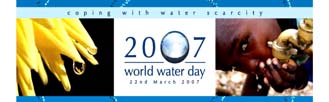
World Water Day 2007, March 22
ment can make a Difference
in
It gives me great pleasure to welcome readers to
the First Issue of our Quarterly Newsletter for the
Caribbean SIDS
IWCAM Project. This first issue has been timed to
coincide with the annual celebration on March
In the Caribbean we take many things for granted:
22nd of World Water Day, which has as its theme:
heavy flooding in towns after rainfall and the ensu-
"Coping with Water Scarcity".
ing traffic; muddy water flowing across roads from
construction sites; rivers so laden with sediment
This year's observance of World Water Day seeks
that they discolour coastal waters as they empty
to remind us of the limited supply of water avail-
into the sea; water shortages in both wet and dry
able globally and more so within parts of our re-
seasons; drains clogged by garbage of all types.
gion. It reminds us that we cannot take for granted
that water will always be available to support our
All experiences are familiar to us. All caused by
existence.
poor management of our watersheds and coastal
areas. Why should this be the case when our
Rapid growth in consumer demand, coupled with
environment is so important to our well being,
In this issue:
the combined effects of natural and human inter-
livelihoods and our way of life?
ventions, means that the demand for water is
· Message from the Regional Project
(Continued on page 2)
In small islands, the relationship between inland,
Coordinator (pgs. 1-2)
upstream areas and coastal, downstream areas is
closely linked, with the effects of one upon the
· Feature: How IWCAM can make a
other easily seen. The recurrent issues of small
difference in Caribbean SIDS (pgs.
World Water Day 2007
1,2,3)
size and the coastal focus of development to-
gether with their linked problems make Caribbean
Coping With Water
· Background on the IWCAM Project
islands a priority area for the introduction of Inte-
(pg. 2)
Scarcity
grated Watershed and Coastal Areas Manage-
· Capacity Assessment of GIS Capaci-
ties in the Caribbean (pg. 4)
"Even urban areas and countries
with plenty of freshwater face the
· The Demonstration Projects (pg. 4)
threat of water scarcity. Scarcity is
· Partnering to Meet the Challenge
a relative concept, which can mean
(pgs. 5, 8)
either an absolute shortage of water
·
or a lack of access to safe water
Project Retrospective 2006 (pgs. 6-7)
supplies."
· Upcoming Events (pg. 7)
-
UN
Water
· Meet the Regional Coordinating Unit
www.unwater.org
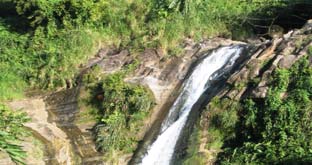
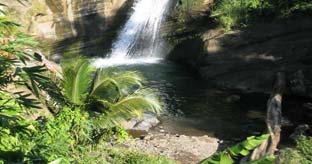
Concord Falls, Grenada
Team (pg. 8)
(Continued on page 2)
www.iwcam.org
2
IWCAM Caribbean WaterWays Newsletter
(Continued from page 1)
(Continued from page 1)
outstripping the planet's ability to supply it. It should be noted
ment (IWCAM).
that in the past century, demand has grown six-fold. It has been
estimated that, under current conditions, more than two-thirds of
The Small Island Developing States (SIDS) of the Caribbean are
humankind will experience severe and moderate shortages of
characterized by small size and limited resources for develop-
water within the next 20 to 25 years. These are challenges which
ment. The issues and problems facing SIDS around the world
many of our countries face and many more will face unless the
were clearly stated in the Programme of Action (POA) for SIDS
issues related to water management receive greater priority.
(United Nations, 1994); the two major issues being:
Public participation is essential in grappling with these important
· Disadvantages caused by small size; and
water management issues. We must not continue to believe that
· The concentration of the population, agricultural land, infra-
water management is the responsibility of others. The manage-
structure, built development, most sectors of the economy,
ment of water is everybody's responsibility. In the Caribbean
and exploitable resources in the coastal area.
context, farmers are good examples of resources managers.
Their farming practices (such as slash and burn or overuse of
An unsustainable sectoral approach to management of our wa-
pesticides), in the upper reaches of watersheds, unless properly
managed (by these same farmers), can compromise the quality
and quantity of water.
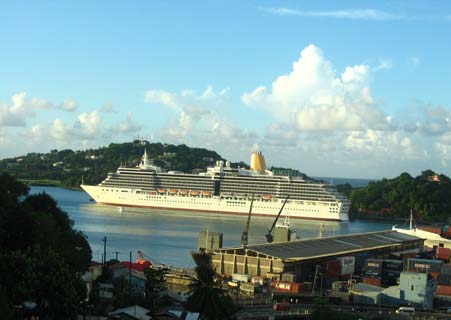
Castries Harbour, St.Lucia
According to the World Water Council, at least 1.5 billion citizens
of this world are without water or are supplied with so little and
so poorly. Additionally, only 5% of the public purse is devoted to
this sector. We are however encouraged that funding for water
management, including watershed and sustainable land man-
agement has recently been made available to the region. After
much effort, the IWCAM Project is underway and financial sup-
port is flowing to the region and individual countries to address
wide-ranging issues related to integrated watershed manage-
ment, combined with coastal zone planning and land manage-
ment issues in a number of Caribbean countries.
tershed and coastal areas now dominates in the public and pri-
It is our hope that this year's commemoration of World Water
vate sectors. Administrative responsibility tends to be frag-
Day, particularly as it focuses on water scarcity, will help to keep
mented and jurisdiction over the management of resource use is
awareness high on the importance of water to our daily lives and
unclear. This approach fails to take account of the high level of
by extension ensure that the global community continues to
interaction between the resources and processes at work in the
support our efforts.
continuous watershed to coastal area. Lack of an integrated
Vincent Sweeney
approach has resulted in degradation of the environment
(habitats), overexploitation of natural resources, competing re-
source uses and conflicts between users. Problems include
diminishing freshwater supplies; degraded freshwater and
BACKGROUND ON THE IWCAM PROJECT:
coastal water quality; inappropriate land use and; poor hygiene
and sanitation.
The Integrating Watershed and Coastal Areas Management in Caribbean Small
Island Development States (IWCAM) Project, with a value of USD 112 million,
Existing policies, legislation and regulations affecting these envi-
was approved by the Global Environment Facility (GEF) in May 2004. Imple-
menting agencies are the United Nations Environment Programme (UNEP) and
ronments have been, and continue to be, introduced one by one
the United Nations Development Programme (UNDP). Executing agencies are
over a period of time. In addition, sufficient and appropriate
the Secretariat of the Cartagena Convention (UNEP-CAR/RCU) and the Carib-
information does not always reach decision makers; policy is
bean Environmental Health Institute (CEHI) and the UN Office of Project Ser-
often the result of pressure from one interest group or another or
vices (UNOPS). The thirteen participating SIDS are: Antigua and Barbuda, The
Bahamas, Barbados, Cuba, Grenada, Dominica, Dominican Republic, Haiti,
in anticipation of short-term benefits; many sectors of our popu-
Jamaica, Saint Kitts and Nevis, Saint Lucia, Saint Vincent and the Grenadines,
lation are not properly informed and, even when informed, they
and Trinidad and Tobago. The length of the Project is 5 years and commenced in
may not be consulted. There are many opportunities for mis-
the second quarter of 2005. The Project Coordinating Unit is located at the
takes.
CEHI, as agreed by the Implementing and Executing Agencies and the partici-
pating countries.
(Continued on page 3)
www.iwcam.org
3
IWCAM Caribbean WaterWays Newsletter
(Continued from page 2)
lessons and practices.
Integrated management is when all the different uses of water
resources are considered together. It means planning for
One example of this is the Demonstration Project in the Domini-
change in the context of institutional roles, the enabling environ-
can Republic. In that nation, the Haina river basin is one of the
ment and management instruments. The IWCAM Project has
main industrial conglomerations of the country with over one
the overall objective of strengthening the commitment and ca-
hundred medium to large size industries (e.g. electricity generat-
pacity of the participating countries to implement an integrated
ing plant, petroleum refinery, and vehicle battery factory). The
approach to watershed and coastal area management. The
region is highly contaminated by these industrial activities, as
long-term goal is to enhance the capacity of the countries to plan
well as the solid and liquid wastes generated by the communi-
and manage their aquatic resources and ecosystems on a sus-
ties. At the same time, the waters of the basin are among the
tainable basis.
main potable water sources of the capital city. The project will
work to reduce the pollutants in the Haina river basin through
Building regional capacity, while a challenge, is important be-
interventions in the industrial sector such as recycling, a heavy
cause many SIDS depend on regional mechanisms and institu-
metal contamination survey to better guide policy and strategic
tions for responding to environmental problems. Regional ca-
planning, and overall integrated management programmes. The
pacity in the following areas in particular can help:
envisioned benefits of such an approach would be:
· Developing data and monitoring networks;
· Improving the quality of basin-related ecosystems;
· Engendering more effective systems for waste man-
· Protecting and conserving biodiversity within the river
agement and reducing sewage contamination;
and coastal zone;
· Promoting tourism practices geared to biodiversity
· Reducing diseases resulting from the deterioration of
conservation and protection;
the environment;
· Minimizing dependence on destructive agricultural
· Reducing morbidity and mortality rates of the popula-
patterns.
tion related to pollution and poor water quality;
· Strengthening capacity, infrastructure and understand-
The IWCAM Project seeks to:
ing within the public and private sector;
· Providing an effective model for replication within the
· Undertake demonstration, capture and transfer of best
country and the region.
practices;
· Develop IWCAM process, stress reduction and an environ-
mental status indicator framework, and;
· Encourage technological and management approaches and
policy and legislative reforms.
Project activities will benefit all of the participating countries. In
2007, key IWCAM activities are:
· A Legislative, Policy and Institutional Inventory with recom-
mendations being made;
·
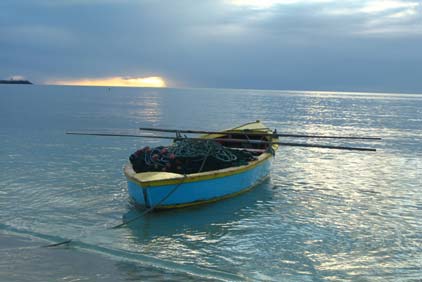
Grand Anse, Grenada
A Capacity Assessment of Geographic Information Systems
(GIS) Capabilities;
· Development of IWCAM Indicators;
· Communications and Public Awareness Activities;
IWCAM should be recognized as a continuous, proactive and
· The Implementation of nine Demonstration Projects in eight
adaptive process of resource management for environmentally
of the participating countries, and;
sustainable development. It requires long-term commitment of
· Support for the preparation of national Integrated Water
resources and political support as well as a shift in approach.
Resources Management Plan Development in several par-
The importance of capacity building and training, at both the
ticipating countries.
formal and informal levels (including all stakeholders and user
groups) is also recognized. The IWCAM Project seeks to provide
The demonstration projects will deliver on-the-ground demon-
a catalyst for the start of this process, both through replicable
strations targeted at national hotspots where specific threats
demonstration projects and regional activities.
have been identified. They must, most critically, develop mecha-
nisms for the replication of activities and for the transfer of best
www.iwcam.org
4
IWCAM Caribbean WaterWays Newsletter
IWCAM Activity Feature:
Capacity Assessment of GIS Capabilities in the Caribbean
The IWCAM Project recognizes the important role of Geographic Information Systems (GIS) technology as a tool for integrated data
analysis and management. In January 2007 a detailed capacity needs assessment study, which will guide the process of developing
GIS in participating countries, began. It is being conducted by the Water Center for the Humid Tropics of Latin America and the Carib-
bean (CATHALAC), Panama, who were awarded the job after a process of competitive bidding. Among the tasks involved in this study
are:
· Assessing hardware and software needs of participating countries in relation to the generation, maintenance, analysis and presen-
tation of relevant GIS information;
· Evaluating relevant information sharing protocols;
· Assessing the quantity and quality of existing data related to GIS;
· Information audits to include the evaluation of relevant metadata standards;
· Assessing relevant institutional infrastructure/administrative protocols with respect to the generation, processing, analysis, presen-
tation, sharing and dissemination of data and information for watershed and coastal areas monitoring and management with par-
ticular reference to GIS data;
· Assessing relevant human resource capacities and training needs related to GIS;
· Identifying, evaluating and assessing the challenges, constraints and problems regarding GIS use as a management tool; and
· Identifying, evaluating and assessing the challenges, constraints and problems for mainstreaming the use of GIS as a tool for
watershed and coastal areas monitoring and management.
The main output of the assessment will be a Draft Road Map of recommended steps to be taken in order to bring capacity up to a level
where GIS data can be generated, manipulated and shared among Participating Countries within a common framework. The Draft
Road Map will be presented during a Regional Workshop titled: "Strategic Approaches to Application of GIS tools in Support of Plan-
ning for Watershed and Coastal Areas Management" which will be held later this year. The Road Map will be finalized using inputs
received at the workshop.
The IWCAM Project has 9 Demonstration Projects set in 8 of the Participating Countries:
SUB-COMPONENT
COUNTRY
TITLE OF DEMONSTRATION PROJECT
St. Kitts and Nevis Rehabilitation and Management of the Basseterre Valley as a Protection
Measure for the Underlying Aquifer
A: Water Resource Conservation and
Management
St. Lucia
Protecting and Valuing Watershed Services and Developing Management
Incentives in the Fond D'or Watershed Area of St. Lucia
Antigua and
Mitigation of Groundwater and Coastal Impacts from Sewage Discharges
Barbuda
from St. John
B: Wastewater Treatment and
Bahamas - Exuma Marina Waste Management at Elizabeth Harbour in Exuma, Bahamas
Management
Dominican
Mitigation of Impacts of Industrial Wastes on the Lower Haina River
Republic
Basin and its Coast
Bahamas - Andros Land and Sea Use Planning for Water Recharge Protection and
Management in Andros, Bahamas
C: Land-use Planning, Zoning and
Alternative practices
Trinidad and
Land-Use Planning and Watershed Restoration as part of a Focused
Tobago
IWCAM Demonstration in the Courland Watershed and Buccoo Reef Area
Cuba
Application of IWCAM Concepts at Cienfuegos Bay and Watershed
D: Targeted Model IWCAM
Jamaica
An Integrated Approach to Managing the Marine, Coastal and Watershed
Resources of east-central Portland
www.iwcam.org
5
IWCAM Caribbean WaterWays Newsletter
Partnering to Meet the
would benefit one of the islands of the Grenadines. The affirmative
response led to a meeting in Saint Vincent, at which time staff from the
Challenge
IWCAM project, NOAA, and CEHI facilitated a consultation to determine
an appropriate demonstration site in the Grenadines for this activity.
The government partners took into consideration the following sug-
As is our nature, modern society tends to compartmentalize the envi-
gested criteria:
ronment. Mountains are in the middle of the island, coasts are at the
· Community size of over 1,000 persons
outer edge, and the marine environment is offshore We are accus-
· Pollution concerns from tourism, farming, and sewage
tomed to treating these as separate units, each not having an impact
upon the other.
· Inadequate water coverage (lack of water infrastructure,
incomplete coverage, interrupted supply, poor water quality,
In Small Island Developing States (SIDS), this approach is changing
etc.)
with the growing recognition that, due to their small size, SIDS should
· Buy-in and commitment of NGOs, the community, and local
be considered ecosystems in and of themselves. Deforestation and
government representatives
land development in watersheds cause erosion, sedimentation and
· Concerns over the sustainability of natural resources and
discharge onto nearby coral reefs. Damage to live coral reefs, due to
the environment, and
the practices of anchoring boats, walking on the reef, and nutrient
· Logistical considerations such as distance from St. Vincent,
discharge, diminishes their impact as shoreline protective barriers from
ease of getting to the community, and ownership of land.
storm surges. Adversely, conservation of mangroves provides impor-
tant filtration of discharge into coastal areas and also helps prevent
Participants in the meetings also added the criteria "consideration of on-
beach erosion. Sustainable management of aquifers can help to pre-
going projects at the national level" to the list. Based on an analysis of
vent salt-water intrusion and ensures that water quality is not compro-
the criteria, the part-
mised
ners reached a consen-
sus that the interven-
The highly interlinked nature of watersheds, coastal areas, and the
tion would be most
marine environment underscores the need to address these in an inte-
appropriate in Union
grated manner. These are complex issues which are best tackled col-
Island. The next step,
lectively. Partnerships, coming together to synthesize and collaborate,
was a visit to Union
enjoy a wider perspective and provide a larger set of tools with which to
Island, where this pro-
work.
ject idea was presented
to local stakeholders.
Partnerships form the basis of the IWCAM approach. Both formally and
At that point, the team
informally, IWCAM seeks to facilitate the creation of partnerships for the
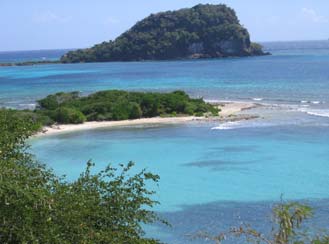
Union Island, St.Vincent and the Grenadines
wanted to gauge the
integrated management of watersheds and coastal areas. This often
feasibility of the undertaking and also verify that there were local part-
requires significant effort. Guided by their mandates, groups are accus-
ners with complementary goals. This was found to be the case in Union
tomed to establishing their goals and moving forward to achieve these
Island; these stakeholders and their synergistic goals are listed below:
goals. IWCAM is encouraging groups to examine their own goals and
seek out partners with complementary perspectives and approaches.
· Protecting the environment of Union Island and promoting
This often leads to more efficient use of available resources and a
public awareness (Union Island Environmental Attackers)
stronger approach.
· Integrated sustainable development of the Grenadine Islands
One example of the IWCAM strategy related to partnerships is starting
area for the social and economic wellbeing of the people
to take form on Union Island in Saint Vincent and the Grenadines. In
who live there (Sustainable Grenadines Project)
late 2006, several organizations and projects noted that they shared
· Provision of potable water (Central Water and Sewerage
complementary goals related to assisting Caribbean SIDS, including but
Authority, CWSA)
not limited to:
· Maintenance of the water catchments (Union Island District
· Preparation of roadmaps for IWRM plans (The United Na-
Office)
tions Environment Programme's Collaborating Center on
· Promotion of sustainable tourism (Union Island Tourism
Water and Environment, UNEP-UCC)
Board)
· Development of IWRM plans (IWCAM, UNEP and the Carib-
bean Environmental Health Institute, CEHI)
Given the compatibility of these goals, the IWCAM Project, working with
· Adoption of strategies for protection of the Marine Environ-
partners at the local, national, regional, and international levels, hopes
ment from Land-Based Activities (United States Department
to provide tangible support for IWRM planning on Union Island as well
of Commerce's National Oceanic and Atmospheric Admini-
as concrete benefits to the community. Interventions, which are
stration, NOAA, UNEP & IWCAM)
planned for the first half of 2007, are expected to include a training
workshop, public awareness activities, a consensus-building workshop,
Based on these similar goals, and the expressed commitment of Saint
and, once funds are identified, some infrastructural improvements.
Vincent and the Grenadines to develop an IWRM plan as part of the
Union Island is one of the first on-the-ground interventions for the IW-
IWCAM project, UNEP-UCC, CEHI, and NOAA approached the govern-
CAM Project. An integrated approach to watershed and coastal areas
ment to gauge its interest in col aborating on an IWRM project which
(Continued on page 8)
www.iwcam.org
6
IWCAM Caribbean WaterWays Newsletter
IWCAM Project Representation at Regional
and International Meetings in 2006
UNEP/GEF Workshop on Lessons Learnt,
3rd Caribbean Environmental Forum (CEF-3) and
3-5 May, Bangkok, Thailand
Exhibition, 5-9 June, Antigua and Barbuda
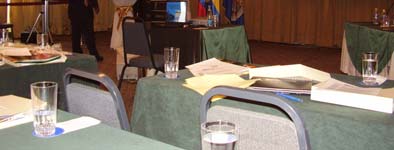
The Regional Project Coordinator attended this meeting
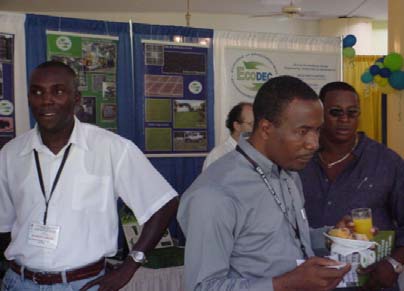
CEF-3 was organized by the Caribbean Environmental
which was convened by the UNEP Division of GEF. He
Health Institute (CEHI) . A regional partnership meeting
presented on lessons learnt in developing the IWCAM Pro-
was one of several Partnership Fora at CEF-3. Working
ject, participated in the discussions addressing lessons
Groups defined "road maps" in the articulation of IWRM-
learnt in the development and implementation of other
Plans. The IWCAM Project will be a facilitatory mecha-
GEF IW projects and networked to improve delivery of the
nism for the development of IWRM Plans in the Caribbean
IWCAM Project. His participation was funded by the GPA.
Region.
OAS Preparatory Workshop, Integrated Water
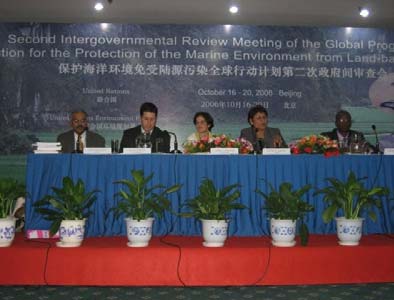
2nd Intergovernmental Review of the Global
Resources Management, 19-20 June, Quito, Ecua-
Programme of Action (IGR-2), 16-20 October, Bei-
dor
jing, Republic of China
This Preparatory Workshop was organized by the OAS'
The meeting was attended by a large Caribbean delega-
Office of Sustainable Development and Environment and
tion, including representatives of a number of IWCAM Par-
held prior to the First Inter-American Meeting of Ministers
ticipating Countries and Executing Agencies. Here Patricia
and High-level Authorities on Sustainable Development to
Aquing, Acting Executive Director of CEHI and Anthony
discuss themes related to the region's sustainable devel-
Headley of the Environmental Protection Department, Bar-
opment. It was designed to establish policy guidelines,
bados, participate on a panel during one of the parallel
strategies and priority actions in the area of IWRM and to
sessions.
identify major challenges and possible solutions for water
resources management in the region. Vincent Sweeney
gave a presentation on the IWCAM Project.
www.iwcam.org












7
IWCAM Caribbean WaterWays Newsletter
IWCAM Project Representation at Regional
and International Meetings in 2006
GEF STAP Workshop on SIDS, Aquifers and In-
IWRM Strategic Planning Workshop, 4-5 Decem-
terlinkages, 6-9 November, Port of Spain, Trinidad
ber, Kingston, Jamaica
and Tobago
CEHI and UNEP CAR/RCU, under the auspices of IW-
The Regional Project Coordinator attended this Workshop
CAM, hosted this Workshop. Organizations and agencies
convened by the Scientific, Technical and Advisory Panel
in attendance worked together to: identify duplication and
(STAP) of the GEF to consider the role of aquifers in envi-
gaps in IWRM Work Plans of participating agencies and
ronmental sustainability. He promoted the IWCAM Project
Caribbean countries and territories; develop a unified, stra-
and placed its objectives within the context of wider GEF
tegic and coordinated Plan for IWRM in the Caribbean;
discussions on groundwater in SIDS.
collaborate on obtaining political commitment to reform, in
relation to IWRM plans; and continue to identify method-
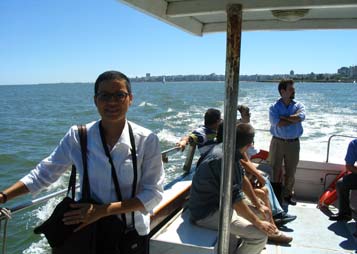
GEF IW:LEARN Regional Workshop in Trans-
ologies to strengthen and promote partnerships and net-
boundary Waters Management in Latin America
working for the implementation of IWRM.
and the Caribbean, 6-9 December, Montevideo,
Carib-CapNet Training of Trainers Course, IWRM,
Uruguay
11-15 December, UWI, St. Augustine, Trinidad and
Tobago
This Workshop responded to the needs of GEF IW pro-
jects for capacity building in the area of public participation. .
It also allowed participants to identify and share good ex-
This Training of Trainers course in IWRM had among its
periences, effective approaches and lessons learned.
objectives to expand the pool of training facilitators who
Donna Spencer represented the IWCAM Project.
can deliver training programmes in IWRM in the Carib-
bean. Vincent Sweeney participated.
Upcoming IWCAM Project Meetings:
· May 2007: St. Lucia
- Training in Coastal Water Quality Monitoring
-
IWCAM
Demonstration
Project Managers Orientation and Training
Please refer to the Project
· June 2007: Barbados
- Regional Technical Advisory Group Meeting
website for details:
- Barbados National IWRM Inception Workshop Barbados
· July 2007: Tobago
- Implementing and Executing Agency Meeting
www.iwcam.org
-
Steering
Committee
Meeting
- Trinidad and Tobago National IWRM Inception Workshop
www.iwcam.org
8
IWCAM Caribbean WaterWays Newsletter
(Continued from page 5)
training in gender integration in project management and has conducted training
management requires the building of partnerships at every level and
in this area. Sasha is fluent in Spanish.
stage, from visioning, through planning and implementation. Partner-
ships make a great deal of sense in order not to waste precious time,
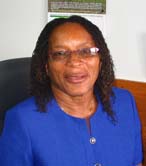
Una McPherson, Administrative Officer (AO)
effort and resources (human and other). They also facilitate the sharing
of best practice, information and lessons learned all of which are
After 19 years at UNEP-CAR/RCU in Kingston, Una
joined the IWCAM PCU as Administrative Officer in
important if the IWCAM Project is to benefit Caribbean SIDS in the
August 2006. She has extensive experience in Admini-
longer term.
stration and Human Resources and has worked with
several GEF projects including the PDF Phases of the
IWCAM. Una holds a BSc. in Business Administration
from the University of the West Indies and a Masters in
Meet the Regional Coordinating
Business Administration from the Institute of Financial
Unit Team:
Management, University of Wales and Manchester
Business School. She also has a certificate in Project
Management from the University of New Orleans.
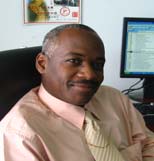
Vincent Sweeney, Regional Project Coordinator (RPC)
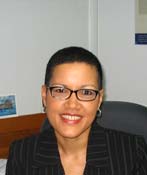
Donna Spencer, Communications, Networking and Information
In May 2006 Vincent was appointed Regional Project
Specialist (CNIS)
Coordinator for the GEF-funded IWCAM Project. Prior to
that he served for 10 years as Executive Director of the
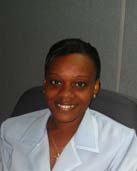
Donna joined the IWCAM Project in November 2006
Caribbean Environmental Health Institute (CEHI). He has
after being the Chief Information Of icer at the Institute of
also served, or currently serves on a number of Advisory
Marine Affairs in Trinidad and Tobago from 1998. Her
Bodies within the region, including the National Water &
experience in information management and communica-
Sewerage Commission in St. Lucia; the National Council
tions is varied including: channeling the results of marine
for Science & Technology for Development in St. Lucia,
research to a variety of users; the design, implementa-
the Board of Directors of the Caribbean Basin Water
tion and dissemination of information products; public
Management Program (Inc.), and Technical Advisory Committees for a number of
and community education, media relations and public
regional projects. He was a member of the Work Group set up by Health and Envi-
relations. She has coordinated national involvement in a
ronment Ministers of the Americas and is the Co-Chair of the Integrated Watershed
number of initiatives including the Ocean Data and
Management Sub-Committee of the White Water to Blue Water (WW2BW) Initiative.
Information Network for South America and the Caribbean (ODINCARSA) and
He was also member of the Organizing Committee for the Inter-American Dialogue
the first phase of development of Trinidad and Tobago's National Programme of
on Water and a two-time Vice President of the Caribbean Water & Wastewater
Action (NPA) for the Protection of the Marine Environment from Land-based
Association. Vincent has a B.Sc. in Civil Engineering from the Technical University of
Sources of Marine Pollution She has a B.A. Hons. in Environmental Studies
Nova Scotia (TUNS) and a Masters of Applied Science from the Centre for Water
and Sociology from the University of London and a M.Sc. in Environmental
Resource Studies, TUNS.
Science from George Washington University. She also has a Certificate in
Management Management Information Systems, from ROYTEC.
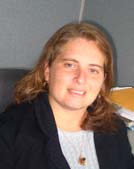
Sasha Beth Gottlieb, Technical Coordinator (TC)
Magnalia Goldson, Bi-Lingual Administrative Assistant (BAA)
Sasha Beth Gottlieb joined the IWCAM Project Coordinat-
Prior to joining the IWCAM Project in November 2006
ing Unit in October 2006 after several years working with
Magnalia worked at the Embassy of Mexico in Kingston,
the Caribbean region for the Organization of American
Jamaica as the Personal Assistant to the Ambassador
States and Chemonics International. She has extensive
while also teaching Spanish at the University of the West
experience in integrated water resources management,
Indies. Magnalia received a Bachelor of Arts degree in
land management, and sustainable energy issues through
Modern Languages and Literatures while minoring in
the management and technical participation in a wide
Government at the University of the West Indies, Mona
variety of projects, including the establishment of a Central
campus. She further went on to pursue graduate studies
American water level observation network, the Caribbean
at the School of Hotel and Tourism in Varadero, Cuba
Dialogue on Water and Climate, the Eastern Caribbean
earning a degree in Hospitality and Tourism Management.
Geothermal Development Project (Geo-Caraïbes), a land management / sustain-
She is fluent in Dutch and Spanish.
able livelihoods project in the Suriname/Brazil border region, the Global Sustain-
able Energy Islands Initiative (GSEI ) and the Caribbean Open Trade Support
Program. Sasha holds two masters degrees, one in Latin American Studies from
Stanford University, focusing on the impact of free trade agreements on the
Participating Country Focal Points, Demonstration Pro-
environment and the other from the Paul H. Nitze School of Advanced Interna-
jects and others are invited to submit articles. Please
tional Studies, Johns Hopkins University, with focus in international economics
contact Donna Spencer at dspencer@cehi.org.lc
and energy, environment, science and technology. Sasha has also received
Contact Information:
IWCAM Project Coordination Unit
P.O. Box 1111, The Morne, Castries, Saint Lucia
Tel: (758)-452-2501/1412; Fax: (758)-453-2721
E-mail: dspencer@cehi.org.lc
www.iwcam.org