



Caribbean WaterWays
Newsletter of the GEF IWCAM Project
Volume 2, Issue 1
March 2008
In this issue:
Feature Article:
· Feature: How will
How will we know we're on the right
we know we're on
the right track? -
track?
Indicators and
GEF-IWCAM (pgs.
- Indicators and GEF-IWCAM
1,2,3)
The lack of basic environmental statistics and indicators is
considered a major problem in the Small Island Developing States
· Laboratory
(SIDS) of the Caribbean. Indicators, which are quantitative or qualitative
Strengthening in
statements or measured/observed parameters that can be used to de-
Participating
scribe existing situations and measure changes or trends over time, are
Countries (pgs.1,
important in determining success in the integration of watershed and
8)
Do you see what we
coastal area management and the resulting improvement of the environ-
ment and associated livelihoods.
· Do you see what
see...?
we see? (pg.1)
There are many different types of indicators. The IWCAM Pro-
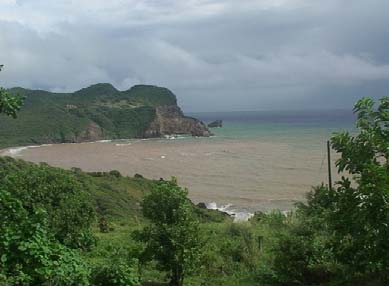
The appearance of areas of
ject conforms to the Global Environment Facility's grouping of indicators
· Communicating
for Integrated
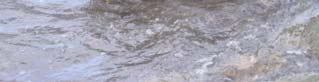
cloudy, brown (dirty looking) water off
into three categories:
Management--
the shoreline, particularly after heavy
1. Process
GEF-IWCAM Work- rainfall, is an increasingly common sight
2. Stress Reduction
shop addresses
as we walk or drive along the coasts.
3. Environmental
Status
concerns of Par-
ticipating Coun-
This most often is the result of topsoil or
Process Indicators:
tries (pgs. 4, 5)
sediment runoff from adjacent areas of
These are institutional processes on the multi-country or sin-
land, either directly or via rivers. It is a
gle-country level which result in joint action on needed policy, legal and
· Think About Wa-
sign that land degradation is taking
ter! IWRM Videos
institutional reforms and investments which aim to reduce environmental
place, such as extensive clearing for con-
Launched! (pg. 5)
stress.
struction and slash and burn agriculture,
Examples:
· Cuba's Demon-
which leave the soil exposed to the ele-
· The establishment of country-specific inter-ministerial committees to
stration Project:
ments. This illustrates why IWCAM is so
engage key ministries that may be involved with reducing sectoral
"Application of
important to us.
(Continued on page 2)
IWCAM Concepts
at Cienfuegos Bay
and Watershed."
Laboratory Strengthening in Participating Countries
launched! (pg. 6)
· A Community in
Laboratory strengthening in Participating Countries has been identified by key stakeholders as necessary to support and promote
Dominica Learns
IWCAM practices and activities. The first phase of this will be an assessment of the laboratories within Participating Countries (PCs). The
how to Monitor its goals of this assessment are:
Watershed (pg. 7)
· The enhancement / development of the capability of national laboratories to perform basic analytical techniques related to the
attainment of IWCAM objectives;
· Reflections on
· The development of capacity for national IWCAM-related environmental surveillance and monitoring;
Water (pg. 8)
· Enhancement of collaboration and cooperation amongst relevant national laboratories in the 13 participating SIDS countries,
thereby facilitating greater information exchanges between laboratories;
· Increasing the awareness of SIDS stakeholders about regional and national laboratory services available and how these ser-
vices can be accessed;
· Achievement of compliance with the obligations of the Cartagena Convention and the LBS Protocol.
(Continued on page 8)
www.iwcam.org






































2
IWCAM Caribbean WaterWays Newsletter
(Continued from page 1)
Exploring Jamaica's Demo Project site...
stress on the water body;
· Country ratification of the regional or global conventions
and protocols pertinent to the project;
Drivers River Water-
· Country adoption of specific water, environment or sector-
shed: view down to Port
related legal reforms, policies, institutions, standards and
Antonio from Non Such
programmes necessary to address the transboundary prior-
Caves
ity issues, including stakeholder participation programmes.
Stress Reduction Indicators:
These are on-the-ground measures implemented by
the collaborating countries to reduce damage to the environ-
ment.
Reach Falls
Examples:
· Non-point source pollution programmes implemented;
· The amount of underwater or wetland area placed into pro-
tected management, including the establishment of no fish-
ing zones;
· Reduced pollution to groundwater recharge zones.
Selvyn Thompson of the
Demo. Project Team
Environmental Status Indicators:
shows the way
These indicate improvements/changes in actual per-
formance or success in restoring or protecting the targeted area.
Examples:
· Measurable improvements in tropic status;
Development in the
· Improved (measurable) ecological or biological indices;
coastal zone
· Changes (stable or improved) in local community income
and social conditions as a result of improvements in envi-
ronmental conditions.
Why are Indicators important for the GEF-IWCAM
Members of the commu-
Project?
nity: Oliver Hendricks
The GEF-IWCAM Project must be able to determine
and Omar Doyley,
how successful it has been in achieving the objective of integrat-
Chairman of the Devel-
opment Area Committee
ing watershed and coastal area management with resulting im-
provements in the state of the environment and livelihoods. It is
for this reason that identifying indicators and keeping track of
them throughout the life of the project is important they can
BACKGROUND ON THE GEF-IWCAM PROJECT:
help us to measure the effectiveness of activities or measures
The Global Environment Facility-funded Integrating Watershed and Coastal
put in place.
Areas Management in Caribbean Small Island Development States (GEF-
IWCAM) Project was approved by the Global Environment Facility (GEF) in May
In some cases, these indicators will be adopted by
2004. Implementing agencies are the United Nations Environment Programme
others and will continue to be monitored even after the GEF-
(UNEP) and the United Nations Development Programme (UNDP). Executing
agencies are the Secretariat of the Cartagena Convention (UNEP-CAR/RCU)
IWCAM Project has finished. This would help determine the
and the Caribbean Environmental Health Institute (CEHI) and the UN Office of
long-term impact of the Project and its sustainability.
Project Services (UNOPS). The thirteen participating SIDS are: Antigua and
Barbuda, The Bahamas, Barbados, Cuba, Grenada, Dominica, Dominican Re-
public, Haiti, Jamaica, Saint Kitts and Nevis, Saint Lucia, Saint Vincent and the
How is the GEF-IWCAM Project establishing Indi-
Grenadines, and Trinidad and Tobago. The length of the Project is 5 years and
cators?
commenced in the second quarter of 2005. The Project Coordinating Unit is
In March 2008, the GEF-IWCAM Project Coordinating
located at the CEHI, as agreed by the Implementing and Executing Agencies and
the participating countries.
Unit and consultants Dr. Sherry Heileman and Leslie Walling,
(Continued on page 3)
www.iwcam.org
























3
IWCAM Caribbean WaterWays Newsletter
(Continued from page 2)
met with representatives of Participating Countries (PCs) and
Indicators will be monitored in the on-going monitoring
Demonstration Projects at a regional workshop to review and
and evaluation programme under the GEF-IWCAM Project.
comment upon a template of key indicators which was created
following a comprehensive survey of PCs with regard to their
References:
tracking of indicators and other data.
Much of the information in this article has been ex-
Vincent Sweeney, RPC, makes
cerpted from Alfred Duda's paper: "Monitoring and Evaluation
opening remarks
The two documents re-
Indicators for GEF International Waters Projects". See:
viewed at the Workshop
were:
http://www.iwcam.org/iformation/iwcam-orientation-may-2007/
documents-referenced-in-indicators-training/duda_indicator.pdf
Draft IWCAM Indicators
Mechanism and Capacity
Report on Indicators for the St. George's Declaration (A Report
Assessment (February
to the Environment and Sustainable Development Unit (ESDU),
2008):
Organization of Eastern Caribbean States (OECS), December
2006:
http://www.iwcam.org/information/gef-iwcam-and-iabin-
indicators-mechanism-workshop/iwcam-indicators-mechanism-
http://www.iwcam.org/information/gef-iwcam-and-iabin-
and-capacity-assessment-draft-february-2008/view
indicators-mechanism-workshop/indicators-useful-references/
report-on-indicators-for-the-st-georges-declaration-including-
Draft IWCAM Indicators Template (February 2008):
definition-of-an-initial-set-of-indicators-and-recommendations-
on-further-development-of-an-indicator-based-monitoring-
http://www.iwcam.org/information/gef-iwcam-and-iabin-
system/view
indicators-mechanism-workshop/draft-iwcam-indicators-
template-february-2008/view
ILAC 2004 Indicators Latin American and Caribbean Initiative
for Sustainable Development (Report published by the United
This regional workshop on Indicators was co-hosted
Nations environment Programme, the World Bank and the Uni-
by the Global Environment Facility through two projects -: Inte-
versity of Costa Rica, 2004):
grating Watershed and Coastal Areas Management in Carib-
bean Small Island Developing States (GEF-IWCAM) Project and
http://www.iwcam.org/information/gef-iwcam-and-iabin-
the Inter-American Biodiversity Information Network (GEF-
indicators-mechanism-workshop/indicators-useful-references/
IABIN), in Ocho Rios, Jamaica, from 10 to 12 March 2008.
ilac-2004-indicators-latin-american-and-caribbean-initiative-for-
GEF-IABIN (www.iabin.net) is a network which serves to im-
sustainable-development-follow-up-indicators/view
prove collaboration and coordination among countries of the
Americas in collection, sharing, and use of biodiversity informa-
A guidebook to Environmental indicators, CSIRO, Australia:
tion to promote sustainable development in the region. The
http://www.csiro.au/csiro/envind/code/pages/menu.htm
Workshop included joint sessions between IWCAM and IABIN.
The United Nations Global Environment Monitoring System:
The Workshop aimed to help PCs identify key indica-
http://www.gemswater.org/
tors of IWCAM in their respective countries. The selection and
publications/index-e.html
tracking of suitable indicators should enable countries and dem-
onstration projects to better evaluate the projects' effectiveness
UNEP IWRM 2005 Pro-
as time goes on. Continued monitoring of indicators after the
gramme:
projects end will help to determine long-term impact and sustain-
http://www.ucc-water.org/
ability, as well as the efficacy of future interventions at all levels.
iwrm05/components/
indicatorssem.html
Based upon feedback at the Workshop, the Indicator
Template will be refined before being presented to the PCs.
Above: OECS Working
Group
Once indicators are established, The PCU will work
with PCs to determine and establish sustainable mechanisms for
data monitoring and capture. This will require some capacity
building, institutional strengthening, national laboratory enhance-
At right: Regional Institu-
ments, etc.
tions Working Group
(Continued on page 4)
www.iwcam.org








4
IWCAM Caribbean WaterWays Newsletter
Communicating for Integrated Management -
GEF - IWCAM Workshop addresses concerns of Participating Countries
Participating Countries Perspectives on Challenges
in Communicating IWCAM - Summary:
· Public understanding of IWCAM and the term `watershed' is
poor;
· Using language which is easily understood by the public is a
major challenge;
· Internet access is limited;
· Getting people to attend meetings is difficult;
· Countries without local demonstration projects find it hard to
focus the nation on IWCAM as an approach;
· Land use conflicts, farming practices and industrial practices
are among the main issues; hence farmers, land developers
and industry are important target groups
· The development of a National Environmental Education Strat-
egy, while uncommon, has proved to be a useful framework for
The development and implementation of communications
the development and implementation of both formal (teachers
activities to help promote and strengthen IWCAM at community,
and students in a classroom setting) and non-formal (e.g. fish-
national and regional levels are fundamental to the success of the
ermen and farmers) approaches;
GEF IWCAM Project. The Project therefore convened a Work-
· Resources allocated to public education are limited; particularly
shop on Communications, Public Education and Outreach for Inte-
trained staff and access to printed materials;
grated Watershed and Coastal Areas Management, 12 13 Febru-
· Communications about the environment tend to be ad hoc in
ary 2008, in Port of Spain, Trinidad & Tobago.
nature;
· Cultural differences or perceptions, the fact that people do not
Participants in the Workshop included Participating Coun-
read much, language, perceptions about the messenger, and
try representatives, Demonstration Project Managers or community
gender issues are major challenges to communication;
outreach personnel (where in place) and print and broadcast jour-
· Networking with NGOs and CBOs is important within the Dem-
nalists.
onstration Project areas.
The objectives of the workshop were:
In PCs where Demonstration Projects exist, ensuring that
the project has a national projection and that IWCAM is integrated
· to review, amend and endorse the GEF-IWCAM Draft Commu-
into national policy is a challenge. On the other hand, ensuring that
nications Planning Guide;
demonstration projects have a `communityfocus' and are participa-
· to develop a communications, Public Education and Outreach
tory is also a challenge.
Strategy and Action Plan consistent with the above;
· To provide guidance to Participating Countries and Demonstra-
The GEF-IWCAM Communications Planning Guide
tion Project Representatives on dealing effectively with the
media;
The Communications Planning Guide is meant to help
· To introduce participants and the regional media to IWCAM,
Participating Countries develop and implement communications
IWCAM resources and promotional materials. A media confer-
activities; to help the PCU find effective ways of ensuring that key
ence was therefore scheduled for the second day of the Work-
lessons and best practices are effectively communicated to target
shop.
audiences at every level; and, to help national and community level
partners break down their long term objectives into a series of small
In
his
opening remarks Vincent Sweeney, the GEF-
achievable steps. The GEF-IWCAM communications approach,
IWCAM Regional Project Coordinator stressed that beyond stimulat-
which is introduced in the Guide consists of three parallel and over-
ing awareness among participants, the Workshop would set the
lapping sets of activities:
stage for future awareness building activities and establish a foun-
dation upon which a sustainable partnership for communication in
1. Public Relations and Environmental Education
environment and development could be built, especially with media
2. Social Marketing Behaviour Modification Campaigns
partners.
www.iwcam.org














































5
IWCAM Caribbean WaterWays Newsletter
3. Documenting and Communicating Lessons Learned and Best
Practice.
Workshop Participants
The Draft Communications planning Guide had been cir-
during opening
culated for review prior to the Workshop and was briefly outlined by
discussions
the CNIS and then commented upon by the participants.
Strategic Communications Planning
Dr. Maria Protz, Consultant in Communications for Devel-
opment, introduced participants to the three essential steps in the
strategic communications planning process: 1) Identifying GAPS in
Indi McLymont-Lafayette,
the KAPS; 2) Identifying Primary and Secondary Audiences; and 3)
Donna Spencer and Maria
Protz (l. to r.)
Developing Appropriate Indicators and Communication Interven-
tions. A Working Session followed during which Participating Coun-
tries went through a Strategic Communications Planning exercise.
Tecla Fontenard of the
Making the Most of the Media
OPAAL Project, OECS,
Indi McLymont-Lafayette, Journalist, PANOS Caribbean,
introduces their survey
who works with communities and sees information as a tool for de-
velopment, changed the focus of the Workshop to effective media
relations with a presentation titled: "Making the most of the Media".
This included some guidance on preparing a media release and
preparing for an interview. Working Groups afterward prepared
media releases or interviews for presentation and critique.
Working Groups get down
to it...
The Media Conference was attended by four media
houses. The public education video shorts series "Think About
Water", which was prepared for the GEF-IWCAM and Integrated
Water Resource Management (IWRM) Projects, (see below) was
launched with a showing of two of the four shorts. Sandra Timothy,
Trinidad and Tobago's Demonstration Project Manager, described
Halla Sahely (SKN) and
the local Demonstration Project and its benefits. It focuses upon
Natalie Fearon (J'aica) in
land use in the Courland Watershed and Buccoo Reef Area, To-
demonstration interview
bago. A highly interactive session, in which the media asked ques-
tions of the Workshop participants and, vice versa, followed.
THINK ABOUT WATER!
IWRM Videos Launched!
"Think About Water!" is a series of four video shorts (each 2 min-
utes long) introducing Integrated Water Resource Management
(IWRM) in the Caribbean:
1. Think
About
water
2. Water
Governance
3. Land-based Sources of Marine Pollution
4. IWCAM: Tobago Demonstration Project
These were produced by the Buccoo Reef Trust for the GEF-IWCAM
Project and CEHI with funding support from the UNEP Collaborating
Centre on Water and the Environment.
These are available for public education purposes. For
more information contact: dspencer@cehi.org.lc
www.iwcam.org


6
IWCAM Caribbean WaterWays Newsletter
Cuba's Demonstration Project :
"Application of IWCAM Concepts at
Cienfuegos Bay and Watershed"
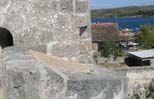
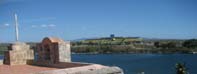
View of the
Cienfuegos Bay
launched!
from Castillo
Cuba's GEF- IWCAM Demonstration Project was
formally launched on February 25th 2008 in Cienfuegos, one
of the country's main seaports and centre of the sugar
trade, located on the southern coast.
The launch took place on the afternoon of February
25th. Formalities were exchanged among the delegates from the
United Nations Development Programme in Cuba, the local au-
thorities in Cienfuegos, the Centre for Environmental Studies of
Cienfuegos (CEAC), and the Ministry of Science, Technology
and the Environment (CITMA). Vincent Sweeney, Regional
Project Coordinator explained the Regional component of the
project and Alain Munoz described the Cuba Demonstration
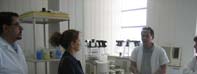
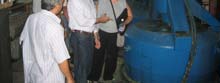
Visitors being shown through
Project. The next steps for project implementation were out-
CEAC's Laboratories
lined. The launch was also attended by representatives from
the Caribbean Environmental Health Institute (CEHI), UNDP/
GEF, MINVEC, the Centre for Engineering and Environmental
Management of Bays and Coasts (CIMAB), on behalf of UNEP
CAR/RCU, and representatives of other Cuban government
agencies.
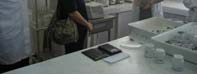
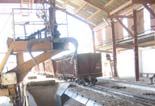
On February 26th there was a fieldtrip to the "14th July"
sugar factory in the Cienfuegos watershed, then to CEAC, and,
finally to the fortress at Castillo de Jagua, at the mouth of Cien-
fuegos Bay.
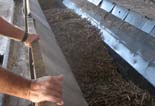
The
14th July sugar factory is the site which is being
used to demonstrate best land-use practices in agriculture.
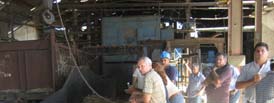
Participants tour
Those touring were given an outline of the work planned and
the
14th July Sugar
completed thus far. This relates to the reduction of water con-
Factory
sumption, recycling and reuse of materials on-site, reuse of
wastewater for irrigation and overall cleaner production ap-
proaches. Aspects of the laboratory facilities which need im-
provement were highlighted.
CEAC is integrally involved in the Integrated Monitor-
ing Programme and in the overall management of demonstration
activities. The tour of their facilities highlighted capabilities in
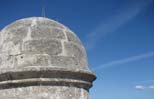
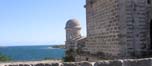
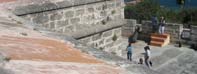
The fortress in Castillo, at the mouth of the Cienfuegos
environmental modeling of bays, Geographic Information Sys-
Bay
tems, inter-laboratory comparison and training in laboratory tech-
niques, including analysis of sediments.
The Demo Project's Public Education activities will be
located at the fortress in Castillo. Its main focus will be children,
in recognition of the fact that they can influence the adults!
www.iwcam.org


7
IWCAM Caribbean WaterWays Newsletter
A Community in Dominica Learns How to
Monitor its Watershed
"Last month I found myself on Dominica's west coast at the spot
where the Colihaut River meets the Caribbean Sea, watching sadly as a
woman walked to the edge of the river and tossed a black plastic bag of
trash right in. This simple, oblivious act underscored the importance of the
work that community members and local partners are trying very hard to
advance in Dominica.
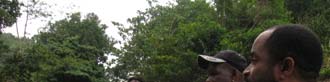
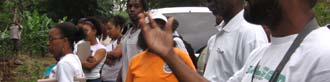
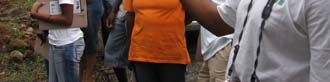
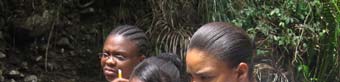
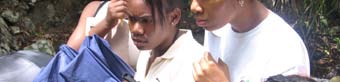
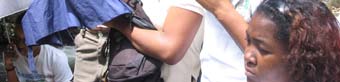
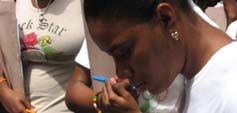
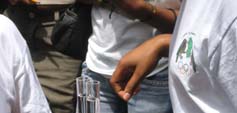
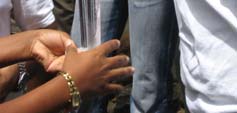
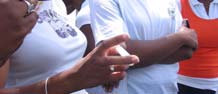
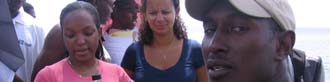
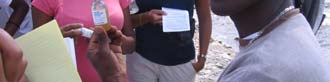
With the support of GEF-IWCAM, the Dominica Youth Environ-
ment Organization (DYEO), the Ministry of Agriculture, fisheries and for-
estry (MAFF), and the Dominica Water and Sewerage Company
(DOWASCO), students, teachers, and community members from all over
Dominica came together for two days on February 29 and March 1 for
training on monitoring the health of their watershed, from its uppermost
reaches down to the coastline. They observed examples of land degrada-
tion and best agricultural practices; performed tests on water quality; and
observed important coastal characteristics and indicators.
The group then went on to brainstorm about environmental pro-
jects that they could do in their own communities. These might include tree
planting activities, river clean-ups, and public awareness campaigns.
Thanks to the dedication of this group of trainees, I am hopeful
that people will think twice before throwing trash into nearby rivers such as
the Colihaut because they are more aware of the negative impacts which
such practices have on the health and livelihood of the very communities in
which they live."
Sasha Beth Gottlieb, Technical Coordinator, GEF-IWCAM PCU
Technical support was also received by the United States Agency for Inter-
national Development Caribbean Open Trade Support Project (USAID-
COTS).
www.iwcam.org








8
IWCAM Caribbean WaterWays Newsletter
(Continued from page 1)
Laboratory Strengthening Activities:
1. Taking into consideration IWCAM-related environmental
quality monitoring needs, assessment is already taking
place in PCs, to identify the existing capacity for environ-
mental surveillance in existing laboratories (environmental;
public health; and agricultural).
2. Based upon the site and country assessment surveys, as-
sessment of the capability and capacity of CEHI's laboratory
and other relevant regional laboratories to support national
laboratories in meeting environmental quality monitoring
needs.
Reflections on Water...
3. Preparation of an implementation plan for addressing any
identified weaknesses, including recommendations for
strengthening the capacity of national laboratories to support
"We must not continue to believe that water man-
the monitoring needs of countries; in terms of equipment and
agement is the responsibility of others. The man-
materials, training in their use, repair and servicing of exist-
agement of water is everybody's responsibility."
ing equipment, and, where necessary, improvements to
laboratory infrastructure.
Vincent Sweeney, Regional Project Coordinator,
4. Design and delivery of a regional training of trainers course
GEF-IWCAM Project
in designing simple environmental monitoring systems, sam-
2008
ple collection, laboratory testing, interpretation and presenta-
tion of results.
5. Training courses in the 13 Participating Countries to address
9. Creation of a regional information hub, following agreed-upon
the needs identified.
procedures and protocols for cooperation and sharing of infor-
mation and expertise ( i.e. a database of environmental quality
6. Development of the capacity of regional laboratories to act
monitoring information) in order to col ate, process and dis-
as reference laboratories for country laboratories.
seminate environmental surveillance and performance informa-
tion and data.
7. Provision of assistance in the development of national Envi-
ronmental Surveillance Programs.
10. Development and distribution of public awareness materials as
part of a regional public awareness programme on available
8. Creation of a regional network of laboratories in order to
services and resources amongst stakeholders at the regional
facilitate information exchange; through the hosting of a
and national levels.
meeting of stakeholders, the development of mechanisms to
strengthen linkages with LBS Regional Activity Centres
Over the next few months the assessment will be conducted in all 13 PCs
(RACS) and members of the Regional Activity Network
by the Caribbean Environmental Health Institute (CEHI), one of the co-
(RAN), and the development of procedures and protocols for
executers of the GEF-IWCAM Project which is responsible for this activity.
the sharing of technical information.
Participating Country Focal Points, Demonstration Projects and others are invited to submit articles. Please contact
Donna Spencer at dspencer@cehi.org.lc
Contact Information:
IWCAM Project Coordination Unit
P.O. Box 1111, The Morne, Castries, Saint Lucia
Tel: (758)-452-2501/1412; Fax: (758)-453-2721
E-mail: dspencer@cehi.org.lc
www.iwcam.org