





Caribbean WaterWays
Newsletter of the GEF IWCAM Project
Volume 2, Issue 2
June 2008
In this issue:
Feature Article:
· Feature: IWCAM
IWCAM Legislative Toolkit
Legislative Toolkit
is introduced--
is introduced
how can it make a
difference? (pgs.
how can it make a difference?
1,2,3)
"Integrating our approach to watershed and
· World Environ-
coastal areas management is something that
ment Day 2008
(pg.1)
is well within our reach. However many Car-
ibbean SIDS are handicapped in making this
· The LBS Protocol
a reality given their limited human and finan-
(pg.1)
cial resource capacities, inadequate legisla-
tive and regulatory environments, ineffective
· Do you see what
enforcement capabilities, and institutions that
we see? (pg. 2)
are not structured to address water resources
matters in an holistic manner. Where suc-
· UNEP Regional
The World Environment Day slogan for 2008 is Kick
cesses have been attained in the Caribbean
Coordinator visits the Habit! Towards a Low Carbon Economy. Recog-
and other SIDS regions, those must be given Dr. Christopher Cox,, Ag.
PCU (pg. 3)
nizing that climate change is becoming the defining
highest prominence and emulated as relevant Programme Director, CEHI
issue of our era, UNEP is asking countries, companies
to the country context."
· IWCAM Question
and communities to focus on greenhouse gas emis-
and Response (pg. sions and how to reduce them. The World Environment
This view, expressed by Dr. Christopher Cox, Acting Programme Director
3)
Day will highlight resources and initiatives that promote
of the Caribbean Environmental Health Institute (CEHI), formerly a Sen-
low carbon economies and life-styles, such as im-
proved energy efficiency, alternative energy sources,
ior Forestry Officer and Assistant Chief Forestry Officer at the Ministry of
· Climate Change-- forest conservation and eco-friendly consumption.
Agriculture, Forestry, and Fisheries in St. Lucia, has been echoed
One more Assault
throughout the region.
on Fisheries (pgs.
4,5)
For more information see: http://www.unep.org/
wed/2008
To help countries develop more integrated policies and legislation in
·
Exploring Ap-
support of integrated watershed and coastal areas management, the
In this issue we consider the effects of climate change
proachs to IWCAM
GEF-IWCAM Project has been working with the consultants of Environ-
upon Caribbean Fisheries. See pages 4--5.
in Haiti (pg. 5, 6)
(Continued on page 2)
· A Look at Environ-
mental Damage in The LBS Protocol
the Lower Haina
In October 1999, Parties to the Cartagena Convention adopted the Protocol Concerning
River Basin, DR
Land-Based Sources and Activities (LBS Protocol), a regional agreement for the preven-
(pg. 7)
tion, reduction, and control of marine pollution from land-based sources and activities. It
identifies the major sources of land-based pollution and offers ways for decreasing their
· The South Florida negative impacts on the coastal and marine environment. Signing and meeting the obli-
Water Manage-
gations of the LBS Protocol will help reduce priority pollutants in the wider Catibbean Re-
ment District--A
Balancing Act (pg. gion. It will also promote cooperation in monitoring, research and exchange of scientific
8)
and technical information.
To date, four countries, Trinidad & Tobago, Panama, France and St. Lucia, have acceded to the Protocol. Five more countries
must accede before it can come into force. The GEF-IWCAM Project seeks to support countries to accede to this Protocol.
For more information see: www.cep.unep.org
www.iwcam.org
2
IWCAM Caribbean WaterWays Newsletter
(Continued from page 1)
mental Advisors Inc., key stakeholders in the region and techni-
Do you see what we see? cal experts to develop the Toolkit for Institutional, Policy, and
Legislative Improvements in Support of the IWCAM Ap-
proach in Caribbean SIDS.
The ultimate goal of the toolkit is to
· promote the ratification of the Protocol Concerning Pollution
from Land-Based Sources and Activities (the LBS Protocol)
as a comprehensive tool to control, prevent, and/or reduce
marine pollution;
· propose a mix of legal, institutional and capacity-building
options that countries may exercise to implement the Proto-
col;
· recognise the influence and relationship of other Multi-
lateral Environmental Agreements in the control of marine
pollution;
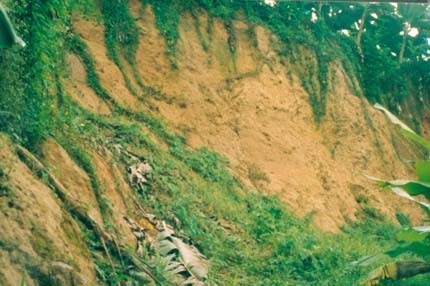
... a landslide!
· resolve the biggest practical challenge of inadequate re-
sources both human and financial to harmonise domes-
tic and international legal instruments on marine pollution.
Soils on steep slopes become landslides when satu-
rated with water. This may happen after heavy rain-
The toolkit lays out instruments for government officials; assists
fall and is exacerbated when the land has been left
in building capacity at regional and national levels to understand
exposed as a result of clearing or forest fires. Land-
the requirements of the LBS Protocol; increases the understand-
slides can have disastrous impacts, such as de-
ing, awareness and skills of personnel responsible for drafting
stroyed buildings, deaths of humans and livestock,
laws for protecting watershed and coastal and marine areas;
increased sedimentation in rivers, blocked roads,
facilitates the adoption of regional standards and thereby pro-
etc.
motes best practices in IWCAM; enhances synergies among
legal, technical and managerial approaches to implementing
These problems can be mitigated most simply
IWCAM; and offers information to update knowledge and skills
through maintaining appropriate levels of vegetation.
with fact sheets, checklists and practical examples from other
jurisdictions.
BACKGROUND ON THE GEF-IWCAM
It is intended to be both an educational guide and a reference
PROJECT:
document, or a series of stand-alone modules to be used by
practitioners such as technocrats, policy makers, legislative
draftspersons, planners, developers and water managers. It can
The Global Environment Facility-funded Integrating Watershed
be used to introduce newcomers to integrated watershed and
and Coastal Areas Management in Caribbean Small Island De-
coastal area management systems. It can also serve as a refer-
velopment States (GEF-IWCAM) Project was approved by the
ence source for case studies and model laws. The model laws
Global Environment Facility (GEF) in May 2004. Implementing
provide a framework or starting point for countries to draft the
agencies are the United Nations Environment Programme
necessary laws within the practiced legislative drafting style of
(UNEP) and the United Nations Development Programme
the participating countries. They contain recommended regula-
(UNDP). Executing agencies are the Secretariat of the
tory language as well as annotations which provide guidance on
Cartagena Convention (UNEP-CAR/RCU) and the Caribbean
how to customize the laws to best fit individual country needs.
Environmental Health Institute (CEHI) and the UN Office of Pro-
ject Services (UNOPS). The thirteen participating SIDS are:
It is acknowledged that when dealing with capacity building in
Antigua and Barbuda, The Bahamas, Barbados, Cuba, Grenada,
the area of legislation, institutional frameworks and policy there
Dominica, Dominican Republic, Haiti, Jamaica, Saint Kitts and
can be no "one size fits all" product. It is also important to recog-
Nevis, Saint Lucia, Saint Vincent and the Grenadines, and Trini-
nise that in many cases each GEF-IWCAM participating country
dad and Tobago. The length of the Project is 5 years and com-
has its own initiative including policies, governance guidelines
menced in the second quarter of 2005. The Project Coordinating
and protocols related to IWCAM. The Toolkit is therefore de-
Unit is located at the CEHI, as agreed by the Implementing and
Executing Agencies and the participating countries.
(Continued on page 3)
www.iwcam.org


















3
IWCAM Caribbean WaterWays Newsletter
(Continued from page 2)
"Keeping the Main Thing the Main Thing"
signed as a flexible tool to complement activities already underway in
the respective countries and to track a country's progress towards
IWCAM. The actions that each country takes will therefore change as
a country tries to keep up with policy and other modifications as they
occur. The model laws are therefore not intended to be adopted as is,
but rather provide an approach that each country may adopt in devel-
oping its own legal framework.
When using the toolkit, it is strongly recommended that a team of tech-
nical, policy and legal experts be involved in developing the final law.
To promote regional implementation, users of this Toolkit are encour-
GEF-IWCAM Demonstration Project Managers and Communications
aged to exchange experiences with other GEF-IWCAM participating
personnel met in Santo Domingo, the Dominican Republic, 26--28
countries in their efforts to build capacity and improve their legal and
May 2008 to develop their communications and public education
institutional frameworks for IWCAM.
strategies. They were guided by consultants Maria Protz, Edward
Spang and the PCU Team.
The Toolkit is presented in seven parts: an introduction; five sections
which promote actions - enabling laws, subsidiary legislation, policies,
Q: "What do you think are the biggest challenges to the
capacity-building and public awareness initiatives or institutional re-
adoption of coherent and consistent policies, laws, and
form - that may be undertaken either individually or simultaneously
depending on a country's circumstances, to establish a legal, policy
regulations which promote an IWCAM approach? How
and institutional framework for integrating watershed and coastal ar-
can this toolkit help to overcome them?"
eas management to control and manage the pollution of inland and
coastal waters; and a conclusion.
"The IWCAM project is in many ways pioneering the
application of an integrated approach to watershed and
coastal zone management. Such an approach imposes
It may be found on the Project website at:
on the ground changes to both the legal and institutional
frameworks in order to implement constructive water
http://www.iwcam.org/information/gef-iwcam-toolkits/gef-iwcam-
management reforms that will benefit countries and the
legislative-policy-institutional-toolkit-may-2008
region as the current reality often complicates achieve-
ment of inte-
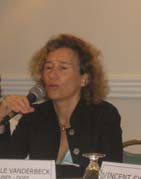
Isabelle Vanderbeck, Task Manager, GEF Pro-
For additional information contact the Project Coordinating Unit.
grated manage-
ment goals.
jects in Latin America & the Caribbean
Those changes to fragmentation of authority and responsibility for integrated
UNEP's Regional Coordinator visits GEF-
water management and use require interactions amongst governmental agen-
IWCAM Project Coordinating Unit (PCU)
cies and private organizations, both nationally and internationally and are
inevitable for more sustainable economic growth. They also require the "right
tools" to modify the "bad laws," or legislation which actually impedes or dis-
On May 13--14, 2008 Mr. Nelson Andrade, Regional Coordinator of
rupts integrated management "efficiency", resulting in limited national develop-
the Secretariat of the Cartagena
ment.
Convention (UNEP-CAR/RCU),
accompanied by Christopher Cor-
Accordingly, the participating countries will have to attempt to reform their laws
bin, AMEP Project Officer, visited
and enforcement systems in the process of their political efforts to strengthen
the GEF-IWCAM PCU for meetings
the integrated management of watershed and coastal zones, to enhance the
and held discussions with the Car-
protection of the SIDS ecosystems, and to foster a common Caribbean ap-
ibbean Environmental Health Insti-
proach to IWCAM.
tute (CEHI).
Signing of the MoU by Nelson
The challenges reside mainly in forging general acceptance on common ob-
Admiring the new Demo Project
Andrade and CEHI's Executive
jectives and menus of actions to be taken by the relevant authorities and
vehicle
Director, Patricia Aquing.
thereafter with regard to the adoption of legal structures ensuring perenniality
of the reform framework. Some countries have begun successful reforms
During the mission, Mr. Andrade
through formal legal structures or "informal" mechanisms. But real change will
participated in the launch of a
come only when there is determination to change and a willingness to reduce
rainwater harvesting initiative at
(or somehow accommodate) the legal and institutional obstacles that prevent
the GEF-IWCAM St. Lucia Demo
integrated water resources management.
site. He also signed an MoU with
CEHI related to sewage assess-
It is thus expected that the IWCAM Kit will prove to be a useful and user
ments.
friendly tool helping Caribbean nations to adopt coherent policies, laws, and
regulations in support of the IWCAM principles."
www.iwcam.org
4
IWCAM Caribbean WaterWays Newsletter
Climate Change --One More Assault on Fisheries
The United Nations Environment Programme (UNEP) in a recent (February 2008) publication "In Dead Water Merging
climate change with pollution, over-harvest, and infestations in the world's fishing grounds" reminded us that:
"The impacts of climate change on the marine environment are growing rapidly...
Unless other pressures are reduced in some of the primary fishing grounds, including bottom trawling and pollution, the
impacts may become catastrophic, resulting in wide-spread death or strongly depleted fishing grounds, with severe im-
pacts on countries, coastal economies, livelihoods and food supply."
This article, written by Donna Spencer and Herold Gopaul, was part of a series of press articles published in regional newspapers in the lead up to the Fourth
Caribbean Environmental Forum (CEF-4) which takes place 23--27 June 2008 in St. Georges, Grenada. See: http://cehi.org.lc/Website/index.htm
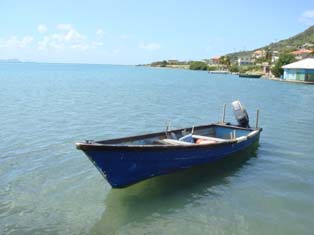
Anse la Raye Fish Fry on a Friday night in St.
which affect global fisheries. Capture fisheries for 2001
Lucia and Oistins weekly Fish Fest in Barbados abun-
for the Western Central Atlantic region, of which the
dant fish of all kinds: snapper, king fish, flying fish,
Caribbean Sea is a part, were 1.7 million metric tonnes,
mahi mahi, shrimp, conch, lobster...grilled, stewed,
minor when compared to global production figures of
fried...savoured, relished, enjoyed.
92.4 million metric tonnes. All the major commercially
important species and groups of species in the region
These weekly celebrations of abundance from
are reported to be fully
the sea are the destinations of many tourists and locals
developed or over-
alike. Throughout the Caribbean, communities like
exploited. Conch, for ex-
Anse la Raye and Oistins depend upon the sea. Fish-
ample, has been listed as
ing is essential to our food supply, supports the liveli-
endangered by the Con-
hoods of many, and contributes to our culture. The an-
vention on International
nual yield of lobsters from the shelves and banks of the
Trade in Endangered
Caribbean islands has a retail value in restaurants of
Species (CITES).
approximately US$40 million. Yet Caribbean fisheries
are under threat.
In a recent paper
on political organization and socio-economics of fishing
The marine environment is subjected to many
communities in Trinidad and Tobago, Belize and Gre-
threats, foremost among them:
nada, scientists pointed out that in the small-scale ar-
tisanal fisheries of Caribbean countries, the problem of
·
collapsing fish stocks is extremely serious when one
Pollution from considers the relative dependence on fishing in coastal
land-based activities
communities and its importance to the islands' econo-
· Habitat loss
mies.
· Invasive species
infestations;
The problems are myriad. The Caribbean is-
· Over-harvesting
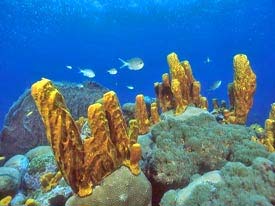
lands are surrounded by warm-water coral reefs. Cor-
of fisheries; and
als, in addition to being beautiful living animals, are of
· Climate Change
vital importance to coastal fisheries. They have a nar-
row range of tolerance to water temperature, salinity,
These threats, indi-
ultra violet radiation, cloudy water and nutrient levels.
vidually or combined, result in severe impacts on the
Even minor pollution can severely impact coral reefs
biological production of the world's oceans.
and their ability to support thousands of fish species
and other marine life. During the El Nino event of
According to the Food and Agriculture Organi-
1982/1983, sea surface temperatures in the Caribbean
zation (FAO) capture of fish from the sea has declined
exceeded 29 degree Centigrade, which led to extensive
or remained level since 2000. Local fishermen find that
bleaching of coral reefs throughout the Caribbean. In
the size of their catch is steadily dwindling. Consumers
Jamaica the coral reef system experienced several
buying fish can attest to its scarcity and rising cost.
stresses including coral reef bleaching which eventually
Caribbean fisheries are threatened by the same factors
(Continued on page 5)
www.iwcam.org
5
IWCAM Caribbean WaterWays Newsletter
Exploring Approaches to IWCAM
(Continued from page 4)
led to total destruction of the country's coral reefs, with
in Haiti
resulting losses in food production, tourism and the
economy.
Haiti, one of the larger and more populated of the GEF-IWCAM
These coral reefs along with sea grass beds
Participating Countries, grapples with the challenge of integrating
and mangrove swamps, are important as nurseries or
watershed and coastal areas management constantly. Perhaps
shelters for various fish species but they are being dam-
more than any other nation in the region, deforestation and land
aged as more and more land is cleared for develop-
degradation are critical issues in Haiti. According to the United
ment.
Nations Food and Agriculture Organisation (FAO) total forest cover
in Haiti is estimated at less than 3.8%, which contrasts with forest
The threat of climate change with its many im-
cover levels of 51.5% in the Bahamas, 61.3% in Dominica, and
pacts is now increasingly recognized as another assault
44.1% in Trinidad and Tobago. The deforestation and related land
upon world fisheries. The Fourth Assessment Report of
degradation, exacerbated by poverty and urbanization, results in
the Intergovernmental Panel on Climate Change
fatal landslides during heavy rains, poor agricultural opportunities,
(IPCC), the expert group assessing the latest scientific,
and significant land-based sources of marine pollution.
technical and socio-economic data on the risk of hu-
man-induced climate change, states that the warming of
the Earth's climate system is unequivocal. Increases in
global average air and ocean temperatures, widespread
melting of snow and ice, and rising global average sea
level are all evidence of this.
Climate change will have many impacts upon
the sea: rising surface water temperatures and signifi-
cant sea level rise; changes in the wave climate, circu-
lation, ice cover, fresh water run-off, salinity, oxygen
levels and water acidity.
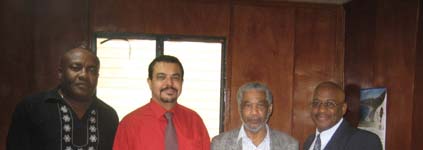
L. to r.: Joseph Ronald Toussaint, Christopher
Cox, Daniel Brisard, and Vincent Sweeney
Just one of these effects, sea level rise, will
result in a reduced amount of light reaching coral reefs
It was against this backdrop that Vincent Sweeney, (GEF-IWCAM
and sea grass beds. Decreased stocks of fish would be
Regional Project Coordinator) and Dr. Christopher Cox (Caribbean
one of the consequences of their destruction, as many
Environmental Health Institute Acting Programme Director) trav-
fish species live and feed in and around the reefs.
eled to Haiti to familiarize themselves with the on-the-ground situa-
tion and collaborate with colleagues at the national-level about
Climate change therefore will add to the stress
useful interventions which the project could undertake.
which our fisheries are already subjected to from un-
checked coastal development, pollution, over-
Their visit was hosted and facilitated by the Ministry of Environ-
harvesting, disease and infestations by invasive spe-
ment, and primarily by Joseph Ronald Toussaint, the GEF-IWCAM
cies. In the midst of all this, heavy exploitation and de-
Focal Point for Haiti.
pletion of fish stocks continues.
During their time in Haiti
Mr. Sweeney and Dr.
Saving fisheries means being careful not to
Cox held a series of
formal and informal
over-harvest, reducing pollution from our land-based
activities, managing our water resources responsibly,
meetings with represen-
tatives from the Govern-
and development which is sustainable. Leaving a
ment of Haiti and other
smaller carbon footprint i.e. using less energy, will help
agencies working within
us save energy and money and play a responsible part
and supporting Haiti,
in reducing climate change.
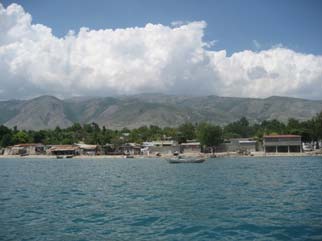
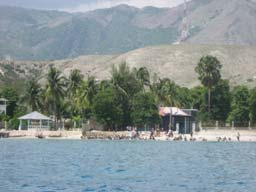
The deforested Les Marechaux
including the United
Ridge seen from the coast
Nations Development
Learning more about the different factors which
Programme Country Office; the National Tamarinier Laboratory of
impact upon our fisheries and about the effects of our
activities is a necessary first step towards making sure
(Continued on page 6)
that the abundant fish which we enjoy today can also be
enjoyed by our children and grandchildren in the future.
www.iwcam.org
6
IWCAM Caribbean WaterWays Newsletter
(Continued from page 5)
the Ministry of Agriculture, Natural Resources and Rural Devel-
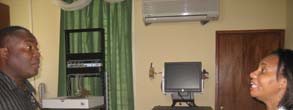
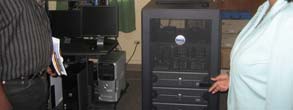
A tour of the CNIGS' fa-
opment; National Centre for Geospatial Information (CNIGS),
cilities demonstrated their
and the United States Agency for International Development.
capabilities to function as
a lead agency for GIS
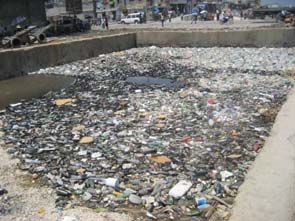
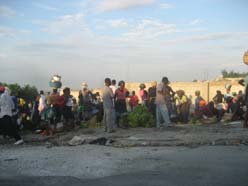
A field trip was also organised to downtown Port-au-Prince, in
pilot activities and to pro-
order to illustrate the severe problem of pollution of the marine
vide assistance to other
environment due to activities within the capital city and then
GEF-IWCAM Participat-
outside of Port-au-Prince, to the Arcadin Coast, where the im-
ing Countries. Ms. Gina
pacts of coastal pollution from Port-au-Prince could be seen.
Porcena, Director of Joseph Ronald Toussaint and
The meeting with Ministry of Environment officials served to
CNIGS, gave the visitors
Gina Porcena at CNIGS
a tour of the facility.
CNIGS is integrally involved in the management of geospatial
information and development of GIS capabilities for Haiti. It re-
ceives significant support from the European Union and is plan-
ning to look at watershed management as part of its activities
under that programme. It was agreed that CNIGS would partici-
pate in a joint activity to examine a watershed at risk, which
demonstrates the effects of multiple problems such as human-
based pollution, erosion, sand-mining, irrigated agriculture and
Polluted waterway in Port-au-Prince
pesticide impacts. The parties agreed to identify a practical ap-
proach, build synergies with existing projects and that the prob-
identify four main areas for consideration, in terms of priority
lem to be addressed should help to provide information and
actions in Haiti. These were identified by the Ministry of Environ-
support decision-making in a watershed which empties into the
ment as being:
coastal zone. Suggested locations included the Arcadin coast.
1. Pilot application of GIS for monitoring watersheds and pollu-
The GEF-IWCAM Project is committed to working with Haiti to
tion problems in the coastal zone and the Bay surrounding Port-
address issues related to integrated watershed and coastal ar-
au-Prince.
eas management. Based on this visit and on-going communica-
tion, the project and Ministry of Environment are brainstorming
2. Integrated Water Resources Management Planning and sani-
on pilot activities to identify "hotspots" using GIS technologies
tation improvements.
and implement specific activities to mitigate some of the more
damaging impacts of deforestation in these areas. Both GEF-
3. Conduct of a follow-up regional/international seminar on Envi-
IWCAM and the Government of Haiti are committed to making
ronmental Flows, using the Artibonite River watershed as a case
this intervention as effective as possible, and as such have been
study. This was proposed by Joseph Ronald Toussaint, who
looking to other partners working in the area to ensure there is
attended a Workshop on Environmental Flows, convened by
no duplication of effort and instead there are synergies.
IUCN and IW:LEARN in Iguassu Falls, Brazil, earlier this year,
along with a representative from Cuba and one from St. Vincent
While Haiti's challenges may seem overwhelming in comparison
(who was funded by GEF-IWCAM).
to other countries in the region, and the resources available are
limited, the GEF-IWCAM Pro-
4. Laboratory strengthening.
ject is confident that small-scale
application of the IWCAM ap-
On its visit to the National Tamarinier Laboratory of the Min-
proach is one possible way to
istry of Agriculture, Natural Resources & Rural Develop-
address some of Haiti's press-
ment (MARNDR), Dr. Millien, Director of the laboratory, which
ing needs.
focuses on veterinary animal health and food safety, as well as
water quality, described their efforts to expand the facilities and
the support which the laboratory currently receives, including
support from Argentina and Cuba. Its work includes animal and
plant quarantine, diagnostics, quality control, toxicology, bacteri-
ology, microbiology, virology, pathology, parasitology, and chem-
istry. The limitations of the laboratory facilities were highlighted.
These include the need for equipment, reagents, additional hu-
man capacity and to improve analytical techniques.
www.iwcam.org






























































7
IWCAM Caribbean WaterWays Newsletter
A look at environmental damage in the Lower Haina
River Basin, Dominican Republic
-- or remembering why IWCAM is important
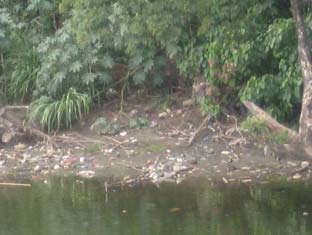
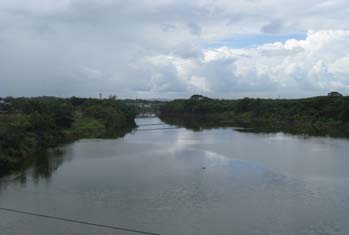
While on a field visit to the Lower Haina River Basin, site of the Dominican Republic's GEF-
IWCAM Demonstration Project, in May I was struck by the contrast between this watershed
and the Driver's River Watershed in Portland, Jamaica, the last one we had visited (in March
2008) and which was relatively pristine.
The Lower Haina River Basin is one of the main industrial conglomerations in the Dominican
Republic. Within this River Basin there is a coal-fired electricity generating plant, a petroleum
refinery and a vehicle battery factory amongst more than one hundred medium to large sized
industries. The area has been highly contaminated by these industrial activities as well as by
the solid and liquid wastes generated by the communities. It is home to very large unplanned
or squatter settlements and the effects of the lack of planning and services are very apparent
on the hills, along the river banks and in the water.
Yet the waters of this Basin are among the main fresh water sources of the capital city, Santo
Domingo. I wondered how many people going about their daily business in the capital were
aware of, or thought about, this. There is a great need for public education about the water-
shed and linkages between activities on land and their effects upon the very water we need.
I came away with a better appreciation of the huge challenge which is faced by the Demon-
stration Project Management Team. Their work to involve stakeholders, in particular the in-
dustrial sector, in interventions such as recycling, a heavy metal contamination survey to bet-
ter guide policy and strategic planning, and overall integrated management programmes, will
require energy, determination and support.
This field visit sure wasn't a walk in the park but the friendly children we encountered every-
where were enough reminder of why the Lower Haina River Basin, and others like it, need to
be cleaned up as soon as possible.
Donna Spencer
www.iwcam.org
















8
IWCAM Caribbean WaterWays Newsletter
The South Florida Water Management
Land Stewardship the provision of natural resource
protection, effective land management and reasonable
District
opportunities for appropriate agricultural use, while allow-
A Balancing Act
ing compatible recreational uses on designated public
lands.
Donna Spencer attended the UNEP/IW:LEARN Informa-
SFWMD's responsibilities also include: modeling and sci-
tion Technology Workshop which took place 2 6 June
entific support; operations and maintenance; regulation;
2008 at Florida Atlantic University's Center for Environ-
and, ensuring an adequate supply of water to protect natu-
mental Studies in Boca Raton. While the training itself
ral systems and meet all existing and projected reason-
focused upon Plone open source software and website
able-beneficial uses, while sustaining water resources for
building, on Friday 6th June, participants in the Workshop
future generations.
visited the South Florida Water Management District
(SFWMD) in nearby West Palm Beach.
Agnes Ramsey, Deputy Department Director, Everglades
Restoration Planning, elaborated on SFWMD's ambitious
This regional, governmental agency oversees the water
10 billion dollar, 35 year implementation plan to restore the
resources in the southern half of the state of Florida which
Everglades. CERP is already helping to reduce the prob-
has one of the most diverse ecosystems in the world. It is
lems which for years have plagued the area: too much or
the oldest and largest of the state's five water manage-
too little water in the South Florida ecosystem; massive
ment districts and a centre of excellence. Its mission is to
reductions in populations of wading birds; degradation of
manage and protect water resources of the region by bal-
water quality; repetitive water shortages and salt water
ancing and improving water quality, flood control, natural
intrusion; declining estuary health; and as much as 1.7
systems and water supply.
billion gallons of water a day wasted to tide.
This broad mission is achieved through a number of pro-
Department Director, Operations Control, Susan Sylvester,
grams which include:
gave an overview of SFWMD's Water Management Sys-
Coastal watersheds the restoration of coastal water-
tem. Part of this is the state's primary flood-control sys-
sheds and receiving water bodies through local initiatives
tem, the Central and Southern Florida (C&SF) Project,
and partnerships and applied scientific research; decreas-
which includes approximately 2,000 miles of canals and
ing flood damages District-wide through flood management
levees, hundreds of water control structures, dozens of
planning.
pump stations, and numerous other facilities. Finally, the
group was given the opportunity to tour the Operations
The Comprehensive Everglades Restoration Plan
Control Center Science and Tech-
(CERP), an unprecedented State-Federal partnership
nology in Action!
which aims to restore, conserve and protect South Flor-
ida's ecosystem while providing for other water-related
needs of the region, including water supply and flood pro-
tection.
Protection and restoration of natural systems in the
northern Everglades (Kissimmee, Lake Okeechobee, Ca-
loosahatchee and St. Lucie watersheds) by increasing
storage capacity and water quality treatment.
Touring SFWMD's lobby and Operations Control
Participating Country Focal Points, Demonstration Projects and others are invited to submit articles. Please contact
Donna Spencer at dspencer@cehi.org.lc
Contact Information:
IWCAM Project Coordination Unit
P.O. Box 1111, The Morne, Castries, Saint Lucia
Tel: (758)-452-2501/1412; Fax: (758)-453-2721
E-mail: dspencer@cehi.org.lc
www.iwcam.org