



Caribbean WaterWays
Newsletter of the GEF IWCAM Project
Volume 3, Issue 1
March 2009
In this issue:
Feature Article:
Caribbean participates in
Making a Positive Difference in the
· Making a Positive
5th World Water Forum
Difference in the
Cienfuegos Watershed
The GEF-IWCAM project supported
Cienfuegos Water- participation of representatives from the Carib-
- the GEF-
shed-- the GEF-
IWCAM Cuba Dem- bean, who were also actively involved in the
IWCAM Cuba
onstration Project build up to the region's representation at the
Forum. These included the Honourable Dr.
Demonstration
(pgs. 1,2,3)
Horace Chang, Minister for Water in Jamaica,
Project
· Caibbean partici-
and Cyprian Gibson, the President of the Car-
pates in 5th World ibbean Water & Wastewater Association
Since it's official
Water Forum
(CWWA). Regional partners at the Forum
(pgs.1, 7)
launch in February
included the Global Water Partnership (GWP)
2008, Cuba's Demon-
-Caribbean, the Caribbean Environmental
· Background on the
s t r a t i o n P r o j e c t :
Health Institute (CEHI), and the Organization
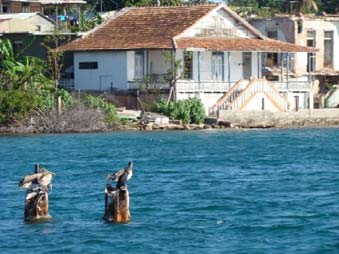
Cienfuegos Bay
GEF-IWCAM Pro-
"Application of IWCAM
of American States (OAS).
ject (pg.2)
Concepts at Cienfuegos Bay and Watershed" has made
significant progress in introducing and demonstrating best
· Cuba Demo--His
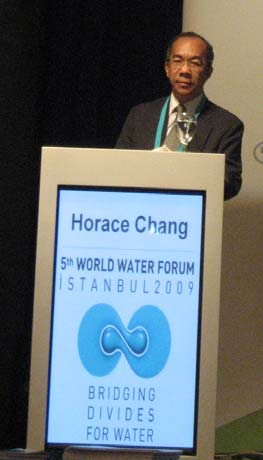
Minister Chang
practices in land use and management for more integrated
nickname used to
addresses the
management of the watershed and coastal areas (IWCAM).
be "Candelita"(pg.
Forum
2)
Environmental Monitoring linked to the decision-making
process
· "Weh yuh dash
Data is collected, analyzed and made available
weh nuh wash
through a functional Geographic Information System (GIS) to
weh" : Community
a specially created Local Authority and other relevant stake-
Involvement in the
Jamaica Demo
holders. In January 2009 their database, the Sistema Integral
Project (pg. 4--5)
de Gestión de Información Ambiental (SIGIA) was introduced
to stakeholders at the First Provincial Environmental Monito-
· Is time running out
ring Programme meeting.
for Buccoo Reef?
(pg. 6)
This has resulted in significant strengthening of
wastewater management as the Local Authority and linked
· Reflecting on Les-
institutions have a complete and updated inventory of point
sons Learned (pg.
sources of pollution in the area along with an evaluation of
7)
contaminant loads. Alain Muñoz Caravaca, the Demonstra-
tion Project Manager, has
· Signs of Trouble
The six-day meeting was attended
stressed that with the intro-
Marine Algae (pg. by over 25,000 persons and involved a num- duction of this system, IW-
8)
ber of parallel sessions, an exposition, and a
CAM issues are being ad-
high-level Ministerial segment. GEF-IWCAM
dressed with better collabora-
was represented formally in two sessions: the
tion and coordination
Americas Region session on March 17, and
amongst all stakeholders.
the Session: `Local Action Thinking beyond
the water box: What adaptation to global and
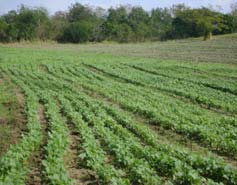
Model farms for IWCAM
climate change?' which took place on the
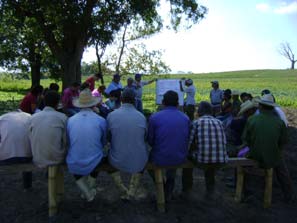
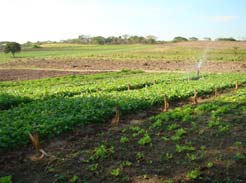
In the agricultural Soil conservation training for
afternoon of the same day.
and forest sectors, demon-
farmers
(Continued on page 7)
(Continued on page 2)
www.iwcam.org
2
IWCAM Caribbean WaterWays Newsletter
BOX A:
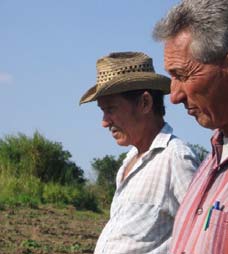
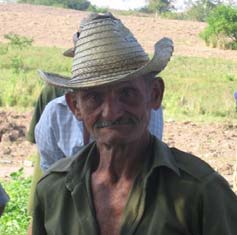
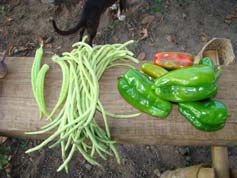
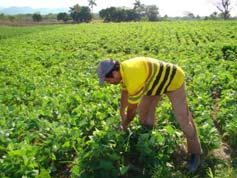
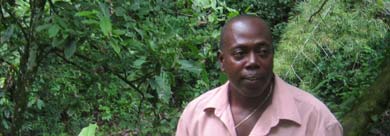
"His nickname used to be
`Candelita'"
The farmer on the right used to be known in his part of Cienfue-
gos Province for his affection for slash and burn farming. In the past, he
would jump at any opportunity to burn fields. His fellow farmers at the
Sarduy farm in the Cienfuegos Province of Cuba are now looking for a
new name for him, since he has seen with his own eyes the benefits of
composting, and other soil conservation techniques.
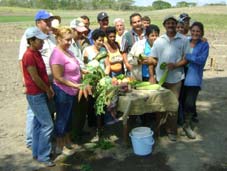
The Sarduy Farm is a medium sized farm, with about 10 agri-
cultural workers. It is being used as a pilot in the GEF-IWCAM Project in
Cuba to demonstrate best agricultural practices. Their hard work is yield-
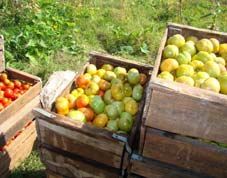
ing impressive results. The leader of the farm, Mr. Sarduy, told a visiting
group that they have noticed that some of their crop yields (most notably
tomatoes), have increased substantially. They are even getting extra
(unexpected) crops in each season.
In addition to composting, the workers at the Sarduy farm are
also using live barriers, shifting the orientation of their crops to better
follow the contour of the land, and increasing the efficiency of their irriga-
tion practices. Mr. Sarduy is proud of the work of the farm and is eager to
share this information with others, having already hosted one training
session for nearby farms and looking forward to more. His enthusiasm for
the work is contagious - he has already recruited much of his family to
work with him, including his previously retired 76 year old father.
The lessons learned in the Sarduy farm, and the seven other
demonstration farms included in this component of the demonstration
project, are being documented, with help from the Institute of Soils in the
Ministry of Agriculture.
(Continued from page 1)
BACKGROUND ON THE GEF-IWCAM
stration areas of best practice in land use and man-
agement are being implemented (see Box A, page
PROJECT:
2). On-going training activities are important aspects
of these initiatives because it is recognized that repli-
The Global Environment Facility-funded Integrating Watershed
cation of good practice at community level gives
and Coastal Areas Management in Caribbean Small Island De-
workers new environmental knowledge, increases
velopment States (GEF-IWCAM) Project was approved by the
production and helps protect fragile ecosystems.
Global Environment Facility (GEF) in May 2004. Implementing
agencies are the United Nations Environment Programme
The "14th July" sugar factory within the wa-
(UNEP) and the United Nations Development Programme
tershed is being used to demonstrate best land-use
(UNDP). Executing agencies are the Secretariat of the
practices in agriculture. Water is recycled and con-
Cartagena Convention (UNEP-CAR/RCU) and the Caribbean
sumption has been reduced. Sugar plantations are
Environmental Health Institute (CEHI) and the UN Office for
irrigated with sugar cane wastewater in a program on
Project Services (UNOPS). The thirteen participating SIDS are:
water quality for irrigation and soil conservation. Bio-
Antigua and Barbuda, The Bahamas, Barbados, Cuba, Grenada,
waste is conserved and applied in the field; a prac-
Dominica, Dominican Republic, Haiti, Jamaica, Saint Kitts and
tice which seems to be improving crop yields.
Nevis, Saint Lucia, Saint Vincent and the Grenadines, and Trini-
dad and Tobago. The length of the Project is 5 years and com-
Ensuring learning and replication
menced in the second quarter of 2005. The Project Coordinating
Unit is located at the CEHI, as agreed by the Implementing and
Efforts are being made to provide informa-
Executing Agencies and the participating countries.
(Continued on page 3)
www.iwcam.org








3
IWCAM Caribbean WaterWays Newsletter
(Continued from page 2)
tion on best practice to targeted sectors. The education
of workers at every level is seen as important and is an
on-going and systematic process. A manual titled:
"Guidelines for better environmental practices in the agro-
industrial sugar sector" has been completed and is being
distributed to other Cuban enterprises. In addition an Eng-
lish version has been prepared to assist other Caribbean
SIDS involved in sugar production.
Public Education
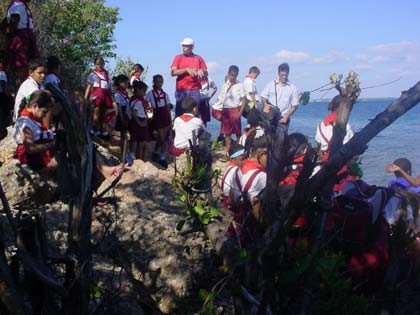
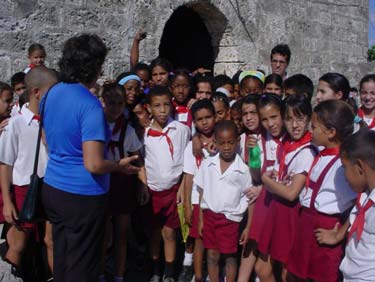
Students--an important target group
CEAC and the University of Cienfuegos jointly run
the environmental education programme which began in
accreditation process for an MSc in Integrated Coastal
2008 and has already made some significant inroads.
Zone Management, an expansion of an initiative of the
Canadian and Cuban Governments and other partners.
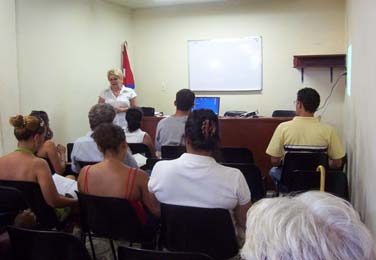
SIPEAC session
In the rural fishing
community of Casti-
Three cohorts have already been enrolled in this
llo, which is serving
course and a fourth will begin this year, based for the first
as a pilot site for
time in Cienfuegos. The project team is working with oth-
many of the public
ers to evaluate the possibility of establishing a similarly-
education activities
oriented doctoral degree.
under the GEF-
IWCAM Project, an
CEAC and the University of Cienfuegos, under
Information Centre for
the public education and awareness component of the
Community Environ-
demonstration project, have also completed a training
mental Education
needs assess-
(Sala de Información Para la Educación Ambiental Comu-
ment and stake-
nitaria, SIPEAC) was established.
holder identifica-
tion exercise.
SIEPEAC provides residents of Castillo with im-
This is helping
portant environmental and cultural information and activi-
them to better
ties related to the Cienfuegos Watershed. Some exam-
target their inter-
ples include identification of traditional meals from the
ventions and
sea, data and research on local aquatic species, ways to
activities. Based
save the mangrove, the establishment of `Circles of Inter-
on this informa-
est' on issues such as pollution, coastal and mangrove
tion, they have
vegetation, macroalgae, and mollusks, which bring to-
already planned
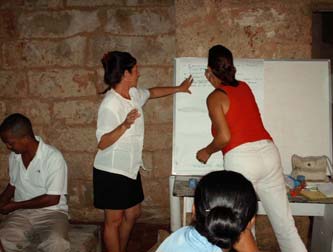
Training Programme
two tra i ning
workshops in 2009 and more in 2010. The creation of a
community-based working group which will take an inte-
grated approach to management of the area is also being
planned.
A Circle of Interest
gether youths with similar interests to explore such com-
mon themes.
In 2008, the demonstration project completed the
The city of Cienfuegos
www.iwcam.org
4
IWCAM Caribbean WaterWays Newsletter
"Weh yuh dash weh nuh wash
weh"
Community Involvement in the Jamaica
Demo Project
Once a month the Driver's River Stakeholders Group
meets to share information on Project activities and progress, and to
make decisions on the way forward. This is the means by which the
various communities throughout the Driver's River Watershed par-
ticipate in Project decision-making.
From the onset the GEF-IWCAM Jamaica Demonstration
Project has used a participatory approach very effectively. An ear-
nership?); the role of governance in fixing issues within communities
lier feature article, in Caribbean WaterWays, Vol. 1, Issue 3, Sep-
of local Stakeholders; and the importance of partnership with gov-
tember 2007, described the Project's scope and objectives. It rec-
ernment and non-government organizations. It was described by
ognized that environmental challenges in the area are rooted in a
those who participated as being very interactive. Committee mem-
number of interrelated causes which have physical, socio-economic
bers acted as facilitators and there were over forty participants.
and institutional dimensions.
There was the sharing of Best Practices from other communities
(Boundbrook and Prospect) which were involved with the Coastal
Stakeholders were initially involved, through participation
Water Quality Improvement Project (CWIP) and the Ridge to Reef
in a Stakeholder's Workshop which began the process of strategic
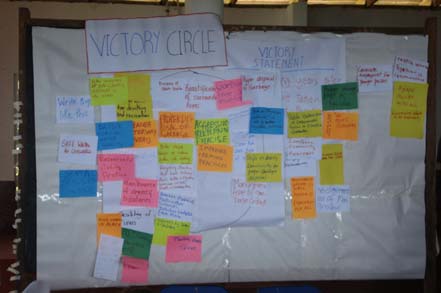
Watershed Project (R2RW). Outputs included a Vision Statement,
planning during the early stages of the project. The Project Man-
the development of a one year Action Plan for the Watershed and a
agement Unit, which is based at the National Environment and
Victory Statement for the Project.
Planning Agency (NEPA) in Kingston, included stakeholder input in
preparing the Project Work Plan and Budget. The Stakeholders
Most significantly, the Workshop led to the strengthening
Group was established in the early stages of the Project and has
of the human resources of the Project's sub-Committees as partici-
continued to meet throughout project implementation.
pants were co-opted to serve on and become involved in their work.
There was a significant increase in awareness of land-use and pol-
Buy-in to the Project by the several communities which
lution problems in the watershed accompanied by a willingness to
make up the Driver's River Watershed is significant, as evidenced
seek solutions. This is seen in the fact that members of the Govern-
by the range of activities initiated by and discussed at the rather
ance sub-Committee are involved in a wide range of activities. An
lively Stakeholders Meetings.
illegal dump in Long Bay, for instance, was successfully removed
with their assistance late last year. The group also recognized the
Four sub-Committees were fielded early from amongst
need for, and planned, an Enforcement Workshop in December
Project staff as well as stakeholders. Here is a quick look at some
2008.
of the activities managed by the various sub-Committees:
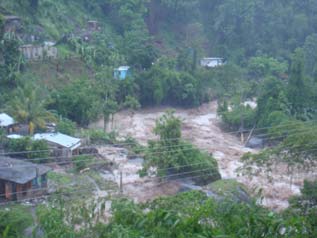
Sanitation and Liveli-
Flooding after Tropical
· Governance and Enforcement
hoods:
Storm Gustave
· Sanitation and Livelihoods
This
vibrant
· Environmental Monitoring
sub-Committee ad-
· Public Awareness
dresses sanitation and
livelihood issues
Governance and Enforcement:
throughout the project
The Governance and Enforcement Committee coordi-
area. As part of the
nated the conduct of a Knowledge, Attitudes and Practices (KAPS)
Improved Livelihood
Survey in the Demonstration Project Area. It reached 735 house-
component of the Pro-
holds in the watershed. The results of the survey were presented
ject, for instance, follow-
and discussed at a Governance Workshop which was subsequently
ing the heavy damage
held in October 2008. Participants felt that the Stakeholder Analysis
caused by Tropical Storm Gustave in Setember 2008, much of the
helped them to better understand the needs of the community and
Committee's energy went to helping subsistence farmers get on
how they might make a positive contribution to the Project.
their feet once again. This included: the supply of baby chicks to 9
women and one high school within the Watershed; efforts to procure
The Governance Workshop addressed the following is-
(C
ontinued on page 5)
sues: stakeholder analysis (who they are and how to improve part-
www.iwcam.org










5
IWCAM Caribbean WaterWays Newsletter
the 5 seed crops and organic fertilizer and
The Water Resources Authority measures stream flow
pesticides for distribution to farmers and
while Meteorological Services is responsible for rainfall data. The
coconut seedlings for some areas along the
EMC receives reports on these efforts and deals with matters such
coast. The farmers were chosen based on
as the training of new volunteers (as some are lost over time).
a needs assessment done through the
Rural Agricultural Development Authority
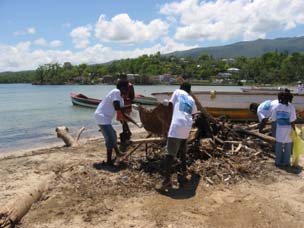
The EMC took the lead on International Coastal Cleanup
(RADA). Fair Prospect High School also
Day (ICCD) which was
received 34 chicks for their school farm.
marked with an event which
took place 20 -- 21 Septem-
Training events such as Farmers
ber 2008 in Manchioneal
Training Days (Hectors River, September
and Long Bay. Over the two
2008, Rowlandsfield, October 2008, and
days, 174 volunteers partici-
Manchioneal, December 2008), and Fisher
pated including members of
Folk Workshops (Manchioneal, and Bryans
the community, students,
Bay, November 2008) are planned by the
Peace Corps and National
Committee, often to coincide with wider events such as National
Youth Service (NYS) volun-
Wood and Water Day (NWWD).
teers.
The
Farmers
Training Day held in
Public Awareness:
Rowlandsfield in Octo-
The Public Awareness Committee leads a range of public
ber 2008 was typical.
awareness and education activities within the Demonstration Project
Forty farmers attended
area. These include: debating and poster competitions in schools;
along with representa-
day camps for children
tives from local
aged 9 13 years; and,
branches of RADA, as
project awareness initia-
well as NEPA who
tives around certain
provided technical
themes or events (e.g.
expertise. The Pesticide Control Authority also attended. The train-
National Wood and Wa-
ing day focused on land husbandry, soil stabilization, and composting
ter Day)such as the
techniques. In addition the farmers were trained in proper tree plant-
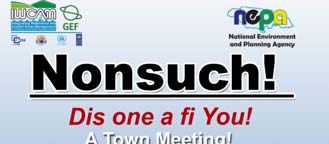
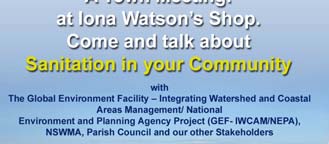
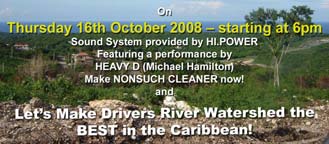
planning of a "Town
ing techniques for fruit trees such as Jew Plum, Naseberry, Otaheite
Cry". In addition support
Apple, and Jackfruit. Some attendees received fruit trees as an in-
is given to the advertis-
centive for their level of participation in the training.
ing of meetings and
assistance with informa-
The commemoration events for National Wood and Water
tion and logistics for
Day (NWWD) were particularly well planned and participation was
project and community
excellent. They took place over a two day period, with Fair Prospect
events such as Wood &
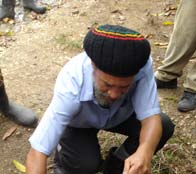
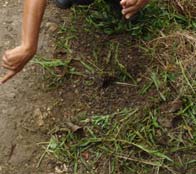
High School hosting the planting of cassava sticks on the Friday and
Water Day and Farmer's
a community planting day on the Saturday at Long Bay and Man-
Field Day.
chioneal.
Lisa
Kirkland,
Demo Project Manager,
Environmental Monitoring:
stresses that an integrated approach is always taken to problem
The Environmental Monitoring sub-Committee (EMC) over-
solving. Although a particular committee may take the lead on a
sees water quality, stream flow and metrological monitoring within the
particular issue, all committees and stakeholders are involved in a
Project area. Water quality sampling is carried out by trained volun-
number of cross-cutting events.
teers from the communities. Analysis is done by NEPA, and the
EMC makes decisions for action to be taken. This sub-Committee
By successfully including watershed stakeholders in project
consists of a number of state agencies as well as community stake-
implementation since its beginning, the Jamaica Demonstra-
holders and has the technical expertise to guide the proper manage-
tion Project has been able to achieve much that is of benefit to
ment of the Watershed. The EMC meets monthly to discuss the re-
the community. There is significant "buy-in" by people who
sults of monitoring. Hotspot communities are selected. A town meet-
live in the watershed. They are encouraged, energized and
ing is then held informing communities of the results and engender-
empowered as they see that by their actions, and with a little
ing solutions, which almost always lead to a clean-up of some kind.
support, they can achieve positive results. Already there is
This mechanism for informing the community of water quality results
discussion about creating a Sustainable Management Commit-
is a particularly interesting one because it means that data collected
tee to ensure sustainability and this initiative is from the
is put to practical use.
stakeholders themselves!
www.iwcam.org
6
IWCAM Caribbean WaterWays Newsletter
Is time running out for Buccoo Reef ?
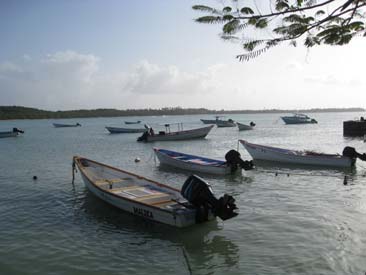
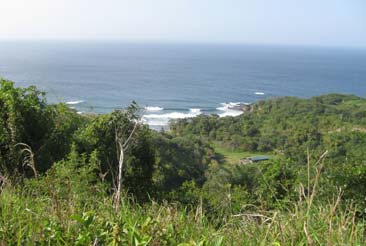
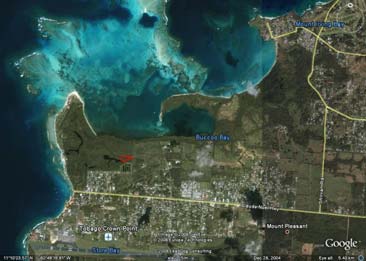
The GEF-IWCAM National Demonstration Project for Trinidad and Tobago: Land-Use
Planning and Watershed Restoration in the Courland Watershed and Buccoo Reef Area,
seeks to reduce the impact of the Courland Watershed and other smaller watersheds from Cas-
tara in the North, to Crown Point in the Southwestern end of Tobago, upon coastal areas, from
Little Englishman's Bay to Buccoo Reef. This Demonstration Project is being implemented by the
Buccoo Reef Trust (BRT), in close collaboration with the Tobago House of Assembly (THA). The
BRT has established a Project Management Unit (PMU).
In January 2007 a long-term reef monitoring program was begun by the Buccoo Reef
Trust as part of the GEF-IWCAM Project. The study includes a detailed mapping and baseline
data-collection project and a reef monitoring program using fixed stations.
These sites, which were designed to provide long-term data on the condition of the
reefs over time, are routinely being monitored by the research team for: water quality, reef com-
munities (e.g. fish and habitat surveys), bleaching and disease. Data collection started in Janu-
ary 2007 using sediment traps, water quality testing and underwater video.
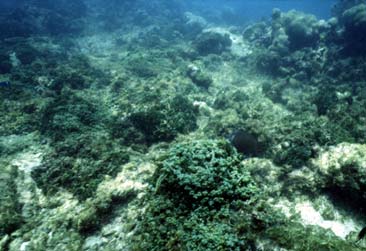
A series of twelve permanent monitoring stations were established on the main coral
reefs around Tobago. Eight of these sites are located on the leeward side of the island (the Carib-
bean coast), and four of them on the windward side (the Atlantic coast). These include several
monitoring stations which are outside the project area for the sake of comparison.
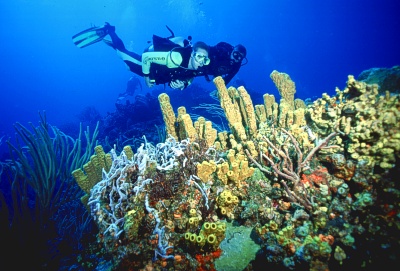
Monitoring during the latter part of 2008 found that the average percentage of live hard
coral cover dropped from 18.07% in the period July-September to 15.29% in the October-
December quarter in the monitoring sites that are inside the IWCAM area. This is the biggest
reduction in live reef building corals since the beginning of these surveys in January 2007.
The decrease observed can be attributed to a relatively high abundance of diseases
present in Tobago's reefs (specifically yellow blotch disease) with direct effects on reef building
species of corals like the star coral, Montastraea faveolata. Other factors which have a negative
effect on coral reefs are sediments which come from inland areas after land has been exposed to
the elements, pollution from poor sewage treatment, rising sea temperatures, and others.
For the same period, monitoring showed that both Kariwak Reef and Little English-
man's Bay had significantly high amounts of sediments settling on the corals. Both of these sta-
tions have rivers nearby which could be transporting sediment washed off land which is being
cleared in surrounding areas.
In addition, macroalgae cover was reduced from 6.8% in July-September to 2.5% in
October-December. This is an unexpected result since the rainy season was expected to trigger
algal reproduction. The amount of macroalgae present in the monitoring stations from July to
December 2008 has been significantly lower than in previous surveys. This would seem to indi-
cate that some features of Tobago's coastal waters could be changing or that some other varia-
tion is taking place in this aquatic environment, such as grazing animals feeding more voraciously
on the algae.
The Trinidad and Tobago GEF-IWCAM Demonstration Project is working to educate
and involve stakeholders in its conservation programmes. School children are participating in
land-sea interaction education programmes. Local community groups are involved in reforesta-
tion efforts and water quality monitoring. Farmers are being encouraged to use more traditional,
environmentally sustainable agricultural practices.
For more information contact: Sandra Timothy : s.timothy@buccooreef.org
www.iwcam.org
7
IWCAM Caribbean WaterWays Newsletter
Reflecting on Lessons
view with him on the Rainwater Harvesting (RWH)
Initiative, in the Fond D'or watershed, site of the
Learned
Saint Lucia Demonstration Project, follow:
"On-the-ground activities were important be-
cause we needed to find ways to showcase IWCAM.
Cornelius Isaac
People have basic needs and if you don't address
them first you can't talk to them about anything else."
"When the project began there was a great
deal of anger in the community aimed at WASCO
(the Water and Sewerage Company) which was
seen as the source of water and responsible for all
problems related to water. The Project has helped
the community instead to focus on the entire river
system and watershed; the entire drainage system,
and their roles. Before the Project they did not be-
Saint Lucia's Demonstration Project Man-
lieve that they had a say or made a contribution to
ager, Cornelius Isaac, reflects on Lessons the problem, much less the solutions. The commu-
Learned, some of the Challenges faced and the
nity now feels greater responsibility and realizes that
Critical Success Factors:
WASCO is just one user of the river, that they can do
more to help themselves ...they feel empowered."
Cornelius Isaac has been the Saint Lucia
Demonstration Project Manager since its beginning
Demonstrating direct and tangible benefits to
in 2007. His experience working with the Govern-
the community is in Cornelius' view critical to the
ment of St. Lucia, since 1982, which included being
success of the Project. Other critical success factors
the Regional Forest Manager, as a Project Officer on
include: the use of appropriate and accessible tech-
a Canadian-funded forest management project, and
nology; successful co-operation with other projects;
on the NOAA-funded Watershed Project in Soufriere
and, strong linkages with various resource agencies
where there were good results, has helped with
for the sharing of information, and initial and ongoing
many aspects of this project. Excerpts from an inter-
support.
(Continued from page 1)
Caribbean participates in WWF5 cont'd...
The Americas Region session was attended by well over 200 persons and
took place in the second largest hall at the WWF. It included presentations from Minis-
ter Chang, Patricia Aquing (CEHI's Executive Director), and the GEF-IWCAM RPC.
Recommendations made and positions stated at the Water Forum of the Americas
(known as the Message of Iguassu Falls, MIF) in November 2008 were presented for
consideration by the WWF.
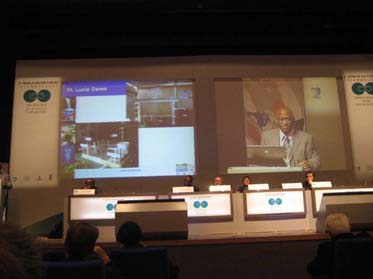
The GEF-IWCAM RPC was able to present a Case Study on behalf of the
Caribbean sub-region which highlighted success stories in IWCAM, considered to be
of most relevance to the sub-region. The presentation focused on the St. Lucia and
Jamaica demonstration projects and the IWRM work being catalyzed by the project.
This has been included in GEF:International Waters publication titled "Ridge to Reef",
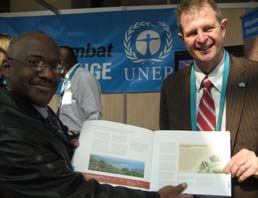
Vincent Sweeney, RPC, addresses WWF5
which was launched at the Forum (see: http://www.gefweb.org/uploadedFiles/
Publications/GEF_RidgetoReef_CRA_lores.pdf).
The GEF-IWCAM PCU also, through the Technical Coordinator, Sasha RPC and Christian Severin, GEF Secretariat
Gottlieb, co-wrote (with the Pacific Islands Applied Geoscience Commission
SOPAC) a perspective document for the Session which focused upon Small islands Perspectives
on Water in Pacific and Caribbean small island countries Adapting to Climate Change in water
resources and water services (see: http://www.waterandclimate.org/index.php?
id=5thWorldWaterForumpublications810). The GEF-IWCAM RPC participated in this session as
well as in the Round Table discussions on Areas with Increasing Precipitation, Run Off and Sea
Level Rise. He emphasized the distinctions between SIDS and large developed countries in how
they are able to respond to climate change impacts, such as severe weather, storm surges, sea-
level rise, floods and water shortages.
www.iwcam.org








8
IWCAM Caribbean WaterWays Newsletter
Signs of Trouble...
Colihaut coastal area, Dominica
and livestock pastures); irrigation return flows; and a
Reduit Beach, Saint Lucia
variety of sources upstream.
Act now! Learn more about the problem and
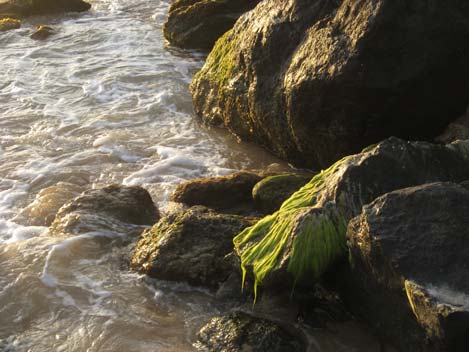
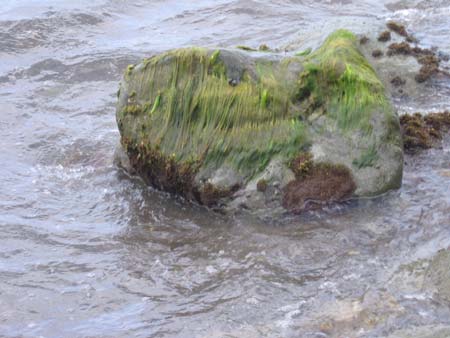
Marine algae like this can be seen on many
how you can help!
Caribbean beaches. You might think it's quite pretty
but it is often a sign that the water is polluted and
should be considered a warning to us.
Such algae grows when the water is nutri-
.
ent-rich. Phosphorous in detergents, as well as
other nutrients are washed into our drains and even-
tually end up in the sea. There they encourage the
growth of algae. This algae as it becomes more
abundant, depletes oxygen in water, leading to the
eutrophication of coastal waters.
Rapid growth of marine algae can quickly
overgrow corals, smothering them in the process.
Where does this pollution come from?
There are many sources: point sources such as
manufacturing plants and marine vessels; urban
non-point run-off (stormwater runoff and combined
Grand Anse Bay, Grenada
overflow discharges); non-urban point runoff (farms
Participating Country Focal Points, Demonstration Projects and others are invited to submit articles. Please contact
Donna Spencer at dspencer@cehi.org.lc
Contact Information:
IWCAM Project Coordination Unit
P.O. Box 1111, The Morne, Castries, Saint Lucia
Tel: (758)-452-2501/1412; Fax: (758)-453-2721
E-mail: dspencer@cehi.org.lc
www.iwcam.org