
















Caribbean WaterWays
Newsletter of the GEF IWCAM Project
Volume 3, Issue 2/3
June/Sept 2009
In this issue:
Workshop Enhances
Conserving Forests for
· Conserving For-
Regional Laboratory Quality
ests for Better
Better Water
Water (pgs. 1,2,3)
Assurance Skills
"It is clear that we need to first and foremost
protect whatever primary forest remains on the island
· Regional Labora-
in order to stabilize the dry season stream flow situa-
tory Workshop
tion. We also need to set aside adequate reserve areas
(pgs.1, 6)
per watershed so that secondary forest can evolve.
This will improve water quality in the short term. In the
· Community Per-
long term, we will be returning the water benefits of a
spectives on Wa-
primary forest and greater opportunities for sustain-
tershed Manage-
ment (pgs.1,10,11)
able water supplies."
· RTAG 4 (pgs. 2, 7)
These were Cornelius Isaac's concluding words
after making the case for conservation of St. Lucia's pri-
· Grenada: The St.
From May 12th 15th, 2009, the mary forests in a presentation titled "Forests and Rivers
John's Watershed Caribbean Environmental Health Institute the relevance of St. Lucia's forest to stream flow security"
(pg. 4)
(CEHI), one of the co-executing agencies at a recent session sponsored by the GEF-IWCAM Project
of the GEF-IWCAM Project, ran a Work-
during St. Lucia's Water Week in May 2009. Cornelius is
· Dominica--What
shop on "Laboratory Quality Assurance the Project Manager for the St. Lucia Demonstration Pro-
does the LBS Pro-
and Method Quality Control" in Rodney ject, located in the Fond D'or Watershed.
tocol have to do
Bay, St. Lucia.
with it? (pg. 5)
The relationship between forests and water re-
The course targeted laboratory sources is closer than many of us realize. Forests are an
· STP Training (pg. managers, and quality assurance and integral part of the water cycle. They intercept rainfall,
6)
laboratory personnel involved in the
evaporate moisture from vegetative surfaces, transpire soil
moisture and maintain soil infiltration, thereby influencing
· Caricom Consor-
(Continued on page 6)
the amount and quality of water available. As water passes
tium of Institutions
on Water Ad-
through a forest ecosystem the soil traps sediment and
vances its Agenda
Community Perspectives
filters out pesticides and other pollutants from upslope land
(pg. 7)
uses and activities. Forests stabilize the soils by helping to
on Watershed Management
prevent erosion as ground vegetation, litter and plant roots
· Workshop on Hy-
The GEF-IWCAM Project's approach to
protect the soil during periods of heavy rainfall, reducing
drometric Net-
Integrated Water Resource Assessment in Saint
the impairment of water quality due to sedimentation. As
works (pg. 8)
rainfall is intercepted, rapid runoff and flooding is also re-
duced.
· Jamaica Demo
Project Manager
Most importantly perhaps, forests play a role in
Shares experi-
recharging and maintaining the quality of groundwater.
ences with SOPAC
Water utilities know well that changes in land use can af-
(pg.9)
fect the quality of water at intakes, often leading to greater
·
treatment costs.
Going Global:
Sharing IWCAM
Experiences in
Yet, even as the demand for water grows, Carib-
Paraguay (pg.12)
bean forests are declining in both size and quality.
Spring Village Working
Group
(Continued on page 10)
(Continued on page 2)
www.iwcam.org
2
IWCAM Caribbean WaterWays Newsletter
Regional Technical
project was presented. Some major conclusions extracted from
the report were:
Advisory Group's
The Project:
· is very significant and is expected to deliver important
Fourth Meeting
benefits and offer lessons.
· is successful and expected to continue to be so.
The
GEF-IWCAM
Pro-
· has a strong local and regional impact.
ject often looks towards regional
· focus should move to replication of successes, sus-
experts to help to guide it in
tainability, and capturing key lessons.
achieving its objective of im-
· is well formulated and well undertaken by an experi-
proved integration of watershed
enced Project Coordination Unit and with sufficient
and coastal areas in Caribbean
support from the Implementing and Executing Agen-
small island developing states. As
cies.
such, once to twice a year, the
· needs no significant corrective actions to objectives,
project calls a meeting of the
activities or outcomes.
Regional Technical Advisory
· is providing important support to Land Based Sources
Group (RTAG).
of Marine Pollution Protocol of the Cartagena Conven-
Vincent Sweeney, RPC,
tion (LBS Protocol) ratification process.
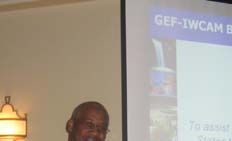
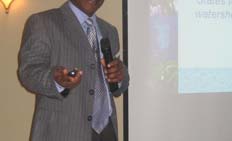
presents Work Plan
The RTAG is comprised
of one senior technical representative from each country
The RTAG was specifically asked to consider the sustainability
(wherever possible this national member should represent a
of the IWCAM ap-
sector which is related to that country's demonstration project or
proach after the end of
areas of principal IWCAM concern), the GEF-IWCAM Regional
the project. Participants
Project Coordinator, and a representative from each of the two
stressed that much of
Executing Agencies (EAs), UNEP CAR/RCU and CEHI. In addi-
the sustainability of the
tion the RTAG may invite regional or international, technical
approach would be
expertise as guests to a meeting where that expertise may prove
linked to ratification of
to be valuable (and with the agreement of the EAs).
the LBS Protocol. LBS
ratification would en-
In July 2009, the Project convened its fourth RTAG
trench the IWCAM
meeting in Nassau, the Bahamas, to discuss past, present and
approach into national
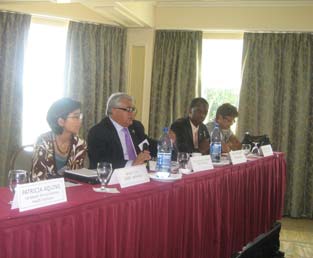
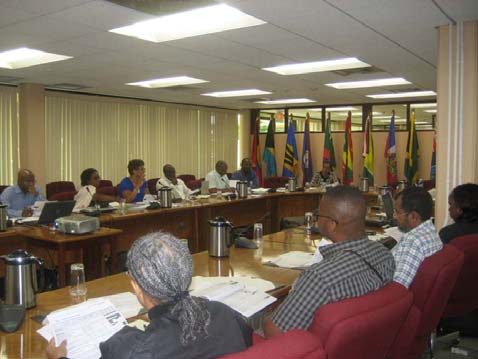
Opening Ceremony Head Table
future project activities. The draft mid-term evaluation of the
(Continued on page 7)
BACKGROUND ON THE GEF-IWCAM
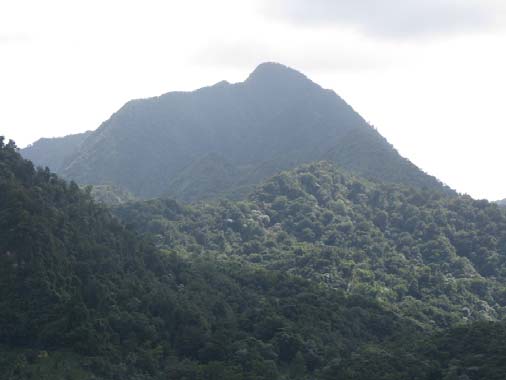
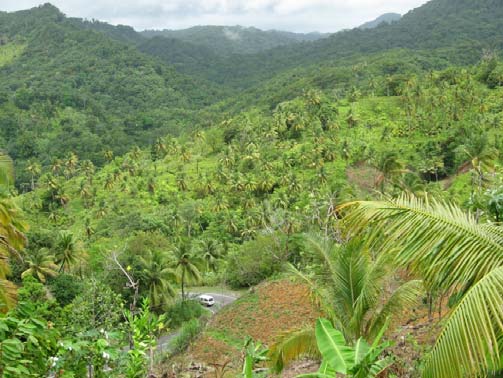
Looking around at the green hillsides of the
PROJECT:
Caribbean, we might be tempted to think that our
water supplies are guaranteed for many years to
The Global Environment Facility-funded Integrating Watershed
come. However forests face numerous threats,
and Coastal Areas Management in Caribbean Small Island De-
among them: conversion for agriculture or for devel-
veloping States (GEF-IWCAM) Project was approved by the
opment (residential, industrial and commercial uses,
Global Environment Facility (GEF) in May 2004. Implementing
roads, paved areas etc.); wildfires; insect outbreaks
agencies are the United Nations Environment Programme
and; harvesting for timber.
(UNEP) and the United Nations Development Programme
(UNDP). Executing agencies are the Secretariat of the
Increasingly, more and more of the vegeta-
Cartagena Convention (UNEP-CAR/RCU) and the Caribbean
tion that we see on hillsides is in fact secondary for-
Environmental Health Institute (CEHI) and the UN Office for
est or vegetation which has grown after some drastic
Project Services (UNOPS). The thirteen participating SIDS are:
event such as a forest fire or indiscriminate clearing.
Antigua and Barbuda, The Bahamas, Barbados, Cuba, Grenada,
Once primary forest is destroyed, light-demanding
Dominica, Dominican Republic, Haiti, Jamaica, Saint Kitts and
species grow first followed by an under story of
Nevis, Saint Lucia, Saint Vincent and the Grenadines, and Trini-
shade-tolerant species, which is known as succes-
dad and Tobago. The length of the Project is 5 years and com-
sion (See Box A, pg. 3).
menced in the second quarter of 2005. The Project Coordinating
Unit is located at the CEHI, as agreed by the Implementing and
Executing Agencies and the participating countries.
(Continued on page 3)
www.iwcam.org
3
IWCAM Caribbean WaterWays Newsletter
(Continued from page 2)
Primary forest
BOX A:
Succession--a simplified description
Primary forests, important for water conservation,
once covered hillsides and valleys throughout the Carib-
Secondary forest
bean. These are forests which exist without significant
disturbances for significant periods, long enough to be
dominated by mature trees and are composed mainly of
shade tolerant species. These include the Gommier,
Chatainier, Bois de Masse and Balata Chien.
Secondary forests, which now dominate many of
the forest areas in the region, in contrast, are far less effi-
cient at water conservation. They are composed mainly of
pioneer species which grow rapidly, demand a lot of light
and generally do not live long. Dominant trees in secon-
dary forests include the Palmiste, Bois Canon, Laurier
and Mahot.
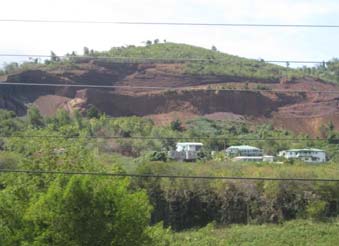
The reality is that demand for land for a variety of
activities means that forest acreage on the whole is de-
clining and the creation of reserves (areas set aside for
non-development) is important if primary forest in particu-
lar, vital to the sustainability of water quantity and quality,
is to be protected. St. Lucia's Fond D'or Watershed,
Box B:
where the Demonstration Project is located, has an area
of 39 square kilometers, of which only 23 percent is re-
Impact of Climate Change on
serve. Efforts through the Demo Project seek to preserve
Forests
what is left of these forests.
Managing primary forest and expanding the forest
· Changes in precipitation (frequency, intensity, distribution)
reserves in each watershed is important if we are to have
· Increased drought
sustainable water supplies in the future. Better communi-
· Increased evaporation due to higher temperatures, affecting
cation and cooperation between different sectors is
species distribution
needed. The development and implementation of good
management practices is important to ensure that existing
· Extreme weather events (e.g. floods, hurricanes) that could
forests protect and enhance the freshwater environment
cause damage and stress to forests
which ultimately also affects coastal water quality as well.
· Changes to the physical, chemical and biological processes
Better integration of forest and water policy, plans and
of soil
measures is vital to sustainable management of water
resources.
www.iwcam.org
4
IWCAM Caribbean WaterWays Newsletter
Grenada: The St. John's
Watershed
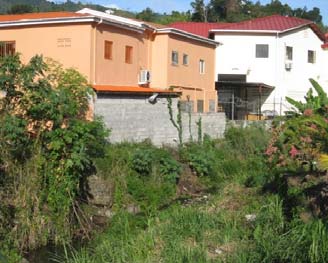
Grenada faces major threats to local watersheds
and the marine environment. To begin addressing the prob-
lem, the Ministries with responsibility for the Environment
and Agriculture in collaboration with the Ministry of Finance,
Planning, Economy, Energy, Foreign Trade & Cooperatives,
and with the support of the GEF-IWCAM Project, held a
Land Based Sources of Marine Pollution Awareness and
Promotion Workshop at the National Stadium in St. Geor-
ges, Grenada, on the 6th 7th April 2009.
Similar to the Dominica LBS Workshop (see pg.
5), the objectives of the Workshop were to: raise awareness
of the LBS Protocol, examine its implications for Grenada,
and discuss its implementation. The Workshop also sought
to initiate the development of a master plan for a watershed
at risk in Grenada.
Stakeholders from Government, and other non-
governmental agencies, including private sector and com-
munity-based organizations participated in the Workshop.
The St. John's Watershed
St. John's Watershed is being considered for de-
velopment of a Watershed Master Plan to address the LBS
Protocol. This Watershed Management Planning approach
will be used as a template that could be replicated in other
high-risk watersheds in Grenada and the Wider Caribbean
SIDS.
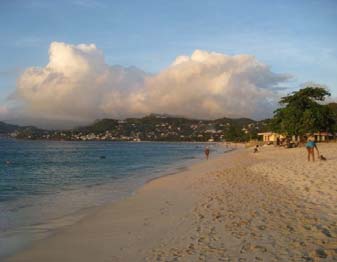
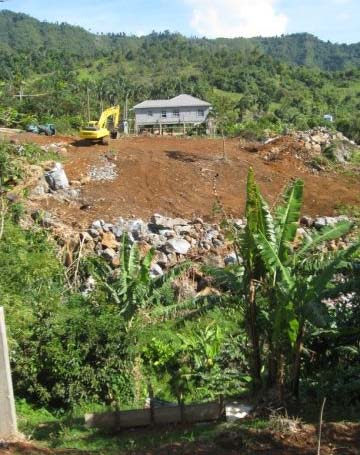
After describing the St. John's Watershed the
meeting discussed many of the issues affecting it. These
include erosion and resulting sedimentation which affects
Grande Anse Beach and its reefs negatively, and repeated
flooding of communities in the lower watershed area. In
addition there are manufacturing (e.g. soft drinks, deter-
gent), agricultural, housing, mining and other activities
which are also causing pollution. The area was toured later
that day by Workshop participants.
A three-step approach, to be led by an Inter-
agency Collaborative team and to take place over 18
months, is envisaged: 1) initiation and scoping; 2) design
and implementation of control measures; 3) a monitoring
and evaluation mechanism. The meeting agreed that the
entire effort should be cross-cutting and integrated and that
training for various stakeholders would be an integral part of
it. There was a recognition that policy and decision makers
need to use guidelines that encourage integrated manage-
ment, that legislation needs to be revamped, and that suc-
cessful cases need to be promoted.
www.iwcam.org
5
IWCAM Caribbean WaterWays Newsletter
Dominica--what does the LBS Protocol have to do with it?
It is oft remarked that if Christopher Columbus were to return to the Caribbean some 500 years after his original visit, the one island
he would recognize is the Commonwealth of Dominica. In comparison with her Caribbean neighbors, Dominica has significant forest cover and
a fairly pristine environment. But, as many Dominicans will remark, the situation has degraded notably in the past few decades due to uncon-
trolled forest clearance; encroachment by farmers; use of agro-chemicals such as fertilizers, pesticides and weedicides; siltation of rivers and
dams; poor land use practices; indiscriminate waste disposal; pollution; land tenure rights; and, unplanned developments.
The Ministry of Agriculture, Fisheries and Forestry (MAFF), together with the GEF-IWCAM Project, the United Nations Caribbean
Regional Coordinating Unit (UNEP/CAR-RCU), the Caribbean Environmental Health Institute (CEHI), and the Pan-American Health Organiza-
tion (PAHO), held a workshop in Roseau, Dominica in July 2009 to address these threats and the role of the Land-based Sources of Marine
Pollution (LBS) Protocol of the Cartagena Convention to address them.
The LBS Protocol is a regional agreement for the prevention, reduction and control of marine pollution from land-based sources and
activities, providing a framework for addressing pollution based upon national and regional needs and priorities. It adopts an approach which
focuses upon addressing the sources of pollution, including the application of most appropriate technologies and best management practices. It
also promotes the establishment of pollution standards and schedules for implementation.
The objectives of the workshop were to raise
awareness of the LBS Protocol, examine its implications
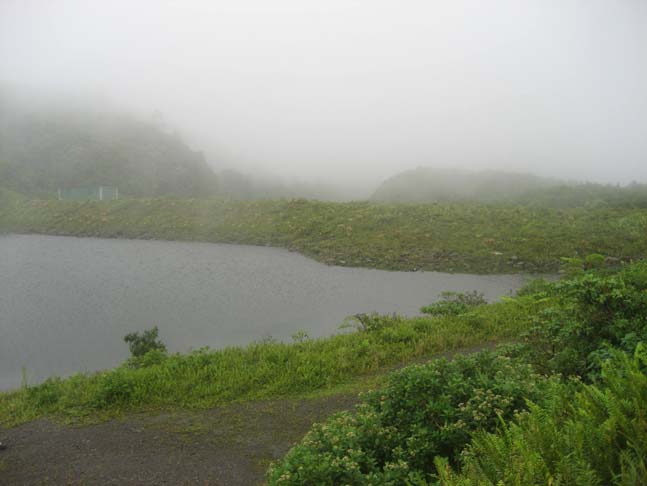
Freshwater Lake, Dominica
for Dominica, and discuss its ratification and implemen-
tation. The Workshop also sought to initiate the develop-
ment of a master plan for a watershed at risk in Domin-
ica. It is hoped that this master plan will guide the design
and implementation of appropriate measures to mini-
mize the risk posed to life, property and the coastal zone
as a result of pollution, accelerated land degradation
and flooding.
The workshop was very well attended by key
stakeholders from Government, at the local and national
level. Participants, together with the regional agencies
present, brainstormed about how to promote LBS Proto-
col ratification in Dominica as well as the development of
a watershed management planning initiative for the
Roseau Watershed.
Such a watershed planning initiative would
seek to improve quality and quantity of water in the Ro-
seau River; preserve and sustain tourism potential of the valley; heighten the physical planning activities and improve programmes in the valley,
and maintain the aesthetic value of the watershed. Some critical issues in the watershed identified at the meeting, and at the field trip through
the watershed, are road construction, land tenure, inadequate physical planning, solid and liquid waste disposal, ad hoc quarrying (materials
taken from roadsides), poultry farming, human settlement, agricultural practices, environmental services (spas), pollutants, and stakeholder
identification.
The key stakeholders were broadly defined as the wider public, utility companies, government, and the private sector. Participants
underscored the importance of a Communication Plan / Strategy, involving education / public awareness, workshop, town hall meetings, train-
ings, and publications. Those present also underscored the need for assessment of information available and gaps and establishment of a
steering committee (new or existing) and development of a workplan.
Based on the results of this meeting, the GEF-IWCAM Project Coordination Unit, CEHI, UNEP/CAR-RCU and the Forestry Division of
MAFF will work together to elaborate next steps for plan development. In parallel to the watershed management initiative, GEF-IWCAM and
UNEP/CAR-RCU will be working with the Government of Dominica to support them on the road to ratification of the LBS Protocol.
www.iwcam.org










6
IWCAM Caribbean WaterWays Newsletter
(Continued from page 1)
Training on Operation & Mainte-
analysis of environmental samples. It aimed to en-
hance and develop their capabilities to perform basic
nance of Sewage Treatment Plants
analytical techniques in support of IWCAM objec-
for Operators
tives, and to develop the capacity for national envi-
ronmental surveillance and monitoring.
Participants were selected from laboratories
in participating countries of the English-speaking
Caribbean that were assessed as part of the Pro-
ject's laboratory strengthening component. The
course curriculum was based on the training needs
identified in the assessment.
The workshop sought to raise the standard
at which laboratories in the Region operate to an
internationally accepted level. Participants were
trained in the development, implementation and
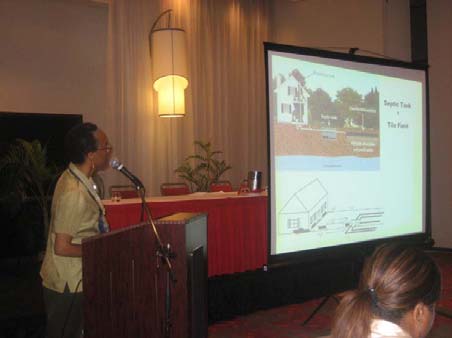
Michelle Watts of Jamaica's Water Resources Au-
documentation of a laboratory quality management
thority makes a presentation.
system that meets the requirements of the interna-
tional laboratory standard ISO/IEC 17025 General
Requirements for the Competence of Testing and
A GEF-IWCAM Regional training workshop
Calibration Laboratories.
on Operation & Maintenance of Sewage Treatment
Plants was convened from May 18-22, 2009 in Mon-
Selected laboratories will be supplied with
tego Bay, Jamaica. This workshop was organized,
laboratory equipment to carry out environmental
based upon a request from the Project Steering
monitoring and the national training needs will be
Committee that training in this area be provided to
assessed and training provided at this level
Participating Countries.
CEHI will coordinate an informal network of
The training sought to improve the skills of
laboratories and other interested parties in order to
plant operators across the region, in order to reduce
facilitate the exchange of:
the pollution load entering the marine environment.
· Standard Operating Procedures
Over thirty persons from 12 of the Projects
· Experiences
PCs received training. The training covered all as-
· Suppliers
pects of biological wastewater treatment and in-
· Training opportunities
cluded troubleshooting and plant visits. Local coun-
· Troubleshooting
terparts from NEPA and the Water Resources Au-
thority assisted in organizing the event and making
Proficiency testing services by an institution
background presentations as well. UNEP CAR/RCU
such as CEHI is required and the specific tests and
took the opportunity to introduce participants to the
the cost of provision of such a service still need to be
LBS Protocol.
looked at.
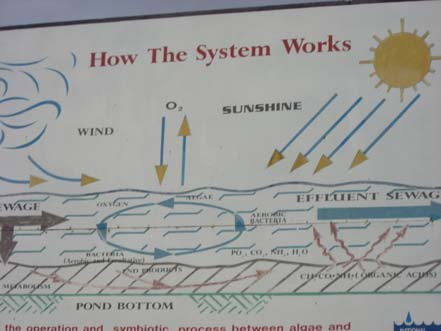
Sign at sewage treatment plant, Montego Bay
CEHI laboratory
www.iwcam.org
7
IWCAM Caribbean WaterWays Newsletter
The CARICOM Consortium of
The meeting was a follow up to a meeting
Institutions on Water Advances its
held in December 2008, of an IWRM Partnership
Group, established through the support of the GEF-
Agenda
IWCAM Project. This IWRM Partnership Group had
been exchanging information and had engaged in
joint planning on these previous occasions. The
meeting was also designed to advance the mandate
given to CARICOM institutions by the CARICOM
Council for Trade & Economic Development
(COTED), when it met earlier in 2008. COTED in-
structed that a Consortium of CARICOM institutions,
in collaboration with other entities, advance an
agenda for water management in the region. The
meeting therefore sought to facilitate such advance-
ment.
Conclusions and Recommendations from
the IWRM Partnership Group meeting, the subse-
quently drafted Terms of Reference for the CARI-
COM Consortium on Water, and a possible Work
Programme for the Consortium were also discussed.
Elements of the Work Programme would be:
The GEF-IWCAM Project attended a meet-
ing to jointly plan the work of a Consortium of CARI-
· Policy Formulation & Institutional Development
COM Institutions on Water. This meeting took place
(led by CEHI)
on July 14, 2009 at the CARICOM Secretariat,
· Data & Information Sharing (led by CIMH)
Georgetown, Guyana. It was attended by represen-
· Capacity Enhancement (led by UWI)
tatives from the CARICOM Secretariat, CEHI, · Technology & Methods (led by UWI/ CERMES)
CBWMP Inc, CAPNET, GWP-C, CWWA, CDERA,
UWI, CERMES, and the OECS Secretariat, among
GEF-IWCAM's Clearing House Mechanism
others.
work would support the Data and Information Shar-
ing element.
(Continued from page 2)
Did you know?
RTAG 4 cont'd:
governance structures. It will also prove helpful in obtaining ex-
ternal funding from donors. The RTAG suggested that the pro-
ject focus its activities on countries that are close to ratifying in
order to help with this process, identify the gaps, and take the
needed actions to help move the process forward.
A draft work plan for 2010 was presented to the RTAG
and the participants made a number of useful suggestions on
how to enhance the work of the Project in the upcoming year.
These included: a focus on legislators and the private sector,
additional support to LBS Protocol ratification, stressing the link
to climate change, and capacity building activities in areas such
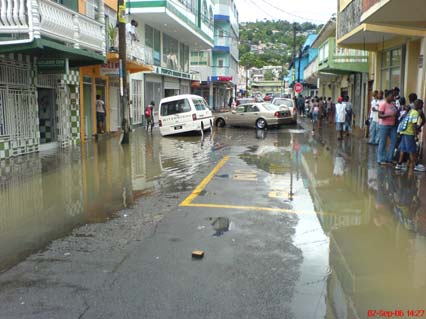
The streets of many Caribbean towns flood after
as project and proposal preparation, wastewater treatment and
heavy rainfall, stranding people, creating a health hazard,
re-use, preparing watershed management plans (process /
destroying property and causing chaos.
methodology), and hydrochemistry and water analysis interpre-
tation. These recommendations, as well as others made during
Flooding is exacerbated by waterways which are
the meeting, will be presented to the Project Steering Committee
loaded with sediment and drains which are clogged by
solid waste debris.
for consideration during its upcoming meeting in October 2009,
Dominican Republic.
Preventing soil erosion and keeping streets and
waterways clear of litter helps to prevent flooding.
www.iwcam.org









8
IWCAM Caribbean WaterWays Newsletter
Workshop on Hydrometric
by the European Development Fund (EDF) and im-
plemented by Egis BCEOM, is erecting a new hydro-
Networks underlines importance metric network in St. Vincent and the Grenadines.
of measuring and recording
Participants visited various gauging stations
rainfall
to see equipment that had recently been installed. At
the water treatment plant in Jennings a rain gauge, a
The Caribbean region is one of the world's
clamp meter for discharge measurements in pipes, a
wettest regions in terms of precipitation. Average
radar water level gauge, a staff gauge and a water
annual precipitation ranges from 1,100 mm in Anti-
quality meter could be seen. A discharge measure-
gua to more than 6,000 mm in the mountains of Do-
ment with an inductive velocity meter was made. In
minica. Yet despite this, planners, authorities and
addition participants were able to visit the climate
decision-makers often find that there are no records
station at Langley Park, where wind speed, wind run,
available on river discharge, rainfall, groundwater
evaporation, sun radiation, humidity, temperature
levels or climate data. These data are however, the
and precipitation measuring instruments were in-
necessary foundation for proper planning, decision
spected.
making and watershed management. Furthermore,
long term records of data are often required to make
Workshop
discussions
revealed that the fi-
reliable conclusions.
nancing of hydrometric systems is a major issue.
While investment for procurement of equipment is in
most cases financed by donors, operation and main-
tenance of the systems lack sufficient financial sup-
port and need proper strategies. In addition, there is
a need to increase awareness amongst decision
makers of the importance of hydrometric networks
and the value of the information which they generate.
The overall recommendation made by par-
ticipants was the formation of a comprehensive hy-
drometric network in the Caribbean. The importance
of hydrometric networks and data collection is to be
conveyed to the Ministers of the Council for Trade
Workgroup designing the concept for a hydrometric
network on an example island
and Economic Development (COTED) of the CARI-
COM, or a similar meeting. This effort should in-
clude recommendation of the establishment and op-
In order to address this issue, a Workshop
eration of hydrometric and climate data collection in
on Hydrometric Networks was organized in St. Vin-
the environment policy of each member state. The
cent and the Grenadines from 18th 20th May 2009.
sustainable financing of hydrometric networks was
Its objectives were: to inform about the importance of
also discussed with participants putting forward
data collection; to show the latest technology in hy-
many suggestions.
drometric networks and; to offer a platform for the
exchange of experience among Caribbean states.
The workshop was initiated by the Carib-
bean Renewable Energy Development Programme
(CREDP-GTZ) and jointly organized by CREDP-
GTZ, the GEF- IWCAM Project and the Government
of St. Vincent and the Grenadines through the Minis-
try of Health and the Environment. Further sponsors
were SEBA Hydrometrie GmbH and Egis BCEOM
International.
St. Vincent was selected as the venue for
this Workshop because the National Water Re-
Discharge measurement with inductive velocimeter at
sources Management Study Project, which is funded
Jennings
www.iwcam.org




















9
IWCAM Caribbean WaterWays Newsletter
Jamaica Demonstration Project
Manager Shares Experiences with
One
of the
SOPAC
high-
lights
The GEF-IWCAM Regional Project was rep-
of the
resented at the recent SOPAC (Pacific Islands Ap-
semi-
plied Geoscience Commission) Building Founda-
nar
tion Programme Leadership Training Seminar on
was
Improving Water Planning Management by Ja-
the
maica's Demonstration Project Manager, Lisa Kirk-
divi-
land.
sion
The seminar took place at the East West
of
The Punlao Watershed
Centre in Hawaii from July 14 - 24, 2009. Lisa par-
par-
ticipated in the last week of the seminar at which se-
lected participants from the Federated States of Mi-
ticipants into two islands; with each island being
cronesia, Republic of Palau and the Republic of the
asked to come up with IWRM plans. This was fol-
Marshall Islands were provided with useful informa-
lowed by role
tion and assistance towards adopting new, prag-
play. It was nota-
matic approaches to more effectively mobilize politi-
ble that the vari-
cal constituencies, increase knowledge and technical
ous aspects of
competence, and facilitate, organize and coordinate
training which
the development and implementation of integrated
had taken place
water resources management plans.
were actually in-
corporated into
Lisa made two presentations: 1) IWRM Plan-
the plans which
ning in the Caribbean: Roadmap Process and Les-
were produced.
sons Learned, and (2) Use of Monitoring and Evalua-
tion: IWCAM Demonstration Project in Jamaica.
The seminar
included a trip to
The inclusion of local communities in water
a Hawaii water-
quality monitoring exercises in all instances had
shed which is
helped to educate the communities about natural
managed to pro-
resources, to empower them and to get their support
vide support for
Ancient Hawaiian planting
for project activities. Seminar participants particu-
school children
technique
larly liked this approach and asked questions about
and to preserve
how they could do the same.
aspects of ancient Hawaii planting techniques.
Lisa noted that it was interesting to see that
The Demo Project Manager was very enthu-
although there are cultural differences, the issues as
siastic about the experience which she found to be
they relate to IWRM remain the same. These in-
very educational and to have provided excellent net-
clude the challenges encountered when engaging
working opportunities.
stakeholders, obtaining political endorsement and
commitment, and coordination between different sec-
tors. Examples of how Caribbean SIDS were able to
overcome some of these hurdles were given. The
implementation of short term, on-the-ground activi-
ties which have provided tangible, quick results or
benefits to the community was one such example.
She also stressed the differences which ex-
ist from one island to another, and that it is not "a
one size fits all situation"; that differences should be
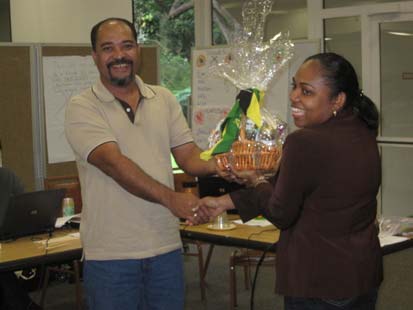
Winning IWRM role play workgroup receives
anticipated and highlighted.
a gift basket from the Caribbean
www.iwcam.org















10
IWCAM Caribbean WaterWays Newsletter
(Continued from page 1)
Vincent, is attempting to be more consultative in order to under-
stand the most pressing issues faced by communities and how best
to help resolve them while improving people's quality of life. In con-
trast to the approach used in the other participating countries where
consultations have been limited to one or two national consultations,
in St. Vincent, in addition to a national level consultation, four sepa-
rate community consultations were organized during the month of
August.
The four communities were:
Greggs located in the South Eastern St. Vincent in the Biabou
watershed. A tight knit community made up partly of Garifuna. Its
main economic revenue came from banana farming until the col-
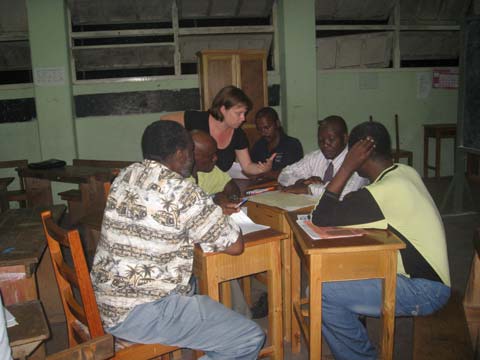
Spring Village workgroup with facilitator,
lapse of that market and the destruction of much of the crop from the
Agathe Sector
Moko disease. Today, dasheen (a root) is the main crop.
Chateaubelair - one of the larger leeward coastal communities,
situated in the North West area of St. Vincent, in the Chateaubelair
watershed. It is home to two major tourist attractions, the Trinity and
Dark View Waterfalls. It is also close to the Soufriere Volcano, where
illegal farming takes place due to the fertile soil and remote location.
The main socio-economic activities are farming and fishing.
Spring Village - located on the leeward side of St. Vincent, in a
valley to the south of Chateaubelair. It is in the Cumberland Water-
shed, one of the largest watersheds in St. Vincent. The farming of
root crops and citrus dominates.
Vermont Village - located in the South Central part of St. Vincent, in
the Buccament watershed. This watershed is extremely important as
Vermont Valley workgroup in discussion
it supplies water to Kingstown, which covers about 40% of the popu-
lation. It is also home to the Vermont Nature Trail, a popular tourism
destination.
Major issues identified:
· `brown' water supplied by CWSA
· soil erosion leading to heavy sedimentation of river water
· landslides
· deforestation
· solid waste pollution in waterways and on beaches
· flash flooding
· damming of waterways as a result of debris and the overgrowth of elephant grass
· water pollution by pesticides and fertilizer runoff (sometimes pesticide containers
are washed out in or near streams)
· water pollution by pig pens located near rivers affecting downstream users
· poor and unsustainable land use practices (e.g. illegal farming in the hillsides)
· bush fires
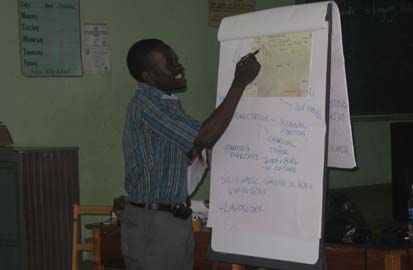
Spring Village: Erasto Robertson shows
· armadillos unearthing tree root systems
map of St. Vincent's watersheds and gives
background
www.iwcam.org















11
IWCAM Caribbean WaterWays Newsletter
Perceived Barriers to Change:
· unemployment
· migration
· political division
· religious differences
· poor communication
· financial difficulties and limited resources
· lack of proper solid waste management
· CBO's need for training in management and record keeping
Chateaubelair--everyone got involved.
· a lack of effective local government
· poor enforcement
Significantly, participants noted that they
· lack of cooperation and poor communication amongst stake-
had learned that the protection of land, forests
holders
and water services is essential and that there are
· lack of education
linkages between land and water.
· getting people to come to meetings
· selfishness
· illegal farming
· improper and uncontrolled river bank uses
The four communities identified these needs or solu-
tions:
· education and public awareness (e.g. impacts of deforestation)
through cultural programs and creating environmental groups.
· need for legislation regarding littering as there are no regula-
Spring Village community presenter
tions concerning this issue and enforcement of that legislation.
· incentives for people to stop littering such as recycling pro-
grams, more bins for trash and more frequent cleaning of gut-
ters
· training in better farming practices (contour drains) and agro-
forestry
· community exchanges between farmers
· provision of seeds with training on planting techniques
· capacity building for CBOs
· reforestation and river bank stabilization.
· more consultations to keep people involved in finding solutions
Greggs workgroup deliberations
to problems
"This process of consultation has helped the GEF-IWCAM project gain the attention of four different
communities as well as national level stakeholders regarding IWRM and land and water issues. It
needs to build on this by quickly implementing a participatory process that addresses the priority land
and water issues identified by the communities. Community members have shown their willingness to
participate and CBOs exist on the ground ready to partner with GEF-IWCAM but they need information,
support, coordination and capacity building."
Agathe Sector, Natural Resources Consultant.
www.iwcam.org








12
IWCAM Caribbean WaterWays Newsletter
Going Global: Sharing IWCAM
Global Change.
Experiences in Paraguay
At the former, she presented on the activities of the
GEF-IWCAM Project and sought out opportunities for collabora-
tion with the UNESCO IHP Centres and other partners present.
In the latter, Sasha shared the experiences of the
project in its work on indicators, including the indicators assess-
ment, development of an IWCAM indicators template, and then
the application of that template in Barbados, through the upcom-
ing development of a land and water information system which is
being undertaken in collaboration with the United Nations Food
and Agriculture Organization and the Government of Barbados.
Sasha Gottlieb presents at the Ecohy-
The presentations from these meetings can be found
drology Conference
at www.iwcam.org.
As the GEF-IWCAM Project moves forward, sharing
experiences, lessons learned and good practices at the national,
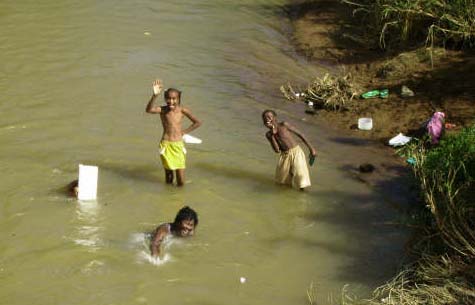
The River and Public Health
regional, and global levels becomes more and more important.
The staff of the Project Coordinating Unit, demonstration project
managers, and others involved with the project are dedicating a
significant amount of time to preparing papers, presenting at
conferences, and exchanging information with others through a
variety of fora.
This is why the GEF-IWCAM Technical Coordinator,
Sasha Beth Gottlieb, found herself in Asuncion, Paraguay in late
June and early July 2009. Sasha travelled to Paraguay to par-
ticipate in two events organized by the United Nations Educa-
tional, Scientific, and Cultural Organization's
(UNESCO) International Hydrological Programme (IHP): The VIII
"Public education and awareness; community mobiliza-
Meeting of National Committees and Focal Points of UNESCO
tion ...most needed. "
International Hydrological Programme for Latin America and the
Wenn Gabriel, St. Lucia's Chief Environmental Health Officer,
Caribbean and the Conference Ecohydrology in the context of
St. Lucia Water Week, May 2009
Participating Country Focal Points, Demonstration Projects and others are invited to submit articles. Please contact
Donna Spencer at dspencer@cehi.org.lc
Contact Information:
IWCAM Project Coordination Unit
P.O. Box 1111, The Morne, Castries, Saint Lucia
Tel: (758)-452-2501/1412; Fax: (758)-453-2721
E-mail: dspencer@cehi.org.lc
www.iwcam.org