
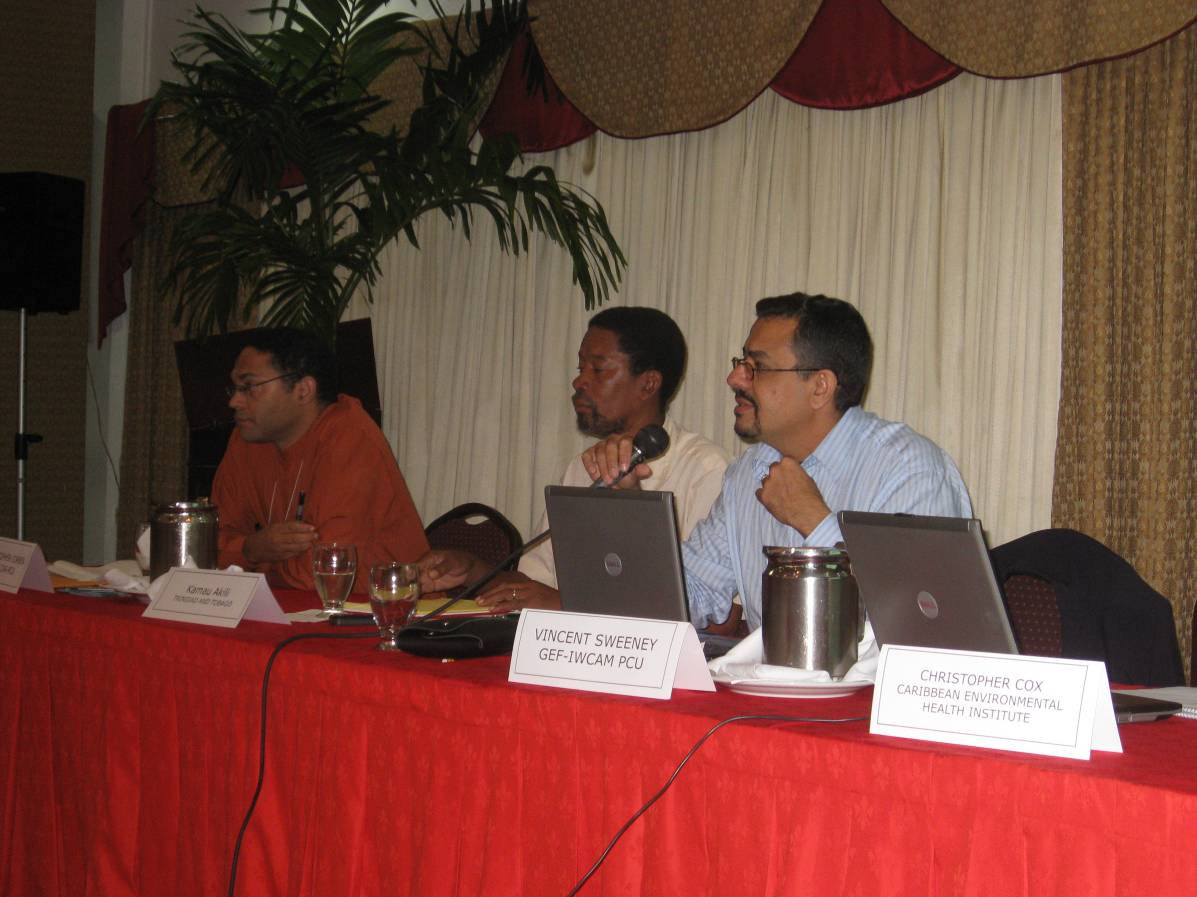



Regional Technical Advisory Group Meeting
Bon Accord, Trinidad and Tobago
16-17 February 2009
Prepared by
Project Coordination Unit of the
Global Environment Facility-funded Integrating Watershed
and Coastal Areas Management (GEF-IWCAM) Project
P.O. Box 1111, The Morne
Castries, St. Lucia
List of Acronyms ......................................................................................................................... ii
Background................................................................................................................................ 1
MEETING PROCEEDINGS ....................................................................................................... 1
Welcome Remarks................................................................................................................. 1
Organisation of the Meeting / Adoption of the Agenda ........................................................... 3
Status Report ......................................................................................................................... 3
Laboratory Strengthening.................................................................................................... 4
Related UNEP/CAR-RCU Meetings and Initiatives ............................................................. 5
Status Report on Demonstration Projects............................................................................... 5
Trinidad and Tobago........................................................................................................... 5
Bahamas............................................................................................................................. 7
Saint Kitts and Nevis ........................................................................................................... 7
Antigua and Barbuda .......................................................................................................... 8
Dominican Republic ............................................................................................................ 8
Cuba ................................................................................................................................... 8
Jamaica .............................................................................................................................. 9
Saint Lucia .......................................................................................................................... 9
Any Other Business ..............................................................................................................10
Hotspot Diagnostics ...........................................................................................................10
Fifth Biennial GEF International Waters Conference ..........................................................10
Next RTAG ........................................................................................................................10
Field Trip ...............................................................................................................................10
Photos ...............................................................................................................................11
i
List of Acronyms
Term / Phrase
Acronym
Bahamas Environment, Science, and Technology (Commission)
BEST
Buccoo Reef Trust
BRT
Canadian International Development Agency
CIDA
Caribbean Environmental Health Institute
CEHI
Caribbean Large Marine Ecosystem
CLME
Caribbean Revolving Fund for Wastewater Management
CReW
Clear Water Caribbean
CWC
Global Environment Facility
GEF
Global Environment Facility Integrating Watershed and Coastal
GEF-IWCAM
Areas Management
Integrated Water Resources Management
IWRM
Integrating Watershed and Coastal Areas Management
IWCAM
Jamaica Institute of Environmental Professionals
JIEP
Knowledge, Attitude, Practices
KAP
Memorandum of Agreement
MOA
National Intersectoral Committee
NIC
Project Coordination Unit
PCU
Project Steering Committee
PSC
Protocol Concerning Pollution from Land-Based Sources and
LBS Protocol
Activities to the Cartagena Convention
Regional Technical Advisory Group
RTAG
Small Island Developing State(s)
SIDS
The Nature Conservancy
TNC
United Nations Development Programme
UNDP
United Nations Environment Programme
UNEP
United Nations Environment Programme Caribbean Regional
UNEP/CAR-RCU
Coordinating Unit
ii
Background
The third official meeting of the Global Environment Facility Integrating Watershed and Coastal
Areas Management (GEF-IWCAM) Project1 Regional Technical Advisory Group (RTAG) was
held in Bon Accord, Tobago, Republic of Trinidad and Tobago on 16-17 February 2009.
The RTAG serves as a technical advisory group to the project, and specifically to the Project
Steering Committee (PSC). The RTAG is expected to consist of a senior technical
representative from each country and wherever possible this national member should represent
a sector which is related to that country's demonstration project or areas of principal IWCAM
concern. The national member should be nominated by the National Intersectoral Committee
(NIC) with the nomination endorsed by the Project Coordination Unit (PCU) and eventually the
PSC (in order to ensure an appropriate level of representation as well as a useful balance of
expertise across the RTAG membership). Other RTAG members will include the Regional
Project Coordinator (or his nominated representative for that meeting), and a representative
from each of the two Executing Agencies. The RTAG may invite regional or international
technical expertise as guests to a meeting where that expertise may prove to be valuable (and
with the agreement of the Executing Agencies).
The specific functions of the RTAG include:
·
Reviewing reports from the Demonstration Projects
·
Reviewing all technical matters related to project objectives
·
Addressing any increased or emerging technical concerns within the region pertinent to
the participating countries and to IWCAM issues
·
Providing technical guidance and recommendations to the PSC on project-related issues
·
Reacting to any other requests from the PSC, PCU or Executing Agencies requiring
technical input and advice
MEETING PROCEEDINGS
Welcome Remarks
The meeting was opened with Welcome Remarks from Christopher Cox (Caribbean
Environmental Health Institute, CEHI), Christopher Corbin (UNEP/CAR-RCU), Linford Beckles
(Tobago House of Assembly, Trinidad and Tobago), and Vincent Sweeney (GEF-IWCAM
Regional Project Coordinator, RPC).
1 The GEF-IWCAM Project is co-implemented by the United Nations Environment Programme (UNEP)
and the United Nations Development Programme (UNDP), and co-executed by the Secretariat of the
Cartagena Convention, UNEP Caribbean Regional Coordinating Unit (UNEP-CAR/RCU) and the
Caribbean Environmental Health Institute (CEHI).
1
The RPC, while chairing the Opening session, acknowledged the support provided by the
Government of Trinidad & Tobago, through the Tobago House of Assembly, for the convening
of the RTAG meeting.
Christopher Corbin and Christopher Cox both made presentations on behalf of the two
executing agencies, UNEP/CAR-RCU and CEHI, respectively. Christopher Corbin noted the
important synergies between the GEF-IWCAM activities and other UNEP/CAR-RCU activities,
especially the Protocol Concerning Pollution from Land-Based Sources and Activities (LBS
Protocol) to the Cartagena Convention, highlighting the presence of the two participating
countries that are the most recent signatories to the LBS Protocol (Saint Lucia and Trinidad and
Tobago). UNEP-CAR RCU will be working with countries to examine the benefits of ratification
and assist in their approach to the Protocol. Chris Cox brought best wishes on behalf of the
CEHI Executive Director, Patricia Aquing. He noted that CEHI is involved primarily in activities
related to the Integrated Water Resources Management (IWRM) development process and
laboratory strengthening. CEHI is also reporting to the Know- Why-Network, which looks at the
status of pollutant loads entering the Caribbean Sea, the National Programme of Action in
Guyana and recreational water quality standards in Saint Lucia.
Linford Beckles of the Tobago House of Assembly welcomed participants to Tobago, on behalf
of the Secretary with responsibility for the Environment, Honourable Hilton Sandy, and the
Administrator with responsibility for Agriculture, Marine Affairs, and the Environment, Ethlyn
John. He noted that the GEF-IWCAM Project is working to limit run-off into the Buccoo Reef
area and that the Tobago House of Assembly has indicated a willingness to contribute to this
effort, both organizationally and financially.
The RTAG participants introduced themselves to the meeting and highlighted their areas of
technical expertise. Mr. Sweeney noted the RTAG was benefiting from technical experience in a
wide variety of areas. Below is a list of the participants with their indicated areas of expertise.
The full participants list can be found in Annex 1.
Kamau Akili Education / Environmental Management / Sustainability issues
Sandra Timothy Agriculture
Edmund Jackson Environmental Management
LaVerne Walker Coastal Zone Management
Randolph Edmeade Physical Planning / Environmental Management
Allison Astwood Laboratory, microbiology
Lisa Kirkland Water Resource Management / Watershed Management
Trevor Thompson Forester
Victor Viņas Policy and Natural Resource economics
Ronald Charles Forestry
Alain Muņoz Caravaca Hydrodynamics and Physics
Alex Ifill Public health / water pollutions control / GIS
Deon Stewart Environmental management
Ivan Rodrigues Water engineering and environmental management
2
Organisation of the Meeting / Adoption of the Agenda
The representative from Saint Lucia nominated Kamau Akili of Trinidad and Tobago to serve as
the Chair of this meeting of the RTAG, which was seconded by the representative of Antigua
and Barbuda. There were no other nominations, so Kamau Akili was elected chair by
acclamation.
Sasha Beth Gottlieb, GEF-IWCAM Technical Coordinator, was nominated by Saint Vincent and
the Grenadines and seconded by Jamaica as the Rapporteur of the meeting, and given this
role, based on a unanimous show of hands.
The participants of the meeting officially adopted the agenda, with minor adjustments. It was
agreed that the Laboratory Strengthening Report, followed by a presentation of UNEP/CAR-
RCU regarding meetings and initiatives related to the IWCAM approach and the LBS Protocol
would be added to the agenda (Annexes 2a and 2b).
Status Report
Vincent Sweeney presented on the status of the GEF-IWCAM Project (Annex 3), noting that the
focus of this RTAG is on the demonstration projects. Mr. Sweeney underscored the slow rate of
expenditure for the project as a whole, and noted that the RTAG should advise the PCU of
useful activities in which to spend the funds effectively and quickly, to ensure that all funds get
used to benefit the region and not sent back to the GEF. The challenge of working in several
countries, due to delays in working with host governments and other key stakeholders, was
highlighted and it was noted that unless rectified, this may result in some cancellation or
reallocation of funds. Some specific topics discussed included:
-
Capture and transfer of best practices The perception is that the capture and transfer
of best practices to date has been done in a fairly conventional manner (e.g. reports,
web-site). How can the PCU better target these in the future? How will the project help to
replicate best practices? The PCU is helping to ensure that all of the demonstration
projects are completed punctually to allow sufficient time to document the lessons
learned and seek to replicate (when possible) the activities. The Information
Management System will also be a key tool in documenting and transferring these
lessons.
-
IWRM Roadmap, Guidelines, and Plan What is the difference between IWRM
Roadmap, guidelines, and plan? How do they fit in terms of sequence? How will the
national awareness seminars fit into this? The roadmap lays out the steps that the
countries need to take to develop the IWRM Master Plan. In Grenada, the Roadmap
served as a catalyst for the development of a water plan out of which came a water
policy, etc. Based on these documents Grenada is also now completing Water Master
Plans for Carriacou and Grenada.
-
Sustainability Participants discussed the sustainability of the IWCAM Approach beyond
the life of the project. One strategy the PCU has been employing is partnering with other
projects (e.g. Least Developed Countries / Small Island Developing States Sustainable
Land Management Project projects) and initiatives. It was noted that key to sustainability
3
is the success in mainstreaming the IWCAM approach into everyday government
activities. This will ensure buy-in and avoid it being regarded as additional work.
-
Delays in Haiti The participants discussed the delays encountered to date in
undertaking activities in Haiti. They asked at what point in time and by whom will a
decision be made to reallocate the funds elsewhere? The decision ultimately will have to
be taken by the PSC. If no substantial progress is made, it would be addressed at the
next meeting in October 2009. In the interim, the PCU will continue to follow up with
Haiti, bearing in mind the significant need within the country for interventions.
-
Implementation Rate: What are the critical factors impacting implementation speed and
what can we do about it? Issues include delays in appointing project personnel, other
priorities of the government, administrative hurdles / bureaucracy, etc. All should
recognize that these delays could have an overall negative impact on the project and
might even end up with the project returning funds to the GEF.
Laboratory Strengthening
Allison Astwood made a presented on the laboratory strengthening activities that CEHI is
undertaking as part of the GEF-IWCAM Project (Annex 4). She took the opportunity to highlight
the laboratory analysis capabilities of CEHI that are available to the region. Ms. Astwood
outlined the selection and assessment process of national level laboratories and underscored
the laboratory strengthening activities at regional laboratories (Institute for Marine Affairs of
Trinidad and Tobago, Centre for Environmental Affairs of Cienfuegos, Cuba, and CEHI). She
noted the training needs identified to date and the potential for networking amongst laboratories
and underscored that the laboratory support is not a one-size-fits-all model. The support will be
customized to what each country needs and/or is already receiving via demonstration projects, if
relevant. Following Ms. Astwood's presentation, there was an active discussion, which is
summarized in the following bullet points:
-
Duplication The GEF-IWCAM Project is working hard to avoid duplication with other
projects that are also building lab capacity. Mr. Sweeney noted that he had recently
been in discussions with a project from the United Nations University addressing
laboratory strengthening related to persistent organic pollutants. Specifically they were
discussing coordinating in order to synergize the effect as well as the possibility of
combining resources between two projects.
-
Certification / Accreditation CEHI has been accredited since 2004 to carry out four
specific tests, regarding pesticides and heavy metals and is looking into additional
accreditations. Until member countries make these requests for services on a regular-
enough basis to justify the cost of these additional accreditations and to build up the data
to validate the tests, CEHI may not be able to proceed further with additional
accreditations.
-
Human Capacity Participants underscored the need for senior decision makers to
strengthen human capacity in national laboratories.
-
Memorandum of Agreements (MOA) Any MOA regarding laboratory equipment
provided under the GEF-IWCAM Project should be prepared and signed with the local
authority who is receiving the equipment, not necessarily the GEF-IWCAM National
Focal Point. RTAG members suggested that the MOA should:
4
o
Commit laboratories to monitoring for a specified timeframe
o
Include a requirement for analysis of water samples for the public health
department, where appropriate
o
Address a contribution to monitoring and analysis as it relates to pollution
prevention
Related UNEP/CAR-RCU Meetings and Initiatives
Chris Corbin made a brief intervention regarding related meetings being hosted and initiatives
being undertaken by UNEP/CAR-RCU, focusing on Policy / Legislation, Training Needs,
Laboratory Capacity Building, and Monitoring. Currently:
-
UNEP is developing a coastal and marine strategy, which they expect to adopted in the
next 2-3 months. Within that strategy, Small Island Developing States (SIDS) and
Hilltops to Oceans (IWCAM) have been identified as priority issues.
-
There is a lot of work underway in the area of integrated chemicals management.
-
Two IWCAM participating countries (Saint Lucia and Trinidad and Tobago)) and four
non-participating countries have signed the LBS Protocol and two others are in process
of considering signing (Jamaica / Barbados). Three countries additional must sign on,
bringing the total to nine, in order to bring the LBS Protocol into full force. France and
USA have underscored that they are willing to provide support to countries that
demonstrate their support for the LBS Protocol.
-
In terms of promotion and awareness, there is an upcoming International Oceans
Meeting that will address programmes of action.
-
There is a GEF International Waters Conference being planned for later this year which
will serve as an excellent opportunity for dissemination of materials.
-
UNEP/CAR-RCU conducted assessments on climate change impacts on water
resources management.
-
The Caribbean Revolving Fund for Wastewater Management (CReW) Project has been
approved by the GEF and now is being developed into a full project proposal. Thus far it
has received endorsements from Antigua and Barbuda, Barbados, and Saint Lucia.
Status Report on Demonstration Projects
The demonstration project countries presented on the status of their projects, specifically
addressing indicators achieved, key activities, timeframe, lessons learned to date, challenges
encountered, and any other key points.
Trinidad and Tobago
Ms. Sandra Timothy, Trinidad and Tobago Demonstration Project Manager, highlighted the
work that the project has accomplished in the areas of education and outreach, reforestation,
mapping of the land and marine area, and integrating government entities into collaborating in
decision making. Some key points include:
5
-
GIS: Mapping and land surveys are being undertaken by Coral Cay Conservation. They
are monitoring point and non-point sources of pollution which are being included in
Geographic Information Systems.
There are two GIS officers working on the project. This work is both building their
capacity and the capacity on Tobago.
-
Public Awareness: There has been a large public awareness drive, focusing on primary
and secondary schools, the general public, etc. The information is going on the Internet
and also being distributed in hard copy.
-
Reforestation: The project has been working with a local community group on the
reforestation of the Courland Watershed. Reforestation activities last year were slower
than planned, due to capacity issues of the group (which the project is helping to
strengthen); other, better paid, employment opportunities for people in the Watershed;
and delays in getting permission to reforest private lands.
It was suggested that perhaps the Tobago House of Assembly could look at tax
incentives for reforesting property. Although, the issue of land tenure in Tobago is
complicated, as there is a lot of occupation of lands without official titles, which makes
tax incentives not as feasible.
-
Drain Diversion: The project has experienced delays regarding the implementation of the
Buccoo Diversion drain, due to loss of private sector counterpart funding. The location of
the drain may be changed from the Buccoo area to Bon Accord, as the latter area seems
to send more nutrients into the Buccoo Reef. RTAG participants encouraged the project
to further address some of the upstream activities to minimize harmful pollutants.
-
National Level Activities: The demo project has been collaborating on the development
of a national environmental compendium, encouraging substantive inter-agency
cooperation.
It has been a real challenge for the demo project to get senior level decision makers
interested in the project and understanding its true nature, both in Tobago and at the
national level.
-
Sustainabiity: Buccoo Reef Trust (BRT) is exploring the possibility of using "Green
Funds."
-
Stress Reduction: There was some concern that activities are primarily "process" in
nature, but not focused enough on "stress reduction."
-
Budget: The rate of expenditures is expected to increase over the next four months.
Ms. Timothy also provided information to the group about the field trip to the demonstration
project site, taking place later that day.
See Annex 5 for a map of the demonstration site area and the proposed drain diversion site.
6
Bahamas
Mr. Deon Stewart presented on the two demonstration projects in the Bahamas. Since last
RTAG meeting, the Bahamas Environment, Science, and Technology (BEST) Commission has
been working on the development of two major subcontracts: The Nature Conservancy (TNC)
and Clear Water Caribbean (CWC). In the process, it has faced and overcome many
bureaucratic challenges and the government is now satisfied that BEST can issue the contracts
and work can begin in earnest.
In Exuma, work is scheduled to begin the week of March 2, starting with a survey of discharge
practices in the harbour and leading to the installation of a wastewater treatment system.
In Andros, BEST and TNC have been struggling over the issue of ownership of data produced
by the project, specifically "should there be a limit as to what a partner can do with the data?"
On-the-ground activities are scheduled to start in early March. Mr. Stewart was asked how it
was decided that TNC serve as the sub-contractor on this project. He indicated that initially it
was to be Coral Cay Conservation, but they withdrew themselves prior to the start of the project
and TNC then filled in the gap, with BEST supplying a sole source justification.
It was asked if monitoring needs had been identified and had local labs been identified to
provide that support. BEST plans on utilizing government labs and may look at private labs to
provide that support.
Saint Kitts and Nevis
Mr. Randolph Edmeade presented on the status of the demonstration project in Saint Kitts and
Nevis. He noted that the genesis of the project began with a doctoral dissertation by Dr. Joseph
Christmas in the 1950s regarding the management of the Basseterre aquifer. A powerpoint
presentation is attached as Annex 6. Some additional matters discussed include:
-
Management: The demonstration project experienced some significant delays in hiring a
Project Manager. But, on the positive side, the person eventually selected has a
background in the civil service and has brought a lot of experience / knowledge to the
project. Based on the excellent progress made since the Project Manager has come on
board, The Government of Saint Kitts and Nevis is now looking at replicating some of the
management lessons learned with their other projects.
-
Land Development: Development is prohibited in the entire demonstration project area,
although there is much interest in using it (e.g. golf course development). The country
uses indicative zoning and a national land use development plan.
-
Point Source Pollution: It seems that there are more "non-point sources" than direct run
off and as such, participants enquired as to whether there is an effort to identify the
sources? They suggested that the demo project consider modeling the sources of
pollution and that the electricity utility be considered as a partner.
-
LBS Protocol: The work being done in this demonstration project is really in line with the
LBS Protocol. This is compelling for Saint Kitts and Nevis in terms of signing on to the
LBS Protocol, which would lead to more assistance.
7
Antigua and Barbuda
Mr. Ivan Rodrigues presented on the status of the demonstration project in Antigua and
Barbuda. The powerpoint is included here as Annex 7. He noted that:
-
Consultancy: There is currently a difference of opinion between the consultants
undertaking much of the work and the project team in terms of an appropriate approach.
It was suggested that the RTAG could be utilized to review the consultants' report and
provide input.
-
Legislative Review: A legislative review was completed. It reviewed what is currently in
effect, highlighting the shortfalls and needs. At this point, the Government of Antigua and
Barbuda would be expected to contribute counterpart funding to follow up on the
recommendations suggested in this report. UNEP/CAR-RCU suggested that there might
be an opportunity to fund capacity building in the development of appropriate legislation,
especially as it related to the LBS Protocol.
Dominican Republic
The activities of the demonstration project in the Dominican Republic were presented by Dr.
Victor Viņas and are attached as Annex 8.
-
Private Sector: The demonstration project has incorporated the Herrera Industrial Group
into its work, as industries from this area also contribute to the contamination of the
Haina watershed. Buy-in from the private sector has been very significant and very
commendable. There is some concern that the current global financial crisis could
negatively impact some of the co-financing arrangements, although this is mitigated by
the fact that most private sector funding is in-kind. Their on-going support is also
contributing to the project sustainabilitiy.
It was asked if government provides incentives to the industry to improve their industrial
discharge or are they altruistically engaging in good corporate responsibility? It was
stated that some is good corporate responsibility, but improvements have to do, in part
with economic trade treaties. Firms that export are often required to have a certain level
of compliance.
-
Delays: At this point, most delays are related to internal bureaucratic matters.
-
Community: Although it does not fall within the scope of the project, there is concern
about how the community uses the water and what the project can do to mitigate against
the negative effects. They are talking with the Health Ministry and establishing norms to
reduce contaminants from industrial sources.
Cuba
Mr. Alain Muņoz Caravaca, who serves as the Demonstration Project Manager, presented a
slideshow that is attached as Annex 9.
-
Local Watershed Management Authority: A local authority has been created for the
Cienfuegos Bay, using the same model as used in the Havana Bay.
8
-
Graduate Programme: Forty students have already graduated from this Canadian
International Development Agency (CIDA) funded programme which emphasizes the
IWCAM Approach. A doctoral programme is now being developed. There is a great
interest in linking this with the University of the West Indies.
Jamaica
The presentation on Jamaica was made by Ms. Lisa Kirkland, Demonstration Project Manager
and is attached as Annex 10. The following points were raised:
-
There might be a good opportunity to share information at the Jamaica Institute of
Environmental Professionals (JIEP) conference.
-
UNEP/CAR-RCU asked to be invited to the demonstration project events. The project
manager will forward the calendar of events for the remainder of the year to UNEP/CAR-
RCU.
-
Four weather stations are to be installed, two of which are automatic and two which are
manual. An agreement was reached with the Water Resources Authority to include
these stations in their water resources monitoring system
-
In terms of co-financing, the main source was to the be the Ridges to Reef project, which
is already completed, as the demonstration project is long over-due. There has been
some co-financing from the Government of Jamaica.
-
The Knowledge, Attitude, Practices (KAP) survey helped to orient the demonstration
project towards community meetings, solid waste, and community participation in clean-
ups. It also highlighted the enthusiasm of the youth in participation.
-
The project has a community animator on staff, who is a lively person liaising with the
people in the community (i.e key person for mobilizing the community).
-
The project works with local government bodies (mayor, parish council).
Saint Lucia
Saint Lucia's representative to the RTAG, Ms. Laverne Walker, shared information on the
status of the demonstration project in her country, a presentation of which is attached as
Annex 11.
-
Leveraged Funds: The demonstration project in Saint Lucia has been very successful at
attracting significant levels of external funds to leverage against the resources it already
has available via the GEF-IWCAM Project.
-
Constructed Wetlands Filtration: The model wetlands filtration systems that were built in
the community of Au Leon were not as economical as had been hoped. The project is
now exploring what adjustments could be made to them to bring down the price. Some
suggestions from the RTAG include increasing the size (more houses per unit), although
this might prove challenging, given the placement of houses, and the use of
polyethylene for piping. Grenada has requested information on this initiative from Saint
Lucia.
9
-
Pig Farming: The RTAG enquired as to the enforcement of set-backs for pig farms. Part
of the challenge of the unsustainable pig farming lies in the anti-environmental incentives
promoted by the Ministry of Agriculture. It is important to strike a balance between short-
term economic development and longer-term sustainable development. It was also
suggested that Saint Lucia explore the connection between human health threats and
the current approach to pig farming. This approach was applied in Grenada, where
currently it is the responsibility of the Ministry of Health to shut down non-compliant pig
farms, with local communities serving as watchdogs.
Any Other Business
The next session of the RTAG Meeting addressed any outstanding matters, which included:
Hotspot Diagnostics
UNEP/CAR-RCU is taking the lead on the hotspot diagnostic work under the GEF-IWCAM
Project. The expected focus would be countries without demonstration projects.
Hotspot diagnostic interventions need to be identified. Saint Lucia volunteered itself as a
possibility, related, in part, to their ratification of the LBS Protocol. Saint Lucia is considering the
development of national recreational water quality standards / guidelines. They suggested that
this could be used as a demonstration area, addressing the implementation of these standards
and their link with the LBS Protocol. The area covered would be from Le Sport in Cap Estate to
Vigie where there is a lot of both point and non-point sources of pollution from a variety of
sources. An identification of the sources and remediation strategies were suggested.
Dominica also suggested that it be considered for a hotspot diagnostic intervention, ideally
focusing on the Roseau River, which is at present a relatively healthy river flowing right through
the capital.
Fifth Biennial GEF International Waters Conference
The Fifth Biennial GEF International Waters Conference will take place in Australia in October
2009. The GEF-IWCAM Project should consider the demonstration projects it wants to share
information on at this conference.
Next RTAG
The next RTAG is tentatively planned for July 2009, at a location to be determined.
Field Trip
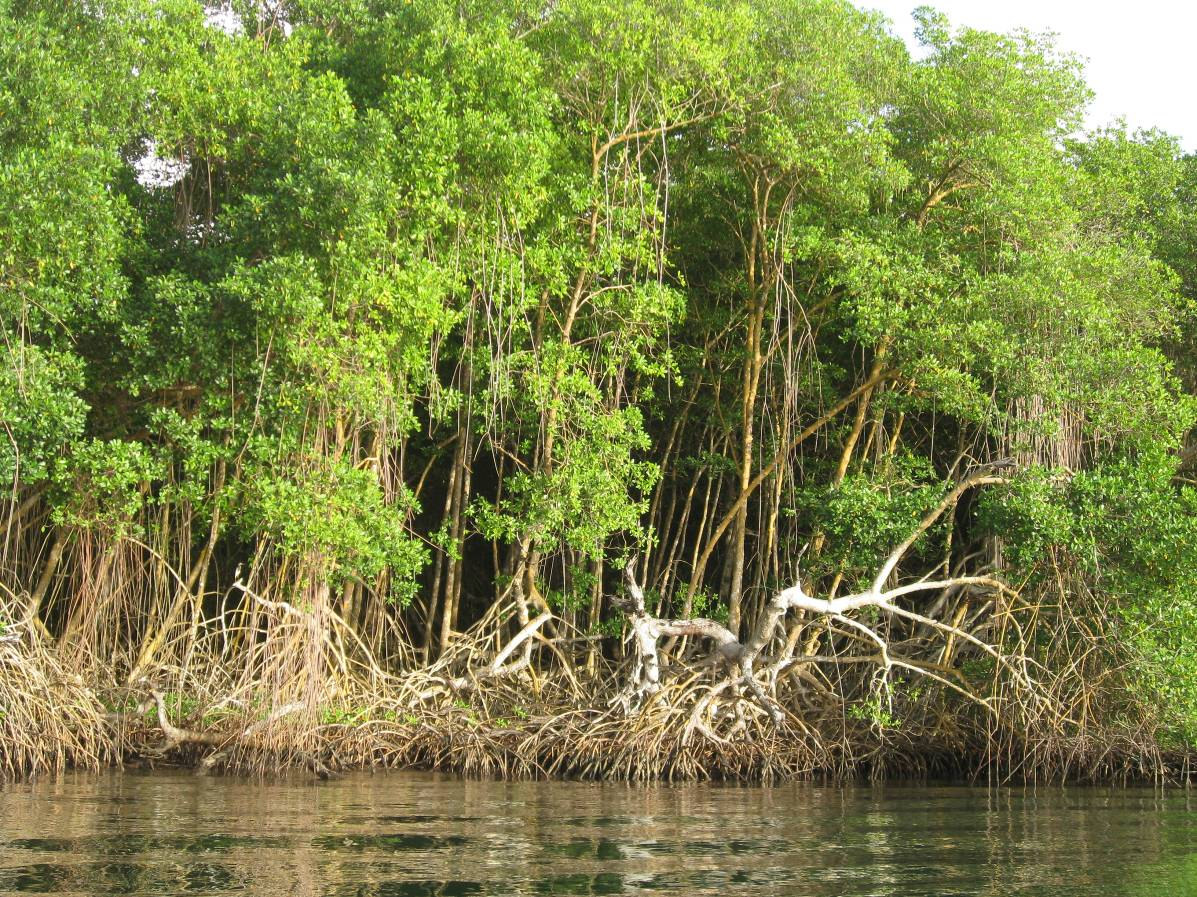
RTAG Participants took part in a field trip of the demonstration project site. Below are some
photos from this trip, which included a visit to the top of the watershed where reforestation
activities with a community group and public awareness activities take place, all the way down
to a trip on a glass-bottom boat over the Buccoo Reef to better understand the impact of storm
run-off on the reef and near-by mangroves.
10


Photos
11