UNITED NATIONS ENVIRONMENT PROGRAMME
PROJECT PROPOSAL
SECTION 1 – PROJECT IDENTIFICATION
1.1 Title of Sub-Programme: International Waters OP #9: Integrated Land and Water Component
1.2 Project title: Integrating Watershed and Coastal Area Management (IWCAM) in the Small Island Developing States of the Caribbean – Components 2-5
1.3 Project Number: GFL/2328/2731-04-XXXX
GFL/6030-04-XXXX
1.4 Geographical Scope: Regional: Antigua and Barbuda, The Bahamas, Barbados, Cuba, Grenada, Dominica, Dominican Republic, Haiti, Jamaica, Saint Kitts and Nevis, Saint Lucia, Saint Vincent and the Grenadines, Trinidad and Tobago.
1.5 Implementing Agency: United Nations Environment Programme (UNEP)
1.6 Executing Agency: The Secretariat of the Cartagena Convention
The Caribbean Environmental Health Institute
1.7 Duration of the Project: Number of Months: 60 Months
Commencing: Jan March 2005
Completion: Dec 2009
1.8 Costs and Financing (in Millions US$)
GEF: Project : US$ 7.67
PDF - B : US$ 0.608
Subtotal GEF………………………………: US$ 8.28
Co-financing: Sec. of Cartagena (in cash & kind)………..: US$ 3.075
UNEP (in cash & kind) US$ 0.116
UNEP/GPA US$ 0.060
CEHI (in cash & kind) : US$ 1.908
Governments (in cash & kind) : US$ 0.859
NGOs (in cash & kind) : US$ 7.091
Private Sector US$ 1.409
Subtotal Co-financing : US$ 13.45814.518
Total Project Cost : US$ 21.73822.798
*An additional 5.475 US$ million from GEF for this project will be implemented by the United Nations Development Programme (UNDP). Final committed and pending in-kind and cash co-financing for the project (UNDP and UNEP Components) is $98.329269 m. The final total project cost (co-funding plus GEFAll GEF costs and co-funding including PDF B phase) is $112.7202.052 m.
1.9 Summary:
Small Island Developing States (SIDS) have special conditions and needs that were identified for international attention in the Barbados Programme of Action for the Sustainable Development of Small Island Developing States and through the World Summit for Sustainable Development’s Johannesburg Plan of Implementation. GEF recognises certain unique water-related issues that are common to most SIDS (including coastal area management and biodiversity, tourism development, protection of water supplies, and land and marine-based sources of pollution), and has consequently confirmed the eligibility of related international waters projects. The overall objective of the current Project is to strengthen the commitment and capacity of the participating countries to implement an integrated approach to the management of watersheds and coastal areas, with a long-term goal of enhancement of the capacity of the countries to plan and manage their aquatic resources and ecosystems on a sustainable basis. This will be addressed within the Caribbean SIDS context of the currently limited economic opportunities, coupled with an urgent need for development and expansion of trade and commerce. The project recognises the highly integrated and closely interlinked nature of watersheds and coastal areas in small islands and aims to develop a more sector-coordinated management approach, both at the national and the regional level, with a strong emphasis on an expanded role for all stakeholders within a participatory management framework. The project further recognises the constraints on the development and implementation of such an integrated and sectoral-coordinated management approach in the absence of applicable and cost-effective solutions to many of the primary threats and their root causes at the grass-roots level. In this respect, the Project aims to develop and secure a more effective landscape for coastal and watershed management in the Caribbean SIDS through a logical framework of components and activities. To this effect, project components will focus on:
1. On-the-ground Demonstrations targeted at national hotspots where specific threats to national, regional and global environmental amenities have been identified. Emphasis will be on cross-sectoral management approaches, institutional/infrastructure realignment and policy reform; sectoral and stakeholder participation and coordination, related capacity building, and the replication and transfer of best lessons and practices from these demonstrations.
2. Identification of impact indicators for measuring IWCAM efficacy (including indicators of improvements in process, stress reduction, and the overall status of the coastal and watershed environment), and to support a programme of monitoring which can drive policy reforms.
3. Overall national and regional policy and legislative reforms (using lessons developed through the Demonstrations), alongside institutional improvements. High priority will be given to assisting the countries to meet the commitments required in the ratification process for important regional legal agreements such as the Cartagena Convention and its protocols (especially the Protocol on Land-Based Sources of Pollution). A specific outcome from the project will be the development of effective Integrated Water Resources Management plans for each country, followed by assistance to identify strategies for implementing these plans.
4. Establishing mechanisms for regional integration and networking to develop active partnerships for IWCAM (e.g. in public awareness, stakeholders participation, policy-level sensitisation, evolution of educational materials and curricula, training, secondment) and the development of a long-term strategy for sustainable IWCAM at the regional level.
5. Effective management and coordination of the overall regional project and the hotspot demonstrations with an emphasis on developing long-term, sustainable management and coordination approaches.
Consequently, the project aims to demonstrate the development of an effective regional strategy for IWCAM, in parallel with demonstrating and replicating geographically targeted national solutions to common Caribbean SIDS issues, through a series of interconnected components that capture best practices and translate these into replicable actions.
For the UNEP Environment Fund
Mr. Sergey KurdjukovDavid Hastie
Officer-in-ChargeActing Chief
Budget and Financial Management Service
Date:______________________________ Date:____________________________
2.SECTION 2: BACKGROUND AND PROJECT CONTRIBUTION TO THE OVERALL SUB-PROGRAMME IMPLEMENTATION
OVERALL SUB-PROGRAMME IMPLEMENTATION
2.1 Background and Context (Baseline Course of Action)
1. The watersheds and coastal areas of the Caribbean contain some of the world’s most diverse and productive habitats and encompass extensive areas of complex and unique eco-systems. The coastal areas include mangroves, coral reefs, sea grass beds and river deltas, which are an important source of food production and support a variety of economic activities such as fisheries, tourism and the related uses of recreation and transportation. Over 13 percent of the world’s coral reefs are found in the Caribbean region. Many Caribbean species are endemic only to this region. Some 30% of these are now considered to be either destroyed, or at extreme risk from anthropogenic threats[1]. Another 20% or more are expected to be lost from the Caribbean over the next 10-30 years if significant action is not taken to manage and protect them over and beyond existing activities. Mangroves are the most poorly supported (funding-wise) of all the globally-significant habitat types throughout the entire Latin America and Caribbean region and are also the least well-managed and are disappearing fast under development pressures. Seagrass beds are poorly mapped and badly managed. The Caribbean also has extensive wetlands of global significance. A Ramsar Mission to the Caribbean in September 2002 noted the vulnerability of these wetlands, and the urgent need for efforts toward their conservation and sustainable use.
2. As all terrestrial areas in the 13 Caribbean small island developing states - SIDS (see Figure 1 in Annexes) fall within a watershed, their protection and integrated management is critical to the protection of terrestrial biodiversity. A recent survey of the world’s biodiversity hotspots[2] has ranked these terrestrial areas as among the three highest priorities in any global strategy for biodiversity conservation and sustainable management. As a result of their isolation, the Caribbean islands have developed a high level of endemism amongst their flora and fauna. Scientific estimates support evidence that up to 40 percent of the plant life in Caribbean forests is found nowhere else on the planet, and the entire area is renowned as a migratory route for birds moving between North and South America. Endemism and its resultant highly significant biodiversity is the key to the importance of natural habitats in the terrestrial, watershed and coastal environs of these Caribbean Islands, and is directly linked to human health and well-being through priority ecosystem functions (such as clean water, agricultural capacity, availability of food, etc).
3. Clearly this region is of critical importance to global biodiversity from the point-of-view of the uniqueness of species and habitats. If this biodiversity is viewed in the context of the high degree of threat, along with the recognised inadequate coverage of protected areas, and the desperate need for more effective and sustainable resource planning and management, then the vital global significance of this project becomes apparent. The Caribbean has already lost nearly 90% of its original biological habitat (prior to human interference). The aforementioned survey2 notes that “..some risk taking is justified; even if a top-priority project in one of these areas has some risk of failure, it probably should be attempted. It implies that special attention should be taken on strengthening local capacity as quickly as possible, but that outside technical assistance should also be provided if local capacity is not adequate; we simply cannot afford to wait until local capacity is fully developed… We simply are not likely to have a second chance in these areas if our investments over the next few years fail to produce results. Very little remains, and every piece of natural habitat that has managed to survive is both especially fragile and tremendously important in global terms.”
4. During the project preparation phase, supported by a GEF PDF-B grant, national reports were produced summarising the problems of integrated watershed and coastal area management in each country. These were drawn together in a regional synthesis from which a Root Cause Analysis was derived. In accordance with the aims and objectives of this project, it was found that the main problems transcend any differentiation across the coastal-watershed interface and, in reality, effect these SIDS from the highest points of their watersheds out into their coastal zone jurisdiction as delimited by their territorial waters. The national reports identified the country’s major concerns in relation to the integrity of natural resource protection and management, economic stability, and sustainable development within the Caribbean SIDS, to include inter alia:
· Diminishing Freshwater Supplies
· Degraded Freshwater and Coastal Water Quality
· Unsustainable Tourism
· Inappropriate Land Use
· Climate Change
· Natural Disasters
5. Clearly, the coastal and watershed environments of the Caribbean SIDS cannot be considered or managed separately or in isolation. There is a strong causal linkage between these two areas, which strongly advises their consideration under an integrated management approach. Furthermore, the aforementioned areas of concern are not mutually exclusive. In as much as watersheds and coastal ecosystems demand an integrated and holistic approach to their management, the threats must also be viewed in a similar manner. For example, the impacts of the deforestation of a watershed can range from erosion to reduced water retention of the soil. The increasing demands placed on freshwater supplies and other natural resources are likely to cause increasing conflicts over allocation and use in the foreseeable future. Clearly, there is a need to integrate freshwater and coastal waters management through multi-sectoral planning and management of island ecosystems.
Past and On-going IWCAM-related Initiatives within the Region
6. At the Caribbean national and regional level institutions and agencies have been working to improve institutional arrangements for natural resource management linked to long-term sustainable development. Since 1990, the Secretariat of the Convention for the Protection and Development of the Marine Environment of the Wider Caribbean Region (Cartagena Convention), through the Caribbean Environment Programme (CEP) and supported by the Swedish International Development Agency (SIDA), has carried out several pilot studies in the coastal areas of large countries, as well as small island states (see UNEP-CAR/RCU, Integrated Coastal Planning and Management in the Wider Caribbean Region Pilot Projects of the Caribbean Environment Programme with support of the Swedish International Development Co-operation Agency. UNEP-SIDA, 1999). These have formed the basis for guidelines on coastal area management published by the Secretariat in 1995. CEP also maintains a project on management of marine protected areas, and has worked with the USAID on a sustainable tourism initiative focusing on coastal area and domestic wastewater management. CEP’s work with IDB has helped to increase the capacity of several Caribbean countries to improve environmental information systems management for coastal and marine areas. CIDA has also supported environmental capacity building (particularly in relation to policy and legislative reforms) in the Caribbean through its ENACT and ENCAPD projects. Since its establishment in 1989 by governments of the Caribbean Community, CEHI (the Caribbean Environmental Health Institute) has worked on environmental health improvements within the region through assistance to capacity building in the areas of water quality, water resources management, solid waste management, and sewage and liquid waste. Work has spanned policy and legislative reform, the development of standards and guidelines, technical interventions, institutional capacity building, public awareness and education in environmental management. This has laid a significant foundation for focused actions under IWCAM and points to the need for an integrated, cross-sectoral, participatory management approach. Other initiatives have focused on the strengthening of monitoring of coastal resources (coral reefs, seagrass beds and beaches), pesticides residue monitoring in agriculture; point and non-point sources of pollution, etc., with a view to determining best management practices. CEHI and the CEP have also worked together on sustainable tourism and on the development of effluent guidelines. Such environmental management initiatives have been heavily underpinned by public awareness and training activities. The OECS Natural Resource Management Unit (NRMU) has recently introduced the concept of Island Systems Management (ISM) within the Eastern Caribbean, based on the recognition of the interactions and interdependence of various systems on the island. ISM is an adaptive management strategy addressing issues of resource use conflicts and providing the necessary policy orientation to control the impacts of human intervention on the environment.
7. Within this current GEF Project, a specific emphasis will be placed on assisting the participating countries to develop and implement Integrated Water Resources Management plans in fulfilment of commitments made through the WSSD Plan of implementation. Within this context, several related initiatives are under development in parallel with the GEF IWCAM project.
8. One closely related project which is planned for the region is the ‘Strengthening Decision Support Systems for Integrated Water Resources Management in the Caribbean’. This is a 3 year project being implemented by CEHI and executed through the Caribbean Water Partnership and the Caribbean Centre for Climate Change. The goal of this Project is to contribute to the environmental, economic and social sustainability of SIDS in the Caribbean, through proper management of the hydrologic cycle. The objective of the Project is to assist in strengthening the quality and use of Decision Support Systems of Caribbean SIDS for climate change and climate variability within the broader context of an Integrated Water Resource Management (IWRM) and Water Use Efficiency strategy and the application of SIDS-specific IWRM techniques. There are clear areas of mutual interest between this initiative and the Gef-funded IWCAM Project and there is every intention that these two projects should collaborate and assist each other in achieving their related goals. The limited funds available to the CEHI project ($360,000 funding, $100,000 in-kind) would benefit from the additional support available through the GEF project. Furthermore, the fact that CEHI is implementing one project and jointly executing another will provide a valuable platform for coordination and networking between these two vital initiatives.
9. Another important planned joint initiative, which has implications for Caribbean IWCAM, is the Pacific and Caribbean Hydrological Cycle Observing System (HYCOS). This represent a partnership between the South Pacific Applied Geoscience Commission (SOPAC) on one side of the world, and the Caribbean Institute for Meteorology and Hydrology along with the Caribbean Environmental Health Institute on the other side to undertake two geographically distinct but thematically linked projects. The participating Island countries aim to A) attain a common level of ability (capacity) to assess and monitor the status and trend of their water resources, and to provide the water-related information and hazard warnings needed to support national social and economic development and environmental management, B) have established databases and information archives, maintained to acceptable standards, that form the basis for sustained future data capture and information processing and dissemination. The partner Projects have three main purposes that contribute to achieving the above goal: 1.To assist the participating countries to establish the human and institutional capacity to assess the status and trend of national water resources and to provide adequate warnings of water-related hazards, 2. To establish basic hydrological monitoring and data capture systems, using technology that balances modernity, economy, robustness, and suitability for Pacific Island circumstances, and 3. To establish hydrological databases and information systems that provide users with the information they require, to the standards (including accuracy, timeliness, usability, etc.) they need, and that provide a secure repository of information for the indefinite future. Again, there are clear implications for the aims of this project and the objectives of the IWCAM project with regard to shared lessons and experiences, as well as shared efforts and economies of scale between the two projects. The South Pacific SIDS are currently developing an IWRM-focused project for submission to GEF. The opportunities for collaboration and mutual assistance are clear and should be encouraged.
10. Through the initiation of the Government of Brazil, and based on the interest expressed by Latin American and Caribbean countries, the Global Environmental Facility (GEF) approved funding to implement the DELTAmérica project to prepare and implement mechanisms to share experiences and lessons learned in trans-boundary integrated water resources management in Latin America and the Caribbean (LAC). It was agreed that GS/OAS would be the international Implementing Agency, through its Unit for Sustainable Development and Environment (USDE/OAS). The project’s objective is to promote linkages among the different trans-boundary integrated water resources management activities in LAC, based on activities carried out in the framework of projects funded by the GEF in its Operational Programs in International Waters, so that the experience gained may be studied and evaluated by key societal players and by each countries’ institutions responsible for water resources management. Based on best practices and lessons learned, the project seeks to support the development of integrated water resources management policy in the participating OAS member states. To that end, it utilizes the capacity for coordination and execution of the national focal points operating in the framework of the Inter-American Water Resources Network (IWRN) by strengthening it as an information and communications tool in support of inter-American water resources activities. The project has four components: (i) dialogue between GEF International Waters (trans-boundary) projects and other projects to identify experiences, best practices, and lessons learned; (ii) incorporation of best practices and lessons learned in integrated water resources management in the LAC countries; (iii) strengthening the IWRN as an information and communications tool for integrated water resources management; and (iv) project evaluation and follow-up. The GEF IWCAM project would cooperate closely with the DELTAmerica project and its partners in the transfer and sharing or relevant lessons pertinent to both IWCAM and to IWRM and Water Use Efficiency.
11. The Global Water Partnership in the Caribbean was launched in 2004 as a working partnership among all stakeholders in water management in the archipelagic states and overseas territories of the Caribbean region including the countries of Belize, Guyana and Suriname. It is a network of partners for achieving an integrated approach to water resources management at the community, national and regional levels and it is the regional arm of the Global Water Partnership (GWP). The GWP Caribbean is devoted to supporting Caribbean countries in the sustainable management of their water resources through the establishment of strategic alliances and the implementation of appropriate actions. The objectives of the partnership are:
· To promote IWRM and Water Use Efficiency as the approach to water resources management in the region and to obtain national commitments towards IWRM and Water Use Efficiency implementation.
· To establish proactive alliances in water resources management that are representative, gender sensitive, and participatory at the community.
· To promote public participation in the management of water resources through capacity building and information sharing at the regional, national and particularly the community level.
· To align the Caribbean Region with hemispheric and other global water initiatives in order to capitalize on international experiences and opportunities for regional capacity-building in IWRM and Water Use Efficiency .
· To improve water governance through the promotion, enhancement and effective implementation of legislation, policy, programmes and institutional regulatory and administrative frameworks.
· To collaborate with other organizations and institutions working in other areas of sustainable development.
12. The GWP is presently working on developing a Caribbean programme on Governance in IWRM and Water Use Efficiency. The proposed GEF IWCAM project would coordinate closely with the GWP programme to achieve mutual aims and provide cooperative assistance.
2.2 Legislative Authority and Project Contribution to Overall Sub-programme Implementation
13. The GEF Operational Strategy recognises the special conditions and needs of Small Island Developing States (SIDS). Specifically, the Strategy states the need for “more integrated approaches to land and water management as a mechanism to address threats to their water resources”, that “integrated freshwater basin-coastal area management is essential for a sustainable future for these island states,” and that “this approach can produce benefits in other GEF focal areas, especially biodiversity and climate change.” Since then, the GEF has added a new Land Degradation focal area. Clearly IWCAM will deliver benefits in this area as well.
14. All 13 countries are eligible for GEF assistance under paragraph 9b of the Instrument for the Restructured GEF. GEF’s Operational Programme No. 9 “Integrated Land and Water Multiple Focal Area” states that “the goal is to help groups of countries utilise the full range of technical, economic, financial, regulatory and institutional measures needed to operationalise the sustainable development strategies for international waters (para. 9.2)”. Further, this OP lists as an expected outcome “the reduction of stress to the international waters environment in selected parts of all 5 development regions across the globe through participating countries making change sin their sectoral policies, making critical investments, developing necessary programmes and collaborating jointly in implementing water resources protection measures (para 9.10)”.
15. The proposed project will help the riparian countries to overcome institutional and other barriers to collaboration. The proposed project coordinates among implementing agencies, regional development banks, countries, and other stakeholders, and generates programmatic benefits for the global environment that would not otherwise be achievable. GEF funds will support implementation of demonstration projects and the finalisation of the regional hotspots analysis. This process will involve international donors, national and local governmental institutions, industries, and other key stakeholders that have important actions to take in restoring and protecting the environment.
16. The proposal is also consistent with the recent International Waters Focal Area - Strategic Priorities in Support of WSSD Outcomes for FY 2003-2006: IW 3 – Undertake Innovative Demonstrations for Reducing Contaminants and Addressing Water Scarcity. Furthermore, within the context of WSSD and its Plan of Implementation, the project will directly assist the Caribbean SIDS in meeting the 2005 Goal to ‘Develop integrated water resources management and water efficiency plans by 2005, with support to developing countries, through actions at all levels…’.
Existing Regional Legislative Programmes related to IWCAM
17. The Cartagena Convention provides the only regional legal framework for environmental protection in the Caribbean. In addition to the Cartagena Convention, adopted in 1983, there are three protocols to the Convention:
· The Protocol Concerning Cooperation in Combating Oil Spills (adopted in 1983)
· The Protocol Concerning Specially Protected Areas and Wildlife (SPAW) to the Cartagena Convention (adopted in 1990)
· The Protocol Concerning Pollution from Land-Based Sources and Activities (LBS) (adopted in 1999).
18. The Caribbean Environment Programme (CEP) was set up in the region as part of the UNEP Regional Seas Programme. CEP is facilitated by the Caribbean Regional Coordinating Unit (CAR/RCU) in Jamaica, which serves as the Secretariat to CEP. The objectives of the Secretariat are to provide assistance to all countries in the region, strengthen national and sub-regional institutions, coordinate international assistance, and stimulate technical cooperation among countries. CAR/RCU also serves as the Secretariat to the Cartagena Convention and its Protocols.
19. The legal structure of the Cartagena Convention is such that it covers the various aspects of marine pollution for which the Contracting Parties must adopt measures. Thus the Convention requires the adoption of measures aimed at preventing, reducing and controlling pollution in the following areas:
· Pollution from ships
· Pollution caused by dumping
· Pollution for sea-bed activities
· Airborne pollution
· Pollution from land-based sources and activities
20. In addition, the Parties are required to take appropriate measures to protect and preserve rare or fragile ecosystems, as well as the habitat of depleted, threatened or endangered species, and to develop technical and other guidelines for the planning and environmental impact assessments of important development practices in order to prevent or reduce harmful impacts on the area of application. The Cartagena Convention is not the only Multilateral Environmental Agreement applicable in the region. However, its regional area of application makes it an important complement to other agreements, and to this current proposal. Many of the general requirements of the Convention will indeed be strengthened and implemented through the activities of this GEF proposal. Other applicable MEAs within the region include:
· The Cartagena Convention and Protocols
· Convention on Biological Diversity
· The Ramsar Convention on Wetlands
· The United Nations Convention to Combat Desertification (UNCCD)
· United Nations Framework Convention on Climate Change (UNFCC)
· Basel Convention on the Control of Transboundary Movements of Hazardous Wastes and their Disposal
· St. George’s Declaration of Principles for Environmental Sustainability in the OECS
21. The CEP programme is working closely with countries in the region to address many of the issues identified within the Cartagena Convention and its Protocols. One of CEP’s main sub-programmes is the Assessment and Management of Environmental Pollution (AMEP) programme. This provides regional coordination for the Land-Based Sources Protocol. AMEP supports the activities required for the establishment of necessary measures to prevent, reduce and control marine pollution and to assist in the development of integrated environmental planning and management of coastal and marine areas. This programme is responsible for the regional management and coordination of global agreements such as the Global Programme of Action for the Protection of the Marine Environment from Land-Based Activities (GPA), Agenda 21, and the Basel Convention.
22. Not all countries participating in the project are yet party to the Convention (though the majority are) and ratifications to the SPAW and LBS protocols (the two most relevant to this project) are still in progress. Despite the presence and ratification of these regional laws, however, implementation is variable and can fluctuate with the availability of national resources. As a result, national laws have, for the most part, not caught up with these accepted regional treaties nor have the national laws and regulations embraced a more holistic and targeted approach such as that promoted in the Cartagena Convention and its protocols. The LBS Protocol, for example, promotes integrated management of watershed and coastal areas and contains groundbreaking regionally-adopted effluent limitations for domestic wastewater, while providing a framework for limitations on other regionally significant industrial sources. Table 1 list the major IWCAM-related Conventions and Protocols applicable to the participating countries along with their status regarding signature and ratification.
TABLE 1: STATUS OF ADHERENCE TO CONVENTIONS AND PROTOCOLS
COUNTRY
|
Antigua & Barbuda |
Bahamas
|
Barbados
|
Cuba
|
Dominica
|
Dominican Republic |
Grenada
|
Haiti
|
Jamaica
|
St. Kitts & Nevis |
St. Lucia
|
St. Vincent & Grenadines |
Trinidad & Tobago |
TREATY
|
|
|
|
|
|
|
|
|
|
|
|
|
|
|
Cartagena Convention |
R
|
|
R
|
R
|
R
|
R
|
R
|
|
R
|
|
R
|
R
|
R
|
|
Oil Spill Protocol |
R
|
|
R
|
R
|
R
|
R
|
R
|
|
R
|
|
R
|
R
|
R
|
SPAW Protocol
|
S
|
|
R
|
R
|
|
R
|
|
|
S
|
|
R
|
R
|
R
|
LBS Protocol
|
|
|
|
|
|
S
|
|
|
|
|
|
|
|
CMS Convention
|
|
|
|
|
|
|
|
|
|
|
|
|
|
|
MARPOL Convention |
R
|
R
|
R
|
R
|
|
R
|
|
|
R
|
R
|
|
R
|
|
CBD Convention
|
CP
|
CP
|
CP
|
CP
|
CP
|
CP
|
CP
|
CP
|
CP
|
CP
|
CP
|
CP
|
CP
|
|
UNCLOS Convention |
CP
|
CP
|
CP
|
CP
|
CP
|
S
|
CP
|
CP
|
CP
|
CP
|
CP
|
CP
|
CP
|
|
CNWH Convention |
|
|
|
S
|
|
CP
|
|
CP
|
|
|
|
|
CP
|
STC Convention
|
|
|
|
|
|
|
|
|
|
|
|
|
|
|
CITES Convention |
CP
|
CP
|
CP
|
CP
|
CP
|
CP
|
CP
|
|
CP
|
CP
|
CP
|
CP
|
CP
|
|
Basel Convention |
CP
|
CP
|
CP
|
CP
|
CP
|
|
|
S
|
|
CP
|
CP
|
CP
|
|
|
|
|
|
|
|
|
|
|
|
|
|
|
|
|
S = Signatory to Convention or Protocol |
|
|
|
|
|
R = Ratified Convention or Protocol |
|
|
|
|
|
CP = Contracting Party to Convention |
|
|
|
|
23. CEP, through its sub-programmes and activities, has attempted to assist the countries in addressing relevant issues noted above, which come under the mandate of the Cartagena Convention, and which relate to the current proposal. Such assistance includes projects addressing:
· Sewage Treatment Needs Assessments
· Strengthening Marine Protected Areas in the Wider Caribbean
· Reducing Pesticide Run-Off to the Caribbean Sea
· Demonstrations of Innovative Approaches to the Rehabilitation of Heavily Contaminated Bays in the Wider Caribbean
· International Coral Reef Action Network (ICRAN)
24. Furthermore, CEP, through the AMEP Programme, is committed to assisting the countries of the region in the development of guidelines regarding the application of regulations and economic steering instruments in the decision-making process toward the establishment and enforcement of measures necessary to prevent, reduce and control marine pollution and to provide them with relevant information (through workshops and coordination of databases). However, there is now a clear need for targeted assistance to institutional, legislative and policy strengthening and evolution and a very urgent requirement to develop best practices and lessons, through demonstrations, to support the overall concept of integrated planning and management within the national watersheds and coastal zones of the Caribbean SIDS.
25. To facilitate this assistance and the exchange of experience and information, the Caribbean Environment Programme is developing the Caribbean Node of the Global Programme of Action Clearinghouse Mechanism (GPA/CHM). The GPA/CHM is a data directory, with components organized by source-category, cross-referenced to economic sectors, containing information on current sources of information, practical experience and technical expertise. This tool is expected to become instrumental to the implementation of the LBS Protocol.
SECTION 3: 3: NEEDS AND RESULTS
3.1 Needs
26. Synthesis of the national reports undertaken during the PDF B phase identify the following primary impacts on the coastal and watershed environment within the Caribbean (taking into account that this project cannot, under GEF Criteria, directly address climate change issues or natural hazards)
· Aquifer Degradation mainly as a result of improper wastewater treatment, overuse of agricultural chemicals, increasing demand for water resources, and an inadequate knowledge of aquifer and groundwater dynamics and re-charging.
· Reduction in Surface Water Quality and Availability resulting from overuse of agricultural chemicals, demand for water resource exceeding supply, deforestation, overgrazing, and poorly planned and controlled construction.
· Loss of Watershed and Coastal Biodiversity primarily as result of land-use conversion, changes in catchment and stream flow, loss of habitat, and over-exploitation of resources coupled with limited and ineffective protection of sensitive areas.
· Land Degradation and Coastal Erosion causes by deforestation, overgrazing, soil erosion, inappropriate land-use practices, increasing demand for building materials, and inappropriate construction practices
27. The causes of these impacts can be listed as:
· Political support in favour of unsustainable resource exploitation for short-term economic growth
· Inadequate, inappropriate or poorly enforced laws, policies & regulations
· Lack of effective policies based on credible/verifiable justification
· Non-existent, inadequate, or unreliable data
· Lack of incentives for conservation and management (especially water resources)
· A fragmented and sectoral approach to environmental management coupled with limited communication and collaboration between various sectors
· Weak institutional arrangements, limited human resource availability and capacity
· Inadequate development planning
· Limited information on (and investment in) alternative or best practices
· Limited understanding of the environmental impacts and consequent economic losses
· Lack of public awareness and education
· Fiscal and regulatory systems that encourage unsustainable land practices and uncontrolled water exploitation
· Poor land-use planning and water resource management
· Inappropriate land tenure and ownership issues resulting in lack of accountability/responsibility
· Increasing demand for resources coupled with poor and unsustainable management and conservation practices
· Lack of stakeholder management, ownership and responsibility
· No understanding of the benefits of stakeholder participation
· Lack of knowledge about the participatory process
· Use of inappropriate technology leading to destruction of non-target species, non cost-effective use of the resource, destruction of habitat, and pollution of the environment
28. And all of the above causes effectively fit into one or more of the following overarching, governance-related root cause
· Ineffective Policy and Legislative Mechanisms
· Inadequate Knowledge, Information or Training in IWCAM-related issues
· Poor Management Approaches
· Inadequate Infrastructure or Capacity
29. Therefore, the overall conclusion arising from the national reviews of threats and root causes is that the existing watershed and coastal management practices are generally out-of-date and uncoordinated, there are few examples of effective practices that are practical within the Caribbean SIDS situation, that institutional arrangements and policy are in urgent need of reform, that there is a paucity of adequate (including historical trends) and up-to-date information on the status of the environment and linked socio-economic parameters, and that effective and sustainable management can only occur in the presence of evolving stakeholder support and participation, including critical input and support from beneficiaries such as the private sector).
30. Of critical concern in the region are the issues of freshwater supply and demand, and the absence of effective, implemented policy towards water resource management. This has various ‘knock-on’ effects within watersheds and coastal areas. Due to economic and demographic changes, demand for water resources within the region is increasing rapidly, and in some SIDS is exceeding supply. Exacerbating this issue is the poor structure or absence of water tariffs and rates. Generally, water is not treated as an economic good and consequently water rights, water markets and pricing are not used to improve management. For the most part, there is no incentive for consumers to use water efficiently. For example, in Barbados all metered customers must pay a minimum charge. Accordingly, customers within this category end up paying for water they may not have used. Fixed-rate (un-metered) customers also have no incentive to conserve because they pay the same amount, regardless of the volume of water used. Additionally, many countries have noted that the water charges generally do not cover the capital and maintenance costs of the necessary infrastructure. Essentially, the governments subsidise water use. This, in turn, creates unsustainable market conditions to the detriment to the environment. Clearly there is an urgent need for each of the Caribbean SIDS to develop and implement an IWRM and Water Use Efficiency plan consistent with the recommendations from WSSD, and in accordance with its Plan of Implementation.
31. Land use affects the health of freshwater ecosystems, watersheds and coastal areas in the region. As the proposed Land Policy document of Jamaica points out, there is a “direct relationship between the use of land for domestic, commercial, industrial or agricultural purposes, the generation of waste by these uses, and the impact on the quality of both surface and groundwater resources.” In most countries, unsustainable land-clearing practices, inefficient irrigation, and the use of agro-chemicals is a source of significant damage. Within the domestic sector, land clearing and construction on previously uninhabited land is producing sedimentation, deforestation, and pollution, on top of the obvious problem of biological habitat degradation and destruction. Furthermore, land use is a potentially conflictive issue since it involves issues of land tenure, traditional use, and economic livelihood. Many farmers are not using sustainable farming techniques. This may be due to insecurity regarding land tenure, limited economic resources, or lack of knowledge of different farming techniques. Overall, there is a need within the region to produce coherent and pragmatic guidelines for land-use planning policies, that are consistent with development plans and ecosystem management plans, for adoption at the national level.
32. The lack of an integrated environmental management approach is often compounded by institutional fragmentation, inadequate policies, lack of funding, and institutional constraints. Policies and laws cannot exist in isolation of social, economic and environmental realities and imperatives. Ideally, the policies and laws that emerge to support IWCAM should derive from the elaboration of national sustainable development plans, setting out national development goals and objectives, including the relative contribution which key environmental assets will be expected to make to the attainment of such goals and objectives. Policies and laws need to be dynamic instruments and therefore continuous environmental assessment is required to keep these laws and policies, relevant, sound and effective.
33. The lack of appropriate and enacted policy and legislation addressing threats represents a major barrier to successful IWCAM. There is a notable absence of appropriate national water quality standards and guidelines with respect to the use of coastal waters for recreational purposes, propagation and harvesting of marine life, protection of marine ecosystems and assimilation of waste. This deficiency means that Caribbean Governments have no basis for determining: (a) the physical, chemical and biological parameters that must be met for the intended uses; (b) the suitability of coastal waters for the intended uses; and (c) the effectiveness of controls on land-based sources of marine pollution. Further, national effluent limitations (consistent with regional law) and monitoring guidelines/procedures are necessary to establish individual source-specific controls on land-based, point sources of coastal pollution. Table 2 identifies the country deficiencies and needs with respect to legislative and policy requirements.
TABLE 2 : LEGAL AND POLICY STATUS FOR EACH COUNTRY IN IWCAM REGION
|
Legislations and Policies |
Antigua |
Bahamas |
Barbados |
Cuba |
Dominica |
Dominican Republic |
Grenada |
Haiti |
Jamaica |
St.Kitts/Nevis |
St. Lucia |
St.Vincent |
Trinidad |
Total States |
|
Deficiencies |
Absent Inadequate and/or outdated |
1
|
|
1
|
|
1
|
|
1
|
1
|
1
|
1
|
1
|
1
|
1
|
10
|
|
Fragmented among sectors |
1
|
|
1
|
|
1
|
|
1
|
1
|
1
|
1
|
1
|
1
|
1
|
10
|
|
Lack of Clear Jurisdiction |
1
|
|
1
|
|
|
|
1
|
|
1
|
|
1
|
|
|
6
|
Enforcement
|
|
|
1
|
|
1
|
|
|
1
|
|
1
|
|
1
|
1
|
7
|
|
National administration of multilateral agreements |
|
|
1
|
|
|
|
1
|
1
|
|
1
|
1
|
1
|
|
7
|
|
|
Needs |
Harmonisation among sectors |
1
|
|
1
|
|
1
|
|
1
|
1
|
1
|
1
|
1
|
1
|
1
|
10
|
|
Framework for consultations in formulation |
1
|
|
1
|
|
|
|
1
|
1
|
|
1
|
|
1
|
|
6
|
|
Institutional capacity building |
1
|
|
1
|
|
1
|
|
1
|
1
|
1
|
|
1
|
1
|
1
|
10
|
|
Revision of all existing pertinent legislation |
|
|
|
|
1
|
|
|
1
|
1
|
1
|
|
|
1
|
6
|
|
Enhance capacity of enforcement agencies |
|
|
|
|
1
|
|
1
|
1
|
|
1
|
1
|
1
|
1
|
7
|
|
Regional model policy for IWCAM |
1
|
|
|
|
1
|
|
1
|
1
|
1
|
1
|
1
|
1
|
|
8
|
|
Land use policy |
1
|
1
|
|
|
1
|
|
1
|
|
|
|
|
1
|
|
5
|
34. At the financial and socio-economic level, most Caribbean Governments are finding it increasingly difficult to reconcile the need for economic growth with rapidly expanding populations, and with the need to raise living standards for a large and growing number of the poor. Raising the consumption levels of both private and public goods and services requires large amounts of foreign exchange through foreign direct investment and increases in productivity by export-oriented industries. The resources needed by Governments for public investments and the regular provision of goods and services can only be made available by expanding national income. Against this background, Caribbean Governments are seeking to attain and maintain at least a 6% annual rate of economic growth to underpin the implementation of their sustainable human development programmes. Attempts at doing so continue to be challenged by a wide range of internal problems and externalities. Generally, many of the internal problems spring from the small size of the countries. These include: the narrow resource base; excessive dependence on international trade and hence vulnerability to global trends and market changes; overuse and premature depletion of resources; the restricted and threatened nature of freshwater resources; unreliable and restricted access to sustainable and stable power sources; costly administration and infrastructure, including transportation and communication; limited institutional capacities; small domestic markets which are too small to provide significant economies of scale, while their limited export volumes, often from remote locations, lead to high freight costs and reduced competitiveness.
35. An expanding range of externalities has dogged attempts at stimulating and sustaining reasonable rates of economic growth. Indigenous firms are often under-capitalised and constrained by obsolete technology and are therefore unable to meet the increasingly stringent importation standards set by the developed countries. Many countries are yet to recover from the spate of NAFTA-related factory closures that occurred in the early 1990s. Further, while WTO-led, trade liberalisation policies are promising a much deeper integration of Caribbean economies into the global economy, they are also causing a shift in production to areas in which the Caribbean countries have little or no comparative advantage. This means that as markets become the primary mechanism for resource allocation, economic production will increasingly rely on the exploitation of the region’s natural resources, which in turn in likely to increase pressure on the environment. At the same time, moderate to low growth and a low savings rate are also limiting the flow and size of funding required for the finance of environmentally sound development.
36. Another important financial mechanism requirement emerging from work under the PDF was the need to recognise the transfer of benefits, which has implications in both the socio-economic as well as stakeholder spectrum. There was a consensus that the main productive sectors do not meaningfully contribute to environmental maintenance and waste management costs, in proportion to their reliance on the natural resource base. At the same time, the general public and those representing community-based organisations, especially in the upper reaches of watersheds in economically depressed rural areas (whose practices are critical to the management of watersheds and downstream areas) are rarely the recipients of the benefits of integrated watershed management and healthy coastal waters.
37. Along with the restricted financial resources available in many small island states to address the problems of freshwater and coastal area management, the small size of populations generally results in manpower limitations in terms of qualified experts available to manage resources on a sustainable basis. Regional approaches that strengthen the sharing of experience and expertise are therefore of critical importance. Water utilities often lack adequate staffing levels with sufficient technical and financial management skills. This leads to poor management of supply and demand in the face of water shortages, and inadequate information gathering and analysis skills. Inadequate pricing and tariff policies and high levels of unaccounted-for-water increase the problem. Inappropriate water usage (potable water going to irrigation needs) along with leakages in the distribution systems account for much of the loss. All the islands have established some preserves to protect valuable habitat associated with ground and surface water supplies and well-fields, but the authorities lack the necessary manpower and funding to enforce the rules or to monitor the success of management approaches.
38. Significant progress has been made in the area of education and training over the past decade and the Caribbean region supports a number of institutions dedicated to education and training in resource management, including the UWI Centre for Environment and Development, and the Sustainable Development Unit of the UWI, based in Jamaica. Human resource development has, however, been hampered by the following issues and problems:
· The absence of a mechanism for technical cooperation among developing countries at the regional level;
· The dearth of trained personnel in critical areas, such as water resources management; environmental impact assessment; community-based resource management; marine law; physical planning policy analysis; remote sensing; and climatology and hydrology;
· The seeming inappropriateness of the curricula of national and regional educational institutions based on these deficiencies; and,
· The absence of policies, which aim to retain, within the wider Caribbean, expertise in various aspects of resource management and sustainable development.
39. Throughout the region there are reports of increased stakeholder participation in the decision-making process as well as increased awareness and education programmes for coastal area and watershed management. Government agencies are making a point to reach out to non-governmental organizations and community-based organizations through activities which other stakeholders; the establishment of local area management authorities; the involvement of stakeholders in monitoring, management, and conservation activities; media campaigns; public consultations; and training on sustainable tourism. However, this is a fairly recent development and, notwithstanding these laudable activities, many stakeholders in the participating countries still feel that there is insufficient public involvement in the decision making process. Although policies are moving slowly but surely toward more stakeholder participation in the management process, often there is an absence of working examples or effective case studies with which to guide policy makers and administrators.
40. The combination of these particular environmental, social and economic characteristics makes it imperative that issues of freshwater resources management and related coastal water quality and biodiversity are addressed in an integrated manner, and that sectoral policies and activities are modified to sustain and protect both freshwater supplies and coastal and marine aquatic resources.
41. Integrated Coastal Management (ICM) is a management framework, which has proven to be effective at enhancing the sustainable development of coastal resources and the marine environment at the local government level. ICM provides local government units with a mechanism and process to harmonize both the economic development and environmental management of marine and coastal resources. Watershed management has been developed and tested as a valuable mechanism in many countries that incorporates cross-sectoral linkages and coordination along with stakeholder involvement and community management approaches. In the small island situation there is a need to integrate these two approaches into an overall Watershed and Coastal Area Management strategy. Small islands cannot effectively separate these two areas as almost every activity within the watershed has an effect or impact in the coastal area, and frequently vice versa. The concept of Integrated Watershed and Coastal Area Management is not entirely a new one but it is relatively untested as yet and is very much in its infancy. There are few regionally successful examples of its application and sustainability. The current project aims to gather what lessons and best practices already exist and to substantially enhance these through on-the-ground demonstrations of active IWCAM approaches and techniques in order to develop transferable and replicable models and guidelines relevant to all SIDS.
Project Rationale & Objectives in the Context of Regional Needs
42. The overall objective of the proposed project will be to assist the 13 participating Small Island developing states of the Caribbean to improve their watershed and coastal zone management practices in support of sustainable development. The project will set out to strengthen institutional capacity at the national and regional level; provide assistance to countries in understanding the linkages between, and the requirement for integrating management of watershed and coastal zone environmental problems; and will meet national priorities within the regional context.
43. The World Summit on Sustainable Development (Johannesburg 2002) identified the special needs of SIDS within its Johannesburg Plan of Implementation. Section VII of this PoI addressed the issue of sustainable development of small-island developing states. The PoI recommended actions at all levels to:
· Accelerate national and regional implementation of the Barbados PoA, with adequate financial resources, including through the GEF focal areas, transfer of environmentally sound technologies and assistance for capacity-building from the international community.
· Assist small island developing states, including through the elaboration of specific initiatives, in delimiting and managing in a sustainable manner their coastal areas and exclusive economic Zones….
· Provide support, including for capacity-building, for the development and further implementation of (i) Small island developing States-specific components within programmes of work on marine and coastal biological diversity; (ii) Freshwater programmes for small island developing States, including through the Global Environmental Facility focal areas
· Effectively reduce, prevent and control waste and pollution and their health related impacts by undertaking initiatives by 2004 aimed at implementing the Global programme of Action for the Protection of the Marine Environment from Land-Based activities in small island developing States
· Support the finalisation and subsequent early operationalisation of economic, social and environmental vulnerability indices and related indicators as tools for the achievement of the sustainable development of small island developing States
· Provide support to small island developing States to develop capacity and strengthen efforts to reduce and manage waste and pollution and building capacity for maintaining and managing systems to deliver water and sanitation services in both rural and urban areas.
44. More specifically, the WSSD Plan of Implementation calls for all countries to develop IWRM (Integrated Water Resource Management) and Water Efficiency plans by 2005, with particular support to go to developing countries (Paragraph 26 of the Johannesburg Plan of Implementation).
45. The SIDS Barbados Conference and the resultant programme of action (SIDS/POA) highlighted the need to safeguard watershed areas and other sources of groundwater to address the problem of limited quantity of freshwater availability on small islands and to protect biodiversity. The SIDS/POA also highlighted the need to strengthen the development of integrated coastal zone management plans and strategies for coastal watersheds.
46. A10-year Review of the Barbados Programme of Action for SIDS (BPoA +10) is due to take place in 2005. As a lead up to this process, an Inter-Regional Preparatory Meeting was held in Nassau, The Bahamas from 26-30 January, 2004. The meeting adopted both the Nassau Declaration and the AOSIS Strategy Paper in preparation for the Mauritius Meeting on Small Island States in August 2004. Some of the primary concerns and needs of the SIDS arising from this preparatory meeting, and which relate directly to the Caribbean IWCAM project, are highlighted below:
A. Management of Wastes
· Insufficient progress in planning and implementing waste management policies;
· The international community should provide support to SIDS for the development, transfer and implementation of appropriate technologies;
· The international community should assist SIDS in: developing waste management systems and institutions; establishing national environmental trust funds; and promoting recycling and using waste as a resource;
· The quantity of waste disposed of in the sea should be reduced through regional cooperation;
· SIDS, with UNEP’s support, should implement the Global Programme of Action for the Protection of the Marine Environment from Land-based Activities;
B. Coastal and Marine Resources:
· The establishment of a financial mechanism to assist SIDS in their implementation of UNCLOS;
· SIDS, with the help of other States and using regional mechanisms, to adopt integrated management tools;
· relevant regional and international development partners to support SIDS in the development and implementation of regional initiatives.
C. Freshwater Resources:
· Provide assistance for capacity building for the development and further implementation of freshwater and sanitation programmes and the promotion of integrated water resources management.
· International, regional and private sector financial institutions to provide assistance in meeting the Millennium Declaration target of halving the proportion of people without sustainable access to safe drinking water by 2015;
· The WMO, supported by the international community, to continue to implement actions to strengthen national capacity.
D. Land Resources:
· Strengthening land tenure and management systems;
· Move from primary to tertiary agricultural production;
· Present funding proposals under the Convention to Combat Desertification and the Convention on Biological Diversity through the GEF, and request the GEF to facilitate SIDS’ access to GEF financial and technical resources for addressing land degradation.
· Practical support from the UN system to enhance efficient and sustainable agricultural production and ensure food security, and recommend the prioritisation by SIDS ministers of agriculture of actions for enhanced contribution of agriculture, forestry and fisheries to SIDS’ sustainable development policies;
· Facilitate legislation implementing sustainable logging and replanting, increase stakeholder participation regarding forest resources, safeguard rights of resources owners, develop and strengthen partnerships for sustainable forest management, and develop and implement action plans to reduce deforestation and promote sustainable forest management;
E. Sustainable Capacity Development and Education for Sustainable Development:
· Build capacity to monitor the state of environment;
· Develop core competencies to assist stakeholders in delivering sustainable development programmes;
· Create the skills base and techniques for use in decision-making.
· The international community to provide technological, institutional, physical and financial resources and to support SIDS in establishing national capacity development coordination mechanisms and centres of excellence for training and applied research.
F. Monitoring and Evaluation:
· enhanced international coordination related to SIDS through the UN, donor support, and reduced reporting burdens on SIDS;
· monitoring and periodic reporting on indicators on SIDS;
· strengthening of regional SIDS institutions for monitoring and coordination;
47. These recently agreed urgent requirements arising from this global review of SIDS have been taken carefully into consideration in developing the objectives, activities and outcomes of this IWCAM project. Attention is drawn to existing work already undertaken by UNEP to identify effective frameworks and guidelines for IWCAM, and available as ICARM Technical Report Series No. 1 (“Integrated Coastal Area and River Basin Management,” UNEP and Priority Actions Programme Regional Activity Centre, 1997) and No. 2 (“Report of the First Expert Working Group Meeting on the Concept and Development of Practical Guidelines for Integrated Coastal Area and River Basin Management,”1997). In addition, attention is drawn to the existing experiences and lessons with IWCAM and related issues by certain countries within or associated with the project regional boundary. Such countries include Barbados, Belize, Jamaica, the British Virgin Islands, and others. Significant lessons and best practices could and should be captured from these country’s experiences and knowledge.
48. The need for a more strategic regional approach to both IWCAM, and sustainable development itself, is indicated by the complexity of the issues in relation to the relatively poorly-developed state of the policy and institutional apparatus within the participating countries. Additional justification for development of a regional strategic approach is provided by evaluations of other GEF-funded interventions of similar scope and intensity, such as the Caribbean Planning for Adaptation to Climate Change (CPACC). These evaluations confirm that a flexible approach, which uses the results of continuous assessment of on-going and/or completed interventions, to inform the design/redesign of subsequent phases, are likely to yield the best long-term results. Consequently, the PDF B process has concluded that the full project should help to define and establish a strategic approach to IWCAM within the region based on an open and participatory partnership between the countries and the donor/lending agencies. The development of such a strategic approach and the necessary mechanisms to support it has been captured within the project components and will be implemented and established, as a project priority, under guidance from the Project Steering Committee.
49. Of particular concern to nearly all SIDS is the urgent issue of water resource management and conservation. The Caribbean SIDS are no exception to this area of concern. Freshwater resources are generally poorly managed with significant impacts to water quality and flow occurring within the watershed which has knock-on effects not only to the availability of good quality freshwater for human use, but also to the downstream environment and ecosystems. The need to maintain sufficient water quality and quantity so as to sustain dependent ecosystems within the watershed and coastal areas has now been captured within the Concept of Environmental Flow. Environmental flow is the water regime within a river, wetland or coastal zone that maintains ecosystems and their benefits where there are competing water uses and where flows are regulated (definition provided by IUCN). Environmental flows provide critical contributions to river health, economic development and poverty alleviation. They ensure the continued availability of the many benefits that healthy river and groundwater systems bring to society. It is becoming increasingly clear that, in the mid and long term, failure to meet environmental flow requirements within watersheds and associated coastal areas is having disastrous consequences for many river users. Addressing the water needs of aquatic ecosystems may often mean controlling and reducing the water use of one or more sectors. However, such difficult choices may be necessary to ensure the long-term health of the basin and the activities it encompasses. The WSSD Plan of Implementation’s directive calling for the development of IWRM plans by 2005 is directly related to these issues and concerns regarding sustainable water resource management and the conservation of dependent ecosystems.
3.2 Results
50. The project components, objectives, outputs and outcomes are intended to have the project reflect an integrated approach to IWCAM within the region. In so doing, it should also provide a framework for countries wishing to design and implement free-standing, national IWCAM projects. It is recognised that this regional initiative toward development and coordination of IWCAM policies and activities cannot cover every need and eventuality. With this in mind, countries are encouraged to work in parallel with this project to develop working and transferable examples of IWCAM within their boundaries, and in coordination and partnership with other SIDS in the region.
51. The project will address the need to provide realigned national standards and guidelines pertinent to IWCAM, via a revision and rationalisation of national legislation and policy, and the development of effective incentives and equitable cross-sectoral and stakeholder sharing of responsibilities. These will be addressed in the context of existing national commitments to relevant international conventions, treaties and accords including, inter alia, the Cartagena Convention and its Protocols; the Convention on Biological Diversity; and the UN Framework Convention on Climate Change and the Convention to Combat Desertification (taking into account the recommendations of the national enabling activities carried out under these Conventions); the OECS Declaration of Principles on Environmental Sustainability and other regional initiatives. Emphasis will be placed on ensuring that the process of revision and realignment is done with the full involvement of stakeholders at the national and regional level. Hence there will be a need for close linkages to project activities dealing with awareness and education, and strong project deliverables addressing community management and compliance strategies. The project will also assist in providing guidance and implementation on the equitable distribution of resource responsibilities through transferred benefit processes (e.g. transfer of tariffs from resource users to support resource management), and will assist the countries in exploring and adopting incentive-based, self-regulatory mechanisms for IWCAM at the national level.
52. Project Results can be summarised as follows:
a) Regional adoption of effective indicators for process, stress reduction and environmental status relative to effective integrated watershed and coastal area management. The purpose of these indicators would be to provide verifiable measurements of threat factors and mitigatory responses within a number of sectors. Indicators would address the resource sector and ecosystem level (biological, physicochemical, habitat-and-species, etc), the social sector, economic sector, the policy process (measuring improvements in policy and administration which would lead to improvements), stress reduction (concrete actions to reduce threats such as sewage treatment plants or incentives to reduce agro-chemicals). Based on these indicators, countries within the region would be able to report on their status on a regular basis. Most importantly, these indicators will provide verifiable foundations for policy and strategy within both the governmental and private sectors.
b) Prioritisation of Hotspots (geographical areas with specific thematic IW issues and impacts) within the region requiring early attention, and an active and effective mechanism(s) for threat-mitigation aimed at these hotspots.
c) Effective transfer and replication of best practices for mitigation/removal of impacts to watershed and coastal resources and communities (based on demonstrations of best practices for IWCAM at selected demonstration hotspots).
d) Effective and applicable guidelines and models for policy reform and legislative amendment in support of A. IWCAM as an overall concept, and in accordance with B. existing national commitments to regional IWCAM-related protocols and conventions.
e) Adoption of policy reforms and legislative amendments (particularly in relation to the development of effective IWRM and Water Use Efficiency plans during the project lifetime) throughout the region using incentives, incorporating support from the private sector, and recognising the need for a full participatory stakeholder approach and an effective role for communities in IWCAM.
f) Effective and sustainable coordination of IWCAM initiatives within the region (and beyond to other SIDS regional groups) through an interactive network of institutions coupled to an information and lessons/practices ‘clearing-house’ process.
g) Significantly improved sensitivity to IWCAM issues at the policy level (both governmental and private sector) coupled with a greater awareness at the community level.
h) Considerably enhanced capacity for IWCAM through training and education with an emphasis on sustainability and self-training within the region
53. Project beneficiaries will include:
A. Communities: Those communities living alongside rivers and within river basins as well as coastal communities will benefit from a greater management role over their resources and environment, while receiving greater support (particularly from resource-beneficiaries such as the private sector) in undertaking this new, enhanced responsibility.
B. Government sectors will benefit from enhanced coordination to improve their responsibility and accountability for better management of natural resources. This should further improve sustainability of those same resources in the long-term.
C. Senior, policy level government decision-makers will benefit from being able to demonstrate greatly improved management of coastal and watershed resources along with other benefits to communities (improved sanitation, reduced industrial and agricultural pollution, reduced flooding and soil erosion, greater conservation of important ecosystems critical to the tourism and fisheries sectors).
D. The private sector will benefit from closer working relationships with the communities, and from more sustainable practices thereby protecting their financial interests and their clients (particularly within the tourism sector).
E. NGOs concerned with conservation and protection of natural resources will benefit from a much stronger participation in the monitoring, evaluation and management process for coastal and watershed sustainability.
F. International waters and global biodiversity will benefit as a whole with improved management of coastal and watershed resources and sustainable conservation of critical biodiversity within a biologically unique area of the world.
G. Other island communities and other SIDS geographical groups will benefit from lessons learned and the development of transferable best practices.
3.3 Assumptions to Achieve Results and Associated Risks
54. The overall objectives of the project are highly dependent upon national political commitment to the necessary policy reforms and legislative amendments required to strengthen and enhance IWCAM. These reforms are central to the promotion and sustainability of effective IWCAM within the region and within each island’s system of governance. Countries have demonstrated some measure of commitment already through the development of co-financed demonstration projects. The real indicators of effective commitment will be the active implementation of policy reforms, amendments to legislation allowing full participatory management, and sustainable and effective compliance and enforcement.
55. There is a further assumption that the sense of urgency over critical watershed and coastal issues and threats that has been expounded by the various SIDS both at WSSD and in the lead-up to SIDS +10 will actually be translated into national actions and reforms in the presence of effective assistance, capacity building and the demonstration of applicable and sustainable mechanisms for stress reduction and overall IWCAM. The real test of political will and commitment will therefore be the translation of these urgent requests for assistance in to real reforms and sustainable actions through the initiatives provided in this project.
56. In order for political and legislative improvements to be credible, an on-going programme of national and regional assessment and monitoring of environmental status and socio-economic improvements will be necessary. Such a sustainable assessment process (the primary objective of which will be to drive policy and legislative amendments) will need commitment at many levels from policy-level government through the technical sectors and out into the communities. Donors and support Agencies within the region will also be called on to continue their commitments, particularly at the financial level, to develop and sustain such a programme of assessment and monitoring.
57. Private sector support and funding has already begun to flow into this project through commitments from various private sector interests. This needs to be further encouraged so that the relevant private sector interests which benefit from IWCAM can see the value of transferring some of those benefits into the management and assessment process. The project assumes that these benefits will be obvious or can be effectively demonstrated through awareness and sensitisation.
58. Realising the objectives of the project is somewhat dependent upon effective coordination and networking between countries and institutions. To some extent such networks do exist but they need to be better coordinated. Their end objectives need to be clarified so as to fine-tune inputs and delivery. It is important to note here that the differential in coastal and watershed management and potential for policy reform between more advanced countries in the region and those less developed islands (both in respect of IWCAM, and in their economic and social development) presents at least a challenge and at most a real risk to achieving the projects objectives. Certain countries within the project’s geographical scope already have substantial capacity and a firm foundation in watershed and coastal management. Other islands, particularly those with smaller populations, have very limited human resources and reduced capacity and will need a different level of training and assistance. In this respect it is intended that the project would foster inter-governmental assistance and secondments so that the more advanced countries could aid their less fortunate neighbours.
SECTION 4: 4. ACTIVITIES, OUTPUTS, WORKPLAN AND TIMETABLE, BUDGET AND FOLLOW-UP
AND FOLLOW-UP
4.1 Project Components, Activities and Outcomes
59. Based on the national reports and regional synthesis completed under the PDF-B, the regional priority needs for IWCAM for the Caribbean SIDS include:
· Direct action to address the more critical hotspots and issues, and to demonstrate effective mitigation mechanisms that are appropriate for the Caribbean SIDS;
· National and regional capture of lessons and best practices relating to IWCAM issues, coupled to a mechanism for transfer and replication of same;
· A detailed understanding of the policy and legislative constraints within national IWCAM-related issues, translated into policy and legislative reform models, and linked to a mechanism for transfer and replication of same
· An urgent need for the development and implementation of IWRM and Water Use Efficiency plans within each country which recognise the ecosystem approach (encompassing the concept of Environmental Flow) to Water Resources Management, and which aims to address the need both to conserve water resources through better control of usage, and to reduce wastage and leakage.
· The need for greater general awareness of the problems and more specific sensitisation of IWCAM needs and issues at the senior stakeholder and policy-maker level, as well as improved educational strategies and materials highlighting IWCAM
· A Hotspots Diagnostic Analysis (HDA) which compiles details on geographically distinct hotspots and sensitive areas within each country, building on the concept of the GIWA-style assessments undertaken in the PDF phase. This would be used to identify critical areas in need of further action, areas that urgently require IWCAM Impact Indicators and monitoring, and to assist in identifying the more urgent policy reforms necessary to resolve the identified issues.
· The need for efficient and focused collection of relevant information, environmental status indicators, and other measures of the effectiveness of the socio-economic or governance implications of IWCAM (process indicators). These would be used to evolve realistic and targeted policies, and to assess the impact of the IWCAM objectives inherent within the project.
· Improved training on IWCAM issues and technology at both the national and regional level
· Better networking and partnership within the region to A. ensure complementarity of actions related to IWCAM rather than overlap and duplication of efforts, and B. to develop more effective use of finances and manpower through stakeholder partnerships
60. In order to capture these needs, 5 major initiatives have been seen as necessary components of a GEF IWCAM project.
· Demonstration, Capture and Transfer of Best Practices
· Development Of IWCAM Process, Stress Reduction and Environmental Status Indicators Framework
· Policy, Legislation and Institutional Reforms
· Regional and National Capacity Building and Sustainability
· Project Management and Coordination
61. It should be noted here that the UNEP IWCAM project for the Caribbean is complemented by an associated UNDP IWCAM project and that the two project documents constitute one GEF initiative for IWCAM in the Caribbean. In this respect, UNDP will act as the Implementing Agency for Component 1 as identified above (Demonstration, Capture and Transfer of Best Practices), while UNEP will implement Components 2-5.
COMPONENT 1 (UNDP). DEMONSTRATION, CAPTURE AND TRANSFER OF BEST PRACTICES
62. A priority focus within the overall project is to deliver real global benefits within the participating countries through the selection and implementation of ‘on-the-ground’ activities. Component 1 activities will support the demonstration of actual working examples of IWCAM within a defined watershed and/or coastal system boundary. These demonstrations will target defined IWCAM national and regional hotspots, and will address OP 9 eligible priority issues as identified in the root cause analysis.
63. Component 1 represents the ground-level demonstration of activities that can mitigate or resolve barriers to IWCAM at specific hotspots. This component will further ensure that valuable information on lessons and best practices are collected and disseminated for review by the regional stakeholders, that models and guidelines are derived, and that countries are encouraged to implement these models and to adopt the guidelines (where appropriate). Emphasis in this component will therefore be on demonstration, capture, transfer and replication of lessons and best practices for IWCAM.
64. During the PDF B process, each participating country was requested to identify national hotspots and sensitive areas pertinent to IWCAM using the GIWA (Global International Waters Assessment) approach. Countries were then required to identify suitable demonstrations of IWCAM barrier removal within an identified national hotspot or sensitive area. Following this the countries were asked to submit brief concept papers identifying suitable demonstrations within a national hotspot area. Following a detailed and transparent selection process, 9 demonstrations were adopted and included in the Project Brief that was submitted to GEF. Full details of the adopted demonstration projects and the selection process can be found in the partner UNDP IWCAM project which addresses this particular component. It should be noted that some countries intend to develop closely linked and coordinated GEF Medium-Sized projects during the early stages of the proposed Regional IWCAM Project. These will also effectively act as IWCAM demonstrations and will address closely related issues and concerns. They will, however, operate over a wider thematic or geographical area. Consequently these intended initiatives will require a more complex project design with more detailed, ‘stand-alone’ funding mechanisms. These MSP initiatives will coordinate closely with the main project and the lessons and best practices will be captured, synthesised, transferred and replicated under the same mechanisms. The Project will also work closely with countries and with UNDP to try to identify useful and related initiatives under the GEF Small Grants Programme which has been so successful (particularly at the community level) both within the region and globally.
COMPONENT 1 ACTIVITIES:
1.1 Implementation and management of a selection of representative 9 demonstration projects in 8 countries, which address the priority regional IWCAM concerns within selected critical hotspots, and which have been chosen in a clear and participatory manner. Pre-implementation arrangements and preparations for these demonstrations will include a review and capture of relevant lessons and practices from previous and on-going global and regional projects and pilots that could benefit the demo activities and objectives. Demonstration project progress will be carefully monitored to ensure deliver of best practices and lessons for capture by other project components.
1.2 Coordination and collection of all lessons, best practices and alternative technologies and strategies arising from the Demonstration Projects which identify possible solutions and mitigations to the threats and root causes which are acting as barriers to IWCAM at a national and regional level;
1.3 Development of effective replication strategies and mechanisms for transferring and replicating the lessons and practices arising from the demonstration projects, both within and beyond the region, as well as from other pertinent pilots and initiatives outside of these specific GEF IWCAM demonstration projects (see Component 4 also).
COMPONENT 1 OUTCOMES:
65. Successful demonstration of concrete solutions and mitigations to specific threats to IWCAM. The capture, development and distribution of best lessons and practices arising from these and other demonstrations/pilots. Models and guidelines for policy, legislative and institutional reform available to countries. Best lessons and practices being effectively replicated in other hotspots and critical areas. Full stakeholder participation in the development, implementation and monitoring of national demonstration activities.
66. SEE UNDP GEF Complementary Project Document Integrating Watershed and Coastal Area Management (IWCAM) in the Small Island Developing States of the Caribbean for further details on Component 1.
COMPONENT 2. DEVELOPMENT OF IWCAM PROCESS, STRESS REDUCTION AND ENVIRONMENTAL STATUS INDICATORS FRAMEWORK
67. This Component will focus specifically on creating indicators framework to monitor the long-term progress and impact of the overall IWCAM strategy for SIDS in the context of process, stress reduction and environmental status indicators as recommended by the GEF. The intention is to identify an optimal indicator framework to monitor changes in the state of the watershed and coastal environments, monitor the trends in socio-economic pressures and conditions in watershed communities and coastal towns, and to assess the efficacy of IWCAM in addressing these issues and mitigating harmful impacts.
68. Although there is still a clear need for basic environmental and stress reduction indicators, there is also clearly an urgency to develop management–related (e.g. process) indicators to measure and assess the sustainability of current and planned land and sea usage. Furthermore, examples of socio-economic indicators which describe the social and economic conditions related to coastal and watershed communities are rare, yet such measurable parameters are vital if there is to be a true representation of the human component within IWCAM strategy and policy. Finally, the use of such indicators, which have been developed specifically for the measurement, and assessment of governance performance for IWCAM are almost unknown. Where this has been tried, difficulties have been encountered in linking such governance issues to on-the-ground changes.
69. In order to address this need at the Caribbean SIDS level the project will undertake to generally develop and test the efficacy of a suite of indicators addressing process, stress reduction and environmental status trends and impacts; link these measurable indicators to a policy and legislative feedback process; and drive that policy more toward a ‘beneficiary-pays’ environment where those gaining the greatest benefits from IWCAM are transferring a proportion of those benefits back into the system to support management at a multi-sectoral level, particularly focusing on the management-related activities of watershed and coastal communities.
COMPONENT 2 ACTIVITIES:
2.1 Review existing national and regional level environmental status, process and stress reduction indicator frameworks and identify weaknesses in IWCAM context;
2.2.Development of template for national level IWCAM environmental status, process and stress reduction indicators (harvesting experiences from best practices looking at Demo-level environmental status indicators, and taking into account results of Output 3.2 on IWCAM policy/legislative reform recommendations);
2.3 Conduct hotspot diagnostic analyses (HSDA) of each of the (non-demo) hotspots in each country, including identification of priority water-related issues/problems, immediate and root causes and required reforms. Prepare initial project concepts for follow-up/project preparation;
2.4 Establish a regional centre for storage of Indicator-related information and as a Centre of Excellence for Indicator Training. Provide Indicator training to appropriate stakeholder groups in application of IWCAM-oriented process, stress reduction and environmental status indicators;
2.5 Pilot establishment (including capacity building) of IWCAM process, stress reduction and environmental status indicator monitoring system in one country using templates from 2.2 and 2.3.
COMPONENT 2 OUTCOMES:
70. Process, stress-reduction, and environmental status indicators framework established and national and regional capacities for indicator monitoring enhanced.
COMPONENT 3: POLICY, LEGISLATIVE AND INSTITUTIONAL REFORM FOR IWCAM
71. This Component will address the urgent need for amendment and reform to policy, legislation and institutional arrangements pertinent to IWCAM. These needs have been clearly identified through the PDF B national reports. In particular, these national reports considered that the lack of appropriate and enacted policy and legislation addressing threats and their root causes represents a major barrier to successful IWCAM.
72. There is also concern for the effective sustainability of IWCAM concepts and objectives in the region in the absence of sufficient commitment to regional and international multilateral environmental agreements. The participating countries recognise a number of such MEAs and have undergone accession to such agreements (see Table 1 above). However, many of the countries have yet to ratify these agreements. Such ratification usually requires more specific commitments from the countries and frequently involves proof of adoption of the inherent concepts of an MEA through specific policy and legislative amendments and institutional realignment.
73. For IWCAM to achieve sustainability within the region it will now be necessary for the countries to reform their policy and legislation to capture IWCAM concepts, especially those inherent in the aforementioned MEAs. Institutional strengthening and rationalisation (especially integrated restructuring of the multisectoral stakeholder management approach) will also be a requirement linked closely to capacity building. Some of the policy, legislation and institutional reforms, identified by the countries in their National Reports are summarised in Table 3. By time of endorsement, specific indicators will be included for specific outcomes in terms of national reforms being sought.
73. To ensure that the impact of the project does not stop at the end of the project cycle and is well embedded within the country structure there is a need to explore new forms of partnerships, alternative financial mechanisms, enhanced cooperation between sectoral ministries and incorporation of the project elements into an overarching national policy framework, adopted by the relevant national/local authorities. This can be achieved amongst others through linking with the Global Programme of Action for the Protection of the Marine Environment from Land-Based Activities (GPA) and the 2nd Intergovernmental Review in additional to the regional meetings.
Table 3: Policy, legislatives and institutional reforms identified by the countries
COUNTRY |
Policy and legislative reforms |
Institutional reforms |
|
Antigua and Barbuda |
National Physical Development Plan; |
Improving the planning capabilities in Ministries involved with watersheds and coastal areas management, |
|
Forestry and Wildlife Act; |
Fisheries Act;
|
|
Environmental Health Act |
To involve all relevant institutions and agencies, including NGOs/CBOs, and to develop appropriate mechanisms of cooperation and collaboration. |
|
Solid Waste Management Act. |
|
Enforcement/compliance of environmental laws relates to stakeholder participation in management of the resource |
Bahamas
|
Creation/completion of national laws and/or specific ICM regulations in The Bahamas, |
Establish/Enhance the Coastal Zone Management Authority |
|
Specific coastal development regulations in the coastal communities. |
ICM Coordination |
|
Code of Construction in the Coastal Zone |
Support to the local NGOs, interest groups, small-scale resource users, and others to participate actively in the ICM planning and management process |
|
Permit Review/Approval Process |
Preparations of specific Environmental Management Plans (EMPs) |
User Charges
|
|
Barbados
|
Adoption of Integrated Watershed and Coastal Areas Management Policy |
Develop overarching Institutional Framework for Sustainable Development |
|
Modify Drainage Act |
|
|
Enforcement of Coastal Zone Management Act |
|
|
Repeal Porey and Three Houses Spring Acts. |
|
|
Develop regulations to facilitate enforcement of Coastal Zone Management Act |
|
Cuba
|
Strengthen the national inspection system |
Strengthen stakeholder an community participation through local governments and environmental education |
|
Strengthen application of the law-decree 212 on Coastal Zone Management |
Strengthen the National System of Environmental Monitoring, specifically for beach waters, sediment transport and pollutants loads to coastal zones |
|
Strengthen Land Use Plans in relation to watersheds and coastal zones |
Increase collaboration and information exchange between stakeholders through the National and Provincial Watersheds Councils |
|
Better integrate EIA and environment licensing for impacts on coastal zones of development projects |
Create a multisectoral Group within the Technical Advisory Group of the National and Provincial Watersheds Councils for the analysis of interrelations between watersheds and coastal areas management and for the development of Geographical Information Systems |
Dominica
|
The formalization and legitimation of the structures by legislative mandate. The terms of reference of each structural unit/committee will be established in the legislative mandate to ensure the process. |
Strengthening of institutional structures and administrative capacity including cross-sectoral and inter-agency structures to integrate economic and environmental planning and policy process and outcomes. |
|
Improving the capacity of national enforcing agencies, to implement existing legislation on watershed and coastal zone management. |
|
Dominican Republic |
Establish a watershed land use planning mechanism taking into account integrated management principles |
Creation of Watershed Authorities to decentralize the decision-making process |
|
Design and implementation of a National Programme of Watersheds and Coastal Areas Management |
|
Better integrate EIA and environment licensing for impacts on coastal zones of development projects |
Grenada
|
Legal review;
Environmental audit;
Standards development |
Rationalized system for environmental management;
Civil society and general public participation in decision making process |
Haiti
|
Elaboration/ Finalization of relevant Policy instruments related to water/watershed and coastal zones. |
Decentralization and Institutional Strengthening |
|
An innovative Legal Framework. |
Human Resources Capacity Building for Integrated Management of Watersheds and Coastal Areas |
Jamaica
|
Draft a policy outlining the establishment of a water quality pooling system |
Draft a policy to define the information sharing requirement among government agencies |
|
St. Kitts and Nevis |
Specific regulations drafted and enacted to implement the National Conservation and Environmental Protection Act (NCEPA) 1987. |
Train technical staff among the various agencies that contribute towards the management of various sectors of the watershed – water resources management, water quality monitoring, coastal areas management |
St. Lucia
|
The development of a comprehensive policy aimed at fostering the integration of watershed management and coastal area management issues. |
The establishment of a coordinating mechanism to facilitate linkages between national institutions involved in watershed management and coastal area management. |
|
The strengthening of national institutions and organisations involved in watershed management and coastal area management. |
|
The establishment of a legal framework for integration of watershed management and coastal area management. |
The development of frameworks for the integration of watershed management and coastal area management activities at the watershed and community levels. |
|
St. \Vincent and the Grenadines |
Harmonization of legislation and adaptation of regional guidelines and policies where necessary. |
Facilitate intersectoral cooperation between all Ministries and Departments |
|
Regulations to support Environmental Services Act no. 15 of 1991 |
|
Trinidad and Tobago |
Develop policies for coastal zone, watershed and water resources management |
Establish financially autonomous Water Resources Management Authority with Watershed and Coastal Units |
|
Develop Coastal Zone Management Strategy and Plan (including disaster management) |
Establish Formal and informal mechanisms for Stakeholder Participation |
|
Develop Plan for the integration of watersheds and coastal zones |
Develop database and information systems, and decision support systems |
|
Draft Water Resources, Watershed, and Coastal Zone Management Acts and present for enactment |
Develop and implement Public Awareness/Education Programme |
|
Prepare Coastal Zone and Watershed Hazards/Vulnerability maps for Hydrologic, Seismic and Chemical Hazards |
Establish Training and Scholarship Programmes |
|
Establish Coastal Zone and Watershed Monitoring and Assessment Programme |
|
|
Establish Coastal Zones, upstream and seaward extensions and supporting watersheds as legal entities |
|
74. This component will act on best lessons and practices arising from Component 1 (Implemented by UNDP), as well as recognising the value of other IWCAM related approaches tested and adopted elsewhere. In this respect, the IWCAM project will need to coordinate closely with CIDA and with its project partners Such as USAID. A CIDA-funded project for environmental capacity building in the Caribbean has undertaken initiatives which are complementary to IWCAM’s activities. For example, the ENCAPD-funded Legislative and Institutional Review for St. Lucia has identified gaps and made recommendations for coordination and streamlining which the IWCAM project's component on Policy, Legislative and Institutional Reform for IWCAM should follow-up, rather than study anew. Furthermore, the Caribbean Development Bank has recently funded a survey and workshop on Strengthening Institutions for Environmental Management.
75. Within this Component, specific focus will be given to the needs identified from the Hotspot Diagnostic Analysis (Component 2.4 above). An incentive mechanism will be developed to encourage ratification of important MEAs and protocols such as the Cartagena Convention’s Protocol on Land Based Sources of Pollution, which is very pertinent to the problems of the Caribbean SIDS.
76. A further critical focus of this Component will be on the development of IWRM and Water Use Efficiency plans in accordance with the directives of the WSSD Plan of Implementation for 2005. GEF assistance will help countries to develop a standardised plan, and will then assist in identifying modalities for implementing these plans through policy, legal and institutional reforms, whilst recognising the inevitable need for capacity building and other financial assistance. To this effect, the Project will use its networking structure in conjunction with the Partnership Forum (see Component 4) in order to identify necessary support and co-funding for IWRM and Water Use Efficiency implementation.
COMPONENT 3 ACTIVITIES:
3.1 A comprehensive review of national policy, legislation and institutional structures identifying barriers to IWCAM and providing recommendations and guidelines for barrier removal;
3.2 A set of regional guidelines (including working examples from the Demonstration Projects) addressing national policy, legislative and institutional reform to support and promote IWCAM (taking into account also relevant regional conventions and treaties). These guidelines to be derived from national reviews, participatory regional stakeholder workshops, and the demonstration projects. Particular consideration in developing these guidelines will be given to the results of the Hotspots Diagnostic Analysis under Component 2.4;
3.3 An active regional programme for amendment of national legislation and policy and improvement and restructuring of institutional arrangements to capture IWCAM requirements. In parallel with this regional programme, develop a programme of incentives and awareness of the need for SIDS to ratify those IEAs, Conventions and Treaties pertinent to IWCAM. In particular countries will be encouraged to sign up to and adopt the protocols associated with the Cartagena Convention, which focuses specifically on the Wider Caribbean area, specifically the LBS Protocol. Signature and ratification to this and other relevant protocols and conventions will be one of the indicators established and measure under Component 2.
3.4 Development of IWRM and Water Use Efficiency plans for each participating country which can then be reviewed to identify the necessary further assistance required to implement these plans as part of the national policy, legislative and institutional reform package.
COMPONENT 3 OUTCOMES:
77. National policies, legislation and institutional structures reformed and realigned to reflect the objectives of IWCAM and to capture the requirements of the more pertinent regional and international MEAs. IWRM and Water Use Efficiency plans completed for each participating country and an associated regional Plan-of-Action adopted by the Project addressing their implementation.
COMPONENT 4. REGIONAL AND NATIONAL CAPACITY BUILDING AND SUSTAINABILITY FOR IWCAM
78. Component 4 addresses the need for regional integration and networking to develop active partnerships for IWCAM in the areas of, public awareness and stakeholders participation, policy-level sensitisation, evolution of educational materials and new curricula, training, secondment, and the development of a long-term strategy for sustainable IWCAM at the regional level.
79. Component 4 also addresses the need for effective community networking and involvement in project activities. There is a clear need to share and utilise regional knowledge and expertise at the local and community level. The project will explore the mechanisms for establishing MOoUs with local communities within the countries through the efforts of the project NFPs.
80. Effective IWCAM in the Caribbean SIDS requires planning, coordination, and knowledge-sharing among the wide range of agencies and programmes involved in IWCAM-related activities. The Caribbean has a long history of extensive but often poorly coordinated donor support to environmental programmes. The GEF and other donors working in the Caribbean recognise the need to co-ordinate their programmes in order to build on synergies and avoid duplication. Consequently, this component also aims to develop a more strategic approach to partnerships in the Caribbean through the review of existing and planned IWCAM related activities, development of partnership networking, promotion of knowledge sharing on existing and emerging Caribbean IWCAM initiatives among involved national, regional and international institutions; and development of an agreed strategic approach and work-plan for donor support and regional cooperation in the Caribbean SIDS. This component will also promote the development of a mechanism for coordination between regional agencies, linked to the development of a regional database to support such coordination. Of particular concern here is the need to coordinate with the White Water to Blue Water Initiative (WW2BW). Furthermore, it is important that the IWCAM project develops a working relationship and networking capacity with the Regional Activity Centre for the Implementation of the Protocol on Land-based Sources of Pollution. This centre is jointly shared between the Centre for Coastal and Marine Engineering and Management (CIMAB) in Cuba, and the Institute of Marine Affairs (IMA) in Trinidad and Tobago, and is part of the Caribbean Environment Programme’s implementation structure. Clearly there are many existing regional initiatives which are dealing with aspects of watershed and/or coastal management. In order to achieve a more integrated and coordinated approach, there is a clear need to strengthen existing regional mechanisms where appropriate (and where effective), rather than to invent new mechanisms.
81. To ensure that the impact of the project does not stop at the end of the project cycle and is well embedded within the country structure there is also a need to explore new forms of partnerships, alternative financial mechanisms, enhanced cooperation between sectoral ministries and incorporation of the project elements into an overarching national policy framework, adopted by the relevant national/local authorities. Ensuring the long term sustainability of the project has to start from the very beginning of the project, amongst others approaches, through improved cooperation between ongoing projects, agencies and programmes in the region, and through developing new partnerships and financial mechanisms, and amongst others building on lessons learned in other regions. OThis can ne method of promoting such an approach can bebe promoted, amongst others, through linking with the Global Programme of Action for the Protection of the Marine Environment from Land-Based Activities (GPA), taking into particular consideration , the 2nd Intergovernmental Review, and through in additional to the regional meetings and the IW-learn programme.
82. The experience acquired through this project is of relevance to other GEF projects as well, and contributes to achieving the goals listed in the Millenium Declaration and the Johannesburg Plan of Implementation as it relates to sustainable development. Furthermore, many Several relevant programmes that are more, global in scope, can also contribute to the sustainability of this project, e.g. the Global Programme of Action for the Protection of the Marine Environment from Land-Based Activities (GPA). This programme focuses on creating new partnerships, developing innovative forms of financing and ensuring the national ownerships for sustainable action to protect natural resources from the watershedshilltops to the oceans, through the development of nNational programmes of Action. These nNational programmes of aActions provide a coherent policy framework for individual action and partnerships, and ensure that externally supported projects are embedded into the necessary national legislation, regulation and domestic resources allocation.
The purpose of this project component is to ensure relevant linkages, sharing of experiences and promoting synergies between global programmes, in addition to ensuring a continued coordinating mechanism of other actors and partners within the Wider Caribbean region. In the above context, the goal of the WW2BW initiative is to create partnerships to promote integrated watershed and marine ecosystem based management, as two key components of sustainable development. GPA is a key organising framework to pursue this goal. Globaly, land-based pollution causes 80% of marine pollution. Several Caribbean States are responding to the GPA by creation of national programmes of action and one key partnership in this regard is the UNEP-NOAA node, which has been working with Caribbean States to create such national programmes of action.
83.
81.84. The Small Island Developing States have, at the global level, expressed strong concern about the need to strengthen capacities so as to assist national implementation of the numerous policies, strategies and management plans that already exist, and to improve coordination nationally and locally between all sectors and stakeholders so as to achieve more effective and integrated approaches to sustainable development. The IWCAM project will take account of this need to review and assist (through capacity building and resources mobilisation) existing, effective but currently non-implemented policies and management strategies. There is a requirement here, therefore, to strengthen implementation (and consequent institutions) at the national level where possible. In this regard, there are numerous existing national level projects and programmes that are already active in the field of watershed and coastal management. Where appropriate, and where such initiative and institutions have a track record of ownership and delivery, attempts should be made to provide or leverage additional resources for capacity building and improvements related to better management and policy development.
82.85. One of the project activities under Component 4 is the establishment of a Regional Clearing House mechanism which will capture inputs from all of the national and regional country Regional Project activities as well as the Demonstration Project activities. This Clearing House will also, in the earliest stages of the Project, identify and disseminate relevant lessons and practices from other related coastal and watershed initiatives which may be of value both to the national demonstrations and to the regional project activities as a whole. This set of activities will be linked to Component 1.3 where related activities are identified to develop mechanisms for the transfer of lessons and best practices and Component 5.8 where a regional information system will be established. In the context of Component 4, 4.5 addresses Project Networking that aims to develop working project linkages and partnerships through national and regional institutions, similar linkages to other IWCAM related projects, and the development of a Regional Partnership Forum. Although the specific outlets for such information dissemination have not as yet been identified, this would be a primary function and requirement of the overall integrated nature of the project, both at the national, regional and global level. Until the necessary IWCAM regional management structure has been established it would be difficult to propagate and develop any such linkages. Once the project is under implementation a high priority will be given to developing these critical linkages and relationships for information-sharing regionally through the stakeholder and partnership forums, and by active contact at the global level. Clearly, within the concepts of stakeholder participation which are an essential component of the overall fabric of the project, part of the success of this participation will rely on the effective sharing and dissemination of all project information to and between all parties. This sharing of information should also result in new partnerships.
83.86. Part of this component’s coordinating activities will also focus on capturing lessons and best practices from other countries in the region that have had successful achievements within the framework of IWCAM and in related thematic areas. This should link back directly to component 1, activity 1 which will aim to capture such lessons at the early implementation phase of each Demonstration Project. This approach will also be taken at the regional Project level.
84.87. COMPONENT 4 ACTIVITIES:
4.1 National workshops on awareness and multisectoral sensitisation to IWCAM issues, coupled to a dynamic long-term awareness campaign that targets all sectors and stakeholders, with particular focus on sensitisation at the policy level. This to include a feedback mechanism to assess improvements in the understanding and support for IWCAM mechanisms and concepts to allow for fine-tuning and targeting of further awareness activities. These workshops will specifically encourage community involvement as well as input from the private sector.
4.2 Identify, strengthen, and involve Stakeholders in IWCAM issues in the Region, including Monitoring and Evaluation, development of performance indicators. Again, communities will be targeted so as to encourage better community ownership and management of relevant resources, and community monitoring of threats and causes.
4.3 Training and education activities. Training and secondment (where applicable) of IWCAM staff throughout the region, including regional training networks supported through IW:LEARN and similar initiatives. The development and use of effective IWCAM educational materials in regional curricula;
4.4 A regional strategy for the sustainable promotion and implementation of IWCAM beyond the project lifetime, with mechanisms for regular review, evaluation and improvement. This should include specific post-project, stakeholder-sponsored evaluation mechanisms to assess the continuing effectiveness of the GEF project initiative. The development and implementation of the strategy will start at the very beginning of the project projects, amongst others through the promotion ofng new partnerships, the assessment of sing new forms of sustainable financing, and through support toing the development of national mechanisms that ensure the long term sustainability of the project. This strategy will also identify incentives to move national and regional institutions toward the establishment of an appropriate institutional framework for IWCAM.
4.5 Project nNetworking through an established network of IWCAM regional institutions and via two-way linkages with other IWCAM-related project within and outside the region. This would include networking with regional partners (donors, NGOs, private sector, etc) and development of an active partnership forum within the region (including countries external to project funding but directly linked to the Caribbean regional IWCAM and SIDS process). A primary objective of this forum would be more efficient and cost-effective use of financial and human resources in the development and sustainability of IWCAM and related environmental protection and sustainable development activities. To this end, partners and countries would work closely to develop a strategic approach to IWCAM within the Caribbean. The IWCAM Project, through UNEP and the Secretariat to the Cartagena Convention, will give a high priority to networking and coordination with all relevant agencies and programmes in the region, including the WW2BW Initiative, which shares many areas of interest and complementarity within the Caribbean as well as sustainability at the national and global level through and the GPA. The IWCAM Project will also work closely with both Implementing Agencies to encourage the development of related and mutually beneficially GEF Medium and Small Grant proposals, with a strong emphasis on NGO and community participation.
4.6 An established regional IWCAM Clearing House to capture and store all information, lessons and practices arising from this project and available from other projects. To this effect, the Clearing House will need to capture and transfer existing information on lessons and best practices at the very earliest stages of Project Implementation, especially as support to the Demonstration projects. This Clearing House will also act as a repository of linkages to more technical regional and IWCAM information. This IWCAM Clearing House system would need to be closely linked (if not amalgamated) to the GPA Clearing House Mechanism.
COMPONENT 4 OUTCOMES:
85.88. Improved sensitisation, awareness and capacity throughout all sectors with respect to IWCAM. An Aactive, long-term, sustainable sustainable national and regional mechanisms supporting IWCAM. Effective networking (both regional and global) to share information alongside a Partnership Forum acting to build working relationships within IWCAM, and to share information and experiences, also overall at the global levelsetting. An active Clearing House to sharing and dispersing information. Fully involved stakeholders and improved civil society participation.
COMPONENT 5. PROJECT MANAGEMENT AND COORDINATION
86.89. Component 5 addresses overall project management, steering, reporting and evaluation. Project management will be invested in the Project Coordination Unit, which will undertake the handling of day-to-day project issues and requirements. Overall project decision-making at the policy level will be the responsibility of the Project Steering Committee (PSC), which will function as the primary policy body for the participating countries in cooperation with the GEF Implementing Agencies and the Executing Agencies.
COMPONENT 5 ACTIVITIES:
5.1 Establish effective Project Management through timely implementation of activities and achievement of benchmark outputs;
5.2 Establish an all-country Regional Project Steering Committee working in unison with the implementing and executing agencies and their representatives to provide regional project ownership and oversight at the policy level;
5.3 Establish National Intersectoral Committees to capture IWCAM concepts from the project toat the national level;
5.4 Establish an Implementing Agency/Executing Agency Management Group to advise the Regional Project Steering Committee on UN GEF eligibility, procedural and policy issues.
5.5 Establish a Regional Technical Advisory Group that provides accurate and up-to-date technical advice and guidance to the Steering Committee on issues relating to IWCAM;
5.6 Undertake Project Reporting on activities and outputs to the PSC, along with accurate reviews of the project work-plan and budget;
5.7 Undertake Project Evaluation as a standard GEF requirement to ensure that indicators are measuring satisfactory and sustainable project success;
5.8 Develop a Comprehensive Information Management System for the project implementation.
COMPONENT 5 OUTCOMES:
87.90. Effective project management at the national and regional level. National Intersectoral Committees capturing and promoting IWCAM best practices. Project evaluations reflecting successful and sustainable project objectives. An active and effective sustainable regional information management system in place.
88.91. The time-line shown in the following Workplan (Table 4) addresses the need to use information from the Demonstration Projects to feed back into the other project components. For example, Component Two, Output 2, which addresses the development of National Indicator templates will use feedback from the Demos (after year one) to assist in the development of effective national templates for process, stress reduction and environmental status indicators. Lessons and best practices from the Demos will be collected on an annual basis to assist in the development of policy, legal and institutional reforms, and to provide guidance for regional and national capacity building.
89.92. Although the overall timescale for the project is only 5 years, this was deemed appropriate as A. there is an urgency within the region to address root causes through socio-economic and political reforms, B. Hotspots and thematic issues may alter over the course of 5 years, and C. The entire initiative should be seen as just the beginnings of an on-going dynamic process. 5 years should provide sufficient time in which to see whether the donor’s investments have been effective and in which to assess national and regional improvements and commitments. 5 years therefore represents a workable benchmark at which all stakeholders can review the worth of the project and its objectives. It should then be possible to use the examples and successes from this 5-year project to encourage sustainability and further funding at the national, regional and international level as appropriate.
4.2 Project Risks and Sustainability
90.93. Integrated planning and management are still not widely practiced within Caribbean SIDS, although there is a growing understanding of the concept and the need. A considerable amount of time and effort will therefore be required to foster a fresh philosophical and conceptual approach among the relevant decision-makers, as well as field personnel. The long-term success of the Project will ultimately rest on the political willingness of the participating countries to cooperate and to sustain the Project’s outputs well after its completion. To a large extent, the level of this risk will depend on the success of the proposed public education and awareness activities, and the extent to which the public is motivated to participate in the implementation of the project. This risk will be minimised by the deliberate inclusion of major stakeholders in the implementation of the project objectives, as well as through the national IWCAM demonstrations (all of which foster stakeholder participation, along with dissemination of information on the demonstration approach and objectives). Such stakeholder participation must be seen as a key theme and essential requirement throughout all of the components and activities of the project. By creating a higher level of awareness and support for IWCAM activities within such key stakeholders as the NGOs, and the general public, the intention would be to minimise the risk from political indifference by creating stakeholder/electorate pressure to ensure that political will and support is developed and sustained.
91.94. Specific note is made of the need to coordinate with other GEF-funded regional projects. These include Mainstreaming Adaptations to Climate Change (MACC), which builds on the work of the previous GEF-funded project Caribbean Planning for Adaptation to Climate Change (CPACC). In this respect, the current proposed project intends to develop a close relationship with the MACC project. This relationship may include developing agreements (e.g., Memoranda of Cooperation), as appropriate, for the coordination of selected activities of the IWCAM project with activities sponsored under the MACC project. Particular cooperation will be sought in the areas of water supply, land use, and climate change, where such coordination can lead to mutual benefits to both projects and the participating countries, and avoid unnecessary duplication of efforts and resources. It is intended that this relationship, to be facilitated by the GEF Implementing Agencies (UNEP, UNDP and the World Bank) and the various Co-Executing Agencies (CAR/RCU, CEHI and OAS) for each project (and include the participation of the respective Project Steering Committees), will identify the need to cooperate on the following issues:
· Identification of opportunities for specific cooperation
· Coordination (where appropriate) of requests for information from government and/or regional agencies
· Cooperation (where appropriate) in the use of regional human resources and institutional assets
· A general liaison function for all aspects that may be common for the successful implementation of both projects
· Information exchange on project implementation (reports on progress, barriers, options)
92.95. Another important GEF initiative under current development is the Caribbean Large Marine Ecosystem project. It is because of this particular project development that the current IWCAM project proposal does not directly address coastal fisheries and related offshore resources. However, clearly there are important linkages and much of what IWCAM will address relates to the welfare of Caribbean natural resources within the LME. Every effort will be made within both projects to ensure close coordination and complementarity and to share related lessons and best practices.
93.96. It is further intended that the managers of the project implementation/coordination units for all three of these GEF initiatives would closely liase for the purposes of implementing the provisions here outlined. Such a liaison may, however, become inherent within the IWCAM project’s overall sub-component target for closer regional coordination and participation between all countries and partners/donors.
94.97. The Caribbean region is particularly prone to natural hazards such as hurricanes, tropical storms, earthquakes and volcanic activity. Theses events, catastrophic in themselves, can further result in flooding and landslides. Owing to the frequency of these hazards, and the extensive damage, which they often cause, many countries have traditionally focused their efforts on post-disaster response rather than on mitigation. Most countries in the region are now beginning to develop early-warning systems and disaster management plans. The potential for such a natural disaster, which could (temporarily at least) close down project activities, should be recognised.
95.98. In recognition of the increased general vulnerability of people and property to natural disasters, the General Assembly of the United Nations adopted a resolution in the late 1980's designating the last decade of the twentieth century as the International Decade for Natural Disaster Reduction. This resolution stated: "The objective of the IDNDR is to reduce through concerted international action, especially in developing countries, the loss of life, property damage and social and economic disruption caused by natural disasters such as earthquakes, windstorms, tsunamis, floods, landslides, volcanic eruptions, wildfires, grasshopper and locust infestation, drought and desertification and other calamities of natural origin”. The United Nations called on all governments to:
· formulate natural disaster mitigation programmes
· participate in concerted international action to reduce the effects of natural disasters
· establish, as appropriate, national committees in co-operation with relevant scientific and technological communities
· encourage the provision of appropriate support from public and private sectors
· take measures to increase public awareness of damage risk potential and the value of preventative and mitigation measures.
96.99. The principle aim of the IDNDR is to capitalise on existing knowledge of ways whereby the impact of these natural events can be mitigated, and to foster the systematic transfer of this knowledge to those countries and communities recognisably most at risk. The project should consider part of its implementation of regional assistance to be a role in coordinating, where relevant and appropriate and within the context of IWCAM, with the Scientific and Technical Committee of IDNDR, and ensuring that the PCU has access to any scientific and technical outputs from this committee and makes such relevant outputs available to the participating countries.
97.100. The most likely risk to the sustainability of the Project would be caused by financial hardships, precipitated by the vulnerability of the national economies to downturns in the global economy. Not only is this likely to affect the ability of governments to sustain their respective counterpart contributions during the project’s implementation, but it is also likely to impair their ability to assume an increased financial burden, on completion of the GEF intervention. Further, it is feared that an exacerbation of unemployment and poverty will weaken the commitment of the public to change. Political changes and upheavals are also a risk that can affect commitment to the project. The various project components will aim to significantly reduce these risks by heightening awareness of IWCAM and sustainable development needs at the policy-making level, increasing awareness within the electorate and all public and private sectors, demonstrating the real benefits and value of resource management, and establishing a more linked, coordinated and integrated approach to management of watersheds and their associated coastal areas.
98.101. Legislative and policy reform at the national level is intended to underpin project objectives and IWCAM sustainability at the regional level. The activities and outputs to achieve such reform are expected to capture not only IWCAM concepts but also international and regional environmental and sustainable development agreements such as the Convention on Biological Diversity (CBD), Cartagena Convention, etc. This legislative and policy reform, coupled to the awareness and training component, should institutionalise the working practices and mechanisms for IWCAM throughout the region. Regional networking and the evolution of regional institutional linkages are intended to provide mainstreaming for IWCAM strategies and mechanisms throughout the countries. It is intended that the development of measurable indicators for the impact of IWCAM reforms, along with indicators of biodiversity and natural resource status and decline or improvement will provide a strong incentive for such policy reforms.
99.102. Project sustainability is inevitably dependent on the sustainability and stability of the executing agency(s) managing the project. In the case of this project there are two co-executing agencies, the Secretariat for the Cartagena Convention (established 1981) and the Caribbean Environmental Health Institute (CEHI, established 1989). Both of these agencies are well-established organisations with many years of experience and work within the region. Their continuing presence in the region and the institutionalisation of IWCAM principles and practices into their permanent programmes is expected to provide a high degree of regional programmatic and institutional sustainability. Additionally, insofar as IWCAM concepts and requirements are already established within the Cartagena Convention, contracting parties will be able to use the lessons learnt to assist them in national implementation of the Convention and its protocols and enabling more ratifications of these regional agreements.
100.103. The relative paucity to date of ratifications of the LBS protocol by the Caribbean states represents a long-term risk to successful application of IWCAM in the region. To address this risk, the project includes activities aimed at promoting awareness and ratification of the LBS protocol as well as other pertinent global and regional agreements such as the Convention on Biological Diversity, the UN Framework Convention on Climate Change, the Convention to Combat Desertification and others.
101.104. One major contribution to both project sustainability and the transferable sustainability of the GEF contribution must be the demonstration projects and their replicability throughout and beyond the region. One of the criteria for demonstration project funding has been a clear definition, within the demonstration project proposal, of the potential for replicability of the lessons and best practices developed and evolved from the demonstration. Only those projects that are able to identify a real potential for replication have been selected and the mechanisms for the transfer of lessons and the replication of mitigation and barrier removal activities for IWCAM will be developed through the relevant project components and activities.
4.3 Workplan and Timetable
The workplan for the entire project (UNEP and UNDP) is shown as Table 4 in the following pages.
Only Components 2-5 are part of the UNEP project.
TABLE 4: PROJECT WORKPLAN AND TIMETABLE - COMPONENT ONE
|
COMPONENTS AND OUTPUTS |
YEAR 1 |
|
YEAR 2 |
|
YEAR 3 |
|
YEAR 4 |
|
YEAR 5 |
|
Quarterly |
1 |
2 |
3 |
4 |
|
1 |
2 |
3 |
4 |
|
1 |
2 |
3 |
4 |
|
1 |
2 |
3 |
4 |
|
1 |
2 |
3 |
4 |
|
1 |
DEMONSTRATION, CAPTURE AND TRANSFER OF BEST PRACTICES |
|
|
|
|
|
|
|
|
|
|
|
|
|
|
|
|
|
|
|
|
|
|
|
|
|
1.1 |
Demonstration Implementation |
|
|
Initiation & management of demonstration projects |
X |
X |
X |
X |
|
X |
X |
X |
X |
|
X |
X |
X |
X |
|
X |
X |
X |
X |
|
X |
X |
|
|
|
Development of complementary MSPs and non-demo hotspot concepts |
|
|
X |
|
|
X |
|
X |
|
|
X |
|
X |
|
|
X |
|
X |
|
|
X |
|
|
|
|
Demo Project support (Monitoring and Evaluation) |
X |
X |
X |
X |
|
X |
X |
X |
X |
|
X |
X |
X |
X |
|
X |
X |
X |
X |
|
X |
X |
X |
X |
|
1.2 |
Capture of Lessons and Best Practices |
|
|
Review and capture existing best lessons and practices (see 4.6) |
X |
|
|
|
|
|
|
|
|
|
|
|
|
|
|
|
|
|
|
|
|
|
|
|
|
Review of reports from Demo projects |
|
X |
|
|
|
|
X |
|
|
|
|
X |
|
|
|
|
X |
|
|
|
|
X |
|
|
|
Reports from R-TAGS on general IWCAM lessons and practices |
|
X |
|
|
|
|
X |
|
|
|
|
X |
|
|
|
|
X |
|
|
|
|
X |
|
|
|
Development of and access to a project database |
X |
X |
X |
X |
|
|
|
|
|
|
|
|
|
|
|
|
|
|
|
|
|
|
|
|
|
Input of information into clearing house |
|
X |
|
|
|
|
X |
|
|
|
|
X |
|
|
|
|
X |
|
|
|
|
X |
|
|
|
Regional stakeholder review of lessons and practices from Demos and general IWCAM approaches through Partnership Forum |
|
X |
|
|
|
|
X |
|
|
|
|
X |
|
|
|
|
X |
|
|
|
|
X |
|
|
|
1.3 |
Transfer and Replication of Lessons and Practices |
|
|
|
Development of mechanisms for transfer of lessons and best practices throughout region |
X |
X |
X |
X |
|
X |
X |
|
|
|
|
X |
|
|
|
|
X |
|
|
|
|
X |
|
|
|
Development of Website Pages |
X |
X |
X |
X |
|
X |
X |
|
|
|
|
|
|
|
|
|
|
|
|
|
|
|
|
|
|
Linkages to IW:LEARN |
|
X |
X |
X |
|
X |
X |
X |
|
|
|
|
|
|
|
|
|
|
|
|
|
|
|
|
TABLE 4: PROJECT WORKPLAN AND TIMETABLE - COMPONENT TWO
|
COMPONENTS AND OUTPUTS |
YEAR 1 |
|
YEAR 2 |
|
YEAR 3 |
|
YEAR 4 |
|
YEAR 5 |
|
Quarterly |
1 |
2 |
3 |
4 |
|
1 |
2 |
3 |
4 |
|
1 |
2 |
3 |
4 |
|
1 |
2 |
3 |
4 |
|
1 |
2 |
3 |
4 |
|
2 |
DEVELOPMENT OF IWCAM PROCESS, STRESS REDUCTION AND ENVIRONMENTAL STATUS INDICATOR FRAMEWORKS |
|
|
|
|
|
|
|
|
|
|
|
|
|
|
|
|
|
|
|
|
|
|
|
|
|
2.1 |
Review IWCAM indicators |
|
|
|
Review national and regional Environmental Status Indicator mechanisms |
|
|
X |
X |
|
X |
|
|
|
|
|
|
|
|
|
|
|
|
|
|
|
|
|
|
|
|
Review national and regional Stress Reduction Indicator mechanisms |
|
|
X |
X |
|
X |
|
|
|
|
|
|
|
|
|
|
|
|
|
|
|
|
|
|
|
|
Review national and regional Process Indicators |
|
|
X |
X |
|
X |
|
|
|
|
|
|
|
|
|
|
|
|
|
|
|
|
|
|
|
2.2 |
Develop National Indicator Templates |
|
|
|
Harvest information from Demonstration Projects on Environmental Status indicators |
|
|
|
|
|
X |
X |
X |
X |
|
|
|
|
X |
|
X |
|
|
|
|
|
|
|
|
|
|
Develop and disseminate templates for Environmental Status Indicators |
|
|
|
|
|
|
|
|
X |
|
X |
|
|
|
|
X |
X |
|
|
|
|
|
|
|
|
|
Harvest information on policy and legislative process and stress reduction indicators from 4.2 and Demonstration Projects |
|
|
|
|
|
X |
X |
X |
X |
|
|
|
|
X |
|
X |
|
|
|
|
|
|
|
|
|
|
Develop and disseminate templates for Process and Stress Reduction Indicators |
|
|
|
|
|
|
|
|
X |
|
X |
|
|
|
|
X |
X |
|
|
|
|
|
|
|
|
2.3 |
Undertake National Hotspot Diagnostic Analysis |
|
|
|
Identify national 'non-demo' Hotspots and Sensitive Areas and their IWCAM problems and root causes |
|
|
|
X |
|
X |
|
|
|
|
|
|
|
|
|
|
|
|
|
|
|
|
|
|
|
|
Identify required reforms |
|
|
|
|
|
X |
X |
|
|
|
|
|
|
|
|
|
|
|
|
|
|
|
|
|
|
|
Develop Concept papers for follow-up activities |
|
|
|
|
|
|
X |
X |
|
|
|
|
|
|
|
|
|
|
|
|
|
|
|
|
|
2.4 |
Indicator Coordination and Training |
|
|
|
Establish a regional centre for storage of Indicator-related information |
|
X |
X |
|
|
|
|
|
|
|
|
|
|
|
|
|
|
|
|
|
|
|
|
|
|
|
Develop regional centre as a Centre of Excellence for Indicator Training |
|
|
|
X |
|
X |
X |
|
|
|
|
|
|
|
|
|
|
|
|
|
|
|
|
|
|
|
Training for stakeholders in application of process, stress reduction and environmental status indicators |
|
|
|
|
|
|
|
X |
X |
|
|
|
|
|
|
X |
|
|
|
|
X |
|
|
|
|
2.5 |
Indicator Demonstration |
|
|
|
Establishment (including capacity building) of IWCAM process, stress reduction and environmental status indicator monitoring system in one country using new templates |
|
|
|
|
|
|
|
X |
X |
|
X |
X |
|
|
|
|
|
|
|
|
|
|
|
|
TABLE 4: PROJECT WORKPLAN AND TIMETABLE - COMPONENT THREE
|
COMPONENTS AND OUTPUTS |
YEAR 1 |
|
YEAR 2 |
|
YEAR 3 |
|
YEAR 4 |
|
YEAR 5 |
|
Quarterly |
1 |
2 |
3 |
4 |
|
1 |
2 |
3 |
4 |
|
1 |
2 |
3 |
4 |
|
1 |
2 |
3 |
4 |
|
1 |
2 |
3 |
4 |
|
3 |
POLICY, LEGISLATION AND INSTITUTIONAL REFORMS |
|
|
|
|
|
|
|
|
|
|
|
|
|
|
|
|
|
|
|
|
|
|
|
|
|
3.1 |
Review of national policy, legislation and institutional structures |
|
|
Reviews of national policies and structures |
|
X |
X |
|
|
|
|
|
|
|
|
|
|
|
|
|
|
|
|
|
|
|
|
|
|
Identification of barriers to IWCAM |
|
|
X |
X |
|
|
|
|
|
|
|
|
|
|
|
|
|
|
|
|
|
|
|
|
|
3.2 |
Development of models and guidelines |
|
|
Consolidation of inputs and lessons from national reviews, participatory stakeholder workshops, and demo projects |
|
|
X |
X |
|
|
|
|
|
|
|
|
|
|
|
|
|
|
|
|
|
|
|
|
|
Identification of specific reform requirements based on Hotspot Diagnostic Analyses |
|
|
|
X |
|
X |
|
|
|
|
|
|
|
|
|
|
|
|
|
|
|
|
|
|
|
Development of a set of regional guidelines taking into account requirements of relevant regional conventions and treaties |
|
|
|
X |
|
X |
X |
X |
|
|
|
|
|
|
|
|
|
|
|
|
|
|
|
|
|
3.3 |
Programme for regional policy, legislative and institutional reform |
|
|
Development of an active regional programme for amendment of national legislation/policy and improvement & restructuring of institutional arrangements |
|
|
|
|
|
X |
X |
X |
X |
|
|
X |
|
X |
|
|
X |
|
X |
|
|
X |
|
|
|
Parallel development of incentives, and awareness of the need for SIDS to ratify those IEAs, Conventions and Treaties pertinent to IWCAM (Especially Cartagena Convention and Protocols) |
|
|
|
|
|
X |
X |
X |
X |
|
|
X |
|
X |
|
|
X |
|
X |
|
|
X |
|
|
|
3.4 |
Development of IWRM and Water Use Efficiency Plans |
|
|
Initial Workshop to discuss IWRM strategy, assistance and adoption of standard regional approach |
|
X |
X |
|
|
|
|
|
|
|
|
|
|
|
|
|
|
|
|
|
|
|
|
|
|
National IWRM plan development process |
|
|
|
X |
|
X |
X |
X |
X |
|
|
|
|
|
|
|
|
|
|
|
|
|
|
|
|
Workshop to present all IWRM and Water Use Efficiency plans (13) to the Steering Committee for comment and feedback |
|
|
|
|
|
|
|
|
|
|
X |
X |
|
|
|
|
|
|
|
|
|
|
|
|
|
Development and adoption of an implementation strategy for other funding agencies and partnerships |
|
|
|
|
|
|
|
|
|
|
|
|
X |
X |
|
X |
X |
|
|
|
|
|
|
|
TABLE 4: PROJECT WORKPLAN AND TIMETABLE - COMPONENT FOUR
|
COMPONENTS AND OUTPUTS |
YEAR 1 |
|
YEAR 2 |
|
YEAR 3 |
|
YEAR 4 |
|
YEAR 5 |
|
Quarterly |
1 |
2 |
3 |
4 |
|
1 |
2 |
3 |
4 |
|
1 |
2 |
3 |
4 |
|
1 |
2 |
3 |
4 |
|
1 |
2 |
3 |
4 |
|
4 |
REGIONAL AND NATIONAL CAPACITY BUILDING AND SUSTAINABILITY |
|
|
|
|
|
|
|
|
|
|
|
|
|
|
|
|
|
|
|
|
|
|
|
|
|
4.1 |
Awareness and Sensitisation |
|
|
National & Regional Workshops on needs and target audiences |
|
X |
|
|
|
|
|
|
|
|
X |
|
|
|
|
|
|
|
X |
|
|
|
|
|
|
Multisectoral awareness campaign with feedback mechanisms |
|
X |
X |
|
|
|
X |
X |
|
|
|
X |
X |
|
|
|
X |
X |
|
|
|
X |
X |
|
|
4.2 |
Stakeholders Involvement |
|
|
Identify, strengthen and involve stakeholders |
X |
X |
X |
X |
|
X |
X |
X |
X |
|
X |
X |
X |
X |
|
X |
X |
X |
X |
|
X |
X |
X |
X |
|
4.3 |
Education & Training |
|
|
Educational Workshops (linked to Awareness Workshops) |
|
X |
|
|
|
|
|
|
|
|
|
X |
|
|
|
|
|
|
|
|
|
X |
|
|
|
Production of educational materials and incorporation into regional curricula |
|
X |
|
|
|
|
|
|
|
|
|
X |
|
|
|
|
|
|
|
|
|
X |
|
|
|
Identification and implementation of training needs and regional training networks |
X |
X |
|
|
|
|
X |
X |
|
|
|
X |
X |
|
|
|
X |
X |
|
|
|
|
|
|
|
Regional training workshops & networking through IW:LEARN |
|
X |
|
|
|
|
|
X |
|
|
|
|
X |
|
|
|
|
X |
|
|
|
|
|
|
|
Inter-country secondment |
|
|
|
|
|
|
|
X |
|
|
|
|
X |
|
|
|
|
X |
|
|
|
|
|
|
|
4.4 |
Strategy for IWCAM Regional Sustainability |
|
|
Development of IWCAM regional strategic approach |
|
|
|
|
|
X |
X |
X |
X |
|
|
|
|
|
|
|
|
|
|
|
|
|
|
|
|
Assistance with identifying long term funding mechanisms for IWCAM regional strategic approach |
|
|
|
|
|
X |
X |
X |
X |
|
X |
X |
|
|
|
|
|
|
|
|
|
|
|
|
|
Incentives for national and regional adoption of IWCAM strategies and arrangements |
|
|
|
|
|
X |
X |
X |
X |
|
X |
X |
|
|
|
|
|
|
|
|
|
|
|
|
|
Review and Evaluation Mechanisms for Strategic Approach, including a stakeholder-sponsored mechanism for post-project evaluation of GEF IWCAM objectives |
|
|
|
|
|
|
|
|
|
|
X |
|
|
|
|
|
|
|
X |
|
|
|
|
|
|
4.5
|
Project Networking |
|
|
Linkages to national/regional and global institutions |
X |
X |
X |
X |
|
|
X |
|
|
|
|
X |
|
|
|
|
X |
|
|
|
|
X |
|
|
|
Linkages to other IWCAM related projects and initiatives, especially WW2BW and GPA |
X |
X |
X |
X |
|
|
X |
|
|
|
|
X |
|
|
|
|
X |
|
|
|
|
X |
|
|
|
Development of Regional Partnership Forum |
X |
|
|
|
|
X |
|
|
|
|
X |
|
|
|
|
X |
|
|
|
|
X |
|
|
|
|
4.6 |
A Regional IWCAM Clearing House to capture and store all IWCAM information (Link to GPA-CHM) |
|
|
Review of all existing and on-going relevant projects and pilots to capture current lessons and best practices |
X |
|
|
|
|
|
|
|
|
|
|
|
|
|
|
|
|
|
|
|
|
|
|
|
|
Development of Clearing House |
|
X |
X |
|
|
X |
|
|
|
|
X |
|
|
|
|
X |
|
|
|
|
X |
|
|
|
|
Linkages to GPA-CHM |
|
X |
X |
X |
|
X |
X |
X |
X |
|
X |
X |
X |
X |
|
X |
X |
X |
X |
|
X |
X |
X |
X |
|
Networking with countries |
|
X |
X |
X |
|
X |
X |
X |
X |
|
X |
X |
X |
X |
|
X |
X |
X |
X |
|
X |
X |
X |
X |
TABLE 4: PROJECT WORKPLAN AND TIMETABLE - COMPONENT FIVE (N.B. Workplan for Component 5 extends to 8 years to allow for Evaluation)
|
COMPONENTS AND OUTPUTS |
YEAR 1 |
|
YEAR 2 |
|
YEAR 3 |
|
YEAR 4 |
|
YEAR 5 |
|
YEAR 6 |
|
YEAR 7 |
|
YEAR 8 |
|
Quarterly |
1 |
2 |
3 |
4 |
|
1 |
2 |
3 |
4 |
|
1 |
2 |
3 |
4 |
|
1 |
2 |
3 |
4 |
|
1 |
2 |
3 |
4 |
|
1 |
2 |
3 |
4 |
|
1 |
2 |
3 |
4 |
|
1 |
2 |
3 |
4 |
|
|
|
|
|
|
|
|
|
|
|
|
|
|
|
|
|
|
|
|
|
|
|
|
|
|
|
|
|
|
|
|
|
|
|
|
|
|
|
|
|
5 |
REGIONAL PROJECT MANAGEMENT AND COORDINATION |
|
|
|
|
|
|
|
|
|
|
|
|
|
|
|
|
|
|
|
|
|
|
|
|
|
|
|
|
|
|
|
|
|
|
|
|
|
|
|
|
5.1 |
Project Management |
|
|
|
|
Establish Project Coordination Unit |
X |
|
|
|
|
|
|
|
|
|
|
|
|
|
|
|
|
|
|
|
|
|
|
|
|
|
|
|
|
|
|
|
|
|
|
|
|
|
|
|
Contract staff and consultants |
X |
X |
|
|
|
X |
X |
|
|
|
X |
X |
|
|
|
|
|
|
|
|
|
|
|
|
|
|
|
|
|
|
|
|
|
|
|
|
|
|
|
|
5.2 |
Regional Project Steering |
|
|
|
|
Steering Committee Meetings (project monitoring, workplan and budget reviews) |
X |
|
|
|
|
X |
|
|
|
|
X |
|
|
|
|
X |
|
|
|
|
X |
|
|
|
|
|
|
|
|
|
|
|
|
|
|
|
|
|
|
|
5.3 |
National Project Steering (National Intersectoral Committees) |
|
|
|
|
Meetings of National Intersectoral Committees |
X |
|
X |
|
|
X |
|
X |
|
|
X |
|
X |
|
|
X |
|
X |
|
|
X |
|
X |
|
|
|
|
|
|
|
|
|
|
|
|
|
|
|
|
|
Day-to-Day inputs by members |
X |
X |
X |
X |
|
X |
X |
X |
X |
|
X |
X |
X |
X |
|
X |
X |
X |
X |
|
X |
X |
X |
X |
|
|
|
|
|
|
|
|
|
|
|
|
|
|
|
|
5.4 |
IA/EA Management Group |
|
|
|
|
Annual IA/EA Meetings |
X |
|
|
|
|
X |
|
|
|
|
X |
|
|
|
|
X |
|
|
|
|
X |
|
|
|
|
|
|
|
|
|
|
|
|
|
|
|
|
|
|
|
EA Interim Management Discussions |
X |
|
X |
|
|
X |
|
X |
|
|
X |
|
X |
|
|
X |
|
X |
|
|
X |
|
X |
|
|
|
|
|
|
|
|
|
|
|
|
|
|
|
|
|
5.5 |
Project Technical Support |
|
|
|
|
Meetings of Regional Technical Advisory Group (To provide technical support and advice to Steering Committee) |
X |
|
|
|
|
X |
|
|
|
|
X |
|
|
|
|
X |
|
|
|
|
X |
|
|
|
|
|
|
|
|
|
|
|
|
|
|
|
|
|
|
|
5.6 |
Project Reporting |
|
|
|
|
Reports from Demo Projects to PCU |
X |
X |
X |
X |
|
X |
X |
X |
X |
|
X |
X |
X |
X |
|
X |
X |
X |
X |
|
X |
X |
X |
X |
|
|
|
|
|
|
|
|
|
|
|
|
|
|
|
|
Reports from PCU to Steering Committee |
X |
|
|
|
|
X |
|
|
|
|
X |
|
|
|
|
X |
|
|
|
|
X |
|
|
|
|
|
|
|
|
|
|
|
|
|
|
|
|
|
|
|
Reports from Steering Committee to EA/IAs |
X |
|
|
|
|
X |
|
|
|
|
X |
|
|
|
|
X |
|
|
|
|
X |
|
|
|
|
|
|
|
|
|
|
|
|
|
|
|
|
|
|
|
5.7 |
Project Evaluation |
|
|
|
|
IA Evaluation Requirements |
X |
X |
X |
X |
|
X |
X |
X |
X |
|
X |
X |
X |
X |
|
X |
X |
X |
X |
|
X |
X |
X |
X |
|
|
|
|
|
|
X |
|
|
|
|
|
|
|
X |
|
GEF Evaluation Requirements |
|
|
|
X |
|
|
|
|
X |
|
X |
|
|
X |
|
|
|
|
X |
|
X |
|
|
X |
|
|
|
|
|
|
X |
|
|
|
|
|
|
|
X |
|
5.8 |
Project Information Management System |
|
|
|
|
Establish Regional Project Information System |
X |
X |
X |
X |
|
X |
X |
|
|
|
|
|
|
|
|
|
|
|
|
|
|
|
|
|
|
|
|
|
|
|
|
|
|
|
|
|
|
|
|
|
National inputs and outputs related to Information Management System |
|
X |
X |
X |
|
X |
X |
X |
X |
|
X |
X |
X |
X |
|
X |
X |
X |
X |
|
X |
X |
X |
X |
|
|
|
|
|
|
|
|
|
|
|
|
|
|
|
TABLE 4: PROJECT WORKPLAN AND TIMETABLE - COMPONENT ONE
|
COMPONENTS AND OUTPUTS |
YEAR 1 |
|
YEAR 2 |
|
YEAR 3 |
|
YEAR 4 |
|
YEAR 5 |
|
Quarterly |
1 |
2 |
3 |
4 |
|
1 |
2 |
3 |
4 |
|
1 |
2 |
3 |
4 |
|
1 |
2 |
3 |
4 |
|
1 |
2 |
3 |
4 |
|
1 |
DEMONSTRATION, CAPTURE AND TRANSFER OF BEST PRACTICES |
|
|
|
|
|
|
|
|
|
|
|
|
|
|
|
|
|
|
|
|
|
|
|
|
|
1.1 |
Demonstration Implementation |
|
|
Initiation & management of demonstration projects |
X |
X |
X |
X |
|
X |
X |
X |
X |
|
X |
X |
X |
X |
|
X |
X |
X |
X |
|
X |
X |
|
|
|
Development of complementary MSPs and non-demo hotspot concepts |
|
|
X |
|
|
X |
|
X |
|
|
X |
|
X |
|
|
X |
|
X |
|
|
X |
|
|
|
|
Demo Project support (Monitoring and Evaluation) |
X |
X |
X |
X |
|
X |
X |
X |
X |
|
X |
X |
X |
X |
|
X |
X |
X |
X |
|
X |
X |
X |
X |
|
1.2 |
Capture of Lessons and Best Practices |
|
|
Review and capture existing best lessons and practices (see 4.6) |
X |
|
|
|
|
|
|
|
|
|
|
|
|
|
|
|
|
|
|
|
|
|
|
|
|
Review of reports from Demo projects |
|
X |
|
|
|
|
X |
|
|
|
|
X |
|
|
|
|
X |
|
|
|
|
X |
|
|
|
Reports from R-TAGS on general IWCAM lessons and practices |
|
X |
|
|
|
|
X |
|
|
|
|
X |
|
|
|
|
X |
|
|
|
|
X |
|
|
|
Development of and access to a project database |
X |
X |
X |
X |
|
|
|
|
|
|
|
|
|
|
|
|
|
|
|
|
|
|
|
|
|
Input of information into clearing house |
|
X |
|
|
|
|
X |
|
|
|
|
X |
|
|
|
|
X |
|
|
|
|
X |
|
|
|
Regional stakeholder review of lessons and practices from Demos and general IWCAM approaches through Partnership Forum |
|
X |
|
|
|
|
X |
|
|
|
|
X |
|
|
|
|
X |
|
|
|
|
X |
|
|
|
1.3 |
Transfer and Replication of Lessons and Practices |
|
|
|
Development of mechanisms for transfer of lessons and best practices throughout region |
X |
X |
X |
X |
|
X |
X |
|
|
|
|
X |
|
|
|
|
X |
|
|
|
|
X |
|
|
|
Development of Website Pages |
X |
X |
X |
X |
|
X |
X |
|
|
|
|
|
|
|
|
|
|
|
|
|
|
|
|
|
|
Linkages to IW:LEARN |
|
X |
X |
X |
|
X |
X |
X |
|
|
|
|
|
|
|
|
|
|
|
|
|
|
|
|
TABLE 4: PROJECT WORKPLAN AND TIMETABLE - COMPONENT TWO
|
COMPONENTS AND OUTPUTS |
YEAR 1 |
|
YEAR 2 |
|
YEAR 3 |
|
YEAR 4 |
|
YEAR 5 |
|
Quarterly |
1 |
2 |
3 |
4 |
|
1 |
2 |
3 |
4 |
|
1 |
2 |
3 |
4 |
|
1 |
2 |
3 |
4 |
|
1 |
2 |
3 |
4 |
|
2 |
DEVELOPMENT OF IWCAM PROCESS, STRESS REDUCTION AND ENVIRONMENTAL STATUS INDICATOR FRAMEWORKS |
|
|
|
|
|
|
|
|
|
|
|
|
|
|
|
|
|
|
|
|
|
|
|
|
|
2.1 |
Review IWCAM indicators |
|
|
|
Review national and regional Environmental Status Indicator mechanisms |
|
|
X |
X |
|
X |
|
|
|
|
|
|
|
|
|
|
|
|
|
|
|
|
|
|
|
|
Review national and regional Stress Reduction Indicator mechanisms |
|
|
X |
X |
|
X |
|
|
|
|
|
|
|
|
|
|
|
|
|
|
|
|
|
|
|
|
Review national and regional Process Indicators |
|
|
X |
X |
|
X |
|
|
|
|
|
|
|
|
|
|
|
|
|
|
|
|
|
|
|
2.2 |
Develop National Indicator Templates |
|
|
|
Harvest information from Demonstration Projects on Environmental Status indicators |
|
|
|
|
|
X |
X |
X |
X |
|
|
|
|
X |
|
X |
|
|
|
|
|
|
|
|
|
|
Develop and disseminate templates for Environmental Status Indicators |
|
|
|
|
|
|
|
|
X |
|
X |
|
|
|
|
X |
X |
|
|
|
|
|
|
|
|
|
Harvest information on policy and legislative process and stress reduction indicators from 4.2 and Demonstration Projects |
|
|
|
|
|
X |
X |
X |
X |
|
|
|
|
X |
|
X |
|
|
|
|
|
|
|
|
|
|
Develop and disseminate templates for Process and Stress Reduction Indicators |
|
|
|
|
|
|
|
|
X |
|
X |
|
|
|
|
X |
X |
|
|
|
|
|
|
|
|
2.3 |
Undertake National Hotspot Diagnostic Analysis |
|
|
|
Identify national 'non-demo' Hotspots and Sensitive Areas and their IWCAM problems and root causes |
|
|
|
X |
|
X |
|
|
|
|
|
|
|
|
|
|
|
|
|
|
|
|
|
|
|
|
Identify required reforms |
|
|
|
|
|
X |
X |
|
|
|
|
|
|
|
|
|
|
|
|
|
|
|
|
|
|
|
Develop Concept papers for follow-up activities |
|
|
|
|
|
|
X |
X |
|
|
|
|
|
|
|
|
|
|
|
|
|
|
|
|
|
2.4 |
Indicator Coordination and Training |
|
|
|
Establish a regional centre for storage of Indicator-related information |
|
X |
X |
|
|
|
|
|
|
|
|
|
|
|
|
|
|
|
|
|
|
|
|
|
|
|
Develop regional centre as a Centre of Excellence for Indicator Training |
|
|
|
X |
|
X |
X |
|
|
|
|
|
|
|
|
|
|
|
|
|
|
|
|
|
|
|
Training for stakeholders in application of process, stress reduction and environmental status indicators |
|
|
|
|
|
|
|
X |
X |
|
|
|
|
|
|
X |
|
|
|
|
X |
|
|
|
|
2.5 |
Indicator Demonstration |
|
|
|
Establishment (including capacity building) of IWCAM process, stress reduction and environmental status indicator monitoring system in one country using new templates |
|
|
|
|
|
|
|
X |
X |
|
X |
X |
|
|
|
|
|
|
|
|
|
|
|
|
TABLE 4: PROJECT WORKPLAN AND TIMETABLE - COMPONENT THREE
|
COMPONENTS AND OUTPUTS |
YEAR 1 |
|
YEAR 2 |
|
YEAR 3 |
|
YEAR 4 |
|
YEAR 5 |
|
Quarterly |
1 |
2 |
3 |
4 |
|
1 |
2 |
3 |
4 |
|
1 |
2 |
3 |
4 |
|
1 |
2 |
3 |
4 |
|
1 |
2 |
3 |
4 |
|
3 |
POLICY, LEGISLATION AND INSTITUTIONAL REFORMS |
|
|
|
|
|
|
|
|
|
|
|
|
|
|
|
|
|
|
|
|
|
|
|
|
|
3.1 |
Review of national policy, legislation and institutional structures |
|
|
Reviews of national policies and structures |
|
X |
X |
|
|
|
|
|
|
|
|
|
|
|
|
|
|
|
|
|
|
|
|
|
|
Identification of barriers to IWCAM |
|
|
X |
X |
|
|
|
|
|
|
|
|
|
|
|
|
|
|
|
|
|
|
|
|
|
3.2 |
Development of models and guidelines |
|
|
Consolidation of inputs and lessons from national reviews, participatory stakeholder workshops, and demo projects |
|
|
X |
X |
|
|
|
|
|
|
|
|
|
|
|
|
|
|
|
|
|
|
|
|
|
Identification of specific reform requirements based on Hotspot Diagnostic Analyses |
|
|
|
X |
|
X |
|
|
|
|
|
|
|
|
|
|
|
|
|
|
|
|
|
|
|
Development of a set of regional guidelines taking into account requirements of relevant regional conventions and treaties |
|
|
|
X |
|
X |
X |
X |
|
|
|
|
|
|
|
|
|
|
|
|
|
|
|
|
|
3.3 |
Programme for regional policy, legislative and institutional reform |
|
|
Development of an active regional programme for amendment of national legislation/policy and improvement & restructuring of institutional arrangements |
|
|
|
|
|
X |
X |
X |
X |
|
|
X |
|
X |
|
|
X |
|
X |
|
|
X |
|
|
|
Parallel development of incentives, and awareness of the need for SIDS to ratify those IEAs, Conventions and Treaties pertinent to IWCAM (Especially Cartagena Convention and Protocols) |
|
|
|
|
|
X |
X |
X |
X |
|
|
X |
|
X |
|
|
X |
|
X |
|
|
X |
|
|
|
3.4 |
Development of IWRM and Water Use Efficiency Plans |
|
|
Initial Workshop to discuss IWRM strategy, assistance and adoption of standard regional approach |
|
X |
X |
|
|
|
|
|
|
|
|
|
|
|
|
|
|
|
|
|
|
|
|
|
|
National IWRM plan development process |
|
|
|
X |
|
X |
X |
X |
X |
|
|
|
|
|
|
|
|
|
|
|
|
|
|
|
|
Workshop to present all IWRM and Water Use Efficiency plans (13) to the Steering Committee for comment and feedback |
|
|
|
|
|
|
|
|
|
|
X |
X |
|
|
|
|
|
|
|
|
|
|
|
|
|
Development and adoption of an implementation strategy for other funding agencies and partnerships |
|
|
|
|
|
|
|
|
|
|
|
|
X |
X |
|
X |
X |
|
|
|
|
|
|
|
TABLE 4: PROJECT WORKPLAN AND TIMETABLE - COMPONENT FOUR
|
COMPONENTS AND OUTPUTS |
YEAR 1 |
|
YEAR 2 |
|
YEAR 3 |
|
YEAR 4 |
|
YEAR 5 |
|
Quarterly |
1 |
2 |
3 |
4 |
|
1 |
2 |
3 |
4 |
|
1 |
2 |
3 |
4 |
|
1 |
2 |
3 |
4 |
|
1 |
2 |
3 |
4 |
|
4 |
REGIONAL AND NATIONAL CAPACITY BUILDING AND SUSTAINABILITY |
|
|
|
|
|
|
|
|
|
|
|
|
|
|
|
|
|
|
|
|
|
|
|
|
|
4.1 |
Awareness and Sensitisation |
|
|
National & Regional Workshops on needs and target audiences |
|
X |
|
|
|
|
|
|
|
|
X |
|
|
|
|
|
|
|
X |
|
|
|
|
|
|
Multisectoral awareness campaign with feedback mechanisms |
|
X |
X |
|
|
|
X |
X |
|
|
|
X |
X |
|
|
|
X |
X |
|
|
|
X |
X |
|
|
4.2 |
Stakeholders Involvement |
|
|
Identify, strengthen and involve stakeholders |
X |
X |
X |
X |
|
X |
X |
X |
X |
|
X |
X |
X |
X |
|
X |
X |
X |
X |
|
X |
X |
X |
X |
|
4.3 |
Education & Training |
|
|
Educational Workshops (linked to Awareness Workshops) |
|
X |
|
|
|
|
|
|
|
|
|
X |
|
|
|
|
|
|
|
|
|
X |
|
|
|
Production of educational materials and incorporation into regional curricula |
|
X |
|
|
|
|
|
|
|
|
|
X |
|
|
|
|
|
|
|
|
|
X |
|
|
|
Identification and implementation of training needs and regional training networks |
X |
X |
|
|
|
|
X |
X |
|
|
|
X |
X |
|
|
|
X |
X |
|
|
|
|
|
|
|
Regional training workshops & networking through IW:LEARN |
|
X |
|
|
|
|
|
X |
|
|
|
|
X |
|
|
|
|
X |
|
|
|
|
|
|
|
Inter-country secondment |
|
|
|
|
|
|
|
X |
|
|
|
|
X |
|
|
|
|
X |
|
|
|
|
|
|
|
4.4 |
Strategy for IWCAM Regional Sustainability |
|
|
Development of IWCAM regional strategic approach |
|
|
|
|
|
X |
X |
X |
X |
|
|
|
|
|
|
|
|
|
|
|
|
|
|
|
|
Assistance with identifying long term funding mechanisms for IWCAM regional strategic approach |
|
|
|
|
|
X |
X |
X |
X |
|
X |
X |
|
|
|
|
|
|
|
|
|
|
|
|
|
Incentives for national and regional adoption of IWCAM strategies and arrangements |
|
|
|
|
|
X |
X |
X |
X |
|
X |
X |
|
|
|
|
|
|
|
|
|
|
|
|
|
Review and Evaluation Mechanisms for Strategic Approach, including a stakeholder-sponsored mechanism for post-project evaluation of GEF IWCAM objectives |
|
|
|
|
|
|
|
|
|
|
X |
|
|
|
|
|
|
|
X |
|
|
|
|
|
|
4.5
|
Project Networking |
|
|
Linkages to national/regional and global institutions |
X |
X |
X |
X |
|
|
X |
|
|
|
|
X |
|
|
|
|
X |
|
|
|
|
X |
|
|
|
Linkages to other IWCAM related projects and initiatives, especially WW2BW and GPA |
X |
X |
X |
X |
|
|
X |
|
|
|
|
X |
|
|
|
|
X |
|
|
|
|
X |
|
|
|
Development of Regional Partnership Forum |
X |
|
|
|
|
X |
|
|
|
|
X |
|
|
|
|
X |
|
|
|
|
X |
|
|
|
|
4.6 |
A Regional IWCAM Clearing House to capture and store all IWCAM information (Link to GPA-CHM) |
|
|
Review of all existing and on-going relevant projects and pilots to capture current lessons and best practices |
X |
|
|
|
|
|
|
|
|
|
|
|
|
|
|
|
|
|
|
|
|
|
|
|
|
Development of Clearing House |
|
X |
X |
|
|
X |
|
|
|
|
X |
|
|
|
|
X |
|
|
|
|
X |
|
|
|
|
Linkages to GPA-CHM |
|
X |
X |
X |
|
X |
X |
X |
X |
|
X |
X |
X |
X |
|
X |
X |
X |
X |
|
X |
X |
X |
X |
|
Networking with countries |
|
X |
X |
X |
|
X |
X |
X |
X |
|
X |
X |
X |
X |
|
X |
X |
X |
X |
|
X |
X |
X |
X |
TABLE 4: PROJECT WORKPLAN AND TIMETABLE - COMPONENT FIVE (N.B. Workplan for Component 5 extends to 8 years to allow for Evaluation)
|
COMPONENTS AND OUTPUTS |
YEAR 1 |
|
YEAR 2 |
|
YEAR 3 |
|
YEAR 4 |
|
YEAR 5 |
|
YEAR 6 |
|
YEAR 7 |
|
YEAR 8 |
|
Quarterly |
1 |
2 |
3 |
4 |
|
1 |
2 |
3 |
4 |
|
1 |
2 |
3 |
4 |
|
1 |
2 |
3 |
4 |
|
1 |
2 |
3 |
4 |
|
1 |
2 |
3 |
4 |
|
1 |
2 |
3 |
4 |
|
1 |
2 |
3 |
4 |
|
|
|
|
|
|
|
|
|
|
|
|
|
|
|
|
|
|
|
|
|
|
|
|
|
|
|
|
|
|
|
|
|
|
|
|
|
|
|
|
|
5 |
REGIONAL PROJECT MANAGEMENT AND COORDINATION |
|
|
|
|
|
|
|
|
|
|
|
|
|
|
|
|
|
|
|
|
|
|
|
|
|
|
|
|
|
|
|
|
|
|
|
|
|
|
|
|
5.1 |
Project Management |
|
|
|
|
Establish Project Coordination Unit |
X |
|
|
|
|
|
|
|
|
|
|
|
|
|
|
|
|
|
|
|
|
|
|
|
|
|
|
|
|
|
|
|
|
|
|
|
|
|
|
|
Contract staff and consultants |
X |
X |
|
|
|
X |
X |
|
|
|
X |
X |
|
|
|
|
|
|
|
|
|
|
|
|
|
|
|
|
|
|
|
|
|
|
|
|
|
|
|
|
5.2 |
Regional Project Steering |
|
|
|
|
Steering Committee Meetings (project monitoring, workplan and budget reviews) |
X |
|
|
|
|
X |
|
|
|
|
X |
|
|
|
|
X |
|
|
|
|
X |
|
|
|
|
|
|
|
|
|
|
|
|
|
|
|
|
|
|
|
5.3 |
National Project Steering (National Intersectoral Committees) |
|
|
|
|
Meetings of National Intersectoral Committees |
X |
|
X |
|
|
X |
|
X |
|
|
X |
|
X |
|
|
X |
|
X |
|
|
X |
|
X |
|
|
|
|
|
|
|
|
|
|
|
|
|
|
|
|
|
Day-to-Day inputs by members |
X |
X |
X |
X |
|
X |
X |
X |
X |
|
X |
X |
X |
X |
|
X |
X |
X |
X |
|
X |
X |
X |
X |
|
|
|
|
|
|
|
|
|
|
|
|
|
|
|
|
5.4 |
IA/EA Management Group |
|
|
|
|
Annual IA/EA Meetings |
X |
|
|
|
|
X |
|
|
|
|
X |
|
|
|
|
X |
|
|
|
|
X |
|
|
|
|
|
|
|
|
|
|
|
|
|
|
|
|
|
|
|
EA Interim Management Discussions |
X |
|
X |
|
|
X |
|
X |
|
|
X |
|
X |
|
|
X |
|
X |
|
|
X |
|
X |
|
|
|
|
|
|
|
|
|
|
|
|
|
|
|
|
|
5.5 |
Project Technical Support |
|
|
|
|
Meetings of Regional Technical Advisory Group (To provide technical support and advice to Steering Committee) |
X |
|
|
|
|
X |
|
|
|
|
X |
|
|
|
|
X |
|
|
|
|
X |
|
|
|
|
|
|
|
|
|
|
|
|
|
|
|
|
|
|
|
5.6 |
Project Reporting |
|
|
|
|
Reports from Demo Projects to PCU |
X |
X |
X |
X |
|
X |
X |
X |
X |
|
X |
X |
X |
X |
|
X |
X |
X |
X |
|
X |
X |
X |
X |
|
|
|
|
|
|
|
|
|
|
|
|
|
|
|
|
Reports from PCU to Steering Committee |
X |
|
|
|
|
X |
|
|
|
|
X |
|
|
|
|
X |
|
|
|
|
X |
|
|
|
|
|
|
|
|
|
|
|
|
|
|
|
|
|
|
|
Reports from Steering Committee to EA/IAs |
X |
|
|
|
|
X |
|
|
|
|
X |
|
|
|
|
X |
|
|
|
|
X |
|
|
|
|
|
|
|
|
|
|
|
|
|
|
|
|
|
|
|
5.7 |
Project Evaluation |
|
|
|
|
IA Evaluation Requirements |
X |
X |
X |
X |
|
X |
X |
X |
X |
|
X |
X |
X |
X |
|
X |
X |
X |
X |
|
X |
X |
X |
X |
|
|
|
|
|
|
X |
|
|
|
|
|
|
|
X |
|
GEF Evaluation Requirements |
|
|
|
X |
|
|
|
|
X |
|
X |
|
|
X |
|
|
|
|
X |
|
X |
|
|
X |
|
|
|
|
|
|
X |
|
|
|
|
|
|
|
X |
|
5.8 |
Project Information Management System |
|
|
|
|
Establish Regional Project Information System |
X |
X |
X |
X |
|
X |
X |
|
|
|
|
|
|
|
|
|
|
|
|
|
|
|
|
|
|
|
|
|
|
|
|
|
|
|
|
|
|
|
|
|
National inputs and outputs related to Information Management System |
|
X |
X |
X |
|
X |
X |
X |
X |
|
X |
X |
X |
X |
|
X |
X |
X |
X |
|
X |
X |
X |
X |
|
|
|
|
|
|
|
|
|
|
|
|
|
|
|
4.4 Budget
102.105. The summary budget as presented in the Project Brief is shown in the following section on Incremental Cost and Project Financing (Table 5). A detailed budget in UNEP format is presented as Annex I.
Incremental Costs and Project Financing
103.106. Table 5 presents incremental costs and co-financing by component base. There are global environmental benefits accrued to this project as well as national and regional benefits. Direct environmental benefits are obtained as a result of the demonstration project activities. In particular, greater and sustainable benefits are to be derived from the lessons learnt in the demonstrations and the legal, policy, and institutional reforms as well as education and awareness that will arise from the project.
104.107. This project has leveraged approximately US$ 98 million from governments and regional bodies to co-finance the sustainable management and protection of global significant island (terrestrial and marine) biodiversity within the Caribbean, along with the mitigation of transboundary threats including land-based sources of pollution and over-extraction of transboundary resources such as fisheries. This financing, supported by GEF incremental assistance, will develop the necessary national and regional support structures for, and realign national and regional policy, legislation and attitudes to IWCAM. The greater percentage of this co-financing (> 90%) has been confirmed and committed through letters of endorsement (see Annex X – Letters of Endorsement for Co-financing).
105.108. Much of this co-financing has been directly leveraged as a result of the Project Development Phase. Some $82 million is a direct response to the development of the Demonstration Projects associated with the overall regional project, and reflects carefully considered and developed partnerships for IWCAM. As an example, detailed discussions were held with IDB regarding their intentions within Tobago. On the basis of these discussions the GEF project decided not to focus on wastewater treatment (which IDB was intending to fund) but to target land degradation and erosion issues which are threatening the watershed and coastal areas with high levels of sedimentation. In concert with IDB, the project has developed a complementary suite of activities. Furthermore, the IWCAM project is partnering with an international not-for-profit scientific organisation called Coral Cay Conservation in The Bahamas. CCC is providing over $1 million dollars in real co-funding by way of personnel, equipment, support costs, etc.
106.109. The Private Sector has agreed to contribute a further $1.8 million. This consists of the construction and support to a pilot project in waste treatment for marinas as well as facilities for Indicator Analysis and water quality survey by way of donating a suitable vessel and some support costs. This vessel with also act as a training platform for technical capacity building, especially under the component which addresses the development of indicator mechanisms and a model framework.
107.1.Furthermore, in total, NGOs and Not-for-Profit organisations are contributing over $7 million in co-funding to the IWCAM project. Full details of the co-funding can be found within the original project Brief (Annex A – Incremental Cost Analysis), and under the individual budget breakdowns for each Demonstration Project presented in Appendix 1 of the UNDP GEF Project Document.
110.
111. TABLE 5: INCREMENTAL COST ANALYSIS AND PROJECT FINANCING BY COMPONENT
|
IWCAM PROJECT ICA RESULTS BY COMPONENT |
|
|
|
COMPONENT TITLE |
BASELINE |
INCREMENT |
GEF |
CO-FUNDING |
|
|
|
1. Regional Project Management and Coordination |
$5,598,947 |
$8,579,147 |
$2,743,200 |
$237,000 |
|
|
2. Demonstration, Capture and Transfer of Best Practices |
$44,317,989 |
$132,092,923 |
$5,474,970 |
$82,299,964 |
|
|
3. Development Of IWCAM Process, Stress Reduction and Environmental Status Indicators |
$29,944,442 |
$36,870,242 |
$2,821,800 |
$4,104,000 |
|
|
4. Policy, Legislation and Institutional Reform |
$103,303,160 |
$105,245,510 |
$1,300,850 |
$641,500 |
|
|
5. Regional and National Capacity Building and Sustainability |
$771,049,765 |
$782,841,394 |
$804,600 |
$10,987,029
$11,047,029 |
|
|
Support Costs |
|
|
$637,271 |
|
|
|
TOTALS |
$954,214,303 |
$1,066,266,487 |
$13,782,691 |
$98,269,493
$98,329,493 |
|
|
IWCAM PROJECT ICA RESULTS BY COMPONENT |
|
|
|
COMPONENT TITLE |
BASELINE |
INCREMENT |
GEF |
CO-FUNDING |
|
|
|
1. Demonstration, Capture and Transfer of Best Practices |
$44,317,989 |
$132,092,923 |
$5,474,970 |
$82,299,964 |
|
|
2. Development Of IWCAM Process, Stress Reduction and Environmental Status Indicators |
$29,944,442 |
$36,870,242 |
$2,821,800 |
$4,104,000 |
|
|
3. Policy, Legislation and Institutional Reform |
$103,303,160 |
$105,245,510 |
$1,300,850 |
$641,500 |
|
|
4. Regional and National Capacity Building and Sustainability |
$771,049,765 |
$782,901,394 |
$804,600 |
$11,047,029 |
|
|
5. Regional Project Management and Coordination |
$5,598,947 |
$8,579,147 |
$2,743,200 |
$237,000 |
|
|
Support Costs |
|
|
$637,271 |
|
|
|
TOTALS |
$954,214,303 |
$1,065,689,216 |
$13,782,691 |
$98,329,493 |
|
4.6 Follow-Up
108.112. The decision to incorporate a component into the project, which would establish a more strategic national, regional coordination frameworks, has been prompted by recognition of the institutional weaknesses that exist at the national and regional level, in IWCAM in particular and environmental management and sustainable development in general. Also, it is clear that both the donors and the recipient countries are concerned about the apparent replication of project objectives and the lack of coordination between related projects, donors and countries over their long-term objectives. It is intended to mitigate this risk through specific activities and outputs within Project Component 4.
109.113. Furthermore, the evaluation of the Project’s objectives and long-term delivery will extend beyond the project lifetime so as to assess the overall success of this IWCAM initiative as a sustainable exercise. This is discussed further below under Project Monitoring and Evaluation.
SECTION 5: 5. INSTITUTIONAL FRAMEWORK AND EVALUATION
5.1 Institutional Arrangements
Project Implementation
110.114. The Project will be jointly implemented by UNEP and UNDP. Recognising the comparative advantages of both agencies, namely the country presence of UNDP and the linkages between project activities and UNDP’s country assistance strategies; and the relationship between project activities and UNEP’s Regional Seas Programme and International Environmental Conventions, the project will take advantage of the opportunities for synergy and complementarity. UNEP will serve as the lead Implementing Agency. While UNDP’s specific expertise and value vis-à-vis its regional and country offices will provide important support, especially to the Demonstration Projects. Specifically, UNEP will serve as IA for Components 2, 3, 4 and 5 while UNDP will implement Component 1 (the Demonstration Projects). The resultant financial allocation for each agency is shown in Table 6 and Annex XIV contains the formal Memorandum of Understanding between the two agencies (CAR/RCU and CEHI) with full details of the responsibilities of each Implementing Agency in relation to all of the Project Activities.
TABLE 6: GEF FUNDING PER IMPLEMENTATION AGENCY
(not including the support costs)
|
COMPONENTS |
UNDP
|
UNEP
|
|
1. Demonstration, Capture and Transfer of Best Practices |
$5,474,970
|
|
|
2. Development and Monitoring of IWCAM Impact Indicators |
|
$2,821,800
|
|
3. Policy, Legislation and Institutional Reforms |
|
$1,300,850
|
|
4. Regional and National Capacity Building and Sustainibility |
|
$804,600
|
|
5. Regional Project Management and Coordination |
|
$2,743,200
|
|
TOTALS |
$5,474,970 |
$7,670,450 |
Executing Agency Arrangements
111.115. The project will be co-executed by the Secretariat to the Cartagena Convention and CEHI, with the Secretariat (in recognition of its linkages to UNEP as the Lead IA) assuming the role of lead Executing Agency. However, Project Coordination and its administrative requirements (including staffing) would be based at CEHI in St. Lucia. The proposed execution arrangements take advantage of the recognised expertise of CEHI in the field of freshwater resource management; and the Secretariat to the Cartagena Convention in matters related to the marine and coastal environment and in working in a multi-lingual environment. Both agencies have long established relationships with the countries of the region. Sustainability of project benefits at the regional level will be enhanced through these arrangements.
National Project Management/Coordination
112.116. At the national level, each participating country will designate a National Focal Point for the project and will further establish National Intersectoral Committees (NIC). The function of this Committee will be to capture the concepts of IWCAM and the project objectives at the national level and to ensure complimentary activities between national strategies and polices and the IWCAM initiative. The National Focal Point will sit on this NIC, and will act as the country’s representative to the Project Steering Committee. This will firmly establish the NFP as the key focal point for interactions with the Project Co-ordination Unit. Furthermore, this will help to keep the focus of action at the national level with the Executing Agencies acting as a regional platform for exchange of information and the syntheses of experiences and lessons, as well as providing the overall administrative support at the regional level.
Regional Project Management/Coordination
113.117. Regional co-ordination and collaboration will be facilitated through a Regional Project Co-ordination Unit (PCU), consisting of appropriate professional and support staff, that will also provide technical assistance and advice to the participating countries. The staff of this team may be augmented through secondment of national staff to the project. The IWCAM Project Coordination Unit will be established and operated out of CEHI headquarters in St. Lucia. Full details of responsibilities along with the schematic interpretation of the Project Implementation and Management arrangements can be found in Annex XI – Implementation Arrangements and Co-financing.
114.118. A Project Steering Committee will meet annually to monitor progress in project execution, to provide strategic and policy guidance, and to review and approve annual work plans and budgets. The Committee will be chaired by a national representative (on a rotational basis) and will consist of the national focal points from all participating countries and representatives of the two GEF Implementing Agencies. Both the CARICOM Secretariat and OAS will participate as observers, and the Project Coordination Unit will provide the Secretariat to the Committee. The Steering Committee may decide, in its absolute discretion, to vary this membership through the addition of representatives from other IGOs, NGOs, and the private sector, particularly significant co-financiers.
115.119. The overall regional project, through the PCU and through the approval of the Steering Committee, will adopt a Regional Technical Advisory Group (R-TAG). The R-TAG will advise the Steering Committee and the PCU on IWCAM technical issues within the region. Each country will nominate a suitable technical representative to this R-TAG for adoption by the Steering Committee.
Stakeholder Participation and Coordination
116.120. The primary stakeholders in this Project include:
· Public Sector: ministries responsible for water resources (utilities); environment; tourism; planning; agriculture (forestry, fisheries); industry; community development; education; and local government authorities
· Private Sector: national and regional organisations representing: farmers; fisherfolk; manufacturers/industrialists; hotel owners/managers; tour operators; cruise line companies; yachtsmen; and dive operators;
· Non-governmental Organisations: national trusts; conservation associations; women’s organisations; community-based organisations (CBOs);
· Scientific community: researchers; sociologists; medical practitioners; environmental managers; engineers (water, civil, environmental); biologists; teachers; curriculum specialists; media practitioners; and
· Others,
117.121. The Public Involvement plan has been developed and was presented in the original Project Brief.
118.122. As noted earlier, the implementation of the Project will be facilitated through a network of these stakeholders at the national and regional level. The challenge however will be to sustain the involvement of these stakeholders as an integral part of the IWCAM process. Fortunately, models of effective stakeholder participation abound in nearly all of the participating countries, which could easily be adopted/adapted to the IWCAM needs. Several regional organisations such as CAST, CTO and CHA are also alive to the benefits of effective stakeholder participation. Stakeholder involvement is recognised to be an integral requirement for each project component. In endorsing the project document, the countries of the region recognise and embrace the need for this direct involvement by all stakeholders in the IWCAM process
119.123. Furthermore, It is considered to be critical to the functioning and success of the Demonstration Projects that they have a strong stakeholder input to their implementation and monitoring. In order to be effective these Demonstration Projects must address the threats back to their root causes which will mean a close dialogue and involvement of the private sector, all related government institutions, and local communities. It is imperative that the Demonstration Projects develop best practices for socio-economic improvements and policy reforms that will clearly target the appropriate root causes to the threats identified within the selected Hotspot areas.
120.124. One particularly important regional stakeholder is the White Water to Blue Water Initiative (WW2BW), and the IWCAM project will make particular efforts to coordinate closely with this important regional initiative and the countries/focal points involved. WW2BW constitutes a regional partnership within the Caribbean to:
· Strengthening national and regional institutional capacity to implement cross-sectoral watershed and marine ecosystem-based management.
· Facilitating closer cooperation and good governance within and among nations, regional agencies and civil society in coastal and marine resource management, water management, health, environmental protection, agriculture, and urban planning.
· Engaging business partners in the major growth sectors, such as tourism and marine transportation, to promote best business and environment practices, and to support regional activities in watershed and marine coastal management
121.125. Another important regional stakeholder is the Regional Activity Centre for the Implementation of the Protocol on Land-based Sources of Pollution. This centre is jointly shared between the Centre for Coastal and Marine Engineering and Management (CIMAB) in Cuba, and the Institute of Marine Affairs (IMA) in Trinidad and Tobago, and is part of the Caribbean Environment Programme’s implementation structure. IWCAM will include this centre in its networking and coordination activities and in any stakeholder and partnership arrangements.
122.126. The private sector will be encouraged to take a very active role as a stakeholder and participatory partner in this project. The private sector has already been engaged through a number of the demonstration projects and it is hoped to build further input at the regional level as well as the national level. The concept of ‘beneficiary feedback’, both managerial and financial, is an important one, with a number of the Demonstration projects actively developing a ‘Beneficiary Pays’ policy for developing sustainability of management within watersheds and in coastal areas. The yachting industry has shown a particular interest in the regional project as a whole and it is hoped that this relationship can be further developed to the mutual advantage of all stakeholders.
123.127. The importance of stakeholder participation (and particularly community involvement and input from national institutions) is reflected in the budgetary allocation for such activities. The Budget for the Regional Components shows $181,750 of GEF funds and $105,000 of leveraged co-funds allocated to stakeholder activities and participation. Within the Demonstration projects there is even greater financial emphasis on community involvement and stakeholder participation with an allocation of $461,000 of GEF funds and a further $441,000 of equivalent co-funding directly supporting community activities and inputs as well as other stakeholders and local institutions. This amounts to a total of $1,189,074 of project-related funding allocated to community and stakeholder institution input to project activities.
Replication
124.128. The element of replication is critical to the entire concept of this project. The Demonstration Projects all have a replication approach defined within their text although it is recognised that there will need to be some specific mechanisms developed both within the demonstrations and within the overall project. In this respect, a significant output from Component 1 will be the development of replication mechanisms in order to transfer best lessons and practices between Demonstration Projects, between participating countries, and between partnerships on a regional and global level.
125.129. Furthermore, a major contribution of the project would be its replicability for SIDSs in other locations in the world. Virtually all SIDSs share the same problems of environmental stresses, limited natural resources in the face of increasing resource demands, and limited financial and capacity resources to varying degrees. Consequently, the IWCAM project will evolve partnerships through the SIDS global network to capture and to disseminate lessons and best practices, which are applicable to all SIDS. TAmongst others, the he GPA and global regional seas frameworks will also be used to promote the use of lessons learned through this project in other regions.
126.130. The Project will also take advantage of IW:LEARN to develop training at the regional and local level, and it is hoped that GEF will also take advantage of the IWCAM Project by capturing the lessons and best practices through IW:LEARN for effective dissemination to other SIDS and relevant IW Projects.
Consultations and Communications
127.131. The overall project has a number of Outputs and activities directly related to the need for effective consultation and on-going coordination of project and related activities. Output 4.5 focuses on Project Networking which will develop and strengthen linkages between national and regional institutions, as well as to other IWCAM related projects and initiatives. Critical to this networking and coordination function will be the development of a Regional Partnership Forum providing a platform for communication and discussion between donor agencies; national, regional and international institutions and bodies; regional private sector interests, and parallel government agencies for different SIDS.
128.132. Output 5.8 will focus on the development of a Regional Information Management System linked to the overall Project Management structure. This will gather and distribute relevant IWCAM information within the region and would be closely associated with the Regional IWCAM Clearing House identified under Output 4.6. This Clearing House would serve to capture lessons and best practices in IWCAM and to disseminate these to relevant national institutions and interested parties. An overarching requirement of this Output is to review all existing and on-going relevant projects and pilots so as to capture lessons and best practices.
129.133. One of the functions of the demonstration projects being implemented by UNDP under a separate GEF Component will include pre-implementation arrangements and preparations each demonstration project requiring a review and capture of relevant lessons and practices from previous and on-going global and regional projects and pilots that could benefit the demo activities and objectives. Demonstration project progress will be carefully monitored to ensure deliver of best practices and lessons for capture by other project components.
At UNEP
Mr. Ahmed Djoghlaf
Director,
UNEP/DGEF Coordination
P. O. Box 30552
Nairobi, Kenya
Fax: (254) 20-624041
Phone: (254) 20-624166
Email: Ahmed.Djoghlaf@unep.org
With a copy to:
Mr. Vladimir Mamaev
Senior Programme Officer
United Nations Environment Programme (UNEP)
Division of GEF Coordination (DGEF)
PO Box 30552, Nairobi, Kenya
Tel: 254 20 624607
Fax: 254 20 624041
Email: Vladimir.Mamaev@unep.org
All correspondence regarding administrative and financial matters should be addressed to:
At UNEP
Mr. S. KurdjukovDavid Hastie
O-I-CActing Chief, Budget and Financial Management Service (BFMS)
UNON
P.O. Box 30552
Nairobi, Kenya
Tel: (254) 2 623645
Fax: (254) 2 623755
With a copy to:
Immaculate Njeru
Fund Management Officer
United Nations Environment Programme (UNEP)
Division of GEF Coordination (DGEF)
P. O. Box 30552
Nairobi, Kenya
Tel: 254 20 623595
Fax: 254 20 624041
Email: Immaculate.Njeru@unep.org
(to be recruited upon project approval)
Project Management Officer,
UNEP /DGEF Co-ordination,
5.2 Monitoring & Evaluation
130.134. Monitoring and Evaluation include a series of linked activities, including a complete Project Document, Project Implementation Review (PIR), Tripartite Reviews, Annual and Quarterly Project Reports (and thence to the GEF Project Implementation Review Process), Work Plan, and independent mid-term and final project Evaluations (see Table 7). Monitoring and evaluation begins with preparation of the Project Document, complete with logical framework matrix (LogFrame) developed according to standard M&E procedures, including clear indicators of implementation progress and means of verification.
131.135. During the early stages of the project, the PCU will identify the relevant Process Indicators (PIs), Stress Reduction Indicators (SRIs) and Environmental Status Indicators (ESIs) relevant to the project. These indicators will be reviewed, as part of the initial monitoring and evaluation exercise and upon their adoption will become a basis for the ongoing IWCAM monitoring and evaluation process. The Logframe Analysis incorporated into the Project Brief and this Project Document shall be used in significant measure to assist in the identification of the relevant indicators.
132.136. It is expected that as with many other GEF IW projects, many of the indicators to be employed during the life of the project will be PIs. These would include, inter alia, such indicators as the establishment and successful functioning of a Partnership Forum to develop IWCAM sustainability in the region, a high level of ratification of the LBS protocol (at least 75% of participating countries by the end of the project) and other IWCAM-related IEAs, widespread policy and legislative reform in line with IWCAM objectives, the establishment and effective functioning of an Inter-Ministerial Steering Committee linked to national Intersectoral Committees for IWCAM.
133.137. SRIs might include, inter alia, the establishment of more effective sewage treatment facilities, implementation of policy and legislation for designating land-use zoning, improved water resource storage and deliver with resulting positive environmental, economic and social benefits for the participating countries, explicit measures for the protection of watershed catchment areas, etc,
134.138. While ESIs are likely to become more apparent after the life of the GEF project, there are likely to be some ESIs that are likely to be realized during implementation. These ESIs would include, inter alia, measurable improvements in coastal and watershed water quality, reductions in water loss and leakage, etc. The development of indicators is part of the IWCAM monitoring process.
SECTION 6:6 . MONITORING AND REPORTING
6.1 Progress and On-going Evaluation Reports
135.139. Project objectives, outputs and emerging issues will be regularly reviewed and evaluated annually by the PSC. Reporting (annual and quarterly) will be done in accordance with UNDP, UNEP and GEF rules and regulations. The annual programme/project report (APR) is designed to obtain the independent views of the main stakeholders of a project on its relevance, performance and the likelihood of its success. The APR form has two parts. Part I asks for a numerical rating of project relevance and performance as well as an overall rating of the project. Part II asks for a textual assessment of the project, focusing on major achievements, early evidence of success, issues and problems, recommendations and lessons learned. The APR will be prepared by the Regional Project Coordinator, after consultation with the relevant Stakeholders, and will be submitted to UNDP and UNEP for approval. Quarterly progress reports will be prepared using the same procedures. The Stakeholder review will focus on the logical framework matrix and the performance indicators, and stakeholders will be encouraged to submit any views and concerns to the PPR.
6.2 Mid-Term and Terminal Evaluations
136.140. In addition to the monitoring and evaluation described above, independent monitoring of the project will be undertaken through contract, using a balanced group of experts selected by UNEP and UNDP. The extensive experience of UNEP and UNDP in monitoring large regional projects will be drawn upon to ensure that the project activities are carefully documented. There will be two evaluation periods, one at mid-term and another at the end of the Project. The mid-point review will focus on relevance, performance (effectiveness, efficiency and timeliness), issues requiring decisions and actions and initial lessons learned about project design, implementation and management. The final evaluation will focus on similar issues as the mid-term evaluation but will also look at early signs of potential impact and sustainability of results, including the contribution to capacity development and the achievement of global environmental goals. Recommendations on follow-up activities will also be provided.
6.3 External Reporting
137.141. The project will be subject to the various evaluation and review mechanisms of the UNDP and UNEP, including, the Tri-Partite Review (TPR), and an external Evaluation and Final Report prior to termination of the Project. The project will also participate in the annual Project Implementation Review (PIR) of the GEF. The PIR is mandatory for all GEF projects that have been under implementation for at least a year at the time that the exercise is conducted. Particular emphasis will be given to emerging GEF policy with regard to monitoring and evaluation in the context of GEF IW projects. Relevant Process Indicators, Stress Reduction Indicators, and Environmental Status Indicators will be developed through a central component of the project, and that will serve to inform the M&E process as well as being adopted by the participating countries as tools for long-term monitoring of IWCAM objectives. One particularly important Process Indicator will be the level of ratification by participating countries to various pertinent regional and international MEAs by the end of the project. In particular, ratification of the LBS Protocol associated with the Cartagena Convention will be considered a critical Process Indicator for effective project sustainability. Details regarding the content of each of the above-mentioned reports are contained in the M&E information kit available through UNDP/GEF.
138.142. In addition to the standard UNDP, UNEP and GEF procedures outlined above, the project will benefit from annual Project Steering Committee Meetings (PSC). The PSC is the primary policy-making body for the IWCAM project. The Regional Project Coordinator will schedule and report on the Steering Committee Meetings. Meetings can also be organized ad hoc at the request of a majority of the participating countries. The Steering Committee will approve the final results of such meetings. On specific function of the Steering Committee will be to review budget allocations for each Project Component and to rationalize these allocations where it can be demonstrated that priorities or other circumstances have changed. Every Steering Committee meeting will be minuted and reported by the PCU.
139.143. The monitoring and evaluation process for the IWCAM project can be presented in a summary tabular form as follows:
TABLE 7: M&E ACTIVITIES, TIME-FRAMES AND RESPONSIBILITIES
Activity
|
Responsibilities |
Timeframes
|
|
Drafting Project Planning Documents: Prodoc, LogFrame (including indicators), M&E Plan |
UNDP, UNEP staff and consultants and other pertinent stakeholders |
During project design stage |
2. M&E Plan
|
UNDP, UNEP, project development specialists |
During project design stage |
Work Plan
|
Regional Project Coordinator, with UNEP and UNDP |
Annually (first year: inception report) |
|
4. Quarterly Operational Reports (QORs) |
UNEP and PPR
|
Quarterly
|
|
5. Annual Programme/ Project Reports (APRs) |
The Steering Committee, working closely with UNEP and the Regional Project Coordinator in consultation with Project stakeholders |
Annually
|
|
6. Tripartite Review (TPR) |
Governments, UNDP, UNEP, project team, beneficiaries and other stakeholders |
Annually
|
|
7. Project Implementation Review (PIR) |
UNDP, UNEP, project team, GEF’s M&E team |
Annually, between June and September |
|
8. Mid-term and Final evaluations |
UNDP, UNEP, project team, independent evaluators |
At the mid-point and end of project implementation. |
|
9. Terminal Report |
UNDP and UNEP, Regional Project Coordinator |
At least one month before the end of the project |
|
10. Progress Evaluation of the Demonstration Projects |
UNDP, Regional Coordinator and Steering Committee |
Annual (with two comprehensive visits in years 2 and 4) |
|
11. Post-Project Sustainability Evaluations |
UNEP, UNDP, Project Team and GEF |
Beginning of 7th Year and end of 8th year after Project Inception |
140.144. UNEP and UNDP, as the Implementing Agencies, shall also be responsible for monitoring Project performance to ensure conformity with Project objectives and advising the Executing Agency on implementation issues.
141.145. Provisions have been made within the workplan and budget to undertake annual assessments/evaluations (technical reviews) of the progress of the demonstration projects. This is considered to be a critical requirement in view of the importance of the demonstration projects to the overall project delivery and replication. This requirement would fall under the responsibility of UNDP and is an activity under Component 1 - Demonstration, Capture and Transfer of Best Practices.
142.146. Furthermore, in order to address some of the general concerns regarding GEF project sustainability, provisions have been made within the workplan and budget to undertake post-project evaluation (with a sum of funding identified for that purpose). Such post-project evaluation has not been a standard requirement by GEF previously in view of difficulties of budgeting for activities beyond the project lifetime (The requirement to audit and close the project accounts at the end of the project life-time). In this instance, the need has been recognised and the level of funding identified. This will effectively give the project an 8-year lifespan, although the final 3 years will focus entirely on monitoring the sustainability of project activities beyond the GEF activity funding stage. It is hoped that this approach can set a positive precedent for future GEF Project monitoring and evaluation. This requirement would fall under the responsibility of UNEP and is an activity under Component 5 – Project Management and Coordination.
6.4 Financial Reports
143.147. Financial reports shall be prepared by the Project Office in accordance with normal accounting practices:
(a) Project expenditure accounts
The Executing Agencies shall submit to UNEP and UNDP quarterly project expenditure accounts and final accounts for each project, showing amount budgeted for the year, amount expended since the beginning of the year, and, separately, the unliquidated obligations, as follows:
(i) Details of project expenditures, on a project-by-project basis, reported in line with project budget codes as set out in the project document, as at 31 March, 30 June, 30 September and 31 December each year, providing details of unliquidated obligations separately. The expenditure accounts will be dispatched to UNEP and UNDP within 30 days after the end of the quarter to which they refer;
(ii) The expenditure account as at 31 December is to be received by UNEP and UNDP by 15 February each year;
(iii) A final statement of account, in line with UNEP and UNDP project budget codes, reflecting actual final expenditures under the project, when all obligations have been liquidated.
(b). Cash advance accounts
A statement of advances of cash provided by UNEP will be submitted quarterly at 31 March, 30 June, 30 September and 31 December.
(c) Counterpart funds:
For projects where UNEP is the custodian of a cash counterpart contribution made by a Government or organization towards a project or group of projects, a financial expenditure account shall be submitted to the Government/organization in accordance with the terms of the financial agreement made between UNEP and the counterpart donor:
(i) For meetings or conferences hosted by a Government, UNEP shall submit the financial expenditure account to the Government within 90 days of the end of the meeting or conference, in accordance with the host Government agreement and normal United Nations practice;
(ii) UNEP shall submit annual or semi-annual expenditure accounts to the counterpart donor, and a final expenditure account within 90 days of the end of the project.
6.5 Terms And Conditions
6.5.1.Non-Expendable (Capital) Equipment
144.148. The Executing Agencies will maintain records of non-expendable equipment (items costing $1,500 or more as well as items of attraction such as pocket calculators) purchased with UNEP funds (or with trust funds or counterpart funds administered by UNEP), and will submit an inventory of all such equipment to UNEP once a year indicating description, serial number (if any), date of purchase,
cost and present condition of each item attached to the progress report submitted on 30 December. Within 60 days of the completion of the project, the Executing Agencies will submit to UNEP and UNDP a final inventory of all non-expendable equipment purchased under the project indicating description, serial number (if any), date of purchase, cost and present condition, together with a joint Executing Agency proposal for the disposal of the equipment. Non-expendable equipment purchased with funds administered by UNEP remains the property of UNEP until its disposal is authorized by UNEP, in consultation with the Executing Agencies. The Executing Agencies shall be responsible for any loss of or damage to equipment purchased with UNEP funds. The proceeds from the sale of equipment (duly authorized by UNEP) shall be credited to the accounts of UNEP, or of the appropriate trust fund or counterpart fund.
6.5.2 Responsibility for Cost Overruns
145.149. The Executing Agencies are authorized to enter into commitments or incur expenditures up to a maximum of 20 per cent over and above the annual amount foreseen in the project budget under any budget subline, provided the total cost of the UNEP annual contribution is not exceeded. This may be done without prior authorization, but once the need for these additional funds becomes apparent, a revised budget request should be submitted to UNEP immediately. Cost overruns are the responsibility of Executing Agencies and the Project Coordination Unit, unless a revised budget has been agreed with UNEP.
146.150. Any cost overrun (expenditure in excess of the budgeted amount) on a specific budget subline over and above the 20 per cent flexibility mentioned above should be met by the organization which originally assumed responsibility for authorizing the expenditure, unless a revision has been agreed to by UNEP prior to the authorization to cover it. Savings in one budget subline may not be applied to overruns of over 20 per cent in other sublines, even if the total cost to UNEP remains unchanged, unless this is specifically authorized by UNEP upon presentation of the request. In such a case, a revision to the project document amending the budget will be issued by UNEP.
6.5.3 Claims by third parties against UNEP
147.151. The Executing Agencies shall be responsible for dealing with any claims which may be brought by third parties against UNEP and its staff, and shall indemnify UNEP and its staff against any claims or liabilities resulting from operations carried out by the Executing Agencies under this project document, except where such claims or liabilities arise from negligence or misconduct of the staff of UNEP.
6.6 Publications
148.152. This project document provides for printing distribution/sales of UNEP publications emanating from UNEP programmes. All publications must be produced/published, according to the UNEP publications manual with the approval of the UNEP Editorial Committee to ensure peer review of manuscripts, and distribution and marketing strategies. UNEP thereby affirms itself as copyright-holder of the said manuscripts.
149.153. Funds for printing/publishing will only be released upon approval by the UNEP Editorial Committee. The new book/Publications Proposal form (blue) should be countersigned by the Chief, [Information Centre] and the Fund Management Officer, as well as annexes to the project file. For publications issued under the sole imprint of UNEP and printed internally, both the cover and the title page of the publication will carry the logo of UNEP and the title United Nations Environment Programme.
150.154. For publications issued with cooperating and supporting agencies, both the cover and the title page of the publication will carry the logo of UNEP and the title United Nations Environment Programme, together with that of the cooperating or supporting agencies. The cooperating or supporting agency will submit three copies of any manuscript prepared under the project for clearance prior to their publication in final form. UNEP's views on the publication and any suggestions for amendments of wording will be conveyed expeditiously to the agency, with an indication of any disclaimer or recognition which UNEP might wish to see appear in the publication.
Copyright and royalties, as well as free copies, will normally be claimed by UNEP on publications produced under a UNEP project and financed by UNEP; the rate of royalties payable to UNEP and the number of free copies, will be negotiated with each individual commercial publisher. Royalties received from commercial publishers will be deposited in UNEP Revolving Fund (Information). Attention: Five copies of each publication need to be deposited by the responsible Division in the UNEP Library. Four copies need to be sent to the Communications and Public Information (CPI) Branch, which is the first "port of call" for requests on publications. The UNEP Library will forward two copies of the five copies received to the UN Library in New York Headquarters.
List of Annexes
Figure I Distribution of Participating SIDS within the Caribbean
Annex IA List of Acronyms
Annex I Detailed Budget
Annex II Format for Cash Advance Statement
Annex III List of Equipment to be Purchased for the Project
Annex IV Terms of Reference for Consultants
Annex V Format for Half-yearly Progress Report
Annex VI Format for Terminal Report
Annex VII Format for Quarterly Project Expenditure Accounts for Supporting Agencies
Annex VIII Format for Inventory of Non-expendable Equipment
Annex IX Format for Report on co-financing
Annex X Letters of co-financing
Annex X1 Implementation Arrangements and Project Management
Annex XII Logical Framework Matrix/Analysis
Annex XIII Response to GEF Council Comments
Annex XIV Formal MoU outlining Joint Implementation Arrangements

Figure 1: Distribution of Participating SIDS within the Caribbean
ANNEX IA: LIST OF ACRONYMS
AOSIS Alliance of Small Island States
BPOA Barbados Programme of Action for the Sustainable Development of SIDS
CARICOM Caribbean Community of Nations
CAST Caribbean Alliance for Sustainable Tourism
CBWMP Caribbean Basin Water Management Programme
CEHI Caribbean Environmental Health Institute
CHA Caribbean Hotels Association
CIDA Canadian International Development Agency
CCA Caribbean Conservation Association
CEP Caribbean Environment Programme
CPACC Caribbean Planning for Adaptation to Climate Change
CREP Caribbean Regional Environment Programme
CSME CARICOM Single Market and Economy
CTO Caribbean Tourism Organisation
ENCAPD
ENACT
GEF Global Environment Facility
GIWA Global International Waters Assessment
GPA Global Programme of Action for the Protection of the Marine Environment from Land-Based Activities
IDP Integrated Development Plan/Planning
ISM Island System Management
IWCAM Integrated Watershed and Coastal Area Management
IWRM Integrated Water Resources Management
MACC Mainstreaming Adaptation to Climate Change
NFP National Focal Point
NIPC National Inter-ministerial Policy Committee
NRCA Natural Resources Conservation Authority of Jamaica
NRMU Natural Resources Management Unit of the OECS
NTAG National Technical Advisory Group
OAS Organisation of American States
OECS Organisation of Eastern Caribbean States
PCU Project Coordination Unit
PDF Project Development Facility of the GEF
POA Programme of Action
RPC Regional Project Coordinator
SIDS Small Island Developing States
SLR Sea Level Rise
UNDP United Nations Development Programme
UNEP United Nations Environment Programme
USAID United States Agency for International Development
UWI University of the West Indies
UWICED University of the West Indies Centre for Environment and Development
WW2BW White Water to Blue Water Initiative
WSSD World Summit on Sustainable Development
ANNEX I: UNEP DETAILED BUDGET – PAGE ONE
|
|
BUDGET COMPONENTS AND LINES |
Year 1 |
Year 2 |
Year 3 |
Year 4 |
Year 5 |
Year 6 |
Year 7 |
Year 8 |
Total |
|
10 |
PROJECT PERSONNEL COMPONENT |
US$ |
US$ |
US$ |
US$ |
US$ |
|
|
|
US$ |
|
1100 |
Project Personnel Title Grade w/m |
|
|
|
|
|
|
|
|
|
|
11.01 |
Project Manager (P5) 60w/m |
$155,000 |
$155,000 |
$155,000 |
$155,000 |
$155,000 |
|
|
|
$775,000 |
|
11.02 |
Policy/Legislative Officer 60 w/m |
$80,000 |
$80,000 |
$80,000 |
$80,000 |
$80,000 |
|
|
|
$400,000 |
|
11.03 |
Communications/Networking Officer 60 w/m |
$60,000 |
$60,000 |
$60,000 |
$60,000 |
$60,000 |
|
|
|
$300,000 |
|
1200 |
Consultants |
|
|
|
|
|
|
|
|
|
|
12.01 |
Clearing House Development Specialist |
$16,250 |
|
|
|
|
|
|
|
$16,250 |
|
12.02 |
Awareness Campaigner |
|
$15,800 |
|
$15,800 |
|
|
|
|
$31,600 |
|
12.03 |
Educational Advisor |
|
$15,800 |
|
$15,800 |
|
|
|
|
$31,600 |
|
12.04 |
Funding and Sustainability Advisor |
|
$19,100 |
|
$19,100 |
|
|
|
|
$38,200 |
|
12.05 |
IWCAM Regional SD Strategy Specialist |
$46,200 |
$46,200 |
|
$46,200 |
|
|
|
|
$92,400 |
|
12.06 |
Global/regional Networking and Partnerships Advisor (global/regional) |
$30,000 |
$30,000 |
|
|
|
|
|
|
$60,000 |
|
12.067 |
IWRM Planning Expert |
$29,500 |
|
|
|
|
|
|
|
$29,500 |
|
1300 |
Administrative Support |
|
|
|
|
|
|
|
|
|
|
13.01 |
Administrative Officer (P3) 60 w/m |
$120,000 |
$120,000 |
$120,000 |
$120,000 |
$120,000 |
|
|
|
$600,000 |
|
13.02 |
Bilingual Admin Assistant (G10) 60w/m |
$25,000 |
$25,000 |
$25,000 |
$25,000 |
$25,000 |
|
|
|
$125,000 |
|
1400 |
Volunteers |
|
|
|
|
|
|
|
|
|
|
|
|
|
|
|
|
|
|
|
|
|
|
1600 |
Travel on Official Business |
|
|
|
|
|
|
|
|
|
|
|
|
|
|
|
|
|
|
|
|
|
|
20 |
SUB CONTRACT COMPONENT |
|
|
|
|
|
|
|
|
|
|
2100 |
Sub-Contracts (MOUs/LAs for Cooperating Agencies) |
|
|
|
|
|
|
|
|
|
|
21.01 |
National Hotspot Diagnostic Analysis (for each country) |
$500,000 |
|
|
|
|
|
|
|
$500,000 |
|
21.02 |
National IWRM Plan Development (for each country) |
$650,000 |
|
|
|
|
|
|
|
$650,000 |
|
2200 |
Sub-Contracts (MOUs/LAs for Supporting Organisations) |
|
|
|
|
|
|
|
|
|
|
|
|
|
|
|
|
|
|
|
|
|
|
2300 |
Sub-Contracts (MOUs/LAs for Commercial Purposes) |
|
|
|
|
|
|
|
|
|
|
23.01 |
Identify IWCAM Indicators & Data Collection Training |
$34,150 |
|
$34,150 |
|
|
|
|
|
$68,300 |
|
23.02 |
Survey Vessel/Laboratory Crewing and Maintenance |
$175,000 |
$175,000 |
$175,000 |
$175,000 |
$175,000 |
|
|
|
$875,000 |
ANNEX I: UNEP DETAILED BUDGET – PAGE TWO
|
|
BUDGET COMPONENTS AND LINES |
Year 1 |
Year 2 |
Year 3 |
Year 4 |
Year 5 |
Year 6 |
Year 7 |
Year 8 |
Total |
|
10 |
PROJECT PERSONNEL COMPONENT |
US$ |
US$ |
US$ |
US$ |
US$ |
|
|
|
US$ |
|
30 |
TRAINING COMPONENT |
|
|
|
|
|
|
|
|
|
|
3100 |
Fellowships |
|
|
|
|
|
|
|
|
|
|
3200 |
Group Training |
|
|
|
|
|
|
|
|
|
|
32.01 |
Regional Policy, Legis and Instit. Reform Workshops |
$34,100 |
$34,100 |
$34,100 |
$34,100 |
|
|
|
|
$136,400 |
|
32.02 |
National Education and Awareness Workshops |
$27,950 |
|
$27,950 |
|
$27,950 |
|
|
|
$83,850 |
|
32.03 |
Indicator, Data Handling & Standardisation Workshops |
$47,400 |
$47,400 |
$47,400 |
$47,400 |
$47,400 |
|
|
|
$237,000 |
|
32.04 |
Training Workshops |
$59,700 |
|
$59,700 |
|
$59,700 |
|
|
|
$179,100 |
|
32.05 |
Field Training (Indicators and Data Collection) |
$80,500 |
$80,500 |
$80,500 |
$80,500 |
$80,500 |
|
|
|
$402,500 |
|
32.06 |
Community Management Workshops |
$25,800 |
$25,800 |
$25,800 |
$25,800 |
$25,800 |
|
|
|
$129,000 |
|
32.07 |
Study Tours and Secondments |
$21,150 |
$21,150 |
$21,150 |
$21,150 |
|
|
|
|
$84,600 |
|
32.08 |
National IWRM Plan Development Workshops |
$18,000 |
$18,000 |
|
|
|
|
|
|
$36,000 |
|
3300 |
Meetings/Conferences |
|
|
|
|
|
|
|
|
|
|
33.01 |
Steering Committee Meetings |
$20,000 |
$20,000 |
$20,000 |
$20,000 |
$20,000 |
|
|
|
$100,000 |
|
33.02 |
Support to National Intersectoral Committee Meetings |
$36,140 |
$36,140 |
$36,140 |
$36,140 |
$36,140 |
|
|
|
$180,700 |
|
33.03 |
Support to Regional Tech Adv Group (R-TAG) Meetings |
$26,250 |
$26,250 |
$26,250 |
$26,250 |
$26,250 |
|
|
|
$131,250 |
|
33.04 |
Networking and Partnership Meetings- Regional |
$38,200 |
$38,200 |
$38,200 |
$38,200 |
$38,200 |
|
|
|
$11491,6000 |
|
33.05 |
Major Global/Regional Coordination/Partnerships Meeting |
$76,400 |
|
|
|
|
|
|
|
$76,400 |
|
33.05 |
EA Management Missions |
$4,400 |
$4,400 |
$4,400 |
$4,400 |
$4,400 |
|
|
|
$22,000 |
|
33.06 |
IA/EA Management Meetings |
$1,600 |
$1,600 |
$1,600 |
$1,600 |
$1,600 |
|
|
|
$8,000 |
|
33.07 |
Regional Management Meetings (CTA, Staff) |
$30,750 |
$30,750 |
$30,750 |
$30,750 |
$30,750 |
|
|
|
$153,750 |
|
33.08 |
Project Attendance at SIDS +10 Meeting |
$17,500 |
|
|
|
|
|
|
|
$17,500 |
ANNEX I: UNEP DETAILED BUDGET – PAGE THREE
|
BUDGET COMPONENTS AND LINES |
Year 1 |
Year 2 |
Year 3 |
Year 4 |
Year 5 |
Year 6 |
Year 7 |
Year 8 |
Total |
|
PROJECT PERSONNEL COMPONENT |
US$ |
US$ |
US$ |
US$ |
US$ |
|
|
|
US$ |
|
EQUIPMENT AND PREMISES COMPONENT |
|
|
|
|
|
|
|
|
|
|
4100 |
Expendable Equipment |
|
|
|
|
|
|
|
|
|
|
41.01 |
Office Supplies (stationery, books, expendables) |
$5,000 |
$5,000 |
$4,000 |
$4,000 |
$4,000 |
|
|
|
$22,000 |
|
41.02 |
Clearing House Archiving and Storage |
$6,000 |
$3,000 |
$3,000 |
|
|
|
|
|
$12,000 |
|
41.03 |
Awareness/Education Materials |
$6,000 |
$6,000 |
$4,000 |
$4,000 |
$2,000 |
|
|
|
$22,000 |
|
4200 |
Non-Expendable Equipment |
|
|
|
|
|
|
|
|
|
|
42.01 |
General Office Equipment |
$25,000 |
$10,000 |
$5,000 |
$5,000 |
|
|
|
|
$45,000 |
|
42.02 |
Database & Clearing House Equipment |
$15,000 |
$5,000 |
$2,000 |
|
|
|
|
|
$22,000 |
|
42.03 |
Survey and Laboratory Equipment |
$40,000 |
$30,000 |
$20,000 |
$10,000 |
|
|
|
|
$100,000 |
|
4300 |
Premises |
|
|
|
|
|
|
|
|
|
|
43.01 |
Power and Water Supplies |
$2,000 |
$2,000 |
$2,000 |
$2,000 |
$2,000 |
|
|
|
$10,000 |
|
MISCELLANEOUS COMPONENT |
|
|
|
|
|
|
|
|
|
|
5100 |
Operation and Maintenance of Equipment |
|
|
|
|
|
|
|
|
|
|
51.01 |
Transport Costs |
$5,500 |
$5,500 |
$5,500 |
$5,500 |
$5,500 |
|
|
|
$27,500 |
|
51.02 |
Fuel |
$1,000 |
$1,000 |
$1,000 |
$1,000 |
$1,000 |
|
|
|
$5,000 |
|
51.03 |
Office Equipment Maintenance |
$1,000 |
$1,000 |
$1,000 |
$1,000 |
$1,000 |
|
|
|
$5,000 |
|
51.04 |
Survey and Lab Equipment Maintenance |
$102,000 |
$102,000 |
$102,000 |
$102,000 |
$102,000 |
|
|
|
$510,000 |
|
5200 |
Reporting Cost |
|
|
|
|
|
|
|
|
|
|
52.01 |
IWCAM Newsletter |
$2,000 |
$2,000 |
$2,000 |
$2,000 |
$2,000 |
|
|
|
$10,000 |
|
52.02 |
Set-up and Maintenance of Website |
$2,000 |
$2,000 |
$2,000 |
$2,000 |
$2,000 |
|
|
|
$10,000 |
|
5300 |
Sundry |
|
|
|
|
|
|
|
|
|
|
53.01 |
Communications |
$8,000 |
$6,000 |
$6,000 |
$4,000 |
$4,000 |
|
|
|
$28,000 |
|
53.02 |
Shipping and Courier |
$3,000 |
$2,000 |
$1,500 |
$1,000 |
$1,000 |
|
|
|
$8,500 |
|
5400 |
Hospitality and Entertainment |
|
|
|
|
|
|
|
|
|
|
|
|
|
|
|
|
|
|
|
|
|
|
5500 |
Evaluation |
|
|
|
|
|
|
|
|
|
|
55.01 |
Mid-Term and Terminal Evaluation |
|
|
$54,500 |
|
$54,500 |
|
|
|
$109,000 |
|
55.02 |
Inst., Legis. & Policy Review Evaluation |
|
$24,475 |
|
$24,475 |
|
|
|
|
$48,950 |
|
55.03 |
Post-Project Evaluation |
|
|
|
|
|
|
$25,000 |
$25,000 |
$50,000 |
|
|
|
|
|
|
|
|
|
|
PROJECT TOTAL |
|
|
|
$7,670,450
$7,730,450 |
|
|
|
|
|
|
|
|
|
|
|
|
|
|
|
|
ANNEX I: UNEP DETAILED BUDGET – PAGE ONE
|
|
BUDGET COMPONENTS AND LINES |
Year 1 |
Year 2 |
Year 3 |
Year 4 |
Year 5 |
Total |
|
10 |
PROJECT PERSONNEL COMPONENT |
US$ |
US$ |
US$ |
US$ |
US$ |
US$ |
|
1100 |
Project Personnel Title Grade w/m |
|
|
|
|
|
|
|
11.01 |
Project Manager (P5) 60w/m |
$155,000 |
$155,000 |
$155,000 |
$155,000 |
$155,000 |
$775,000 |
|
11.02 |
Policy/Legislative Officer 60 w/m |
$80,000 |
$80,000 |
$80,000 |
$80,000 |
$80,000 |
$400,000 |
|
11.03 |
Communications/Networking Officer 60 w/m |
60,000 |
60,000 |
60,000 |
60,000 |
60,000 |
300,000 |
|
11.0311.04 |
Administrative Officer (P3) 60 w/m Communications/Networking Officer 60 w/m |
120,000$60,000 |
120,000$60,000 |
120,000$60,000 |
120,000$60,000 |
120,000$60,000 |
$300,000600,000 |
|
1200 |
Consultants |
|
|
|
|
|
|
|
12.01 |
Clearing House Development Specialist |
$16,250 |
|
|
|
|
$16,250 |
|
12.02 |
Awareness Campaigner |
|
$15,800 |
|
$15,800 |
|
$31,600 |
|
12.03 |
Educational Advisor |
|
$15,800 |
|
$15,800 |
|
$31,600 |
|
12.04 |
Funding and Sustainability Advisor |
|
$19,100 |
|
$19,100 |
|
$38,200 |
|
12.05 |
IWCAM Regional SD Strategy Specialist |
$46,200 |
$46,200 |
|
|
|
$92,400 |
|
12.06 |
IWRM Planning Expert |
29,500 |
|
|
|
|
29,500 |
|
12.0612.07 |
Inst., Legis. & Policy Review and Reform Expert IWRM Planning Expert |
$29,500 |
24,475 |
|
24,475 |
|
4$29,5008,950 |
|
1300 |
Administrative Support |
|
|
|
|
|
|
|
13.01 |
Bilingual Admin Assistant (G10) 60w/mAdministrative Officer (P3) 60 w/m |
25,000$120,000 |
25,000$120,000 |
25,000$120,000 |
25,000$120,000 |
25,000$120,000 |
125,000$600,000 |
|
1600 |
Travel on Official Business |
|
|
|
|
|
|
|
16.01 |
Official Travel - Various |
5,000 |
4,000 |
4,000 |
4,000 |
4,000 |
21,000 |
|
20 |
SUB CONTRACT COMPONENT |
|
|
|
|
|
|
|
2100 |
Sub-Contracts (MOUs/LAs for Cooperating Agencies) |
|
|
|
|
|
|
|
21.01 |
National Hotspot Diagnostic Analysis (for each country) |
$500,000 |
|
|
|
|
$500,000 |
|
21.02 |
National IWRM Plan Development (for each country) |
$650,000728,000 |
|
|
|
|
728,000$650,000 |
|
2300 |
Sub-Contracts (MOUs/LAs for Commercial Purposes) |
|
|
|
|
|
|
|
23.01 |
Identify IWCAM Indicators & Data Collection Training |
$34,150 |
|
$34,150 |
|
|
$68,300 |
|
23.02 |
Survey Vessel/Laboratory Crewing and Maintenance |
$175,000 |
$175,000 |
$175,000 |
$175,000 |
$175,000 |
$875,000 |
ANNEX I: UNEP DETAILED BUDGET – PAGE TWO
|
|
BUDGET COMPONENTS AND LINES |
Year 1 |
Year 2 |
Year 3 |
Year 4 |
Year 5 |
Total |
|
10 |
PROJECT PERSONNEL COMPONENT |
US$ |
US$ |
US$ |
US$ |
US$ |
US$ |
|
30 |
TRAINING COMPONENT |
|
|
|
|
|
|
|
3100 |
Fellowships |
|
|
|
|
|
|
|
3200 |
Group Training |
|
|
|
|
|
|
|
32.01 |
Regional Policy, Legis and Instit. Reform Workshops |
$34,100 |
$34,100 |
$34,100 |
$34,100 |
|
$136,400 |
|
32.02 |
National Education and Awareness Workshops |
$27,950 |
|
$27,950 |
|
$27,950 |
$83,850 |
|
32.03 |
Indicator, Data Handling & Standardisation Workshops |
$47,400 |
$47,400 |
$47,400 |
$47,400 |
$47,400 |
$237,000 |
|
32.04 |
Training Workshops |
$59,700 |
|
$59,700 |
|
$59,700 |
$179,100 |
|
32.05 |
Field Training (Indicators and Data Collection) |
$80,500 |
$80,500 |
$80,500 |
$80,500 |
$80,500 |
$402,500 |
|
32.06 |
Community Management Workshops |
$25,800 |
$25,800 |
$25,800 |
$25,800 |
$25,800 |
$129,000 |
|
32.07 |
Study Tours and Secondments |
$21,150 |
$21,150 |
$21,150 |
$21,150 |
|
$84,600 |
|
32.08 |
National IWRM Plan Development Workshops |
$18,000 |
$18,000 |
|
|
|
$36,000 |
|
3300 |
Meetings/Conferences |
|
|
|
|
|
|
|
33.01 |
Steering Committee Meetings |
$20,000 |
$20,000 |
$20,000 |
$20,000 |
$20,000 |
$100,000 |
|
33.02 |
Support to National Intersectoral Committee Meetings |
$36,140 |
$36,140 |
$36,140 |
$36,140 |
$36,140 |
$180,700 |
|
33.03 |
Support to Regional Tech Adv Group (R-TAG) Meetings |
$26,250 |
$26,250 |
$26,250 |
$26,250 |
$26,250 |
$131,250 |
|
33.04 |
Networking and Partnership Meetings |
40,200 |
40,200$38,200 |
40,200$38,200 |
40,200 |
40,200$38,200 |
$114,600201,000 |
|
33.05 |
EA Management Missions Major Global/Regional Coordination/Partnerships Meeting |
4,400$76,400 |
4,400 |
4,400 |
4,400 |
4,400 |
22,000$76,400 |
|
33.06 |
IA/EA Management MeetingsEA Management Missions |
1,600$4,400 |
1,600$4,400 |
1,600$4,400 |
1,600$4,400 |
1,600$4,400 |
8,000$22,000 |
|
33.07 |
Regional Management Meetings (CTA, Staff)IA/EA Management Meetings |
30,750$1,600 |
30,750$1,600 |
30,750$1,600 |
30,750$1,600 |
30,750$1,600 |
153,750$8,000 |
|
33.08 |
Project Attendance at SIDS +10 MeetingRegional Management Meetings (CTA, Staff) |
17,500$30,750 |
$30,750 |
$30,750 |
$30,750 |
$30,750 |
17,500$153,750 |
ANNEX I: UNEP DETAILED BUDGET – PAGE THREE
|
BUDGET COMPONENTS AND LINES |
Year 1 |
Year 2 |
Year 3 |
Year 4 |
Year 5 |
Total |
|
PROJECT PERSONNEL COMPONENT |
US$ |
US$ |
US$ |
US$ |
US$ |
US$ |
|
EQUIPMENT AND PREMISES COMPONENT |
|
|
|
|
|
|
|
4100 |
Expendable Equipment |
|
|
|
|
|
|
|
41.01 |
Office Supplies (stationery, books, expendables) |
$5,000 |
$5,000 |
$4,000 |
$4,000 |
$4,000 |
$22,000 |
|
41.02 |
Clearing House Archiving and Storage |
$6,000 |
$3,000 |
$3,000 |
|
|
$12,000 |
|
41.03 |
Awareness/Education Materials |
$6,000 |
$6,000 |
$4,000 |
$4,000 |
$2,000 |
$22,000 |
|
4200 |
Non-Expendable Equipment |
|
|
|
|
|
|
|
42.01 |
General Office Equipment |
$25,000 |
$10,000 |
$5,000 |
$5,000 |
|
$45,000 |
|
42.02 |
Database & Clearing House Equipment |
$15,000 |
$5,000 |
$2,000 |
|
|
$22,000 |
|
42.03 |
Survey and Laboratory Equipment
|
$40,000 |
$30,000 |
$20,000 |
$10,000 |
|
$100,000 |
|
4300 |
Premises |
|
|
|
|
|
|
|
43.01 |
Power and Water Supplies |
$2,000 |
$2,000 |
$2,000 |
$2,000 |
$2,000 |
$10,000 |
|
MISCELLANEOUS COMPONENT |
|
|
|
|
|
|
|
5100 |
Operation and Maintenance of Equipment |
|
|
|
|
|
|
|
51.01 |
Transport Costs |
$5,500 |
$5,500 |
$5,500 |
$5,500 |
$5,500 |
$27,500 |
|
51.02 |
Fuel |
$1,000 |
$1,000 |
$1,000 |
$1,000 |
$1,000 |
$5,000 |
|
51.03 |
Office Equipment Maintenance |
$1,000 |
$1,000 |
$1,000 |
$1,000 |
$1,000 |
$5,000 |
|
51.04 |
Survey and Lab Equipment Maintenance |
$102,000 |
$102,000 |
$102,000 |
$102,000 |
$102,000 |
$510,000 |
|
5200 |
Reporting Cost |
|
|
|
|
|
|
|
52.01 |
IWCAM Newsletter |
$2,000 |
$2,000 |
$2,000 |
$2,000 |
$2,000 |
$10,000 |
|
52.02 |
Set-up and Maintenance of Website |
$2,000 |
$2,000 |
$2,000 |
$2,000 |
$2,000 |
$10,000 |
|
5300 |
Sundry |
|
|
|
|
|
|
|
53.01 |
Communications |
$8,000 |
$6,000 |
$6,000 |
$4,000 |
$4,000 |
$28,000 |
|
53.02 |
Shipping and Courier |
$3,000 |
$2,000 |
$1,500 |
$1,000 |
$1,000 |
$8,500 |
|
5400 |
Hospitality and Entertainment |
|
|
|
|
|
|
|
|
|
|
|
|
|
|
|
|
5500 |
Evaluation |
|
|
|
|
|
|
|
55.0255.01 |
Post-Project EvaluationMid-Term and Terminal Evaluation |
|
|
$54,500 |
|
$54,500 |
50,000$109,000 |
|
|
|
|
|
|
|
|
|
|
PROJECT TOTAL |
$7,670,450 |
|
|
|
|
|
|
|
|
|
|
|
|
|
ANNEX II
Format for Cash Advance Statement
cash advance statement
Statement of cash advance as at ..............................................................................
And cash requirements for the quarter of ..................................................................
Name of co-operating agency/
Supporting organisation ___________________________________________
Project No. ___________________________________________
Project title ___________________________________________
I. Cash statement
1. Opening cash balance as at ......................... US$ __________________
2. Add: cash advances received:
Date Amount
............................................... ............................................
............................................... ............................................
............................................... ............................................
............................................... ............................................
3. Total cash advanced to date US$ __________________
4. Less: total cumulative expenditures incurred US$ (_________________)
5. Closing cash balance as at ........................... US$ __________________
II. Cash requirements forecast
5. Estimated disbursements for quarter
ending ......................................................... US$ __________________
7. Less: closing cash balance (see item 5, above) US$ (_________________)
8. Total cash requirements for the
quarter ......................................................... US$ __________________
Prepared by_________________________ Request approved by_______________________
Duly authorised official of co-operating agency/ supporting organisation
ANNEX III
List of Equipment to be Purchased for the Project
The following equipment will be purchased during project implementation*:
PCU Equipment:
Desks and chairs
Meeting table with twelve chairs
Phone system
Fax
Printers
Computers
LAN
Server/hubs
Bookcases
Security System
High-Volume Xerox
GIS and Database Equipment:
Desk-Top Computers (up to 5)
1 Laptop computer
1 Projector (computer)
E-size plotter
Large format colour Scanner
GIS Software
Miscellaneous software
Laser printer
GIS and Database Equipment for 12 (non-PCU) Countries:
(as part of the $500,000 to be shared between the countries for hotspot analysis)
Computer
Plotter
Printer
GIS software
Other software
Laser printer
Survey and Monitoring Equipment:
Diving Compressor
Personal Diving Equipment (6 sets)
Water sampling (Plankton nets, automatic sampling bottles)
Sediment sampling
U/W Video Camera
U/W Still Camera
Disposables
Chemicals
Water quality probe (hydrolab, irradiance meter, etc)
Other environmental meters
Shipping
*Additional equipment will be purchased for national demonstration projects as per their individual budgets.
ANNEX IV
TERMS OF REFERENCE FOR PROJECT STAFF, CONSULTANTS, TRAINING & LOAs
Terms of Reference for Project Staff will be provided by EAs in consultation with the IAs using standard ToRs for these regular posts and taking guidance from the budget notes and estimates provided below.
Terms of Reference for the consultants, training and workshop exercises (including experts and specialists), and LoAs with countries or organisations/institutions will be developed by the RCU staff, and approved/endorsed by the EAs and IAs during implementation of the project. ToRs will be required for the following components and personnel as identified in the budget (details of budget estimates are included)
TERMS OF REFERENCE REQUIRED – PROJECT STAFF (PCU)
(detailed TORs in Annex XI)
Regional Project Coordinator
L5 Post based at PCU in CEHI (St. Lucia). Needs to include costs of travel to and from posting include leave, etc. Total of US$155,000 PA.
Policy/Legislative Expert
Equvalent to L2 position based at PCU in CEHI (St. Lucia). Local/Regional hiring. Total of US$80,000 PA.
Communications, Networking and IT Specialist
Equvalent to L2 position based at PCU in CEHI (St. Lucia). Local/Regional hiring. Total of US$60,000 PA.
Administrative Officer
Equvalent to L3 Position based at PCU in CEHI (St. Lucia). Local hiring. Total of US$120,000 PA.
Bilingual Administrative Assistant
Equvalent to G8-G10 position based at PCU in CEHI (St. Lucia). Local/Regional hiring. Total of US$15,000 PA.
TERMS OF REFERENCE REQUIRED– TRAINING COMPONENTS AND ASSOCIATED EXPERTS/CONSULTANTS
Network and Partnership Meetings
Regional Meeting:
50 persons
13 x National representativesIWCAM NFPs
EAs/IAs
Partners (co-funders, NGOs, private sector)
Guests (Technical Advisors)
PER MEETING
Travel 13 Nat RepsFPS x $600 = $7800
EAs/IAs 4x$900=$3600
NGOs 5 x $500 = $2500
Experts 2 x $1500 = $6,000
Experts 1 x $5000 = $5000
DSA 13 Nat RepsNFPs x 3 days x 150 = $5,850
EAs/IAs 4x3x150 = $1800
NGOs 5x3x150 = $2250
Guests 4x3x150 = $1800
Reception $1000
Reporting $600
Total GEF = $38,200
Co-Funding:
Travel 24 Partners X $600 = $14,400
DSA 24x150x3 =$10,800
Major /global/regional coordination & partnership meeting
100 Persons
45 National Reps 5 NGOs
4 International experts 4 EA/IA
Donors, financial institutes, private sectors, academics, regional organisations
Guests (technical advisor)
Travel: 45 Nat Reps x $600 = $27,000 5 NGOs x $500 = $2,500
4 Intl. experts x $2000 = $8,000 4 EA/IA x $900 = $3,600
DSA: 45 Nat Reps x 3 days* x 150 = 20,250 5 NGOs x 3 days x 150 = $2,250
4 Intl. experts x 3 days x 150 = $1,800 4 EA/IA x 3 days x 150 = 1,800
Guests: $1,200
Logistics: $6,000
Reception: $1,300
Reporting: $700 Total = $76,400
Regional Policy, Legislative and Institutional Reform
Regional Stakeholders Meeting:
13 x IWCAM Representatives
EAs/IAs
NGOs
Technical Advisors
PER MEETING
Travel 13 Nat. Reps x $600 = $7800
EAs/IAs 4x$900=$3600
NGOs 3 x $500 = $1500
Advisors 2 x $1500 = $3,000
DSA 13 NFPs x 3 days x 150 = $5,850
EAs/IAs 4x3x150 = $1800
NGOs 3x3x150 = $1,350
Advisors 2x3x150 = $900
Salary (Tech Advisors) $500x2x7days=$7,000
Reception $700
Reporting $600
Total = $34,100
Co-funding = $2500 per venue
National Education and Awareness Workshops
20 persons per meeting
$70 per person = $1400
report costs = $400
Lunch = $350
13 countries @ $2150 per meeting
Total $27950 per meeting
Co-funding for venue $1500 per meeting
Impact Indicators, Data Handling, Standardisation and Presentation Workshops
National (3 days)
20 stakeholders @ $50 per day = $3,000
2 trainers Travel $1,500 = $3,000
DSA @175x4 x2 = $1,400
salary @$600x7x2=$8,400
Total = $15,800, 3 countries each year =
Annual Total of $47,400
co-funding per venue = $2,000 ($6,000 per year)
Training Workshops
13 country Reps
3 NGOs
3 Private Sector
2 trainers
Travel
16 persons @$600 = $9600
2 trainers @ $1500 = $3,000
DSA
18 persons @ 175 x 5 days = $15,750
Reception = $600
Reporting = $600
Materials = $300
Per Workshops = $29850 x 2 per year (6 in total)
Annual Total GEF = $59,700
Co-Funding (private sector) = 3 x 600 = $1800
3x150x5 = $2250
National Venue Costs = $2000
Annual l(x2) total Co funds =$12,100
Total co-funds = $36,300
Field Training (Indicators and Data Collection)
Attendance:
2 Training Courses per year, 14 days each for ESI (Environmental Status Indicators).
13 persons: Travel (@$600)=$7,800
DSA@$175x13x14=$31,850
Additional On-board Scientific Expert
Travel $4,500
DSA @175x16=$2,800
Salary @$600 x16=$9,600
Total per training course=$56,550
Annual = $113,100
Community Management Workshops
including training on use of indicators
At selected sites in selected countries as demonstrations of IWCAM Impact Indicator Application
4 sites. Each site:
30 community representatives @ $50 per day for 3 days = $4,500
Venue = $500
Lunch x 3 days $700
Field trips (transport) $350
Reporting $400
+$6,500 x 4 = 25,800
4 different sites each year = 20 sites (at least one in each country)
Study Tours and Secondments
Travel 16 x $600 $9,600
DSAs 16 x 30 x 150 $72,000
Other Allowances $3000
Total $84,600 spread across 4 years (4 missions per year).
In-kind = 30x16x$115 (daily salary)=$55,200
N.B Study tours may be coordinated with survey and training vessel
Mid-Term and End-Of-Project Evaluation
FOR EACH EVALUATION
2 persons
Travel=$8,000x2=$16,000
Salary=45x600x2=$54,000
DSA=40X175x2=$14,000
Total=$84,000 per trip
Clearing House Development
Travel $3000
Salary 18x600=$10,800
DSA 14x175=$2,450
Total=$16,250
Institutional, Legislative and Policy Review, Evaluation and Modelling
Travel $4000
Salary 24x700=$16,800
DSA 21x175=$3,675
Total=$24,475
Awareness Campaigner
Travel $2500
Salary 21x500=$10,500
DSA 16x$175=$2,800
Total=$15,800
Education Advisor
Travel $2500
Salary 21x500=$10,500
DSA 16x$175=$2,800
Total=$15,800
Funding and Sustainability Advisor
Travel $3000
Salary 21x650=$13,650
DSA 14x175=$2,450
Total=$19,100
Post-Project Evaluation
Travel=$8,000
Salary=45x600
DSA=40X150
Total=$41000 per trip
IWCAM Regional SD Strategy Specialist
Development
Salary: 102 x *450 = $ 46,20096*450= 38.400 $46,200 x (2 yrs)
Global/Regional Networking and Ppartnership Aadvisor
Salary :66 x* 450 = $30,000 96* 450=38.400 $30,000 x (2 yrs)
2 International Experts:
Travel $4,500x2=$9,000
DSA 16x175x2 = $5,600
Salary 21x$600x2 = $25,200
2 regional Experts:
Travel $1200x2+$2,400
DSA 16x175x2 = $5,600
Salary 21x$500x2=$21,000
Total =$46,200 per mission
(2 missions)
TERMS OF REFERENCE – LETTERS OF AGREEMENT WITH COUNTRIES
National Hotspot Diagnostic Analysis
13 countries @ $35,000 per country = $455,000
$45,000 for coordination costs and synthesis at PCU
TERMS OF REFERENCE – LETTERS OF AGREEMENT WITH COMMERCIAL /INSTITUTIONAL CONSULTANCIES
Identifying IWCAM Impact Indicators and Data Collection Training
Scientific Consultants on Indicators and IWCAM Impact Measurement:
ESI Consultant
Travel $4,000
DSA 10 x $175 = $1,750 (8 days boat)
Salary $600x20 = $12,000
SRI and PI Consultant
Travel $4,000
DSA 16 x $175 = $2,800
Salary $600x16 = $9,600
Totals = $34,150 but only year 1 and 3
-----------------------------------------------
GEF Annual Total for year 1 and 3 $34,150
Co-funding= 2 volunteer scientists =$80,000
Survey Vessel/Laboratory Crewing And Maintenance
Boat Crew per year:
2-man boat crew $80,000
Handyman/cook $45,000
1 Chief scientist $50,000
------------------
Total=$175,000
Co-Funding. Volunteer Scientists x2@ $60,000 each =$120,000
N.B. Vessel donated at cost of $1.2 million. This will be used for training and study tours as well as on-going ESI and water quality data collection and analysis
ANNEX V Format for Half-yearly Progress Report
As at 30 June and 31 December
(Please attach a current inventory of outputs/Services when submitting this report)
1. Background Information
1.1 Project Number:
1.2 Project Title:
1.3 Division/Unit:
1.4 Coordinating Agency or Supporting Organization (if relevant):
1.5 Reporting Period (the six months covered by this report):
1.6 Relevant UNEP Programme of Work (2002-2003) Subprogramme No:
1.7 Staffing Details of Cooperating Agency/ Supporting Organization (Applies to personnel / experts/ consultants paid by the project budget):
|
Functional Title |
Nationality |
Object of Expenditure (1101, 1102, 1201, 1301 etc..) |
|
|
|
|
|
|
1.8 Sub-Contracts (if relevant):
|
Name and Address of the Sub-Contractee |
Object of expenditure (2101, 2201, 2301 etc..) |
|
|
|
|
2. Project Status
2.1 Information on the delivery of outputs/services
|
Output/Service (as listed in the approved project document) |
Status
(Complete/Ongoing) |
Description of work undertaken during the reporting period |
Description of problems encountered; Issues that need to be addressed; Decisions/Actions to be taken |
1.
|
|
|
|
|
2.
|
|
|
|
|
3.
|
|
|
|
|
2.2 If the project is not on track, provide reasons and details of remedial action to be taken:
3. Discussion acknowledgment (To be completed by UNEP)
|
Project Coordinator’s General Comments/Observations |
First Supervising Officer’s General Comments |
Name:
____________________________
Date:
____________________________
Signature:
____________________________ |
Name:
____________________________
Date:
____________________________
Signature:
____________________________ |
Attachment to Half-Yearly Progress and Terminal Reports: Format for Inventory of Outputs/Services
a) Meetings (UNEP-convened meetings only)
No
|
Meeting Type (note 4) |
Title
|
Venue
|
Dates
|
Convened by
|
Organized by
|
# of Participants |
List attached Yes/No |
Report issued as doc no |
Language
|
Dated
|
1.
|
|
|
|
|
|
|
|
|
|
|
|
2.
|
|
|
|
|
|
|
|
|
|
|
|
3.
|
|
|
|
|
|
|
|
|
|
|
|
List of Meeting Participants
No.
|
Name of the Participant |
Nationality
|
|
|
|
|
|
|
b) Printed Materials
No
|
Type
(note 5)
|
Title
|
Author(s)/Editor(s) |
Publisher
|
Symbol
|
Publication Date |
Distribution List Attached Yes/No |
1.
|
|
|
|
|
|
|
|
2.
|
|
|
|
|
|
|
|
3.
|
|
|
|
|
|
|
|
c) Technical Information / Public Information
No
|
Description
|
Date
|
1.
|
|
|
2.
|
|
|
3.
|
|
|
d) Technical Cooperation
No
|
Type
(note 6)
|
Purpose
|
Venue
|
Duration
|
For Grants and Fellowships |
Beneficiaries
|
Countries/Nationalities |
Cost (in US$)
|
1.
|
|
|
|
|
|
|
|
2.
|
|
|
|
|
|
|
|
e) Other Outputs/Services (e.g. Networking, Query-response, Participation in meetings etc.)
No
|
Description
|
Date
|
1.
|
|
|
2.
|
|
|
3.
|
|
|
Note 4
Meeting types (Inter-governmental Meeting, Expert Group Meeting, Training Workshop/Seminar, Other)
Note 5
Material types (Report to Inter-governmental Meeting, Technical Publication, Technical Report, Other)
Note 6
Technical Cooperation Type (Grants and Fellowships, Advisory Services, Staff Mission, Others)
ANNEX VI
Format for Terminal Report
Implementing Organisation __________________________________________________________________________
ProjectProject No.: No.: __________________________________________________________________________
Project TitleProject Title: __________________________________________________________________________
1. Project Objectives - Re-state the following:
Objectives:
Needs:
Results:
2. Project activities
Describe the activities actually undertaken under the project. Give reasons why some activities, planned at the outset, were not undertaken, if any.
|
Activities actually undertaken |
Activities planned but not undertaken (reason for failure) |
|
|
|
|
|
|
|
|
|
|
3. Project outputs
Compare the outputs generated with the ones listed in the Project Document.
|
Actual Outputs (generated) |
Outputs envisaged under the project |
a)
|
|
|
|
b)
|
|
|
|
c)
|
|
|
|
d)
|
|
|
* Below, provide more information on the outputs listed on this section: |
|
Further information on outputs listed above:
(a) MEETINGS
|
Inter-governmental (IG) Mtg.
|
Expert Group Mtg |
Training Seminar/Workshop |
Others
|
Title:______________
Venue _______________
Dates_____________
Convened by__________ Organised by ________
Report issued as doc. No/Symbol__________
Dated______________
Languages__________
Please complete list of participants below, giving their names and nationalities. |
Title:____________
Venue _____________
Dates______________
Convened by__________ Organised by ________
Report issued as doc. No/Symbol__________
Dated______________
Languages__________
Please complete list of participants below, giving their names and nationalities. |
Title:_______________
Venue _____________
Dates______________
Convened by__________ Organised by ________
Report issued as doc. No/Symbol__________
Dated______________
Languages__________
Please complete list of participants below, giving their names and nationalities. |
Title:_______________
Venue _____________
Dates______________
Convened by__________ Organised by ________
Report issued as doc. No/Symbol__________
Dated______________
Languages__________
Please complete list of participants below, giving their names and nationalities. |
Participants List
(Attach a separate list for each meeting)
(b) PRINTED MATERIALS
|
Report to IG Mtg |
Technical Publication |
Technical Report |
Others
|
|
Title______________ Author(s)/
Editor(s) ____________
Publisher ___________
Symbol (UN/UNEP/
ISBN/ISSN)_________
Date of publication _____
(When reports/ publications have been distributed, complete distribution list below or attach a separate list) |
Title______________ Author(s)/
Editor(s) ____________
Publisher ___________
Symbol (UN/UNEP/
ISBN/ISSN)__________
Date of publication _____
(Complete distribution list below or attach a separate list) |
Title______________ Author(s)/
Editor(s) ____________
Publisher ___________
Symbol (UN/UNEP/
ISBN/ISSN)___________
Date of publication _____
(Complete distribution list below or attach a separate list) |
Title______________ Author(s)/
Editor(s) __________
Publisher __________
Symbol (UN/UNEP/
ISBN/ISSN)________
Date of publication __
(Complete distribution list below or attach a separate list) |
Distribution List (IG Meeting reports/ technical reports or publications)
|
Title of Report |
Name of Recipient (Agency/individual recipient) |
|
|
|
|
|
|
(c) INFORMATION
|
TECHNICAL INFORMATION
Description___________________________________________________________________________________________________________________________
Dates _______________________________ |
PUBLIC INFORMATION
Description___________________________________________________________________________________________________________________________
Dates _______________________________ |
(d) TECHNICAL COOPERATION
Grants and Fellowships
Purpose__________________
Place___________________
Duration ________________
For Grants/Fellowships, please indicate cost (in US$)_________
Beneficiaries and their nationalities |
Advisory Services
Purpose__________________
Place___________________
Duration ________________
Please indicate cost (in US$)______
Beneficiaries and their nationalities |
Others (materials & equipment donated) Purpose________________
Place___________________
Duration ________________
Please indicate cost (in US$)_____
Beneficiaries and their nationalities |
(e) OTHER OUTPUTS/SERVICES
For example: Centre of excellence, Network, Environmental Academy, Convention, Protocol, University Chair,
etc.
__________________________________________________________________________________________
4. Use of outputs
State the use made of the outputs.
5. Degree of achievement of the objectives/results
On the basis of facts obtained during the follow‑up phase, describe how the Project Document outputs and their use were or were not instrumental in realising the objectives/results of the project.
6. Conclusions
Enumerate the lessons learned during the project execution. Concentrate on the management of the project, indicating the principal factors that determined success or failure in meeting the objectives set down in the Project Document.
7. Recommendations
Make recommendations to:
(a) Improve effect and impact of similar projects in the future;
(b) Indicate what further action might be needed to meet the project objectives/results.
8. Non-expendable equipment (value over US$1,500)
Please attach to the terminal report a final inventory of all non-expendable equipment (if any) purchased under this project, indicating the following: Date of purchase, description, serial number, quantity, cost, location and present condition, together with your proposal for the disposal of the said equipment (see separate inventory format).
ANNEX VII
Format for Quarterly Project Expenditure Accounts for Supporting Agencies
Quarterly project statement of allocation (budget), expenditure and balance (Expressed in US$) covering the period ……... to….......
Project No. ................................................. Agency name .....................................................................................
Project title: .....................................................................................................................................................................................
Project commencing: ................................ Project ending: .....................................
|
Object of expenditure by UNEP budget code |
Project budget allocation for year......... |
Total expenditure for quarter * ................. |
Total unliquidated obligations........ |
Cumulative expenditure for year ........ |
Unspent balance of budget allocation for year ............ |
|
|
m/m (1)
(1) |
Amount (2)
(2) |
(3)
|
(4)
|
(5)
|
m/m (6)
(6) |
Amount (2)-(5)
(2)-(5) |
|
|
1100 Project personnel |
|
|
|
|
|
|
|
|
|
1200 Consultants |
|
|
|
|
|
|
|
|
|
1300 Administrative support |
|
|
|
|
|
|
|
|
|
1400 Volunteers |
|
|
|
|
|
|
|
|
1600 Travel
|
|
|
|
|
|
|
|
|
|
2100 Sub-contracts |
|
|
|
|
|
|
|
|
|
2200 Sub-contracts |
|
|
|
|
|
|
|
|
|
2300 Sub-contracts |
|
|
|
|
|
|
|
|
|
3100 Fellowships |
|
|
|
|
|
|
|
|
|
3200 Group training |
|
|
|
|
|
|
|
|
|
3300 Meetings/conferences |
|
|
|
|
|
|
|
|
|
4100 Expendable equipment |
|
|
|
|
|
|
|
|
|
4200 Non-expendable equipment |
|
|
|
|
|
|
|
|
4300 Premises
|
|
|
|
|
|
|
|
|
5100 Operation
|
|
|
|
|
|
|
|
|
|
5200 Reporting costs |
|
|
|
|
|
|
|
|
5300 Sundry
|
|
|
|
|
|
|
|
|
|
5400 Hospitality |
|
|
|
|
|
|
|
|
|
99 GRAND TOTAL |
|
|
|
|
|
|
|
|
|
*breakdown of expenditures per quarter with related information such as name of person hired, duration of contract, fees, purpose...should be reported in a separate annex. |
Signed: _____________________________________________________
Duly authorised official of co-operating agency |
|
|
|
|
|
|
|
|
|
|
ANNEX VIII
Format for Inventory of Non-Expendable Equipment
INVENTORY OF NON-EXPENDABLE EQUIPMENT PURCHASED AGAINST UNEP PROJECTS
UNIT VALUE US$ 1,500 AND ABOVE AND ITEMS OF ATTRACTION
As at______________________
Project No.________________________________
Project Title_______________________________
Implementing Agency_______________________
Internal/SO/CA (UNEP use only)_____________
FPMO (UNEP use only)_____________________
|
Description |
Serial No. |
Date of Purchase |
Original Price
(US$) |
Present
Condition |
Location |
Remarks/
Recommendation for disposal |
|
|
|
|
|
|
|
|
|
|
|
|
|
|
|
|
|
|
|
|
|
|
|
|
|
|
|
|
|
|
|
|
|
|
|
|
|
|
|
|
|
|
|
|
|
|
|
|
|
|
|
|
|
|
|
|
|
|
|
|
|
|
|
The physical verification of the items was done by:
Name: ____________________________________ Signature: __________________________________
(Duly authorised official)
Title: _____________________________________ Date: ______________________________________
Non-expendable Equipment
The implementing agency will maintain records of non-expendable equipment (items for US$1,500 or more or with a serviceable lifetime of 5 years or more) as well as items of attraction such as pocket calculators, cameras, etc. costing more than US$500) purchased with UNEP funds (or with Trust Funds of Counterpart Funds administered by UNEP) and will submit to UNEP an inventory of all such equipment following the inventory format attached, indicating description, serial number, date of purchase, original cost, present condition and location of each item. This list should be attached to the half-yearly progress report.
Non-expendable equipment purchased with funds administered by UNEP remains the property of UNEP until its disposal is authorised by UNEP. The (Implementing agency) will be responsible for any loss or damage to equipment purchased with UNEP funds. The proceeds from the sale of the equipment, (duly authorised by UNEP) shall be credited to the accounts of UNEP, or the appropriate trust fund or counterpart funds, upon completion of the project.
The implementing agency shall attach to the terminal report, a final inventory of all non-expendable equipment purchased under the project, including a proposal for the disposal of the said equipment. The inventory will include information such as equipment description, serial number, date of purchase, original cost, present condition and location of each item. The equipment is deemed to have been physically verified by a duly authorised official of the implementing agency.
ANNEX IX
Format for Report on Co-Financing
|
|
|
|
|
|
|
|
|
Title of Project: |
|
|
|
|
|
|
|
|
Project Number: |
|
|
|
|
|
|
|
|
Name of Executing Agency: |
|
|
|
|
|
|
|
|
Project Duration: |
From: |
|
To: |
|
|
|
|
|
Reporting Period
(to be done annually): |
|
|
|
|
|
|
|
|
Source of Cofinance |
Cash Contributions |
|
|
In-kind Contributions |
|
Comments |
|
Budget original (at time of approval by GEF) |
Budget latest revision |
Received to date |
Budget original (at time of approval by GEF) |
Budget latest revision |
Received to date |
|
|
|
|
|
|
|
|
|
|
|
|
|
|
|
|
|
|
|
|
|
|
|
|
|
|
|
|
|
|
|
|
|
|
|
|
|
|
|
|
|
|
|
|
|
|
|
|
|
Total |
0 |
0 |
0 |
0 |
0 |
0 |
|
|
|
|
|
|
|
|
|
|
|
|
|
|
|
|
|
|
Name: |
|
|
|
|
|
|
All amounts in US dollars |
|
Position: |
|
|
|
|
|
|
|
|
Date: |
|
|
|
|
|
|
|
ANNEX X
Letters of Cco-financing
See Pages 90(a) to 90(n) manually typed and in PDF format.
UNEP GPA Coordination office will provide a letter of co-financing for 60,000 US to fund the global/regional Networking and Partnership Advisor.
ANNEX XI IMPLEMENTATION ARRANGEMENTS AND PROJECT MANAGEMENT
A: REGIONAL PROJECT MANAGEMENT AND COORDINATION – FUNCTIONS AND RESPONSIBILITIES
The Project Steering Committee
The Project Steering Committee (PSC) will be comprised of one representative from each participating countries, the executing agencies (Secretariat of the Cartagena Convention and CEHI), the Implementing Agencies (UNDP and UNEP). A representative from CARICOM, GPA, and another from OAS will also sit on the Committee as Observers. Other principal partners (particularly major co-funders) will also be represented on the PSC as determined by the Core PSC. The staff of the Project Coordination Unit will serve as secretariat to the PSC.
The PSC will act as the main policy body overseeing the project execution. The PSC will make decisions on major issues such as the reviewing and endorsing status reports from the demonstration projects, adoption of and revisions to the workplan or budget, and endorsement of the Regional Project Coordinator's/PCU’s reports. However, the role of the PSC has to be functional within the policies and conditions of the UN and GEF. The UN has strict policies and regulations on such matters as contracting, procurement of equipment and materials, staff salaries, etc. All project activities must conform to these regulations.
Specific functions of the Steering Committee will include:
· Endorsement of Demonstration Project Status Reports
· Endorsement of the final reports from project experts and consultants
· Annual review of the project budget
· Annual review of project activities to assess project development
· Any other business brought before the PSC by one of its members.
The PSC will be guided and advised on all technical aspects of project, through the National Inter-Intersectoral Committees (NICs). The Chairman of each NIC will be the National Project Focal Point and represent the participating country on the PSC. (See NIC below).
As the PSC represents the senior decision-making body for the project it will not expected to deal with day-to-day management and administration of the project. This will be handled by the Regional Project Coordinator (RPC), in coordination with the Executing Agencies, and under guidance from the Offices of the Lead Implementing Agency (to ensure conformity with UN's requirements).
The PSC will be expected to meet formally at least once every 12 months. (See schematic workplan and timetable contained in Project Brief.) The PSC will also communicate and coordinate closely between meetings (as and when required) to ensure effective and appropriate project implementation and to agree on any proposed amendments to activities or budget requirements. The RPC will be responsible for ensuring close liaison within the PSC. Formal meetings will be scheduled and arranged by the RPC in consultation with, and at the request of, the other PSC members (with tentative dates for the following meeting being agreed under Any Other Business). Extraordinary meetings of the PSC can be requested by any of its members, and will be considered and may be approved by the Implementing Agencies within the budget limitations of the project
The PSC is especially responsible for evaluation and monitoring of project outputs and achievements. In its formal meetings, the PSC will be expected to review the project work plan and budget expenditure, based on the RPC’s report. The PSC is responsible for endorsing any changes to the work plan or budget, and is responsible for ensuring that the project remains on target with respect to its outputs (or, where necessary, approves new targets in coordination with, and approval from, the Implementing Agencies).
Other than these Terms of Reference, the PSC will set its own guidelines and procedures for operating.
Regional Technical Advisory Group
The R-TAG is fundamentally a technical advisory group to the project, and specifically to the PSC. The R-TAG will consist of a senior technical representation from each country (wherever possible this national member should represent a sector which is related to that country’s demonstration project or areas of principal IWCAM concern). The national member will be nominated by the NIC (see below) and the nomination endorsed by the PCU and the PSC (in order to ensure an appropriate level of representation as well as a useful balance of expertise across the R-TAG membership). Other R-TAG members will include the RPC (or his/her nominated representative for that meeting), and a representative from each of the two EAs. The R-TAG may invite regional or international technical expertise as guests to a meeting where that expertise may prove to be valuable (and with the agreement of the EAs).
The R-TAG will meet at least once a year and immediately prior to the annual meetings of the PSC (so that technical recommendations can be carried directly forward). Interim meetings can be called by the EAs or requested by the PSC membership to address urgent issues. This would be decided at the discretion of the EAs and dependent upon confirmation of adequate funding.
The R-TAG will also operate as an Interim Body through a system of networking so that issues can be brought to the attention of the membership and discussed electronically as they arise.
The specific functions of the R-TAG include:
· Reviewing reports from the Demonstration Projects
· Reviewing all technical matters related to project objectives
· Addressing any increased or emerging technical concerns within the region pertinent to the participating countries and to IWCAM issues
· Providing technical guidance and recommendations to the PSC on project-related issues
· React to any other requests from the PSC, PCU or EAs requiring technical input and advice
Implementing Agencies
UNEP will be the lead Implementing Agency in coordination with UNDP. UNEP and UNDP will share the implementation responsibilities with UNDP implementing Component 1 and UNEP implementing all other Components. The two Implementing Agencies will be responsible for liasing closely with the Executing Agencies (CEHI and the Secretariat of the Cartagena Convention), the RPC, and the PSC regarding matters of GEF and UN policy. The Implementing Agencies representatives’ primary responsibilities will be to ensure that UN rules and GEF policies are applied at all stages of the project, particularly with respect to transparency of actions and the requirements of the UNEP and UNDP Auditor's Office.
Executing Agencies
The responsibility of the Executing Agencies (CEHI and the Secretariat of the Cartagena Convention) will be to provide support to the project management and to assist the project staff in implementing the project’s objectives. The two Executing Agencies will co-execute the project. CEHI will obtain its execution funding and authority through an interagency agreement (e.g., joint project document or memorandum of cooperation) with the Secretariat of the Cartagena Convention.
The two Executing Agencies, in agreement with the Implementing Agencies, will jointly resolve their responsibilities for each Project activity. The Project Coordination Unit (PCU) will be hosted at the offices of CEHI in St. Lucia as part of that agency’s co-financing of the project. Responsibilities for the hiring and termination of staff will fall to the two Executing Agencies. (See terms for Regional Project Coordinator and PCU Staff below). CEHI will take a lead role in developing information management and training facilities and will receive resources to that effect for capacity-building. CAR/RCU, with assistance from the UNEP policy section in Nairobi, will take the lead responsibility for policy and legislative reforms. This will assist in ensuring that the requirements of the MEAs (such as the Cartagena Convention and its Protocols) are an integral part of any models for policy and legislative reform.
Co-funders
Co-funders will be those funding agencies which are either contributing directly to the project itself, or which have been identified by the Implementing Agencies and GEF as making a significant contribution to the project objectives by way of their own independent inputs and objectives. Co-funders may therefore include international donors who are funding independent projects (which directly support the aims and objectives of the IWCAM project) as well as those donors, which have been directly involved with the project development process. The Core of the PSC will decide donor representation on the PSC. Both active and potential co-funders will be encouraged to take a direct role in the project management through the Stakeholder Workshops and the Partnership Forum.
Programme Coordination Unit and its Staff
Background: The PCU will provide a coordination and management structure for the development and implementation of the IWCAM project in accordance with the rules and procedures of GEF/UNEP and GEF/UNDP based on directions provided by the Steering Committee. The PCU is also responsible for regional integration and synthesis.
Tasks:
· Assistance in networking between National Focal Points, Interministerial Coordinating Committees and R-TAG in participating IWCAM project countries;
· Organization of technical cooperation activities;
· Organization of consultative meetings for introducing and implementing project activities;
· Collection and dissemination of information on policy, economic, scientific and technical issues related to the project;
· Provision of support for the preparation of technical and pre-investment studies;
· Preparation of progress reports (administrative and financial) concerning project activities;
· Establishment of and assistance in networking between specialized institutions in participating countries and technical specialists from elsewhere;
· Assistance in implementing pilot projects for the environment;
· Coordination of international, multi-lateral and bi-lateral environmental activities in the IWCAM, where appropriate; and
· Project management (financial, logistical and strategic)
Location: CEHI, St.Lucia
Hiring of the PCU Staff
For the purpose of hiring the staff for the Programme Coordination Unit a selection panel will be established composed of the representatives of UNEP/DGEF, UNDP/GEF, CAR/RCU and CEHI. The Selection panel will select candidates by consensus.
Regional Project Coordinator
The Regional Project Coordinator (RPC) will be selected and hired by the Selection panel, as indicated above, and approved by the countries on a ‘no-objections’ basis. The RPC will be a UNEP employee and will handle the everyday, routine management and administration of the Project. However, this will follow a work-plan, schedule and budget as approved by the PSC. The RPC will be expected to produce regular project status reports to the PSC, as required (but no less than once a year), clearly showing successful completion of elements of the work-plan, any changes in the work-plan, any problems encountered which cannot be resolved by the RPC as well as giving an update on budget expenditures. The RPC will be supervised by the Secretariat of the Cartagena Convention. The RPC will also be accountable to the PSC for the proper management and correct procedures within the project.The Regional Project Coordinator (RPC) will be selected and hired by the Secretariat of the Cartagena Convention in consultation with CEHI and the Implementing Agencies and approved by the countries on a ‘no-objections’ basis. The RPC will be a UNEP employee and will handle the everyday, routine management and administration of the Project. However, this will follow a work-plan, schedule and budget as approved by the PSC. The RPC will be expected to produce regular project status reports to the PSC, as required (but no less than once a year), clearly showing successful completion of elements of the work-plan, any changes in the work-plan, any problems encountered which cannot be resolved by the RPC as well as giving an update on budget expenditures. The RPC will be supervised by the Secretariat of the Cartagena Convention. The RPC will also be accountable to the PSC for the proper management and correct procedures within the project.
The RPC will have the following specific duties:
Responsibilities
General Under the general direction of the Coordinator of UNEP-CAR/RCU, the Regional Project Coordinator (RPC) will lead an innovative team and manage the day-to-day implementation of the workplan and budget of the Project based on the Project Document deposited with the GEF for the Project “Integrating Watershed and Coastal Areas Management Project (IWCAM)”. The RPC will head a multidisciplinary team of professionals and consultants working at the PCU and in the participating countries on the different components of the IWCAM Project. Inter alia, the RPC is responsible for the implementation of the workplan in respect of the allocated budget and timetable by the following:
Ø Coordinating and facilitating the work of the bodies created under the IWCAM Project;
Ø To prepare the annual work plan for the project, including budget revisions as necessary, based on the approved project document, in close coordination and consultation with the members of the PSC
Ø To coordinate and monitor the activities described in the work plan
Ø To prepare the Terms of Reference for consultants and contractors
Ø To coordinate and oversee the preparation of the substantive and operational reports from the project
Ø Directly supervising the day to day work of the PCU through a team consisting of Professional, Technical and Administrative staff
Ø Organising and supervising the reporting activities to the GEF and to the Project Steering Committee and ensuring adherence to the Administrative, Financial and Technical Reporting requirements;
Ø Coordinating the execution of the nine demonstration projects and supervising the collection and analysis of lessons learnt and best practices
Ø Directing the monitoring and evaluation processes including the regional and demonstration components, and the design of the replication strategy to be developed from the demonstration projects;
Ø Overseeing the development of information management tools to ensure evaluation, monitoring and replication activities;
Ø Overseeing and directing the organisation and execution of the programme of extension, training and communication activities including workshops, training sessions, conferences and other meetings required by the workplan;
Ø To establish and foster links with other related regional Caribbean projects/programmes, other relevant International Waters projects/programmes, and to ensure consistency and complementarity between the various project components and activities, and related activities being undertaken and funded by other organizations, as well as national government and NGO strategies and activities ;
Ø Promoting actively the IWCAM and UNEP principles and the project components in all relevant media and fora.
Ø Ensure project compliance with all UN and GEF policies, regulations and procedures
Administrative The RPC manages the PCU and the various project components. Following UN rules, he approves administrative and financial reports, external communications and travel requests, as well as the acquisition of equipments. Specifically the RPC:
Ø Coordinates the communications to and from the different bodies created under the IWCAM Project and coordinates the organisations of their meetings, notably for the Regional Project Steering Committee, the National Intersectoral Committees, Implementing Agency/Executing Agency Management Group, Regional Technical Advisory Group;
Ø Provide secretariat services to the PSCs and assistance to the R-TAG body as necessary
Ø In consultation with the co-Executing Agencies Representatives, the RPC shall supervise the hiring of staff (professionals, technical, admin and support) and [for the process of selecting experts and consultants] and
Ø Following UN rules, the RPC manages the Finances and is responsible for approving all administrative and financial reports, external communications and travel requests, as well as the acquisition of equipment, goods and services. Nine demonstration projects developed by the IWCAM Project in eight participating countries.
Qualifications
Education: post-graduate degree (preferably a Ph.D.) in the Marine Sciences, Environmental Management, or environmental sciences, natural resources management, or related field;
Work Experience: At least 10 years experience working on watershed and/or coastal zone management issues at national and international levels and demonstrated understanding of sustainable development, including the financial and institutional sustainability. At least ten years experience at a senior project management level, preferably in a complex (sub-regional) setting. Experience in promoting sustainability and environmental awareness to diverse audiences including opinion and decision makers. Track record in implementing change. A good knowledge of the Caribbean context and in particular of the Small Island Developing States specificities is a strong asset. Experience in implementing UN or GEF funded projects an asset.
Languages: English and Spanish are the working languages of the participating countries. For the post advertised fluency in oral and written English and Spanish is a requirement.
Other Skills: Proven leadership skills and ability to facilitate the work of multidisciplinary teams, manage change and coordinate various decision bodies of large scale project is essential. Effective oral and written presentation skills. Familiarity with the goals and procedures of international organizations, in particular those of the GEF partners (UNDP, UNEP, World Bank); demonstrated diplomatic and negotiating skills; excellent interpersonal skills; sensitivity to cultural and political differences Experience in administration for budget and human resources management required. Good professional knowledge of main office computer applications desired.
Policy/Legislative Expert
General Job Description:
The Policy, Legal and Institutional Arrangements Expert will contribute to the legal and institutional arrangements and sustainable development aspects of the project. A significant priority for this post will be input to the development of national IWRM and Water Use Efficiency plans. He/she will work under the supervision of the Regional Project Coordinator within the Programme Coordination Unit (PCU).
Duties and Responsibilities:
The Policy, Legal and Institutional Arrangements Expert will have the following specific duties:
· help define the legal and institutional arrangements and benefits associated with adopting joint ecosystem and resource management in the region;
· to place special emphasis on assisting in the development of IWRM and Water Use Efficiency plans and to providing the necessary policy, legal and institutional guidance to countries and to the PCU in to ensure their effective implementation;
· to identify and define socio-economic benefits associated with the IWCAM;
· to develop legal and institutional strategy for the sustainable management of IWCAM;
· to train personnel in the region on legal and institutional mechanisms for the governance of the IWCAM;
· to support IMCF and National Focal Points in bringing sustainable resource management arguments to relevant Ministries;
· to be actively involved in capacity building programmes, institutional development, EIA, development of economic tools;
· to analyse the economic and technical reports to be used as a strategic framework (or background information) on economic, environmental, policy and legislative issues for the IWCAM project;
· to coordinate with the Communications, Networking and IT Specialist in the capture and management of national and regional policy and institutional arrangements information within the project database;
· to assist in the completion of reports related to legal and institutional arrangements, including priority policies and governance mechanisms for shared management and investments for fisheries recovery, habitat restoration and pollution reduction;
· to coordinate activities and outputs of the legal, institutional, governance and socio-economic studies, including liasing with consultants and relevant international agencies;
· to assist in the design of research on environmental awareness in the region; and
· to assist with the other policy, institutional and economic issues where required by the Regional Project Coordinator.
Skills and Experience Required
· post-graduate degree in environmental Law and/or business administration and, preferably additional qualifications in environmental management and economics;
· at least seven years experience in similar posts in international organizations dealing with environmental management projects;
· familiarity with goals and procedures of international organizations, in particular of the GEF partners;
· familiarity with problems of the IWCAM; and
· full fluency in English and Spanish.
Communications, Networking and IT Specialist
General Description:
The Communications, Networking and IT Specialist will be responsible for information capture, exchange and networking between a wide range of participants in the IWCAM project including government officials, scientists, non-governmental organizations and the public at large. He/she will work closely with institutional focal points, specialized UN Agencies, international, and will cooperate with and encourage activities of other donors. He/she shall work under the supervision of the Regional Project Coordinator within the Programme Coordination Unit (PCU).
Duties and Responsibilities:
· Coordinate and supervise the scientific and research activities of the project;
· Liaise with donors, specialized UN Agencies, international NGOs and other organizations involved in establishing and managing scientific research programmes in the Caribbean’s;
· Provide support in a development of guidelines for the management of land and water based on an effective regional EIA;
· Provide a support in a development of guidelines on a demonstration project preparation and a selection
· Provide an assistance in a preparation of demonstration projects and their implementation
· Coordinate “Clearing house mechanism component”
· Coordinate of database development and environmental monitoring system protocols;
· Generate and maintain a directory of all persons and institutions engaged in work related to the implementation of the project;
· Supervise data exchange and the maintenance of the data communications network between cooperating institutions;
· Edit a regular information bulletin on the project (issued in English and Spanish and widely distributed within the basin);
· Supervise the development of a library for the PCU;
· Supervise the development and maintenance of information management tools (Information Systems, DBMS, GIS);
· Develop the content and update the information as needed for a web based Home page of the project;
· Supervise the production of the relevant publications/information material; and
· Assist with the administration of other information-related technical issues where required by the Regional Project Coordinator;
· Provide scientific assistance in ones area of competence as required;
· Lease with the GEF IW:Learn Project.
Skills and Experience Required:
· Post-graduate degree in environmental science, IT technologies, information management with focus on environmental management or a directly related field;
· At least six years experience in the field and at least three years experience in similar international projects dealing with international scientific/environmental/technology management projects and information exchange;
· Experience with computer data bases, GIS, web design and information systems;
· Familiarity with the goals and procedures of international organizations, in particular those of GEF partners;
· Experience in training other specialists would be an asset;
· Familiarity with the problems of the Caribbean SIDS would be advantageous;
· Demonstrated diplomatic and negotiating skills, and excellent interpersonal skills with sensitivity to cultural and socio-political issues in the sub-region.
· Good knowledge of both English and Spanish for good communication among all the riparian countries and also for technical evaluation of reports in each of the languages
Administrative Officer
Terms of Reference
Description of Duties
1. Provide administrative support to the project, in accordance with UNEP´s rules and regulations.
2. Prepare all SSA. contract and sub contract requests, including all supporting documentation.
3. Track and prepare commitments related to project document co-financing based in part on input from net work, NCCs.
4. Prepare requests for all transfers of funds to project partners, contracting firms and consultants in accordance with UNEP rules and regulations.
5. Ensure adequacy of cash flow for the programmed timetables of the project activities.
6. Monitor and reconcile project expenditures on a monthly basis at minimum.
7. Prepare and analyze financial reports as specified in the project document and subsequent revisions - cash advance statements, quarterly expenditure reports, half-yearly cofinancing reports and the final expenditure report.
8. Prepare monthly reports on achievement of activities, outputs and impacts of project -- for consolidation as needed for formal project reporting requirements (half yearly). This should include collection of relevant project outputs and documentation.
9. Assist in the organization of meetings. Administrative support during the meetings.
10. Effective liaison between Project Manager and CAR/RCU administration, DGEF Task Manager in, DGEF Fund Manager and BFMS in Nairobi to ensure smooth project implementation.
11. Provide support to and report to the coordinator of the project on a daily basis including translation of documents.
Skills Required
Financial acumen and ability to analyze financial data.
Proficiency in using Excel and Word . Knowledge of MS Project will be an advantage.
Demonstrate initiative in carrying out his/her duties.
Effective communication skills.
Must have very strong planning and organization skills.
Ability to work with independently.
Proficiency in written and spoken English and Spanish.
PLEASE ADD SPECIFIC TOR
Bilingual Administrative Assistant
General Job Description
The overall responsibility of the Administrative Assistant is to assist the Regional Project Coordinator for effective management of the GEF IWCAM Project in accordance with the signed Project Document, with a view to timely and proper implementation of the Project in its entirety.
Duties and responsibilities:
· Coordinate information flow by processing and drafting routine correspondence and responses in English and Spanish as appropriate for supervisor's signature, take dictation and transcribe, type letters, memoranda, reports, faxes, etc;
· Assist in the organization of the supervisor's work; make travel arrangements, hotel bookings and prepare documentation required for missions;
· Handle inquiries pertaining to the substantive office, answer routine queries and receive visitors for the Regional Project Coordinator;
· Assist in setting up of meetings, process documents for the meetings, type the agenda, list of participants and working documents for the meetings as well as sending out invitations to the meeting participants. Provide secretarial servicing by typing and distributing minutes/reports of the meetings as required;
· Filing: Establish an up-to-date and maintain suitable filing system for the office; maintain an up-dated computerized mailing list of supervisor's contacts, focal points, experts and Ministers of Environment and other partners; disseminate public information awareness by distributing public awareness material to national institutions of participating countries;
· Assist in increasing efficiency and effectiveness of the information flow by coordinating and processing incoming mail, e-mails and faxes, and outgoing information faster and at less cost;
· Assist in the logistics of international meetings and conferences including assisting the participants with their travel arrangements and making accommodation arrangements;
· Maintain mailing links with all participating countries and advisory centres, and maintain all the MOUs signed for the project's implementation;
· Prepare pre-encumbrance for stock requisitions for the office and ensuring adequate supplies at all times.
Skills and Experience Required:
· Secondary schools education or its equivalent and formal secretarial and administrative training.
· Minimum of five years working experience in secretarial and administrative related duties and office management in a busy multi-national organization.
· Fluency in written and spoken English and Spanish essential and knowledge of any other UN language an advantage.
· Ability to take shorthand dictation and transcribe it into final form.
· Proficiency in the use and operation of the computer, including advanced skills in windows and its programmes.
· Ability to plan, co-ordinate and monitor own work plan, have a great sense of accuracy.
· Must have excellent interpersonal, oral and written communication and organisational skills.
· Have client orientation and satisfaction as part of the day to day duties.
· Ability to work under pressure.
CEHI will be responsible for hiring the regional project support staff in consultation with the RPC, and the Secretariat of the Cartagena Convention. PCU staff, both professional and general service will be hired in accordance with regional salary rates. PCU staff, while administratively reporting to CEHI (salaries, benefits, etc.) will be under the daily supervision of the RPC.
B: NATIONAL PROJECT MANAGEMENT AND COORDINATION – FUNCTIONS AND RESPONSIBILITIES
National Intersectoral Committees (NIC)
Each country will establish a National Intersectoral Committee to act as the main national policy body for Integrated Watershed and Coastal Area Management. This body should meet at least twice a year (once preferably just prior to the meeting of the PSC). As this will be the senior national body responsible for discussing, endorsing and promoting policy issues on Integrated Watershed and Coastal Area Management, and particularly IWRM and Water Use Efficiency, membership should be at a senior policy level within government (e.g. Principal/Permanent Secretary or Deputy-Minister). The NIC will be chaired by the country-nominated National Project Focal Point who should be at the Deputy-Ministerial Level, in fulfilment of the GEF criteria on country commitments and in-kind contributions.
The NICs will be responsible for:
· Reviewing and promoting the implementation of project concepts and objectives (as defined by the PSC) at the national level
· Providing feedback to the PSC on project implementation at the national level
· Reflecting the technical advice and guidelines from the R-TAGs in the development and adoption of national policy and legislation
· Ensuring full stakeholder participation at the national level in national project implementation
· Ensuring full multisectoral cooperation and coordination within government departments
· More specifically, in guiding the development of national IWRM and Water Use Efficiency plans, and undertaking national Hotspot Diagnostic Analyses as provided for and funded by the Project
The Chair of the NIC, who will also be the project National Focal point, will represent the NIC and the National Government at meetings of the PSC. The Chair will be selected by the senior Government administration through the national Lead Agency.
Regional Partnership Forum
The function of the Partnership Forum will be primarily to promote working relationships between all sectors in the region (Government, IGOs, NGOs, CBOs, Private Sector, Funding Agencies, Development Banks, etc) in relation to IWCAM issues. It will act as a focus of integration and coordination of IWCAM activities to ensure complementarity rather than duplication of efforts. It will also aim identify sustainability for project objectives, especially at the financial level.
Development of Private-Public sector relationships and the concepts of Transferred Benefits and ‘Beneficiary-Pays’ will be foremost in consideration during any meetings and throughout interim discussions. Stakeholder management of IWCAM issues and concerns will also be a focus of discussions, with a strong emphasis on community empowerment and direct input from the NGO community to management decisions.
The Regional Partnership Forum will meet once a yearthree times during the project lifetime (wherever possible in coordination with the PSC)), except for the first and 4th year. Membership will be developed by the PCU based on recommendations recommendations of the Regional SD Strategy Specialist and the Global/Regional Partnership Advisor, for the PSC and EAs but every attempt will be made to accommodate all stakeholders that express an interest, within the funding limitations for such meetings. Private Sector attendance will be expected to be self-funding.
The main functions of the Partnership Forum therefore will be:
· Ensure all regional partners and stakeholders are kept informed and updated on project progress and status
· Identify areas of shared interest and potential overlap between regional IWCAM-related initiatives and activities
· Coordinate activities between partners so as to develop the most cost-effective and resource-efficient measures for proceeding
· Encourage the development of partnerships between governments, NGOs and the private sector which will create mutual benefit
· Promote sustainability of project objectives through such partnerships and innovative forms of financing
· Report back to the R-TAG with and recommendations addressing technical issues related to the project
· Report back to the PSC with any recommendations addressing policy issues related to the project.
· Promote the long-term sustainability at the national level, amongst others through the development of National Programme of Actions (which might be part of existing national development strategies).
Although Membership will, by nature, need to be flexible and dynamic, NFPs from each country should attend these Partnership Forum meetings as should the RPC and representatives of the EAs.
Major Global Coordination and Partnership Meeting
The goal of the major global coordination and partnership meeting is to kick off the process to promote long term sustainability of the IWCAM process, from the very start of the project.Donors, financial institutes and private sector will be important participants in the meeting. The meeting will be carefully prepared, amongst others building on the WW2BW experience and the momentum created in the lead up to the second intergovernmental review meeting of the GPA.build on
The meeting will be conducted in the first year of operation and involve/invite all relevant regional and global stakeholders. The purpose of the meeting includes:
- Inform major (potential) partners on the IWCAM project;
- Review national institutional, legal and financial mechanism to support the long term implementation of the project;
- Assess the usefulness of ongoing NPA to provide an overarching policy framework at the national level of partnerships emerging from the IWCAM and related projects, such as the WW2BW.
- Identify partnerships that can contribute to the implementation of the project and strengthen the ongoing activities of the partners;
- Discuss methodologies to promote partnerships and networking;
- Agree on how to use the Second intergovernmental Review meeting of the GPA (Winter 2006) to reach out at the global level;
- Assess how the programme contributes to the implementation of the JPOI and the MDG.
The meeting will be structured in an interactive form so as to facilitate the initiation of as many partnerships as possible.
The meeting will also agree on ways and means to promote the long term sustainability of the IWCAM project at the national, regional and global levels.
SCHEMATIC OF NATIONAL AND REGIONAL PROJECT COORDINATION AND LINKAGES
(N.B. Extrapolate for 13 countries)
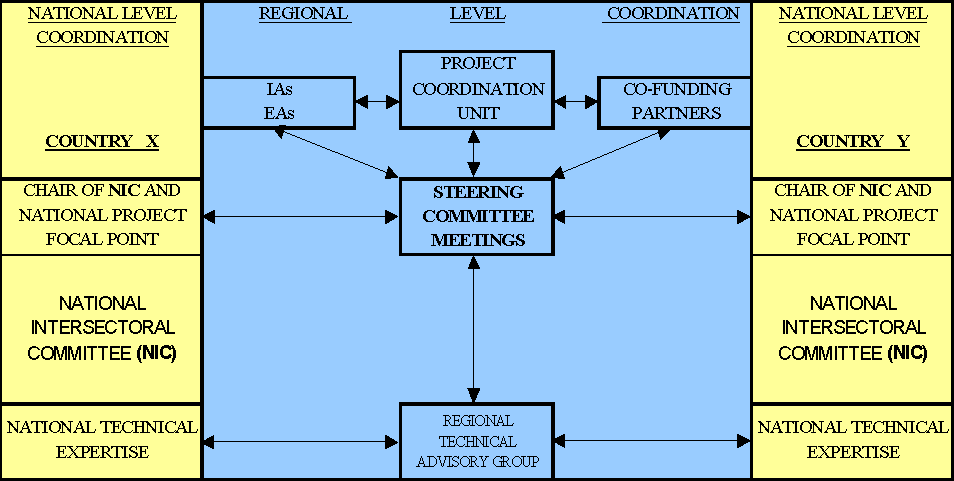
PROFILE OF EXECUTING AGENCIES
The Secretariat of the Cartagena Convention -- Caribbean Regional Coordinating Unit (CAR/RCU)
The Caribbean Regional Coordinating Unit (CAR/RCU) of the United Nations Environment Programme (UNEP) in Kingston, Jamaica, provides the Secretariat for the Caribbean Environment Programme (CEP). The diverse States and territories of the Wider Caribbean established CEP in 1981 to collectively address the protection and development of the marine environment. CEP has a programmatic framework in its Caribbean Action Plan (adopted in 1981) and a legal framework, entitled the Convention for the Protection and Development of the Marine Environment of the Wider Caribbean Region – Cartagena Convention (adopted 1986). Thus far, three protocols to the Convention have been adopted to give effect to relevant provisions of the Convention.
Established in 1986, CAR/RCU objectives of Secretariat are to:
· Provide assistance to all countries of the region
· Strengthen national and subregional institutions
· Co-ordinate international assistance
· Stimulate technical co-operation among countries
As a sub-programme of UNEP's Regional Seas Programme, CAR/RCU is under the administration of the UNEP Headquarters in Nairobi, however it is also directly responsible to the member Governments of the Wider Caribbean Region. Indeed, through the forum of Intergovernmental Meetings held every two years, the participating Governments determine the workplan of CEP, review its progress, chart its course and oversee financial and institutional arrangements. In the interim period between Intergovernmental Meetings there is a nine-nation Monitoring Committee, which, jointly with the Bureau of Contracting Parties to the Convention is responsible for supervising the development of the programme and providing policy direction.
CEP is supported by four sub-programmes, which in turn support the Cartagena Convention and its three protocols:
· Assessment and Management of Environmental Pollution -- AMEP
· Specially Protected Areas and Wildlife -- SPAW
· Environmental Information Systems -- CEPNET
· Education, Training and Awareness – ETA
Staffed by nationals recruited from the states and territories participating in CEP, CAR/RCU serves as a focus for the collection, review and dissemination of studies, publications and the results of work performed under the aegis of CEP. A major part of this information is generated by CEP scientific and technical studies co-coordinated by CAR/RCU staff and implemented through national and technical focal points, bodies of experts, scientific and academic institutions, regional and sub-regional institutions, and individual consultants.
CAR/RCU also organizes meetings of experts, and manages arrangements for the meetings of the Monitoring Committee and Bureau of Contracting Parties and biennial Intergovernmental Meetings. This includes the preparation of the relevant documents to be presented at these meetings such as: Draft agreements, technical and administrative reports and biennial workplans and budgets based on the advice of panels of experts and country proposals.
The countries of the Wider Caribbean and other donors provide funding for CEP and its activities.
UNEP/RCU’s institutional support and involvement will be critical to the success implementation of this project, by virtue of its institutional mandate, especially in the areas of marine pollution control and coastal and marine resources management. Additional information on CAR/RCU, the Cartagena Convention and its Protocols and the sub-programmes of CEP can be found at www.cep.unep.org/
The Caribbean Environmental Health Institute (CEHI)
The Caribbean Environmental Health Institute (CEHI) was established by CARICOM Governments in 1989 to address Environmental Health problems, through a Regional Environmental Health Strategy. CEHI, located in St. Lucia, has 16 Member States. Member States support the work of the Institute through annual quota contributions. This is supplemented by other resource mobilisation efforts, including the provision of laboratory and engineering services and the development of programmes and projects for funding by external agencies.
The programme of the Caribbean Environmental Health Institute is guided by a specific mandate given to it by its Governing Body as well as through collaborative efforts in which it has become involved. These include the Caribbean Cooperation in Health (CCH) Initiative, a regional framework for development of the Health sector, which has been endorsed by CARICOM Governments. CCH-II is the second phase. CCHII has identified a number of priority areas for regional attention in the health sector, including Environmental Health. CEHI has been given responsibility by the Ministers of Health of the Caribbean Community for coordinating action under this priority area, which includes: Water, Solid and Liquid Waste & Excreta Disposal and Workers' Health. In addition, the Institute has been given the mandate under the SIDS/POA for water resources management and waste management in the Caribbean. Its programme has been undertaken in collaboration with other agencies and institutions whose goals and objectives in addressing Environmental Health issues are consonant with those of CEHI. Some of these agencies include PAHO, the World Bank, the Caribbean Development Bank (CDB), USAID, the Caribbean Epidemiology Centre (CAREC) the German Technical Assistance Agency (GTZ), the United Nations Environment Programme (UNEP), the Caribbean Alliance for Sustainable Tourism (CAST), the Organisation of American States (OAS), and the UNDP, Dalhousie University and Laval University to name a few.
CEHI is equipped to provide technical advice and assistance in the formulation of Environmental Health policy and Legislation, water resources and waste management, environmental quality improvement and environmental health intelligence and information. As the technical arm of CARICOM responsible for environmental management, CEHI provides policy advice to Member States and it sits on the CARICOM Council for Human and Social Development (COHSOD) and the Council for Trade and the Environment (COTED).
Its laboratory has well-established facilities and expertise in recreational and drinking water testing. It also does wastewater testing and pesticides analysis and testing. Engineering services are provided in water supply, wastewater collection and treatment, solid waste collection and disposal as well as hazardous waste storage, collection and disposal. It addresses each technical area by focusing on several programmatic elements, some of which are public awareness and education, information, research and training.
The Institute has a mandate to develop the human resources base in Environmental Health in the Member States, which it does through organising training or facilitating training opportunities both regionally and internationally. It also has an Associates programme, which engages regional and international expertise for technical cooperation programmes. This is complemented by an Interns Programme, which accommodates graduate researchers from universities and other research and academic institutions. CEHI has a strong focus on training which it provides to Member states in such areas as water quality monitoring and sewage treatment plant operation in the hotel sector.
Since 1991, the Institute has been the implementing agency for a major project for Environmental Health Improvement (EHIP) funded by the GTZ. The first phase of the Project focused on institutional capacity building at the Institute. The final phase of the Project, which ended in 2001, has concentrated on EH improvement in CEHI Member States.
Other CEHI Projects in recent times have focused on chemicals in industry, solid waste management, hazardous waste, wastewater treatment, water resources management, hydrocarbon pollution, water quality monitoring, to name a few. CEHI, in collaboration with the OAS, implemented the Caribbean Dialogue on Water and Climate together with the CPACC Project, as part of a global initiative of the International Secretariat of the Dialogue on Water and Climate. In 2003, it developed the Joint Programme of Action for Water with the South Pacific Applied Geosciences Commission (SOPAC), which received Ministerial endorsement at the 3rd World Water Forum in Kyoto, Japan. CEHI is also implementing a Project on Cleaner Production for Small, Medium and Micro-enterprises (SMMEs) and the Tourism sector, funded by USAID. The focus of the project is waste minimisation, pollution prevention and eco-efficiency in the sectors. CEHI has started collaborating with NOAA in the implementing a project on non-point sources of pollution, thereby assisting countries to meet the provisions of the Cartagena Convention (LBS Protocol.
CEHI has institutionalised the Caribbean Environmental Forum (CEF), which is a partnership forum that brings together key stakeholders in environment and sustainable development within and outside of the region to share experiences, facilitate the cross-fertilisation of ideas and raise awareness, among other things. The CEF takes place every two years in a Member State
As the premier Environmental Health institution in the Caribbean, the Institute continues to carry out its broad mandate for environmental management with a focus on the impact of the environment on human health and the impact of human activity on the environment Website: www.cehi.org.lc
ANNEX IVXII: LOGICAL FRAMEWORK ANALYSIS
This Annex presents the Logical Framework Matrices for the overall project objectives and then by component activity. The outcome from the overall objectives and then for each component heads each table. The LogFrame identifies the results which would verify the objectives and aims of each outcome and activity, how this will be realistically measured and ascertained as part of an effective monitoring process, and what assumptions this process makes and the potential risks which might present barriers to the process.
After each Component the assumptions and risks are reviewed and explanations given as to how the project intends to resolve or bypass such assumptions or risks.
LOGFRAME MATRIX: OVERALL PROJECT OBJECTIVES
|
SUMMARY |
|
OBJECTIVELY VERIFIABLE INDICATORS |
|
MEANS OF VERIFICATION |
|
CRITICAL ASSUMPTIONS AND RISKS |
|
|
|
OVERALL OBJECTIVE |
|
|
|
|
|
PROJECT OUTCOMES: An overall national and regional reform in support of the IWCAM approach as a necessary and vital strategy for sustainable management and protection of coastal and watershed resources. |
|
Reforms in policy, legislation and institutional arrangements in support of IWCAM. Effective regional cooperation and sharing of information and lessons on IWCAM. Development and transfer of more appropriate technologies and IWCAM-related techniques. Overall improvements in coastal and watershed status and related community welfare. |
|
Environmental Stress Indicators show measurable improvements within the natural environment (water quality, coral diversity, mangrove cover, etc). Stress Reduction Indicators show measurable and successful efforts to control pollution and better manage potential threats. Process Indicators demonstrate measurable improvements at policy and legislative level, with associated supportive institutional modifications. |
|
Indicator mechanisms successfully developed and deployed. National policy makers prepared to act on indicator results. Necessary incentives and support structure for regional cooperation. Sufficient political will and recognition of need to manage and protect coastal and watershed resources |
|
|
OBJECTIVE DESCRIPTION:
Demonstrate environmental and developmental benefits of an integrated approach to watershed and coastal zone management in small islands developing states |
|
Reduced environmental stress on watershed and coastal area resources |
|
Mitigation/removal of threats (see threats and root causes analysis) confirmed through Environmental Stress Indicators. 5 out of 9 demo hotspots show significant improvements by mid-term evaluation. 20% improvement in ESIs as regional average by Final Project Evaluation. |
|
Appropriate ESIs selected in parallel with existing databases, and mechanisms/capacity established for on-going monitoring |
|
|
Creation of a long-term mechanism for sustainable development in parallel with management and conservation of coastal and watershed resources |
Equitable development and resource management/conservation adopted by all stakeholders and confirmed through Stress Reduction Indicators. 30% increase in positive SRI by Final Evaluation of project |
Stakeholders support concepts of IWCAM (through training, education and awareness), and political will allows for participatory process. Correct SRIs established. |
|
|
Integration and coordination of the resource management and planning process (including institutional realignment) |
Adoption of national integrated and cross-sectoral management and planning processes confirmed through Process Indicators. 20% improvement (on average across region) in positive Process Indicators by Final Evaluation |
Removal of cross-sectoral 'territorial' barriers driven by revised policies and legislation. Adequate capacity developed. Correct PI s established. |
|
|
Demonstration of applied solutions and technology within selected hotspot and sensitive areas |
Delivery of concrete solutions at geographical hotspots, capture of lessons and best practices, and replication through further examples. Replication of Demo lessons and practices at 7 other regional hotspots by Final Evaluation |
Demonstration projects achieve their objectives. Effective mechanisms developed for capture and replication of lessons and practices. |
|
|
|
|
|
Adoption of appropriate policy and legislation in support of IWCAM objectives at the national and regional level |
Capture of policy and legislative lessons from demos manifested through ratification of relevant MEAs, particularly the LBS protocol. 70% of countries (9) ratify LBS protocol by Final Evaluation |
Political commitment toward need for policy and legislative reform. Recognition of importance of MEAs and need to encapsulate in national policies and legislation |
|
|
|
|
|
Resolution of Assumptions and Risks from Overall Project Objectives
The development of effective indicators is critical to the successful monitoring and confirmation of a sustainable IWCAM strategy at both the national and regional level (see Discussion of Assumptions and Risks for Component 2 below). Project resources and capacity building have been allocated to this need to ensure that appropriate ESIs are selected (wherever possible keeping these compatible with current and past monitoring initiatives and datasets). It is also essential that the development of indicator monitoring mechanisms ensure that such mechanisms are sustainable in the long-term and beyond the project lifetime. It is intended to demonstrate to the countries the value of such indicators in assessing the welfare on resource management and sustainability (placing a real value on such renewable resources) and the critical importance of supporting and justifying policy decisions and legislative amendments based on solid, measured data. Inevitably, national monitoring capacities will need strengthening, a requirement which will be captured through reforms to support overall institutional review and strengthening outputs (see Component 3). Similarly, it will be important to establish effective Stress Reduction and Process Indicators by which to measure the overall efficacy of IWCAM realignment, and the improvements both to the system (process) and to real actions to reduce stress to coastal and watershed resources.
Stakeholder participation is an overarching requirement of the entire project which runs through the heart of every component and output. Stakeholder support will be evolved and developed through the awareness campaigns as well as through partnership fora and close participation and networking. It is intended to demonstrate to all stakeholders the value of working together for the long-term integrated management of coastal and watershed resources. There will be a need to change the political mind-set away from government-dominated management to a more participatory process. However, there are many examples of this having been successfully demonstrated within the Caribbean and these can be captured and built on.
Similarly, it will be essential to the overall integrated nature and success of the project to alter mindsets at both the policy and senior technical level within government with respect to interdepartmental participation and co-management. Many government departments are very ‘territorial’ which is a reflection of budget allocations and accountability. The project will need to work closely with government to demonstrate the improvements to be gained from a more integrated approach without a necessary lose of departmental authority and resources. Policy reforms and revised legislation will assist in this process, as will the demonstration of best practices and lessons.
There is a strong emphasis on monitoring and evaluating the progress and efficacy of each demonstration project within the overall management structure. The Demonstration projects are a core component of this regional project and it is essential that they deliver timely and effective demonstrations of technical achievements as well as best practices at a policy, legislative and institutional level. It is equally as essential that these lessons and practices are stored and disseminated and output into action through replication where appropriate. To this effect the project has a substantial set of outputs under Component 1 to address mechanisms for replication. An effective Clearing House for information along with a strong network between project partners will also assist in reducing any risks of failure in this particular area.
Political commitment to IWCAM-aligned reforms will need to be fostered. Generally, within theCaribbean there is a fairly advanced awareness of the need for sustainable management of coastal and watershed resources. Demonstrating this as a real process in the presence of strong political support for development will be a challenge, but one that will be address through Component 3 which looks at policy reform as well as through various partnership and awareness initiatives. The linkage between national policy and the need to embrace the requirements of regional/international agreements has not been overlooked and will be a driving force behind this process with incentives and encouragement being developed through various project activities.
It should be noted that the Logical Framework Matrix for Component One is included in the UNDP GEF Project Document Integrating Watershed and Coastal Area Management (IWCAM) in the Small Island Developing States of the Caribbean.
LOGFRAME MATRIX: COMPONENT TWO
|
SUMMARY |
|
OBJECTIVELY VERIFIABLE INDICATORS |
|
MEANS OF VERIFICATION |
|
CRITICAL ASSUMPTIONS AND RISKS |
|
|
|
DEVELOPMENT OF IWCAM PROCESS, STRESS REDUCTION AND ENVIRONMENTAL STATUS INDICATOR FRAMEWORK |
|
|
|
|
COMPONENT OUTCOME: Process, stress-reduction, and environmental status indicators framework established and national and regional capacities for indicator monitoring enhanced. |
Indicator monitoring tested and developed as part of demonstration projects and through other project component requirements. One-country demonstration and development undertaken to produce indicator framework model. Transfer of model to all countries and establishment of an indicator network and data storage facility. |
|
Specialist evaluation of indicator mechanism and framework. Lessons from Demonstrations captured in framework. Single country demonstration of development and use of indicators (e.g. in policy reforms) succesfully completed. All countries adopt standard model/framework for indicator mechansim and establish protocol for information transfer and accessibility within regional storage centre |
|
National capacity and commitment to development and use of indicators. Effective demonstration of value and use of indicators through demonstration projects. Country identified to take on role of national model for indicator development, monitoring and application of results. All countries willing to adopt new indicator framework model. All countries willing to share information with regional information centre. |
|
|
2.1 |
Review IWCAM indicators |
|
|
|
|
|
|
|
Review national and regional Environmental Status Indicator mechanisms |
Thorough review document available identifying current status of all indicator mechanisms at national/regional level |
Review document studied and endorsed by R-TAG and other relevant stakeholders, and endorsed by PSC by enf of year 1 |
Current indicator mechanisms actually exist. Capacity available to capture all national informtation and to synthesise into a report |
|
|
Review national and regional Stress Reduction Indicator mechanisms |
|
|
Review national and regional Process Indicators |
|
|
2.2 |
Develop National Indicator Templates |
|
|
|
|
|
Harvest information from Demonstration Projects on Environmental Status indicators |
ESI database established as part of Demo Lessons and Practices database |
Confirmation through R-TAG and evaluation process and input to further activities of this component |
Demo Projects are developing and delivering ESIs |
|
|
Develop and disseminate templates for Environmental Status Indicators |
Templates for ESIs formally distributed to each country |
Templates disseminated by end of year 2. .Feedback on templates from R-TAG and PSC. ESI mechanism being used for monitoring and development of national management strategies by 7countries by end of year 4. |
Sufficient information and capacity available to develop templates. Countries will use templates. |
|
|
Harvest information on policy and legislative process and stress reduction indicators from 4.2 and Demonstration Projects |
P and SR Indicator database established with clear signs of capture of lessons and practices from demo projects |
Confirmation through R-Tag and evaluation process and input to further activities of this component |
Demo Projects are developing and delivering P & SR Indicators |
|
|
Develop and disseminate templates for Process and Stress Reduction Indicators |
Templates for P & SR Indicators formally distributed to each country |
Templates disseminated by end of year 2. Feedback on templates from R-Tag and PSC. Indicator mechanism being used to justify and drive policy reforms by 7 countries by end of year 4 |
Sufficient information and capacity available to develop templates. Countries will use templates. Country commitment to reforms |
|
|
2.3 |
Undertake National Hotspot Diagnostic Analysis |
|
|
|
|
|
Identify national 'non-demo' HotSpots and Sensitive Areas and their IWCAM problems and root causes |
Hotspot Diagnostic Analysis completed for each country |
Endorsement of HDA by R-TAG and PSC by end of year 1 |
Additional Hotspots and Sensitive Areas exist beyond adopted Demonstration areas. Countries have capacity to undertake HDA |
|
|
Identify required reforms |
HAD includes specific section addressing requirements for reform at policy, legislative and institutional level in order to resolve hotspot issues and threats |
Endorsement of Reform Needs by R-TAG and PSC. Confirmation by IAs and EAs of appropriate section completed in National HDAs. Use as justification in future concept development |
Sufficient knowledge of reform needs. Capacity to undertake HAD and reform-needs study |
|
|
Develop Concept papers for follow-up activities |
New Concept Papers presented for funding and assistance. Development into full project submission with appropriate HAD justification. |
Review of Concept Papers and Final Submissions by PSC and IAs (including endorsement of compatability with HAD). At least one further pertinent IWCAM related project approved by end of year 2 and a further 2 by end of year 5. |
Capacity exists to develop Concepts and Submissions. Countries willing to submit IWCAM-related Concepts for further support. Sufficient funding available to support submissions |
|
|
2.4 |
Indicator Coordination and Training |
|
|
|
|
|
Establish a regional centre for storage of Indicator-related information |
All Indicator-related information stored and maintained as current in a suitable database. Information kept up-to-date |
Information System and Clearing House in existence and Indicator information available by year 2 of project. Confirmation of accessibility and use by stakeholders and project partners. Formal Confirmation of efficacy to PSC by R-TAG. Evaluation process confirms maintenance of effective mechanism, country committment and current nature of information |
Regional Instutional identity and capacity to house database. National capacity to collect and proivde information. Countries willing to supply up-to-date information. |
|
|
Develop regional centre as a Centre of Excellence for Indicator Training |
Centre of Excellence for Indicator mechanisms in place |
IWCAM Training Centre established within region by year 3 of project. Confirmed by stakeholders and evaluation process |
Suitable site available with sufficient country/institutional commitment. Adequate resource capacity to maintain Training Centre |
|
|
Training for stakeholders in application of process, stress reduction and environmental status indicators |
Appropriate stakeholders receive training and apply the concepts/process in-country |
Indicators mechanisms function in 10 countries by year 4 of project. Indicative information clearly in use in policy and legislative process through effective national reforms |
Sufficient training capacity exists. Country commitment to make trainnees available. Country commitment to adopt expertise as part of IWCAM process |
|
|
2.5 |
Indicator Demonstration |
|
|
|
|
|
Establishment (including capacity building) of IWCAM process, stress reduction and environmental status indicator monitoring system in one country using new templates |
One Country provides sufficient commitment to support model Indicator mechanism development and implementation process. Endorsed by PSC. |
At least one country assisted in full implementation of a model Indicator mechanism through to actual application of process to reforms (and feedback process) by middle of year 3 of project |
One country prepared to fully support process (including in-kind commitments) through to policy reform stage. Capacity avaialble to assist country |
|
Resolution of Assumptions and Risks from Component Two
The development of measurable indicators is also essential both the success of the project and to the overall long-term effectiveness of IWCAM at the national and regional level. Current indicators may not exist. Where they do then the project should aim to use similar or at least comparable processes and data handling to ensure compatibility of historic date (where this is possible, but not at the expense of using effective measurable indicators if these have to be developed anew). National capacity may not always exist to review and present current indicator mechanisms and this addressed through budget allocations to assist each country to undertake this process.
It will be important to capture all the national information, both on-going and historic, and from within and outside the demonstration projects. All of this information will need to be carefully collated and reviewed in order to develop an effective model template for measuring the various types of indicators. Again, budget allocations address this need at a national and regional level.
Countries will also be given financial assistance to expand their Hotspot Assessments and to prioritise the needs and reform requirements related to priority areas. Additional expertise may be required in some countries to complete this process effectively. As a next step, resources will need to available to help develop new concepts addressing mitigation and resolution of problems at priority hotspot areas. Some budget allocations are available here but also of importance will be the assistance available from the IAs in the region, particularly the UNDP country offices as well as the UNEP regional office. The Partnership Forum and Stakeholder Workshops will need to ensure that funding leverage for deserving and eligible concepts is proactive, persistent and effective.
The indicator measurements and their analysis will need to be captured within a regional institution and again CEHI offers a suitable repository as an integral part of the regional government process and institutional structure. It is appropriate to provide capacity building and institutional strengthening in this respect, balanced as always against in-kind contributions from the countries and from CEHI itself. CEHI would also provide the obvious focal point for the various training requirements within the project, although some aspects may be outsourced to regional NGOs where appropriate. In this respect there is a close link between the development and on-going measurement of indicators, training and secondment, stuffy tours, and the provision of a mobile survey and laboratory facility by the private sector. This will require careful management and logistical arrangements. Budget allocations also exist to ensure this occurs. Countries will need to be realistic about their training needs and the nomination of candidates. A rigorous process of selection will be undertaken through the EAs and IAs with endorsement by the PSC. Part of this selection will require guarantees from the countries regarding the future use of the newly acquired expertise.
The selection process for the development of a model indicator mechanism will also need to be rigorous as well as transparent. Clear criteria will need to be established by the PCU under guidance from the EAs and IAs and endorsed by the PSC before any selection process is initiated. Criteria would inevitably include fairly substantial commitments to financial support of the process and subsequent reforms in the policy, legislative and administrative/institutional sectors.
LOGFRAME MATRIX: COMPONENT THREE
|
SUMMARY |
|
OBJECTIVELY VERIFIABLE INDICATORS |
|
MEANS OF VERIFICATION |
|
CRITICAL ASSUMPTIONS AND RISKS |
|
|
|
POLICY, LEGISLATION AND INSTITUTIONAL REFORMS |
|
|
|
|
COMPONENT OUTCOME: National policies, legislation and institutional structures reformed and realigned to reflect the objectives of IWCAM and to capture the requirements of the more pertinent regional and international MEAs. |
IWCAM Policy and Legislative reforms adopted to reflect a more integrated and intersectoral approach to coastal and watershed management, and to emphasise IWCAM priorities. Institutional structures amended and enhanced to deal with IWCAM approaches and requirements including new policy and legislative reforms and associated reallocation of responsiblitieis and realignement of sectoral mandates |
|
Countries amend national policy and legislation as it addresses IWCAM issues. In particular, revised policy and legislation reflects requirements of regional and international MEAs. Countries actively ratifying IWCAM -related regional and international MEAs as a reflection of their policy changes. Institutional realignment and reallocation reflects new policies and supports requirements of newly ratified regional and international MEAs |
|
Political commitment to reforms. Political sustainability throughout potential electoral changes. All barriers to ratification of regional and international MEAs removed. Sufficient financial and human resource capacity to meet needs of reforms and ratification requirements. No further pressures on countries to adopt yet more MEAs until they can meet existing requirements |
|
|
3.1 |
Review of national policy, legislation and institutional structures |
|
|
|
|
|
|
|
Reviews of national policies and structures |
Detailed document outlining current status and shortfalls of all national policies, legislation and institutional arrangements related to IWCAM |
R-TAG and PSC review and endorsement of document by end of year 1 of project |
Sufficient accurate information released on policy, legislation and institutional status |
|
|
Identification of barriers to IWCAM |
National and regional synopsis of barriers to IWCAM arising from status and shortfalls report, including proposals for barrier removal |
National endorsements and PSC endorsement of Barriers and proposed remedial activities before 18-month implementation stage (middle of year 2) |
Countries accept that remedial action necessary to reform. |
|
|
3.2 |
Development of models and guidelines |
|
|
|
|
|
Consolidation of inputs and lessons from national reviews, participatory stakeholder workshops, and demo projects |
Collation and coordination from reports and workshops of all information into review document |
All information from national reports plus initial inputs from stakeholder workshops and demo projects available for development of model by early year 2 |
All information available and accessible. Capacity avaialable to undertake report synthesis |
|
|
Identification of specific reform requirements based on Hotspot Diagnostic Analyses |
HDA from each country addresses reform needs. |
Information available from HDA for incorporation into model development by end of year 1 |
Countries complete HAD analysis on time for inclusion in model development |
|
|
Development of a set of regional guidelines taking into account requirements of relevant regional conventions and treaties |
Detailed regional guidelines developed and disseminated which actively enmbrace requirements of regional conventions and treaties (e.g. LBS protocol) |
Regional guidelines for development of national models completed and available for use by countries by end of year 2 of project |
Adequate capacity available for development and finalisation of models |
|
|
3.3 |
Programme for regional policy, legislative and institutional reform |
|
|
|
|
|
Development of an active regional programme for amendment of national legislation/policy and improvement & restructuring of institutional arrangements |
Assistance provided to each country to reform legislation and policy. Reforms adopted, Institutional arrangements updated in line with IWCAM requirements |
Development of a mechanism to promote reform in each country(particularly focusing on hotspot needs) by end of year 2. 5 countries effectively reformed policy and legislation and developed instituional arrangements in line with IWCAM concepts (and following regional model) by end of year 4 |
Capacity for assistance available. Timley implementation of regional programme and national assistance. Sufficient country commitment to reform. Awareness of importance of regional environmental agreements to IWCAM process and welfare of SIDS |
|
|
Parallel development of incentives, and awareness of the need for SIDS to ratify those IEAs, Conventions and Treaties pertinent to IWCAM (Especially Cartagena Convention and Protocols) |
Improved regional ratification of pertinent IEAs |
9 countries ratified LBS protocol by Final Evaluation. All participating countries ratified Cartagena Convention by Final Evaluation |
Regional model captures national requirements for ratification. National commitment to implement. Effective incentives and assistance in implementation and ratifcation process |
|
|
3.4 |
Development of IWRM Plans |
|
|
|
|
|
|
|
|
Initial Workshop to discuss IWRM strategy, assistance and adoption of standard regional approach |
|
Workshop completed with successful reporting |
|
Reports available within PCU. Country understanding of IWRM process. |
|
Countries willing to undertake IWRM planning process and therefore willing to attend |
|
|
National IWRM plan development process |
|
Draft plan completed |
|
Draft Plan submitted to PCU prior to discussion at Steering Committee |
|
Countries willing to undertake IWRM planning process and therefore willing to undertake plan development in-country |
|
|
Workshop to present all IWRM plans (13) to the Steering Committee for comment and feedback |
|
All countries present their draft IWRM plans to Steering Committee meeting |
|
Draft plans appended to Steering Committee Report. Positive feedback from IWRM Expert |
|
All countries understand what is required with an IWRM plan |
|
|
Development and adoption of an implementation strategy for other funding agencies and partnerships |
|
Funding and grant agencies assist countries to implement adopted IWRM plans |
|
Implementation of IWRM plans initiated within at least 3 project countries before end of project |
|
Funding and grant agencies willing to support country implementation of IWRM plans |
|
Resolution of Assumptions and Risks from Component Three
This component will essentially require substantial political commitment to achieve success. National bodies will need to release information for the review process. However, many of the Caribbean SIDS are now used to this requirement and have undergone some sort of policy and legislative review in certain sectors. Careful explanation of the importance and value of this process will need to feed back from the OSC and through the NICs to the relevant government sectors. Also through the PSC/NICs linkage it will be important to demonstrate the need for remedial action and reform. Budget allocations will assist in the review and synthesis process. Again, the presence and familiarity of the EAs with the countries will help to alleviate doubts.
Resources are identified in the project to assist in the development of model guidelines for reforms. Financial commitments have been made to drive the regional reform process, and incentives will be developed to encourage countries to adopt this route. The linkages between national reforms related to IWCAM and similar requirements from regional and international agreements such as the Cartagena Convention and its Protocols should help the countries meet their ratification requirements for the latter through a funded and resourced process available through the IWCAM regional project.
In consideration of 3.4 Development of IWRM Plans, it is expected that there would be substantial country commitment as the SIDS of the world have made it clear through the WSSD process and Plan of implementation that the need to address through financial issue assistance from the developed countries. GEF will provide substantial financial assistance to develop the IWRM plans through design and discussion workshops, and through the provision of a grant of up to $50,000 to each country to carry out this task. The countries will be made fully aware of the requirements for such an IWRM plan through the planned workshops and through assistance from expertise provided by the Project. Furthermore, the Project will use its connections and networking with other grant and loan agencies and partners within the region and throughout the world to assist the countries to actually implement the adopted IWRM plans through assistance in capacity building, policy and legislative reform and institutional realignment and strengthening where relevant.
LOGFRAME MATRIX: COMPONENT FOUR
|
SUMMARY |
|
OBJECTIVELY VERIFIABLE INDICATORS |
|
MEANS OF VERIFICATION |
|
CRITICAL ASSUMPTIONS AND RISKS |
|
|
|
REGIONAL AND NATIONAL CAPACITY BUILDING AND SUSTAINABILITY |
|
|
|
|
COMPONENT OUTPUT: Improved sensitisation, awareness and capacity throughout all sectors with respect to IWCAM. An active, long-term, sustainable regional mechanism promoting long term sustainability and supporting IWCAM. Effective networking to share information alongside a Partnership Forum acting to build sound national and regional policy and financing frameworks and working relationships with relevant partners within IWCAM. An active Clearing House to sharing and dispersing information. Fully involved stakeholders, including private sector and financial institutes and improved civil society. |
Measurable improvement in awareness at street level. Measurable heightening of sensitivity of policy-makers within public and private sector in support of IWCAM approaches and concerns. . Adoption of long-term (5-10 year & reviewable) IWCAM regional sustainability mechanism with associated supportive regional and national agreements and institutes. Establishment of a regional Partnership Forum for IWCAM related issues with strong input from private sector and other potential funding partners. New partnerships formed. Stakeholder participation is institutionalised and adopted as policy within IWCAM. |
|
Awareness, sensitivity and educational polling show positive improvements with feedback from polls into on-going awareness and education programmes. Stress Reduction Indicators show improvements to controls over major impacts on coastal and watershed environment at national and regional level. Process indicators show positive support and reform at national and regional policy level toward IWCAM. Environmental Stress Indicators support overall picture of improvement reflecting awareness and educational success. Regional IWCAM strategy/ mechanism adopted through regional agreement and reflected in national policies and institutions. Regional partnership forum active and showing major positive changes in approaches to and partnerships for- IWCAM issues through both private and public sector. Private sector taking greater responsibility for cost of IWCAM including transfer of benefits and greater investment in reduction of impacts and mitigation of threats. |
|
Effective awareness and sensitisation campaigns and programmes are sustainable. Sufficient in-country capacity to sustain indicator mechanisms and capture results. Countries understand value, and are in full support of an IWCAM regional and national approach and prepared to commit resources. National government are prepared to make the necessary changes in their development planning to include IWCAM. Full support from privates sector and funding agencies for a regional Partnership Forum. Private sector understands long-term value and investment toward sustainbility through transferred benefits. |
|
|
4.1 |
Awareness and Sensitisation |
|
|
|
|
|
|
|
National & Regional Workshops on needs and target audiences |
Positive feedback from workshops via reports |
Reports endorsed by PSC and recommendations adopted into awareness campaign strategy by end of year 1 and updated in subsequent years |
Consensus agreement on targets and needs for awareness. Timescale for capture of input is sufficient. Capacity for caputre of input is available and adequate |
|
|
Multisectoral awareness campaign with feedback mechanisms |
National and regional awareness campaigns active and effectively targeting all stakeholders |
First awareness campaigns delivering sensitisation by end of year 1. Feedback from stakeholder workshops positive by end of year 2. PSC reporting that policy level sensitisation is taking effect by end of year 2. Mid and Final Evaluation support success of awareness campaign |
Continuity of targets (electoral process replaces many senior personnel in government). Senior level awareness of need for sensitisation to IWCAM issues and commitment to make personnel available for awareness-building. Adequate in-country support and capacity to awareness-building. |
|
|
4.2 |
Stakeholder Involvement |
|
|
|
|
|
Identify, strenghten and involve stakeholders |
Representative involvement of broad spectrum of stakeholders in project activities and development. Project activities and deliveries targeting the strengthening of stakeholder input and management participation |
Positive feedback from stakeholders through workshops in years 1-5. Stakeholder awareness signifcantly improved by year 3. . PSC reports significant increase in stakehoder support by year 3. Stakeholder (non-Governmental) involvement in management process and recognition of 'Beneficiary-pays' concept by end of year 4 |
Stakeholders have an interest in the IWCAM process. Stakeholders prepared to get involved and to commit in-kind contributions to iWCAM management process. Private sector recognises advantages of its involvement. Transfer of benefits is embraced as a concept in private sector |
|
|
4.3 |
Education & Training |
|
|
|
|
|
Educational Workshops (linked to Awareness Workshops) |
Successful implementation of workshops |
First workshop completed by end of year 1. Subsequent workshops completed by mid year 3 and end year 4 |
Country commitment to providing attendance to workshops |
|
|
Production of educational materials and incorporation into regional curricula |
Adoption of IWCAM concepts and teachings into national school curricula. Effective teaching materials available |
NIC and PSC confirm that IWCAM concepts embraced within national educational curricula in 7 countries by end of year 3 |
Educational bodies and establishments sympathetic to IWCAM and need to amend curricula |
|
|
Identification and implementation of training needs and regional training networks |
Training needs identified and workshop logistics and coordination are established |
PSC approves training workshop strategy for all countries by middle of year 1 |
Training properly captured and put to use by countries. Trained personnel assured positions in the long-term |
|
|
Regional training workshops & networking through IW:LEARN |
Training Workshops successfully completed and outputs networked into IW:LEARN |
First training workshop successful completed by end of year 1 with subsequent workshops in years 2-4. Outputs of training incorporated into IW:LEARN and outputs of first workshop available on IW:LEARN website by end of year 1. All subsequent workshop outputs available on website within 3 months of completion of workshops |
IW Learn Accepts networking role for this training. Country commitment and interest continues for future workshops |
|
|
Inter-country secondment |
Appropriate personnel seconded from one country to another to learn from specific IWCAM situations and practices |
PCU approves first batch of secondments of 2-3 persons before end of year 1. Subsequent secondments of at least 2 persons per year for next 4 years |
National agencies prepared to give leave of absence for appropriate persons to go on secondment. |
|
|
4.4 |
Strategy for IWCAM Regional Sustainability |
|
|
|
|
|
Development of IWCAM regional strategic approach, reflected in the necessary policy changes at the national level |
Regional Regional and national IWCAM Sustainability Strategic Approach adopted by PSC. Methodologies to facilitate partnerships developed and in use. |
Regional Strategic approach reviewed by R-TAG and PSC and endorsed in principle by end of year 2 |
Adequate regional capacity to develop IWCAM Strategic Approach. Timely delivery to PSC |
|
|
Assistance with identifying long term funding mechanisms for IWCAM regional and national strategic approach |
Effective identification and formal agreements on sustainable funding for strategic approach |
Partnership Forum promotes partnerships and identifies and confirms funding level and availability to PSC by end of year 2 |
Sufficient commitment from partners (including governments) to provide sustainable funding for IWCAM strategy |
|
|
Incentives for national and regional adoption of IWCAM strategies and arrangements |
National and regional agreement on strategy and funding mechanism(s) and methodologies to promote partnerships and link with global processes. |
Adoption by countries of Strategic Regional IWCAM Mechanisms by end of year 3 |
Early consensus on content and funding mechanisms. This will be dependent on priority of IWCAM on national and regional agendas |
|
|
Review and Evaluation Mechanisms for Strategic Approach, including a stakeholder-sponsored mechanism for post-project evaluation of GEF IWCAM objectives |
Intra- and post-project review of IWCAM strategy and objectives |
IWCAM strategy reviewed through project evaluation process (Year 3 and 5) and 2 years after end of project by post-evaluation body identified during development of strategy through recommendations of partners and stakeholders |
Effective IA and PSC driven GEF evaluation process. Funding and support from regional partner/body to undertake a post-project review of objectives and sustainability |
|
|
4.5 |
Project Networking |
|
|
|
|
|
Linkages to national/regional institutions |
All pertinent national and regional institutions up-to-date on and involved in - activities and opportunities available through IWCAM project |
Institutions confirm effective dissemination of information and active involvement through stakeholder and partnership forums in year 1 and develop effective national programmes by year 4. |
Institutional commitment to aims of IWCAM project. Effective mechanisms for networking within region and between countries. Countries are prepared to adopt policy changes. |
|
|
Linkages to other IWCAM related projects |
Identification of networking partners. Development and implementation of networking and partnership procedures |
Networks in place and effectively targeting 90% of relevant IWCAM partners by end of 21st year. Effective update of networking and information confirmed every year through Partnership Forum |
Capacity within region to undertake networking. Partners willing to share and network. Other IWCAM-related projects have own effective networking procedures |
|
|
Development of Regional Partnership Forum |
Partnership Forum meets on regular basis, promotes partnerships and long term IWCAM sustainability and provides positive recommendations which are put into action.
Sustainability strategy incorporated at the national level.
Necessary linkages and cooperation with global processes made. |
Partnership Forum meeting within first year6 months of project to initiate the sustainability process and subsequently every year. after. Subseqesquent For a confirm and strengthen action taken on recommendations (confirmation provided by PCU and PSC in Forum Updates at meetings) |
Partner commitment to IWCAM through attendance and through commitment of in-kind time and finances. Realistic recommendations from Partners. National support to hosting For a |
|
|
4.6 |
A Regional IWCAM Clearing House to capture and store all IWCAM information (Link to GPA-CHM) |
|
|
|
|
|
Development of Clearing House |
Active Clearing House sited and supporting project |
Physical site for Clearing House established (with in-kind support and project capacity funding) by mid to end of year 1. Confirmation by PSC and partners of efficacy of Clearing House by mid year 2 |
Country/Institute prepared to house facility and support it with some assistance from GEF. Sufficient cpacity to implement and effective facility within 18 months of start of project |
|
|
Linkages to GPA-CHM |
Cross-linkages between Clearing Houses and databases, especially through websites |
Strategies for cross-linkage developed and agreed between EAs by end of year 1 |
No technical linkage problems. Close working contact between EAs |
|
|
Networking with countries |
Use of Project Networking process to connect Clearing House to all countries and Partners |
Website established and linked into GPA-CHM and countries by end of year 1 |
Capacity available in region to develop website |
|
Resolution of Assumptions and Risks from Component Four
Awareness development is an area which directly relates to the stakeholders. NGOs in particular can provide a high level of capacity and assistance with this important project deliverable. Effective national and regional workshops will help to drive this process.
The sensitisation of senior and policy level personnel within both the government and private sector is a priority and continuous target for the project. This is considered to be particularly important to overcome the inherent problems associated with personnel changes at the policy and senior technical level. It is also important for the policy level decision-makers to realise the need to allocate resources (especially human) to the IWCAM process, and to commit to reforms. This will be promoted through government-endorsed and adopted national programmes of action, leading to the necessary changes in institutions, policies and domestic resource allocation The project will lean heavily on existing in-country and regional experience, includingespecially within the NGO groups.
Stakeholder participation is a thread that runs through all of the project components and outputs. It is captured in this component specifically as a requirement for long-term acceptance and sustainability of the IWCAM concept and objectives. Good transparent sharing of information and networking along with the Partnership Forum and the Stakeholder Workshops should ensure adequate stakeholder involvement and commitment to the project. Partnerships will consolidate the stakeholder participation. Suitable representation for the education sector is important at the stakeholder workshops. Again, NGOs (with their established experience in the field of educational promotion of environmental issues) have an important role to play in this arena.
The PSC and NICs will have an important role to play in stressing the role of the training workshops and the significance of the national training secondments/ study tours. NICs will need to take an active part in selecting suitable candidates under the guidance of the PSC and the PCU. Clearly defined criteria will be necessary and would be drawn up by the PCU and endorsed by the PSC before any secondments and candidates are considered. Critical selection criteria would include the suitability of the candidate with respect to position, previous experience and qualifications, and the long-term prospects of that candidate after training.
The IWCAM Sustainability Strategic Approach will reflect the regional needs as expressed at the country level through the NICs and thence through the PSC. A comprehensive 5-10 year plan for regional IWCAM will need to be developed and a mechanism for capturing this institutionally at both the national and regional level will need to be ensured. Much of this is encapsulated within various project outputs and deliverables but needs coordination.One mechanism to ensure this at the national level are the national programme of action. GEF assistance is identified thorough financial allocations to assist in this process which should be country and regionally driven to demonstrate the strength and sustainability of the institutional, legal and financial processes developed though the project (e.g. the PSC, NICs and R-Tag as well as the capacity building given to regional bodies such as CEHI). In this respect it will be vital important for this strategy to identify the long-term expectations (beyond the project lifetime) for these project bodies. The regional and national bodies need to institutionalised through the strategy so that the PSC can continue in its valuable function of guiding the strategy, the NICs can ensure national commitment to the strategy and the R-TAG provide the technical advisory forum. Capacity strengthening to bodies such as CEHI should be sustainably institutionalised to ensure continued support to information clearing, indicator assessments for national and regional updates on IWCAM ‘landscape’ status, and training. Linkages and cooperation with relevant global agencies, programmes, policy processes, and partners will also ensure the long term sustainability of the project.
LOGFRAME MATRIX: COMPONENT FIVE
|
SUMMARY |
|
OBJECTIVELY VERIFIABLE INDICATORS |
|
MEANS OF VERIFICATION |
|
CRITICAL ASSUMPTIONS AND RISKS |
|
|
|
REGIONAL PROJECT MANAGEMENT AND COORDINATION |
|
|
|
|
COMPONENT OUTCOME: Effective project management at the national and regional level. National Intersectoral Committees capturing and promoting IWCAM best practices. Project evaluations reflecting successful and sustainable project objectives. An active and effective sustainable regional information management system in place. |
Regional IWCAM strategy in place. Appropriate regional institution(s) adopt(s) the functions and responsibilities of the project management structure. Regional and National Intersectoral Committees (PSC and NICs) given permanent status and responsibility for regional and national level IWCAM strategy and coordination. Permanent and sustainable institutionalisation for regional IWCAM information storage and transfer |
|
Final and Post Project Evaluations reports positive. Regional IWCAM-related institutions physically in place and funded with clear mandates for responsibility. Permanent regional and national bodies established ex-project with responsibilities for cross-sectoral participatory IWCAM. Regional Centre dealing with IWCAM information storage and dissemination in place and sustainable. All of these to be sustainable politically and through identified funding by closure of project. |
|
National and regional commitments to IWCAM remaining politically sustainable throughout region. Governments agree on need for permanent structures to adopt role of PSC and NICs. Host institution/country identified for information storage and dissemination centre. |
|
|
5.1 |
Project Management |
|
|
|
|
|
|
|
Establish Project Coordination Unit |
PCU effectively coordinating management of all project activities |
Project Steering Committee (PSC) endorsement of PCU reports on annual basis. Standard GEF monitoring/evaluation |
Effective PSC attendance and scrutiny of workplan and schedule. Effective GEF evaluation process |
|
|
Contract staff and consultants |
Timely employment of PCU staff. Consultancies running to workplan schedule |
PSC endorsement of workplan schedules. Project activities evaluated by IA/EAs |
Effective PSC attendance and scrutiny of workplan and schedule. Effective GEF evaluation process. Appropriate and transparent staff/consultant selection procedures |
|
|
5.2 |
Regional Project Steering |
|
|
|
|
|
Steering Committee Meetings (project monitoring, workplan and budget reviews) |
Effective and timely reporting from PSC on project status, workplan and budget. Country Commitment to PSC |
Regular and full attendance annual of PSC meetings by all countries with representation at correct level. Evaluation of sequentila PSC reports show strong evidence of project steering and fine-tuning |
Clear definition and understanding of role of PSC and relationship to PCU/Regional Project Coordinator. PSC attracts high level of policy input from countries. Effective response to PSC recommendations by PCU and at National Intersectoral Committee (NIC) level |
|
|
5.3 |
National Project Steering (National Intersectoral Committees) |
|
|
|
|
|
Meetings of National Intersectoral Committees |
Scheduled and effective national meetings of NIC by all countries |
NICs established in all countries before end of year 1 and prior to 2nd PSC meeting. IWCAM principles adopted at country level (confirmed by PSC reports, evaluations, Stress Reduction & Process Indicators) |
National commitment to intersectoral integration of IWCAM approaches and principles. NIC Membership allocated at correct level |
|
|
Day-to-Day inputs by members |
Interim input by NIC members to project activities and policy at national and regional level |
Effective feedback noted by PCU and confirmed through PSC by 3rd PSC |
Continuity of membership maintained at national level and appropriate membership level adopted by countries |
|
|
5.4 |
IA/EA Management Group |
|
|
|
|
|
Annual IA/EA Meetings |
IA and EA representatives meeting regularly to provide guidance to project on GEF Policy issues |
1st IA/EA meeting before 2nd PSC meeting and annually thereafter. Report recommendations from IA/EA meeting delivered to PCU and PSC and confirmed to have been acted on (PSC Reports and Project Evaluation process) |
Availability of IAs and EAs to meet regularly. Continuity of representation. PCU responds to requirements. PSC responds to requirements |
|
|
EA Interim Management Discussions |
EAs managing execution of project through strong working relationship between each other and PCU |
Close links between EAs noted by PSC and Evaluation Process. Effective co-execution documented |
Co-execution modalities clearly defined and understood. Relationship between PCU and EAs clearly defined and understood |
|
|
5.5 |
Project Technical Support |
|
|
|
|
|
Meetings of Regional Technical Advisory Group (To provide technical support and advice to Steering Committee) |
Regular scheduled meetings of TAG resulting in effective responses to PSC queries, as well as pro-active recommendations on project/IWCAM technical issues |
1st R-TAG by middle of year 1 and annualy thereafter to coincide with PSC meetings. PSC reports reflect satisfaction with role of TAG. Project evaluation reflects regularity of meetings as scheduled. PSC reports valuable inputs from TAG. ESIs, SRIs and Pis show improvements that can be traced back to TAG recommendations and inputs |
Appropriate persons allocated to TAG (needs endorsement by SteerCom). Effective ToRs for Tag. Full attendance and commitment by countries. Close linkages with PSC necessary |
|
|
5.6 |
Project Reporting |
|
|
|
|
|
Reports from Demo Projects to PCU |
PCU confirms scheduled reporting by Demo projects |
1st quarterly report received from each demo before end of year 1. Quarterly reports on file and endorsed by PCU as appropriate. Best practices and lessons being captured and transmitted to countries. PSC formally endorses Demo reports on annual basis |
Accurate reporting form Demo project SteerComs. Quarterly reporting process being correctly monitored and pursued. Mechnaisms in place to disseminate information on lessons and best practices. PSC meets on annual basis with effective complement of members |
|
|
Reports from PCU to Steering Committee |
PSC receives and responds to PCU reports in timely manner |
Steering Committee formally endorses PCU reports as part of annual agenda |
Effective and appropriate representation by countries on PSC. Effective PCU management |
|
|
Reports from Steering Committee to EA/IAs |
EA/IAs confirm and discuss PSC reports, EA/IA attendance at PSC to note deliver of reports at meetings |
Project Evaluation process confirms effectiveness of PSC. EA/IA presence confirmed on PSC list of attendance |
Project Evaluation undertaken effectively and on schedule to allow timely review and amendment of activities. EA/IA representation appropriate and continuous |
|
|
5.7 |
Project Evaluation |
|
|
|
|
|
IA Evaluation Requirements |
UNDP and UNEP undertaking their own agency evaluations of relevant project activities |
UNDP monitoring and ensuring effective quarterly reporting from demo projects. PSC adopting and endorsing these reports on annual basis. Similar reporitng and endorsement through UNEP as appropriate |
UNDP Country Offices fully engaged in monitoring process. Reporting requirements and formats fully understood by all demo countries. UNEP reporting requirements relevant to agency-component responsibility understood by all parties |
|
|
GEF Evaluation Requirements |
Full GEF Mid-Term and Final Evaluations effectively concluded and recommendations acted on |
Timely evaluations undertaken by mid to end of year 3 and by mid year 5. Full endorsement of findings by PSC and IAs. PSC acts on recommendations as confirmed in Final Evaluation |
On-Schedule selection of appropriate Evaluation Team. Transparent evaluation process. PSC willing to address concerns and recommendations of Evaluation Report |
|
|
5.8 |
Project Information Management System |
|
|
|
|
|
Establish Regional Project Information System |
Project Information System (Info-Sys) located on-the-ground and actively networking with countries and other project partners |
Concrete location for Info-Sys established by mid year 2. Staff and equipment functional and effective by end of year 2. Countries and EAs confirm satisfaction through 3rd PSC. Mid-Term and Final Evaluations confirm that Info-Sys is actively supporting country's technical needs as well as aiding in policy development and justification |
Sufficient and sustainable funding and support for Info-Sys. Location identified early in project. ToRs approved by PSC early in project. Information quality is appropriate to support technical and policy decisions. Technical and Policy level regional personnel aware of presence and accessibility of Info-Sys |
|
|
National inputs and outputs related to Information Management System |
Info-Sys regularly interrogated by countries. Effective national inputs to Info-Sys as requested by PCU and PSC |
Formal endorsement of efficacy of Info-Sys by PCU country membership. PCU reports confirm national inputs. |
Country commitment to openness and sharing of vital IWCAM information. Country commitment to use of information to guide policy decisions. Policy level feedback to drive capture of necessary information |
|
This Annex presents the Logical Framework Matrices for the overall project objectives and then by component activity. The outcome from the overall objectives and then for each component heads each table. The LogFrame identifies the results which would verify the objectives and aims of each outcome and activity, how this will be realistically measured and ascertained as part of an effective monitoring process, and what assumptions this process makes and the potential risks which might present barriers to the process.
After each Component the assumptions and risks are reviewed and explanations given as to how the project intends to resolve or bypass such assumptions or risks.
LOGFRAME MATRIX: OVERALL PROJECT OBJECTIVES
|
SUMMARY |
|
OBJECTIVELY VERIFIABLE INDICATORS |
|
MEANS OF VERIFICATION |
|
CRITICAL ASSUMPTIONS AND RISKS |
|
|
|
OVERALL OBJECTIVE |
|
|
|
|
|
PROJECT OUTCOMES: An overall national and regional reform in support of the IWCAM approach as a necessary and vital strategy for sustainable management and protection of coastal and watershed resources. |
|
Reforms in policy, legislation and institutional arrangements in support of IWCAM. Effective regional cooperation and sharing of information and lessons on IWCAM. Development and transfer of more appropriate technologies and IWCAM-related techniques. Overall improvements in coastal and watershed status and related community welfare. |
|
Environmental Stress Indicators show measurable improvements within the natural environment (water quality, coral diversity, mangrove cover, etc). Stress Reduction Indicators show measurable and successful efforts to control pollution and better manage potential threats. Process Indicators demonstrate measurable improvements at policy and legislative level, with associated supportive institutional modifications. |
|
Indicator mechanisms successfully developed and deployed. National policy makers prepared to act on indicator results. Necessary incentives and support structure for regional cooperation. Sufficient political will and recognition of need to manage and protect coastal and watershed resources |
|
|
OBJECTIVE DESCRIPTION:
Demonstrate environmental and developmental benefits of an integrated approach to watershed and coastal zone management in small islands developing states |
|
Reduced environmental stress on watershed and coastal area resources |
|
Mitigation/removal of threats (see threats and root causes analysis) confirmed through Environmental Stress Indicators. 5 out of 9 demo hotspots show significant improvements by mid-term evaluation. 20% improvement in ESIs as regional average by Final Project Evaluation. |
|
Appropriate ESIs selected in parallel with existing databases, and mechanisms/capacity established for on-going monitoring |
|
|
Creation of a long-term mechanism for sustainable development in parallel with management and conservation of coastal and watershed resources |
Equitable development and resource management/conservation adopted by all stakeholders and confirmed through Stress Reduction Indicators. 30% increase in positive SRI by Final Evaluation of project |
Stakeholders support concepts of IWCAM (through training, education and awareness), and political will allows for participatory process. Correct SRIs established. |
|
|
Integration and coordination of the resource management and planning process (including institutional realignment) |
Adoption of national integrated and cross-sectoral management and planning processes confirmed through Process Indicators. 20% improvement (on average across region) in positive Process Indicators by Final Evaluation |
Removal of cross-sectoral 'territorial' barriers driven by revised policies and legislation. Adequate capacity developed. Correct PI s established. |
|
|
Demonstration of applied solutions and technology within selected hotspot and sensitive areas |
Delivery of concrete solutions at geographical hotspots, capture of lessons and best practices, and replication through further examples. Replication of Demo lessons and practices at 7 other regional hotspots by Final Evaluation |
Demonstration projects achieve their objectives. Effective mechanisms developed for capture and replication of lessons and practices. |
|
|
|
|
|
Adoption of appropriate policy and legislation in support of IWCAM objectives at the national and regional level |
Capture of policy and legislative lessons from demos manifested through ratification of relevant MEAs, particularly the LBS protocol. 70% of countries (9) ratify LBS protocol by Final Evaluation |
Political commitment toward need for policy and legislative reform. Recognition of importance of MEAs and need to encapsulate in national policies and legislation |
|
|
|
|
|
Resolution of Assumptions and Risks from Overall Project Objectives
The development of effective indicators is critical to the successful monitoring and confirmation of a sustainable IWCAM strategy at both the national and regional level (see Discussion of Assumptions and Risks for Component 2 below). Project resources and capacity building have been allocated to this need to ensure that appropriate ESIs are selected (wherever possible keeping these compatible with current and past monitoring initiatives and datasets). It is also essential that the development of indicator monitoring mechanisms ensure that such mechanisms are sustainable in the long-term and beyond the project lifetime. It is intended to demonstrate to the countries the value of such indicators in assessing the welfare on resource management and sustainability (placing a real value on such renewable resources) and the critical importance of supporting and justifying policy decisions and legislative amendments based on solid, measured data. Inevitably, national monitoring capacities will need strengthening, a requirement which will be captured through reforms to support overall institutional review and strengthening outputs (see Component 3). Similarly, it will be important to establish effective Stress Reduction and Process Indicators by which to measure the overall efficacy of IWCAM realignment, and the improvements both to the system (process) and to real actions to reduce stress to coastal and watershed resources.
Stakeholder participation is an overarching requirement of the entire project which runs through the heart of every component and output. Stakeholder support will be evolved and developed through the awareness campaigns as well as through partnership fora and close participation and networking. It is intended to demonstrate to all stakeholders the value of working together for the long-term integrated management of coastal and watershed resources. There will be a need to change the political mind-set away from government-dominated management to a more participatory process. However, there are many examples of this having been successfully demonstrated within the Caribbean and these can be captured and built on.
Similarly, it will be essential to the overall integrated nature and success of the project to alter mindsets at both the policy and senior technical level within government with respect to interdepartmental participation and co-management. Many government departments are very ‘territorial’ which is a reflection of budget allocations and accountability. The project will need to work closely with government to demonstrate the improvements to be gained from a more integrated approach without a necessary lose of departmental authority and resources. Policy reforms and revised legislation will assist in this process, as will the demonstration of best practices and lessons.
There is a strong emphasis on monitoring and evaluating the progress and efficacy of each demonstration project within the overall management structure. The Demonstration projects are a core component of this regional project and it is essential that they deliver timely and effective demonstrations of technical achievements as well as best practices at a policy, legislative and institutional level. It is equally as essential that these lessons and practices are stored and disseminated and output into action through replication where appropriate. To this effect the project has a substantial set of outputs under Component 1 to address mechanisms for replication. An effective Clearing House for information along with a strong network between project partners will also assist in reducing any risks of failure in this particular area.
Political commitment to IWCAM-aligned reforms will need to be fostered. Generally, within the Caribbean there is a fairly advanced awareness of the need for sustainable management of coastal and watershed resources. Demonstrating this as a real process in the presence of strong political support for development will be a challenge, but one that will be address through Component 3 which looks at policy reform as well as through various partnership and awareness initiatives. The linkage between national policy and the need to embrace the requirements of regional/international agreements has not been overlooked and will be a driving force behind this process with incentives and encouragement being developed through various project activities.
It should be noted that the Logical Framework Matrix for Component One is included in the UNDP GEF Project Document Integrating Watershed and Coastal Area Management (IWCAM) in the Small Island Developing States of the Caribbean.
LOGFRAME MATRIX: COMPONENT TWO
|
SUMMARY |
|
OBJECTIVELY VERIFIABLE INDICATORS |
|
MEANS OF VERIFICATION |
|
CRITICAL ASSUMPTIONS AND RISKS |
|
|
|
DEVELOPMENT OF IWCAM PROCESS, STRESS REDUCTION AND ENVIRONMENTAL STATUS INDICATOR FRAMEWORK |
|
|
|
|
COMPONENT OUTCOME: Process, stress-reduction, and environmental status indicators framework established and national and regional capacities for indicator monitoring enhanced. |
Indicator monitoring tested and developed as part of demonstration projects and through other project component requirements. One-country demonstration and development undertaken to produce indicator framework model. Transfer of model to all countries and establishment of an indicator network and data storage facility. |
|
Specialist evaluation of indicator mechanism and framework. Lessons from Demonstrations captured in framework. Single country demonstration of development and use of indicators (e.g. in policy reforms) successfully completed. All countries adopt standard model/framework for indicator mechanism and establish protocol for information transfer and accessibility within regional storage centre |
|
National capacity and commitment to development and use of indicators. Effective demonstration of value and use of indicators through demonstration projects. Country identified to take on role of national model for indicator development, monitoring and application of results. All countries willing to adopt new indicator framework model. All countries willing to share information with regional information centre. |
|
|
2.1 |
Review IWCAM indicators |
|
|
|
|
|
|
|
Review national and regional Environmental Status Indicator mechanisms |
Thorough review document available identifying current status of all indicator mechanisms at national/regional level |
Review document studied and endorsed by R-TAG and other relevant stakeholders, and endorsed by PSC by end of year 1 |
Current indicator mechanisms actually exist. Capacity available to capture all national information and to synthesise into a report |
|
|
Review national and regional Stress Reduction Indicator mechanisms |
|
|
Review national and regional Process Indicators |
|
|
2.2 |
Develop National Indicator Templates |
|
|
|
|
|
Harvest information from Demonstration Projects on Environmental Status indicators |
ESI database established as part of Demo Lessons and Practices database |
Confirmation through R-TAG and evaluation process and input to further activities of this component |
Demo Projects are developing and delivering ESIs |
|
|
Develop and disseminate templates for Environmental Status Indicators |
Templates for ESIs formally distributed to each country |
Templates disseminated by end of year 2. . Feedback on templates from R-TAG and PSC. ESI mechanism being used for monitoring and development of national management strategies by 7countries by end of year 4. |
Sufficient information and capacity available to develop templates. Countries will use templates. |
|
|
Harvest information on policy and legislative process and stress reduction indicators from 4.2 and Demonstration Projects |
P and SR Indicator database established with clear signs of capture of lessons and practices from demo projects |
Confirmation through R-Tag and evaluation process and input to further activities of this component |
Demo Projects are developing and delivering P & SR Indicators |
|
|
Develop and disseminate templates for Process and Stress Reduction Indicators |
Templates for P & SR Indicators formally distributed to each country |
Templates disseminated by end of year 2. Feedback on templates from R-Tag and PSC. Indicator mechanism being used to justify and drive policy reforms by 7 countries by end of year 4 |
Sufficient information and capacity available to develop templates. Countries will use templates. Country commitment to reforms |
|
|
2.3 |
Undertake National Hotspot Diagnostic Analysis |
|
|
|
|
|
Identify national 'non-demo' Hotspots and Sensitive Areas and their IWCAM problems and root causes |
Hotspot Diagnostic Analysis completed for each country |
Endorsement of HDA by R-TAG and PSC by end of year 1 |
Additional Hotspots and Sensitive Areas exist beyond adopted Demonstration areas. Countries have capacity to undertake HDA |
|
|
Identify required reforms |
HAD includes specific section addressing requirements for reform at policy, legislative and institutional level in order to resolve hotspot issues and threats |
Endorsement of Reform Needs by R-TAG and PSC. Confirmation by IAs and EAs of appropriate section completed in National HDAs. Use as justification in future concept development |
Sufficient knowledge of reform needs. Capacity to undertake HAD and reform-needs study |
|
|
Develop Concept papers for follow-up activities |
New Concept Papers presented for funding and assistance. Development into full project submission with appropriate HAD justification. |
Review of Concept Papers and Final Submissions by PSC and IAs (including endorsement of compatibility with HAD). At least one further pertinent IWCAM related project approved by end of year 2 and a further 2 by end of year 5. |
Capacity exists to develop Concepts and Submissions. Countries willing to submit IWCAM-related Concepts for further support. Sufficient funding available to support submissions |
|
|
2.4 |
Indicator Coordination and Training |
|
|
|
|
|
Establish a regional centre for storage of Indicator-related information |
All Indicator-related information stored and maintained as current in a suitable database. Information kept up-to-date |
Information System and Clearing House in existence and Indicator information available by year 2 of project. Confirmation of accessibility and use by stakeholders and project partners. Formal Confirmation of efficacy to PSC by R-TAG. Evaluation process confirms maintenance of effective mechanism, country commitment and current nature of information |
Regional Institutional identity and capacity to house database. National capacity to collect and provide information. Countries willing to supply up-to-date information. |
|
|
Develop regional centre as a Centre of Excellence for Indicator Training |
Centre of Excellence for Indicator mechanisms in place |
IWCAM Training Centre established within region by year 3 of project. Confirmed by stakeholders and evaluation process |
Suitable site available with sufficient country/institutional commitment. Adequate resource capacity to maintain Training Centre |
|
|
Training for stakeholders in application of process, stress reduction and environmental status indicators |
Appropriate stakeholders receive training and apply the concepts/process in-country |
Indicators mechanisms function in 10 countries by year 4 of project. Indicative information clearly in use in policy and legislative process through effective national reforms |
Sufficient training capacity exists. Country commitment to make trainees available. Country commitment to adopt expertise as part of IWCAM process |
|
|
2.5 |
Indicator Demonstration |
|
|
|
|
|
Establishment (including capacity building) of IWCAM process, stress reduction and environmental status indicator monitoring system in one country using new templates |
One Country provides sufficient commitment to support model Indicator mechanism development and implementation process. Endorsed by PSC. |
At least one country assisted in full implementation of a model Indicator mechanism through to actual application of process to reforms (and feedback process) by middle of year 3 of project |
One country prepared to fully support process (including in-kind commitments) through to policy reform stage. Capacity available to assist country |
|
Resolution of Assumptions and Risks from Component Two
The development of measurable indicators is also essential both the success of the project and to the overall long-term effectiveness of IWCAM at the national and regional level. Current indicators may not exist. Where they do then the project should aim to use similar or at least comparable processes and data handling to ensure compatibility of historic date (where this is possible, but not at the expense of using effective measurable indicators if these have to be developed anew). National capacity may not always exist to review and present current indicator mechanisms and this addressed through budget allocations to assist each country to undertake this process.
It will be important to capture all the national information, both on-going and historic, and from within and outside the demonstration projects. All of this information will need to be carefully collated and reviewed in order to develop an effective model template for measuring the various types of indicators. Again, budget allocations address this need at a national and regional level.
Countries will also be given financial assistance to expand their Hotspot Assessments and to prioritise the needs and reform requirements related to priority areas. Additional expertise may be required in some countries to complete this process effectively. As a next step, resources will need to available to help develop new concepts addressing mitigation and resolution of problems at priority hotspot areas. Some budget allocations are available here but also of importance will be the assistance available from the IAs in the region, particularly the UNDP country offices as well as the UNEP regional office. The Partnership Forum and Stakeholder Workshops will need to ensure that funding leverage for deserving and eligible concepts is proactive, persistent and effective.
The indicator measurements and their analysis will need to be captured within a regional institution and again CEHI offers a suitable repository as an integral part of the regional government process and institutional structure. It is appropriate to provide capacity building and institutional strengthening in this respect, balanced as always against in-kind contributions from the countries and from CEHI itself. CEHI would also provide the obvious focal point for the various training requirements within the project, although some aspects may be outsourced to regional NGOs where appropriate. In this respect there is a close link between the development and on-going measurement of indicators, training and secondment, stuffy tours, and the provision of a mobile survey and laboratory facility by the private sector. This will require careful management and logistical arrangements. Budget allocations also exist to ensure this occurs. Countries will need to be realistic about their training needs and the nomination of candidates. A rigorous process of selection will be undertaken through the EAs and IAs with endorsement by the PSC. Part of this selection will require guarantees from the countries regarding the future use of the newly acquired expertise.
The selection process for the development of a model indicator mechanism will also need to be rigorous as well as transparent. Clear criteria will need to be established by the PCU under guidance from the EAs and IAs and endorsed by the PSC before any selection process is initiated. Criteria would inevitably include fairly substantial commitments to financial support of the process and subsequent reforms in the policy, legislative and administrative/institutional sectors.
LOGFRAME MATRIX: COMPONENT THREE
|
SUMMARY |
|
OBJECTIVELY VERIFIABLE INDICATORS |
|
MEANS OF VERIFICATION |
|
CRITICAL ASSUMPTIONS AND RISKS |
|
|
|
POLICY, LEGISLATION AND INSTITUTIONAL REFORMS |
|
|
|
|
COMPONENT OUTCOME: National policies, legislation and institutional structures reformed and realigned to reflect the objectives of IWCAM and to capture the requirements of the more pertinent regional and international MEAs. |
IWCAM Policy and Legislative reforms adopted to reflect a more integrated and intersectoral approach to coastal and watershed management, and to emphasise IWCAM priorities. Institutional structures amended and enhanced to deal with IWCAM approaches and requirements including new policy and legislative reforms and associated reallocation of responsibilities and realignment of sectoral mandates |
|
Countries amend national policy and legislation as it addresses IWCAM issues. In particular, revised policy and legislation reflects requirements of regional and international MEAs. Countries actively ratifying IWCAM -related regional and international MEAs as a reflection of their policy changes. Institutional realignment and reallocation reflects new policies and supports requirements of newly ratified regional and international MEAs |
|
Political commitment to reforms. Political sustainability throughout potential electoral changes. All barriers to ratification of regional and international MEAs removed. Sufficient financial and human resource capacity to meet needs of reforms and ratification requirements. No further pressures on countries to adopt yet more MEAs until they can meet existing requirements |
|
|
3.1 |
Review of national policy, legislation and institutional structures |
|
|
|
|
|
|
|
Reviews of national policies and structures |
Detailed document outlining current status and shortfalls of all national policies, legislation and institutional arrangements related to IWCAM |
R-TAG and PSC review and endorsement of document by end of year 1 of project |
Sufficient accurate information released on policy, legislation and institutional status |
|
|
Identification of barriers to IWCAM |
National and regional synopsis of barriers to IWCAM arising from status and shortfalls report, including proposals for barrier removal |
National endorsements and PSC endorsement of Barriers and proposed remedial activities before 18-month implementation stage (middle of year 2) |
Countries accept that remedial action necessary to reform. |
|
|
3.2 |
Development of models and guidelines |
|
|
|
|
|
Consolidation of inputs and lessons from national reviews, participatory stakeholder workshops, and demo projects |
Collation and coordination from reports and workshops of all information into review document |
All information from national reports plus initial inputs from stakeholder workshops and demo projects available for development of model by early year 2 |
All information available and accessible. Capacity available to undertake report synthesis |
|
|
Identification of specific reform requirements based on Hotspot Diagnostic Analyses |
HDA from each country addresses reform needs. |
Information available from HDA for incorporation into model development by end of year 1 |
Countries complete HAD analysis on time for inclusion in model development |
|
|
Development of a set of regional guidelines taking into account requirements of relevant regional conventions and treaties |
Detailed regional guidelines developed and disseminated which actively embrace requirements of regional conventions and treaties (e.g. LBS protocol) |
Regional guidelines for development of national models completed and available for use by countries by end of year 2 of project |
Adequate capacity available for development and finalisation of models |
|
|
3.3 |
Programme for regional policy, legislative and institutional reform |
|
|
|
|
|
Development of an active regional programme for amendment of national legislation/policy and improvement & restructuring of institutional arrangements |
Assistance provided to each country to reform legislation and policy. Reforms adopted, Institutional arrangements updated in line with IWCAM requirements |
Development of a mechanism to promote reform in each country (particularly focusing on hotspot needs) by end of year 2. 5 countries effectively reformed policy and legislation and developed institutional arrangements in line with IWCAM concepts (and following regional model) by end of year 4 |
Capacity for assistance available. Timely implementation of regional programme and national assistance. Sufficient country commitment to reform. Awareness of importance of regional environmental agreements to IWCAM process and welfare of SIDS |
|
|
Parallel development of incentives, and awareness of the need for SIDS to ratify those IEAs, Conventions and Treaties pertinent to IWCAM (Especially Cartagena Convention and Protocols) |
Improved regional ratification of pertinent IEAs |
9 countries ratified LBS protocol by Final Evaluation. All participating countries ratified Cartagena Convention by Final Evaluation |
Regional model captures national requirements for ratification. National commitment to implement. Effective incentives and assistance in implementation and ratification process |
|
|
3.4 |
Development of IWRM Plans |
|
|
|
|
|
|
|
|
Initial Workshop to discuss IWRM strategy, assistance and adoption of standard regional approach |
|
Workshop completed with successful reporting |
|
Reports available within PCU. Country understanding of IWRM process. |
|
Countries willing to undertake IWRM planning process and therefore willing to attend |
|
|
National IWRM plan development process |
|
Draft plan completed |
|
Draft Plan submitted to PCU prior to discussion at Steering Committee |
|
Countries willing to undertake IWRM planning process and therefore willing to undertake plan development in-country |
|
|
Workshop to present all IWRM plans (13) to the Steering Committee for comment and feedback |
|
All countries present their draft IWRM plans to Steering Committee meeting |
|
Draft plans appended to Steering Committee Report. Positive feedback from IWRM Expert |
|
All countries understand what is required with an IWRM plan |
|
|
Development and adoption of an implementation strategy for other funding agencies and partnerships |
|
Funding and grant agencies assist countries to implement adopted IWRM plans |
|
Implementation of IWRM plans initiated within at least 3 project countries before end of project |
|
Funding and grant agencies willing to support country implementation of IWRM plans |
|
Resolution of Assumptions and Risks from Component Three
This component will essentially require substantial political commitment to achieve success. National bodies will need to release information for the review process. However, many of the Caribbean SIDS are now used to this requirement and have undergone some sort of policy and legislative review in certain sectors. Careful explanation of the importance and value of this process will need to feed back from the OSC and through the NICs to the relevant government sectors. Also through the PSC/NICs linkage it will be important to demonstrate the need for remedial action and reform. Budget allocations will assist in the review and synthesis process. Again, the presence and familiarity of the EAs with the countries will help to alleviate doubts.
Resources are identified in the project to assist in the development of model guidelines for reforms. Financial commitments have been made to drive the regional reform process, and incentives will be developed to encourage countries to adopt this route. The linkages between national reforms related to IWCAM and similar requirements from regional and international agreements such as the Cartagena Convention and its Protocols should help the countries meet their ratification requirements for the latter through a funded and resourced process available through the IWCAM regional project.
In consideration of 3.4 Development of IWRM Plans, it is expected that there would be substantial country commitment as the SIDS of the world have made it clear through the WSSD process and Plan of implementation that the need to address through financial issue assistance from the developed countries. GEF will provide substantial financial assistance to develop the IWRM plans through design and discussion workshops, and through the provision of a grant of up to $50,000 to each country to carry out this task. The countries will be made fully aware of the requirements for such an IWRM plan through the planned workshops and through assistance from expertise provided by the Project. Furthermore, the Project will use its connections and networking with other grant and loan agencies and partners within the region and throughout the world to assist the countries to actually implement the adopted IWRM plans through assistance in capacity building, policy and legislative reform and institutional realignment and strengthening where relevant.
LOGFRAME MATRIX: COMPONENT FOUR
|
SUMMARY |
|
OBJECTIVELY VERIFIABLE INDICATORS |
|
MEANS OF VERIFICATION |
|
CRITICAL ASSUMPTIONS AND RISKS |
|
|
|
REGIONAL AND NATIONAL CAPACITY BUILDING AND SUSTAINABILITY |
|
|
|
|
COMPONENT OUTPUT: Improved sensitisation, awareness and capacity throughout all sectors with respect to IWCAM. An active, long-term, sustainable regional mechanism promoting long-term sustainability and supporting IWCAM. Effective networking to share information alongside a Partnership Forum acting to build sound national and regional policy and financing frameworks and working relationships with relevant partners within IWCAM. An active Clearing House to sharing and dispersing information. Fully involved stakeholders, including private sector and financial institutes and improved civil society. |
Measurable improvement in awareness at street level. Measurable heightening of sensitivity of policy-makers within public and private sector in support of IWCAM approaches and concerns. Adoption of long-term (5-10 year & reviewable) IWCAM regional sustainability mechanism with associated supportive regional and national agreements and institutes. Establishment of a regional Partnership Forum for IWCAM related issues with strong input from private sector and other potential funding partners. New partnerships formed. Stakeholder participation is institutionalised and adopted as policy within IWCAM. |
|
Awareness, sensitivity and educational polling show positive improvements with feedback from polls into on-going awareness and education programmes. Stress Reduction Indicators show improvements to controls over major impacts on coastal and watershed environment at national and regional level. Process indicators show positive support and reform at national and regional policy level toward IWCAM. Environmental Stress Indicators support overall picture of improvement reflecting awareness and educational success. Regional IWCAM strategy/ mechanism adopted through regional agreement and reflected in national policies and institutions. Regional partnership forum active and showing major positive changes in approaches to and partnerships for- IWCAM issues through both private and public sector. Private sector taking greater responsibility for cost of IWCAM including transfer of benefits and greater investment in reduction of impacts and mitigation of threats. |
|
Effective awareness and sensitisation campaigns and programmes are sustainable. Sufficient in-country capacity to sustain indicator mechanisms and capture results. Countries understand value, and are in full support of an IWCAM regional and national approach and prepared to commit resources. National governments are prepared to make the necessary changes in their development planning to include IWCAM. Full support from privates sector and funding agencies for a regional Partnership Forum. Private sector understands long-term value and investment toward sustainability through transferred benefits. |
|
|
4.1 |
Awareness and Sensitisation |
|
|
|
|
|
|
|
National & Regional Workshops on needs and target audiences |
Positive feedback from workshops via reports |
Reports endorsed by PSC and recommendations adopted into awareness campaign strategy by end of year 1 and updated in subsequent years |
Consensus agreement on targets and needs for awareness. Timescale for capture of input is sufficient. Capacity for capture of input is available and adequate |
|
|
Multisectoral awareness campaign with feedback mechanisms |
National and regional awareness campaigns active and effectively targeting all stakeholders |
First awareness campaigns delivering sensitisation by end of year 1. Feedback from stakeholder workshops positive by end of year 2. PSC reporting that policy level sensitisation is taking effect by end of year 2. Mid and Final Evaluation support success of awareness campaign |
Continuity of targets (electoral process replaces many senior personnel in government). Senior level awareness of need for sensitisation to IWCAM issues and commitment to make personnel available for awareness-building. Adequate in-country support and capacity to awareness-building. |
|
|
4.2 |
Stakeholder Involvement |
|
|
|
|
|
Identify, strengthen and involve stakeholders |
Representative involvement of broad spectrum of stakeholders in project activities and development. Project activities and deliveries targeting the strengthening of stakeholder input and management participation |
Positive feedback from stakeholders through workshops in years 1-5. Stakeholder awareness significantly improved by year 3. . PSC reports significant increase in stakeholder support by year 3. Stakeholder (non-Governmental) involvement in management process and recognition of 'Beneficiary-pays' concept by end of year 4 |
Stakeholders have an interest in the IWCAM process. Stakeholders prepared to get involved and to commit in-kind contributions to IWCAM management process. Private sector recognises advantages of its involvement. Transfer of benefits is embraced as a concept in private sector |
|
|
4.3 |
Education & Training |
|
|
|
|
|
Educational Workshops (linked to Awareness Workshops) |
Successful implementation of workshops |
First workshop completed by end of year 1. Subsequent workshops completed by mid year 3 and end year 4 |
Country commitment to providing attendance to workshops |
|
|
Production of educational materials and incorporation into regional curricula |
Adoption of IWCAM concepts and teachings into national school curricula. Effective teaching materials available |
NIC and PSC confirm that IWCAM concepts embraced within national educational curricula in 7 countries by end of year 3 |
Educational bodies and establishments sympathetic to IWCAM and need to amend curricula |
|
|
Identification and implementation of training needs and regional training networks |
Training needs identified and workshop logistics and coordination are established |
PSC approves training workshop strategy for all countries by middle of year 1 |
Training properly captured and put to use by countries. Trained personnel assured positions in the long-term |
|
|
Regional training workshops & networking through IW:LEARN |
Training Workshops successfully completed and outputs networked into IW:LEARN |
First training workshop successful completed by end of year 1 with subsequent workshops in years 2-4. Outputs of training incorporated into IW:LEARN and outputs of first workshop available on IW:LEARN website by end of year 1. All subsequent workshop outputs available on website within 3 months of completion of workshops |
IW Learn Accepts networking role for this training. Country commitment and interest continues for future workshops |
|
|
Inter-country secondment |
Appropriate personnel seconded from one country to another to learn from specific IWCAM situations and practices |
PCU approves first batch of secondments of 2-3 persons before end of year 1. Subsequent secondments of at least 2 persons per year for next 4 years |
National agencies prepared to give leave of absence for appropriate persons to go on secondment. |
|
|
4.4 |
Strategy for IWCAM Regional Sustainability |
|
|
|
|
|
Development of IWCAM regional strategic approach, reflected in the necessary policy changes at the national level |
Regional and national IWCAM Sustainability Strategic Approach adopted by PSC. Methodologies to facilitate partnerships developed and in use. |
Regional Strategic approach reviewed by R-TAG and PSC and endorsed in principle by end of year 2 |
Adequate regional capacity to develop IWCAM Strategic Approach. Timely delivery to PSC |
|
|
Assistance with identifying long term funding mechanisms for IWCAM regional and national strategic approach |
Effective identification and formal agreements on sustainable funding for strategic approach |
Partnership Forum promotes partnerships and identifies and confirms funding level and availability to PSC by end of year 2 |
Sufficient commitment from partners (including governments) to provide sustainable funding for IWCAM strategy |
|
|
Incentives for national and regional adoption of IWCAM strategies and arrangements |
National and regional agreement on strategy and funding mechanism(s) and methodologies to promote partnerships and link with global processes. |
Adoption by countries of Strategic Regional IWCAM Mechanisms by end of year 3 |
Early consensus on content and funding mechanisms. This will be dependent on priority of IWCAM on national and regional agendas |
|
|
Review and Evaluation Mechanisms for Strategic Approach, including a stakeholder-sponsored mechanism for post-project evaluation of GEF IWCAM objectives |
Intra- and post-project review of IWCAM strategy and objectives |
IWCAM strategy reviewed through project evaluation process (Year 3 and 5) and 2 years after end of project by post-evaluation body identified during development of strategy through recommendations of partners and stakeholders |
Effective IA and PSC driven GEF evaluation process. Funding and support from regional partner/body to undertake a post-project review of objectives and sustainability |
|
|
4.5 |
Project Networking |
|
|
|
|
|
Linkages to national/regional institutions |
All pertinent national and regional institutions up-to-date on and involved in - activities and opportunities available through IWCAM project |
Institutions confirm effective dissemination of information and active involvement through stakeholder and partnership forums in year 1 and develop effective national programmes by year 4. |
Institutional commitment to aims of IWCAM project. Effective mechanisms for networking within region and between countries. Countries are prepared to adopt policy changes. |
|
|
Linkages to other IWCAM related projects |
Identification of networking partners. Development and implementation of networking and partnership procedures |
Networks in place and effectively targeting 90% of relevant IWCAM partners by end of 2nd year. Effective update of networking and information confirmed every year through Partnership Forum |
Capacity within region to undertake networking. Partners willing to share and network. Other IWCAM-related projects have own effective networking procedures |
|
|
Development of Regional Partnership Forum |
Partnership Forum meets on regular basis, promotes partnerships and long term IWCAM sustainability and provides positive recommendations which are put into action.
Sustainability strategy incorporated at the national level.
Necessary linkages and cooperation with global processes made. |
Partnership Forum meeting within first year to initiate the sustainability process and subsequently every year.. Subsequent Fora confirm and strengthen action taken on recommendations (confirmation provided by PCU and PSC in Forum Updates at meetings) |
Partner commitment to IWCAM through attendance and through commitment of in-kind time and finances. Realistic recommendations from Partners. National support to hosting Fora |
|
|
4.6 |
A Regional IWCAM Clearing House to capture and store all IWCAM information (Link to GPA-CHM) |
|
|
|
|
|
Development of Clearing House |
Active Clearing House sited and supporting project |
Physical site for Clearing House established (with in-kind support and project capacity funding) by mid to end of year 1. Confirmation by PSC and partners of efficacy of Clearing House by mid year 2 |
Country/Institute prepared to house facility and support it with some assistance from GEF. Sufficient capacity to implement and effective facility within 18 months of start of project |
|
|
Linkages to GPA-CHM |
Cross-linkages between Clearing Houses and databases, especially through websites |
Strategies for cross-linkage developed and agreed between EAs by end of year 1 |
No technical linkage problems. Close working contact between EAs |
|
|
Networking with countries |
Use of Project Networking process to connect Clearing House to all countries and Partners |
Website established and linked into GPA-CHM and countries by end of year 1 |
Capacity available in region to develop website |
|
Resolution of Assumptions and Risks from Component Four
Awareness development is an area which directly relates to the stakeholders. NGOs in particular can provide a high level of capacity and assistance with this important project deliverable. Effective national and regional workshops will help to drive this process.
The sensitisation of senior and policy level personnel within both the government and private sector is a priority and continuous target for the project. This is considered to be particularly important to overcome the inherent problems associated with personnel changes at the policy and senior technical level. It is also important for the policy level decision-makers to realise the need to allocate resources (especially human) to the IWCAM process, and to commit to reforms. This will be promoted through government-endorsed and adopted national programmes of action, leading to the necessary changes in institutions, policies and domestic resource allocation The project will lean heavily on existing in-country and regional experience, including with NGO groups.
Stakeholder participation is a thread that runs through all of the project components and outputs. It is captured in this component specifically as a requirement for long-term acceptance and sustainability of the IWCAM concept and objectives. Good transparent sharing of information and networking along with the Partnership Forum and the Stakeholder Workshops should ensure adequate stakeholder involvement and commitment to the project. Partnerships will consolidate the stakeholder participation. Suitable representation for the education sector is important at the stakeholder workshops. Again, NGOs (with their established experience in the field of educational promotion of environmental issues) have an important role to play in this arena.
The PSC and NICs will have an important role to play in stressing the role of the training workshops and the significance of the national training secondments/ study tours. NICs will need to take an active part in selecting suitable candidates under the guidance of the PSC and the PCU. Clearly defined criteria will be necessary and would be drawn up by the PCU and endorsed by the PSC before any secondments and candidates are considered. Critical selection criteria would include the suitability of the candidate with respect to position, previous experience and qualifications, and the long-term prospects of that candidate after training.
The IWCAM Sustainability Strategic Approach will reflect the regional needs as expressed at the country level through the NICs and thence through the PSC. A comprehensive 5-10 year plan for regional IWCAM will need to be developed and a mechanism for capturing this institutionally at both the national and regional level will need to be ensured. Much of this is encapsulated within various project outputs and deliverables but needs coordination. One mechanism to ensure this at the national level is the national programmes of action. GEF assistance is identified thorough financial allocations to assist in this process which should be country and regionally driven to demonstrate the strength and sustainability of the institutional, legal and financial processes developed though the project (e.g. the PSC, NICs and R-Tag as well as the capacity building given to regional bodies such as CEHI). In this respect it will be vital important for this strategy to identify the long-term expectations (beyond the project lifetime) for these project bodies. The regional and national bodies need to institutionalised through the strategy so that the PSC can continue in its valuable function of guiding the strategy, the NICs can ensure national commitment to the strategy and the R-TAG provide the technical advisory forum. Capacity strengthening to bodies such as CEHI should be sustainably institutionalised to ensure continued support to information clearing, indicator assessments for national and regional updates on IWCAM ‘landscape’ status, and training. Linkages and cooperation with relevant global agencies, programmes, policy processes, and partners will also help to ensure the long term sustainability of the project.
LOGFRAME MATRIX: COMPONENT FIVE
|
SUMMARY |
|
OBJECTIVELY VERIFIABLE INDICATORS |
|
MEANS OF VERIFICATION |
|
CRITICAL ASSUMPTIONS AND RISKS |
|
|
|
REGIONAL PROJECT MANAGEMENT AND COORDINATION |
|
|
|
|
COMPONENT OUTCOME: Effective project management at the national and regional level. National Intersectoral Committees capturing and promoting IWCAM best practices. Project evaluations reflecting successful and sustainable project objectives. An active and effective sustainable regional information management system in place. |
Regional IWCAM strategy in place. Appropriate regional institution(s) adopt(s) the functions and responsibilities of the project management structure. Regional and National Intersectoral Committees (PSC and NICs) given permanent status and responsibility for regional and national level IWCAM strategy and coordination. Permanent and sustainable institutionalisation for regional IWCAM information storage and transfer |
|
Final and Post Project Evaluations reports positive. Regional IWCAM-related institutions physically in place and funded with clear mandates for responsibility. Permanent regional and national bodies established ex-project with responsibilities for cross-sectoral participatory IWCAM. Regional Centre dealing with IWCAM information storage and dissemination in place and sustainable. All of these to be sustainable politically and through identified funding by closure of project. |
|
National and regional commitments to IWCAM remaining politically sustainable throughout region. Governments agree on need for permanent structures to adopt role of PSC and NICs. Host institution/country identified for information storage and dissemination centre. |
|
|
5.1 |
Project Management |
|
|
|
|
|
|
|
Establish Project Coordination Unit |
PCU effectively coordinating management of all project activities |
Project Steering Committee (PSC) endorsement of PCU reports on annual basis. Standard GEF monitoring/evaluation |
Effective PSC attendance and scrutiny of workplan and schedule. Effective GEF evaluation process |
|
|
Contract staff and consultants |
Timely employment of PCU staff. Consultancies running to workplan schedule |
PSC endorsement of workplan schedules. Project activities evaluated by IA/EAs |
Effective PSC attendance and scrutiny of workplan and schedule. Effective GEF evaluation process. Appropriate and transparent staff/consultant selection procedures |
|
|
5.2 |
Regional Project Steering |
|
|
|
|
|
Steering Committee Meetings (project monitoring, workplan and budget reviews) |
Effective and timely reporting from PSC on project status, workplan and budget. Country Commitment to PSC |
Regular and full attendance annual of PSC meetings by all countries with representation at correct level. Evaluation of sequential PSC reports show strong evidence of project steering and fine-tuning |
Clear definition and understanding of role of PSC and relationship to PCU/Regional Project Coordinator. PSC attracts high level of policy input from countries. Effective response to PSC recommendations by PCU and at National Intersectoral Committee (NIC) level |
|
|
5.3 |
National Project Steering (National Intersectoral Committees) |
|
|
|
|
|
Meetings of National Intersectoral Committees |
Scheduled and effective national meetings of NIC by all countries |
NICs established in all countries before end of year 1 and prior to 2nd PSC meeting. IWCAM principles adopted at country level (confirmed by PSC reports, evaluations, Stress Reduction & Process Indicators) |
National commitment to intersectoral integration of IWCAM approaches and principles. NIC Membership allocated at correct level |
|
|
Day-to-Day inputs by members |
Interim input by NIC members to project activities and policy at national and regional level |
Effective feedback noted by PCU and confirmed through PSC by 3rd PSC |
Continuity of membership maintained at national level and appropriate membership level adopted by countries |
|
|
5.4 |
IA/EA Management Group |
|
|
|
|
|
Annual IA/EA Meetings |
IA and EA representatives meeting regularly to provide guidance to project on GEF Policy issues |
1st IA/EA meeting before 2nd PSC meeting and annually thereafter. Report recommendations from IA/EA meeting delivered to PCU and PSC and confirmed to have been acted on (PSC Reports and Project Evaluation process) |
Availability of IAs and EAs to meet regularly. Continuity of representation. PCU responds to requirements. PSC responds to requirements |
|
|
EA Interim Management Discussions |
EAs managing execution of project through strong working relationship between each other and PCU |
Close links between EAs noted by PSC and Evaluation Process. Effective co-execution documented |
Co-execution modalities clearly defined and understood. Relationship between PCU and EAs clearly defined and understood |
|
|
5.5 |
Project Technical Support |
|
|
|
|
|
Meetings of Regional Technical Advisory Group (To provide technical support and advice to Steering Committee) |
Regular scheduled meetings of TAG resulting in effective responses to PSC queries, as well as pro-active recommendations on project/IWCAM technical issues |
1st R-TAG by middle of year 1 and annually thereafter to coincide with PSC meetings. PSC reports reflect satisfaction with role of TAG. Project evaluation reflects regularity of meetings as scheduled. PSC reports valuable inputs from TAG. ESIs, SRIs and PIs show improvements that can be traced back to TAG recommendations and inputs |
Appropriate persons allocated to TAG (needs endorsement by SteerCom). Effective ToRs for Tag. Full attendance and commitment by countries. Close linkages with PSC necessary |
|
|
5.6 |
Project Reporting |
|
|
|
|
|
Reports from Demo Projects to PCU |
PCU confirms scheduled reporting by Demo projects |
1st quarterly report received from each demo before end of year 1. Quarterly reports on file and endorsed by PCU as appropriate. Best practices and lessons being captured and transmitted to countries. PSC formally endorses Demo reports on annual basis |
Accurate reporting form Demo project SteerComs. Quarterly reporting process being correctly monitored and pursued. Mechanisms in place to disseminate information on lessons and best practices. PSC meets on annual basis with effective complement of members |
|
|
Reports from PCU to Steering Committee |
PSC receives and responds to PCU reports in timely manner |
Steering Committee formally endorses PCU reports as part of annual agenda |
Effective and appropriate representation by countries on PSC. Effective PCU management |
|
|
Reports from Steering Committee to EA/IAs |
EA/IAs confirm and discuss PSC reports, EA/IA attendance at PSC to note deliver of reports at meetings |
Project Evaluation process confirms effectiveness of PSC. EA/IA presence confirmed on PSC list of attendance |
Project Evaluation undertaken effectively and on schedule to allow timely review and amendment of activities. EA/IA representation appropriate and continuous |
|
|
5.7 |
Project Evaluation |
|
|
|
|
|
IA Evaluation Requirements |
UNDP and UNEP undertaking their own agency evaluations of relevant project activities |
UNDP monitoring and ensuring effective quarterly reporting from demo projects. PSC adopting and endorsing these reports on annual basis. Similar reporting and endorsement through UNEP as appropriate |
UNDP Country Offices fully engaged in monitoring process. Reporting requirements and formats fully understood by all demo countries. UNEP reporting requirements relevant to agency-component responsibility understood by all parties |
|
|
GEF Evaluation Requirements |
Full GEF Mid-Term and Final Evaluations effectively concluded and recommendations acted on |
Timely evaluations undertaken by mid to end of year 3 and by mid year 5. Full endorsement of findings by PSC and IAs. PSC acts on recommendations as confirmed in Final Evaluation |
On-Schedule selection of appropriate Evaluation Team. Transparent evaluation process. PSC willing to address concerns and recommendations of Evaluation Report |
|
|
5.8 |
Project Information Management System |
|
|
|
|
|
Establish Regional Project Information System |
Project Information System (Info-Sys) located on-the-ground and actively networking with countries and other project partners |
Concrete location for Info-Sys established by mid year 2. Staff and equipment functional and effective by end of year 2. Countries and EAs confirm satisfaction through 3rd PSC. Mid-Term and Final Evaluations confirm that Info-Sys is actively supporting country's technical needs as well as aiding in policy development and justification |
Sufficient and sustainable funding and support for Info-Sys. Location identified early in project. ToRs approved by PSC early in project. Information quality is appropriate to support technical and policy decisions. Technical and Policy level regional personnel aware of presence and accessibility of Info-Sys |
|
|
National inputs and outputs related to Information Management System |
Info-Sys regularly interrogated by countries. Effective national inputs to Info-Sys as requested by PCU and PSC |
Formal endorsement of efficacy of Info-Sys by PCU country membership. PCU reports confirm national inputs. |
Country commitment to openness and sharing of vital IWCAM information. Country commitment to use of information to guide policy decisions. Policy level feedback to drive capture of necessary information |
|
Resolution of Assumptions and Risks from Component Five
The Project Steering Committee is the most significant body of representation for the effective management of the project. The PSC meetings will need to be held regularly, on an annual basis. It is also critically important that the national representatives attending these meeting are from a policy level and are kept in place continuously throughout the project to ensure a continuity of understanding and awareness of project issues and management concerns. The ToRs for the Steering Committee will help to ensure this as will the Project Implementation strategy as defined in the Project Document. PSC members will need to scrutinise documents effectively and in good time (which means that the PCU and EAs must ensure that documents are circulated in a timely manner). Again, these requirements are captured in the ToRs.
The PCU will attend to the day-to-day management of the Project and needs to be effective and sufficiently supported in resources and capacity. This has been addressed through the budget and through the identified in-kind contributions of the EAs (particularly CEHI, the host EA). Specific ToRs will ensure proper accountability and clear definition of responsibilities for project management. Much of the success of the project will lie in the recruitment of an experienced and suitable Regional Project Coordinator and the IAs and EAs will need to have a strong input to this process. Partiality through selection of a candidate from a participatory country is always a concern and would need to be addressed through the selection process. Transparency of selection of PCU staff and project specialist and consultants will be an essential requirement and the IAs have fairly strict rules and procedures for this which must be adopted by the PCU.
The GEF Mid-Term and Final Evaluations will need to be on schedule and well-orchestrated if they are to be an effective mechanism for assessing status and success of project outputs and the need to fine-tune and re-steer the project. The IAs and EAs will need to ensure the selection of an experienced Evaluation Team in plenty of time to meet the scheduled Evaluation dates (especially as many of the Verifiable Indicators depend on the Evaluation process for their verification).
Their needs to be close working relationship between the PSC and the National Intersectoral Committees if IWCAM concepts and practices are to be captured and implemented at the national level. Project Implementation clearly defines the roles and responsibilities of these two bodies. As with the PSC, it is important that the NIC have the appropriate membership that can take policy decisions at the National level, and that the membership remains stable for the sake on continuity. ToRs for the NIC address this concern.
National endorsement of this project demonstrates a commitment to the aims and objectives of IWCAM. This will need to be strengthened (especially in the face of political cycles and inevitable election changes) on a continuous basis by awareness and sensitisation as is captured the relevant Component and activities.
The co-execution arrangements has been discussed and agreed between the EAs. The IA/EA meetings will need to ensure equitable continuation of an effective co-execution and will need to act as the forum for arbitration and harmony.
The Regional Technical Advisory Committee will also need appropriate and continuous senior level technical attendance from all relevant national stakeholders associated with IWCAM. Again, the ToRs address this and the PSC, through the NICs will need to monitor this requirement carefully. Meetings of the R-TAG should be consecutive with meetings of the PSC so that the former can advise the latter.
Each demonstration project has a Steering Committee to endorse and submit accurate reports to the PCU and to the regional PSC. UNDP will be responsible for monitoring the progress of the Demonstration projects and will implement its standard quarterly reporting process.
A critical requirement for sustainability will be the long-term institutionalisation of many of the project’s management and policy structures at both the national and regional level. As part of an overall regional mechanism and strategy for long-term IWCAM these institutional arrangements will need to be discussed and elaborated. The strong commitment of the countries is reflected in their commitment to this project during a very prolonged development stage. However, support will be essential in establishing such a strategy and associated institutional support at both the national and regional level. Fortunately such support is available through the strong Implementing Agency presence in the region through the UNEP Regional Coordination Unit in Kinston, Jamaica and through UNDP’s regional, sub-regional and national network of offices.
Resolution of Assumptions and Risks from Component Five
The Project Steering Committee is the most significant body of representation for the effective management of the project. The PSC meetings will need to be held regularly, on an annual basis. It is also critically important that the national representatives attending these meeting are from a policy level and are kept in place continuously throughout the project to ensure a continuity of understanding and awareness of project issues and management concerns. The ToRs for the Steering Committee will help to ensure this as will the Project Implementation strategy as defined in the Project Document. PSC members will need to scrutinise documents effectively and in good time (which means that the PCU and EAs must ensure that documents are circulated in a timely manner). Again, these requirements are captured in the ToRs.
The PCU will attend to the day-to-day management of the Project and needs to be effective and sufficiently supported in resources and capacity. This has been addressed through the budget and through the identified in-kind contributions of the EAs (particularly CEHI, the host EA). Specific ToRs will ensure proper accountability and clear definition of responsibilities for project management. Much of the success of the project will lie in the recruitment of an experienced and suitable Regional Project Coordinator and the IAs and EAs will need to have a strong input to this process. Partiality through selection of a candidate from a participatory country is always a concern and would need to be addressed through the selection process. Transparency of selection of PCU staff and project specialist and consultants will be an essential requirement and the IAs have fairly strict rules and procedures for this which must be adopted by the PCU.
The GEF Mid-Term and Final Evaluations will need to be on schedule and well-orchestrated if they are to be an effective mechanism for assessing status and success of project outputs and the need to fine-tune and re-steer the project. The IAs and EAs will need to ensure the selection of an experienced Evaluation Team in plenty of time to meet the scheduled Evaluation dates (especially as many of the Verifiable Indicators depend on the Evaluation process for their verification).
Their needs to be close working relationship between the PSC and the National Intersectoral Committees if IWCAM concepts and practices are to be captured and implemented at the national level. Project Implementation clearly defines the roles and responsibilities of these two bodies. As with the PSC, it is important that the NIC have the appropriate membership that can take policy decisions at the National level, and that the membership remains stable for the sake on continuity. ToRs for the NIC address this concern.
National endorsement of this project demonstrates a commitment to the aims and objectives of IWCAM. This will need to strengthened (especially in the face of political cycles and inevitable election changes) on a continuous basis by awareness and sensitisation as is captured under 5.
The co-execution arrangements has been discussed and agreed between the EAs. The IA/EA meetings will need to ensure equitable continuation of an effective co-execution and will need to act as the forum for arbitration and harmony.
The Regional Technical Advisory Committee will also need appropriate and continuous senior level technical attendance from all relevant national stakeholders associated with IWCAM. Again, the ToRs address this and the PSC, through the NICs will need to monitor this requirement carefully. Meetings of the R-TAG should be consecutive with meetings of the PSC so that the former can advise the latter.
Each demonstration project has a Steering Committee to endorse and submit accurate reports to the PCU and to the regional PSC. UNDP will be responsible for monitoring the progress of the Demonstration projects and will implement its standard quarterly reporting process.
A critical requirement for sustainability will be the long-term institutionalisation of many of the project’s management and policy structures at both the national and regional level. As part of an overall regional mechanism and strategy for long-term IWCAM these institutional arrangements will need to be discussed and elaborated. The strong commitment of the countries is reflected in their commitment to this project during a very prolonged development stage. However, support will be essential in establishing such a strategy and associated institutional support at both the national and regional level. Fortunately such support is available through the strong Implementing Agency presence in the region through the UNEP Regional Coordination Unit in Kinston, Jamaica and through UNDP’s regional, sub-regional and national network of offices.
ANNEX XIII RESPONSE TO GEF COUNCIL COMMENTS
|
COUNCIL COMMENTS |
RESPONSE TO COMMENTS |
LOCATION OF CHANGES IN PRODOC |
COMMENTS FROM SWEDEN |
|
During the period 1990-95 the Swedish support focused on coastal area management (CAM) and planning in heavily contaminated bays and coastal areas. About 10 pilot projects, similar to the projects in Component 1 of the proposal, were supported. Guidelines/tool box and promoting activities similar to Components 3 and 4 were also undertaken. As a reference, the budget for this work was about 10 % of the proposed GEF funding for the intended IWCAM intervention. A summary documentation of the result of this initiative is available and its use should be considered in this new initiative which is methodologically more comprehensive in that it includes also the watershed. |
SIDA's support to coastal area management withinthe Caribbean has been of great value, especially in regard to the implementation of pilots and development of lessons and best practices. Lack of effective reference within the Project Brief to this significant regional input was an oversight on the part of the Project and has now been rectified within the Project Document (in particular within the UNDP document where the relationship with the Demonstration Component 1 in more pertinent) with expanded reference to past and on-going regional initiatives. Full reference is also now given to the summary document of results from this SIDA-supported initiative as published by UNEP-SIDA in 1999. |
Para. 6. 'Past and On-Going IWCAM-related Initiatives within the Region' : Component 1 Activities - 1.1; 1.3 : Para.80; 82: Component 4, Activitiy 4.6. Also further amendments in UNDP GEF ProDoc 'Integrating Watershed and Coastal Area Management (IWCAM) in the Small Island Developing States of the Caribbean'. |
|
Sweden, through SIDA, is also planning to support a few partnership initiatives within the framework of the USA-supported partnership “From White Water to Blue Water” for the Wider Caribbean Region, where CEP is an important regional partner. In this initiative IWCAM is one priority theme. |
The Project Document makes note of its close affinity with the WW2BW initiative. The IWCAM project plans to coordinate and network closely with WW2BW via UNEP and the Cartagena Convention Secretariat as well as through CEHI. WW2BW is seen not only as an important regional initiative but also as an important IWCAM stakeholder and partner |
Para. 80, Component 4 discussion of 'Regional and National Capacity Building and Sustainability for IWCAM': Component 4, Activity 4.5: Para. 116-123, 'Stakeholder Participation and Coordination'. |
|
To overcome this problem it is suggested the demonstration-projects follow a common pattern with regard to the development of indicators and cross cutting issues such as identification of causal relations, local involvement and participation, training, analysis of barriers for change, etc. |
Although this common pattern is fairly clear within 'Appendix One - The Demonstration Projects', this Appendix has now become part of the UNDP GEF Project Document. This common pattern has now been better clarified within the main text of the UNDP Project Document text. |
See UNDP GEF Project Document 'Integrating Watershed and Coastal Area Management (IWCAM) in the Small Island Developing States of the Caribbean' |
|
Component 1, pilot projects to get experiences of IWCAM, is especially motivated based on the experiences from the Swedish co-operation with the region. The support from national UNDP offices is considered favourable but the demonstration projects should be implemented by national agencies and actors in the real local context. This is particularly important if barriers for IWCAM are to be identified. |
All Demonstration Projects are being implemented by national agencies and actors in the real local context (see 'Appendix One - Demonstration Projects' in the Project Brief). This has been further clarified within the UNDP GEF Project Document see 'Integrating Watershed and Coastal Area Management (IWCAM) in the Small Island Developing States of the Caribbean'. . |
See UNDP GEF Project Document 'Integrating Watershed and Coastal Area Management (IWCAM) in the Small Island Developing States of the Caribbean' |
|
The documentation does not provide any information about the time-line for the various components. This is an aspect that should be further elaborated. Component 2 – 4, for example, should probably be re-reviewed at a later stage, when experiences of Component 1 are available. The work with indicators, etc. in Component 2 could be implemented step by step in parallel with growing experiences of IWCAM. Previous CAM-projects and guidelines for coastal planning, referred to above in the background, could be reviewed as an input to the planning of Component 1 and for the development of policy, etc, development (Component 3) and capacity building etc. (Component 4). |
Information on the project timeline is integral to Table 4 - Project Workplan and Timetable. Further clarification has now been added to the text of the Project Document to make this more apparent. Previous lessons and best practices from previous CAM projects, and guidelines for coastal planning will be captured at the early implementation stage of Component 1 and will be used in policy development and capacity building under Components 3 and 4. |
Para. 88 & 89: Reference to Table 4 and discussion of timeline: Also Component 1, Activities 1.1: |
|
As touched upon in the background, the budget seems large compared to the vague description of activities and compared to the budget for the CAM projects referred to above. It might be good idea to build in flexibility between the components for the use of the budget. The first experiences from Component 1 could be a good opportunity to re-review how to share the budget between components, incl. how to secure the results in Component 1 pilot areas. |
A substantial amount of the budget was presented in considerable detail within Appendix One of the Project Brief (The Demonstration Projects) which are now part of the UNDP Project Document. Most of the Demonstrations are in the region of $500,000 which is far from excessive in consideration of the actual 'concrete' objectives. The rest of the budget commitment (Regional) is attached to this Project Document as Annex 1.Review of the budget throughout the project will exist as a standard Steering Committee responsibility and monitoring activity. |
Para 128-129 - Function of Steering Committee. Annex XI – Implementing Arrangements and Project Management See also Appendix One of UNDP GEF ProDoc 'Integrating Watershed and Coastal Area Management (IWCAM) in the Small Island Developing States of the Caribbean': |
|
The project involves 13 island states. The project management, the PCU-function, will be handled by a Project Co-ordinating Unit at UNEP/CAR-RCU in Kingston, which is the Secretariat to the Cartagena Convention. The Caribbean Health Institute (CEHI) at Saint Lucia will take part in the project management based on its experiences in fresh-water resources management. When appointing the Secretariat of the Cartagena Convention to be the lead Executing Agency it should at the same time be secured that this new function of the Secretariat is not hampering the possibilities to work with the other important areas and issues of the Convention. Staff resources for the Secretariat and for the PCU should be discussed in depth. This discussion should also include how CEP and the UNEP/CAR-RCU shall take part in the similar “From White Water to Blue Water Initiative” for the whole Caribbean Region. |
The PCU will not be based at the UNEP/CAR-RCU. THE PCU will be based at CEHI in Saint Lucia. The two joint Executing Agencies will work closely and coordinate. CAR/RCU is the Lead Agency for the purposes of financial accounting and auditing, and to provide guidance on UN Rules and Procedures. This has now been clarified in the Project Document.CEP and CAR/RCU are already intimately involved with the WW2BW initiative and the Project Document makes several references to the partnership between IWCAM and WW2BW |
Para. 111 'Executing Agency Arrangements': Component 4 discussion of 'Regional and National Capacity Building and Sustainability for IWCAM': Component 4, Activity 4.5: Para. 116-123, 'Stakeholder Participation and Coordination'. |
|
We believe the focus of action should be at the national level with UNEP/CAR-RCU as a regional platform for exchange of information and synthesis of the experiences and lessons gained at the national level, and especially how IWCAM fits to the implementation framework of the Cartagena Convention with Protocols. It is important that the PCU has enough personnel resources to support the Secretariat in the regional and methodological analysis. |
The PCU will be a regional management entity physically separate from UNEP/CAR-RCU, and with its own resources. Emphasis will be on national execution (especially with the Demonstration Projects) but with lessons and best practices, as well as training and capacity building being coordinated by the PCU at the regional level. The Project Document clearly states the need for linkages to the Cartagena Convention. |
Para. 75. Discussions of Component 3 on 'Policy, Legislation and Institutional Reforms for IWCAM': Para. 111-112& 103 - Executing Agency Arrangements and National Project Management/Coordination |
|
When preparing for project implementation the project should, at an early stage, review how to include the Regional Activity Centre (RAC) for the implementation of the Protocol on Landbased Sources of Pollution in the IWCAM. This Centre is shared between Centre for Coastal and Marine Engineering and Management (CIMAB) in Cuba and Institute of Marine Affairs (IMA) in Trinidad/Tobago and is a part of the CEP implementation structure. This RAC could also have an important function in creating sustainable competence centre(s) for IWCAM in the region, which the project also is touching upon. |
The RAC will need to be a close partner with the IWCAM project and will be considered to be an active stakeholder for the purposes of networking, coordination, stakeholder input and partnership meetings |
Para. 80, Component 4 discussion of 'Regional and National Capacity Building and Sustainability for IWCAM': Component 4, Activity 4.5: Para. 116-123, 'Stakeholder Participation and Coordination'. |
COMMENTS FROM GERMANY |
|
The first project component, i.e. implementation of demonstration projects to gain examples for best practice, is deemed appropriate with respect to the set objectives, root cause analysis, and described setting. However, the proposed time scale (5 years) seems to be quite short, since outcomes will partly provide the basis for further implementation of IWCAM. |
5 years should provide an adequate opportunity to develop lessons and best practices through the Demonstration Projects, none of which exceed 4 years in lifetime to ensure that lessons can be captured during the life of the overall IWCAM regional initiative. The IWCAM project will build and strengthen partnerships for the long-term sustainability of IWCAM in the region which will be essential for the continued integrated management of watershed and coastal resources. The project lifespan should also be seen in the context of the overall span of 8 years with the additional 3 years period for post-project monitoring and evaluation after the main project activities are completed. This additional period has been added to allow for a careful review of best lessons and practices and to assess the sustainability of project outputs and deliverables in the longer term. |
Para 88-89: Explanation of time-scale for project
Para. 142: Explanation of additional 3 year post-project monitoring and evaluation strategy |
|
The project’s concept of replicability and transfer of best practices and lessons seems promising, cost effective and prospective, although the outlook on success seems too optimistic in view on the proposed methodology. |
The element of replication is critical to the entire concept of this project. The Demonstration Projects all have a replication approach defined within their text although it is recognised that there will need to be some specific mechanisms developed both within the demonstrations and within the overall project. In this respect, a significant output from Component 1 will be the development of replication mechanisms in order to transfer best lessons and practices between Demonstration Projects, between participating countries, and between partnerships on a regional and global level. Again, the 3-year post project monitoring and evaluation activities will allow GEF and other project partners to assess the success of transfer of best practices, and the replicability of project demonstrations. |
Para. 99-101
Para. 142: Explanation of additional 3 year post-project monitoring and evaluation strategy |
|
The participation of stakeholders is recognised to be an integral requirement for each project component as well as within all of the demonstration projects. |
This is clearly stated in the UNEP Project Document and within the Demonstration Projects under the UNDP GEF Project Document 'Integrating Watershed and Coastal Area Management (IWCAM) in the Small Island Developing States of the Caribbean': |
Para:116-123
|
COMMENTS FROM CANADA |
|
The Implementing Agency may wish to note that CIDA has supported environment capacity building in the Caribbean through its ENACT ($12M) and ENCAPD ($4.5M) projects, which have included components and outputs upon which IWCAM can build. For example, the ENCAPD-funded Legislative and Institutional Review for St. Lucia identified gaps and made recommendations for coordination and streamlining which the IWCAM project's Policy, Legislative and Institutional Reform for IWCAM should follow-up, rather than study anew. The Caribbean Development Bank has just funded a survey and workshop on Strengthening Institutions for Environmental Management. |
Main text of Project Document now amended and updated to incorporate this important contribution from CIDA under past and on-going initiatives. ENACT is an education programme primarily relevant to Jamaica but very pertinent. The Project Document also now clearly recognises and states the need to review and capture existing lessons and best practices rather than to undertake further repetitive work or to overlook valuable demonstrations already in existence. The Project Documents also now includes specific reference to ENACT and ENCAPD, especially the legislative and institutional reforms aspect) as well as the Caribbean Development Bank's assistance in this field |
Para. 6. 'Past and On-Going IWCAM-related Initiatives within the Region' :. Discussions of Component 3 on 'Policy, Legislation and Institutional Reforms for IWCAM' |
|
At the national level, member states of the OECS will need more capacity assistance, although St. Lucia is already into Integrated Development Planning. Leaders among the SIDS should be sharing lessons (and laws), so that these need not be invented or drafted anew by each country. IWCAM should provide the process for such dissemination of the results of the pilot projects. |
This issue of lesson capture, information clearing and dissemination is a primary thrust of the IWCAM project and, as such, is addressed through a number of components and strategies. |
Component 1, Activities 1.1, 1.2 & 1.3:: Component 3, Activities 3.2: 3.3: Para 80-81: Component 4, Activities 4.5 & 4.6: |
|
It is important to encourage sharing and to go beyond talking about regional coordination to knowing how to implement coordinated/integrated approached and doing it. It is very important to work with communities through simple MOUs. Regionally, there is a need to start to share and utilize regional knowledge and expertise especially e.g. Cuba, etc. |
UNDP, UNEP and CAR/RCU have much experience in the field of regional coordination and sharing, especially in the Caribbean, as does CEHI. Community involvement is integral to the project, especially at the level of the Demonstration Projects being implemented by UNDP. Clarification of the need for MoUs with communities has been added to the text |
Para. 80-82; 93:. Discussion of Component 4 'Regional and National Capacity Building and Sustainability for IWCAM' |
|
Related to above, the proposal speaks about regional management and coordination, implementation of a program of measurement and monitoring to drive policy reforms, among others (pp2-3). This should be viewed in light of SIDS' very loud articulation for the strengthening of their capacities to implement nationally, the numerous policies and plans that already exist and for coordination nationally and locally among sectors and stakeholders at all levels in achieving more effective integrated approaches to sustainable development. The experience according to many SIDS is that regional projects are do not have a great impact as much of the resources are spent on new regional coordination mechanisms, travel budget, salaries for executing agency staff where those agencies, such as the UN, and are not aid effective, etc. Two points here (i) there is need to strengthen existing regional mechanisms and (ii) implementation must be at national levels. There is therefore a need to strengthen nationally. In this regard, there are numerous existing projects/programs that are already working in many aspects of watershed and coastal zone management. These should be extended with additional resources to continue activities. We also understand that this approach is preferred by the Government of Jamaica. |
Text added 'The Small Island Developing States have, at the global level, expressed strong concern about the need to strengthen capacities so as to assist national implementation of the numerous policies, strategies and management plans that already exist, and to improve coordination nationally and locally between all sectors and stakeholders so as to achieve more effective and integrated approaches to sustainable development. The IWCAM project will take account of this need to review and assist (through capacity building and resources mobilisation) existing, effective but currently non-implemented policies and management strategies. There is a requirement here, therefore, to strengthen implementation (and consequent institutions) at the national level where possible. In this regard, there are numerous existing national level projects and programmes that are already active in the field of watershed and coastal management. Where appropriate, and where such initiative and institutions have a track record of ownership and delivery, attempts should be made to provide or leverage additional resources for capacity building and improvements related to better management and policy development.' |
Para 81. Discussion of 'Regional and National Capacity Building and Sustainability for IWCAM' |
|
Canada would like further clarification as to how much of the US$82.9m from Governments are really committed funds and the breakdown between cash and in-kind. Moreover, how much of the co-financing amount of US$98.3m is assured? Is endorsement equal to resource commitment from the countries? We are aware that the Government of Jamaica, through the National Environment and Planning Agency had included funding for this project in the Budget. However, the estimates reflect a major shortfall. |
Over 80% of the Co-Financing has been confirmed through official endorsement letters. 96. Much of this co-financing has been directly leveraged as a result of the Project Development Phase. Some $82 million is a direct response to the development of the Demonstration Projects associated with the overall regional project, and reflects carefully considered and developed partnerships for IWCAM. As an example, detailed discussions were held with IDB regarding their intentions within Tobago. On the basis of these discussions the GEF project decided not to focus on wastewater treatment (which IDB was intending to fund) but to target land degradation and erosion issues which are threatening the watershed and coastal areas with high levels of sedimentation. In concert with IDB, the project has developed a complementary suite of activities. Furthermore, the IWCAM project is partnering with an international not-for-profit scientific organisation called Coral Cay Conservation in The Bahamas. CCC is providing over $1 million dollars in real co-funding by way of personnel, equipment, support costs, etc. |
Para 103-107. 'Incremental Cost and Project Financing' |
|
Further, the proposal as designed does not seem to be amenable to private sector funding. |
The Private Sector has agreed to contribute a further $1.8 million. This consists of the construction and support to a pilot project in waste treatment for marinas as well as facilities for Indicator Analysis and water quality survey by way of donating a suitable vessel and some support costs. This vessel with also act as a training platform for technical capacity building, especially under the component which addresses the development of indicator mechanisms and a model framework. Furthermore, in total, NGOs and Not-for-Profit organisations are contributing over $7 million in co-funding to the IWCAM project. Full details of the co-funding can be found within Annex A – Incremental Cost Analysis, and under the individual budget breakdowns for each Demonstration Project presented in Appendix 1. |
Para 105-107. Incremental Cost and Project Financing |
|
In the case of Jamaica, both USAID and CIDA`s new environment programs will be working in these areas. Therefore, there is a need to ensure collaboration and harmonization. |
Several references to CIDA and USAID and need for IWCAM to coordinate and collaborate are now in the text |
Para 6, 74:
|
|
The success of such a program will depend significantly on stakeholder participation, and the budgets should feature more significant/meaningful allocations for the involvement of communities and interested institutions in participatory planning, design and implementation. |
The importance of stakeholder participation (and particularly community involvement and input from national institutions) is reflected in the budgetary allocation for such activities. The Budget for the Regional Components shows $181,750 of GEF funds and $105,000 of leveraged co-funds allocated to stakeholder activities and participation. Within the Demonstration projects there is even greater financial emphasis on community involvement and stakeholder participation with an allocation of $461,000 of GEF funds and a further $441,000 of equivalent co-funding directly supporting community activities and inputs as well as other stakeholders and local institutions. This amounts to a total of $1,189,074 of project-related funding allocated to community and stakeholder institution input to project activities. |
Para. 116-123 'stakeholder participation and coordination' |
|
Current program design, does not appear to feature significantly, drawdown and mechanisms for circulation/sharing of lessons learned prior to the development of this program. Several regional jurisdictions have made strides in integrated coastal area management e.g. Barbados, Belize, Jamaica and the BVI and the knowledge gained from program implementation in these countries could play a more meaningful role in the current IWCAM proposal. |
This has been covered under the Swedish Comments above but further explanation has also been added under Project Rationale and Objectives. |
Para. 47
|
|
Meaningful private sector involvement is also critical, and activities in program design that allow for this seem lower than optimal. |
As discussed above. There has been considerable Private Sector involvement both in the Project Development phase and planned in the implementation stage. This is particularly true within the Demonstration Projects being implemented through the UNDP GEF Project Document |
Para. 106-107.
|
|
With particular reference to the OECS countries, the relative under-subscription of countries to the GEF small grants program for NGO's is important to note. Perhaps some synergy/synchrony could be encouraged between the IWCAM program and applications to the small grants program, by country NGOs i.e. country NGOs could apply for project implementation funds and capacity support funds from the GEF small grants to complement and enhance their abilities to participate effectively in the regional IWCAM program. |
This synergy has been developed during the Project Development phase. GEF is fully supportive of countries applying for Small or Medium-Size Grants for projects which are complementary to IWCAM. This falls under Component One which is covered in the UNDP GEF ProDoc 'Integrating Watershed and Coastal Area Management (IWCAM) in the Small Island Developing States of the Caribbean': |
Para 64: Component 4 Regional and National Capacity Building and Sustainability for IWCAM' Activity 4.5 |
|
|
|
|
ANNEX XIV – FORMAL MEMORANDUM OF UNDERSTANDING FOR JOINT IMPLEMENTATION


Integrating Watershed and Coastal Areas Management
in the Small Island Developing States of the Caribbean
Letter of Agreement on Executing Agencies’ Institutional Arrangements
between the
The Caribbean Regional Coordinating Unit of the
United Nations Environment Programme (UNEP-CAR/RCU)
and the
Caribbean Environmental Health Institute (CEHI)
25 June 2004
Annex G of the Project Brief (Implementation Arrangements and Project Management) states that the responsibility of the Executing Agencies will be to provide support to the project management and to assist the project staff in implementing the project’s objectives. CEHI will obtain its execution funding and authority through an interagency agreement (e.g., joint project document or memorandum of cooperation) with the UNEP-CAR/RCU.
This Letter of Agreement defines the joint responsibilities for each component of the Project. A Memorandum of Understanding (MoU) between the two Executing Agencies will later further detail these responsibilities and the mechanisms to ensure their effectiveness.
The Project Coordination Unit (PCU) will be hosted at the offices of CEHI in Saint Lucia as part of that agency’s co-financing of the project. Responsibilities for the hiring and termination of staff will fall to the two Executing Agencies. The Regional Project Coordinator (RPC) will be a Staff Member of UNEP and hired according to the UN rules. All other professional and support staff will be hired by CEHI and according to CEHI’s Rules & Regulations. In both cases, the candidate’s approval will be required from the other Executing Agency.
In general terms, CEHI will take a lead role in developing information management and training facilities and will receive resources to that effect for capacity-building. CAR/RCU, with assistance from the UNEP policy section in Nairobi, will take the lead responsibility for policy and legislative reforms. This will assist in ensuring that the requirements of the MEAs (such as the Cartagena Convention and its Protocols) are an integral part of any models for policy and legislative reform. Where applicable, the leading agency of a specific task will seek to optimize existing resources and expertise of both agencies. For example, although CEHI will take the lead role in information management, the usage of the network and sub-programmes of the Caribbean Environment Programme will be encouraged. This agreement recognises the specific roles in the Caribbean region of UNEP-Car/RCU and of CEHI, acknowledges the diverse experiences of each Agency and builds on their complementarity. Their respective networks will facilitate the development of alliances or partnerships to ensure the proper execution of the various activities of the IWCAM Project. This is of particular importance for the execution and coordination of the demonstration projects.
The Project administration will be managed according to UN rules and mechanisms and use the approving and certifying system of UNEP-CAR/RCU. An Administrator’s Assistant, hired by CEHI, will work under the supervision of the Regional Project Coordinator, guided by the Administrator of UNEP-CAR/RCU in Jamaica. The MoU will further specify the mechanism for administration after consultation with the two Implementing Agencies.
Table I (Coordination between Executing Agencies for IWCAM) describes the respective roles of the Executing Agencies for each activity of the five (5) components of the project. Although many components call for a joint coordination, where possible, a lead agency is identified to ensure proper coordination.
The technical reporting and the activities of monitoring and evaluation of the project activities will be done according to the structure developed in the IWCAM Project.
Finally, an annual meeting between the two Executing Agencies is proposed. This high level meeting should allow for adjustment to the MoU and to the implementation mechanisms to ensure that the success of the IWCAM project is facilitated as much as possible by this regional partnership.
Table I. Coordination between Executing Agencies for IWCAM
|
Activities |
UNEP-CAR/RCU |
CEHI |
|
1. Demonstration, Capture and Transfer of Best Practices |
|
CEHI and UNEP-CAR/RCU will share the coordination of component 2 through the PCU. The PCU will ensure that adequate support to the demonstration projects by the UNDP Country Office allows for their implementation according to the Project Documents and to the schedule. UNEP-CAR/RCU will coordinate disbursements to each project. CEHI will compile from the demonstration projects all the outputs and experiences so that they can be made available regionally for replication. CEHI will coordinate with UNEP-CAR/RCU to ensure proper dissemination of the information through every medium and mechanisms existing or created through the IWCAM Project. |
|
1.1 Implementation and management of a selection of representative 9 demonstration projects in 8 countries, which address the priority regional IWCAM concerns within selected critical hotspots, and which have been chosen in a clear and participatory manner (see Appendix 1). Demonstration project progress will be carefully monitored to ensure deliver of best practices and lessons for capture by other project components |
PCU with UNDP Country Offices, according to specific field of expertise of UNEP-CAR/RCU |
PCU with UNDP Country Offices, according to specific field of expertise of CEHI |
|
1.2 Coordination and collection of all lessons, best practices and alternative technologies and strategies arising from the Demonstration Projects which identify possible solutions and mitigations to the threats and root causes which are acting as barriers to IWCAM at a national and regional level |
|
Compile, analyse and disseminate (in collaboration with CEPNET of UNEP-CAR/RCU) |
|
1.3 Development of effective replication strategies and mechanisms for transferring and replicating the lessons and practices arising from the demonstration projects, both within and beyond the region |
Jointly for replication and dissemination |
Coordinate with UNDP Country Offices and participating countries |
|
2. Development of IWCAM Process, Stress Reduction and Environmental Status Indicators Framework |
|
CEHI will lead this component in conjunction with its role in component 2 with the demonstration projects. It will execute or commission studies, through the PCU, in all participating countries. |
|
2.1 Review existing national and regional level environmental status, process and stress reduction indicator frameworks and identify weaknesses in IWCAM context |
Coordinate for countries without a demonstration project and liaise with other regional initiatives on IWCAM |
Lead the review in countries with demonstration projects and liaise with other regional initiatives on IWCAM |
|
2.2 Development of template for national level IWCAM environmental status, process and stress reduction indicators (harvesting experiences from best practices looking at Demo-level environmental status indicators, and taking into account results of Output 4.2 on IWCAM policy/legislative reform recommendations) |
Jointly through PCU |
Jointly through PCU |
|
2.3 Conduct hotspot diagnostic analyses (HSDA) of each of the (non-demo) hotspots in each country, including identification of priority water-related issues/problems, immediate and root causes and required reforms. Prepare initial project concepts for follow-up/project preparation |
Jointly through PCU |
Jointly through PCU |
|
2.4 Establish a regional centre for storage of Indicator-related information and as a Centre of Excellence for Indicator Training. Provide Indicator training to appropriate stakeholder groups in application of IWCAM-oriented process, stress reduction and environmental status indicators |
In coordination with Regional Activity Centres (RACs) of the LBS Protocol (Cimab in Cuba and IMA in Trinidad and Tobago). The RACs will also develop a Regional Activity Network (RAN) |
|
|
2.5 Pilot establishment (including capacity building) of IWCAM process, stress reduction and environmental status indicator monitoring system in one country using templates from 3.2 and 3.3 |
Jointly through PCU |
Jointly through PCU |
|
34. Policy, Legislation and Institutional Reforms |
|
UNEP-CAR/RCU, through the PCU, will coordinate the review and the production of guidelines to be promoted and disseminated through the Conference of the Parties to the Cartagena Convention and the signatories of the LBS Protocol (Interim Scientific and Technical Advisory Committee, ISTAC). Inputs from the other components of the project will be coordinated with CEHI |
|
3.1 A comprehensive review of national policy, legislation and institutional structures identifying barriers to IWCAM and providing recommendations and guidelines for barrier removal |
Lead the review |
Inputs from components 2 and 3 |
|
3.2 A set of regional guidelines (including working examples from the Demonstration Projects) addressing national policy, legislative and institutional reform to support and promote IWCAM (taking into account also relevant regional conventions and treaties). These guidelines to be derived from national reviews, participatory regional stakeholder workshops, and the demonstration projects. Particular consideration in developing these guidelines will be given to the results of the Hotspots Diagnostic Analysis under Component 3.4 |
Produce guidelines (through PCU) |
Inputs from components 2 and 3 |
|
3.3 An active regional programme for amendment of national legislation and policy and improvement and restructuring of institutional arrangements to capture IWCAM requirements. In parallel with this regional programme, develop a programme of incentives and awareness of the need for SIDS to ratify those IEAs, Conventions and Treaties pertinent to IWCAM. In particular countries will be encouraged to sign up to and adopt the protocols associated with the Cartagena Convention, which focuses specifically on the Wider Caribbean area, specifically the LBS Protocol. Signature and ratification to this and other relevant protocols and conventions will be one of the indicators established and measure under Component 3 |
Promotion through organs of the Caribbean Environment Programme |
|
|
3.4 Development of Integrated Water Resources Management and Water Use Efficiency plans for each participating country. This will require development of a standardised approach along with capture of lessons and best practices. |
CAR/RCU will assist in the arrangement and administration of workshops to support these activities |
CEHI will take an active lead in this set of activities as the one of the primary regional bodies specialising in water resource use and management. |
|
4. Regional and National Capacity Building and Sustainability |
|
As this component is building on the execution of the previous components and on the results and outputs compiled from their activities, a close collaboration between UNEP-CAR/RCU and CEHI is essential and will be strengthened by the work of the PCU. |
|
4.1 National workshops on awareness and multisectoral sensitisation to IWCAM issues, coupled to a dynamic long-term awareness campaign that targets all sectors and stakeholders, with particular focus on sensitisation at the policy level. This to include a feedback mechanism to assess improvements in the understanding and support for IWCAM mechanisms and concepts to allow for fine-tuning and targeting of further awareness activities |
Develop and execute workshops in the framework of the Cartagena Convention |
Develop and execute workshops with regard to other relevant regional and international frameworks and with regard to CEHI’s mandate |
|
4.2 Identify, strengthen, and involve Stakeholders in IWCAM issues in the Region, including Monitoring and Evaluation, development of performance indicators |
|
In conjunction with coordination of demonstration projects with UNDP Country Offices |
|
4.3 Training and education activities. Training and secondment (where applicable) of IWCAM staff throughout the region, including regional training networks supported through IW:LEARN and similar initiatives. The development and use of effective IWCAM educational materials in regional curricula |
Develop and execute activities in the framework of the sub-programme for Education, Training and Awareness (ETA) of the Caribbean Environment Programme |
Develop and execute activities in the framework of the CEHI Programmes relevant to IWCAM |
|
4.4 A regional strategy for the sustainable promotion and implementation of IWCAM beyond the project lifetime, with mechanisms for regular review, evaluation and improvement. This should include specific post-project, stakeholder-sponsored evaluation mechanisms to assess the continuing effectiveness of the GEF project initiative. This strategy will also identify incentives to move national and regional institutions toward the establishment of an appropriate institutional framework for IWCAM |
Develop strategy and conduct partnership for a within the framework of the AMEP programme and other ongoing regional programmes such as WW2BW and WW@BW and GPA. |
Through PCU and to consolidate the mission of CEHI |
|
4.5 Project Networking through an established network of IWCAM regional institutions and via two-way linkages with other IWCAM-related project within and outside the region. This would include networking with regional partners (donors, NGOs, private sector, etc) and development of an active partnership forum within the region (including countries external to project funding but directly linked to the Caribbean regional IWCAM and SIDS process). A primary objective of this forum would be more efficient and cost-effective use of financial and human resources in the development and sustainability of IWCAM and related environmental protection and sustainable development activities. To this end, partners and countries would work closely to develop a strategic approach to IWCAM within the Caribbean |
Optimisze dissemination and capacity building through the existing network of the Caribbean Environment Programme and liaise with other relevant activities of the work programme of the Member States of the Caribbean Environment Programme and Contracting Parties of the Cartagena Convention |
Optimisze dissemination and capacity building through the existing network of CEHI and liaise with other of its relevant initiatives |
|
4.6 An established regional IWCAM Clearing House to capture and store all information, lessons and practices arising from this project and available from other projects. This Clearing House will also act as a repository of linkages to more technical regional and IWCAM information. This IWCAM Clearing House system would need to be closely linked (if not amalgamated) to the GPA Clearing House Mechanism |
|
Through PCU in coordination with the CEPNET sub-programme of the Caribbean Environment Programme |
|
5. Project Management and Coordination |
|
UNEP-CAR/RCU & CEHI are jointly responsible for the establishment of the different organs of IWCAM. Invitations for the various memberships will take into account the representation of the Member States to the Caribbean Environment Programme. A close coordination between UNEP-CAR/RCU and CEHI will facilitate the consensus on memberships and agendas of each organ. The PCU will support the work of UNEP-CAR/RCU & CEHI for the day-to-day management of these organs and for the reporting requirements under this component. |
|
5.1 Establish effective Project Management through timely implementation of activities and achievement of benchmark outputs |
5.1 Establish effective Project Management through timely implementation of activities and achievement of benchmark outputs |
5.1 Establish effective Project Management through timely implementation of activities and achievement of benchmark outputs |
|
5.2 Establish an all-country Regional Project Steering Committee working in unison with the implementing and executing agencies and their representatives to provide regional project ownership and oversight at the policy level |
5.2 Establish an all-country Regional Project Steering Committee working in unison with the implementing and executing agencies and their representatives to provide regional project ownership and oversight at the policy level |
5.2 Establish an all-country Regional Project Steering Committee working in unison with the implementing and executing agencies and their representatives to provide regional project ownership and oversight at the policy level |
|
5.3 Establish National Intersectoral Committees to capture IWCAM concepts from the project at the national level |
5.3 Establish National Intersectoral Committees to capture IWCAM concepts from the project at the national level |
5.3 Establish National Intersectoral Committees to capture IWCAM concepts from the project at the national level |
|
5.4 Establish an Implementing Agency/Executing Agency Management Group to advise the Regional Project Steering Committee on UN GEF eligibility, procedural and policy issues |
5.4 Establish an Implementing Agency/Executing Agency Management Group to advise the Regional Project Steering Committee on UN GEF eligibility, procedural and policy issues |
5.4 Establish an Implementing Agency/Executing Agency Management Group to advise the Regional Project Steering Committee on UN GEF eligibility, procedural and policy issues |
|
5.5 Establish a Regional Technical Advisory Group that provides accurate and up-to-date technical advice and guidance to the Steering Committee on issues relating to IWCAM |
5.5 Establish a Regional Technical Advisory Group that provides accurate and up-to-date technical advice and guidance to the Steering Committee on issues relating to IWCAM |
5.5 Establish a Regional Technical Advisory Group that provides accurate and up-to-date technical advice and guidance to the Steering Committee on issues relating to IWCAM |
|
5.6 Undertake Project Reporting on activities and outputs to the PSC, along with accurate reviews of the project work-plan and budget |
5.6 Undertake Project Reporting on activities and outputs to the PSC, along with accurate reviews of the project work-plan and budget |
5.6 Undertake Project Reporting on activities and outputs to the PSC, along with accurate reviews of the project work-plan and budget |
|
5.7 Undertake Project Evaluation as a standard GEF requirement to ensure that indicators are measuring satisfactory and sustainable project success |
5.7 Undertake Project Evaluation as a standard GEF requirement to ensure that indicators are measuring satisfactory and sustainable project success |
5.7 Undertake Project Evaluation as a standard GEF requirement to ensure that indicators are measuring satisfactory and sustainable project success |
|
5.8 Develop a Comprehensive Information Management System for the project implementation |
5.8 Develop a Comprehensive Information Management System for the project implementation |
5.8 Develop a Comprehensive Information Management System for the project implementation |
Signed on Friday 25 June 2004 by
Mr. Nelson Andrade Colmenares
Coordinator
Caribbean Environment Programme (CEP)
Caribbean Regional Coordinating Unit of the
United Nations Environment Programme (UNEP-CAR/RCU)
And by
Mr. Vincent Sweeney
Executive Director
Caribbean Environmental Health Institute (CEHI)
[1] Wilkinson, C. 2000. The status of coral reefs of the world. Report of the Global Coral Reef Monitoring Network.
[2] Mittermeier, R.A., et al. Hotspots: Earths’ Biologically Richest and Most Endangered Terrestrial Ecoregions. 1991, CEMEX and Conservation International. 430 pp. ISBN 968-6397-58-2.
* 2 days’ meeting + 1 day extra DSA for terminals.


