BOBLME-2009-REG-5.0-IWS-05
Large Marine Ecosystem
Assessment and Management
Bay of Bengal LME
Inception Workshop
3-5 November 2009
Dr. Ned Cyr
Director, Office of Science and Technology
NOAA Fisheries Service
Silver Spring, MD, USA
ECOLOGICAL CRITERIA
USED TO DETERMINE
AREAL EXTENT OF LMES:
· Bathymetry
· Hydrography
· Productivity
· Trophodynamics
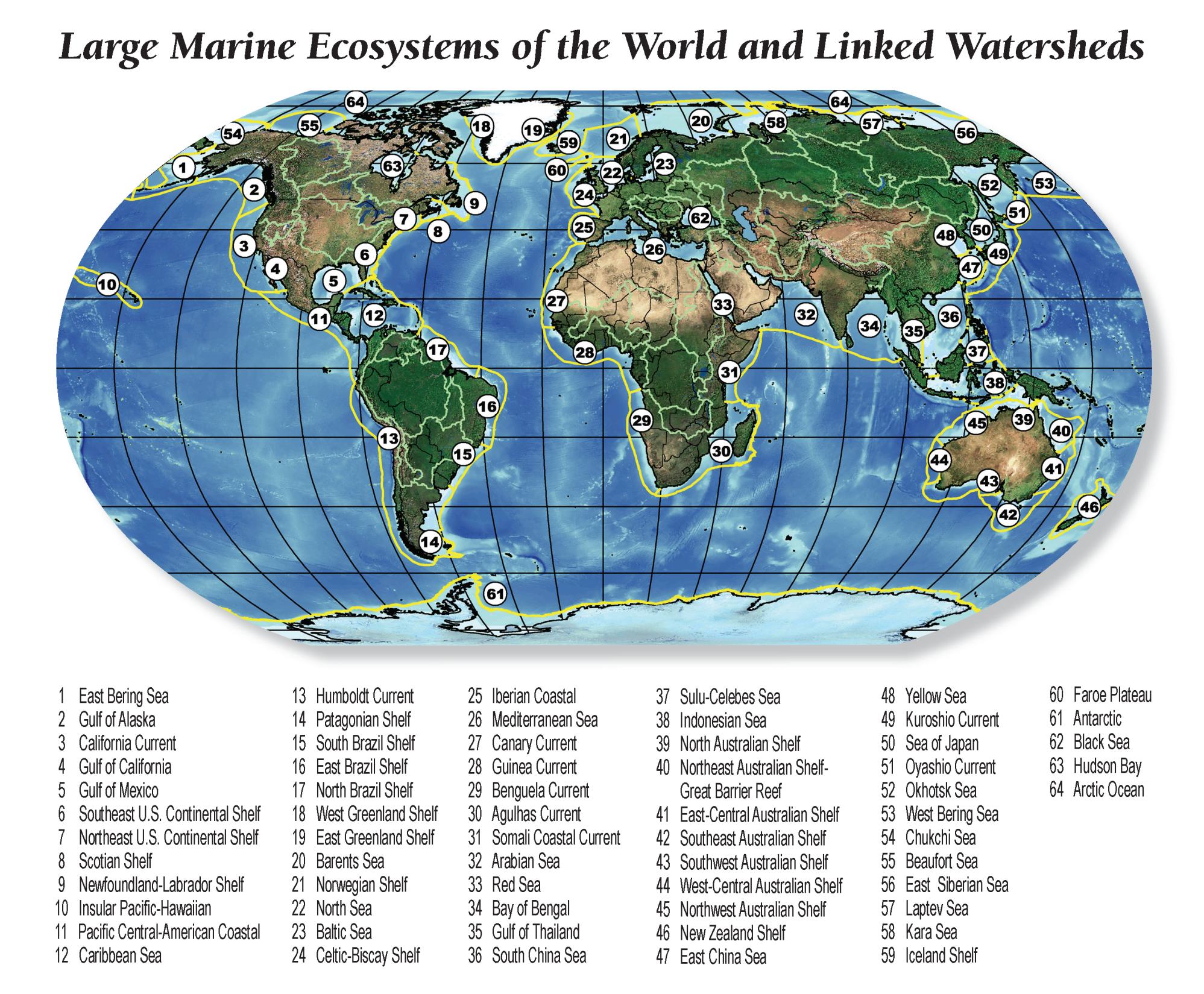
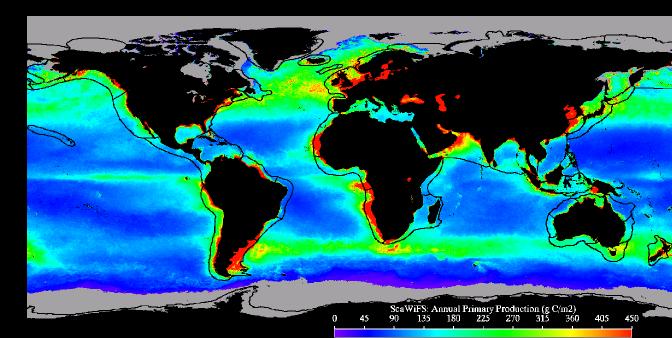
80% of the World's Fisheries Catches are produced in 64
Large Marine Ecosystems
5
Climate change
4
Introductions
3
Human
Mechanical
Altered
expansion
habitat
ecosystems
destruction
2
Pollution
1
Fishing
"Then"
"Now"
(from Jackson et al., Science vol. 293, 27 July 2001)
LMEs ARE GLOBAL CENTERS
OF EFFORTS TO:
· REDUCE coastal pollution
· RESTORE damaged habitats
(Coral reefs, mangroves, sea grasses)
· RECOVER depleted fishery stocks
SELECTED ECOSYSTEM-RELATED WSSD
TARGETS AND PROGRAMS OF IMPLEMENTATION
(POI), Johannesburg, August 2002
· Land-based Sources of Pollution
POI Substantially reduce by 2006
· Ecosystem-based Approach
POI Introduce by 2010
· Marine Protected Areas
POI - Designated Network by 2012
· Restoration and Sustainability of Fisheries
POI On an urgent basis and where
possible to MSY by 2015
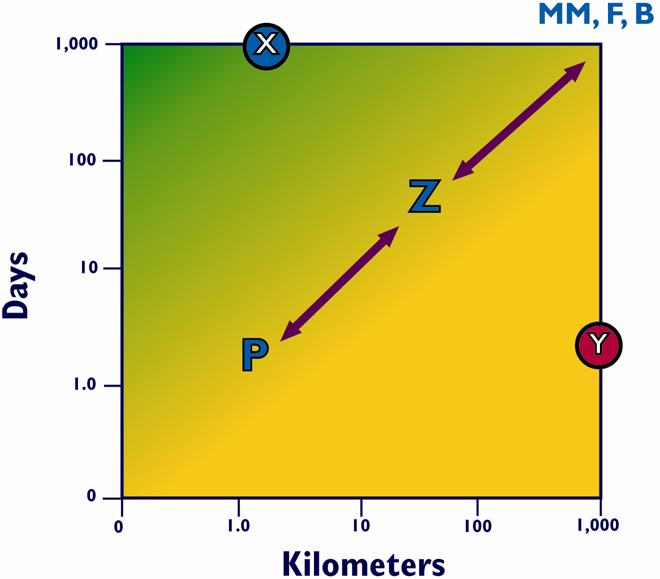
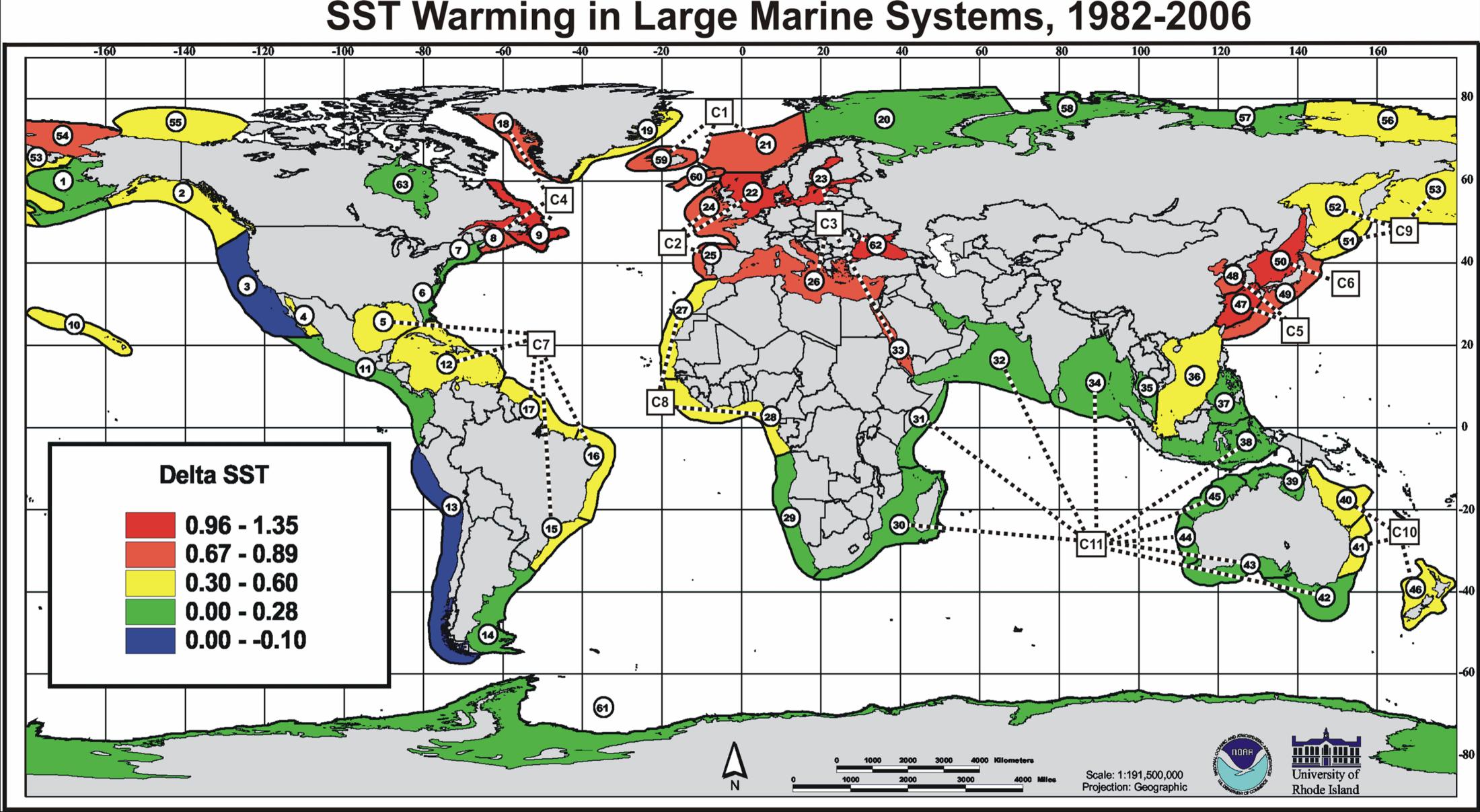
TEMPORAL AND SPATIAL SCALE RELATIONS
FOR THE PELAGIC FOOD WEB
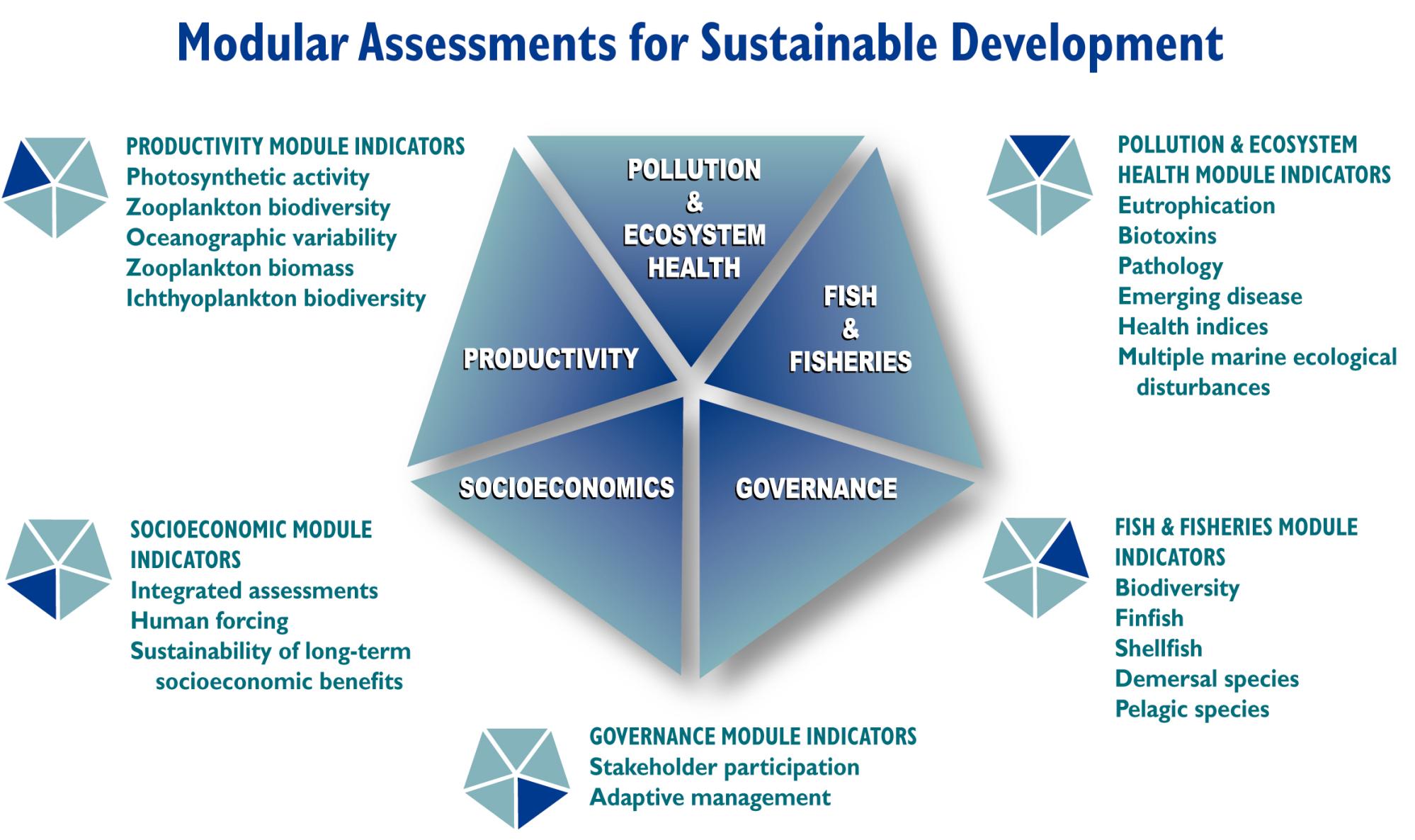
5 MODULES WITH INDICATORS
PRODUCTIVITY INDICATORS
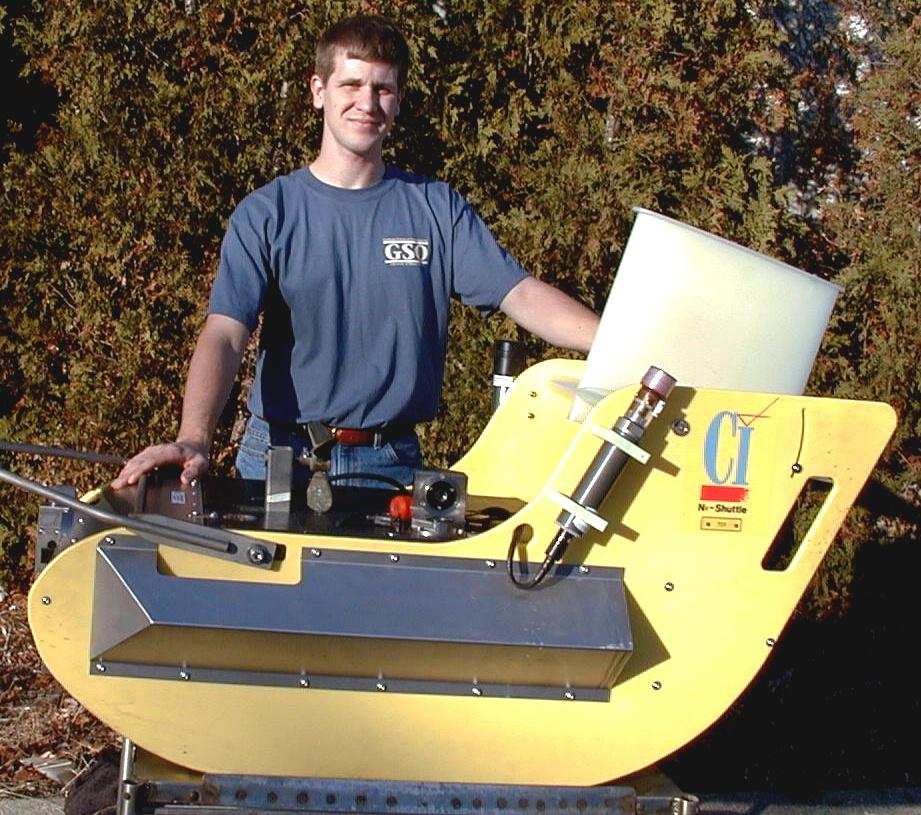
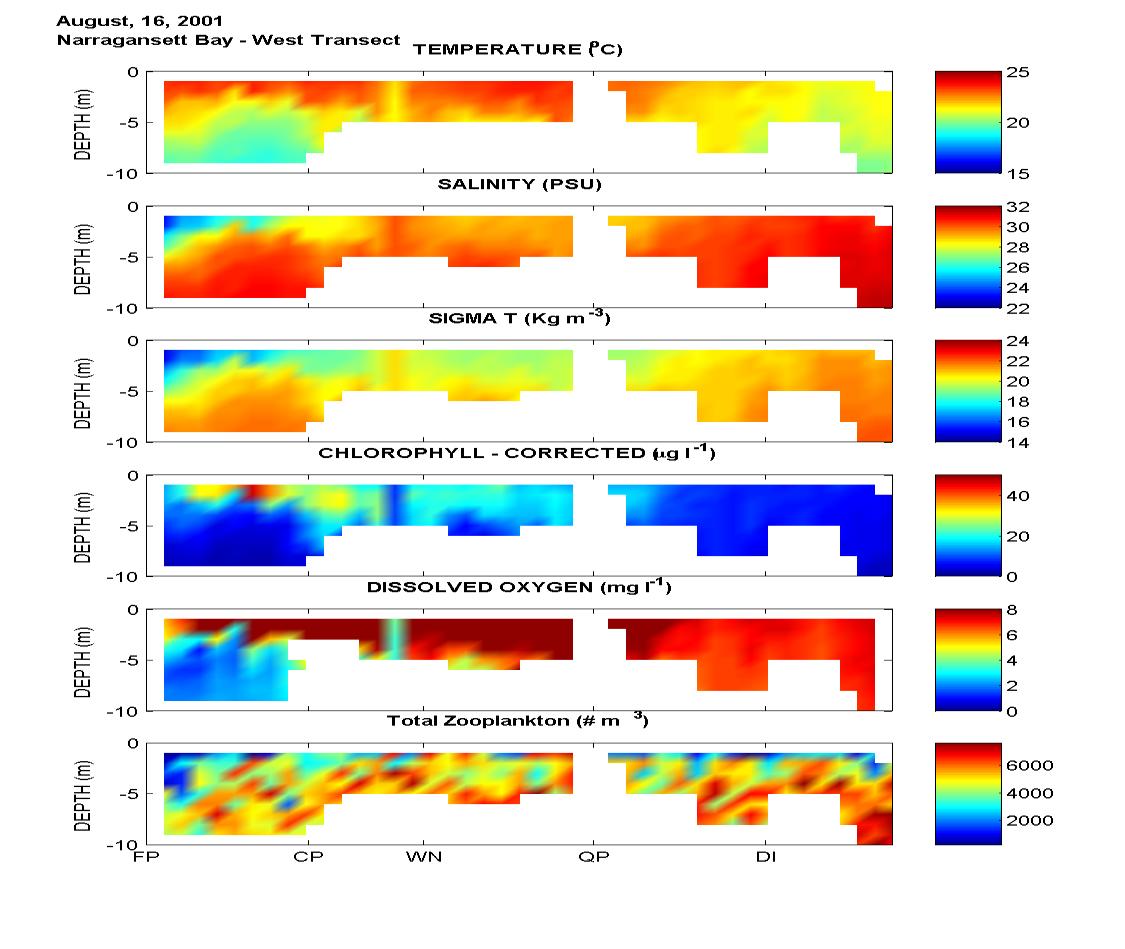
An undulating oceanographic recorder (above), towed
behind a ship, is used to collect ecological parameters
needed to assess the state of the marine ecosystem
(left).
FISH AND FISHERIES DATA
COLLECTIONS/INDICATORS
· Demersal species surveys
· Pelagic species surveys
· Ichthyoplankton surveys
· Invertebrate surveys (molluscs,
crustaceans, cephalopods)
· Essential fish habitat
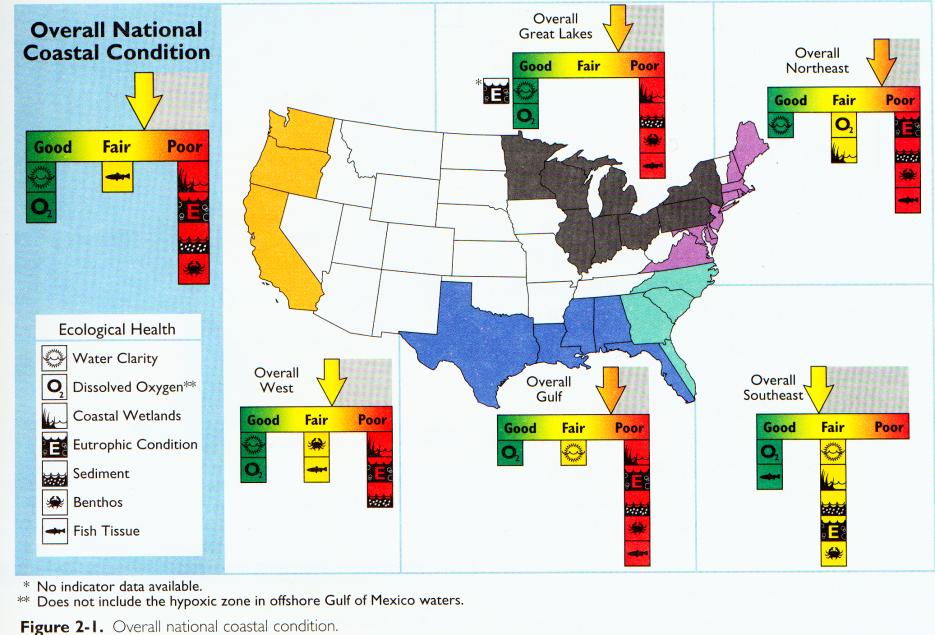
POLLUTION AND ECOSYSTEM HEALTH
INDICATORS
Indicators:
Water Clarity
Dissolved Oxygen
Coastal Wetland Loss
Eutrophic Condition
Sediment Contamination
Fish Tissue Contaminants
DIN Export by Rivers for World Regions
1990 and 2050 BAU Scenario
16
14
12
10
-1 y N 8
2050
g
T
6
1990
4
2
0
North
South Africa
Europe NE Eastern
Southern
America America
Asia
Asia
Asia
Nitrogen inputs and transport by rivers to coastal systems
Crop
N
Natural
2-fixation
N2-fixationFertilizer
Sewage
Manure
Atmospheric
Deposition
Figure courtesy of University of Maryland Center for Environmental Science
Source attribution of DIN export predicted by the NEWS DIN model to
the Yellow Sea, Humboldt Current and Gulf of Mexico LMEs.
Yellow Sea LME
Humboldt Current LME
Gulf of Mexico LME
Atmos. N Dep.
6%
Natural N2-fix.
Atmos. N Dep. Sewage
Sewage
Sewage
Atmos. N Dep.
5%
3%
7%
5%
19%
11%
Agric. N2-fix.
Fertilizer
Natural N2-fix.
Natural N2-fix.
9%
22%
28%
12%
Fertilizer
36%
Manure
Agric. N2-fix.
20%
9%
Agric. N2-fix.
9%
Fertilizer
Manure
Manure
44%
31%
27%
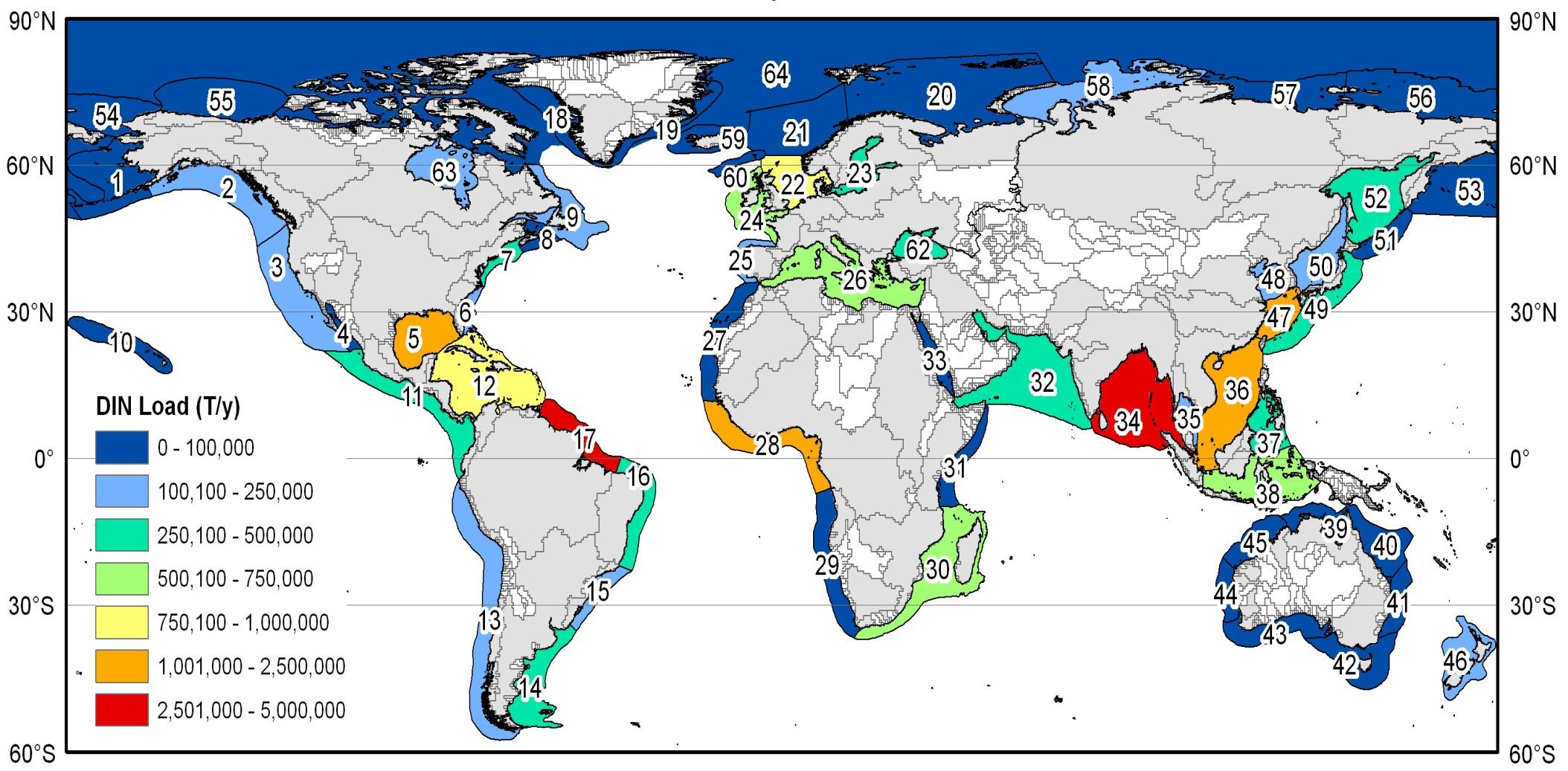
DIN inputs (tons N/y) to LMEs from land-based
sources predicted by the NEWS DIN model
Figure Seitzinger and Lee, 2008.
SOCIOECONOMICS AND GOVERNANCE
NORTHEAST SHELF MANAGEMENT
JURISDICTIONS
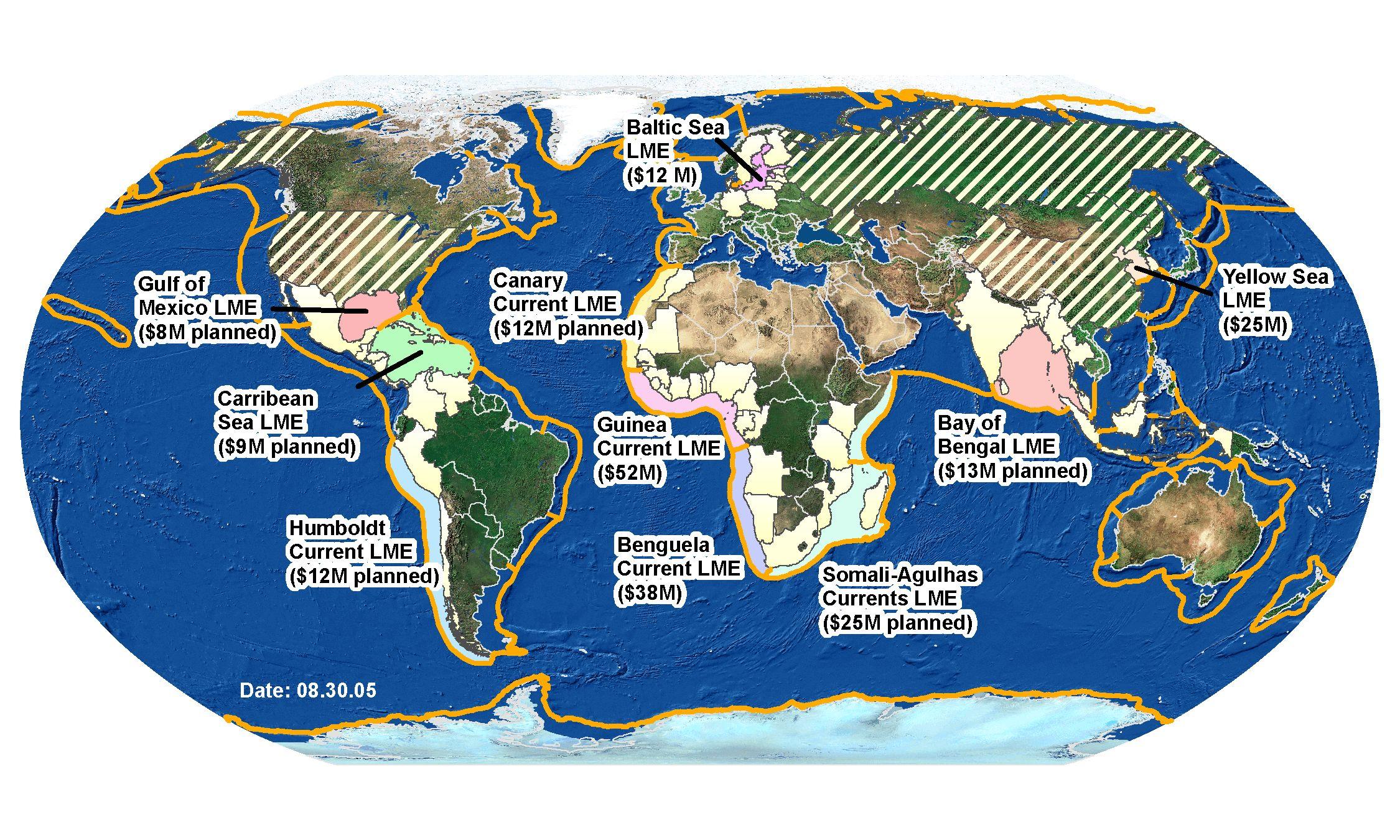
GEF-Supported LME Projects
NOAA Fisheries' Science &
Technical Expertise
Available for Support of Large Marine
Ecosystem Projects
NOAA Fisheries' Expertise Available for
Science and Technical Support of LMEs
· Living Marine Resources:
Stock Assessments (pelagics, demersal)
· Fishery Independent
Survey Design
Assessment models
· Fishery Dependent
Observer Programs (design, training, implementation)
Catch Statistics
Port Sampling
Life History Studies
· Age and Growth (otoliths, spines, vertebrae)
· Population Structure
Genetics
Tagging
· Reproduction and Early Life History
Protected Resources Monitoring and Assessment
· Marine Mammals, Turtles, Seabirds
Bycatch monitoring
Bycatch mitigation
Survey design
Life history research
Population modeling
Stranding Network
NOAA Fisheries' Expertise Available for
Science and Technical Support of LMEs
· Living Marine Resources (continued):
Enforcement and Compliance
· Vessel Monitoring Systems (VMS), Monitoring and Control
Systems, Illegal Unregulated and Unreported catch
Economics and Social Science Assessments and Surveys
· Spatial modeling
· Bioeconomic and ecological-economic models
· Cost-benefit / cost effectiveness of fisheries rebuilding programs,
protected species recovery programs, and habitat restoration and
protection programs
· Regional economic impact models
Management and Governance approaches
· Fishery management plans for single-species and species
complexes
· Recovery planning for endangered species
· Management in an ecosystem context (Fishery Ecosystem Plans,
Integrated Ecosystem Assessments)
NOAA Fisheries' Expertise Available for Science and
Technical Support of LMEs
· Ecosystem Studies
Habitat Characterization and Assessment
· Estuaries, Coral Reef, other benthos, pelagic environment
Comparative Ecosystem Research and Analysis
Climate Effects on Ecosystems
· Productivity and lower trophic level monitoring (in situ and remotely
sensed)
· Oceanographic observations and models (in situ and remotely
sensed)
· Process research
Water Quality and Contaminant Monitoring
· Contaminant monitoring and analysis (in animals and the
environment)
· Nutrient monitoring
· Harmful Algal Blooms monitoring and prediction
NOAA Fisheries' Expertise Available for Science and
Technical Support of LMEs
· Modeling:
Assessment Models
Ecosystem Models
Hydrographic Models
Coupled Bio-Physical Models
Statistical Modeling
· Data Management:
Regional ecosystem data management
Access to Data from Distributed Systems
Visualization and Analysis of Marine Data
· Oceanographic and climate observations
How NOAA Fisheries Can Share Expertise
· Conduct training courses and workshops in-
country
· Rotational Programs of scientists to NOAA
Fisheries Science Centers, Labs, and
Headquarters for specific training opportunities:
Longer duration training courses (1+ months)
Short term rotations (~1-2 weeks)
· Placement of expert(s) at LME Project Offices
for defined periods to provide training and
assistance on specific topics
ECOSYSTEM
MANAGEMENT:
A PARADIGM SHIFT
FROM
TO
Individual species
Ecosystems
Small spatial scale
Multiple scales
Short-term perspective
Long-term perspective
Humans: independent of
Humans: integral part of
ecosystems
ecosystems
Management divorced from
Adaptive management
research
Managing commodities
Sustaining production potential for
goods and services
NOTE: Some of the substantive changes between traditional
resource management and ecosystem management.
Questions?