CASE STUDY
Towards A Sustainable Bonefish Recreational Fishery at Los Roques Archipelago
National Park
Implementing Organization: Fundación Científica Los Roques, Venezuela
GRANT NUMBER: SIDA QCL-2324-3474-2661-2271.
Submitted by: The Gulf and Caribbean Fisheries Institute, Inc.
GCFI Tracking Number: SGF2007_SSF_04
SGF2007_SSF_04 Page 2 of 11
Executive Summary
Fundación Científica Los Roques (FCLR)
This case involved an exchange between an international recreational fishing guide from
Miami (USA) and fishermen from Los Roques, Archipelago in order to take advantage of
the knowledge and experience of this fishing guide on the management and conservation
of bonefish fishery, specifically in the context of the collaborative efforts between
scientist and local stake holders. The following objectives were predefined:
Objective 1: Exchange of experiences and promotion of sustainable
recreational fishing practices among local recreational fishing guides, with the
participation scientists and experienced guides from USA and Venezuela.
Objective 2: Simple baseline estimation of bonefish population size in Los
Roques Archipelago, including training and active participation of local
recreational fishing guides and other stakeholders.
Objective 3: Generate and promote a Recreational Bonefish Fishery
Management Plan, with the active participation of scientists, current
recreational fishing guide and other stakeholders.
Objective 4: Promote recreational fishery as an economical alternative among
current artisanal fishermen, throughout motivational talks lead by experienced
guides from USA and Venezuela and current local fishing guides.
The following outputs were achieved:
1. International recreational fishing guide, Captain. Joe Gonzalez from Miami
(USA) traveled to Los Roques from June 22nd to 28th, 2008 to participate in
workshops designed to developing recreational fishing guide opportunities in the
Los Roques National Park..
2. Two workshops were held at Los Roques with the participation of Cap. Joe
Gonzalez, local fishing guides and scientists.
3. Exchange of experiences in the field between Cap. Gonzalez, local fishing guides
and scientist.
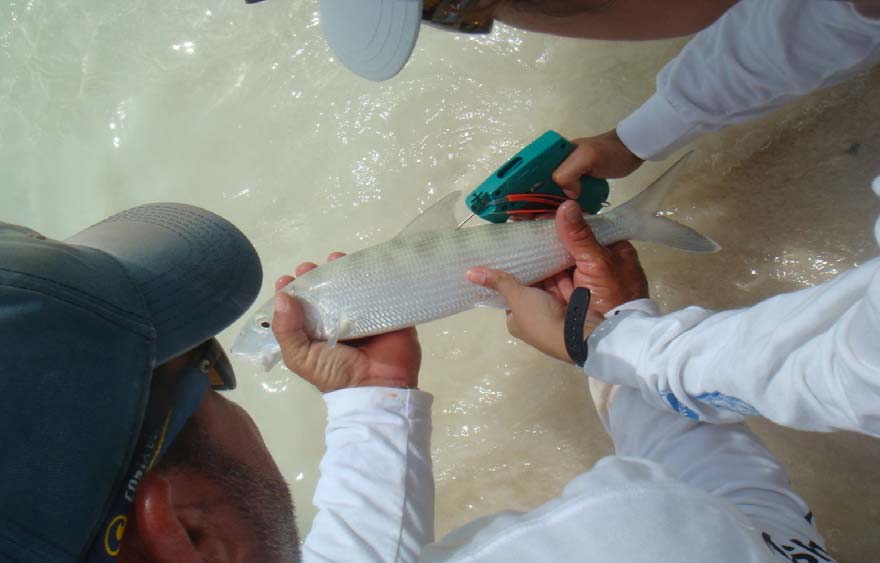
4. Training on tagging bonefish was also conducted.
5. Survey among participants was conducted to evaluate the workshop (see survey
results in the Appendix 1).
6. Fifty percent of the local fishing guides participated in all the activities.
7. Information about the biology of the bonefish, was provided, more than 80% of
local fishermen expressed that they had learned very much from the exchange.
SGF2007_SSF_04 Page 3 of 11
8. Most of the fishing guides were well-motivated to participate in the workshops,
and expressed their interest in participating in other workshops and collaborating
with scientist.
9. Fishing guides and scientist agreed to conduct the census in October 2008.
10. Scientist met with the local National Park authorities to discuss the Bonefish
Recreational Fishery Management Plan.
11. A documentary film about the project will be produced and presented this year at
Los Roques Archipelago National Park and in the Gulf and Caribbean Fisheries
Institute Meeting in Guadeloupe.
12. Trip participants will be presenting the results of the project at the Gulf and
Caribbean Fisheries Institute Meeting in Guadeloupe, in November 2008 (abstract
is included in Appendix 2).
13. As a result of this exchange, the principle investigators of this project were
awarded a research grant by Bonefish and Tarpon Unlimited to start a bonefish
tagging program with the local recreational fishing guides of Los Roques
Archipelago National Park.
Analysis of the Environment
Activities were examined solely within the marine environment and specifically within
Los Roques Archipelago National Park. The environment included examination of
activities within the guide fishing sector as well as inputs from scientists from
Universidad Simon Bolivar and FCLR. Over the past decade, LRA has become one of the
most popular recreational fishing destinations in the Caribbean for bonefish, receiving an
annual average of 400 anglers. This recreational fishery provides an important income to
the local economy and since 1992 some artisanal fishermen have successfully migrated to
this alternative economical activity (Debrot and Posada, 2005); others have expressed
their interest in moving towards this livelihood but expressed the need to receive
additional information before making a final decision. Despite the economic potential for
this sustainable alternative to artisanal fishing, there are no regulations directly oriented
to bonefish that guarantee a sustainable recreational fishery in this protected ecosystem
with the exception of catch and release requirements (e.g.., seasonal closure, bag limits,
etc).
The Experience
The vision of this experience was to develop sustainable fishing practices as well as
alternatives to fishing in order to sustain livelihoods in artisinal fishing communities in
SGF2007_SSF_04 Page 4 of 11
the Los Roques Archipelago National Park. These communities have already determined
that alternative livelihoods were an appropriate and desirable approach to address the
overfishing and lack of management for conservation of their marine resources. This
exchange was an opportunity to validate and increase the leadership capacity of local
fishermen from Los Roques, and to introduce many of them to an alternative fishing
activity that allows a sustainable exploitation of bonefish and increases the livelihoods for
the local guide fishermen and, therefore, the local economy.
Development
Approximately 40 participants were trained in the field methodology in a half-day
activity by Cap. Joe Gonzalez, who had previously participated in four bonefish
population censuses in Florida. This census methodology will allow scientists to
determine population trends over the subsequent years and help ensure a sustainable
population. After conducting a consultation process, a Management Plan proposal will
be presented to the community for its approval. This consultation process included one
workshop (one day) with local stakeholders to discuss the management and conservation
strategies for the bonefish recreational fishery. Finally, after analyzing the data derived
from the workshops and the population census, a Management Plan for the recreational
bonefish fishery will be presented in a meeting with the community and other
stakeholders for its approval and promotion.
From June 22nd 2008 to June 28th 2008, two workshops were held at Los Roques with the
participation of Cap. Joe Gonzalez an international recreational fishing guide. Particpants
in the workshops included local fishing guides and scientists. Experiences were
exchanged and there was a great deal of interaction in the field throughout the week. Fifty
percent of the local fishing guides participated in all the activities. Although expectations
about the outcomes from the workshops were not high among the local fishing guides,
and none of them had previously received any information about the biology of the
bonefish, more than 80% expressed that they had learned `very much' from the exchange.
Most of the fishing guides were well motivated to participate in the workshops, and
expressed their interest in participating in other workshops and collaborating with
scientists.
In order to develop a baseline on the abundance of bonefish in LRA, a simple population
census was conducted following the methodology proposed by Ault et al. (2005), with
the active participation of several members of Los Roques community, including the
Ecological School Brigate, scientists, professional guides, and the Park's authorities
(INAPESCA, INPARQUES, National Guard). The census took place in one day of field
work, and covered the entire archipelago platform. In addition, a video of the activity was
produced and will be used to disseminate the information among fishers in the region.
Important Aspects for Decision Making
The project has exceeded expectations since we accomplished most of the
programmed activities and perhaps more importantly, created an effective
communication channel between local fishing guides and scientists. Local fishing guides
SGF2007_SSF_04 Page 5 of 11
were very enthusiastic about starting a bonefish tagging program and we planned and
started to coordinate the bonefish population visual census.
Pending Questions or Tasks
1. Are the authorities of Los Roques Archipelago National Park in favor of adapting
these alternatives?
2. Are all the users of this resource in favor of these activities? Does the private
sector support and encourage these activities?
3. Does the local community and other stakeholders support these activities?
4. Can reasonable incomes be achieved using these practices?
5. How will these new fishing alternative will be marketed?
6. How can other stakeholders (including government officials, hotel operators,
tourist operations, etc.) be incorporated into this process.
SGF2007_SSF_04 Page 6 of 11
Annexes
Annex 1.
Background of the case
Bonefish, Albula vulpes, is a common species in coastal marine environments along the
coast of Venezuela (southern Caribbean Sea) and particularly in Los Roques Archipelago
National Park (LRA) (Cervigón, 1991), where large schools inhabit the waters of this
marine-protected area.
Over the past decade, LRA has become one of the most popular recreational fishing
destinations in the Caribbean for bonefish, receiving an annual average of 400 anglers.
This recreational fishery provides an important income to the local economy and since
1992 some artisanal fishermen have successfully migrated to this alternative economical
activity (Debrot and Posada, 2005), while others have expressed their interest to carry out
such change, but request additional information to take a final decision. On the other
hand, despite this economic importance and potential as an alternative livelihood for
artisanal fishermen, there are no bonefish directly oriented regulations that guarantee a
sustainable recreational fishery in this protected ecosystem, farther from a catch and
release fishing method (i.e., seasonal closure, bag limits, etc).
Exchange of Experiences and Promotion of Sustainable Recreational Fishing Practices:
Exchange of experiences and promotion of sustainable recreational fishing practices
among local recreational fishing guides will be developed as a one-day workshop with
the participation of scientists (Juan M. Posada and Denise Debrot) and two renowned
bonefish fishing guides from USA (Cap. Joe Gonzalez) and Venezuela (Cristobal
Yrazabal). Power-point presentations will be offered in the areas of expertise of each
speaker. An audience of 25 recreational fishing guides is expected. The impact of the
workshop will be measured using an opinion poll specially designed for such purpose
(before and after).
Bonefish Population Census: In order to set a baseline on the abundance of bonefish in
LRA, a simple population census will be conducted following the methodology proposed
by Ault et al. (2005), with the active participation of several members of Los Roques
community, including the Ecological School Brigate, scientists, professional guides, and
the Park's authorities (INAPESCA, INPARQUES, National Guard). The census will take
place in one day of field work, and will cover the entire archipelago platform. An
approximate of 40 participants will be trained in the field methodology in a half-day
activity by Cap. Joe Gonzalez, who has successfully participated in four bonefish
population census in Florida. This simple methodology will allow us to determine
population trends over the following years.
Management Plan for the Bonefish Recreational Fishery: A Management Plan proposal
will be presented to the community for its approval, after conducting a consultation
process. This consultation process includes one workshop (one day) with local
stakeholders to discuss the management and conservation strategies for the bonefish
SGF2007_SSF_04 Page 7 of 11
recreational fishery. Finally, after analyzing the data derived from the workshops and the
population census, a Management Plan for the recreational bonefish fishery will be
presented in a meeting with the community and other stakeholders for its approval and
promotion.
Promoting Recreational Fishery: One-day workshop will take place at Gran Roque, with
the participation of artisanal fishermen from different villages (Isla Fernando, Cayo
Pirata, Crasqui and Gran Roque) and will be coordinated in collaboration with Los
Roques Artisanal Fishermen's Association. Motivational talks will be offered by fishing
guides, particularly by former artisanal fishermen, whom will have the opportunity to
comment about the positive aspects of their new livehoods and the responsibilities related
to providing this kind of services. An audience of 15 artisanal fishermen is expected. The
impact of the workshop will be measured using an opinion poll specially designed for
such purpose (before and after).
SGF2007_SSF_04 Page 8 of 11
Annex 2. Photographs of the Exchange
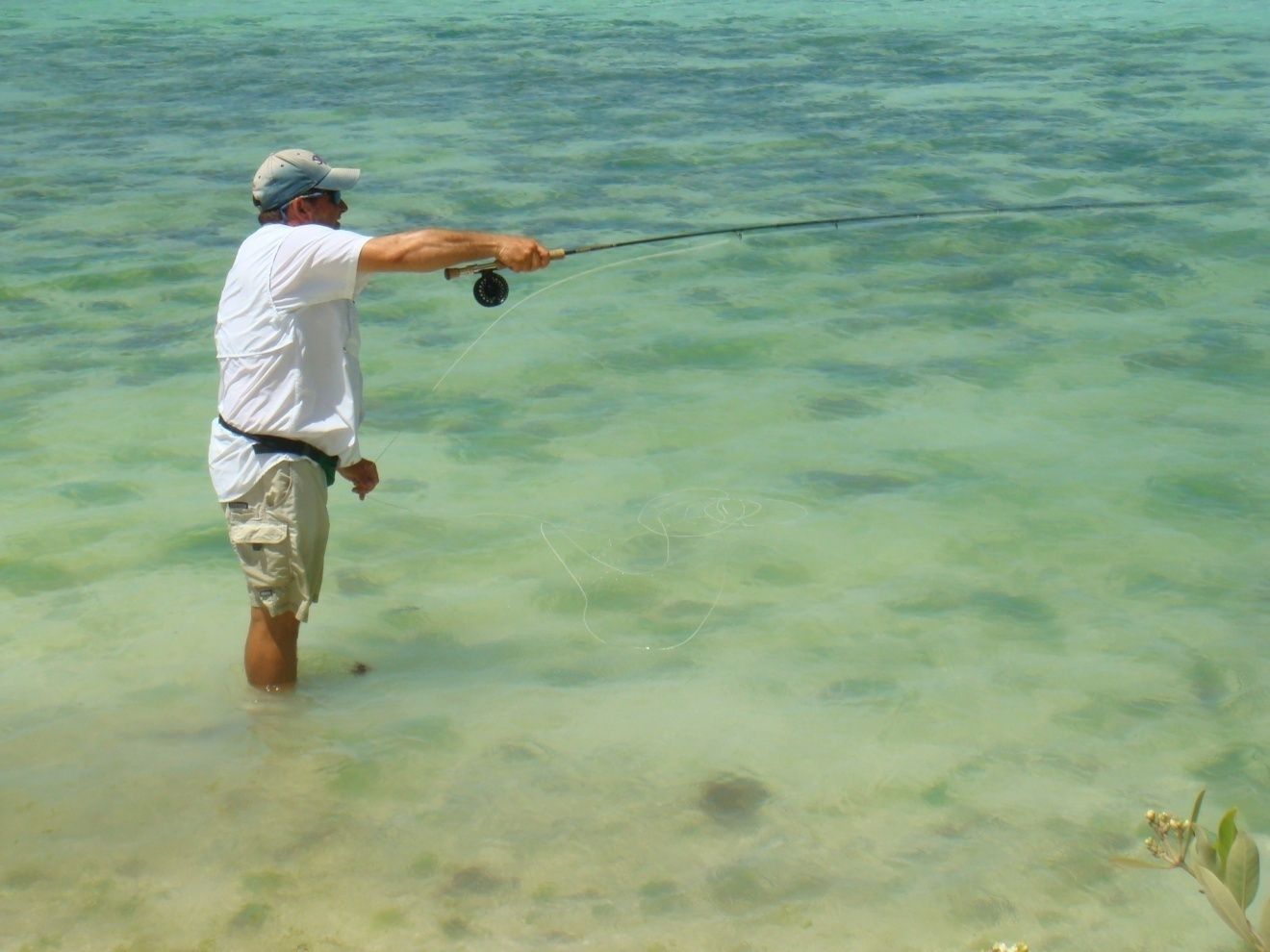
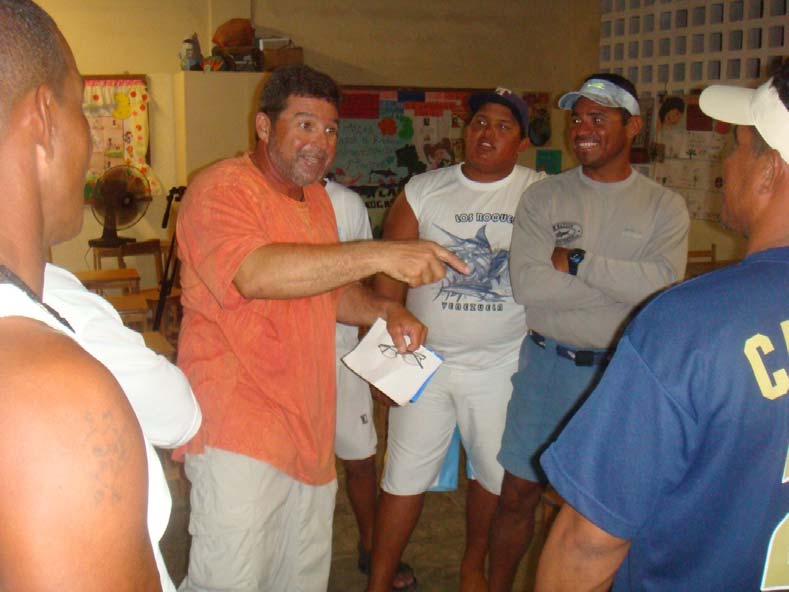
Cap. Joe Gonzalez and local fishing guides
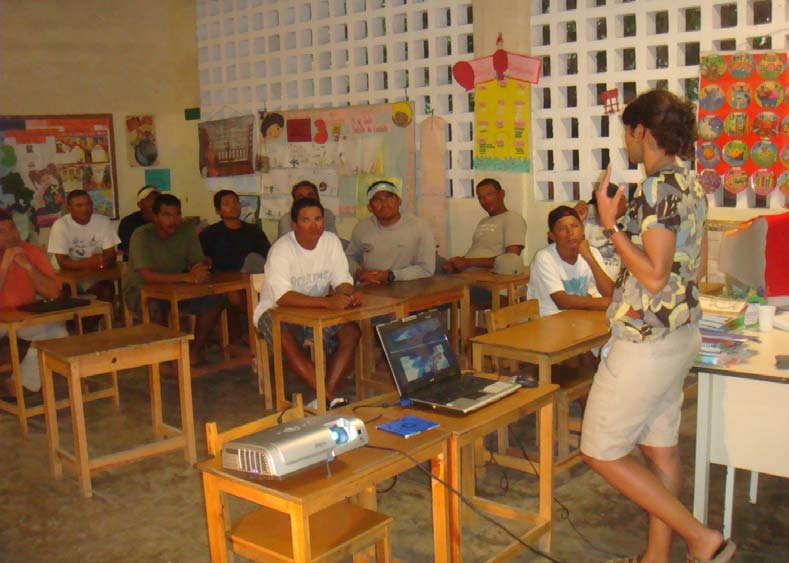
Denise Debrot, talking to local fishing guides about the results of her bonefish research
SGF2007_SSF_04 Page 9 of 11
Workshop with participants tagging the first bonefish during the exchange.
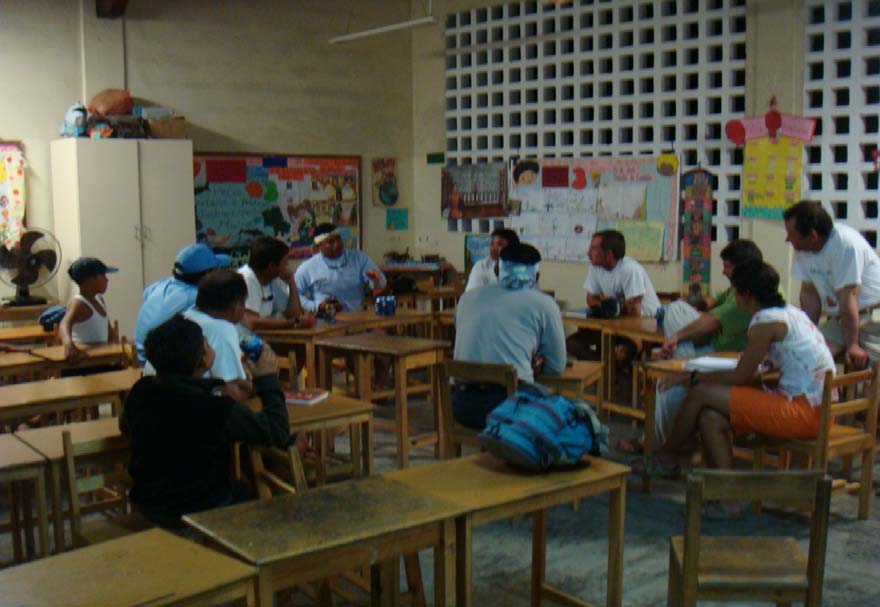
Second workshop among local fishing guides and scientists.
SGF2007_SSF_04 Page 10 of 11
Appendix 1: Survey used to collect opinion polls about the workshop.
Estimado amigo:
Estamos realizando una evaluación sobre la vinculación del pescador artesanal en la
pesca deportiva del pez ratón en el Parque Nacional Archipiélago Los Roques, así como
del desarrollo actual de esta pesquería, por lo que quisiéramos que amablemente nos
conteste usted las siguientes preguntas:
1) Nombre: ____________________________
2)
Edad:
_________________
3) Lugar de Origen: _____________________
4) Años dedicados a la pesca artesanal: _______
5) ¿Tiene usted algún familiar que sea guía de pesca deportiva del pez ratón?
_______________
6) ¿Le interesaría a usted conocer los detalles de esta pesquería?
_________________________
7) ¿Le gustaría a usted aprender y dedicarse a ser guía de pesca deportiva?
_________________
8)
¿Dejaría
de
ejercer
la
pesca
artesanal?
____________________________________________
9) ¿Que dificultades ve usted en esto de dedicarse al oficio de guía de pesca deportivo?
________________________________________________________________________
________________________________________________________________________
____________
10) ¿Ha mejorado o empeorado su calidad de vida con el aumento del turismo en Los
Roques?
________________________________________________________________________
________________________________________________________________________
____________
SGF2007_SSF_04 Page 11 of 11
Appendix 2. Abstract accepted for presentation at the 2008 Gulf and Caribbean
Fisheries Institute Meeting in Guadeloupe.
Promoting a sustainable bonefish recreational fishery: a collaborative effort between fishing guides
and scientists
Jose F. González1, Denise Debrot2, Michael F. Larkin1, Juan M. Posada2 and Jerald S. Ault1
1Division of Marine Biology and Fisheries, Rosenstiel School of Marine and Atmospheric Science,
University of Miami, Miami, Florida, U.S.A.
2Departamento de Biología de Organismos, Universidad Simón Bolívar, Apartado 89000, Caracas 1080-A,
Venezuela
Bonefish, Albula vulpes, is a highly valuable game fish that supports economical important recreational
fisheries throughout the wider Caribbean Sea. Since 1998, the University of Miami Rosenstiel School of
Marine and Atmospheric Science is running a bonefish research program that involves the active
participation of recreational fishing guides. To date, more that 4,000 bonefish have been tagged and an
annual bonefish population census has been conducted for the past five years in South Florida. A similar
research program is being developed at Los Roques Archipelago National Park, a location considered one
of the most popular recreational fishing destinations in the Caribbean for bonefish. With the economical
support from the UNEP-Caribbean Environmental Program, a knowledge exchange initiative between
fishing guides and scientists was conducted at the archipelago in June, 2008. Workshops, seminars, open
discussions and field trips were conducted during five days of intensive activities in order to inform the
local fishing guides about the scientific findings on the biology and population dynamics of this species in
the area, provide training on tagging and visual census methodology, and exchange ideas on the sustainable
use of this important resource. Similar programs could be conducted in other location within the region to
promote the co-responsibility in the resources management.
Key words: recreational fishery, bonefish, tag and recapture, Los Roques, Venezuela