CASE STUDY
Strengthening and Networking of fisher folk organizations (FFOs) at the Community,
National and Regional Levels in the CARICOM region
Implementing Organization: Caribbean Regional Fisheries Mechanism (CRFM) Secretariat
GRANT NUMBER: SIDA QCL-2324-3474-2661-2271.
Submitted by: The Gulf and Caribbean Fisheries Institute, Inc.
GCFI Tracking Number: SGF2007_SSF_03
SGF2007_SSF_03 Page 1 of 10
Executive Summary
Strengthening and Networking of fisher folk organizations (FFOs) at the Community,
National and Regional Levels in the CARICOM region
This project was originally designed to promote the strengthening, establishment and
development of national umbrella fisher folk organisations (NFOs) and the formation of
the Caribbean Regional Network of National Fisher Folk Organizations in the
CARICOM region. The workshops were primarily targeted at the fisher folk
organisations (NFOs), or the executive members responsible for communication and
information sharing activities of the national fisher folk organizations and fisher folk co-
operatives on each island. The team also met with the Acting Fisheries Administrator
who informed them about the history, role and functions of the Fisheries Department as it
related to the development of the fishermen's cooperatives and the management and
development of the fisheries resources. A team comprising of the Coordinator, Mr.
Mitchell Lay, and Deputy Coordinator, Mr. Joslyn Lee Quay, of the CU, and the Deputy
Executive Director (Ag.), CRFM Secretariat, Mr. Terrence Phillips, visited St. Kitts and
Nevis, Guyana and St. Vincent and the Grenadines during the period May 13 to 29, 2008.
Also, a UWI-CERMES/Dalhousie University Intern, Ms. Laura Tabet, joined the team in
St. Kitts and Nevis and St. Vincent and the Grenadines
The following outputs were achieved:
- Promoted the establishment of the NFOs in Guyana, St. Kitts and Nevis and St.
Vincent and the Grenadines through visits by the Coordinator and Deputy
Coordinator of the CU in order to achieve the critical mass determined for the
Regional Network May 2008.
- Exposing the Coordinator of the coordination unit, Chair/Manager of the newly
created NFO in St. Lucia, the Fisheries Extension Officer from St. Lucia to the
business and other operations of the PFOs and NFO in Belize that would enable
them to develop and implement sustainable financing and appropriate training
activities.
- During the period May 13 to 17, the team visited Nevis on May 14, then spent
May 15 and 16 in St. Kitts. In Nevis, accompanied by Fisheries Officer, Mr.
Ralph Wilkins, and Cooperatives Officer, Mr. Clyde Thompson, from St. Kitts,
the team met with different members of the local fisher s organizations.
Permanent Secretary, Ministry of Agriculture, Lands, Housing, Cooperatives and
Fisheries, Mr. Pearlievan Wilkin.
- The team visited fishers at the Gallows Bay and Jessup landing sites.
- During the visit to Guyana, from May 19 to 24, the team met with the Principal
Fisheries Officer (Ag.), Mr. Tejnarine Geer; the staff of the Fisheries Department;
the Chairman, Mr. Andrew Bishop, and some members of the Fisheries Advisory
SGF2007_SSF_03 Page 2 of 10
Committee (FAC); the Chief Cooperatives Development Officer, Mr. Kareem
Abdul-Jabar; Chairman, Steering Committee and FAC Member, Mr. P. Deodat,
Treasurer, Mr. I.P. Rampersaud, and fishers of the Upper Corentyne Fishermen's
Cooperative Society Limited at their facitity in Corentyne; Secretary, Ms. D.
Baichu, Steering Committee Member, Mr. D. Persaud, former Chairman, Mr.
A.K. Somwaru, of the Rosignol Fishermen's Cooperative Society Limited, and
Regional Cooperatives Officer, Mr. T. Singh, at the landing site in Rosignol;
Secretary, Mr. M. Khan, and fishers of the Greater Georgetown Fishermen's
Cooperative Society Limited, at their Houston Fishport Complex; and the
Minister of Agriculture, Hon. Robert Persaud.
During the visit to St. Vincent and the Grenadines, from May 25 to 29, the team
met with Chief Fisheries Officer, Mr. Raymond Ryan, and Senior Fisheries
Officer, Ms. Jennifer Cruickshank, of the Fisheries Division; Registrar, Mr.
Cecile Jackson, and Inspector, Mr. Leopold Thomas, of the Cooperatives
Division; President, Mr. Calvin Lampkin, and Manager, Mr. Linden Moss, of the
Goodwill Fishermen's Cooperative Society Limited; Chairman of Goodwill
Fishermen's Cooperative Society Limited/Steering Committee Member, Mr.
Eocen Victory, Treasurer, Calliaquia Fishermen's Cooperative Society
Limited/Steering Committee Member, Ms. Palma Gibson, Secretary, Goodwill
Fishermen's Cooperative Society Limited/Steering Committee Member, Mr.
Leonard Charles, Chairman, Calliaquia Fishermen's Cooperative Society
Limited/Steering Committee Member, Mr. C. Rogers, President, Barrouallie
Fishermen's Cooperative Society Limited/Steering Committee Member, Mr.
Vibert Pierre, and Secretary, Barrouallie Fishermen's Cooperative Society
Limited/Steering Committee Member, Mr. F. Waters; Chairman, Mr. Rogers,
Treasurer/Office Manager of Calliaquia Fishermen's Cooperative Society
Limited; and President, Vice-President, Committee Member, Secretary, and
Officer Manager, Ms. Elma Griffith, of Barrouallie Fishermen's Cooperative
Society Limited.
- During June 9 to 13, a team comprised of the CU Coordinator, Mr. Mitchell Lay,
Fisheries Extension Officer, St. Lucia, Ms. Petronilia Polius, and Committee
Member, St. Lucia Fisherfolk Cooperative Society Limited, St. Lucia, Ms. Julieta
Herman, visited Belize to become acquainted with the business and other
operations of the PFOs and NFO there, that would enable them to develop and
implement sustainable financing and training activities. The Belize officials who
accompanied the team were Senior Fisheries Officer, Mr. Jaime Villanueva,
Cooperatives Officer, Mr. Mitchell Luis, and Executive Secretary, Belize
Fishermen's Cooperative Association (BFCA) and CU Secretary, Ms. Nadine
Nembhard.
- A presentation was prepared for dissemination the 2008 meeting of the Gulf and
Caribbean Fisheries Institute to be held in Guadeloupe in November, 2008.
(Appendix 1).
SGF2007_SSF_03 Page 3 of 10
Analysis of the Environment
Activities were examined solely within the marine environment. The workshops were
primarily targeted to the officers of fisher folk organization, or the executive members
responsible for communication and information sharing activities on each island. Invited
to participate were staff from the fisheries management authorities on the islands from
the levels of extension officers, technical officers, and senior fisheries officers, and
communications or information officers from the respective ministries of agriculture.
The Experience
The vision of this case was to strengthened/creation of NFOs and a Caribbean Regional
Network of National Fisher Folk Organizations; strengthened management,
communication and advocacy capacities of NFOs and the Regional Network; and fisher
folk and other interested parties better provided with relevant information on regional
fisheries issues. With the overall objective being to contribute to improved incomes,
higher standards of living of fisher folk and the sustainable management of fisheries
resources in the Caribbean.
One of the long term goals is to develop a Caribbean Regional Network of National
Fisher Folk Organizations (CARNUFO), which would be established when at least 50%
of the countries + 1 would have NFOs. The Workshop also elected a Working Group of
Fisher Folk Leaders to develop a strategy and medium term action plan for the launching
of the Regional Network and make proposals for strengthening the institutional capacities
of fisher folk organizations, with the strategy being aimed at addressing the lack of
critical mass of NFOs for launching of the Regional Network; fisher folk organizations'
weak management skills; insufficient access to relevant information by fisher folk; and
fisher folk organizations; limited communication and advocacy skills.
Development
Sustainable fishing practices are dependent upon input from the entire spectrum of
stakeholders of the resources. Issues within the organizational structure of fisheries
divisions often create barriers for effective communication with fishers. Using a
conceptual framework derived from complex adaptive system (CAS) and social-
ecological system (SES) perspectives, this case focuses on understanding governance
related to small-scale fisheries (SSF) in the eastern Caribbean mainly through network
analysis. Stakeholders who are networked and have access to information can more
successfully collaborate to define sustainable governance practices that are adaptive and
resilient.
The visits also provided an opportunity for the sharing of information about the formation
of the NFOs and Regional Network with the PFOs and fishers at the landing sites in the
respective countries as well as obtain feedback. In addition, it should be noted that in
SGF2007_SSF_03 Page 4 of 10
nearly all cases the teams took the opportunity to provide copies of the latest issue of the
newsletter, workshop and other relevant reports. However, the team recognized that there
was need to improve on the mechanisms for the sharing of such information among
fishers, FFOs, the Fisheries Departments, etc., especially in instances in which access to
the internet was not possible.
Important Aspects for Decision Making
Overall, the team was of the opinion that the fishing industry, especially in
relation to cooperatives, is more advanced in Belize than in some other countries of the
region. Of particular note was the level of organization of the two main primary fisher
folk cooperatives, Northern Fishermen Cooperative and National Fishermen Cooperative,
which are able to provide many benefits to their membership including loans to members,
and scholarships and grants to children of members for them to attend secondary school
and even beyond.
Government's support, especially through the Fisheries and Cooperative Departments
was highlighted and it was pointed out that the cooperatives were networking with many
non-governmental agencies to ensure preservation of the ecosystem.
Coming out of the discussions some recommendations were made for the improved and
sustained management of the cooperatives and its members, including training of
managers, board/committee members and fisher folk to ensure continuity and
development of the cooperatives; training in technical areas, such as gear technology,
fishing techniques, etc.; diversification into value added products; awareness building to
encourage participation of membership and to recruit new members; and advocacy in
respect of representing fishers' interests with government and other national and
international fisheries related bodies.
During the visits, the team was made aware of the areas in which interventions, such as
technical assistance and training in management, strategic planning, business planning,
communication, mobilization of resources, were still required.
Pending Questions or Tasks
1. How can more fisherfolk and fisheries officers participate in the process
2. How can the importance of marine environment be elevated in the political arena
3. How can we incorporate more countries with no active PFOs or NFOs into the
process?
4. What kinds of mechanisms are available for financial support o dissemination
products
SGF2007_SSF_03 Page 5 of 10
Annexes
Annex 1.
Background of the case
Fisheries are a major contributor to food security, employment, income and foreign
exchange, though the contribution to GDP in most CARICOM Member States is
underestimated. Primary fisher folk and national umbrella organisations exist in varying
forms and stages of development in the Caribbean. In 2003/04, a Technical Centre for
Agricultural and Rural Cooperation (CTA)/ Caribbean Agricultural Research and
Development Institute (CARDI)/ Caribbean Regional Fisheries Mechanism (CRFM)
regional study examined the organisational needs and operational strengths and
weaknesses of existing national and primary or community-based Caribbean fisher folk
organisations and made recommendations to address them. A major recommendation of
a Regional Workshop held in Belize in 2004 to review the study and recommendations,
was the launching of a Caribbean Regional Network of National Fisher Folk
Organisations (CARNUFO), which would be established when at least 50% of the
countries + 1 would have national fisher folk organizations (NFOs). The Workshop also
elected a Working Group of Fisher Folk Leaders to develop a strategy and medium term
action plan for the launching of the Regional Network and make proposals for
strengthening the institutional capacities of fisher folk organizations (FFOs), with the aim
of addressing the lack of critical mass of NFOs for launching of the Regional Network;
fisher folk organisations' weak management skills; insufficient access to relevant
information by fisher folk; and fisher folk organizations' limited communication and
advocacy skills.
In keeping with the above, from September 2006, the CRFM Secretariat, with limited
financial assistance from the CTA, has been implementing a Project: Development of
Caribbean Network of Fisher Folk Organisations, with the overall objective being to
contribute to improved incomes, higher standards of living of fisher folk and the
sustainable management of fisheries resources in the Caribbean. The expected results are
the strengthened/creation of NFOs and a Caribbean Regional Network of National Fisher
Folk Organisations; strengthened management, improved communication and advocacy
capacities of NFOs and the Regional Network; and fisher folk and other interested parties
better provided with relevant information on regional fisheries issues. This Project will
end in 2008.
The countries embarking on this process aimed at strengthening and establishing NFOs
and the Regional Network have been grouped as follows:
- Group 1: countries with officially recognized NFOs: Antigua and Barbuda,
Barbados, Belize, Jamaica and Trinidad and Tobago.
SGF2007_SSF_03 Page 6 of 10
- Group 2: countries with active primary fisher folk organisations (PFOs) but no
officially registered NFO: The Bahamas, Dominica, Grenada, Guyana, St Kitts
and Nevis, St Lucia, and St Vincent and Grenadines (Anguilla, British Virgin
Islands, Montserrat, Turk and Caicos Islands are non-ACP countries).
- Group 3: countries with no active PFOs or NFOs: Haiti and Suriname.
Among the project activities implemented to date are the National Consultations for the
launching of NFOs in Group 2 Countries during May to July 2007 and the Regional
Fisheries Stakeholders Workshop to Launch the Regional Network of National Umbrella
Fisher Folk Organisations in September 2007. With regards to the former, St. Lucia and
Dominica have since registered their NFOs, and Grenada appears to be close to doing so.
At the Regional Workshop, the country participants re-affirmed their commitment to the
formation of the Regional Network, established a Coordination Unit (CU) and outlined
an action plan to achieve the creation of the Network by the end of 2008. The CU is
charged with the responsibility to further promote the establishment of NFOs in Group 2
countries; develop and execute the work plan to establish the Regional Network; and
develop a promotional strategy and action plan to create awareness among the various
stakeholders.
Bearing in mind the requirement for funds by the CU to implement the action plan, this
project proposal is aimed at continuing to promote the establishment of the NFOs in
Guyana, St. Kitts and Nevis and St. Vincent and the Grenadines through visits by the
Coordinator and Deputy Coordinator of the CU in order to achieve the critical mass
determined for the Network, and to expose the Coordinator of the CU, Chair/Manager of
the newly created NFO in St. Lucia, the fisheries extension officer from St. Lucia or
Grenada to the business and other operations of the PFOs and NFO in Belize that would
enable them to develop and implement sustainable financing and training activities.
SGF2007_SSF_03 Page 7 of 10
Annex 2. Photographs of the Workshops
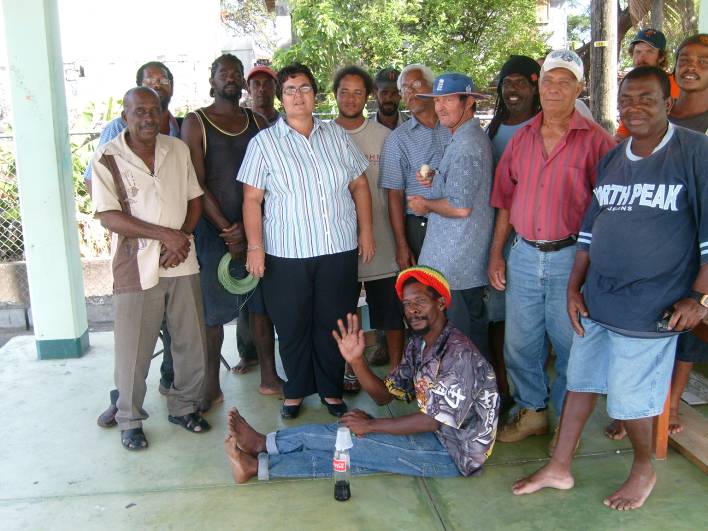
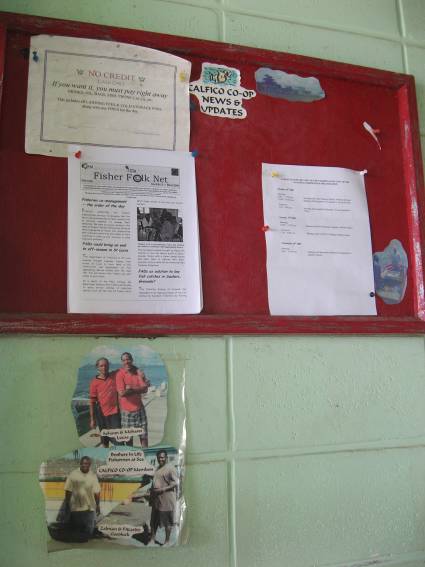
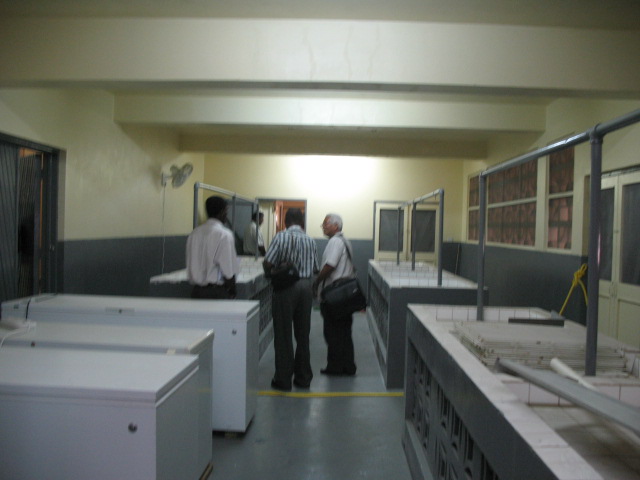
A visit to Calfico at Calliaqua allowed the team to visit the coop grounds and engage with
fishers. A notice board displayed the latest version of the Fisher Folk Net newsletter as a
way to disseminate information. May/26-28/2008. St. Vincent and the Grenadines.
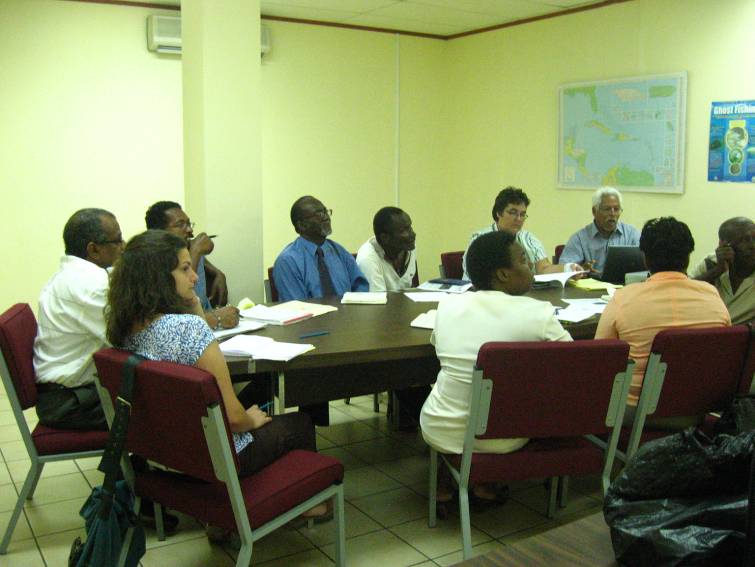
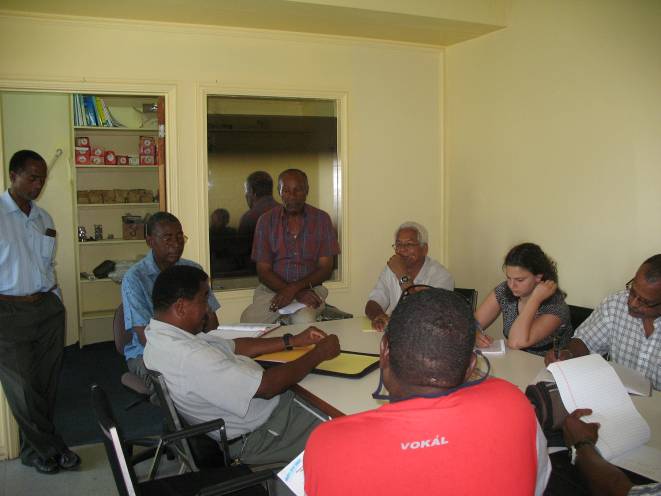
The team visited the newly formed Nevis cooperative. The rejuvenation of the coop is a
positive step towards organizing fishers in Nevis. May/14-16/2008. St Kitts and Nevis.
SGF2007_SSF_03 Page 8 of 10
The team visited the Northern Fishermen Cooperative Society Limited. They were
informed about the history of the cooperative movement in Belize, the management
structure and operations of the Cooperative and the nature of the fishing practices in
Belize.
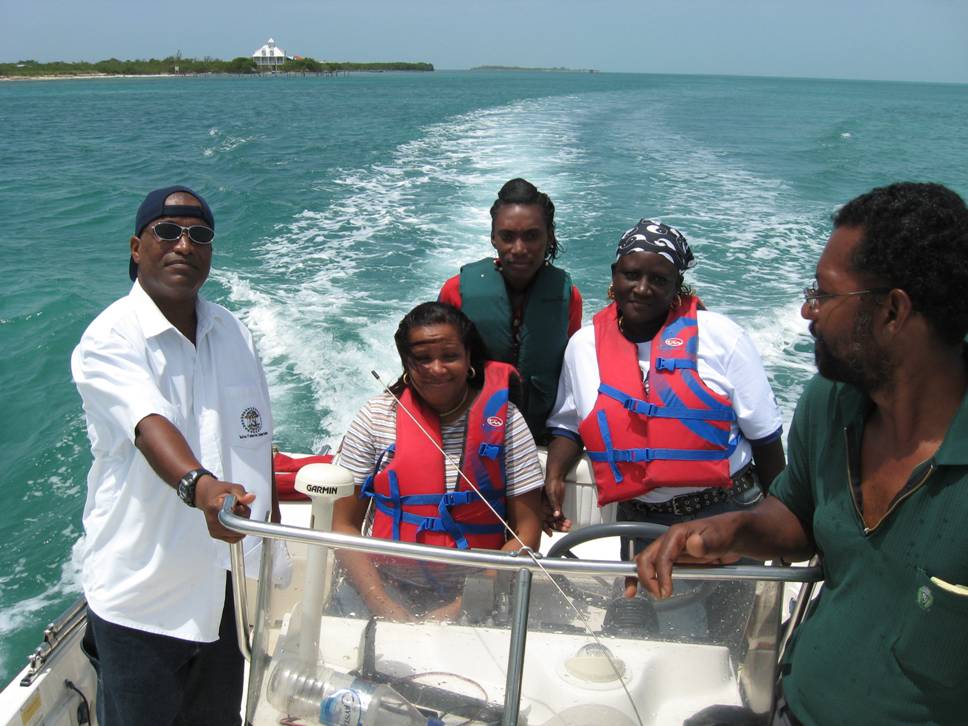
The team visited the Caye Caulker and Hol Chan Marine Reserves in Belize.
SGF2007_SSF_03 Page 9 of 10
Appendix 1. Abstract accepted for presentation at the 2008 Gulf and Caribbean Fisheries
Institute Meeting in Guadeloupe.
A CARIBBEAN REGIONAL NETWORK OF NATIONAL FISHERFOLK ORGANIZATIONS
LAURA TABET1 and TERRENCE PHILIPS2
1Dalhousie University Caribbean Regional Fisheries Mechanism 1 hollis court porters, Barbados laura.tabet@dal.ca
2Caribbean Regional Fisheries Mechanism Kinstown St. Vincent
ABSTRACT
Achieving meaningful participation of fisherfolk is important for good fisheries governance. However, organizing
fisherfolk at local, national, and regional levels, presents considerable communications and networking challenges.
These transcending barriers constrain fisherfolk socio-economic development through reduced self-representation in
management and policy-level decision making processes. At the national level, complex social dynamics between
fisherfolk, their organizations, and government bodies suggest that achieving better communication and feedback
between different interest groups requires increased attention. At the regional level, the Caribbean Regional Fisheries
Mechanism (CRFM) has been actively encouraging the development of a regional fisherfolk organization (RFO) with
the overall objective of contributing to improved incomes, higher standards of living for fisherfolk and the sustainable
management of fisheries resources. This presentation draws on the results of workshops, field visits and fisherfolk
development projects undertaken by the CRFM in collaboration with the Technical Centre for Agricultural and Rural
Cooperation and Gulf and Caribbean Fisheries Institute-Small Grants Fund. Findings are addressed from a network
governance perspective that examines the variables of (i) information management, (ii) legitimacy, (iii) social
dynamics, and (iv) costs. Recommendations to facilitate the participation of fisherfolk organizations in fisheries
governance and insights into the characteristics of an RFO network across the CARICOM region are presented.
KEYWORDS: fisherfolk organizations, network governance, CARICOM region