Global Mercury Project
http://www.globalmercuryproject.org/front_page.htm
Home Page
About GMP
Organization
Countries
Movies
Documents
Resources
Welcome to the Global Mercury Project Home Page
The Global Mercury Project began in 2002 with a vision to address the environmental issue of
mercury contamination from artisanal and small-scale gold mining. Foundational objectives of the
project have been: to introduce cleaner technologies, train miners, develop regulatory capacities
within national and regional governments, conduct environmental and health assessments and build
capacity within participating countries to continue monitoring Hg pol ution after the project finishes.
2007 News and Updates
Tuesday, January 06, 2009
Newsletters from Kalimantan. These newsletter provide a look at work being done in association with
the Global Mercury Project around the community of Kereng Pangi, Central Kalimantan. The
newsletters are available in English as wel as Indonesian. The team in Kalimantan includes Bardolf
Paul, Sumali Agrawal, Dzul Fikri Al Huda, Mayang Meilantina and Kartie Vitamerry. The most recent
update can be viewed here: December 2006 Newsletter from Kalimantan.
October 26-27, 2006. Brussels: the European Commission hosted the International Conference on
Managing the Supply and Demand of Mercury. Policy makers, industry representatives,
non-governmental organisations and scientists were invited to participate in this event. Kevin Telmer
represented the Global Mercury Project and gave a lecture titled Mercury and Small Scale Gold
Mining Magnitude and Challenges Worldwide. Fol ow the link to view his presentation. The
conference agenda can also be viewed.
October 22-28, 2006. Training of the trainers - for Tapajos gold miners, Brazil. As part of the Global
Mercury Projects' mission to Remove Barriers towards the Introduction of Cleaner Artisanal Gold
Mining and Extraction Technologies, a group of GMP representatives met with gold miners from the
Tapajos river basin in Creporizão, Pará, Brazil. The week long training event was titled "Cuide de seu
Tesouro" or Care for your treasure. An Aide Memoire describes the goals and objectives of the
training and includes a list participants and the agenda. A picture document has also been assembled
by the coordinator, Rodolfo Neives.
October 3 - 4, 2006. Washington D.C. Meeting on Enhancing Global Policy to Reduce Mercury
Supply, Demand and Use in Artisanal and Small Scale Gold Mining in Developing Countries and
Countries with Economies in Transition was attended by several members of the Global Mercury
Project where they participated in various presentations. See the UNIDO Aide Memoire for
information.
September 2006. This website has been updated, be sure to check out the country profile pages.
Recent additions include new videos accessible from the Movies tab. From the Indonesia page, a link
exists to the Galangan Website; a page for sharing information regarding artisanal mining in Central
Kalimantan, Indonesia. This webpage highlights the use of Geographic Information System tools for
investigating the effects of ASM. It is also available in Indonesian.
August 6-11, 2006. Several talks and posters were presented by GMP affiliates at the Conference
on Mercury as a Global Pol utant in Madison, Wisconsin, USA. Be sure to view the Madison
Declaration on Mercury Pol ution with non-technical summary of principle findings. The Conference
Program provides a record of the abstracts and lectures presented.
July, 2006. Environmental and health assessments summary document. This report characterizes
presents the main findings of the GMPs Environmental and Health Assessments for Brazil,
Indonesia, Lao PDR, Sudan, Tanzania and Zimbabwe. Assessment of the environmental and health
impacts of ASM has been one of the main objectives of the Global Mercury Project; these studies
have provided baseline data and wil ensure that further GMP activities are properly targeted.
1 of 2
1/6/2009 10:26 AM
Global Mercury Project
http://www.globalmercuryproject.org/front_page.htm
Several presentations were made by Global Mercury Project members at the II FORO
INTERNACIONAL SOBRE LA MINERIA DEL ORO EN PEQUEÑA ESCALA, hosted in Guayana,
Venezuela in mayo 2006. These presentations are in Portuguese and are available for viewing from
the Venezuela documents page.
January 2006. Global Mercury Project NEWSLETTER N°6 // Newsletter Archive
Activities of the GMP in Brazil (Portuguese)
Entry Page
Webmaster
2 of 2
1/6/2009 10:26 AM
Global Mercury Project - Objectives
http://www.globalmercuryproject.org/about/about.htm
Home Page
About
Organization
Countries
Movies
Documents
Resources
About the GMP
The Global Mercury Project (GMP) began in August 2002 with a vision to demonstrate
ways of overcoming barriers to the adoption of best practices and pollution prevention
measures that limit the mercury contamination of international waters from artisanal
and small-scale gold mining (ASM). Six countries have been formally participating in
the GMP: Brazil, Lao PDR, Indonesia, Sudan, Tanzania and Zimbabwe. The GMP aims
to introduce cleaner technologies, train miners, develop regulatory mechanisms and
capacities within Government, conduct environmental and health assessments (E&HA)
and build capacity within participating countries which will continue monitoring Hg
pollution after the project.
Ultimate Goals of the present GEF/UNDP/UNIDO project
1. to reduce mercury pollution of international waters by emissions emanating from
small-scale gold mining,
2. to introduce cleaner technologies for gold extraction and to train people in their
application,
3. to develop capacity and regulatory mechanisms that will enable the sector to
minimize mercury pollution,
4. to introduce environmental and health monitoring programmes,
5. to build capacity of local laboratories to assess the extent and impact of mercury
pollution.
Initial Project objectives
Objective 1A Establishment of a UNIDO- based Program Co-ordination Unit
(PCU) and a Global Project Task Force
Objective 1B Establishment of the programme management structures in each
of the six participating countries ( Brazil, Indonesia, Lao PDR, Sudan, Tanzania,
Zimbabwe)
Objective 2 Identify project demonstration sites and organize training in
technology and raising awareness of miners, Governments, NGOs and the
general public.
Objective 3 Assess the extent of environmental (mercury) pollution in
surrounding water bodies and devise intervention measures.
Objective 4 Establish a data-bank comprising of technological requirements
relevant to artisanal gold mining and extraction activities.
Objective 5 Demonstrate within the project demonstration sites, the application
of affordable high-efficiency clean technology.
Objective 6 Develop country specific policies and legislation that will lead to
implementable standards on the application of mercury.
Objective 7 Promote the dissemination of the produced project results and
identify opportunities that will allow the project to continue beyond the three
year time frame.
Long-term Objectives
The long-term objective of this project is to protect international waters from mercury
pollution emanating from small-scale mining operations. Measures and methods to
reduce this pollution will be demonstrated in a pilot suite of developing countries
located in several key transboundary river/lake basins. The main tools for reducing
the pollution consist in assessing the extent of mercury pollution from current
activities, introducing cleaner gold mining and extraction technology that minimize or
eliminate mercury releases and developing capacity and regulatory mechanisms that
will enable the sector to minimize negative environmental impacts.
1 of 2
1/6/2009 10:35 AM
Global Mercury Project - Objectives
http://www.globalmercuryproject.org/about/about.htm
Broad Development Objective
The broad development objectives of the six participating countries is to transform
the current artisanal mining activities into organized activities in order to enhance
incomes of the participating members of the population, minimize negative
environmental impacts and enhance development of the mineral sector and hence the
economy. Like in many developing countries, artisanal mining activities are carried out
in the six participating countries mainly as a way of dealing with poverty by the rural
populations. Its popularity is enhanced by the fact that its entry does not require
much investment and in most cases it operates outside the formal business
procedures. With little or no mining knowledge, minimal investment capital and poor
legislative frameworks, most activities are unorganized, unregulated and their formal
recognition is only recent following the new international drive to fight poverty. As a
result, the short-term gains envisaged by miners in order to break away from poverty
have largely been outweighed by the negative impacts caused by these activities to
the environment, health and safety of the miners and the neighboring communities.
In addressing the negative environmental impacts resulting from these activities,
some Governments have initiated programmes to address the issues related to the
uncontrolled use of mercury in the recovery of gold. However, since most activities
have been operating outside the legal framework, major efforts are still directed
towards putting in place legislative and regulatory frameworks upon which artisanal
mining activities can be conducted.
Global Environmental Objective
The global environmental objective is to assist developing countries create conditions
necessary to minimize mercury pollution and other negative environmental impacts on
International Waterbodies resulting from artisanal gold mining and extraction
activities. Most artisanal gold mining activities within the participating countries are
carried out within basins of major ecological significance and that cross geographical
boundaries to many countries, e.g., the basins of the Amazon, River Nile, Lake
Victoria, River Zambezi, River Mekong and River Kahayan in Indonesia. As such, the
negative environmental impacts on the International Waterbodies within these basins
are bound to affect many countries most of which do not even have gold mining
activities. Whereas the Amazon Basin is the largest drainage system in the world with
more than two thirds of its area covered by an immense Amazon Rain Forest which
represents about half of the Earth's remaining rain forest and constitutes the largest
reserve of biological resources, estimates show that gold mining activities dump
nearly 130 tons of mercury annually within Brazil alone. Nearly 200 tons of mercury is
dumped into the environment by these activities in Indonesia and the amount is on
the rise in other countries due to the increase in artisanal gold mining activities. The
Governments of the participating countries, acting unilaterally are unable to finance
the high initial start up costs of dealing with mercury related pollution problems. The
proposed project will lead to the establishment of the extent of mercury pollution,
increase of knowledge and awareness on environmental issues, introduction and
demonstration of the application of efficient and clean technology and provision of
assistance to Governments to enable them develop policies and legislation that are
practical and enforceable. These efforts will in turn lead artisanal mining activities that
are efficient and environmentally acceptable.
Project Inception Document (PDF)
2 of 2
1/6/2009 10:35 AM
Global Mercury Project - Organization Chart
http://www.globalmercuryproject.org/organization/organization.htm
Home Page
About
Organization
Countries
Movies
Documents
Resources
Organization
Contact regarding the project: Marcello Veiga, Chief Technical Adviser
Associate Professor, Dept. Mining Engineering, University of British Columbia
Phone: 001-604-8224332, Fax: 001-604-8225599, E-mail: veiga@mining.ubc.ca
The diagram below explains the people and agencies involved in the Global Mercury
Project; for contact information or to read about the people and agencies involved use
the following links.
UNIDO Coordination Team
UNIDO Representatives for participating Countries
Country Focal Points - government officials working as country project managers
Assistants to Country Focal Points - individuals responsible for project supervision
Global Environment Facility
United Nations Development Programme
1 of 1
1/6/2009 10:37 AM

Global Mercury Project - coordination team
http://www.globalmercuryproject.org/organization/unido_gmp.htm
Main Page
About GMP
Organization
Countries
Movies
Documents
Resources
United Nations Industrial Development Organization
The Global Mercury Project Coordination team
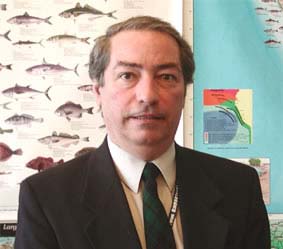
Mr. Pablo Huidobro is the Chief of the Water Management
Unit at UNIDO, and he oversees the International Waters
programmes and activities, with overall responsibility for
the GMP. Mr. Huidobro is a hydro-geologist, with a
graduate degree in Coastal Geology. He joined the Cleaner
Production and Environmental Management Branch of
UNIDO in 2000, bringing over 25 years of field and
managerial experience as environmental advisor for
industry, international development organizations, and
government agencies, in the areas of cleaner production,
management and control of environmental contamination
and remediation, solid waste management, and planning
for the sustainable development of natural resources.
E-mail: P.Huidobro@unido.org
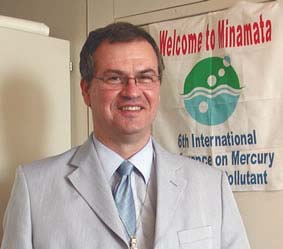
Dr. Marcello Veiga is a metallurgical engineer with MSc
degree in Environmental Geochemistry and PhD in Mining
and Mineral Processing Engineering. He has worked for the
past 25 years, as a metallurgical engineer and
environmental geochemist for mining and consulting
companies in Brazil, Canada, US, Venezuela, Chile and
Peru. He has worked extensively on environmental, social
and economic issues related to artisanal gold mining in
numerous Latin American and African countries. As an
associate professor of the Department of Mining
Engineering at the University of British Columbia, Canada,
since 1997, his research topics include: sustainable
development in mining, mine closure and reclamation,
remedial procedures for mercury pollution, adverse effects
of metals and mineral processing. From August 2002 to
July 2004, he was the Small-scale Mining Expert of the
GEF/UNDP/UNIDO Global Mercury Project. Since March
2005 he is the Chief Technical Advisor of the project.
E-mail: veiga@mining.ubc.ca
Ms. Svitlana Adler has obtained her BA in Management/
Business Administration from the International University of
Vienna, Austria in the year of 2000. She joined UNIDO in
July of 2003 as a Project Assistant in the Industrial
Promotion and Technology Branch, where she gained
valuable skills and experience by assisting the Industrial
Development Officers in the implementation and
administration of project activities in the areas of
Technology Transfer, Market Access, Trade Facilitation
Support and Increase of Productivity and Quality in
developing countries. She now assists the Project
Coordination Unit of the Global Mercury Project in the
1 of 2
1/6/2009 11:38 AM

Global Mercury Project - coordination team
http://www.globalmercuryproject.org/organization/unido_gmp.htm
Coordination Unit of the Global Mercury Project in the
day-to-day project activities that involve budget schedule
and control, recruitment of project personnel, procurement
and subcontracting activities in six participating countries,
organization of awareness campaigns, workshops,
trainings and meetings.
E-mail: S.Adler@unido.org
2 of 2
1/6/2009 11:38 AM
Global Mercury Project - UNIDO representatives
http://www.globalmercuryproject.org/organization/unido_rep_gmp.htm
Main Page
About
Organization
Countries
Movies
Documents
Resources
UNIDO representatives for participating countries
Mr. Alberto di Liscia
Edificio Plaza Mayor Plaza Independencia 831 Ap. 803
11100 Montevideo, URUGUAY
BRAZIL
E-mail: A.diLiscia@unido.org
Mr. Masayoshi Matsushita
P.O. Box 2338 UN Building
J1.M.H. Thamrin 14
INDONESIA
Jakarta 10001 INDONESIA
E-mail: M.Matsushita@unido.org
Ms. Ayumi Fujino
UNIDO Regional Office Bangkok
LAO PDR
5th floor Department of Industrial Works Building 57
Phrasumen Road Banglamphoo, Pranakorn, Thailand
E-mail: A.Fujino@unido.org
SUDAN
Mr. Renato Fornocaldo
Sudanese Chamber of Industries
Association (SCIA) Building
Africa Road No. 84/6/4
Khartoum 2, SUDAN
E-mail: R.Fornocaldo@unido.org
TANZANIA
Ms. Patricia Scott
Matsalamat Mansion, 1st floor
Zanaki Street, Samora Avenue
P.O. Box 9182
Dar-es-Salaam, TANZANIA
E-mail: P.Scott@unido.org
ZIMBABWE
Mr. Stefano Bologna
c/o Department Trade and Industry, 77 Meintjies Street,
Sunnyside, Pretoria, South Africa.
E-mail: S.Bologna@unido.org
1 of 1
1/6/2009 11:39 AM
Global Mercury Project - Country Focal Point
http://www.globalmercuryproject.org/organization/cfp_gmp.htm
Main Page
About GMP
Organization
Countries
Movies
Documents
Resources
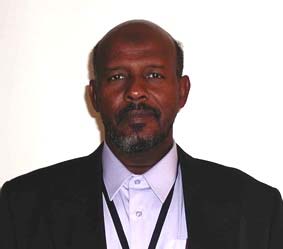
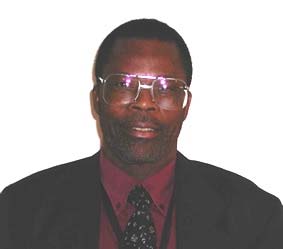
Country Focal Points
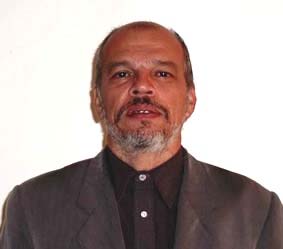
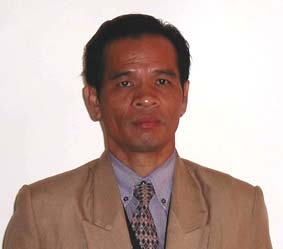
Country Focal Points are senior government officials working as country project
managers and responsible for project reporting.
BRAZIL
Mr. Fernando Freitas Lins
Director, CETEM
E-mail: faflins@cetem.gov.br
INDONESIA
Dr. Thamrin Sihite
Head of Bureau of Planning and Foreign Cooperation
Ministry of Energy and Mineral Resources
E-mail: thamrin@setjen.dpe.go.id
LAO PDR
Dr. Simone Phichit
Director of Mining Concession Management Division
Department of Geology and Mines
E-mail: dgmnet@laotel.com
1 of 2
1/6/2009 11:46 AM

Global Mercury Project - Country Focal Point
http://www.globalmercuryproject.org/organization/cfp_gmp.htm
SUDAN
Dr. Abdelrazig Obeid Mohamed Ahmed
Director-General
Geological Research Authority of the Sudan
Ministry of Energy and Mining
E-mail: gras@sudanmail.net
TANZANIA
Mr. Gray Mwakalukwa
Commissioner for Minerals
Ministry of Energy and Minerals
E-mail: mwakalukwa-mem@raha.com
ZIMBABWE
Mr. Titus Nyatsanga
Director
Mining Promotions and Development
Ministry of Mines and Mining Development
2 of 2
1/6/2009 11:46 AM
Global Mercury Project - Assistant to country focal point
http://www.globalmercuryproject.org/organization/acfp_gmp.htm
Main Page
About GMP
Organization
Countries
Movies
Documents
Resources
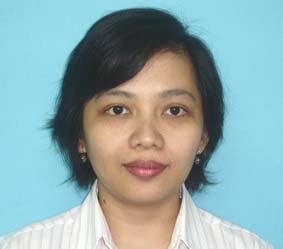
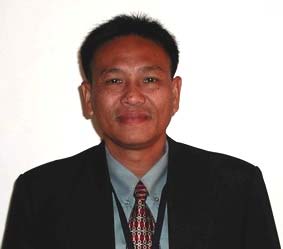
Assistant to Country Focal Point
Assistants to the Country Focal Points are responsible for project supervision and
reporting, as well as to arrange meetings and workshops.
INDONESIA
Mrs Budi Susilorini
E-mail: bsusilorini.unido@un.or.id
LAO PDR
Mr. Eravanh Boungnaphalom
Department of Geology and Mines
E-mail: Beravanh@hotmail.com
SUDAN
Mr. Mohamed Suliman Ibrahim
Ministry of Energy and Mining
E-mail: gras@sudanmail.net
1 of 2
1/6/2009 11:47 AM

Global Mercury Project - Assistant to country focal point
http://www.globalmercuryproject.org/organization/acfp_gmp.htm
TANZANIA
Mr. Aloyce Tesha
Ministry of Energy and Minerals
E-mail: tesha100@hotmail.com
ZIMBABWE
Mr. Dennis Shoko
University of Zimbabwe
Geology Department
E-mail: dennis_shoko@excite.com
2 of 2
1/6/2009 11:47 AM
Global Mercury Project - Activities
http://www.globalmercuryproject.org/organization/gef_gmp.htm
Main Page
About GMP
Organization
Countries
Movies
Documents
Resources
Global Environment Facility
The Global Environment Facility forges international cooperation and finances actions to address
six critical threats to the global environment: biodiversity loss, climate change, degradation of
international waters, ozone depletion, land degradation, and persistent organic pollutants.
The Global Mercury Project is one of the UNDP-GEF projects in the international waters focal area
GEF projects to reverse the degradation of international waters are informed by--and help to
realize the objectives of--a mosaic of regional and international water agreements. These projects
enable countries to recognize and learn more about the water-related challenges they share, find
ways to work together, and undertake important domestic changes needed to solve problems. The
three categories of water projects are 1) water bodies; 2) integrated land and water projects; and
3) contaminants.
1 of 1
1/6/2009 11:48 AM
Global Mercury Project - Activities
http://www.globalmercuryproject.org/organization/undp_gmp.htm
Main Page
About GMP
Organization
Countries
Movies
Documents
Resources
United Nations Development Programme
The United Nations Development Programme (UNDP), the development arm of the United Nations,
was designated by the Global Environment Facility (GEF) as one of its three Implementing
Agencies. With its special mandate from the United Nations General Assembly and global
conventions, UNDP works to advance the UN agenda on development. By drawing extensively on
its broad network of country offices and country contacts, special knowledge of development
issues, thematic expertise and country-specific experience, UNDP assists countries to achieve their
development goals. UNDP provides support to countries in the development of effective policies
and institutions, such as integrating environmental and development objectives into national
development agendas and processes, to protect the environment as well as reduce poverty.
The Global Mercury Project is one of the UNDP-GEF projects in the international waters focal area.
These projects aim at achieving a comprehensive, ecosystem-based approach to the sustainable
management of international waters, incorporating both developmental and ecological needs.
1 of 1
1/6/2009 11:49 AM
Global Mercury Project - Countries
http://www.globalmercuryproject.org/countries/countries.htm
Home Page
About
Organization
Countries
Movies
Documents
Resources
Countries
The selection of countries was based primarily on the use of mercury for artisanal mining
and the associated impacts on water bodies of global significance. The initial participating
countries are Brazil, Sudan, Tanzania, Indonesia and Laos - follow the links below the
map to their respective pages where information specific to those countries can be
viewed. Additional countries where the Global Mercury Project has been working in
various extents are Guyana, Venezuela, Guinea, Ghana, Mozambique, Suriname, the
Philippines and Zimbabwe. Below the map, main regions where artisanal mining is
spreading - South America, Africa and Asia are briefly discussed with reference to
international water bodies being affected by artisanal gold mining. At the bottom of this
page a table displays annual gold recovery and mercury emissions from a few of the
mining sites the Global Mercury Project has been working with.
Brasil Sudan Tanzania Zimbabwe Indonesia Lao PDR
South America - The Amazon Basin
The Amazon Basin is the largest drainage system in the world with an area of about 6
million square kilometres. The Amazon River has a total length of 6400 kilometres, which
is slightly shorter than the Nile. Stretching almost 2760 kilometres from north to south at
its widest point, the Basin occupies a great part of Brazil and Peru, significant parts of
Columbia, Ecuador and Bolivia and a small area of Venezuela. Almost two-thirds of the
Amazon's main streams and by far the largest portion of its Basin are within Brazil. More
than two thirds of the Basin is covered by an immense Amazon Rain Forest which
represents about half of the Earth's remaining rain forest and constitutes the largest
reserve of biological resources. Artisanal gold mining activities in the area are probably
the most in the world with one of the largest area, Tapajos in the Para State occupying an
area of up to 2.9 million hectares. At the peak of the gold rush in the 1980s, it was
estimated that nearly 1.0 million people were directly involved in the activities, with
400,000 of those being in the Tapajos area alone. Available documentation shows that
nearly 1,000 tonnes of mercury were dumped into the Amazon Basin during the 1980s and
nearly 130 tonnes are currently dumped annually.
Africa - River Nile Basin, Lake Victoria, Zambesi River
Within the participating countries of the African Region, the significant International
Water-bodies include the Nile River system, Lake Victoria and the Zambezi River system.
The Nile River system is composed of the Blue Nile (Abbai) River that originates from Lake
Tana and the White Nile that rises from Lake Victoria. Sudan occupies a major part of the
River Nile basin Along its course (6825 km) the Nile drains a total area of 2 96 million
1 of 2
1/6/2009 10:36 AM
Global Mercury Project - Countries
http://www.globalmercuryproject.org/countries/countries.htm
River Nile basin. Along its course (6825 km), the Nile drains a total area of 2.96 million
square kilometres from the Equator up to the Mediterranean coast in Egypt. Areawise, the
Nile basin represents one tenth of the African continent. Mining along the Nile covers
nearly 2,000 km2 in the Southern Blue Nile region with mine workings developed in old
river terraces along the riverbanks and its tributaries at the foothills of the Ethiopian
highlands. It is estimated that nearly 120,000 people are engaged in these activities. On
the other hand, Lake Victoria which has an area of more than 70,000 km2 is Africa's
largest lake and second largest in the world only to North America's Lake Superior. The
Lake, which is surrounded by one of the most highly populated areas in the world and is
shared by Tanzania (51% of the Lake area), Uganda (43%) and Kenya (6%), is a source
of employment for nearly 30 million people. The Lake Victoria Goldfields which cover
almost 200,000 km2 is estimated to employ nearly 300,000 people and produce nearly
70% of the country's total gold production. Nearly 12 tonnes of mercury are released to
the environment in Tanzania alone. More than 50% of artisanal gold panning activities in
Zimbabwe are carried out within the Zambezi River system (more than 2400 kilometres
are panned) and its tributaries. The Zambezi flows along the northern and Southern
borders of Zimbabwe and Zambia respectively before cutting across central Mozambique
on its way to the Indian Ocean. There are about 350,000 gold panners in the country with
as many as 300 panners concentrated in every kilometre of the widely panned sections of
the Zambezi River system river and releasing nearly 12 tonnes of mercury annually to the
environment. Within the six participating countries, nearly 2.0 million people are directly
involved in artisanal mining activities and a number of those whose livelihoods depend on
these activities in one way or another is over 10 million.
Asia - Kahayan River, River Mekong
River Mekong in Laos and River Kahayan in Central Kalimantan, Indonesia are the
significant International Waterbodies within the Asian participating countries. The River
Mekong which is about 4,500 kilometres long and is a life-stay for almost 50 million
people and their cultures sets out at the Qinghai plateau in Western China before flowing
into Laos, Myanmar, Thailand, Cambodia and Vietnam. Although the upper portions of the
river are characterized by turbulence, the lower Mekong is more placid, and the annual
flooding supports a biologically diverse ecosystem. In Laos, alluvial mining activities are
carried out as seasonal activities during the dry non-agricultural season mainly by
dredging on the River Mekong and its tributaries. Up to 3,000 miners have been found at
any one time working on River Mekong. The Kahayan River, is the largest river in Central
Kalimantan and drains directly into the Java sea and thus with effects to Singapore, the
Islands of Sumatra, Java, Bali and others. Most activities are based on alluvial operations
within the river systems with a few mining hard rock gold veins. However, even those in
hard rock mining transport the ore to the rivers for processing. The Kahayan River in
Central Kalimantan and the Tapian River in North Sulawesi are known to have a high
concentration of miners per kilometre length. It has been reported that more than 2,000
illegal miners would converge on single mining site following a reported gold recovery. In
Indonesia where artisanal gold mining activities are carried out either through village
cooperative units or through illegal operations and are found in the provinces of West and
Central Java, Sumatra, Central and East Kalimantan, North Sulawesi and others, nearly
180 tonnes of mercury are released to the environment annually.
GMP sites
Au produced (t/a)
Hg lost (t/a)
Brazil
São Chico
0,02
0,035
Creporizinho
0,3
0,4
Indonesia
Galangan
0,3
2
Talawaan
0,3
20
Luang Prabang, Laos
0,004
0,0025
Blue Nile, Sudan
0,3
0,14
Rwamagasa, Tanzania
0,02
0,027
Kadoma, Zimbabwe
2
9
2 of 2
1/6/2009 10:36 AM
Global Mercury Project - Sudan
http://www.globalmercuryproject.org/countries/venezuela/venezuela.htm
Home Page
About GMP
Organization
Countries Movies
Documents
Resources
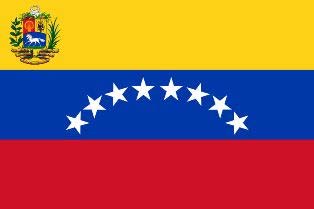
Venezuela
COUNTRY FOCAL POINT: N/A
ASSISTANT TO COUNTRY FOCAL POINT:
N/A
PROJECT SITE: El Callao, Bolivar State
DOCUMENTS
Uniidades de Demonsttraciión y Campaña de Educaciión para Miineros Arttesanalles de
Oro.
II FORO INTERNACIONAL SOBRE LA MINERIA EN PEQUEÑA ESCALA, ESTADO BOLIVAR,
VENEZUELA Author: Marcellllo Veiiga (12-13 de mayo, 2006)
Introducción de Tecnologías Limpias en la Minería Artesanal de Oro. II FORO
INTERNACIONAL SOBRE LA MINERIA DEL ORO EN PEQUEÑA ESCALA. Ciudad Guayana,
Venezuela. Author: Pablo Huidobro, ONUDI (12-13 de mayo 2006)
Mercurio y Enfermedades Inmunológicas en Comunidades de Minería Artesanal de Oro:
Una Interacción Peligrosa? II FORO INTERNACIONAL SOBRE LA MINERIA EN PEQUEÑA
ESCALA. Author: Janis Shandro, Dept Mining Engineering University of British Columbia
(12-13 de mayo 2006)
Contaminación por mercurio en la minería artesanal en el Bloque B de El Callao:
Evaluación de la salud. II FORO INTERNACIONAL SOBRE LA MINERIA EN PEQUEÑA
ESCALA. Author: R. Darío Bermúdez Tirado, UNIDO (12-13 de mayo, 2006)
Mercurio y Cianuro en Minería Artesanal de la Provincia de El Oro, Ecuador Ing. Author:
Patricio C. Velásquez, UNIDO and University of British Columbia. (12-13 de mayo, 2006)
Mercury Pollution from Artisanal Gold Mining in Block B, El Callao, Bolivar State,
Venezuela: Health and Technological Assessment. Authors: Marcello M. Veiga, Vienna
Dario Bermudez, Heloisa Pacheco-Ferreira, Luiz Roberto Martins Pedroso, Aaron J.
Gunson, Gilberto Berrios. (May, 2004).
Mercury Pollution from Artisanal Gold Mining in Block B, El Callao, Bolívar State,
Venezuela in: Dynamics of Mercury Pollution on Regional and Global Scales: Atmospheric
Processes, Human
Exposure Around the World, p. 421-450. N. Pirrone &;K. Mahaffey (Eds), July 2005,
Springer Publisher, Norwell, MA, USA. Contributors: Marcello M. Veiga, Dario Bermudez,
Heloisa Pacheco-Ferreira, Luiz Roberto Martins Pedroso, Aaron J. Gunson, Gilberto
Berrios, Ligia Vos, Pablo Huidobro, Monika Roeser. (July, 2005)
1 of 3
1/6/2009 10:41 AM
Global Mercury Project - Sudan
http://www.globalmercuryproject.org/countries/venezuela/venezuela.htm
Mercury Bioaccumulation by Aquatic Biota in Hydroelectric Reservoirs: Review and
Consideration of the Mechanisms:The Guri Case, Bolivar State, Venezuela. Paper
presented at the 1st International Forum on Mercury Problems in Hydroelectric
Reservoirs, 2001. Authors: Marcello M. Veiga and Jennifer Hinton, Dept. Mining & Mineral
Process Engineering, University of British Columbia. (2001)
Advisory Assistance on Avoidance of Mercury Pollution from Artisanal Gold Mining
perations in Bolivar State, Venezuela. Author: Marcello M Veiga. March, 1996.
VENEZUELA
The southern part of Venezuela, below the Orinoco River, involving State of Bolivar, State
of Amazonas and the Federal Territory of Delta Amacuro is called Guayana Region. The
main mining activities are conducted in the State of Bolivar which has an area of 240,528
km², comprising 75% of the hydroelectric potential of the country. The number of
inhabitants in Venezuela reaches some 24.2 million with a population density of 26.4
persons per km². In 2000, 87% of the population lived in cities and towns with more than
2,500 inhabitants. Less than 5% of the population lived in the Guyana Region. In 1999,
the labor force experienced 1.1% decrease in number resulting in an unemployment rate
of 13.2% (1,365,752 people). In 2000, 63% of the individuals making up the workforce
were men. Unemployment among men reached 12.5%, 1.1% higher than 1999. In 2000,
14.4% of women did not have a job. This was 1.7% higher than in 1999. In the Bolivar
State, with a population of 1,214,486, there are about 15,000 people4 directly involved in
artisanal and small-scale gold mining. The number of artisanal miners and its gold
production has been declined since most artisanal miners working in dredges in the Caroni
River have been removed since 2000 and many parts of the river are now flooded by four
large hydroelectric reservoirs. Many artisanal miners are now concetrate in km 88 and El
Callao, which is a traditional artisanal mining site. El Callao is located in the Northeastern
part of the State of Bolivar, 150 km distant from Ciudad Guayana. Gold was discovered in
El Callao in 1865 and in 1870 a company was established to produce gold. In 1970, CVG
(Government owned company) incorporated a company, Minerven, which nowadays has
two cyanidation plants producing together approximately 200 to 300 kg of gold/month:
Peru Plant processing 5,200 tonnes of material/month and Caratal plant processing
14,000 tonnes/month. About 15% of the Peru Plant material is Hg-contaminated tailings
purchased by the company from the artisanal gold miners.
The area with high concetration of artisanal gold miners in El Callao is known as "Block B"
which belongs to CVG-Minerven that rents concessions to small-scale mining
individuals/companies. Miners extract the ore from 30-80 m deep shafts using explosives
and transport it in small trucks to the Processing Centers (locally known as "molinos") to
be crushed, ground, concentrated and amalgamated. Based on the average gold
production, the Block B production might be around 1 to 2 tonnes Au/a considering that
there are 28 active Processing Centers in the area. In all El Callao, the gold production
can reach as much as 5 to 6 tonnes Au/a considering that there are 80 to 90 Processing
Centers in all region. By using copper-amalgamating plates to amalgamate the whole
ground ore, large amount of mercury is lost with the tailings. The amalgam recovered
from the plate is burned on a tray or a shovel. Some millers have good retorts available
for miners but the miners insist that the retorting time is too long (15 minutes) and they
simply use a propane blowtorch to decompose amalgam, emitting large amount of
mercury to the atmosphere and exposing themselves to mercury vapor. This is clearly
contaminating everyone directly involved in the ore processing as well as their neighbors,
since the Processing Centers are very near the houses. The ratio Hglost: Auproduced is
around 1.5 to 2. The mercury emission in Block B is estimated to be between 2 and 4
tonnes/a. In all El Callao, the mercury emission can reach as much as 12 tonnes/a.
The levels of mercury intoxication of the gold miners and millers working in the Block B, El
Callao, Venezuela, is one of the most serious in the world. More than 90% of the sampled
individuals working in the Processing Centers (millers) have Hg levels in urine above the
alert level (5 ?g Hg/g creatinine). . Symptoms typically associated with chronic exposure
at very high levels of mercury, acute intoxication, long term exposure at low levels of
mercury vapors and long term exposure at high levels of mercury vapors (e.g. muscular
tremor) were identified in Block B workers and residents. As a result of indirect exposure
2 of 3
1/6/2009 10:41 AM
Global Mercury Project - Sudan
http://www.globalmercuryproject.org/countries/venezuela/venezuela.htm
of mercury vapors, it was observed that about 27% of the women have Hg concentration
in urine above the alert level and 21% above the action level. About 53% of the 62
children sampled have Hg concentration in urine above the alert level and 14.5% above
the action level (20 ?g Hg/g creatinine). Almost 10% of the sampled children have levels
of mercury in urine above 100 ?g/g creatinine.
It is urgent the introduction of methods to reduce the use of mercury in the gold
processing phase, such as gravity concetration, to eliminate the large loss of Hg to the
environment due to the use of copper-amalgamating plates. Protection for individuals is
also urgent. Different types of retorts must be brought to the miners' attention to reduce
occupational exposure and emission of Hg vapor.
3 of 3
1/6/2009 10:41 AM
Global Mercury Project - Tanzania
http://www.globalmercuryproject.org/countries/ghana/ghana.htm
Main Page
About GMP
Organization
Countries
Movies
Documents
Resources
Ghana
COUNTRY FOCAL POINT: N/A
ASSISTANT TO COUNTRY FOCAL POINT:
N/A
PROJECT SITE: N/A
DOCUMENTS
UNIDO's Strategy for Reducing the Impact of Artisanal Gold Mining on the Health and the
Environment: Study case in Ghana. Author: Ludovic Bernaudat, UNIDO.
Assistance in Assessing and Reducing Mercury Pollution Emanating from Artisanal Gold
Mining in Ghana - Phase I. UNIDO Project Report and Phase 1. Project Manager: Ch.
Beinhoff. December, 2003.
Assistance in Assessing and Reducing Mercury Pollution Emanating from Alluvial Gold
Mining in Ghana - Phase II. Project Manager: Ch. BEINHOFF.
1 of 1
1/6/2009 10:42 AM
Global Mercury Project - Tanzania
http://www.globalmercuryproject.org/countries/philippines/philipines.htm
Main Page
About GMP
Organization
Countries
Movies
Documents
Resources
Philippines
COUNTRY FOCAL POINT: N/A
ASSISTANT TO COUNTRY FOCAL POINT: N/A
PROJECT SITE: Naboc River, Davao del Norte and
Hijo River, Apokon in Mindanao
DOCUMENTS
Assistance in Reducing Mercury Emissions in Highly Contaminated Gold Mining Areas in
Mindanao - Phase 1. UNIDO in partnership with the Department of Environment and
Natural Resources. April 1998
Mercury as a health hazard due to gold mining and mineral processing activities in
Mindanao/Philippines. Includes contracts to Assess mercury levels in humans and mining
areas along Naboc and Hijo river and to Assist in reducing mercury emissions in highly
contaminated areas in Mindanao. Final report. April 2000.
1 of 1
1/6/2009 10:42 AM


Global Mercury Project - Zimbabwe
http://www.globalmercuryproject.org/countries/zimbabwe/zimbabwe.htm
Main Page
About GMP
Organization
Countries
Movies
Documents
Resources
Zimbabwe
COUNTRY FOCAL POINT
Mr. Titus Nyatsanga
Director
Mining Promotions and Development
Ministry of Mines and Mining Development
ASSISTANT TO COUNTRY FOCAL POINT
Mr. Dennis Shoko
University of Zimbabwe
Geology Department
E-mail: dennis_shoko@excite.com
PROJECT SITE
Zambezi River
DOCUMENTS
Zimbabwe Final Report
Environmental Assessment for the Kadoma-Chakari mining area, Zimbabwe. P. Billaud,
V. Laperche, R. Maury-Brachet, A. Boudou, D. Shoko, S. Kahwai, Ph. Freyssinet.
September 2004
Health Assessment for the Kadoma-Chakari mining area, Zimbabwe. Stephan Boese-
O´Reilly, Felicitas Dahlmann, Beate Lettmeier, Gustav Drasch. November 2004
Information about the Project Sites in Zimbabwe Dennis S. M. Shoko, PhD, Assistant to
Country Focal Point; Marcello M. Veiga. January 2004
Equipment Specification for the Demonstration Units in Zimbabwe Marcello Veiga, PhD,
Small-scale Mining Expert, Vienna, Austria. March 2004
A Sociological survey of small-scale artisanal gold mining in the Kadoma-Chakari area
Celani Mtetwa and Soul Shava. July 2003
PHOTOS FROM ZIMBABWE
1 of 2
1/6/2009 10:43 AM





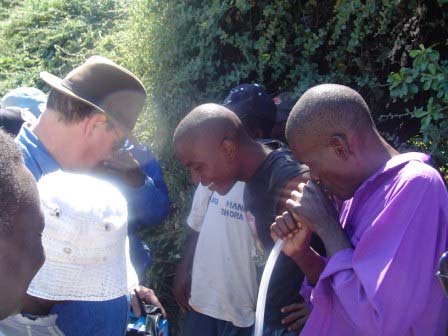
Global Mercury Project - Zimbabwe
http://www.globalmercuryproject.org/countries/zimbabwe/zimbabwe.htm
2 of 2
1/6/2009 10:43 AM
Global Mercury Project - Brazil
http://www.globalmercuryproject.org/countries/brazil/brazil.htm
Main Page
About GMP
Organization
Countries
Movies
Documents
Resources
Brazil
COUNTRY FOCAL POINT
Mr. Fernando Freitas Lins
Director, CETEM
E-mail: faflins@cetem.gov.br
ASSISTANT TO COUNTRY FOCAL POINT
Prof. Dr. Roberto Villas-Boas
Director, CETEM
E-mail: villasboas@cetem.gov.br
PROJECT SITES
Tapajós Reserve / Amazon Basin
WEB SITE
http://www.cetem.gov.br/gmp/
DOCUMENTS
Brazil Final Report
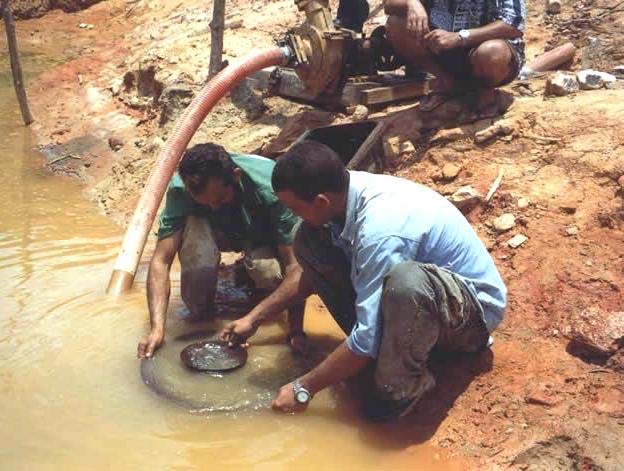
Cuide do seu Tesouro (in Portuguese) is a animated brochure that is full of great tips for miners that are in contact with and/or are using mercury for amalgamating their
gold. Credit: AMOT, São José Liberto, Guto Alves.
In October 22-28, 2006, a group of GMP representatives met with gold miners from the Tapajos river basin in Creporizão, Pará, Brazil. The week long training event was titled
"Cuide de seu Tesouro" or Care for your treasure; this was a very successful mission to educate miners and encourage appropriate mining techniques. The Aide Memoire describes
the goals and objectives of the training and includes the schedule and a list of participants. A picture document has been assembled by the coordinator, Rodolfo Neives.
Delineation of the Permanent Preservation Areas in the Tapajós River Basin: Toward Environmental Compliance on Artisanal Gold Mining Areas. Author: Carlos Antonio
Alvares Soares Ribeiro (August 2006)
The challenge for Tapajos Garimpos
Alberto Rogério Benedito da Silva
Environmental and health assessment in two small-scale gold mining areas Brazil
São Chico and Creporizinho - Final Report
Saulo Rodrigues Pereira Filho April 2004
Sociological Report for Brazil
Armin Mathis July 2003
Information on Project Sites in Brazil
Roberto C. Villas-Bôas November, 2003
PHOTOGRAPHY FROM BRAZIL
1 of 1
1/6/2009 12:22 PM

Global Mercury Project - Sudan
http://www.globalmercuryproject.org/countries/sudan/sudan.htm
Main Page
About GMP
Organization
Countries
Movies
Documents
Resources
Sudan
COUNTRY FOCAL POINT
Dr. Abdelrazig Obeid Mohamed Ahmed
Director-General
Geological Research Authority of the Sudan
Ministry of Energy and Mining
E-mail: gras@sudanmail.net
ASSISTANT TO COUNTRY FOCAL POINT
Mr. Mohamed Suliman Ibrahim
Ministry of Energy and Mining
E-mail: gras@sudanmail.net
PROJECT SITE
River Nile Basin
DOCUMENTS
Sudan Final Report
Environmental Assessment for the Ingessana Hills artisanal gold mining community, Blue
Nile State, Sudan. (Draft Report) G. Récoché, JP. Ghestem, I. M. Suleiman, R. Maury-
Brachet, V. Roques-Duflo and A. Boudou. March 2005.
Equipment Specification for the Demonstration Units in Sudan Marcello Veiga, PhD,
Small-scale Mining Expert, Vienna, Austria. May 2004
Socio-economic sample study of the Ingessana Hills artisanal gold mining community,
Blue Nile State, Sudan Prof. Khalil A. Al Medani, University of Nileen, Khartoum, Sudan.
December, 2003
Information about Ingessana Hills artisanal gold mining sites chosen for the environmental
& health assessment Mohamed S. Ibrahim, Assistant to Country Focal Point. November,
2003
PHOTOS FROM SUDAN
1 of 2
1/6/2009 12:29 PM
Global Mercury Project - Sudan
http://www.globalmercuryproject.org/countries/sudan/sudan.htm
2 of 2
1/6/2009 12:29 PM

Global Mercury Project - Tanzania
http://www.globalmercuryproject.org/countries/tanzania/tanzania.htm
Main Page
About GMP
Organization
Countries
Movies
Documents
Resources
Tanzania
COUNTRY FOCAL POINT
Mr. Gray Mwakalukwa
Commissioner for Minerals
Ministry of Energy and Minerals
E-mail: mwakalukwa-mem@raha.com
ASSISTANT TO COUNTRY FOCAL POINT
Mr. Aloyce Tesha
Ministry of Energy and Minerals
E-mail: tesha100@hotmail.com
PROJECT SITE
Lake Victoria
DOCUMENTS
Tanzania Final Report
Final Report for an Assessment of the Environment and Health in the Rwamagasa area,
Tanzania
J D Appleton, H Taylor, T R Lister & B Smith (British Geological Survey); G Drasch & S
Boese-O'Reilly (Institute of Forensic Medicine, Ludwig- Maximilians-University, Munich).
2004
Information about the Project Site (Rwamagasa, Geita District) in Tanzania
Marcello Veiga, PhD, Small-scale Mining Expert, Vienna, Austria. February, 2004
Equipment Specification for the Demonstration Units in Tanzania
Marcello Veiga, PhD, Small-scale Mining Expert, Vienna, Austria. February, 2004
Socio-economic survey of Rwamagasa mining site in Geita district
Susan Wagner. July, 2003
Information about the Project Site in Tanzania
Aloyce L. Tesha, Assistant Country Focal Point. November, 2003
Introducing New Technologies for Abating Mercury Pollution Caused by Informal Gold
Mining Operations in Tanzania, UNIDO Project Document for the Tanzanian Government,
1997
PHOTOS FROM TANZANIA
1 of 2
1/6/2009 12:31 PM
Global Mercury Project - Tanzania
http://www.globalmercuryproject.org/countries/tanzania/tanzania.htm
2 of 2
1/6/2009 12:31 PM
Global Mercury Project - Indonesia
http://www.globalmercuryproject.org/countries/indonesia/indonesia.htm
Main Page
About GMP
Organization
Countries
Movies
Documents
Resources
Indonesia
COUNTRY FOCAL POINT
Dr. Thamrin Sihite
Head of Bureau of Planning and Foreign Cooperation
Ministry of Energy and Mineral Resources
E-mail: thamrin@setjen.dpe.go.id
ASSISTANT TO COUNTRY FOCAL POINT
Mrs Budi Susilorini
E-mail: bsusilorini.unido@un.or.id
PROJECT SITES
Galangan - Central Kalimantan VISIT GALANGAN WEBSITE HERE
Talawaan - North Sulawesi
DOCUMENTS
Indonesia Final Report
Newsletters from Kalimantan. These newsletters provide a look at work being done in
association with the Global Mercury Project around the community of Kereng Pangi, Central
Kalimantan. The newsletters are available in English as well as Indonesian. The team in
Kalimantan includes Bardolf Paul, Sumali Agrawal, Dzul Fikri Al Huda, Mayang Meilantina and
Kartie Vitamerry.
Issue 1: August, 2006 English Indonesian
Issue 2: October 2006 English Indonesian
Issue 3: December 2006 English Indonesian
Environmental and health assessment in two small-scale gold mining areas Indonesia
Sulawesi and Kalimantan: Final Report Saulo Rodrigues Pereira Filho, Project Leader. Institute of
Forensic Medicine, Ludwig-Maximilians University, Munich, Germany; Brazilian Ministry of Science
and Technology Centre For Mineral Technology (CETEM). (July 2004)
Environmental Assessment in two Small Scale Gold Mining Areas in Indonesia- Biogeochemical
1 of 2
1/6/2009 12:35 PM
Global Mercury Project - Indonesia
http://www.globalmercuryproject.org/countries/indonesia/indonesia.htm
Environmental Assessment in two Small Scale Gold Mining Areas in Indonesia Biogeochemical
Aspects Saulo Rodrigues-Filho et al. (2004)
Sociological Report: A Social-health Perspective of the Miners in Talawaan
and Galangan, Indonesia Rachmadhi Purwana SKM. (September 2003)
Information about the Project Sites in Indonesia Marcello Veiga, PhD, Small-scale Mining Expert,
Vienna, Austria. (May, 2003)
Overview of project site in Indonesia Talawaan and Galangan areas Selinawati T. Darmutji,
Assistant to Country Focal Point. (December, 2003)
PHOTOGRAPHY FROM INDONESIA
2 of 2
1/6/2009 12:35 PM

Global Mercury Project - Laos
http://www.globalmercuryproject.org/countries/laos/laos.htm
Main Page
About GMP
Organization
Countries
Movies
Documents
Resources
Lao PDR
COUNTRY FOCAL POINT
Dr. Simone Phichit
Director of Mining Concession
Management Division
Department of Geology and Mines
E-mail: dgmnet@laotel.com
ASSISTANT TO COUNTRY FOCAL POINT
Mr. Eravanh Boungnaphalom
Department of Geology and Mines
E-mail: Beravanh@hotmail.com
PROJECT SITE
River Mekong
DOCUMENTS
Lao PDR Final Report
Environmental Assessment for the Pak Ou and Chomptet districts of Lao PDR. Ph.
Freyssinet, S. Vilaypaseuth, V. Laperche, M. Babut. November 2004
Health Assesment in the Pak Ou and Chomptet districts of Lao PDR. André Rambaud,
Florence Portet, Tayphasavanth Fengthong, Vanphanom Sychaleun. December 2004
Sociological Survey for Luang Prabang Artisanal Gold Mining Areas, Prepared by Earth
Systems Lao. October, 2003
Information about the Project Sites in the LAO PDR. Eravanh Boungnaphalom, Assistant
to the Country Focal Point. October, 2003
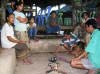
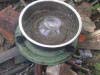
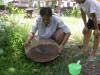
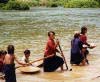
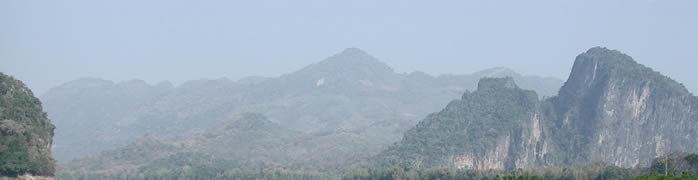
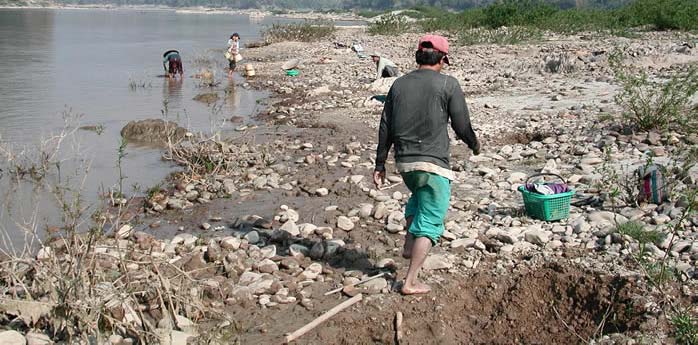
PHOTOGRAPHY FROM LAOS
1 of 2
1/6/2009 12:39 PM
Global Mercury Project - Laos
http://www.globalmercuryproject.org/countries/laos/laos.htm
2 of 2
1/6/2009 12:39 PM
Global Mercury Project - Front Page
http://www.globalmercuryproject.org/movies/movies.htm
Home Page
About
Organization
Countries
Movies
Documents
Resources
Movies
Four movies are currently available for viewing. Depending on internet connection
speed, it is recommended to download movies prior to viewing. Right-click on the
links and use the 'Save Target as' command to download them to your computer.
Gold in the Amazon is a 30 minute movie about Garimpo gold mining in the
Amazon. It describes the methods that have and are still used to mine gold from
alluvial sediments and introduces the environmental issues caused by these methods.
The movie is provided in MOV format (click picture links) and MP4 format (click text
links). It has been split into 6 chapters to facilitate downloading and viewing.
Chapter 1
Chapter 2
Chapter 3
Chapter 4
Chapter 5
Chapter 6 / 6
Artisanal Gold Miners in Kourossa and Mandiana, Guinea, Africa
The footage presented in this video was filmed in April of 2006 by Marcello Veiga on a
mission to Guinea sponsored by the Blacksmith Institute and UNIDO. It presents the
methods being used in Guinea to mine for ore and concentrate gold.
GMP Training of Gold Miners in Geita, Tanzania 2006.
Another short film that provides a visually and acoustically delightful account of the
training provided for the Geita mining community in Tanzania. Made with thanks to
Mr. A. Tesha, Giorgina Cattenea, Juliet Kabege, Halid Kiluvya, Rogers Sezinga and the
Geita gold miners and trainers.
Tapajos Region Brazilian Amazon Artisanal Gold Mining June 2006
This short video was filmed in June of 2006 around the Gold mining community of
Creporizao, Para Brazil. Footage includes a Bahanco operation using sluices to
concentrate alluvial gold as well as current attempts to reforest previously mined
areas.
1 of 1
1/6/2009 10:37 AM
Global Mercury Project - Documents
http://www.globalmercuryproject.org/documents/documents.htm
Home Page
About
Organization
Countries
Movies
Documents
Resources
Documents
South America Africa
Asia / Pacific
Brazil
Ghana
Indonesia
Guyana
Guinea
Lao PDR
Suriname
Mozambique
Philippines
Venezuela
Sudan
Tanzania
Zimbabwe
Be sure to visit the Global Mercury Project Database where articles and reports
about mercury in artisanal mining are available
Original GMP Proposal
GEF/UNDP/UNIDO - GMP Project Inception Document (April 2002)
Final GMP Reports
Summary report: Technical and socio-economic profiles of Global Mercury
Project sites (May 2004)
Environmental and health assessments: Summary document (July 2006)
Report to UNEP on global impacts of mercury supply and demand in
small-scale gold mining (Feb. 2007)
Review of mercury and cyanide uses in the artisanal gold mining (May 2007)
U.N. international guidelines on mercury management in artisanal and
small-scale gold mining (June 2007)
Report on the policy and governance initiative (July 2007)
Evaluating and monitoring small scale gold mining and mercury use: Building
a knowledge-base with satellite imagery and field work (Nov. 2007)
The role of fair trade for the mercury emissions reduction plan in ASM gold
mining (Dec. 2007)
Summary of the results of the awareness campaign and technology
demonstration for artisanal gold miners: Brazil, Indonesia, Lao PDR, Sudan,
Tanzania and Zimbabwe (April 2008)
Books
Introducing New Technologies for Abatement of Global Mercury Pollution in
Latin America
Authors: Marcello M. Veiga - UNIDO/UBC/CETEM/CNPq, (1997)
Protocols for environmental and health assessment of mercury released by
artisanal and small-scale gold miners
Authors: Marcello M. Veiga and Randy F. Baker (2004)
Manual for training artisanal and small-scale gold miners
Authors: Veiga M, Metcalf S, Baker R, Klein B, Davis G, Bamber A, Siegel S,
Singo P (2006)
Presentations
Retorts: Many options and many barriers
1 of 2
1/6/2009 10:38 AM
Global Mercury Project - Documents
http://www.globalmercuryproject.org/documents/documents.htm
Author: Marcello Veiga. (2005)
Economic aspects of reducing mercury pollution in artisanal gold mining
The presentation was given by Simon D. Handelsman and Dr. Marcello Veiga
at the Canadian Institute of Mining Annual Meeting in Vancouver (May 2006)
Mercury and small scale gold mining - magnitude and challenges worldwide.
Presentation given by Dr. Kevin Telmer to the International Conference on
Managing the International Supply and Demand of Mercury, in Brussels.
Author: Kevin Telmer (October 2006)
Brochures
Less Mercury, More Gold, and Better Health (GMP)
Author: Marcello Veiga (November 2005)
2 of 2
1/6/2009 10:38 AM
Global Mercury Project - Resources
http://www.globalmercuryproject.org/resources/resources.htm
Home Page
About
Organization
Countries
Movies
Documents
Resources
Resources and related Organizations
The Global Mercury Forum is online at www.globalmercuryforum.org
United Nations Environment Programme Global Mercury Assessment Report. For more
information visit http://www.chem.unep.ch/mercury/
FACOME - Amazonian Forum on Mercury Contamination of Ecosystems (in Portugese,
French and English)
CASM - Communities and Small-Scale Mining is an initiative to reduce poverty by
supporting integrated sustainable development of communities affected by or involved in
artisanal and small-scale mining in developing countries. http://www.casmsite.org
CIFEG - International Center for Training and Exchanges in Geosciences
COMERN - Collaborative Mercury Research Network
An ecosystem approach for the study of mercury pathways in the Canadian environment
GECO - South American based group dedicated to sharing information relating to mercury
and Artisanal Mining (previouslly known as Hg-net)
US Environmental Protection Agency Mercury Web Site - An general but extensive mercury
knowledge resource.
The Mercury Policy Project - This NGO promotes policies to eliminate mercury uses,
reduce the export and trafficking of mercury, and significantly reduce mercury exposures
at the local, national, and international levels. It is updated regularly.
1 of 1
1/6/2009 10:38 AM