
Global Mercury Project
Project EG/GLO/01/G34:
Removal of Barriers to Introduction of Cleaner Artisanal Gold Mining and Extraction Technologies
GLOBAL MERCURY PROJECT
ACTIVITIES IN ZIMBABWE
2002-2007
Final Report
October, 2007
Project EG/GLO/01/G34
Removal of Barriers to Introduction of Cleaner Artisanal Gold Mining and Extraction Technologies
GLOBAL MERCURY PROJECT
ACTIVITIES IN ZIMBABWE
2002-2007
Global Mercury Project, Coordination Unit, Vienna
Pablo Huidobro, Project Manager, UNIDO
Marcello M. Veiga, Chief Technical Advisor, UNIDO
Svitlana Adler, Administrative Assistant, UNIDO
Primary Authors
Stephen Metcalf, UNIDO and University of British Columbia
Samuel Spiegel, UNIDO and University of British Columbia
Disclaimer: The designations employed and the presentation of the material in this document
do not imply the expression of any opinion whatsoever of the Secretariat of the United Nations
Industrial Development Organization (UNIDO) concerning the legal status of any country,
territory, city or area of its authorities, or concerning the delimitation of its frontiers or
boundaries. Mention of company names and commercial products does not imply the
endorsement of UNIDO.
©Copyright UNIDO, 2007
Global Mercury Project Zimbabwe Final Report 2007 i
Acknowledgements
The authors are deeply grateful to so many people many more than can be named on a single page.
Evans Ruzvidzo, Stanley Tavengwa, and Oliver Phiri of the Zimbabwe Panners Association (ZPA),
deserve special recognition for their contributions to the GMP's successes, as do all of the ZPA trainers.
Bulawayo mining and mineral processing engineers Patience Singo and Givemore Sakuhuni provided
valuable chain of custody data and insight into mineral processing practices in Zimbabwe. Cont and Styx
Mhlanga of Amakhosi Productions, Ellen Ncube of Women in Mining and Bernard Mateo and the actors of
Kadoma's Tamuka Theater Company generated a compelling play that entertained and informed 7000
people about the hazards of mercury. Levi Phiri, a first-rate artist from Bulawayo produced a beautiful
cartoon book following the story's plot line.
Dr. Stephan Böse-O'Reilly's (Germany) assessment of the health profile of Zimbabwe's artisanal miners
was a key element in the argument that the GMP take an integrated approach to mercury management:
"more gold, less mercury, better health". Professor Hermann Wotruba of RWTH Aachen University
(Germany) introduced vinyl loop carpeted sluices during his training of trainers program in Kadoma, and
Trust Masiya of the Institute for Mining Research and Wonder Chigwida of Zimbabwe's Ministry of Mines
subsequently proved that these carpets are a suitable replacements for Zimbabwe's whole ore
amalgamation practices. David Love and Pilot Dube's studies provided needed guidance on legal issues
and micro credit. Finally, Tich Mushayandebvu, UNIDO's representative in Zimbabwe during the
implementation period of the GMP, provided invaluable logistical support from the UNDP offices in Harare.
Global Mercury Project Zimbabwe Final Report 2007 ii
Table of Contents
I. EXECUTIVE SUMMARY ...................................................................................................1
II. MAIN ACTIVITIES AND ISSUES .....................................................................................5
MINERS AND THEIR COMMUNITIES .............................................................................5
GMP PROJECT SITE IN KADOMA-CHAKARI .................................................................5
ZIMBABWE'S CURRENT ECONOMIC CLIMATE ............................................................6
NEW ENVIRONMENTAL LEGISLATION AND CRACKDOWNS......................................7
CURRENT MINING AND MINERAL PROCESSING PRACTICE .....................................8
Surface and underground mining ..................................................................................8
Mineral processing and gold recovery at custom milling centers...................................8
Cyanidation at milling centers......................................................................................11
IMPROVING MERCURY POLICY IN ZIMBABWE..........................................................12
Promoting cleaner and equitable technology policies: Banning whole ore
amalgamation..............................................................................................................12
Addressing environmental practice at milling centers..................................................13
Regulating mercury trade ............................................................................................13
Improving gold pricing policy and fairness of gold trade..............................................14
TRAINING OF TRAINERS..............................................................................................14
TRANSPORTABLE DEMONSTRATION UNIT (TDU) ....................................................15
AWARENESS CAMPAIGN .............................................................................................16
National Retort Campaign ...........................................................................................16
The Play "NAKAI" ........................................................................................................16
Pending awareness activities ......................................................................................17
III. CONCLUSIONS AND RECOMMENDATIONS..............................................................18
IV. BIBLIOGRAPHY ...........................................................................................................20
V. APPENDICES ................................................................................................................21
Appendix I: Voices of miners on major priorities: Interactive workshop 2006 ..............21
Appendix 2: List of Trainers.........................................................................................27
Appendix 3: Schedule of Theatre Performances .........................................................28
Appendix 4 - Theatre Education Program ...................................................................29
Appendix 5: Zimbabwe Mercury Imports, 2001-2005 ..................................................32
Appendix 6: Educational Cartoon by Levi Phiri Scene From The Play "NAKAI" .......33
Global Mercury Project Zimbabwe Final Report 2007 1
I. EXECUTIVE SUMMARY
It is axiomatic that throughout the world
artisanal and small-scale mining (ASM) is
driven by poverty. This is especially the
case in Zimbabwe, where 80% of the
population is unemployed, with most
people living in conditions of extreme
poverty. Mining can produce environmental
and health risks but also significant
contributions to low income communities
and the economy, and there is a growing
need for development assistance in this
sector in Zimbabwe.
Once considered the "Breadbasket of
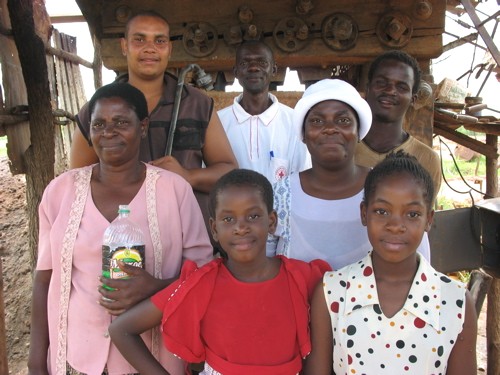
Stamp mill operators: The Coetzee family
Africa," the combined lack of fertilizer,
farming equipment and expertise, and
drought has caused extensive damage to Zimbabwe's agricultural sector. Shortages of
foreign exchange have led to insufficient imports of critical supplies such as fuel,
medicine and many other necessities. At the time of this report, inflation is the highest in
the world, having now reached well over 10,000% per annum, posing major challenges
for economic, environmental and human security. Livelihood options have been critically
limited. For many, ASM is the only viable option to generate earnings.
Zimbabwe saw an upsurge in ASM gold mining in the 1990s as a result of
unemployment caused by the downscaling of large-scale mining activities, the collapse
of the agricultural sector due to drought and the implementation of the land reform
program, and the layoff of public sector workers during structural adjustment programs.
Beginning in 2002, the GMP began holding consultations with miners and other
stakeholders and conducting health, environmental, legal and socio-economic
background studies. These assessments guided the GMP intervention program that
took place during 2006 and 2007.
In 2003, GMP researchers estimated that as many as 300,000 to 400,000 people were
actively gold mining, while as many as 2 million of the country's 13 million people
directly or indirectly relied on mining for their livelihoods. Beginning in late 2006,
however, police supporting "Operation Chikorakoza Chapera" began to enforce the
country's new environmental legislation, as they tried to control the illegal activities
associated with ASM such as trade in gold on the black market. This suppressed
virtually all ASM operations and led to the arrest of at least 32,000 miners.
The estimated numbers of people mining in Zimbabwe has ranged considerably. Just
prior the beginning of Chikorakoza Chapera, estimates suggested there could be as
many as 500,000 miners in the whole of the country, but the police actions have made it
difficult to test the number of active artisanal miners. Even though the precipitous
decline of the national economy suggests the number of people seeking a living in the
Global Mercury Project Zimbabwe Final Report 2007 2
sector should be growing, some observers now believe that as few as 100,000 miners
are currently active, and that most of these are working clandestinely.
The GMP Health Study showed that children who handle mercury and miners who burn
amalgam have a high incidence of mercury intoxication, based on analysis of hair, urine
and blood samples and on neuropsychological tests performed in 2003 and 2004.
Avoidance of exposure to mercury vapor, particularly by pregnant women and children,
has become one of the project's chief recommendations. The study emphasized that
mercury intoxication is only one of many health challenges Zimbabwe's miners face--
poverty, HIV/Aids, malaria and water borne diseases are arguably more significant
contributors to the poor health of Zimbabwe's mining communities than mercury
exposure (Böse-O'Reilly, 2004)
Small mining and milling operations in Zimbabwe have used both mercury and cyanide
for about 100 years (Phimister, 1975), and it is no surprise that fish in the project area
are bio-accumulating mercury--even small carnivorous fish have 2 to 4 times the WHO
limit for consumption In some instances, drinking water mercury levels are elevated, but
remain below WHO guidelines, when contaminated with Hg bearing silt or with dissolved
mercury from the cyanidation of amalgamation tailings. At face-height above freshly
dressed copper plates, air contains about 4 times the 8-hour TLV worker exposure limit
for mercury (Billard et al, 2004).
National losses of mercury are about 25 tonnes per year, and it is estimated that up to
2/3rds of this mercury is lost to tailings that eventually undergo cyanidation. It is not
known exactly how much of this waste mercury is dissolved and lost in the elution
process, how much remains with the cyanide tailings, or how much is adsorbed to
improperly disposed process slimes. It is likely, however, that virtually all of the mercury
lost during whole ore amalgamation is eventually mobilized in the environment.
It has recently come to light that about half of the mercury loss is associated with
burning the amalgam (about 4 out of 8 tonnes) and another half is lost when amalgam is
dissolved in a pre-treatment of the amalgam with nitric acid before burning or retorting.
This practice is the standard throughout Zimbabwe, and miners and millers simply
discard the waste acid containing the dissolved Hg on the ground. Miners use nitric
before burning or retorting because the sponge texture that develops in the amalgam
during acid treatment is more porous than the melted button that comes from retorting,
allowing the nitric to dissolve the accessory metals found with the gold, including copper
from scraping and scouring the copper plates. Nitric acid is employed because buyers
will not purchase doré with gold content less than 70%.
Development of financing schemes with microfinance banks is, for the vast majority of
artisanal and small scale mining operations in Zimbabwe, currently all but impossible
because of the country's extreme inflation rate. The GMP's financing study identified the
programs that offer, or have offered, micro-credit for ASMs. In essence, the GMP
recommended that the Zimbabwe government develop special loan guarantee and
flexible payment schemes similar to financing programs already available to the nation's
small farmers who face unpredictable outcomes analogous to the mining sector.
Furthermore, the GMP recommended that Fidelity Printers, the gold buying arm of the
Zimbabwe Reserve Bank and the only authorized gold buyer in the country, provide
Global Mercury Project Zimbabwe Final Report 2007 3
seed capital for a revolving loan fund. Fixing loans in gold would insure that the lending
institutions received the real value of their loans on repayment (Dube, 2005).
In 2004, the GPM estimated that between 1.7 and 3.4 tonnes Hg/year are lost at milling
centers in the Kadoma-Chakari area (Shoko and Veiga, 2004). In a subsequent study
completed in 2006, the GMP surveyed mercury imports into Zimbabwe and concluded
that official imports have totaled between 20 and 25 tonnes per annum (Handelsman
2006, Appendix 5). These recent estimates square reasonably well with the GMP's 2002
figures, since it is believed that Kadoma-Chakari produces about 10% of the country's
ASM gold. It is assumed that virtually all of the mercury imported into the country is lost
to the environment.
In September 2007, the price of mercury from commercial suppliers in Kadoma was
USD 62.50 per kg, down from about USD 110.00 per kg in early 2006 (note that at the
same time, Fidelity Printers sold mercury at a reduced price of USD 75.00 per kg). In
2006, the average international price of mercury was USD 18.84/kg according to Platt's
Metals Week.
Stakeholders consistently identified the following legal and technical obstacles facing
miners: Permitting and Environmental Impact Assessments, finding and financing of
mining operations, dewatering mines, hauling ore to mill sites, high real-cost of milling,
and poor understanding of modern mineral processing methods. In addition, miners are
concerned about child labor and disruption of family units as family members seek
mining opportunities far from home, sexually transmitted infections, alcoholism, drug
use, and the widespread lack of water, sanitation, and antenatal care for expecting
mothers (Appendix 1).
Responding to stakeholder concerns, the GMP trained 32 ASM trainers (1/3rd are
women) to communicate simple messages about the impacts of mercury on family
health, and to train miners in the use of better gold recovery methods. The Institute for
Mining Research (IMR) was subcontracted to run the awareness campaign, and to
assemble and operate the GMP's Transportable Demonstration Unit (TDU) containing a
ball mill, a hammer mill, a centrifuge, a generator and a steel sluice equipped with vinyl
loop carpets. The IMR trained 569 miners in 2006 and 100 in 2007.
The GMP worked closely with the Zimbabwe Panners Association (ZPA), a community
based, grass-roots mining organization which managed most of the GMP's interventions
on the ground, and which traveled to all of the major mining centers in the country where
it taught better gold recovery methods and showed how to make and use low cost
retorts. In addition, the ZPA trained a cohort of its regional members to sustain the
mercury awareness and improved gold recovery training programs in all of the country's
gold mining districts.
Awareness of mercury hazards was communicated primarily through a GMP community
theater play, "Nakai" (or, "Precious Little Thing"), the story of a farmer's daughter
exposed to mercury by her artisanal miner boyfriend (Appendix 4) which reached about
7,000 people as it played in 18 mining communities in the project area. A cartoon book
following the story line of "Nakai" was designed (Appendix 6) but not yet produced by
the IMR, owing to the above difficulties.
Global Mercury Project Zimbabwe Final Report 2007 4
The GMP partnered with the Ministry of Mines, providing special funding to the Institute
for Mining Research to scientifically prove that low-cost vinyl loop carpets are more
efficient than copper plates, and to determine the optimum amount of cyanide necessary
to recover all the gold while minimizing the dissolution of mercury in amalgamation
tailings. A statutory instrument banning whole ore amalgamation will be promulgated
following the introduction of the carpets to miners and millers by the Ministry of Mines'
metallurgists in 2008. This regulation primarily seeks to ensure that centralized mills
phase out whole ore amalgamation with less hazardous and more efficient means. The
GMP also made recommendations to clarify the responsibilities of toll mill operators with
respect to other health and safety concerns, based on stakeholder consultations.
Global Mercury Project Zimbabwe Final Report 2007 5
II. MAIN ACTIVITIES AND ISSUES
MINERS AND THEIR COMMUNITIES
As many as 500,000 people have been earning their livelihood from mining alluvial and
primary gold ores in Zimbabwe, but as indicated above, only about 100,000 of these are
currently active. Few of these miners are employed in the country's large-scale gold
mines. In 2003 and 2004, the Global Mercury Project established first order socio-
economic, health and environmental baseline studies, held stakeholder workshops, and
established an awareness and training program designed to convince miners and
millers that mercury can and should be used more safely. The key message is that the
worst exposure pathway--breathing mercury vapor when burning amalgam--can be
avoided with relatively little effort. At the same time, simple mineral processing
technologies were tested and introduced, including vinyl loop carpeted sluices which are
now a proven and viable replacement for whole ore amalgamation with both copper
amalgamation plates and mercury-containing Knudsen bowl centrifuges.
GMP activities included socioeconomic, environmental, health, mercury importation and
micro-credit studies, stakeholder consultations and policy initiatives; an awareness
campaign based on the locally developed drama, "Nakai;" establishment of a mercury
analysis laboratory; training of trainers; creation of a Transportable Demonstration Unit;
tests of more efficient cyanidation and gravity recovery techniques; a national retort
campaign coupled with capacity building of a key community based organization; and
the development of a sustainability strategy for further mercury awareness and training
programs.
GMP PROJECT SITE IN KADOMA-CHAKARI
The GMP Kadoma-Chakari project area is located about 2 hours drive southwest of
Harare in the Hartley and Kadoma districts of Mashonaland West Province. An active
gold mining area for many centuries, first by indigenous Shona and later by European
colonists, the Kadoma-Chakari area spans roughly 1,350 square kilometers (map
sheets 1982-B2 and 1982-B4).
The towns of Kadoma and Rimuka (Kadoma's high-density suburb) are home to about
120,000 people. Access to Kadoma is by good paved road, and most villages in the
project area are accessible by relatively good secondary gravel roads, however heavy
rains in November, December and January can limit access in some places. Local
transportation consists of mini buses, but fares are often beyond peoples' means owing
to the inflated cost of fuel in local currency.
The average income in the region is approximately USD 15 per month. Many miners
have families in rural homelands in other regions, and this disruption of basic family
structure is thought to contribute to prostitution and the high prevalence of sexually
transmitted diseases including HIV/AIDS. In 2006, the prevalence of HIV/AIDS in
Zimbabwe was about 19%, down from previous years. In the GMP mining communities,
Global Mercury Project Zimbabwe Final Report 2007 6
the prevalence is thought to be considerably higher, but concrete data in this regard is
lacking.
Literacy amongst the mining communities is remarkably high with 50% of the population
having attended high school--fewer than 10% are illiterate, thanks largely to the efforts
of the independence government. Shona is the dominant language for day-to-day life
for most people, but many Zimbabweans are multi-lingual and most people in the project
can readily converse in English.
Sadza, a thick porridge made from ground maize or "mealy-meal", is the staple food in
Zimbabwe and is usually served with stewed vegetables and meat, if available. Fish is
imported from other regions because local stocks have been depleted. Maize
production, both at the commercial and family level, has been severely limited due to
droughts during the past 7 years--many children in mining communities are reported to
be undernourished. The drought during the 2006-2007 rainy season was particularly
severe, and the WHO and UNICEF have warned that as many as 1/3rd of the nation's
people may experience food shortages by the end of 2007.
With few exceptions, rural sanitation and water quality are now substandard, having
declined from the 1980s when the new independence government was a world leader in
water and sanitation programs. At that time borehole wells and "ventilated improved pit
latrines" (VIPs) or "Blaire toilets" named after Zimbabwe's Blaire Research Institute were
installed throughout the rural countryside, but currently insufficient government funds
are available for water and sanitation programs.
Healthcare is limited to the services of visiting rural nurses and a few regional clinics.
Acute cases are referred to the Kadoma District Hospital which is under-equipped and
understaffed, or to Harare. Private vehicles or public jitneys serve as emergency
vehicles, although the district hospital has recently acquired an ambulance.
Elementary schools are within 1 to 7 kilometers from most mining villages, but
increasing uniform and tuition costs are making basic education prohibitive for many
mining families. Schools are generally poorly supplied and physically decaying. For
example, the concrete floors of the Mayflower School which is located one kilometer
from the site of the GMP environmental study at Tix Mill, are cratered with 20 cm
diameter holes and blackboards are cracked and crumbled. Absenteeism is common
during the active mining season due to children's (particularly boys') participation in
mining activities.
ZIMBABWE'S CURRENT ECONOMIC CLIMATE
The growth of contemporary small scale mining in Zimbabwe mirrors the evolution of the
nation's drastic economic situation. Inflation, now officially running at 7,600% per year
has increased since the late 1990s as monitory policy reacted to the decline in GDP and
foreign exchange credits. Massive unemployment, now at least 80%, is the result of
structural adjustment programs and the collapse of the agricultural sector due to drought
and land reforms.
Fuel shortages, regular power blackouts, and an extremely oversubscribed
communications infrastructure make day-to-day business operations almost impossible.
Global Mercury Project Zimbabwe Final Report 2007 7
For example, in September 2007 the Institute of Mining Research's offices and
laboratories at the University of Harare had water and power service only two days a
week, while the University's internet server has been often out of service since the
beginning of 2007.
Gold mining contributed about 30% of the of the nation's foreign currency earnings in
2001, but deliveries to the Reserve Bank have since declined drastically--in 2006
producers declared 10.96 tonnes of gold, down from 13.45 tonnes in 2005. Despite this,
gold mining remains a key economic activity in Kadoma-Chakari mining District, where
most of the GMP activities have taken place. Kadoma-Chakari accounts for about 10%
of Zimbabwe's ASM gold production.
NEW ENVIRONMENTAL LEGISLATION AND CRACKDOWNS
Until recently, as many as 78% of the region's residents were thought to be directly
involved in gold production, if only casually during the dry season. In late 2006
however, artisanal and small scale miners and millers were subject to a police
crackdown dubbed "Operation Chikorokosa Chapera" ("finished with illegal gold
panners"), as the government attempted to manage the environmental effects of mining
activities, control the diamond rush in the Eastern Highlands, and put an end to the
illegal activities associated with gold mining, especially the trading in gold and foreign
currency on the black market. Early this year, the Governor of the Reserve Bank
estimated that about USD 50 to 60 million of gold is smuggled out of the country per
month.
In early January, a new Environmental Management Act (EMA) abruptly began requiring
miners and millers to have approved Environmental Impact Assessments (EIA) and
Environmental Management Plans (EMP), effectively making ASM illegal because most
small-scale operations had not applied for certification. In the ensuing regulatory chaos,
many police were "overzealous" in enforcing the new EMA. Miners reported that the
lack of an EIA and EMP was often used to confiscate gold, ore and equipment as police
bulldozed what were arbitrarily deemed substandard workers' housing, destroying or
confiscating their meager household possessions. Chikorakoza Chapera is ongoing,
and at least 32,000 miners have been arrested, most in the first few months of 2007. On
reflection, some government officials feel that many charges were not justified under the
EMA.
Before Chikorkoza Chapera, there were an estimated 20,000 to 30,000 artisanal miners
in the GMP area. Approximately 75% of these were thought to be alluvial panners,
while the rest exploited primary ore in surface pits and underground. About 10% of
miners were women, however women did not work at mill sites, or underground.
Women were more commonly engaged in processing of high-grade ore in villages, and
constituted the bulk of the workforce at enclosed mining and processing sites run the
Reserve Bank of Zimbabwe's Carslone Corporation. Currently, between 25% and 50%
of the project area's miners are back to work, but most are forced to work clandestinely
because they continue to lack EIA/EMPs. Most of these miners are producing only high
grade ore, leaving little low grade feed for custom milling operators whose stocks of
tailings for cyanidation are running out.
Global Mercury Project Zimbabwe Final Report 2007 8
The existence of the illegal gold market is a result of the low price that Fidelity Printers
(the official government gold buyer) pays miners for their gold. In March 2007, for
example, the "support" or official price for gold was $Z 16,000/g compared to the black
market rate of $Z 3-400,000/g. In theory, this official price valued the gold at USD 64/g
if one calculated based on the official currency exchange rate of $Z 250/USD. However,
because the official exchange rate for USD does not reflect the real costs of goods
which follow black market rates, the real price the government paid the miners was only
about 2 USD/g--one thirtieth of the officially calculated rate.
CURRENT MINING AND MINERAL PROCESSING PRACTICE
ASM gold mining in Zimbabwe has a very long history, and miners still rely on many of
the simple ore extraction methods that were used by pre-colonial indigenous and early
colonial miners (Summers, 1969, and Phimister, 1974). Primary gold ore is extracted
from narrow discontinuous quartz veins and zones of enrichment in the oxidized layer,
and manually hauled up through narrow workings. Alluvial ores are also mined by non-
mechanized methods. Mineral processing also still relies heavily on technologies
introduced over 100 years ago: stamp mills, amalgamation plates and cyanidation
circuits. These historical observations are not trivial--the nation's millers and miners
trust the old ways and are reluctant to switch to new technologies, even if the old
technologies may be inefficient and toxic. Mercury use has withstood the test of time.
Mercury is an integral part of ore processing in Zimbabwe and is broadly not believed to
be a serious human health or environmental hazard.
Surface and underground mining
Alluvial mining in Zimbabwe is rarely mechanized. Tools for digging gold-rich eluvial or
"rubble" deposits range from shovels, picks and bars to small sticks and fragments of
metal for scraping softened surface material. Primary ore is extracted from surface pits
and from relatively primitive underground workings using hammers, chisels and picks;
when possible, underground operations utilize rented compressors and explosives to
advance workings. Ore is hauled to the surface in buckets by rope or steel cable by
manual windlasses. Mine shafts are narrow, typically a meter in diameter. Workings,
whether pits or shafts, are not backfilled and wasted dumps are not reclaimed. This has
proven to be a considerable hazard for livestock, as well as people in many areas.
Protective clothing and mechanical underground ventilation are rare.
Miners sometimes work in small syndicates mining in shifts 24 hours a day. A
syndicate/team of 4 miners can produce 20 t/month, producing 200 grams of gold per
month if they recover 10g/tonne. Depending on the arrangement of the miner or miner's
syndicate with the claim owner, tribute is paid for the right to mine. In the Kadoma-
Chakari area, tribute is typically 5%, but a Women in Mining operation reported paying
tribute of 20%.
Mineral processing and gold recovery at custom milling centers
High-grade ore is often processed artisanally in villages using steel mortars and pestles
and concentrated on blanket-lined earthen sluices, and then panned and amalgamated.
Global Mercury Project Zimbabwe Final Report 2007 9
Low-grade ore is processed at custom stamp mills and concentrated on amalgamation
plates or in mercury containing centrifuges. In September 2007, there were 243
operating milling centers in Zimbabwe delivering gold to Fidelity Printers. There are
currently 117 registered custom milling centers in the Kadoma-Chakari area, but at any
given time however, less than half of these are likely to be operating. A given milling
center may have multiple mills. At the M+K mill, for example, there were 46 workers
operating 6 mills and attendant cyanidation operations. More mills are operating in the
dry season when the water table is lowest. Altogether, there are probably about 1000
milling sites in the entire country.
In early 2007, most mills were shut down by operation Chikorakoza Chapera, but by
September, about 70% of these mills had obtained valid EIA/EMPs. Before
Chikorakoza Chapera, there were about 1000 to 2000 workers at milling centers in the
project area. Currently there is a high degree of police surveillance of gold recovery
processes at custom milling centers. Miners are thus often now reluctant to ship any ore
to mills and this is causing a shortage of feed at a number of mills. In addition, the
current disruptions in electricity supply are restricting the output of many milling
operations.
Miner's hand-crush their ore to about -10 cm, reserving the highest grade material for
eventual hand milling in villages. The low-grade material is transported in hired trucks
or tractor-trailers to custom milling centers where the miner pays a nominal fee for the
milling, typically between USD 1 to 3 per hour. Ore delivered to the mill usually grades
between 5 and 30 g/tonne. Once milled, the miner's share is immediately
amalgamated.
Usually, a member of the syndicate accompanies the ore to the milling center, where
they insure that the milling, concentration and amalgamation are accomplished as
efficiently as possible. Unless prohibited by their tribute arrangements, miners are free
to chose where they mill their ore, allowing the option to use a ball mill. However, ball
mills are relatively uncommon in Kadoma-Chakari, and the extra transportation costs to
a center that operates a ball mill may outweigh any benefits from more efficient
liberation.
Stamp mills are electrically powered by large drive belts that turn 50 cm eccentric cams
which lift and drop tall vertical steel shafts which are attached to 25 cm stamps. A mill
worker shovels the ore into a narrow mortar box where the ore is mixed with water and
crushed between the 250 to 800 kg stamps and anvils. Water flow is adjusted to flush
the crushed ore through the discharge screen at a density of about 20% solids. A good
mill will stamp at the rate of 90 to 100 times per minute. Output can be up to 1.0
tonne/hr for a 3 stamp mill, depending on the hardness of the rock. The discharged pulp
flows to either a Knudsen bowl type centrifuge, or to a mercury-coated copper
amalgamation plate, usually 1 meter wide, and 1 ½ meters in length.
Stamp mills are fitted with coarse screens that pass -1mm particles. When these -1mm
particles contain partially or un-liberated gold, they are often not caught by the
amalgamation plate and report to the tailings and become the property of the stamp mill
owner. Miners receive only what is recovered in the mortar box, on the amalgamation
Global Mercury Project Zimbabwe Final Report 2007 10
plate and in the centrifuge. The 50 to 70% of the gold that reports to the tailings
becomes the property of the miller and is subjected to cyanidation.
By law, all milling centers are required to have two-stage concentration systems and
miners must be allowed to collect gold from both stages (the law stipulates that the
system may be some combination of sluices, centrifuges or copper plates). However,
two-stage systems are not always offered, and often miners are allowed only to collect
gold from a single concentrator, maximizing the gold passed to the miller's cyanidation
circuits. The most common single concentrator is the copper plate, but more and more
milling centers are offering single stage systems composed of centrifuges, which some
miners believe to be more efficient than copper plates. Unfortunately, because the
Knudsen-bowl type centrifuges produced in Zimbabwe are not very efficient, the usual
practice is to introduce one or two spoonfuls of mercury into the centrifuge.
Ball mills are available at only 5 custom milling centers in the project area--miners tend
to prefer stamp mills because gold accumulates in the ball mill liners, but in areas where
stamp mills are not available, such as in Sanyati which is 90 km west of Kadoma,
miners are using ball mills out of necessity and are finding that the increased recovery
from more efficient grinding outweighs the losses to the liners.
The copper amalgamation plates are freshly dressed with about 150 grams of mercury
before each batch. The mercury is kept active as the pulp flows over the plate by
rubbing a piece of NaCN briquette over the feed plenum; yellowish patches of mercury
on the plate are cleaned directly with the cyanide briquette. Once the feed and pulp flow
is exhausted, the amalgam is scraped with a rubber squeegee and collected in a small
piece of cloth for squeezing off the excess mercury. The plate is then scoured with
coarse sand in an attempt to recovery any gold remaining in the scratches and crevices
on the plate, a practice unique to Zimbabwe and that puts large amounts of mercury to
the tailings, necessitating the use of nitric acid to remove the scoured copper from the
amalgam. Of the 150 grams applied to the copper plate per one tonne batch, it is
estimated that approximately 120 grams are recycled by squeezing excess mercury
from the amalgam scrapings, 20 grams are lost to tailings during the scouring, and
about 10 grams stay with the amalgam (assuming recovery at this stage of 10 g Au/t).
Again, it must be emphasized that where copper plates aren't used, mercury is
invariably used in centrifuge. Miners estimate that the loss of Hg from centrifuges is
about half that of copper plates.
Amalgamation barrels are required at mills by law, but many miners prefer to
amalgamate concentrate by hand in bowls. Soap is used to keep the surface of the gold
clean. Hand amalgamation is suitably effective and does not tend to flour the mercury
as do amalgamation barrels when they are run too long or used with steel balls to
promote mixing. It is reported that many miners use a little NaCN in the amalgamation
barrels to promote amalgamation. This practice has been shown to be effective, but
since cyanide readily complexes both gold and mercury, this can lead to losses of both
gold as well as mercury. When amalgamation barrels are used to concentrate
centrifuge concentrates, between 400 to 800 grams of mercury are mixed with about 30
to 33 kg of concentrate (Shoko and Veiga, 2004).
Global Mercury Project Zimbabwe Final Report 2007 11
Retorts are also required by law to be used at milling centers, but it appears that they
are seldom used. Almost always, miners use nitric before burning or retorting because
the sponge texture that develops in the amalgam during acid treatment is more porous
than the melted button that comes from retorting, allowing the nitric to dissolve the
accessory metals found with the gold, including the copper from scraping and scouring
the copper plates. It is estimated that at least half of the mercury in the amalgam is
dissolved and lost during pre-treating of the amalgam with nitric acid in this fashion, and
miners and millers simply discard the dissolved Hg on the ground. After pre-treating with
nitric acid, the amalgam is toasted on the burning end of a l0-15 cm diameter log,
blowing the embers with the mouth to maximize the heat; the toasted amalgam is then
mixed with a little borax and smelted with a torch. These processes expose the
operators directly to inhalation of Hg vapor.
All gold recovered at custom milling centers must be sold to the miller who is required in
turn to sell it to Fidelity Printers. Before Chikorakoza Chapera, much of the gold
produced at mills was sold on the black market. Miners took possession of their
amalgam, boiled it in nitric acid and toasted it without retorts wherever convenient. As
indicated, it is believed that up to USD 60 million of gold per month was smuggled out of
the country in 2006.
Cyanidation at milling centers
Small scale milling and cyanidation practice is relatively sophisticated in Zimbabwe.
Because millers make their money from cyanidation, not from the nominal milling fee,
they rely on the low recovery rates of the stamp mill and amalgamation plate or
centrifuge circuit to maximize the gold content in their cyanidation processing. Custom
millers must be sufficiently competitive with neighboring mills to insure a constant supply
of feed to their cyanidation tanks. Millers sometimes attempt to attract the best ore in
order to maximize the gold content of tailings sent to their cyanidation circuits by
providing miners with legal and technical support (e.g., loans to complete environmental
assessments, geological services, etc.).
The chemical consumption for passive cyanidation tanks is about 1 kg CN per tonne of
ore (0.1% CN in solution). Depending both on the ore and on the operator, lime or
caustic soda (about .5 kg/tonne) is used. Current cost of cyanide in Kadoma is just
under USD 4/kg. The GMP has established that the main manufacturers of cyanide for
small scale cyanide use in Zimbabwe are Tongsuh, Taekwang, and Dupont.
Most mills have 5 to 10 tanks for cyanide leaching. Each tank holds between 20 and 70
tonnes of tailings. Twenty tonne tanks are charged with about 18 kg NaCN and 50 kg of
Ca(OH)2. Typically these tanks are dug into the ground, with the top edge of the vat at
ground level. Cyanide solution is pumped into the tank and re-circulated through
activated carbon cells. The tanks are not agitated, and no air is injected. Leaching
takes an average 6 days, but depending on the ore can sometimes take as long as 2
weeks. The cyanide solution containing the dissolved gold passes through 3 or 4
activated carbon cells which, once loaded, are subjected to a chemical process (elution)
to concentrate the gold. Gold content of the pregnant solution, free cyanide and
alkalinity levels are monitored by the colorimetric methods (Singo, 2006).
Global Mercury Project Zimbabwe Final Report 2007 12
It is estimated that as much as 90% of the metal mercury in the amalgamation tailings is
dissolved during cyanidation. A good deal of this mercury reports to the carbon cells
and is lost during elution: Mercury vaporizes in the 100 to 110 degree Celsius
pressurized elution vessels (tiny beads of Hg are often observed on the lid and sides of
elution vessels, and during electro winning). In addition, mercury plated with the gold on
the steel wool cathode is subsequently dissolved in nitric acid and discarded on the
ground. Some millers have their own elution equipment, but others send the loaded
carbon to toll elution centers for stripping--operators of these toll elution plants observe
that loaded carbon contains varying amount of mercury, suggesting that mercury losses
to tailings vary according to practices at toll mills. Cyanidation tailings are not
neutralized or washed.
IMPROVING MERCURY POLICY IN ZIMBABWE
The GMP worked with the Zimbabwe Ministry of Mines to develop appropriate policies
for mercury use in ASM gold mining at milling centers and other processing sites near
habitation in towns and villages. Following stakeholder consultations, GMP experts
worked with government to prepare recommendations for mercury management in
ASM, setting standards on practices to eliminate hazardous mercury emissions,
exposures, and to address other environmental health challenges. These
recommendations include proposed regulations the purchase, trade and storage of
mercury.
These GMP recommendations encourage positive changes in the mining sector that will
improve livelihoods, the environment and economic sustainability. It is recognized that
core the Global Mercury Project goal of "removing barriers to the adoption of improved
small-scale mining practices" requires an integrated approach that is responsive to local,
national and regional needs. It is hoped that the GMP can continue to play a significant
role in bringing together stakeholders to problem-solve and strengthen development
institutions in Zimbabwe.
The GMP facilitated meetings, small workshops and large seminars with national and
local officials from the Ministry of Mines, the Ministry of Environment, and the Ministry of
Health, as well as with mining associations such as the ZPA and the Zimbabwe Mining
Federation. These talks reinforced a shared commitment to develop policies to phase
out mercury in ASM over the long term. In the short term, efforts focused on instituting
clear regulations and codes of practice to minimize mercury exposure and other
environmental hazards in ASM.
Promoting cleaner and equitable technology policies: Banning whole ore
amalgamation
The GMP policy recommendations provide standards for amalgamation and the use of
retorts and for the reduction of mercury lost to tailings. Specific provisions protect
pregnant women and children from exposure. The recommendations include
mechanisms for community-based enforcement and monitoring, but also suggest a
statutory instrument to ban the whole ore amalgamation, whether with copper plates or
in centrifuges: Banning whole ore amalgamation will significantly improve
Global Mercury Project Zimbabwe Final Report 2007 13
environmental health while promoting more equitable sharing of gold recoveries
between miners and millers.
The Ministry of Mines' Department of Metallurgy and the Institute of Mining Research
has conducted successful trials of low cost vinyl loop carpets sourced from China. A
short sluice lined with these low cost carpets has already been proven to be more
efficient than current practices. Once this new technology has been demonstrated to
stakeholders through out the country, it is expected that the Ministry of Mines will
formally introduce a Statutory Instrument under the Mines and Minerals Act that will ban
whole ore amalgamation.
Addressing environmental practice at milling centers
In Zimbabwe, miners generally bring their ore to milling centers for processing. Mercury
is used intensively on these premises, and tailings management and mercury handling
often present serious risks to health and the ecosystem. Because the relationship of
miners and millers is not generally of a formal employer-employee nature, traditional
legal definitions of employer responsibility do not necessarily apply.
GMP policy experts prepared recommendations and draft regulations on water
protection, the duties of claim-holders and milling centre owners and managers that
resulted from its policy reviews and stakeholder consultations. These proposals were
presented and discussed on a preliminary basis with the national directors of the
Ministry of Mines. These draft measures propose clear lines of responsibility for miners
and claim-holders as well as milling centre owners and managers, and suggested
penalties for infractions.
The draft measures acknowledge the need for shared responsibilities among the
different people involved in ASM mining and processing. Responsibilities that were
addressed in the draft regulations relate to mine management, fair labor practice, safety,
health and the preservation of the environment. Millers would be responsible for sound
mercury management on their premises and for ensuring compliance with regulations.
The draft provisions stipulate that milling centers must not exist within 100 meters of
water bodies, and prohibit the combined use of cyanide together with mercury.
Regulating mercury trade
The GMP believes that the regulation of mercury sales to miners is a crucial step to
decrease the negative health, social and environmental impacts caused by mercury in
Zimbabwe. In December 2005, GMP policy experts prepared draft regulations under the
Mining Laws to address trade and distribution of mercury within the ASM sector. These
were discussed with senior directors of the Ministry of Mines as potential measures that
could become part of a larger national effort to regulate the trade of mercury. The draft
measures propose licensing the use and trade of mercury and require penalties for
contraventions. Provisions for mercury trade stipulate that "...no person may purchase
mercury for amalgamation purposes unless they hold an amalgamation license."
"1) The use of mercury for amalgamation purpose shall require an amalgamation
license, which shall be applied for by the manager of the mining location at which the
amalgamation is being contemplated.
Global Mercury Project Zimbabwe Final Report 2007 14
2) An amalgamation license shall be issued by the Mining Commissioner and shall
specify the mining location at which amalgamation is being licensed, to whom the
license is granted, and the site within the mining location at which amalgamation shall
take place, designated by a plan.
3) An amalgamation license shall be valid for 1 (one) year and may be renewed.
4) In the event of breach of these regulations, the Mining Commissioner may cancel the
amalgamation license for the mining location for which the breach has taken place."
Improving gold pricing policy and fairness of gold trade
Due to the current economic crisis in Zimbabwe, gold mining has grown in importance
as a source of survival. As many as 2 million people depend, directly and indirectly, on
artisanal and small-scale gold mining. As the mining sector has grown, so too has
smuggling, illegal mining, and mercury use as well as other environmentally destructive
practices. The GMP found that these problems were mainly fuelled by the underlying
failure to implement economic policies that pay miners fair and appropriate gold prices.
Between February and April, 2007, the GMP conducted stakeholder meetings in
Zimbabwe to bring together miners, government decision-makers from different
agencies, and other organizations, to identify and advance strategies for bringing
solutions to the challenges facing the mining sector. The aim of the meetings was to
allow participants to express a diversity of concerns and to influence policy changes. In
addition to conducting stakeholder meetings, the GMP participated in Special
Committee Hearings in Parliament to review gold mining policies. A variety of GMP
recommendations were generated, including increasing the gold price to the level of the
international bullion market.
Following these advocacies advanced by the GMP and other stakeholders, The
Reserve Bank of Zimbabwe established a review committee to ensure that gold prices
are regularly evaluated and adjusted to inflation. On October 1, 2007, for example, the
official purchase rate was increased from Z$3,000,000/gm to Z$5,000,000/gm which is
equivalent to USD 520 an ounce at the official exchange rate of $Z30,000/USD. This
significantly reduces the illegal trade of gold, and provides a viable economic basis for
gold mining. It is expected that the government will continue to adjust the price of gold
upwards.
The GMP advocates that, in addition to maintaining fair gold prices, it is crucial that
official gold buying centers and agents be located near mining areas so that miners
have access to equitable markets.
TRAINING OF TRAINERS
A four day training of trainers workshop was conducted in Kadoma on May 25 to May
28, 2006. Thirty two stakeholders received instruction in the objectives of the GMP, an
overview of Zimbabwe Health and Environmental studies and strategies to effectively
communicate the effects of mercury on health, how to minimize exposure, how to use
and reuse mercury safely, how use of retorts, and how to achieve high efficiency gravity
concentration. In addition, trainers presented an exhaustive review of mining practices
Global Mercury Project Zimbabwe Final Report 2007 15
and equipment used by artisanal and small scale miners around the world. Mining
engineer Patience Singo, a UNIDO small scale mining expert based in Bulawayo,
Zimbabwe, presented an overview of underground mine safety. Participants included
the Ministries of Health, Environment and Mines, local medical staff, the Institute for
Mining Research (Harare), the Zimbabwe School of Mines (Bulawayo), Amakhosi
Theater (Bulawayo), the Zimbabwe Panners Association and independent miners
(Appendix 2)
During the training, an interactive workshop identified ASM legal, health, social, micro-
credit, and technical needs from the perspectives of the miners themselves and
government stakeholders. Stakeholders consistently identified the following legal and
technical obstacles facing miners: Permitting and Environmental Impact Assessments,
finding and financing of mining operations, dewatering mines, hauling ore to mill sites,
high real-cost of milling, and poor understanding of modern mineral processing
methods. In addition, miners are concerned about child labor and disruption of family
units as family members seek mining opportunities far from home, sexually transmitted
infections, alcoholism, drug use, and the widespread lack of water, sanitation, and
antenatal care for expecting mothers.
A 1 x 2 meter sluice lined with 3M Nomad carpet (medium traffic with backing, Type
6050) was installed and demonstrated at Tix Milling Center. Participants of the
workshop received copies of the Global Mercury Project's "Manual for Trainers of
Artisanal Miners" and a copy of Patience Singo's manual, "Good Practices in Gold
Processing for Small Scale Mining".
TRANSPORTABLE DEMONSTRATION UNIT (TDU)
TDU operations were subcontracted to the Harare based Institute of Mining Research in
July 2006. Training began in September and continued until mid-December 2006, by
which time 569 miners (188 women and 381 men) had been trained at seven milling
centers. In its December report, the subcontractor reported that it had purchased a
generator, ball mill, camping equipment, tents and chairs, tools, first aid kit, scales and
fuel cans. During these first 4 months, the IMR had developed a comprehensive
curriculum and met reasonable expectations of the number of individuals trained.
Operation Chikorakoza Chapera shut down virtually all mining and milling operations in
the project area until April 2007 when a few operations managed to complete the
requisite environmental assessments. In early June, the IMR reported that its foreign
currency assets had been frozen by the Zimbabwe government in an investigation of
illegal currency trading by the NMB Bank. About half of the IMR's assets were released
in early July, enabling some field work (mostly testing of the Chinese vinyl loop carpets)
in late July and August. The IMR has not yet reported its current accomplishments, but it
is estimated that only about 100 miners were trained between January and September
2007. Thus far, the brochures, posters and billboards slated to be produced based on
the play "Nakai" have not yet been produced.
Global Mercury Project Zimbabwe Final Report 2007 16
AWARENESS CAMPAIGN
Mercury has been used in ASM for over 100 years, and as indicated above, most
miners do not believe its use leads to negative health or environmental consequences.
Awareness building and offering acceptable solutions are therefore are the first steps
toward safer practices. The grass roots awareness program in Zimbabwe was built
around the community theater production "Nakai" which illustrates the hazards of
mercury use while demonstrating alternatives. The IMR is responsible for production of
all GMP awareness materials including cartoons, posters and billboards and is required
to report on this at the end of the TDU training contract. To date, the IMR has not
provided a report of their contributions to the awareness campaign, but it appears that
they have not yet produced or distributed any of the required materials.
National Retort Campaign
In June and July of 2007, the ZPA trainers carried out a national outreach program to
raise awareness about the dangers of mercury, demonstrating retorts to make mercury
use safer and vinyl loop carpets to increase gold recovery. The ZPA trained over 1000
people at 27 mill sites and one school. The ZPA found that the signs and symptoms of
mercury poisoning were common amongst miners in many communities throughout
Zimbabwe. At one site, the ZPA observed that "children were engaged in gold mining
activities. The situation was bad, most of these children are aged between 8 to 12 years.
However they seemed very bright as it was easy for them to catch up on the use of
retorts." By and large, miners were unaware that mercury is a poisonous substance and
they were surprised to see so much mercury recovered in retorts. Invariably, miners
were very appreciative that the United Nations was making the effort to bring these
kinds of messages to them.
The Play "NAKAI"
"Participatory" or "community theater" is often used in Africa to create awareness about
health and other issues. Community theater is an approach to awareness building that
can enable people to assume agency over their lives. Research has shown that
community members gain power to solve the problems they face when they are involved
in the development of such a play, when they participate informally during the play (e.g.,
singing and dancing with the performers, or voicing comments and suggestions) or
when they participate in post-performance audience discussions.
In order to increase awareness of the hazards of unsafe mercury use, the GMP
contracted the Amakhosi Theater group to produce a play to communicate directly to
mining communities the message that mercury makes people sick. Amakhosi has
produced community theater in Zimbabwe for over 20 years, notably focusing on
HIV/Aids and on the need for post abortion care. Importantly, Amakhosi has credibility
amongst ASM communities because it produces the popular, award-winning weekly
television drama, "Amakorakosa" which contrasts the lives of poor gold panners with the
lives wealthy small-scale mine owners.
During 2005 and 2006, Amakhosi held a series of workshops with the Zimbabwe
Panners Association and the Kadoma-based Tamuka Theater Group to generate an
Global Mercury Project Zimbabwe Final Report 2007 17
entertaining script that carries the core GMP messages. The plot follows the blossoming
love of two young people, Nakai and her miner boyfriend Aringo. Much like
Shakespeare's Romeo and Juliet, the two lovers come from families with a history of
animosity--one's father is a farmer whose land has been invaded by gold panners, and
the other's is a successful gold miner. In the course of the story, Aringo develops
symptoms of mercury intoxication (irrational behavior and impotence) and Nakai has
complications with her pregnancy. In the end, the feuding families find common ground
in the love of their children, and resolve to support safer mercury use and better waste
management. The play's Shona title, "Nakai," means "precious little thing" and refers
equally to the gold amalgam that artisanal miners recover and burn, and to the wife and
unborn child of the artisanal miner who are all exposed to mercury vapor.
Performances of "Nakai" are
proceeded by 45 minutes of the
Tamuka Theater's energetic
traditional singing and dancing, which
projects a feeling of vitality and
contextualizes the story of "Nakai" in
a milieu of positive health and power.
Again, research shows that people
gain power as they learn to take their
place with confidence in a physical
space and have their voice heard by
others. The vitality of Tamuka's
dance and dramatic performance
inevitably sparks joy in the audience
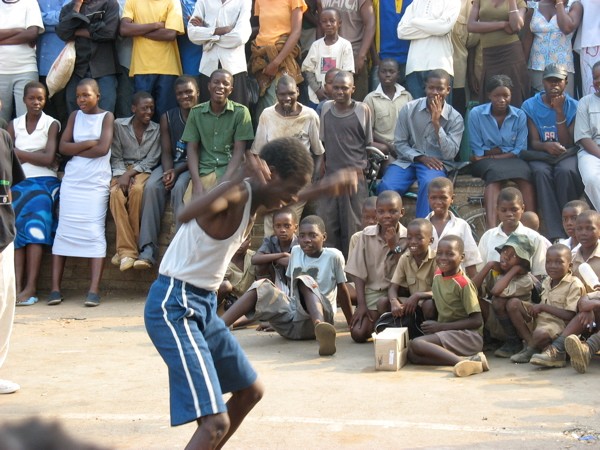
Performance of "Nakai" in Kadoma, 2007
joy itself is an agent of
transformation.
Pending awareness activities
A cartoon book, commissioned from the Bulawayo-based illustrator Levi Phiri followed
the plot line of the community theater play and embedded core GMP messages. The
graphics were delivered to the IMR for publication in Shona in April, 2007. Selected
cartoons are to be used by the IMR in hand bills, posters and billboards placed along
the main mining roads leading to Kadoma.
Global Mercury Project Zimbabwe Final Report 2007 18
III. CONCLUSIONS AND RECOMMENDATIONS
Even though the GMP faced many challenges in Zimbabwe, many barriers to the
adoption of cleaner technologies were substantially lowered. For example, high
efficiency, low cost vinyl loop carpets have been introduced and accepted as a viable
substitute for whole ore amalgamation, and a cadre of committed grass roots trainers
has been established. Awareness of mercury hazards and more productive gold
concentrating methods has dramatically increased in the project area. Local stakeholder
participation in the policy discussion processes yielded critical insights and some
developments in the short term, with longer term aims identified too. Also, the
entertaining awareness-raising play "Nakai" was presented to about 7000 ASMs and
community members.
Perhaps the greatest legacy of the GMP is the strengthened Zimbabwe Panners
Association. The ZPA now has a network of 30 ASM trainers placed in all of the
country's gold mining districts. These individuals are committed to improving the health
and livelihood of small scale miners.
It almost goes without saying that good interactive relationships with stakeholders are
the key to success, because acceptance of new health and safety practices occurs only
when the messenger is credible. Solid relationships with community-based
organizations have been developed by the GMP in Zimbabwe, but new long-term
commitment is essential if Zimbabwe is to sustain miners' health and safety programs.
The challenge remains to develop programming that can insure that the benefits of the
funds reach the people at the bottom of the socioeconomic spectrum. The experience
of the GMP in Zimbabwe suggests that new mechanisms for accountability need to be
put in place. Such mechanisms might include the creation of community based trusts
directed by local individuals committed to improving the lives of miners, and who
because of their professional standing (e.g., priest, hospital administrator, etc.) are
unlikely to find themselves in a conflict of interest situation.
Action programs such as trainings could be administered by NGOs that have
established relationships with grass roots community based organizations. Government
partners should include the Ministries of Environment and Health, as well as the Ministry
of Mines. The Assistant Country Focal Point position should be eliminated, and activities
should be coordinated by an empowered UNIDO staff member residing in the project
area. Quarterly evaluation visits should be made by senior UNIDO managers.
It has been observed during this project that relatively small programs such as the
ZPA's National Retort Campaign have been more successful than large subcontracts
such as the TDU. Payment schedules for large contracts (e.g., the TDU) should be in
small regular increments during the lifetime of the contract, rather than a large balloon
payment midway through. Contracts should include provisions that clarify the nature of
any extensions to the agreed upon timeframe. Mechanisms should be developed to let
more small subcontracts, rather than fund small interventions through Aide Memoires. In
addition the GMP should develop a way to pay casual wages to locals. Future initiatives
should consider eliminating or revising the DSA system because it has often come to be
Global Mercury Project Zimbabwe Final Report 2007 19
seen a salary entitlement that can break down trust between various stakeholders.
Indeed, trust-building takes a great deal of sensitivity and innovation in numerous ways
and is an integral component of empowerment in development processes.
In spite of the challenges that virtually all development programs face in Zimbabwe, the
GMP has shown that progress, especially through grass-roots interventions, is possible.
GMP should develop funding partnerships with organizations that share common
objectives, such as UNICEF, WHO, UNEP, EU Development Fund, DFID, etc., directing
this funding to community based organizations.
It is incumbent on the international community to increase commitment to achieving the
Millennium Development Goals in Zimbabwe, where families and especially children
face impossible lives: We should not forget that 25% of the country's children (1.6
million) are orphaned, or that 13% of children die before the age of 5 years old, up from
8% in 1990. The FAO and the WFP predict that drought and lack of agricultural inputs
will lead to food shortages for 1/3rd of the population by the end of 2007. Zimbabwe's
impoverished mining families find themselves in a crisis environment, and they need the
help of the international community.
Global Mercury Project Zimbabwe Final Report 2007 20
IV. BIBLIOGRAPHY
Billaud, P., Laperche. V., Maury-Brachet, R., Boudou, A., Shoko, D., Kahwai, S.,
Freyssinet, P., 2004, Removal of Barriers to the introduction of cleaner artisanal gold
mining and extraction technologies in the Kadoma-Chakari Area, Zimbabwe, Part A,
Enviromental Assessment Final Report, Global Mercury Project
Böse-O'Reilly, S., Dahlmann, F., Lettmeier, B, Drasch, G., 2004, Removal of Barriers to
the introduction of cleaner artisanal gold mining and extraction technologies in the
Kadoma-Chakari Area, Zimbabwe, Part B, Health Assessment Final Report, Global
Mercury Project
Dube, Pilot, 2005, Report on the establishment of a micro finance scheme for small
scale artisanal gold miners in Zimbabwe. Global Mercury Project
Handlesman, S. 2006, Unpublished Mission Report: Republic of Zimbabwe & Republic
of South Africa March 23-April 10, Global Mercury Project
Phimister, I., 1975, A history of mining in Southern Rhodesia to 1953, DPhil Thesis
submitted to the Department of History, University of Zimbabwe.
Summers, R., 1969, Ancient Mining in Rhodesia and adjacent areas, Museum Memoir
No 3, The Trustees of the National Museum of Rhodesia, Salisbury, 236 pp.
Shoko, D.S.M. and Veiga, M.M., 2004, Information about the Project Sites in Zimbabwe,
Global Mercury Project
Singo, P., 2006, Training Manual: Good Practices in Gold Processing For Small Scale
Mining, Bulawayo, Zimbabwe 66p.
Global Mercury Project Zimbabwe Final Report 2007 21
V. APPENDICES
Appendix I: Voices of miners on major priorities: Interactive workshop 2006
LEGAL ISSUES
PROBLEM
SOLUTIONS
ROLE OF THE GMP
Poor law enforcement on the
The act should be lawfully enforced
Once the Environmental Protection Act is
hazardous substance act
and individuals should be educated on
operational, the GMP should support the Zimbabwe
the use and control of the hazardous
Panners Association (ZPA) to teach miners how to
substances
comply
Abuse of gold panning legislation
Government should implement
The GMP should recommend legislation concerning
legislation in a friendly but effective
mercury use in mining, maybe following models
way.
implemented in other countries such as those in
Enforcement of gold panning laws is
Latin America.
necessary
Easy availability and accessibility of
There should be law to control the
The GMP should promote awareness about the
mercury
buying and selling of mercury from the
hazards of mercury
manufacturer to the end user.
--e.g., prepare labels with skull and cross
bone/diamond warning label)
Unlicensed panners, buyers and
Government should monitor the
miners
industry seriously so that only licensed
individuals are allowed to operate.
Government should educate people
about how to acquire licenses and
should relax the license requirements
The issue of protective clothing is not
The Government mining inspectors
The GMP Transportable Demonstration Unit should
being emphasized
should make regular inspection of
educate miners about protective clothing, produce
mining and milling sites.
posters and calendars for awareness; TDU trainers
should model safe practice
Mine inspectors are immobile due to
The GMP should draft voluntary codes that are
the lack of fuel
simple enough for miners to follow with minimum
regulator surveillance
Environmental impact assessments
The Government should consider
The TDU should introduce "SSM Env 1 Form" to
and management plans not done
alternatives such as self-assessment
miners
environmental management plans as
Once the environmental protection act develops its
the "environmental impact
new policy, this can be taught to miners by ZPA
declarations" miners complete in
Bolivia and Peru
Global Mercury Project Zimbabwe Final Report 2007 22
GEOLOGY
PROBLEMS
SOLUTIONS
ROLE OF THE GMP
Lack of expertise in geological
Government should expand the
Consider supporting pegging with differential GPS
survey procedures
Ministry of Mines (MoM) geological
survey dept to include extension
services
Ore reserve estimation
Government could periodically provide
TDU can create awareness that miners would
district geologist from KweKwe to
benefit from geological professionals
participate in TDU and other trainings
Prospecting
MoM could provide peggers to control
costs
Government could provide
microfinance to assist prospective
miners pay pegging fees
Suitable Exploration Tools
MoM to resuscitate Mining Investment
Loan Fund (MILF)
MINING
PROBLEMS
SOLUTIONS
GMP
Tools and equipment
TDU should demonstrate low cost heavy duty
Bosch electrical drills (Bosch GBH 11) with 2kW
generator
Finance
Recapitalization of MILF
TDU should provide training in:
(this is not enough)
--how to get investors
-- how to make a good contract
--business planning
The GMP should suggest benefits of partnerships
between millers and miners
Lack of experienced mining
Training
personnel
The Zimbabwe Panners Association
can sponsor ZSM classes in Kadoma
--e.g., mine safety
Access roads are bad or non-
Miners need to take responsibility
existent.
(miners need to solve their own
problems themselves)
Occupational hazards
Government (MoM) should provide
The TDU should focus on safety awareness
--roof collapse/support
training and extension services
--Personal Protective Equipment
The TDU should demonstrate ventilation
--Ventilation and lighting
equipment
--blasting hazards
The GMP should prepare a miners handbook
Environmental degradation
Training, awareness, supervision
TDU should raise awareness of miners about the
responsibilities to future generations of extracting
mineral wealth today
Dewatering pits
TDU should include a demonstration dewatering
pump
Lack of business planning
Teach business planning
Global Mercury Project Zimbabwe Final Report 2007 23
MINERAL PROCESSING
PROBLEMS
SOLUTIONS
GMP
Miners don't understand mineralogy:
Training and Site demonstrations
TDU should provide training in geology and
--e.g., is the ore oxide ore or sulfide
--analyze rock samples
mineralogy:
ore?
--teach basic mineralogy
--distinguish between ores and know how fine to
-e.g., what is gold particle size
grind
range?
--train how to collect a representative sample
-e.g., how does one achieve
--train to use simple methods to test grade (e.g.,
maximum recovery?
the Plattner Blowpipe method for assaying gold
which was a 19th Century method where the weight
of a tiny bead of gold was determined by
measuring it between two sub-parallel lines.
Lack of knowledge:
Training of alternatives such as ball
TDU should demonstrate testing the efficiency of
--milling
mills, hammer mills, shaking tables,
grinding to different sizes
--liberation
sluices, strakes
--gravity concentration
Low Recovery
Use better methods
TDU should educate about proper grinding vs.
--Copper plates
--centrifugal concentrators
over grinding
--Screen sizes of stamp mills are too
--use smaller screen sizes
--demonstrate liberation analysis to determine
coarse leading to poor liberation
--use of other mill types
proper screen size
--Use of stamp mills is not efficient
--use proper sluices and mats
--Clay James tables
Very high milling costs
Government should establish own
mills at low rates
--Government will buy the gold!
Transport
Micro-credit finance
--high charges
--groups could buy tractors, transport
--must pay in gold but the
government price is too low
Existing legislation, SI 329, Custom
Government must amend regulations
Educate how copper plates release Hg to
milling regulations
environment
--Metallurgical requirements
necessitate copper plates
Educate miners on advantages and disadvantages
of copper plates
Support ban of copper plates and mercury in
centrifuges as in Latin America
Global Mercury Project Zimbabwe Final Report 2007 24
SOCIAL ISSUES
PROBLEMS
SOLUTIONS
GMP
Improper Accommodation
Distribution of condoms
GMP should increase awareness of STIs through
--overcrowding
Drama and Brochure
Prostitution leading to spread of STI
and HIV/AIDS
School dropouts
Law enforcement, statutory
GMP should promote awareness that child labor in
instruments (SI), awareness of
mining is bad
Petty and violent crime
children's rights
Poor water and sanitation
Enforce UN convention on child labor
and right to education
Child labor and sexual abuse
Enforcement of SI 275
Disruption of family units and normal
social fabric
Corruption
General
ZPA could:
--enforcing SI of alluvial mining
--Establish a national
--improve conditions of service of
association/council of mining/panners
regulatory agents
associations to lobby government
--awareness and training
(trustees could monitor this national
--introduction of technologies
association to prevent in-fighting and
--mobile clinics/awareness
greed to insure stability.
--ZPA could function as an
intermediate between MoM and
panners
--Panners should define the needs for
training
Global Mercury Project Zimbabwe Final Report 2007 25
HEALTH ISSUES
PROBLEMS
SOLUTIONS
GMP
Pneumoconiosis
Injuries
Respiratory diseases and suffocation
High manifestation of communicable
--Enforcement of SI 271
TDU should educate miners on
diseases
--Awareness and education of
communicable diseases
-- how to refill pits and replant
High incidence of malaria and water
--Awareness and prophylactic
borne diseases
treatment
--how to prevent mosquito habitat
--Rehabilitate mined areas; spraying
insecticides
--BioSand filters
--low cost water treatment units
--boreholes
--larvicide funding needed
--Blair Research Institute of (MoH) has
a plant whose leaves have toxic
effects on mosquitoes--it's up to
miners to implement
No antenatal care for expecting
mothers
No immunization for children
Carbon monoxide poisoning
Methane--explosive
Mercury intoxication
Alcoholism
The GMP should consider if it could address this
complex problem through drama
TDU should support awareness that drinking and
marijuana leads to accidents
Panners Association needs support
GMP should consider loan of project vehicle to
--vehicle
ZPA at end of project
Global Mercury Project Zimbabwe Final Report 2007 26
MICRO FINANCE ISSUES
PROBLEMS
SOLUTIONS
GMP
Inability to access finance
Set up micro finance scheme for
Lobby Minister for free services
ASMs
Introduce flexible lending conditions
that can be achieved by ASMs
--Low interest rate is 60% per year
--No collateral except for mine claim
--Grace period of 4 months or more
No finance for geological services
Facilitate free geological services
Transport
See above
Labor
See above
Mining Equipment
Establish sustainable plant and
Zimbabwe Panners Association acquire equipment
equipment hire schemes
for hire
--hire to buy or direct hiring
Partnership with Government/RBZ and share
50/50
Safety considerations
See above
Milling charges
See above
Lack of skills
Training facilities for ASMs
Finance management
Security
Water sanitation and electricity
Introduce heavily subsidized electricity
and water scheme for the period of 5
years
Global Mercury Project Zimbabwe Final Report 2007 27
Appendix 2: List of Trainers
TRAINING OF TRAINERS, KADOMA (March 2006)
NAME
AFFILIATION
Evans Ruzvidzo
Zimbabwe Panners Association
Stanley Tavengwa
Zimbabwe Panners Association
Walton Mazhude
Zimbabwe Panners Association
Tendai Shamu
Zimbabwe Panners Association
Mable Nyamkure
Zimbabwe Panners Association
Ellen Ncube
Women in Mining
Coras Digindawo
Zimbabwe Panners Association
Oliver Phiri
Zimbabwe Panners Association
Irvine Masanga
Zimbabwe Panners Association
Tendai Teteni
Zimbabwe Panners Association
Simbarashe Mabonga
Environmental Health Officer, Ministry of Health
Sister Nyarai Tembo
Rural Health Nurse, Kadoma, Ministry of Health
Spiwe Mungu
Evlyne Moyana
Zimbabwe Panners Association
Maria G. Chidimu
Zimbabwe Panners Association
C.Z. Gambara
Institute for Mining Research
Lesley Kupahurasa
Institute for Mining Research
Edgar Kagumba
Livi Phiri
Graphic Designer
Styx Mhlanga
Amakhosi Theater Company
Givemore Sakuhuni
Zimbabwe School of Mines
Simbarashe Gumbanjera
Patience Singo
GMP UNIDO, Good Life Enterprises
Ndatenda Mondoh
Hazardous Substances Director, Ministry of Health
Martin Nkhata
Paradzai Sibochiwe
Shadrack Mutimbanyoka
Ministry of Environment
Spencer Kahwai
Institute of Mining Research
Dr. Isidore Yama
Kadoma District Medical Officer, Ministry of Health
E.E.D. Dzingai
District Metallurgist, Ministry of Mines
Nomvuyo Mdluli
Amakhosi Theater Company
Global Mercury Project Zimbabwe Final Report 2007 28
Appendix 3: Schedule of Theatre Performances
PERFORMANCES OF "NAKAI" BY TAMUKA THEATER COMPANY
Date (2007)
Location
Size of Audience
March 21
Kadoma Playhouse
200
Grand Opening
March 31
Kadoma Sports Club,
200
Women in Mining
April 1
Patchway Field
400
August 15
Botha Mine 1
500
August 16
Botha Mine 2
400
September 11
Cotton Research Beer Hall
600
September 12
Hoffmarie Farm
350
September 18
Riyon Mine
300
September 19
Patchway Mine
400
September 20
Alabama Farm
450
October 10
Venice Mine
400
October 11
Rio Tinto Mine
400
October 12
Golden Valley Mine
400
October 13
Martin Spur
400
October 14
Empress Mine
400
October 15
Etina Mine
400
October 16
Brompton Mine
400
October 17
Chakari Mine School
400
Final Show and Evaluation
TOTAL AUDIENCE
7,000
Global Mercury Project Zimbabwe Final Report 2007 29
Appendix 4 - Theatre Education Program
"NAKAI" - Play Synopsis
The story is about two feuding families, the Tabengwas and the Jimu family.
The central conflict of the play hinges on the use of the farmland which
Mdala Tabengwa, a promising commercial farmer owns. Meanwhile, Mdala Jimu,
a vicious gold dealer and his team of panners own some gold claims inside
Tabengwa's farm. Tabengwa complains about the health hazard and
environmental degradation occurring in his farm. He wants Jimu and his team
of Makorokozas / gold panners out, but Jimu is adamant he won't leave.
Underneath all this animosity, Jimu's nephew, Aringo (nicknamed Bhinya )
falls in love with Nakai, Tabengwa's daughter (the apple of his
father's eye ). When Nakai becomes pregnant, women from both sides (
Batete and Bhinya's mother ) want to patch-up the relationship and bring
peace between the two families to facilitate a marriage between Nakai and
Aringo. Tabengwa won't hear of it. Jimu says, " Nakai is not the only
woman under the sun." Tabengwa final disowns the pregnant Nakai and kicks
her out of the family house. She moves in with boyfriend, Aringo.
Mdala Jimu's change of heart comes when he sees his nephew Aringo's
health and that of Nakai becoming adversely affected by mercury. Aringo
becomes impotent and has memory loss. Nakai on the other hand gives a
pre-mature birth. Mdala Jimu becomes eager to learn more about mercury and
the legal aspect of his trade. He solicits for micro finance to enable him
to improve his mining activities in the farm. As Mdala Jimu changes the way
he runs his operations in the farm, bridges are built and relationships
improve between the two then correlated families.
Scene Outline
1. The play opens with an energetic Jerusalem dance. During the course of
this dance our young cross-star lovers Nakai and Aringo are introduced. The
girl Nakai is a Tabengwa while Aringo comes from Ndebvudzewaya family. Their
two families are always at loggerheads over the use of a farm that Mdara
Tabengwa, a promising commercial farmer occupies. When the dance stops, our
young lovers remain on stage. They talk about their love and how it has been
difficult to see each other / date with all the hostilities going on between
t heir families. Their party is spoiled by the coming in of Nakai's young
brother. He wants Aringo to leave his sister alone and get away from the
farm house or else there will be trouble.
2. Tabengwa's farm - Mdara Ndebvudzewaya, a vicious gold dealer and his
team of Makorokoza / gold panners are at work. While Mdara Ndebvu is talking
about his lucrative deals on the cell phone, a sound of a car approaching is
heard. It spells trouble. The black-boots!! Gold panners scatter, despite
Global Mercury Project Zimbabwe Final Report 2007 30
Mdara Ndebvudzewaya's assurance that he will take care of the police.
Instead of the police, in comes Mdara Tabengwa. He complains about the
health hazard and environmental degradation caused by Ndebvu and his men in
his farm. He says they import / bring in prostitutes and leave the place
scattered with condoms. Tabengwa wants Ndebvu and his men out of his farm,
but Ndebvu is adamant he won't leave. He says he has a permit to mine. He
flashes it out. The mineral policy gives him the right to dig for gold in
the farm. Ndebvu says it's about time small scale miners are given a
chance. Aringo approaches and tries to calm down the scuffle between the two
men, but Tabengwa threatens to bring in the riot squad.
3. Nakai is with Aringo. She is afraid that she is pregnant. Aringo assures
her that he will take care of things. Nakai says his father will kill her;
what are they going to do with all the animosity going on between their
families. Aringo has hope. He says their relationship will help patch up the
differences between his uncle Ndebvudzewaya and Nakai's father.
4. Tabengwa's farm house Aringo and his go-between have come to talk
to Nakai's family. They have come with the hope of settling damages and
paying lobola. Mdara Tabengwa breathes fire. He does not want anything to do
with a makorokoza family that is destroying his land. Batete ( Nakai's
aunt ) tries to calm him down. She calls for peace between the two families
in order to facilitate a marriage between Nakai and Aringo. Tabengwa won't
hear of it. He wants the pregnant Nakai and her in-laws out of his house.
5. Aringo's hut- Aringo is working behind closed doors with a mercury
amalgam. He is burning it. Nakai sits besides him knitting a jersey for
their unborn baby. Mdara Ndebvudzewaya comes in and tells Nakai that she is
welcomed in his family. He is happy that his nephew Aringo will soon be a
father. Ndebvudzewaya points out that if Nakai's father continues
misbehaving,- thus, giving his family uncalled for problems then his nephew
has to look elsewhere, " Nakai is not the only woman under the sun".
Nakai breaks down crying.
The group starts a song that talks about " the pain of loving someone and
the unfair treatment the lovers are getting from their parents.
6. A short scene Aringo and his friend are chatting. The friend gives
Aringo a bottle of Vuka Vuka concoction. He comments on the strength and
magic the herb can bring in his marriage. They laugh heartily.
7. Aringo's hut- Nakai and Aringo are quarrelling. She drags him into the
room by his pair of trouser. Aringo has not been performing in bed. Nakai
says that she is sick and tired of his endless excuses. She wants to make
love just like they used to do before. He feels she is mocking his macho.
Aringo loses his temper and almost beat her up. They are interrupted by
Mdara Ndebvu who was called in to stop the brawling. Mdara Ndebvu wants to
know what's happening. Aringo pulls him aside, he tells him about his
health problem. He is scared that mercury has affected him. Ndebvu says,"
Global Mercury Project Zimbabwe Final Report 2007 31
Nonsense!! My grandfather was a miner, my father was a miner, they were
using mercury to catch gold but they both died at an old age of above 85
years." He says Aringo should try everything chibvanu or visit a
mental specialist doctor. Money is not a problem- he himself will foot the
bill.
8. A short scene Aringo is talking to Batete ( Nakai's aunt ) He
discloses that Nakai is in hospital. She has given birth to a still born
baby. Batete wants to know whether Nakai was attending an antenatal care.
Aringo says NO. Batete says Why not? He says the clinic is far away from the
mine. Batete freaks out. She finally cools down and says she will talk to his
brother Tabengwa before coming to the hospital.
9. Hospital ward Aringo, Batete and Ndebvudzewaya are talking to the
doctor. Ndebvu wants to know what caused Nakai to give birth to a still
born baby. The doctor says he suspects it was mercury. He found a high
concentration level of mercury in Nakai's blood, urine and hair. Aringo
wants to know whether they are any cure for mercury affected victims. The
doctor says not any that he knows off. Mdara Tabengwa comes in. He talks to
Nakai who is lying on the makeshift hospital bed. Tabengwa is sorry that he
sent her away. He accuses Ndebvudzewaya for causing all this, - thus, lack
of precaution in the use of mercury and all his mining activities. Batete
tries to stop him, but Ndebvudzewaya says, " let him speak. I have been
wrong about some things.". Ndebvu says he wants to make improvements to
protect life in his mine. He says he has just secured a business loan that
will help him improve the environment, safety and operations in the farm.
10. Tabengwa`s farm The group sing a working song. Mdara Ndebvu and
his men are busy covering old mine pits and trenches in their claim. Some
are planting trees. They are now wearing proper protective clothes,
gumboots, helmets etc. Tabengwa the farmer joins them. He is happy to see
what they are doing. Ndebvu jokingly says that the Tabengwas and the
Ndebvudzewayas are now relatives. They need to live side by side amicable.
11. The play ends with the group singing a marriage / wedding song. The
Ndebvudzewayas are paying lobola to their in laws. Nakai is now officially
Aringo's wife.
Global Mercury Project Zimbabwe Final Report 2007 32
Appendix 5: Zimbabwe Mercury Imports, 2001-2005
Unit Value
Year
Country
Imports, kg Imports, $Z
Imports, $Z/kg* US$/kg (computed1)
2001
South Africa 47
14,200.51
302.14
$0.55 - $5.71
2001
Germany
2774
942,307.59
339.69
$0.62 - $6.42
2001
UK
3751
1,058,554.87
282.21
$0.51 - $5.34
2001
Netherlands 17500
3,699,660.30
211.41
$0.38 - $4.00
2001
Switzerland 2
11,978.32
5,989.16
$10.87 - $113.23
Total
24,074.00
5,726,701.59
237.88
$0.43 $4.50
2002
South Africa 306
161,165.72
526.69
$9.17 $9.97
2002
Netherlands 25250
5,779,537.97
228.89
$3.98 $4.33
Total
25,556.00
5,940,703.69
232.46
$4.05 $4.40
2003
South Africa 8292
4,443,591.92
535.89
$0.65 $10.06
2003
Germany
2682
2,462,592.71
918.19
$1.11 $17.24
2003
Netherlands 15688
540,5183.5
344.54
$0.42 $6.47
Total
26,662.00
12,311,368.13
461.76
$0.56 $8.67
2004
South Africa 2334
207,238,481.40
88,791.12
$14.68 $111.29
2004
UK
25
3,247,215.62
129,888.62
$21.47 $162.81
2004
Netherlands 8768
56,001,379.13
6,387.02
$1.06 $8.01
2004
India
3805
28,301,928.00
7,438.09
$1.23 $9.32
2004
Russia
4340
190,953,568.70
43,998.52
$7.27 $55.15
Total
19,272.00
485,742,572.90
25,204.58
$4.17 $31.59
2005
South Africa 13795
6,224,729,606.00
451,230.85
$5.47 $82.04
2005
Germany
690
187,475,242.40
271,703.25
$3.29 $49.40
2005
Netherlands 2691
2,044,700,989.00
759,829.43
$9.21 $138.15
2005
Switzerland 4650
2,526,945,967.00
543,429.24
$6.59 $98.80
Total
21,826.00
10,983,851,804.87 503,246.21
$6.10 $91.50
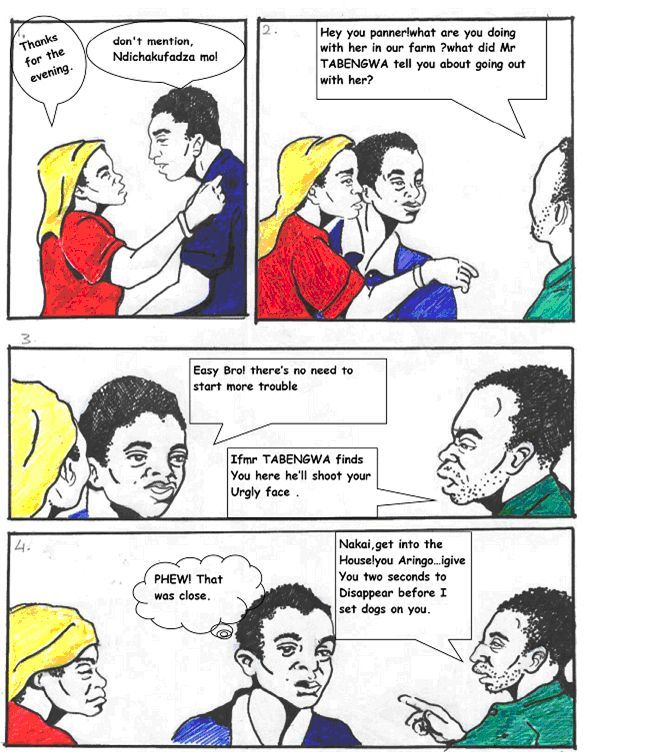
Global Mercury Project Zimbabwe Final Report 2007 33
Appendix 6: Educational Cartoon by Levi Phiri Scene From The Play "NAKAI"