In: Dynamics of Mercury Pollution on Regional and Global Scales: Atmospheric Processes, Human
Exposure Around the World, p. 421-450. N. Pirrone &;K. Mahaffey (Eds), ISBN: 0-387-24493-X, July 2005,
Springer Publisher, Norwel , MA, USA
______________________________________________________________________________________
Mercury Pollution from Artisanal Gold Mining in Block B, El Callao, Bolívar
State, Venezuela
Marcello M. Veiga1,2, Dario Bermudez3,2, Heloisa Pacheco-Ferreira 4,2, Luiz Roberto Martins Pedroso5,2,
Aaron J. Gunson1,2, Gilberto Berrios6, Ligia Vos7, Pablo Huidobro8, Monika Roeser8
1 Dept. Mining Engineering, University of British Columbia, Vancouver, Canada
2 Consultants to UNIDO
3 National Experimental University of Guayana, Puerto Ordaz, Venezuela
4 Dept. of Preventive Medicine - Faculty of Medicine, Federal University of Rio de Janeiro, Brazil
5 CETEM Center of Mineral Technology, Rio de Janeiro, Brazil
6 Hecla Mine, Venezuela
7 CVG - Venezuelan Corporation of Guayana, VP Environment, Venezuela
8 UNIDO United Nations Industrial Development Organization, Vienna, Austria
Abstract
The technical and health aspects of the gold mining activity conducted by artisanal and small-scale miners
in the Block B, El Callao, Bolívar State, Venezuela, were evaluated. The area, with 1731 inhabitants, is a
legal mining concession of CVG-Minerven rented to small-scale mining individuals/companies. Miners
extract the ore from 30-80 m deep shafts using explosives and transport it in small trucks to the Processing
Centers (locally known as "molinos") to be crushed, ground, concentrated and amalgamated. There are 28
active Processing Centers in the Block B area producing about 1 to 2 tonnes Au/a. By using copper-
amalgamating plates to amalgamate the whole ground ore, a large amount of mercury is lost with the
tailings. The amalgam recovered from the plate is burned on a tray or a shovel. The mercury released in
Block B is estimated to be between 2 and 4 tonnes/a and in all of El Callao, could reach as much as 12
tonnes/a. The level of mercury intoxication in the gold miners/millers and surrounding communities in Block
B is one of the most serious in the world. A total of 165 volunteers were interviewed using UNIDO's
Protocols and 105 persons were selected to perform neurophysiological tests. A total of 209 samples of urine
(66 samples from women, 62 from children, 48 from millers and 33 from miners) were collected and
analyzed for Hg and creatinine using a portable atomic absorption spectrometer LUMEX. The overall
average of total Hg concentration in urine was 104.59 µg Hg/g creatinine with standard deviation of 378.41
µg Hg/g creatinine. About 61.7% of the sampled individuals have Hg levels in urine above the alert level of
5 µg/g creatinine, 38.3% of the individuals have Hg levels above the action level (20 µg/g creatinine), 20.6%
above the maximum of 50 µg/g creatinine recommended by the World Health Organization, and 15% above
100 µg/g creatinine, which is the level where neurological symptoms are very likely. The situation with
miners and millers is dramatic as 30% and 79% of the miners and millers respectively have Hg in urine
above the action level and 52% of the millers have levels above 100 µg/g creatinine. In addition, about
14.6% of millers have shown extremely high mercury concentrations in urine, ranging from 1221 to 3260 µg
Hg/g creatinine. This result allows the generalization that more than 90% of the sampled individuals
working in the Processing Centers (millers) have Hg levels in urine above the alert level. Signs of serious
intoxication and neurological damages were detected in a large majority of those directly involved in the
amalgamation process as well as in innocent people living near the Processing Centers. The use of simple
pieces of equipment such as sluice boxes with carpets or with a novel type of magnetic liner (CleangoldTM)
was demonstrated to the miners and millers. A concentrate was obtained with 2854 mg/kg of fine gold. The
tests also used four special amalgamating Goldtech plates that removed up to 95% of the mercury from
tailings. By combining Cleangold sluices and Goldtech plates (arranged in a zigzag), it was possible to
recover 15.4% of gold from tailings. Four different types of retorts were manufactured locally. All these
simple techniques can reduce mercury releases and increase gold recovery.
Introduction
Artisanal and small-scale gold mining (ASM) is an essential activity in many developing countries. The
current number of artisanal gold miners is estimated to be between 10 and 15 million people worldwide
(Veiga and Baker, 2004) with almost 30% of this contingent being women (Hinton et al, 2003). Since 1998,
annual gold production from ASM has constituted 20 to 30% of the global production, ranging from 500 to
In: Dynamics of Mercury Pollution on Regional and Global Scales: Atmospheric Processes, Human
Exposure Around the World, p. 421-450. N. Pirrone &;K. Mahaffey (Eds), ISBN: 0-387-24493-X, July 2005,
Springer Publisher, Norwel , MA, USA
______________________________________________________________________________________
800 tonnes (UNEP, 2002; MMSD, 2002). Assuming that miners lose between 1 and 2 grams of Hg per gram
of gold produced, it is estimated that annually between 650 and 1000 tonnes of Hg are released into the
environment. The predominant source of ASM Hg release is from China (200 to 250 tonnes/a) followed by
Indonesia, which releases 100 to 150 tonnes/a, while Brazil, Bolivia, Colombia, Peru, Philippines, Venezuela
and Zimbabwe each release from 10 to 30 tonnes/a of Hg (Gunson and Veiga, 2004; Shoko and Veiga, 2003,
Veiga, 2003; Veiga and Hinton, 2002). Mercury releases in Latin America are declining, as the most easily
extractable ore has been depleted and the operating costs have increased. However, the gradual increase in
the gold price in 2003 is motivating miners to re-work abandoned ore deposits.
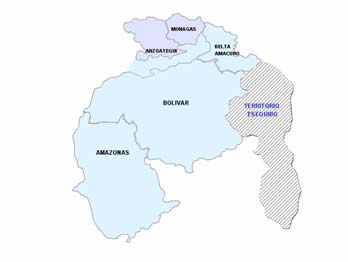
The southern part of Venezuela below the Orinoco River, involving the State of Bolívar, the State of
Amazonas, and the Federal Territory of Delta Amacuro, is called the Guayana Region. The main mining
activities are conducted in the State of Bolívar, which has an area of 240,528 km˛, comprising 75% of the
hydroelectric potential of the country. Less than 5% of the Venezuelan population (which is 24.2 million)
lives in the Guyana Region. In 1999, the labor force experienced a 1.1% decrease in number resulting in an
unemployment rate of 13.2% (1,365,752 people). In 2000, 63% of the individuals making up the workforce
were men. Unemployment among men reached 12.5%, 1.1% higher than 1999. In 2000, 14.4% of women
did not have a job. This was 1.7% higher than in 1999 (CONAPRI, 2003).
El Callao is located in the Northeastern part of the State of Bolívar, 150 km from Ciudad Guayana (Puerto
Ordaz). Mining started in 1724, when Capuchin priests explored the area. The municipality of El Callao was
founded in 1853 with the name of Caratal and many small gold mining companies were installed in the
region. In 1970, CVG (Corporacion Venezoelana de Guayana1) incorporated Minerven, a state-owned
company, which currently has two cyanidation plants producing together approximately 200 to 300 kg of
gold/month: the Peru Plant processes 5,200 tonnes of material/month and the Caratal Plant processes 14,000
tonnes/month. About 15% of the Peru Plant material is Hg-contaminated tailings purchased by the company
from the artisanal gold miners.
CVG-Minerven owns a total area of 48,848 ha of mining concessions. The company granted 77 concessions
of mining in which 59 are contracts with companies and 18 with individuals. The main portion of CVG-
Minerven mining concessions "rented" to third parties is named "Block B" (Fig. 1). With an area of 1,785
ha, this site was chosen by UNIDO for this project. CVG-Minerven has also rented mining areas in Block B
to organized companies (e.g. the American company Hecla Mine).
In theState of Bolívar, with a population of 1,214,486, there are about 15,000 people directly involved in
ASM. This includes about 2000 "bateeros" and "suruqueros" who are those miners using pans to extract gold
and diamonds from alluvial deposits and tailings, 5,000 miners using hydraulic monitors in elluvial and
colluvial operations (gold and diamond), 3,000 miners working in hard rocks (quartz veins) and 5,000 miners
operating in dredges and rafts in waterways all over the state.
In Venezuela, one hundred and fifty years after the beginning of (the paper says mining started in 1724)
mining activities, the social and economic situation of the artisanal miners has not changed substantially.
Observations of small gold miners in the State of Bolívar, Venezuela, reveal serious disruptions to families
as well as the degradation of the community's socio-economic conditions.
In El Callao, ASM miners mostly work in the CVG-Minerven concessions but there are also some illegal
miners working outside these concessions. This has been generating employment for the surrounding
communities. Since the gold ore is abundant and extremely rich, people have not been considering other
types of economic activity. The ASM miners, to some extent, have played the role of gold prospectors for the
company. As the price of gold has been increased since the end of 2002, the number of ASM miners has
increased substantially in the region and many of them are outsiders who have never had any previous
experience in mining.
Since 1995, UNIDO has provided technical assistance related to mercury pollution for government,
companies and artisanal gold miners in the Bolívar State, Venezuela. The situation, as reported by UNIDO
1 A government owned entity for the Guayana region, to promote and coordinate the social-economic development of
the region.
In: Dynamics of Mercury Pollution on Regional and Global Scales: Atmospheric Processes, Human
Exposure Around the World, p. 421-450. N. Pirrone &;K. Mahaffey (Eds), ISBN: 0-387-24493-X, July 2005,
Springer Publisher, Norwel , MA, USA
______________________________________________________________________________________
(1996), was extremely serious in El Callao with miners and millers indiscriminately using mercury to
amalgamate gold.
The current work was conducted at the end of 2003 as a preliminary mission to assess the current health
situation and to prepare for a more substantial project to be conducted in the future. The mission assessed the
level of mercury intoxication of the miners and surrounding population and introduced simple mineral
processing techniques capable of substantially reducing mercury exposure and release in the region.
Population of Block B
According to the 2001 Census, the total population of El Callao is 17,410 and there are 1,731 people living
in Block B, which represents almost 10% of the El Callao population (Hecla, 2004). The main characteristics
of the five communities located in Block B are shown in Table 1. About 47% of the population is female and
44% is younger than 18. Children under 15 years of age account for 30% of the population. Individuals
between 19 and 55 years of age represent 46.5% of the Block B population. In average, the couples in the
region have 2.3 children and there are 3.5 persons per family. About 1/5 of the population is illiterate and 1/4
does not have any kind of technical education. About 2/5 of the population has a primary degree (6th grade),
1/4 a secondary degree and just 2% has a technical or university degree. About 30% of the population
defines its occupation as student, 21% as unemployed, 19% as housewife and just 15% as miner. However
the main activity of the population is definitely gold mining and processing. Water is available mainly
through water trucks (56%) and just 1/3 of the population has water from pipes. About 70% of the population
has toilets.
Processing Centers
About 250 ASM miners in Block B excavate the ore from 30-80 m deep shafts using explosives and
transport it in 50-kg polyethylene bags to the Processing Centers (locally known as "molinos") to be crushed,
ground, concentrated and amalgamated. About 30% of the ore entering Block B comes from areas located
outside of Block B.
Miners pay 10% of the recovered gold to the millers, known as "molineros" (Center owners). In the Block B
area there are 28 operating Processing Centers, each one with 3 to 6 hammer mills making a total of 86
active hammer mills and 25 jaw crushers in the region. The Centers are basically located in 3 communities
along the main Caratal-Chile road (from East to West): Nuevo México, La Fabrica and Monkey Town. There
are some minor processing activities in the communities of Chile and La Iguana and 94% of the Processing
Centers are located in the communities of Nuevo México and Monkey Town.
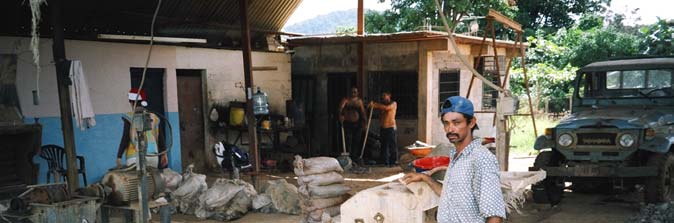
The primary ore is transported to the Processing Centers, where millers crush it to below 2 inches with jaw
crushers and make a heap to feed 25 HP hammer mills. There is no concentration process, i.e. the ore is
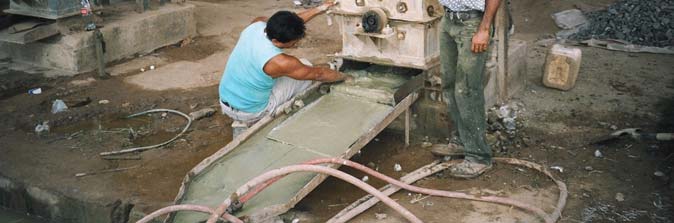
ground to 1 mm in hammer mills and passed on copper-amalgamating plates (Fig. 2). Amalgamation Cu-
plates are stationary copper sheets, usually dressed with a thin layer of mercury (usually 150g Hg/m˛ of
plate) used to amalgamate free gold particles. Working with a slope of 10%, these 1.5 to 2 m-long plates
receive pulp of auriferous ground ore (10 to 20 % solids in the pulp), and the amalgamation takes place when
gold particles contact the plate surface. The efficiency of the process is low due to the short time of ore-
mercury contact. About 0.3 m2 of plate is required to treat 1 tonne of ore/24 h for pulps with 20% solids.
Abrasion of the mercury surface releases droplets that go out with the pulp. A large majority of artisanal
miners in El Callao do not use a mercury trap at the end of the plates. So, tailings from Cu-plates typically
contain 60 to 80 ppm Hg.
Periodically the process is interrupted and amalgam is scraped off the plates with a sharp piece of metal. At
this stage, miners are exposed to high levels of Hg vapor. Quite often the Venezuelan miners burn the
amalgamation plates to "remove" fine gold trapped on the plate. The amalgam recovered from the plate is
squeezed to eliminate excess mercury and burned on a tray or a shovel. Some millers have good retorts
available for miners but they argue that the retorting time is too long (15 minutes) and they simply use a
propane blowtorch to decompose amalgam, emitting large amount of mercury into the atmosphere and
exposing themselves to mercury vapor. This is clearly contaminating everyone directly involved in the ore
processing as well as their neighbors, since the Processing Centers are very near the houses.
In: Dynamics of Mercury Pollution on Regional and Global Scales: Atmospheric Processes, Human
Exposure Around the World, p. 421-450. N. Pirrone &;K. Mahaffey (Eds), ISBN: 0-387-24493-X, July 2005,
Springer Publisher, Norwel , MA, USA
______________________________________________________________________________________
The ore in El Callao is usually extremely rich, with grades ranging from 12 to 20 g Au/tonne. Through
interviewing several millers, it was observed that a Processing Center produces on average 100 to 200g
Au/day (2.6 to5.2 kg/month). Each hammer mill processes 1.7 to 2.5 tonnes/day or 5 to 7.5
tonnes/Processing Center/day. The daily gold production can reach as much as 1 kg/day depending on the
type of ore being processed. Based on the average gold production reported by the interviewed millers,
Block B production might be around 1 to 2 tonnes Au/a. In all of El Callao, the gold production can reach as
much as 5 to 6 tonnes/a considering that there are 80 to 90 Processing Centers in the region. According to
CVG-Minerven engineers, since the gold is very fine (size smaller than 0.074mm) artisanal miners cannot
achieve the liberation size using hammer mills and in the amalgamation process just 30% of the gold is
trapped. The rest is sent to the tailing ponds and later sold to the mining companies.
Gold is not melted in Block B but in the village of El Callao where it is possible to find about 25 gold shops
where gold doré (i.e. the product of burning amalgam) is sold and consequently melted. Some of these shops
are in family houses. As the gold doré may contain up to 10% mercury, as a result of incomplete burning,
this mercury is released in the urban environment during melting.
The price of gold paid to miners is around US $10/g in Venezuelan currency (Bolívars) at the official
exchange rate. As the US dollar in the black market reaches prices at least 70% higher than the official rate,
it is highly probable that miners are selling gold in the neighbor countries, e.g. Brazil.
After visiting the Processing Centers and discussing with local experts, an average operating cost was
obtained. The mining and milling costs are quite dependent on the type of ore being processed. When
grinding hard ores, the hammers are changed after grinding 1.5 to 2 tonnes of ore. This represents a major
cost of the milling operation (as high as 65% of the operating costs). However, millers do not charge more
for milling hard ores. Each Processing Center counts 3 to 5 "employees" who usually do not receive salary
but just live off the gold left (trapped) inside the hammer mills. At the end of the day the "employees" open
the mills and clean them on the amalgamation plates to recover their earnings. Considering that most
Processing Centers do not pay their employees, the operating cost of a Processing Center must be between
0.43 g Au/tonne and 0.97 g Au/tonne of ore processed. As the "molinero" (mill owner) receives 10% of the
gold produced, his/her break-even is reached when processing ores with 0.24 and 0.5 g Au/bag for soft and
hard ore respectively. Many miners do not acknowledge this and they work below the break-even point.
In general, the metallic mercury used in Block B comes from Brazil and it is not legally purchased. It is
observed that typically a Processing Center buys (and loses) 6 to 8 kg of Hg/month. This represents 14.4% to
32.6% of the operating costs when hard and soft ores are milled respectively. Mercury is sold in the area at a
price around US$ 20-25/kg, which is 5 to 6 times higher than the international market price. Millers provide
Hg for the miners who add it on the plates during operation. The ratio Hglost: Auproduced is around 1.5 to 2. The
Hg release in Block B is estimated to be between 2 and 4 tonnes/a. and can reach as much as 12 tonnes/a in
all of El Callao.
Millers accumulate Hg-contaminated tailings in their ponds and sell it to CVG-Minerven and eventually to
other companies applying cyanidation to extract residual gold. The companies re-grind the tailings to below
200 mesh (0.074mm) and leach the material with cyanide. CVG-Minerven plant operators do not have
control of Hg in the effluents or in the gold melting room. This mercury is definitely contaminating plant
operators and reducing the efficiency of the gold precipitation with zinc dust (Merrill-Crowe Process). The
company does not buy tailings with less than 6g Au/tonne. They pay for tailings with 6, 12 and 20g
Au/tonne, 30%, 40% and 50% of the value of pure gold respectively. As the amount of tailing produced is
equal to the amount of material ground, the production of tailings in Block B must be between 44,000 and
65,000 tonnes/a. Considering an average grade of 7 g Au/tonne (which is low for El Callao), the amount of
gold going to the tailings per annum in Block B is around 308 to 455 kg. This divided by 28 Processing
Center owners gives 11 to 16 kg Au/per owner. As the company pays around 30% of the gold value for
tailings (1 g = US$13.6 New York Market on April 7, 2004), a miller would receive at least something
between US$ 44,880 and US$ 65,280 per annum when selling his/her tailings. This might be the minimum
received by miners since the companies do not buy tailing with grade below 6 g Au/tonne. This is clearly a
better business for the Processing Center owners than the processing operation itself, where they receive
In: Dynamics of Mercury Pollution on Regional and Global Scales: Atmospheric Processes, Human
Exposure Around the World, p. 421-450. N. Pirrone &;K. Mahaffey (Eds), ISBN: 0-387-24493-X, July 2005,
Springer Publisher, Norwel , MA, USA
______________________________________________________________________________________
10% of the gold production. The miners and the employees of the Processing Centers are the main victims of
this unfair system.
This work did not attempted to assess the environmental problems caused by mercury use in Block B.
However, it is clear that the runoff water coming from the Processing Centers raises environmental concerns.
The water passes through the Hg-contaminated tailings on its way to the Yuruarí River, which supplies water
to the population of El Callao and nearby communities. The high level of organic matter in the region,
associated with the large amount of Hg-contaminated suspended particles being carried by the water, creates
conditions to oxidize and complex the metallic mercury released by miners. Soluble Hg-organic complexes
may eventually be transformed into the most toxic form of mercury, methylmercury (Meech et al, 1998).
However, the eventual bioaccumulation of methylmercury in the region seems to have less impact on
humans than the occupational exposure of metallic mercury vapor, since just a few small fish are found in
the streams and (local) fish are not a staple food.
Health Assessment
The health assessment combined information from total Hg concentration in urine with medical exams to
evaluate the level of impact that the pollutant caused or may cause to individuals residing in this "mining
hotspot" (site with high levels of Hg release).
Inhalation of Hg vapor is more significant for mining and gold shop workers directly involved in handling
metallic mercury, but can also indirectly affect surrounding communities. Once in the lungs, Hg is oxidized,
forming Hg (II) complexesthat are soluble in many body fluids. Acute Hg poisoning, which can be fatal or
can cause permanent damage to the nervous system, has resulted from inhalation of 1,200 to 8,500 µg/mł of
Hg (Jones, 1971). Impairment of the blood-brain barrier, together with the possible inhibition by Hg of
certain associated enzymes, will certainly affect the metabolism of the nervous system (Chang, 1979). Hg
vapor is completely absorbed through the alveolar membrane and complexes in the blood and tissues before
reacting with biologically important sites. The biological half-life of Hg in blood absorbed as vapor is about
2-4 days when 90% is excreted through urine and feces. This is followed by a second phase with a half-life
of 15-30 days (WHO, 1991). The time interval between the passage of elemental Hg through the alveolar
membrane and complete oxidation is long enough to produce accumulation in the central nervous system
(Mitra, 1986). Mercury can irreversibly damage the nervous system. Kidneys are the most affected organs in
exposures of moderate duration to considerable levels, while the brain is the dominant receptor in long-term
exposure to moderate levels. Total mercury elimination through urine can take several years. Then, the Hg
levels in urine would not be expected to correlate with neurological findings once exposure has stopped
(Stopford, 1979).
Symptoms typically associated with high, short-term exposure to Hg vapor (1,000 to 44,000 µg/mł), such as
those miners are subjected to when they burn amalgams in open pans, are chest pains, dyspnoea, cough,
haemoptysis, impairment of pulmonary function, and interstitial pneumonitis. Long-term, low-level Hg
vapor exposure has been characterized by less pronounced symptoms of fatigue, irritability, loss of memory,
vivid dreams, and depression. Acute exposure has caused delirium, hallucinations and suicidal tendency as
well as erethism (exaggerated emotional response), excessive shyness, insomnia, and in some cases muscular
tremors. The latter symptoms are associated with long-term exposure to high levels of Hg vapor. In milder
cases, erethism and tremors regress slowly over a period of years following removal from exposure pathways
(WHO, 1991). A person suffering from a mild case of Hg poisoning can be unaware because the symptoms
are psycho-pathological. These ambiguous symptoms may result in an incorrect diagnosis.
Since inorganic Hg poisoning affects the liver and kidneys, high Hg levels in the urine can indicate undue
exposure to Hg vapor. WHO (1991) collected a large amount of evidence to conclude that a person with a
urine Hg level above 100 µg/g creatinine has a high probability of developing symptoms such as tremors and
erethism. For Hg levels between 30 and 100 µg/g creatinine, the incidence of certain subtle effects in
psychomotor performance and impairment of the nerve conduction velocity can increase. The occurrence of
several subjective symptoms such as fatigue, irritability, and loss of appetite can be observed. For Hg levels
below 30-50 µg/g creatinine, mild effects can occur in sensitive individuals but it seems more difficult to
observe symptoms. Drake et al (2001) found a significant correlation between Hg in air from 0.1 to 6,315
In: Dynamics of Mercury Pollution on Regional and Global Scales: Atmospheric Processes, Human
Exposure Around the World, p. 421-450. N. Pirrone &;K. Mahaffey (Eds), ISBN: 0-387-24493-X, July 2005,
Springer Publisher, Norwel , MA, USA
______________________________________________________________________________________
µg/mł and urine mercury levels from 2.5 to 912 µg/g of creatinine in gold miners from El Callao. Tsuji et al
(2003) evaluated ten studies reporting paired air and urine Hg data and obtained a strong correlation between
both media at medium and high concentrations. At air concentrations below 10 µg/mł, the authors concluded
that the concentration of Hg in urine was indistinguishable from background levels. The World Health
Organization, or WHO, (1991) described a relationship between Hg in air (A) ion µg/mł and in urine of
exposed workers (U) expressed as µg/g creatinine: U = 10.2 + 1.01 A. Thus a person exposed to about 40
µg/mł of Hg in air should show levels of Hg in urine around 50 µg/g creatinine. This is the maximum urine
Hg concentration recommended by WHO. Drasch et al (2002) consider the Hg level in urine of 5 µg Hg/g
creatinine an alert value and 20 µg Hg/g creatinine as an action level, i.e. the individual mist be removed
from the pollution source.
Urine Analysis
The urine samples in Block B were collected in 50 mL vials and total mercury analyses were processed using
LUMEX2 portable atomic absorption spectrometer (RA 915+) coupled with a pyrolisis chamber (RP 91C).
The equipment works according to the principle of the thermal destruction of the sample followed by the
determination of the amount of elemental mercury released. A small volume of urine sample, in this case 100
µL, was obtained with a micro-pipette, introduced in a quartz crucible and then into the pyrolisis chamber
(RP 91C) that worked at 800şC. The vapor released in the pyrolisis chamber then entered the atomic
absorption spectrometer (RA 915+). All procedures were controlled by a laptop computer. LUMEX uses a
Zeeman process (Zeeman Atomic Absorption Spectrometry using High Frequency Modulation of Light
Polarisation ZAAS-HFM) that eliminates interferences and does not use a gold trap. The detection limit of
the urine samples established in the Venezuelan analytical conditions was 0.2 µg Hg/L. This equipment was
able to analyze 300 urine samples in 12 hours.
Creatinine analysis was performed using a Bioclin kit from the company Quibasa. Creatinine reacts with
picric acid, to form a yellow-reddish chemical complex in conditions where the maximum production of the
dyed complex creatinine-picrate occurs. The spectrometric analyses were conducted at wavelength of 510
nm in a Bausch & Lomb Spectronic 20 spectrophotometer.
In order to evaluate the LUMEX analytical precision, urine samples from 15 selected volunteers were
collected and analyzed using LUMEX, and sent to three Venezuelan institutions: Laboratorio de
Espectroscopia Molecular, Facultad de Ciencias, Universidad de los Andes (ULA); La Salle Institute; and
UCV-Universidad Central de Venezuela (Caracas). The analytical method used by ULA and UCV was cold
vapor atomic absorption spectrometry. La Salle used atomic absorption spectrometry with hydride
generation.
The linear correlation coefficients (r)3 between Hg analyzed by LUMEX and the results from the Venezuelan
laboratories were: 0.8868 (ULA), 0.9178 (UCV), and 0.9690 (La Salle). This indicates a relatively good
performance of the portable analyzer. However, the largest discrepancies occurred among the Venezuelan
laboratories. There are many reasons for this, such as: type of analytical equipment, analytical procedure,
quality of reagents and water, cleanliness of the laboratory glassware and environment (in particular
laboratory air), quality of Hg standards used in the analysis, quality control methodology, stability of the
electricity source, etc.
Medical Exams
The medical exam followed the Protocols developed by UNIDO (Veiga and Baker, 2004). Questions related
to the health history of the volunteers were applied in order to exclude participants with severe diseases from
the statistical evaluation (e.g. someone who has had a stroke might be excluded from the survey). Individuals
were selected for a series of specific neuropsychological tests designed to detect the effects of mercury
poisoning. These tests were applied by medical doctors, and were followed by local health care
2 This equipment was kindly provided by CERM3 The Center for Environmental Research in Minerals, Metals and
Materials of the University of British Columbia, Vancouver, Canada
3 also referred to as the Pearson product moment correlation coefficient
In: Dynamics of Mercury Pollution on Regional and Global Scales: Atmospheric Processes, Human
Exposure Around the World, p. 421-450. N. Pirrone &;K. Mahaffey (Eds), ISBN: 0-387-24493-X, July 2005,
Springer Publisher, Norwel , MA, USA
______________________________________________________________________________________
professionals. All volunteers involved in the medical exams have signed an agreement to participate in the
Health Assessment involving four questionnaires/exams:
1. Evaluation of risk of mercury exposure (personal data, occupational exposure to mercury,
confounding factors to exclude candidates with other problems, diet issues including frequency and
type of food),
2. General health (questions related to health conditions and subjective symptoms as described by the
patient, e.g. metallic taste, salivation, fatigue, etc),
3. Clinical-neurological exams (e.g. blood pressure, signs of gingivitis, ataxia, tremors, reflexes, etc.),
4. Specific neuropsychological tests (e.g. memory, coordination, etc.).
All the results of these questionnaires/exams were compared with the mercury analysis in urine samples. All
the procedures were clearly explained to the population. All questionnaires were translated into Spanish.
The clinical-neurological exams, a fundamental part of the assessment of the evolution of metallic mercury
exposure, allow the observation of speech problems, walking, balance, coordination, muscular strength,
tactile sensibility, autonomous features of the cranial and spinal nerves, superficial and profound reflexes,
and other features.
Specific neuropsychological tests were applied to test and evaluate:
Recent memory, using the Wechsler Memory Scale (WMS),
Episodic memory,
Fine motor coordination using the MOT Test (match box),
Coordination and dexterity of the hand,
Spatial perception,
Fine motor and manual dexterity,
Motor-visual coordination,
Perception of the background figure,
Perception of the constancy of forms,
Visual perception (Frostig).
The questionnaires related to mercury exposure and to general health were applied by a local nurse. The
clinical-neurological exams and specific neuropsychological tests were conducted by a local physician and
an experienced foreign neurotoxicologist.
Selection of Volunteers
The Health Assessment volunteers were preliminarily selected based on the population distribution of the
different communities of Block B and based on previous work conducted by Hecla (2004) that defined the
demographic distribution. About 500 possible volunteers were identified in a proportion of 40% men, 30%
women and 30% children. Out of the 500, a total of 209 samples of urine (66 from women, 62 from children,
48 from millers and 33 from miners) were collected and analyzed for Hg with LUMEX and creatinine. After
applying the exclusion criteria, just 105 persons were selected to perform the neurophysiological tests
(questionnaire 4). Most male volunteers have been working in the Processing Centers and/or in the mines.
The distinction between millers and miners is that millers work exclusively as "employees" of the Processing
Centers whereas miners extract the ore, take it to the Centers and follow all concentration steps with the
millers. Both workers are contaminated by mercury vapor, but millers are constantly in contact with mercury
while miners spend some time in the mines. Both burn amalgam using blowtorches. All male miners and
millers were older than 15 and younger than 50. Women were selected according to the proximity from their
residences to the Processing Centers. Their ages ranged from 15 to 45. All children were younger than 15.
Results of Urine Analysis
The overall average of total Hg concentration in the 209 samples analyzed was 104.59 µg Hg/g creatinine
with standard deviation of 378.41 µg Hg/g creatinine. Classes of Hg concentrations were selected to
highlight the results (Fig. 3). About 61.7% of the sampled individuals had Hg levels in urine above the alert
level of 5 µg/g creatinine, 38.3% of the individuals had Hg levels above the action level (20 µg/g creatinine),
In: Dynamics of Mercury Pollution on Regional and Global Scales: Atmospheric Processes, Human
Exposure Around the World, p. 421-450. N. Pirrone &;K. Mahaffey (Eds), ISBN: 0-387-24493-X, July 2005,
Springer Publisher, Norwel , MA, USA
______________________________________________________________________________________
20.6% above the maximum of 50 µg/g creatinine recommended by the World Health Organization (WHO,
1991a) and 15% above the critical level of 100 µg/g creatinine which is the level where neurological
symptoms should be evident.
The situation with miners and millers is dramatic, as 30% and 79% of the miners and millers respectively
have Hg in urine above the action level and 52% of the millers have levels above the critical level (Fig. 4).
In addition, about 14.6% of millers had shown extremely high mercury concentrations in urine, ranging from
1221 to 3260 µg Hg/g creatinine. This result allows the generalization that more than 90% of the sampled
individuals working in the Processing Centers (millers) have Hg levels in urine above the alert level.
The average level of Hg in urine from 66 women sampled in this study was 13.02 with standard deviation of
23.34 µg Hg/g creatinine. About 27% of the women had Hg concentration in urine above the alert level and
21% above the action level. The highest levels of mercury in urine from women are found in the
communities of Monkey Town and Nuevo México. As already mentioned, these communities have the
highest concentration of Processing Centers in Block B and houses were built very close to the mills. A
number of women (21% of the group) were noticed with occasional direct contact with Hg, who were
sporadically involved in the amalgamation/amalgam burning process. More than 40% and 20% of the
interviewees have complained of mental and physical fatigue respectively. Based on variance analysis
(ANOVA) a significant difference was not found among the averages of mercury concentration in urine
from women living in different communities (p = 0.318). No correlation was found between Hg
concentrations in female urine and the distances from their houses to the Processing Centers (r = 0.047).
The average concentration of total Hg in urine of children from the communities around the Processing
Centers is 33.30 with standard deviation of 70.80 µg Hg/g creatinine. As in the previous groups, the results
show high variability as a result of differences in living and working habits of the children. About 53% of the
62 children sampled had Hg concentration in urine above the alert level and 14.5% above the action level.
As also seen in Fig. 6, about10% of the sampled children had levels of mercury in urine above the critical
level of 100 µg/g creatinine in which neurological symptoms of intoxication should be observed. In some
cases it was observed the direct participation of children in the mining and processing activities. These
children work voluntarily to help their parents and relatives (Bermudez, 1999). It is also very common to see
children playing (or living) in the Processing Centers. About 32% of the urine samples from children have
shown Hg concentrations below the detection limit of the method (0.2 µg/L). In the community of Nuevo
Mexico, 84% of the urine samples were above the action level (20 µg Hg/g creatinine). In Monkey Town, 25
% of the samples had Hg concentrations above the action level, and the maximum Hg concentration was
found in the urine of a 13 year-old girl (384 µg Hg/g creatinine). No correlation was found between
concentration of total mercury in urine from children and the distance between their residences and the
Processing Centers (r = - 0,189).
Despite the direct contact with mercury of both groups, miners and millers, the symptoms are slightly more
evident in miners. As mentioned before, the differences in working habits between miners and millers are not
significant. The correlation between symptoms reported by the individuals (also known as "subjective
symptoms") plus observed ("objective") symptoms, and Hg in urine of miners and millers, has been stronger
in the group of millers (Table 2). In the miners' group, the linear correlation coefficients were below 0.5,
indicating poorer correlation between symptoms and levels of Hg in urine than in the case of millers.
In 25% of women and children, it was possible to identify objective symptoms or abnormal behavior during
the clinical exams, but just 28% of the miners and millers have shown objective symptoms. The difference in
observed symptoms between the examined groups was not statistically significant, despite the higher levels
of mercury in urine of miners and millers when compared with women and children. Regarding the statistical
analysis, it was considered as a positive symptom all cases in which at least one or more objective symptoms
were identified. In chronic intoxication, the individuals are exposed to lower concentrations of the pollutant
for long periods of time and if the absorption exceeds excretion, the toxic substance accumulates and the
effects of accumulation are perceived as subtle alterations of the neuropsychological and neurobehavioral
functions. Sub-clinical alterations are more difficult to diagnose in a normal clinical evaluation and this is the
most classical and usual effect of mercury on the nervous system.
In: Dynamics of Mercury Pollution on Regional and Global Scales: Atmospheric Processes, Human
Exposure Around the World, p. 421-450. N. Pirrone &;K. Mahaffey (Eds), ISBN: 0-387-24493-X, July 2005,
Springer Publisher, Norwel , MA, USA
______________________________________________________________________________________
Specific neuropsychological tests
A scoring process suggested in the UNIDO Protocols (Veiga and Baker, 2004) was used to express the
results of the neuropsychological tests. Just three groups were evaluated: millers, miners and women. The
latter were not directly involved in the amalgamation process. The scoring process ranged from 0 to 3. Score
0 (zero) indicates good performance in the test and score 3 indicates highly poor performance; the higher the
score, the greater the function deficiency.
The Wechsler Memory Scale (WMS) test evaluated recent memory. The test involved a procedure to ask the
patient to repeat a list of numbers that ranges from 4 to 8 single numbers. The results have shown that about
23% of miners and 10.5% of millers had scores of 2 (indicating deficiency) whereas just 9.4% of women had
this score. Nearly 34.3% of miners and 26% of millers scored zero (no problem) and almost 44% of the
women did not show any memory problem. The correlation of WMS with Hg-urine levels was not
statistically significant to show differences between groups. However, just 23% of individuals with high
mercury concentrations in urine (above 50 µg Hg/g creatinine) have shown no difficulties (score 0) in
completing the WMS Memory Test, whereas between 40 and 45% of individuals with Hg in urine below 20
µg Hg/g creatinine had no problem completing the series of tests. It is also possible to observe that the
percentage of individuals with bad performance (score >1) reaches 76.5% for individuals with Hg in urine
above 50 µg/g creatinine.
The Match Box test evaluated coordination, tremor and concentration. The test consisted in putting 20
matches on a table, half of them on each side of an open matchbox, and asking the individual to put all the
matches into the box using the left and right hands alternatey. The time is measured. About 15 seconds is
considered a normal time for this task. Miners and millers performed better than women but the millers
performed worse than miners. The Match Box Test did not show any correlation between Hg levels in urine
and test performance.
The MOT Test (Finger-Tapping) evaluated spatial perception, fine motor coordination and normal dexterity.
The test consisted in asking the volunteer to keep his/her elbows on the table and make as many points as
possible on a piece of paper with a pencil. The number of points is counted after 10 seconds. A normal
individual can easily make more than 65 points. Miners and millers had more difficulties in performing this
test than women . About 72% of millers had scores of 1 and 2, indicating deficiencies in performing the test.
The Frostig test evaluated visual perception. It consists in drawing a line from one point to another across a
narrow gap. The results did not show good sensibility in measuring neurological effects, as almost 100% of
all tested individuals could perform the tasks without any visible problem. The only exception was a miller,
who has evident serious chronic intoxication by metallic mercury.
In the test that estimates Episodic Memory, no women have shown deficiencies, but almost 14% of miners
and 11% of millers have shown scores above 2. The tests that evaluate episodic memory are similar to the
Mini-Mental State Examination tests. This evaluates memory, orientation, and the ability to calculate and
speak. This is probably one of the most used and studied tests for quick evaluation of neurological functions.
This test has been quantified and adjusted to different ages and degrees of instruction. Its application is
simple, and this test can also be applied to illiterates (Bertolucci et al, 1994). A score of 2 or 3 in this test is a
clear indication of a neurological problem. The correlation between Hg in urine and scores obtained in the
Episodic Memory Test (Mini-Mental) provided a clear indication that the number (%) of individuals who
score zero (no problem) decreases when the Hg level in urine increases. In addition, the percentage of
individuals with poor performance in this simple test (scores of 1, 2 and 3) increases with the level of Hg in
urine (Fig. 5). This is a strong indication of alteration of the neurological functions by mercury vapor
intoxication.
About 27% of individuals who performed the specific neuropsychological tests have noticeable neurological
problems detected in the clinical exams. However, no significant correlation was found between the results
of the medical exams and the specific tests.
The tests of coordination and manual dexterity (drawing figures) normally evaluate patients with significant
central neurological lesions. In this study asimilar scoring process as the mini-mental tests was adopted, i.e.
In: Dynamics of Mercury Pollution on Regional and Global Scales: Atmospheric Processes, Human
Exposure Around the World, p. 421-450. N. Pirrone &;K. Mahaffey (Eds), ISBN: 0-387-24493-X, July 2005,
Springer Publisher, Norwel , MA, USA
______________________________________________________________________________________
ranging from 0 (no problem) to 3 (deficient). The percentage of miners and millers with a score above 2 was,
52.2% and 34.8% respectively, which is a clear demonstration of poor performance.
Demonstration of Cleaner Technologies
Extracting Gold and Mercury from Tailing
As part of the fieldwork, some simple techniques were brought to the miners' attention in order to reduce
mercury emissions and exposure while decomposing amalgams. A Processing Center ("El Mago") was
rented to conduct tests and demonstrate cleaner technologies of gold processing to the local artisanal miners.
Five tests were conducted using tailings from the Processing Center pond. Extraction of residual gold from
tailings was in fact advantageous as this material was more homogeneous than the primary ores. In addition,
this got the attention of miners and millers, as gold in tailings is usually unliberated or very fine and they are
aware that they do not have methods to extract it. Ultimately, this is the gold just extracted by the
"company's methods" (cyanidation after extensive grinding).
Most tests were conducted using a sluice box with the four special amalgamating Goldtech plates,
manufactured in Brazil and locally commercialized by a company called PARECA (at US$ 200 per one
40x30 cm plate). Unlike the ordinary amalgamating Cu-plates, this special plate has a thin coating of Hg and
Ag electrolytically deposited onto a copper plate. Mercury and eventually gold from tailings are captured and
firmly fixed to the plate surface. Mercury losses are minimized. When the plates are fully loaded, amalgam is
removed with a plastic scraper. This kind of plate has been used successfully in Brazil to remove mercury
from contaminated tailings, (Veiga et al, 1995) but they can also be used to amalgamate gravity concentrates.
The support for four plates was made of wood in Venezuela. The configuration was set up to allow a cascade
effect from one level to another. Another wood structure was built to hold the four Goldtech 40 x 30 cm
plates, placed in a zigzag (Fig. 6). This allowed a reduction of the flow speed on each plate and rendered
better results.
The four Goldtech plates were activated with vinegar before receiving Hg-contaminated tailings. Then, about
1,100 kg of tailings were fed onto the plates. Samples before and after feeding the Goldtech plates were
systematically collected every 15 minutes and the whole material was dried, pulverized, homogenized and
analyzed in triplicate using the LUMEX atomic absorption spectrometer (Table 3). The material before
entering the Goldtech plates was analyzed at62.2 mg/kg of Hg and left the plates with 3.24 mg/kg Hg on
average. More than 95% of the Hg was removed from the tailings. However, the gold recovery process was
not so efficient. Before entering the Goldtech plates, the tailings had on average 9.53 g Au/tonne. The final
tailing, after leaving the Goldtech plates, analyzed 9.05 g Au/tonne. Just 0.7 g of gold was recovered from
the plates. This is a clear indication of lack of liberation of gold from the silicates.
Another test was conducted using 1,805 kg of tailings to demonstrate to miners and millers the advantages of
using carpets to concentrate gold prior to amalgamation. The material fed the hammer mill and discharged on
a sluice box lined with two carpets in series. Both carpets were locally acquired: a synthetic grass and a
Multiouro Tariscado. The latter is produced by the Brazilian company Sommer, and is widely used by
Brazilian artisanal gold miners. This carpet costs around US$10 to 15/m˛ in Venezuela. The Brazilian carpet,
appropriated to retain fine gold, was placed at the beginning of the flow, where the speed is slower. Visibly,
the Brazilian carpet retained more gold than the synthetic grass.
The concentrates from the carpets were washed and amalgamated on the Goldtech plates. This operation was
done by cleaning the carpets with water and directing the pulp of concentrates to the plates placed in the
zigzag structure. The gravity concentrate was re-passed three times on the plates. After retorting, 1.3 g of
gold was obtained. The final tailings had an average grade of 3.75 g Au/tonne.
Another test was set up using Cleangold sluice boxes followed by Goldtech plates. The Cleangold sluice uses
polymeric magnetic sheets, with the magnetic poles aliened normal to the direction of the flow, inserted into
a simple aluminum sluice box. Magnetite, a mineral usually found in gold-ore deposits, forms a corduroy-
like bed on the sluice floor, which appears effective at recovering fine gold. Fine particles of steel from the
hammers are also trapped and form the liner. This sluice box can be available in a variety of sizes and a 2ft x
6in (60x15 cm) sluice costs US$ 75 in USA. The main advantage of this sluice is the high concentration
In: Dynamics of Mercury Pollution on Regional and Global Scales: Atmospheric Processes, Human
Exposure Around the World, p. 421-450. N. Pirrone &;K. Mahaffey (Eds), ISBN: 0-387-24493-X, July 2005,
Springer Publisher, Norwel , MA, USA
______________________________________________________________________________________
ratio. Gold becomes trapped in a magnetite layer and the sluice can be scraped and washed into a pan. About
628 kg of tailings were passed in a 2 ft Cleangold sluice box followed by two 8x8in (20x20 cm) sluices and
the tailing was directed to the zigzag structure with four Goldtech plates. The Cleangold sluice retained
visible mercury droplets and recovered 0.64 g of gold in a concentrate that analyzed 2854 mg/kg Au4. The
gold recovered by this sluice box was extremely fine. This was demonstrated to the miners and millers.
Goldtech plates recovered 0.25g Au. This configuration was capable of recovering 15.4% of the gold from
the tailings in which 11% of the gold was recovered using the Cleangold sluice and 4.4% of gold in the
Goldtech special amalgamating plates.
Using the Cleangold sluices, it was also possible to pan the concentrate and, using a plastic vial, gold was
sucked from the concentrate, avoiding entirely the use of mercury. However, the plastic sucker recovery is
probably limited to 50% of the gold as more gold remains in the concentrate than can be recovered by
panning.
All results have reinforced the conclusion that lack of gold liberation is the main obstacle to increasing gold
recovery in El Callao. In other words, without an appropriate grinding process, the gold recovery by gravity
separation will still be poor. The use of hammer mills to re-grind tailings is not appropriate. CVG-Minerven
cyanidation plant uses ball mills to re-grind the tailings to at least below 200 mesh (0.074 mm). The only
possibility to increase gold recovery in the Processing Centers is by using small ball mills (e.g. 48x60 cm)
to reduce the size of the ground product and promote gold liberation. As the gold is very fine, it seems that
the Cleangold sluice is an appropriate and affordable technology for the miners and millers to process
primary ores via gravity concentration.
Retorts
Miners burn amalgam in shovels and, usually, very near their noses, where they can better observe the
decomposition process. Very few miners and millers believe that this is a problem and they keep burning
mercury carelessly. Some millers have retorts available to be used by miners but they remove the top of the
retort and use it as an open-air crucible to burn and melt gold. In many cases this operation is conducted in a
confined environment.
Using the LUMEX spectrometer, mercury in the breath of miners and residents was analyzed. The normal
level of mercury in the breath depends on the number of amalgam-dental fillings of each individual as well
as the level of mercury in the environment. This is usually below 100 ng/mł. It is also known that just 7% of
the mercury vapor dose received by an individual is released during respiration (Pogarev et al, 2002). In El
Callao, miners usually have shown 10,000 ng/mł of mercury in their breath. Children living near Processing
Centers had as much as 5,000 ng/mł of mercury in their exhaled air. Despite the rudimentary procedure
adopted to analyze the breath of volunteers, this was effective to call the attention of the people working in
the Centers or living around them to the high levels of mercury to which they have been exposed and
accumulated in their lungs. This simple analysis has also contributed to convincing the miners and millers to
watch the demonstration of different types of retorts made by UNIDO in Venezuela.
In order to introduce retorts to miners, four different types of retorts were locally manufactured and the
principle of retorting was demonstrated using a Thermex glass retort. The local retorts were fabricated in a
metal shop in El Callao using crucibles of stainless steel. The crucibles were actually small stainless steel
salad or sauce bowls acquired in kitchen stores. An RHYP retort made of galvanized water connection pipes
was also built and tested. All retorts were demonstrated to miners and amalgam was burned using a propane
torch, such as they would generally use to burn amalgams in shovels. The burning process took an average of
15 to 20 minutes.
One of the most appreciated retorts was that fabricated using a Chinese design (Gunson and Veiga, 2004).
This was a more elaborate retort built on a steel table but also using a stainless steel salad bowl as crucible. A
steel cover (bucket) was placed on the crucible. The table was filled with water and the amalgam burned with
a blowtorch from the bottom. As the crucible wall was thin, the retorting time was short. Mercury condensed
on the wall of the cover and dripped into the water. The manufacturing cost of this prototype was around
4 Gold analyses were conducted at CVG-Minerven using the fire assay method.
In: Dynamics of Mercury Pollution on Regional and Global Scales: Atmospheric Processes, Human
Exposure Around the World, p. 421-450. N. Pirrone &;K. Mahaffey (Eds), ISBN: 0-387-24493-X, July 2005,
Springer Publisher, Norwel , MA, USA
______________________________________________________________________________________
US$ 80 but this could be drastically reduced. This retort took 10 to 15 minutes to eliminate most mercury
from amalgam using a propane blowtorch. A serious inconvenient of this, and other retorts, is that miners
can remove the cover (bucket) from the crucible while the retort is still hot. When this occurs, miners are
exposed to mercury vapor. This was demonstrated by Schulz-Garban (1995) when urines of 20
amalgamation workers using retorts were analyzed. It was noticed that 8 individuals had high mercury levels
in urine because they habitually opened retorts before cooling them. This was shown to miners and millers
and it was advised to cool down the cover pouring water on it and then wait some minutes before opening
the system.
Analytical techniques were discussed and transferred to a chemical laboratory in Ciudad Guyana (La Salle
Foundation). The methodologies for quantitative and semi-quantitative Hg analyses using a solution of
dithizone with chloroform (Veiga and Fernandes, 1991) were demonstrated to the local technicians.
A two-day workshop was also conducted in the El Mago Processing Center, where the project team set up a
series of practical demonstrations, and in an auditorium in El Callao where the results of the project were
discussed with almost 60 stakeholders.
Conclusions and Recommendations
The medical exams, the urine analyses and the specific neuropsychological tests have revealed that millers
and miners have shown symptoms that suggest serious mercury intoxication. In just one worker it was
characterized as acute mercury intoxication and his immediate removal from the polluting source for
treatment was recommended to the local doctors and nurses. The specific neuropsychological tests have
highlighted a deficit of the cognitive functions in some workers such as alteration of visual perception,
deficiency of recent and episodic memory, as well as deficiency of spatial perception, motor coordination
and manual dexterity. The cognitive deficiency showed positive correlation with the levels of total mercury
in urine and this is more prominent in Hg concentrations above 6µg/Hg/g creatinine. Some of the
neuropsychological tests have revealed that people not directly involved in the amalgamation work but living
near the Processing Centers have been neurologically affected by mercury vapors. The alterations found in
the medical exams and neuropsychological tests of people indirectly exposed to mercury vapors call for
immediate action to reduce emissions and reduce exposure of innocent people to the pollutant.
Suggested are:
· The immediate removal of children from the polluting source (many children play and work in the
Processing Centers) (Fig. 7),
· The continuation of the monitoring of cognitive aspects of the residents of Block B, in particular
children from ages 7 to 12,
· The training local health workers to be able to monitor health conditions as well as performing the
specific neuropsychological tests in residents, and
· The implementation of an interdisciplinary strategy to educate workers and residents to reduce and
avoid mercury vapor exposure.
Processing Centers are usually effective in reducing widespread environmental impacts caused by artisanal
gold miners, but at the same time, when the centers are not well operated, they can concentrate
contamination in certain areas. The technologies used by the Processing Centers in El Callao are exposing
miners, millers and surrounding communities to high levels of mercury vapor. The technique of using
hammer mills associated with amalgamating copper plates is recovering, at the most, 30% of the gold in the
ore. As gold in El Callao seems to occur at fine grain size, a more efficient grinding process is needed. This
must be associated with a gravity separation process that does not use mercury. The amalgamation of the
whole ground ore using copper-plates, as extensively used in El Callao, is an ancient inefficient technology
that releases mercury to the tailings and exposes operators to high levels of mercury vapor. There are many
concentration techniques that do not require mercury in the processing, such as sluice boxes using
appropriate carpets, Cleangold sluices, centrifuges, etc.
The use of retorts is another critical issue in El Callao. Miners and millers do not believe in mercury
pollution and keep burning amalgams in pans and shovels. In many cases this is conducted in a closed
environment. Companies and the government should immediately establish an awareness campaign to
In: Dynamics of Mercury Pollution on Regional and Global Scales: Atmospheric Processes, Human
Exposure Around the World, p. 421-450. N. Pirrone &;K. Mahaffey (Eds), ISBN: 0-387-24493-X, July 2005,
Springer Publisher, Norwel , MA, USA
______________________________________________________________________________________
introduce safer procedures for amalgam decomposition, such as retorts. Miners and millers need to be made
aware that using any retort is better than using nothing. Different types of retorts should be brought to the
miners' attention.
In terms of business, the Processing Centers are clearly using a poor strategy. As they charge 10% of the
gold production and the miners do not know how much gold they have mined, the millers very frequently do
not produce enough gold to pay their operating costs, at 0.24 and 0.5 g Au/bag for soft ore and hard ore
respectively. The method used in Zimbabwe for Custom Processing Centers (Shoko and Veiga, 2003) seems
to be more adequate, since the price for processing ore is fixed based on hours of grinding. Definitely a better
arrangement between miners and millers must be established in El Callao.
The business relationship between mining companies and miners/millers must be carefully revisited and
improved. The companies, in particular CVG-Minerven, are acquiring gold-rich tailings from miners,
potentially creating future problems for the company as the benefits become concentrated in the company
and Processing Centers' owners. The relationship between companies and miners/millers can rapidly
deteriorate. The amount of mercury being introduced into the companies' environments together with
contaminated tailings is considerable, and this is definitely contaminating employees (especially those
working in the gold melting room) and tailing ponds. As mining companies do not purchase tailings (and
sometimes ore) with less than 6 g Au/tonne, it is also foreseen that millers (Processing Center owners) will
soon start their own cyanidation plants. Cyanidation of Hg-contaminated tailings, as seen in many other
countries, exacerbates the danger of mercury in the environment and facilitates the metallic Hg solubilization
and methylation (Gunson and Veiga, 2004). This is a problem that soon will come to El Callao and will need
immediate attention from the authorities.
As yet, there is no educational program for miners/millers, residents and the general population to make
them aware of the dangers caused by mercury. No consistent program has been implemented in the region to
bring simple solutions for miners and millers such as the use of retorts to protect themselves and the
surrounding population. There are reliable local equipment manufacturers with good technical capacity to
develop simple types of equipment suitable for small-scale miners. These manufacturers could be trained to
produce better pieces of equipment. Mercury pollution cannot be reduced if the miners/millers do not see any
additional benefit in terms of gold production.
All action should take into consideration the realm of problems associated with poverty and rudimentary
living and working conditions of the people of Block B. UNIDO has been implementing Transportable
Demonstration Units (TDU) in six countries in Africa, Asia and South America to bring hands-on training to
miners/millers and the general public. A movable unit consists of a tent to be used as classroom and a
container with small pieces of equipment to teach the miners and millers the advantages of using cleaner
methods. This brings to the miners' and millers' attention a variety of technical options for gold
concentration, amalgamation and retorting; it is up to them to select what is affordable, appropriate and
durable according to their convenience. The unit also incorporates programs to attract miners and the public
to watch skits and movies about environmental impacts and mercury pollution, highlighting local cultural
aspects and incorporating concepts of environmental and health protection. The unit can also bring ideas to
improve the livelihood of different mining communities such as suggesting economic diversification or
value-adding techniques (e.g. handcraft, fish farming, agriculture, brick making using tailings, etc). An
initiative like this is badly needed in El Callao and the collaboration of local mining companies is critical to
guarantee the sustainability of this program.
Any initiative in the region must take into consideration the critical living situation of the communities.
Programs cannot be solely focused on reduction of mercury pollution since this pollutant is a consequence
and not a cause of the local problems. Poverty is the main cause of the misuse of mercury and intoxication of
this and so many other communities around the world. Local and international institutions, government,
mining companies, the private sector and NGOs should act immediately to solve the dramatic situation of the
mining communities of El Callao. Some suggestions of badly needed actions are as follows:
· Generate non-mining and sustainable activities,
· Establish a latrine construction program,
In: Dynamics of Mercury Pollution on Regional and Global Scales: Atmospheric Processes, Human
Exposure Around the World, p. 421-450. N. Pirrone &;K. Mahaffey (Eds), ISBN: 0-387-24493-X, July 2005,
Springer Publisher, Norwel , MA, USA
______________________________________________________________________________________
· Evaluate and promote the construction of adequate sewage system,
· Improve the supply of potable water (source of water, treatment plant and pipes),
· Establish community programs to improve/build houses far from the Processing Centers,
· Establish a non-centralized Community Health Center, so it can get more support from other
regions? Other what?
· Establish labor training programs using the TDU as an example,
· Establish programs to improve the educational level of the communities, and
· Establish projects for the rehabilitation of degraded and polluted areas.
Acknowledgements
The Project team wants to express its profound gratitude to the following people and institutions: Rebeca
Erebrie, VP Environment, Science and Technology, CVG and Armando John Madero, VP Mining, CVG,
Franqui Patines, Benjamin Millán, Jesus Rebolledo, Walter Maciel and Joaquín Lezama from CVG
Minerven; the Rivero family (Rafael, Maria Elena and Rafaelito) and Antonio "Lalo" from Molino El Mago;
Dr. Salvador Penna (UDO-Universidad del Oriente), Dra Eudelis del Vale Romero Platina and Ms. Aracelis
Arevalo (CVG-Minerven) as part of the medical team; Luís Perez and Luzmila Sanchez from Fundacion La
Salle; Luisa de Bermúdez for filming the project; Dr. John Meech from CERM3 The Center for
Environmental Research in Minerals, Metals and Materials of the University of British Columbia, Canada,
for the use of LUMEX; Metall-Technic, Munich, Germany for the donation of the Thermex retorts; José
Pino and Clyde Pepppin from Hecla Mine; Jorge Paolini from the Center for Research in Management and
Education for the Sustainable Development, UNEG Universidad Experimental de Guayana; all Processing
Center's owners and employees that provided information for the UNIDO team: Roberto Clark, Guillermo
Herrera, Vladimir Vega, Felix Rangel and Ramon Alvorado among many others.
References
Bermúdez, D., 1999. La Pequeńa Minería en Venezuela. Report for Int. Labour Organization. IEPC-
Erradicación Internacional del Trabajo Infantil, Lima, Perú. (in Spanish).
Bermúdez, D., 2003. El Ambiente y la Salud Ocupacional en la Minería en Pequeńa Escala. In: I Encuentro
Internacional de Investigación en Salud Ocupacional. Universidad de Guadalajara, Secretaría del Trabajo
y Previsión Social (Delegación Jalisco) y PIENSO A.C. Guadalajara, Estado de Jalisco, México. Mayo
2003. (in Spanish).
Bertolucci, P. H. F.; Brucki, S. M. D.; Campacci, S. R.; Juliano, Y., 1994. O Mini-Exame do Estado Mental
em uma Populaçăo Geral. Impacto da Escolaridade. Arquivos de Neuropsiquiatria, v.52, p. 1-7 (in
Portuguese).
Chang, L.W., 1979. Pathological Effects of Mercury Poisoning. In: The Biogeochemistry of Mercury in the
Environment. p.519-580. Ed. J.O. Nriagu. Elsevier/North-Holland Biomedical Press, Amsterdam.
CONAPRI Venezuelan Council for Investment Promotion, 2003.
http://www.conapri.org/framedetalle.asp?sec=1000&id=26&plantilla=8
Drake, P.; Rojas, M.; Reh, C.M.; Mueller, C.A.; Jenkins, F.M., 2001. Occupational Exposure to Airborne
Mercury during Gold Mining Operations near El Callao, Venezuela. International Archives of
Occupational Environmental Health, v.74, p.206-212.
Drasch, G.; Boese-O'Reilly, S.; Maydl, S.; Roider, G., 2002. Scientific Comment on the German Human
Biological Monitoring Values (HBM Values) for Mercury. International Journal Hygiene Environmental
Health, v. 205, p. 509-512.
Gunson, A.J. and Veiga, M.M., 2004. Mercury and Artisanal Gold Mines in China. Environmental Practice,
v.6, n.2, p.109-120.
Hecla, 2004. Estudio Socio-económico de las Comunidades del "Bloque B" de El Callao. Comp. Minera
Hecla, Edo Bolívar, Venezuela. (in Spanish)
Hinton, J.J.; Veiga, M.M.; Veiga A.T., 2003. Clean Artisanal Mining, a Utopian Approach? Journal of
Cleaner Production, v.11, p.99-115.
Jones, H.R., 1971. Mercury Pollution Control. Noyes Data Co., New Jersey, 251p.
In: Dynamics of Mercury Pollution on Regional and Global Scales: Atmospheric Processes, Human
Exposure Around the World, p. 421-450. N. Pirrone &;K. Mahaffey (Eds), ISBN: 0-387-24493-X, July 2005,
Springer Publisher, Norwel , MA, USA
______________________________________________________________________________________
Meech,J.A., Veiga,M.M., Tromans, D., 1998. Reactivity of Mercury from Gold Mining Activities in
Darkwater Ecosystems. Ambio , v.27, n.2, p.92-98.
Mitra, S., 1986. Mercury in the Ecosystem. Trans Tech Publ., Netherlands. 327p.
MMSD Mining, Minerals and Sustainable Development, 2002. Breaking New Ground. Int. Institute for
Environment and Development and World Business Council for Sustainable Development. London, UK.
441 p.
Pogarev, S.E.; Ryzhov, V.; Mashyanov, N.; Sholupov, S.; Zharskaya, V., 2002. Direct Measurement of
Mercury Content of Exhaled Air: A New Approach for Determination of the Mercury Dose Received.
Analytical and Bioanalytical Chemistry, 374, p. 1039-1044.
Schulz-Garban, K., 1995. Determination of Hg Concentration in Workers and in the Air of Several
Amalgamation and Gold Processing Centers of "Bajo" Caroni, June-Novembre 1994. Master Thesis,
UNEG, Ciudad Guayana. 156p. (in Spanish)
Shoko, D. and Veiga, M.M., 2003. Information about the Project Site in Zimbabwe (Kadoma-Chakari
region). Report to GEF/UNDP/UNIDO Global Mercury Project. October, 2003. 19 p.
Tsuji, J.S.; Williams, P.R.D.; Edwards, M.R.; Allamneni, K.P.; Kelsh, M.A.; Paustenbach, D.J.; Sheehan,
P.J., 2003. Evaluation of Mercury in Urine as an Indicator of Exposure to Low Levels of Mercury Vapor.
Environmental Health Perspectives, v.111, n.4, p.623-630.
UNEP United Nations Environment Programme, 2002. Global Mercury Assessment. IMOC Inter-
organizational Programme for the Sound Management of Chemicals. A cooperative agreement among
UNEP, ILO, FAO, WHO, UNIDO, UNITAR and OECD.Geneva, Switzerland, December 2002, 258 p.
UNIDO, 1996. Advisory Assistance on Avoidance Mercury Pollution from Artisanal Gold Mining
Operations in State of Bolívar, Venezuela. Prepared by M.M. Veiga, contr. SI/VEN/94/801/11-51. 147 p.
Veiga, M.M., 2003. Information about the Project Site in Indonesia (North Sulawesi and Kalimantan).
Report to GEF/UNDP/UNIDO Global Mercury Project. April, 2003. 14 p.
Veiga, M.M. and Baker, R., 2004. Protocols for Environmental and Health Assessment of Mercury Released
by Artisanal and Small-Scale Gold Miners (ASM). GEF/UNDP/UNIDO Global Mercury Project. UNIDO
Project EG/GLO/01/G34. Vienna, 292 p.
Veiga, M.M. and Fernandes, F.R.C., 1991. Aspectos Gerais do Projeto Poconé.In: Poconé, um Campo de
Estudos do Impacto Ambiental do Garimpo, p.1-25. Veiga and Fernandes (eds.). Rio de Janeiro,
CETEM/CNPq (in Portuguese).
Veiga, M.M., and Hinton, J.J., 2002. Abandoned Artisanal Gold Mines in the Brazilian Amazon: A Legacy
of Mercury Pollution. Natural Resources Forum, v.26, p.15-26.
Veiga, M.M.; Veiga, A.T.; Franco, L.L.; Bonagamba, M.; Meech, J.A, 1995. An Integrated Approach to
Mercury-contaminated Sites. Proc. Eco Urbs' 95, p.51-53. Rio de Janeiro, Jun. 19-23, 1995.
WHO - World Health Organization, 1991a. Environmental Health Criteria. 118. Inorganic Mercury. Geneva,
Switz: World Health Organization. 168p.
In: Dynamics of Mercury Pollution on Regional and Global Scales: Atmospheric Processes, Human
Exposure Around the World, p. 421-450. N. Pirrone &;K. Mahaffey (Eds), ISBN: 0-387-24493-X, July 2005,
Springer Publisher, Norwel , MA, USA
______________________________________________________________________________________
Table 1 Main Characteristics of the Population of Block B
Chile
La Fabrica
La Iguana
Monkey Town
Nuevo Mexico
Number of inhabitants
411
359
147
433
381
%Females 45.5
52.9
33.3
47.1
47.5
Main age group
Under 18 (50%)
Between 19 and
Older than 56
Between 19 and 55 Under 18 (47%)
55 (51%)
(40%)
(49%)
Average number of sons per
2.4 2.4 1.3 2.2 2.6
family
% Man living with woman
46.6
72.4
42.9
67.4
71.6
Average number of people
3.7 3.7 2.5 3.6 3.7
per house
% Illiterates
27.7
19.5 42.2 18.0 21.0
% Individuals with no
98.1 90.0 99.3 96.1 96.1
technical education
Main education level
83% Primary
73% Primary-
90% Primary
75% Primary-
72% Primary-
secondary
secondary
secondary
Main occupation
Unemployed -
Unemployed -
Unemployed-
Unemployed -
Miner
Miner
Framer
Miner - Unemployed
Miner
Main type of house
Zinc - Wood
Cement - Mud
Zinc -Cement
Cement - Wood
Cement - Mud
Main type of roof
Zinc
Zinc
Zinc
Zinc
Zinc
Main type of floor
Cement - earth
Cement
Earth - cement
Cement
Cement
% Houses with electricity
96.5
92.1
44.9
99.0
93.8
Main source of water
Truck
Pipe - truck
Creek - pipes
Truck
Pipe - truck
Main sanitation
Bush - toilet
Toilet
Bush
Toilet
Toilet
Table 2 Correlation between Symptoms and Hg in Urine
(r = linear correlation coefficient)
Symptoms r
r
(Miners) (Millers)
Mental Fatigue(*) 0.48 0.65
Physical Fatigue(*) 0.35 0.60
Kidney Disorder(*) 0.34 0.08
Cough(*) 0.08
0.71
Metallic Taste(*) 0.02 0.42
Tremors(o) 0.03
0.51
Note: (*)reported by the patient; (o)observed during medical exam.
Table 3 Hg (mg/kg) in Samples before and after Treatment with Goldtech Plates
subsample:
A
B
C
Ave
Before Goldtech plates
64.3
59.4
62.8
62.2
After Goldtech plates
2.98
2.93
3.80
3.24
In: Dynamics of Mercury Pollution on Regional and Global Scales: Atmospheric Processes, Human
Exposure Around the World, p. 421-450. N. Pirrone &;K. Mahaffey (Eds), ISBN: 0-387-24493-X, July 2005,
Springer Publisher, Norwel , MA, USA
______________________________________________________________________________________
Block B
Fig. 1 -
Location of Block B
(El Callao)
Fig. 2 - Hammer mill and copper-amalgamating plates
In: Dynamics of Mercury Pollution on Regional and Global Scales: Atmospheric Processes, Human
Exposure Around the World, p. 421-450. N. Pirrone &;K. Mahaffey (Eds), ISBN: 0-387-24493-X, July 2005,
Springer Publisher, Norwel , MA, USA
______________________________________________________________________________________
Fig. 3 - Classes of Hg Concentrations in Urine
Fig. 4 - Distribution of Hg in Urine
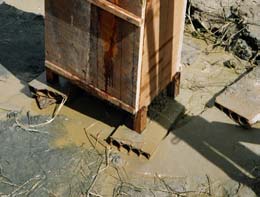
In: Dynamics of Mercury Pollution on Regional and Global Scales: Atmospheric Processes, Human
Exposure Around the World, p. 421-450. N. Pirrone &;K. Mahaffey (Eds), ISBN: 0-387-24493-X, July 2005,
Springer Publisher, Norwel , MA, USA
______________________________________________________________________________________
Fig. 5 Relationship between Hg in Urine and Episodic Memory Test
Goldtech
Plates
1.2 m
Tailings
0.3 m
0.5 m
Fig. 6 Special-Amalgamating Plates (Zigzag)
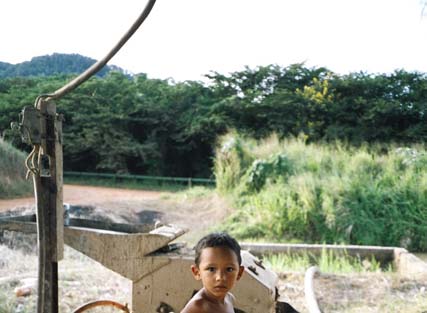
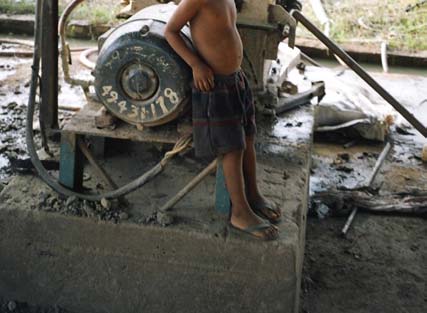
In: Dynamics of Mercury Pollution on Regional and Global Scales: Atmospheric Processes, Human
Exposure Around the World, p. 421-450. N. Pirrone &;K. Mahaffey (Eds), ISBN: 0-387-24493-X, July 2005,
Springer Publisher, Norwel , MA, USA
______________________________________________________________________________________
Fig. 7 - Definitely, there are better places to play than a Processing Center: it is just a matter of opportunity
and help