UNITED NATIONS INDUSTRIAL DEVELOPMENT ORGANIZATION
VIENNA INTERNATIONAL CENTRE, D1278, P.O. BOX 300, A-1400 VIENNA, AUSTRIA
Mercury Pollution from Artisanal Gold Mining in Block
B, El Callao, Bolivar State, Venezuela:
Health and Technological Assessment
(Project XP/VEN/03/C04)
May 2004

United Nations Industrial Development Organization
Vienna, 2004
Mercury Pollution from Artisanal Gold Mining in Block B, El Callao, Bolivar State,
Venezuela: Health and Technological Assessment
(Project XP/VEN/03/C04)
Project, Coordination Unit, Vienna
Pablo Huidobro, UNIDO, Vienna
Monika Roeser, UNIDO, Vienna
Local Coordinator
Ligia Vos, CVG-Ambiente, Venezuela
Field Logistics
Walter Maciel, CVG-Minerven, Venezuela
Primary Authors
Marcello M. Veiga, UNIDO, Vienna
Dario Bermudez, Univ. Nacional Experimental de Guayana, Venezuela
Heloisa Pacheco-Ferreira, Univ. Federal do Rio de Janeiro, Brazil
Luiz Roberto Martins Pedroso, CETEM Centro de Tecnologia Mineral, Brazil
Aaron J. Gunson, Univ. British Columbia, Canada
Gilberto Berrios, Hecla Mine, Venezuela
Disclaimer
The designations employed and the presentation of the material in this document do not imply the
expression of any opinion whatsoever of the Secretariat of the United Nations Industrial
Development Organization (UNIDO) concerning the legal status of any country, territory, city or
area of its authorities, or concerning the delimitation of its frontiers or boundaries.
Mention of company names and commercial products does not imply the endorsement of UNIDO.
UNIDO, 2004 Mercury in Block B, El Callao, Venezuela i
EXECUTIVE SUMMARY
The technical and health aspects of the gold mining activity conducted by artisanal and small-scale
miners in the Block B, El Callao, Bolivar State, Venezuela, were evaluated. The population of
Block B is estimated to be around 1730 people, with about 30% of children with age below 15 and
the large majority of the adults directly involved in mining. About 1/5 of the population is illiterate
and 1/4 does not have any kind of technical education. The area is a legal mining concession of
CVG-Minerven rented to small-scale mining individuals/companies. Miners extract the ore from
30-80 m deep shafts using explosives and transport it in small trucks to the Processing Centers
(locally known as "molinos") to be crushed, ground, concentrated and amalgamated. Based on the
average gold production, the Block B production might be around 1 to 2 tonnes Au/a
considering that there are 28 active Processing Centers in the area. In all El Callao, the gold
production can reach as much as 5 to 6 tonnes/a considering that there are 80 to 90 Processing
Centers in all region.
By using copper-amalgamating plates to amalgamate the whole ground ore, large amount of
mercury is lost with the tailings. The amalgam recovered from the plate is burned on a tray or a
shovel. Some millers have good retorts available for miners but the miners insist that the retorting
time is too long (15 minutes) and they simply use a propane blowtorch to decompose amalgam,
emitting large amount of mercury to the atmosphere and exposing themselves to mercury vapor.
This is clearly contaminating everyone directly involved in the ore processing as well as their
neighbors, since the Processing Centers are very near the houses. The ratio Hglost: Auproduced is
around 1.5 to 2. The mercury emission in Block B is estimated to be between 2 and 4 tonnes/a.
In all El Callao, the mercury emission can reach as much as 12 tonnes/a.
The levels of mercury intoxication of the gold miners and millers working in the Block B, El
Callao, Venezuela, is one of the most serious in the world. Signs of serious intoxication and
neurological damages were detected in a large majority of those directly involved in the
amalgamation process as well as in innocent people living near the Processing Centers. The use of
rudimentary copper-amalgamation plates associated with burning amalgam on shovels is exposing
workers and surrounding communities to high levels of mercury vapor.
A total of 165 volunteers were interviewed using UNIDO's Protocols and 105 persons were
selected to perform neurophysiological tests. A total of 209 samples of urine (66 samples from
women, 62 from children, 48 from millers and 33 from miners) were collected and analyzed for Hg
and creatinine using a portable atomic absorption spectrometer LUMEX. The overall average of
total Hg concentration in urine, was 104.59 µg Hg/g creatinine with standard deviation of 378.41 µg
Hg/g creatinine. About 61.7% of the sampled individuals have Hg levels in urine above the alert
level of 5 µg/g creatinine, 38.3% of the individuals have Hg levels above the action level (20 µg/g
creatinine), 20.6% above the maximum of 50 µg/g creatinine recommended by the World Health
Organization and 15% above 100 µg/g creatinine which is the level where neurological symptoms
are very likely. The situation with miners and millers is dramatic as 30% and 79% of the miners and
millers respectively have Hg in urine above the action level and 52% of the millers have levels
above 100 µg/g creatinine. In addition, about 14.6% of millers have shown extremely high mercury
concentrations in urine, ranging from 1221 to 3260 µg Hg/g creatinine. This result allows the
generalization that more than 90% of the sampled individuals working in the Processing
Centers (millers) have Hg levels in urine above the alert level. Symptoms typically associated
with chronic exposure at very high levels of mercury, acute intoxication, long term exposure at low
levels of mercury vapors and long term exposure at high levels of mercury vapors (e.g. muscular
tremor) were identified in Block B workers and residents.
UNIDO, 2004 Mercury in Block B, El Callao, Venezuela ii
As a result of indirect exposure of mercury vapors, it was observed that about 27% of the women
have Hg concentration in urine above the alert level and 21% above the action level. About 53% of
the 62 children sampled have Hg concentration in urine above the alert level and 14.5% above the
action level. Almost 10% of the sampled children have levels of mercury in urine above 100
µg/g creatinine. Mercury concentration as high as 320 µg Hg/g creatinine was analyzed in a 7 year-
old boy. In Monkey Town, 25 % of the urine samples from children have Hg concentrations above
the action level, and the maximum Hg concentration was found in the urine of a 13 year-old girl
(384 µg Hg / g creatinine).
The neurological signs of mercury intoxication found in women, children, miners and millers were
ataxia, trembling of the hands, trembling of eyes, incapability of performing the finger-nose test,
dysdiadochokinesia, patellar and hyper-reflexia, and patellar and cubital hypo-reflexia. In 25% of
women and children and 28% of the miners and millers, it was possible to identify some of these
symptoms.
When correlating the neuropsychological tests with levels of Hg in urine, it was possible to notice
that individuals with high mercury concentrations in urine (above 50 µg Hg/g creatinine) have
shown difficulties to complete the WMS-Memory Test. Similar situation was observed in the
Finger-Tapping Test. The Episodic Memory Test (Mini-Mental) was very useful to show the % of
individuals with no problem to perform the test decreases when the Hg level in urine increases. The
% of individuals with poor performance in this simple perception-memory test increases with the
level of Hg in urine. About 27% of individuals who performed the specific neuropsychological tests
have noticeable neurological problems detected in the clinical exams.
Analytical techniques were discussed and transferred to the laboratory of the La Salle Foundation in
San Felix, Ciudad Guayana. The methodologies for quantitative and semi-quantitative analyses
(colorimetric method) of total mercury were demonstrated to the technicians and reagents were left
for them.
This work did not attempted to assess the environmental problems caused by mercury use in the
Block B. However it is clear that the runoff waters coming from the Processing Centers raises
environmental concerns as mercury is being carried to the main drainages either associated with
particulate matter or solubilized as Hg-organic complexes. Fortunately the local streams do not
support intense fishery and the local population does not have fish as part of its main diet.
The amalgamation of the whole ore after grinding the ore at -1mm is resulting in tailings with 60 to
80 mg/kg of mercury. These tailings are being poorly disposed in ponds, which have contact with
the local drainage. The environmental effect of this is still unknown. CVG-Minerven, a State owned
company and other organized mining companies periodically purchase these tailings to be
processed in their cyanidation plants. This is transferring the mercury pollution to the companies'
environment, contaminating both employees and tailing dams.
The use of simple pieces of equipment such as sluice boxes with carpets or with a novel type of
magnetic liner (Cleangold®) was demonstrated to the miners and millers. Four tests using more than
1 tonne of Hg-contaminated tailings were conducted. The tests used four-special-amalgamating
Goldtech plates that removed up to 95% of the mercury from tailings. Cleangold sluice box
obtained a concentrate with 2854 mg/kg of Au. Very fine gold was recovered with this simple
equipment. By combining Cleangold sluices and Goldtech plates (arranged in zigzag), it was
possible to recover 15.4% of gold from tailings. These simple techniques can reduce mercury
emissions and increase gold recovery.
UNIDO, 2004 Mercury in Block B, El Callao, Venezuela iii
All results have reinforced the conclusion that lack of gold liberation is the main problem in
increasing gold production in El Callao. The use of hammer mills to re-grind tailing samples does
not bring any benefit in terms of increasing gold liberation. This is the main reason for gold loss in
the Processing Centers and high recovery in the CVG-Minerven cyanidation plant, since the mining
company uses ball mills to re-grind the tailings at least below 200 mesh (0.074 mm).
The only possibility to increase gold recovery in the Processing Centers is using ball mills to
increase gold liberation. As gold is very fine, it seems that the Cleangold sluice box is an
appropriate and affordable technology for the miners and millers to process primary ores via gravity
concentration. The introduction of cleaner techniques must come together with better organization
of the Processing Centers and changes of the operation procedure. It seems that soon or later the
Processing Centers, as in Zimbabwe, will also adopt cyanidation to extract residual gold from
tailings. In this case, the environmental problem will be exacerbated, as the mercury will become
partially soluble in the final tailings and therefore available for the methylating agents. Intervention
of the Government authorities and/or CVG-Minerven to educate and provide assistance to the
miners is badly needed otherwise the cyanidation process will be implemented and, without any
environmental and health concern, the results will be catastrophic.
Four different types of retorts were manufactured locally and the principle of retorting was
demonstrated to miners and millers using Thermex glass retort. The retorts were fabricated using
stainless steel crucibles that actually were small salad or sauce bowls acquired in kitchen stores in
Puerto Ordaz.
Gold is not melted in the Block B but in the village of El Callao where it is possible to find about 25
gold shops where gold doré (i.e. after burning amalgam) is sold and consequently melted. Some of
these shops are in family houses. As the gold doré may contain up to 10% mercury, as a result of
incomplete burning, this mercury is released in the urban environment during melting. This might
be contaminating many people in the town.
A two-day workshop was conducted in El Callao on December 8 and 9, 2003. The first day was
used to attract the miners and millers to the El Mago Processing Center where UNIDO team set up
a series of practical demonstrations for them. In the second day of workshop, a meeting with
various stakeholders occurred at the CVG-Minerven Union House (Negra Isidora). With about 50
people (miners, millers, residents, Government representatives, CVG representatives, etc.) all
members of the UNIDO project presented partial results of the fieldwork.
A longer and more sustainable project is badly needed in the area. The participation of the mining
companies working in El Callao (e.g. CVG-Minerven, HECLA and Crystalex) is crucial to
introduce a sound awareness campaign and train miners to reduce mercury pollution.
UNIDO's Transportable Demonstration Units is suggested as a solution to bring hands-on training
to miners/millers as well to make the surrounding community aware of the problems related to
mercury. Pollution cannot be reduced if miners and millers do not see economic advantages for this.
Simple techniques can be brought to the miners' attention in order to reduce mercury emissions and
unnecessary exposure.
UNIDO, 2004 Mercury in Block B, El Callao, Venezuela iv
ACKNOWLEDGMENTS
The Project team wants to express its profound gratitude to the following people and institutions:
Y Rebeca Erebrie, Vice-president of Environment, Science and Technology, CVG-Venezuelan
Corporation of Guayana and Armando John Madero, Vice-president of Mining, CVG, for
their permanent support to the project;
Y Franqui Patines, President of CVG Minerven for all information on gold production, and for
making possible the use of the Minerven infrastructure;
Y Ligia Vos, CVG- Environment, Science and Technology, for her indispensable coordination
and unlimited effort to make this project possible;
Y Walter Maciel, geologist from CVG-Minerven, for his valuable field support and permanent
presence with the UNIDO team on the field;
Y Rivero family (Rafael, Maria Elena and Rafaelito) and Antonio "Lalo" for all strength,
attention and dedication to the UNIDO team during the processing tests;
Y Dr. Salvador Penna (UDO-Universidad del Oriente), Dra Eudelis del Vale Romero Platina
and Ms. Aracelis Arevalo (CVG-Minerven) for all support and assistance during the health
assessment;
Y Luís Perez and Luzmila Sanchez from Fundacion La Salle, for allowing UNIDO team to use
their analytical laboratories and for their permanent help in the most difficult phases;
Y Luisa de Bermúdez for filming and editing videos on artisanal mining;
Y Dr. John Meech from CERM3 The Center for Environmental Research in Minerals,
Metals and Materials of the University of British Columbia, Vancouver, Canada, for making
available to the UNIDO team the LUMEX Hg portable analyzer;
Y Metall-Technic, Munich, Germany for the donation of the Thermex retorts
Y Benjamin Millán, Jesus Rebolledo and Joaquín Lezama, from CVG Minerven for
information and field assistance;
Y José Pino and Clyde Pepppin, Hecla Mine, for information on ASM in El Callao;
Y Jorge Paolini from the Center for Research in Management and Education for the
Sustainable Development, UNEG Universidad Experimental de Guayana;
Y All technicians from CVG-Minerven working at the gold assay laboratory;
Y All Processing Center's owners and employees that provided information for the UNIDO
team: Roberto Clark, Guillermo Herrera, Vladimir Vega, Felix Rangel and Ramon Alvorado
among many others.
UNIDO, 2004 Mercury in Block B, El Callao, Venezuela v
TABLE OF CONTENTS
EXECUTIVE SUMMARY ..............................................................................................................i
ACKNOWLEDGMENTS ..............................................................................................................iv
INTRODUCTION...........................................................................................................................1
DEFINITIONS................................................................................................................................1
PROJECT SITE...............................................................................................................................2
Population of Block B .................................................................................................................3
PROCESSING CENTERS ..............................................................................................................5
MERCURY USE.............................................................................................................................6
GOLD PRODUCTION ...................................................................................................................7
COSTS OF THE ARTISANAL GOLD MINING ACTIVITY.........................................................7
TAILINGS ......................................................................................................................................8
HEALTH ASSESSMENT...............................................................................................................9
Justification .................................................................................................................................9
Sampling and Analyzing Urine ..................................................................................................10
Interlaboratorial.........................................................................................................................11
Medical Exams ..........................................................................................................................12
Selection of Volunteers..............................................................................................................14
Results of Urine Analysis ..........................................................................................................15
Mercury in Urine from Women ...................................................................................................... 16
Mercury in Urine from Children .................................................................................................... 16
Symptoms of Occupational Exposure of Miners and Millers......................................................... 17
Symptoms of Occupational Exposure of Women ........................................................................... 18
Results of the clinical-neurological exams ................................................................................19
Specific neuropsychological tests...............................................................................................19
DEMONSTRATION OF CLEANER TECHNOLOGIES..............................................................25
Extracting Gold and Mercury from Tailing ................................................................................25
Retorts.......................................................................................................................................27
TECHNOLOGY TRANSFER IN CHEMICAL ANALYSIS.........................................................28
WORKSHOP IN EL CALLAO .....................................................................................................29
RECOMMENDATIONS...............................................................................................................30
APPENDIX 1 Processing Centers in Block B .............................................................................33
APPENDIX 2 Results of Hg in urine (LUMEX) .........................................................................35
APPENDIX 3 Analytical Method for Creatinine.........................................................................40
APPENDIX 4 Colorimetric Method to Analyze Total Hg ...........................................................41
APPENDIX 5 Interlaboratorial of Total Hg in Urine...................................................................42
APPENDIX 6 Censo Socioeconómico ........................................................................................44
APPENDIX 7 - Photos ..................................................................................................................52
UNIDO, 2004 Mercury in Block B, El Callao, Venezuela vi
LIST OF TABLES
Table 1 Main Characteristics of the Population of Block B ...........................................................4
Table 2 Estimate Operating Cost of a Processing Center in El Callao............................................8
Table 3 - Population Distribution in Block B .................................................................................14
Table 4 - Number of Volunteers that Responded the Four Questionnaires......................................14
Table 5 - Average of Total Mercury in Urine Samples from Women .............................................16
Table 6 - Average of Total Mercury in Urine Samples from Children............................................17
Table 7 Correlation between Symptoms and Hg in Urine ............................................................18
Table 8 Hg (mg/kg) in Samples before and after Treatment with Goldtech Plates .......................26
Table 9 Results of Semi-quantitative Analyses of Sediments ......................................................29
LIST OF FIGURES
Fig. 1 - Location of Block B (El Callao) ..........................................................................................3
Fig. 2. Location of the Different Communities in Block B ...............................................................5
Fig. 3 - Comparison between LUMEX and UCV Results...............................................................12
Fig. 4 - Comparison between LUMEX and La Salle Results..........................................................12
Fig. 5 - Classes of Hg Concentrations in Urine ..............................................................................15
Fig. 6 - Distribution of Hg in Urine................................................................................................16
Fig. 7 - Symptoms in Miners and Millers.......................................................................................18
Fig. 8 - Intoxication Symptoms in Women.....................................................................................19
Fig. 9 - Results of Memory Test (WMS)........................................................................................20
Fig. 10 Results of Match Box Test ..............................................................................................21
Fig. 11 Results of Finger-Tapping Test .......................................................................................21
Fig. 12 Results of Episodic Memory Test ...................................................................................22
Fig. 13 Relationship between Hg in Urine and Memory Test (WMS)..........................................23
Fig. 14 Relationship between Hg in Urine and Finger-Tapping Test ...........................................23
Fig. 15 Relationship between Hg in Urine and Match Box Test ..................................................24
Fig. 16 Relationship between Hg in Urine and Episodic Memory Test ........................................24
Fig. 17 Observed Problems in the Clinical neurological Exam.....................................................25
Fig. 18 Special-Amalgamating Plates (Zigzag) ............................................................................26
UNIDO, 2004 Mercury in Block B, El Callao, Venezuela 1
INTRODUCTION
In 1995, UNIDO has provided technical assistance related to mercury pollution for Government,
companies and artisanal gold miners in the Bolivar State, Venezuela. The situation, as reported by
UNIDO in March 19961, was extremely serious in El Callao with miners and millers using
indiscriminately mercury to amalgamate gold.
The current work was conducted at the end of 2003 for less than one month (from 21 November to
11 December 2003) as a preliminary mission to assess the current health situation and to prepare for
a more substantial project to be conducted in the future. The mission assessed the level of mercury
intoxication of the miners and surrounding population and introduced simple mineral processing
techniques capable of reducing substantially mercury exposure and emission in the region.
Technologies to assist informal miners to reduce mercury emission and clean-up polluted sites have
been demonstrated to the miners.
The main objectives of the technical assistance were:
Y Assess mining methods and mercury use in El Callao region, Venezuela.
Y Conduct Health Assessment of people directly involved with mining and mineral processing
as well as the surrounding community.
Y Evaluate technical needs of artisanal gold miners in the region.
Y Evaluate possible local equipment manufacturers and teach them how to manufacture
different types of retorts.
Y Implement and demonstrate techniques to reduce Hg emissions as well as methods to clean
up contaminated tailings.
Y Meet representatives of Miners' Association, local authorities, and artisanal gold miners
Y Promote a workshop on reducing mercury pollution in small-scale gold mining and
avoidance of occupational exposure.
Y Initiate an awareness campaign with the public in El Callao.
DEFINITIONS
A wide range of mining and mineral processing activities are classified as artisanal or small-scale
mining. This ranges from individual panning to large dredging operations. The definitions and
differences between artisanal and small-scale mining differ from country to country and from
region to region. Quite often the term "artisanal miner" is applied to make reference just to low-tech
manual-migratory panners and the term "small-scale miners" is used for those miners/millers
established and often working within the legal framework. The differences between both categories
may have some legal implications since some countries prefer to use the term "artisanal miners" to
characterize illegal or informal miners. However, even working in legal claims, quite frequently
small-miners do not follow the environmental regulations and do not have technical expertise to
establish a long-term plan to exploit their gold deposits. Most recent discussions by experts2 in this
theme failed in providing a clear difference between artisanal and small-scale miners. In this case
the term artisanal and small-scale miners (ASM) is preferred to be used to encompass all small,
medium, informal, legal and illegal miners who use rudimentary processes to extract gold from
secondary and primary ore bodies. The ASMs work based on instinct, need for feeding his family
and paying bills. There is no previous "classical" geological exploration, no drilling, no proven
reserves, no ore tonnage establishment and engineering studies. The concept of survival is
constantly the driving force for those miners.
1 UNIDO, 1996. Advisory Assistance on Avoidance Mercury Pollution from Artisanal Gold Mining Operations in State
of Bolivar, Venezuela. Prepared by M.M. Veiga, contract SI/VEN/94/801/11-51. 147 p.
2 MMSD Mining, Minerals and Sustainable Development, 2002. Breaking New Ground. International Institute for
Environment and Development and World Business Council for Sustainable Development. London, UK. 441p.
UNIDO, 2004 Mercury in Block B, El Callao, Venezuela 2
PROJECT SITE
The southern part of Venezuela, below the Orinoco River, involving State of Bolivar, State of
Amazonas and the Federal Territory of Delta Amacuro is called Guayana Region. The main mining
activities are conducted in the State of Bolivar which has an area of 240,528 km², comprising 75%
of the hydroelectric potential of the country. The number of inhabitants in Venezuela reaches some
24.2 million with a population density of 26.4 persons per km². In 2000, 87% of the population
lived in cities and towns with more than 2,500 inhabitants. Less than 5% of the population lived in
the Guyana Region. In 1999, the labor force experienced 1.1% decrease in number resulting in an
unemployment rate of 13.2% (1,365,752 people). In 2000, 63% of the individuals making up the
workforce were men. Unemployment among men reached 12.5%, 1.1% higher than 1999. In 2000,
14.4% of women did not have a job. This was 1.7% higher than in 1999 (CONAPRI, 2003)3.
In the Bolivar State, with a population of 1,214,486, there are about 15,000 people4 directly
involved in artisanal and small-scale mining (ASM). This includes about 2000 "bateeros" and
"suruqueros" who are those miners using pans to extract gold and diamond from alluvial deposits
and tailings, 5,000 miners using hydraulic monitors in elluvial and colluvial operations (gold and
diamond), 3,000 miners working in hard rocks (quartz veins) and 5,000 miners operating in dredges
and rafts in the water streams all over the State.
In Venezuela, hundred fifty years after the beginning of the mining activities, the social and
economic situation of the artisanal miners has not changed substantially. Observations of small gold
miners in the State of Bolívar, Venezuela, reveal serious effects on family disruption as well as on
degradation of the socio-economic conditions of the community.
El Callao is located in the Northeastern part of the State of Bolivar, 150 km from Ciudad Guayana
(Puerto Ordaz). Mining tradition started in 1724, when Capuchin priests explored the area. In 1842,
the Brazilian expeditionary, Pedro Joaquim de Ayres reported the existence of an auriferous vein on
the shores of Yuruari river. The municipality of El Callao was founded in 1853 with the name of
Caratal and many small gold mining companies were installed in the region. In 1970, CVG-
Corporacion Venezoelana de Guayana5 incorporated Minerven, a State-owned company, which
nowadays has two cyanidation plants producing together approximately 200 to 300 kg of
gold/month: Peru Plant processing 5,200 tonnes of material/month and Caratal plant processing
14,000 tonnes/month. About 15% of the Peru Plant material is Hg-contaminated tailings purchased
by the company from the artisanal gold miners.
Since the middle of the 19th century, a large volume of cyanidation tailings from old mining
operations was deposited at the margins of the Yaruari River for 7 km. This site, known as
"Quebrada Mocupia", has called attention of some mining companies interested in re-processing the
gold-rich tailings. The Yaruari River is a 100 m wide river with reasonable volume of water in the
rainy season but it was told that it is a dead river with no aquatic life. All drainages from the
artisanal mining activities flow to the Yaruari River.
El Callao is located 150 km (paved road) from Puerto Ordaz. In the municipality, CVG-Minerven
owns a total area of 48,848 ha of mining concessions. The company granted 77 concessions of
mining in which 59 are contracts with companies and 18 with individuals. The main portion of
3 CONAPRI Venezuelan Council for Investment Promotion, 2003.
http://www.conapri.org/framedetalle.asp?sec=1000&id=26&plantilla=8
4 Bermúdez D., 2003. El Ambiente y la Salud Ocupacional en la Minería en Pequeña Escala. In: I Encuentro
Internacional de Investigación en Salud Ocupacional. Universidad de Guadalajara, Secretaría del Trabajo y Previsión
Social (Delegación Jalisco) y PIENSO A.C. Guadalajara, Estado de Jalisco, México. Mayo 2003. (In Spanish).
5 a rector entity for the Guayana region, to promote and coordinate the social-economic development of the region.
UNIDO, 2004 Mercury in Block B, El Callao, Venezuela 3
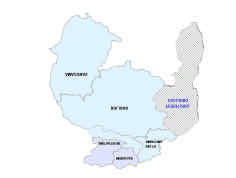
CVG-Minerven mining concession "rented" to third parties is named "Block B" (Fig. 1). With area
of 1,785 ha, this site was chosen by the UNIDO for this project. CVG-Minerven has also rented
mining areas in Block B to organized companies (e.g. the American company HECLA Mine and
the Canadian company, Crystalex).
Block B
Fig. 1 - Location of Block B (El Callao)
In El Callao, artisanal and small-scale miners (ASM) work basically in the CVG-Minerven
concessions. This has been generating employment to the surrounding communities. Since the gold
ore is abundant and extremely rich people have not been considering other type of economic
activity. The ASM, in some extent, have played the role of gold prospectors for the company.
However, not all mining activities are legally carried out within Minerven concessions. Some
miners are working outside the Minerven concession or illegally in the company's area, despite the
close control from Minerven. As the price of gold has been increased since the end of 2002, the
number of ASM has increased substantially in the region and many of them are outsiders who have
never had any experience in mining.
Population of Block B
According to the 2001 Census, the total population of El Callao is 17,410 and there are 1731 people
living in the Block B, which represents almost 10% of the El Callao population (Hecla, 2004)6
(Appendix 6). About 47% of the population is female and 44% is younger than 18. The amount of
children younger than 15 years old reaches 30% of the population. According to the census
conducted by Hecla (2004) individuals with age between 19 and 55 represent 46.5% of the Block B
population. In average, the couples in the region have 2.3 sons and daughters and there are 3.5
persons per family. About 1/5 of the population is illiterate and 1/4 does not have any kind of
technical education. About 2/5 of the population has primary degree (6th grade), 1/4 secondary
degree and just 2% has technical or university degree.
Regarding the type of houses in the area, just 50% of the dwellers have houses built of cement and
the rest lives in houses made of wood, zinc sheets, etc. Just 74% of the houses have cement floor
and electricity is available for almost 90% of the inhabitants.
6 Hecla, 2004. Estudio socio-económico de las comunidades del "Bloque B" de El Callao. Compañía Minera Hecla,
Estado Bolívar, Venezuela. (In Spanish).
UNIDO, 2004 Mercury in Block B, El Callao, Venezuela 4
About 30% of the population defines its occupation as students, 21% as unemployed, 19% as
housewives and just 15% as miners. However the main activity of the population is definitely gold
mining and processing.
Water is available mainly through water trucks (56%) and just 1/3 of the population has water from
pipes. About 70% of the population has toilets.
The 5 main communities ("pueblos") in Block B are as follows:
(a) Nuevo México
The total population of this community is 381 inhabitants. About 21% of the dwellers are illiterate
and 96% have no formal education related to mining.
(b) La Fábrica
This is adjacent to Nuevo Mexico. With a total population of 359 inhabitants about 20% are
illiterate and 90% have no technical education.
(c) Monkey Town
This community has 433 inhabitants and has similar characteristics to Nuevo Mexico related to
education. About 20% of the population has been working in mining.
(d) Peru-Chile
There are about 411 people living in this community with more than 94% with age under 55 (50%
under 18). Also 20% of the individuals have characterized themselves as miners.
(e) La Iguana
This community is located at the end of the main road Caratal-Chile with a population of 147
inhabitants. More than 42% of the individuals are illiterate and almost the totality does not have
technical education. Only 45% of the families have electricity.
Table 1 Main Characteristics of the Population of Block B
CHILE
LA FABRICA
LA IGUANA MONKEYTOWN NVO MEXICO
Number of inhabitants
411
359
147
433
381
%Females
45.5
52.9
33.3
47.1
47.5
Main age group
Under 18 (50%) Between 19 and
Older than 56 Between 19 and 55 Under 18 (47%)
55 (51%)
(40%)
(49%)
Average number of sons per
2.4
2.4
1.3
2.2
2.6
family
% Man living with woman
46.6
72.4
42.9
67.4
71.6
Average number of people
3.7
3.7
2.5
3.6
3.7
per house
% Illiterates
27.7
19.5
42.2
18.0
21.0
% Individuals with no
98.1
90.0
99.3
96.1
96.1
technical education
Main education level
83% Primary
73% Primary-
90% Primary
75% Primary-
72% Primary-
secondary
secondary
secondary
Main occupation
Unemployed -
Unemployed -
Unemployed-
Unemployed -
Miner
Miner
Framer
Miner - Unemployed
Miner
Main type of house
Zinc - Wood
Cement - Mud
Zinc -Cement
Cement - Wood
Cement - Mud
Main type of roof
Zinc
Zinc
Zinc
Zinc
Zinc
Main type of floor
Cement - earth
Cement
Earth - cement
Cement
Cement
% Houses with electricity
96.5
92.1
44.9
99.0
93.8
Main source of water supply
Truck
Pipe - truck
Creek - pipes
Truck
Pipe - truck
Main sanitation
Bush - toilet
Toilet
Bush
Toilet
Toilet
UNIDO, 2004 Mercury in Block B, El Callao, Venezuela 5
PROCESSING CENTERS
About 250 artisanal-small scale miners (ASM) in Block B excavate the ore from 30-80 m deep
shafts using explosives and transport it in small trucks to the Processing Centers (locally known as
"molinos") to be crushed, ground, concentrated and amalgamated. About 30% of the ore entering
Block B comes from areas located outside of Block B such as Block C (North) and Block A (East).
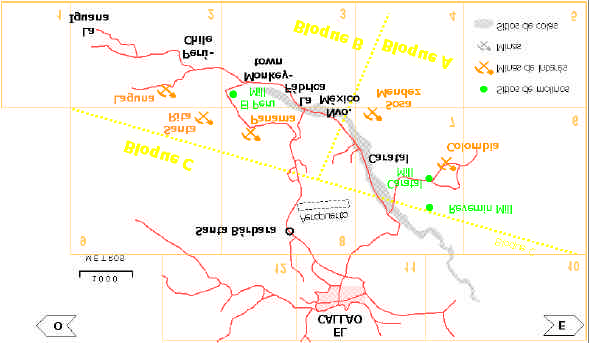
Fig. 2. Location of the Different Communities in Block B
In the Block B area there are 28 operating Processing Centers, each one with 3 to 6 hammer
mills making a total of 86 active hammer mills and 25 jaw crushers in the region. As miners
transport ore in 50-kg polyethylene bags, it is common in the region to refer to gold grade by
"grams of gold per bag". Miners pay 10% of the recovered gold to the millers, known as
"molineros" (Center owners). The material is crushed in jaw crushers and wet-ground below 1 mm
in 25 HP hammer mills. The whole ore is amalgamated in copper plates. The distribution of the
Processing Centers in the Block B was investigated. The Centers are located in 4 communities
along the main road Caratal-Chile. It was observed that 94% the Processing Centers are located in
the communities of Nuevo México and Monkey Town. From East to West the Processing Centers
are located at (Fig. 2):
(a) Nuevo México
Most miners from this area are legal and organized in an association named Civil Association of the
Small Miners of El Callao (ASOCIPEMICA). The auriferous material extracted by miners comes
from the Santa Rita Mine (Concession Minerven 2). The concessions in Nuevo Mexico are granted
to 11 milling companies (Processing Centers) and they have a total of 43 hammer mills and 12 jaw
crushers (Appendix 1).
(b) La Fábrica
This is adjacent to Nuevo Mexico. Many miners from this small community belong to
ASOCIPEMICA. The presence of some illegal miners living and working on the site was informed.
In this community there are 2 Processing Centers for a total of 5 mills and 2 crushers.
(c) Monkey Town
There is a clear predominance of males working at the Processing Centers in this community. Most
miners belong to ASOCIPEMICA, however there are some illegal miners as well. There are 11
UNIDO, 2004 Mercury in Block B, El Callao, Venezuela 6
Processing Centers with a total of 38 hammer mills and 11 jaw crushers. According to the census
conducted by Hecla (2004), there is no Processing Center in Peru-Chile.
(d) La Iguana
The economic activity in this sector is fundamentally agriculture. However, in dry season some
people conduct alluvial gold mining mainly in the La Iguana creek.
MERCURY USE
The primary ore is transported to the Processing Centers were millers crush it below 2 inches with
jaw crushers and make a heap to feed the hammer mills. There is no concentration process, i.e. the
ore is ground to 1 mm in hammer mills and passed on copper-amalgamating plates. Mercury is
widely used in these plates to trap gold specks. Interestingly that the millers have built at the exit of
the mill a riffle (known as "check") with a short piece of wood wrapped with a piece of cloth. This
is filled with mercury before starting the grinding operation. At the end of the milling process the
riffle is removed and the trapped gold with mercury flows on the copper plates. Amalgamation
plates are stationary copper sheets usually dressed with a thin layer of mercury (usually 150g Hg/m²
of plate) used to amalgamate free gold particles in ores ground coarser than 1.5 mm. Working with
slope of 10%, these 1.5 to 2 m-long plates receive pulp of auriferous ground ore (10 to 20 % of
solids) and the amalgamation takes place when gold particles contact the plate surface. The velocity
of flow has to be sufficiently low that the precious metal particles can sink to the plate surface and
yet high enough that other mineral constituents of the ore do not remain on the plate. The efficiency
of the process depends on the operator ability, but usually is low due to the short time of ore-
mercury contact. The method works better for alluvial gold but it is very limited for primary ore in
which quite often gold is not completely liberated from the gangue minerals. About 0.3 m2 of plate
is required to treat 1 tonne of ore/24 h for pulps with 20% solids. Abrasion of the mercury surface
releases droplets which go out with the pulp. Acidic water may also cause yellow or green spots on
the copper plate and mercury is also lost. Miners refer to these discolored areas as "mercury
sickness". A large majority of artisanal miners in El Callao do not use a mercury trap at the end of
the plates. So, tailings from Cu-plates typically contain 60 to 80 ppm Hg.
Periodically the process is interrupted and amalgam is scraped off from the plates with a sharp piece
of metal. At this stage, miners are exposed to high levels of Hg vapor. Quite often the Venezuelan
miners burn the amalgamation plates to "remove" fine gold trapped on the plate. The amalgam
recovered from the plate is squeezed to eliminate excess mercury and burned on a tray or a shovel.
Some millers have good retorts available for miners but they argue that the retorting time is too long
(15 minutes) and they simply use a propane blowtorch to decompose amalgam, emitting large
amount of mercury to the atmosphere and exposing themselves to mercury vapor. This is clearly
contaminating everyone directly involved in the ore processing as well as their neighbors, since the
Processing Centers are very near the houses.
In general, the metallic mercury used in Block B comes from Brazil and it is not legally sold in the
region. Miners also use mercury recycled in Venezuela but it contains many impurities. It is
observed that typically a Processing Center buys (and loses) 6 to 8 kg of Hg/month. Mercury is sold
in the area at a price around US$ 20-25/kg which is 5 to 6 times higher than the international market
price. Millers provide mercury for the miners who add further mercury to the plates during
operation. The ratio Hglost: Auproduced is around 1.5 to 2. The mercury emission in Block B is
estimated to be between 2 and 4 tonnes/a. In all El Callao, the mercury emission can reach as
much as 12 tonnes/a.
This work did not attempted to assess the environmental problems caused by mercury used in the
Block B. However it is clear that the runoff water coming from the Processing Centers raises
environmental concerns. The water passes through the Hg-contaminated tailings to go to the
UNIDO, 2004 Mercury in Block B, El Callao, Venezuela 7
Yuruarí River, which supplies water to the population of El Callao and nearby communities. The
high level of organic matter in the region associated with large amount of Hg-contaminated
suspended particles being carried by the water creates conditions to oxidize and complex the
metallic mercury released by miners. Soluble Hg-organic complexes may eventually be transformed
into the most toxic form of mercury, methylmercury7. However, the eventual bioaccumulation of
methylmercury in the region seems to be of less impact for humans than the occupational exposure
of metallic mercury vapor since just a few small fish are found in the water streams and (local) fish
are not a staple food for locals.
GOLD PRODUCTION
The ore in El Callao is usually extremely rich, with grades ranging from 12 to 20 g Au/tonne.
Interviewing various millers, it was observed that a Processing Center produces on average 100 to
200g Au/day (2.6 to5.2 kg/month). The daily gold production can reach as much as 1 kg/day
depending on the type of ore being processed. Based on the average gold production reported by the
interviewed millers, the Block B production might be around 1 to 2 tonnes Au/a considering that
there are 28 active Processing Centers in the area. In all El Callao, the gold production can reach as
much as 5 to 6 tonnes/a considering that there are 80 to 90 Processing Centers in all region.
According to CVG engineers, as gold is very fine (below 0.074mm), artisanal miners cannot reach
the liberation size using hammer mills and in the amalgamation process just 30% of the gold is
trapped. The rest is sent to the tailing ponds and later sold to the mining companies.
The hammer mills have capacity of grinding 0.2 to 0.4 tonnes/hours depending on the ore hardness.
Then, all 86 hammer mills together in El Callao can process a maximum of 344 tonnes of ore/day
or, considering 300 days/a, they have the grinding capacity of processing up to 103,000 tonnes/a of
soft ore. In fact, after interviewing millers, the actual amount of material ground by each hammer
mill is 1.7 to 2.5 tonnes/day/hammer mill or 5 to 7.5 tonnes/Processing Center/day. Considering 86
mills and 300 working days per annum, the amount of processing material in Block B might be
between 44,000 and 65,000 tonnes/a.
Gold is not melted in the Block B but in the village of El Callao where it is possible to find about 25
gold shops where gold doré (i.e. after burning amalgam) is sold and consequently melted. Some of
these shops are in family houses. As the gold doré may contain up to 10% mercury, as a result of
incomplete burning, this mercury is released in the urban environment during melting.
The price of gold paid to miners is around US $10/g in Venezuelan currency (Bolivars) at the
official exchange rate. As the US dollar in the black market reaches prices at least 70% higher than
the official rate, it is clear that miners are selling gold in the neighbor countries, e.g. Brazil.
COSTS OF THE ARTISANAL GOLD MINING ACTIVITY
After visiting 6 Processing Centers an average operating cost was obtained and discussed with Mr.
José Pino, HECLA, and Mr. Joaquín Lezama, CVG-Minerven. The mining and milling costs are
quite dependent on the type of ore being processed. Hard ores consume almost five times more
hammers than soft ores (Table 2). The operating costs were transformed into grams of gold per
tonne of ore processed using the following rate: Bs 2700 = US$ 10 = 1g Au.
7 Meech,J.A., Veiga,M.M., Tromans, D., 1998. Reactivity of Mercury from Gold Mining Activities in Darkwater
Ecosystems. Ambio , v.27, n.2, p.92-98.
UNIDO, 2004 Mercury in Block B, El Callao, Venezuela 8
The life of the hammers depends on the ore hardness. For soft material, a pair of hammers made of
cast-iron and costing US$ 8 to 10 can grind 10 tonnes of ore before being changed. Grinding hard
ores, the hammers are changed after grinding 1.5 to 2 tonnes (around 30 to 40 bags of 50 kg) of ore.
This represents a major cost of the milling operation (as high as 65% of the operating costs),
however, millers do not charge more for milling hard ores.
Table 2 Estimate Operating Cost of a Processing Center in El Callao
MINE
Operating Cost (gAu/tonne)
Drilling
0.1
Explosives
1
Bags to transport ore
0.3
Food for labor
0.4
(Labor, when miners are employed)
0.3
Subtotal Mine
2.1
MILL
Electricity
0.06
Maintenance
0.14
Mercury
0.14
Hammers
0.09 (soft ore) 0.63 (hard ore)
(Labor, when millers are employed)
0.3
Sub total
0.73 (soft ore) 1.27 (hard ore)
TOTAL
2.83 (soft ore) 3.37 (hard ore)
Each Processing Center counts with 3 to 5 "employees" who usually do not receive salary but just
live out of the gold left (trapped) inside the hammer mills. At the end of the day the "employees"
open the mills and clean them on the amalgamation plates to recover their earnings. Considering
that most Processing Centers do not pay their employees, the operating cost of a Processing Center
must be between 0.43 g Au/tonne and 0.97 g Au/tonne. As the "molinero" (mill owner) receives
10% of the gold produced, his/her break-even is reached when processing ores with 0.24 and 0.5 g
Au/bag for soft and hard ore respectively or 2.4 and 5 "points of gold per bag", using local terms.
Many miners do not acknowledge this and they work below the break-even point. It is clear that the
"molineros" must change their procedures of charging for milling. As in many circumstances
miners bring very-low-gold-grade ore to be processed and millers do not receive anything after all.
They should, for example, adopt the method used in Zimbabwe by the Milling Centers of charging
a fixed price per hour of grinding. The Zimbabwean millers charge US$ 2.86/hour (for soft ore) and
US$ 4/hour (hard ore) when using either stamp or ball mills.
TAILINGS
Millers accumulate tailings in their ponds and sell it to CVG-Minerven and eventually to other
companies applying cyanidation to extract residual gold. The State-owned company re-grinds the
tailings to below 200 mesh (0.074mm) and leaches the material with cyanide. Tailings containing in
average 60 to 80 ppm of mercury go to the CVG plant and the plant operators do not have control
of mercury in the effluents or in the gold melting room. This mercury is definitely contaminating
plant operators and reducing the efficiency of the gold precipitation on zinc dust (Merrill-Crowe
Process). The tailings in El Callao are extremely rich in gold and CVG-Minerven purchases tailings
based on gold content. The company does not buy tailings with less than 6g Au/tonne. They pay for
tailings with 6, 12 and 20g Au/tonne, 30%, 40% and 50% of the value of pure gold respectively. As
the amount of tailing produced is equal to the amount of material ground (see above), the
UNIDO, 2004 Mercury in Block B, El Callao, Venezuela 9
production of tailings in the Block B must be between 44,000 and 65,000 tonnes/a. Considering an
average grade of 7 g Au/tonne (which is low for El Callao), the amount of gold going to the tailings
per annum in the Block B is around 308 to 455 kg. This divided by 28 Processing Center owners,
gives 11 to 16 kg Au/per owner. As the company pays for tailings around 30% of the gold value (1
g = US$13.6 New York Market on April 7, 2004), a miller would receive at least something
between US$ 44,880 and US$ 65,280 per annum when selling his/her tailings. This is might be the
minimum received by miners since the companies do not buy tailing with grade below 6 g
Au/tonne. This is clear a better business for the Processing Center owners than the processing
operation itself, where they receive 10% of the gold production. The miners and the employees of
the Processing Centers are the main victims of this unfair system.
HEALTH ASSESSMENT
Justification
The main ways pathways in which mercury is bioaccumulated in humans are through metallic
mercury vapor from amalgam burning (and gold melting) and ingestion of fish with high
methylmercury concentrations. Due to limited resources of this preliminary project, and knowing
that fish is scarce in the streams and a luxury food for the local population, an environmental
assessment to evaluate the possibilities of Hg bioaccumulation was not conducted. However,
knowing that Hg vapor is the main problem in the area, a detailed health assessment was conducted
to provide indications of the level of mercury intoxication on ASM communities exposed to
mercury vapor. The health assessment combined information from total Hg concentration in urine
with medical exams to evaluate the level of impact that the pollutant caused or may cause to
individuals residing in this "mining and environmental hotspot". This is a basic procedure to
establish risks and prioritize mitigation actions.
Inhalation of Hg vapor is more significant for mining and gold shop workers directly involved in
handling metallic mercury, but can also indirectly affect surrounding communities. Once in the
lungs, Hg is oxidized forming Hg (II) complexes, which are soluble in many body fluids. The
ultimate effect of Hg and related compounds is the inhibition of enzyme action8 (Jones, 1971).
Oxidized mercury can easily diffuse across the blood-brain barrier, which is a series of multiple
systems which regulate the exchange of metabolic material between brain and blood. Impairment of
the blood-brain barrier, together with the possible inhibition by Hg of certain associated enzymes
will certainly affect the metabolism of the nervous system9.
Hg vapor is completely absorbed through the alveolar membrane and complexes in the blood and
tissues before reacting with biologically important sites. The biological half-life of Hg in blood
absorbed as vapor is about 2-4 days when 90% is excreted through urine and feces. This is followed
by a second phase with a half-time of 15-30 days10. The time interval between passage of elemental
Hg through the alveolar membrane and complete oxidation is long enough to produce accumulation
in the central nervous system11. Mercury can irreversibly damage the nervous system. Kidneys are
the most affected organs in exposures of moderate duration to considerable levels, while the brain is
the dominant receptor in long-term exposure to moderate levels. Total mercury elimination through
urine can take several years. Then, the Hg levels in urine would not be expected to correlate with
neurological findings once exposure has stopped. A short-term exposure to high levels causes
8 Jones,H.R., 1971. Mercury Pollution Control. Noyes Data Co., New Jersey, 251p.
9 Chang, L.W., 1979. Pathological Effects of Mercury Poisoning. In: The Biogeochemistry of Mercury in the
Environment. p.519-580. Ed. J.O. Nriagu. Elsevier/North-Holland Biomedical Press, Amsterdam.
10 WHO - World Health Organization, 1991a. Environmental Health Criteria. 118. Inorganic Mercury. Geneva, Switz:
World Health Organization. 168p.
11 Mitra, S., 1986. Mercury in the Ecosystem. Trans Tech Publ., Netherlands. 327p.
UNIDO, 2004 Mercury in Block B, El Callao, Venezuela 10
clinical symptoms which mainly involve the respiratory tract. Mercury levels in the urine of new
workers should be lower than those of workers with a longer duration of exposure12.
Symptoms typically associated with high, short-term exposure to Hg vapor (1000 to 44,000 µg/m³),
such as those miners are subjected to when they burn amalgams in open pans, are chest pains,
dyspnoea, cough, haemoptysis, impairment of pulmonary function, and interstitial pneumonitis. The
common manifestation of chronic exposure to excessive levels of Hg vapor is metallic taste and
gum diseases such as gingivitis, ulcers and formation of a blue line at gum margins (Stopford, op.
cit.). Long-term, low-level Hg vapor exposure has been characterized by less pronounced symptoms
of fatigue, irritability, loss of memory, vivid dreams, and depression (WHO, op. cit.). Occupational
exposure of mercury has resulted on effects on the central nervous system. Acute exposure has
caused delirium, hallucinations and suicidal tendency as well as erethism (exaggerated emotional
response), excessive shyness, insomnia, and in some cases muscular tremors. The latter symptoms
are associated with long-term exposure to high levels of Hg vapor. In milder cases, erethism and
tremors regress slowly over a period of years following removal from exposure pathways (WHO,
op. cit.). A person suffering from a mild case of Hg poisoning can be unaware because the
symptoms are psycho-pathological. These ambiguous symptoms may result in an incorrect
diagnosis.
Experiments with animals indicate continuous exposure to Hg above 0.3 µg/m³ of air may present a
health hazard. Acute Hg poisoning, which can be fatal or can cause permanent damage to the
nervous system, has resulted from inhalation of 1,200 to 8,500 µg/m³ of Hg (Jones, op. cit.).
Since inorganic Hg poisoning affects liver and kidneys, high Hg levels in the urine can indicate
undue exposure to Hg vapor. WHO (op. cit.) collected a large amount of evidence to conclude that a
person with a urine Hg level above 100 µg/g creatinine has a high probability of developing
symptoms such as tremors and erethism (abnormal irritability). For Hg levels between 30 and 100
µg/g creatinine, the incidence of certain subtle effects in psychomotor performance and impairment
of the nerve conduction velocity can increase. The occurrence of several subjective symptoms such
as fatigue, irritability, and loss of appetite can be observed. For Hg levels below 30-50 µg/g
creatinine, mild effects can occur in sensitive individuals but it seems more difficult to observe
symptoms.
The WHO (1991 op. cit.) described a relationship between Hg in air (A) ion µg/m³ and in urine of
exposed workers (U) expressed as µg/g creatinine: U = 10.2 + 1.01 A. Thus a person exposed to
about 40 µg/m³ of Hg in air should show levels of Hg in urine around 50 µg/g creatinine. This is the
maximum urine Hg concentration recommended by WHO. Drasch et al (2002)13 consider the Hg
level in urine of 5 µg Hg/g creatinine an alert value and 20 µg Hg/g creatinine as an action level.
Sampling and Analyzing Urine
The ideal urine sample is the first one in the morning. This analysis reflects mercury excreted by the
body during the night. However collection during early morning is not always possible and
spontaneous urine can also be collected without dramatically affecting results. In order to avoid
dilution of urine samples and for comparison of results, the mercury concentrations in urine must be
corrected to the creatinine excretion.
Creatinine is a breakdown product of creatine, which is an important constituent of muscle.
Creatinine is excreted from the body entirely by the kidneys. With normal kidney function, the
12 Stopford, W., 1979. Industrial Exposure to Mercury. In: The Biogeochemistry of Mercury in the Environment.
p.367-397 Ed. J.O. Nriagu. Elsevier/North-Holland Biomedical Press, Amsterdam.
13 Drasch, G.; Boese-O'Reilly, S.; Maydl, S.; Roider, G., 2002. Scientific Comment on the German Human Biological
Monitoring Values (HBM Values) for Mercury. Intern. Journal Hygiene Environmental Health, v. 205, p. 509-512.
UNIDO, 2004 Mercury in Block B, El Callao, Venezuela 11
serum (blood) creatinine level should remain constant and normal. Normal values are highly
dependent on the age and lean body mass of the person the urine is being collected from. Urine
creatinine (24 hour sample) values may therefore be quite variable and can range from 500 mg/day
to 2000 mg/day. A healthy range for creatinine in spot urine is from 25 to 400 milligrams/deciliter
(mg/dL)14. Urine creatinine (24 hour sample) values may be quite variable and can range from 500
mg/day to 2000 mg/day. The level of creatinine in a 24-h urine sample ranges from 8 to
22mg/dL/kg of body weight for children, from 11 to 20 mg/dL/kg b.w. for women and from 14 to
26 mg/dL/kg b.w. for men. So a man weighing 70 kg has a normal level of 24-hour urine creatinine
ranging from 980 mg/dL to 1820 mg/dL. As the creatinine concentration is usually expressed in
mg/dL, dividing the result by 100 the unit is transformed into g/L. As the result of Hg in urine is
usually expressed in µg Hg/L of urine, then dividing this by g/L of creatinine, the final result is
expressed in µg Hg/g of creatinine, which is the usual unit.
The urine samples in the Block B were collected in 50 mL vials and immediately transported in
coolers to a freezer were they were frozen to 20 °C waiting for analysis. The samples were then
naturally melted and a sub-sample obtained for analysis. The total mercury analyses were processed
using LUMEX15 portable atomic absorption spectrometer (RA 915+) coupled with a pyrolisis
chamber (RP 91C). The equipment works according to the principle of the thermal destruction of
the sample followed by the determination of the amount of elemental mercury released. A small
volume of urine sample, in this case 100 µL, was obtained with a micro-pipette, introduced in a
quartz crucible and then into the pyrolisis chamber (RP 91C). This has two sections that heat
independently to temperatures around 800ºC. The vapor released in the pyrolisis chamber enters the
atomic absorption spectrometer (RA 915+). All procedures were controlled by a lap top computer.
LUMEX uses a Zeeman process (Zeeman Atomic Absorption Spectrometry using High Frequency
Modulation of Light Polarisation ZAAS-HFM) that eliminates interferences and does not use a gold
trap. The detection limit reported by the manufacturer for sediments is 0.5 µg Hg/kg (ppb) using
200 mg of sample in the pyrolisis chamber. The detection limit of the urine samples established in
the Venezuelan analytical conditions was 0.2 µg Hg/L. This equipment was able to analyze 300
urine samples in 12 hours.
Creatinine analysis was performed using a kit Bioclin from the company Quibasa. Creatinine reacts
with picric acid, to form a yellow-reddish chemical complex in conditions that the maximum
production of the dyed complex creatinine-picrate occurs (Appendix 3). The spectrometric analyses
were conducted at wavelength of 510 nm in a spectrophotometer Bausch & Lomb Spectronic 20.
Interlaboratorial
In order to evaluate the LUMEX analytical precision, urine samples from 15 selected volunteers
were collected and analyzed using LUMEX, and sent to 3 Venezuelan institutions named
Laboratorio de Espectroscopia Molecular, Facultad de Ciencias, Universidad de los Andes (ULA),
La Salle Institute, and UCV-Universidad Central de Venezuela (Caracas). The analytical method
used by ULA and UCV was cold vapor atomic absorption spectrometry. La Salle used atomic
absorption spectrometry with hydride generation.
14 Moran, D.T., 2003. Creatinine-urine. Medical Tests Encyclopedia.
http://health.discovery.com/diseasesandcond/encyclopedia/1159.html
15 This equipment was kindly provided by CERM3 The Center for Environmental Research in Minerals, Metals and
Materials of the University of British Columbia, Vancouver, Canada
UNIDO, 2004 Mercury in Block B, El Callao, Venezuela 12
900
800
700
600
500
400
300
UCV (µg Hg/L)
200
100
0
0
200
400
600
800
1000
1200
1400
1600
LUMEX (µg Hg/L)
Fig. 3 - Comparison between LUMEX and UCV Results
1800
1600
1400
1200
1000
800
600
La Salle (µg Hg/L)
400
200
0
0
200
400
600
800
1000
1200
1400
1600
LUMEX (µg Hg/L)
Fig. 4 - Comparison between LUMEX and La Salle Results
The linear correlation coefficients (r)16 between Hg analyzed by LUMEX and the results from the
Venezuelan laboratories were: 0.8868 (ULA), 0.9178 (UCV), 0.9690 (La Salle). This indicates a
relatively good performance of the portable analyzer. However the largest discrepancies occurred
among the Venezuelan laboratories (Appendix 5). There are many reasons for this, such as: type of
analytical equipment, analytical procedure, quality of reagents and water, cleanliness of the
laboratory glassware and environment (in particular air), quality of standards, quality control
procedure, stability of the electricity source, etc. It is important to establish a high level committee
in Venezuela to look after issues related to mercury analysis to create a reference laboratory and
improve the analytical quality of the existing labs.
Medical Exams
A Health Assessment is an epidemiological research project and therefore involves evaluation of
the physical and mental conditions of individuals and possible influences of external factors that
may or may not contribute to the aggravation of their health. Medical exams are usually designed to
establish a relationship between biomonitoring materials (e.g. analysis of urine) and symptoms of
poisoning, which in rough terms can be described as a dose-response procedure.
16 also referred to as the Pearson product moment correlation coefficient
UNIDO, 2004 Mercury in Block B, El Callao, Venezuela 13
For a neurotoxicant such as metallic mercury, current epidemiological (and clinical) practices
examine a continuum of responses by severity from subtle responses to very frank adverse
outcomes. Symptoms can be very subjective, influenced by many confounding factors and are not
always identified in a medical interview.
The medical exam followed the Protocols developed by UNIDO17. Questions related to health
history of the volunteers were applied in order to exclude participants with severe diseases from the
statistical evaluation (e.g. someone who has had a stroke might be excluded from the survey).
Individuals were selected for a series of specific neuropsychological tests designed to detect effects
of mercury poisoning. These tests were applied by Dr. Heloisa Pacheco-Ferreira, doctor
neurotoxicologist, professor of the Dept. of Preventive Medicine - Faculty of Medicine, Federal
University of Rio de Janeiro (DMP/FM/UFRJ and NESC/UFRJ), Brazil. Local health care
professionals18 followed the exams. Dr. Pacheco-Ferreira has also dedicated 5 mornings to discuss
the UNIDO protocols with local doctors and nurses, giving emphasis to the physiopathological
mechanisms of metallic mercury in the human body.
The work also comprised a comprehensive explanation of the work objectives to the volunteers. A
doctor from the local Medical Association (Dr. S. Penna) has participated in all steps of the Health
Assessment. All persons involved in the medical exams have signed an agreement to participate in
the Health Assessment involving four questionnaires/exams:
1. evaluation of risk of mercury exposure (personal data, occupational exposure to mercury,
confounding factors to exclude candidates with other problems, diet issues frequency and
type of food)
2. general health (questions related to health conditions and subjective symptoms as described
by the patient, e.g. metallic taste, salivation, fatigue, etc)
3. clinical-neurological exams (e.g. blood pressure, signs of gingivitis, ataxia, tremors,
reflexes, etc.),
4. specific neuropsychological tests (e.g. memory, coordination, etc.)
All the results of these questionnaires/exams were compared with the mercury analysis in urine
samples. All the procedures were clearly explained to the population. All questionnaires were
translated to Spanish.
The clinical-neurological exams, a fundamental part of the assessment of the evolution of metallic
mercury exposure, allow the observation of the speech problems, walking, balance, coordination,
muscular strength, sensibility, autonomous features of the cranial and spinal nerves, superficial and
profound reflexes and other features.
Specific neuropsychological tests were applied to test and evaluate:
Y recent memory, using the Wechsler Memory Scale (WMS),
Y episodic memory
Y fine motor coordination using the MOT Test (match box),
Y coordination and dexterity of the hand
Y spatial perception,
Y fine motor and manual dexterity
17 Veiga, M.M. and Baker, R., 2004. Protocols for Environmental and Health Assessment of Mercury Released by
Artisanal and Small-Scale Gold Miners (ASM). GEF/UNDP/UNIDO Global Mercury Project. UNIDO Project
EG/GLO/01/G34. Vienna, 214 p.
18 Dr. Eudelis del Vale Romero Platina (from CVG-Minerven) and Dr. Salvador Penna (UDO-Universidad del Oriente)
followed all steps of the medical exams
UNIDO, 2004 Mercury in Block B, El Callao, Venezuela 14
Y motor- visual coordination
Y perception of the background figure,
Y perception of the constancy of forms,
Y visual perception (Frostig).
The questionnaires related to mercury exposure and to general health were applied by a local nurse.
The clinical-neurological exams were conducted by a local physician and Dr. Ferreira
(neurotoxicologist). The specific neuropsychological tests were also applied by Dr. Ferreira. The
simplest questionnaires were applied in the field (Processing Centers) and the medical exams in El
Callao at the house of the Miner's Union (CVG-Casa Negra Isidora).
Selection of Volunteers
The volunteers for the Health Assessment were preliminary selected based on the population
distribution of the different communities of Block B (Table 3) and based on previous work
conducted by Hecla Mine (op. cit.) that defined the demographic distribution. About 500 possible
volunteers were identified in a proportion of 40% men, 30% women and 30% children. Out of the
500 people identified (Table 3), 165 were selected for the application of the first questionnaire, risk
of mercury exposure. Urine collectors were given to these volunteers. Additional urine samples
were collected to be used in the interlaboratorial analyses. A total of 209 urine samples were
analyzed by LUMEX (Appendix 2).
Table 3 - Population Distribution in Block B
Community
Total inhabitants Possible volunteers
% of the total sample
Nuevo México
381
110
22
La Fábrica
359
104
21
Monkey Town
433
125
25
Chile
411
119
24
La Iguana
147
42
8
TOTAL
1737
500
100
Table 4 - Number of Volunteers that Responded the Four Questionnaires
Individuals
Quest. 1 Quest. 2 Quest. 3 Quest. 4
Millers (males)
42
42
42
38
Miners (males)
71
37
37
35
Miners (females)
2
2
2
0
Community women
50
50
50
32
Children
8
0
Total
165
131
139
105
Most male volunteers have been working in the Processing Centers and/or in the mines. The
distinction between millers and miners is that millers work exclusively as "employees" of the
Processing Centers whereas miners extract the ore, take it to the Centers and follow all
concentration steps with the millers. Both workers are contaminated by mercury vapors but millers
are constantly in contact with mercury while miners spend some time in the mines. Both burn
amalgam using blowtorches. All male miners and millers were older than 15 and younger than 50.
Women were selected according to the proximity from their residences to the Processing Centers:
100m, 200 m, 400m, etc. Their ages ranged from 15 to 45. It was selected children living in the
same house as their mothers. All children were younger than 15.
UNIDO, 2004 Mercury in Block B, El Callao, Venezuela 15
A total of 165 volunteers have answered the questionnaire 1, and, after applying the exclusion
criteria, just 105 persons were selected to perform the neurophysiological tests (questionnaire 4)
(Table 4). A total of 209 samples of urine (66 from women, 62 from children, 48 from millers and
33 from miners) were collected and analyzed for Hg and creatinine.
Results of Urine Analysis
The overall average of total Hg concentration in 209 samples analyzed, was 104.59 µg Hg/g
creatinine with standard deviation of 378.41 µg Hg/g creatinine.
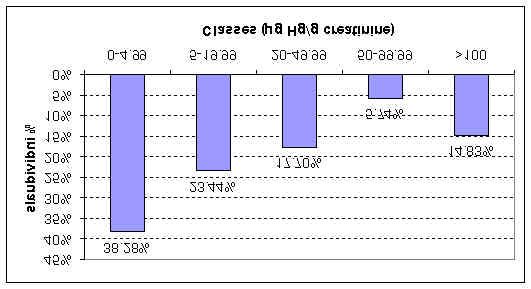
Fig. 5 - Classes of Hg Concentrations in Urine
Classes of Hg concentrations were selected to highlight the results (Fig. 5). The first class consists
of individuals with levels of total Hg in urine below 5 µg Hg/g creatinine, herein referred as alert
level. About 38% of the sampled individuals are included into this class, in which 79% are non-
workers (women and children), 15% are miners and 6% millers. The second class comprises Hg
levels between 5 and <20 µg Hg/g creatinine. About 23% of the individuals showed Hg levels
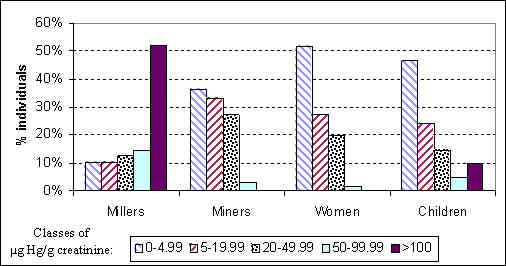
within this class. This was more significant among miners, women and children (24%) (Fig. 6). The
third class consists of Hg levels in urine above the action level (20 µg/g creatinine ) but still below
the maximum of 50 µg/g creatinine recommended by the World Health Organization. About 18%
of the sampled individuals are classified in this class, in which miners, women and children are the
main representatives of this class. The fourth class consists of individuals with Hg levels in urine
above 50 µg/g creatinine but still below 100 µg/g creatinine. Around 6% of the individuals have
shown concentrations in urine at this level. The last class encompasses individuals with Hg in urine
above 100 µg/g creatinine which is the concentration in which neurological symptoms of mercury
intoxication should be evident. About 15% of the sampled individuals had Hg in urine above this
concentration.
About 38% of the sampled individuals had Hg in urine above the action level of 20 µg Hg/g
creatinine. The situation with miners and millers is dramatic as 30% and 79% of the miners and
millers respectively have Hg in urine above the action level and 52% of the millers have levels
above 100 µg/g creatinine. In addition, about 14.6% of millers had shown extremely high mercury
concentrations in urine, ranging from 1221 to 3260 µg Hg/g creatinine. This result allows the
generalization that more than 90% of the sampled individuals working in the Processing Centers
(millers) have Hg levels in urine above the alert level.
UNIDO, 2004 Mercury in Block B, El Callao, Venezuela 16
Fig. 6 - Distribution of Hg in Urine
Mercury in Urine from Women
The average level of Hg in urine from 66 women sampled in this study was 13.02 with standard
deviation of 23.34 µg Hg/g creatinine. About 27% of the women had Hg concentration in urine
above the alert level and 21% above the action level.
Table 5 - Average of Total Mercury in Urine Samples from Women
(µg Hg / g creatinine)
Community
Average
S.D.
Monkey Town
16.35
33.25
La Fábrica
4.94
7.12
Chile
9.81
9.41
Nuevo México
16.06
20.87
S.D.= Standard Deviation
It is possible to notice in the Table 5 that the highest levels of mercury in urine from women are
found in communities of Monkey Town and Nuevo Mexico. As already mentioned, these
communities have the highest concentration of Processing Centers in the Block B and houses were
built very close to the mills.
Based on variance analysis (ANOVA) it was not found significant difference among the averages
of mercury concentration in urine from women living in different communities (p = 0.318).
No correlation was found between Hg concentrations in female urine and the distances from their
houses to the Processing Centers (r = 0.047).
Mercury in Urine from Children
The average concentration of total Hg in urine of children from the communities around the
Processing Centers is 33.30 with standard deviation of 70.80 µg Hg/g creatinine. As in the previous
groups, the results show high variability as a result of differences in living and working habits of
the children. About 53% of the 62 children sampled had Hg concentration in urine above the alert
level and 14.5% above the action level. As also seen in Fig. 6, about 10% of the sampled
UNIDO, 2004 Mercury in Block B, El Callao, Venezuela 17
children had levels of mercury in urine above 100 µg/g creatinine in which neurological
symptoms of intoxication should be observed.
In few cases it was observed the direct participation of children in the mining and processing
activities. It is very likely that these kids work voluntarily to help their parents and relatives as
already mentioned in a study carried out by the International Labor Organization on child labor in
artisanal mining in Venezuela19.
About 32 % of the urine samples from children have shown Hg concentrations below the detection
limit of the method (0.2 µg/L). In the community of Nuevo Mexico, 84% of the urine samples was
above the action level (20 µg Hg/g creatinine). In this site, Hg concentration as high as 320 µg Hg/g
creatinine was analyzed in a 7 year-old boy. In Monkey Town, 25 % of the samples had Hg
concentrations above the action level, and the maximum Hg concentration was found in the urine of
a 13 year-old girl (384 µg Hg/g creatinine). In the community of Chile, 67 % of the urine samples
had levels of mercury below the detection limit of the analytical method and only two samples had
concentrations above the alert level (5 µg Hg/g creatinine).
Table 6 - Average of Total Mercury in Urine Samples from Children
(µg Hg/g creatinine)
Community
Average
S.D.
Monkey Town
30.97
79.95
La Fábrica
34.13
51.64
Chile
2.35
4.29
Nuevo México
60.06
83.18
S.D..= Standard Deviation
No correlation was found between concentration of total mercury in urine from children and the
distance between their residences and the Processing Centers (r = - 0,189).
Symptoms of Occupational Exposure of Miners and Millers
The occupational exposure of miners and millers was also investigated based on subjective and
objectives symptoms obtained in the interviews and medical exams. This group is constantly
exposed to mercury vapors when burning amalgams and handling copper-amalgamating plates.
Figure 7 shows some symptoms typically associated with:
· chronic exposure at very high levels of mercury,
· acute intoxication or high exposure for short term to mercury vapors,
· long term exposure at low levels of mercury vapors and
· long term exposure at high levels of mercury vapors.
Despite the direct contact with mercury of both groups, miners and millers, the symptoms are
slightly more evident in miners (Fig. 7). As mentioned before, the differences in working habits
between miners and millers are not significant. The correlation between symptoms reported by the
individuals (also known as "subjective symptoms") plus observed ("objective") symptoms and Hg
in urine of miners and millers, have shown stronger correlation in the group of millers (Table 7). In
the miners' group, the linear correlation coefficients were below 0.5 indicating poorer correlation
between symptoms and levels of Hg in urine than in the case of millers.
19 Bermúdez, D., 1999. La pequeña Minería en Venezuela. Trabajo presentado a la Oficina Internacional del Trabajo
(OIT) en el marco del programa IEPC-Erradicación Internacional del Trabajo Infantil, Lima, Perú. (In Spanish).
UNIDO, 2004 Mercury in Block B, El Callao, Venezuela 18
Fig. 7 - Symptoms in Miners and Millers
Table 7 Correlation between Symptoms and Hg in Urine
(r = linear correlation coefficient)
Symptoms
r
r
(Miners) (Millers)
Mental Fatigue(*)
0.48
0.65
Physical Fatigue(*)
0.35
0.60
Kidney Disorder(*)
0.34
0.08
Cough(*)
0.08
0.71
Metallic Taste(*)
0.02
0.42
Tremors(o)
0.03
0.51
Note: (*)reported by the patient; (o)observed during medical exam.
Symptoms of Occupational Exposure of Women
It was noticed a number (21% of the group) of women with occasional direct contact with mercury.
Most women with direct contact with Hg are located in the communities of Monkey Town and
Chile. In these cases, women are sporadically involved in the amalgamation/amalgam burning
process. The reported symptoms of mercury intoxication were investigated in the women group and
more than 40% and 20% of the interviewees complained about mental and physical fatigue
respectively (Fig. 8). Most individuals did not show relevant symptoms that can be correlated with
Hg intoxication, but some women directly involved with amalgamation/burning claimed that they
feel metallic taste and muscular tremors were observed during the medical exam..










UNIDO, 2004 Mercury in Block B, El Callao, Venezuela 19
Fig. 8 - Intoxication Symptoms in Women
Results of the clinical-neurological exams
From the individuals submitted to the clinical-neurological exam (questionnaire 3), six were
removed, as four had suffered cranial traumatism, one had diabetes and one had a history of
exposure to toxic substances used in agriculture. The neurological signs of mercury intoxication
found in three groups (women + children, miners and millers) were walking ataxia, hand tremors,
eye tremors, incapability of performing the finger-nose test, dysdiadochokinesia, patellar and hyper-
reflexia, and patellar and cubital hypo-reflexia. Eye tremor is an easy and characteristic symptom to
be evaluated.
In 25% of women and children, it was possible to identify objective symptoms or abnormal
behavior during the exams, but just 28% of the miners and millers have shown objective symptoms.
The difference in observed symptoms between the examined groups was not statistically significant,
despite the higher levels of mercury in urine of miners and millers when compared with women and
children. Regarding the statistical analysis, it was considered as a positive symptom all cases in
which at least one or more objective symptoms were identified. In chronic intoxication, the
individuals are exposed to lower concentrations of the pollutant for long periods of time and if the
absorption exceeds excretion, the toxic substance accumulates and the effects of accumulation is
perceived as subtle alterations of the neuropsychological and neurobehavioral functions. Sub-
clinical alterations are more difficult to diagnose in a normal clinical evaluation and this is the most
classical and usual effect of mercury on the nervous system.
Specific neuropsychological tests
It was used a scoring process suggested in the UNIDO Protocols (Veiga and Baker, op. cit.) to
express the results of the neuropsychological tests. Just three groups were evaluated: millers, miners
and women. This latter were those not directly involved in the amalgamation process. The scoring
process ranged from 0 to 3. Score 0 (zero) means good performance in the test and score 3 indicates
highly poor performance; the higher the punctuation, the greater the function deficiency20.
20 Score: WMS (0 = 0, 1-2 =1, 2 = 3-4); Match box (0 = 0-15 seconds; 1 = 16-20 seconds ; 2 = 21 seconds or more);
Finger-Tapping (0 = 65 or more dots, 1 = 54 to 64 dots, 2 = 0-53 dots); Frostig (0 = 13 to 16 correct answers, 1 = 10 to
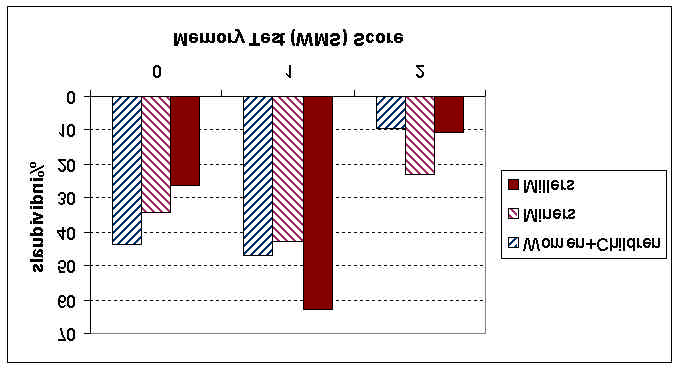
UNIDO, 2004 Mercury in Block B, El Callao, Venezuela 20
The Wechsler Memory Scale (WMS) test evaluates recent memory. The test involves a procedure
to ask the patient to repeat a list of numbers that ranges from 4 to 8 single numbers. The results
have shown that about 23% of miners and 10.5% of millers had scores 2 (indicating deficiency)
whereas just 9.4% of women had this score. It is clear by Fig. 9 that just about 34.3% of miners and
26% of millers had score zero (no problem) and almost 44% of the women did not show any
memory problem.
Fig. 9 - Results of Memory Test (WMS)
The Match Box test evaluates coordination, intentional tremor and concentration. The test consists
in putting 20 matches on a table, half of them on each side of an open matchbox, and the individual
must put all matches into the box using left and right hand alternatively. The time is measured.
About 15 seconds is considered a normal time for this task. Miners and millers performed better
than women (Fig. 10) but the millers performed worse than miners.
The MOT Test (Finger-Tapping) evaluates spatial perception, fine motor coordination and normal
dexterity. The test consists in asking the volunteer to keep his/her elbows on the table and make as
many points as possible on a piece of paper with a pencil. The number of points is counted after 10
seconds. A normal individual can easily make more than 65 points. Miners and millers had more
difficulties in performing this test than women (score 1) (Fig. 11).
12 correct answers, 2 = 0 to 9 correct answers); Episodic Memory (0 = 3 correct answers, 1 = 2 correct answers, 2 = 1
correct answer, 3 = wrong answers).
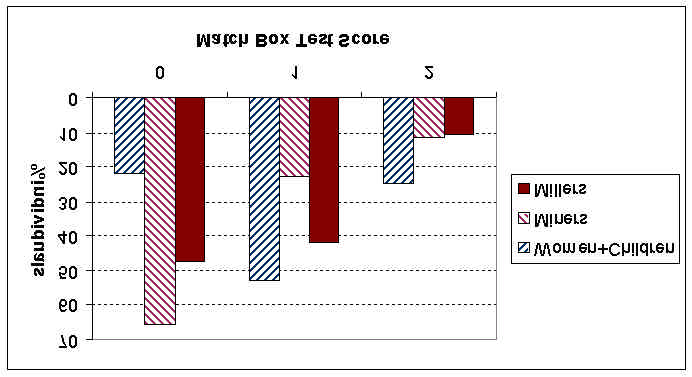
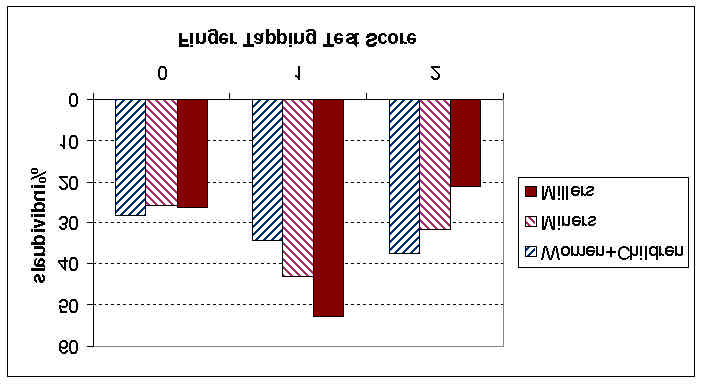
UNIDO, 2004 Mercury in Block B, El Callao, Venezuela 21
Fig. 10 Results of Match Box Test
The Frostig test evaluates visual perception. It consists in drawing a line from one point to another
between a narrow gap. The results did not show good sensibility in measuring neurological effects,
as almost 100% of all tested individuals could perform the tasks without any visible problem. The
only exception was a miller, who has evident serious chronic intoxication by metallic mercury.
Fig. 11 Results of Finger-Tapping Test
In the test that estimates episodic memory, no women have shown score 2 or 3 (deficiencies), but
almost 14% of miners and 11% of millers have shown scores above 2 (Fig.12). The tests that
evaluate episodic memory are similar to the Mini-Mental State Examination tests. This evaluates
memory, orientation, ability to calculate and speak. This is probably one of the most used and
studied tests for quick evaluation of neurological functions. This test has been quantified and
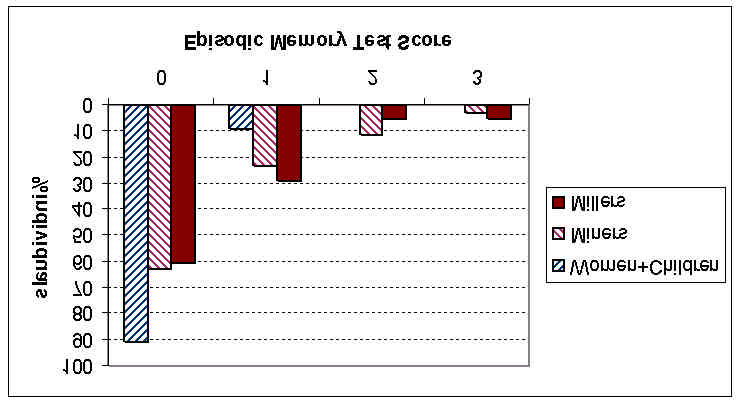
UNIDO, 2004 Mercury in Block B, El Callao, Venezuela 22
adjusted to different ages and instruction degree. Its application is simple, and this test can also be
applied to illiterates21. A score 2 in this test is a clear indication of a neurological problem.
Fig. 12 Results of Episodic Memory Test
When the scores of neuropsychological tests were correlated with Hg levels in urine, it was possible
to notice that individuals with high mercury concentrations in urine (above 50 µg Hg/g creatinine)
have shown difficulties (score 1 and 2) to complete the WMS Memory Test (Fig. 13). It is also
possible to observe that the percentage of individuals with bad performance (score >1) reaches
76.5% for individuals with Hg in urine above 50 µg/g creatinine. Similar situation was observed in
the Finger-Tapping Test (Fig. 14). The Match Box Test (Fig. 15) could not highlight a good
correlation between Hg levels in urine and test performance but the Episodic Memory Test (Mini-
Mental) was very useful to show that the % of individuals with score zero (no problem) decreases
when the Hg level in urine increases. In addition, the % of individuals with poor performance in this
simple test (score 1, 2 and 3) increases with the level of Hg in urine (Fig. 16). This is a strong
indication of alteration of the neurological functions by mercury vapor intoxication.
About 27% of individuals who performed the specific neuropsychological tests have noticeable
neurological problems detected in the clinical exams. However, no significant correlation was found
between the results of the medical exams and the speficic tests, except a slightly increase of scores 2
and 3 from individuals with noticeable clinical-neurological problems (symptoms) (Fig. 17).
The tests that estimate coordination and manual dexterity (drawing figures) do not have specific
scoring system in the UNIDO Protocols. This normally evaluates patients with significant central
neurological lesions. In this study it was adopted similar scoring process as the mini-mental tests,
i.e. ranging from 0 (no problem) to 3 (deficient). The percentage of miners and millers with score
above 2 was, 52.2% and 34.8% respectively which is a clear demonstration of poor performance
(problems).
21 Bertolucci, P. H. F.; Brucki, S. M. D.; Campacci, S. R.; Juliano, Y., 1994. O Mini-exame do Estado Mental em uma
População geral. Impacto da Escolaridade. Arquivos de Neuropsiquiatria, v.52, p. 1-7 (in Portuguese).
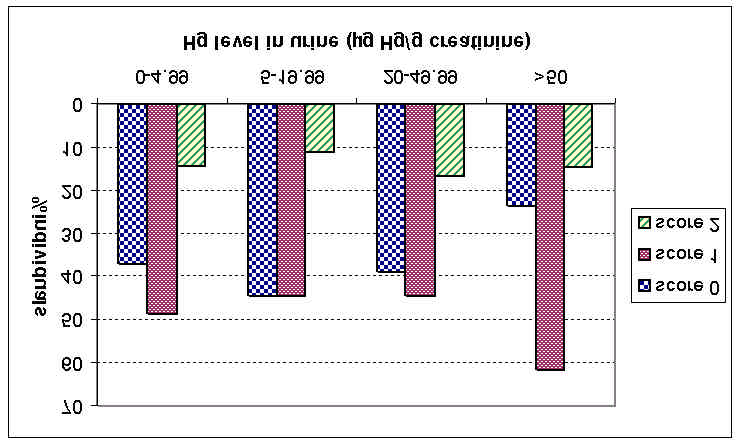
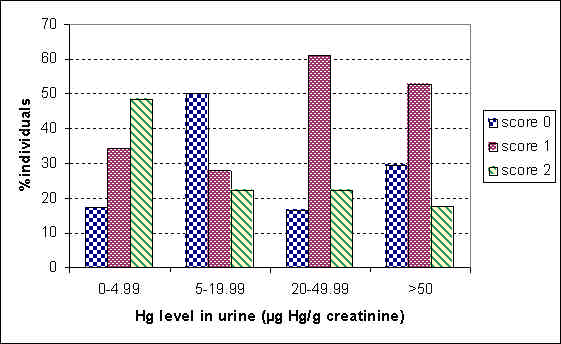
UNIDO, 2004 Mercury in Block B, El Callao, Venezuela 23
Fig. 13 Relationship between Hg in Urine and Memory Test (WMS)
Fig. 14 Relationship between Hg in Urine and Finger-Tapping Test
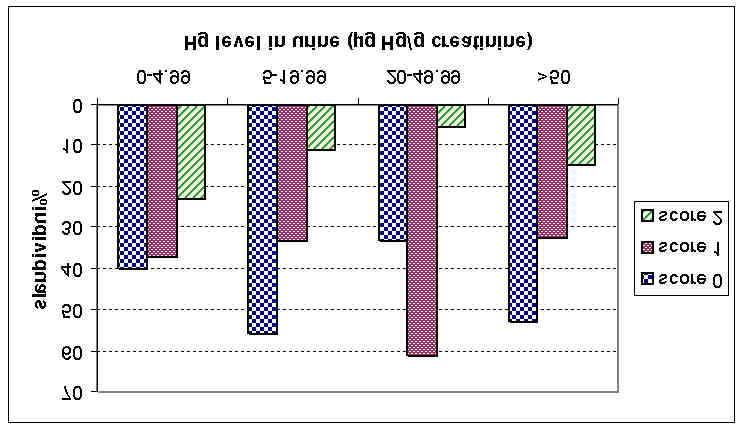
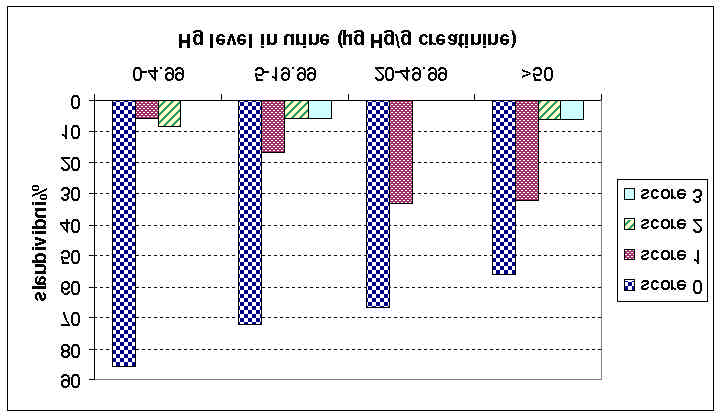
UNIDO, 2004 Mercury in Block B, El Callao, Venezuela 24
Fig. 15 Relationship between Hg in Urine and Match Box Test
Fig. 16 Relationship between Hg in Urine and Episodic Memory Test
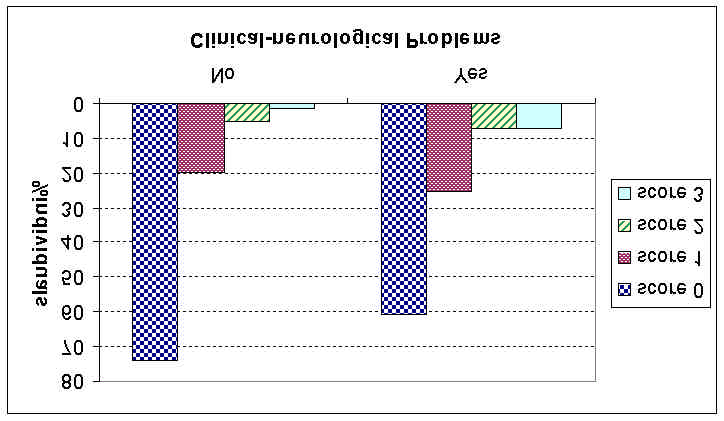
UNIDO, 2004 Mercury in Block B, El Callao, Venezuela 25
Fig. 17 Observed Problems in the Clinical neurological Exam
and Score of the Episodic Memory Test
DEMONSTRATION OF CLEANER TECHNOLOGIES
Extracting Gold and Mercury from Tailing
As part of the fieldwork, some simple techniques were brought to the miner's attention in order to
reduce mercury emissions and exposure while decomposing amalgams. A Processing Center ("El
Mago") was rented to conduct tests and demonstrate cleaner technologies of gold processing to the
local artisanal miners. Five tests were conducted using tailings from the Processing Center pond.
Extraction of residual gold from tailing was in fact advantageous as this material was more
homogeneous than the primary ores. In addition this called attention of miners and millers as gold
in tailings is usually unliberated or very fine and the workers are aware that they do not have
methods to extract it. Ultimately, this is the gold just extracted by the "company's methods". Most
tests were conducted using a sluice box with the four-special-amalgamating Goldtech plates. These
plates are manufactured in Brazil and a Venezuelan company, PARECA, sells the plates in Puerto
Ordaz, Venezuela (US$ 200 per 40x30 cm plate). This special plate has a thin coating of Hg and Ag
electrolytically deposited onto a copper plate. Mercury from tailings and eventually gold is captured
and firmly fixed to the plate surface. Mercury losses are minimized. When the plates are fully
loaded, amalgam is removed by washing with a plastic scraper. This kind of plates was used
successfully in Brazil to remove mercury from contaminated tailing but they can also be used to
amalgamate gravity concentrates. The support for four plates was made of wood in Venezuela. The
configuration was set up to allow a cascade effect from one level to another. Another wood
structure was built to hold the four Goldtech 40 x 30 cm plates placed in zigzag, as seen in the Fig.
18. This allows reduction of the flow speed on each plate and rendered better results.
The Goldtech plates were activated with vinegar before receiving Hg-contaminated tailings.
Initially, tailings collected in the ponds were passed on the Goldtech plates and miners could see a
large amount of mercury droplets retained on the surface (shining dots). Then, the Goldtech plates
received a bit of mercury (5g/plate) and about 1100 kg of tailings were fed to the hammer mill and
consequently on the plates. Samples before and after feeding the Goldtech plates were
systematically collected every 15 minutes and the whole material was dried, pulverized,
UNIDO, 2004 Mercury in Block B, El Callao, Venezuela 26
homogenized and analyzed in triplicate using LUMEX atomic absorption spectrometer (Table 8).
The material before entering the Goldtech plates analyzed 62.2 mg/kg of Hg and left the plates with
3.24 mg/kg Hg in average. More than 95% of Hg was removed from the tailings. However, the gold
recovery process was not so efficient. Before entering the Goldtech plates, the tailings had in
average 9.53 g Au/tonne. The final tailing, after leaving the Goldtech plates, analyzed 9.05 g
Au/tonne. Just 0.7 g of gold was recovered from the plates. This is a clear indication of lack of
liberation of gold from the silicates.
Goldtech
Goldtech
Plates
Plates
1.2 m
1.2 m
Tailings
Tailings
0.3 m
0.3 m
0.5 m
0.5 m
Fig. 18 Special-Amalgamating Plates (Zigzag)
Table 8 Hg (mg/kg) in Samples before and after Treatment with Goldtech Plates
subsample:
A
B
C
Ave
Before Goldtech plates
64.3
59.4
62.8
62.2
After Goldtech plates
2.98
2.93
3.80
3.24
Other test was conducted using 1805 kg of tailings to demonstrate to miners and millers the
advantages of using carpets to concentrate gold prior to amalgamation. The material fed the
hammer mill and discharged on a sluice box lined with two carpets in series. Both carpets were
locally acquired: a synthetic grass and a Multiouro Tariscado. This later is produced by the
Brazilian company Sommer (subsidiary of the German company Tarkett Sommer) and it is widely
used by Brazilian artisanal gold miners. This type of carpet is adequate for gold speck of rice-
medium size. This carpet cost in Venezuela around US$ 10 to 15/m² which is cheaper than other
types of imported vinyl carpets. The Brazilian carpet, appropriated to retain fine gold, was placed at
the beginning of the flow, where the speed is slower. Visibly, the Brazilian carpet retained more
gold than the synthetic grass.
The concentrates from the carpets were washed and amalgamated on the Goldtech plates. This
operation was done cleaning the carpets with water and directing the pulp of concentrates to the
plates placed in the zigzag structure. The gravity concentrate was re-passed three times on the
plates. After retorting, 1.3 g of gold was obtained. Systematic analyses of final tailings of this test
revealed an average grade of 3.75 g Au/tonne. The low recovery of gold is definitely due to lack of
gold liberation.
Another test was set up using Cleangold sluice boxes followed by Goldtech plates. The Cleangold
sluice uses polymeric magnetic sheets, with the magnetic poles aliened normal to the direction of
UNIDO, 2004 Mercury in Block B, El Callao, Venezuela 27
the flow, inserted into a simple aluminum sluice box. Magnetite, a mineral usually found in gold-
ore deposits, forms a corduroy-like bed on the sluice floor, which appears effective at recovering
fine gold. Fine particles of steel from the hammers are also trapped and form the liner. This sluice
box can be available in a variety of sizes and a 2ft x 6in (60x15 cm) sluice costs US$ 75 in USA.
The main advantage of this sluice is the high concentration ratio. Gold becomes trapped in a
magnetite layer and the sluice can be scrapped and washed into a pan. About 628 kg of tailings
were passed in a 2 ft Cleangold sluice box followed by two 8x8in (20x20 cm) sluices and the tailing
was directed to the zigzag structure with four Goldtech plates. The Cleangold sluice retained visible
mercury droplets and recovered 0.64 g of gold in a concentrate that analyzed 2854 mg/kg Au22. The
gold recovered by this sluice box was extremely fine. This was demonstrated to the miners and
millers. Goldtech plates recovered 0.25g Au. This configuration was capable of recovering 15.4%
of the gold from the tailings in which 11% of the gold was recovered using Cleangold sluice and
4.4% of gold in the Goldtech special amalgamating plates.
Using the Cleangold sluices it was also possible to pan the concentrate and, using a plastic vial,
gold was sucked from the concentrate. Gold was visibly very fine in the concentrate. Other tests
were conducted with primary ores using Cleangold sluices and Goldtech plates to satisfy the miners
who were interested to test these "new" techniques.
All results have reinforced the conclusion that lack of gold liberation is the main obstacle to
increase gold recovery in El Callao. The use of hammer mills to re-grind tailing samples does not
bring any benefit in terms of increasing gold liberation. This is the main reason for gold loss in the
Processing Centers and high recovery in the CVG-Minerven cyanidation plant, since the mining
company uses ball mills to re-grind the tailings at least below 200 mesh (0.074 mm).
The only possibility to increase gold recovery in the Processing Centers is using small ball mills
(e.g. 48x60 cm) to reduce the size of the ground product and promote gold liberation. As gold is
very fine, it seems that the Cleangold is an appropriate and affordable technology for the miners and
millers to process primary ores via gravity concentration. It seems that soon or later the Processing
Centers, as in Zimbabwe, will adopt cyanidation to extract residual gold from tailings. In this case,
the environmental problem will be exacerbated, as the mercury will become partially soluble in the
final tailings and therefore available for the methylating agents. Intervention of the Government
authorities and/or CVG-Minerven to educate and provide assistance to the miners is badly needed
otherwise the cyanidation process will be implemented and, without any environmental and health
concern, the results will be catastrophic.
Retorts
It was revealed by the UNIDO medical team that the level of mercury intoxication of the miners in
El Callao is one of the highest in the world. The use of retorts to reduce occupational exposure is
paramount. Miners burn amalgams in shovels and, usually, very near their noses, where they can
see better the decomposition process. Very few miners and millers believe that this is a problem and
they keep burning mercury carelessly. Some millers leave retorts available for miners but they
remove the top of the retort and use it as an open-air crucible to burn and melt gold. In many cases
this operation is conducted in a confined environment.
Using LUMEX spectrometer, mercury in the breath of miners and residents was analyzed. The
normal level of mercury in the breath depends on the number of amalgam-dental fillings of each
individual as well as the level of mercury in the environment. This is usually below 100 ng/m³. It is
also known that just 7% of the mercury vapor dose received by an individual is released during
22 Gold analyses were conducted at CVG-Minerven using fire assay method
UNIDO, 2004 Mercury in Block B, El Callao, Venezuela 28
respiration23. In El Callao, miners usually have shown 10,000 ng/m³ of mercury in their breath.
Kids, living near or in Processing Centers, had as much as 5,000 ng/m³ of mercury in the exhaled
air. Despite of the rudimentary procedure adopted to analyze breath of volunteers, this was effective
to call attention of the people working in the Centers or living around them to the high levels of
mercury they have been exposed and accumulated in their lungs. This simple analysis has also
contributed to convince the miners and millers to watch the demonstration of different types of
retorts made by UNIDO in Venezuela.
In order to introduce retorts to miners, four different types of retorts were locally manufactured and
the principle of retorting was demonstrated using Thermex glass retort. The retorts were fabricated
in a metal shop in El Callao using crucibles of stainless steel. The crucibles were actually small
stainless steel salad or sauce bowls acquired in kitchen stores in Puerto Ordaz. A RHYP retort made
of galvanized water connection tubes was also built and tested. All retorts were demonstrated to
miners and amalgam was burned using a propane torch as usually they use to burn amalgams in
shovels. The burning process took in average 15 to 20 minutes.
One of the most appreciated retorts was that fabricated using the concept of the fish-tin retort used
in China. This was a more elaborated retort built on a steel table but also using a stainless steel
salad bowl as crucible. A steel cover (bucket) was placed on the crucible. The table was filled with
water and the amalgam burned with a blowtorch from the bottom. As the crucible wall was thin, the
retorting time was short. Mercury condensed on the wall of the cover and dripped into the water.
The manufacturing cost of this prototype was around US$ 80 but this could be drastically reduced.
This retort took 10 to 15 minutes to eliminate most mercury from amalgam using a propane
blowtorch. A serious inconvenient of this, and other retorts, is that miners can remove the cover
(bucket) from the crucible while the retort is still hot. When this occurs, miners are exposed to
mercury vapor. This was demonstrated in 1995 when a graduate student24 from UNEG
Universidad Experimental de Guyana, analyzed urine of 20 amalgamation workers using retorts and
noticed that 8 individuals had high mercury levels in urine because they use to open retorts before
cooling them. This was shown to miners and millers and it was advised to refrigerate the covers
pouring water on it and wait some minutes before opening the system.
TECHNOLOGY TRANSFER IN CHEMICAL ANALYSIS
Analytical techniques were discussed and transferred to the chemical laboratory of the La Salle
Foundation in San Felix, Ciudad Guayana. The methodologies for quantitative and semi-
quantitative analyses of total mercury were demonstrated to the technicians. This laboratory has two
instruments to analyze total Hg. One is a GBC, Model Avanta 3000 atomic absorption spectrometer
that uses a hydride generator to extract Hg from digested samples. When UNIDO team was in
Venezuela, this equipment was not operational. The second instrument is a Bacharach MAS50D
atomic absorption, which is a cold vapor atomic absorption spectrometer dedicated to analyze
mercury. This equipment seems to be inadequate to analyze urine as it requires a large volume of
sample, about 100 mL. As most of the collected samples have volumes below 50 mL, the only
possibility to use the equipment is by diluting the samples. For highly concentrated samples, this
procedure is feasible, but the detection limit is then reduced for diluted samples.
23 Pogarev, S.E.; Ryzhov, V.; Mashyanov, N.; Sholupov, S.; Zharskaya, V., 2002. Direct Measurement of Mercury
Content of Exhaled Air: A New Approach for Determination of the Mercury Dose Received. Analytical and
Bioanalytical Chemistry, 374, p. 1039-1044.
24 Schulz-Garban, K., 1995. Determination of Hg Concentration in Workers and in the Air of Several Amalgamation
and Gold Processing Centers of "Bajo" Caroni, June-Novembre 1994. Master Thesis, UNEG, Ciudad Guayana. 156p.
(in Spanish)
UNIDO, 2004 Mercury in Block B, El Callao, Venezuela 29
The quantitative analysis of mercury discussed with local technicians was based on the procedure of
Akagi (1994)25, from the National Institute of Minamata Disease, Japan. The method consists of
adding 1 to 5 mL of urine drop wise, while stirring, into a 50 mL volumetric flask containing a
mixture of 1 mL of nitric acid, 1 mL of perchloric acid, 5 mL of sulphuric acid and 1 mL of water.
The mixture is heated to 230-250 °C for 20 minutes and after cooling the solution is completed to
50 mL with water. The Hg(II) in solution is then reduced to gaseous elemental mercury with
stannous sulfate (or chloride) 10% in a solution of HCl 1N. The Hg° (g) is carried by air (in this
case) into the cell of the cold-vapor atomic fluorescence spectrometer (CVAFS) for detection at
wavelength of 253.7 nm.
For the semi-quantitative analysis, it was transferred a simple methodology of heating samples of
soil and sediments over 600°C in a glass test tube. All forms of mercury evaporate and are carried
into a solution of sulfuric acid with potassium permanganate (Appendix 4). In the sequence,
mercury is extracted with a solution of dithizone with chloroform and the resulting dithizoate of
mercury, with red-orange coloration, is compared with colorimetric standards previously prepared
or analyzed in a spectrophotometer.
In order to test the semi-quantitative procedure, four samples of sediments, previously analyzed by
atomic absorption by La Salle, were tested. The results in the Table 9 confirm the efficiency and
precision of the semi-quantitative method. The method can be applied to biota samples as well.
Table 9 Results of Semi-quantitative Analyses of Sediments
Sample Hg known (ppm) Hg found (ppm) Duplicate (ppm)
A
0.8
0.5 to 1.0
0.5 to 1.0
B
1.5
1.0 to 2.0
1.0 to 2.0
C
1.9
1.0 to 2.0
1.0 to 2.0
D
2.5
2.0 to 3.0
2.0 to 3.0
Using these methods the local laboratory will be able to conduct "in situ" analyses creating
possibilities for constant monitoring of mercury levels in biological and geochemical samples.
WORKSHOP IN EL CALLAO
A two-day workshop was conducted in El Callao on December 8 and 9, 2003. The first day was
used to attract the miners and millers to the El Mago Processing Center where UNIDO team set up
a series of practical demonstrations. It was manufactured T-shirts with UNIDO, Minerven, HECLA
and CVG logos and the sentence (in Spanish): "For you health and your son's health...Recycle
Mercury...Use Retorts". A banner with this sentence was also produced and displayed on the
premises. The demonstration day started explaining the principles of the sluice boxes (carpets and
Cleangold) to concentrate gold without using amalgamating Cu-plates. It was explained the
environmental problems related to amalgamation of the whole ground ore and how much mercury
has been lost. It was demonstrated the use of the zigzag-Goldtech plates and the advantages of using
such a system to clean up tailings and amalgamate gravity concentrates. It was stressed the problem
related to lack of liberation of gold from the ore and the limitations of the hammer mills to grind
finer that 1 or 0.5 mm. It was mentioned that they are recovering likely less than 30% of the gold
and losing money with energy, hammers and mercury. All numbers found in the UNIDO
preliminary processing tests with tailings were presented to the miners. A system of charging for
charging based on ore hardness was suggested to the Processing Center's owners. A primary ore
25 Akagi, H., 1994. Exposure Assessment. In: Proc. of the International Workshop on Environmental Mercury Pollution
and Its Health Effects in Amazon River Basin. p. 118-125. Rio de Janeiro, Nov. 30, Dec 2, 1994. Ed. National Institute
of Minamata Disease, Japan and Instituto de Biofísica, Univ. Federal Rio de Janeiro, Brazil.
UNIDO, 2004 Mercury in Block B, El Callao, Venezuela 30
and tailings were processed together with the miners using the Cleangold sluices as the main
concentration device and Goldtech plates as a scavenger of the Au and Hg in the tailings. The gold
concentrate was washed and panned in front of the miners. A clear layer of yellow gold was shown
to the miners. Using a plastic sucker, gold was removed from the pan and no Hg was used.
Using the Goldtech plates after the Cleangold sluice it was possible to show to the miners the how
residual Hg (and Au) can be recovered from tailings. The amalgam was removed from the plates
and retorted.
Five different types of retorts were used in front of the miners and millers to retort all amalgam
beads obtained during the tests conducted in the Center in that week. Miners showed interest in a
retort made by a local manufacturer, Mr. Rafael "Colombiano" using the model of the Chinese fish-
tin retort. The idea of using salad bowls as crucibles of most of the retorts fabricated by the metal
shops was very appreciated by the miners/millers as gold comes out yellow after retorting.
In the second day of workshop, a meeting with various stakeholders occurred at the CVG-Minerven
Union House (Negra Isidora), in El Callao. With about 50 people (miners, millers, residents,
Government representatives, CVG representatives, etc.) all members of the UNIDO project
presented partial results of the fieldwork. Mr. Gilberto Berrios from HECLA, presented his data
from the socio-demographic study at the Block B. Mr. Dario Bermudez, on behalf of the health
survey team, has shown the results of urine analysis and clinical exams.
The presentation of the technical results of the processing and amalgamation tests was conducted by
Mr. Marcello Veiga who called the attention of the audience for the high levels of mercury being
emitted by miners and millers. It was also highlighted the economic inefficiency of the Processing
Centers and the solution for this rely on a better relationship miner-miller to improve production
methods.
Ms. Monika Roeser from UNIDO headquarters in Vienna stressed the objectives of this preparatory
mission and agreed to establish a strategy together with CVG, HECLA, Association of Miners and
other stakeholders to introduce a more sustainable project in the region where cleaner technologies
can be further demonstrated, a strong awareness campaign can be conducted, environmental
impacts can be evaluated and simple analytical methods for monitoring mercury intoxication can be
brought to the local authorities.
CVG representatives have reinforced the words of UNIDO representative and called the attention of
the audience to the seriousness of the situation in El Callao. They promise to make all efforts to
establish a future program with UNIDO to educate miners and surrounding communities as well as
introduce cleaner technologies in the area.
RECOMMENDATIONS
The medical exams, the urine analyses and the specific neuropsychological tests have revealed that
millers and miners have shown symptoms that suggest serious mercury intoxication. In just one
worker it was characterized acute mercury intoxication and it was recommended to the local doctors
and nurses to follow up this case. This was also communicated to the individual and recommended
his immediate removal from the polluting source for treatment. The specific neuropsychological
tests have highlighted deficit of the cognitive functions of some workers such as alteration of the
visual perception, deficiency of the recent and episodic memory, as well as deficiency of the spatial
perception, motor coordination and manual dexterity. The cognitive deficiency showed positive
correlation with the levels of total mercury in urine and this is more prominent in Hg concentrations
above 6µg/Hg/g creatinine. Some of the neuropsychological tests have revealed that people not
UNIDO, 2004 Mercury in Block B, El Callao, Venezuela 31
directly involved in the amalgamation work but living near the Processing Centers have been
neurologically affected by mercury vapors. The alterations found in the medical exams and
neuropsychological tests of people indirectly exposed to mercury vapors claim for immediate action
to reduce emissions and reduce exposure of innocent people to the pollutant.
It is suggested:
· immediate removal of children from the polluting source (many children play and work in
the Processing Centers)
· continuation of the monitoring of cognitive aspects of the residents of Block B, in particular
children from age between 7 and 12,
· training of local health workers to be able of monitoring health conditions as well as
performing the specific neuropsychological tests in residents,
· implement an interdisciplinary strategy to educate workers and residents to reduce and avoid
mercury vapor exposure.
Processing Centers are usually a good idea to avoid spreading environmental impacts caused by
artisanal gold miners, but at the same time, when not well conducted, this concentrates the
contamination in certain sites. The technologies used by the Processing Centers in El Callao are
exposing miners, millers and surrounding communities to high levels of mercury vapor. The
technique of using hammer mills associated with amalgamating copper plates is recovering, at the
most, 30% of the gold in the ore. As gold in El Callao seems to occur at fine grain size, a more
efficient grinding process is needed. This must be associated with a gravity separation process that
does not use mercury. The amalgamation of the whole ground ore using copper-plates, as
extensively used in El Callao, is an ancient inefficient technology that releases mercury to the
tailings and exposes operators to high levels of mercury vapor. There are many concentration
techniques that do not require mercury in the processing, such as sluice boxes using appropriate
carpets, Cleangold sluices, centrifuges, etc. Amalgamation can still be used as it is simple and
cheap, but just a small amount of mercury is needed to amalgamate gravity concentrates. This keeps
the mercury use under control and reduces drastically emissions.
The use of retorts is another critical issue in El Callao. Miners and millers do not believe in mercury
pollution and keep burning amalgams in pans and shovels. In many cases this is conducted in a
close environment. Companies and Government should establish urgently an awareness campaign
to introduce safer procedures for amalgam decomposition, such as retorts. ANY RETORT IS
BETTER THAN NOTHING. Different types of retorts should be brought to the miners' attention.
In terms of the business, the Processing Centers are clearly using a wrong strategy. As they charge
10% of the gold production and the miners do not know how much gold they mined, the millers
very frequently do not produce enough gold to pay their operating costs which is 0.24 and 0.5 g
Au/bag for soft ore and hard ore respectively. The method used in Zimbabwe for Custom
Processing Centers seems to be more adequate, since the price for processing ore is fixed based on
hours of grinding. Definitely a better arrangement between miners and millers must be established
in El Callao. .
The business relationship between mining companies and miners/millers must be carefully revisited
and improved. As the companies, in particular CVG-Minerven, are acquiring gold-rich tailings from
miners this can create future problems for the company as the benefits become concentrated in the
company and Processing Centers' owners. The relationship between companies and miners/millers
can rapidly deteriorate. The amount of mercury being taking to the companies' environment
together with contaminated tailings is considerable and this is definitely contaminating employees
(especially those working in the gold melting) and tailing ponds. As mining companies do not
purchase tailings (and sometimes ore) with less than 6 g Au/tonne, it is also foreseen that millers
UNIDO, 2004 Mercury in Block B, El Callao, Venezuela 32
(Processing Center owners) will soon start their own cyanidation plants. Cyanidation of
amalgamation tailings, as seen in many other countries, exacerbates the danger of mercury in the
environment and facilitates the mercury methylation. This is a problem that soon will come to El
Callao and need immediate attention from the authorities.
As yet, there is no educational program for miners/millers, residents and general population to make
them aware of the dangers caused by mercury. No consistent program was implemented in the
region to bring simple solutions for miners and millers such as the use of retorts to protect
themselves and the surrounding population. There are reliable local equipment manufacturers with
good technical capacity to develop simple types of equipment suitable for small-scale miners. These
manufacturers could be trained to produce better pieces of equipment. Mercury pollution cannot be
reduced if the miners/millers do not see any additional benefit in terms of gold production.
All action should take into consideration the realm of problems associated with poverty and
rudimentary living and working conditions of the people of Block B. UNIDO has been
implementing Transportable Demonstration Units in six countries in Africa, Asia and South
America to bring hands-on training to miners/millers and general public. A movable unit consists of
a tent to be used as classroom and a container with small pieces of equipment to teach the miners
and millers the advantages of using cleaner methods. This brings to the miners and millers'
attention a variety of technical options for gold concentration, amalgamation and retorting; it is up
to them to select what is affordable, appropriate and durable according to their convenience. The
unit also incorporates programs to attract miners and public to watch skits and movies about
environmental impacts and mercury pollution highlighting local cultural aspects and incorporating
concepts of environmental and health protection. The unit can also bring ideas to improve the
livelihood of different mining communities such as suggesting economic diversification activities or
value-adding techniques (e.g. handcraft, fish farming, agriculture, brick making using tailings, etc).
An initiative like this is badly needed in El Callao and the collaboration of local mining companies
is critical to guarantee the sustainability of this program.
UNIDO, 2004 Mercury in Block B, El Callao, Venezuela 33
APPENDIX 1 Processing Centers in Block B
Nuevo México
Processing
Owner
Number of
Number of Coordinates
Center
hammer mills
crushers
(UTM)
San Ernesto
Jesús García
5
1
808.511 N
628.978 E
Indoven
David Mejías
4
1
808.491 N
629.272 E
Don Veta
Isidro Betancourt
1
1
808.574 N
(3 in project)
629.333 E
William's Gold
William González
5
1
808.639 N
629.342 E
Oshim
Guillermo Herrera
4
1
808.627 N
629.315 E
Minasoro
Rafael Navarro
3
1
808.579 N
629.690 E
Nueva Esperanza
José Rondón
2
1
808.706 N
629.619 E
Ovimal
Ricardo Rondón
4
1
El Mago
José Pino
6
2
Clark Brothers
Roberto Clark
6
1
El Mamon
Ricardo Rondón
3
1
La Fábrica
Processing
Owner
Number of
Number of Coordinates
Center
hammer mills
crushers
(UTM)
Nabomar
Ramón Navarro
1
1
808.420 N
( 3 in project)
628.722 E
Faremont
Julio Ferrera
4
1
808.426 N
628.845 E
UNIDO, 2004 Mercury in Block B, El Callao, Venezuela 34
Monkey Town Sector
Processing
Owner
Number of
Number of Coordinates
Center
hammer mills
crushers
(UTM)
Inversiones San
Aníbal Acevedo
4
1
808.273 N
Jose
628.183 E
Inversiones Rojas
Julio Rojas
4
1
808.305 N
1
628.104 E
Inversiones Rojas
Julio Rojas
3
1
808.294 N
2
628.049 E
Yuruari
Pedro Anzola
4
1
808.306 N
628.036 E
El Caro
Ramón Alvarado
5
1
808.327 N
628.024 E
Molino Hermanos
Nancy Ruiz
3
1
808.171 N
Ruiz26
628.716 E
Inversiones
Leoncio Copeland
3
1
808.440 N
Mineras Cuyuni
628.125 E
Las Mercedes 1
Ramona Mateo
3
1
808.458 N
628.192 E
Las Mercedes 2
Ramona Mateo
2
1
808.506 N
628.222 E
J. Herrera
Ramona de
3
1
808.306 N
Herrera
628.036 E
Inversiones Samar
Samir Yasiggi
4
1
808.400 N
628.100 E
26 It does not appear in "CVG-Minerven" register
UNIDO, 2004 Mercury in Block B, El Callao, Venezuela 35
APPENDIX 2 Results of Hg in urine (LUMEX)
creatinine
Hg
Code
Age
(g/L)
µg/g creatinine
Group
NM-1A
11
0.47
0.10
<DL
CHILDREN
NM-2A
12
0.09
0.10
<DL
CHILDREN
NM-2B
13
0.09
72.57
CHILDREN
NM-10A
9
0.06
52.80
CHILDREN
NM-11A
10
0.38
16.53
CHILDREN
NM-13A
7
0.03
320.51
CHILDREN
NM-19A
9
0.66
27.43
CHILDREN
NM-21A
7
(*)
4.00
CHILDREN
NM-22A
7
0.19
0.10
<DL
CHILDREN
NM-23A
12
0.25
26.80
CHILDREN
NM-24A
10
1.25
129.60
CHILDREN
NM-24B
11
0.06
0.10
<DL
CHILDREN
NM-24C
14
(*)
45.00
(*)
CHILDREN
NM-25A
10
0.53
197.67
CHILDREN
NM-28A
10
0.03
86.54
CHILDREN
NM-29A
10
0.25
11.20
CHILDREN
NM-30A
8
0.09
29.88
CHILDREN
MT-12A
11
0.34
4.66
CHILDREN
MT-13A
12
0.41
24.37
CHILDREN
MT-15A
8
0.47
13.44
CHILDREN
MT-19A
12
0.66
19.81
CHILDREN
MT-23A
11
0.56
19.56
CHILDREN
MT-24A
13
0.63
17.60
CHILDREN
MT-25A
12
1.09
1.28
CHILDREN
MT-25B
8
0.31
0.10
<DL
CHILDREN
MT-29A
8
0.16
35.21
CHILDREN
MT-31A
9
0.16
0.10
<DL
CHILDREN
MT-32A
6
0.22
0.10
<DL
CHILDREN
MT-35A
7
0.47
0.10
<DL
CHILDREN
MT-36A
12
0.84
22.52
CHILDREN
MT-38B
12
1.09
134.41
CHILDREN
MT-38C
13
0.50
384.00
CHILDREN
MT-40A
13
0.72
10.85
CHILDREN
MT-40B
10
1.13
0.10
<DL
CHILDREN
MT-41A
10
1.09
4.94
CHILDREN
MT-45A
13
0.59
4.38
CHILDREN
MT-48A
7
0.38
9.87
CHILDREN
MT-50A
10
0.59
11.79
CHILDREN
MT-55A
10
0.06
22.40
CHILDREN
MT-57A
11
0.56
1.60
CHILDREN
MT-58A
6
0.56
0.10
<DL
CHILDREN
LF-7A
15
1.88
12.27
CHILDREN
LF-9A
12
0.09
149.41
CHILDREN
LF-11A
5
1.13
2.22
CHILDREN
LF-13A
11
1.56
18.56
CHILDREN
UNIDO, 2004 Mercury in Block B, El Callao, Venezuela 36
LF-13B
14
1.06
9.41
CHILDREN
LF-18A
11
0.16
15.36
CHILDREN
LF-18B
8
0.31
31.68
CHILDREN
CH-1A
15
0.88
0.10
<DL
CHILDREN
CH-1B
6
0.81
0.10
<DL
CHILDREN
CH-3A
13
0.72
0.10
<DL
CHILDREN
CH-5A
7
1.16
8.65
CHILDREN
CH-6A
7
1.13
4.00
CHILDREN
CH-8A
12
0.66
0.10
<DL
CHILDREN
CH-9A
10
1.03
0.10
<DL
CHILDREN
CH-14A
7
0.69
1.45
CHILDREN
CH-17A
7
0.44
13.26
CHILDREN
CH-20A
14
0.41
0.10
<DL
CHILDREN
CH-23A
8
(*)
0.10
<DL
CHILDREN
CH-33A
9
1.47
0.10
<DL
CHILDREN
LI-1B
13
0.94
0.10
<DL
CHILDREN
LI-2A
15
0.91
0.10
<DL
CHILDREN
MOC-01
20
0.94
106.67
MILLER
MOC-02
25
1.25
104.00
MILLER
MOC-03
33
2.50
52.40
MILLER
MOC-04
50
2.13
92.71
MILLER
MOC-05
42
1.00
140.00
MILLER
MOC-06
22
2.66
78.68
MILLER
MOC-07
24
1.06
24.47
MILLER
MOC-09
22
2.13
143.83
MILLER
MOC-11
42
1.38
420.36
MILLER
MOC-12
35
1.00
2030.00
MILLER
MOC-13
48
0.63
35.20
MILLER
MOC-14
32
2.50
192.00
MILLER
MOC-15
40
1.41
195.56
MILLER
MOC-16
38
1.06
10.35
MILLER
MOC-19
30
0.63
518.40
MILLER
MO-04
26
1.03
229.83
MILLER
MO-10
25
0.34
2781.50
MILLER
MO-14
36
1.06
43.29
MILLER
MO-17
40
1.56
1222.40
MILLER
MO-18
31
0.38
146.67
MILLER
MO-20
25
0.72
153.05
MILLER
MO-23
23
0.44
8.46
MILLER
MO-28
30
0.19
106.67
MILLER
MO-31
28
1.19
266.95
MILLER
MO-40
20
0.25
232.00
MILLER
MO-53
53
0.75
318.67
MILLER
MO-64
32
1.19
56.42
MILLER
MO-70
43
1.88
1221.33
MILLER
MO-78
22
2.34
1198.96
MILLER
MO-240
37
0.50
3260.00
MILLER
MO-243
22
0.97
84.65
MILLER
MO-245
32
1.47
130.05
MILLER
MO-247
25
0.28
149.36
MILLER
UNIDO, 2004 Mercury in Block B, El Callao, Venezuela 37
MO-249
52
0.63
41.60
MILLER
MO-260
36
0.78
1868.92
MILLER
MO-400
34
0.69
466.91
MILLER
MO-403
38
0.94
74.67
MILLER
MOLR-1
41
0.53
18.83
MILLER
MOLR-2
49
1.28
9.37
MILLER
MOLR-3
25
0.84
0.10
<DL
MILLER
MOLR-4
42
1.03
0.10
<DL
MILLER
MOLR-5
18
1.25
2.16
MILLER
MOLR-6
22
1.22
0.57
MILLER
MOLR-9
38
0.88
5.26
MILLER
MOLR-10
18
1.88
24.53
MILLER
MOLR-11
59
0.97
0.10
<DL
MILLER
MOLR-12
36
0.19
80.00
MILLER
MOLR-13
34
0.34
29.10
MILLER
MI-2
24
1.03
3.10
MINER
MI-3
48
0.94
12.80
MINER
MI-4
43
0.69
40.73
MINER
MI-6
20
1.25
2.64
MINER
MI-7
18
0.75
22.67
MINER
MI-10
29
0.03
0.10
<DL
MINER
MI-13
25
1.53
0.10
<DL
MINER
MI-17
29
3.13
14.72
MINER
MI-19
25
2.50
13.60
MINER
MI-21
26
1.88
0.10
<DL
MINER
MI-28
29
1.03
5.82
MINER
MI-32
22
1.00
1.60
MINER
MI-36
34
1.09
10.06
MINER
MI-46
41
2.66
37.65
MINER
MI-49
47
0.38
32.00
MINER
MI-100
38
0.44
25.14
MINER
MI-201
39
0.63
0.10
<DL
MINER
MI-202
48
1.25
17.60
MINER
MI-204
21
0.47
25.60
MINER
MI-205
56
0.34
23.86
MINER
MI-208
42
0.78
6.91
MINER
MI-209
49
2.13
10.35
MINER
MI-210
33
1.56
16.64
MINER
MI-211
22
0.91
2.10
MINER
MI-213
44
1.38
1.82
MINER
MI-216
39
2.19
3.84
MINER
MI-217
43
0.31
3.84
MINER
MI_218
21
1.34
2.38
MINER
MI-227
48
0.53
16.38
MINER
MI-304
39
1.84
54.78
MINER
MI-306
32
0.72
41.74
MINER
MI-308
0.31
30.08
MINER
MI-203
32
1.88
5.33
MINER
MT-09
26
1.41
167.12
WOMAN
MT-12
36
0.63
0.10
<DL
WOMAN
UNIDO, 2004 Mercury in Block B, El Callao, Venezuela 38
MT-13
36
2.06
20.85
WOMAN
MT-15
34
1.94
4.39
WOMAN
MT-18
42
0.53
32.00
WOMAN
MT-19
29
1.75
2.91
WOMAN
MT-23
40
0.81
13.54
WOMAN
MT-24
38
0.94
13.87
WOMAN
MT-25
31
0.56
0.10
<DL
WOMAN
MT-26
25
0.84
2.84
WOMAN
MT-29
24
0.38
26.67
WOMAN
MT-32
22
0.31
4.16
WOMAN
MT-34
23
0.75
1.87
WOMAN
MT-35
26
0.25
0.10
<DL
WOMAN
MT-36
45
0.78
4.99
WOMAN
MT-38
44
0.59
26.95
WOMAN
MT-40
25
0.91
0.44
WOMAN
MT-41
45
0.47
25.60
WOMAN
MT-45
33
0.56
0.10
<DL
WOMAN
MT-48
35
0.59
0.10
<DL
WOMAN
MT-50
25
0.97
23.74
WOMAN
MT-52
36t
1.63
5.23
WOMAN
MT-55
46
1.16
2.59
WOMAN
MT-57
36
0.69
26.18
WOMAN
MT-58
36
0.75
2.40
WOMAN
NM-02
36
0.09
45.89
WOMAN
NM-03
28
0.16
21.77
WOMAN
NM-05
28
0.41
27.08
WOMAN
NM-08
27
0.09
0.10
<DL
WOMAN
NM-10
25
0.59
10.61
WOMAN
NM-13
29
0.53
0.10
<DL
WOMAN
NM-17
17
0.59
0.10
<DL
WOMAN
NM-19
43
0.69
2.04
WOMAN
NM-21
27
0.09
77.91
WOMAN
NM-22
34
0.44
0.23
WOMAN
NM-23
30
0.28
13.87
WOMAN
NM-24
37
0.13
0.10
<DL
WOMAN
NM-26
25
2.34
19.20
WOMAN
NM-28
32
0.56
16.53
WOMAN
NM-29
37
0.16
17.93
WOMAN
NM-30
29
0.00
3.70
WOMAN
LF-01
19
1.19
0.10
<DL
WOMAN
LF-07
41
0.34
0.10
<DL
WOMAN
LF-08
36
1.16
16.43
WOMAN
LF-09
32
0.69
0.10
<DL
WOMAN
LF-11
35
0.13
0.10
<DL
WOMAN
LF-13
35
0.59
6.23
WOMAN
LF-14
29
1.03
15.52
WOMAN
LF-18
28
0.72
0.97
WOMAN
LI-01
35
2.00
5.18
WOMAN
LI-02
37
0.75
1.73
WOMAN
CH-01
45
0.63
3.84
WOMAN
UNIDO, 2004 Mercury in Block B, El Callao, Venezuela 39
CH-03
32
0.66
18.29
WOMAN
CH-05
25
0.19
0.10
<DL
WOMAN
CH-06
32
1.09
6.40
WOMAN
CH-08
45
2.66
24.47
WOMAN
CH-09
37
2.00
2.90
WOMAN
CH-14
43
0.38
26.67
WOMAN
CH-15
47
0.69
0.10
<DL
WOMAN
CH-17
25
0.38
23.47
WOMAN
CH-20
38
1.38
8.00
WOMAN
CH-25
25
0.88
0.10
<DL
WOMAN
CH-30
51
(*)
10.00
WOMAN
CH-33
37
0.53
12.42
WOMAN
CH-34
26
1.75
10.29
WOMAN
CH-23
28
<LD
0.10
<DL
WOMAN
AVERAGE
0.87
104.59
STDev
0.63
378.41
Legend
MT
From Monkey Town
NM
From Nuevo México
LF
From La Fábrica
LI
From La Iguana
CH
From Chile
DL
DETECTION LIMIT
no sufficient urine volume to analyze creatinine;
(*)
result was considered 1 g/L
UNIDO, 2004 Mercury in Block B, El Callao, Venezuela 40
APPENDIX 3 Analytical Method for Creatinine
Principle: Creatinine reacts with picric acid to form a yellow-reddish chemical complex; in acidic
pH this reaction occurs with maximum production of the dyed complex creatinine-picrate.
In 3 test tubes one for the blank, one for the standard and one for the urine sample - 2,0mL of the
alkaline reagent is added. Then 0,25mL of distilled water is added to the blank test tube, 0,25mL of
the creatinine standard, 3mg/dL to the standard tube and 0,25mL of centrifuged and diluted urine to
the sample tube.
A 0,5mL of picric acid 60 mmol/L is prepared, homogenized and incubated in double boiler, at
37ºC, for 10 minutes.
The analysis is conducted in a spectrophotometer. The absorbances of the standard and sample are
measured at 510nm (500 a 540), considering the blank test tube as zero.
The data is expressed in mg/dL are converted into g/L
UNIDO, 2004 Mercury in Block B, El Callao, Venezuela 41
APPENDIX 4 Colorimetric Method to Analyze Total Hg
Dithizone is largely used as a colorimetric and extracting reagent (Koch and, Koch 1974 apud Silva,
1996)27. Dithizoate of mercury Hg (HDz) is formed in acidic medium with a red orange
coloration. It is soluble in chloroform and carbon tetrachloride. This complex has absorbance at 485
nm and molar extinction of 71 x 104.
Through pyrolisis of soil or sediment, mercury is released and transferred to an acidic solution of
potassium permanganate. After the total reduction of the solution with chlorohydrate of
hydroxylamine, mercury is extracted with dithizone solution in chloroform. The color can be
compared with standards previously prepared.
In order to extract Hg from the solid sample (soil or sediment), the test tube must be filled with 10g
of the material, and about 1 mL of deionized water added. Sometimes the addition of some glass
beads (15-20 beads) spreads the heat and facilitates the passage of Hg vapor through the
soil/sediment layer. The test tube is heated with a Bunsen burner for 5 minutes. After waiting 3
minutes, the pyrolisis is repeated for another 5 minutes. The test tube is connected to a 250mL
Becker, with 95 mL of sulfuric acid solution and 5 mL of potassium permanganate using a glass
connector (tube). The solution is reduced with chlorohydrate of hydroxylamine.
An aliquot of 5 mL of the working solution is extracted, put in contact with ditizone in a
decantation funnel and agitated for 1 minute. The ditizone solution is transferred to another
decantation funnel with 50mL of alkaline solution. The funnel is agitated for 1 minute and the
solution transferred to another decantation funnel containing acid washing solution. The funnel is
agitated for another minute.
The final solution is transferred to a test tube and compared with standards previously prepared with
concentrations of 0,2, 0,5, 1,0, 2,0 and 3,0 ppm Hg. When visually compared, it is advisable to use
standard freshly prepared as Hg dithizone (HDz) is sensitive to light; these standards can be
prepared with water and solutions of cobalt chloride and potassium dichromate.
27 Silva, A.P., 1996. Mercúrio em Ambientes Aquáticos de Poconé-MT. Doctorate Thesis, University of São Paulo.
Institute of Geoscience. São Paulo, Brazil. (in Portuguese).
UNIDO, 2004 Mercury in Block B, El Callao, Venezuela 42
APPENDIX 5 Interlaboratorial of Total Hg in Urine
Hg (µg/L) in Urine of Volunteers Analyzed by 3 Venezuelan Labs + LUMEX
Hg
Hg
Hg
Hg
(µg/L)
(µg/L)
(µg/L)
(µg/L)
UCV
ULA
La Salle LUMEX
CH-3
1
20.64
<4,00
4.7
CH-30
4.2
13.39
10
24
CH-8
15.2
6.43
9
7.7
LF-1
1.8
3.68
<4,00
9.15
MO-14
283
11.51
200
82.5
MO-260
633
40.35
770
826
MO-28
223
10.93
147
51.6
MO-31
54
17.3
162
54
MO-4
108
5.13
82
25
MO-70
668
78.17
1190
1420
MON-1
723
69.48
1580
1240
MT-50
69
14.69
29
39
NM-2
8.2
8.9
8
6.2
NM-30
3.3
14.99
4
11
MI-26
n.a.
13.25
10
17
Coefficients of Linear Correlation (R):
UCV
ULA
La Salle
LUMEX
UCV
0.8452
0.9424
0.9178
ULA
0.9136
0.8868
La Salle
0.9690
LUMEX
UNIDO, 2004 Mercury in Block B, El Callao, Venezuela 43
90
90
80
80
R2 = 0.7143
R2 = 0.7864
70
70
60
60
50
50
40
40
30
ULA (µg Hg/L)
30
ULA (µg Hg/L)
20
20
10
10
0
0
0
100
200
300
400
500
600
700
800
0
200
400
600
800
1000
1200
1400
1600
UCV (µg Hg/L)
LUMEX (µg Hg/L)
1800
1800
1600
1600
R2 = 0.8347
1400
R2 = 0.939
1400
1200
1200
1000
1000
800
800
600
600
La Salle (µg Hg/L)
400
La Salle (µg Hg/L)
400
200
200
0
0
0
20
40
60
80
100
0
200
400
600
800
1000
1200
1400
1600
ULA (µg Hg/L)
LUMEX (µg Hg/L)
900
1800
800
1600
R2 = 0.8881
R2 = 0.8424
1400
700
1200
600
1000
500
800
400
600
300
UCV (µg Hg/L)
La Salle (µg Hg/L)
400
200
200
100
0
0
0
100
200
300
400
500
600
700
800
0
200
400
600
800
1000
1200
1400
1600
UCV (µg Hg/L)
LUMEX (µg Hg/L)
Correlation between Results from the Interlaboratorial Study
Note: R2 = Coefficient of determination that represents the percentage of the data that is
closest to the line of best fit
UNIDO, 2004 Mercury in Block B, El Callao, Venezuela 44
APPENDIX 6 Censo Socioeconómico
Aplicado a las Comunidades del Bloque B, El Callao, Estado Bolivar, Venezuela
HECLA MINE - Gerencia de Relaciones con las Comunidades
by Gilberto Berrío
Marzo del 2004
OBJETIVO
El objetivo del presente informe en el marco del censo Socioeconómico aplicado por la empresa
Minera Hecla Venezolana, CA, es diagnosticar las características de las comunidades ubicadas
dentro del Bloque B sobre las condiciones de vida de las personas, perfil de las familias,
condiciones laborales de las personas y vivienda que allí residen a fin
METODOLOGÍA
El presente informe se fundamenta en la aplicación de 393 encuestas en las cinco (5) comunidades
ubicadas dentro de la concesión del Bloque B.
Comunidad
Total Familias
CHILE
90
LA FABRICA
76
LA IGUANA
49
MONKEY TOWN
97
NVO. MEXICO
81
Total general
393
Fuente: Censo Hecla, 2003
La aplicación del Censo SOCIOECONÓMICO se realizó de la siguiente manera:
·
La comunidad de Perú-Chile y La Iguana en Diciembre del 2002
·
La comunidad de Monkeytown en Enero del 2003
·
La comunidad de La Fábrica-Buenos Aires y Nuevo México en Junio del 2003
Hubo una participación institucional de entes como:
·
La Guardia Nacional
·
Alcaldía de El Callao
UBICACIÓN GEOGRÁFICA
El Bloque B se encuentra ubicado en Distrito Minero de El Callao, al sur de la localidad de El
Callao en el estado Bolívar, Venezuela. El sistema de Coordenadas en uso es el Provisional Sur
Americano, 1956. Las coordenadas aproximadas del centro de la propiedad son 626.600E y
807.800N, UTM.
El area total a ser afectada es de aproximadamente 80.000 m2
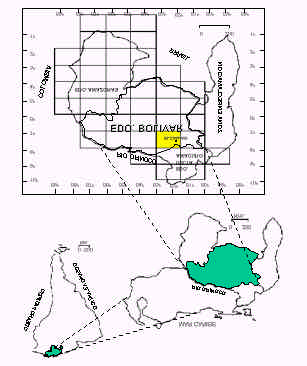
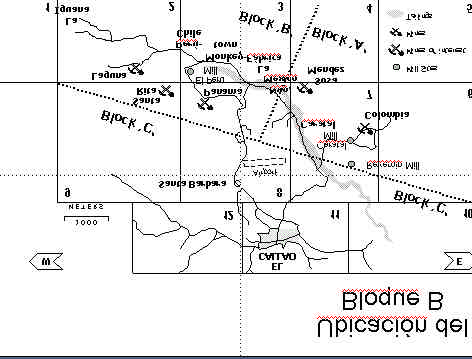
UNIDO, 2004 Mercury in Block B, El Callao, Venezuela 45
INDICADORES ABORDADOS
De los indicadores abordados por el censo socioeconómico aplicado por minera Hecla Venezolana
se analizarán para este informe para la ONUDI los siguientes:
·
Características de la Familia
·
Características de la Vivienda
·
Condición Laboral
CONDICIONES SOCIOECONÓMICAS DE LAS COMUNIDADES
Referencia Estadística al Censo 2001
Según la población referida por el Censo aplicado por Minera Hecla Venezolana es de 393 familias
que totalizan 1.731 habitantes. Esta población representa el 10% de la población del municipio El
Callao, según el Censo aplicado por el gobierno venezolano en el año 2.001.
UNIDO, 2004 Mercury in Block B, El Callao, Venezuela 46
DISTRIBUCIÓN DE FAMILIAS ENTREVISTADAS Y HABITANTES POR COMUNIDAD
BLOQUE B, EL CALLAO, SEPTIEMBRE 2003
Comunidad
CHILE MONKEYTOWN LA IGUANA LA FABRICA NVO MEXICO Total
FAMILIAS ENTREVISTADAS
90
76
49
97
81
393
HABITANTES
411
433
147
359
381
1,731
HABITANTES DEL MUNICIPIO
EL CALLAO (*)
17,410
HABITANTES DEL ESTADO
BOLIVAR (*)
1,214,486
(*) Fuente Censo 2001
Fuente: Censo Hecla, 2003
De las comunidades del Bloque B, la Fábrica y Perú-Chile son las que tienen una representación de
la mayor cantidad de familias (97 y 90 familias) mientras que La Iguana con la menor (49 familias).
Características de los Miembros de la Familia
De la información suministrada por los entrevistados sobre su grupo familiar, en lo referente a la
predominancia del sexo, la relación porcentual de hombres es superior a la de las mujeres (53%) en
el Bloque B, sobretodo en la comunidad de La Iguana (67%) y Perú-Chile (55%).
DISTRIBUCIÓN DE HABITANTES POR COMUNIDAD SEGÚN SEXO
BLOQUE B, EL CALLAO, SEPTIEMBRE 2003
LA
Total
SEXO
CHILE
FABRICA LA IGUANA MONKEYTOWN NVO MEXICO
FEMENINO
45.5
52.9
33.3
47.1
47.5
46.9
MASCULINO
54.5
47.1
66.7
52.9
52.5
53.1
Total
411
359
147
433
381
1731
Fuente: Censo Hecla, 2003
En lo referente a la distribución de los habitantes por grupos de edad, resalta la alta relación
porcentual de los habitantes en menores a 18 años superior a las 2/5 partes de la población llegando
a ser la mitad de la población en la comunidad de Perú-Chile. Sin embargo, en La Iguana, la 2/5
partes de la población son mayores a 56 años de edad.
DISTRIBUCIÓN DE HABITANTES POR COMUNIDAD SEGÚN GRUPOS DE EDAD
BLOQUE B, EL CALLAO, SEPTIEMBRE 2003
GRUPOS DE
EDAD
CHILE MONKEYTOWN LA IGUANA LA FABRICA NVO. MEXICO TOTAL
Menor de 18 años
50.12
43.65
23.13
44.29
47.24
44.37
De 19 a 55 años
44.77
51.04
37.41
48.75
44.62
46.50
56 años y más
4.38
4.62
21.77
4.74
4.20
5.95
Sin Información
0.73
0.69
17.69
2.23
3.94
3.18
Total
411
433
147
359
381
1731
Fuente: Censo Hecla, 2003
En cuanto al promedio de personas por vivienda es de 4 personas excepto La Iguana con 3 en
promedio.
UNIDO, 2004 Mercury in Block B, El Callao, Venezuela 47
PROMEDIO DE HIJOS POR FAMILIA Y PERSONAS POR VIVIENDA Y COMUNIDAD
BLOQUE B, EL CALLAO, SEPTIEMBRE 2003
LA
NVO
CHILE
FABRICA LA IGUANA MONKEYTOWN MEXICO
TOTAL
PROMEDIO DE HIJOS
POR FAMILIA
2.4
2.4
1.3
2.2
2.6
2.3
JEFE CON PAREJA
46.6
72.4
42.9
67.4
71.6
61.8
PROMEDIO DE
PERSONAS POR
VIVIENDA
3.7
3.7
2.5
3.6
3.7
3.5
Fuente: Censo Hecla, 2003
El promedio de hijos por familia es de 2 excepto Nuevo México que tiene la mayor representación
con 3 niños. La Iguana es la comunidad que tiene la menor representación con un niño.
También, resalta que 2/3 de los habitantes de las comunidades de La Fábrica, Nuevo México y en
menor grado Monkeytown tienen pareja, mientras que en La Iguana y Perú-Chile solo las 2/5
partes.
Nivel de Instrucción
Tal vez una de las áreas más sensible es lo referente al nivel de instrucción de los habitantes.
Resalta el hecho que 1/5 parte de la población del Bloque sea analfabeta, particularmente la
comunidad de la Iguana en la cual 2/5 son analfabetas.
DISTRIBUCIÓN PORCENTUAL DE LOS HABITANTES POR COMUNIDAD SEGÚN ANALFABETISMO
BLOQUE B, EL CALLAO, SEPTIEMBRE 2003
LA
MONKEYTOW
NVO
CHILE
FABRICA LA IGUANA
N
MEXICO
TOTAL
ANALFABETISMO
27.7
19.5
42.2
18.0
21.0
23.3
SIN FORMACION
ALGUNA (Cursos Técnicos,
etc.)
98.1
90.0
99.3
96.1
96.1
95.6
Fuente: Censo Hecla, 2003
También, resalta que más del 96% de la población del Bloque B no ha realizado ningún tipo de
curso técnico o de oficio por lo que se infiere que no existe una certificación adecuada para postular
a trabajos con grandes empresas o actualización en el oficio de la minería.
DISTRIBUCIÓN PORCENTUAL DE LOS HABITANTES POR COMUNIDAD SEGÚN NIVEL DE
INSTRUCCIÓN
BLOQUE B, EL CALLAO, SEPTIEMBRE 2003
NIVEL DE INSTRUCCIÓN CHILE LA FABRICA LA IGUANA MONKEYTOWN NVO MEXICO TOTAL
NINGUNA
31.63
21.73
46.94
21.48
25.20
25.07
PRE-ESCOLAR
0.49
1.67
0.00
0.69
1.31
0.64
PRIMARIA
52.31
38.16
43.54
42.96
46.98
45.00
SECUNDARIA
14.11
34.82
6.80
32.33
25.20
24.73
UNIVERSITARIO
0.97
3.62
2.72
1.62
1.31
1.85
SIN INFORMACION
0.49
0.00
0.00
0.92
0.00
0.35
TOTAL
411
359
147
433
381
1731
Fuente: Censo Hecla, 2003
En consonancia a lo anterior, ¼ parte de los habitantes no tiene ningún tipo de nivel de instrucción,
mientras que 2/5 partes sólo llega a primaria (6to grado) y ¼ a secundaria. Sólo el 2% de la
población a nivel técnico o universitario.
UNIDO, 2004 Mercury in Block B, El Callao, Venezuela 48
Características De La Vivienda
Las características de la vivienda se definieron tomando en cuenta: Tipo de pared, tipo de techo y
tipo de Piso.
DISTRIBUCIÓN PORCENTUAL DE VIVIENDAS POR COMUNIDAD SEGÚN TIPO DE PAREDES
BLOQUE B, EL CALLAO, SEPTIEMBRE 2003
LA
LA
MONKEY
TIPO DE PAREDES
CHILE FABRICA
IGUANA
TOWN
NVO.MEXICO TOTAL
BLOQUE
22.2
64.5
18.4
70.1
66.7
50.9
ZINC
40.0
2.6
51.0
10.3
1.2
18.8
MADERA
27.8
7.9
2.0
17.5
4.9
13.5
BAHAREQUE
7.8
17.1
16.3
1.0
21.0
11.7
HULE
2.2
0.0
0.0
0.0
0.0
0.5
SIN INFORMACION
0.0
7.9
12.2
1.0
6.2
4.6
TOTAL
90
76
49
97
81
393
Fuente: Censo Hecla, 2003
En lo referente a las paredes de las viviendas en el Bloque B, de cada 10, 5 son construidas con
bloque, 2 con zinc, 1 en madera y 1 con barro. Resalta el hecho que en la comunidad de La Iguana
de cada 4 viviendas, 2 son construidas con láminas de zinc, 1 con bloques o barro. Caso similar se
repite en la comunidad de Perú-Chile de cada 10, 4 son construidas con láminas de zinc, 3 con
madera, 2 con bloque y 1 con barro. Al contrario, en las comunidades de La Fábrica, Monkeytown
y Nuevo México de cada 3 viviendas, 2 son construidas con bloque y 1 con barro.
DISTRIBUCIÓN PORCENTUAL DE VIVIENDAS POR COMUNIDAD SEGÚN TIPO DE TECHO
BLOQUE B, EL CALLAO, SEPTIEMBRE 2003
TIPO DE TECHO
CHILE LA FABRICA LA IGUANA MONKEY TOWN NVO.MEXICO TOTAL
ZINC
98.9
75.0
87.8
97.9
79.0
88.5
PLATABANDA
0.0
3.9
0.0
0.0
11.1
3.1
ACEROLIT
0.0
7.9
0.0
1.0
2.5
2.3
TEJA
0.0
5.3
0.0
0.0
1.2
1.3
HULE
1.1
0.0
0.0
0.0
0.0
0.3
SIN INFORMACION
0.0
7.9
12.2
1.0
6.2
4.6
TOTAL
90
76
49
97
81
393
Fuente: Censo Hecla, 2003
En el Bloque B, de cada 10 vivienda 9 tienen techo de zinc. Resalta las comunidades de Perú-
Chile y Monkeytown en las cuales casi la totalidad son de zinc.
DISTRIBUCIÓN PORCENTUAL DE VIVIENDAS POR COMUNIDAD SEGÚN TIPO DE PISO
BLOQUE B, EL CALLAO, SEPTIEMBRE 2003
TIPO DE PISO
CHILE LA FABRICA LA IGUANA MONKEY TOWN NVO.MEXICO TOTAL
CEMENTO
56.7
81.6
32.7
91.8
92.6
74.4
TIERRA
43.3
6.6
55.1
6.2
1.2
19.8
BALDOSAS
0.0
2.6
0.0
0.0
0.0
0.5
MADERA
0.0
1.3
0.0
1.0
0.0
0.5
CEMENTO
0.0
0.0
0.0
0.0
1.2
0.3
SIN INFORMACION
0.0
7.9
12.2
1.0
6.2
4.6
TOTAL
90
76
49
97
81
393
Fuente: Censo Hecla, 2003
Con respecto al tipo de piso, de cada 4 viviendas del Bloque B, 3 tienen el piso de cemento y 1 de
tierra. Resalta el hecho que en la comunidad de la Iguana de cada 3 viviendas, 2 lo tienen de tierra y
1 de cemento, mientras que en la comunidad de Perú-Chile de cada 2 viviendas 1 lo tiene de
cemento y una de tierra.
UNIDO, 2004 Mercury in Block B, El Callao, Venezuela 49
Servicio Público
De los servicios públicos abordados fueron: Tipo de alumbrado, tipo de sumnistro de agua y tipo de
excusado.
DISTRIBUCIÓN PORCENTUAL DE VIVIENDAS POR COMUNIDAD SEGÚN TIPO DE FUENTE DE
LUZ
BLOQUE B, EL CALLAO, SEPTIEMBRE 2003
LA
LA
FUENTE DE LUZ
CHILE FABRICA
IGUANA MONKEY TOWN NVO.MEXICO TOTAL
ELECTRICIDAD
95.6
92.1
44.9
99.0
93.8
89.1
NO TIENE
4.4
0.0
40.8
0.0
0.0
6.1
PLANTA
0.0
0.0
2.0
0.0
0.0
0.3
SIN INFORMACION
0.0
7.9
12.2
1.0
6.2
4.6
TOTAL
90
76
49
97
81
393
Fuente: Censo Hecla, 2003
La fuente de luz de las viviendas ubicadas en el Bloque B provienen principalmente de la
electricidad (89%), a excepción de la comunidad de La Iguana que tan sólo 2/5 partes tienen acceso
a ella.
DISTRIBUCIÓN PORCENTUAL DE VIVIENDAS POR COMUNIDAD SEGÚN TIPO DE
SUMINISTRO DE AGUA
BLOQUE B, EL CALLAO, SEPTIEMBRE 2003
TIPO DE SUMINISTRO
LA
LA
DE AGUA
CHILE FABRICA
IGUANA MONKEYTOWN NVO.MEXICO TOTAL
CISTERNA
100.0
21.1
65.3
86.6
23.5
56.2
TUBERÍA
0.0
71.1
0.0
12.4
70.4
31.3
RÍO
0.0
0.0
22.4
0.0
0.0
2.8
SIN INFORMACION
0.0
7.9
12.2
1.0
6.2
4.6
TOTAL
90
76
49
97
81
393
Fuente: Censo Hecla, 2003
En cuanto al suministro de agua a las habitantes del Bloque B, se realiza principalmente con
camiones cisternas (56%) que llevan el agua a las comunidades. Tan sólo un 1/3 tiene suministro de
agua por tubería. Es importante destacar, que las comunidades de la Fábrica y Nuevo México las
2/3 partes tienen acceso de agua por tubería aunque no es permanente. La comunidad de Perú
Chile sólo se surte de agua por camiones cisterna, mientras que la comunidad de la Iguana 2/5
partes ni siquiera cuentan con suministro de agua por camiones cisternas, sino que tienen que
recurrir a una quebrada con agua salobre.
Tal vez este es uno de los problemas más sensible de estas comunidades
DISTRIBUCIÓN PORCENTUAL DE VIVIENDAS POR COMUNIDAD SEGÚN TIPO DE SERVICIO
DE EXCUSADO
BLOQUE B, EL CALLAO, SEPTIEMBRE 2003
TIPO DE SERVICIO DE
EXCUSADO
CHILE LA FABRICA LA IGUANA MONKEY TOWN NVO.MEXICO TOTAL
LETRINA
54.4
81.6
28.6
92.8
72.8
69.7
EL MONTE
44.4
1.3
57.1
6.2
2.5
19.6
NINGUNO
1.1
9.2
2.0
0.0
18.5
6.1
SIN INFORMACION
0.0
7.9
12.2
1.0
6.2
4.6
TOTAL
90
76
49
97
81
393
Fuente: Censo Hecla, 2003
Al igual que el servicio de agua, el servicio de excusado es álgido. No existe en toda el área ningún
tipo de cloaca. De cada 3 viviendas, tan sólo 2 tienen letrina. El caso es más sensible en la
comunidad de la iguana que la relación es de cada 3 viviendas tan sólo 1 tiene letrina.
UNIDO, 2004 Mercury in Block B, El Callao, Venezuela 50
En la comunidad de Perú-Chile de cada 2 viviendas 1 solamente tiene letrina. Esto se empeora por
la ubicación topográfica de las viviendas que se encuentran en la parte baja de un valle, de manera
que cuando llueve los desechos orgánicos bajan.
Condición Laboral
La condición laboral se abordó mediante dos variables: Por una parte, Ocupación definida la
actividad que se encuentran realizando al momento de la entrevista. Por la otra parte, Oficio
entendida como la percepción de la persona sobre la actividad que está preparado para realizar.
DISTRIBUCIÓN PORCENTUAL DE LOS HABITANTES POR COMUNIDAD SEGÚN
OCUPACIÓN
BLOQUE B, EL CALLAO, SEPTIEMBRE 2003
CHIL
LA
LA
MONKEYTOW
OCUPACION
E
FABRICA
IGUANA
N
NVO.MEXICO TOTAL
ESTUDIANTE
26.0
34.5
10.2
30.7
34.6
29.5
DESEMPLEADO 27.0
17.0
29.3
17.3
19.9
21.1
DEL HOGAR
18.5
20.6
18.4
20.1
18.6
19.4
MINERO
19.2
12.8
4.8
21.0
11.5
15.4
OBRERO
3.9
3.1
6.1
1.8
1.8
2.9
COMERCIANTE
1.2
1.9
0.7
3.0
5.2
2.7
AGRICULTOR
0.5
0.6
24.5
0.5
0.5
2.5
Otro
3.6
9.5
6.1
5.5
7.6
6.4
TOTAL
411
359
147
433
381
1731
Fuente: Censo Hecla, 2003
Es interesante observar que el 30% de la población del Bloque B define su ocupación como
estudiante, 21% como desempleado, 19% oficios del hogar y el 15% como minero. Es interesante
observar que tanto las comunidades de Monkeytown como Chile define su ocupación minero en un
20%. A diferencia de las otras comunidades, en la comunidad de La iguana el 25% de la población
se percibe como agricultor.
DISTRIBUCIÓN PORCENTUAL DE LOS HABITANTES POR COMUNIDAD SEGÚN
OFICIO
BLOQUE B, EL CALLAO, SEPTIEMBRE 2003
TOTA
OFICIO
CHILE LA FABRICA LA IGUANA MONKEYTOWN NVO.MEXICO
L
NINGUNA
81.8
85.0
89.1
87.3
92.9
86.9
ESTUDIANTE
7.5
2.8
0.0
1.8
0.0
2.8
MINERO
1.9
0.6
0.0
1.6
0.0
1.0
SECRETARIA
0.0
2.8
0.7
0.7
0.8
1.0
MECANICO
1.5
0.8
0.7
0.5
1.0
0.9
ALBAÑIL
1.9
0.6
1.4
0.7
0.0
0.9
COMERCIANT
E
1.2
0.3
0.0
1.6
0.5
0.9
Otro
4.1
7.2
8.2
5.8
4.7
5.7
TOTAL
411
359
147
433
381
1731
Fuente: Censo Hecla, 2003
En lo referente al oficio definido por las personas para el cual están preparado para trabajar casi la
totalidad manifiesta que no tiene ninguna. Ni los mismas personas que desarrollan la actividad
minera manifiestas que estén preparado para realizarlo, no se sienten identificado con la actividad.
UNIDO, 2004 Mercury in Block B, El Callao, Venezuela 51
Cuadro Resumen
CARACTERÍSTICAS
DEL GRUPO FAMILIAR
CHILE
LA FABRICA LA IGUANA MONKEYTOWN NVO MEXICO
Y SUS MIEMBROS
INDICE DE
MASCULINIDAD
119.8
89.0
200.3
112.3
110.5
GRUPOS DE EDAD
Menor de 18 años Entre 19 y 55
Mayor de 56 Entre 19 y 55 años Menor de 18 años
PREDOMINANTE
(50%)
años (51%)
años (40%)
(49%)
(47%)
PROMEDIO DE HIJOS
POR FAMILIA
2.4
2.4
1.3
2.2
2.6
JEFE CON PAREJA
46.6
72.4
42.9
67.4
71.6
PROMEDIO DE
PERSONAS POR
VIVIENDA
3.7
3.7
2.5
3.6
3.7
ANALFABETISMO
27.7
19.5
42.2
18.0
21.0
SIN FORMACION
ALGUNA (Cursos Técnicos,
etc.)
98.1
90.0
99.3
96.1
96.1
NIVEL DE INSTRUCCIÓN
83% Hasta
73% Primaria-
90% Hasta
75% Primaria-
72% Primaria-
PREDOMINANTE
Primaria
Secundaria
Primaria
Secundaria
Secundaria
OCUPACIÓN
Desempleado -
Desempleado - Desempleado -
Minero -
Desempleado -
PREDOMINANTE
Minero
Minero
Agricultor
Desempleado
Minero
OFICIO
Ningún
Ningún
Ningún
Ningún
Ningún
CARACTERÍSTICAS DE
CHILE
LA FABRICA
LA IGUANA MONKEY TOWN NVO.MEXICO
LA VIVIENDA
TIPO DE PAREDES
Zinc - madera
Bloque - Barro
Zinc -Bloque
Bloque - Madera
Bloque - Barro
TIPO DE TECHO
Zinc
Zinc
Zinc
Zinc
Zinc
TIPO DE PISO
Cemento - tierra
Cemento
Tierra - cemento
Cemento
Cemento
No tiene
FUENTE DE LUZ
Electricidad
Electricidad
electricidad
Electricidad
Electricidad
TIPO DE SUMINISTRO DE
Quebrada -
AGUA
Cisterna
Tubería - cisterna
cisterna
Cisterna
Tubería - Cisterna
TIPO DE SERVICIO DE
EXCUSADO
Monte - letrina
Letrina
Monte
Letrina
Letrina
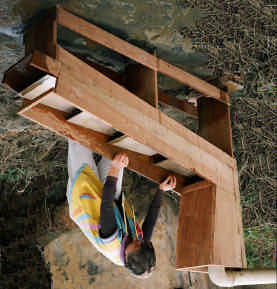
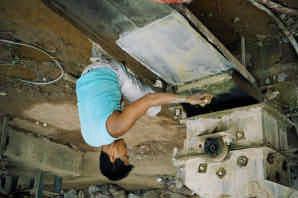
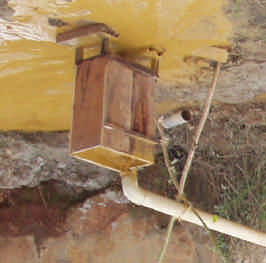
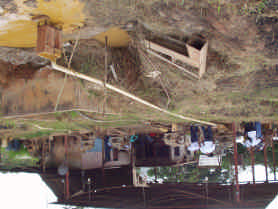
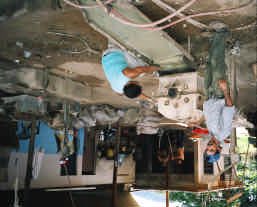
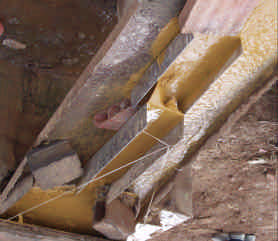
UNIDO, 2004 Mercury in Block B, El Callao, Venezuela 52
APPENDIX 7 - Photos
Copper amalgamation plates
Hammer mill and copper plates
Second (zigzag) box built to support
First box built to support Goldtech plates
Goldtech plates
El Mago Processing Center: Goldtech
plates reducing Hg emissions
Cleangold boxes being used
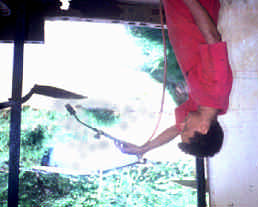
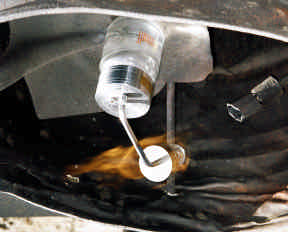
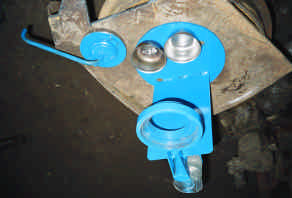
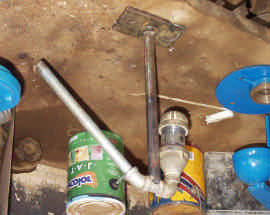
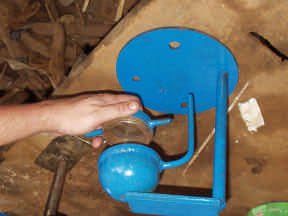
UNIDO, 2004 Mercury in Block B, El Callao, Venezuela 53
Carpets (introduced by UNIDO) replacing
Miner burning amalgam
Cu-plate to concentrate gold
Retort locally made using kitchen stainless
steel bowl
Home-made retort made of water pipes
Other type of retort locally manufactured
Thermex retort being used
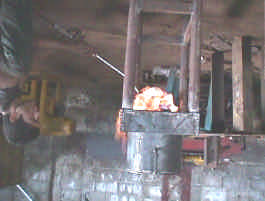
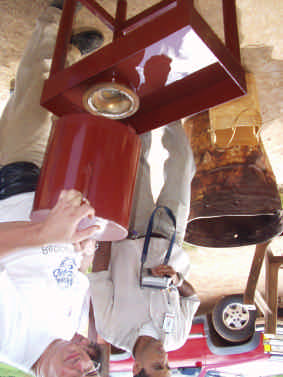
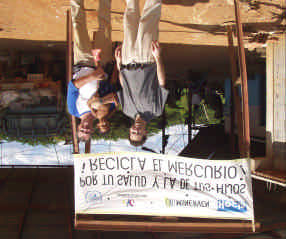
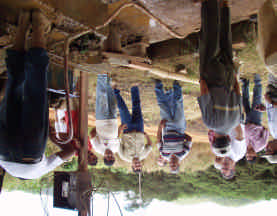
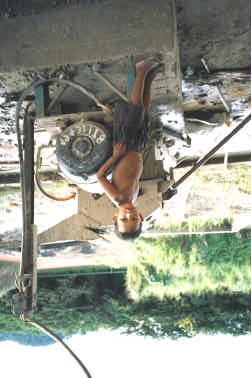
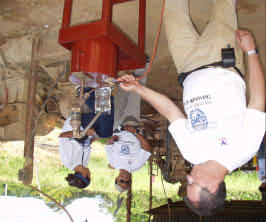
UNIDO, 2004 Mercury in Block B, El Callao, Venezuela 54
salad bowl
(stainless
"Venezuelan Retort" in operation
steel)
water
"Venezuelan Retort"
Kid in the Processing Centers
Banner at the Processing Center
Demonstration day
Demonstrating the use of retorts
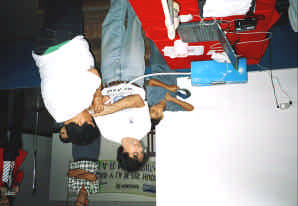
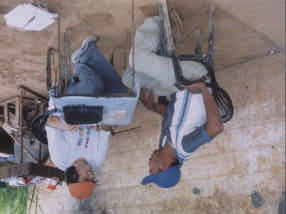
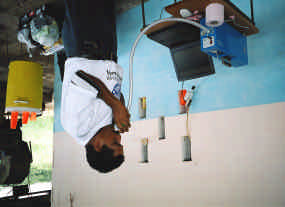
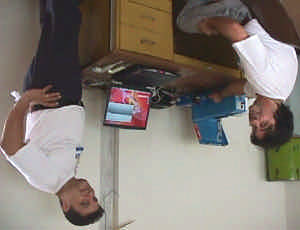
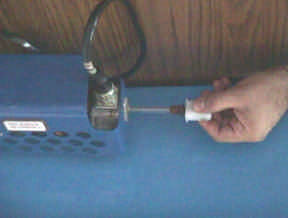
UNIDO, 2004 Mercury in Block B, El Callao, Venezuela 55
Applying health questionnaire to miller
Applying health questionnaire to miller
Analyzing Hg in exhaled air with LUMEX
Miller blowing into the LUMEX
Introducing urine sample into LUMEX
Mr. S. Penna (UDO) and Mr L. Pedroso
(CETEM) analyzing urine
UNIDO, 2004 Mercury in Block B, El Callao, Venezuela 56
Copying Figures
(Drawings of a miller, 36 years-old, with long history of burning amalgam in shovels)
Figure to be copied
His drawing
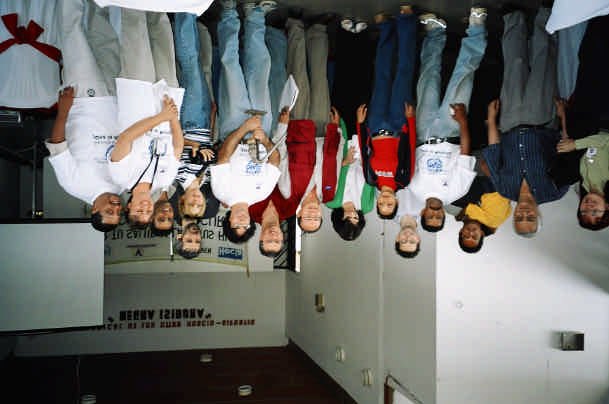
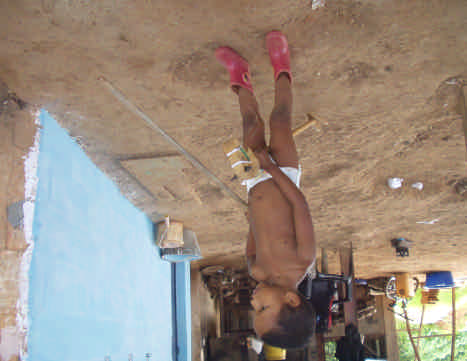
UNIDO, 2004 Mercury in Block B, El Callao, Venezuela 57
UNIDO project team in the workshop in El Callao
Definitely, there are better places to play than a Processing Center: it is
just a matter of opportunity and help