
Mercury Bioaccumulation by Aquatic Biota in Hydroelectric Reservoirs:
Review and Consideration of the Mechanisms
Marcello M. Veiga and Jennifer Hinton
Dept. Mining & Mineral Process Engineering. University of British Columbia.
6350 Stores Rd., V6T 1Z4, Vancouver, BC, Canada
Abstract
The mercury bioaccumulation process in man-made reservoirs is a phenomenon recently (1969)
recognized in several countries such as USA, Canada, Sweden, Finland, Brazil. In many cases,
no specific pollution source is identified and many occurrences of elevated Hg levels in tissues
of fish have been detected in regions considered to be remote from sources of Hg. In
impoundments the increase of mercury bioavailability are usually related with quality and
amount of flooded vegetation, bacterial activitiy in sediments and high level of humosity of the
surface waters. Dissolved organic acids, abundant in darkwater aquatic systems, increase the
reactivity of all forms of mercury both present in flooded sediments and deposited from
atmosphere. The recent discovery of water-soluble species of mercury in the atmosphere,
usually produced by coal-wood combustion, named reactive gaseous mercury (RGM), has
heightened concerns that this form of mercury can react quickly in large surface reservoirs
increasing the bioavailability of the pollutant. It has also been demonstrated the capability of
some organisms of methylating mercury organic complexes in their intestines. In this case, there
is a strong possibility that the high residence time of mercury in the water column contributes to
increase the bioavailability of mercury-organic complexes and their consequent internal
methylation in organisms. This paper shows preliminary experiments with invertebrates to
corroborate this point and reviews the main natural variables related to promoting and
enhancing mercury bioavailability in hydroelectric reservoirs. Examples of contaminated biota
from Canadian and Venezuelan reservoirs are reported as well as the mitigation procedures
attempted and/or implemented in these countries. The importance of health and environmental
risk management is stressed. The physico-chemical characteristics of the aquatic system are
stressed as significant parameters to indirectly predict the ability of organisms to bioaccumulate
mercury. The importance of the trophic level distribution on mercury bioaccumulation in aquatic
biota is also discussed.
Paper presented at the 1st International Forum on Mercury Problem in Hydroelectric Reservoirs: The Guri Case,
Bolivar State, Venezuela, Org. IAMOT/UNEG, Ciudad Bolivar, May 17-19, 2001

Veiga, M.M. and Hinton, J.J.
2
Paper presented at the 1st International Forum on Mercury Problem in Hydroelectric Reservoirs:
The Guri Case, Bolivar State, Venezuela, Org. IAMOT/UNEG, Ciudad Bolivar, May 17-19, 2001
OUTLINE
1. Background on Methylmercury in Reservoirs
· When it was recognized
· Case One: James Bay, Canada
· Case Two: Tucuruí, Brazil
· Case Three: Experimental Flooding Project, Canada
· MeHg in Recently Formed Reservoirs
2. Sources of Mercury
3. Role of Organic Matter
4. Case Study - Guri Reservoir
5. Health Advisories
6. Conclusion
1. METHYLMERCURY IN RESERVOIRS 1 - 3
· The Hg bioaccumulation process in man-made reservoirs is a phenomenon recently
(1969) recognized in several countries such as USA, Canada, Sweden, Finland, Brazil.
· High levels of Hg in fish from flooded areas are a concern for commercial markets and
local consumption.
· In 1969, Dept. of Fisheries embargoed commercial fishing catches from reservoirs located
in Manitoba and Saskatchewan, Canada. This represented a hazardous situation for
Ojibway Indians who were strongly reliant on fish in their diet.
- Several Hg sources were identified: waste waters from a pulp and paper
factory and from a chlor-alkali plant.
· In many cases, no specific source of Hg pollution is identifiable.
· Since 1969, the Oregon Health Division, USA has been monitoring fish from Cottage
Grove Reservoir and its drainages.
- This region is highly affected by run-off waters that leach mercury-rich
minerals and contaminates the downstream watercourses. The average
levels of Hg in 1997 in bass and squawfish exceeded 0.63 ppm.

Veiga, M.M. and Hinton, J.J.
3
Paper presented at the 1st International Forum on Mercury Problem in Hydroelectric Reservoirs:
The Guri Case, Bolivar State, Venezuela, Org. IAMOT/UNEG, Ciudad Bolivar, May 17-19, 2001
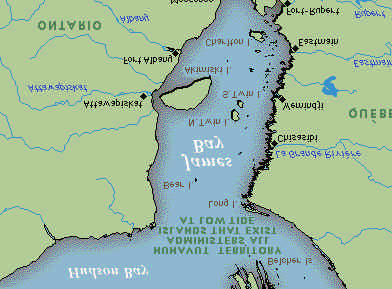
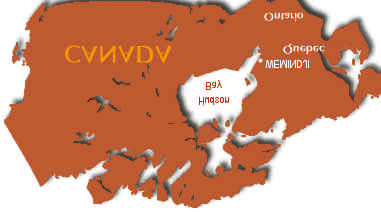
Case One: James Bay, Canada 4,5
· Northwestern Quebec (covers an area ~32,000 km²)
· About 10,000 Aboriginal People in 9 Cree communities.
· Before impoundment:
- sources of Hg: pulp & paper, mining, smelting
- in 1975 intense hair monitoring
- half of adults > 6 mg/kg (ppm) Hg in hair
- intensive counseling has brought to < 2.5 mg/kg Hg in hair
· After impoundment of 13,670 km² - La Grande Hydroelectric Complex (8 reservoirs).
- level of Hg in fish increased 3 - 6 fold
- non-carnivorous fish accumulate Hg faster than carnivorous species
- typical concentration for pike (carnivorous): 1 to 2.5 mg/kg
- whitefish and suckers typically 0.2 to 0.5 mg/kg
Typical curve of Hg bioaccumulation in Canadian reservoirs
carnivorous ~ 6-10 years
non-carnivorous ~ 3-7 years
Hg in
carnivorous ~ 20-30 years
fish
non-carnivorous ~ 10-20 years
Years after impoundment

Veiga, M.M. and Hinton, J.J.
4
Paper presented at the 1st International Forum on Mercury Problem in Hydroelectric Reservoirs:
The Guri Case, Bolivar State, Venezuela, Org. IAMOT/UNEG, Ciudad Bolivar, May 17-19, 2001
Elevated Hg levels detected in fish in James Bay resulted in-depth studies into the causes for
the mercury pollution in reservoirs.
· Monitoring program from 1978 to 1988 concluded that the evolution of mercury
accumulation in fish depends on:
Ø type of reservoir
Ø flooding rate
Ø type of fish (and population)
· Cn$ 18 million (1986-1996) spent by Hydro-Québec on reservoir studies
Ø environmental studies
Ø socio-cultural issues and health assessments
· Hg in fish downstream from the La Grande reservoir increased over time with Hg levels
matching those found in fish sampled in the reservoir
· Methylmercury (CH3Hg+) exported downstream from La Grande reservoir was estimated
to be the following:
%Me-Hg exported
phase
Me-Hg (ppb)
64.3
particles < 0.45 µm
0.00005*
33.2
particles 0.45 to 50 µm
0.00003
1.54
Zooplankton
86
0.85
Phytoplankton
27
0.11
fish and invertebrates
126 - 487
* same as dissolved Me-Hg in natural lakes of the area
· On average: 87 µg Me-Hg/1000 m³ of water or 5.2 g Hg/day or almost 2kg/a is exported.
· Upon examination of fish stomachs, it was determined that zooplankton is an important
source of MeHg
· Methylmercury also transported from flooded soils by insects: 0.2 g MeHg/km²/a
Case Two: Tucuruí Hydroelectric Reservoir, Brazil 6, - 8
Located in the Brazilian Amazon, the Tucuruí Hydroelectric Reservoir covers an area of 2430
km². The total area flooded is 1180 km² (in 1984) and the catchment area covers 758,000 km².
Sampling programs in 1994, which involved the collection of 230 fish yielded the following
results (after Povari, 1995):
· Average of 2.6 mg/kg Hg in 15 samples of tucunaré (Cichla temensis)
· Average of 1.2 mg/kg Hg in 700g tucunaré (N=33)
· 92% of carnivorous fish > 0.5 mg/kg Hg
· Some authors attribute Hg to Serra Pelada (250 km upstream the reservoir)
· Prevailing wind direction blows from Tucuruí to Serra Pelada (indicating low influence of
Hg atmospheric)

Veiga, M.M. and Hinton, J.J.
5
Paper presented at the 1st International Forum on Mercury Problem in Hydroelectric Reservoirs:
The Guri Case, Bolivar State, Venezuela, Org. IAMOT/UNEG, Ciudad Bolivar, May 17-19, 2001
· Erosion of the soils in the catchment areas is also increasing Hg load into the reservoir.
· Significant correlations identified between organic matter and Hg content in sediments
· Load of suspended solids into the reservoir is 550 kg/a and output is 315 kg/a
· Around 86,000 living around the reservoir.
· Average of most commonly eaten fish: 0.99 to 1.3 mg/kg Hg
· Average of 65 ppm Hg in hair of fish-eating people
· People eat 200 to 300 g of fish daily
Case Three: The ELARP - Experimental Lake Areas Reservoir Project 9, - 11
In response to Hg issues in many Canadian hydroelectric reservoirs, the Experimental Lake
Areas Reservoir project (ELARP) was developed to study the behavior of Hg in these conditions.
· In 1993, an experimental field study was conducted in Northwestern Ontario wherein a
14.4 ha wetland area was flooded to a depth of 1.3 m to investigate the mobilization of
Me-Hg in a reservoir.
· Two years after flooding:
Ø little change in the total Hg concentration has been observed;
Ø methylmercury levels in water have increased 10 times (0.9 ng/L).
1
MeHg concentration
in the winter:
2.8 ng/L
MeHg
(ng/L)
0.5
0
pre
post
other lake
other lake
· Methylmercury that represented 4% of the total Hg before impoundment became as high
as 73% (average of 32%) of the total Hg in solution.

Veiga, M.M. and Hinton, J.J.
6
Paper presented at the 1st International Forum on Mercury Problem in Hydroelectric Reservoirs:
The Guri Case, Bolivar State, Venezuela, Org. IAMOT/UNEG, Ciudad Bolivar, May 17-19, 2001
Main findings of the project:
· Me-Hg production in flooded sediments increased (this was more important than release
of pre-existing Me-Hg)
· Time lag of 2 weeks before increase Me-Hg in water
· Me-Hg photodegradation decreased because water became darker after flooding
· Increased CH4 concentration after flooding
· After 2 years Me-Hg increased 3 times in forage-fish (0.1 to 0.32 mg/kg). Fish uptake was
small compared to the uptake by vegetation and peat.
· More time for fish to come to equilibrium with the ecosystem
· MetaAlicus Project (2000 to 2004): Simulate atmospheric Hg deposition
Ø 202Hg isotope added to 500 m² of wetland
Ø 35 g/annum of HgCl2 to be added for 3 years to a 60 ha lake. This represents 58
µg/m²/a of atmospheric deposition
Me-Hg in Recently Formed Reservoirs 12 - 14
The following additional observations were derived from additional Canadian studies:
· Bacterial activity increases in flooded areas and as does the methylation rate of Hg(II)
· Nutrients are introduced into the water column and in interstitial waters when soils are
flooded
· The amount and quality of organic matter in flooded sediments affects microbial activity.
Material resistant to decomposition may inhibit rate of methylation.
· Aerobic conditions enhance the availability of Hg (II) but depress methylating capacity.
Anaerobic conditions have the reverse effect.
· The Methylation/Demethylation ratio increases after flooding
· Shoreline erosion influences the amount of organic matter
· Composition of upper soil horizons and vegetation in the flooded area influences the
organic matter content
2. SOURCES OF Hg IN RESERVOIRS 15 - 17
Local Sources:
Disperse Sources:
Ø chlor-alkali plants
Ø evaporation from soils, water and vegetation
Ø pulp and paper
Ø run-off water and erosion of the catchment
Ø Hg pesticides
Ø forest fires
Ø smelting
Ø fossil fuel combustion
Ø gold mining
Ø Hg-rich minerals

Veiga, M.M. and Hinton, J.J.
7
Paper presented at the 1st International Forum on Mercury Problem in Hydroelectric Reservoirs:
The Guri Case, Bolivar State, Venezuela, Org. IAMOT/UNEG, Ciudad Bolivar, May 17-19, 2001
· Global emission of Hg to atmosphere from all sources is 5000 - 6000 tonnes/a
· Mercury deposition rate in the Northern hemisphere: 11 to 14 µg/m²/a
· Mercury deposition rate from all sources in Amazon: 10 and 16 µg/m²/a
Atmospheric Deposition 18, 19
· RGM - Reactive Gaseous Mercury: recent discovery of water-soluble species of mercury
in the atmosphere,
· RGM is formed in combustion processes.
· The nature of RGM is believed to consist of one or more simple Hg (II) compounds, such
as HgCl2.
· In Tennessee, the RGM form of mercury represents 3 to 5 % of the total gaseous mercury
in the atmosphere.
· In Florida, this species of mercury represents the dominant form of total Hg in the
atmosphere associated with dry deposition.
· Seasonal trends might exist in RGM concentrations; this variability was primarily
associated with temperature, solar radiation, O3, SO2, and TGM.
· Rainfall events are significant to RGM's removal from the atmosphere.
3. THE ROLE OF ORGANIC MATTER 21 - 23
· Darkwater streams: fish have more Hg
· It is well known that dissolved organic matter forms more stable Hg complexes than any
of the inorganic species.
· Metallic Hg reacts quickly with natural organic acids in aerobic environments to form
soluble complexes.
Eh (volts)
0.6
HgL
results from mining-impacted rivers
-
in the Amazon Basin, Brazil
Hg (H L)
-1
0.4
-
4
0.2
10 M (ligands)
Hg° (aq)
0.1 M (ligands)
[Hg (complex) ]
-
= 10 3
0
[Hg° (aq)]
3
4
5
6
7
and 0.1M (ligands)
pH
Equilibrium boundaries of Hgo(aq) and Hg-organic complexes.

Veiga, M.M. and Hinton, J.J.
8
Paper presented at the 1st International Forum on Mercury Problem in Hydroelectric Reservoirs:
The Guri Case, Bolivar State, Venezuela, Org. IAMOT/UNEG, Ciudad Bolivar, May 17-19, 2001
· In the Amazon, higher methylation rates (10-2%/g/h) were found in organic rich sediments
in dark water forest streams than in rivers with cloudy or clear waters.
If....
Ø soluble OM may reduce Hg bioavailability through complexation of MeHg and Hg(II)
Ø and increased abiotic reduction, physiological reduction (detoxication) and
photoreduction occurs (Hg(II) Hg° can subsequently be volatilized)
Then...why do fish from darkwaters have higher levels of Hg?
H g i s a l r e a d y m e t h y l a t e d
B a c t e r i a
C H 3 H g +
C o l l o i d s
w a t e r
?
s e d i m e n t
M e t a l l i c
S o l u b l e
?
C H
H g
3 H g +
c o m p l e x e s
O r g a n i c
B a c t e r i a
A c i d s
Is may be possible that Hg complexed to organics is directly bioavailable to organisms
experiments involving earthworms have indicated that Hg-organic complexes may undergo
methylation within the intestinal tract and the same has also been suggested for fish. It is
apparent that the mechanisms influencing Hg-organic complex bioavailability are not fully
understood. More insight can be derived from evaluating mercury behavior in various darkwater
systems and subsequent impacts to biota. Results from a study conducted at Guri Reservoir in
Venezuela are presented below.
4. GURI RESERVOIR, VENEZUELA 24-29
In 1995, an official resolution suggested that fish from the Guri Reservoir should be exploited
commercially. This necessitated a study of fish quality, which subsequently identified high levels
of Hg in fish. Results are summarized as follows:

Veiga, M.M. and Hinton, J.J.
9
Paper presented at the 1st International Forum on Mercury Problem in Hydroelectric Reservoirs:
The Guri Case, Bolivar State, Venezuela, Org. IAMOT/UNEG, Ciudad Bolivar, May 17-19, 2001
Pto. Ordaz
San Felix
Orinoco River
Ciudad
Guayana
Santa Rosa
Carhuachi
Playa
Caroni River
Blanca
Rio Claro
Venezuela
map area
Orinoco
Guri
Caroni
Guri
2.5 km
Caroni is a blackwater river with the following parameters.
· Low suspended solids (1.6 to 10 mg/l)
· pH ranges from slightly acidic (5.3 in rainy season) to neutral (6.8 to 7 in dry season)
· Low biomass productivity
· Conductivity is low (7.5 to 11 µS/cm)
· Dissolved oxygen level in Guri ranges from 5 to 8.2 mg/l
In 1995, a monitoring program conducted by a Committee consisting of CVG, Min. Environment,
Min. Agriculture, National Guard, Universities, Non-Governmental Organizations, etc., obtained
the following information:

Veiga, M.M. and Hinton, J.J.
10
Paper presented at the 1st International Forum on Mercury Problem in Hydroelectric Reservoirs:
The Guri Case, Bolivar State, Venezuela, Org. IAMOT/UNEG, Ciudad Bolivar, May 17-19, 2001
· About 219 fish samples were captured in 7 different areas of Guri during the dry season
(April, 1995).
· About 52% of samples were carnivorous fish.
Mercury Levels in Fish from Guri reservoir (Guri Committee, 1995)
(Hg- mg/kg w.w. or ppm in muscles of fish)
Fish
Fish
Hg
Hg
N
Remarks
Name
(scientific name)
(ppm)
range
Hg level
Aimara (c)
Hoplias malabaricus
1.32
0.5 - 4.55
5
high
Caribe (c)
Serrasalmus sp.
0.51
-
1
high
Coporo (d)
Prochilodus nigricans
0.17
0.04 - 0.84(?)
61
low
Curvinata (c)
Plagioscion
0.80
0.16 - 2.96
39
high
squamosissimus
Guitarrilla (c)
Oxydoras niger
0.28
0.09 - 0.46
14
medium
Pavon (c)
Cichla ocellaris
0.32
0.14 - 0.54
6
medium
Payara (c)
Raphiodon vulpinus
2.70
0.17 - 8.25
31
very high
TOTAL
157
N = number of samples
· From 157 samples, 40% Hg levels >0.5 ppm Hg (guideline recommended by WHO for
human consumption)
· No pre-impoundment data available
Potential Sources of Hg in Guri
· Mining activities in the area (1934 and in the 80's)
· Mercurial pesticides were likely used in the 70s (?)
· Suspended sediments entering Guri
· Atmospheric deposition from industrial sources and forest fires (if we considered
deposition rate of 13 µg/m²/a Hg, then in 4,000 km², 52 kg of Hg is deposited/annum)
· If the part of the pre-existing Hg in soils was mobilized after flooding in 1986:

Veiga, M.M. and Hinton, J.J.
11
Paper presented at the 1st International Forum on Mercury Problem in Hydroelectric Reservoirs:
The Guri Case, Bolivar State, Venezuela, Org. IAMOT/UNEG, Ciudad Bolivar, May 17-19, 2001
This model is extremely simplistic, in part as a portion of the MeHg is adsorbed in the soil and
vegetation and is therefore not readily bioavailable. However, it does illustrate how relatively low
concentrations of Hg can impact a large volume of biota. Further study of Hg partitioning in
these systems is obviously needed. In conclusion:
· The effect of impoundment in bioaccumulating mercury in Guri seems to be evident
· Hg complexation with soluble organics is possible
· The reduction of light penetration and thus photoreduction process (Hg° volatilization)
seems to be an extremely significant mechanisms in darkwaters.
Ultimately, conditions at Guri Reservoir seem to be extremely favorable for long term impacts to
biota from Hg.

Veiga, M.M. and Hinton, J.J.
12
Paper presented at the 1st International Forum on Mercury Problem in Hydroelectric Reservoirs:
The Guri Case, Bolivar State, Venezuela, Org. IAMOT/UNEG, Ciudad Bolivar, May 17-19, 2001
Guri Reservoir, Venezuela
Ciudad Guayana
Cross section of the Caroni River
High Caroni
Guri
mining activities
Bajo Caroni
Medium Caroni
Macagua
mining activities
dam
Orinoco River
dam
70 km
600 km
119 fish sampled
5.8% > 0.5 ppm Hg
219 fish sampled
42.4% > 0.5 ppm Hg

Veiga, M.M. and Hinton, J.J.
13
Paper presented at the 1st International Forum on Mercury Problem in Hydroelectric Reservoirs:
The Guri Case, Bolivar State, Venezuela, Org. IAMOT/UNEG, Ciudad Bolivar, May 17-19, 2001
5. HEALTH ADVISORIES 30-35
Once pollution of biota has been identified at a given location, human health risks should be
identified. Simplified guidelines (e.g. 0.5 ppm in fish) are established, often only for legal
purposes. However, it is the daily ingestion of MeHg that should be determined to more
accurately determine risks. The World Health Organization has adopted an ADI (Allowable Daily
Intake) of 30 µg Me-Hg for a 70-kg adult. In 1988, Health Canada adopted the following
guidelines:
Individual affected
µg Me-Hg/kg of
Approximate
ADI
body weight
weight (kg)
µg Me-Hg
women of child-bearing age
0.2
60
12
child under 10
0.2
40
8
adults
0.47
70
33
It has been determined that hair from the scalp is a good indicator of Me-Hg exposure:
ppm Hg in Hair
Situation
1 - 6
unexposed
< 6
normal for fish-eating people
6 - 10
slight risk for pregnant
10 - 30
elevated risk for pregnant
30 - 60
first signs of intoxication
> 60
toxic symptoms
· Clarkson (1973) showed that, for a 70-kg individual:
Hg in blood (ppb) = 0.95 x Hg (mg) daily intake from fish33.
· Hg in hair ~ 300 Hg in blood (this depends on which part of the hair is sampled)
· Then... H = W x F x 0.285
H = Hg in hair (ppm)
W = Mass of fish consumed daily (g)
F = Hg in fish (ppm)
· A Japanese study derived a different relationship: H = W x F x 0.167
· In this case, one person eating 200 g of fish with 0.3 ppm Hg/day would expect to have
between 17 and 10 ppm Hg in hair, which is already a risk for pregnant woman.
Typical responses to hazardous situations involving consumption of Hg-laden fish include the
following recommendations:
- reduce carnivorous fish ingestion
- change diet

Veiga, M.M. and Hinton, J.J.
14
Paper presented at the 1st International Forum on Mercury Problem in Hydroelectric Reservoirs:
The Guri Case, Bolivar State, Venezuela, Org. IAMOT/UNEG, Ciudad Bolivar, May 17-19, 2001
- dilute fish with vegetables
- put up signs around the reservoir or other impacted water body
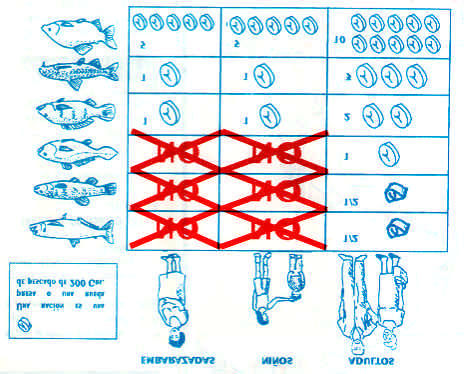
· Fact Sheets or information pamphlets outlining the problem can also be distributed. The
following recipe was included in a pamphlet given to the public in James Bay:
Express Fish Casserole (4 serving):
1 lb fish fillets,
4 medium potatoes, peeled and sliced
1 can (12 ounces) kernel corn
1 can (10 ounces) green peas
salt and pepper
· Example of hypothetical signs in Guri
Don't Eat
Did you try Coporo?
Payara
Carnivorous Fish
it's Healthy and with
Iuca is Delicious !!
· Most Effective Measures:
Ø public education
Ø public involvement in decisions
Ø destruction of myths and taboos
· Consumption advisories and other public information campaigns are essential when
human health risks exist. However, the cultural, economic and health implications should
also be considered. In a community in Northern Canada, consumption advisories and the
resulting reduction in the culturally and economically important fishery resulted in
increased alcoholism and suicide rates, and due to dietary modifications the frequency
of diabetes escalated. How information is communicated, consideration of potential
impacts, and appropriate measures to address these impacts are vital to the success of
any campaign.



Veiga, M.M. and Hinton, J.J.
15
Paper presented at the 1st International Forum on Mercury Problem in Hydroelectric Reservoirs:
The Guri Case, Bolivar State, Venezuela, Org. IAMOT/UNEG, Ciudad Bolivar, May 17-19, 2001
EMBARAZADAS NIÑOS ADULTOS
CUANTIDAD POR
SEMANA
Una Ración es una presa o una
rueda de pescado de 200 grs
PAYARA
AIMARA
CURVINATA
PAVON
GUITARRILLA
COPORO
Advisory prepared by Inst. de Salud Public del Estado Bolivar with Fundacion La Salle, 1997

Veiga, M.M. and Hinton, J.J.
16
Paper presented at the 1st International Forum on Mercury Problem in Hydroelectric Reservoirs:
The Guri Case, Bolivar State, Venezuela, Org. IAMOT/UNEG, Ciudad Bolivar, May 17-19, 2001
6. CONCLUSIONS
· The Hg bioaccumulation process in man-made reservoirs is a phenomenon related to
increase of bacterial activity after flooding areas and subsequently increase of methylation
rate of pre-existing Hg(II) in soils and vegetation.
· Specific point sources of Hg are not needed to increase Hg bioaccumulation in fish.
· The characteristics (type, abundance etc) of the flooded organic matter are important
factors.
· Methylmercury formed in reservoirs can be exported to downstream watercourses.
· Residence time of Hg in darkwater can be higher than in clearwaters.
· Darkwater systems form Hg-complexes that may be bioavailable.
· It is debatable whether bioaccumulation is a temporary phenomenon.
· Phenomena observed in reservoirs are not completely understood and highly site specific:
more study is needed.
· Public Health Advisories are ABSOLUTELY NECESSARY, but should be sensitive to
cultural and socio-economic implications.

Veiga, M.M. and Hinton, J.J.
17
Paper presented at the 1st International Forum on Mercury Problem in Hydroelectric Reservoirs:
The Guri Case, Bolivar State, Venezuela, Org. IAMOT/UNEG, Ciudad Bolivar, May 17-19, 2001
References
1.
Bodaly, R.A.; Hecky, R.E.; Fudge, R.J.P., 1984. Increases in Fish Mercury Levels in
Lakes Flooded by Churchill River Diversion, Northern Manitoba. Can. J. Fish. Aquat. Sci.
v. 41, n.4, p. 682-691.
2.
Schetagne, R.; Doyon, J.F.; Fournier, J.J. 2000. Export of Mercury Downstream from
Reservoirs. The Science of the Total Environment, v. 260, p. 135-145.
3.
Verdon, R.; Brouard, D.; Demers, C.; Lalumiere, R.; Laperle, M.; Schetagne, R., 1991.
Mercury Evolution (1978-1988) in Fishes of La Grande Hydroelectric Complex, Quebec,
Canada. Water, Air and Soil Pollution, v. 56, p. 405-417.
4.
Schetagne, R.; Doyon, J.F.; Fournier, J.J. (2000). Export of Mercury Downstream from
Reservoirs. The Science of the Total Environment, v. 260, p. 135-145.
5.
Tremblay, A.; Cloutier, L.; Lucotte, M., 1998. Total Mercury and Methylmercury Fluxes via
Emerging Insects in Recently Flooded Hydroelectric Reservoirs and a Natural Lake. The
Science of the Total Environment, v.219, p.209-221
6.
Povari, P., 1995. Mercury Levels of Fish in Tucuruí Hydroelectric Reservoir and in River
Moju in Amazonia, in state of Pará, Brazil. The Science of the Total Environment, v. 175,
p. 109-117.
7.
Aula, I.; Braunshweiler, H.; Malin, I., 1995. The Watershed Flux of Mercury Examined
with Indicators in Tucuruí Reservoir in Pará, Brazil. The Science of the Total
Environment, v. 175, p. 97-109.
8.
Leino, T. and Lodenius, M., 1995. Human Hair Mercury Levels in Tucuruí Area, State of
Pará, Brazil. The Science of the Total Environment, v. 175, p. 119-125.
9.
Kelly, C.A., J.W.M. Rudd, R.A. Bodaly, et al. 1997. Increases in fluxes of greenhouse
gases and methyl mercury following flooding of an experimental reservoir. Environ. Sci.
Technol. 31: 1334-1344.
10.
Bodaly, R.A., and R.J.P. Fudge. 1999. Uptake of Mercury by Fish in An Experimental
Boreal Reservoir. Archiv. Envir. Contam. Toxicol. 37: 103-109.
11.
MetaAlicus Project - Mercury Experiment to Assess Atmospheric Loading in Canada and
Unite States, 2001. www.umanitoba.ca/institutes/fisheries/METAALICUS1.html
12.
Jackson, T.A., 1988. Mercury Problem in Recently Formed Reservoirs of Northern
Manitoba (Canada): Effects of Impoundment and Other Factors on the Production of
Methyl Mercury by Microorganisms in Sediments. Canadian Journal of Fisheries and
Aquatic Science, v.45, p.97-121.
13.
Ramsey, D.J. and Ramlal, P.S., 1986. Measurements of Mercury Methylation Balance in
Relation to Concentration of the Total Mercury in Northern Manitoba Reservoirs and their
use in Predicting the Duration of the Fish Mercury Problem in New Reservoirs.In:
Technical Appendices to the Summary Report of the Canada-Manitoba Agreement on the
Study and Monitoring of Mercury in the Churchill River Diversion. v.1, 55p.
14.
Stokes, P.M. and Wren, C.D., 1987. Bioaccumulation of Mercury by Aquatic Biota in
Hydroelectric Reservoirs. Chapter 16, SCOPE 31. John Wiley, New York, p.255-277

Veiga, M.M. and Hinton, J.J.
18
Paper presented at the 1st International Forum on Mercury Problem in Hydroelectric Reservoirs:
The Guri Case, Bolivar State, Venezuela, Org. IAMOT/UNEG, Ciudad Bolivar, May 17-19, 2001
15.
Lacerda, L.D. and Marins, R.V. (1997). Anthropogenic Mercury Emissions to the
Atmosphere in Brazil: The Impact of Gold Mining, J. Geochemical Exploration, 58, 223-
229.
16.
Porcella, D. B. (1995). The Atmospheric Mercury Pool. Proc. 1995 Canadian Mercury
Network Workshop. http://www.cciw.ca/eman-
temp/reports/publications/mercury95/part5.html.
17. Veiga,M.M.; Hinton,J.J.; Lilly,C., 1999. Mercury in the Amazon: A Comprehensive Review
with Special Emphasis on Bioaccumulation and Bioindicators. Proc. of the NIMD
(National Institute for Minamata Disease) Forum'99, p. 19-39, Minamata, Japan, October
12-13, 1999.
18.
Lindberg, S.E., 1999. The Role of Mercury Air/Surface Exchange Process in the Global
Biogeochemical Cycle. In "Proc. 5th International Conference on Mercury as a Global
Pollutant", Rio de Janeiro (abstract).
19.
Lindberg, S.E. and Stratton, W.J., 1998. Atmospheric Mercury Speciation: Concentration
and Behavior of Reactive Gaseous Mercury in Ambient Air. Env. Sci & Techn., v.32, n.1,
p. 40-57.
20.
Allard, B and Arsenie, I. 1991. Abiotic Reduction of Mercury by Humic Substances in
Aquatic System - An Important Process for the Mercury Cycle. Water, Air & Soil Pollution,
v.56, p.457-464.
21.
Costa, M. and Liss, P.S., 1999. Photoreduction of Mercury in Sea Water and Its Possible
Implications for Hg° Air-Sea Fluxes. Marine Chemistry, v.68, p. 87-95.
22.
Meech,J.A.; Veiga,M.M.; Tromans,D., 1998. Reactivity of Mercury from Gold Mining
Activities in Darkwater Ecosystems. Ambio , v. 27, n.2, p. 92-98.
23.
Sjoblom, A.; Meili, M; Sundbom, M., 2000. The Influence of Humic Substances on the
Speciation and Bioavailability of Dissolved Mercury and Methylmenrcury, Measured as
Uptake by Chaoborus Larvae and Loss By Volatilization. The Science of the Total
Environment, v. 261, p. 115-124.
24. Bermudez, R.D.; Bastardo, H.; Pravia, R.; Ramos, S., 1994. Mercury Monitoring in the
Lower Part of the Caroni River, State of Bolivar, Venezuela. Report of Univ. Experimental
de Guayana (UNEG). 29 p. (in Spanish).
25.
Briceño, H. O., 1989. Mercury Contamination of "Bajo" Caroni. Preliminary Report. Litos
C.A. 30 p. (in Spanish).
26.
Leal, F., 1994. Report on Environmental Conditions of Bajo Caroni prepared by the
company Amconguayana. Ciudad Guayana (in Spanish).
27.
MINPROC, 1991. Bajo Caroni Project. Final Report to CVG-VPC Mineria. Phase I.
Vancouver, B.C. 300p. (also available in Spanish).
28.
Sanchez, L. and Vasquez, E., 1989. Hydrochemistry and Phytoplankton of a Major
Blackwater River (Caroni) and a Hydroelectric Reservoir (Macagua), Venezuela. Arch.
Hydrobiol. Beih., v. 33, p.303-313.

Veiga, M.M. and Hinton, J.J.
19
Paper presented at the 1st International Forum on Mercury Problem in Hydroelectric Reservoirs:
The Guri Case, Bolivar State, Venezuela, Org. IAMOT/UNEG, Ciudad Bolivar, May 17-19, 2001
29. Weibezahn, F.H., 1994. Lake Guri (Venezuela): Preliminary Limnological
Characterization of a Large Tropical Blackwater Reservoir. Int. Revue ges. Hydrobiol.,
v.79, n.1, p.47-60.
30. Canadian Water Quality Guidelines, 1987. Guidelines for Mercury by Task Force on
Water Quality Guidelines of Canadian Council of Resource and Environment Ministers.
Environment Canada, Water Quality Branch, Ottawa, Ontario, chapter 1, p.9.
31.
Krenkel, P.A., 1971. Report on International Conference on Environmental Mercury
Contamination. Water Research, v.5, p. 1121-1122.
32.
Padberg, S., 1990. Mercury Determinations in Samples from Tapajós (Itaituba). Report
Institut für Angewandle Physikalische Chemie ICH-4, Forschungszentrum Jülich,
Germany. 13p.
33.
Clarkson, T.W., 1973. The Pharmacodynamics of Mercury and Its Compounds with
Emphasis on the Short-chain Alkylmercurials. In: Mercury in the Western Environment,
p.332-354. Ed. by D. Buhler, Continuing Education Publ., Oregon, USA.
34.
Leino, T. and Lodenius, M., 1995. Human Hair Mercury Levels in Tucuruí Area, State of
Pará, Brazil. The Science of the Total Environment, v. 175, p. 119-125.
35.
Nelson, N. et al., 1971. Hazards of Mercury. Environmental Research, v.4, p.1-69.