


Global Mercury Project
Project EG/GLO/01/G34: Removal of Barriers to Introduction of Cleaner Artisanal Gold Mining and Extraction Technologies
Information about the Project Site
(Rwamagasa, Geita District)
in Tanzania
by Marcello Veiga, PhD
February 2004
UNIDO, 2003 - Artisanal Gold Mining in Geita Region, Tanzania 1
1. Gold Production by Artisanal and Small-scale Miners in Lake Victoria Region
Gold has been mined in Tanzania for more than 100 years. The gold production from artisanal
and small-scale mining (ASM) in Tanzania is not well established but some authors indicated
that the ASM might produce something around 4 tonnes of gold per annum1. This seems very
low for the large contingent of people involved in this activity. It is difficult to estimate the
exact number of people directly involved in gold mining activities in Tanzania as miners
migrate from one site to another going after easily exploitable gold. A population around
300,000 was estimated in 19992. The gold rush for the Lake Victoria Goldfields started when
the gold price increased at the beginning of the 80s. There are 7 main regions at the south of
Lake Victoria where gold miners have been operating. These regions are known locally as
"mining centers". Each of these "centers" contains a number of villages formed by the gold
rushes. These "centers" are part of the Geita District, in which the main town is Geita. The
Geita District has an area of 7,825 km², 185 villages and a population around 712,000 (census
of 2002). The number of artisanal miners in the Geita District is unknown by it is estimated to
be as many as 150,0003, in which most of them are illegal panners. The study site chosen to
be evaluated within the scope of the Global Mercury Project, Rwamagasa "center" (also
known as Lwamgasa), comprises 5 villages Elimu, CCM, Isenyi, Lubinga and Imalanguzo
and the population is around 27,0003.
The Lake Victoria Goldfields is the most extensive and gold productive Archean craton of the
Tanzania Shield where the gold deposits lie within rocks of volcanic affinities. Mining on the
Rwamagasa greenstone belt was very active in the 30's and 50's. The main mines in the area
were Mawe Meru, El Dorado and STAMICO. Artisanal miners have been working in the area
since 1974. Outcrops are scarce in the region due to intense laterization. The gold is not of
alluvial origin but it seems to be formed in place by a process of supergene enrichment. The
presence of nuggets is common at the basis of the laterite. Average gold grades of 25 g/t has
been reported at Mweru Mine4. It is very common to observe in shallow pits (5 to 10 m)
opened by ASM in Rwamagasa a thin (30-50cm) layer of eroded quartz fragments just
underneath the lateritic cover. These fragments are also mined and this is the reason for
miners being grinding the weathered ore to extract (liberate) gold.
The inspectors of the Ministry of Energy and Minerals (MEM), who collect 3% of the
reported production as taxes (royalties), have registered the official gold production in Geita
region. Looking into the numbers obtained by Mr. John Nayopa (Mine Inspector based in
Geita) and his team, the gold production from ASM fluctuates substantially. For example in
1991, when the Government was buying gold through the National Bank, the reported
production was around 617 kg Au and dropped to something around 2 kg/a from 1993 to 1996
when the bank stopped buying gold. When the private company Meremeta introduced a
1 Ikingura, J.R., 1998. Mercury Pollution Due to Small-scale Gold Mining in Tanzania Goldfields. In: Small-
scale Mining in African Countries: Prospects, Policy and Environmental Impacts. p. 143-158. Ed L. Landner,
Dept. of Geology,k Univ. Dar es Salamm, Tanzania.
2 van Straaten, P., 2000. Mercury Contamination Associated with Small-scale Gold Mining in Tanzania and
Zimbabwe. The Science of the Total Environment, v. 259, p.105-113.
3 Wagner, S., 2003. Socio-Economic Survey of Rwamagasa Mining Site in Geita District. Report to
GEF/UNDP/UNIDO Global Mercury Project. July, 2003, 32 p.
4 Steffen, Robertson and Kirsten Inc., 1994. Assessemnt of Tanzania Gold and Diamond Property Rights Held
by Bakertalc Inc. Vancouver, Canada, 94 p. + appendices.
UNIDO, 2003 - Artisanal Gold Mining in Geita Region, Tanzania 2
custom milling operation in 1997 and started buying gold in the region, the official gold
production increased from 2 kg in 1996 to 420 kg in 1998. Recently the company ended its
activities and the reported gold production declined again to 153 kg in 2001 and 14.1 kg in
2002. Currently, there are a number of individual gold buyers in the region and they do not
report the exact amount of gold purchased from miners. As a result the Government is not
collecting adequate taxes and most gold is probably smuggled out of the country.
The gold production in the region is also calculated based on the estimate grade of the ore
exploited. The inspectors establish the gold production based on the amount of ore bags being
processed and whether the ore is rich or not (testing by panning). In this case the inspectors
collect taxes from the miners, i.e. those extracting the ore, before they actually produce gold.
In 2002, the Geita Gold Mine, a large mine operated by Anglo Gold has been producing
almost 21 tonnes/a of gold and paying annual royalties of 3%, i.e. something around US$ 7
million for the Federal Government. The Tanzania mining laws do not establish which
percentage of these taxes returns to the municipality. As a result, the town of Geita is visibly
not receiving the benefits of this massive gold production in the region.
The definitions of artisanal and small-scale mining are not clear in Tanzania. Most people
involved in the mineral sector assume that small-scale miners are those working in legal
mineral claims and artisanal miners are those illegal individuals panning and sluicing gold at
the riverbanks. In the Mineral Policy of Tanzania (Oct. 1997)5 there is no clear difference
between artisanal and small-scale mining The
Mineral Policy recognizes the positive contribution
of the artisanal and small-scale mining sub-sector to
the economy and the Government is committed to
supporting the small-scale mining by facilitating the
transformation of the present artisanal mining
activities into more organized and modernized
small-scale mining units.
The Federal Government has been granting Primary
Mining Licenses (PML) for small-scale mining
concessions that usually vary depending on how the
license is requested (area limitations). There is only
an upper limit for PMLs of 8.36 ha, according to the
Mining Legislation of 1979 and currently 10 ha.
There is an annual tax of Tzsh 10,000/ha (around
US$ 10) and, according to Mr. John Nayopa (Mine
Inspector), most concession owners pay Tzsh 82,600
to 100,000 (US$ 82.6 to 100) per annum. In Geita
there are 289 PMLs most of them measuring 5 to 10
ha. The smallest in Geita is about 0.09 ha. For any
concession smaller than 1 ha, the annual tax is Tzsh
20,000. The area chosen to be the demonstration site
to the Global Mercury Project experienced a large
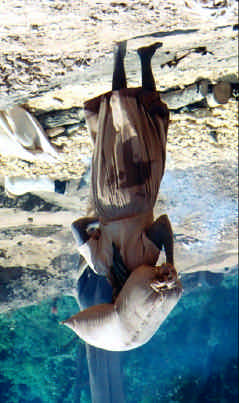
Fig. 1 Women usually do the heavy work
5 The United Republic of Tanzania, 1997. The MIneral Policy of Tanzania. Ministry of Energy and Minerals.
Oct. 1997.32 p.
UNIDO, 2003 - Artisanal Gold Mining in Geita Region, Tanzania 3
gold rush until the beginning of 2003. Currently there are 26 valid PMLs in the area of
Rwamagasa (Lwamgasa) and sub-villages. An exploration company Eastern African Mines
Ltd., subsidiary of the Australian junior company Spinifex Gold Ltd, bought 10 of these
concessions. Exact numbers of miners in Rwamagasa is very difficult to be obtained as they
move from one village to another very often.
Mining and Mineral Processing
The miners work preferentially during the dry season. Geita District has two main rainy
seasons: one from November to December and another from Februray to May. The mean
annual rainfall is 1264 mm (S. Wagner, op.cit.). The work division in the visited mining
concessions all over Geita District seems very similar. Miners excavate as deep as 10 meters
to extract the gold ore which is a weathered lateritic material with layers of fragmented
quartz. Semi-weathered to fresh-rock ores are also mined by shafts as deep as 100 m. Miners
grind a piece of the ore and test it in a small pan. Depending on the result, i.e. presence of
visible gold, they proceed with the excavation or move to another pit. The MEM provides the
miners with courses on blasting and this is a requisite to obtain license to purchase and use
dynamite in the underground operations. A typical extraction production of a team of miners
is of 800 kg/week of hardrock and 8000 kg/week of weathered (soft) ore. The extracted
material is either sold to traders or transported to the processing plants. Traders buy the ore
on the spot based on a visual estimate and quick tests of the gold content. This sometimes is
more convenient for the miners who do not need to interrupt their activities to process the
material. Both miners and traders move the mined material to the mills using trucks, tractors,
donkeys, bicycles, and humans, especially children and women (Fig. 1).
The material extracted by miners is transported in polyethylene or fabric bags of 40 kg to the
mills where different individuals are hired to process the ore. The cost for each individual was
evaluated in 2 processing sites and it is shown in Table 1. In many cases the payment is with
ore bags instead of cash.
Table 1 Payment for Individuals to Perform the Processing Operations
Activity
US$/kg paid to an individual
kg processed per day
hand crushing
0.0125 to 0.0175
80 - 100
soft: 640-720 (*)
grinding
0.075 to 0.0875
medium: 400-480
hard: 320-400
sluicing
0.0125 to 0.025
400 - 600
amalgamation
0.10(**)
10 - 20
Note: (*) grinding rates depends on ore hardness
(**) manual amalgamation: US$ per kg of concentrate processed
After visiting milling centers in Mgusu, Busolwa, Nyanrugusu and Luwamgasa, it was clear
that there is no relevant difference in the processing techniques used by the millers. The ore is
stacked over pieces of wood and leaves that are ignited to dry the ore. The dry material is
transported in 40-kg bags to the ball mills usually by women. The ball mills (2 x 3 ft) are
powered by diesel generators and they operate with cast or forged steel balls. In one visited
operation the ball charge was: 200 balls of 6.46cm, 800 balls of 4.86cm, and 200 balls of
UNIDO, 2003 - Artisanal Gold Mining in Geita Region, Tanzania 4
3.24cm. In other site the ball charge was: 30
balls of 9.70cm, 570 balls of 4.86cm, and 600
balls of 3.24cm. These loads seem to occupy
more than the 35-40% of the mill volume which is
normally recommended for dry grinding to
provide mill volume for air sweeping and dust
control6. The mills run at speeds between 32 and
43 rpm (exceptionally 20 rpm). The adequate
speed should be around 70 to 75% of the critical
speed: Nc = 76.63 D-0.5 (D = mill diameter in feet)
= 54 rpm. The balls mills are not sealed and there
is a perforated steel plate in one side of the mill to
discharge the ground product. The dust comes out
in pulses and it is stacked underneath the mill. The
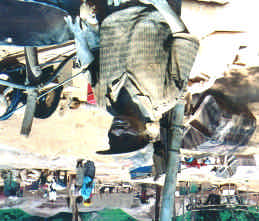
Fig. 2 Dust is the main occupational health
sound is extremely loud. The operators and all
problem in the Geita region
people around the mill inhale an incredible amount of dust (Fig. 2). It is not clear why the
miners use dry grinding. Water scarcity does not seem to be a problem in some places. In
Mgusu, for example, water is not a problem as the gold concentration step is conducted in a
river that flows to Victoria Lake. It seems that dry-grinding is a result of a work division
scheme. As each individual in the processing centers, including the mill owner, is paid by the
amount of ore bag processed, it seems to be easier to count bags when the ore is dry.
It is clear that introduction of water in the mills will be very beneficial. In dry grinding the
contact between particle and balls is lower than in wet milling. Gold can also be easily
flattened and retained inside the mills when dry grinding is practiced. The dust in the milling
site would be eliminated by wet grinding. As well, the energy required to grinding would be
reduced since dry grinding requires at least 30% more power than wet grinding. This can be
seen in the Bond Power Requirement Equation:
Power = EF1 x EF2 x EF3...W
W = 10 Wi (P)-0.5 - 10 Wi (F)-0.5
W = kWh/short ton
Wi = Work Index
P = Product size in micron which 80% passes
F = Feed size in micron which 80% passes
EF1 = efficiency factor when dry grinding is used = 1.30
The ground ore is carried in 40-kg bags to the sluice boxes set up at the riverbanks. Gold is
concentrated in 4-6m sluice boxes lined with sisal clothes. The dry ore is discharged into to a
feeding box and water is carefully added using buckets. The sisal clothes are very coarse and
it seems to be adequate for coarse-to-medium-size gold particles but not to fine gold particles.
Tailings are left at the site or simply dumped into the river. Many miners (panners) all over
Geita District have been re-processing old tailings. After processing all bags brought by the
customer, the sisal clothes are washed in metallic trays and mercury is added for manual
6 Rowland Jr, C.A., 2002. Selection of Rod Mills, Ball Mills and Regrind Mills. In: Mineral Processing Plant
Design, Practice, and Control. vol. 1, p. 710-754. Ed. A.L. Mular, D.N. Halbe, D.J. Barratt. SME Society for
Mining, Metallurgy, and Exploration Inc. Colorado, USA.
UNIDO, 2003 - Artisanal Gold Mining in Geita Region, Tanzania 5
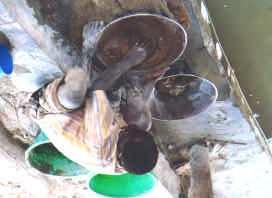
amalgamation. In Rwamagasa, this operation is conducted by individuals who manually press
mercury for at least 2 hours on a paste of concentrate (80% solids) (Fig. 3). Then, they add
water to separate by panning mercury from the rest of the heavy minerals. It is visible the lack
of mercury coalescence during this process. This might represent the main source of Hg loss.
The final Hg-contaminated amalgamation tailing is left in a concrete tank. When the concrete
tanks are full, miners dispose carelessly the Hg-contaminated tailings around the mining
operations for eventual re-processing. In Mgusu, amalgamation tailings are left near the water
streams or just mixed with the primary tailings. It is common to see women re-processing
amalgamation tailings.
In the project site, Rwamagasa, in spite of
having 8 PMLs reporting mining activities, just
one concession has been constantly producing
(Blue Reef Mine). The company manager
mentioned Au recoveries as high as 86g/tonne
of ore processed. Processing 10.5 tonnes/week,
they eventually can produce 900 g of gold per
week or 3.6 kg Au/month. When they reach
this level of gold production they buy 3 kg of
mercury per month, which derives a
Hglost:Auproduced ratio of 0.8. Official statistics
(reports from Mr. Nayopa) indicate that in
three different quarters (3 months) of 2002,
Fig. 3 Amalgamation of gravity concentrates in
Blue Reef produced 2.9, 2.5 and 4.3 kg of gold
Rwamagasa
or about 1 kg/month. It has been estimated by BGS (British Geological Survey)7 that, in
average, around 30 kg of mercury is annually released into the environment from
Rwamagasa alone. It is very difficult to obtain an accurate Hglost:Auproduced ratio, since the
gold production fluctuates considerably in function of the ore grade and/or it has not been
properly reported. The price of one kg of Hg in Rwamagasa is Tzsh 20,000 (US$20), which is
5 times the international mercury price. It was not observed miners amalgamating the whole
ore. Mercury apparently is used to amalgamate just gravity concentrates from sluice boxes.
Sisal Clothes
In Geita region, like in many other African artisanal gold mining operations I visited in Ghana
and Zimbabwe, miners have been using sisal clothes for lining sluice boxes. Considering that
these all 3 countries together have about 600,000 artisanal and small-scale miners (ASM) and
half of these miners own a sluice box with 3 m² of sisal cloth, this makes 1.8 million m² of
sisal virtually consumed per annum, assuming that the miners change liners every year. This
must be a conservative estimate since most ASM own more than just one set of 3 m² of sisal
cloth and many sluice boxes are longer than 3 m. Considering that in Africa alone there are
more than 4 million ASM, the sisal consumption in ASM communities must be the highest
per capita in the continent. The main problem observed in the ASM operations in Tanzania is
the use of very opened sisal clothes, that can work properly for coarse gold but it is unlikely
efficient for medium and fine gold particles.
7 Appleton, J.D.; Taylor, H,; Lister, T.R.; Smith, B., 2004. Draft Final Report for the Assessment of Environment
in the Rwamagasa area, Tanzania. INIDO Project EG/GLO/01/34. British Geological Survey, Commissioned
Report CR/04/014. Nottingham, UK.159p.
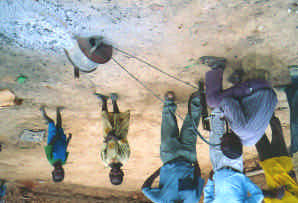
UNIDO, 2003 - Artisanal Gold Mining in Geita Region, Tanzania 6
All kind of lining materials have been used
in ASM around the world, for example old
sacking, blanket, animal skin, velvet, a
large variety of carpets, pieces of clothes,
etc. All fibrous or hairy material can retain
small particles of gold. The carpet mostly
used in ASM operations in other parts of
the world, including Ghana and Burkina
Faso, is the 3M Nomad Dirt Scraper
Matting in particular the type 8100 which
consist of a coiled vinyl structure. This is
good for coarse gold retention in the sluice
boxes. The price of this carpet in ASM
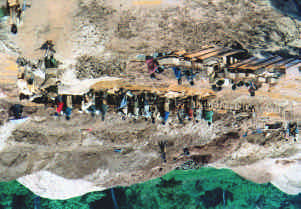
Fig. 1 Sluice boxes with sisal liners in Mgusu
sites can reach up to US$ 40/m². The
Brazilian company Sommer (subsidiary of the German company Tarkett Sommer) sells 2
types of carpets widely used by Brazilian ASM: "Multiouro tariscado" (which is good for
gold speck of rice-medium size) and "Multiouro liso" (which is good for 100 mesh-fine gold).
These carpets can cost around US$ 10 to 15/m² which is cheaper than the 3M carpets.
However these carpets are not accessible to ASM in other countries, especially in Africa.
Sisal clothes can cost as low as US$ 3/m², is available in most Africa and Asian countries,
and, depending of the type, they can be used for coarse, medium and fine gold recovery. The
right type of carpet to be used for gold concentration must be tested together with the miners.
Amalgam Decomposition
In the visited mining sites, amalgam is
usually decomposed by burning in
bonfires. In the operations visited, the
visible amount of remaining mercury in the
gold doré seems to be higher than 20%.
The miners put the amalgam in a polishing
shoe tin and this into a bonfire covered
with charcoal. The heat is clearly
insufficient to burn all mercury off.
Miners, women and children keep
watching this burning process and are
evidently exposed to high levels of Hg
Fig. 1 Home-made air blower to forge steel tools:
vapor.
this can be used for more efficient retorting
The use of air blowers in bonfire is an appropriate technique (Fig. 5) to increase the retorting
temperature and provide highest distillation yield. This is very important in order to introduce
iron-made retorts since the retorting time can be substantially reduced.
Another interesting option for Tanzania is to try the briquettes produced by UNIDO in
Kilimanjaro Industrial Development Trust in Moshi using wood dust. About 90% of
Tanzania's energy supply is derived from wood. These briquettes have higher calorific power
than wood8. As an option to improve even more the calorific value of those briquettes, they
8 UNIDO, 2003. Draft Business Plan for the Kilimanjaro Industrial Development Trust in Moshi. 31 p.
UNIDO, 2003 - Artisanal Gold Mining in Geita Region, Tanzania 7
can be impregnated with some fuel such as the ones used in Canada for fire places. The
briquettes are fabricated with wastes of timber factories (sawdust) and can be locally
manufactured. It is worth to test some of these briquettes as a heating source, adding or not
inflammable liquids, and compare them with wood.
Three miners mentioned that they received from UNIDO in 19979 Germany-made Thermex
glass retorts, but as the glass container and crucible have broken sometime ago, they have re-
adopted the procedure of burning amalgam in bonfires. One of these miner reported burning
amalgam inside of his home in front of his family. They mentioned that they have never seen
a different type of retort and they did not know that it was possible to make retorts with steel.
The main complains about the glass retort were:
1. distillation takes time when conducted in bonfires (1.5 hours)
2. they are fragile
3. they do not know where to find spare parts
4. costly
Importance of Monitoring ASM Activities in Tanzania
The importance of monitoring ASM operations is not just related to the mercury emissions,
but also to evaluate the migration of the miners in the region. In this case satellite imagery can
be a very useful tool in reconstructing historical mining activity, locating impacted areas,
establish population of miners and their mobility, detect illegal activities, estimate levels of
gold being produced, and estimating historical mercury (and sediment) fluxes into aquatic
systems. It is also clearly a useful tool for effective monitoring of present and future mining
activity and to assist planning and decisions on reclamation and land use. Using historical
satellite images, it is also possible to establish the load of sediments and mercury entering the
rivers. It also possible to document the shifts in location and intensity of mining operations
through time. It seems that in Tanzania, more than in any other country participating in the
Global Mercury Project, the main problem to establish strategies for solutions is the lack of
accurate data related to number of artisanal miners their gold production and consequently
mercury emissions derived from these operations. The extreme mobility of the ASM in the
Geita District makes very difficult to obtain reliable data. As a result, the Tanzanian
Government is losing thousands of dollars in taxes when gold is sold in the black market or
smuggled out of the country. Satellite imagery could be used as an efficient tool for
monitoring the movement of the miners, create tools to evaluate environmental effects on land
and water systems, establish models to evaluate gold production (and Hg emissions), etc. This
seems to be basic to delineate sound policies for ASM in that country. In parallel, the
Tanzania Government should re-establish mechanisms to purchase gold at the ASM sites.
2. Environmental and Health Aspects
A review of the mercury environmental and health impacts in the Lake Victoria region was
recently published by Canadian researchers10. Analyzing the available reports and
publications on this theme and comparing these with their own results, the authors concluded
9 In 1997, UNIDO distributed 50 glass retorts to miners in Tanzania.
10 Campbell, L.M.; Dixon, D.G.; Hecky, R.E., 2003. A Review of Mercury in Lake Victoria, East Africa:
Implications for Human and Ecosystem Health. J. Toxicology and Environmental Health, Part B, v.6, p.325-356.
UNIDO, 2003 - Artisanal Gold Mining in Geita Region, Tanzania 8
that the Hg concentrations in fish are usually below permissible WHO concentrations and
international marketing limits. The Hg concentrations in water are below the Canadian water
guidelines for protection of aquatic life (0.1 µg/L). They stated that "the apparently rapid
increase in THg (total Hg) concentrations in lake sediments away from Au-processing sites,
points to sources other than the direct contamination by Au-Hg amalgamation in
Tanzania...overall, it appears that gold mining is a relative minor regional source of THg to
the entire lake". The authors pointed other sources of Hg emission. They extrapolated that
between 6 and 18 tons/a of Hg may be deposited on the lake as a result of biomass (forest)
burning. This seems compatible with estimates of Hg release from forest fires in Amazon11.
They found that the main pathways in terms of Hg bioaccumulation in humans living around
Lake Victoria, Tanzania are:
1. miners occupationally exposed to Hg vapors when amalgam is burned
2. fish ingestion, i.e tilapia (30 to 40 ng/kg b.w./day)12
3. soil geophagy (ingestion of geological materials) (14 to 52 ng Hg/kg bw/day)
4. Hg-rich beauty creams (45 to 55 ng/kg b.w./day)
Based on published data and field observations, it seems that the environmental effects of Hg
emitted by ASM in the visited mining areas in the Rwamagasa area unlikely are strongly
affecting the biota of Lake Tanganyika or other important water bodies in the region, but this
will be checked by the results of the Environmental and Health Assessment. The main reasons
to believe in this are:
1. very low organic matter around mining areas (no reaction between metallic Hg and
organic acids);
2. lateritic soils with large amount of iron hydroxide whish can adsorb mercury oxidized
compounds reducing Hg bioavailability;
3. Hg-contaminated tailings are usually mixed with gravity concentration tailings (rich in
iron hydroxides).
The mobility of mercury attached to the suspended solids could not be observed in the dry
season. If this is relevant in the rainy season, when the solids reach wetlands this can create
conditions for desorption and reaction. Mercury can be released as soluble organic complexes.
This is also controversial since the adsorption capacity or organic matter in the wetlands can
contribute to prevent Hg to be transported farther. This retention capacity seems to have a
limit and mercury can be flushed out from wetlands (Campbell et al, op.cit).
In terms of health problems, the main evident problem is Hg vapor inhaled by miners burning
mercury in open pans and, when this is conducted at their homes, this definitely affects their
families and neighbors. In terms of methylmercury intoxication in the mining areas, this
seems to be of less importance since just 6% of the Rwamagasa population (interviewed by S.
Wagner) consumes fish everyday. No large carnivorous fish have been identified in water
streams around the mining sites.
3. Conclusion
11 Veiga,M.M.; Meech,J.A.; Oñate,N., 1994. Mercury Pollution from Deforestation. Nature, v. 368, p.816-817.
12 The Canadian Tolerable Daily Intake for total mercury is 710 ng/kg body weight/day
UNIDO, 2003 - Artisanal Gold Mining in Geita Region, Tanzania 9
There are different sources of mercury entering Lake Victoria and Tanganyka, but as
highlighted in other reports the contribution form ASM seems to be small. Atmospheric
deposition from all the emission sources (e.g. forest fires, degassing, soil erosion, mining,
etc.) seems to be the main pathway of Hg entering the Tanganyika Lake. It is very unlikely
that Hg-contaminated sediments from the Rwamagasa (project site) are significantly
contributing to the pollution of Tanganyika Lake, 650 km downstream of the project site. The
water streams are seasonal and not very competent to carry substantial amount of Hg-bearing
sediments.
The mineral processing used by ASM in the Geita region is extremely archaic and
introduction of wet-grinding using the existing ball mills will eliminate the main occupational
health problem on the mining sites, dust. The main problem is the development of sealed ball
mills that allow wet-grinding without leaks. Stamp mills (wet) to crush and grind, such as
those seen in Zimbabwe, can also represent an enormous technological leap for the miners. In
this case, concepts of water reclamation must be transferred to miners in order to reduce
consumption of fresh water in dry regions. In terms of gold concentration, the use of sisal
clothes is cheap and appropriate for the local conditions. The miners with technical assistance
from the project team should test the appropriate type of sisal that renders high gold
recoveries. The use of 3-stacked-sluice boxes, such as seen in Brazil, can be beneficial as
miners can have different liners on each box increasing the recovery of fine gold.
It is also important to introduce sustainable retorts but the source of heat must be improved in
order to obtain retorted gold with less than 5% of Hg. Iron-made-retorts must be demonstrated
to miners who know just the existence of glass retorts. The use of air-blowers is an interesting
option to increase retorting temperature. Other types of fuel (e.g. wood briquettes impregnated
with liquid fuel or gasoline blowtorches) should be brought to the miners' attention as an
option to increase retorting temperature.
Acknowledgements
It is acknowledged the permanent participation of Mr. John Nayopa, Mine Inspector, Geita
District, MEM Tanzania in the field mission providing valuable information for this report.
Mr Aloyce Tesha is also acknowledged for his help in the fieldwork.
UNIDO, 2003 - Artisanal Gold Mining in Geita Region, Tanzania
10
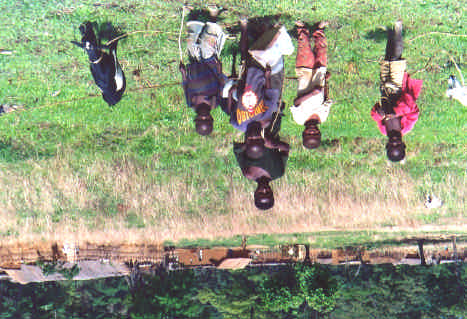
Fig. 6 Kids from the mining community of Mgusu, Geita District
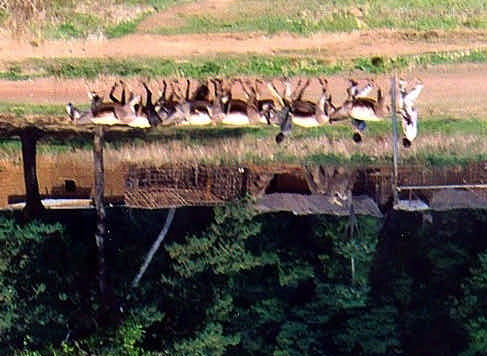
Fig. 7 Donkeys carrying bags of ore from the mines in Mgusu