


Global Mercury Project
Project EG/GLO/01/G34:
Removal of Barriers to Introduction of Cleaner Artisanal Gold Mining and Extraction Technologies
SOCIO-ECONOMIC SAMPLE STUDY OF THE
INGESSANA HILLS ARTISANAL GOLD MINING
COMMUNITY, BLUE NILE STATE, SUDAN
by
Prof. Khalil A. Al Medani
University of Nileen
Khartoum, Sudan
December 2003
Socio-economic Survey of AGM Sites, Ingessana Hills, Sudan i
Executive Summary
ˇ Since 1997 gold was discovered in the center of Ingassana Hills ~80
kilometers to southwest El Damazin town, the capital of the Blue Nile State.
The discovery of gold around Gugub village has attracted massive population
especially those displaced by civil war in the southern parts of the region. Now
there are about 1000 multi-ethnic individuals practicing artisanal gold mining
in Ingessana district. Both alluvial and primary types of artisanal gold mining
are practiced excessively.
ˇ The indigenous Ingessana tribesmen and the displaced Dawala group
constitute the bulk of artisanal gold miners in Gugub sites in the center of
Ingessana Hills.
ˇ Each miner owns at least a pit but none has a legal title.
ˇ Age range of active miners is 15-50 years. Few are older than 50 years.
ˇ Women and children artisanal gold miners constitute ~50% of the total
participants. Children make ~10%.
ˇ About 90% of respondents are married. 38% of the male miners have two
wives.
ˇ 28% of male and 6% of female miners attended school. ~95% of these are
from Dawala ethnic group. The majority of the Ingessana artisanal miners are
illiterate (~95%).
ˇ About 60% of the gold artisanal miners have an income around US$80 per
month. When compared to their monthly expenditure (~US$50), most of them
say that they make some saving.
ˇ People argue that treatment from diseases is very costly for them since the
nearest clinic is at Bau, ~10 km away. In serious cases of illness, they go to El
Damazin hospital ~80 km away.
ˇ The most common diseases reported in are Malaria, chest pain, dyspnea, eye
problems, fatigue, irritability and depression especially among women. Daily
injures are common.
ˇ Sorghum and maize porridge is the staple diet. 66% drink milk daily, 62% eat
meat 2-3 times a week. ~95% eat vegetables, fruits and fish only occasionally.
ˇ Water sources are springs and bore holes located ~2 km from the sites. Water
is salty and contaminated by bacteria.
ˇ Pitting on stream terraces/ quartz veins is the main method of artisanal gold
mining. Gold extraction is through wooden plate panning (alluvium) or by
both panning and amalgamation (primary).
ˇ Amalgam is burned on frying pan at the miners homes or at the shops
verandahs in Gugub.
ˇ For every gram of gold produced, ~1.5 gram of mercury is lost to the
environment.
ˇ Awareness about environmental and health hazards associating mercury
mishandling in gold processing is low.
ˇ 70% of respondents agree to participate in artisanal gold mining within family
framework but 84% refuse to participate in cooperative society.
Socio-economic Survey of AGM Sites, Ingessana Hills, Sudan ii
Table of contents
Introduction.........................................................................................................................1
Terms of Reference ............................................................................................................2
Objectives of the Study ......................................................................................................2
Methodology Used..............................................................................................................2
Primary data ....................................................................................................................2
Secondary data................................................................................................................3
Data analysis ...................................................................................................................3
Ingessana Hills, Southern Blue Nile Region: an overview ..............................................3
Topography.....................................................................................................................3
Climate ............................................................................................................................3
Economic activities ........................................................................................................4
Administrative structure.................................................................................................5
General Characteristics of the Ingassana Hills .................................................................5
History of artisanal gold mining activities in the Ingessana Hills ...............................7
Demography........................................................................................................................8
Number of people ...........................................................................................................8
Ethnicity ..........................................................................................................................8
Age distribution ..............................................................................................................8
Marital status...................................................................................................................9
Number of children.........................................................................................................9
Community Characteristics..............................................................................................10
Community structure....................................................................................................10
Social stability...............................................................................................................10
Occupations...................................................................................................................10
Work hours....................................................................................................................10
Levels of income ..........................................................................................................11
Decision-making on income and expenditure ............................................................12
Infrastructure and Living Conditions ..............................................................................12
Houses...........................................................................................................................12
Sanitation and hygiene .................................................................................................13
Education levels ............................................................................................................13
Health ............................................................................................................................14
Water supply and quality .............................................................................................14
Diet ................................................................................................................................15
Gold Mining and Extraction Cycle..................................................................................16
Types of the extracted gold ore ...................................................................................16
Pit and tools ownership ................................................................................................16
Provision of capital for gold mining and processing..................................................16
Alluvial gold mining ....................................................................................................16
Artisanal gold processing.............................................................................................18
Awareness about environmental or health hazards caused by the use of mercury ..19
Willingness to participate in the project activities .....................................................19
Conclusion and Recommendations .................................................................................20
References .........................................................................................................................21
Appendix 1: Volunteers for the Health Survey ..............................................................22
Socio-economic Survey of AGM Sites, Ingessana Hills, Sudan 1
Introduction
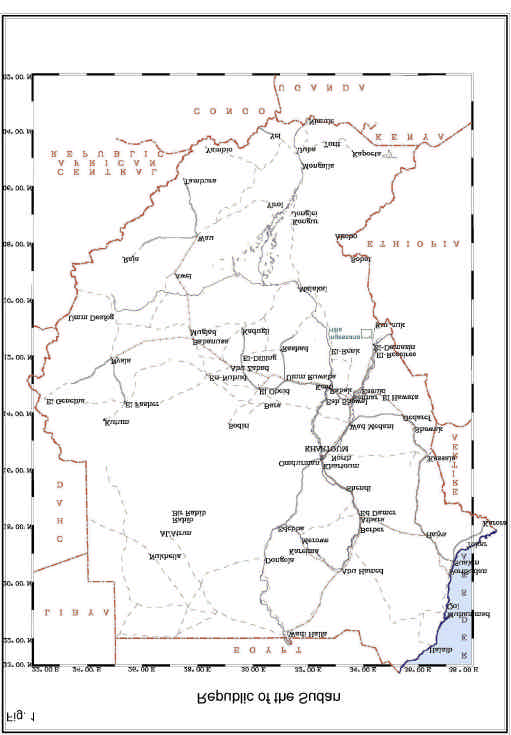
This sociological sample survey targets artisanal gold mining community around
Gugub village in the Ingessana Hills, Blue Nile State (figure 1). The general aim of
this study is to probe the community's habitat, behavior, characteristics, and activities.
This will facilitate the implementation of the Global Mercury Project activities and
provides the bases for the sustainable development of artisanal gold mining in the
Ingessana Hills.
Socio-economic Survey of AGM Sites, Ingessana Hills, Sudan 2
Terms of Reference
The terms of reference of this socio-economic study are as follow:
1- Collection of sufficient data and knowledge about the structure and
demography of the people living in the selected site. Information is to be
collected on infrastructure, type of occupations, estimate on gold output and
trade, food composition and eating habits. Furthermore, description of the
overall process of gold production will be given with focus on the use of
mercury in gold amalgamation and its evaporation as well as the locations
where burning of the amalgam is performed.
2- Collect information about health services and the prevalent diseases.
3- Investigate water resources: accessibility, quality, and availability.
4- Study attitudes and behavior pattern in the community, which may either
encourage or hinder intervention, and willingness to learn the new technology.
5-
Objectives of the Study
The objectives of this socio-economic study are to collect sufficient data and
knowledge about the artisanal mining practices in the Ingessana communities with
respect to:
ˇ Structure and demography of the community living around the selected mining
sites.
ˇ Types of human habitats and proximity to the pitting sites.
ˇ Levels of education, health, and other services.
ˇ Occupations.
ˇ Detailed description of the overall processes of gold production, focusing on
the use of mercury in gold amalgamation.
ˇ Activities linked to artisanal gold production (mercury selling, gold trading,
catering for miners ..etc.).
ˇ Income levels.
ˇ Food consumption patterns.
ˇ Water sources, accessibility, and quality.
ˇ Assessment of social behavior of the artisanal gold mining community.
Methodology Used
The study depended on two types of data: primary and subordinate secondary data.
The information is synthesized in order to present a concise sociological overview of
the chosen artisanal gold mining sites around Gugub village in the Ingessana Hills.
Primary data
The study utilized both qualitative and quantitative methods for data collection. As far
as the quantitative methods are concerned, the study designed and conducted a
detailed questionnaire covering demographic, economic, social and cultural
information. Detailed information is collected on the number of people, sex, age,
ethnic origin, religion, occupation activities, work shifts, and amount of mercury used.
Qualitative methods like group discussions are also employed. The key informants
were district chiefs and local government officials. About 67 questionnaires (49 men
and 18 women miners), 7 interviews, and 6 group discussions were completed in the
artisanal gold mining sites around Gugub and Taga villages.
Socio-economic Survey of AGM Sites, Ingessana Hills, Sudan 3
Group discussions and interviews were held with each of male miners, female miners,
and a mixed group of male and female miners. Gold traders/merchants were also
interviewed. Topics discussed with women included problems faced by women when
starting or improving their artisanal gold mining activities, interactions between men
and women, gender balance in economic power and decision-making. Their
awareness about both mercury uses and its impacts on human health were also
discussed.
Secondary data
This includes information related to the history of the region, history of initiation of
gold mining, civil services in the Ingessana Hills, government structure, and data on
the geographic attributes.
Data analysis
Quantitative data was fed into computer utilizing the statistical SPSS 10.0 software.
The results are presented as bar diagrams. Other valuable information was obtained
from Bau deputy commissioner and other sources as well.
Ingessana Hills, Southern Blue Nile Region: an overview
Southern Blue Nile region, sometimes referred to as southern Fung region, is bounded
by latitudes 10° 00' and 12° 00' North, and by longitude 33° 45' and SudanEthiopia
borders to the east. According to 1993 latest national census, the total population of
the region was 413,694. Bau Locality where all the targeted artisanal gold mining
communities live, has a population of ~100000.
Topography
Southern Blue Nile region is characterized by both flat clay plains and a hilly
topography in the south and the southwest, with gentle slopes towards the north and
southeast. There are pediments that are gently sloping and with drainage flow
connected to the Blue Nile River system. The average altitudes reach 1000 feet above
sea level at the Ingessana Hills (figure 2).
Climate
The region lies within the Savannah Zone with annual precipitation ranges between
600 and 800mm. Dense bush and tall grass cover the hillside and the stream banks as
well. Climatic seasons are defined by the hot dry summer (March-June), hot wet
autumn (July- October), mild dry winter (November-February), and a very short
spring (early March). Mean daily temperature ranges from 43ēC in mid summer
(April-May) to 20 ēC in mid winter (December-January). Ingessana Hills rise 800 to
1000 feet above sea level.
Socio-economic Survey of AGM Sites, Ingessana Hills, Sudan 4
Figure 2:
Economic activities
Agriculture is the main occupation of the sedentary population in the region;
particularly around the Ingessana Hills. Other economic activities practiced in the
region are animal husbandry and wood logging.
In 1970s, Government of Sudan, in line with development policy, had emphasized the
increase and the expansion of mechanized farming in the region. This decision was
motivated, among other things, by the availability of external financial and technical
assistance funds from both the World Bank and oil-producing Arab countries. Despite
Socio-economic Survey of AGM Sites, Ingessana Hills, Sudan 5
the fact that these mechanized farms have attracted both individuals and companies
from all parts of Sudan as well as foreign investors, it has created grievances among
parts of the indigenous inhabitants of the region. Such grievances manifested itself in
the civil strife and many joined the rebels of southern Sudan. Ingessana Hills is now
classified as one of 3 areas seeking special political status in the on-going peace
negotiations between Government and Sudan peoples Liberation Movement (SPLM).
The region is full of economic and natural resources. Rain-fed macro and micro-scale
farming, wood cutting, charcoal producing, artisanal gold mining, and commercial
fishing are the major economic activities in the southern Blue Nile region. The region
has more than one million Fedans of arable land and grazing area (1 Fedan=4200m2).
Food crops grown include sorghum, maize, sesame, sunflower, vegetables, and fruits.
Many of the Ingessana Hills residents are now almost involved in artisanal gold
mining activities. Gold extraction is a labor-intensive activity, drawing on all
members of the community, including young children.
Administrative structure
Blue Nile State is administratively divided to four districts: El Damazin, Roseires,
Kurmuk, and Bau. Each district is headed by a commissioner. The state government is
headed by Walli (Governor) and 5-Minister cabinet. Bau and Roseires districts are the
main areas where artisanal gold mining is now practiced. El Damazin is the capital of
the State and serves as the administrative center for the region. There are the schools,
a general hospital, Rosireis hydroelectric station, and it is connected to Khartoum by a
520 km asphalt road. The town is connected to Bau and other villages in the Ingessana
Hills by an 80 kilometers dirt road, which becomes difficult to use in the rainy season.
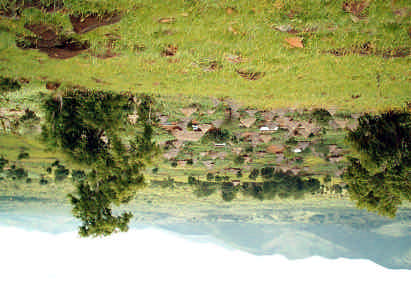
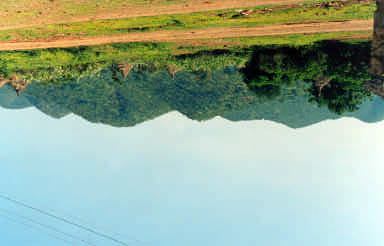
Photo 1: Gugub Village
General Characteristics of the Ingassana Hills
Bau, the central town in Ingessana Hills district lies ~80 kilometers southwest of El
Damazin, the capital of the Blue Nile State. Other smaller towns and villages scattered
around the hills are Soda, Gabanit, Gam, Dairang, Taga, Kumrik, Fadamia, Salbal,
and Gugub (figure 3; photos 1&2). Ingessana Hills district comprises major artisanal
gold mining sites in Bau Locality. Ingessana district is characterized by a range of
hills expanding in a semi-circular form from north to south with a diameter ~40
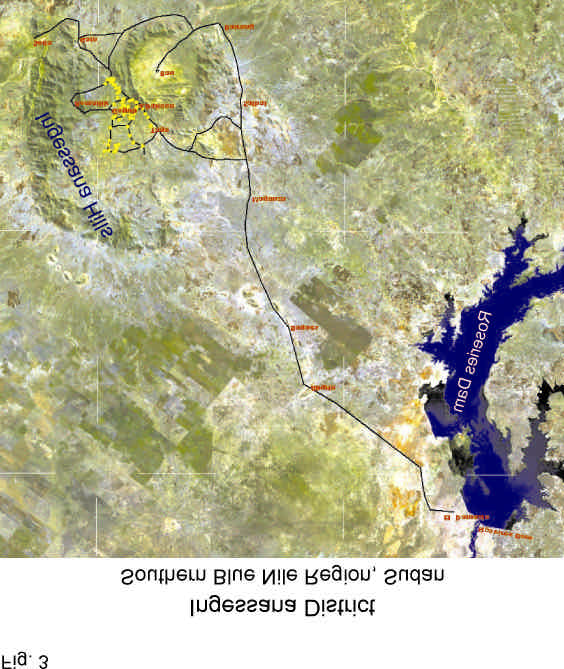
Socio-economic Survey of AGM Sites, Ingessana Hills, Sudan 6
kilometers. Chromite, asbestos, magnesite (in 1960s) and later gold (in mid 1990s) are
discovered in commercial quantities within these mountain ranges.
Socio-economic Survey of AGM Sites, Ingessana Hills, Sudan 7
Photo 2: Khor Gidad gold mining site
History of artisanal gold mining activities in the Ingessana Hills
Historically Ingassana depended on livestock and on minor shifting cultivation in the
low lands beyond their mountains. That means that some Ingassana people used to
spend some months away from their villages either in taking care of their livestock
and/or cultivating subsistence crops (photo 3). Women used to stay at home in their
villages taking care of their kids, and cultivating small land around their houses
during the rainy
season. In these small lands, called Jubraka, they cultivate vegetables and staples for
immediate household consumption. Many Ingessana tribesmen are now involved in
artisanal gold mining. They say that since 1997 gold mining is the most important
activity they practice,
Photo 3: Ingassana huts at hills side
and further claim that
gold mining is
profitable and so all
members of the family
participate in. Before
1996, Ingassana people
know about neither gold
nor practice artisanal
gold mining. Their
women do not value
gold as jewelry. Now
gold and artisanal gold
mining is a business for
many and is the main source of cash.
Since 1997, Ingassana district attracted massive people looking for gold. The first to
come and live with the Ingassana are Dawala people from Kurmuk ~100 km to the
south. About 185 families built their huts in the Gugub village. The Ingassana are
pleased to accept Dawala families in their homeland. Actually, the Ingassana confess
Socio-economic Survey of AGM Sites, Ingessana Hills, Sudan 8
that the Dawala showed them the skills of artisanal gold prospecting and mining. Now
it is estimated that more than 800 people in Ingassana district are practicing gold
mining. The Dawala practice artisanal gold mining, some buy gold from Ingassana
miners, and sell food stuffs (e.g. sugar, bread, flour, soap, tea, and coffee..etc) and
mercury.
Demography
Number of people
As mentioned, the most recent census of Bau district (Locality) indicate a
population of ~100000. The majority of the population is concentrated in bigger
settlements like Bau, Dairang, Gam mine camp, Salbal, Maganza, as well as in
smaller villages like Gugub, Taga, Gabanit and Soda (figure 3). There are also
isolated Ingessana households scattered along hill slopes. Statistics on in and out
migration in the Ingessana district is lacking.
Artisanal gold miners in the Ingessana Hills concentrate in Gugub, Taga, and
Salbal villages. Gugub village of ~1000 inhabitants is the major center of
activities. Artisanal gold miners are scattered in 3 sites at present. The biggest
cluster of activities known as khor Gidad is located ~7 km (driving distance) north
of Gugub village. There are ~800 individuals currently practise artisanal alluvial
gold pitting mainly along stream terraces.
Among the artisanal mining community of Gugub, Dawala ethnic group make
~80% of the population (about 185 household). The rest of the community is
represented by the Ingessana ethnic group. In contrast, about 70% of the 300
artisanal gold miners in Taga village located 5 km east of Gugub are from the
Ingessana ethnic group. Salbal artisanal gold mining community around Turda site
located ~10 km east of Taga Village is not considered in this study.
Ethnicity
Ingessana ethnic group makes 80-85% the district's total population. Visible
sedentary ethnic minorities in the district are Dawala of Gugub and Dairang villages
(~10%), and Ragarig of Maganza and Salbal villages (~2%) displaced groups. Arab
(1-2%) and Folani (1%) nomadic groups are transient communities roaming southern
Blue Nile with their cattle the year round. They settle in the Ingessana Hills
temporarily during rainy season (June-October). Arabic language is spoken by all
ethnic groups; however, each group has its vernacular.
Age distribution
As depicted in figure (4), the age bracket among Gugub artisanal gold mining
community is between 15 and 50 years. The majority of male miners ages are in the
15-50 years range while most women miners and water providers at Khor Gidad site
are in the 15-35 years old range. Few old men and women (>60 years) practise
alluvial gold mining in shallow pits. Children at gold pitting sites are quite visible (10-
15%). Girls in the 10 to 13 years age range constitute the majority of participating
children.
Socio-economic Survey of AGM Sites, Ingessana Hills, Sudan 9
30
100
29
29
N=67
N=67
90
80
20
22
20
60
%
90
%
40
10
20
6.5
3.5
0
0
single
married
widow
10-19 20-39
40-49
>50 Years
Figure 5: Marital status
Figure 4: Age distribution of
artisanal gold miners in Gugub
Marital status
About 90% of the sample's respondents are married (figure 5). The 6.5% singles are
male youth in the twenties who don't have enough money to make families. For
women the average age of marriage is 18 years. Polygamy is prevalent; about 38% of
the interviewed artisanal gold male miners are married to two wives living in the same
houses with the husbands.
Number of children
Figure (6) below shows that the majority of the sample families have children in the
few months to 15 years old. Some respondents (~5%) count their over 15 years youth
living with them. It is clear that over 40% of families have five or more children.
Data on both fertility and mortality rates is lacking. A source mentioned that mortality
rate among the infants is high due to lack of adequate health care. During our stay in
Gugub, a UNICEF-sponsored paramedical team arrived from El Damazin for
vaccination of the 1month to 4 years old children against a designated 6 types of
pediatric deceases within the framework of a national campaign.
12
10
22
N=45
8
%
6
12
12
11.5
11.5
4
5
6
5 5
5
5
2
0
0
1
2
3
4 5
6 7
8
9 >10
Number of children
Figure 6: Number of children per family in Gugub
Socio-economic Survey of AGM Sites, Ingessana Hills, Sudan 10
Community Characteristics
Ingassana are the indigenous Nilotic ethnic group who possibly inhabit the Ingassana
hills since the 16th century. The second ethnic group is the Dawala who are war
displaced. They migrated from Kurmuk district to Ingassana district in 1996 and soon
after started practicing artisanal gold mining.
The Ingassana tribe has its own pagan believes and ritual practices. Now Islam is
spreading among them. In 1997, the Dawala built a mosque and a primary school in
Gugub village. These are important developments in the village. They have clearly
created a substantial impact among the surrounding Ingessana community.
Community structure
Within the circle of Gugub artisanal gold mining community, Dawala account for
~80% of the ~185 households (~1000 heads). The rest are Ingessana group living
at the fringes of the village or as isolated households at hill slopes. The bigger
concentrations of sedentary Ingessana artisanal gold miners are found in Taga
village ~5 km east of Gugub (~200) and Khor GamRumailik ~7 km northwest of
Gugub (~100).
An ethnic Ingessana woman (the wife of Bau commissioner) represents Bau
district (Locality) in the National Assembly (Parliament). The district committee
acts as both political and an administrative arm of the Blue Nile State in the
district. Tribal chief (Omda), village chiefs (Shiehks), and village committees link
the peasants with the district authorities and look into both the tribal affairs and
services. The Ingessana tribe chief (Omda) lives in Taga village ~5 km east of
Gugub. 6 school teachers in Gugub and another 4 in Taga village are the only civil
servants within the artisanal gold mining sites in the Ingessana Hills.
Social stability
In terms of social stability within Gugub artisanal gold mining community, no history
of conflicts has been reported. All Dawala men interviewed confess that since arrival
to Ingessana Hills in 1996, they didn't advocate any case of hatred or discrimination
against them. In fact, the Ingessana chiefs and individuals welcomed Dawala in their
homeland, and allocated the Gugub area for them to build their dwellings. Because
land ownership in the hills is open to the whole community, nobody has claimed a
property possession on any piece of land for any type of use. Broadly, no competition
on land property exists in the area. Promiscuity and drug/alcohol abuse are not
reported among the artisanal mining community of Gugub.
Occupations
Sample data indicates 39% of men and 46% women miners consider artisanal gold
mining is their only occupation. 62% of men and 38% of women admit that beside
gold mining and extraction they practice some cultivation, cutting wood and related
activities (figures 7 and 8). About 3 house wives indicate that they don't practice any
economic activity.
Work hours
Most of the respondents (86%) spend 8-9 hours per day in artisanal gold mining and
processing (figure 9). However, those who work more than ten hours usually work
Socio-economic Survey of AGM Sites, Ingessana Hills, Sudan 11
overnight. Work usually start at 7-8 a.m. and continue up to 4-5 p.m. when they get
back to residences.
70
N=46
61.5
50
% 30
39.5
Figure 7:Father occupations
0
Gold mining Agric+ gold mining
50
40
N=18
N=67
40
30
30
%
%
20
20
10
10
0
0
3.0
5.0
6.0
7.0
8.0
9.0 10.0 Hours
Other
Gold
Agric+ gold House wife
mining mining
Figure 9: Daily work hours
Figure 8: Mother occupations
Levels of income
Interaction between Ingessana tribesmen with the immigrant Dawala and other
smaller ethnic groups has changed, to the better, the lifestyle of many Ingessana men
and women by adding new culture and the skills of artisanal gold mining and
extraction as well. More cash is earned from gold production, which entails more
money to spend on the household needs and even make savings for investment.
Today, each of the ~60% of artisanal gold miners in Gugub sites earns ~S.D.20000
(US$ 80). It looks good as compared to the average monthly income of a traditional
wood cutter/charcoal maker (~US$30/month) or a monthly salary of local elementary
school teacher (US$40-50). Some Dawala artisanal gold miners earn more than
S.D.40000 (>US$160) a month (figure 10).
40
100
N=67
N=67
35.5
89
80
30
26.5
%
60
22.5
20
%
40
10
20
6.5
4.5
4.5
4.5
6.5
0
0
US$ 38
-55 56-76 77-95 96-115 116-135 >135
Cattle
Agriculture Gold trade
Figure 10: Ranges of monthly earnings
Figure 11: Investment
from artisanal gold sales in Gugub
Socio-economic Survey of AGM Sites, Ingessana Hills, Sudan 12
50
N=60
44.5
44.5
40
30
%
20
10
6.0
2
2
0
Single Husband Wife Consensus Undecided
Figure 12: Decision-making in household affairs
Ingassana men argue that before practicing gold mining no such money was earned.
About 89 % claim that they invest in cows from gold sales money (figure 11).
Decision-making on income and expenditure
The respondents were asked the question "who makes decisions in household
affairs?" Almost 45% argue that men do (husbands and fathers); 45% say by
consensus (figure 12).
In the focus group discussions especially with women's group only, a substantial
number of the participants reported that their husbands have the last say on how the
money earned from gold mining is to be used.
There are many disadvantages associated with allowing the men to make total
decisions for the household. When the men make decisions, the women are denied the
opportunity to build up their confidence in the decision-making process. In addition,
the women are denied the opportunity to advocate for their own interests, and when
they are the ones actually doing the work, it might discourage them from improving
the enterprise or excel in artisanal gold mining business.
Infrastructure and Living Conditions
Houses
Both Ingessana and Dawala families live in straw and thatch conical huts. Ingessana
people build their huts either at the fringes of the mentioned villages or as isolated
households on hillsides (photos1 and 3). Dawalla, on the other hand, live in groups.
Excluding some of the shops, all dwellings, school class rooms, and mosque in Gugub
are built of straw and wood even though some Dawalla men are affluent enough to
build stone or brick bungalows. All respondents own their houses.
In the premises, there is no hut or place reserved for gold processing. The same house
is used for sleeping, cooking food, rock ore grinding, and amalgam burning.
In last August, 53% of artisanal gold miners at Khor Gidad site live half a kilometer
from the mining pits, 10% live three kilometers away, and 37% live in Gugub ~4 km
(walking distance) to the pits.
Socio-economic Survey of AGM Sites, Ingessana Hills, Sudan 13
Sanitation and hygiene
There is no housing plan in Gugub or in other villages of the Ingessana hills. The
roads in Gugub are winding around the premises in a zigzagging manner. Garbage is
dumped haphazardly along side roads. Both waters from springs and boreholes used
in Gugub is contaminated by bacteria (e.g. E. coli); probably coming from animals
dung.
During our visit, we saw only one latrine in Gugub School. The majority of artisanal
gold miners both in Gugub and Khor Gidad mining site, ~7 km to the north, use the
bush for bathing. Flies and mosquitoes are widespread in the area.
Education levels
Out of the 49 men and 18 women artisanal gold miners interviewed, only 28% of the
men and ~6% of the women attended schools (figures 13 and 14). Among those
attended schools, Dawala make ~95%. In this percentage, men miners constitute
~98%. The rate of literacy among the Ingessana artisanal gold miners is low (<5%).
Almost all Ingessana women artisanal gold miners are illiterate. Until lately,
education was not a priority for them. The ~5 % Ingessana male who attended school
are below 15 years.
Education at the artisanal gold mining sites is introduced recently when a primary
school is built in 1997 by the Dawala in Gugub village. Gugub and Taga mixed
elementary schools are the only facilities where the kids (7-13 years old) of artisanal
gold miners attend school. The principal reports that Gugub mixed school has ~150
pupils (1through 6 grades) and 6 teachers. Male: Female pupil ratio is 3. Similar ratio
is found in Taga elementary school ~5 km east of Gugub. Among pupils, Dawala:
Ingessana ethnic ratio is ~9 in Gugub school. Almost all of kids from both ethnic
groups participate in the activities of artisanal gold mining and extraction. It is
reported that, for several reasons, school dropout in the Ingessana Hills is high. A
source says that school dropout is ~30% in Bau.
80
100
N=49
N=18
70
86
80
60
%
60
40
%
40
20
24
20
7
2
4
3
4
0
0
Other
Illiterate
Prelim High School
Other
Illiterate Prelim High school
Figure 13: Father miners education
Figure 14: Mother miners education
in Gugub
in Gugub
Socio-economic Survey of AGM Sites, Ingessana Hills, Sudan 14
Health
Health care in the area is less than adequate. There is no clinic in Gugub or in Taga.
The nearest hospital is located at Bau ~10 km away. In serious cases of illness, the
artisanal gold miners go to El Damazin hospital and that is a difficult task during the
rainy season. The most common diseases they mentioned are malaria, chest pain,
dyspnea, cough, fatigue, urinary system problems irritability and depression
especially among women. Daily injures at pitting sites are common. Although they
did not mention but we noticed many of the miners suffer from eye problems (red
eyes, teary eyes, itching).
About 63% of respondents say that one or more of the family members suffer from a
chronic disease for along time (figure 15). Only 38% admit that there could be health
hazards associate with the use of mercury in amalgamation of artisanal gold produced
(figure 16). So far, nobody in Gugub or Bau knows what are the symptoms of
mercury poisoning.
70
60
N=67
N=67
60
63
50
50
50
40
38
40
%
%
30
33
30
20
20
10
10
9
2
2
3
0
0
Undecided
Yes
No
Don't know
Don't know
Yes
No
Undecided
Figure 15: Are there cases of chronic
Figure 16: Do you think mercury
deceases in the family?
used in amalgamation causes health
problems?
Water supply and quality
Water for both domestic and artisanal gold panning use is obtained from springs,
seasonal streams, and shallow boreholes around Gugub artisanal gold mining sites.
Most of the respondents (85%) were of the view that the quality of water was good,
but 15% mentioned that the water is hard. Almost 100% claim that they do not boil
water for drinking. In the dry season, water tastes salty and most of boreholes become
dry. M. Ibrahim reports that salt come from magnesite associating the rocks of
Ingessana Hills. Water obtained from boreholes is mostly contaminated by bacteria
e.g. E.coli. Some pits reach water table thus expose underground water to both heavy
metals and bacterial contamination.
The traditional image of a woman as a mother and housewife underline a clear-cut
division of labor between men and women. Hence, the role of fetching water as it has
been revealed by the respondents (97%) is clearly the responsibility of women.
However, men who do not have wives are buying water from carriers (8%). Ingessana
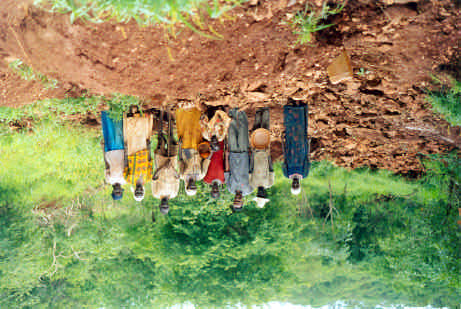
women work as water fetching labor at Khor Gidad artisanal gold mining site located
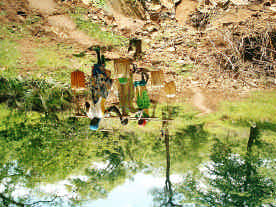
~7 km (driving distance) north of Gugub. Each woman carries a pair of 4 gallons full
Socio-economic Survey of AGM Sites, Ingessana Hills, Sudan 15
plastic containers on their shoulders ~2km from bore hole to the panning sites to be
sold for ~US$ 0.2 (photo 4).
Diet
Average family in Gugub area eats two meals a day. Sorghum and maize porridge/pan
cakes is the main staple. Respondents are asked to determine how many times a week
they eat the different types of food. As depicted in figures (17,18,19), 62% eats meat 2
to 3 times a week, 66.6% drink milk everyday, 25% eats chicken and 17% eats eggs
once a week. Almost all eats vegetables, and fruits occasionally (figure 20). The
nearest source of fresh food supply is about 20 km away. Being located ~50 km away
from the Blue Nile western banks, the community of Gugub and the surroundings
have no frequent access to fresh fish supply. In the survey, only 2% of the sample
report eating fish occasionally. However, dry fish is available in Gugub market.
Photo 4: Ingessana women fetching water
40
80
Figure 17: Meat consumption per week
Figure 18: Milk consumption per week
N=67
N=67
70
33.5
30
60
29
50
%
24
%
20
40
30
10
20
4.5
6.5
10
2.5
0
0
None Once Twice 3 times 4 times 5 times
None
Once
Twice
3 times Daily
Figure 19: Chicken consumption per week
50
100 Figure 20: Vegetables consumption per week
N=67
47
90
40
N=67
80
30
%
60
20
%
20
17
40
10
10
6
20
0
None
Once Twice 3 times 4 times
6
4
0
Occasional
Once
3 times
Socio-economic Survey of AGM Sites, Ingessana Hills, Sudan 16
Gold Mining and Extraction Cycle
Types of the extracted gold ore
Gugub and the surroundings comprise about 6 major artisanal gold mining sites. At
present, Khor Gidad ~7 km (driving distance) north of Gugub and Khor Neiwi ~5 km
northeast of Gugub are the main sites where ~800 artisanal gold miners produce
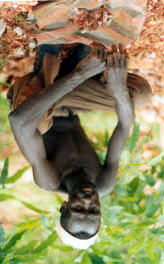
artisanal gold from both alluvium and elluvium (photos 4 and 5). Minor primary gold
is found in 3 sites; two of them are active with about 30 individuals practice mining
and extraction.
The estimated average amount gold ore extracted from pit per a male miner per day is
about 0.5 ton for alluvium, and 20-30 kilograms for rock (quartz).
Pit and tools ownership
All of the respondents have their own gold pits, but none has a mining licenses. They
don not feel they need to have such licenses. In fact, the authorities have not asked
them to obtain any type of mining licenses/titles. Now, after the discovery of gold and
the increasing influx of people into the Ingessana Hills, we expect that pressure on
land will increase tremendously and this will reflect on land relations. 99% of the
respondents own hand-used rudimentary axes, picks shovels, rubble haulage
containers, and wooden pans. All mining tools are locally made by a blacksmith that
works beside the pits.
Provision of capital for gold mining and processing
Most of the respondents they obtained capital from their own resources (93%). Only
7% had borrowed money from relatives. There is no micro-finance scheme in the
area. In the group discussion, they agree that family labor is basic in the artisanal gold
mining activities. This often leads to increased workload for women who also have
household duties.
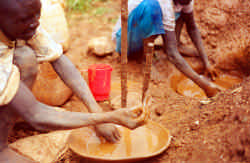
Alluvial gold mining
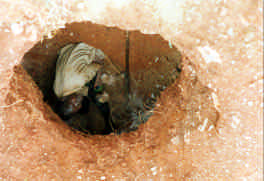
Men and women artisanal gold miners of Gugub dig haphazard pits up to 20 meters
deep. In digging down, they prepare helical steps for easy descend and ascend.
Usually two or three persons work in one pit in some sort of a division of labor. Two
or three individuals (usually family members) handle the operation. The one inside the
pit mine alluvium/elluvium using axe, pick, and shovel. The person outside pulls the
loaded bailer (plastic container) out of the pit using a robe. A third person empties the
can into another plastic container or a wooden pan, then carry it to the panning spot.
There he/she takes a small amount of the rubble into a wooden plate and wash in
water. Every now and then, he/she stops shaking and throws away part of the mixture
and add more rubble. This process of shaking and throwing part of the mixture
continues until fine heavy fraction, expected to contain gold grains/particles, remains
at the bottom of the pan. Depending on visual check, the appearing small pieces of
gold are picked by a wet piece of cloth. By the end of the day all gold pieces are
gathered and sold, without farther treatment, to the gold trader who actually moves
around the site all day buying the produced gold. Usually the gold trader pays in cash
or in kind, i.e. trade them what they need from foodstuff and other products. During
our stay in the area, a gram of alluvial gold sells for S.D. 2400-2500 (US$ 9-9.5).
Socio-economic Survey of AGM Sites, Ingessana Hills, Sudan 17
Primary gold mining
In primary artisanal gold mining, people search for signs of gold in the rocks. When
the miner sees such signs, they start digging and breaking the rocks selectively into
small pieces with a locally made sledge hammer and pick (photo 6 and7). At home,
women grind these rock pieces using grinding stone until the ore becomes very fine.
After initial panning in water to reduce waste, mercury is added to the remaining rock
powder.
The amalgam is then transferred into an open frying pan or tin plate then put on wood
fire. Mercury evaporates leaving behind gold. Of course, all family members stay
around the evaporating pan watching the magic of mercury disappearance leaving
behind gold as an informant told us.
In the process, members of the family cannot avoid inhalation of smoke coming from
the frying pan. They don't know the risk of such process. 84% of miners interviewed
denied any risk (figure 21). The amalgamated gold has less value in the local market
(S.D. 1500=US$ 6/gram). M. Ibrahim indicated that primary gold could contain
natural alloyed silver and copper up to 20% by weight.
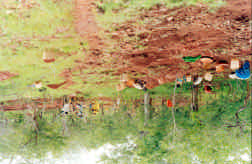
Photo 4: Ingessana and Dawala miners
Photo 5: Alluvial gold panning
at work in Khor Gidad site
Photo7: A pioneer Ingassana
artisansal primary gold miner
Photo 6:Artisanal gold miner at a pit
Socio-economic Survey of AGM Sites, Ingessana Hills, Sudan 18
100
N=67
80
84
% 60
Figure 21: Awareness about risks
40
in using mercury
20
16
0
No
Yes
Artisanal gold processing
Panning of alluvium/rock powder as well as rock grinding in Gugub artisanal gold
production sites is mainly women's job. It is reported that efficiency of panning using
the traditional wooden pan is ~50%. Apparently, all fine gold goes down with the
tailings. Alluvial/elluvial gold produced through panning is sold without undergoing
further purification.
After selection of mineralized rock pieces in primary artisanal gold mining, size
reduction is performed by mortars and /or grinding stones (photo 8). Mechanical mills
are prohibited since inception of activities in 1997 by the local authorities. The semi-
fine quartz+gold powder (200-500 microns) is panned carefully by women at homes.
In Gugub artisanal gold mining site, mercury is used frequently in extraction of fine
gold practices from the panned concentrate. The way of handling mercury in gold
amalgamation is careless. Hg is poured onto the concentrate and mixed with bare
fingers to make the amalgam. After thorough mixing, the amalgam is squeezed in a
piece of cloth to expel excess Hg. After that, the separated amalgam is transferred to
an open plate or frying pan then burned. Amalgamation and amalgam burning
processes are also performed in the house, sometimes inside the huts. Amalgamation's
tailings are disposed of in the house yard or at pit site.
The amount of mercury used to extract 1 gram of gold in Gugub amounts to about 3
grams (figure 22). Though not all Hg poured into the goldbearing concentrate goes
into amalgam. Based on estimates reported by M. Ibrahim, About half (~1.5 grams)
are squeezed off as an excess Hg and collected into a container to be used again.
Thus, the ratio of Au produced: Hg lost is 1:1.5 i.e. for every gram of gold won, 1.5 grams
of mercury is emitted as mercury vapor. An ounce of mercury in Gugub costs
(US$0.8). Accordingly, the cost of 1.5 gm Hg lost per 1 gm Au produced is
US$0.045.
About 70% of the artisanal gold miners in Gugub say that mercury is bought from
local merchants/dealers and 27% obtain mercury from Gugub merchants only (figure
23). Some miners claim that merchants supply them with free mercury in return of
selling their gold to the merchant. Goldsmiths of El Damazin are said to be the major
mercury suppliers because they have access to big gold markets in Khartoum and
Omdurman. Gugub merchants buy mercury from goldsmiths/dealers at ~US$29/kg.
Socio-economic Survey of AGM Sites, Ingessana Hills, Sudan 19
70
80
60
N=67
71
N=67
66
60
50
%
40
%
40
30
28
20
27
20
10
3.5
4.5
4.5
3.5
2
0
0
0
1.0
2.0
3.0
4.0
5.0
Merchant
Village
Other
Daily mercury use (grams per miner)
/trader
merchants
sources
Figure 22: Daily mercury usage in
Figure 23: Suppliers of mercury used in
artisanal gold extraction-Gugub AGM
artisanal gold extraction-Gugub AGM sites
sites
Awareness about environmental or health hazards caused by the use of
mercury
Over 80% of the respondents do not see health risks resulting from using of mercury
in gold amalgamation. During focus group discussions, both men and women were
less informed about the effects of mercury on both human health and the environment.
When we told them about mercury dangers they said that they have been mining for
so long and nothing is seen of such hazards. Any awareness campaign to be carried
out on mercury hazards should put in mind that the majority of the miners at Gugub
artisanal gold mining sites illiterate, and so acquiring new skills depends either on
visual, aural, or experimental learning.
Willingness to participate in the project activities
Almost all respondents agree to be trained on how to use the introduced new gold
mining and processing equipment. However, about 15% of them admit that they
rather use the traditional procedures (figure 24). When asked whether they prefer to
work in group or alone, 70% agree to participate in artisanal gold mining as group
(figure 25) but 84% refuse participating in any cooperative society (figure 26). This
reflects the family practicing artisanal gold mining and processing in Gugub.
80
100
70
N=67
80
N=67
60
82
60
%
40
%
40
30
20
20
15
3
0
0
Alone
In group
Don't know
Yes
No
Figure 24: If new equipment is supplied
Figure 25: Do you prefer to work in
would you accept using it in AGM?
group or alone?
Socio-economic Survey of AGM Sites, Ingessana Hills, Sudan 20
100
N=67
80
85
60
Figure 26: Do you mind to
%
participate in artisanal gold
40
mining cooperative society?
20
9
4
2
0
Don't know
Yes
No
Undecided
Conclusion and Recommendations
ˇ
After we came back from Ingassana Hills in last August, reliable news came
that in Khor Gidad gold mining site, Gugub miners discovered a gold-bearing
vein that returned more than 56 kilograms of gold. We expect that more gold
miners will rush into the Ingassana district. Therefore, what we suggest and
recommend now are really important and urgent.
ˇ
Environmental and Health investigation team should immediately start surveys
in the distinct. Data and information must be gathered about the E&HA
situation in the district, which are essential for future comparisons and the
information will furnish a database for future assessment.
ˇ
Knowledge about health hazards caused by mercury should be disseminated as
early as possible. This could be done through different media e.g. videos,
posters, T-shirts, caps, banners etc. Since the majority of the people are
illiterate, audio-visuals, photos, and public discussion methods should be used.
Local authorities and leaders like Sheikh (chief), Omda (big chief) should play
important roles in such campaigns.
ˇ
Alternative gold extraction technology that minimizes the health and
environmental hazards of mercury should immediately be introduced. All
miners agree to accept the new affordable technology if it could be
demonstrated for them and prove efficiency.
ˇ
The problem of water (hardness, scarcity during summer, remoteness from
mining site and households) should be addressed.
ˇ
Women should be given special consideration. They need to be exposed to
adult education. They also need to have special programs for them, i.e. giving
them the new equipment in reduced prices, and help them organize themselves
in sort of co-operative societies etc.
ˇ
The latest news that gold is found in great quantities in Ingassana district, and
the subsequent rush of gold miners to the district will result in land ownership
conflicts. We suggest that authorities should start an immediate land
registration and give priority to the Ingassana people. Also urgently needed is
a police station or some arrangement for security measures. Up to now,
Ingessana chiefs are keeping law and order in the district, because they are
Socio-economic Survey of AGM Sites, Ingessana Hills, Sudan 21
respected in the tribe. But with the expected rush, diversified and
heterogeneous ethnic groupings may lead to competition that may end up in
the development of clashes and conflicts in the absence of security measures.
References
- Al medani, Khalil A., 1986:
- Macro-policies and Micro-level Analysis of Agricultural Development in
Sudan (a case of the Blue Nile Region). P. hD. Thesis, University of
California, Riverside.
- Al Medani, Khalil A., 1988:
- Appraisal and Evaluation of Water Hygiene Campaign in North Kordofan,
Sudan.
- British Red Cross.
- Al Mdani, Khalil A., 1993:
- Appraisal and Evaluation of the Blue Nile Pump Schemes Project.
- New Tech and Sir Alexander Gibb Partners.
- Ceest, 1993:
- Environmental Impact of Small-scale Mining, " A case study of
Mererelani, Kahama, Nzega, Geita and Musoma.
- Report No.07/1993.
- Shutz A. et al, 1998:
- Mercury in Biological Fluids after Amalgam Removal.
- Journal of Dental Research,vol. 77, No.4, 1998.
- Global Mercury Project, Summary (Users Guide)
- ASM, June 2003.
Socio-economic Survey of AGM Sites, Ingessana Hills, Sudan 22
Appendix 1: Volunteers for the Health Survey
#
Volunteer's name
Age Sex
Address
1
Ali Basha
45
M
Gugub
2
Abdullah EL Haj Basheer
34
M
"
3
Eisa Tiya Salim
35
M
"
4
Dahia Abdalla
30
F
"
5
Mohamed Alamin
55
M
"
6
Um El Hassan M.Alamin
25
F
"
7
Um El Hassain M. Alamin
25
F
"
8
Ibrahim M. Alamin
16
M
"
9
Mahir M. Alamin
14
M
"
10 Bakeita M.Alamin
13
F
"
11 Mohamed Salih Mamoun
38
M
"
12 Zu Lkifle Yahia
28
M
"
13 Ali AL Rayeh Ali
36
M
"
14 EL Haj Elyas
25
M
"
15 Rawda Mohamed Ali
22
F
"
16 Musa Mohamed El Naeme
45
M
"
17 EL Zaki Badawi El Zaki
55
M
"
18 Nazar Badawi El Zaki
24
M
K Gidad/Gugub
19 KhamisTiya Salim
45
M
"
20 Farid Tiya Salim
17
M
"
21 Awad Balla Tegian
27
M
"
22 Isam Awad Balla
15
M
"
23 Balla Awad Balla
13
M
"
24 Khadiga Mohamed
25
F
"
2
Awatif Mohamed Elhaj
27
F
"
26 Hassan Daffalla
29
M
"
27 Aisha Omer
26
F
"
28 Sabir Hassan Daffallah
12
M
"
29 Abdul Hadi Ahmed
47
M
Gugub
30 Halima Ramadan
40
F
"
31 Marriam Elhaj Basheer
35
F
"
32 EL Rasheed Abdelrahman Hamd
25
M
"
33 Abujal Misik Garmos
39
M
"
34 Hamid Ahmad Moala
47
M
35 Eitidal Salih Mohamed
24
F
K.Gidad/Gubub
36 Ramadan Tiya
45
M
"
37 Toma bakheit
40
F
"
38 Musa Hassan El Shafee
24
M
"
39 Fatima Saad El Shafee
20
F
"
40 Suliman Ambali
42
M
"
41 Makkia Amken
35
F
"
42 Mohamed Nour Suliman
16
M
"
43 Toma Osul Abdelgader
23
F
"
44 Abdella Musa
36
M
"
45 EL Sora Fedellalmoula
39
F
"
46 Isam Abdella
23
M
Gugub
Socio-economic Survey of AGM Sites, Ingessana Hills, Sudan 23
47 Musa Abdella
21
M
"
48 Taha Abdella
19
M
"
49 Mohamed Abdella
17
M
"
50 Beladin Abdella
16
M
"
51 Salfa Jakati
57
M
"
52 Dirweesh Kulfa
58
M
Taga
53 Ibrahim Ahmed
37
M
Khor Gam
54 Saad El Shafee
55
F
Gugub
55 Mardia Ambali Saadella
49
F
"
56 Adam Biraig wolfa
45
M
"
57 Sayma Adam
37
F
"
58 Mohamed Afodi siraj
65
M
"
59 Abuk Dawka Kore
39
M
"
60 Alamin Mohamed El Fadil
45
M
Taga
61 EL Seir Hajar Baggar
35
M
Gugub
62 Saadia Mohamed Jaadain
25
F
Khor Gidad
63 Hassan Jinka Hamed
45
M
"
64 Absoni Merik
36
M
Ferri
65 Farah Boot Idris
35
M
Absoni
66 Abdu Marhom Gisso
49
M
Merik
67 Bashir Abdella Abilo
55
M
Dairang