


Global Mercury Project
Project EG/GLO/01/G34:
Removal of Barriers to Introduction of Cleaner Artisanal Gold Mining and Extraction Technologies
Equipment Specification for the
Demonstration Units in Sudan
Marcello Veiga,
Small-scale Mining Expert
Vienna, Austria
May 2004
Acknowledgement
This document was elaborated with the close contribution of:
Mohamed S. Ibrahim, Assistant of the Country Focal Point, Sudan
Kevin Woods, Kevin Peacocke and Peter Simpson, Directors of the Small Mining Supplies Ltd,
Harare, Zimbabwe
Table of Contents
1. Background ...............................................................................................................................1
1.1. Number of Miners and Gold Production ...............................................................................1
1.2. Processing Methods and Mercury .........................................................................................1
2. Proposed Solution......................................................................................................................2
2.1. Transportable Demonstration Units (TDU) ...........................................................................2
2.2. Implementation Process........................................................................................................4
2.3. Components of a TDU..........................................................................................................5
3. Selection of Processing/Amalgamation Equipment..................................................................5
3.1. Comminution/Classification .................................................................................................6
3.1.1. Crusher ..........................................................................................................................6
3.1.3. Ball Mill ........................................................................................................................6
3.1.4. Size Classification..........................................................................................................8
3.1.5. Checking Gold Liberation..............................................................................................8
3.2. Gravity Concentration ..........................................................................................................9
3.2.1. Sluices ...........................................................................................................................9
3.3. Amalgamation .................................................................................................................... 12
3.3.1. Amalgamation Barrels ................................................................................................. 12
3.3.2. Amalgamation Plates ................................................................................................... 13
3.3.3. Comparing Barrels with Special-Amalgamating Plates ................................................ 15
3.3.4. Separation of Heavy-minerals from Amalgam.............................................................. 16
3.3.5. Removing Excess Mercury .......................................................................................... 17
3.4. Retorting ............................................................................................................................ 17
3.4.1. Increasing Temperature................................................................................................ 19
3.4.2. Home-made Retorts..................................................................................................... 19
3.4.3. Conventional Retorts ................................................................................................... 23
3.4.4. Glass Retort ................................................................................................................. 24
3.4.5. Comparing Retorts....................................................................................................... 24
3.4.6. Recovering Mercury Coalescence ................................................................................ 25
3.4.7. Filter for Gold Shops ................................................................................................... 25
4. Capital Cost of a Demonstration Unit .................................................................................... 27
5. Operating Cost of a Demonstration Unit................................................................................ 28
UNIDO, Equipment Specification for ASM in Sudan
1
1. Background
1.1. Number of Miners and Gold Production
The chosen artisanal gold mining site lies in the middle of Ingessana Hills, 80 km to the Southwest
of El Damazin town, the capital of the Blue Nile State. The mining sites are scattered around
Gugub village, which lies ~10 km Northwest of the Bau town; the administrative center of the
Inagassna Hills District. Southern Blue Nile region is accessible by a 520 km long Khartoum-El
Damazin asphalt road. El Damazin is connected to Bau and other villages of the Ingassana Hills by
dirt roads. In dry season, it takes 2 hours to drive from El Damazin to reach Gugub, the main
artisanal gold mining village or Bau. Blue Nile River is the major drainage in southern Blue Nile
region and it is fed by a network of big seasonal streams that drain the highlands east and west of
the river into the main course. The seasonal waters end up into the western banks of Roseries Dam
reservoir at a point around 20 km South of the El Damazin town.
There is no reliable information on gold production in Ingessana Hills prior to late 1996. Although
artisanal gold mining activities in the Ingessana Hills is relatively recent, the impact on the
economy of the district is substantial. Chromite mining activity in various locations in the Ingessana
massif started in 1960s.
Artisanal gold miners in the Ingessana Hills are spread in Gugub, Taga, and Salbal villages. Gugub
village of ~1000 inhabitants is the major center of activities. Gugub and the surroundings comprise
about 6 major artisanal gold mining sites. At present, Khor Gidad ~7 km (driving distance) North of
Gugub and Khor Neiwi ~5 km northeast of Gugub are the main sites. There are between 500 and
800 artisanal miners at the mining area of Gugub. Most miners excavate very competent and hard
quartz veins, dipping 45°, and extract material that is manually ground. The work is basically
conducted by women (more than 50% of the labor force; in the rainy season this can reach as much
as 90%, as men go planting). They cut the rocks with hammer and picks at depth no deeper than 20
m. They do not use explosives. As they extract around 0.3g of Au per day, according to information
from a local dealer, the quartz veins must have a grade higher than 30 g Au/tonne. Miners also work
with elluvial material and host altered rock. In this case they can crush and grind more material to
produce up to 10 grams of gold per day. It is estimated that, each miner produces from 0.5 to 1 g
Au/day1. This gives about 150-300 kg Au/a. Since 1997, they have produced about 3 tonnes of gold
in the Gugub area. Miners, men and women, extract manually both alluvial and primary gold.
Women in the 13-35 years age range and children participate in alluvial pitting, rubble panning and
bring water for domestic use.
1.2. Processing Methods and Mercury
Artisanal gold mining in Gugub is practiced by both Dawala and Ingessana tribesmen without legal
titles. The miners do not comply with the provisions provided in the Mines and Quarries Act
(1972). Given the adverse situation created by the civil strife around Kurmuk and Queissan boarder
areas in 1996, and in an effort to develop the sub-sector in a sustainable way, the Government tried
to legalize the gold mining in southern Blue Nile and elsewhere by granting special licenses.
Few mill owners introduced hammer mills into the area in 1997-1998 but authorities soon drove
them out. The primary quartz veins are mined manually from pits as deep as 20 m and the
extraction capacity does not exceeds 20-25/day per individual. Rock crushing and grinding is
currently performed manually by grindstone or steel mortar and the grinding capacity (to
1 Ibrahm, M.S., 2003. Information about the Project Sites in Sudan. Report to GEF/UNDP/UNIDO Global Mercury
Project. October, 2003. 10 p.
UNIDO, Equipment Specification for ASM in Sudan
2
0.074mm) is less than 5 kg/day/individual. Most of the hard work is done by women. Men usually
control the earnings from gold sale proceeds and have the final say in family affairs. Panning is
conducted manually in excavated pools using traditional wooden pans and mercury is added to the
pan at the end of the concentration process. Apparently, all fine gold is lost with the light fraction of
tailings. One of the main local problems is the lack of water in mid summer. Water is provided by
Ingessana women, bringing water for sale from ~2 km away. They carry a pair of 4-gallon plastic
containers on their shoulder with the aid of a stick for making balance. The eight gallons of water
cost S.D.50 (US$ 0.2). As the gold amalgam is roasted in bonfires, the amount of Hg in the
resulting doré is as high as 20%. When miners sell the gold to dealers, they do not melt the beads
and pay everything as pure gold. When dealers go to Khartoum or Omdurman to sell the gold, the
jewelries melt the bead resulting in 20% of loss and consequent emission of Hg vapor to the cities.
Obviously dealers complain that they lose money in this process. The solution is to implement more
efficient ways to retort amalgams and to melt gold before being sold to the jewelries.
The amount of mercury emitted in the Gugub area was estimated by Ibrahim (2003 op.cit.) around
0.3-0.4 tonnes/a. The high price of mercury (US$ 30/kg) is still controlling the levels of Hg
releases. Mercury is provided to miners by local gold dealer. They lend a known amount of Hg to
the miners with the promise that they will have the first option to buy the produced gold. When
miners return the excess Hg, the gold dealers charge them for the mercury lost and buy the gold.
Based on the estimate from some local gold dealers the ratio Hglost: Auproduced is around 1.4 but can
range from 1 to 1.5. Currently in Gugub there are 12 established gold dealers (there were 14 dealers
2 months ago) buying about 6 to 10g Au/day. There are other outside dealers also buying gold in
the area.
2. Proposed Solution
There is no milling center in the Gugub region. Most individuals mine and process in small groups
which is basically a family affair.
The level of education of miners and millers is not high and it seems a bit problematic to introduce
a new type of organization in the area. Preliminary surveys in the area revealed that a large majority
of the miners agree to work in association but in small groups. Organized Processing Centers must
be promoted by the Government and incentives must be provided for someone interested in starting
a business on this matter.
An option to introduce the concept of a Processing Center is thorugh a demonstration site owned by
the Government to provide fair access to all people involved in the mining activities within the
region. Some pieces of equipment can be assembled to teach miners, panners and millers how to
process ore with less environmental and health impact. Business matters can be discussed with
miners. The focus of the initiative should be on TRAINING not custom processing services.
2.1. Transportable Demonstration Units (TDU)
The artisanal mining activities in the Ingessana Hills is extremely widespread. The area occupied by
the artisanal miners can easily be larger than 50 km². There is a need to introduce the GMP
initiative and technological demonstration of appropriate equipment throughout the mining area,
and it is easier to bring a transportable demonstration unit to several thousand people than to bring
several thousand (or even tens and hundreds of thousands) of people to a static demonstration unit.
A static GMP demo unit located in Gugub would be very far from these areas and the nomadic
characteristics of the miners would leave behind the plant as soon as they move.
One of the big challenges in Sudan is how to improve the mining methods. The level of production
of individuals who with picks and hammers extract hard ore is too low. The quartz veins are very
UNIDO, Equipment Specification for ASM in Sudan
3
competent and alternative processes to demolish the veins without the use of explosive or to mine
eroded material, could be brought to their attention. Gold processing is extremely primitive and any
simple solution to increase their recoveries would bring an important improvement. However, it
seems that miners do not accept new procedures quite easily. For example, Cleangold sluice was
tested at the site. At the end of the panning with this new type of equipment, it was very visible the
amount of very fine gold concentrated. The miners became astonished with this simple test but the
tailing owner, an old lady, was very skeptical and took the whole concentrate and mixed back with
the tailings saying that she will do the same at home using her old pan. This is a clear indication that
cultural issues in the area can be a strong impediment to introduce new techniques.
The establishment of static Processing Plants would introduces further problems:
· A static GMP demonstration unit would logically be located in a high-producing area,
amongst existing sites. After scarcity of the easily exploitable ore, miners would move to
more promising areas abandoning the plant.
· A centrally-located, static GMP demo unit in the vicinity of mills would tend to be viewed as
a production facility by ASMs rather than a learning facility.
· Problems of land tenure, services, mineral rights, etc., would be involved with a central static
demo unit.
· The artisanal small-scale miners (ASMs) are nomadic. It would be logical to have a demo unit
that moves with the people and the gold strikes.
As discussed above, for these and many other reasons it would be beneficial to have a mobile or
easily trans-locatable demonstration facility. In addition to overcoming certain problems listed
above, this facility would provide the following advantages:
1. easier to implement than fixed demonstration/training centers;
2. a transportable training unit would prolong the demonstration effect beyond the project
lifetime;
3. as artisanal miners have nomadic characteristics, the training units go after them and not
vice-versa;
4. a variety of technical options for gold concentration, amalgamation and retorting can be
demonstrated to miners and millers; it is up to them to select what is affordable, appropriate
and durable according to their convenience;
5. easy to change and adapt new pieces of equipment used for demonstration without the need
for concrete foundations, etc.;
6. more miners and public can be outreached than in fixed demonstration/training units; more
people will receive brochures and other educational material;
7. a continuous "supply" of new ASMs to educate, rather than the same handful who would be
visiting custom mills close to a static demo unit.
8. the ownership of the training units is easy to decide (Government, University, NGO, etc); no
land or mineral title is required;
9. a Miners' Association (when organized) can embrace this idea without having conflict of
interest; the directors will not be the only ones to have benefits;
10. the units have high flexibility in terms of the subjects to be presented to the miners; the
ability to add "peripheral" education by addition, for example, health & sanitation,
bookkeeping, legal issues, etc);
11. geochemical and medical teams can make use of the units to assess environmental impacts
and neuro-toxicological effects of mercury;
UNIDO, Equipment Specification for ASM in Sudan
4
12. it is possible to demonstrate the use of safety equipment (e.g. different types of masks for
dust, Hg vapour, chemicals);
13. it is easy to incorporate shows (as in a "circus") to attract miners and public to watch skits
and movies about environmental impacts and mercury pollution; this theatrical
performances must be designed to be played with the mining communities highlighting local
aspects and incorporating concepts of environmental and health protection;
14. the technical demonstration and classes can be conducted either at the mine sites or at
populated centers (awareness campaign);
15. it is possible to set up portable classrooms to teach some basic technical concepts;
16. ease of adding space for further infrastructure or equipment by simple addition of a trailer to
the primary mobile carrier (truck);
17. the units can bring ideas to improve the livelihood of different mining communities such as
suggesting economic diversification activities or value-adding techniques (e.g. handcraft,
fish farming, agriculture, brick making using tailings, etc);
One of the main drawbacks of this initiative is the fact that miners may have the impression that the
transportable demonstration units is a solution for processing ore in many different sites, which is
consistent with their nomadic nature. In fact, mobile processing plants are useful to increase gold
production but, as a side effect, they disperse even more mercury pollution and environmental
degradation. The training units should be assembled to accommodate different types of equipment
not necessarily connected to each other. These units must work as pilot plants only for TRAINING
purposes.
2.2. Implementation Process
The steps to implement the transportable demonstration unit (TDU) in Sudan are:
1. selection of the local institution (within the Government) to own and look after these units;
2. discussion of the concept and detailed plan with stakeholders;
3. decision about who will operate the TDU and its sustainability;
4. selection of trainers and elaboration of training material (and eventually awareness
campaign movies, brochures, posters, etc.)
5. operating plan and schedules for training are established;
6. contract an engineering company to manufacture, install and start-up the TDU;
7. contract trainers and unit operators.
A clear letter of understanding should be established between UNIDO and the institution that will
own the TDU to guarantee that the objective and mandate of the training units will not be diverted
(for example to be used as a production unit). In Sudan it has been identified that the Geological
Research Authority of Sudan (GRAS), counterpart of UNIDO in the GMP, has all technical
attributes and personnel to be in charge of such TDU.
The concept and design of the TDU must be thoroughly discussed with the Sudanese stakeholders
including Government agencies, miners and millers' representatives, equipment manufacturers,
academics, NGOs, etc. Details of the design and operation of the units must be discussed and
suggestions to improve the design must be incorporated.
The idea of implementing the TDU in Sudan was discussed with Government representatives and
other mining experts in April 2004 and it was a consensus to focus the training on organizing
processing centers where miners can have better benefits of cleaner technologies.
UNIDO, Equipment Specification for ASM in Sudan
5
2.3. Components of a TDU
In order to design the transportable demonstration units, the main components of the units must be
studied. The main components of the TDU are:
· a platform (or container) to transport and secure all pieces of equipment
· a tent or any type of structure to be used as a portable classroom
· a generator
The main pieces of equipment can be assembled on a fixed wooden platform and other machines,
the heaviest ones can be settled on the ground. A heavy truck, preferably of 7 tonne capacity, can
move the pieces of equipment from one site to another. The demonstration plant can be either
mounted on one site for example for 2 or 3 months or simply assembled in a container. This later
reduces chances of vandalism. It is seems cheaper to rent a truck to move the unit from one site to
another than to purchase a vehicle.
The main pieces of equipment to demonstrate gold processing and amalgamation techniques are not
connected. The trainers use them to demonstrate the principles and advantages of each machine and
it is up to the miners to up-scale, modify, improve or purchase the machines from a local supplier.
A tent or a local simple structure made of wood and straw or an existing classroom is used as a
classroom, office, and laboratory (e.g. health assessment and Hg analysis using portable Hg
analyzer or colorimetric semi-quantitative techniques).
The main components of a transportable unit is shown in the diagram below:
platform or container
mineral processing and
tent or any
amalgamation equipment
existing
house or
school
(part of this is to be
assembled on the ground)
brochures
safety
classroom
equipment
audio-visual equipment
It is advisable to adopt a "bottom-to-top" approach for the demonstration plants and a "top-to-
bottom" approach for the instruction of trainers and training of Government representatives. In this
case, the trainers and local leaders will be trained in practical and theoretical subjects related to
ASM. The implementation of the demonstration units will be done in existing mining/milling areas
and preferentially using tailings as the initial material to be treated. As long as gold is recovered
from tailings, this should bring more credibility to the trainers. Subsequently, primary ore can be
used in the demonstration units comparing the performance of different types of equipment.
3. Selection of Processing/Amalgamation Equipment
The pieces of equipment to be demonstrated to the miners must follow some criteria:
1. must not be very complex (technical knowledge)
2. must be easily accessible (preferentially locally manufactured)
UNIDO, Equipment Specification for ASM in Sudan
6
3. must be inexpensive and locally maintained
The main pieces of equipment should demonstrate all steps of a simple mineral processing cycle
normally used by artisanal miners. This includes:
1. Comminution/Classification
2. Gravity Concentration
3. Amalgamation
4. Retorting
3.1. Comminution/Classification
It is not trivial to suggest simple comminution equipment, as there is no universal recipe for the
most expensive unit operation in mineral processing. Comminution in conventional mining
operations is usually conducted in closed systems with classification (e.g. screens or
hydrocyclones). This is a way to control overgrinding as well as to achieve the gold liberation size.
As no information is available about the gold liberation grain size, the principle of testing different
grinding times is the only one available to evaluate liberation. Concepts like this can be passed to
the miners, who can use a small ball mill and a gravity separation equipment to test their ores. This
will definitely improve their gold recovery by gravity concentration. In order to reach the liberation
size, comminution equipment must work in closed circuit with classification (e.g. screening)
processes. Unfortunately most of the ASM operations conduct their comminution process in open
circuit, without any classification. When using sluice boxes, the only classification observed is a
rudimentary screening process to eliminate coarse pieces of gravel. These concepts must be
discussed with miners in order to implement more efficient techniques. The most popular mills used
by ASM are discussed as follows.
3.1.1. Crusher
The main process used by Sudanese artisanal and small-scale miners (ASM) to crush big blocks of
primary ore is a manual hammer. Pounding the ore blocks with a metallic hammer against a heavy
metal plate or a rock monolith, miners reduce big block to a size of below 50 mm to feed the
fragments into an iron mortar where the ore is ground. A small jaw crusher handling 500 kg/h of
material to reduce it to 1/4"(6.5 mm) it is enough to show the concept of mechanical crushing.
This is an important part of the comminution step and must be part of the demonstration unit.
Table 3.1 Technical Data of a Small Jaw Crusher (Clarson 6"x 3")
Specification
Characteristics
Jaw Opening
6" wide x 3"gap
Max Capacity
0.5 tph
Max Feed Size
2"(50 mm)
Jaws
Ni-hard steel
Jaw Profile
Ribbed
Product Size
nominal 100% passing 9mm
Drive
V-belt drive, 275 rpm
Power
2.2 kW
Extent of Mechanization
Fully mechanized
Shipping Weight
220kg
Price
US$ 5000
3.1.3. Ball Mill
As no information about gold liberation is available, the selection of grinding equipment becomes
difficult. In a visit to Gugub it was observed that ASM have been grinding quartz ores in a iron
mortar to grain sizes below to 0.1 mm, which indicates that gold must be fine. Preliminary
UNIDO, Equipment Specification for ASM in Sudan
7
concentration tests have also demonstrated this. It seems that the fine gold nature claims for a fine
grinding system. In this case a hammer mill would not be efficient. Tumbling mills, such as ball or
rod mills are the most efficient grinding equipment but they are expensive and demand skill to work
correctly. An efficient grinding needs control of critical speed, number of balls, ball sizes, pulp
density, power draw, foundation, etc.
One of the main challenges of introducing ball mills is the lack of water in Gugub region. Ball mills
can also work dry but this requires at least 30% more power than wet grinding. The ball mills must
be hermetically closed to avoid escape of dust. It is clear that introduction of water in the mills will
be very beneficial. In dry grinding the contact between particle and balls is lower than in wet
milling. Gold can also be easily flattened and retained inside the mills when dry grinding is
practiced. Wet grinding does not generate dust and the energy required to grinding is lower than dry
grinding. In the demonstration units it is suggested to test dry milling in an adequate small well-
sealed mill as well as wet milling using high percentage of solids, as much as 80%.
Despite the low production rate of these suggested portable ball mills, the concept of having many
small-batch-ball mills instead of large ones seems interesting. Miners and millers can follow a step-
by-step approach acquiring one mill after another and then increasing their milling capacity. This is
not the best solution in terms of energy consumption, but definitely is adequate for the financial
capacity of the miners, employs more people and it is a fully accepted concept in many ASM
regions. The specifications of a similar ball mill with this capacity are given below.
Table 3.2 Technical Data of a Small Batch Ball Mill
Specification
Characteristics
Size
0.48 (1.6 ft) x 0.6 m (2ft) long (internal)
Lining
25mm thick steel shell and ends, unlined
Critical Speed
Nc = 42.3 D-0.5 (in m) = 61 rpm
Operating Speed
70 - 75% of critical speed; 45 rpm
Feed Capacity
40-50 kg/batch
Feed Size
12mm max
Water required
for 70% solids at 40kg load = 17 18 L
for 70% solids at 50 kg load = 21 22 L
Product Size
Time dependent; typically P80 = 100 mesh (0.150 mm)
Ball Charge Volume
40% of the mill volume
Ball Charge
350kg
max of ball
44mm (see below)
Ball Size for First Charge 50% of 40mm and 50% of 25mm
Type of Ball
Cast or forged steel (0.9 C, 0.85 Mn, 0.2 Si, 0.5 Cr, 0.1 Mo)
Ball Hardness
63-65 Rockwell
Shipping Weight
280kg
Extent of Mechanization Partially mechanized; batch manual discharge
Mode of Operation
Batch
Discharge
Lateral door
Drive
Torque arm gearbox and Vee Belt
Installed Power
2.2 kW
Price
US$ 8340
Note: Calculation of the largest ball (B) diameter (in mm)
F
Sg Wi
B =
3
.
25 4 ...............B= 44 mm
K
100 Cs
.
3 281 D
where:
K = constant for closed wet grinding systems = 350
UNIDO, Equipment Specification for ASM in Sudan
8
F = feed P80 in µm = 2 mm = 2000 µm
Sg = specific gravity of the mineral = 2.7
Wi = Work Index = 10
Cs = fraction of the critical speed = 0.70
D = mill internal diameter (in meter) = 0.48
3.1.4. Size Classification
Size classification is extensively used associated with grinding circuits to prevent the entry of
undersize particles into the grinding machines, to prevent oversize material from passing to the
concentration stage and to prepare a closely sized feed that improve the gravity concentration
process2. Screening is the simplest and cheapest process for industrial sizing but is generally limited
to material coarser than 100 mesh (0.15 mm). Spiral classifiers and hydrocyclones are widely used
to classify fine particles. As gold liberation is the main factor to obtain high gold recoveries, size
particle classification provides control on the gold liberation of the ground product. Unfortunately,
very few artisanal miners appreciate this simple control principle and operate their grinding systems
in open-circuit, i.e. no classification is used. Rudimentary wood or metal-framed screens can be
locally manufactured for wet screens but the screens are not easily available. These can be made of
brass or stainless steel or eventually, improvised with nylon screens. A spiral classifier is fed with
the grinding product and the pulp is diluted to 50% solids. It uses a continuously revolving spiral to
move sands up the slope, while fine flow down with water. The overflow becomes coarser with
increasing dilution and pulp density control is the main problem of the spiral classifiers. Mechanical
classifiers like this could be demonstrated to miners but it is an expensive piece of equipment and
some skills are needed to operate it. It has been seen in Zimbabwe a rudimentary but yet useful
mechanical classifier. The pulp from concentrators or amalgamating-copper plates is added to a
small cemented tank and the coarse material is scooped out to the top of an inclined wall by a belt
with pieces of rubber paddles. This is similar to a bucket classifier, but buckets bring the advantage
of dragging more material than paddles. Hydrocyclones are very efficient for desliming and not
very complicated to be manufactured. However, the principle of hydrocycloning is complex and a
proper design requires skills. An elutriator can also be efficiently used as a hydraulic size classifier.
Controlling the water speed, the rising flow carries the fine particles. Other designs with different
diameters and conic shapes can be easily manufactured in plastic using garden and kitchen
materials.
As water is scarce in Gugub, for the demonstration unit it is suggested to manufacture a 3-deck-
portable screening set in which sieves can be replaced at any moment. The deck should be 0.6m
long, 0.4m wide and 0.2m high. This can work dry or wet and it will provide more control to the
ball-milling process. The first screen is a robust grizzly, with large opening (12 mm) to support the
weight of the balls being removed from the mill. The balls can be washed or brushed (when dry
milling is practiced) on this screen. The second screen has opening of 1 or 2 mm to protect the
finest screen in the third deck. In the third deck, screens with 0.5mm and 0.2mm (or finer) can be
used. The undersize material is collected in a 200 or 300L plastic container.
3.1.5. Checking Gold Liberation
The classical procedure of using microscopy to check liberation size of the mineral of interest does
not work properly for gold, as its concentration is usually very low. It is not trivial to establish the
degree of liberation of low-grade minerals such as gold. There are a series of techniques to evaluate
gold liberation using screened factions. During the training, miners and trainers can run a sequence
of tests with tailings or ore to determine the gold size liberation. A homogenized pile of tailings or
crushed material (about 1000 kg) is formed and thoroughly mixed. About 100 kg of material is
ground at a specific time. As the ball mill has maximum capacity of 50 kg, the material has to be
ground twice. After grinding each 50 kg, the interior of the mill is emptied (washed) and the
2 Wills, B.A., 1988. Mineral Processing Technology. Oxford, UK, Pergamon Press, 785 p.
UNIDO, Equipment Specification for ASM in Sudan
9
material is discharged on the screening deck. The undersize fraction (pulp of 20-30% solids) of the
ground material is pumped to be concentrated using one of the gravity concentration equipment
herein described. The concentrate is subsequently amalgamated and retorted. Increasing the
grinding times, for example 0 (no grinding), 5, 10, 20 and 30 minutes, it is possible to observe that
more gold has been recovered, if the original pile of run-of-mine material is well homogenized. The
amount of gold obtained when grinding and processing each 100 kg of material is registered. The
oversize fractions retained in screen 2 and 3 are dried and weighed. A curve of the amount of gold
recovered by gravity concentration and amalgamation versus grinding time or grain size (e.g. P80 in
screens 2 or 3) provides a clear visualization of gold liberation. An example of this procedure can
be seen below, when a tailing was used to check gold liberation. In this case, it is clear that the
recommended (re)grinding time of this tailing is 10 minutes; consequently the liberation grinding
size is also obtained.
100
90
Gold
80
recovered
(mg)
70
60
50
0
5
10
20
30
Grinding time (min.)
3.2. Gravity Concentration
Often gravity separation methods are confused with size classification as coarse particles of light
minerals can behave like a small particle of a heavy mineral. The most effective gravity separation
processes occur when applied to narrow grain size. The most important factor for a successful
gravity separation is liberation of the gold from the gangue minerals.
The main advantages of gravity concentrators over hydrometallurgical methods are:
· relatively simple pieces of equipment (low capital and operating costs)
· little or no reagent required
· can be applied from relatively coarse particles to fine size materials
Some of the most popular gravity concentration pieces of equipment suggested to the TDU in
Sudan are discussed as follows.
3.2.1. Sluices
Sluice boxes are the most popular gravity separation process used by artisanal gold miners
worldwide as they can be locally manufactured, they do not require power, and provide high
enrichment ratio. They are of simple construction and easy operation. The introduction of sluice
boxes will provide better gold recoveries than the process (panning) actually seen in Gugub. The
lack of water can be a hurdle, but without previous tests, it seems difficult to recommend a dry
pinched-sluice to pre-concentrate the ore. Rather, it is recommended to establish an efficient way to
clarify and recycle water for the sluicing process.
UNIDO, Equipment Specification for ASM in Sudan
10
The principle of operation of a sluice box is simple: heavy particles in a water stream settle and
become trapped by riffles or mates. A very comprehensive report on sluice boxes is provided by the
British Geological Survey (BGS, 2002)3. For an efficient separation, BGS (2002) lists the main
parameters and recommends the following:
· ore slurry: steady and pre-screened slurries (screen <25 mm, ideally 5mm))
· pulp density: <15% solids (weight/volume), e.g. 15g of solids in 100mL of water; pulp
density depends on grain size; for fine fractions or clayey ore, 3 to 5% solids is used
· flow velocity: depends on box width and slope: if speed is too slow, the sluice box becomes
blocked; if it is too fast, gold is washed away; recommended flow speed is 1 to 2 m/sec
· stream depth: 20 to 30 mm
· sluice slope: 10 to 15 degrees
· sluice length: 2 to 5 m
· width: depends on desired flow speed; usually it is between 0.5 and 2 m
· water need: 30 to 70 m³/h/m of width; then a 1m wide sluice box working with a 5% w/v
pulp can process from 1.5 t/h to 3.5 to/h of material.
Miners believe that the long sluice boxes improve gold recovery. However it is observed in long
sluices that most gold is recovered on the first 2 or 3 meters where the flow speed is slower than at
the sluice end. This is the main reason why Brazilian "garimpeiros" (ASM) devised the 2 or 3-deck
sluice boxes. Each deck is approximately 2.8 to 3 m long, 1.5 to 2 m wide and placed in zigzag. The
top box discharges the pulp on the second box. This breaks the flow direction and reduces the water
speed, promoting additional gold recovery at the beginning of the second (and third) deck. It is also
possible to have different lining materials in each deck. These 2-deck sluices are common in Brazil,
Suriname and Guyana. They operate with hydraulic monitors of 4, 6 or 10 inches and the 5% solid
ore pulp is pumped to the sluice boxes at a rate of 4 to 5 m³ ore/h (6-inch pump) to 7 to 9 m³/h (10-
inch pump). This means that up to 24 tonnes/h of material can be processed.
The width of a sluice box is a much more critical parameter than the length. Narrow-width sluice
boxes promote high-speed flows and this consequently affects gold recovery. Pinched sluice boxes
(variable width) is used for pre-concentration. The height of the sluice box usually respects the riffle
height: sluice width ratio of 0.3. This means that, for a sluice box 1.2 m wide, the sluice height must
be around 0.36m.
The choice of the adequate trapping mechanism is key for an efficient gold concentration. Sluices
using riffles (1 to 3 cm high) are usually appropriate for coarse gold (> 0.4 mm). As the riffles
create turbulence, this reduces the chances of trapping fine gold. For fine gold particles, the shape
of gold particle and quality of the matting material has great influence on the gold recovery. Priester
and Hentchel (1992)4 list the lining materials used by ASM in different parts of the world:
· rubber matting
· sisal mats
· fine and coarse fabric e.g. corduroy, cord velvet
· carpets
· meshed hemp or grass cords
· metal grid
· split bamboo
Gold recovery can be increased by frequent clean-ups of the sluice box. In this case rubber liners
are more practical to clean and so not need rifles to fix them to the box bottom. MINTEK (South
3 BGS British Geological Survey, 2002. Good Practice in the Design and Use of Large Sluice Boxes. Booklet
prepared by Styles, Simpson and Steadman. Report CR/02/029N. 39 p.
4 Priester, M & Hentshcel, T., 1992. Small-scale Gold Mining. Published by GATE/GTZ. Vieweg, Germany. 96p.
UNIDO, Equipment Specification for ASM in Sudan
11
Africa) devised interesting sluice boxes (strake) with rubber-mat glued to it. Black ribbed vinyl
mats are also useful to recover gold and easy to clean but it costs in USA, about US$15/m².
In terms of mats, it is interested to demonstrate to miners different types of sisal clothes and carpets.
The most adequate carpet used in ASM operations is the 3M Nomad Dirt Scraper Matting in
particular the type 8100 which consist of a coiled vinyl structure. This is usually recommended for
relatively coarse gold. The price of this carpet in ASM sites can reach up to US$ 40/m². The
Brazilian company Sommer (subsidiary of the German company Tarkett Sommer) sells 2 types of
carpets widely used by Brazilian ASM: "Multiouro tariscado" (which is good for gold speck of rice-
medium size) and "Multiouro liso" (which is good for 100 mesh-fine gold). These carpets can cost
around US$ 10 to 15/m² which is cheaper than the 3 M carpets. However these carpets are not
easily accessible to ASM in Africa.
Extensive use of sisal clothes as sluice-box liners to concentrate gold was observed all over the
mining operations in African countries. The main problem is the use of very opened sisal clothes,
that can work properly for coarse gold but it is unlikely efficient for medium and fine gold particles.
Sisal clothes can cost as low as US$ 3/m², are available in most African countries, and, depending
of the type, they can be used for coarse, medium and fine gold recovery. It is a matter of trying
different types. This definitely must be further investigated and tests can be done together with the
miners to establish the ideal type of sisal cloth.
The American company Keene Engineering offers a large variety of riffled sluice boxes made of
aluminum with rubber ribbed matting and vinyl carpets. The A52 Keene 10"x 51" (25 x 129 cm)
seems an interesting alternative to be demonstrated to ASM. The cost in USA of this sluice is
around US$100. The company also provides pumps (3 to 8 inches) and a large variety of
accessories. This small portable sluice (weighing 5kg) had capacity of processing up to 5 tonnes/h
of ore. It is suggested to manufacture some aluminum or wood sluice boxes or simply use the
Keene's boxes without riffles but with different types of mats. The demonstration unit should be
able to show the advantages of different types of lining (sisal cloth, carpets, rubber, etc.) to miners.
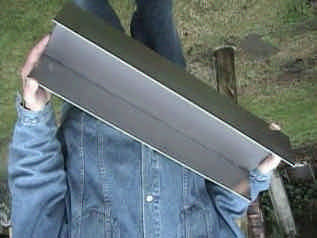
Another interesting sluice box is the one
manufactured by Cleangold, a company based
in Lincoln City, Oregon. The Cleangold sluice
uses polymeric magnetic sheets, with the
magnetic poles aliened normal to the direction
of the flow, inserted into a simple aluminum
sluice box. Magnetite, a mineral usually found
in gold-ore deposits, forms a corduroy-like bed
on the sluice floor, which appears effective at
recovering fine gold. This sluice box can be
available in any size and a 2ft x 6in (60 x 15
cm) sluice costs US$ 75 in USA. The main
advantage of this sluice is the high
concentration ratio. Gold becomes trapped in a
Cleangold Sluice box (60 x 15 cm)
magnetite layer and the sluice can be scrapped
and washed into a pan. Using a magnet, the
magnetite is removed and a high grade of gold concentrate is obtained. In many cases the use of
mercury to amalgamate the concentrate is not necessary. However, as the magnetic separation of the
concentrate can carry some gold, amalgamation or even leaching of the concentrates is
recommended. In one test comparing the Cleangold sluice with a Knelson concentrator, the sluice
obtained slightly better gold recoveries than the centrifuge. In a recent field test in Venezuela
conducted by UNIDO, tailings from hammer mills and Cu-amalgamating plates were re-passed in a
2ft long Cleangold sluice box without re-grinding. About 11% of gold was recovered and the
UNIDO, Equipment Specification for ASM in Sudan
12
concentrate analyzed 2850 ppm Au. The company representative mentioned that they can
manufacture a 60 x 50 cm Cleangold sluice box and it would cost around US$ 165 (in USA).
Cleangold was also successfully tested in Gugub and the ability of concentrating fine gold was
demonstrated to the local miners.
It is suggested for the TDU a static set of 2 Cleangold 60x50 cm sluices (making a 1.2 m long
sluice) with a steel structure to allow slope adjustment. This structure can easily be locally
manufactured.
3.3. Amalgamation
It was not observed miners amalgamating the whole ore in Sudan, but just gravity concentrates
obtained in panning. Manual amalgamation of concentrates using pans is environmentally better
than the amalgamation of the whole ore, however, if not properly conducted, this exposes operators
to high levels of mercury vapor. In addition, this manual process can take more than two hours.
Ideally the best situation is where mercury is avoided all together by alternative processes such as
MINTEK iGoli or CETEM- Saltem processes where gravity concentrates are leached with
chlorine solutions. However these options are not as simple and inexpensive as amalgamation.
The best practice would be the establishment of a Processing Center, like in Venezuela, where
gravity concentrates are amalgamated by skilled operators. Concentrates could also be leached in
these centers using chlorine, or even cyanide. This seems a natural evolution of the artisanal mining
processing system when the miners and millers become more educated and organized. Meanwhile
the training efforts must be concentrated on reducing mercury losses and occupational exposure.
Any process to be introduced must also bring a financial gain to the miners otherwise they will not
accept the technical innovations.
Assuming that amalgamation is still the most accepted gold extraction process in the ASM regions,
the initial approach should be the reduction of the mercury emissions. Some pieces of equipment
capable to improve the amalgamation step are described as follows.
3.3.1. Amalgamation Barrels
Barrel is the most efficient amalgamation process. They are used to amalgamate gravity
concentrates. Recovery of gold from heavy mineral concentrates can be higher than 90%.
Amalgamation barrels with capacity to amalgamate up to 30 kg of concentrate per batch are
adequate to the demonstration units. It is very important to avoid the impression that these barrels
can be used for grinding primary ores. This incorrect practice has been responsible for large
mercury losses in Indonesia, where miners add iron rods and balls into the barrels to grind 40 to 50
kg of primary ore for 4 hours with 1 kg of mercury. It has been demonstrated how grinding reduces
the ability of gold to be amalgamated. In these cases, mercury loses coalescence, i.e. breaks down in
droplets ("flouring effect") and mercury is lost. The action in amalgamation should be attrition of
mercury with gold rather than impact. In Sudan is common to see miners mixing mercury with
gravity concentrates using bare hands in the concentrating pan.
The suggested elliptical amalgamation barrel has a "pelletizing" disk format with control of the
slope and promotes high contact of mercury with gold particles. The use of large rubber balls
promotes good contact between mercury and gold specks. As most of the Sudanese miners
amalgamate very small portion of the gravity concentrate obtained by panning, it is suggested to
have small barrels, as the one suggested below.
UNIDO, Equipment Specification for ASM in Sudan
13
Table 3.3 Technical Data of a Disk Amalgamation Barrel
Specification
Characteristics
Size
tilted disk 0.30m x 0.10m wide
Lining
8mm thick steel shell, rubberized
Max Speed
30 rpm
Max Feed capacity
17 kg concentrate/batch
Ball Material
Rubber
Ball Size
50 mm
Number of Balls
5 to 8
Amalgam Trap
Adjustable discharge tray with mercury trap and adjustable
copper plate
Extent of Mechanization Partially mechanized, batch manual discharge
Mode of Operation
Batch
Discharge Type
Lateral door
Installed Power
2 kW
Drive
Vee Belt
Shipping Weight
100kg with frame and access ladderway
Price
~US$ 2000
Amalgamation barrels can also be made of plastic PVC but in some African countries this can be
more difficult to find and costly than steel. This is definitely very beneficial as no iron balls can be
introduced in the barrels and the mercury flouring is avoided.
The pulp of concentrate with 50 to 60% solids should not exceed half the barrel volume.
The amount of mercury used for amalgamation is usually a function of the gold grade in the gravity
concentrate. As this information is usually not available a common addition of 10 to 20g Hg per kg
of concentrate (1:100 to 1:50 Hg:concentrate ratio) is sufficient to promote good amalgamation.
Amalgamation time above 40 min usually promotes mercury flouring.
The main inconvenient of amalgamation barrels is the relatively high concentration of Hg in the
tailings. Amalgamation tailings from barrels, as observed in Poconé, Brazil, have from 80 to 200
mg/kg of Hg5. It is also common to find amalgamation tailings with 500mg/kg (ppm) of Hg. This is
a result of mercury flouring, i.e. loss of mercury coalescence. A restrict control to avoid mercury
flouring is needed when operating barrels. This is done adjusting amalgamation time, adding
reagents and reducing stress on the concentrate pulp.
Use of chemicals such as potassium permanganate or even sodium cyanide to reduce mercury
surface tension and clean gold particles surface may improve the amalgamation process, but the
benefits for gold extraction do not take into consideration the occupational risks and the
environmental effects. One gram of NaOH per kg of heavy mineral concentrate to be amalgamate is
an efficient method to improve amalgamation without solubilizing mercury.
3.3.2. Amalgamation Plates
Amalgamation Plates are stationary metallic sheets usually dressed with a thin layer of mercury
(usually 150g Hg/m² of plate) use to amalgamate free gold particles in ores ground coarser than 1.5
mm. Working with 10% of slope these plates receive pulp of auriferous ore (10 to 20 % of solids)
and the amalgamation takes place when gold particles contact the plate surface. The velocity of
5 Farid, L.H.; Machado, J.E.B.; Silva, O.A. (1991). Emission Control and Mercury Recovery from Garimpo Tailing. In:
Poconé: Um Campo de Estudos do Impacto Ambiental do Garimpo, Ed. M.M.Veiga and F.R.C. Fernandes,
CETEM/CNPq, Rio de Janeiro, Brazil, p. 27-44. - in Portuguese
UNIDO, Equipment Specification for ASM in Sudan
14
flow has to be sufficiently low that the precious metal particles can sink to the plate surface and yet
high enough that other mineral constituents of the concentrate do not remain on the plate. The most
common plates used in ASM operations are made of copper. The efficiency of the process depends
on the operator ability, but usually is low due to the short time of ore-mercury contact. The method
works better for alluvial gold but it is very limited for primary ore in which quite often gold is not
completely liberated from the gangue minerals. About 0.3 m2 of plate is required to treat 1 tonne of
ore/24 h for pulps with 20% solids. Amalgam is removed (scraping) periodically interrupting the
process. Abrasion of the mercury surface releases droplets that contaminate the tailings. Acidic
water may also cause brown or green spots on the copper plate and mercury is also lost. A large
majority of artisanal miners do not use a mercury trap at the end of the plates. In Venezuela, tailings
from amalgamation Cu-plates typically contain 60 to 80 ppm Hg.
A new technology was developed in Brazil and commercialized by two manufacturers: Goldtech
and Rio-Sul. A thin coating of Hg and Ag is electrolytically deposited onto a metallic plate (brass,
galvanized steel, copper, etc.). About 80 g Hg/m² of plate is added to the plates to amalgamate
gravity concentrates. Gold is captured and firmly fixed to the plate surface. Hg losses are
minimized. When the plates are fully loaded, amalgam is removed by washing with a plastic
scraper. This kind of plates has been successfully tested in Brazil to remove Hg from contaminated
tailing. In recent test in Venezuela, tailings from ordinary Cu-plates containing in average 62.2 ppm
were submitted to a cascade system with four special-plates. More than 95% of Hg was removed
from tailings. Those plates are not indicated to capture gold from the whole ore but only to
amalgamate gravity concentrates or to clean contaminated tailings. A wood structure was built to
hold 4 Goldtech 40 x 30 cm plates placed in zigzag, as seen in the diagram below. About 10 g of
mercury per plate is added. About 10 kg concentrate from carpet sluice boxes was passed 3 times in
less than 10 minutes. Then, the plates are removed from the wood structure and the amalgam was
scrapped off.
The main advantages of using the special-plates to amalgamate gravity concentrates are:
1. amalgamation process is faster
2. no heavy mineral-amalgam separation
3. minimum Hg loss in the amalgamation tailings
The process of manufacturing these special plates in Sudan should be investigated as the price CIF
per plate in Brazil is still expensive: US$ 200 (Goldtech plate 40 x 30 cm) and US$ 600 (Rio-Sul
plate 60 x 40 cm). In any case, this is the best system to promote clean and fast amalgamation of
gravity concentrates.
UNIDO, Equipment Specification for ASM in Sudan
15
Concentrate
3 times
Goldtech
Plates
1.2 m
Tailings
0.3 m
0.5 m
Special Amalgamation Plates in Zigzag
Table 3.4 Technical Data of a Box with Special Amalgamation Plates in Zigzag
Specification
Characteristics
Box Size
1.2 x 0.5 x 0.3 m (internal)
Box Material
Naval Plywood (2cm thick) or C-Steel
Type of Plate
Goldtech 40 x 30 cm (or Rio-Sul 60 x 40 cm)
Number of Plates
4
Arrangement of Plates
Zigzag and cascade
Plate Slope
10°
Max Feed Capacity
100 kg concentrate
Pulp Density
<10%
Extent of Mechanization Manual
Mode of Operation
Batch
Discharge
Frontal
Price
US$ 1500
3.3.3. Comparing Barrels with Special-Amalgamating Plates
The advantages and disadvantages of using barrels or special amalgamating plates to extract gold
from gravity concentrates are shown in the Table below. The main problem is to restrict the use of
these special plates to amalgamate just concentrates. As ordinary copper-amalgamating plates are
widely used to amalgamate the whole ore, miners can have the impression that these special plates
can be used in the same way. This is a mistake as the intense attrition of tonnes of ore pulp on top of
the special plates will degenerate the superficial silver amalgam and release mercury to the tailings.
Miners can also misuse the amalgamation barrels as ball mills, adding iron balls while
amalgamating concentrates or, even worse, the whole ore. This, as seen above, causes huge mercury
losses.
UNIDO, Equipment Specification for ASM in Sudan
16
Table 3.5 Comparing Special Amalgamating Plates with Barrels to Amalgamate 100 kg of
Gravity Concentrate
Zigzag Box with 4-Special
Amalgamation Barrel +
Amalgamating Plates
Elutriator (or Spiral-pan)
(40x30cm)
Amount of Hg needed (g)
40
1600
Typical Hg conc. in tailings (mg/kg)
<1
200 500
Amalgamation time required (min)
10
40
Time to obtain amalgam (min)
20 (scrapping the plate)
20 (using spiral pan)
Need to squeeze amalgam to remove
yes
yes
excess Hg
Relative amount of excess Hg
low
high
Dangerous misuse
use the plates to amalgamate use the barrels to grind ore
the whole ore
together with Hg
Main problem
occupational exposure of
mercury flouring
operators to Hg vapor
Skill needed
low
medium/high
Price (US$)
1500
4500 (including spiral pan)
3.3.4. Separation of Heavy-minerals from Amalgam
When amalgamation of gravity concentrate is conducted in a barrel, the heavy minerals must be
separated from the amalgam (+ excess Hg). When amalgam-heavy mineral separation is made by
panning at the creeks margins, mineral portion with residual mercury overflows to the watercourses
creating "hotspots" which are highly contaminated sites. Mercury from these sites can react with
organic matter and be methylated by a biotic process. The tailing generated in the amalgam-heavy
mineral separation may contain as much as 500 mg/kg (ppm) Hg. In Gugub most of the
amalgamation tailings are left in the pools or miners take these tailings to their homes to be re-
ground and re-amalgamated.
The main techniques to separate the amalgam from the heavy minerals are described below:
Panning
Panning in the water box or excavated pools is one of the most adopted method to separate
amalgam (with excess mercury) from heavy minerals concentrate. The methodology is not very
efficient but simple and inexpensive. This however promotes long contact of the operator's hands
with mercury. When panning is conducted in a water box or cemented tanks, the amalgamation
tailings are temporarily stored. The extraction of mercury from contaminated tailings is usually not
practiced by ASM. The main option for cleaning mercury from tailings is the use of special-
amalgamating plates described above. In this case, it is much better to use the special plates to
amalgamate concentrates in first place.
Spiral Pan
Spiral Pan is a tilted plate with a spiral riffle on the surface of the pan which moves the amalgam
and excess mercury into the center of the wheel where it is collected. The heavy-mineral portion is
discharged at the edge of the wheel. It is fully mechanized and the pan angle controls the efficiency
of the separation. A water pipe with thin holes crosses part of the spiral section to wash the minerals
down. The simplest pans are made of polypropylene plastic with diameter ranging from 30 to 50
cm. The wheel rotation speed is controllable (from 15 to 22 rpm) thanks to a 12 V motor (adaptable
to car battery). The feed capacity is around 30 kg per hour. There are many spiral pan
manufacturers in USA, many of them can be found in the Internet. The prices of these spirals range
from US$ 300 to 500 depending on the level of accessories. The weight of the whole setting is less
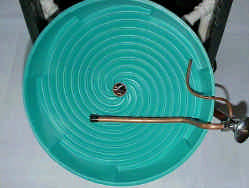
UNIDO, Equipment Specification for ASM in Sudan
17
than 10 kg. In terms of heavy-mineral-amalgam
separation, the spiral pans provide better control
than an elutriator and the final amalgamation
tailing contains less mercury. Both techniques are
worthwhile to be demonstrated to miners.
3.3.5. Removing Excess Mercury
The universal process used by most artisanal
miners to remove excess mercury from amalgam is
filtration squeezing the amalgam in a piece of
Spiral Pan
cloth. The cloth retains the amalgam (paste) and
permits mercury to flow through the fabric or
chamois pores. Despite the low absorption of mercury through the miner's hand, it is always
advisable to wear gloves during this artisanal procedure. This process usually results in amalgam
with 40 to 50% Hg.
A creative solution to remove excess Hg from amalgam without using the hand squeezing process
was developed in a Processing Center in Venezuela. The amalgam with excess mercury is
transferred to a porcelain crucible, covered with a piece of fabric on top and placed in a centrifuge.
The centrifuge runs for 1 or 2 min. and the resulting amalgam has less than 20% Hg.
This can be brought to the miners' attention in the demonstration units. This can be built adapting a
domestic food processor (centrifuges).
3.4. Retorting
An efficient method to separate mercury and gold from amalgams is by heating above 350 °C.
Mercury becomes volatile leaving gold behind in solid state. A retort is a container in which the
gold-mercury amalgam is placed and heated; volatile mercury travels up through a tube and
condenses in an adjacent cooler chamber. With retorts, mercury recovery is usually higher than
95%. Substantial reduction in air pollution is obtained. There are a large variety of retorts. Some of
them are made with stainless steel while others use inexpensive cast iron. Mercury losses during
retorting are usually less than 5%, but this depends on the type of connections or clamps used.
This operation unfortunately in most artisanal mining sites around the world is usually conducted
burning amalgams in pans or metallic trays using a blowtorch or bonfire. In Sudan it is very popular
the use of bonfires to burn amalgam. The miners place the amalgam on a steel plate or shoe-
polishing tin to be burned in a bonfire. As the temperature is not high enough and the time of
burning is too short (miners leave the amalgam for 10 minutes), the final gold doré contains up to
20% of residual mercury. The only control of the burning is visual. As long as the amalgam ball
becomes superficially yellow, the miners remove the doré from the fire. Inside the bead it is
possible to see residual mercury. As most gold buyers know this fact, they reduce the doré purchase
price. When better retorting techniques are introduced, the gold price must be negotiated with
dealers, showing that less mercury has been retained in the doré.
As occupational exposure is the main pathway in which mercury enters the human body in artisanal
gold mining areas, it is suggested to demonstrate the advantages of using different retorting
processes. In places such as Lao PDR, where mercury in mining areas is purchased by US$ 80/kg it
makes sense to use the economic argument to convince miners to recycle mercury. In Sudan, the
price of one kilogram of mercury is around US$ 30/kg. In spite of being almost seven times higher
than the international mercury price, this is still cheap, i.e. equivalent to three gram of gold. So, the
economic argument should be replaced with other strategy. Despite the introduction of retorts
UNIDO, Equipment Specification for ASM in Sudan
18
through many programs (CETEM, UNIDO, Projekt-Consult GmbH, ITDG, Organization of
American States, etc) and obvious benefits associated with their use, artisanal miners are reluctant,
primarily due to a lack of concern for environmental and health impacts relative to other issues. The
most effective argument to convince miners to use retort is using social and cultural issues. For
example, in 1985, the Secretary of Mining of Goiás State, Brazil, started a campaign promoting
retorts that included a brochure illustrating the effects of mercurialism. Impotence was stressed as
one of the initial symptoms, which is somewhat inaccurate and therefore questionable from an
ethical standpoint, but was extremely effective in capturing the attention of miners.
It is important to understand the main reasons by which miners do not use retorts. Engineers tend to
look for the efficiency of the retorting process, when in many cases, efficiency is not the dominant
factor to introduce a cleaner technology. The arguments are site-specific and sometimes fraught
with misperception. However in some cases there are actual reasons that must be considered when
introducing retorts in a mining site. Some of the most common arguments used by miners for not
using retorts are listed below (Table 3.6). All these factors must be taken into consideration in order
to recommend the adequate type of retort in a specific mining region. In some cases gold buyers use
the miner's perception to lower the purchase price. This is common when miners sell brown
retorted gold.
The doré volume after retorting usually has the same volume as the amalgam. The amount of
mercury in the doré depends on the retorting temperature. A well-done retorting would result in a
doré with 1 to 2% Hg. Using blowtorches, the retorting time ranges from 10 to 20 minutes, in a 1 or
1½"crucible retort. Shorter time provides doré with high content of Hg. Usually this is not seen by
miners, as the surface color is yellow. When using blowtorches, it is possible to melt gold in the
retort crucible. Brazilian miners use to add some borax and a little dash of potassium nitrate to melt
gold and remove impurities. This operation must be conducted in a fume hood equipped with filters.
Activated carbon soaked with potassium iodide makes a very efficient filter to retain residual
mercury vapor.
Table 3.6 Arguments Used by Miners for Not Using Retorts
Arguments
Reasons
Possible solution
it takes time (sometimes
low temperature
use air blower in bonfires or
miners become vulnerable to
blowtorch; avoid crucible made
bandits attack when retorting)
of refractory material such as clay
it needs experience to operate
heating process must be
training
uniform when using
blowtorch
gold is lost during retorting
iron retorts: amalgam is not
glass retorts can demonstrate that
visible; bad perceived by
gold will not evaporate together
miners
with Hg or be trapped
gold sticks to the retort
sometimes gold adhere to
· crucible must be filled with
crucible
crucible bottom
soot, or baby powder or a thin
layer of clay;
· avoid overheating (beyond red
color)
Hg loses coalescence
sometimes condensed Hg
NaCl and radio battery to re-
disintegrates in fine droplets
activate Hg
gold becomes brown
unknown; probably due to a
· still not well studied;
superficial reaction with iron
· oxidizing atmosphere or use of
stainless steel crucibles;
· melt gold;
· hammer gold doré
UNIDO, Equipment Specification for ASM in Sudan
19
Regarding the type of retort to be demonstrated to miners the strategy must be: ANY RETORT IS
BETTER THAN NOTHING. Even a crude method of retorting described in the "Gold Panner's
Manual", a favorite of North American weekend prospectors, is better than burning amalgam in
open pans or kitchen ovens. This simply involves "baking" the amalgam in the scooped out cavity
of a potato. Readers are advised not eating the potato after processing.
The best retorts to be advised to miners are those made of local and easily accessible materials, non-
expensive and easy to demonstrate. Durability can be a factor, but as long as the retorts are cheap
and accessible, this becomes less relevant for miners.
In the demonstration unit it is suggested to have a large variety of retorts, from the simple to the
most sophisticated one, to provide options to miners. It is definitely up to the miners to choose the
most convenient and affordable type of retort for him/her.
3.4.1. Increasing Temperature
Another important factor to be considered when
suggesting a retort, is the source of heat. Using
blowtorches with propane gas (as in most Latin American
countries) or with gasoline-air (as in Indonesia), the
temperature on the amalgam can easily go above 400 °C
promoting efficient mercury elimination from amalgam in
less than 20 minutes. In a bonfire, more than one hour is
needed to remove more than 90% of mercury from a 5 g-
amalgam. When a bonfire is used, an air-bower is needed
to speed up the process and to justify the use of retorts.
Manual or foot-operated blowers have been used in
Sudan to forge steel. These blowers can easily be locally
Indonesian gasoline-air blowtorch
manufactured. Air-blowers are
definitely needed to be included in the
demonstration units in particular in most
African countries where most miners
use wood as the main heating source.
Burners (such as camping stoves) using
gasoline, paraffin, butane liquid propane
should also brought to miner's attention.
Air blower tested in Gugub; this increases the
3.4.2. Home-made Retorts
temperature of a bonfire
Home-made retorts are not very efficient
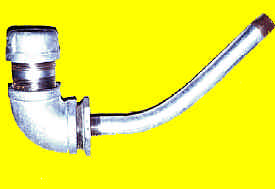
but are easy to be manufactured with local materials. One option is the use of standard plumbing
pipes and connections to make retorts with crucibles (end plug of plumbing pipes) from ¾"to 2".
Smaller crucibles promote faster retorting. For those miners retorting more than 5 grams of
amalgam per batch, retorts with crucible of 1½" are advisable. This costs less than US$15. This
idea, devised by prof. Raphael Hypolito6 from Brazil, has been adopted by many organizations and
6 Veiga, M.M.; Meech, J.A.; Hypolito, R., 1995. Educational measures to address Hg pollution from gold mining
activities in the Amazon. Ambio, v. 24, p.216-220, 1995. Royal Swedish Academy.
UNIDO, Equipment Specification for ASM in Sudan
20
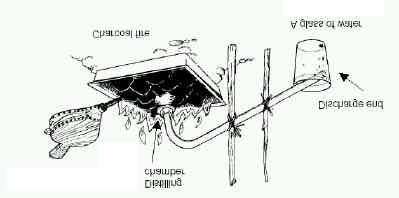
different designs of the RHYP retorts are available. The main drawback is that the pipes are made
of galvanized steel and when mercury condenses, it sticks to the cooling pipe creating an amalgam
with zinc. With the use of the retort, eventually, the accumulate mercury comes off, but this can
bring a bad impression for the miners. In a brochure made by the British NGO, Intermediate
Technology Development Group (ITDG)7, there is the following note: Do not worry if, the first time
you use the retort, only a small part of the expected amount of mercury is recovered. Most of the
mercury is normally trapped in the retort, and will be recovered in second and subsequent uses.
RHYP Retort
RHYP Retort
A manual
blower speeds
up the heating
process
For an appropriate operation, all retort body must be heated
For an adequate operation, the zinc from all plumbing parts must be burned off. Zinc fumes are
relatively toxic. This initial operation must be done in a fume hood. Mercury can also leak through
the connections. For a better operation it is advisable to heat the entire retort body in a charcoal bed
and preferentially using an air-blower to speed up the operation.
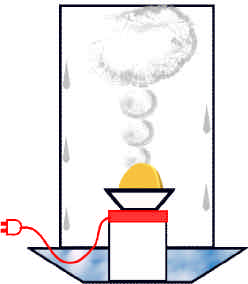
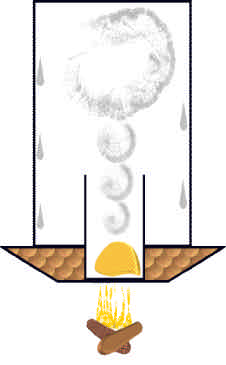
Home-made retorts can also be made of steel tins. An inexpensive option for retorting has been
applied in Papua New Guinea and China. The Chinese two-bucket retort consists of a metallic
bucket and a bowl filled with water. A larger bucket covers the first bucket containing the amalgam.
The PNG "tin-fish-tin" retort employs the same concept, but uses fish tins and wet sand instead of
water. In both cases, the amalgam is heated using wood, charcoal or electric element and mercury
vapors condense on the cover-bucket walls.
7 ITDG. A Simple Retort. www.itdg.org/html/technical_enquiries/ docs/mercury_retort.pdf

UNIDO, Equipment Specification for ASM in Sudan
21
Alternative Design for
RHYP retort
RHYP in use, as promoted by ITDG
bucket
evaporated Hg
condensed Hg
to electric
sand
power
metallic
tray
fish tin
water
electric
bucket
amalgam
element
bonfire
Other types of home made retorts used in China (left) and Papua New Guinea (right)























































































































































































































































































































































































































































UNIDO, Equipment Specification for ASM in Sudan
22
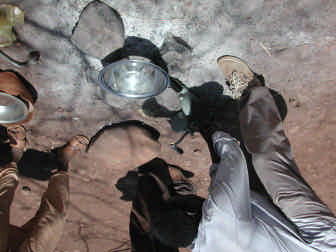
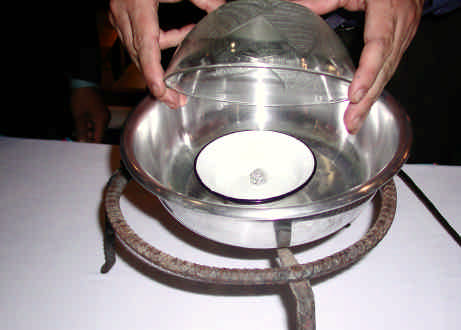
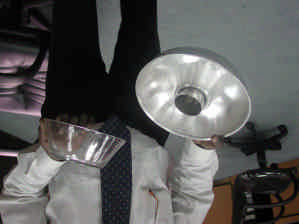
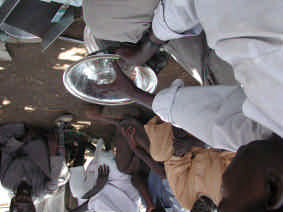
Using the same principle of the Papua New Guinea ("PNG retort") fish-tin retort, UNIDO built
some retorts using kitchen material for the ASM in Sudan. On a metallic support (locally used for
cooking on bonfires), a small enameled
steel tray with amalgam is placed inside
another larger steel bowl, covered with a
clay
glass bowl and sealed with sand. The
oven
glass bowl allows the miners to see the
amalgam decomposition, but this can be
replaced with a metallic bowl. Mercury
condenses on the bowl walls and drops
into the sand. This retort took 10 to 15
minutes to eliminate most mercury from
amalgam using a propane blowtorch or
30 minutes using a bonfire with air-
blower. A serious inconvenient of this,
is that sometimes miners remove the
cover from the crucible while the retort
A clay oven increases retorting temperature
is still hot. When this occurs, miners are
exposed to mercury vapor. This retort cost less than US$ 10 to be built. Miners can recover the
condensed mercury panning the sand placed around the small tray.
Using a glazed-steel (enameled) bowl as crucible, yellow gold is obtained, increasing the
acceptability of miners to the retorting process. The firing structure can also be built in clay as used
in Western Africa for cooking. This process increases the temperature of the bonfire and
concentrates the flames under the bowl.
sand is added
amalgam
to seal
The Retort made of kitchen bowls
UNIDO, Equipment Specification for ASM in Sudan
23
Demonstrating in Sudan the principle of the
Retort made of kitchen bowls in Sudan
kitchen-bowl retort
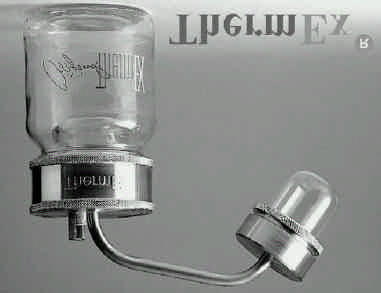
3.4.3. Conventional Retorts
As mercury forms amalgam with
< 2 cm
almost all metals except iron and
platinum, ordinary retorts are made of
45°
steel. Durable retorts can be made of
6 cm
steels that resist to corrosion and creep.
Ø 1"
1 or ½"
or
,
½"
20 cm long,
Other characteristics to be observed are
2 cm
preferentially of
resistance to thermal expansion,
7 cm
stainless steel
7 cm
structural stability and resistance to
fatigue. In applications where the
environment is not corrosive and the
carbon steel
Ø 1½"
piece is not subjected to mechanical
e.g. SAE 1020
strength, carbon steels with low content
of carbon (0.2 to 0.4%) work well. The
strength of a low-carbon steel reduces
Retort devised by CETEM, Brazil (air-cooled)
from 43 kg/mm² (ambient temperature)
to 25 kg/mm² at 540 °C. A simple and cheap air-cooled retort made of low-steel carbon was devised
by CETEM (see diagram below). In order to increase the mechanical properties at temperatures
above 500 °C addition of 0.45 to 0.65% Mo and 0.3
to 0.6% Mn to a 0.2%C steel increases its strength at
Water cooler
540 °C to 35 kg/mm². Creep resistance doubles with
(cup)
small amounts of Mo and Mn in the steel. Addition
of 5 to 6% Cr increases two or three fold the
strength of low carbon steels. The main commercial
Cr steel is the 410 AISI with 0.15%C.
Retorts can also be made of Cr-Ni austenitic steels
such as AISI 304 (0.08% C, 18-20% Cr, 8-11%Ni)
or 310 (0.25%C, 24-25% Cr, 19-22%Ni). These
steels combine high heat resistance with corrosion
resistance up to temperatures around 900 °C.
Stainless steels are much more costly than C-steels
Retort devised by GTZ in Indonesia
but the retorts are more durable. The aspect of
(water cooled) made of stainless steel
durability must be discussed and cost/benefits must
be presented to miners for their decision.
UNIDO, Equipment Specification for ASM in Sudan
24
The advantage of having stainless steel cooling pipes is that mercury does not stick on the pipe wall
when it cools down. Water-cooled retorts are slightly more efficient in Hg condensation than air-
cooled. GTZ designed a 1½" water-cooled retort, used in Indonesia, in which no water circulation is
needed. The price of these retorts made in Indonesia of stainless steel was around US$ 100 to 120.
A creative idea used in Colombia8 is the encapsulation of a stainless steel (AISI 304) retort using a
cylindrical refractory cement, like a furnace. The capacity of this retort (known as "still"), as
originally designed, is for as much as 400 g of amalgam. The cooling pipe is steep to minimize
mercury sticking on the pipe walls and it crosses a 7.8 water-tank. With liquid-propane gas burner
about 95% of mercury was recovered in 8 minutes of operation and 9 g of gas was burned per
minute. While using gasoline burners, the burning time increases to 20 min consuming 0.015
L/min. The same heating system is used to melt gold in a graphite crucible. This retort can be
manufactured in Sudan using a propane-gas burner. The retort can be made using either CETEM's
or GTZ's retorts designs but in stainless steel. The idea of having a refractory insulation around a
retort heating unit is very good and a clay-made oven can be tested for this purpose.
3.4.4. Glass Retort
A glass retort (Thermex) has been
manufactured by the Munich-based
company Metall-Technic. The high-
silica-containing crucible resists up
to 700 °C. The cooling pipe and
connections are made of stainless
steel. A water glass cools down the
recipient receiving the condensed
mercury. Miners can inspect the
condensation process. This
innovative approach has been very
useful to demonstrate to miners the
entire amalgam retorting cycle. As
miners can observe mercury being
released from the amalgam and
condensed, they trust that all gold is
Glass retort is useful to demonstrate the retorting principle
recovered in the process.
UNIDO has distributed a number of these Germany-manufactured glass retorts in Ghana, Tanzania
and the Philippines. Due to the low capacity (<30 g of amalgam), high cost (~ 1 oz gold),
breakability and lack of spare parts, this cannot be used as a permanent retort but for demonstration
purpose only. The refractory character of the silica crucible also makes the retorting time longer
than when a steel retort is used but the amalgam color transformation, from silvery to golden, is
quickly observed on the amalgam surface in less than 5 minutes of retorting with a blowtorch. With
longer use, the crucible becomes opaque (silicon oxide formation) and becomes difficult to see the
amalgam inside. It is important to demonstrate together with Themex that steel retorts employ the
same principle and work similarly.
3.4.5. Comparing Retorts
It is recommended to demonstrate as many different types of retorts as possible and build some
along with the miners during the training step. This will be useful to highlight the cost and benefit
of the various types of retorts. It is also important to work with miners to develop "new" types of
retorts. This will make them more comfortable with their own inventions.
8 Pinzón, J.M.; Contreas, R.; Bernardy, C., 2003. A new still for the prevention of mercury poisoning in small-scale
gold mining by amalgam extraction. Geofísica International, v.42, n.4, p.641-644.
UNIDO, Equipment Specification for ASM in Sudan
25
Table 3.10 Different Types of Retorts to be Demonstrated to Miners
RHYP
PNG
CETEM
Colombian
GTZ
Thermex
crucible material
Galvanized
C-steel
Low C-
Stainless
Stainless
High silica
steel
steel
steel
steel
glass
durability
Low
Low
Medium
High
High
Low
price (US$)
5-20
5-20
20-50
80-90
100-200
400-500
possibility of
local (Africa)
High
High
Medium
Medium
Medium
None
manufacturing
retorting time
(min) with
15-20
10-15
15-20
10-20
15-20
20-30
blowtorch
3.4.6. Recovering Mercury Coalescence
Mercury recovered by retorting often does not have the same amalgamating properties as new
mercury. In many South America countries, miners simply discharge retorted mercury. The most
efficient way to reactivate the surface of mercury is by using an ultrasonic bath, such those used by
dentists, wherein mercury droplets coalesce in seconds. However this is an expensive equipment
(~US$400) and not frequently accessible to miners. A much less expensive method9 involves
electrolytic activation using table salt and a simple battery to clean mercury surface. A process to
retain the contaminated liquid effluent should accompany any activation method. For example, the
effluent can be filtered through a pipe filled with lateritic material or activated charcoal. Despite the
small amount of effluent, some soluble mercury could be transformed into more toxic forms once
discharged into the environment. This equipment should definitely be demonstrated to miners using
a simple steel or glass can and a radio battery with some copper wires.
Electrolytic Process
battery
wire
water with
mercury
little NaCl
Simple procedure to re-activate Hg surface
3.4.7. Filter for Gold Shops
Usually gold doré is sold to gold shops in the villages or to dealers who come to the mines. The
buyers often pay less for the bullion according to the quality of the gold from each region. Gold
doré is then melted with some amount of borax and nitro to remove impurities and, sometimes, to
make jewelry. As the doré still has residual mercury this is released during the melting operation.
The residual mercury ranges from 1%, when retorting is well done to 20%, when amalgam is
roughly burned in bonfires, as in Sudan. The fume hoods used by gold shops are usually very
rudimentary comprising just a fan that blows out the mercury vapor into the urban atmosphere. In
the interior of these shops Hg levels in air can reach 300 µg/m³. The residual mercury is lost. Gold
shop employees and citizens living around the shops are exposed to high levels of mercury vapor
and develop neurological problems. The most dramatic case was documented in the BBC movie
9 Pantoja, F. and Alvarez, R., 2001, Techniques to Reduce Mercury Emissions in Gold Mining in Latin America, Book of Abstracts
from the 6th International Conference on Mercury as a Global Pollutant, Minimata, Japan, October, 2001, p. 215.
UNIDO, Equipment Specification for ASM in Sudan
26
"Price of Gold". A citizen in Brazil lost his walking and speech abilities after living for eight years
above a gold shop.
In 1989, a Brazilian company, Apliquim, developed a mercury condensing fume-hood consisting of
a series of condensing plates coupled with iodide impregnated activated charcoal filters. This
equipment reduces mercury emissions by more than 99.9%. Less than 1 µg/m³ (WHO limit for
public exposure) of mercury was detected in the exhausting gases of this fume hood.
Gold buyers are usually much more capitalized than
miners, but the demonstration of a whole special
fume hood for gold melting is very expensive to be
included as a major component of the demonstration
unit. It is suggested to include in the unit some
components of an air filtering system to demonstrate
to gold dealers in Omdurman and Khartoum. This
can be simple condensers (even a simple water trap)
and activated charcoals (impregnated with
potassium iodide) filters.
Scheme of a special fume hood developed
by the company Apliquim in Brazil
UNIDO, Equipment Specification for ASM in Sudan
27
4. Capital Cost of a Demonstration Unit
The capital cost for manufacture the Transportable Demonstration Unit (TDU) includes the costs of
equipment, supporting structure (truck bed or container), all ancillaries (wires, pipes, etc.), the tent
to be used as classroom and dormitory, power generator, and all labour, supervision and field
expenses for first transportation, installation, start-up and short training.
There are a number of tents in the American market that are used as portable classrooms. Shelter
Systems offer a dome-tent with diameter of 30' (9m) and it is 11' (3.3.m) high weighing 190lb (86
kg) 706 square feet (65.6 m²). According to the manufacturer, the tent can be set up by one person
in 30 minutes without tools and taken down in 5 minutes. The price is around $2000. The tent is to
be used as classroom as well as to show videos and slides to miners. In Zimbabwe, Taylors Canvas
offers a 6x6m tent with galvanized steel and PVC cover that can easily accommodate 30 people in
3-seat benches. The walls roll up and more people can attend the lecture. Tent manufacturers in
Sudan were not identified but they must exist.
Audio-visual equipment for training and awareness campaign is also considered. This consists of a
lap-top computer plus a data projector and a screen. A turn-key contract with an engineering
company is recommended to manufacture, install and start-up the unit. Some pieces of equipment
do not necessarily operate on the truck bed. They must be installed on the ground in a way to be
easily dismounted and removed. A drop-side container is much more secure than a flat bed
platform.
All the prices were approximately quoted in Harare with Small Mining Supplies Ltd. The
transportation cost of the pieces of equipment to Gugub can increase the quoted price.
Table 4.1 Capital Cost of a Transportable Demonstration Unit
Equipment
# units
Price US$
(Geita)
Small jaw crusher (6"x3")
1
5000
Small ball mill (48 x 60 cm)
1
8340
3-set portable screening system with 200l plastic container and
1
500
replaceable screens
Sluice boxes: A52 Keene (25 x 129cm)
2
400
Carpets and vinyl mats for sluice boxes
2
100
Cleangold (60x50cm) and structure
4
2000
SMS elliptical amalgamation barrel (30 cm)
1
2000
Special amalgamating plates (40x30cm) Goldtech (with box)
4
1500
Spiral pan (40 cm)
1
500
Centrifuge to remove excess Hg (food processor)
1
1000
Stand with clamps to support retorts
3
150
Retorts: RHYP
10
200
Retorts: PNG retort
10
400
Retorts: CETEM retort (c-steel)
5
400
Retort: Colombian still (stainless steel) with burner
1
500
Retorts: Thermex retort
3
1500
Burner (camping stove with propane or butane gas tank)
2
100
Air blower
1
200
Filter for gold shops (activated charcoal with KI)
1
300
Pulp scale
1
300
200-kg scale
1
100
UNIDO, Equipment Specification for ASM in Sudan
28
Gold scale (20 g to 1 mg), portable and battery operated: PP-
1
400
2060-D Digital Acculab Pocket Scales
Platform/container to transport all pieces of equipment
1
3000
A&V equipment (computer + beamer + screen)
1
5000
Power generator (27 kVA)
1
8000
Canvas tent (6x6 m)
1
2000
Portable folding plastic chairs
30
850
SUBTOTAL
44740
Miscellaneous (gloves, masks, safety equipment, glassware,
4474
bowls, buckets, small instruments, etc.) + spare parts (10%)
Contingencies (10%)
4474
Transportation + installation + start-up + training (10 days)
6000
TOTAL
59688
5. Operating Cost of a Demonstration Unit
The TDU must be operated by trainers which include a local mining and mineral processing expert
and a technician. It is also recommended to hire one or two local miners to help the unit operation
and promote the training activities. These trainers must be trained and this cost is not included
herein. Eventually, some other experts (see invited experts) in a specific field related to mercury
pollution (e.g. health) can be invited to go the TDU for a sequence of lectures. In principle, the
TDU will move just three times per annum, staying in each site for 4 months. The truck to transport
the unit must be rented. The platform or container containing all pieces of equipment to be
transported can have some legs to facilitate the loading process.
The Government must be committed with the operation of this demonstration unit and keep it
working at different sites after the UNIDO project life.
A mechanic and/or an electrician are listed as an expected expense to repair any type of equipment
in the unit.
The operating time of the demonstration plant is calculated based on a use of 50% of the
demonstration plant, since other 50% of the operators' time is used for classes, training, analysis,
maintenance, etc. The operating hours of the plant is calculated as follow:
8 hours/day x 22 days/month x 12 months/annum x 50% of operation = 1056 hours/a
The cost of power was estimated using a power generator but when electric power is locally
available, this can be rented from the milling center. In this case, a power meter must be installed on
the line in order to pay the right energy cost to the miller. When using a diesel generator it is
estimated the use of 0.2 L of diesel/HP-hour or 0.27 L/kWh. Considering a total power of 15 kW
and an operating time of 1056 hours/a then the total energy consumed by the unit is around 15840
kWh/a or 4277 L of diesel per annum or 356 L/month. Considering the cost of US$ 0.85/L, then
about US$ 303/month of diesel is expected.
The tailings generated by the demonstration unit must be safely disposed before the unit moves to
another site. This must be done by hiring a truck and disposing the tailings in a landfill,
preferentially re-vegetating the site. Water to be used in the TDU comes from local suppliers that in
many cases are the milling centers. The use of water from natural streams should not be the first
option. The water management item includes the cost in reclaim the water from the ponds an/or any
type of expense related to fees to be paid to millers.
UNIDO, Equipment Specification for ASM in Sudan
29
The most feasible way to operate the demonstration unit is through a sub-contract with a
Government institution (e.g. GRAS) that provides trainers and technicians, and it will be in charge
of the unit maintenance. Ideally this institution should own the TDU.
The operating costs must be discussed with the local demonstration unit operators and a more
accurate list must be obtained.
Table 5.1 Operating Cost of a Transportable Demonstration Unit
Item
US$
US$
(monthly) (annually)
Direct Labor
·
local expert (6 months)
1000
6000
·
technician (12 months)
500
6000
·
one miner (helper) (12 months)
250
3000
·
invited expert (lump sum) (2 month/a)
2000
4000
Mechanic + electrician
1000
Repair parts (5% of the capital cost)
3500
Lubricants (1% capital cost)
700
Power (diesel oil) or electric power when available
303
3632
Power generator maintenance (20% of the generator price/a)
1600
Truck rental (3 times/a): 3 x 700
2100
Rental of the Custom Milling (50% of the time)
385
4620
Water management
100
1200
Tailing management
100
1200
Carpets replacement
200
Retort replacements
100
1200
Reagents (NaOH, Hg, etc.)
50
600
Living expenses for 3 people
3 x 400
14400
Meals + coffee for the course attendants (10 days/month)
450
5400
Travel expenses for 3 people
100
1200
Fuel for cars
1000
Office and promotional material
100
1200
Subtotal
63752
Contingencies + administration (10%)
6375
TOTAL
70127
UNIDO, Equipment Specification for ASM in Sudan
30
Small Mining Supplies (Pvt) Ltd
23 KENMARK CRESCENT, BLUFF HILL INDUSTRIAL PARK, FABER Rd, HARARE, ZIMBABWE.
P O BOX WGT 188, WESTGATE, HARARE TEL/FAX +(263 4) 305876/305453
email: satmark@zol.co.zw
3 November 2003
Dr. Marcello Veiga,
UNIDO
Global Mercury Project
Vienna International Centre
Per email: M.Veiga@unido.org
GLOBAL MERCURY PROJECT DEMONSTRATION UNIT ZIMBABWE
Dear Dr Veiga,
We would like to thank you for consulting our company in respect of the above, and for the useful
discussions we held in Zimbabwe and Ghana.
To refresh your memory, I shall start with a brief outline of our company, and then move on to how
we believe we can be of assistance to you:
SMS Company Outline
Small Mining Supplies (Pvt) Ltd (SMS) was formed 2 years ago with the express intent of
providing expertise and equipment to the Zimbabwean artisanal and small mining community,
which as you have seen is relatively sophisticated. Despite this sophistication, this sector suffers
from a lack of finance, and thus inability to establish privately-owned process plants. As such the
artisanal sector is at the mercy of custom mill operators, and the small-worker sector, whilst
frequently operating privately-owned mills, often suffers from a lack of cutting-edge technology
and finance to make technological capital improvements.
At SMS we felt that there was an opportunity here to provide both expertise and equipment, on a
scale and cost level suitable for the ASM sector. Expertise is borrowed largely from the experience
and ongoing R&D programs of our sister company, Peacocke, Simpson & Associates (Pvt) Ltd
(PS&A). This company has provided extensive minerals dressing services to the region and
internationally since 1985, and relies upon the skills of a number of Zimbabwean key players:
Kevin Peacocke, BSc, C Eng Director
Peter Simpson, BSc, C Eng Director
Barnabas Moyo, C Eng R&D Manager
Stanley Makonde, Dip Acc Sales & Procurement Manager
Patrick Chiropa Laboratory Manager
The staff of Peacocke, Simpson & Associates (Pvt) Ltd have combined experience in excess of 100
years, heavily biased towards the Zimbabwean small mining sector, which is a model industry in
Africa. Messrs Peacocke & Simpson sit on the board of SMS, which also draws upon the skills of
the other key players in the company. Both Messrs Peacocke & Simpson are strongly associated to
Knelson Concentrators and have traveled extensively for this company in Africa and beyond. Their
UNIDO, Equipment Specification for ASM in Sudan
31
particular forté is gravity processing and optimizing of processes and recoveries without the need
for chemicals.
The third board member of the SMS board is Mr Kevin Woods, also a Zimbabwean by birth, who
has some 20 years of experience in the Zimbabwean mining industry. Mr Woods' background has
been predominantly in the sourcing, refurbishment and supply of used or new small mining
equipment in Zimbabwe. Over the years, Mr Woods has dealt with nearly all of the more important
players in the Zimbabwean industry, as well as numerous lesser players, and he has very strong
relationships with various indigenous small-mining associations.
Although SMS is only 2 years old, therefore, it draws upon a huge expertise &experience resource,
and has made significant strides in the industry. The company has developed a small single-stamp
mill aimed at artisanal and cooperative miners, rubble scrubbers, amalgam barrels, etc., and is
presently developing a low-priced centrifugal concentrator. The bias here is towards providing
medium/high technology which is both appropriate in terms of both price and operator skill level.
All internal equipment lines are continuously improved and updated with feedback from the
industry and according to R&D investigations at PS&A.
Moving beyond the borders of Zimbabwe, SMS has an existing joint venture with Mulittech
Services of Ghana for small mining equipment supply in West Africa, and is actively seeking JV
partners in other African countries. Outside the continent, we have excellent relations worldwide
with a number of mining equipment supply companies, generally through the worldwide Knelson
network. Most of these companies have been allied to Knelson for many years, and have tried-and-
tested track records.
K H Woods, P T Simpson, K G Peacocke
Directors of SMS