UNITED NATIONS INDUSTRIAL DEVELOPMENT ORGANIZATION
(VIENNA)
Results of the Awareness Campaign and Technology
Demonstration for Artisanal Gold Miners
SUMMARY REPORT
BRAZIL INDONESIA LAOS SUDAN TANZANIA ZIMBABWE
MERCURY REDUCTION RESEARCH AND INITIATIVES
April 2008
Results of the Awareness Campaign and Technology Demonstration for
Artisanal Gold Miners: Summary Report
Global Mercury Project, Coordination Unit, Vienna
Pablo Huidobro, Project Manager, UNIDO
Marcello M. Veiga, Chief Technical Advisor, UNIDO
Svitlana Adler, Administrative Assistant, UNIDO
Authors (UNIDO Consultants)
Rebecca Chouinard
Marcello M. Veiga
University of British Columbia, Norman B. Keevil Institute of Mining Engineering,
6350 Stores Rd., V6T 1Z4, Vancouver, BC, Canada
Disclaimer
The designations employed and the presentation of the material in this document do not imply the
expression of any opinion whatsoever of the Secretariat of the United Nations Industrial Development
Organization (UNIDO) concerning the legal status of any country, territory, city or area of its
authorities, or concerning the delimitation of its frontiers or boundaries.
Mention of company names and commercial products does not imply the endorsement of UNIDO.
© Copyright UNIDO 2008
i
Foreword
More than 100 million people worldwide in over 60 countries depend on artisanal gold mining for their
livelihood. An estimated 25-30% of the world gold production comes from some 15 million artisanal
miners, including 4 million women and 1 million children. This gold rush is causing dangerous levels of
mercury pollution throughout the world. The problem derives from the miners' use of mercury to extract
fine particles of gold - this method releases about 1,000 tonnes of mercury every year, or roughly 1/3 of
all the global anthropogenic mercury released annually. The simple gold extraction process used, known
as amalgamation, can potentially contaminate the air, soil, rivers, and lakes with mercury. The health of
the miners and other people living nearby is negatively affected through inhalation of mercury vapour,
direct contact with mercury, and the consumption of fish and other food contaminated by the mercury.
The Global Mercury Project (GMP) has been sponsored since August 2002 by the Global Environmental
Facility (GEF), with the United Nations Development Program (UNDP) as the Implementing Agency
and the United Nations Industrial Development Organization (UNIDO) as the Executing Agency. Pilot
sites for evaluations in Brazil, Indonesia, Lao PDR, Sudan, Tanzania, and Zimbabwe were selected on
key trans-boundary river/lake basins. Roughly 2 million people are directly involved in artisanal gold
mining activities in these pilot countries. Evaluations took the form of diagnostic analyses (involving
environmental, health, socio-economic, and socio-political studies), training and awareness campaigns
(involving the "training of the trainers" initiative, multiplication of training, and education programs),
and promotional programs (on local, national, and international scales). The GMP also conducted
studies on: policies that support the program goals, the promotion of a fair-trade gold to promote
mercury emission reductions, satellite imagery studies to characterize global artisanal and small-scale
mining (ASM) activities, technologies to reduce mercury emissions, and introductory studies in various
other locations to help characterize and aid in the improvement of the problem at large.
This report summarizes the main accomplishments of the activities commissioned by the GMP to local
institutions in order to implement the demonstration of cleaner technologies and to raise awareness in
the GMP pilot sites. The aim is to share the results with key global institutions in order to generate
awareness about the level of mercury emissions and public exposure in these sites. The findings of these
studies have also helped shape the development of the next phase of the GMP one that places more
emphasis on implementation strategies that reduce the use and release of mercury from ASM. Artisanal
and small-scale mining is primarily a poverty-driven activity and communities often have few other
opportunities to generate income. In rural communities, miners make 3 to 10 times more money than
farming, but it is often the case that they do not have a strong bond with the land and live separately
from other local communities. The transience of miners in the GMP sites is a challenge faced by the
project team in their effort to provide widespread education and training. These studies clearly
demonstrate the multiple layers of the issue that need to be addressed in order to realize change.
However, the outright banning of artisanal and small-scale mining activities would leave communities
with even fewer economic options and will often lead to illegal mining. Simple technologies and
practices can be implemented which dramatically reduce these impacts and allow more sustainable
livelihoods for these communities.
Marcello M. Veiga
Global Mercury Project
Chief Technical Advisor
ii
REPORT ON THE MAIN ACHIEVEMENTS OF THE GLOBAL MERCURY PROJECT
Acknowledgements
The authors would like to acknowledge all the research and hard work undertaken by the assessment
teams, including the researchers and the national and local GMP staff. Much of this research was
undertaken in remote areas with difficult logistics, little time, and small budgets. The local participants
also are thanked for opening up their lives and communities and for their patience both waiting for the
results to be reported to them and for action to address the concerns that arose during these studies.
Source Documents
The information presented herein has been taken from the following commissioned reports in each of
the Global Mercury Project target regions and for each of the target research themes. Additional GMP
documents supplemented the assessments. Visit the GMP website at http://www.globalmercury.org for
more information.
Baker R., Wotruba H., Aucoin E., Figueiredo K., Bougnaphalom E. (2007). Removal of Barriers to Introduction
of Cleaner Artisanal Gold Mining and Extraction Technologies - Lao PDR Summary Report. UNIDO Project
EG/GLO/01/G34, 22p.
Gunson A.J., Thompson M., Baker R., Veiga M., Spiegel S., Cannon M. (2006). Environmental and Health
Assessment Report Removal of Barriers to the Introduction of Cleaner Artisanal Gold Mining and Extraction
T echnologies. GEF/UNDP/UNIDO and University of British Columbia.
Metcalf S., Spiegel S. (2007). Removal of Barriers to Introduction of Cleaner Artisanal Gold Mining and
Extraction Technologies Global Mercury Project Activities in Zimbabwe 2002-2007. UNIDO Project
EG/GLO/01/G34, 38p.
Scoble J., Sezinga R., Tesha A. (2007). Removal of Barriers to Introduction of Cleaner Artisanal Gold Mining
and Extraction Technologies Final Report for Tanzania. UNIDO Project EG/GLO/01/G34, 19p.
Schein, P. (2007). GMP and Fair Trade. Report to UNIDO. France, 11p.
Sousa R., Veiga M. (2007). Removal of Barriers to Introduction of Cleaner Artisanal Gold Mining and Extraction
Technologies Final Summary Report Brazil. UNIDO Project EG/GLO/01/G34, 53p.
Spiegel S., Veiga M. (2007). Report on the Policy and Governance Initiative Enhancing Multi-Stakeholder
Approaches to Address Mercury, Small-Scale Gold Mining and the Institutional Dynamics of Change. UNIDO
Project EG/GLO/01/G34, 59p.
Sulaiman R., Baker R., Susilorini B., Telmer K., Spiegel S. (2007). Removal of Barriers to Introduction of
Cleaner Artisanal Gold Mining and Extraction Technologies - Indonesia Country Report. UNIDO Project
EG/GLO/01/G34, 36p.
TAN Discovery Mineral Consultancy Co. Ltd. (2007). Awareness Campaign and Implementation of the
Transportable Demonstration Units in Tanzania Final Project Report. UNIDO Project EG/GLO/01/G34, 25p.
Telmer K., Stapper D. (2007). Evaluating and Monitoring Small Scale Gold Mining and Mercury Use: Building a
Knowledge-Base with Satellite Imagery and Field Work. UNIDO Project EG/GLO/01/G34, 49p.
UNIDO (2007). The Needs of Artisanal Gold Miners: Making Intervention Work in Artisanal and Small-Scale
Gold Mining Communities - A Strategy and Proposal for the Global Mercury Project 2. 103p.
iii
Table of Contents
FOREWORD ............................................................................................................................................................................II
ACKNOWLEDGEMENTS ................................................................................................................................................... III
SOURCE DOCUMENTS....................................................................................................................................................... III
TABLE OF CONTENTS ....................................................................................................................................................... IV
INTRODUCTION .....................................................................................................................................................................1
BRAZIL......................................................................................................................................................................................2
BACKGROUND .........................................................................................................................................................................2
MAIN ACHIEVEMENTS .............................................................................................................................................................3
ESTIMATED IMPACT ON MERCURY REDUCTION.......................................................................................................................4
INDONESIA...............................................................................................................................................................................4
BACKGROUND .........................................................................................................................................................................4
MAIN ACCOMPLISHMENTS.......................................................................................................................................................5
ESTIMATED IMPACT ON MERCURY REDUCTION.......................................................................................................................6
LAO PDR ...................................................................................................................................................................................7
BACKGROUND .........................................................................................................................................................................7
MAIN ACCOMPLISHMENTS.......................................................................................................................................................7
ESTIMATED IMPACT ON MERCURY REDUCTION.......................................................................................................................8
SUDAN .......................................................................................................................................................................................9
BACKGROUND .........................................................................................................................................................................9
MAIN ACCOMPLISHMENTS.......................................................................................................................................................9
ESTIMATED IMPACT ON MERCURY REDUCTION.....................................................................................................................10
TANZANIA..............................................................................................................................................................................10
BACKGROUND .......................................................................................................................................................................10
MAIN ACCOMPLISHMENTS.....................................................................................................................................................11
ESTIMATED IMPACT ON MERCURY REDUCTION.....................................................................................................................12
ZIMBABWE ............................................................................................................................................................................12
BACKGROUND .......................................................................................................................................................................12
MAIN ACCOMPLISHMENTS.....................................................................................................................................................12
ESTIMATED IMPACT ON MERCURY REDUCTION.....................................................................................................................13
OTHER GMP INITIATIVES.................................................................................................................................................14
POLICY AND GOVERNANCE INITIATIVE..................................................................................................................................14
DEVELOPING FAIR-TRADE GOLD PROGRAMS TO REDUCE MERCURY EMISSIONS..................................................................15
BUILDING AN ASM KNOWLEDGE-BASE WITH SATELLITE IMAGERY AND FIELD WORK.........................................................15
A REVIEW OF MERCURY AND CYANIDE TECHNOLOGIES IN ARTISANAL GOLD MINING IN ECUADOR ...................................16
DEVELOPMENT OF A DATABASE OF INFORMATION ON HG IN ARTISANAL GOLD MINING......................................................16
RESEARCHING THE USE OF PLANTS TO REMOVE MERCURY ..................................................................................................17
CONCLUSION ........................................................................................................................................................................17
iv
Introduction
Artisanal and small-scale gold mining (ASM) is a poverty-driven activity that provides an important
source of livelihood for perhaps 10 15 million people, but is also one of the major global sources of
mercury contamination. It is estimated that artisanal gold miners produce up to 800 tonnes of gold
annually, but release as much as 1,000 tonnes of mercury to the environment in the process. These
activities are frequently accompanied by extensive environmental degradation and deplorable socio-
economic conditions.
The use of mercury to recover gold, a process known as amalgamation, is a common and simple gold
extraction process that has been used for centuries. It is only relatively recently that the hazards of
mercury have been understood; ASM activities can contaminate air, soil, rivers, lakes and fish with
mercury, both locally and on a global scale. The health of the miners and other people living within the
area is adversely affected through inhalation of mercury vapour, direct contact with mercury, and the
consumption of mercury contaminated fish. Solutions to the environmental and health impacts of ASM
activities require concerted and coordinated global responses. The Global Mercury Project (GMP) was
initiated to begin this global response to address environmental impacts resulting from mercury released
by the artisanal mining sector.
Around 70% of the mercury used by ASM is lost in the aquatic system. One of the main reasons for this
loss is due to the use of the copper plates for amalgamation of the whole ore. Around 2 to 3 times more
mercury is lost when the whole ore is amalgamated, compared to when only a small portion of
concentrate is amalgamated in sluice boxes or centrifuges. Contaminated tailings, with up to 200 ppm
Hg, leave the cooper plates and enter water streams. Here the mercury is subject to oxidation and
methylation, leading to the transformation to the more poisonous methyl-mercury form.
Around 20% to 30% of the mercury used is lost to the atmosphere; air measurements made in local
burning areas have detected contamination of miners, their families and their neighboring communities.
Mercury vapors are inhaled; the mercury then accumulates in the kidneys and brain. Neurological
symptoms of mercury intoxication from exposure to vapor are often reported at ASM sites. It is
unknown how far mercury vapors can travel; however, the use of low cost retorts can reduce mercury
emissions by more than 95%.
Some miners use cyanide in their mercury contaminated tailings to remove residual gold. The sodium
cyanide dissolves not only gold, but the mercury as well. Mercury cyanide is produced; this substance is
even more bio-available for methylation than metallic mercury.
The "Removal of Barriers to the Introduction of Cleaner Artisanal Gold Mining and Extraction
Technologies", or the Global Mercury Project (GMP), was approved by the Global Environmental
Facility (GEF) in March 2002. UNDP (United Nations Development Programme) acted as the
Implementing Agency while UNIDO (United Nations Industrial Development Organization) was
responsible for project execution. A suite of activities, financed through the participating countries' own
resources and/or bilateral programs, complemented the project. Study areas, all located in key trans-
boundary river/lake basins were selected in six developing countries: Brazil, Indonesia, the Lao PDR,
Sudan, Tanzania, and Zimbabwe. In these areas artisanal gold mining directly involves nearly 2 million
people in total, supporting more than 10 million dependents. The first phase of the GMP ended in
December 2007.
1
The main project objectives were to assist the six pilot countries in the assessment of the extent of
pollution from current activities, to introduce cleaner gold mining and extraction technologies to
minimize or eliminate mercury releases, and to develop capacity and regulatory mechanisms that will
enable the sector to minimize negative environmental impacts. This was accompanied by the
development of monitoring programs and, in collaboration with participating governments, the
development of policies and legislation that will lead to practical and implementable standards for
artisanal gold mining. In order to ensure sustainability of the monitoring programs, the project worked to
build capacity of local institutions (e.g., local laboratories) through training and material support,
enabling them to carry out continuous monitoring beyond the initial project's term. The project aimed to
increase knowledge and awareness of the environmental impacts associated with amalgamation among
miners, government institutions, and the public at large. This was bolstered by the introduction and
demonstration of cleaner and more efficient technologies that minimize negative environmental impacts
while improving earnings, health, and safety.
The first phase of the GMP involved: a global inventory of ASM activity and scale, a review of local
and international policy initiatives to address ASM concerns, in-country diagnostic studies and analysis
to characterize the site-specific problems, in-country training and education programs ultimately aimed
to reduce the use and release of mercury from ASM, promotional programs to gain local and
international awareness of ASM issues, and additional introductory research initiatives aimed at
improving the current understanding of the problems and possible solutions related to ASM activities.
The main achievements from these programs are summarized in this report. The strategy for the next
phase of the GMP has been developed and will focus on the implementation of concrete solutions to
reduce or eliminate the use and release of mercury from ASM.
At the end of the project, the GEF/UNDP project auditor concluded that the "results of the pilot phase,
although very promising at the global level, varied from country to country depending on the level of
Government support. In particular, technology transfer is only sustainable when Governments are
committed to participating in project activities. Special attention should be devoted to ensuring that there
is adequate Government support in the second phase of the project."
Brazil
Background
The Tapajos region in Brazil is the largest artisanal gold mining region in the world. There are more
than 2,000 mine sites in the 98,000 km2 of the Tapajos basin and its sub-basins and between 60,000 and
90,000 small-scale gold miners. For the first phase of the GMP, São Chico and Creporizinho ASM sites,
located in the Tapajos region of Brazil, were selected and evaluated. These sites are an integral part of
the municipality of Itaituba in the State of Para, and are located about 350 km from Itaituba city.
Alluvial/colluvial gold has been the main source of gold during the last decades, however such reserves
are becoming scarce, and miners have started exploring for primary ores. To extract gold from alluvial
deposits miners use hydraulic monitors to break the soil and create a gold-rich slurry. The slurry is
pumped to a sluice box, where the gold is retained in carpets and captured by mercury. The exploitation
of primary ore originating from open pits or shafts involves the crushing of rocks in hammer mills,
followed by amalgamation in copper plates. Miners do not use retorts to burn the amalgam. The
estimated ratio between gold (Au) produced and mercury (Hg) lost can reach 1 to 2. It is also common to
use cyanide to amalgamate tailings contaminated with Hg. This process increases the availability of
mercury in water streams, elevating the levels of fish contamination.
2
The GMP began working in Brazil in 2002, and since has liaised with seven other local agencies and
performs its activities under the emblem "Take care of your treasure more gold and less mercury".
During the diagnosis stage of the project a series of studies were implemented in order to evaluate the
seriousness of mercury contamination and to establish the magnitude of the peripheral problems. A
social-economic study was conducted to analyze the history, characteristics and dynamics of the chosen
mining communities. A legal study was conducted to identify the existent legal framework and
regulation of mining and related activities. An environmental and health assessment was conducted to
evaluate political, social, health and environmental concerns. The program also involved an intensive
training and awareness campaign and program promotional activities.
Main Achievements
Diagnostic Analyses
The socio-economic, health & environmental study in "São Chico" and "Creporizinho"
communities determined that mercury vapor exposure represents greater risk than fish
consumption.
The micro-credit alternatives study determined that programs are not implemented due to the
high level of informality of the miners. It is necessary to work in partnership with Ministry of
Mines in order to formalize the "garimpeiros" (artisanal miners).
The study of environmental legislation for use of mercury determined that the prohibition of Hg
in ASM sites has proven to be inefficient and must be combined with awareness and training of
good practices for reactivation, recycling and replacement of mercury with alternative
technologies.
The study of mercury trade and routes determined that the majority of mercury enters the country
illegally or legally for other uses (such as dental).
The study of environmental impacts versus environmental legislation in the Tapajós river basin
determined that the strict environmental legislation created in 1965 (Forest Code, law 4771), is
not effective due to the lack of awareness, education, coercion, and economic alternatives.
Training and Awareness Campaign
13 trainers were prepared and 60 people participated in the training program.
The number of "garimpeiros" trained totaled 4,200 (10% of the whole population in the Tapajós
region).
The program involved 141 mining sites ("garimpos") and communities (7% of the total existent).
7 "best practices" were strongly incorporated to "garimpos" (mercury confinement/pool for
amalgamation, reactivation and recycling of mercury, sluice boxes removed from rivers, refilling
old pits, construction and use of latrines, garbage disposal).
Equipment for training was developed (a pilot plant including hammer mill, ball mill and
centrifuge).
10 biosand filters were implemented for testing.
60 retorts were donated (donation occurred after the 2nd evaluation was done, so the impact of
donation was not measured by the evaluation).
Promotion of the Program
At least 3 workshops were conducted with substantial participation of local miners and
authorities in Federal, State and Municipal levels.
The promotional campaigns aired on TV/radio for 3 months, produced at least 5 outdoor
billboards, 1,000 posters, 10,000 brochures, 10,000 flyers, and 300 kits and T-shirts.
3
10 scientific papers directly related to GMP in Brazil were produced and published.
Estimated Impact on Mercury Reduction
Hg consumption per capita is 40g/month, leading to a consumption of 2,016kg/a. By improving mercury
reactivation and reuse to 91.7%, it is estimated that 1,762 kg/a of mercury (or around 10% of the total
mercury released per annum in the Tapajos region) that would have been released to the environment
has been eliminated. Extrapolating to the population of 40,000 miners, and assuming future
interventions of the program, there is a potential to remove at significant amount of Hg from the
environment in the region.
Indonesia
Background
The GMP introduced technology and conducted health awareness campaigns at three distinct sites, one
site in North Sulawesi and two sites in Central Kalimantan. Each mining community exists under
different organizational and government structures with diverse levels of understanding and attitudes
towards mining, mercury use, legal status and environmental and human health.
Environmental and health assessments were conducted during the first stage of the GMP in 2003-2004.
In mid-2005 the selection of partners to implement awareness campaigns in the selected sites began.
Three Training-of-Trainers (ToTs) campaigns were held in 2006. Two were held in Rungan Sari,
Central Kalimantan and one was held in Kotamobagu, North Sulawesi. An introductory workshop on
cyanidation process was held in Pasaman, West Sumatra. Trained health and technical experts were
deployed to educate target populations during the six to eight month interval in 2006-2007. Starting in
2005, the GMP team initiated discussions with local stakeholders on policy concerns related to mercury.
A micro-finance study was conducted, based on consultations with banks and other stakeholder groups,
identifying possibilities for utilizing economic loan facilities to support technology improvements.
Galangan, Kalimantan
Gold mining in the Galangan area of Central Kalimantan has been going on for more than 20 years. The
sites cover over 200 km2 of land that is extremely degraded from deforestation, desertification and
mercury contamination as a result of artisanal gold mining. Mercury contamination in the study area
stems from processing ore in the mining field of Galangan and from amalgam burning in the township
of Kereng Pangi. Mining methods involve the use of hydraulic monitors to strip the subsurface soil, and
carpeted sluices to trap the gold. The ratio of Hg lost:Au produced in Galangan is estimated to be 1.3:1.
Mercury is supplied free of charge by gold shop operators, and excess mercury (containing trapped fine
gold) is returned to the supplier. The estimated total of mercury released collectively from the emissions
of thirty-five gold shops in the town of Kereng Pangi, from combustion in the field before gold shops
receive the amalgam, and from the tailings wastes of the gold sluices during the amalgamation process
was between 3,000 to 4,000 kg in 2006.
Rasau and Aspai are two remote mining camps along the west side of the Sekonyer River in Kota
Waringin Barat District, Central Kalimantan province in a protected forest district. Mining for gold
along the Sekonyer River has been going on for over 20 years. Options for livelihood for most people
are limited to illegal mining (gold and zircon). Aspai is the largest camp along the river, with about
1,000 miners and temporary occupants. Rasau has only about 500 miners. Miners exploit alluvial
4
deposits on land using hydraulic pumps in both camps, but river dredging (locally known as melanting)
is practiced only in Aspai.
North Sulawesi
Mining activity started in 1986 in the Tanoyan area of the North Sulawesi region of Indonesia. The
mining area is spread out within the headwaters of the Tanoyan River and its tributaries and is
surrounded by rice paddies, coconut plantations and cornfields. Miners excavate ore from deep hand-
dug shafts and crush the ore in stamp mills before transferring it to trommel (drum) mills that grind it to
a fine powder. Between 0.5 and 1.0 kg of mercury is added to each trommel and each trommel is run
about 10 times before the mercury/gold amalgam is removed. The amalgam is then heated with a torch,
usually in the open, very near to the milling operation and living quarters of miners with no retort.
Estimates of mercury loss during this process vary widely and depend on the amount of mercury added
to each trommel, the amount of ore processed, the frequency of operation, the ore type, and the
experience of the operator. Total mercury lost from whole ore amalgamation is estimated to be 2,700kg.
This is a large amount of mercury lost relative to the gold produced (i.e., about 500 kg), for a ratio of Hg
loss:Au produced of 6 or 7:1. On the sites that use mercury amalgamation only, the ratio can be as high
as 20:1. A further 390 kg of mercury is estimated to be lost directly to the atmosphere. Since 2000, a
cyanidation process to recover gold has been gaining acceptance. Although it was believed that
cyanidation had virtually replaced whole ore amalgamation, investigations by UNIDO since 2003 have
revealed that mercury is still being used at all steps of the mining process in most of the mining
operations. This incomplete transition towards the cyanidation process creates conditions that favor the
creation of mercurycyanide complexes, and the direct mercury contamination of soils and streams.
Main Accomplishments
Diagnostic Analysis
Results of the health assessment confirmed the presumption that miners and others have
significant body burden from mercury exposures. Two major exposure pathways were
established: inhalation of mercury vapor released during burning of the gold-mercury amalgam,
and by ingestion of mercury contaminated fish caught from the rivers or grown in the
amalgamating ponds. Additional minor exposure pathway is from skin contact when miners use
bare hands to add mercury to the gold concentrate.
Mercury detected in stream sediments near mining operations and in biota was elevated relative
to downstream concentrations and revealed a distinct gradient downstream. It is suspected that
mercury concentrations in biota are exacerbated by the interaction of cyanide and mercury,
which may cause mercury to become more easily taken up by biota.
A key policy recommendation was made to develop a legal framework to formalize the rights of
indigenous miners. Policy consultations were held at the national level, with authorities in the
Ministry of Environment and the Ministry of Energy and Mineral Resources, as well as at the
provincial government level.
Training and Awareness Campaign
1,500 community members and 600 students participated in learning exchanges and in poster-art
competitions.
Trainers provided consultation and advice on both health and technical issues to over 1,000
members of the mining community (using TDUs) and to government officials.
The Training of Trainers occurred twice in the Kalimantan region. 14 government officers from
the Mining, Environment, Health, Education and Industry and Trade Departments received
5
training. Four community based organizations and two members of other NGOs participated in
the training.
A total of 23 out of 36 gold shop operators in Kereng Pangi installed mercury capture systems
and 13 have been distributed to partner filed sites.
7 gold shop owners in Pangkalan Bun were visited and consulted regarding the use of cleaner
technologies such as retorts and fumehoods.
A survey of 20 miners and residents of the 2 camps along the Sekonyer River, Kalimanatan
showed a 50.6% increase of awareness among camp residents.
Several direct meetings were held in North Sulawesi with senior government officials to apprise
them of the situation, educate them, and provide them with information to allow intervention.
Several meetings with leaders of the mining community in North Sulawesi were held to provide
information, answer questions, introduce technology, discuss brochures, and distribute
pamphlets.
Promotion of the Program
3,000 booklets were printed and distributed to target audiences in the Galagan, Kalimantan
region. 500 awareness booklets on HIV/AIDS provided by UNAIDS/Family Health International
(FIH) were distributed to teenagers in the junior and senior high schools.
450 mercury exposure advisories, plus 36 half-hour interviews, were broadcast on the local
Kalimantan radio from December 2006 until the end of February 2007.
In 2006, the Government introduced a new law - "Regulation on People's Mining" (Law No. 3
of 2006), creating a licensing system and policy framework for small-scale miners.
The Government established plans to formally introduce the Regulation on Mercury Use and
Management in 2007 with the legal standard that all gold shops must use proper fume-hoods.
The government committed a portion of financial resources in its 2008 budget towards educating
and training the community further on technology issues.
4,750 brochures, 50 booklets and 25 posters advocating safe mining practices were distributed to
the target populations in the Sekonyer River, Kalimantan region. 250 brochures and one banner
were printed in English for International visitors.
3 one-hour programs discussing health and mining issues were broadcast on Radio Primadona in
Kumai.
Direct consultations and advisories regarding mercury health hazard were provided to 71 miners,
17 fishermen, and 54 families in camps along Sekonyer River.
Two, four-page awareness advertisements were published in the Manado Post with a circulation
of 25,000.
100 booklets, 500 posters, and 500 leaflets were distributed focusing on the importance of
avoiding exposure to mercury in the North Sulawesi region.
At least 8 radio talk shows dealing with a variety of issues involving mercury were presented
with an audience throughout North Sulawesi.
Three television broadcasts were made on two stations in the Bolaang Mongondow District and
in Manado involving senior officials from several government departments including
Environment, Health and Mining.
Estimated Impact on Mercury Reduction
The efficiency of the fumehood condenser system for mercury capture was found to capture 75% of the
mercury when installed correctly. In some gold shops, the amount of mercury recovered from amalgam
burned was between 80%-90%. Compiled data quantifies the amount of mercury captured and recycled
from these modifications alone result in a reduction of 645kg of mercury release. This figure is
6
estimated to be around 900kg for the 2008 year. Continued efforts in the other targeted areas of the
project should lead to an even greater reduction of mercury release.
Lao PDR
Background
In 2003 an Environmental and Health Assessment was conducted in the Champat and Pak Ou districts
on the Mekong and Nam Ou rivers in Lao PDR to assess the extent of environmental pollution in
surrounding water bodies and the level of human exposure. Low contamination results led to a shifted
effort to undertake a countrywide investigation to determine the spatial extent and magnitude of ASM
activities in Lao PDR and the implications on the Mekong River basin. Two sites were chosen to focus
the GMP efforts based on the results of the investigation. These sites were Lak Sao, from the
Bolikhamxay Province, and Sanamxay, from the Attapeu Province. The first round of field activities
was held in January 2007 to coincide with the start of the mining season and involved a reconnaissance
survey of existing ASM activities and confirmation of the work program. Two subsequent field visits
were made in February and March 2007 to customize and introduce clean technologies and health
awareness campaigns.
Lak Sao, Bolikhamxay Province
Lak Sao is situated in central Lao PDR, approximately 50 kilometers from the Vietnam border. In 2005
there were at least three different hard rock (`primary') mining operations in the area, as well as artisanal
alluvial mining by villagers. In the area surrounding Lak Sao there are five ASM areas that involve
exploitation of both alluvial and primary deposits. These activities are concentrated around the village of
Ban Nakadok. Currently, 1,500-2,000 people are believed to be involved in ASM activities. Local and
foreign companies, and a military mining concession also operate in the area.
It is estimated that approximately 40 mills are in operation in the Ban Nakadok Village area. An average
of 3 grams of mercury is used to capture 1 gram of gold, a ratio of 3:1 Hg to Au. Mercury lined copper
plates are used to capture fine gold and sluice boxes are set up and operated at the distal end of the
copper plates. The copper plates are quite effective, with relatively low levels of mercury released from
the sluice box. Thus, most Hg is lost during the amalgamation process rather than being lost in the
tailings. Mercury amalgams are burned in extremely close, enclosed and confined spaces because of the
secrecy of the operations. The main form of sustenance of the villagers in this area is farming, so
primary mining may only occur over a five or six month period. The total mercury loss is approximately
67.5 kg per mining season (i.e., 75 days x 0.9 kg Hg loss/d).
Sanamxay, Attapeu Province
The region of Sanamxay, Attapeu Province in southern Laos was chosen as the second implementation
site because both large-scale mining as well as ASM activities on or near the Sekong River take place.
The scope of ASM activities and extent of mercury use in this region is not known at this time, as this
was not a specific goal for this stage of the project.
Main Accomplishments
Diagnostic Analysis
It is difficult to communicate the potential impact of mercury exposure because health effects do
not manifest for a long time, are difficult to diagnose, and are often masked by other conditions.
7
Miners in Lao PDR have more immediate health concerns, such as malaria, malnutrition, and
unexploded ordinance; these tend to take priority over long-term health concerns.
Basic health and education programs focusing on general health and safe amalgam burning can
ensure that mercury contamination remains relatively low.
A high rate of neurological abnormalities was not linked to mercury but should be investigated
further.
Raw materials for manufacturing retorts are difficult to acquire and capital funds of villagers are
limited, and often represents too large an investment.
Training and Awareness Campaign
More efficient and safer gold mining technologies (sluice boxes and retorts) were introduced at
the regional workshops held in Northern, Central, and Southern Lao PDR.
The stationary retort was introduced to the primary mining area near Ban Nakadok Village in
Bolikhamxay Province.
New technologies were successfully introduced to Village Heads and miners of 11 villages in the
provinces of Bolikhamxay (6 villages with 115 participants) and Attapeu (5 villages with 75
participants).
Ministry of Health personnel were trained to deliver awareness training to a newly formed
village in the primary ore mining area near Ban Nakadok Village in Bolikhamxay Province.
Promotion of Program
Mercury health awareness materials such as brochures and posters were disseminated at the
regional workshops held in Northern, Central, and Southern Lao PDR.
Mercury health awareness materials were disseminated at the International Stakeholders
Workshop in Vientiane.
Mercury health awareness and technology materials were disseminated to villagers and miners
in both implementation areas during field visits.
Legislation specific to Mine Safety and Protection of Human Heath in the context of ASM was
introduced and carried forward for the new Mining Law being prepared by the World Bank.
An inventory of existing and new mining areas was identified based on feedback from
government officials and a network of NGOs and external agencies operating in Lao PDR.
Estimated Impact on Mercury Reduction
Progress was made in terms of diagnosing the issues of the region, transferring technology and
awareness, and promoting the program. The participants were enthusiastic about the new technology
and were immediately able to operate the introduced sluice boxes without difficulty. However, it will
take some time for the transitions to be made, because the miners need to prove to themselves that they
can capture as much or more gold with the sluice box as they did with mercury lined copper plates.
Because of the limited time in the field, the project was unable to successfully replace copper plates with
sluice boxes. Legislation introduced to the Lao PDR government stipulates that copper plates should be
phased out, after a grace period and be replaced with sluice boxes. The positive effects of mercury
reduction and education programs should be evident in time with the use of improved technologies.
Mercury intoxication levels are expected to remain low with perseverance of the GMP initiatives.
8
Sudan
Background
Gold was discovered in the central part of Ingessana Hills in 1997. Migrants have flocked to the region,
especially those displaced by civil war in the southern parts of the country. The population is now multi-
ethnic, including the Dawalla people from the Kurmuk region and the indigenous Ingessana people. The
GMP assessment focused on Gugub and Khor Gidad villages, located 80km southwest of El Damazin,
the capital of the Blue Nile state. Although the region's rivers often run dry, the area is in the drainage
basin of the Blue Nile, a major tributary of the Nile.
The Ingessana Hills District, with a population of 100,000, is characterized by an extreme shortage of
water during the dry season, and poor accessibility due to the lack of infrastructure. The communities
are semi-nomadic and impoverished, relying on limited farming, animal husbandry, and artisanal mining
for their livelihoods. There are approximately 1,100 small-scale gold miners near Gugub and adjacent
villages, processing alluvial and primary quartz vein type ores at about 20 ASM sites.
Mercury-gold amalgams are roasted openly on pans over wood fires, both inside and outside village
huts. Roasting time is short and at low temperatures, leading to residual mercury in the gold doré.
Tailings are discarded around village huts. During the rainy season, miners focus on placer gold deposits
and do not use mercury.
Main Accomplishments
Diagnostic Analyses
Environmental assessments found that mercury levels in soils and air in mining areas were
elevated compared to background levels.
Mercury levels in fish were below WHO safety levels, and no evidence of bioaccumulation in
fish was found.
Neuropsychological and bio-monitoring results did not lead to any diagnosis of mercury
intoxication. However, the importance of informing the population about the effects of mercury
to prevent an increase in mercury intoxication over time is important in this region.
This region was determined to be a useful baseline for assessing the health and environmental
effects of mercury use by artisanal gold miners.
Training and Awareness Campaign
Transportable Demonstration Units were locally developed and are used for on-going
instructions in Blue Nile State. Technical trainings are conducted on:
o basic gold ore geology, prospecting and testing
o ore comminution
o ore concentration basics
o different sluicing techniques
o different gravity concentration techniques
o size reduction, screening
o amalgamation
o mercury handling and hazards
o retorting techniques
o environmental protection
9
o health and sanitation
o organization and legalization of ASM activities
o micro-financing options
About 12 retorts are now in use in project site.
A team of trainers delivered technical training to more than 300 miners.
Excellent outreach programs hosted by female nurses targeted at groups of women to address
related health and gender issues were conducted.
Promotion of Program
Education materials were distributed to a local school, radio and TV broadcasts reached the
whole State and one broadcast reached the nation, and one educational film was completed.
More than 26 sets of 4 brochures and 9 sets of 19 posters distributed to community leaders.
Excellent partnerships were developed with Blue Nile State GRAS geologists.
Positive relationships were developed with the National and Local Government agencies, NGOs
and religious leaders.
The process of the legalization of ASM has begun with the ratification of the Mining and
Mineral Resources Development Act.
Estimated Impact on Mercury Reduction
The implementation of development programs in this marginal, war affected, region was considered to
be successful. The bottom-up approach, working with women and children, was effective and led to an
evident reduction of mercury burning in homes. Planning for on-going training in the project area with
returning non-combatants from both southern and northern forces from the recent civil war will be
required to ensure good ASM practices continue.
Tanzania
Background
The Geita District has more than 150,000 artisanal and small-scale miners, mostly impoverished illegal
panners. This area accounts for about 15% of all active small-scale miners in Tanzania. Intensive small-
scale gold mining began in this region in the 1980s, and currently involves most of the population (either
as miners, part-time miners, or buyers). The GMP team conducted training activities in Nyarugusu
village and maintained extension services at Rwamagasa village; these are two prominent mining areas
in the district.
In Rwamagasa, the licensed small-scale Blue Reef Mine and independent miners milling and sluicing by
the River Isingile are engaged in gold mining. At Blue Reef Mines, 150 people work mining and milling
primary ore from underground shafts. The independent millers, employing approximately 300 people at
10 sites, process tailing material or weathered ore from pits or shafts. Ore is transported in bags to the
milling centres, manually crushed, and sun dried. The ore is dry milled in small ball mills, without
mercury, then slurried and passed over sluices. The sluice concentrates are amalgamated in metal trays,
with bare hands, and the amalgamation tailing is stored in concrete or wood-lined tanks and is frequently
reprocessed. Amalgam is burned in small charcoal fires with no retort. Housing, food stalls, and schools
are all located close to amalgamation sites and contaminated tailing material is stored near wells and
agricultural land. The mines in the Geita District release an estimated 30kg of mercury per annum.
10
Main Accomplishments
Diagnostic Analyses
Current milling practices of amalgamating only sluice concentrates leads to the release of
significantly less mercury than similar operations in Brazil, Indonesia, Zimbabwe, and other
locations around the world.
Health assessments found that symptoms of mercury intoxication were prevalent in the exposed
group (the control group did not show the same symptoms).
Child labour and the exposure of expecting and nursing mothers to mercury were identified as
significant problems.
The medical officer of Nyarugusu village initiated counseling sessions to outpatients at his centre
to discuss and raise awareness on health, sanitation, and danger of mercury poisoning.
Training and Awareness Campaign
1,430 villagers in Rwamagas attended class training and 2,700 attended field demonstrations.
Training in Rwamagasa was extended to 522 pupils and 20 teachers from two primary schools in
the village.
3,900 villagers in Nyarugusu attended class training and 4,800 attended field demonstratins.
Training in Nyarugusu was extended to 1,885 primary school children and it is estimated that
5,000 miners will have been educated with GMP materials by early 2008.
About 98 retorts are currently being used by miners and gold buyers.
Up to late October 2007, four local fabricators had made more than 230 retorts for use in the
Geita district.
Washing ponds are being constructed away from water bodies.
Promotion of Program
100 copies of four educational booklets (Mercury and Health; How to use and re-use mercury;
How to protect your water; and, How to get more gold) were prepared in English and Swahili
and distributed to stakeholders.
1,000 copies of four posters displaying important messages about mercury and mining were
printed and distributed to mining communities and public areas in the Geita district.
750 T-shirts and caps were printed, advertising "Less Mercury, More Gold", and distributed to
mining communities and nearby towns.
Press releases were made through radio and television to announce the TDU launching days and
progress of project activities. Star TV network of Mwanza also presented a one-hour special
mercury awareness program soon after the launching of the awareness campaign at Lwamagasa
village.
16 newspapers articles on GMP objectives and Geita activities appeared periodically in The
Guardian, Mwananchi, Habari Leo, and Msanii newspapers.
Contacts were made with the Mining Association leaders and village leaders who attended
courses.
Coalition with other implementing partners like Geita Gold mine was made to plan the needs to
conduct Miners Day (educational programs) at other locations.
Village government in Rwamagasa has included mining and environmental issues as permanent
agenda items in its council meetings.
11
Estimated Impact on Mercury Reduction
The project awareness campaign was successful to transform some to the bad practices linked with
dangerous handling and uses of mercury and uncontrolled discharge of tailings in water bodies. The
dangers of mercury disposal are now well known to several groups in Rwamagasa and Nyarugusu
mining villages. Gold buyers and miners are willingly using retorts and the community is putting
pressure on those who are reluctant to transform. Retorts are recovering about 1kg/day of mercury.
Surveys have shown that eight out of ten gold buying offices have modified their offices to improve air
circulation. If the Government, with donor support, continues its efforts to promote awareness
campaigns and demonstrations activities, mercury emission reductions in small-scale gold mining
centers will also continue.
Zimbabwe
Background
At the time of this report, inflation in Zimbabwe was the highest in the world (well over 10,000% per
annum), posing major challenges for economic, environmental and human security. Livelihood options
have been critically limited. For many, ASM is the only viable option to generate earnings.
Beginning in 2002, the GMP held consultations with miners and other stakeholders and conducted
health, environmental, legal and socio-economic background studies. In 2003, GMP researchers
estimated that as many as 300,000 to 400,000 people were actively gold mining, while as many as 2
million of the country's 13 million people directly or indirectly relied on mining for their livelihoods.
Beginning in late 2006, however, police supporting "Operation Chikorakoza Chapera" began to enforce
the country's new environmental legislation. They tried to control the illegal activities associated with
ASM such as trade in gold on the black market. This suppressed virtually all ASM operations and led to
the arrest of at least 31,500 miners.
Small mining and milling operations in Zimbabwe have used both mercury and cyanide for about 100
years. National losses of mercury are about 25 tonnes per year, and it is estimated that up to 2/3rds of
this mercury is lost to tailings that eventually undergo cyanidation. It is likely that virtually all of the
mercury lost during whole ore amalgamation is eventually mobilized in the environment. In 2004, the
GPM estimated that between 1.7 and 3.4 tonnes Hg/a are lost at milling centers in the Kadoma-Chakari
area. In a subsequent study completed in 2006, the GMP surveyed mercury imports into Zimbabwe and
concluded that official imports have totaled between 20 and 25 tonnes/a. These recent estimates square
reasonably well with the GMP's 2004 figures, since it is believed that Kadoma-Chakari produces about
10% of the country's ASM gold. About half of the mercury loss associated with burning the amalgam
(about 4 out of 8 tonnes) occurs when amalgam is dissolved during pre-treatment of the amalgam with
nitric acid. This practice is the standard throughout Zimbabwe, and miners and millers simply discard
the waste solution containing the dissolved Hg on the ground.
Main Accomplishments
Diagnostic Analyses
A financing study identified programs that offer, or have offered, micro-credit for ASM miners.
Recommendations that the Zimbabwe government develop special loan guarantee and flexible
payment schemes (similar to financing programs already available to small farmers) were made.
12
Recommendations that Fidelity Printers, the gold buying arm of the Zimbabwe Reserve Bank
and the only authorized gold buyer in the country, provide seed capital for a revolving loan fund
were made.
Health studies emphasized that mercury intoxication is only one of many health challenges
Zimbabwe's miners face--poverty, HIV/Aids, malaria and water borne diseases are arguably
more significant contributors to the poor health of Zimbabwe's mining communities.
Environment studies showed that fish in the project area are bio-accumulating mercury--even
small carnivorous fish have 2 to 4 times the WHO limit for consumption. Drinking water and air
were also shown to have elevated levels of mercury.
Training and Awareness Campaign
32 ASM trainers were trained (1/3rd women) to communicate simple messages about the
impacts of mercury on family health, and on the use of better gold recovery methods.
The Institute for Mining Research (IMR) was subcontracted to run an awareness campaign, and
to assemble and operate the GMP's Transportable Demonstration Unit (TDU) containing a ball
mill, a hammer mill, a centrifuge, a generator, and a steel sluice equipped with vinyl loop
carpets.
The IMR trained 569 miners in 2006 and approximately 100 in 2007.
The Zimbabwe Panners Association (ZPA), a community based organization partnering with the
GMP team, taught better gold recovery methods and demonstrated how to make and use low cost
retorts to all of the major mining centers in the country. The ZPA trained a cohort of 23 of its
regional members to sustain the mercury awareness and training programs.
Awareness of mercury hazards was communicated primarily through a GMP community theater
play, "Nakai" (or, "Precious Little Thing"). The story about a farmer's daughter exposed to
mercury by her artisanal miner boyfriend reached about 7,000 people in 18 mining communities.
Promotion of Program
A cartoon book following the story line of "Nakai" was designed but has not yet been produced.
The GMP partnered with the Ministry of Mines to scientifically prove that low-cost vinyl loop
carpets are more efficient than copper plates, and to determine the optimum amount of cyanide
necessary to recover gold while minimizing the dissolution of mercury in amalgamation tailings.
The Ministry of Mines will promulgate a statutory instrument banning whole ore amalgamation
following the introduction of the carpets to miners and millers in 2008. This regulation primarily
seeks to ensure that centralized mills phase out whole ore amalgamation.
Estimated Impact on Mercury Reduction
Even though the GMP faced many challenges in Zimbabwe, many barriers to the adoption of cleaner
technologies were substantially lowered. For example, high efficiency, low cost vinyl loop carpets have
been introduced and accepted as a viable substitute for whole ore amalgamation, and a cadre of
committed grass roots trainers has been established. Awareness of mercury hazards and more productive
gold concentrating methods has dramatically increased in the project area. Local stakeholder
participation in the policy discussions yielded critical insights and some developments in the short term,
and identified longer-term goals.
13
Other GMP Initiatives
Policy and Governance Initiative
In 2006, the GMP launched the Strategic Plan on Policy and Governance, presenting an action
framework to promote the strengthening of policy and governance on issues of environmental
management, capacity-building, and technology transfer in the artisanal and small-scale gold mining
sector. There was a particular focus on the minimization of mercury pollution. This framework builds on
initiatives previously carried out by the GMP and objectives identified through global, regional and
national task force meetings and local stakeholder consultation processes. The Strategic Plan takes into
account existing regional plans, strategies, and ongoing activities.
The fundamental aims of the Policy and Governance Initiative are the removal of barriers to the
improvement of environmental management in ASM (particularly the prevention and minimization of
mercury use and pollution), the active promotion of the transfer and use of cleaner technologies, and the
strengthening of policy and institutional measures that will support positive and sustainable change.
Some of the major accomplishments of this initiative were:
Prepared for the development of the International Guidelines on Mercury Management in ASM
using current laws, regulations, and guidelines; reports and scientific literature; and insights
gained from consultation with miners, Governments, and other relevant groups.
Increased capacity through technology transfers and awareness campaigns.
Recommended development of a legal base for instituting mercury-specific regulation in mining
including draft measures on policy/regulatory mechanisms for licensing mercury amalgamation
and distribution; and technical recommendations on mercury use, exposure controls, and
environmental protection.
Recommended development of policy mechanisms and standards for accountability and liability
concerning mercury management practices, public and occupational exposure, environmental
contamination, rehabilitation, monitoring, and enforcement.
Assisted governments to train officials on enforcement of key regulatory issues, to develop
monitoring and enforcement strategies, and to facilitate community training on relevant laws.
Investigated mercury flow into and throughout the various countries to create national
inventories on quantities of mercury used in ASM, primary international sources, quantities
imported, prices, domestic channels, primary dealers, other mercury uses.
Conducted preliminary legal studies on ASM sector policies in four countries: Indonesia,
Tanzania, Zimbabwe and Sudan. Recommendations were delivered to the governments of these
countries.
Explored different financial schemes and opportunities for ASM financing with micro-credit
institutions and banks and produced preliminary reports for Tanzania, Sudan, Indonesia, and
Zimbabwe.
Investigated the establishment of developing standards for a Fair trade Gold certification process.
Developed regional and global partnerships with various intergovernmental agencies (UNEP and
other UN agencies); companies (such as AngloGold Ashanti and Newmont); the USEPA (in
Brazil); and various governments from around the world.
14
Developing Fair-Trade Gold Programs to Reduce Mercury Emissions
Fair-trade gold initiatives strive to promote social and environmental standards in ASM sites while
offering support to impoverished mining populations. Unlike monetary aid, fair-trade establishes an
exchange that enables eventual self-financing by communities. It creates a direct link between the
product and the small producer, developing a competitive market for ASM gold that is offered at a fair
price and produced under acceptable environmental, social, economic, and labour conditions.
ASM fair-trade gold initiatives can lead to a reduction of mercury emissions in three main ways. The
first is through the implementation of environmental standards. An ASM miner must fulfill these
standards to be fair-trade certified. Secondly, fair-trade gold can contribute to a reduction of mercury
emissions through education, formulization, and capacity building. This would bring more credibility
and recognition to the activity and lead to greater revenues paid directly to the miners. Finally, fair-trade
gold would help combat mercury emission reduction through public awareness, putting more pressure
on the market for regulating mercury trade and use. The following items were achieved in the initiative
to promote fair-trade ASM gold during the GMP:
Identified the supply chain and value distribution of ASM gold.
Identified potential ASM communities to realize ASM fair-trade gold initiatives.
Convinced the current fair-trade gold standard setting authorities not to exclude Hg use from the
standards, but to instead contemplate its use in a more responsible way.
Promoted ASM as a positive, responsible, and mainstream activity.
Promoted fair-trade businesses as a poverty alleviation tool in line with the MDGs (Millennium
Development Goals).
Building an ASM Knowledge-base with Satellite Imagery and Field Work
A good knowledge base is the required backbone to formulate solutions to the problems associated with
Mercury and ASM. Many attempts to improve the livelihoods and living conditions of miners or to
reduce the environmental impacts of ASM have failed because of lack of appropriate knowledge about
the ASM community. Implementing successful strategies in the ASM sector is difficult (i) because of its
highly decentralized and remote nature, it often exists outside the law, and there is a paucity of high
quality information on ASM, and (ii) because governments, international bodies, industry, and local
communities and miners, can only produce effective solutions when well informed and educated good
decisions rely on good information and education.
Some of the most useful quantities in assessing an ASM site are: (i) how many people are mining? (ii)
how much gold are they producing? (iii) how much mercury do they use to do so? and (iv) what is the
scale of the impacts they are having on the landscape? This basic information can be used to constrain
many other important aspects of ASM, and then to educate the stakeholders and interest groups involved
including the miners themselves. This in turn helps immensely in guiding the formulation of
appropriate intervention strategies, focusing resources, and avoiding costly and frustrating failures. A
pilot study at building a basic database for ASM sites in Brazil and Indonesia was conducted. Mine
statistics collected in the field were coupled with remote sensing and aerial photography from two
principle regions: the Crepori River basin in Para, Brazil (tributary of the Tapajos) and the Galangan
mining region in Central Kalimantan, Indonesia. The following statistics regarding the extent and effects
of ASM are presented:
15
Central Kalinantan, Indonesia
The total area of landscapes intensely degraded by ASM is greater than 400km2.
Based on aerial photography, satellite imagery, elevated sediment loads, and interviews with
dredge operators, it is estimated that between 5,000 and 10,000 dredges may be active during the
dry season, and between 1,000 and 3,000 may be active all year long.
Between 13% and 21% of the resource within the disturbed area has been processed (ie. miners
are leaving behind ~80% of the gold due to poor land use planning).
The total value of gold produced to the end of 2007 is estimated to be 350 million USD, and the
revenue for 2007 is estimated to be between 30 to 40 million USD.
It is estimated that between 1992 and 2007 92.7 tonnes of mercury was consumed, and 71.3
tonnes of gold was produced in the Central Kalimantan region.
Approximately 270 tonnes of mercury is delivered annually to the Sea of Java from Central
Kalimantan's rivers alone (the amount from ASM is not well known with the current dataset).
Approximately 2,000 hectares of exposed sands on the eastern side of the region (Galangan
proper) appear to be almost totally abandoned for lands to the west (Hampalit).
Crepori River basin Para, Brazil
Data from 2006 shows that more than 366.9km2 of land has been impacted in the region and
177.2km2 of land has been directly mined.
There was an estimated 1,000 ASM operations in this region based on post classification
analyses of multi-spectral satellite imagery acquired between 1986 and 2006.
A minimal estimate of 346.8 tonnes of mercury has been consumed between 1970 and 2006.
The annual Hg flux for the entire Crepori River is minimally 1.6 tonnes.
Local areas of high density ASM were identified and categorized for use in mine reclamation
strategies.
A Review of Mercury and Cyanide Technologies in Artisanal Gold Mining in Ecuador
The use of mercury and cyanide in artisanal mining in Ecuador was evaluated to advance the
understanding of the problem and assist in finding possible routes to improve the situation in the
artisanal sector. An examination of the historical issues surrounding artisanal gold mining in Ecuador
was conducted followed by an investigation of the current techniques used for gold recovery in artisanal
gold mining. The impacts on the ecosystem and on human health were documented, and attempts to find
solutions to alleviate the problem were sought. This work is ongoing, and will provide the background
information necessary to conduct work in this region in future GMP initiatives.
Development of a Database of Information on Hg in Artisanal Gold Mining
The information related to Hg use in artisanal gold mining is not readily available to those investigating
the Environmental and Health impacts of mercury. A database that can organize all the reports generated
by the GMP project and articles in scientific journals was designed and implemented. The GMP data
was organized in a database that can easily be accessed, managed, updated and analyzed.
The solution was developed in ColdFusion/HTML with dynamic access to Sql Server 2000 database
according to the new web site environment. There are login, document management, registration and
search processes. To simplify the maintenance of the web site and keep the technology up-to-date, the
GMP website was migrated to University of British Columbia IT environment.
16
Researching the Use of Plants to Remove Mercury
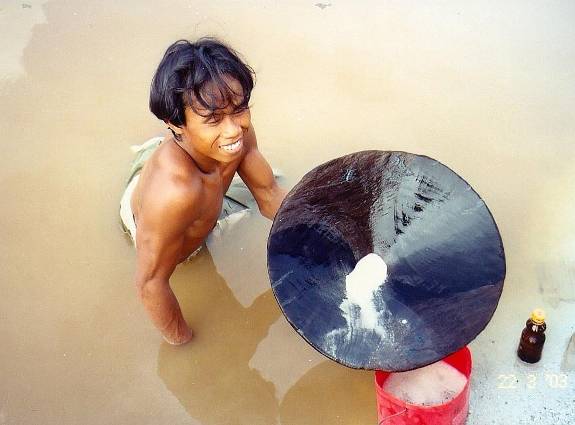
Chelation therapy is presently the treatment of choice for reducing the body burden of mercury and other
heavy metals. Due to adverse effects of the chelators used, alternative therapies are needed. Literature
review reports the usage of plants as potential chelators for mercury and other heavy metals and as
biomarkers for in-vitro and in-vivo bioassays. The use of selected plant foods to effectively remove
mercury and other heavy metals from our bodies, especially plants with antioxidant properties and
chelating activity, was investigated. For example, cilantro has shown preventative effects on metal
deposition in mice and the ability to accelerate the excretion of mercury, lead, and aluminum. While
some previous work has addressed the use of cilantro, experimental work with other plants may assist
understanding mercury-binding molecules, their mechanisms of action, and health benefits.
Understanding the interactions of mercury with these molecules will help to develop assays to detect
chelator agents in crude plant extracts.
Research into this field is ongoing. To date, thorough literature reviews of native plants including
chemistry, ethnobotany, medicinal properties, and potential uses as chelators of heavy metals, have been
conducted. Also, laboratory bioassays to evaluate effects of crude plant extracts on animal cell lines
exposed to mercury have been designed and some experiments with fractionation of crude plant extracts
and tests for anti-oxidative properties on cell lines have been carried out.
Conclusion
Based on the completion of the pilot phase, UNIDO asserts that it is possible to achieve at least a 50%
reduction of mercury consumption in ASM by 2017. This goal can be achieved by fostering
commitments of diverse stakeholders towards development strategies that will empower populations to:
Eliminate whole ore amalgamation through the introduction of mercury free concentration
processes prior to amalgamation,
Reduce mercury losses during amalgamation of concentrates through the introduction of closed
circuit processes (mercury is recycled),
Eliminate the burning of mercury without the use of retorts to contain emissions and assist in
recycling, and,
Introduce mercury-free mining practices where feasible, particularly ore concentration
techniques that precludes mercury use.
Over the past decade UNIDO has acted as a partner with many developing countries to enhance the
artisanal small-scale mining sector. The delivery of
UNIDO's mandate is focused on three main areas: poverty
reduction through productive activities, trade capacity
building, and energy and the environment. UNIDO's
mandate also specifies projects that contribute to the
achievement of the United Nations MDGs.
The UNIDO project team, donors, and other stakeholders
will use the conclusions and recommendations of the GMP
evaluation to elaborate on evidence-based, comprehensive
strategies for the reduction of mercury use and release
from artisanal mining ventures. Assistance to and
cooperation with decision making authorities and related programmes and institutions involved in
reducing the use and release of mercury from artisanal mining ventures will also occur.
17
In order to ensure regions benefiting from the GMP continue to strive, and to enhance the ASM sector,
further commitment is needed and additional resources are required. For global enhancement in the
ASM sector, it is imperative that additional countries be considered and assisted.
A second phase of the GMP has been proposed with the objective to continue and expand the efforts of
the GMP with a strong focus on activities "on the ground" in some 40 countries. The primary goal
remains to reduce mercury use and release by the ASM sector through the introduction of cleaner gold
extraction technologies and by implementing training and awareness campaigns. Policy advice for
governments and local institutions will be provided to encourage the sound management of the ASM
sector and to regulate the management and trade of mercury. Primary target beneficiaries will be
artisanal miners and communities associated with artisanal mining activities. Governments, local
institutions, and society at large will also benefit due to the nature and extent of mercury associated
impacts resulting from ASM practices.
18