
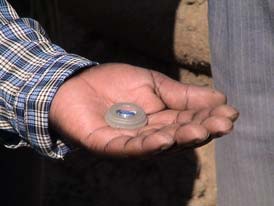
Global Mercury Project
Artisanal Miners use mercury to
amalgamate gold usually
Project EG/GLO/01/G34:
coarser than 74 µm.
Removal of Barriers to Introduction of Cleaner Artisanal Gold Mining and Extraction Technologies
Retorts:
Why ASM use Hg?
Many options and many barriers
1. Easy to be used
2. Cheap
(searching for sustainable solutions)
3. Very accessible
4. Miners are not aware of the
Marcello M. Veiga
danger of Hg
Chief Technical Advisor, UNIDO
M.Veiga@unido.org
veiga@apsc.ubc.ca
Mercury is added to the pan
Hg is Easy to Be Used
Hg is Cheap
· Amalgamation is simple and effective to trap gold
80
particles coarser than 0.074 mm; if used correctly
Laos
> 90% of gold in gravity concentrates is trapped by Hg
70
g) 60
/k
S
· Hg forms an amalgam with most metals except iron
50
U
(
$
and platinum.
g 40
H
of 30
e
Sudan
· Au can combine with Hg to form a wide range of
r
ic 20
P
Tanzania
Brazil
compounds from AuHg
10
Zimbabwe
Indonesia
2 to Au8Hg. The three
principal gold amalgams are: AuHg
China
2, Au2Hg, and
0
0.01
0.10
1.00
10.00
100.00
Au3Hg.
Hg Lost/100,000 Miners
Hg is NOT Cheap
Hg is Cheap
in Mozambique
· From 2004 to 2005, mercury price increased
· Hg price at Munhena site, Manica = US$ 100/kg (2005)
from US$ 350/flask ($ 4.6/kg) to
· Commercialized in 22g at 50,000 metcals (US$ 2.2)
US$900/flask (76lb) (US$ 12/kg)
· Probably because of pressures on European
Union to stop trading
· Actually this was accorded on June 24, 2005
and the EU trading will stop by 2011
· In 2005, ASM are paying more for Hg (~
US$ 100/kg in Manica, Mozambique)
· Miners now are interested in recycling Hg
1
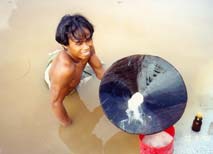
Miners Trapped by Gold/Mercury Dealers
Hg is Very Accessible to Miners
(Mozambique)
· In most countries, Hg is not allowed to be
· Gold dealers provide Hg for free but
used in mining
miners have to sell Au for them for low
· Hg enters legally the
price (Moz 180,000/g = US$ 7.5/g)
developing countries
usually for DENTAL USE
· If miners want to buy Hg from them, the
price is US$ 100/kg
· In many mining sites is
sold for DENTAL USE
Probably this large
amount of Hg is for
"animal dental treatment"
(just kidding!!!)
Where This Mercury is Coming from?
Where This Mercury is Coming from?
· One dealer importing 20 tonnes/a of Hg from the Netherlands
Indonesia 1999
for selling to ASM in Zimbabwe and in Mozambique
· 96 tonnes Hg from Spain
· In 2000, the Netherlands shipped 245 tonnes Hg to at least 18
· 33 tonnes from China
countries, most in Latin American/Caribbean region
· Spain shipped 774 tonnes
Indonesia 2000
Most of this Hg is of
· 28 tonnes Hg from Spain
· UK 200 tonnes
low quality...not useful
· 17 tonnes from Netherlands
· Germany 105 tonnes
Indonesia, 2003
for electronics but
· US (2004) 300 tonnes
· 3 tonnes from Australia
good for ASM
· Since 1990, Canada exported
· 3 tonnes from Japan
218 tonnes of Hg to US
Veiga, Maxson, Hylander, 2004
Amalgamation Process Defines Hg losses
Amalgamation Process Defines Hg losses
(and pathway for humans)
(Solutions)
Amalgamation of
Huge Hg losses, large
Amalgamation of
SOLUTION:
the Whole Ore
environmental problem
the Whole Ore
Amalgamate only
gravity concentrates
CH
Burning
SOLUTION:
3Hg in fish
Amalgams in Pans
Use retorts
Burning
Health problem for miners,
Amalgams in Pans
family and neighbors
Solutions are welcomed by miners if:
1. Miners see any economic advantage
Hg vapor
2. Solutions are LOCALLY available
2
Amalgamation of the Whole Ore
Amalgamation of the Whole Ore
· When the whole ore is amalgamated, fine droplets
· Metallic Hg can be transformed into
of Hg are released with tailings (waste)
methylmercury (CH3Hg+) which is one of the most
· This occurs because Hg becomes "pulverized" and
toxic substances known
loses its coalescence (it does not agglomerate)
· Methylmercury accumulates very rapidly into the
· The loss of metallic mercury occurs by attrition of
aquatic biota and is biomagnified (goes up into the
the ore particles with mercury
food web)
· Metallic mercury released into the water streams
· Reaction of metallic Hg with organic acids in
can be transported to long distances associated with
oxidized environment is the first step to oxidize
suspended particles
mercury and form soluble complexes
· Methylation usually occurs in anaerobic
environment
70 to 90% of Hg is methylated
Droplets of metallic
Contaminated
Metallic Hg is
Hg are carried with
Atmosphere
particles find
released from
suspended
organic acids
mining operation
particles
Metallic
Metallic Hg
Soluble Hg(II)
In anoxic
Hg
oxidizes and
complexes
conditions,
reacts with
(chelates)
bacteria
Oxygen
CH
organic acids
flocculates and sink
methylate Hg(II)
Organic
3Hg+
Soluble
water
Acids
Hg complexes
?
CH3Hg+ doesn't
CH
Bacteria
3Hg+ formed
sediment
stay in water as it
in sediment is
Metallic
Dumped by (anaerobic)
has high affinity
soluble
Hg
Miners
for proteins
Methylmercury Poisoning
Fish-eating People Are at Risk
· First identified in the 50s at Minamata Bay, Japan
Hg ( µg/L )
300
H
urine
blood
catalyst Hg(II)
250
H-CC-H + H2O H-C-C-H
200
H O
150
· CH
100
3Hg+ was generated in the reaction and effluents
discharged into the ocean
50
0
· Aug. 1997: 10,353 certified victims of Minamata
Individuals
Disease (of which 1246 have passed away)
Normal level of Hg in blood < 6 µg/L
Source: GEDEBAM, 1992
People from Tapajos River, Brazil
3

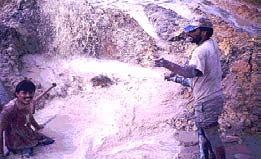
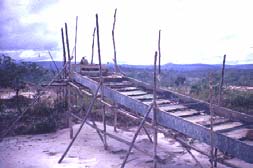
Congenital Minamata Disease...known in 1972
Typical Minamata Disease Symptoms were not
characterized yet in ASM regions but...
...neurological problems have been already identified in
rural communities exposed to Hg vapor or in those that
Photo: W. Eugene Smith (1975)
have fish as the main source of protein.
Brazil, 1999
Amalgamation of
Hg is lost to the environment by attrition
the Whole Ore
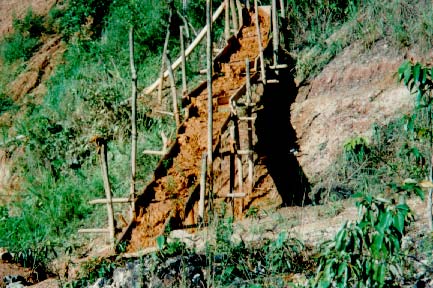
Monitors disaggregate the
colluvial ore and pump it to
sluice boxes
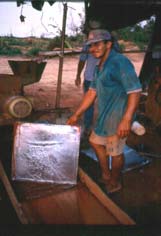
Sometimes Hg is
introduced into the pool
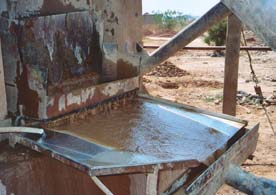
Quite often miners spread
Hg in the sluice box
Ore is concentrated in
"sophisticated" pieces of
equipment
Hg goes with tailings
Venezuela, 1995
Brazil, 1999
Amalgamation of the Whole Ore
Amalgamation of the Whole Ore
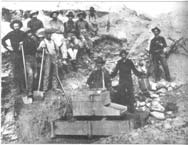
(it was a common practice in North America during gold rush)
· Use of Copper-amalgam Plates:
· Between 1860-1895: 6,350 tonnes
attrition remove Hg from plates
Hg lost to Carson River, Nevada
· 12,000 tonnes Hg lost in California
and Nevada
· Archives from British Columbia: 13kg of Hg/day/sluice
used by miners at Cariboo, Canada (1856)
This is 20,000 x more Hg than used by Brazilian ASM
Brazil, 1995
Zimbabwe, 2003
4
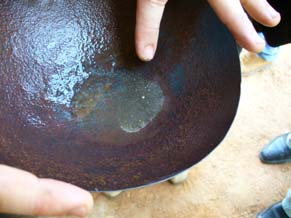
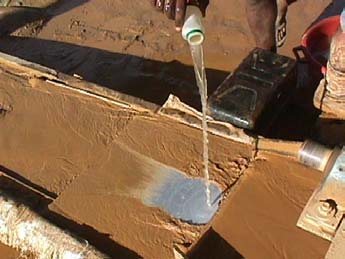
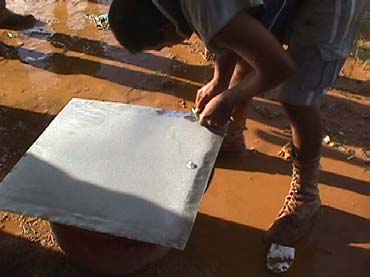
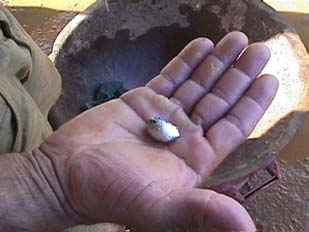
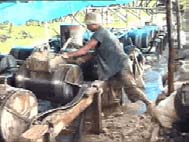
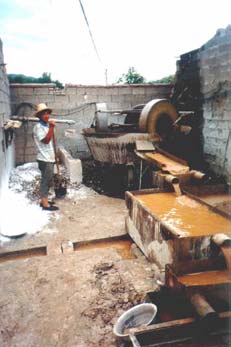
Amalgamation of the Whole Ore
Amalgamation of the Whole Ore
· Tailing from a
hammer mill
with copper
plate....full of
mercury
droplets
Photo E. Veiga, Brazil, 2006
El Callao, Venezuela, December 2003
Amalgamation of the Whole Ore
Amalgamation of the Whole Ore
This amalgam has usually 60% Au and 40% Hg
El Callao, Venezuela, December 2003
El Callao, Venezuela, December 2003
Amalgamation of the Whole Ore
Hg is added
Amalgamation of
while grinding
· In Indonesia: about
the Whole Ore
the ore
110,000 350,000 miners
Cu plate
(seasonal)
· Amalgamation followed
by cyanidation
· >100 tonnes Hg released to
the environment annually
· Hg becomes more soluble
Cyanide
· Amalgamation of the
· Methylation of residual
whole ore followed by
Hg is favoured
Indonesia, 2002
cyanidation
· Situation occurring in
· Miners introduce 1 kg of
· Mercury lost = 100 times
Hg in each ball mill
the amount of gold
many countries
produced
· Hg is pulverized and
· China: 250 tonnes Hg/a
50% of Hg is lost with
released
solids
Photo AJ Gunson
China, 2002
5
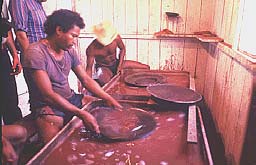
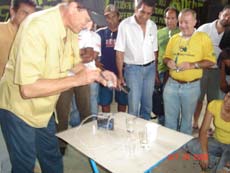
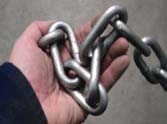

When concentrates are amalgamated, Hg emission is reduced
ced
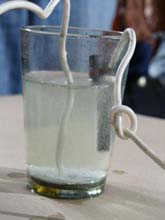
Using Activated Hg to Amalgamate
1 kg of Hg / 60 to 100 kg of concentrate
(Dr Freddy Pantoja Method)
· Sodium amalgam is more consistent than metallic Hg
as it does not form droplets and less Hg is lost and
more gold is trapped
· Sodium amalgam does not last too long in
water....must be used within 3 hours after activation
Hipoclorito de sódio é também formado e pode ser
usado na limpeza das casas
Photos CETEM, Brazil, 1989
Amalgamation tailings (200-500 ppm Hg) cannot be
dumped into water streams
Brazil, 1989
Activating Hg to Amalgamate
Activating Hg to Amalgamate
(Dr Freddy Pantoja Method)
(Dr Freddy Pantoja Method)
Electrolytic
Car
+
_
Battery
process
Capped Wire
12 V
Graphite from an old
radio battery
water with table
salt (10%)
mercury
Creporizão, Brazil, 2006
Photos: E. Veiga
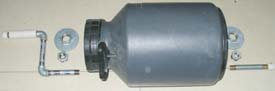
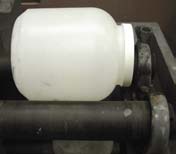
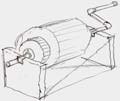
Using an Amalgamating Barrel
Using an Amalgamating Barrel
· One part of Hg to 100 parts of concentrate
· A chain or some
rubber balls inside the
amalgamation barrel
Just
concentrates
help the mixture of Hg
with the concentrate
· 30-40 min.
Plastic Amalgamation
· Activated Hg ....less
Barrel
losses
(20 L)
Plastic Amalgamation Barrel
(3 L)
Devised by Edmundo Veiga
6
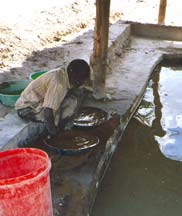
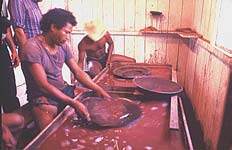
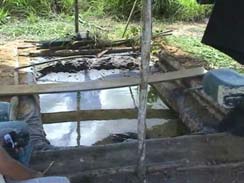
After Amalgamation, the Amalgam Must Be Separated
After Amalgamation, the Amalgam Must Be Separated
from the Heavy Minerals
from the Heavy Minerals
· Use an excavated tank
WORST SITUATION:
or a water box
Panning in the water
course
This forms
hotspots
Tanzania, 2004
Brazil, 1993
Brazil, 1989
Filtering Amalgam
After Amalgamation, the Amalgam Must Be Separated
(removing excess Hg)
from the Heavy Minerals
· The wetting of gold by Hg is not alloying, but a
· Excavated pool lined
phenomenon of moderately deep sorption, involving
with a plastic trap
some interpenetration of the two elements (Pryor, 1965).
· When the pool is fool,
· Amalgam is a solid component and can be separated
cover it
from the not combined Hg (excess Hg) by filtration
· CONTAMINATED
· An ancient filtering process (and widely used by
TAILINGS MUST NOT
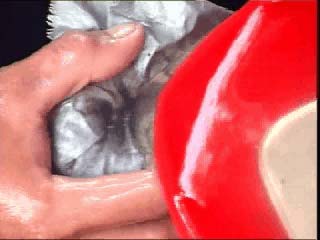
artisanal miners) is to twist and squeeze the
BE RECYCLED
amalgam in a scrap of fabric (bare hands)
· Small portion of Hg can be absorbed by the skin
Brazil, 2006
Filtering Amalgam
Filtering Amalgam
(removing excess Hg)
(removing excess Hg)
Amalgam is transferred to
The amount of Hg in the amalgam depends
a piece of fabric
how strong the miners squeeze the cloth
Excess Hg is squeezed off
(filtering process)
Photos: CETEM
Indonesia, 2003
7

Filtering Amalgam
Filtering Amalgam
(removing excess Hg)
Venezuela, 1995
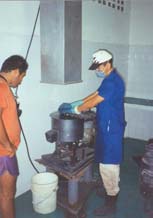
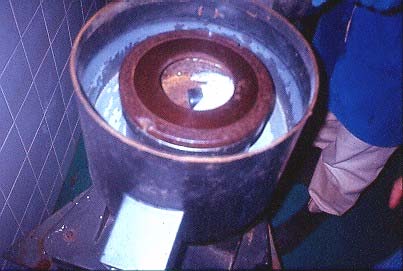
Using a centrifuge to filter amalgam:
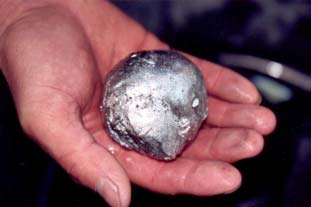
Manual Squeezing: 60% Au, 40% Hg
80% Au, 20% Hg
(less Hg remains in the amalgam)
China, 2002, Photo: AJ Gunson
Filtering Amalgam
Filtering Amalgam
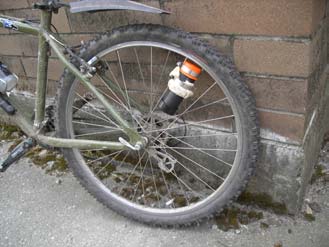
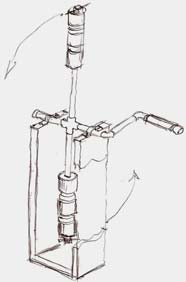
A centrifuge to filter amalgam can be made
with PVC tubes
A centrifuge can be made with PVC tubes
Devised by Edmundo Veiga
attached to a bicycle wheel
Filtering Amalgam
Decomposing Amalgam
(separating Hg from Au)
If you don't
have a
· The decomposition of the amalgam can occur by
bicycle....
leaching amalgam with HNO3 (Hg is soluble and Au
is not) or by heating at temperature above 460 °C
(Hg is evaporated)
Leaching with Acid (HNO3)
· After filtering, Hg in solution can be recovered by
precipitation with aluminum (or iron or zinc or
copper) wires immersed into solution
· In countries (e.g. Guyana and Colombia) where
miners use acid to leach Hg from amalgam, they do
not recover Hg: dispose the toxic solution into rivers
Devised by Edmundo Veiga
8

Decomposing Amalgam
Decomposing Amalgam
((Leaching with Acid)
((Heating)
· Part of the silver can be solubilized by HNO
· Metallic Hg evaporates at 357 °C, gold evaporates at
3
· The method is efficient but very dangerous:
2966 °C
mercury oxidation is the first step for methylation.
· Most Hg compounds evaporates at temperature
· Mercury goes into solution as mercury pernitrate -
above 460 °C
Hg(NO
· "Amalgam Retorting" (evaporation of Hg followed
2)2.H2O
· Human beings have a tolerance of only 0.05 mg/m³
by condensation) is used for centuries
of this compound in air
· Condensed Hg can be re-used
· When mercury pernitrate contacts alcohol,
· Unfortunately, as Hg is cheap and miners are not
fulminate (Hg (CNO)
aware of the risks of being exposed to Hg vapor,
2) can be produced
· This explodes readily when dry and is used in
they burn off Hg in open pans...inside and outside
blasting caps and detonators
their homes
Decomposing Amalgam
Decomposing Amalgam
((Heating)
((Heating)
When burning amalgams in
bonfires or at home, people
enjoy watching the color
transformation from grey
(amalgam) to yellow (gold)
Philipppines, 2000
Venezuela, 2003
Kids and other expectators stay around
inhaling high levels of Hg vapor during
amalgam decomposition
More women are getting directly
Amalgam is burned in open pans
involved in ASM
As women work
carefully, unfortunately
more women are in
charge of the (dirty)
amalgamation work
Hg vapor
Venezuela, 1995
Indonesia, 2003
Hg occupational exposure is... obvious
9




Mercury in Miners Burning Amalgam
Typical symptoms of long-term Hg-vapor poisoning
(Mad Hatter Disease)
Hg (µg/L)
· erethism (exaggerated
400
emotional response)
urine
blood
· psychomotor problems
300
· loss of memory
· metallic taste
200
· gingivitis
· blue line at gum margins
100
· kidney problems
· muscular tremors
0
· madness
individuals in sample
Normal level
Source: GEDEBAM, 1992
Miners in Tapajós, Brazil
· death
Health Assessment
Health Assessment
(Venezuela, 2003 - Urine Values)
(Venezuela)
Relationship between Hg level in Urine and Score of
60%
the Episodic Memory Test
50%
l
s
90
40%
high score = high problem
80
v
i
dua
30%
70
60
a
ls
score 0
indi 20%
u
%
50
id
score 1
iv
d 40
score 2
10%
i
n 30
%
score 3
0%
20
Milers
Miners
Women
Children
10
Classes of
0
µg Hg/g creatinine:
0-4.99
5-19.99
20-49.99
50-99.99
>100
0-4.99
5-19.99
20-49.99
>50
Hg level in urine (µg Hg/g creatinine)
Just urine analysis is not sufficient to characterize Hg
intoxication...neurological assessment is needed
78% miners with alteration of psychomotor functions
Reproducing Pictures
Original
Miner 1
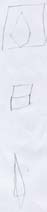
Miner 2
Miner 3
Venezuelan miners (2003) are so intoxicated with Hg that they cannot
reproduce easy pictures (and they have high-school education)
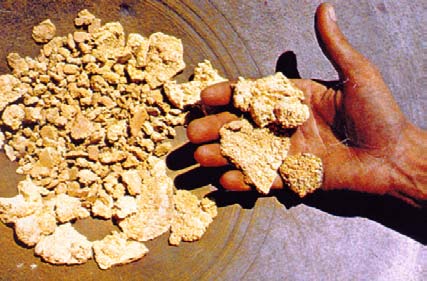
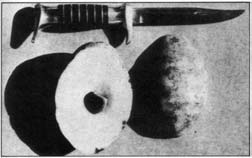
Retorted Au still has 2 to 5% Hg
Brazil, 1990
10
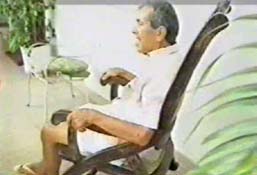
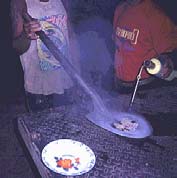
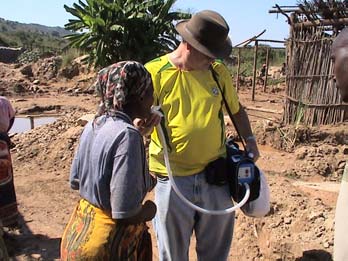
Innocent People Breathing Hg Vapor
Brazil, 1993
This individual lived 8 years on top of a gold smelting shop and
Retorted Au (still with Hg) is sold to gold shops
developed serious neurological problems
and melted: Hg vapor is released in the villages...
(from The Price of Gold, BBC documentary, 1993)
Brazil, 1990
Burning Amalgam
Hg in Air
Any solution is better than this
· Normal levels of Hg in air is around 0.001 and 0.01 µg/m3
· Guidelines:
Limit for public exposure: 1 µg/m3
US NIOSH TWA-limit for 10-h workday and 40-h
workweek: 50 µg/m3
WHO adopted TWA (time-weighted average) of 25 µg/m3
· In the artisanal mines of Manica, Mozambique Hg level in
air is between 0.3 and 1 µg/m3
Venezuela, 1995
· In mining areas when amalgam is burned in open air
Miners usually see the surface of the amalgam becoming
~50,000 µg/m3
yellow and they stop the burning process...the resulting doré
can have as much as 20% of Hg inside
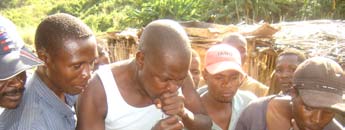
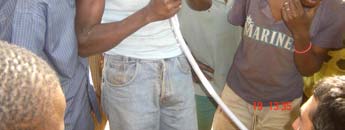
Hg in the Exhaled Air
Hg in the Exhaled Air
· Normal levels of Hg in the exhaled air depends on
the number of Hg-dental fillings in the mouth
· Normal levels is usually between 0.03 and 0.3 µg/m3
· In Manica, Mozambique levels in miners are
between 1 and 60 µg/m3 (average of 25 miners = 4
µg/m3)
Mo
Mo zambi
zamb q
iqu u
e e, 20
, 2005 05
11
Hg in the Exhaled Air
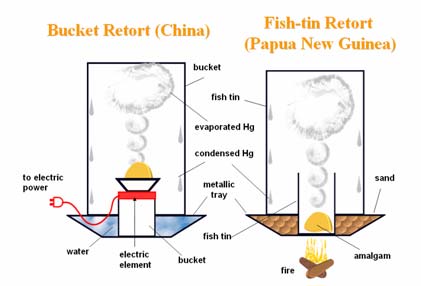
Retorts
· Amalgam is heated in a closed system
· Evaporated Hg is condensed and recycled
· Many types: galvanized steel, cast iron, stainless steel
· Cooling system: air or water
· Many prices: from US$ 3 to 500
Mozambique, 2005
Arguments Used by Miners for Not Using Retorts
Potato Retort
Arguments
Reasons
Possible solution
it takes time (sometimes
low temperature
use air blower in bonfires or
miners become vulnerable to
blowtorch; avoid crucible made
A Canadian booklet suggests retorting
bandits attack when retorting)
of refractory material such as clay
amalgam in a scooped potato
it needs practice to operate
heating process must be
training
uniform when using
blowtorch
gold is lost during retorting
iron retorts: amalgam is not
glass retorts can demonstrate that
visible; bad perceived by
gold will not evaporate together
miners
with Hg or be trapped
gold sticks in the retort
sometimes gold adheres to
· crucible must be filled with soot,
crucible
crucible bottom
or baby powder or clay
· avoid overheating
Hg loses coalescence
sometimes condensed Hg
NaCl and radio battery to re-
disintegrates in fine droplets
activate Hg
gold becomes brown
unknown; probably due to a
· still not well studied;
superficial reaction with iron
· oxidizing atmosphere or use of
Useful but...is this sustainable?
stainless steel or glazed crucibles;
· melt or hammer gold doré
Fish-tin Retort
(as used in PNG)
clay
Using clay oven as used in
oven
West Africa for cooking
Veiga and Hinton (2002)
12
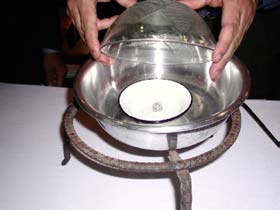

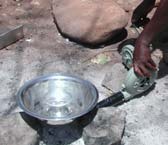



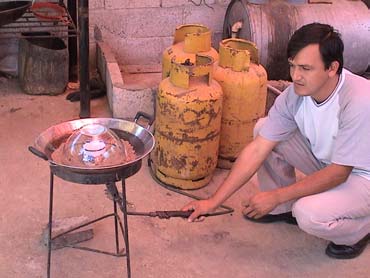
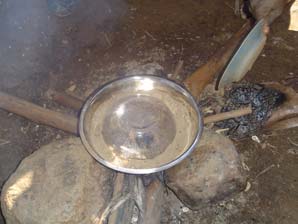
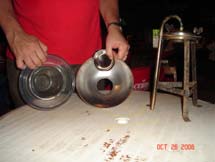
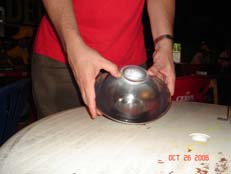
Kitchen-Bowl Retort
Punch
Kitchen-Bowl Retort
(Made in Lao PDR)
Stainless
Transparent
Punch
steel bowl
Glazed bowls (enamel)
bowl (can
leave gold yellow
also be
Sealed
metallic)
with
sand
Amalgam
Kitchen-Bowl Retort
Kitchen-Bowl Retort
Sealed with
wet sand
Hg condenses on
the sand and can
be recovered by
panning
Enameled
amalgam
bowl
Glass bowl
Amalgam
Air Blower
Air Blower
Bonfire
Kitchen-Bowl Retort
Kitchen-Bowl Retort
(Made in Ecuador)
Sealed
with
sand
Sudan, 2004
13
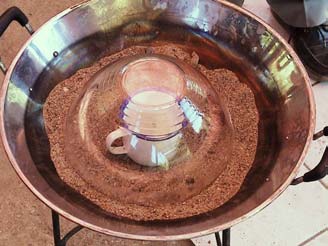
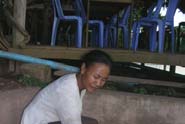
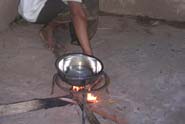
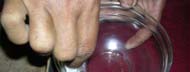

Kitchen-Bowl Retort
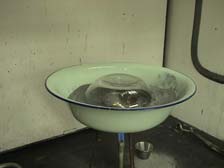
Kitchen-Bowl Retort
(Made in Ecuador)
Ecuador, 2004
Lao PDR, 2005
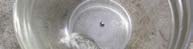
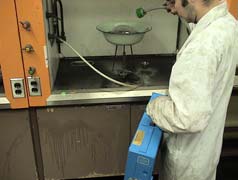
Kitchen-Bowl Retort
Kitchen-Bowl Retort
(Measuring Hg escaping in the Lab)
(in the Lab)
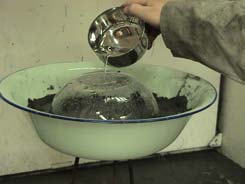
Burning with Bunsen burner:
15 minutes for 5 g of amalgam
Despite the visual control,
the glass cover takes almost
15 minutes (with water being
added) to cool down
Miners may prefer the steel
cover (cools down in 5
minutes)
LUMEX (10cm from the sand):
Dry Sand, Max = 50 µg/m³
Wet Sand, Max = 5 µg/m³
Using Kitchen Bowl Retorts
Using Kitchen Bowl Retorts
Retort in the bonfire and a miners fanning it
Stainless steel or enameled steel
makes the retorted gold yellow
The contact of retorted gold
with iron makes the gold
surface brown....low price
Mozambique, 2005
paid by the gold dealers
Brazil, 2006
14
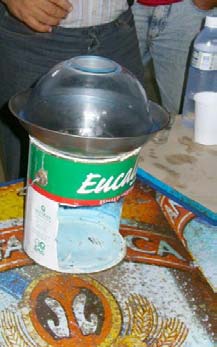
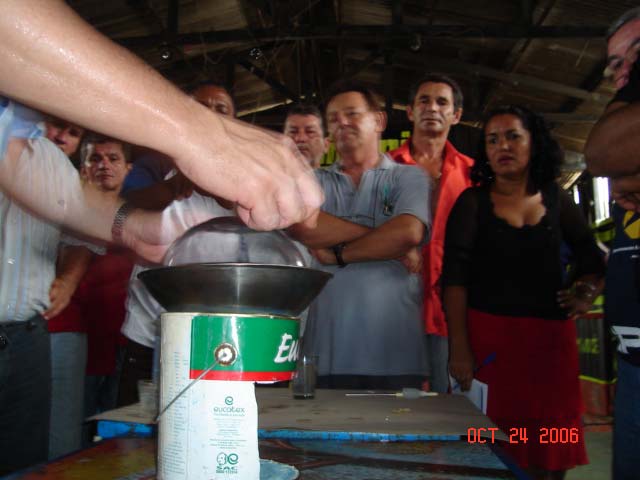
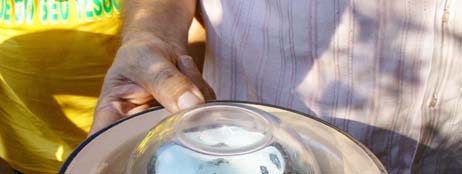
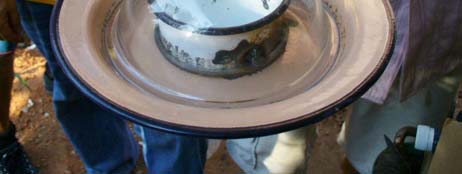
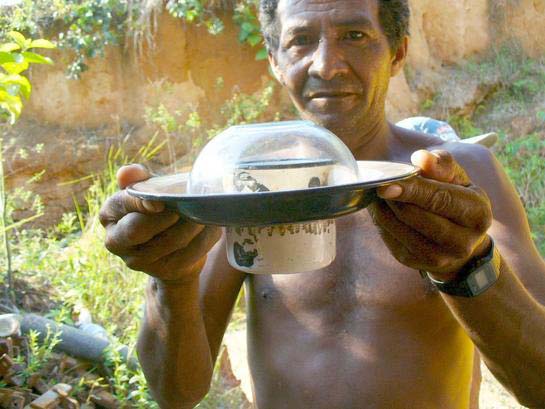
Kitchen-Bowl Retort
The retort can be placed
Retortas de Tigelas de Cozinha
on top of a paint tin with
charcoal
Brazil, 2006
Creporizão, Brazil
Brazil, 2006
Brazil, 2006
Using Kitchen Bowl Retorts
Using Kitchen Bowl Retorts
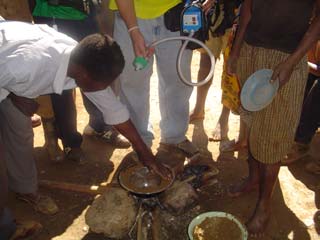
Measuring with a LUMEX Hg escaping from the retort
· When burning amalgam in open air, miners are
exposed to Hg levels around 50,000 µg/m3
· In Mozambique, using the kitchen-bowl retorts, Hg
in air at nose level decreased to 0.4 µg/m3
· 1 meter from the bowl = 3 µg Hg/m3
· 0.1 m from the bowl = 35 µg Hg/m3
· WHO guideline for worker exposure = 25 µg Hg/m3
(TWA - time weighted average to which workers
may be exposed for 8 hours per day without risk)
Mozambique, 2005
15
Using Kitchen Bowl Retorts
Using Kitchen Bowl Retorts
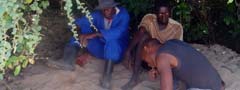
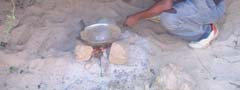
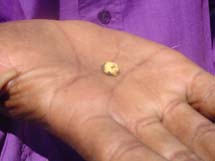
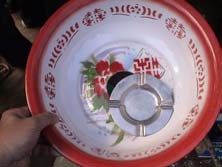
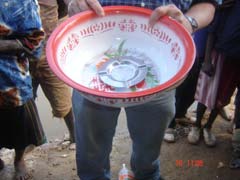
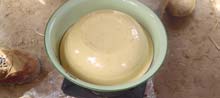
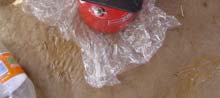
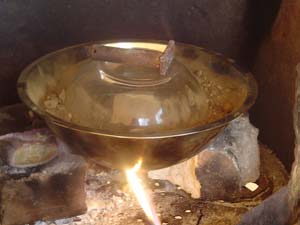
· A stainless steel ashtray can be used for larger amount of amalgam
· Amalgam needs to be smashed (or broken in pieces) before retorting
Mozambique, 2005
Zimbabwe, 2005
Using Kitchen Bowl Retorts
Using Kitchen Bowl Retorts
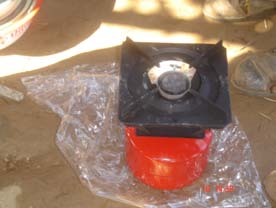
Kerosene stoves increase burning temperature
(and reduce retorting time)
Cover does not need to
of glass
Metal cover actually
cools down faster than
glass covers
Wet sand must be
introduced here to seal
the retort
Mozambique, 2005
Mozambique, 2005
Using Kitchen Bowl Retorts
Using Kitchen Bowl Retorts
· In Mozambique:
Using a torch to burn amalgam
Time of retorting/cooling in a bonfire was 20-30
minutes using glass cover (1 g of gold)
Time of retorting/cooling using a kerosene stove and
steel cover was 10 minutes (3 g of gold)
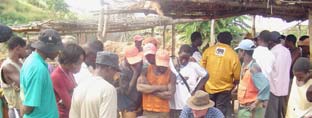
· It is important to have the glass cover (transparency)
at least at the first tests to demonstrate to miners that
gold does not disappear
Zimbabwe, 2005
16
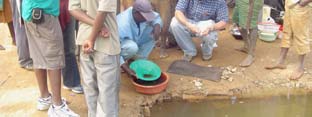
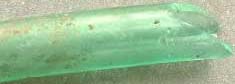

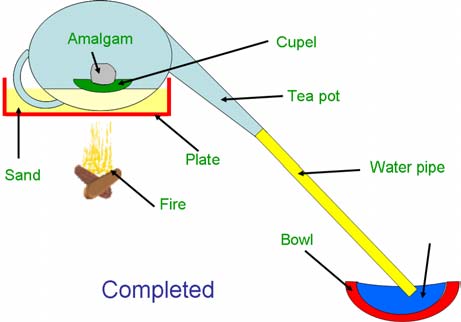
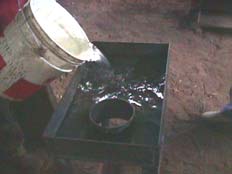
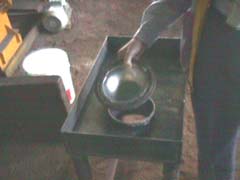
Using Kitchen Bowl Retorts
Separating Hg from sand by panning after retorting
An idea:
Retort hybrid (tea pot)
by Olivier Savornin
+
+
+
Mozambique, 2005
Another Type of Kitchen Bowl Retort
(Used in Jacobina, Bahia State, Brazil)
Material:
·
2 stainless steel cups with different diameters
·
1 metallic bowl with water
water
water
Fish-tin Retort
Another Type of Kitchen Bowl Retort
(Made in Venezuela)
(Used in Jacobina, Bahia State, Brazil)
Variations of the fish-tin and
Propane
kitchen-bowl retorts
Au amalgam
Torch
Water
Gas
Salad bowl
Hg comes out here
Venezuela, 2003
17
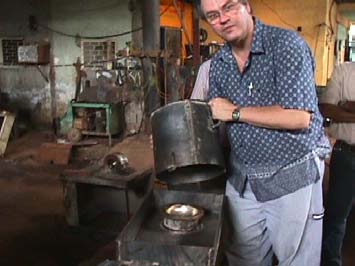
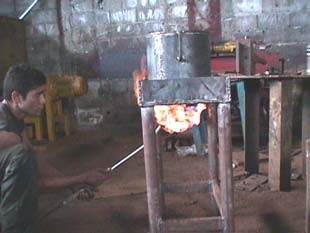
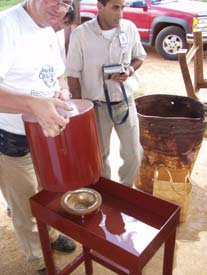
Fish-tin Retort
Fish-tin Retort
(Made in Venezuela)
(Made in Venezuela)
Cover
Cover
Amalgam
Venezuela, 2003
Venezuela, 2003
Propane-torch
Fish-tin Retort
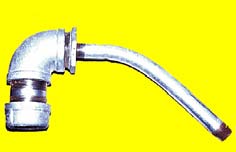
Home-made retort
(Made in Venezuela)
(RHYP)
· Devised by prof. Raphael
Hypolito, Univ. São Paulo
· Made of water plumbing
material (galvanized steel)
Water
· Size: from 3/4 " to 4 "
Cover
· Ideal size 1 ½ " to burn 10
to 20 g of amalgam
· Cost: from US$ 5 to 10
Amalgam
Home-made retort
Home-made retort
(RHYP)
(RHYP as Promoted by ITDG)
This part
must be
short
· Other designs using water
plumbing (MINTEK, ITDG)
· Cheaper
18
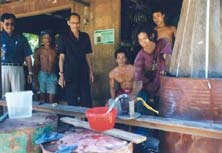
Home-made RHYP retorts
Home-made Retort (RHYP)
(Problems)
· Ideally: heat the entire body in a charcoal bed
· It leaks (Hg escapes) if not well set up
· Zinc from galvanized steel must be burned off from inside
and outside (this can be toxic)
· Gold sticks inside the retort (lining with clay is needed)
· Heating in a bone fire takes long time
· Gold comes out brown (smash it to turn it yellow)
"Do not worry if, the first time you use the retort, only a small
part of the expected amount of mercury is recovered. Most of
the mercury is normally trapped in the retort, and will be
recovered in second and subsequent uses." (ITDG)
Home-made Retort (RHYP)
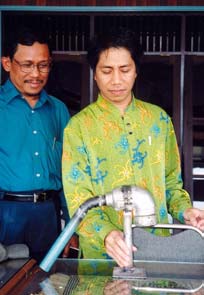
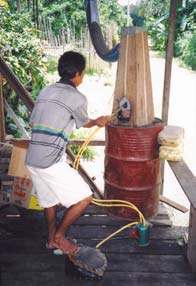
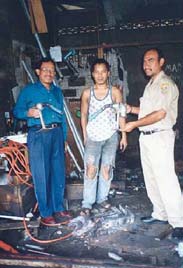
Building RHYP Retorts in Palangkaraya, Indonesia
· Heating time can be shortened
· Larger sizes can be made:
2" (as in the picture)
A manual
blower speeds
· In Indonesia, heating was
up the heating
provided by gasoline
process
torch
· This is faster than
charcoal
Indonesia, 2003
Building RHYP Retorts in Palangkaraya, Indonesia
Building RHYP Retorts in Palangkaraya, Indonesia
US$ 5/ each
· Home-made torch
· It uses gasoline
· Air pumped by foot
Miner in Guha, Kahayan
River using the RHYP retort
(burning with gasoline torch)
UNIDO rep., Metal worker and Mining and
Indonesia, 2003
Indonesia, 2003
Energy Provincial Office representative
19
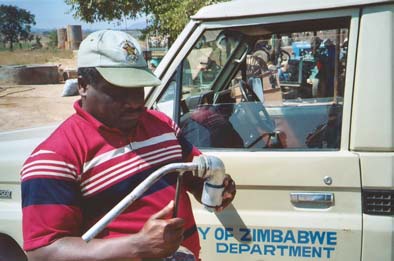
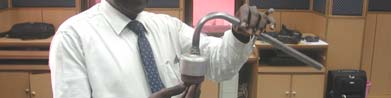

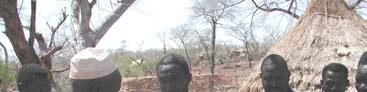


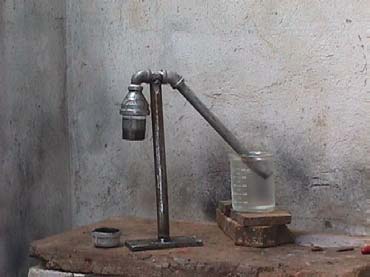
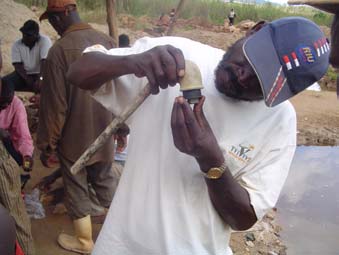
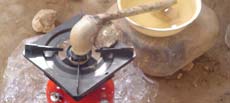
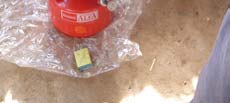
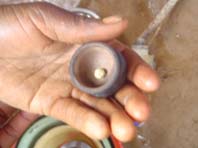
Building RHYP Retorts in Kadoma, Zimbabwe
Building RHYP Retorts in Gugub, Sudan
Zimbabwe, 2003
Sudan, 2004
Building RHYP Retorts in Gugub, Sudan
Building RHYP Retorts in El Callao, Venezuela
Sudan, 2004
Venezuela, 2003
Building RHYP Retorts in Munhena, Mozambique
Building RHYP Retorts in Munhena, Mozambique
Levels of Hg
escaping
0.1 m = 30 µg/m3
1 m = 2 µg/m3
Nose = 1.8 µg/m3
Mozambique, 2005
Mozambique, 2005
Mozambique, 2005
20
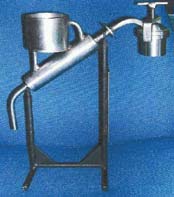
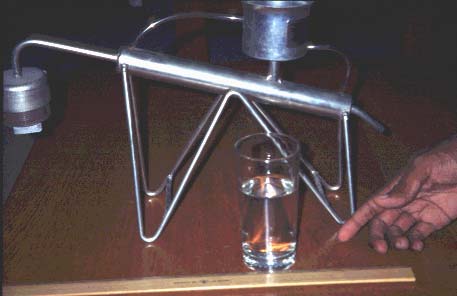
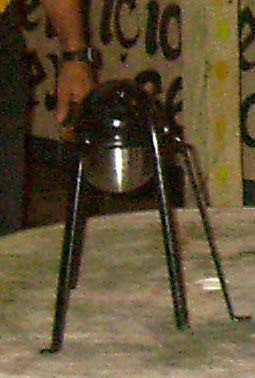
CETEM Retort
CETEM Retort
(a good design)
Air cooled
< 2 cm
Crucible is well sealed
45°
6 cm
Ø 1" or ½",
20 cm long,
2 cm
preferentially of
Operate with cooking gas
7 cm
stainless steel
Ø 1½"
Retort devised by CETEM, Brazil
Retort devised by CETEM, Brazil
GTZ Retort
Retorts
in Sulawesi, Indonesia
Water cooler
(cup)
GTZ retort, Germany
Stainless Steel
Suriname, 1996
Colombian Retort
Retorts
(Colombian Still)
Good design: crucible of
stainless steel and the rest of
the body of C-steel
However, the crucible is too
thick...it takes more than 30
min to retort
Propane
Water
Gas
Torch
Refractory
This crucibles are preferred
Pinzón, J.M.; Contreas, R.; Bernardy, C., 2003. A new still for the prevention of mercury poisoning in
small-scale gold mining by amalgam extraction. Geofísica International, v.42, n.4, p.641-644
21
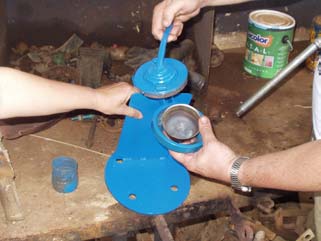
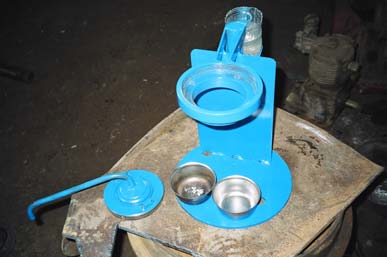

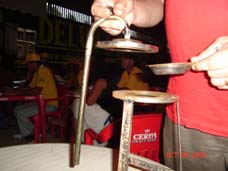
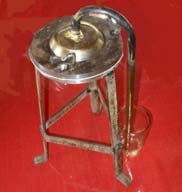
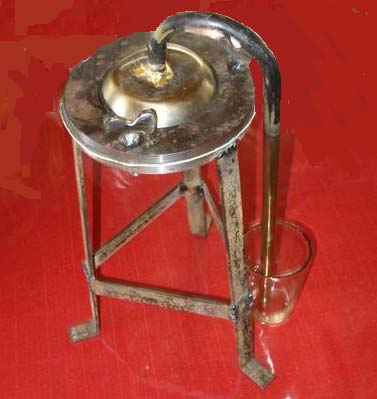
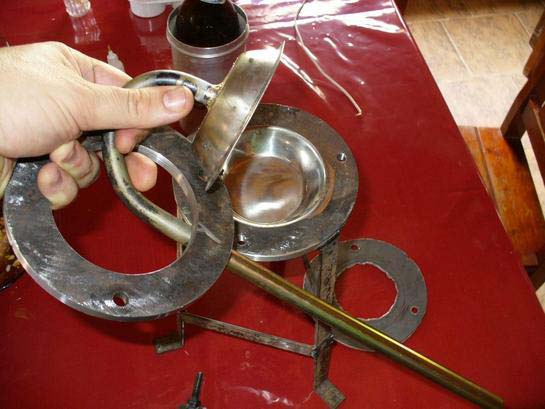
Salad bowl:
Retorts
Retorts
replaceable and
thin
Stainless Steel
Cup = US$ 1
Venezuela, 2003
Venezuela, 2003
Retorts this pipe must be made
Retorts
The rest of the
of steel (not copper)
retort is made of
C-steel
Very good design
Thin stainless steel dish
(US$ 1)
Brazil, Creporizão, 2006
Venezuela, 2003
Retorts
Always remove this
water glass before
shutting the fire
Asbestos
joint
IF YOU FORGET:
WATER WILL
ENTER THE HOT
RETORT AND IT
CAN EXPLODE
Brazil, Creporizão, 2006
Creporizão, 2006
22
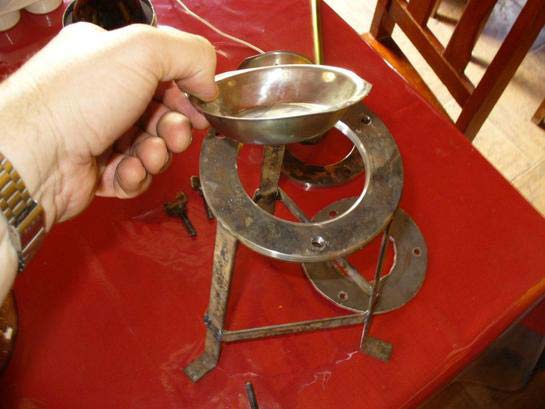
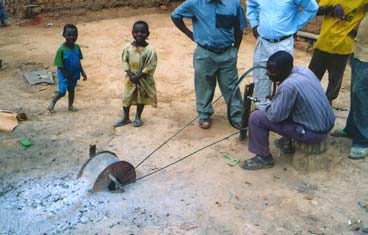
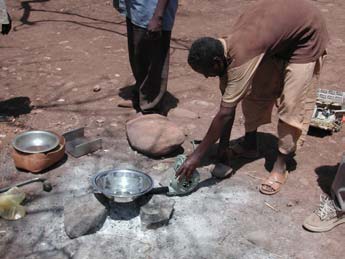
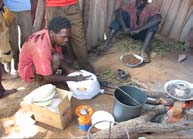
Heating Process
Heating time in a bonfire can be shortened
with an air-blower
Creporizão, 2006
Tanzania, 2004
Heating Process
Air-blower in kitchen-bowl retort
Increasing Bonfire Temperature
("Mvuto" = bellows)
using a plastic bag
Zimbabwe, 2006
Sudan, 2004
How to operate a retort
Using Stainless Steel Cups as Crucible
· New retorts: burn the metallic crucible (inside and outside) and cool
it down
· Stainless steel cups (or ashtrays) are good because:
· Cover the interior of the crucible: use fine clay or soot (black fume)
They are cheap (US$ 1 2) and easy to find them in
using a reducing torch and cool it down
kitchen stores and supermarkets
· Introduce the amalgam and spread it inside the crucible (some
They are thin (warm up quickly)
miners wrap it on paper
· Heat the entire body at low temperature for 5 to 15 min
They are replaceable
· See bubbles of air coming out in the water glass at the end of the
Gold comes yellow
cooling tube IMMERSED IN A GLASS OF WATER
Gold does not stick on the cup (but a little black soot
· Increase temperature and distribute heating all over the retort body
before starting retorting is always advised)
· Tap the pipe as Hg can be stuck inside
Enameled Steel (coffee cups) are also good
· Increase temperature and concentrate flame at the crucible bottom
· REMOVE THE TIP OF THE RETORT FROM WATER before
shutting the fire
· Cool retort in water before opening. Do not open warm retorts
23
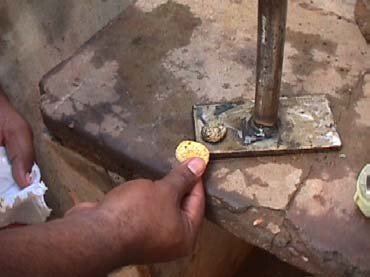
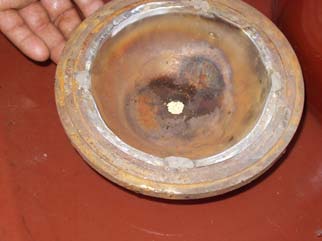
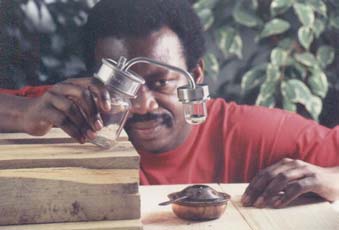
Retorted gold is not yellow
Building RHYP Retorts in El Callao, Venezuela
options:
· Lining with clay (easy!!!)
· Use stainless or enameled steel as crucible (easy!!!)
Hammered gold
· HNO3 or HCl to clean gold after burning (not easily
accessible, and toxic)
· Melt gold (high temperature 1063 °C) (not easy)
· Hammer gold doré after retorting (easy!!!)
· Convince gold buyers (hard as they use this to reduce
gold buying price)
· Burn amalgam in an oxidizing environment: in fume
hoods or add an oxidizing agent (hard to find)
Venezuela, 2003
Option to have yellow gold:
Option to have yellow gold:
burn amalgam in oxidizing environment such as a fume hood
Stainless steel
(used in Peru, Gama Project)
kitchen bowl
Hg is condensed and
air is filtered with
charcoal with iodide
solution
amalgam
Problems:
· Expensive
· Operation is delicate
· Risk of exposure
Retorted gold
is yellow
Venezuela, 2003
Miners cannot see retorting process
option: Thermex glass retort
Comparing Retorts
· Quartz crucible, stainless steel condenser and glass recipient
· Good for demonstration not for operation (expensive & fragile)
RHYP
kitchen
CETEM
Venez.
Colombian
GTZ
Thermex
(water
-bowl
(fish-tin)
Still
(water
plumbing)
cooled)
crucible
Galvanized
C-steel
Low C-
Stainless
Stainless
Stainless
High silica
material
steel
steel
steel
steel
steel
glass
durability
Low
Low
Medium
Medium
High
High
Low
price
5-20
5-20
20-50
10-40
80-90
100-200
400-500
(US$)
possibility
of local
fabrication
High
High
Medium
High
Medium
Medium
None
retorting
time (min)
15-20
10-15
15-20
10-15
10-20
15-20
20-30
with
blowtorch
Photo: UNIDO
24
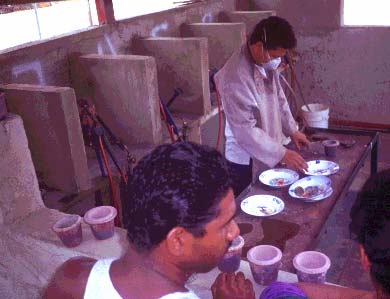
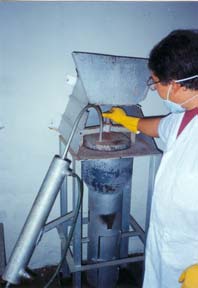
Miners do not have practice to amalgamate and retort gold
option: Amalgamation Centers (like in Venezuela)
Retorts
retorts
(in Amalgamation Centers)
· Exhaustion system on top
remove escaping Hg
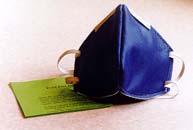
· Use of dust masks are not
appropriate but it is better than
nothing
· Gas washing process: potassium
iodide solution
Trained operators do the job for miners
Venezuela, 1995
Use of Masks
Use of Masks
· Dust masks are not adequate as
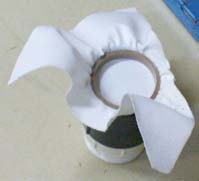
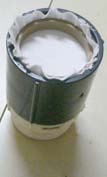
· Hg mask made of sandwiched
they retain just a minor part of
charcoal-impregnated cloth
the Hg vapors
· Making a comfortable, long-
· Hg condenses on the mask
lasting mask which will filter
out all mercury vapour at
· Operators should discard the
concentrations up to 0.1
masks after use otherwise they
milligram per cubic meter (that
inhale all Hg condensed (and
is, twice the time limited value,
evaporated) from the masks
Venezuela, 1995
TLV) for 150 hours.
· Masks with activated charcoal
impregnated with potassium
iodide are appropriate
http://www.mercurysafety.co.uk/products/vaprmask.htm
Use of Masks
Conclusion
· It is not easy to convince miners to adopt retorts
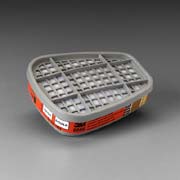
· 3M Mercury/Chlorine Gas
· They do not believe in Hg vapor intoxication
Respirator Cartridge is NIOSH
· Impotence can be used to convince them
approved against mercury
vapor or chlorine
· Easy operating and accessible (locally made)
· US$ 22
retorts must be brought to their attention
· Training is needed as well as technical assistance
· Glass retorts: excellent for demonstration not for
operation
· Home-made retorts with plumbing or kitchen
http://www.professionalequipment.com/xq/ASP/ProductI
D.2654/id.131/subid.432/qx/default.htm
bowls: sustainable (miners can make)
25