
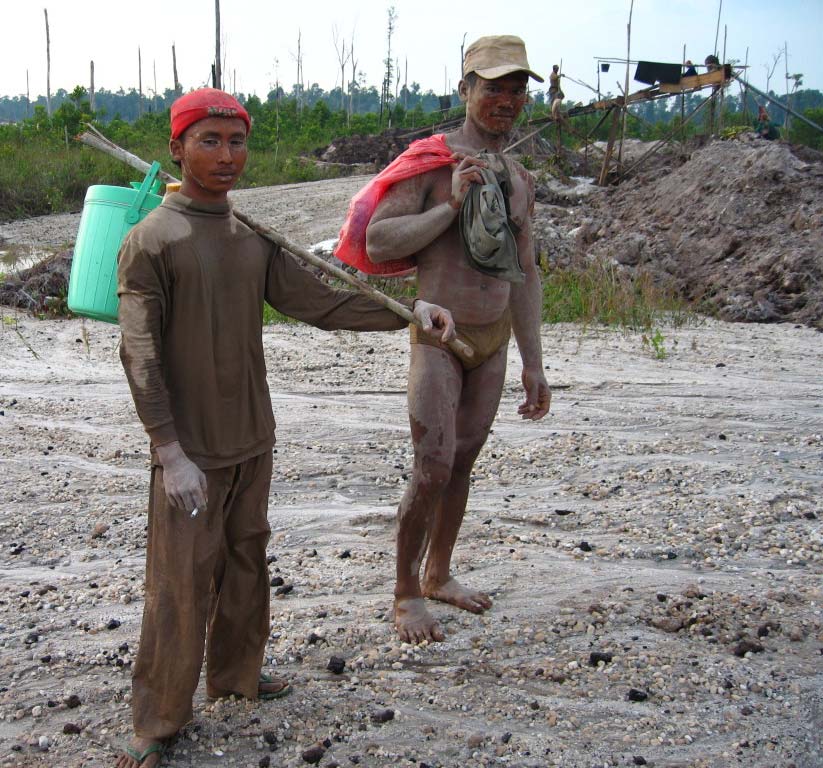
Global Mercury Project
Mercury and Small Scale Gold Mining
Magnitude and Challenges Worldwide
Dr. Kevin Telmer
Associate Professor
University of Victoria, Canada
Technical Expert,
GEF/UNDP/UNIDO Global
Mercury Project
Indonesia, 2006
Outline
· Opening remarks
· ASM and mercury
· Global magnitude
· Health and Environmental Impacts
· Mercury Trade and ASM
· GMP's strategy for reducing mercury use in
ASM 4 keys, 2 phases
· Policy and Governance
· Attainable goals in the next 10 years
How many here have been to
an ASM site?
What is GEF/UNDP/UNIDO GMP?
· GMP Teaches, assesses, and innovates best
practices in technical know-how and governance
(local to international) to assist small scale
miners move towards cleaner technologies,
sustainable livelihoods, and better health
· Essentially it is a field operation (local
communities) but with frequent visits to national
and international governments and partners
· In the afternoon Bardolf Paul will give an
example of GMP field opps in Indonesia, which
is ripe for success

Global Mercury Project
Sites
Venezuela
Sudan
Laos
Guinea
Indonesia
Ecuador
Ghana Tanzania
Brazil
Mozambique
Zimbabwe
Started on Aug. 2002
it will last until June 2007
Two Phase Approach
Two phase approach to capacity building in
technical know-how and governance.
Financial incentives are the core motivational
force
· Less Mercury, More Gold, Better Health
(Phase I)
· Zero Mercury, More Profits, Better Health
(Phase II)
Perspective
· Gold = money
· Gold mining is equivalent to printing money
· Through bad practices, the miners frequently leave more
than 50% of the gold behind while polluting the world
with mercury
· If we teach miners how to get a little more gold while
reducing mercury use, the change pays for itself
· Being a good citizen also counts, but not as much
· If mercury is expensive, then using less also pays but
this is ethically tricky
· We, the developed world, the authorities, whoever,
should not be asking small scale miners to take a pay
cut nor inducing one
· Lets not squeeze people to change but rather help them
to change empowerment!
ASM Overview
· At least 100 million people in over 55
countries depend on ASM
· ASM produces 20-30% of the world's gold,
500-800 tonnes per annum.
· 10-15 million miners, including at least 4.5
million women and 1 million children.
· Perhaps 100 million people indirectly
involved and potentially exposed
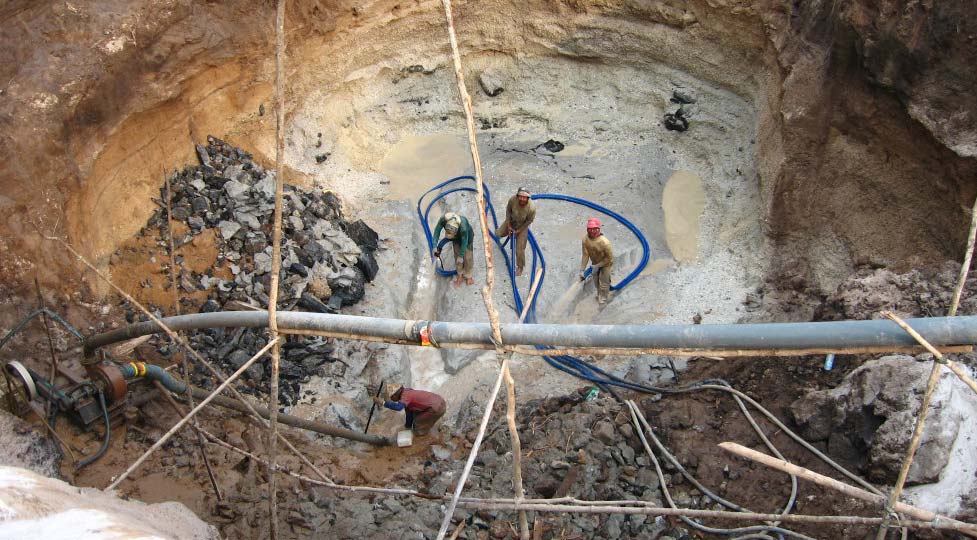
What is ASM?
·
Artisanal & small-scale mining (ASM) encompasses all
small, medium, informal, legal and illegal miners who
use rudimentary processes to extract minerals from
secondary and primary ores
Indonesia, 2006
ASM and mercury
· Occurs across a vast geographical area (55 countries)
highly decentralized Hg source
· Operate in the informal economic sector, often illegally
and with little organization
· Miners have little or no economic capital
· Important source of wealth
· Highly diverse cultural, political, economic and physical
settings
· Many different types of gold-ore
· Many different mining techniques are used
· There is no single technological "silver bullet" to move to
a mercury free system

Why is Mercury Used?
· Very easy
· Very independent 1 person
can do it
· Effective
· Accessible
· Cheap (1g Hg = $0.02; 1g Au
= $20; 1:1000)
· Miners are not aware of the
risks
· No choice
Brazilian miner with
Tremors, 1996
Mercury in ASM
· As a consequence of poor practices, at
least 650 to 1000 tonnes of mercury per
year are released
· 1/3 of all global anthropogenic releases
· ASM is the single largest intentional-use
source of mercury pollution in the world
Extensive global pollution
· Severe occupational hazards Mercury vapour
· Tens of thousands of polluted sites with far
reaching impacts
· Long-term environmental health hazards to
populations and ecosystems (lots of MeHg)
· 300 tonnes of mercury per annum are volatilized
directly to the atmosphere
· 700 tonnes are discharged into soils, rivers and
lakes.
· Contaminating both international waters and air
MeHg Production
· Big MeHg production still continues after 100
years from historical workings and tailings
Susan Winch, PhD dissertation
USGS
· Only need to Methylate a very tiny fraction of
mine waste to have huge problem
· Methylation Potential due to Inundation (annual
flooding)
7 % of the Crepori Basin, Brazil
500 km2 of the Tapajos River downstream of mines
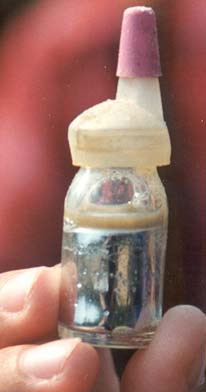
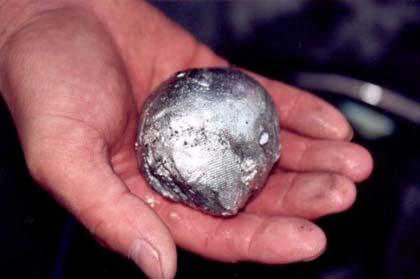
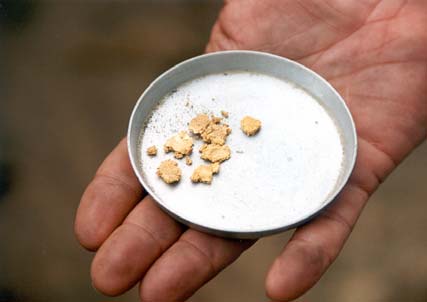
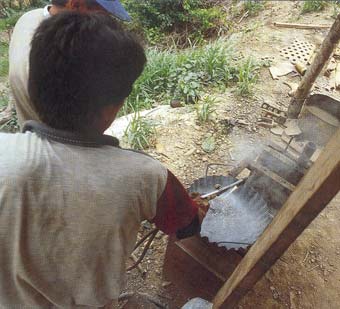
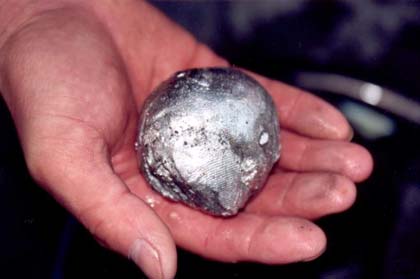
How is mercury used?
Add mercury to
Gold + Sand
dissolve gold
Tailings
Form Amalgam
Evaporate
Gold Residual
60% Au, 40% Hg
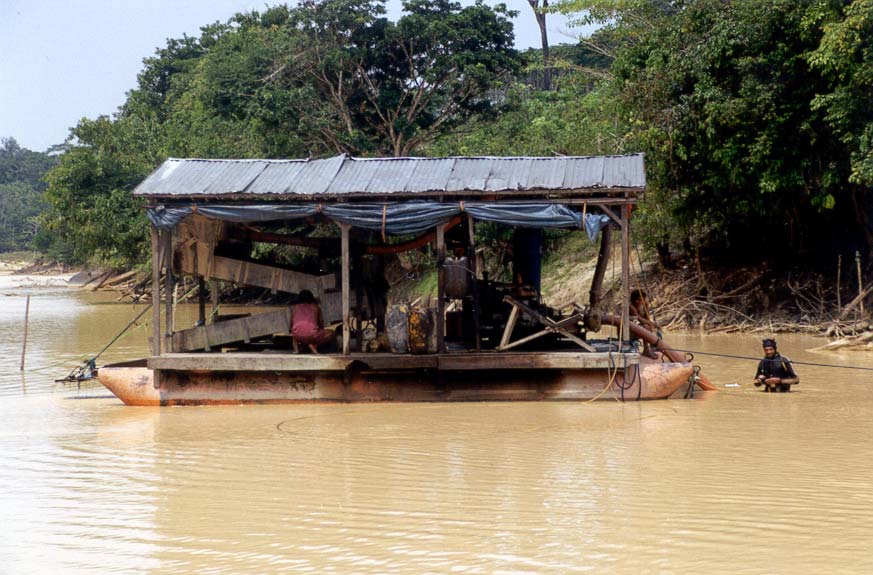
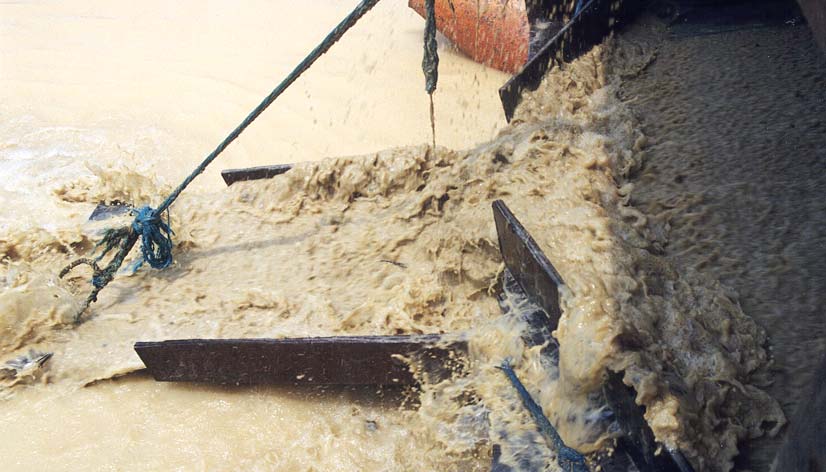
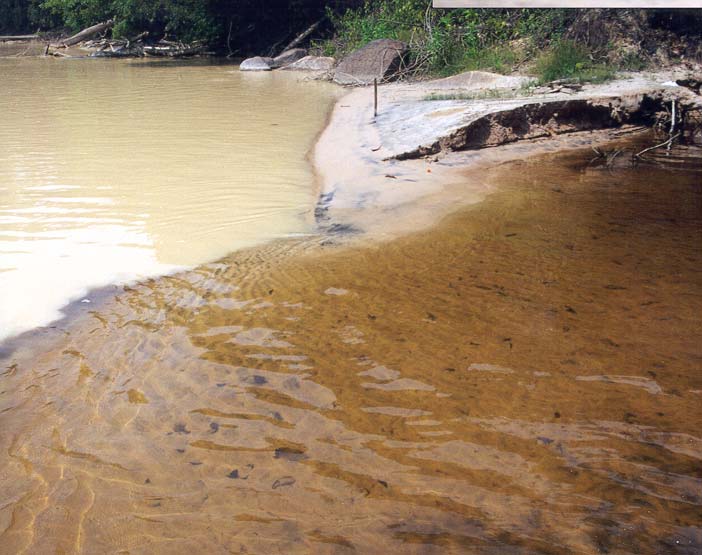
Example
Dredge and
diver vacuuming
and sluicing
sediment
Brazilian Amazon, Tapajos Basin
Original Water Quality
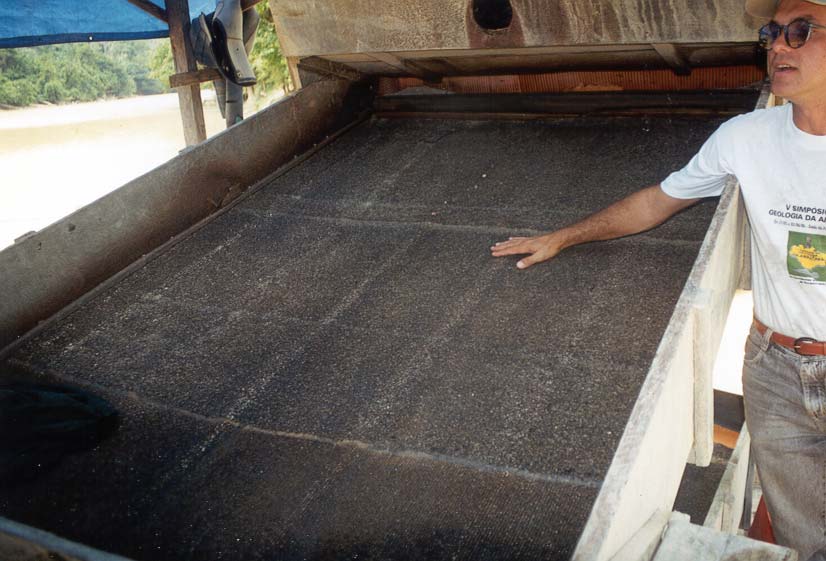
Heavy
gold
particles
sink and
get
trapped in
carpets
Brazil, Tapajos Basin
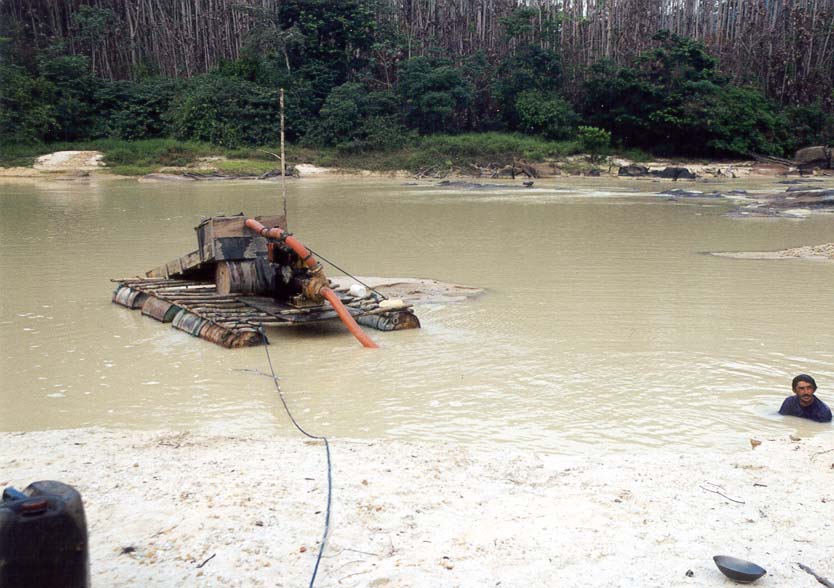
One man operation (had malaria!)
Brazilian Amazon,
Tapajos Basin
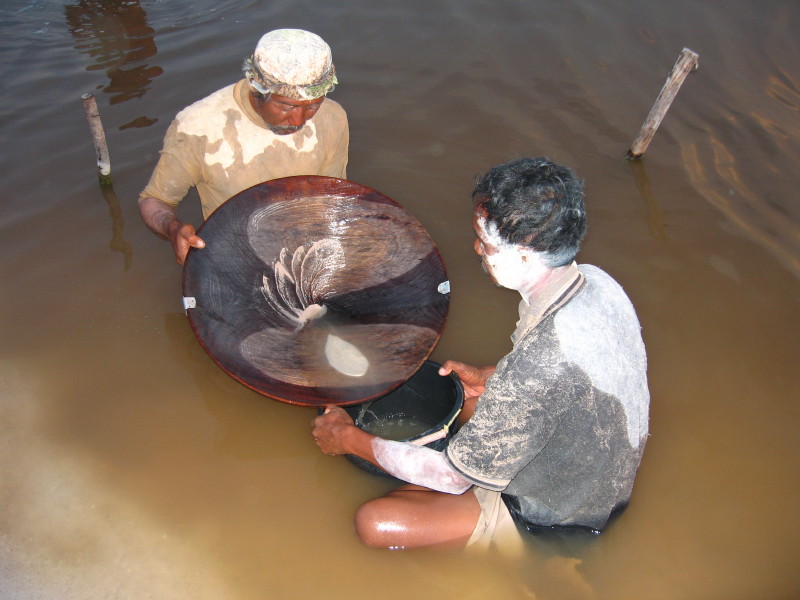
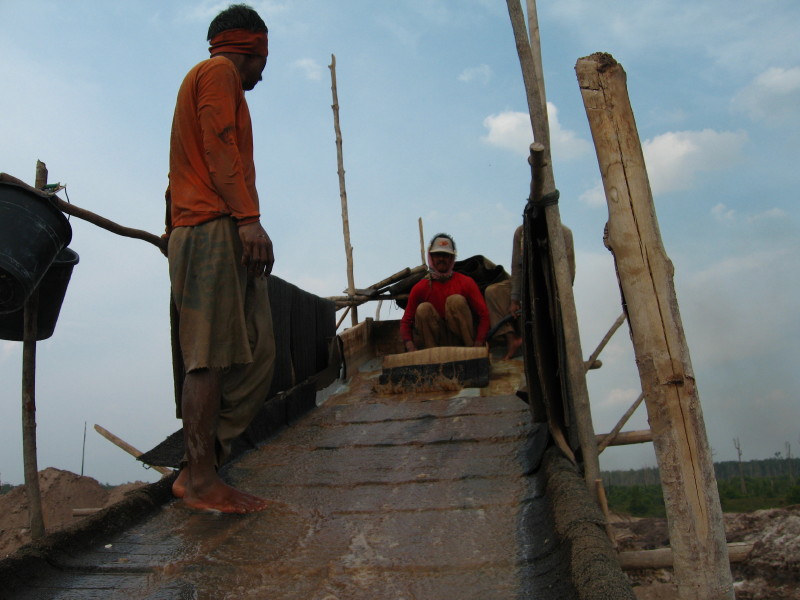
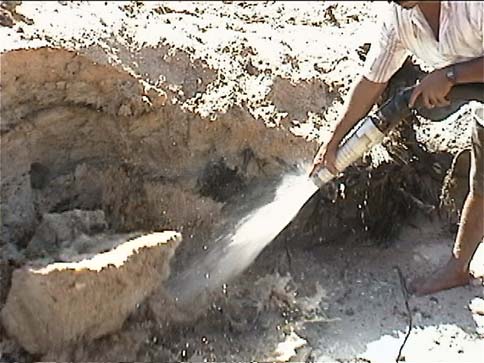
Collect gravity concentrate from
carpets and amalgamate it
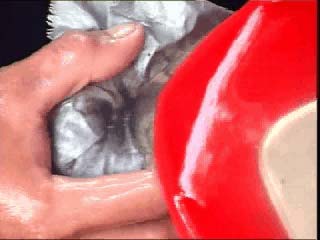
Remove excess mercury from
amalgam by squeezing
Indonesia, 2003
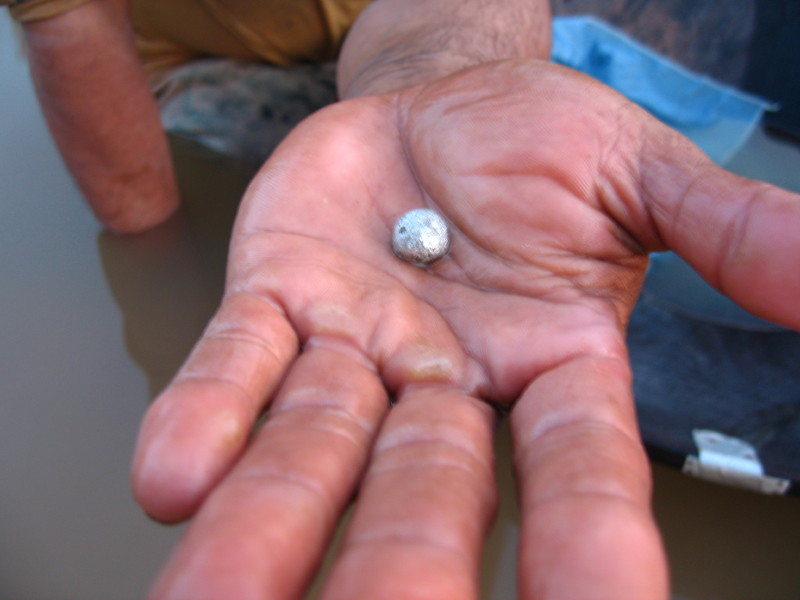
Amalgam
Amalgam
60% Au, 40% Hg
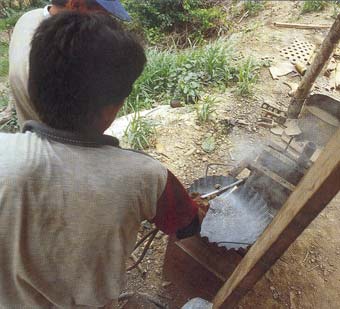
Open air amalgam burning
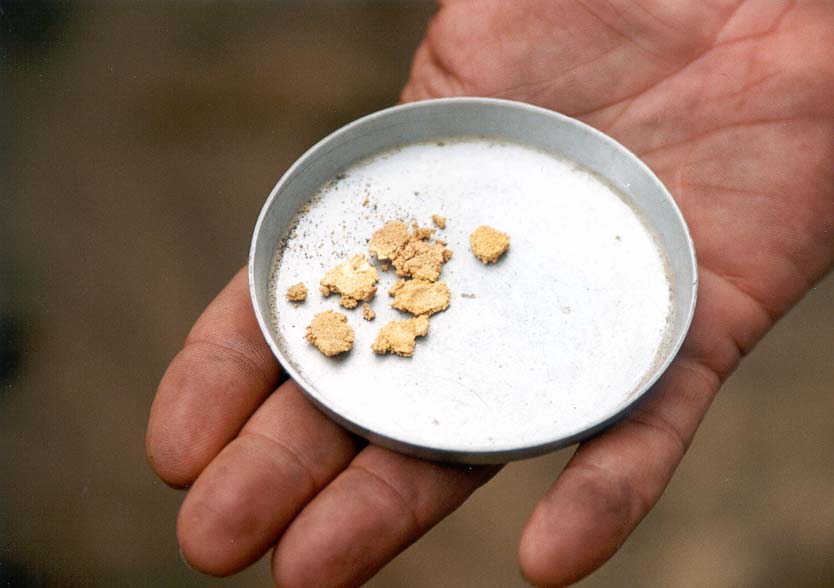
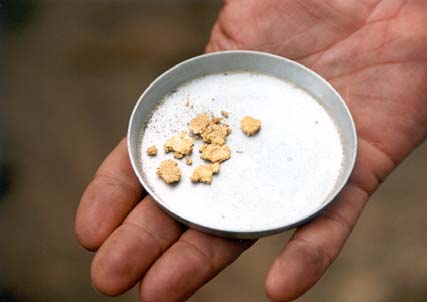
Sponge gold (still has 5% Hg)
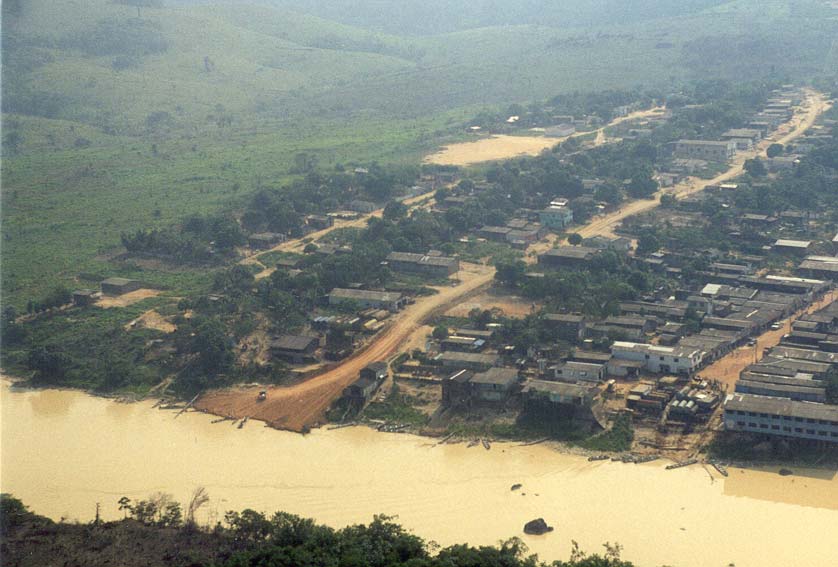
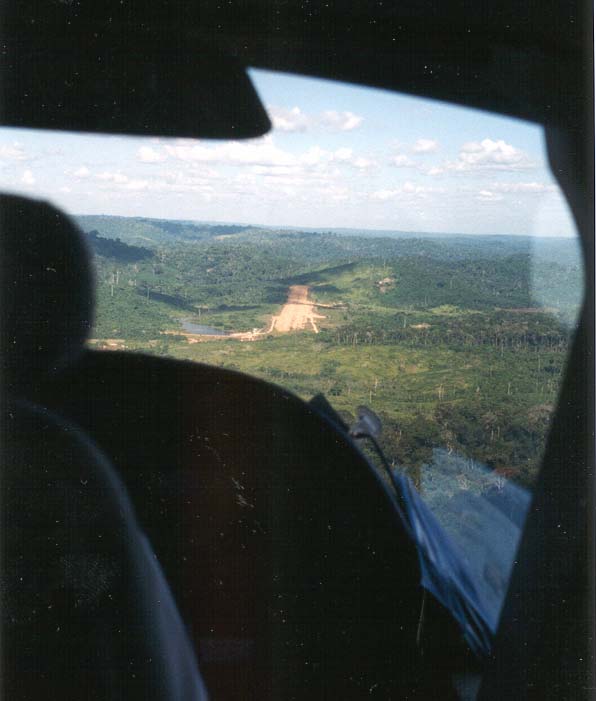
Bring sponge gold to town
Brazilian Amazon, Povoado do
Creporizao, Tapajos Basin
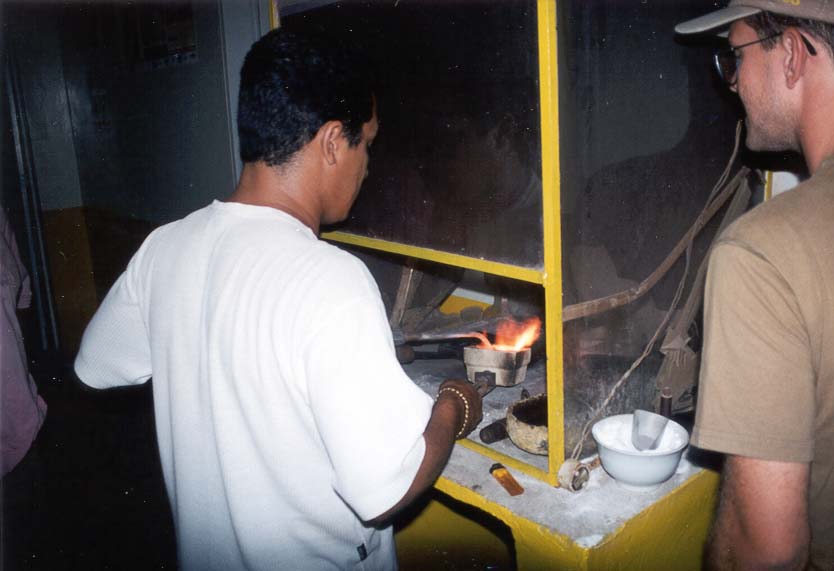
Sponge gold is melted,
mercury is emitted
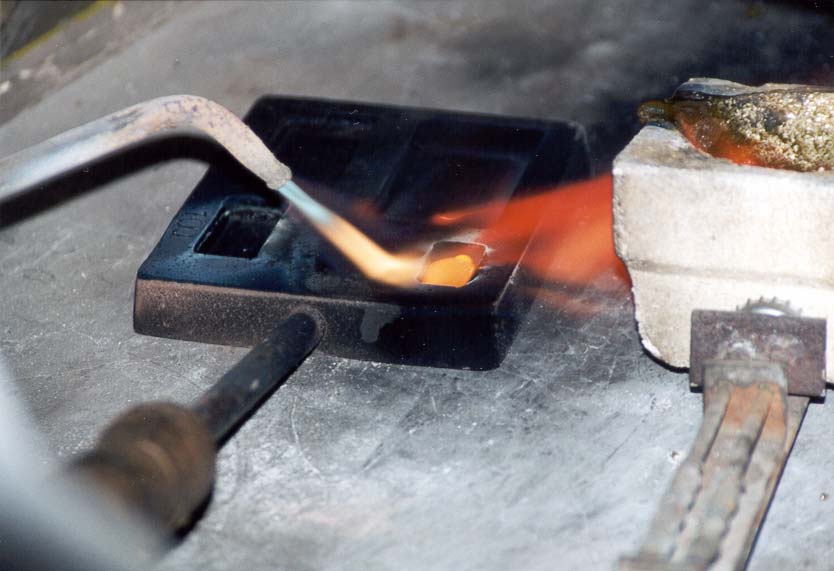
Pour an ingot
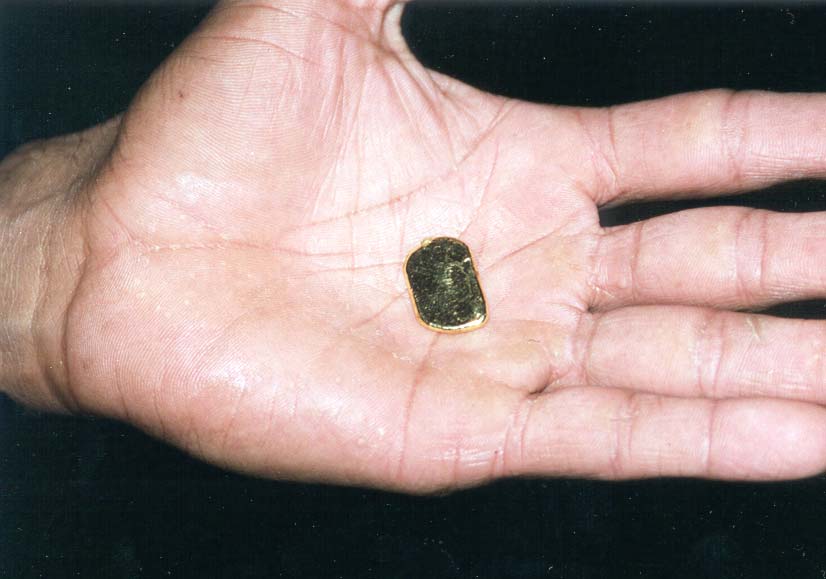
7 g Gold
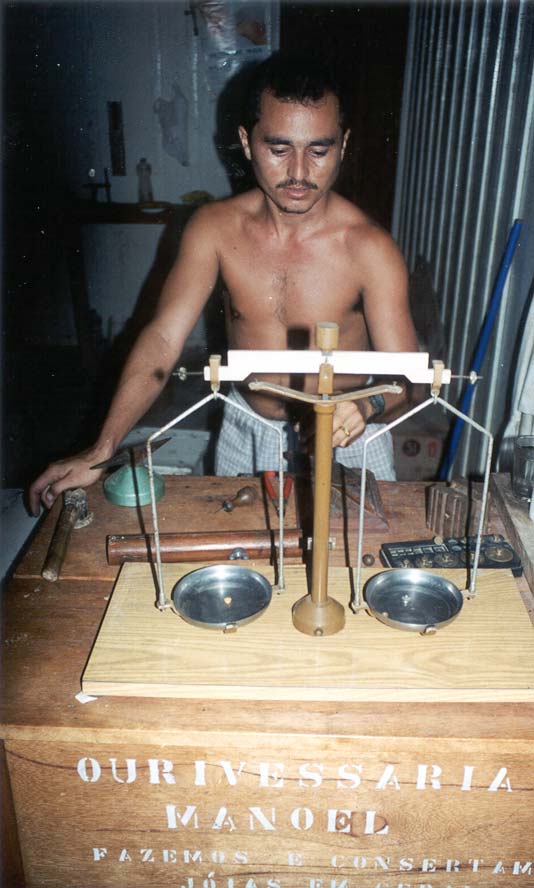
Go to the
jeweler
and
buy some
groceries
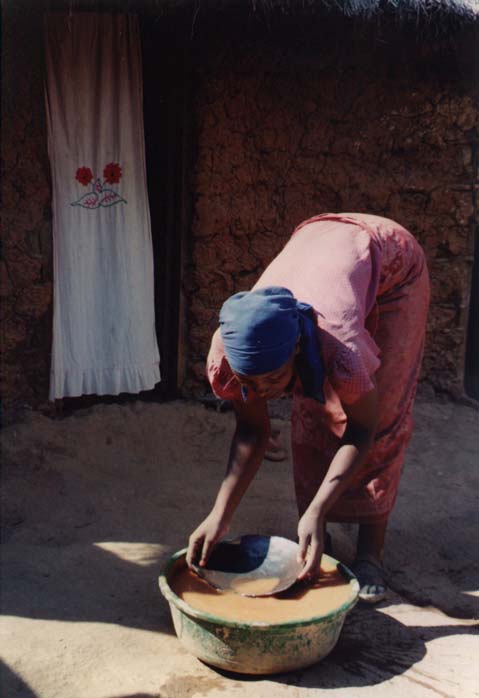
Causes of poor ASM practice
· Disorganization &
transience
· Lack of general
education
· No technical assistance
· Financial barriers
· Rejection by mainstream
society
· Inadequate/Inappropriate
regulations
Tanzania, 2000
· POVERTY
Gold Rush and Poverty
· Mercury demand in ASM continues to increase
· With gold rising from US$260/oz in March 2001
to US$725 in May 2006, a gold rush involving
poverty-driven miners is being observed in many
countries
· This increase in mining activity is compounded
by the failure of subsistence economies, conflict
causing displacement of populations, and
diseases such as HIV/AIDS
· On the global scale, mercury use in ASM may
be growing to a historically unprecedented level
The world's biggest gold rush is now!
Increasing price = More people involved
ASM touches all of the
UN Millennium Development Goals
· Eradicate extreme poverty and hunger
· Promote gender equality and empower
women
· Reduce child mortality
· Improve maternal health
· Combat HIV/Aids, malaria and other diseases
· Ensure environmental sustainability
· Achieve universal primary education
· Global partnership for development
ASM hotspots
· China (with 200 to 250 tonnes released),
· Indonesia (100 to 150 tonnes)
· 10 to 30 tonnes in each of Brazil, Bolivia,
Colombia, Ecuador, Ghana, Peru,
Philippines, Venezuela, Tanzania and
Zimbabwe.
· 40 other countries
Mercury Consumption in ASM
· 1 to 3 grams of mercury is lost to the
environment for every gram of gold produced
· The ratio varies with the technique used which is
influenced by habit and social, and economic
factors
· When mercury is less available and/or more
expensive, less mercury is consumed
· More efficient or zero mercury methods are
adapted
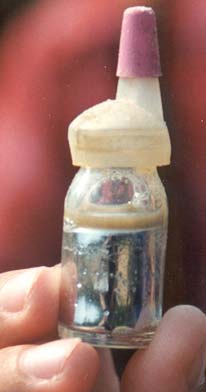
Where is mercury lost?
Add mercury to
Gold + Sand
dissolve gold
Tailings
Form Amalgam
Evaporate
Gold Residual
60% Au, 40% Hg
Do Hg losses vary with style of
operation? YES
Whole Ore
· Much more
mercury lost when
whole ore is
amalgamated
Gravity Separation
Gravity
Tailings
Concentrate
Whole ore amalgamation is bad!
· Whole ore amalgamation is the largest point
source of mercury pollution in ASM (contributing
more than 50% of mercury lost in ASM)
· Driven by
habit rather than economics
availability of inexpensive mercury
lack of technical knowledge/expertise
lack of organizational support
lack of environmental health awareness
· Cost-efficient alternatives to replace whole ore
amalgamation exist
· A rising mercury price will help eliminate this
Mercury lost versus mining style
Amalgamation Method
Hg lost : Au produced
whole ore
>3*
concentrates, no retort
~1
concentrates, with retort
<1
* In Sulawesi, Indonesia, as miners add Hg into the ball
mills, the ratio Hglost:Auproduced is between 60 and 100
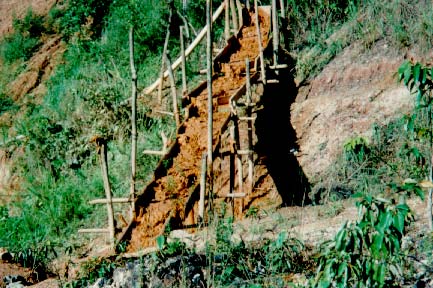
Putting mercury in the sluice box
Hg
Hg goes with tailings
Brazil, 1999
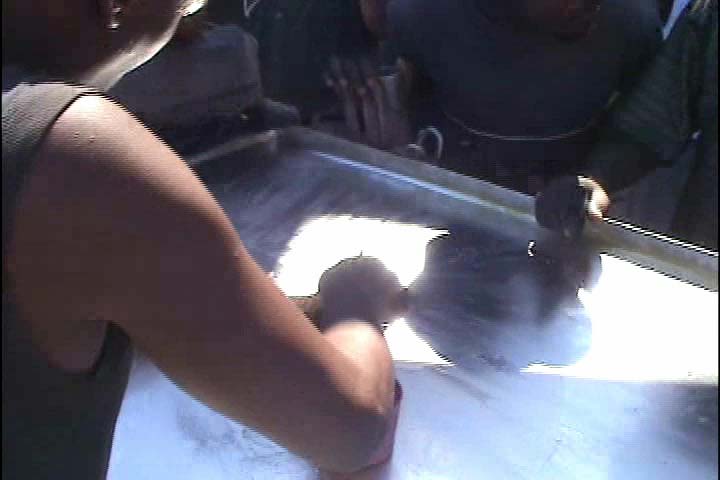
Amalgamation of the Whole Ore =
Lots of Hg is lost to the Environment
· Use of Copper
Amalgamation
Plates
Generates High
Hg-tailings
Zimbabwe, 2005
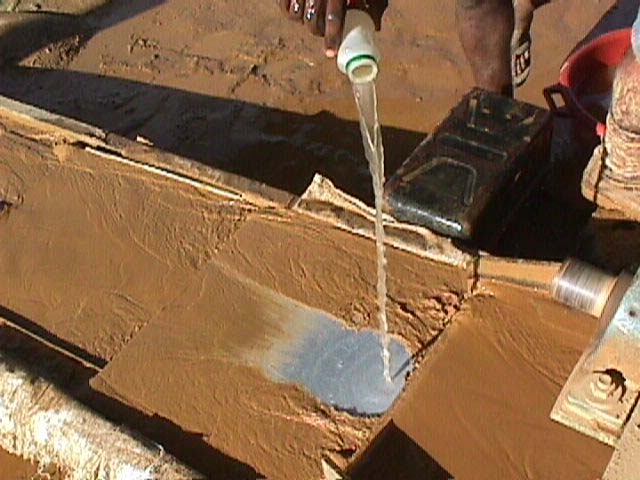
Amalgamation of the Whole Ore
El Callao, Venezuela, 2003
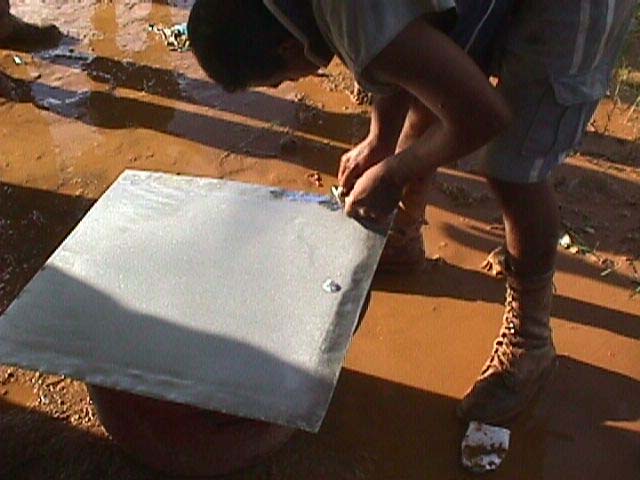
Amalgamation of the Whole Ore
El Callao, Venezuela, December 2003
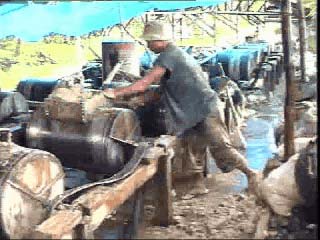
Amalgamation of the Whole Ore
· In Indonesia: about
110,000 350,000
miners (seasonal)
· >100 tonnes Hg emitted
annually
· North Sulawesi:
Amalgamation of the
Indonesia, 2002
whole ore followed by
cyanidation
· Mercury emitted: 60-90
times the amount of
gold produced
Health and Environmental Impacts
· ASM produces severe health and
environmental hazards
· Mobilization of mercury from mine sites
into aquatic systems presents a major risk
(MeHg)
· Combined use of mercury and cyanide is
occurring the worst possible scenario for
mercury mobility and availability
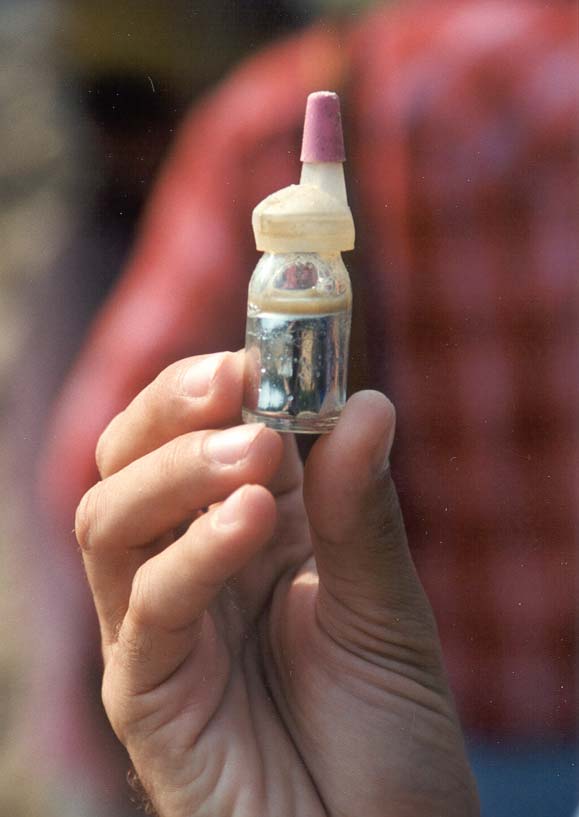
Environmental Problems Caused by
Artisanal Gold Mining
· Mercury pollution
· Water siltation
· Landscape degradation
· Destruction of habitats
· Loss of organic soil
· Deforestation
Brazilian Amazon, 2001
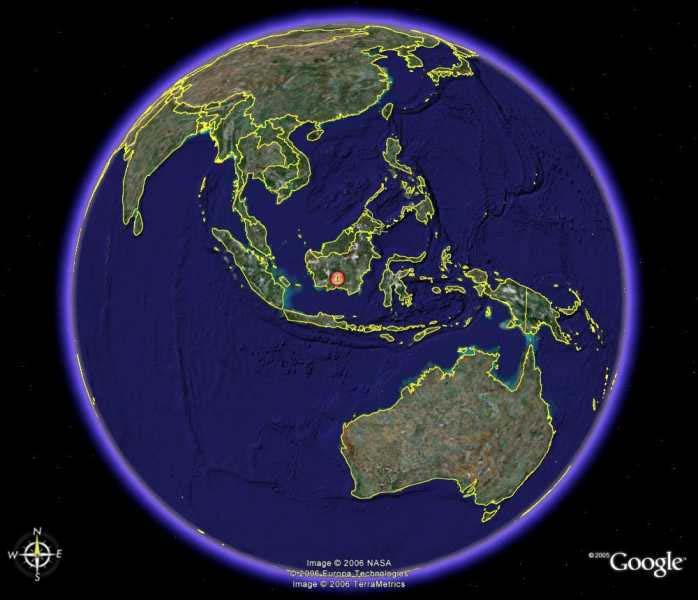
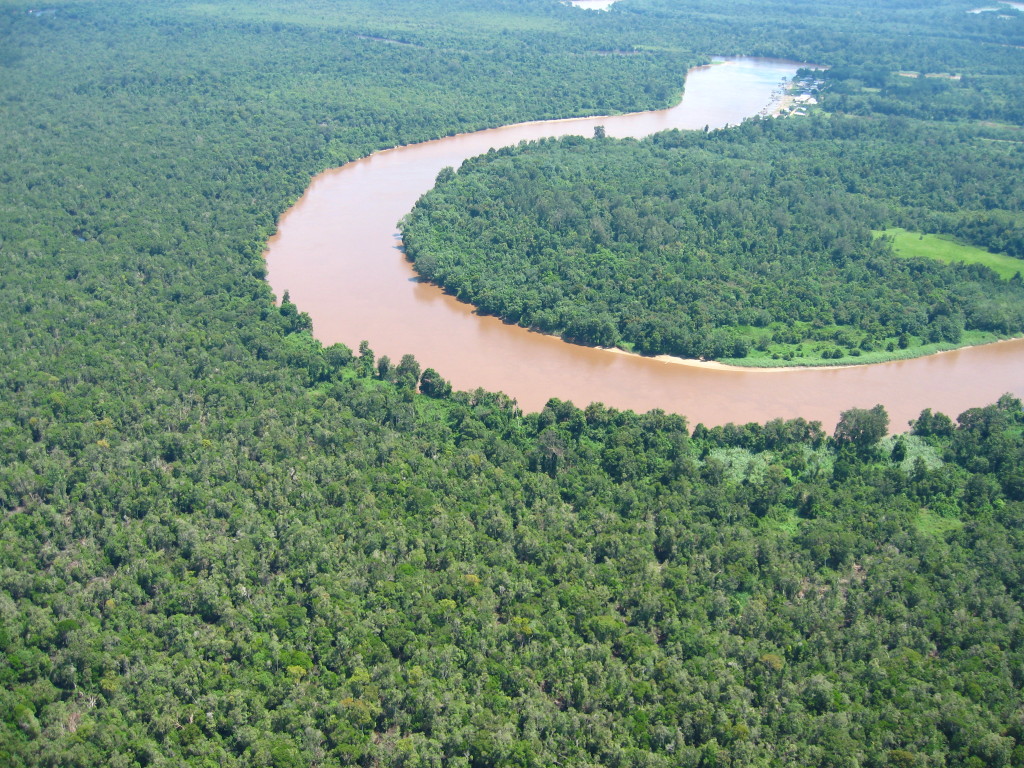
Example - Kalimantan, Indonesia,
Island of Borneo
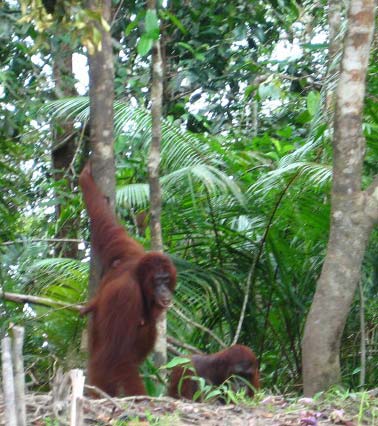
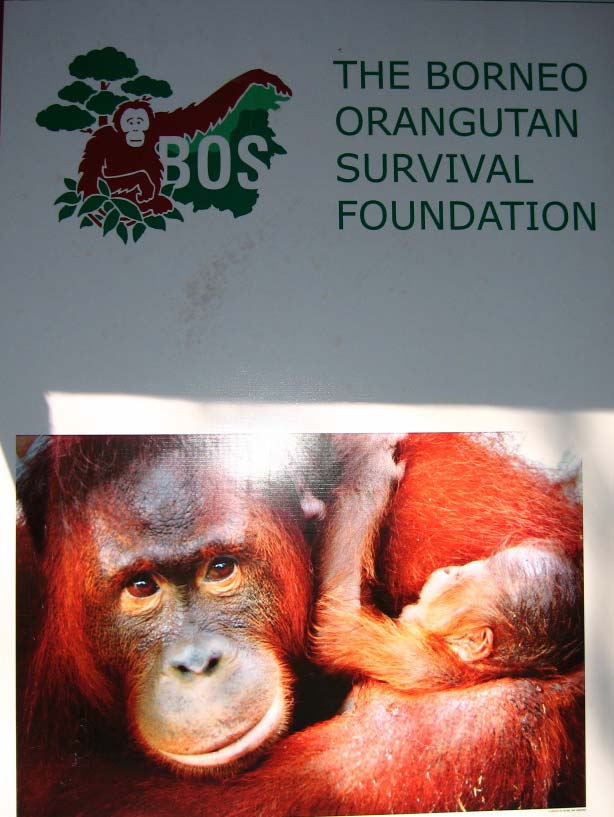
Was habitat for Orangutans
· Only 5000 wild ones left





Galangan 200 km2
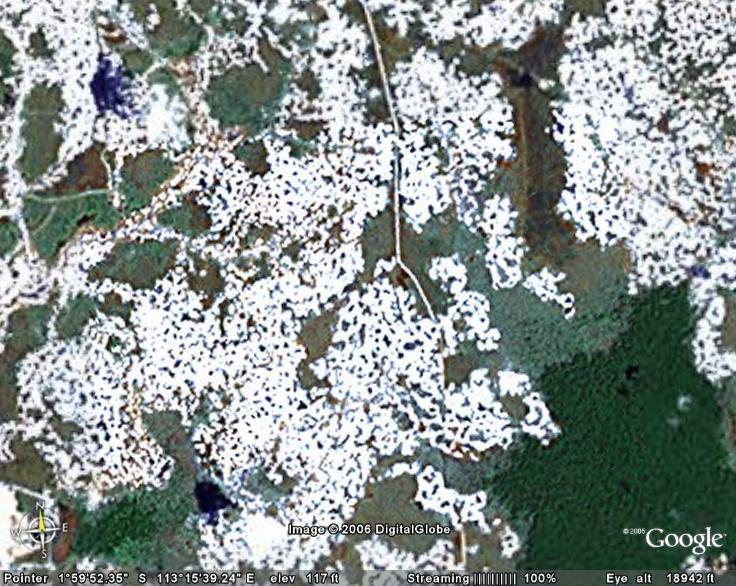
Thousands of Amalgamation ponds and mining pits





One of many growing operations
Aerial Survey
City of
Galangan
Palangkaraya
Other Growing Sites
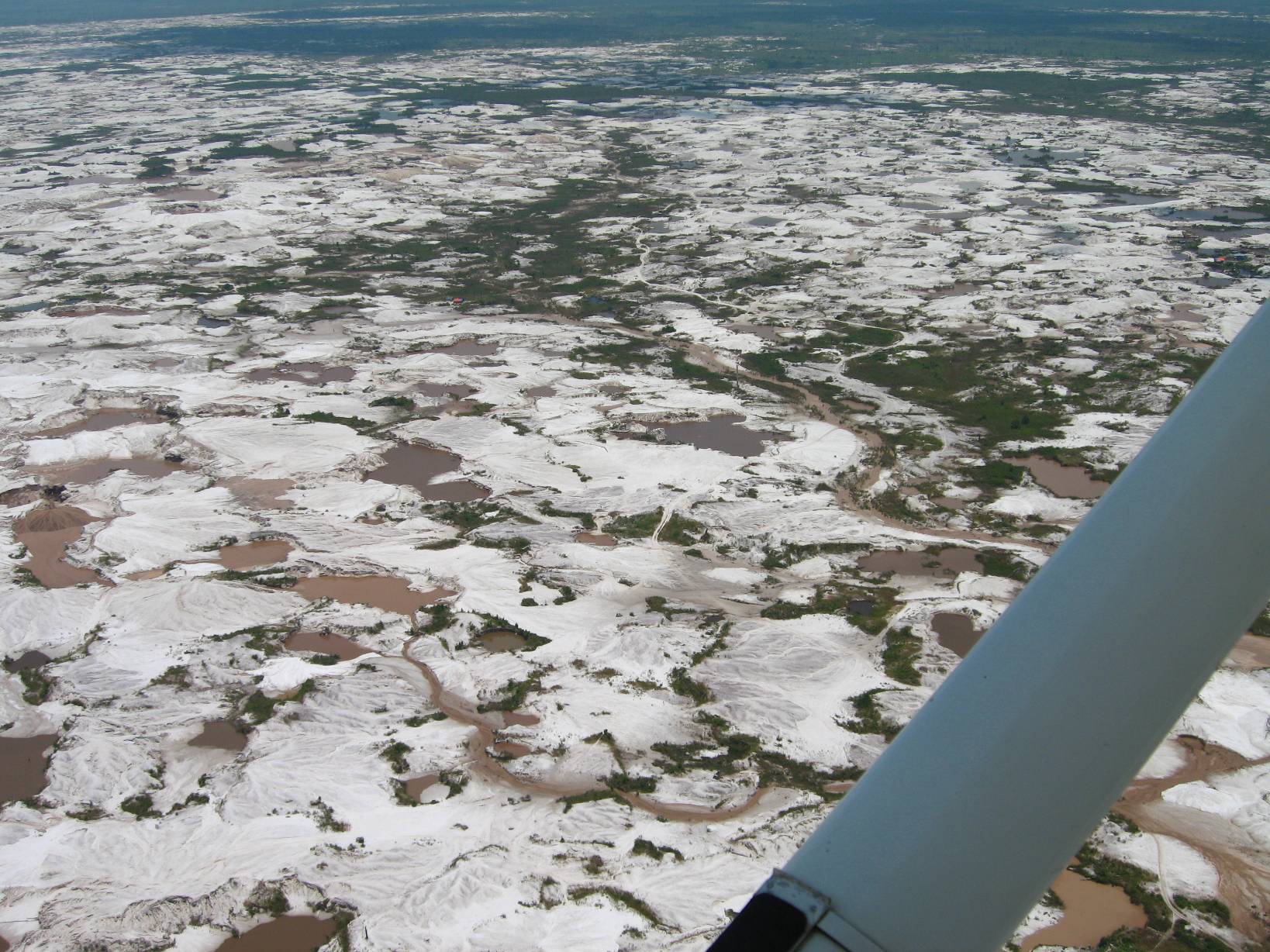
Aerial View
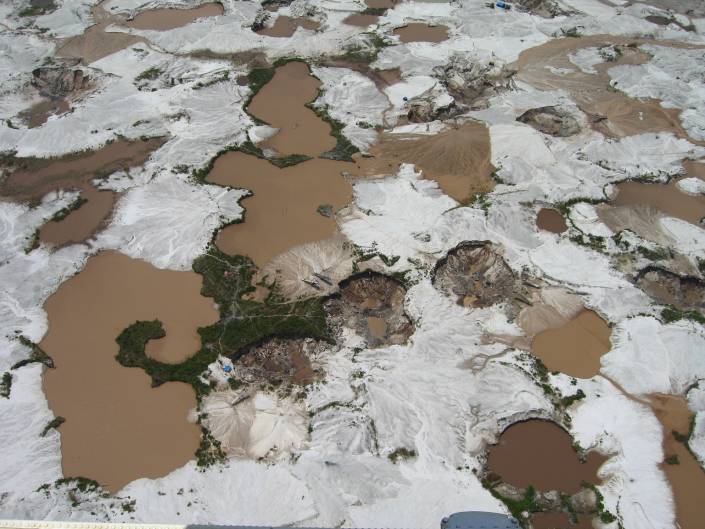
Mining Pits & Amalgamation Ponds
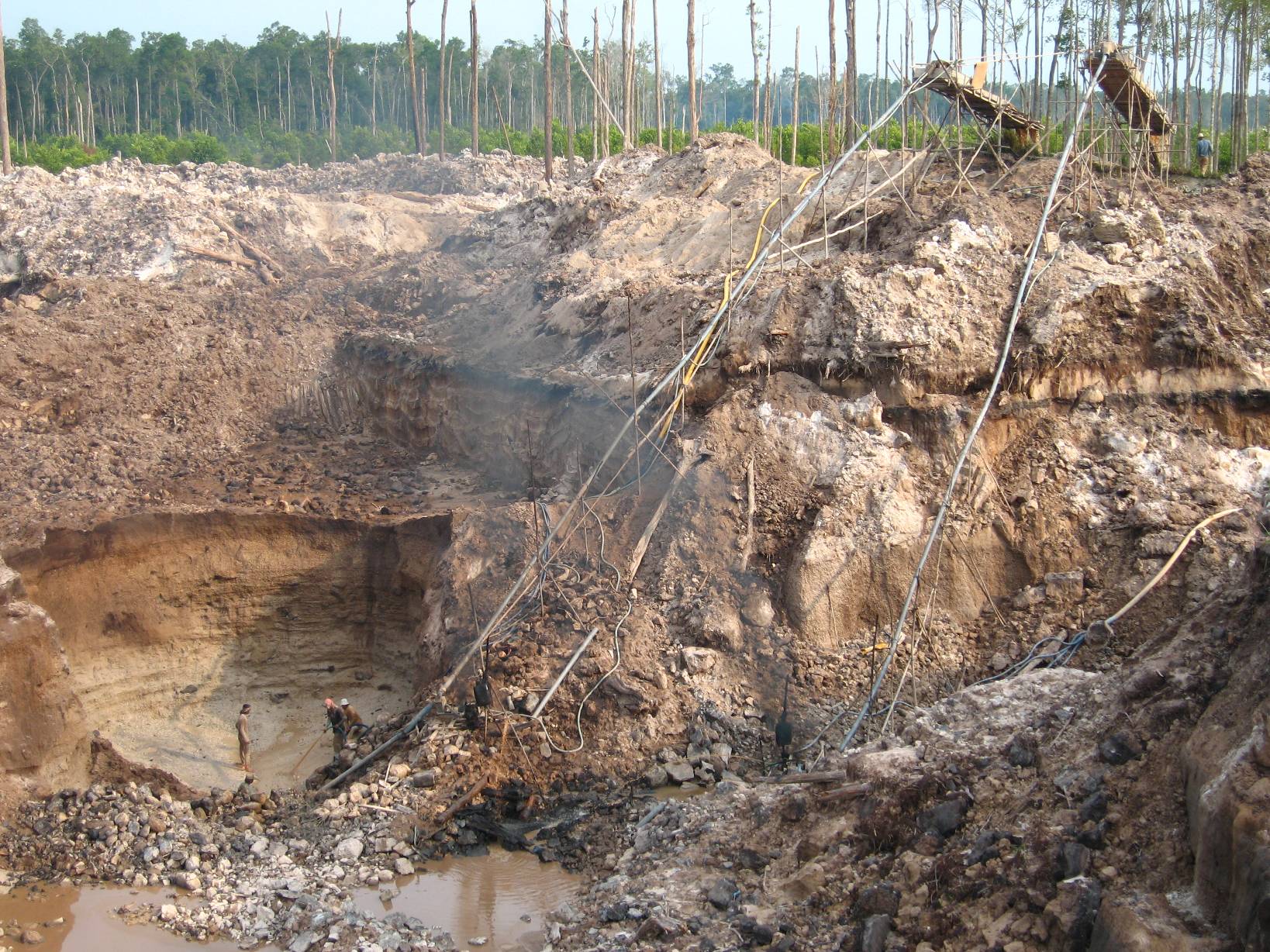
On the ground
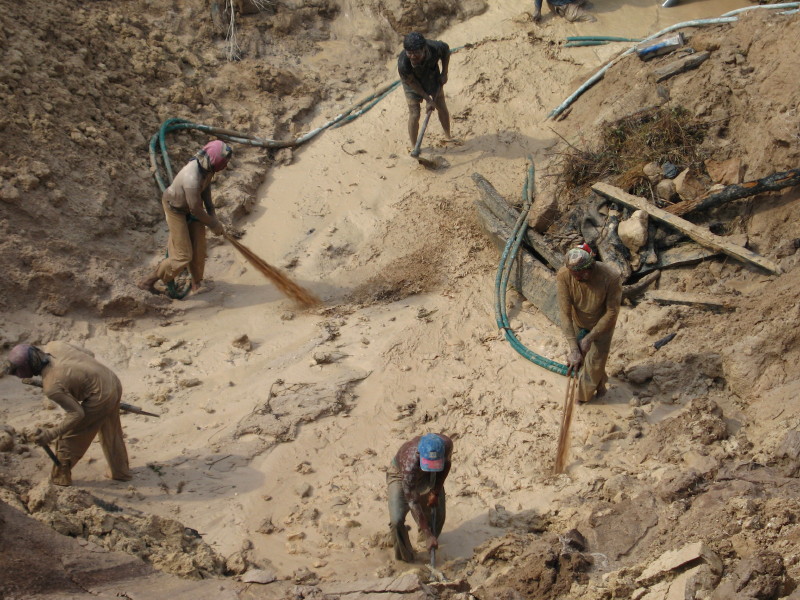
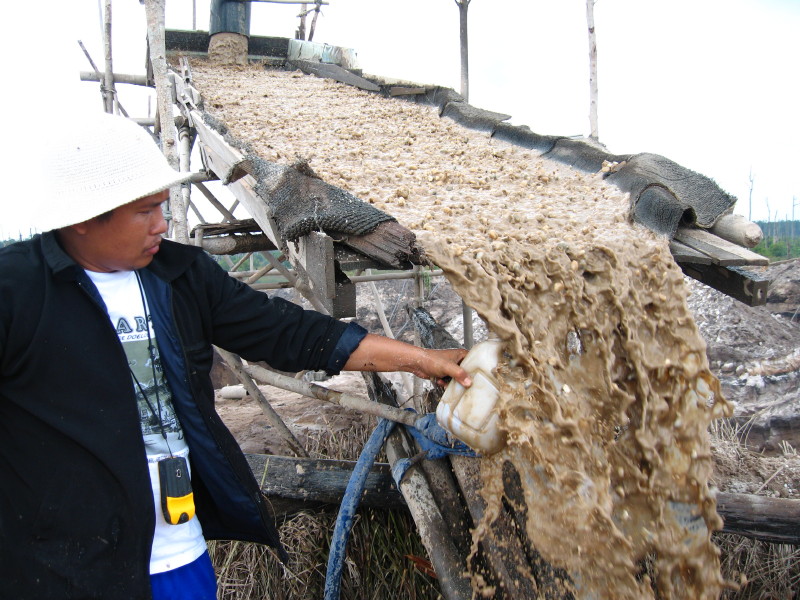
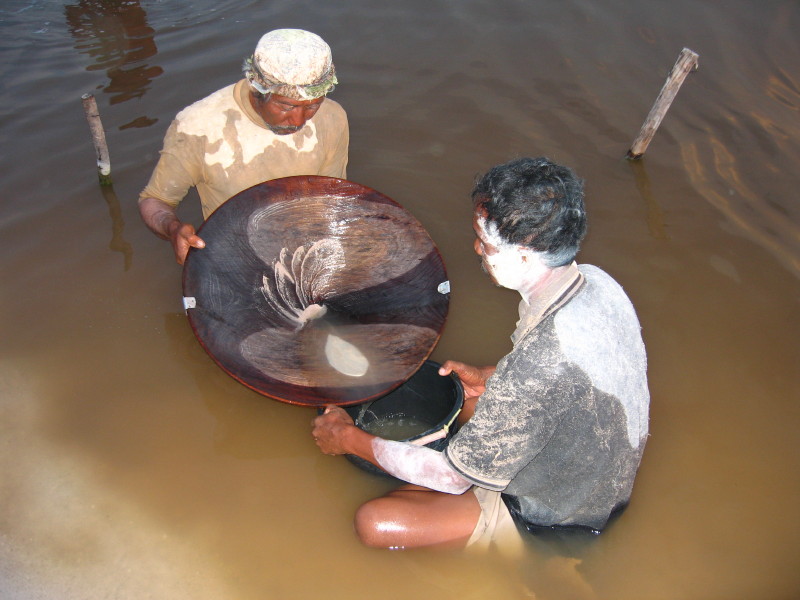
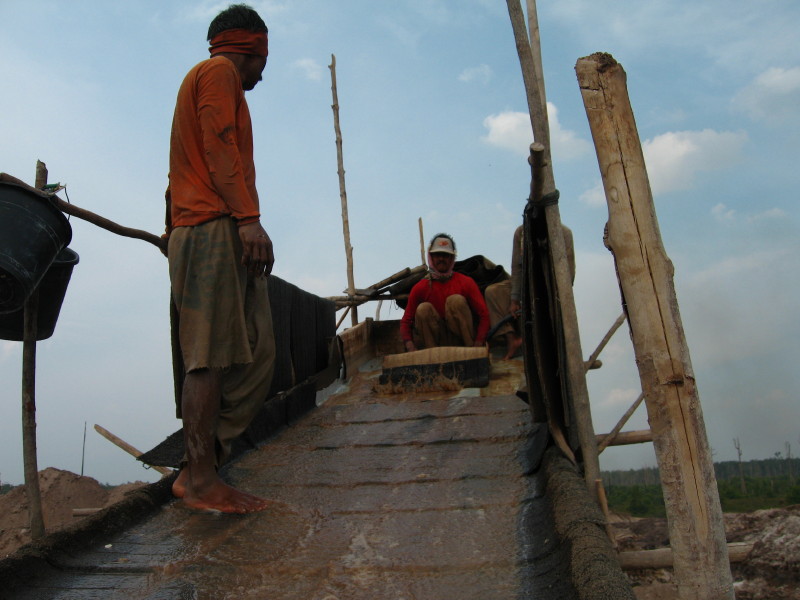
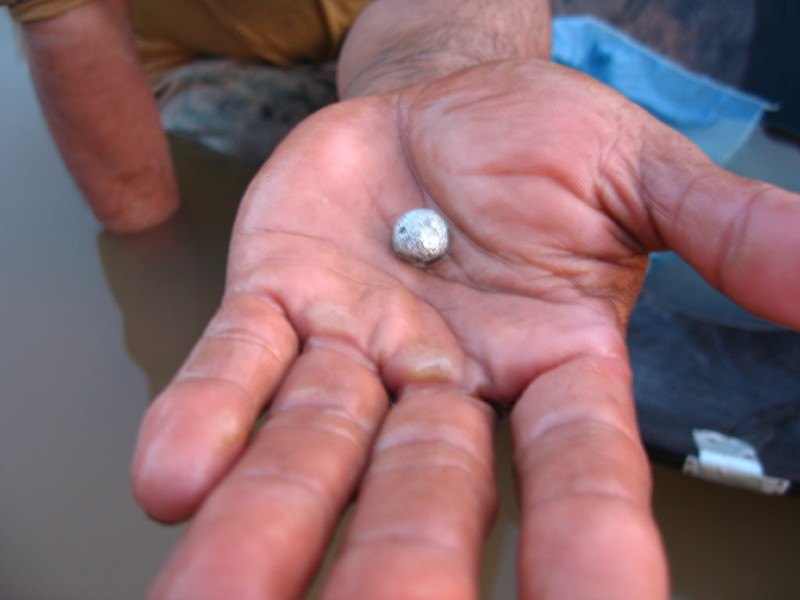
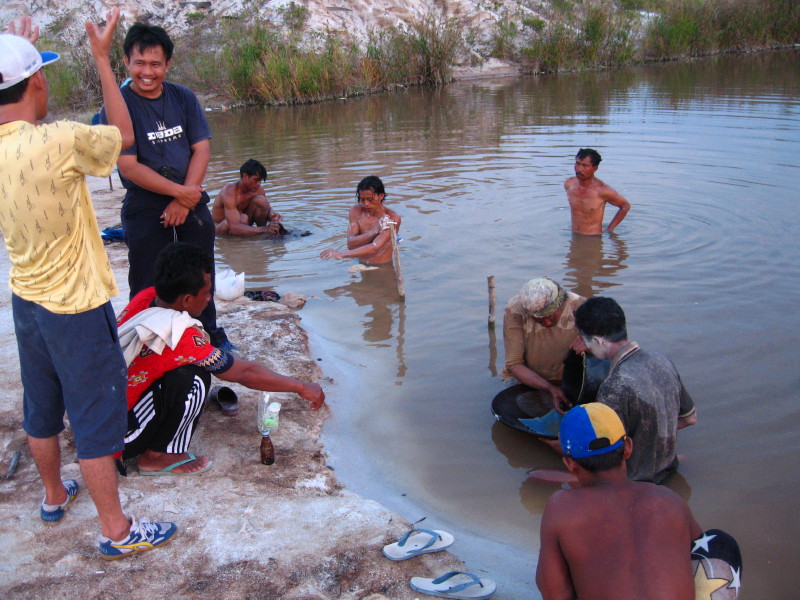
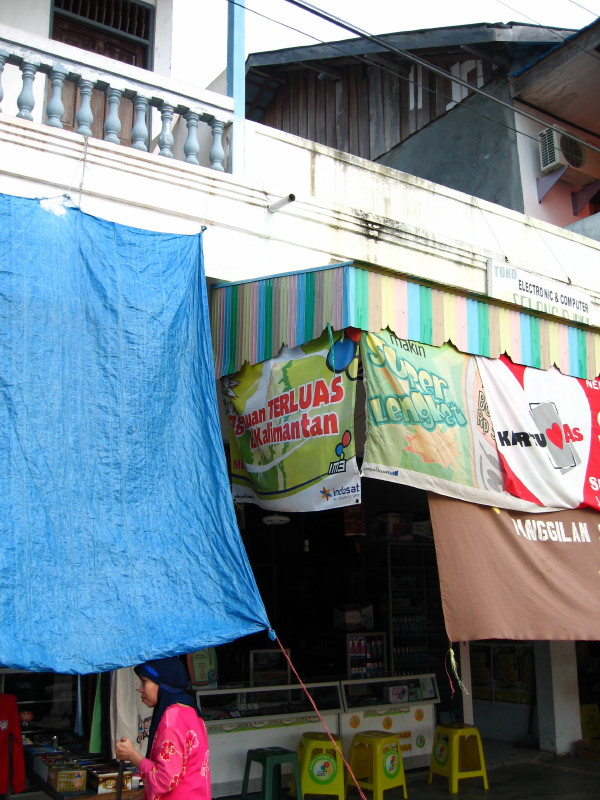
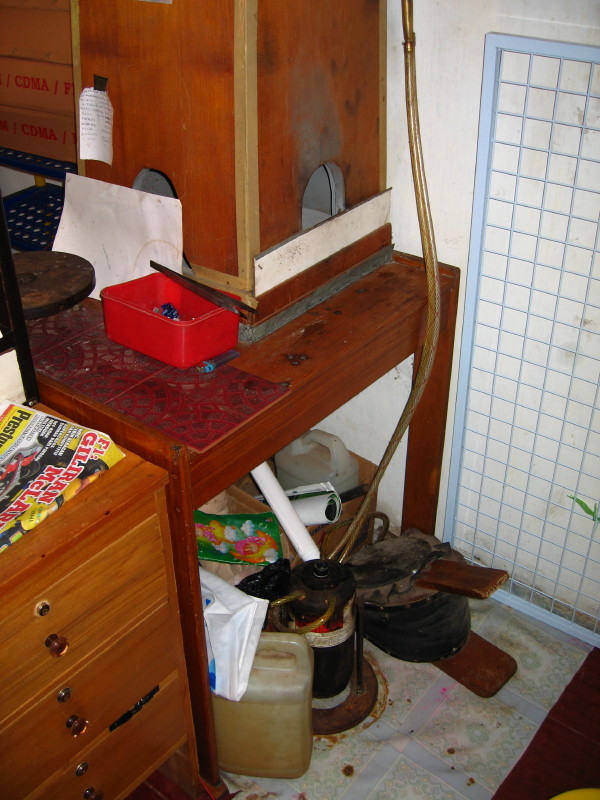
Chimney
Indonesia
· Second only to China for ASM mercury
emissions
· Late bloomer but now really growing
· Combined use of Hg and CN common
· Good conditions for adaptations and
changes
· Good candidate for further efforts
Open Air Burning
· Fate of emissions?
· Almost no studies of comparable sophistication to
northern research efforts
· Conceptual models and empirical evidence suggest
extensive long range transport
Rates and Amounts
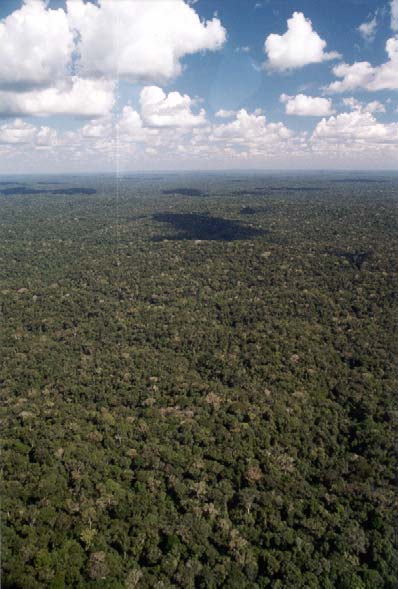
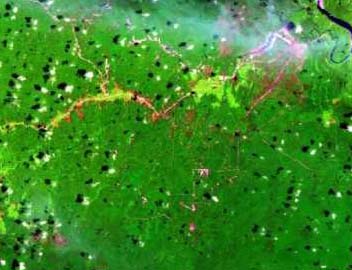
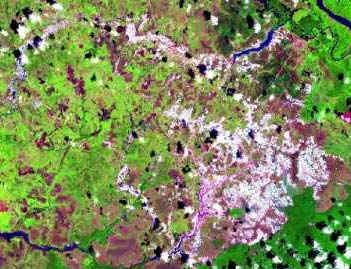
1989 - zero
Primary forest
cover is
extensive
24km x 18km = 432km2
Processed Landsat 5 TM Image: R=5, G=4, B=3
1999
Huge changes!
Extensive
forest removal
and vast area of
mined sands.
Processed Landsat 7 ETM+ Image, R=5, G=4, B=3
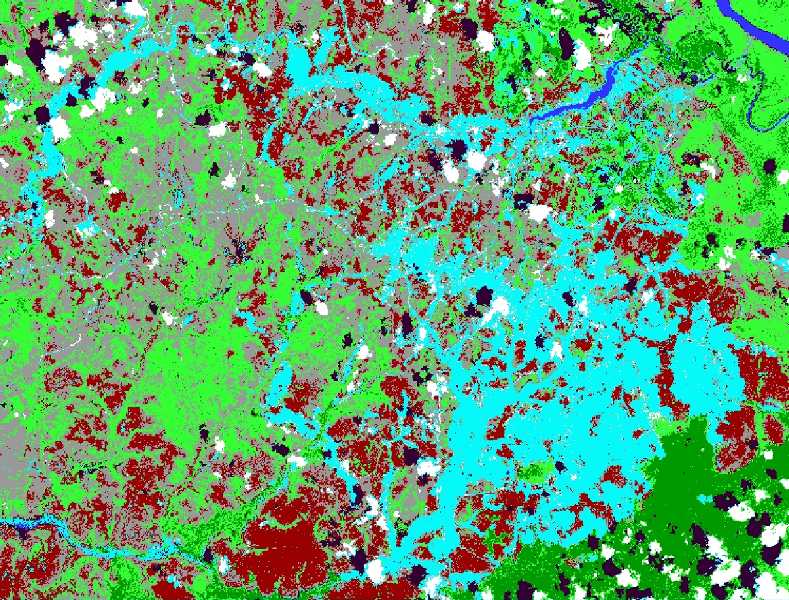
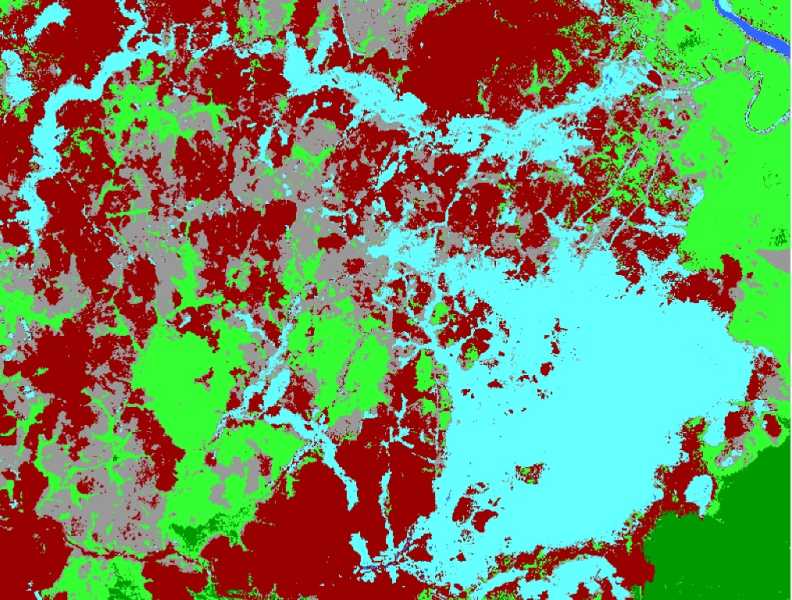
Image classification reveals
mined area = 78 km2 in 1999
Classification:
Sand from Mining
(cyan) 78km sq, 18%
± 2%;
Exposed Soil (brown)
64km sq, 15% ± 2%;
Agriculture/disturbed
(grey) 117km sq,
27% ± 2%
2002 102 km2
Classification:
Sand from Mining
(cyan) 78km sq, 18%
± 2%;
Exposed Soil (brown)
64km sq, 15% ± 2%;
Agriculture/disturbed
(grey) 117km sq,
27% ± 2%
Since 1990 16 years
· Rate of Mining 8 km2/y
· Sediment Sluiced 119,574,000 t
· Gold recovered = 11.9 t
· Hg consumed since inception = 59.3 t
· Hg released by amalgam burning = 11.9 t
· Value of gold1 = $210 Million US Dollars
· $13 Million/year
1. Determined using gold price variations over time since 1990






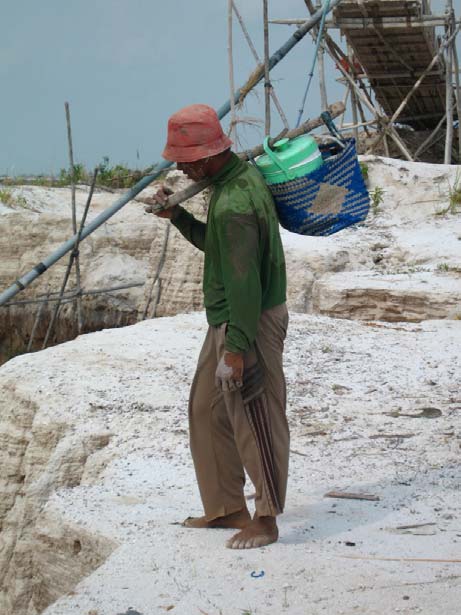
Wages?
· 5,000 to 10,000 illegal miners
· ~ $2000 US/year
· If it was distributed evenly
· Which it is not
Miners make more money than
farmers
· 42% of the people in Sub-Saharan Africa
makes US$ 1/day
· Miners in Africa typically make 0.2-1
g/day/miner or US$ 3 to 15/day/miner
· Alternatives must minimally maintain
wages!







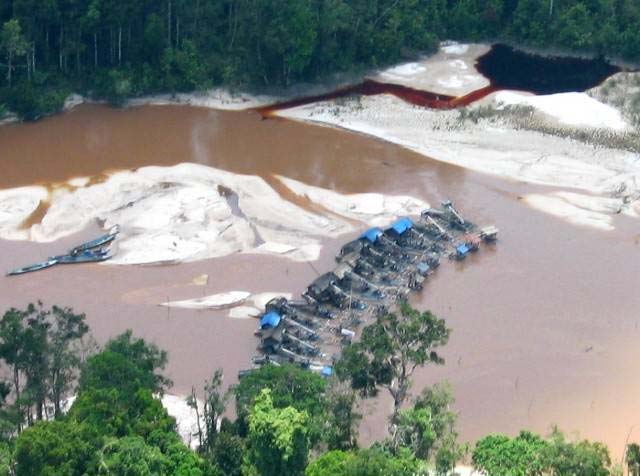
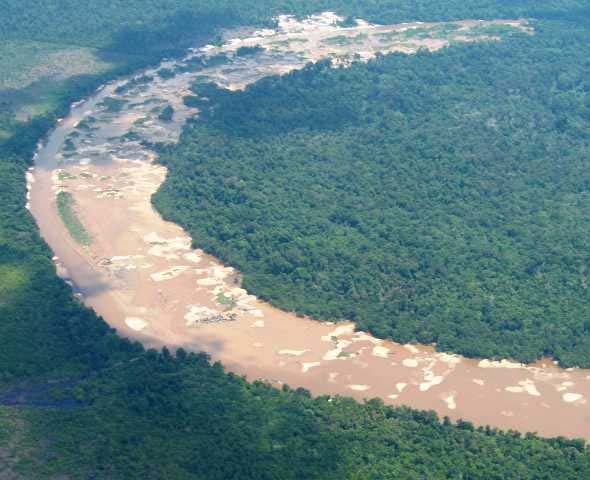
River Siltation
Kahayan River, Indonesia, 2006
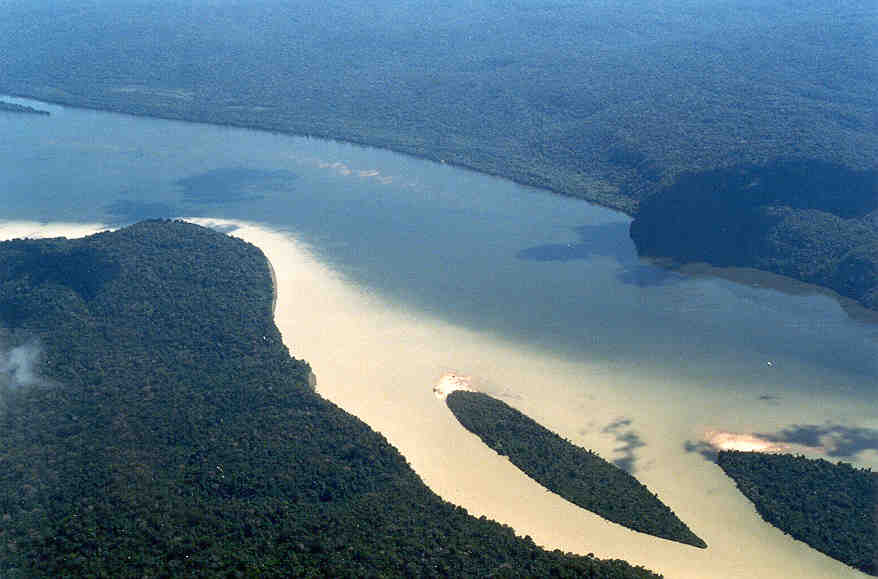
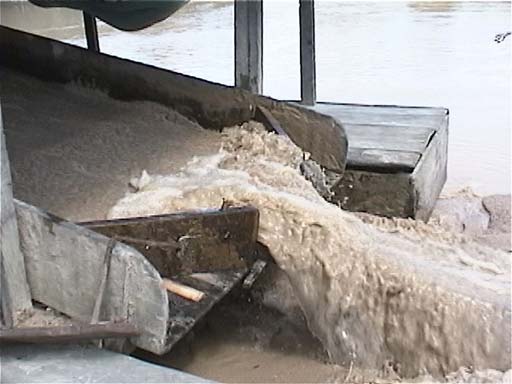
River Dredging
Kahayan River, Indonesia, 2006
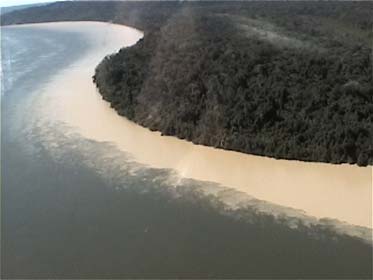
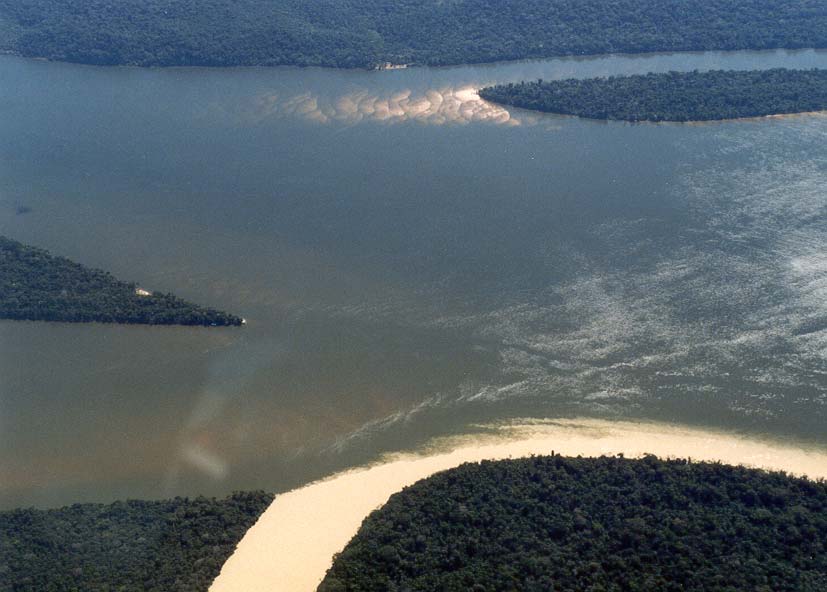
Sediment Plume, Tapajos River, Brazil
5 km
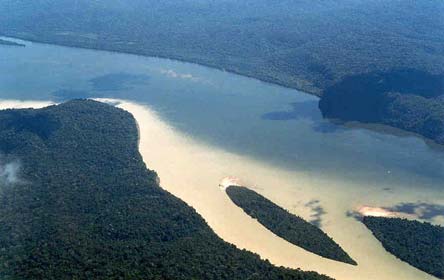
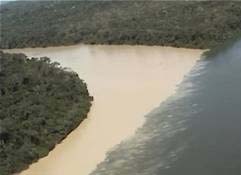
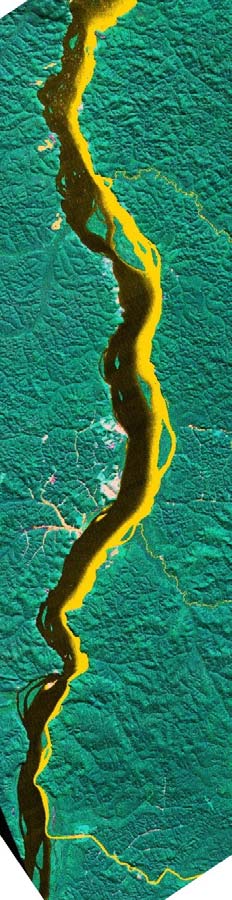
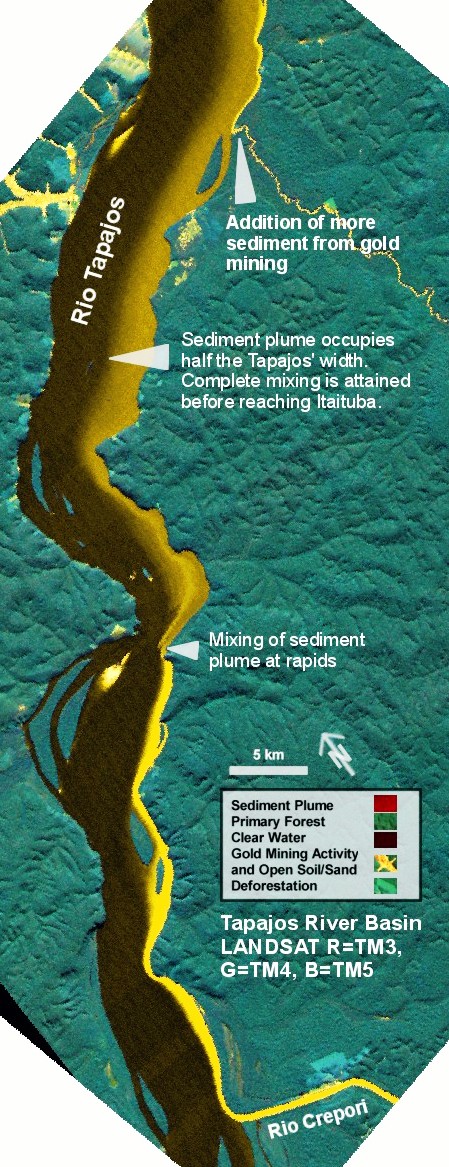
Hundreds of km transport!
200 km
Telmer K., Costa M.P.F., Angélica R.S.,
Araujo E.S., and Maurice Y. (2006) The
source and fate of sediment and mercury in
the Tapajós River, Pará, Brazilian Amazon:
ground and space based evidence. Journal of
Environmental Management, 81: 101-113.
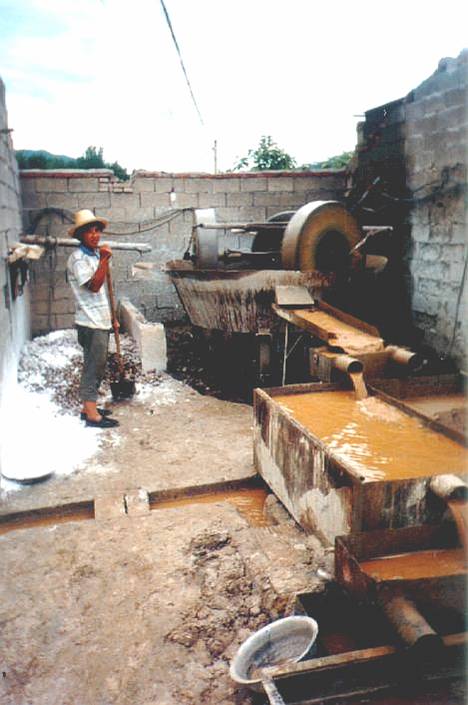
Hg is added
Combined Hg
while grinding
the ore
and CN use
Cu plate
· Amalgamation
followed by
cyanidation
Cyanide
· Hg becomes more
soluble
· Transport &
methylation potential
increases
· Occurring in many
countries
Photo AJ Gunson
China, 2002
Why is CN being used?
· It gets the most gold
· It is what most large companies use
· Developing safe CN use for small scale
operations is needed because of this
reality
· Using mercury first for "quick cash" must
be stopped through awareness campaigns
· Miners actually lose money doing this
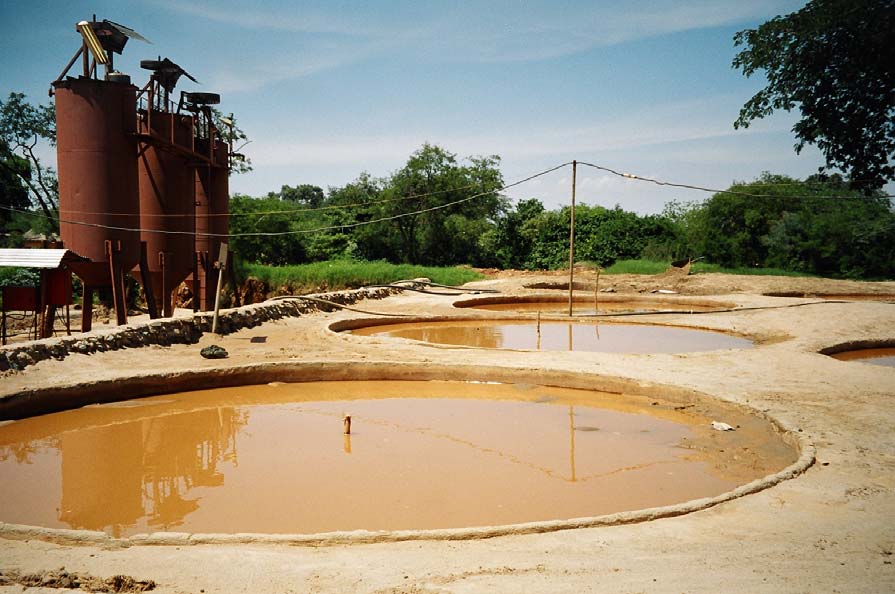
Cyanidation of Hg-contaminated tailings
reworking old tailings releasing old mercury
Brazil
China
Ecuador
Indonesia
Peru
Philippines
Zimbabwe
Zimbabwe, 2004
Health and Environmental Impacts
· Symptoms of mercury intoxication are widespread,
· Levels of intoxication that exceed 50 times the WHO
maximum public exposure limit were observed
· Neurological disturbances such as ataxia, tremors and
coordination problems are common
· At one site, 70 percent of miners showed an
unintentional tremor, a symptom of mercury-induced
nervous system damage
· Inhalation of mercury during amalgam burning, often
undertaken by women and children, represents a major
health concern
· Breast milk of nursing mothers in mining communities is
extremely high; infants are especially at risk
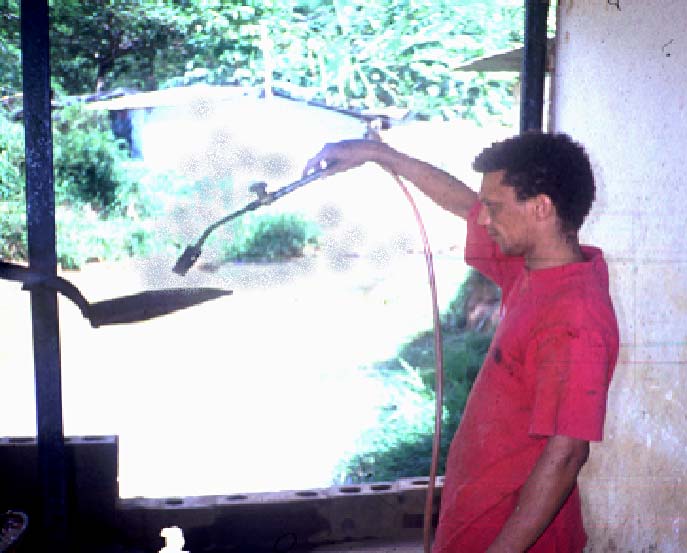
Hg occupational exposure is... obvious
Venezuela, 1995
Venezuela, 1995




Women and Children in ASM
· Increasing
Ghana, 2000
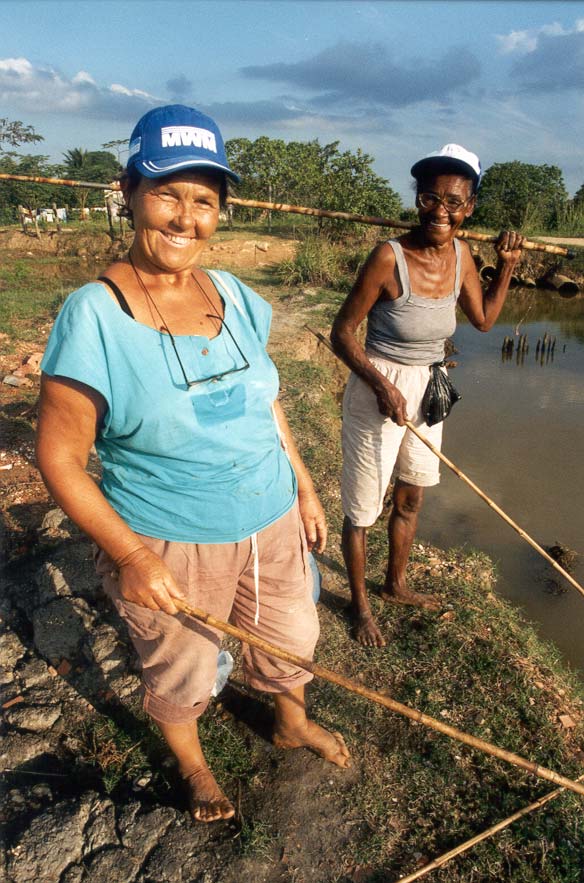
Women
fishing in
abandoned
mines!
Brazil, Tapajos Basin
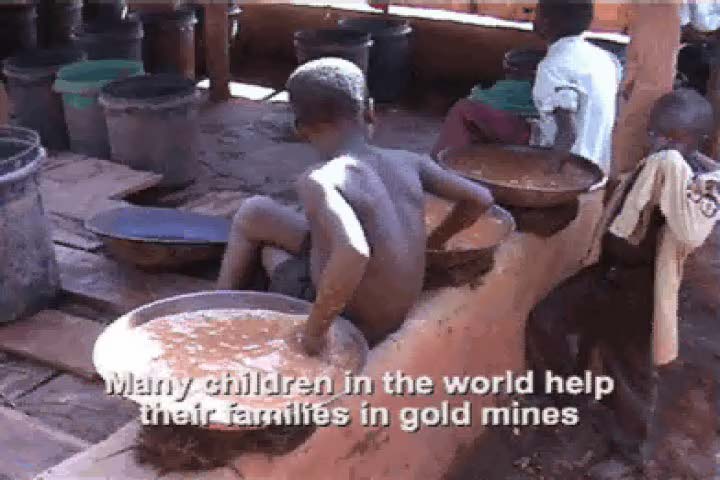
Manual Amalgamation
Tanzania, 2005
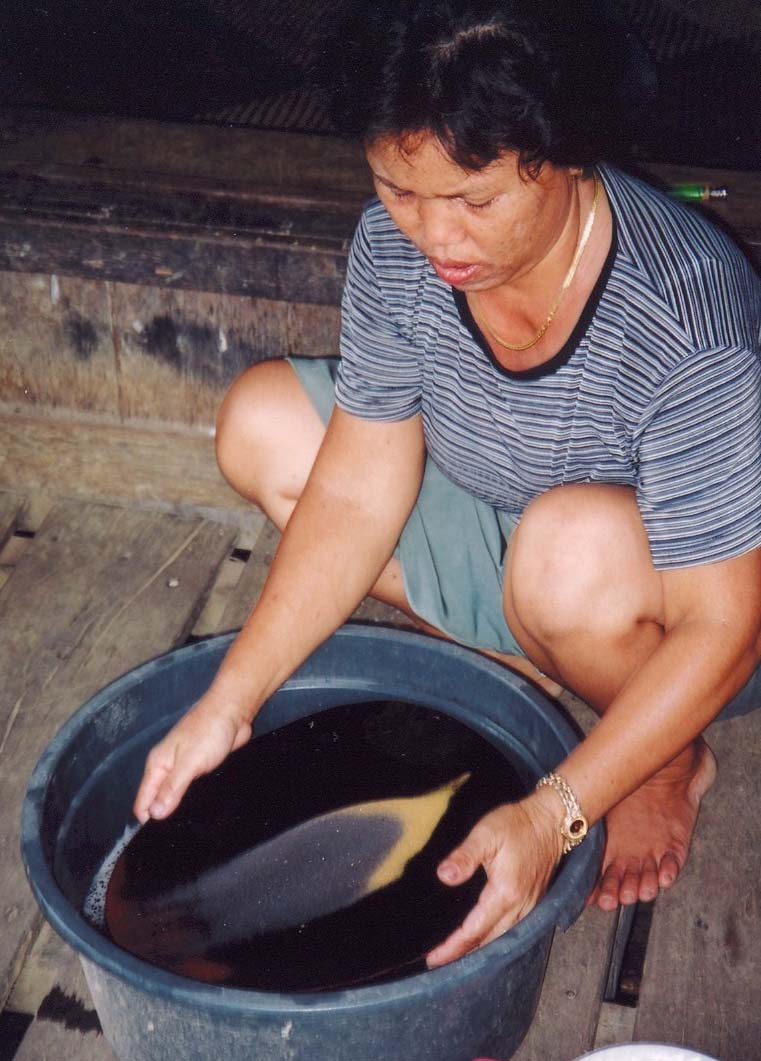
The "easy" work
· Amalgamation is
physically easy
but highly toxic
Indonesia, 2003
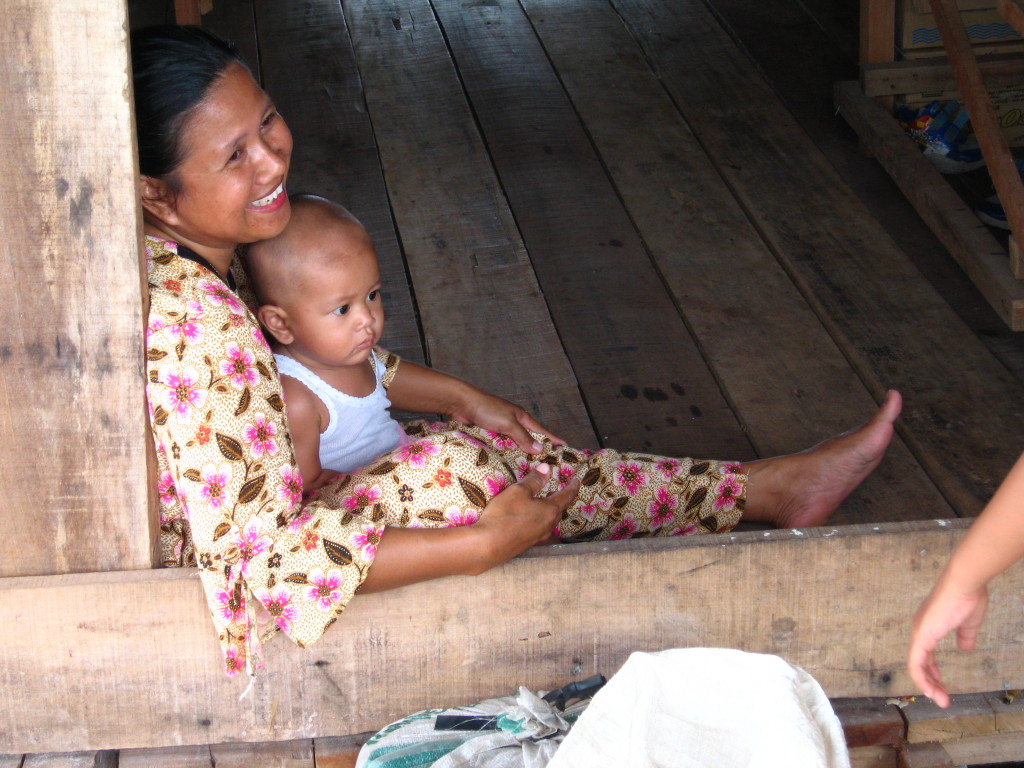
Exposure to fumes
· Gold shop
residences
Indonesia, 2006
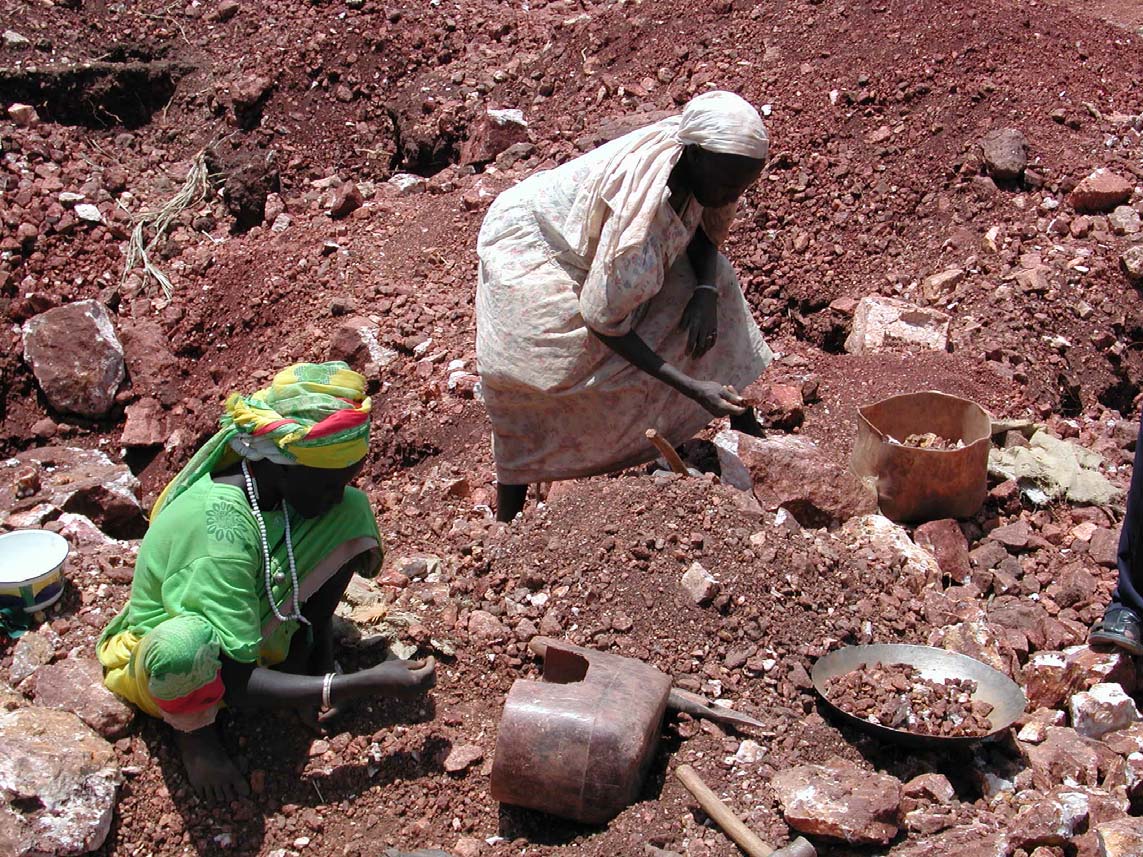
Women Miners
Sudan, 2004
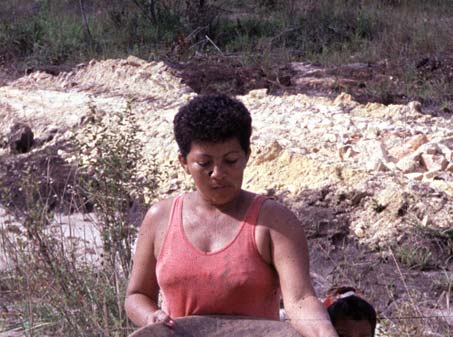
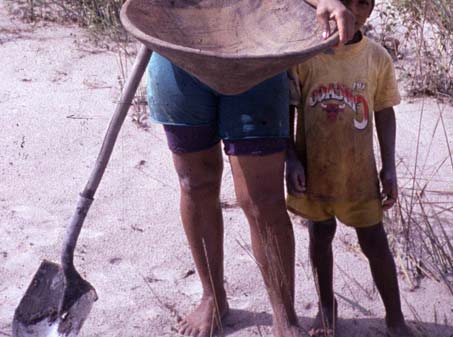




Children Miners
Venezuela, 1995
Laos PDR, 2001





Families of Miners
Laos, 2003
Mercury in Miners Burning Amalgam
Hg (µg/l)
Hg (µg/L)
400
urine
blood
300
200
100
0
individuals in sample
Normal level <5 µg/L
Health Assessment
(Venezuela, 2003 - Urine Values)
60%
50%
s
al 40%
u
d
i
vi 30%
d
n
i 20%
%
10%
0%
Mil ers
Miners
Women
Children
Classes of
µg Hg/g creatinine:
0-4.99
5-19.99
20-49.99
50-99.99
>100
Just urine analysis is not sufficient to characterize Hg intoxication
Relationship between Hg level in Urine and Score
of the Episodic Memory Test
(Venezuela Dec 2003)
78% miners with alteration of psychomotor functions
90
high score = high problem
80
70
l
s 60
score 0
ua 50
score 1
v
i
d
40
score 2
i
ndi 30
%
score 3
20
10
0
0-4.99
5-19.99
20-49.99
>50
Hg level in urine (µg Hg/g creatinine)
Trade:
mercury doesn't grow on trees,
it is exported and imported
· Mercury is readily available in most countries
· Enters developing countries legally, often for dental use
· The majority ends up being used in ASM
· Using import statistics for the 6 GMP pilot countries and
neighbours GMP has determined:
· in 2005, Kenya imported 14 tonnes of mercury from
Germany, followed by Georgia (9.5 tonnes) and Japan
(4.1 tonnes)...
· See www.globalmercuryproject.org for more
Trade Conclusions
· It is unlikely that import statistics
adequately capture the cross-border
trafficking of mercury and the extent of
diversion from legal sectors
· Regulating imports is more difficult than
regulating exports from developed
countries
· Export bans will more effectively
control mercury trade
Four keys to reduction of
mercury use in ASM
1.
Introducing improved mining practices, including the
elimination of whole ore amalgamation and open-air
amalgam burning;
2.
Introducing Hg free processing where viable;
3.
An increased price for mercury brought about
through export bans in order to encourage increased
efficiency of use and transition to alternative
technologies;
4.
Awareness campaigns, policy and governance
reforms, and community economic diversification
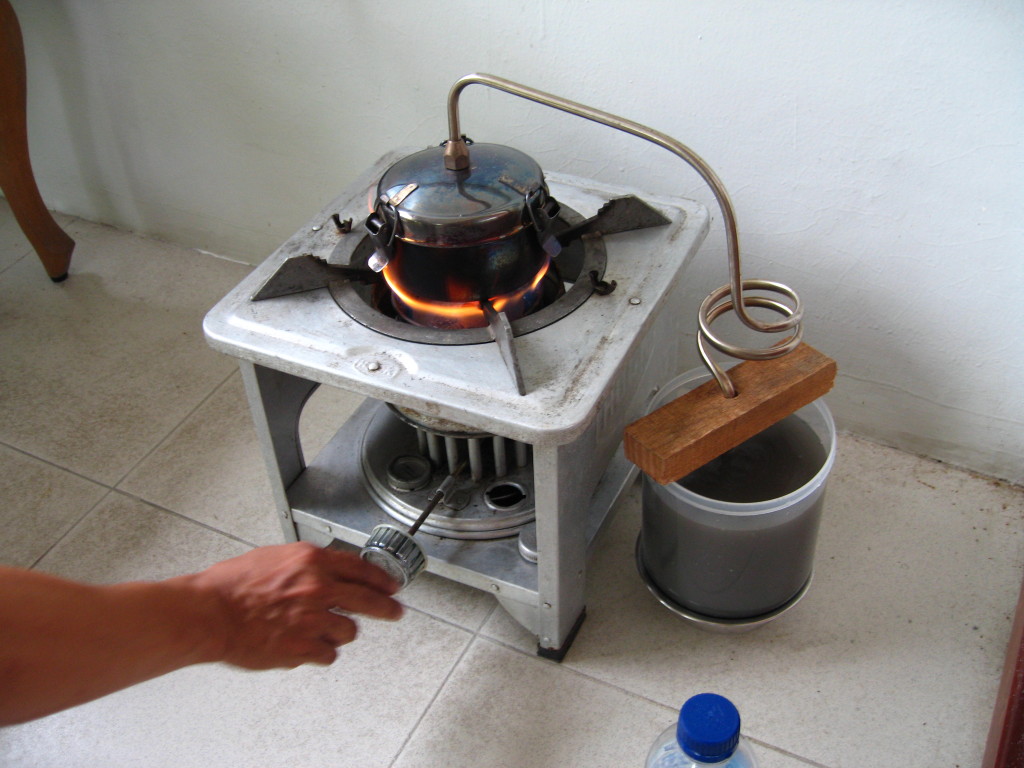
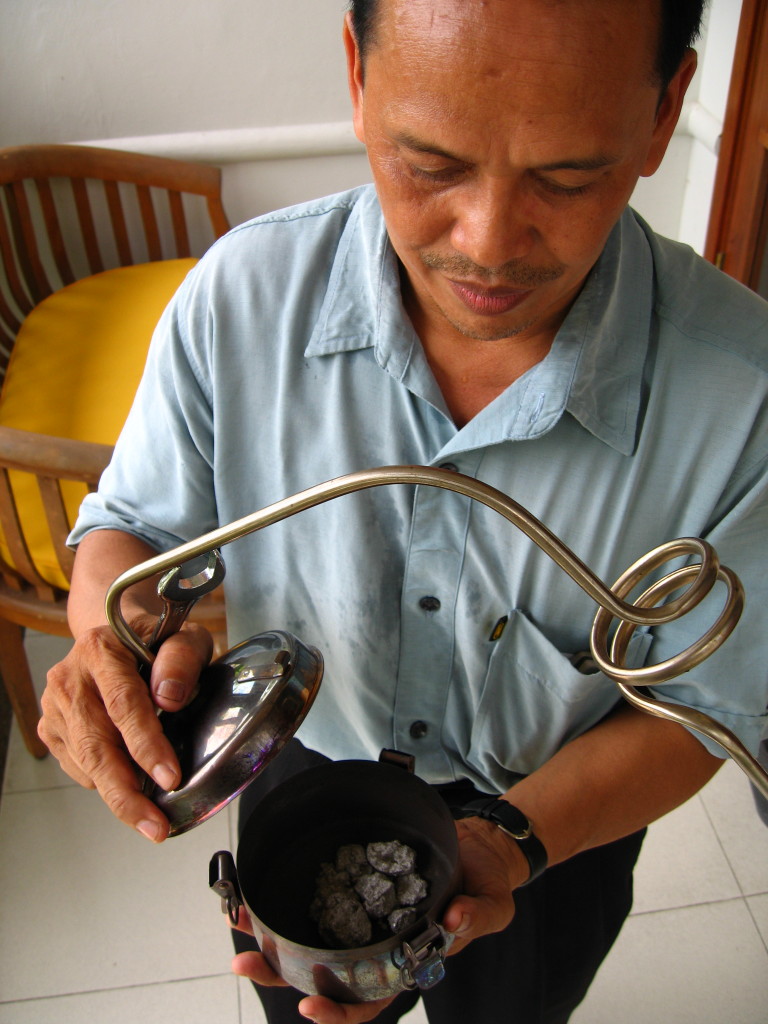
Retorts
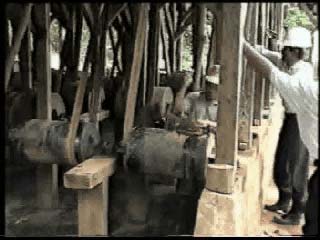
Replacing Amalgamation of the Whole Ore
· In Indonesia: instead of
amalgamating the whole
ore we are using
cyanidation in the ball or
rod mill
· Preliminary results:
· 52% Au recovery in 30
min. grinding, 6 hours of
Indonesia, 2002
cyanidation
· When using gravity only
Recovery = Gold in Concentrate x 100
or magnetic sluice: only
Gold in Ore
7% recovery
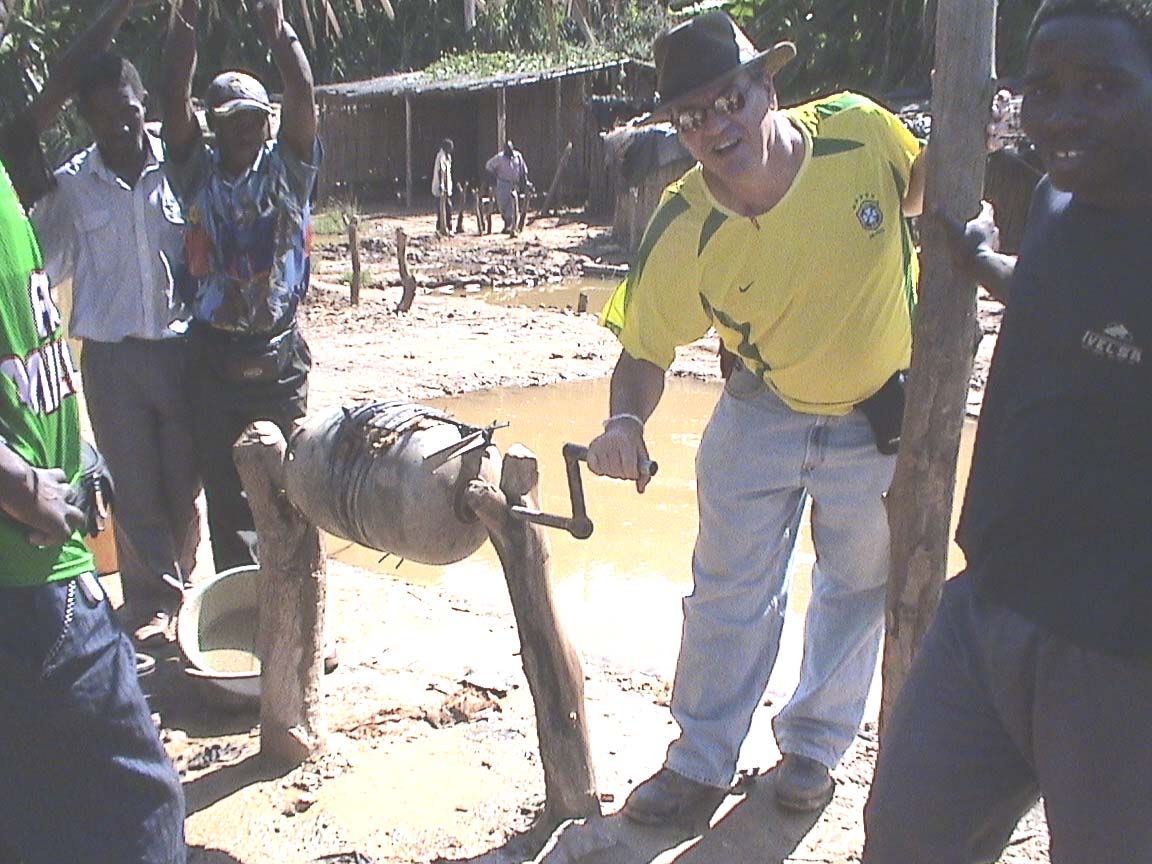
Introducing Mercury Free Methods...
CTA
Marcello
Veiga
Good Practice Mozambique, 2005
Policy and Governance
· GMP, working with governments and
communities has developed and
implemented various new policies such as:
mercury trade and management laws in
Indonesia,
National mercury and mining labour laws in
Zimbabwe,
policies to legalize and assist indigenous
miners in Sudan,
and microfinance policy in Tanzania.
Strategic Plan
on Policy and Governance
1. International Guidelines on Mercury Management
2. National Law on Mercury Management
3. Promotion of Awareness and Compliance
4. Capacity-Building and Technology Transfer
5. National Mercury Trade
6. Transboundary Mercury Trade
7. National ASM Sector Policy
8. International and Regional Law and Policy
9. Micro-Credit Initiative
10. ASM Cooperative Organization
11. Fair Trade Gold
12. Global Partnerships for Development
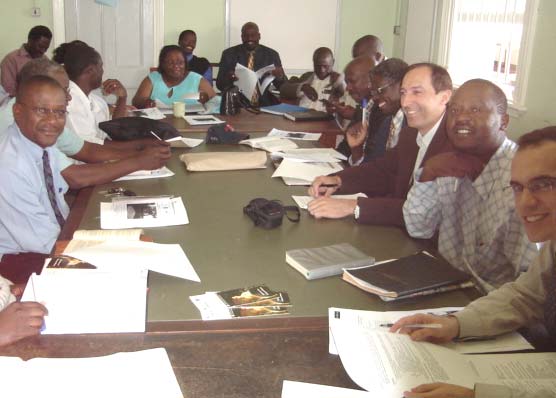
Policy review workshop with 30 Mines Officers
Implementation
· Bottom-up and top-down approaches by
engaging and training:
· (i) local stake holders such as miners,
local organisations and local governments,
and
· (ii) regional and national governments, and
international organisations and NGOs
Top-Down & Bottom-Up Policy Perspectives
requirements
compliance
enforcement
·laws and regulations
·Community awareness
·Monitoring and
·Education
legal sanctions
·Community-driven
·Community-based
codes of conduct
·Training
monitoring
·Organizational
·Self-enforcement
capacity-building
·Incentive-based
approaches
community capacity-building
Future steps
· Currently, pilot activities are focussed on
developing capacity and new policy measures in
six countries (Brazil, Indonesia, Laos, Sudan,
Tanzania, and Zimbabwe)
· A next step is to develop regional centres of
excellence that will act as a permanent
resource for small scale miners over the long
term
Many knowledge gaps remain
· Quantities of Hg and Au
· There is little high
· Transport/Fate
quality information or
· Methylation
· Retorts
consensus on many
· Fume Hoods
of these
· Risk (Health & Safety)
· Action and improved
· Monitoring
understanding are
· Cyanide
needed urgently
· Prevention
· jointly and continuously
· Remediation
· continuous innovation
· Alternatives
Why is this information needed?
· Knowledge mobilizes decision makers at all
levels
Miners
Local government
Local people
Regional government
National government
Private sector
General public
International bodies & awareness efforts
· All want good information
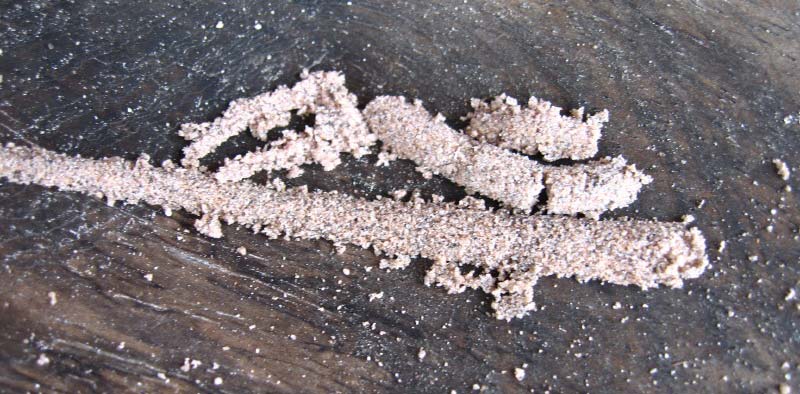
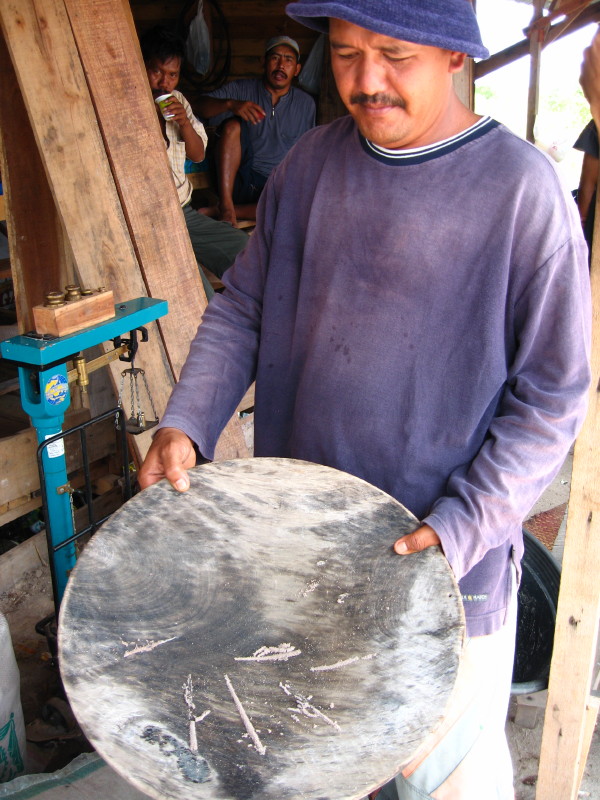
V. Big Knowledge Gap
Alternatives
· Is there any economic
activity that can replace or
enhance gold based
economy?
· Large scale mining?
· Coal?
· Aggregate?
· Landuse?
· Heavy mineral mining?
· Must add value to these,
create markets
· Investment
· 280 million $ since 1989!
Goal 50% in 10 years
· If the GMP approach is broadly embraced,
we believe that at least a 50% reduction in
mercury demand in small scale mining is
attainable in 10 years time (by 2017)
Current - 2007
2017
500 Tonnes:
elimination of
20%
whole ore
amalgamation
93%
400 Tonnes:
also use of
retorts
80%
93%
200 Tonnes:
1000 Tonnes
also mercury-
free alternatives
%
Conclusions
· GMP is currently a pilot program
· It is a community assistance model
· It is receiving widespread support
· However, only a fraction of the global ASM
population has been touched
· Progress could evaporate without further
efforts
· Further commitment is needed
Conclusions
·
The 10-year goal of reducing mercury consumption in
ASM by over 50% is ambitious but achievable
·
The GMP calls on all nations to achieve the above goal
by:
pledging commitments to programs to help build community
capacities
reducing mercury supply through export controls and other
mechanisms that encourage transitions to alternative
technologies
·
Importantly, it is unethical for the second to happen
without the first
·
Further information on the activities of the Global
Mercury Project can be obtained at the project website:
www.globalmercuryproject.org
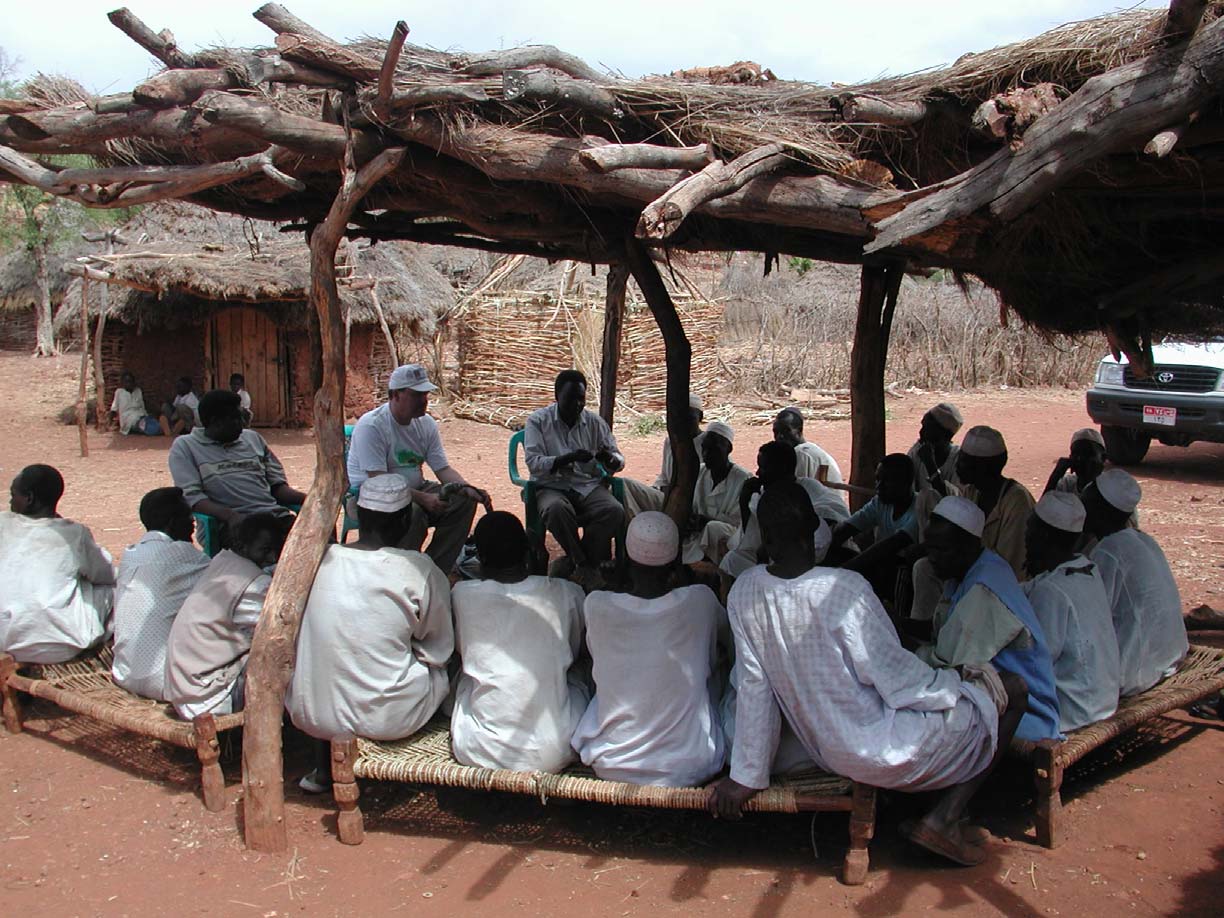
Education is Everything
Sudan, 2004
But it works both ways
· Visit an ASM site near you soon!
Acknowledgements
· GEF
· Marcello Veiga (Canada/Brazil)
· UNDP
· Sam Spiegel (Canada)
· UNIDO
· Rini Sulaiman (Indonesia/USA)
· Univ. Victoria
· Budi Susilorini (Indonesia)
· EU Commission · Randy Baker (Canada)
· ECOTEC
· Shefa Siegel (Canada)
· COWI
· Pablo Huidobro (Vienna)
· Svitlana Adler (Vienna)
· Jacob Maag (Denmark/COWI)
· Many others
Document Outline