
GMP News, n. 06, January, 2006
Global Mercury Project
Project EG/GLO/01/G34: Removal of Barriers to Introduction of Cleaner Artisanal Gold Mining and Extraction Technologies
From the Editor
This issue highlights fieldwork conducted at project
sites as the GMP moves toward completing its
implementation objectives. The Project Coordination
Unit is working closely with Assistant Country Focal
Points and many local implementation partners to
introduce Technical Demonstration Units, launch
mercury awareness campaigns, and return the results
of health assessments to people in communities. In
addition, an expanded policy group is collaborating
with national experts to draft and revise regulatory
reforms dealing with mercury use, while looking at
trade, regional policy frameworks, community
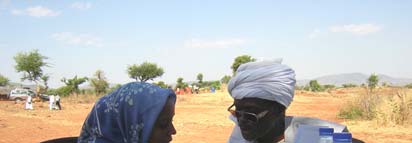
Sudanese nurse discusses health study with the head of
development, and economic policy. Mercury
Gugub village
containment strategies are being developed for Brazil
and Indonesia using remote sensing and GIS, and
Implementing in Sudan
health solutions for people with mercury poisoning are
being examined.
In November 2005, a GMP educational campaign
Implementation in the Field
was implemented in Sudan. The objective was to
teach the local trainers, including the Geological
The March 2004 GMP News reported on the
Research Authority of the Sudan (GRAS), local media
GMP's intervention model (No. 4, p.1), namely the
professionals, and a nurse who was trained in
Transportable Demonstration Unit (TDU). The
mercury poisoning, behavior change education
concept of mobile training facilities followed the
strategies, and family health issues. The action
recommendations of the International Labour
started in the village of Gugub, where trainers were
Organization's 1999 Tripartite Meeting on Small-Scale
taught by GMP Experts how to deliver awareness
Mining. The emphasis of the TDU is to transfer skills
campaigns to miners. Once on site, trainers
and technology through education. The GMP is
demonstrated screening, sluicing, and panning
fundamental y an education project whose mission is
technologies to miners working in the village.
to build local resources and capacity.
The campaign received significant attention from
In July, the PCU announced its education and
local television when Blue Nile State television
training would focus on three areas: 1) reducing
produced a 45 minute documentary of the events. The
mercury pollution by introducing simple and cheap
report featured interviews with community leaders,
retorts, teaching miners not to amalgamate whole
and was broadcast across the state in the week
ores, and eliminating the use of copper plates; 2)
following the campaign. To create a public presence
helping miners increase their profits by developing
in the villages, educational materials about the use of
more efficient processes and technology; and 3)
mercury were translated to Arabic and distributed to
training health care professionals to work with
miners as teaching aids. Meanwhile, the results of the
communities on mercury poisoning, as well as HIV,
2004 health and environmental studies were delivered
malaria, and other infectious disease.
to the communities. Participants in the study were
These three elements less mercury, more gold,
pleased to learn that only about 1% of the population
better health are the foundation of the GMP's
tested for elevated mercury levels. Levels appeared to
educational awareness campaign. Implementation
be so much lower than in other mining sites for two
includes: identifying local partners to operate the
reasons: mercury was only recently introduced to gold
TDUs; training teachers and health workers; and
mining in Blue Nile State and most of the gold is
communicating the educational content of the
relatively coarse-grained alluvial material which does
awareness campaign to miners and local
not require amalgamation. Participants were provided
communities.
health counseling based on their age, and how much
mercury they are exposed to.
The Global Mercury Project (GMP) began in August 2002. The GMP demonstrate ways of overcoming barriers to the adoption of best
practices and pollution prevention measures that limit the mercury (H
g) contamination of international waters from artisanal and small-scale
gold mining (ASM). Six countries are participating in the GMP: Brazil, Lao PDR, Indonesia, Sudan, Tanzania and Zimbabwe. In addition, the
GMP aims to introduce cleaner technologies, train miners, develop regulatory mechanisms and capacities within Government, conduct
environmental and health assessments (E&HA) and build capacity in local laboratories to continue monitoring Hg pollution after the project.
GMP News, n.6, Jan. 2006 2
Meeting in Zimbabwe
Galangan, Central Kalimantan, the GMP is
concentrating on training and building capacity of the
Also in November 2005, a three day stakeholder
local partners to become facilitators for the campaign
meeting was held in the town of Kadoma, where
activities. This includes working with local community
participants reached agreement on critical
development NGOs, as well as provincial and district
components of the TDU for implementation in early
health, environmental, and mining officers. Fol owing
2006. In attendance were partners from the Zimbabwe
the training, the GMP will take over TDU activities,
School of Mines, the Institute for Mining Research, the
providing miners educational opportunities to learn
Ministry of Mines, and the Kadoma District Health
alternative processing techniques and about mercury
Administration.
health issues. The TDU will travel to several locations
In Zimbabwe, the GMP is planning TDU activities
to reach different groups of miners and is expected to
for 15 separate communities. TDU trainers will run two
operate for nine months.
week seminars concentrating on four areas: 1)
Brazil
working with district stamp mill operators to introduce
alternatives to copper plate amalgamation; 2) teaching
The awareness campaign in Brazil started in
workers how to use retorts and how to protect
November with the return of health results to miners
themselves and their families from exposure to
from São Chico and Creporizinho. The 704 medical
mercury vapor; 3) teaching miners to make their gold
exams and chemical analyses of blood, hair, and
processing more efficient; and 4) delivering results of
urine were delivered and explained to the affected
health and environmental studies to communities.
communities. Many of the miners in São Chico could
The stakeholder meetings were also attended by
not be located because of the deactivation of the
Cont Mhlanga, Director of the Amakhosi Theatre
mining activities in this area. In addition, several
Company, who described a plan to use community
education seminars were held. Miners were advised
theatre as a tool for initiating dialogue about mercury
against consuming fish from the local reservoir, which
safety. Mhlanga is also producer of a weekly
has tested high for levels of mercury. Interest in
television drama about Zimbabwe's artisanal gold
demonstration of retorts was also high, in part
miners. Meanwhile, Zimbabwe's ACFP is working
because of the rising cost of mercury in the region.
with the Ministry of Health in Harare to develop a
This stage of the campaign was designed primarily to
national mercury awareness campaign.
announce the TDU and full awareness campaign that
Laos
will be conducted in the first half of 2006. More than
1000 educational posters and brochures were
In Laos, implementation of GMP project objectives
distributed, and a local poet, Mr. Edmilson Santini,
will take place within the eight villages on the Nam Ou
composed rhymes (locally known as "cordel") to
and Mekong rivers. These villages were the subjects
deliver 500 brochures entitled: "Don't cry for the
of the 2003 Environmental and Health Assessment.
spilled mercury." CDs with Mr. Santini's songs were
Implementation will kick-off this Spring with
also distributed, along with T-shirts given to miners.
stakeholder workshops in Vientiane and Luang
Prabang. The Vientiane workshop will target
government ministries and departments, including the
Department of Geology & Mines, Ministry of Health,
and Ministry of Science, Technology & Environment.
The Luang Prabang workshop will be dedicated to
training local officials, especially village heads, the
Women's Union and Youth Front, and a subcontractor
who will carry out the TDU and Awareness Campaign
activities. Other potential partners in GMP
implementation could include the World Bank, World
Wildlife Fund, Earth System Laos, and Ecolao. Field
implementation will follow the stakeholder workshops,
focusing on introducing simple manual sluice boxes, a
variety of carpets, and retorts.
Indonesia
In Indonesia, implementation of the TDU and
Awareness Campaign activities begins in February.
Awareness Campaign in Brazil
For North Sulawesi, where the majority of artisanal
miners are mixing both cyanide and mercury, the
Participating with the Center for Mineral
initial focus will be on promoting mercury-free
Technology and the Ministry of Health were the
cyanidation techniques. This will be followed by a
Association of the Gold Miners of Tapajos (AMOT);
public awareness and media campaign to increase
the Vice-Mayor of the municipality of Itaituba, and
knowledge about the health hazards related to
representatives from the municipal departments of
mercury and cyanide exposure. The GMP will be
Mining & Environment, and Health. AMOT is currently
partnering with local NGOs to implement the
coordinating interested parties to participate in next
campaign over the next year. Meanwhile, in
steps of the campaign.
GMP News, n.6, Jan. 2006 3
Policy Progress in Zimbabwe
European Union Bans Hg Trade
In December, a series of stakeholder meetings
Marking the most stringent curb on mercury pollution
with the Government of Zimbabwe resulted in a
to date, the European Union Council of Environment
consensus on draft regulations for mercury
Ministers agreed in 2005 on a landmark decision to
management. The regulations establish controls
end al trade of mercury by the European Community.
aimed at reducing mercury emissions and exposure,
The EU decision, reached June 24 in Luxembourg,
as well as regulating purchase, trade, and storage.
calls for a phase-out of mercury trading by no later
The draft Regulations on Mercury Management
than 2011. It also reiterates the EU's commitment to
provide standards for amalgamation, including the use
achieving a global phase-out of al mercury
of retorts, and for reducing mercury in tailings.
production, use, and trade, and reinforces the need
Specific provisions protect pregnant women and
for binding international law. "This is the type of
children from exposure, and include measures for
concrete action we need to reverse the tide of
water protection, guidelines for milling centre
mercury pollution in the developing world," says
managers, and mechanisms for community-based
Marcello Veiga, Chief Technical Advisor of the GMP.
enforcement and monitoring. A series of workshops
"It is getting harder for the world's exporters of
facilitated by UNIDO were attended by national and
mercury to justify continuing to trade mercury on the
local officials from the Ministry of Mines, Ministry of
market. The urgency of the public health and
Environment, and Ministry of Health, as well as mining
environmental disaster is too great to ignore." Until
associations and local organizations. These talks
now, mercury has always been traded freely as a
reinforced the shared commitment to phase out
commodity on the world market. These EU trade
mercury in ASM through policy measures. The draft
restrictions are the first effort to prevent the spread of
regulations are now being reviewed by the
mercury to countries in Africa, Asia, and South
Government in advance of the 2006 Parliamentary
America, where mercury use is prevalent, particularly
Review of the Mines & Minerals Act.
in small-scale gold mining. The EU, U.S., and China
are the main exporters of mercury. A phase-out of
Microfinance Kicks-off in Tanzania
mercury use in North America and Europe has made
the developing world the primary destination for the
November marked the launch of the Microcredit
world's mercury.
Initiative in Tanzania. Following consultations with
local banks and microcredit institutions, UNIDO held
Change in GMP Administration
education workshops with miners on different financial
options through micro-savings and loans. Education
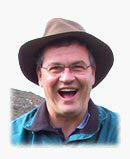
In March, Dr. Marcello Veiga
focused on how village-banking can support
was installed as Chief
technology transfer to increase productivity and
Technical Advisor for the
improve safety. Working with the Ministry of Minerals
GMP, taking over for the
& Energy, UNIDO obtained community perspectives
retired Dr. Christian Beinhoff.
for the development of a Code of Practice to
Dr. Veiga, who served as the
supplement the 1999 Mining Regulations.
GMP's Small-Scale Mining
Expert from 2002-2004, has
Global Task Force Meeting,
worked on mercury and mining
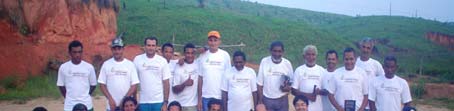
Salvador, Bahia, Brazil, Sept. 2005
issues for 25 years, and is
widely regarded as one of the world's leading mercury
This GTFM of the GMP included many new faces
experts. In addition to mercury, Dr. Veiga has worked
after several project areas were expanded in April.
extensively on environmental and social issues
Many people were meeting for the first time, and the
related to mining. He is also Associate Professor of
conference served as an important opportunity to
Mining Engineering at the University of British
provide updates about the progress of specific areas
Columbia in Vancouver.
and the direction of the project as a whole. During the
meeting, project objectives and internal processes
Mercury Conference in Madison
were clarified, and plans put in motion to implement
Technical Demonstration Units and other key
Mercury pollution from artisanal gold mining will
interventions in the six GMP pilot sites. In addition,
feature prominently on the agenda of The
there was progress made toward establishing an
International Conference Series on Mercury as a
effective system for evaluating GMP successes, and
Global Pollutant (ICMGP). Scheduled for August
working with countries to develop environmental
2006 in Madison, Wisconsin, the biennial ICMGP is
policy for mercury. External participants from NGOs,
the world's largest gathering of international mercury
the private sector, academia, and the medical
experts, which is expected to draw more than 1000
community provided welcome contributions, helping to
participants. The GMP Chief Technical Advisor, is on
expand the overal expertise of the group, and
the conference planning committee, and the GMP and
establishing the GMP as a focal point for policy
conference organizers from the University of
discussions about mercury use in artisanal gold
Wisconsin's Aquatic Sciences Center have been
mining. Long term objectives for implementing the
coordinating media activities, including two syndicated
GMP and envisaging a second phase of the project
radio spots featuring interviews with the CTA:
were also discussed.
http://ewradio.org/program.aspx?ProgramID=4126
http://ewradio.org/program.aspx?ProgramID=4147






GMP News, n.6, Jan. 2006 4
Activities 2005
Plans for 2006
TDU and Awareness Campaign Implementation in
· Implementation of TDU and Awareness campaign
Sudan
in Brazil, Indonesia, Laos, Sudan, Tanzania, and
Global Task Force Meeting in Brazil
Zimbabwe
Regional Task Force Meeting in Zimbabwe
· Development of further public-private partnerships
Terms of Reference of TDU for Indonesia
· Drafting of International Policy Guidelines for
Draft Mercury Regulations for Zimbabwe
Mercury Management in ASM
Expansion of PCU Policy Unit
· Development of Mercury Mitigation and
Recruitment of Experts for Micro-financing
Containment Strategies for Brazil and Indonesia
Publication of Protocols for Environmental &
· Examination of potential healthcare solutions for
Health Assessment
people contaminated by mercury
Development of Local Implementation partners for
· Global Task Force meeting in Tanzania
Laos
· Participation in 8th Int. Conf. of Mercury as a
Naming of new Chief Technical Advisor
Global Pollutant, Madison, Wisconsin, Aug. 2006
Return of Health Results in Brazil and Sudan
· Develop policy measures in all 6 GMP pilot
Launching of Awareness Campaign in Brazil
countries
Participation in GEF International Waters
· Development of Technical Training Manual for
Conference
TDU operators
Production of brochures and media materials for
Awareness Campaign
Participation in the Steering Committee meetings
in preparation of the 8th Int. Conf. of Mercury as a
Global Pollutant, Madison, Wisconsin
For further information contact the Project Coordination Unit:
Dr. Marcello M. Veiga
Chief Technical Advisor
GMP - Global Mercury Project
UNIDO United Nations Industrial Development
Organization
Vienna International Center, D1278
PO Box 300, A-1400 Vienna, Austria
E-mail: M.Veiga@unido.org
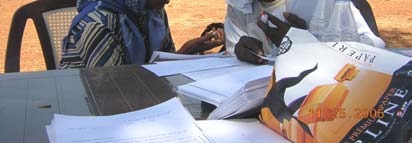
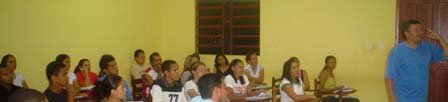
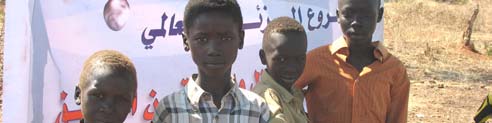
Kids in the training-the-trainers session in Sudan.
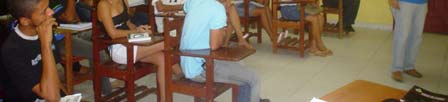
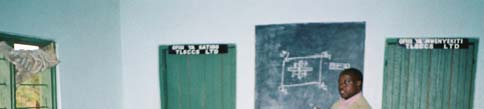
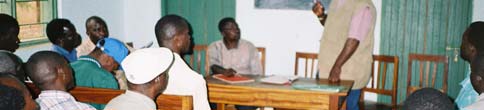
Mining officers in Tanzania discuss the GMP strategies
Sam Spiegel and Dennis Shoko from GMP team meet with
Zimbabwean authorities to discuss policy and micro-
financing.