

GMP News, n. 05, December 2004
From the Editor
Rwamagasa artisanal gold mining area and 41 non-
exposed people from a nearby control area was
In this issue we highlight the results from the
assessed using state of the art in clinical, neurological,
environmental and health assessments conducted in
neuro-psychological and toxicological l tests by a team
mercury-affected hotspots in Brazil, Indonesia and
of experts from the Institute of Forensic Medicine,
Tanzania as well as the fol ow-up activities for the
Ludwig-Maximilians University, Munich. Mercury
dissemination of results and training of local health
concentrations in the bio-monitors urine, blood and
authorities. Additional y we will report on training
hair were significantly higher in the exposed population
activities for laboratory technicians in applying state of
from Rwamagasa compared with the control group,
the art methods in monitoring mercury pollution.
and amalgam burners showed mercury levels above
the toxicological threshold limit in urine, blood and
Results of Environment and Health
hair. Mercury intoxication was diagnosed in 25% of
the amalgam burners from Rwamagasa. In addition,
Assessment in Tanzania
intoxication was also detected in people that had
formerly worked with mercury and amalgam. Inorganic
The environmental assessment demonstrated
mercury from mercury vapour, rather than organic
that although the heavy mineral tailings are highly
mercury from fish or agricultural crops, contributes
contaminated with mercury, dispersion of this material
to the high body burden of the artisanal miners.
into the streams and onto agricultural soils appears
Extremely high mercury concentrations were detected
to be quite restricted. Generally low concentrations
in two out of five breast-milk samples from nursing
of mercury occurred in most of the analyzed soils
mothers who worked as amalgam burners. This is
used for cassava, maize, and rice cultivation. Higher
an important discovery because mercury can cause
mercury in urban soils is probably caused by air borne
severe damage to the developing brain. The exposure
transport and deposition of mercury released during
of the whole community to mercury is reflected in
the burning of amalgam. Although mercury is high in
raised mercury levels in the urine, and the detection
some vegetable plot soils, mercury in vegetable, rice
of the first symptoms of brain damage such as loss of
and maize samples col ected from the agricultural
coordination, tremor and movement disorders. People
areas impacted by mercury contamination is generally
from Rwamagasa who are not directly involved in
low. Fish are highly sensitive bioindicators of mercury
amalgam burning have a higher mercury burden than
contamination so it is not surprising that mercury
the control group, although the majority of these people
in fish col ected from contaminated ponds close to
are not intoxicated. The mercury burden in the control
Rwamagasa exceed the WHO recommended standard
group is the same order of magnitude as in western
for the protection of health of vulnerable groups. The
industrial countries. Recommendations were made
impact of mercury contamination on fish in the lower
by UNIDO regarding the reduction of mercury as an
reaches of the Malagarasi River and the international
environmental and health hazard.
waters of Lake Tanganyika, located about 400 km
After the CTFM, an awareness raising campaign for
downstream of Rwamagasa, is not readily discernible,
local health authorities was started in the field (Geita
probably because dispersion of mercury is inhibited by
area) by a team of local and foreign experts. About
the extensive swamps located between Rwamagasa
19 health care providers from various mining areas
and Lake Tanganyika.
in Geita district received training on awareness for
Exposure estimates indicated that the local people
mercury as a health hazard from 20th to 24th October
should not be exposed to dangerous levels of mercury
2004. The four-day intensive training covered various
if they continue to eat fish from Lake Victoria and locally
topics, including mercury as a health hazard, medical
grown crops. However, consumption of fish caught in
treatment and solutions to reduce mercury exposure.
highly contaminated ponds in the immediate vicinity of
Symptoms of a chronic mercury poisoning as well as
the mineral processing centres should be avoided.
health problems related to environmental, water and
The health status of 211 volunteers in the
sanitation, were equally covered during the training.
[cetem] jornal unido 05.indd 1
6/1/2005 16:09:30

Cooperation of GMP with National Ins-
7th International Conference on Mer-
titute for Minamata Disease (NIMD)
cury as a Global Pol utant Ljubljana,
Slovenia 27 June - 2 July 2004
The mission of CTA in May fol owed an official
invitation of the Institute and was undertaken at no costs
The purpose of the Conference was to promote
for the Project. Dr Eto, Director-General of NIMD, offered
sound management of mercury at local, regional and
to assist the Project with methyl mercury analyses in
global level and to enhance an interactive process
hair. That would enable the Project of making a fol ow-
between science, policy-making and society in
up on people in hotspots, who had been identified as
order to develop effective strategies and solutions
intoxicated. Some hundreds of samples wil be analysed
for addressing the adverse effect of mercury. The
free of charge. Additional y, GMP and NIMD wil join
scientific program consisted of short courses, oral and
efforts in a worldwide awareness campaign on mercury
poster presentations and roundtables. The results of
emissions from smal -scale gold mining. As a first step,
Global Mercury Project were presented in more than
the production of a video is envisaged to inform on
15 publications.
the emerging type of mercury pol ution in developing
countries. The filmwil encourageGovernmentstoaccept
assistance in overcoming barriers to the introduction
Results of Environment and Health
of cleaner technologies in smal -scale gold mining
Assessment in Brazil
including monitoring. NIMD wil apply for US$ 300,000
from the Government of Japan for the production of this
The environmental and health assessment (E&HA),
video and the dissemination of the film to high-ranking
in Brazil, was conducted by the Centre for Mineral
government officials visiting Japan.
Technology (CETEM) in col aboration with Evandro
Chagas Institute (IEC), under the general coordination
Training of laboratory technicians
of United Nations Industrial Development Organization
in USA and Brazil
(UNIDO) and was performed in two small scale gold
mining areas in the Brazilian Amazon: São Chico and
The training took place in Research Triangle Park/
Creporizinho villages, belonging to Itaituba Municipality.
North Carolina and Rio de Janeiro. Participants were
The results were presented in the 3th Task Force
introduced into the objectives of the GMP environmental
Meeting in Manaus, hold in April 26-27th and in Itaituba
and health monitoring program and trained in using
April, 28-29th.
LUMEX RA-915 for environmental monitoring of Hg
The health assessment part of the Global Mercury
pol ution. The course was based on principles of atomic
Project was designed to complement the environmental
adsorption and hands-on demonstration/application,
assessment, providing indications of the level of
operating the equipment and analyzing samples.
mercury poisoning and their health effects on Small-
Training included analysis of Hg in air, water, soil and
Scale Gold Mining communities either by exposure to
biological material (fish). After each chapter, participants
mercury vapors, by ingestion of contaminated food, in
had to undergo tests for checking the understanding and
particular fish as the most accessible protein in riparian
required skil s in calibrating/operating the equipment.
and communities, or both. Based on assessment of
Additional y, participants were trained in CETEM's
the pathways and bioavailability of mercury vapor and
method developed for analyzing mercury at a semi-
methylmercury to the mining communities, the heath
quantitative level in fish, urine, and inorganic samples.
assessment combined information from biological
For checking the understanding of participants and to
samples associated with medical exams to evaluate the
ensure their active participation, the same type of training
level of impact that the pol utant caused or may cause
as in RTP was applied. Practical exercises were carried
to individuals residing in "mining and environmental
out for determining Hg in fish, urine, soil, sediments and
hot-spots".
mining residues.
The results of the E&H Assessment in two gold
mining areas in Brazil showed high mercury levels all
Training in CETEM, Rio de Janeiro, Brazil
over the nearby water body close to São Chico vil age,
including sediments (averaging 4.10 µg/g) and aquatic
organisms (averaging 4.97 µg/g in fish), which showed
Hg levels much higher than the WHO recommended
limit of 0.5µg/g in fish. According to the present results,
São Chico has shown clear indications of Hg dispersion
from mining hotspots, reaching a distance at least as long
as 20 km. This presents of a major environmental and
health concern. The environmental factors responsible
for this particular Hg behavior, marked by its high
mobility, are likely to be linked to both the cyanidation
attempt and pasture fires. Most of the fish from São
Chico showed higher mercury levels than fish from
Creporizinho area. Additionally, in São Chico area the
highest levels of mercury bioaccumulation in fish were
found in Traira species, a carnivorous and appreciated
[cetem] jornal unido 05.indd 2
6/1/2005 16:09:31

species for consumption by local residents, extending
only to methylmercury, but also to inorganic mercury, in
the environmental risk to a health issue. In addition,
relation to Creporizinho.
Hg concentrations are much higher in aboveground
Within the control group, represented by the
parts of vegetable produces at São Chico study area
population not directly involved in gold mining
than in Creporizinho and this makes the vegetables
activities, it is observed that 13.9% of the population
produced in backyards of the village, a further potential
in São Chico present Hg levels in urine higher than
pathway of Hg exposure to the population, besides fish
10 µg/g creatinine, while in Creporizinho only 0.6%
consumption and inhalation of Hg vapour.
fal s in this range. With regard to Hg levels higher
than 50 µg/g creatinine in this group, only 1.5% of the
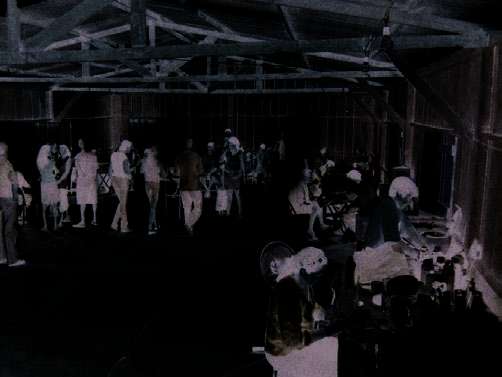
Environmental sampling in Tapajos
population
In São Chico falls in this range, whereas no individual
in Creporizinho does.
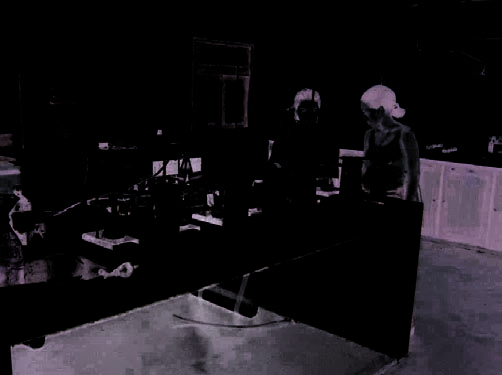
Health examinations in Tapajos
In relation to symptoms potential y associated
with mercury exposure, the significant incidence of
metal ic taste, paresthesia, tremors and palpitation
in humans from both areas should be high-lighted.
As for paresthesia, an incidence in the gold miners
The general health conditions observed in both
group as high as 30% in São Chico and 50% in
areas revealed to be very precarious, as demonstrated
Creporizinho has been observed, while within the
by extremely high incidence of malaria, parasithosis
control group in both areas this incidence decreases
and other diseases not related to mercury exposure.
to 1.5% and 0.5% respectively. These results
Since mercury burning in open air is a common practice
strengthen the need for a continuous monitoring on
in both areas since at least 1989, one could realize that
the health effects within the identified critical groups.
chronic exposure to inorganic mercury is widespread.
In addition to the critical groups identified by Hg
Moreover, pasture fires over Hg contaminated soils in
levels in biological samples, there are individuals
São Chico characterizes a further exposure route to
with neurological symptoms even if the Hg levels are
inorganic mercury for local population.
lower than in the critical groups.
Hg levels in hair samples are relatively low, 75%
of both populations presented Hg concentrations
Training of local people to perform fast Hg tests in fish
lower than 4 µg/g, lesser than the biological
exposure index (BEI, 10µg/g). However, the mean
Hg concentration in hair samples from São Chico
are the double of those from Creporizinho and there
are some individuals with Hg levels in hair above the
BEI. They could be considered as a critical group for
monitoring.
With regard to Hg in urine, the higher exposure to
inorganic mercury in São Chico is reflected by 20.2%
of the gold miners with Hg levels in urine between 10
and 50 µg/g creatinine, considered as a biological
limit, while in Creporinho only 13% fall in this range.
Moreover, 2.9% of the gold miners in São Chico and
1.2% in Creporizinho present Hg levels higher than
50 µg/g creatinine. This is an indication that the gold
miners in São Chico are more intensively exposed not
[cetem] jornal unido 05.indd 3
6/1/2005 16:09:33


Plans for November 2004 March
Activities April October 2004
2005
Country Task Force Meeting and Workshop on
Regional Awareness Raising Workshop on Mercury
Communication of Environmental and Health
Pol ution, Dakar, Senegal, November 2004
Situation in Selected Gold Mining Hotspots in the
Country Task Force Meeting Indonesia for
Tapajós Area, 26 - 29 April 2004
presentation of the environmental and health
Regional Awareness-Raising Workshop on Mercury
assessment, November 2004
Pol ution, 26-29 April 2004 in Bangkok, convened
Awareness raising campaign for local health
by UNEP-Chemicals.
authorities in Sulawesi, Indonesia
Tanzania Women Miners Association Conference
Discussion of TOR and institutional arrangements
in Morogoro, 4-8 May 2004.
for demonstration unit with Department of Geology
International Workshop on Harmonization of
and Mines, Lao PDR, Vientiane, November 2004
Mercury Measurements Methods and Models to
Production of a video on worldwide GMP activities
Assess Source-Receptor Impact on Air Quality and
Initiation of second international bidding for demons-
Human Health, 23-26 May, 2004, Maratea, Italy
tration equipment to be used in the 3 African countries
7th International Congress on Mercury as Global
Regional Awareness Raising Workshop on Mercury
Pol utant, Ljubljana, Slovenia, 27, June-2 July 2004
Pol ution, Tobago and Trinidad, January 2004
Workshop on "Small Scale Mining Is Here To
Country Task Force Meeting Lao PDR for
Stay", 22nd - 23rd July 2004, Mine-Entra Exhibition
presentation of the environmental and health
Centre, Bulawayo, Zimbabwe
assessment, 1st quarter 2005 fol owed by training
of local health authorities in Luang Prabang
Training of laboratory technicians in using LUMEX
analyzer at US EPA in Research Triangle Park/
Country Task Force Meeting Zimbabwe for
presentation of the environmental and health
North Carolina, 19-22 July 2004
assessment fol owed by training of local health
Training of laboratory technicians in semi-
authorities in Kadoma area, 1st quarter 2005
quantitative mercury analysis at CETEM, Rio de
Preparation of workshop on improvement of legal
Janeiro, 26-28 July 2004
framework of the small-scale gold mining sector for
Presentation of GMP to Ministry of Industry, Mines
3 African countries
and Energy of Cambodia, Phnom Penh, August
Finalization of Training Modules for officials,
2004
equiment manufacturers, miners.
Discussion of TOR for demonstration unit with
Department of Geology and Mines of Lao PDR,
Training of lab technicians at US EPA in RTP
Vientiane, August 2004
North Carolina
Preparation of Country Task Force Meeting
Indonesia and discussion of TOR for demonstration
unit, August 2004
Regional Awareness Raising Workshop on Mercury
Pol ution, Buenos Aires, 13-16 September 2004
Country Task Force Meeting on Communication of
Environmental and Health Situation in smal -scale
gold mining hotspots in the Geita District, Lake Victoria
Area, Dar es Salaam, Tanzania, 18 October 2004
Training of local health authorities in Geita District,
Tanzania, October 2004
Consultations with equipment manufactures in
Johannesburg, RSA, October 2004
Training of lab technicians in using LUMEX
[cetem] jornal unido 05.indd 4
6/1/2005 16:09:34