


















Removal of barriers to the
introduction of cleaner artisanal
gold mining and extraction
technologies
in Pak Ou and Chomptet districts.
Lao PDR.
Part B: Health Assessment Final Report.
December, 2004

















Removal of barriers to the introduction
of cleaner artisanal gold mining and
extraction technologies in Pak Ou and
Chomptet districts. Lao PDR.
Part B: Health Assessment Final Report.
December, 2004
UNIDO Contract No. 03/086. Project No.
EG/GLO/01/G34. Activity code: 420C51
André RAMBAUD (1), Florence PORTET(2),
Tayphasavanth FENGTHONG (3), Vanphanom SYCHALEUN(4),
with the collaboration of
Hansila PHOUPASEUTH(5), Khankhong MANIKHAM (6),
Thongsy CHITTIVONGSA and Bounpheng LATSAMY(7)
(1) UMR HydroScience, University of Montpellier 1, France
(2) Montpellier University Hospital, France.
(3) UNIDO expert, Vientiane, Lao PDR
(4) UNIDO expert, Vientiane Lao PDR
(5) Medecine Doctor Ventiane;
(6) Science Technology and Environment Agency, Luang Prabang, Lao PDR
(7) Luang Prabang Hospital, Lao PDR
Keywords : Mercury, health assessment, epidemiology, neurology, Artisanal Mining, Mekong,
Lao PDR
In references, this report should be cited as follows:
RAMBAUD A., PORTET F., FENGTHONG T., SYCHALEUN V. (2004) - Removal of barriers to
the introduction of cleaner artisanal gold mining and extraction technologies in Pak Ou and
Chomptet districts. Lao PDR. Part B: Health Assessment - Final Report. 40 p., 18 figures, 12
tables, 3 Appendix.
© University of Montpellier, 2004. All right reserved. No part of this publication may be
reproduced, stored in a retrieval system, or transmitted in any form or by any means, electronic,
mechanical, photocopy, recording or otherwise without the prior permission of University of
Montpellier.
2 Rambaud A., Portet F., Fengthong T., Sychaleun V. Draft final report
Global Mercury Project - Lao PDR Part B: Health Assessment
Executive Summary
Introduction
A contract was signed in July 2003 between the United Nations Industrial Development
Organisation (UNIDO) and the BRGM, in order to carry out the environmental and
health surveys in the Pak Ou and Chomphet districts in the Province of Luang
Prabang. The operation was carried out between French teams (BRGM, University of
Montpellier and CEMAGREF) and Lao teams (Department of Geology and Mines, the
Ministry of Agriculture, the Ministry of Health). The University of Montpellier headed the
health assessment survey. BRGM in cooperation with the Lao Department of Geology
and Mines were in charge of the coordination of the environmental assessment. The
sampling campaign and health survey took place from February 29th to March 20th,
2004. A previous field report (Laperche et al., 2004) details the information collected in
the field and the sampling methodology both for the health and environmental
assessments.
This report is the second part the Lao survey describing the health assessment. Part A
describes the environmental assessment (Freyssinet et al., 2004).
The aim of this survey was to collect environmental and health data in some selected
villages of Pak Ou and Chomphet districts and to evaluate the potential impacts caused
by mercury to the local population and their close environment.
Location
Based on the information reported in the sociological survey carried out by Earth
System Lao (2003), four villages of artisanal miners were selected for the health
survey. The villages are located in two different districts North of Luang Prabang:
- Houay Gno (district of Chomphet),
- Houay Koh (district of Chomphet),
- Latthahai (district of Pak Ou),
- Pak Ou (district of Pak Ou).
A fifth village was selected as a reference. The selection criteria were (i) the lack of any
mining tradition in the area, (ii) a similarity in sociological and environmental conditions.
The reference village, Houay Yen Gnai is located on the Khan river, south east of
Luang Prabang.
Rambaud A., Portet F., Fengthong T., Sychaleun V. Final report
3
In each of these villages both the environmental and health surveys were carried out.
Description of the cohort
A cohort of 191 adult people (>15 years) was recruited in 81 households selected by
the sociologist in these villages, Furthermore, 126 children were included in the study
and for hair sampling.
The cohort of 191 individuals was composed of 31 adults in the reference group, the
rest of the cohort was selected in villages of artisanal miners.
Health Assessment Questionnaire
The health survey was based on the protocols published by UNIDO for environmental
and health assessments dedicated to evaluate the impact of mercury related to
artisanal gold mining. The questionnaire was slightly modified by the Health team in
order to adapt it to the local conditions of Lao PDR.
Confidentiality was maintained regarding all health-related issues. The questionnaire
detailing their way of working and living, their former medical problems and the
perception of their health was systematically filled out.
Biological samples collection and analysis
Two nurses performed the sampling, with albuminury determination and blood pressure
measurement.
Samples of blood, breast milk, urine and hair were carried out on the 191 individuals.
Breast milk was sampled on 6 women of the cohort. Hair samples were also collected
on 126 children coming with their parents.
Blood, breast milk and urine mercury determinations were performed by CV-AAS at
Pasteur Cerba Laboratory in Cergy-Pontoise (France). Quantification limits were 1
µg.L-1.
Mercury in hair was analysed by BRGM laboratory. Hair samples were not washed
before analysis as recommended by Drasch et al. (2001). Total mercury was
determined by cold vapour atomic fluorescence technique (CV-AFS) using the
continuous flow approach.
Medical examination
Participants were examined to identify neurological disturbances, behavioural
disorders, tremor, cognitive capabilities, equilibrium, gait, reflexes, etc. Drasch et al.
(2001) have suggested to check the following mercury poisoning indicators:
- signs of bluish discoloration of gums
- ataxia
- tremor
4 Rambaud A., Portet F., Fengthong T., Sychaleun V. Draft final report
Global Mercury Project - Lao PDR Part B: Health Assessment
- test of alternating movements
- test of the field vision
- reflexes
- pathological reflexes
- salivation
- sensory examination
Analysis of Social and occupational data
The recruited group (children and adults) concerned all classes of age and is
representative of the people of these districts. The number of females was slightly
higher: 52% in the children sub-group and 56% in the adults one.
Artisanal small scale mining (ASM) is a seasonal work (January to April) that begun in
the mid-1970s, in this region. The sociological survey (Earth System Lao, 2003) and
the analysis of questionnaires show that artisanal mining is mostly performed by
women. However, both men and women operate equipment for ore extraction, while
women and children transfer the alluvium to and then pan the alluviums. The majority
of women (about 45%) practised gold panning during 10 to 20 years. Amalgamation
and roasting is mostly performed by women in their kitchen without any precaution.
In the studied area of the 4 selected villages developing artisanal mining activities,
there are about 2000 inhabitants. The gold production, according to the sociological
study, is estimated at 3 kg per year. The amount of mercury used to separate gold is
estimated to 2-2.5 kg. These amounts of mercury used by artisanal miners are very
small, at least 2 or 3 orders of magnitude less than compared to other studies (i.e.
Ghana, Brazil, and Philippines). We estimate the annual use of mercury per household
to less than 50g per mining season.
Results
Results on biological samples are expressed following 4 classes of exposure, based on
the HBM, BAT, BEI and WHO threshold values. This is in agreement with the strategy
adopted in several studies of the UNIDO Global Mercury Project. Class 1 (below HBM
1 value) reflects a non exposure situation, class 2, a low exposure, Class 3, a medium
exposure, Class 4, a strong exposure.
The exposure biomarkers (blood, urine and hair) were in class 1 (non-exposed
persons) for 90.8%, in class 2 (slight exposure) for 8.3% and in classes 3 + 4 (serious
exposure) for 1%.
Among 100 individuals declared using mercury (amalgamation and roasting), and 76 of
them did not show abnormal biomarker value.
The cohort is weakly affected by an occupational use of mercury. The biomarker "urine"
reflects preferentially an occupational exposure. Only 2.2% of the population showed
analytical results exceeding the class 1 value (7 µg/L). The few positive cases
concerned only females. This is pertinent as women are in charge of the amalgamation
and roasting tasks.
Rambaud A., Portet F., Fengthong T., Sychaleun V. Final report
5
Mercury contents in hair and blood illustrate mostly indirect exposure of people due to
the food. The highest values of these biomarkers are observed in the 3 villages along
the Mekong. This result could be explained by changes in the habits of local peoples
between the Nam river and the Mekong villages. A more important consumption of
fishes (particularly big carnivorous fishes) could provide an additional input of mercury.
There is not enough information on the diet of local people to verify this hypothesis.
Neurological abnormalities were frequently observed in the cohort but observed in 56%
of men and 41% of women, by comparison only 16% of men and 71% of women use
mercury. In the reference group, about 38% of the population shows neurological
troubles, whereas it is 48% in the exposed group. This difference is however not
significant.
These neurological abnormalities are definitely not linked to mercury because the
examined population was weakly exposed to small amounts of mercury and during too
short periods.
Conclusion and recommendations
Even if damages related to the use of mercury appear very limited, we observed a few
cases of contamination (i.e. a 2 years old boy with 16.8 µg Hg/g in hair, an 18 years old
girl, with 15 µg Hg/L urine and 11 µg Hg/g hair). These results show that despite the
use of small amounts of mercury, contamination cases may appear.
The most hazardous process observed is the roasting of the amalgam in the kitchens.
This local practice may favor the passive exposure of the family and particularly young
children. That is why prevention of sanitary risks is strongly recommended in a next
step.
An awareness raising campaign is recommended. Communication should be oriented
to women.
The practice of roasting in open air conditions, outside of the village, would be a first
step to reduce the exposure. This would avoid contamination of houses and the
passive exposure of children.
In a second step we recommend a prevention and educational programme dedicated
to women to perform the roasting process using retorts . As some women already a
bamboo shot to recover mercury, this kind of practice may be accepted by the local
population. A shared retort for the village or a group of artisanal miners could be a
cheep solution, knowing that roasting is not a daily task but in most of the cases a
weekly or even monthly task.
6 Rambaud A., Portet F., Fengthong T., Sychaleun V. Draft final report
Global Mercury Project - Lao PDR Part B: Health Assessment
Acknowledgements
Authors greatly appreciated the contribution and the motivation of the Lao team and the
Villagers who allowed to the success the field work.
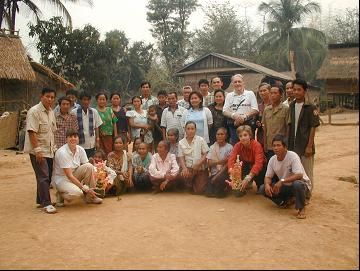
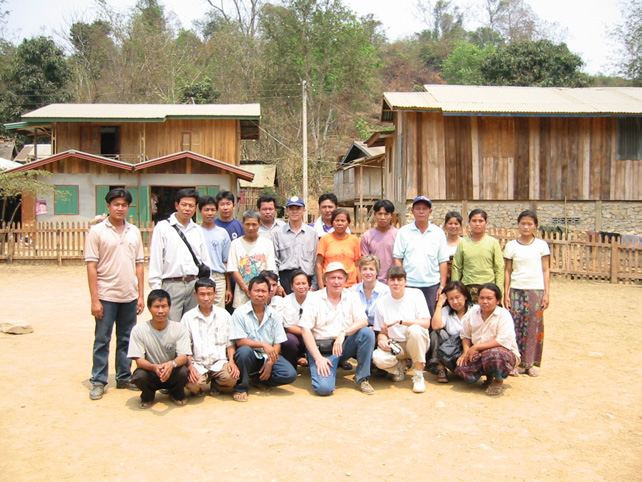
The team and villagers in Houay Koh
in Houa Yen Gnai
Rambaud A., Portet F., Fengthong T., Sychaleun V. Final report
7
Global Mercury Project - Lao PDR Part B: Health Assessment
Table of contents
1. Introduction ...............................................................................................13
2. Data
collection ..........................................................................................13
2.1.
Location of the study...................................................................................13
2.2.
Description of the cohort .............................................................................16
2.3.
Health Assessment Questionnaire..............................................................17
2.4.
Biological samples collection and analysis .................................................17
2.4.1. Sample preservation and shipping..............................................................18
2.4.2. Analysis of blood, urine and breast milk samples .......................................18
2.4.3. Analysis of hair samples .............................................................................19
2.4.4. Analysis of creatinine in urine samples.......................................................19
2.5. Medical
examination ...................................................................................20
3. Results .......................................................................................................23
3.1.
Analysis of Social and occupational data....................................................23
3.1.1. Age distribution of the cohort ......................................................................23
3.1.2. Artisanal mining occupation ........................................................................24
3.2. Exposure
assessment.................................................................................27
3.2.1. Standards and limit values for mercury.......................................................27
3.2.2. Classification of mercury body burden........................................................28
3.2.3. Mercury in blood, urine, breast milk and hair samples................................29
3.2.4. Interpretation of the biological results .........................................................34
3.3. Clinical
examination ....................................................................................37
Rambaud A., Portet F., Fengthong T., Sychaleun V. Final report
9
Global Mercury Project - Lao PDR Part B: Health Assessment
3.3.1. Results ....................................................................................................... 37
3.3.2. Discussion .................................................................................................. 38
4. Conclusions.............................................................................................. 40
10 Rambaud A., Portet F., Fengthong T., Sychaleun V. Draft final report
Global Mercury Project - Lao PDR Part B: Health Assessment
List of figures
Figure 1- Map of the region with the 8 selected villages (based on topographical map
1:100,000 Pak Ou sheet F-48-133). There is a mistake on the map, the name of one
of the village is Houay Koh instead of Vangle..............................................................................14
Figure 2 - Map of the region with the reference village (based on topographical map
1:100,000 Luang Prabang sheet E-48-1)..................................................................................15
Figure 3 - Drs V. Sychaleum, A.Rambaud, K. Manikham (foreground) and P.Hansila
(middle ground) filling out questionnaire with recruited persons..................................................16
Figure 4 - blood and hair sampling. .............................................................................................18
Figure 5 Medical examination (a) reflex control, (b) coordination test, (c) memory test
and (d) reflex control. ...................................................................................................................21
Figure 6 - Age distribution in the cohort according to the gender: (a) Children (b) Adults. .........23
Figure 7 - (a) Houay Gno digging of the alluvium in the riverbed of the Mekong; (b)
panning of the alluviums. .............................................................................................................24
Figure 8 - (a) Practice of artisanal mining activity in the cohort according to the gender
(%); (b) duration of mining activities according to the gender......................................................25
Figure 9 - Duration in years of mining activities in each village. ..................................................26
Figure 10 - A penicillin flask, sold at a jeweller's, with one "hung" of mercury. ...........................26
Figure 11 - HouayYen Gnai: the 18 year old woman with 15 µg/L urine and 11 µg/g hair
(on the right side, near her husband)...........................................................................................31
Figure 12 - Latthahai: cases in the village. ..................................................................................31
Figure 13 - Houay Koh: the 25 old woman with 3 concurrent biomarker values (with a
red shirt in the middle of her family).............................................................................................32
Figure 14 - Houay Koh: the 41 old woman with 12.2 µg/L urine and 13 µg/L blood (on
the right side of her family)...........................................................................................................32
Figure 15 - Pak Ou: seaweed and tomatoes drying. ...................................................................36
Figure 16 - Pak Ou: fishermen on the Mekong River. .................................................................36
Figure 17 - Percentage of individuals with and without neurological disorders in each
village. ..........................................................................................................................................37
Figure 18 - Percentage of population with neurological disorders (a) in the sub-group
showing biomarkers above the class 1 threshold; (b) in the < class 1 sub-group. ......................38
Rambaud A., Portet F., Fengthong T., Sychaleun V. Final report
11
Global Mercury Project - Lao PDR Part B: Health Assessment
List of tables
Table 1- Number of recruited people according to their age and gender in the 5
selected villages .......................................................................................................................... 16
Table 2: Summary of questionnaires and biological samples collected during the field
campaign. .................................................................................................................................... 20
Table 3 - Children age distribution in each village according to the gender................................ 23
Table 4 - Adults age distribution in each village according to the gender. .................................. 24
Table 5 - Mercury threshold values according to Drasch et al.(2001)......................................... 28
Table 6 - Classes of mercury body burden. ................................................................................ 28
Table 7 - number of individuals in each class of mercury body burden related to age
and gender in the cohort, including the reference group............................................................. 29
Table 8 - Number of samples in class 2 in each village, (*) 1 person with the 2
concurrent biomarkers, (x) 10 persons with the 2 concurrent biomarkers. ................................. 30
Table 9 - Number of samples in classes 3 and 4 in each village. ............................................... 30
Table 10 - Households with soil, domestic dust sampling and health survey. ............................ 34
Table 11 - Comparison of maximum concentrations of mercury in biological samples
detected in Ghana, Philippines and Lao PDR. ............................................................................ 35
Table 12 - Number of adults by gender with or without neurological disorders .......................... 37
List of appendixes
APPENDIX 1: Questionnaire for the sociologist
APPENDIX 2: Health Assessment Questionnaire
APPENDIX 3: Biomarkers results, Blood, urine and Hair analysis
12 Rambaud A., Portet F., Fengthong T., Sychaleun V. Final report
Global Mercury Project - Lao PDR Part B: Health Assessment
1. Introduction
A contract was signed in July 2003 between the United Nations Industrial Development
Organisation (UNIDO) and the BRGM, in order to carry out the environmental and
health surveys in the Pak Ou and Chomphet districts in the Province of Luang
Prabang. The operation was carried out between French teams (BRGM, University of
Montpellier and CEMAGREF) and Lao teams (Department of Geology and Mines, the
Ministry of Agriculture, the Ministry of Health). The University of Montpellier headed the
health assessment survey. BRGM in cooperation with the Lao Department of Geology
and Mines were in charge of the coordination of the environmental assessment. The
sampling campaign and health survey took place from February 29th to March 20th,
2004. A previous field report (Laperche et al., 2004) details the information collected in
the field and the sampling methodology.
This report is the second part of the Lao survey describing the health assessment. Part
A details the environmental assessment (Freyssinet et al., 2004).
The aim of this survey was to collect environmental and health data in some selected
villages of Pak Ou and Chomphet districts and to evaluate the potential impacts caused
by mercury to the local population and their close environment.
2. Data collection
2.1. LOCATION OF THE STUDY
Based on the information reported in the sociological survey carried out by Earth
System Lao (2003), four villages of artisanal miners were selected for the health
survey. The villages are located in two different districts North of Luang Prabang (Fig.
1):
- Houay Gno (district of Chomphet),
- Houay Koh (district of Chomphet),
- Latthahai (district of Pak Ou),
- Pak Ou (district of Pak Ou).
A fifth village was selected as a reference. The selection criteria were (i) the lack of any
mining tradition in the area, (ii) a similarity in sociological and environmental conditions.
The reference village, Houay Yen Gnai is located on the Khan river, south east of
Luang Prabang.
In each of these villages both the environmental and health surveys were carried out.
Rambaud A., Portet F., Fengthong T., Sychaleun V. Final report
13




















Global Mercury Project - Lao PDR Part B: Health Assessment
Figure 1- Map of the region with the 8 selected villages (based on topographical map 1:100,000
Pak Ou sheet F-48-133). There is a mistake on the map, the name of one of the village is
Houay Koh instead of Vangle.
14 Rambaud A., Portet F., Fengthong T., Sychaleun V. Final report




















15
:
Health Assessment
Project - Lao PDR Part B
ap 1:100,000 Luang Prabang sheet E-48-1).
Global Mercury
i
nal report
age (based on topographical m
F
n V.
l
e
u
y
c
ha
.
, S
T
g
n
engtho
.
,
F
F
aud A., Portet
b
Ram
Figure 2 - Map of the region with the reference vill
Global Mercury Project - Lao PDR Part B: Health Assessment
2.2. DESCRIPTION OF THE COHORT
A sample of 191 adult people (>15 years) was recruited in 81 households selected by
the sociologist in these villages, on the basis of a job description written by the
epidemiologist team of University of Montpellier (see Appendix 1) and sent to the Lao
sociologist via UNIDO, several months before the field work.
The cohort of 191 individuals was composed of 31 adults and 25 children in the
reference group, the rest of the cohort was selected in villages of artisanal miners. A
questionnaire detailing their way of living, their former medical problems and the
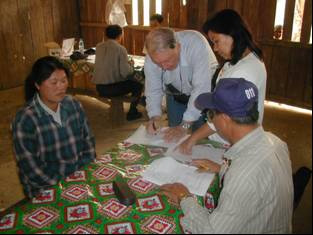
perception of their health was systematically filled out with the participation of Mrs Dr
Vanphanom Sychaleum, sociologist, Mr Dr Hansila Phoupaseuth, and Mr Khamkhong
Manikham (Fig. 3).
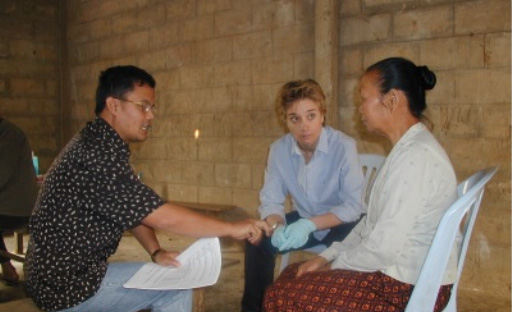
Figure 3 - Drs V. Sychaleum, A.Rambaud, K. Manikham (foreground) and P.Hansila (middle
ground) filling out questionnaire with recruited persons.
VILLAGES
Total
HouayYen
Houay Gno Houay Koh Latthahai Pak Ou (81 Hhs)
Gnai(10Hhs)* (17 Hhs )
(20 Hhs)
(18 Hhs) (16Hhs)
Adult Male
15
23
24
14
8
84
" Female
16
25
26
20
20
107
Children M. 14
15
13
13
6
61
Children F.
11
8
18
19
11
67
Total
56
71
81
66
45
319
*(Hhs) = Households
Table 1- Number of recruited people according to their age and gender in the 5 selected villages
16 Rambaud A., Portet F., Fengthong T., Sychaleun V. Final report
Global Mercury Project - Lao PDR Part B: Health Assessment
2.3. HEALTH ASSESSMENT QUESTIONNAIRE
The health survey was based on the protocols published by UNIDO for environmental
and health assessments dedicated to evaluate the impact of mercury related to
artisanal gold mining (Veiga and Baker, 2003). The "Health Assessment Questionnaire"
proposed by UNIDO was slightly modified by the Health team in order to adapt it to the
local conditions of Lao PDR (see Appendix 2).
Confidentiality was maintained regarding all health-related issues. The questionnaire
descrbing the way of working and living, the former medical problems and the
perception of the health was systematically noted.
2.4. BIOLOGICAL SAMPLES COLLECTION AND ANALYSIS
Two nurses, Mrs Thongsy Chittivongsa and Mr Bounpheng Latsamy, of the Luang
Prabang Hospital performed the sampling, with albuminury determination and blood
pressure measures.
Ultra-clean sampling procedures, handling, and preparations are of most importance if
precise and exact results are required in the analysis of mercury. The materials and
vessels to be used for the sampling were preserved under very strict protocol.
Polyethylene gloves are worn at all times during washing and handling.
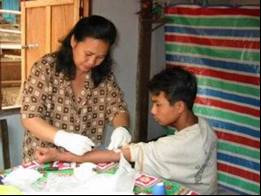
Samples of blood, breast milk, urine and hair were carried out on the 191 individuals.
Six opportunities of sampling breast milk were perfomed. Hair samples were collected
as well on 126 children coming with their parents.
The collected volumes for each kind of biological tissues was:
- 10 mL of blood collected in EDTA-coated vials and stored at 4 °C (NOT frozen) in a
refrigerator.
- 10 mL of breast milk or as much as possible - collected in PVC-bottles and stored at
4 °C (NOT frozen) in a refrigerator.
- 20 mL of spontaneous urine collected.; the samples were acidified after sampling by
adding some drops of 10% nitric acid.
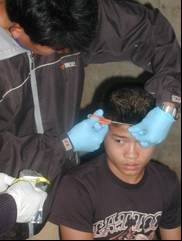
- a tuft of hair (3-4 cm long, approx. 100 mg) cut close to the scalp from near the
occipital portion of the head. The samples were stored in plastic bags.
Rambaud A., Portet F., Fengthong T., Sychaleun V. Final report
17
Global Mercury Project - Lao PDR Part B: Health Assessment
Figure 4 - blood and hair sampling.
2.4.1.
Sample preservation and shipping
All samples, sealed in double zip-lock bags, and sometimes tied together with magnetic
tapes were transported in pre-cooled ice-chests filled with frozen ice packs. Suspected
highly contaminated samples were preserved separately from less contaminated ones.
Urine and blood samples were preserved in a refrigerator at the hotel in Luang
Prabang.
Hair were kept in their secured bags at ambient temperature until analysis.
The samples of blood, breast milk and urine were transported by the Aramex Company
from Luang Prabang to the Pasteur Cerba Laboratory in isolated boxes with frozen
packs but without specific cooling. Air shipping via Bangkok was about 48 h, before
reaching the analytical laboratory in Paris.
2.4.2.
Analysis of blood, urine and breast milk samples
Blood, breast milk and urine mercury determinations were performed by Laboratoire
Pasteur Cerba in Cergy-Pontoise (France). Blood was mineralised previous to analysis
using a MAXIDIGEST MX350 (Prolabo). Total mercury was determined with an
automate, by cold vapour atomic absorption technique FIMS 400 (Flow Injection
Mercury System Perkin Elmer) using the continuous flow approach. The procedure
involves organic mercury decomposition giving inorganic mercury by using KMnO4 and
KBr/KbrO3 mixture. Quantification limits were 1 µg L-1.
18 Rambaud A., Portet F., Fengthong T., Sychaleun V. Final report
Global Mercury Project - Lao PDR Part B: Health Assessment
2.4.3.
Analysis of hair samples
Mercury in hair was analysed by BRGM laboratory. Between 20 mg to 50 mg of the
hair samples were weighed in a beaker and then transferred in a polypropylene bottle
in order to avoid errors in the weight measurement introduced by electrostatic forces
between the samples and the walls of the polypropylene containers. Hair samples were
not washed before analysis as recommended by Drasch et al. 2001. A 3mL volume of
aqua regia was added. The propylene bottle is corked and placed on a shaker to
agitate overnight (16 hours). Then the solutions were diluted with deionised water.
Total mercury was determined by cold vapour atomic fluorescence technique (CV-
AFS) using the continuous flow approach. The procedure involves an online reduction
of Hg2+ to Hg0 vapour by SnCl2. Typically, the reductant is 5%m/v SnCl2 in 15%HCl.
The mercury vapour is swept by argon as carrier gas to the AFS detector.
Quantification limit was 0.25 µg.g-1.
2.4.4.
Analysis of creatinine in urine samples
Creatinine was analysed by Pasteur Laboratories following the "Jaffé Method" , a
kinetic test without deproteinisation. Creatinine, in an alkaline picrate solution, forms a
colored orange-red complex. The delta absorbance at fixed times during conversion is
proportional to the concentration of creatinine in the sample.
The reagents and the standard are ready-to-use and stable up to the end of the
indicated month of expiry, if contamination is avoided and stored at 2 25 °C.
- R1: Sodium Hydroxide 0.16 mol/l
- R2: Pikric acid 4.0 mmol/l
- Standard: 2 mg/dl (177 µmol/l)
- Specimen: dilute urine 1 + 49 with distilled water
Normal range:
- Urine: 1000 - 1500 mg/24 h.
- Creatinine clearance; Men: 98 156 ml/min; Women: 95 160 ml/min.
The following table summarises the distribution of biological samples and the analytical
techniques used for mercury determination.
Rambaud A., Portet F., Fengthong T., Sychaleun V. Final report
19
Global Mercury Project - Lao PDR Part B: Health Assessment
Number
Detection limit Method / Laboratory
Questionaires 191
Univ.
Montpellier
Blood samples
190
1 (µg/l)
CV-AAS / Pasteur Cerba
Urine samples
191
1 (µg/l)
CV-AAS - Pasteur Cerba
Breast milk
6
1 (µg/l)
CV-AAS - Pasteur Cerba
Hair samples
317
0.25 mg/kg
CV - AFS - BRGM
Table 2: Summary of questionnaires and biological samples collected during the field campaign.
2.5. MEDICAL EXAMINATION
A specific part of the epidemiological survey was dedicated to neurological health
examination, as mercury is particularly noxious to the nervous system. The clinical
examination included a general questionnaire, neurological evaluation with a
standardized and extensive examination: analyse of standing, gait, movement,
motricity, sensibility, reflexes and cognition (global functionning, episodic memory,
short term memory, orientation to space and time, visuo-spatial skills). Details are
displayed in the questionnaire in Appendix 2.
A descriptive analysis of the neurological abnormalities has been performed.
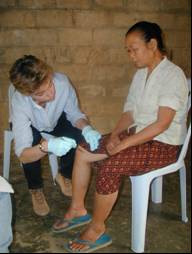
Participants were examined to identify neurological disturbances, behavioural
disorders, tremor, cognitive capabilities, equilibrium, gait, reflexes, etc. Drasch et al.
(2001) have suggested to check the following mercury poisoning indicators:
- signs of bluish discoloration of gums
- ataxia
- tremor
- test of alternating movements
- test of the field vision
- reflexes
- pathological reflexes
- salivation
- sensory examination
20 Rambaud A., Portet F., Fengthong T., Sychaleun V. Final report









































Global Mercury Project - Lao PDR Part B: Health Assessment
a
b
c
d
Figure 5 Medical examination (a) reflex control, (b) coordination test, (c) memory test and (d)
reflex control.
Rambaud A., Portet F., Fengthong T., Sychaleun V. Final report
21
Global Mercury Project - Lao PDR Part B: Health Assessment
3. Results
3.1. ANALYSIS OF SOCIAL AND OCCUPATIONAL DATA
3.1.1.
Age distribution of the cohort
The recruited group (children and adults) concerned all classes of age (Fig. 6) and is
representative of the people of these districts. The number of females was slightly
higher: 52% in the children sub-group and 56% in the adults one.
a
b
30
30
25
e
s
ons 25
20
20
M
M
15
15
r
of pr 10
F
10
F
be
5
5
0
0
num
number of children
15-
25-
35-
45-
55-
>65
0-<5
5-<10
10-<15
<25
<35
<45
<55
<65
age (year)
age (year)
Figure 6 - Age distribution in the cohort according to the gender: (a) Children (b) Adults.
The age distribution was homogeneously distributed between the 5 villages (Tab. 3 and
4).
Age
Houay Yen
Houay Gno
Houay Koh
Latthahai
Pak Ou
(year)
Gnai
M F M F M F M F M F
0-<5
4 8 1 3 4 4 3 2 2 2
5-<10
6 0 7 1 3 9 3 8 0 2
10<15
4 3 7 4 6 5 7 9 4 7
Total 14 11 15 8 13 18 13 19 6 11
Table 3 - Children age distribution in each village according to the gender.
Rambaud A., Portet F., Fengthong T., Sychaleun V. Final report
23
Global Mercury Project - Lao PDR Part B: Health Assessment
Age
Houay Yen
Houay
Houay Gno
Latthahai Pak
Ou
(year)
Gnai
Koh
M F M F M F M F M F
15-<25 4 4 7 7 3 5 1 4 0 3
25-<35 4 4 3 5 5 9 4 4 2 2
35-<45 2 4 6 7 7 4 1 5 0 3
45-<55 4 2 2 1 3 5 3 4 4 4
55-<65 0 1 4 5 3 2 5 3 1 6
>65 1 1 1 0 3 1 0 0 1 2
Total 15 16 23 25 24 26 14 20 8 20
Table 4 - Adults age distribution in each village according to the gender.
3.1.2.
Artisanal mining occupation
Artisanal small scale mining (ASM) is a seasonal work (January-April) that begun in the
region in the mid-seventies.
The sociological survey (Earth System Lao, 2003) and the analysis of questionnaires
show that artisanal mining is mostly performed by women. However, both men and
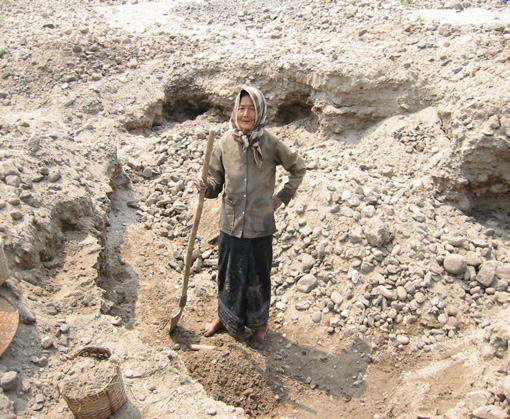
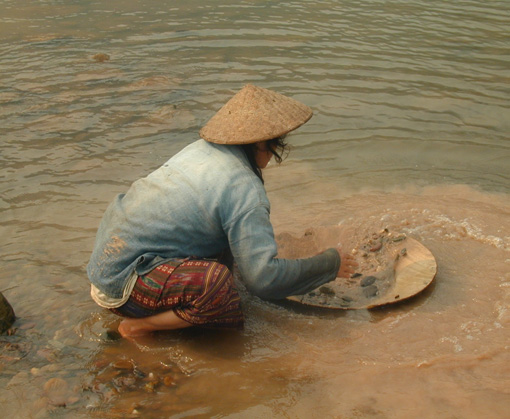
women extract the alluvium. Women and children transfer the alluvium to the riverbank
and pan the alluviums (figures 7 & 8). Most of the women (about 45%) included in the
cohort practised gold panning for 10 to 20 years.
Figure 7 - (a) Houay Gno digging of the alluvium in the riverbed of the Mekong; (b) panning of
the alluviums.
In most cases, women perform the gold extraction processes (panning and
amalgamation) with mercury and roasting which are usually carried out in the home).
Roasting is a task devoted almost exclusively to women, systematically performed at
24 Rambaud A., Portet F., Fengthong T., Sychaleun V. Final report
Global Mercury Project - Lao PDR Part B: Health Assessment
home in the kitchen's houses. There was no reported case where roasting was usually
performed outdoor, excepting in Pak Ou (See Freyssinet et al., 2004, pp. 30-36).
The mercury-gold amalgam is not heated on a daily basis, but rather stored until a
suitable amount is accumulated to be sold to a gold merchant. The rythm of roasting
depends on the gold production of the village, it may be on a weekly or monthly basis.
a
b
35
30
25
M
20
M
F
15
F
10
5
number of persons
0
2-<10
10-<20
20-<30
duration (years)
Figure 8 - (a) Practice of artisanal mining activity in the cohort according to the gender (%); (b)
duration of mining activities according to the gender.
Artisanal mining is a traditional activity in the studied villages. About 20-30 % of
population practiced ASM for 20 to 30 years in each village. There is a young
generation of people (20-40%) having a mining experience between 2 to <10 years,
except in Pak Ou which is the only village being influenced by the tourism activity.
There, the young generation is much less involved in artisanal mining activity, however
the middle generation remains strongly involved in the ASM with 70% of the sub-group
having 10-20 experience.
Rambaud A., Portet F., Fengthong T., Sychaleun V. Final report
25
Global Mercury Project - Lao PDR Part B: Health Assessment
80
60
40
20
people %
0
i
oh
ha
H Gno H K
ttha
Pak Ou
2-<10
reference
La
10-<20
villages
20-<30
Figure 9 - Duration in years of mining activities in each village.
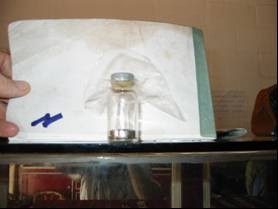
There is a Lao unit for mercury, the "Hung" (38 g of Hg), frequently preserved in a
penicillin flask (Fig. 10). An other unit is the "hun", unit of gold (approx. 0.39 g). The
amount of mercury used in the villages is generally small and may vary from 1 to 2
hungs per season and per household of miners. There is one reported case in Pak Ou
that declared using about 10 hung per season.
We considered in agreement with the sociological survey (Earth System Lao, 2003)
that the average consumption of mercury does not exceed 50g per mining season per
household.
Figure 10 - A penicillin flask, sold at a jeweller's, with one "hung" of mercury.
26 Rambaud A., Portet F., Fengthong T., Sychaleun V. Final report
Global Mercury Project - Lao PDR Part B: Health Assessment
3.2. EXPOSURE
ASSESSMENT
3.2.1.
Standards and limit values for mercury
World Health Organization (WHO) considers a value of 4 µg/L in urine as a normal Hg
level and 50 µg/L as the maximum occupational exposure limit. In order to compare Hg
levels from different individuals, urine values should be normalised to creatinine, and
should be expressed in µg Hg/gram creatinine. If urine is very diluted (relative density
<1.010), interpretation of the result may be difficult. In the case of people not
professionally exposed to mercury, urine levels rarely exceed 5 µg Hg/g creatinine.
(Veiga, M.M. and Baker, R. 2003).
In blood, the normal concentration of total Hg ranges between 5 - 10 µg/L (in
individuals without regular consumption of Hg contaminated fish). A MeHg level of
200 µg/L in blood, corresponding to Hg concentration of about 50 µg/g in hair, is
associated with a 5% risk of neurological damage to adults (Veiga, M.M. and Baker, R.
2003) .
The normal Hg level in hair is less than 1-2 ppm (µg/g). Hazardous effects to the fetus
are likely above 20 ppm Hg in the hair of pregnant women. Levels of 10 ppm must be
considered as the upper limit guideline for pregnant women. Recent evaluation
considers 5 ppm Hg in hair as a safety guideline for pregnant women. The WHO
reports that, based on statistical analyses, pregnant women with Hg concentrations in
hair above 70 µg/g exhibit more than a 30% risk to show a neurological disorder in the
offspring.
Drasch et al. (2001) described the Human Biomonitoring (HBM) system for mercury
contamination taking into account Hg concentrations in blood, urine and hair . It is
based on a two threshold values system. The HBM-values are assessed by
toxicological considerations. The value HBM I was set to be a `check value'. This
means a mercury concentration in blood or urine, above which the source of the Hg-
burden should be sought and, as far as possible, eliminated. However, even when
exceeding this HBM I value, Drasch et al. (2001) claimed that a health risk is not to be
expected. The HBM II value is an `intervention value'. For blood or urine levels above
HBM II, especially for a long exposure, adverse health effects cannot be excluded,
therefore interventions are necessary. The source should be found and reduced
urgently; a medical check for possible symptoms should be performed.
Other toxicological limits are occupational threshold limits. Such limits are established
for mercury, e.g. in France and the USA (biological exposure indices BEIs) or in
Germany (BAT value= Biologischer Arbeitsstoff-Toleranz-Wert). From the definition,
these BAT-values are exclusively valid for healthy adult workers under occupational
medical control. The occupational burden must be stopped if this threshold is
exceeded.
These occupational threshold limits are not valid for the total population, especially not
for risk groups like children, pregnant women, older or ill persons. Nevertheless, the
BAT-values were taken for a further classifying of our high results, if any. BAT-values
for mercury are established only for blood and urine, but not for hair.
Table 5 provides an overview of the HBM, BAT and BEI values for blood and urine.
Rambaud A., Portet F., Fengthong T., Sychaleun V. Final report
27
Global Mercury Project - Lao PDR Part B: Health Assessment
Hg-
blood
Hg-urine
µg/L
µg/L
µg/g creat
HBM I - Human Bio
5 7 5
Monitoring
HBM II - Human Bio
15 25 20
Monitoring
BEI - Biological Exposure
15 a)
35 b)
Index
a) after working
b) before working
BAT-Biologischer
25 100
Arbeitsstoff-Toleranzwert
Table 5 - Mercury threshold values according to Drasch et al.(2001).
3.2.2. Classification
of mercury body burden.
In this study we defined 4 classes of exposure (Tab. 6), following the HBM, BAT, BEI
and WHO systems and according to the strategy adopted in several studies of the
Unido Program (The Philipines, Ghana, Sudan and Laos). It allows to combine all
biomarkers (blood, urine and hair).
HBM 1
HBM2
BAT
BLOOD 5 µg Hg /l 15 µg Hg /l 25 µg Hg /l
URINE 7 µg Hg /l 25 µg Hg /l 100 µg Hg /l
(BEI)
HAIR 2 µg Hg /g
5 µg Hg /g
7 µg Hg /g
(WHO)
Class 1
2
3
4
no exposure low exposure medium exposure high expos.
Table 6 - Classes of mercury body burden.
28 Rambaud A., Portet F., Fengthong T., Sychaleun V. Final report
Global Mercury Project - Lao PDR Part B: Health Assessment
3.2.3.
Mercury in blood, urine, breast milk and hair samples
The number of obtained analytical results from the collected samples were:
- 1 blood samples: 190
- 2 urine samples: 181
- breast milk: 5
- hair samples: 315 (including 126 children)
Table 7 displays the results obtained on biomarkers according to our classification of
exposure.
BLOOD
URINE
HAIR
Adult
Adult
Adult
Children
Male
Female
Male
Female
Male
Female
Male
Female
Total
Class 1
71
95
84
93
77
83
59
61
623
Class 2
13
11
-
4
7
17
1
3
56
Class 3
-
-
-
-
-
3
-
1
4
Class 4
-
-
-
-
-
2
1
-
3
Total
84
106
84
97
84
105
61
65
686
Table 7 - number of individuals in each class of mercury body burden related to age and gender
in the cohort, including the reference group.
The comments about the results displayed in table 7 can be summarized as followed:
- The majority of the cohort is in class 1 (non-exposed people): 87.4% for
blood, 97.7% for urine and 84.6 % for hair; children being only controlled for
hair, 95.2 % are in class 1. In the 6 milk samples, one had insufficient
quantity to be analysed and 5 were below detection limit.
- About 8.3% of the cohort is in class 2 at least for one of the 3 biomarkers
(blood, urine and hair ).
- The positive cases (class 3 and 4) are mostly composed of women (5/105)
and children (2/126) and only in hair samples. Men show only cases
belonging to class 2 with positive concentrations in blood and hair.
The tables 8 and 9 show the number of samples related to the level of exposure in
each of the 5 selected villages.
Rambaud A., Portet F., Fengthong T., Sychaleun V. Final report
29
Global Mercury Project - Lao PDR Part B: Health Assessment
Village
Ref. village
Houay Gno Houay Koh Latthahai Pak Ou total
Houay Yen
Gnai
blood
0
10 2* 0
12x 24
urine
1
0 3* 0
0
4
hair
2
4 4 2
16 x 28
Total
3
14 9 2
28
56
Table 8 - Number of samples in class 2 in each village, (*) 1 person with the 2 concurrent
biomarkers, (x) 10 persons with the 2 concurrent biomarkers.
Village
Ref. village Houay Gno
Houay Koh Latthahai Pak Ou total
Houay Yen
Gnai
Blood
0
0 0 0
0
0
Urine
0
0 0 0
0
0
Hair
1
2 3 0
1
7
Total
1
2 3 0
1
7
Table 9 - Number of samples in classes 3 and 4 in each village.
The reference village (Houay Yen Gnai) which was selected to constitute a control
group showed three positive cases :
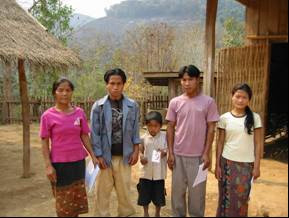
- one class 4 case, an 18 year old woman, just married, with 15 µg/L urine
(class 2) and 11 µg/g hair (class 4)! Her family (5 examined persons) did not
show any trace of contamination (see Fig. 11). There is no explanation for
such a contaminated case. Further verification is required for that.
- two cases belong to class 2, represented by two 28 years old women with
respectively 2.1 and 2.8 µg/g hair, but nothing in urine and blood samples.
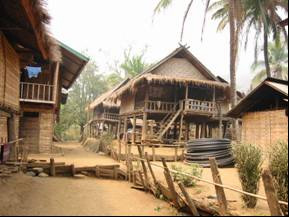
The village of Latthahai (Fig. 12), composed of miners, shows the minimum of exposed
cases and presented only 2 cases belonging to the class 2 with 2.3 and 2.4 µg/g in hair
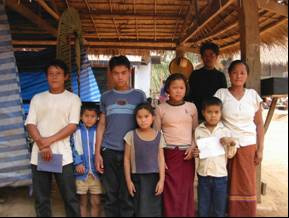
In the cohort, only one person, a 25 years old woman in Houay Koh (Fig. 13), showed
3 concurrent high biomarker values: blood , urine (7.8, 12 µg/L) and hair (5.4 µg/g). An
other women shows 12.2 µg/L urine and 13µg/L blood (Fig. 14). She mined since she
was 15 years old , burning in the kitchen with her 2 girls (15 and 9 years old).
30 Rambaud A., Portet F., Fengthong T., Sychaleun V. Final report
Global Mercury Project - Lao PDR Part B: Health Assessment
Figure 11 - HouayYen Gnai: the 18 year old woman with 15 µg/L urine and 11 µg/g hair (on the
right side, near her husband).
Figure 12 - Latthahai: cases in the village.
Rambaud A., Portet F., Fengthong T., Sychaleun V. Final report
31




















Global Mercury Project - Lao PDR Part B: Health Assessment
Figure 13 - Houay Koh: the 25 old woman with 3 concurrent biomarker values (with a red shirt in
the middle of her family).
Figure 14 - Houay Koh: the 41 old woman with 12.2 µg/L urine and 13 µg/L blood (on the right
side of her family).
32 Rambaud A., Portet F., Fengthong T., Sychaleun V. Final report
Global Mercury Project - Lao PDR Part B: Health Assessment
If we only consider the people declaring using mercury and those who assist to the
roasting of the amalgam, without using mercury by themselves, we obtain a sub group
of about 100 individuals potentialy exposed to mercury. Among this sub-group, 24
people showed at least one biomarker in the class 2 at least (see appendix C), and 76
do not show any abnormal biomarker value.
Among the 219 other individuals not declaring any use of mercury, 21 (9.6%) showed
one class 2 value at least.
There was a possibility of passive exposure, especially for children, as suggested by
the environmental assessment. But finally the number of people with class 2 abnormal
mercury concentrations is about 10%. We cannot conclude to a probable passive
exposure in that case.
In the five selected villages, there were 26 households with concurrent environmental
and health survey. Soil, air and domestic dust were sampled (see part A of the Final
report -Chapter 6). In the selected houses, were living 111 adults and children of the
cohort. Only 10 households showed peoples with biomarkers abnormal values and two
of them were included the reference group with class 2 biomarkers (see Tab. 10).
Cases belonging to class 3 and class 4 biomarkers are observed in the villages of
artisanal miners.
4 households presented high values (classes 3 and 4) in hair samples. There is no
statistical relationship with a high contaminated environment like contaminated
domestic dust.
Rambaud A., Portet F., Fengthong T., Sychaleun V. Final report
33
Global Mercury Project - Lao PDR Part B: Health Assessment
Household Id.
Household Id.
Number of
Abnormal values of
(Health survey)
(Envir. Survey)
persons with
biomarkers
biological
sampling
1
Houayen Gnai
6
0
3
-
6
1 hair cl. 2
6
-
4
1 hair cl. 2
8
-
8
0
9
-
5
1(urine cl. 2 + hair cl. 4)
51
C Houay Gno
4
1 blood cl. 2 ; 2 hair cl. 2
58
A
4
1 hair cl. 3
62
B
5
0
65
D
8
3 blood cl. 2
67
E
1
0
71
A Houay Koh
3
1 hair cl. 2;1 hair cl. 4
75
B
8
0
91
E
2
0
93
D
6
0
95
C
2
0
152
D Latthahai
5
0
172
G
1
0
177
E
6
0
181
H
5
0
188
F
1
0
189
B
6
0
212
A Pak Ou
3
1 (blood + hair cl.2)
213
B
2
0
215
C
2
0
223
D
3
1 hair cl. 3
229
E
5
1 (blood + hair cl.2)
Table 10 - Households with soil, domestic dust sampling and health survey.
3.2.4.
Interpretation of the biological results
The biomarker "urine" emphasizes an occupational exposure. There were very few
abnormal values for urine: 4 on 181, 3 in Houay Koh and 1 in the reference group. The
other villages involved in ASM (Houay Gno, Latthahai and Pak Ou) do not show a
positive case. The albuminury was negative or in trace for 97.5% of the cohort.
This cohort is weakly affected by an occupational use of mercury. Despite the low
number of positive cases, these results seem coherent with the observations
performed in the environmental assessment where it was noted that people use more
mercury in the process in Houay Koh, particularly when they complete the panning
process. Skin contact, and maybe inhalation is probably more important in that village
compared to the others.
Females are more affected (65%) than males, which is relevant as women are the
most exposed to mercury in the mining process.
Mercury contents in hair and blood illustrate mostly passive exposure of people through
food (Veiga and Baker, 2003). The 3 villages on Mekong River (Houay Gno, Houay
Koh and Pak Ou), presented the highest and most numerous positive values in blood
(but only at a class 2 level), but also in hair (class 3 and 4 levels). It is probable that an
34 Rambaud A., Portet F., Fengthong T., Sychaleun V. Final report
Global Mercury Project - Lao PDR Part B: Health Assessment
additional exposure to mercury could be provided by the input of food consumption
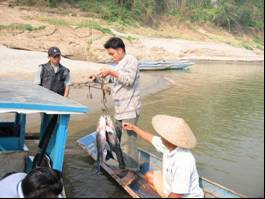
(fish and maybe seaweeds). Fishes seem to be weakly contaminated by mercury (see
Part A, Freyssinet et al., 2004), but they represent a large part of the diet (Earth
System Lao, 2003). The difference between the villages along the Mekong and the
Nam river could be interpreted as a change of habits in the fish consumption, with a
preferential consumption of big carnivorous fishes from the Mekong than in the Nam
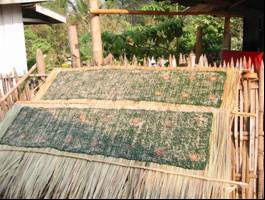
river ? The environmental assessment showed as well that seaweed, which seems to
be important source of vegetables, at least during the dry season, can present Hg
contents between 0.1 to 0.7 µg/g (dw). This type of concentration is significantly above
ubiquitous concentrations for aquatic plants and should be considered in the evaluation
of the daily intake of mercury.
Classes 3 and 4 represent a significant exposure to mercury: 7 cases (5 female and 2
children) are concernedout of 686 samples. That represents 1% of the cohort, children
included. It is very few, compared with the previous Ghanaian studies (Rambaud et al.;
2001 & 2003), where a ratio of 92 / 561 (16.4%), for the class 4 only, was detected.
The maximum of mercury concentrations observed in that study in blood, urine and hair
were respectively of 12.2 µg/l, 15 µg/l and 18.6 µg/g. The table 11 compares the
maximum concentrations detected in the previous UNIDO studies (i.e. Philippines and
Ghana) and the present study.
Ghana
Ghana - 2003
Mindanao -
Laos - 2004
2001
Rambaud
et
Rambaud et
Drasch et al.,
Present study
al., 2001
al., 2003
2001
Blood (µg/L)
96
45
110
12.2
Urine (µg/L)
253
206
511
15
Hair (µg/g)
45
41
42
18.6
Table 11 - Comparison of maximum concentrations of mercury in biological samples detected in
Ghana, Philippines and Lao PDR.
Rambaud A., Portet F., Fengthong T., Sychaleun V. Final report
35
Global Mercury Project - Lao PDR Part B: Health Assessment
Figure 15 - Pak Ou: seaweed and tomatoes drying.
Figure 16 - Pak Ou: fishermen on the Mekong River.
36 Rambaud A., Portet F., Fengthong T., Sychaleun V. Final report
Global Mercury Project - Lao PDR Part B: Health Assessment
3.3. CLINICAL
EXAMINATION
3.3.1. Results
We observed neurological abnormalities in 56% of men and 41% of women, knowing
that only 16% of men and 71% of women were using mercury (Tab. 12).
Male
Female
Total
(83)
(107)
(191)
Without Neurological
37 63
100
Disorders
With Neurological
47
44
91
Disorders
Table 12 - Number of adults by gender with or without neurological disorders
There was no evident relationship between the neurological examinations in each
village (Fig. 17).
100
90
80
70
60
%
50
40
30
20
10
0
ref.
Houay
Houay
Latthahai
Pak Ou
total
village
Gno
Koh
%without neuro
villages
% with neuro
Figure 17 - Percentage of individuals with and without neurological disorders in each village.
The more frequent neurological abnormalities were movement disorders (intentionnal
tremor), abnormal reflexes (hypo or hyper-reflexia) and frontal signs.
In Houay Gno, two persons had high level of mercury in their hair (class 3), but none of
them had abnormal neurological examination. Among the other adults showing
Rambaud A., Portet F., Fengthong T., Sychaleun V. Final report
37
Global Mercury Project - Lao PDR Part B: Health Assessment
mercury biomarkers higher than the class 1 group, 8 persons among 14 had
neurological symptoms (intentional tremor, brisk reflexes).
In Houay Koh, a 2-years old child had high level of mercury in hair, but its family did not
show up abnormal values. Six persons presented mercury biomarkers higher than the
class 1 level, among them, two had abnormal reflexes (hypo or hyperreflexia) and one
had intentional tremor.
In Latthahai, there is definitely no link between neurological examination and mercury
biomarkers, as the whole group shows biomarkers in class 1.
In Pak Ou, thirteen adults showed mercury biomarkers higher than the class 1
threshold. One had intentional tremor, one had archaic reflexes with abnormal episodic
memory.
The profile of the neurological abnormalities was similar in the different sub-groups,
with or without mercury biomarkers higher than the class 1 level (hair and/or urine
and/or blood)
3.3.2. Discussion
The occurrence of neurological effects certainly needs stronger exposures than in the
conditions observed in that study. It is known that minimum levels for occurrence of
effects are 200 µg/l in urine, 40 µg/g in hair and 40 µg/l in blood.
Most of the persons of this cohort with the highest mercury concentrations in biological
samples did not show up any neurological disorder: 66 % of the biomarkers values
above the class 1 threshold were found in the sub- group without neurological
disorders (Fig. 18).
a b
with neuro
with neuro
without neuro
without neuro
Figure 18 - Percentage of population with neurological disorders (a) in the sub-group showing
biomarkers above the class 1 threshold; (b) in the < class 1 sub-group.
38 Rambaud A., Portet F., Fengthong T., Sychaleun V. Final report
Global Mercury Project - Lao PDR Part B: Health Assessment
Neurological abnormalities were frequently observed in the cohort with no direct link to
mercury biomarkers. No specific profile can be described. The examined population
was too weakly exposed to allow us any significant conclusion.
Sociological factors (war, poor standard of living, general health conditions,etc), genetic
factors, other environmental factors (but not mercury), could be put forward to explain
such a high level of neurological disorders. Males presented more frequently
neurological symptoms, but other toxic factors should be considered. In this cohort,
alcohol drinking does not seem to be not an important confounder.
The important frequency of the neurological abnormalities has to be taken into account
for further similar studies. This study points out that neurological problems could be
measured in a population where no causal relationship can be detected with mercury
exposure. Due to this specific context, neurological tests does not allow to conclude a
probable effect of mercury contamination on the neurological system. There are
obviously other environnemental (but not mercury) and genetic factors that has to be
considered.
Rambaud A., Portet F., Fengthong T., Sychaleun V. Final report
39
Global Mercury Project - Lao PDR Part B: Health Assessment
4. Conclusions
In the 4 selected villages of artisanal miners, there are about 2000 inhabitants.
According to the sociological survey, the gold production is estimated to about 3 kg per
mining season with a mercury consumption of 2-2.5 kg. The amount of mercury used
by the artisanal miners is very restricted. By comparison, in the previous UNIDO project
in Ghana where there was approximately 2000 inhabitants, the gold production was
estimated to 75 kg per year with a use of mercury use of about 300 kg. Women are the
most exposed as they are in charge of the amalgamation and roasting tasks. Skin
contact and inhalation are the main occupational exposure routes. There could be
some passive exposure, particularly for children, as roasting is performed without
precaution on the fireplace of the kitchens.
The exposure biomarkers (blood, urine and hair) of the cohort showed that 90.8% of
the popoulation is in class 1 (non-exposed persons). There are 8% of people in class 2
(slight exposure) and 1% belongs to the classes 3+4 (serious exposure).
Among the 100 individuals declaring using mercury (amalgamation and roasting), 76
did not show any abnormal biomarker values.
The biomarker "urine" can be considered as a good indicator for the Hg contamination
related to occupational exposure. About 2.2% of the cohort shows Hg concentrations in
urine above the German BAT threshold (100 µg/L). The cohort is weakly affected by an
occupational use of mercury , however despite the little use of mercury, a few people
may show significant contamination. The people concerned by this contamination live
in the Houay Koh village, where the environmental assessment showed that the use of
mercury is slightly more developed than in the other villages. Further detailed control
would be required to check if this contamination is really related to artisanal mining.
Females are more affected (65%) than males; this is relevant as the women perform
the amalgamation and the roasting of the amalgam at home.
Mercury contents in hair and blood illustrate mostly indirect exposure of people with
food. The highest Hg concentration in blood and hair are observed in the 3 villages
along the Mekong. The difference between the villages along the Mekong and the Nam
river could maybe be interpreted as a change of habits in the fish consumption, with a
preferential consumption of big carnivorous fishes from the Mekong, whereas
consumption of fishes from the Nam river would be more diversified ?
Neurological abnormalities were frequently detected in the cohort, but observed in 56%
of men and 41% of women, knowing that only 16% of men and 71% of women are
exposed to mercury. Thus, these abnormalities are not linked to a mercury exposure.
The population of the cohort is not enough exposed to mercury as it uses small Hg
amounts and during relatively short periods.
This study points out that neurological problems can be measured in a population
where no causal relationship could be found with the use of mercury. In this type of
Rambaud A., Portet F., Fengthong T., Sychaleun V. Final report 41
Global Mercury Project - Lao PDR Part B: Health Assessment
context, specificity of neurological tests does not allow to conclude on a potential
impact.
Nevertheless, even if contamination of the population is restricted to a few cases, we
noted that a 2 year old boy shows hair value (16.8 µg Hg/g) comparable to a
professional worker. Another case should be pointed out: a 18 years old girl, showed
15 µg Hg/L in urine and 11 µg Hg/g in hair. These results show that despite the use of
small amounts of mercury, contamination cases may appear.
In this region, artisanal small-scale mining activity is a seasonal work mostly dedicated
to women. The most hazardous process observed is the roasting of the amalgam in the
kitchens. This local practice may favor the passive exposure of the family and
particularly young children.
The practice of roasting in open air outside of the village, and only by women, would be
a first step to reduce the exposure. This would avoid contamination of houses and the
passive exposure of children. In a second step we recommend a prevention and
educational programme dedicated to women to perform the roasting process using a
retort. As some women already use a bamboo shot to recover mercury, this kind of
practice may be accepted by the local population. A shared retort for the village or a
group of artisanal miners could be a cheep solution, knowing that roasting is not a daily
task but in most of the cases a weekly or even monthly task.
42 Rambaud A., Portet F., Fengthong T., Sychaleun V. Final report
Global Mercury Project - Lao PDR Part B: Health Assessment
References
Drasch G., Bose-O'Reilly S.,. Beinhoff C,. Roider G, Maydl S. (2001) - The Mt. Diwata
study on the Philippines 1999 assessing mercury intoxication of the population by small
scale gold mining. The Science of the Total Environment , 267, p. 151-168.
Earth Systems Lao (2003) - Luang Prabang artisanal gold mining and sociological
survey, Lao PDR. Earth System Lao report, 30 p.
Freyssinet Ph., Vilaypaseuth S., Laperche V., Babut M. (2004) - Removal of barriers to
the introduction of cleaner artisanal gold mining and extraction technologies in Pak Ou
and Chomphet districts. Lao PDR. Part A: Environmental Assessment - Final Report.
BRGM/RC-53310-FR, 91p.
Laperche V., Freyssinet Ph., Babut M. (2004) - Removal of barriers to the introduction
of cleaner artisanal gold mining and extraction technologies in Pak Ou and Chomphet
districts. Lao PDR. Environnement and Health Assessment Field Report. BRGM/RP-
53225-FR, 41p.,
Rambaud A., Casellas C., Portet F., Sackey S.O., Ankrah N.A. , Sackey C.A., Potin-
Gautier M., Tellier S., Bannerman W. and Babut M. (2001) - Assistance in assessing
and reducing Mercury pollution emanating from alluvial gold mining in GHANA Phase
I -US/GHA/99/128 Part I: General Introduction and Human Health Assessment UNIDO
report, Vienna.
Rambaud A., Casellas C., Portet F., Sackey S.O., Ankrah N.A. , Sackey C.A., Potin-
Gautier M., Tellier S. (2003) - Assistance in assessing and reducing Mercury pollution
emanating from alluvial gold mining in GHANA Phase II-US/GHA/02/006 Part I:
Health Assessment and Survey Proposals UNIDO report, Vienna.
Veiga, M.M. and Baker, R. (2003) - Protocols for Environmental & Health Assessment
of Mercury Released by Artisanal and Small-Scale Gold Miners (ASM) - Global
Mercury Project (EG/GLO/01/G34: Removal of Barriers to Introduction of Cleaner
Artisanal Gold Mining and Extraction Technologies) UNIDO, Vienna, 146 p.
Rambaud A., Portet F., Fengthong T., Sychaleun V. Final report 43
Global Mercury Project - Lao PDR Part B: Health Assessment
Appendix 1
Questionnaire for the sociologist
Rambaud A., Portet F., Fengthong T., Sychaleun V. Final report 45
Global Mercury Project - Lao PDR Part B: Health Assessment
OBJECTIVES OF THE PRELIMINARY SOCIOLOGICAL INVESTIGATION
( 23 mai 03 A.Rambaud & Cl.Casellas)
The objectives to be waited through the preliminary sociological investigation gather in 2
categories:
1 - Knowledge of the overall population sociology;
2 - Informations concerning individuals.
1 - Knowledge of the overall population sociology;
The location of the site using precise maps and, if it is possible, satellite pictures would be
appreciated .
THE VILLAGE AND ITS POPULATION :
- overview of the population : number of males, females , children; distribution of ages
- Description of the type of habitat:
How many households? How many people by household (mean)?
- Ethnic diversity
- Education: local school(s) ? levels ? number of pupils
- Infrastructure: sources of drinking water and of other water uses, hygiene and sanitation
(toilets...), health facilities, sources of energy, market .....
- Political Authority: chief(s), assembly .....
-Types of activity: mining, farming (importance of agriculture and animal rearing in this area.
Is there pesticides use in agriculture. Describe the proximity of rice fields.), trading,......
ARTISANAL GOLD MINERS (AGM) COMMUNITY
- General description of this community: number, sex, age, other occupational activities, where
do they live.
- Detailed description of the overall process of gold production; what is the role of each AGM
operator in this process. Where does mercury amalgamation, burning, occur: in the field? In
the household? or other? Is it a seasonal activity (dry and wet season), local organisation of
gold and mercury market. Is there child labor.
Amount of mercury yearly used in the village, ratio gold/mercury for gold production in the
different seasons.
DIET HABITS
Type of food consumed. Fish consumption: Name the fish they consume regularly. List from
the most consumed species to the least (try to obtain a % of each species consumed in each
season).
2 - Informations concerning individuals.
See the individual questionnaire.
This questionnaire must be filled for 150 to 200 individuals in the AGM site and 50
approximately in the control site.
Rambaud A., Portet F., Fengthong T., Sychaleun V. Final report 47
Global Mercury Project - Lao PDR Part B: Health Assessment
Name
of
interviewer:
ID
number:
Small-scale gold mining and mineral processing in Laos
Questionnaire for the sociologist
Introduction and Informed Consent
(Introduce yourself, explain the purpose of the interview and request consent to be
interviewed)
Personal
Data
ID
Number:
______________________
Participant
Surname
First Name
Date of Birth
Age:...........
Sex:
Male
Female
Status
Living alone
Married
Number of wives??
Education level (to be defined by sociologist: (none, basic, primary, secondary?))
Number of children and dependants living in the house: ..........
48 Rambaud A., Portet F., Fengthong T., Sychaleun V. Draft final report
Global Mercury Project - Lao PDR Part B: Health Assessment
Chlidren or
dependants name
Sex
Age
Education
level
Address: To be defined by the sociologist after 4 to 5 zones identification in the village
How long do you live in this area?
______ year(s)
Work Exposure
Detailed description of the job
____ Miner (in an industrial plant)
____ Artisanal gold miner (AGM)
____ Gold smelter (gold buyer)
____ Mercury seller
____ Farmer
____ Trader
____ Office Job
____ Driver
____ Other job..................................................................................................
How long do you work as an artisanal gold miner (AGM) Years
Who is working as an AGM
yourself
Spouse
Rambaud A., Portet F., Fengthong T., Sychaleun V. Final report 49
Global Mercury Project - Lao PDR Part B: Health Assessment
Number of children: .....
Number of other dependants: .....
For how long do you work as an AGM (Years)
Yourself:
.....
Spouse:
.....
Child
1:
.....
Dependant
1:
....
Child
2:
.....
Dependant
2:
....
Number of months per year of activity as an AGM
Yourself:
.....
Spouse:
.....
Child
1:
.....
Dependant
1:
....
Child
2:
.....
Dependant
2:
....
Occupation (Detailed description of the job)
Washing
Sieving
amalgamation
Burning
comments:..............................................................................................................................
Do you handle mercury?
Yes
No
Uncertain
Where do you get mercury for amalgamation and other inputs?
a) Gold Dealers
b) Spouse
c) Relative
d) Others (specify)
Are you aware of any health or environmental hazards that may be caused by mercury
use in gold mining?
Yes
No
50 Rambaud A., Portet F., Fengthong T., Sychaleun V. Draft final report
Global Mercury Project - Lao PDR Part B: Health Assessment
If yes, what are the hazards?
Diet Issues
How many times per week do you eat each of the following foods:
a) Meat
b) Fish
c) Chicken
d) Eggs
e) Milk
f) Rice
g) Vegetables
h) Fruits
i) Other (specify)......
Training
Have you received any training regarding your mining activities?
Yes
No
Where......................... What type of training ......................................
Who facilitated the training? ..............................................................
Has the training helped in your activities: Yes
No
How? ..........................................................................................
(The interviewer should read a short description of the improved mining
technology and explain it if necessary)
What are your comments in case of the introduction of proposed improved mining and
processing technology?
..................................................................................................................
Rambaud A., Portet F., Fengthong T., Sychaleun V. Final report 51
Global Mercury Project - Lao PDR Part B: Health Assessment
............................................................................................................
Would you be willing to learn this technology?
Yes
No
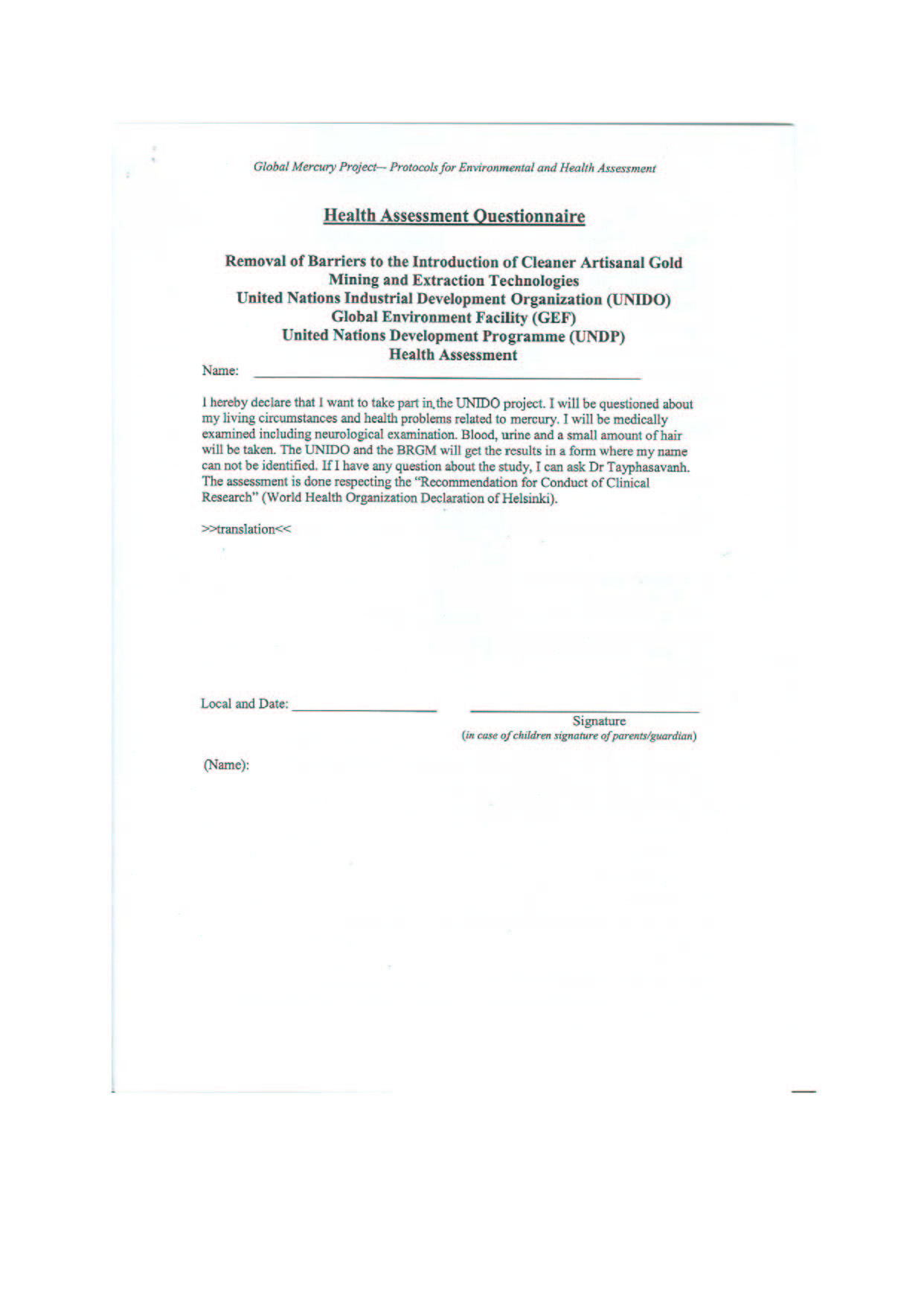
You will be questioned about your living circumstances and health problems related to
mercury. you will be medically examined including neurological examination. Blood,
urine and a small amount of hair nail will be taken.would you participate?
Yes
No
Thanks for your cooperation, do you have any questions?
52 Rambaud A., Portet F., Fengthong T., Sychaleun V. Draft final report
Global Mercury Project - Lao PDR Part B: Health Assessment
SUMMARY of the questionnaire
Name
ID
Sex of Respondent
Location (zone in the village)
Age of Respondent
Level of Education of Respondent
Residential Status (native/migrant)
Status (married...)
Number of children
Other Economic Activities Outside AGM
How long working as AGM
Persons working AGM in your house
Respondent Mercury Use Status
No. of times Respondent burns amalgam
Knowledge of hazards associated with exposure to Mercury
First source of Food
Second source of Food
Third source of food
Participation: Readiness to take Medical Exams
Rambaud A., Portet F., Fengthong T., Sychaleun V. Final report 53
Global Mercury Project - Lao PDR Part B: Health Assessment
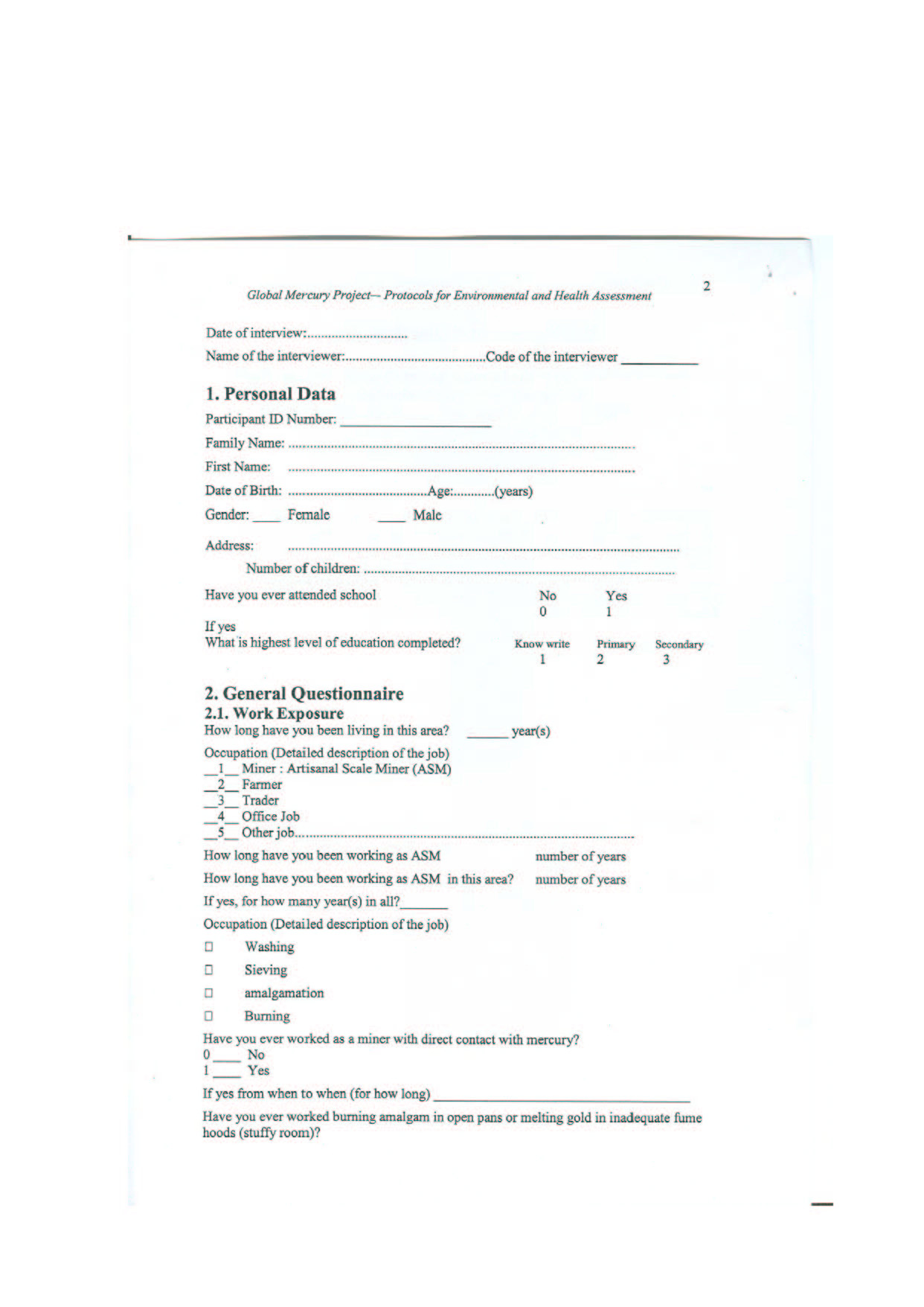
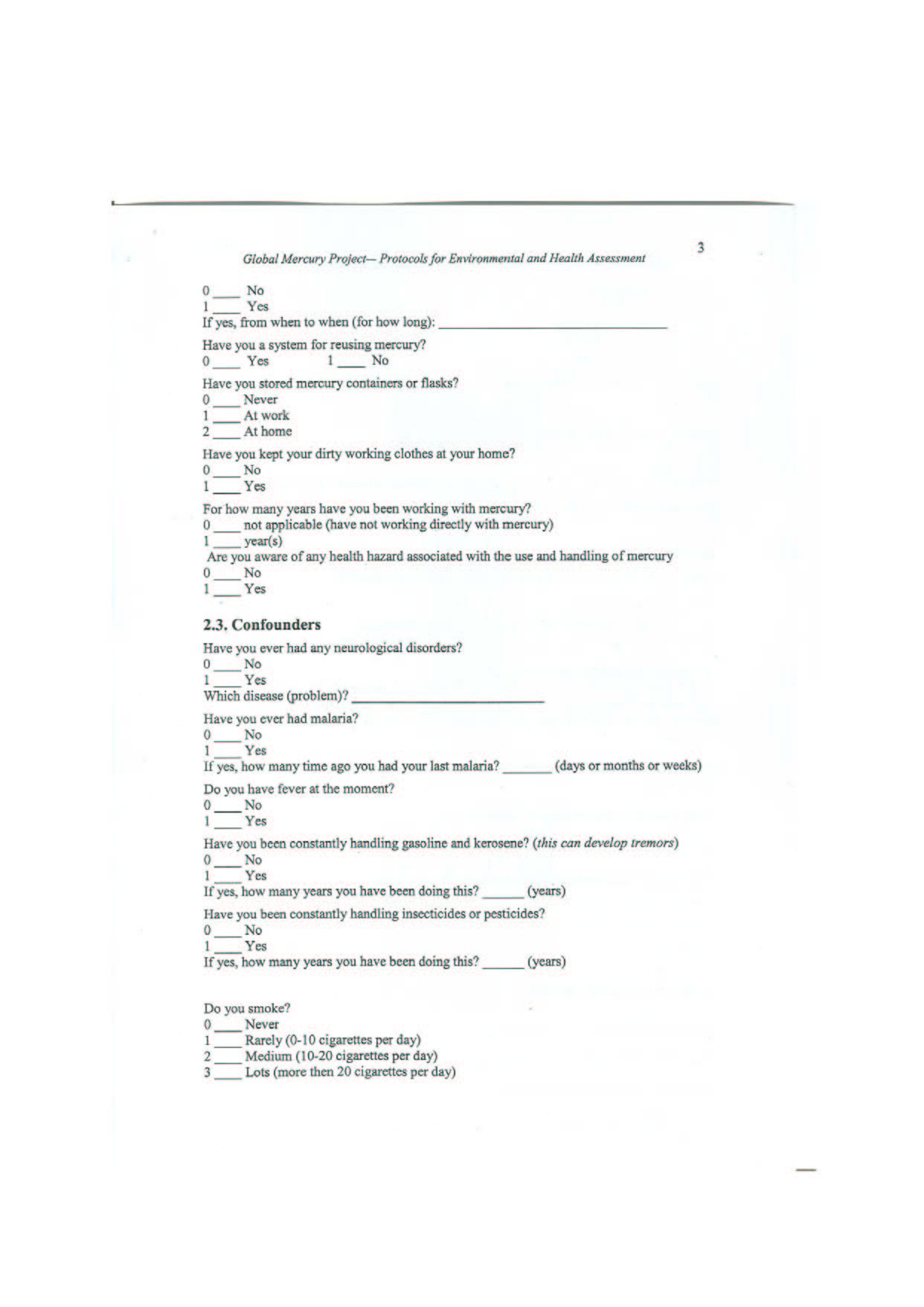
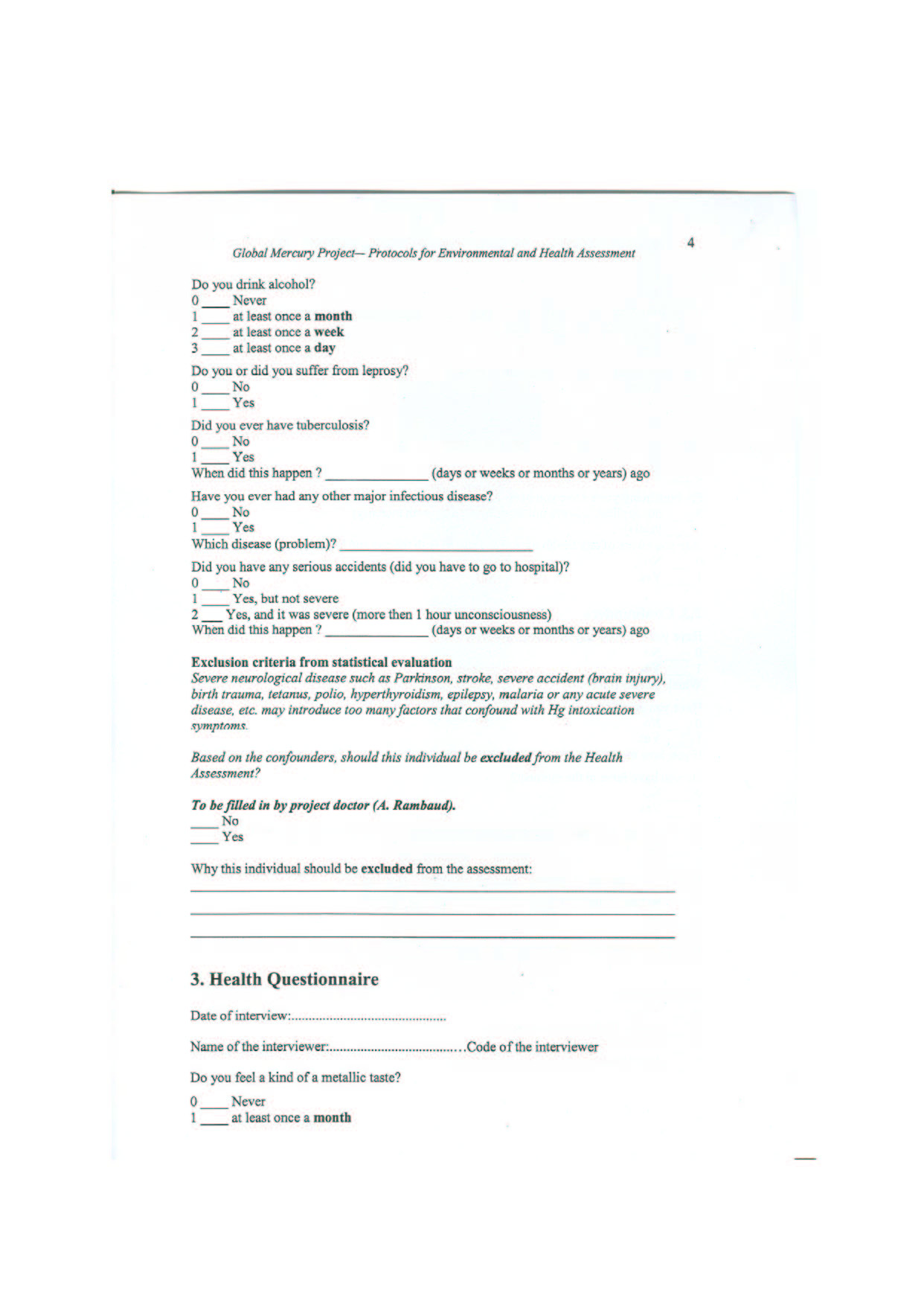
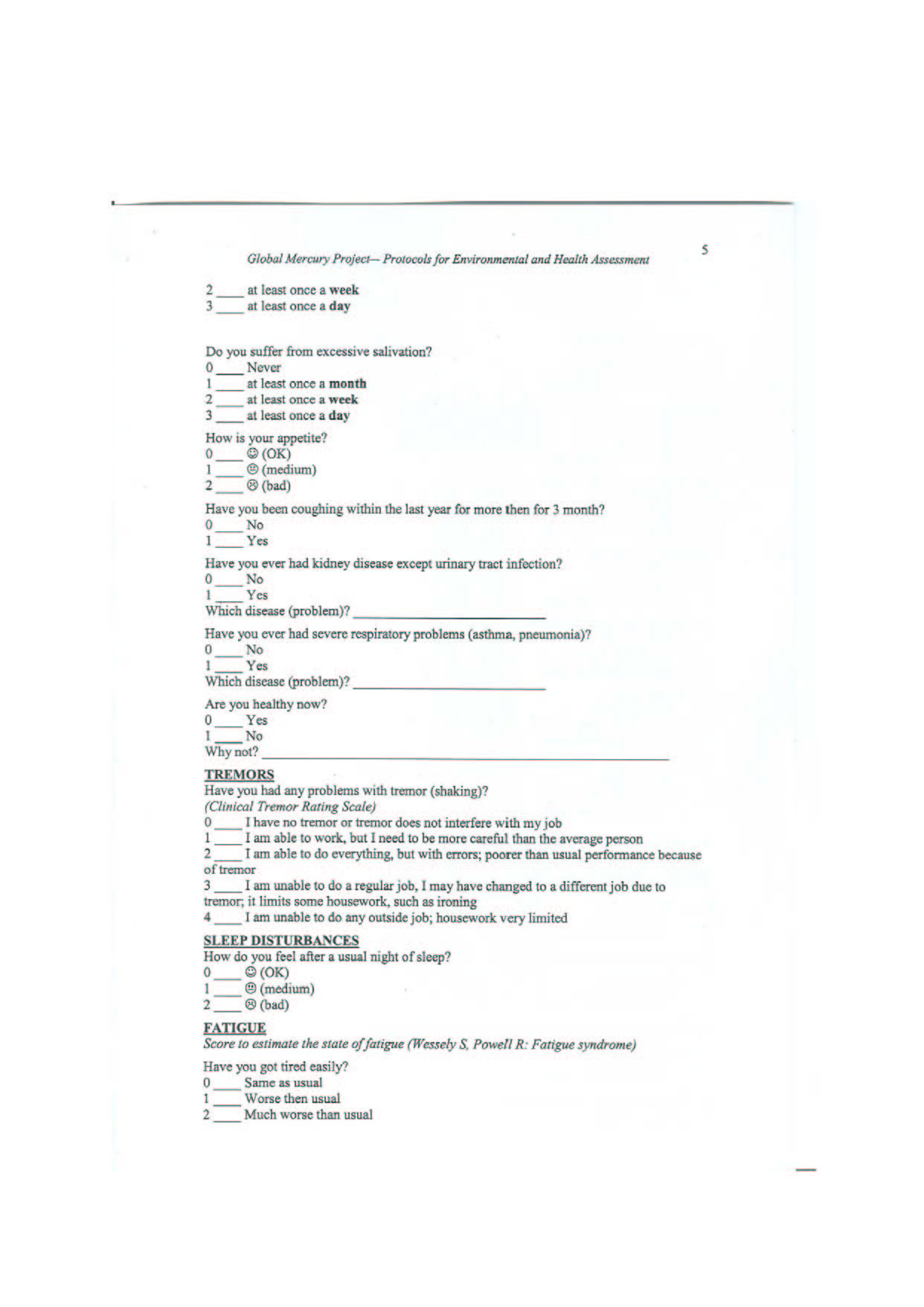
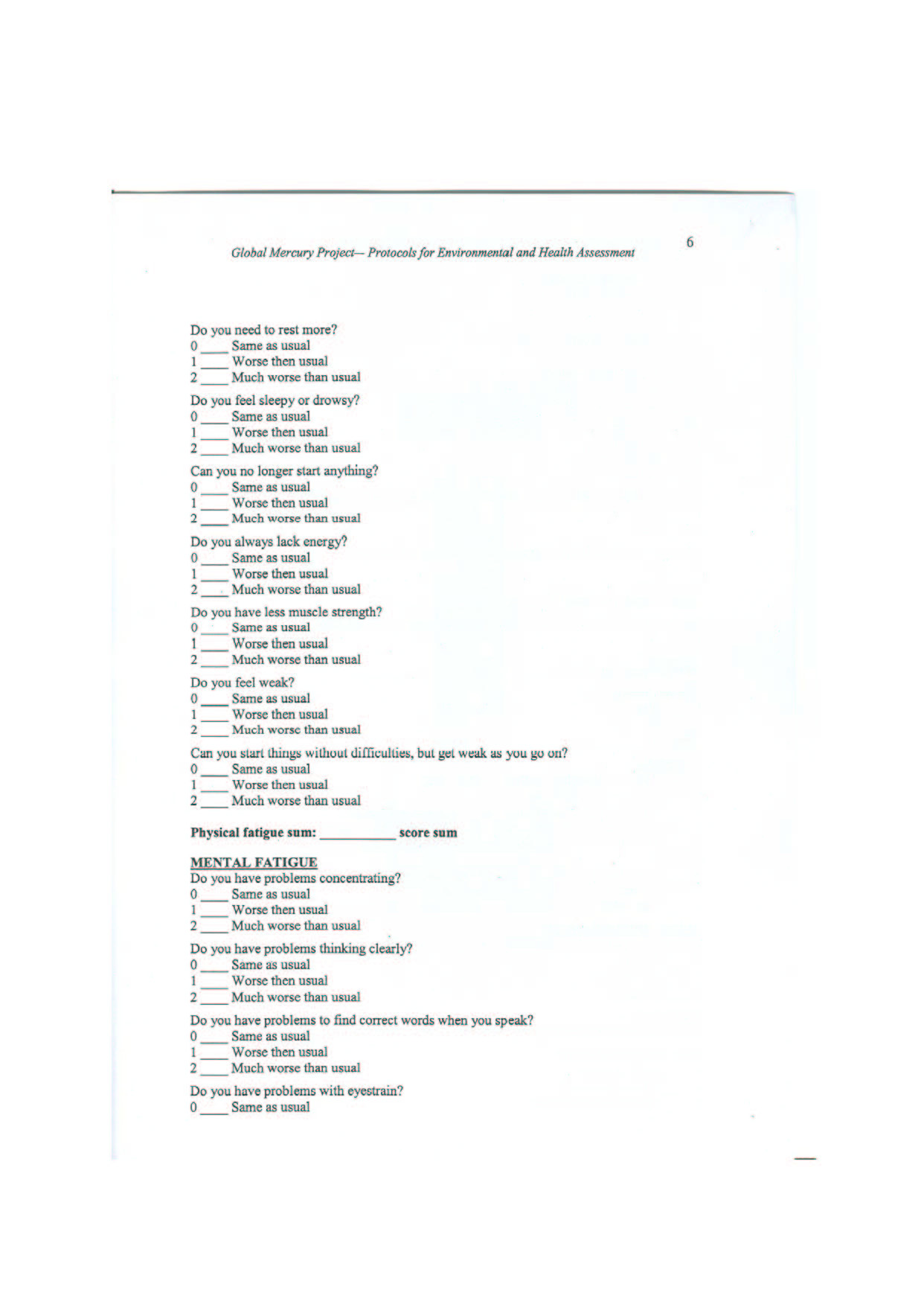
APPENDIX 2:
Health Assessment Questionnaire
Rambaud A., Portet F., Fengthong T., Sychaleun V. Final report 55
Global Mercury Project - Lao PDR Part B: Health Assessment
Rambaud A., Portet F., Fengthong T., Sychaleun V. Final report 57
Global Mercury Project - Lao PDR Part B: Health Assessment
58 Rambaud A., Portet F., Fengthong T., Sychaleun V. Final report
Global Mercury Project - Lao PDR Part B: Health Assessment
Rambaud A., Portet F., Fengthong T., Sychaleun V. Final report 59
Global Mercury Project - Lao PDR Part B: Health Assessment
60 Rambaud A., Portet F., Fengthong T., Sychaleun V. Final report
Global Mercury Project - Lao PDR Part B: Health Assessment
Rambaud A., Portet F., Fengthong T., Sychaleun V. Final report 61
Global Mercury Project - Lao PDR Part B: Health Assessment
62 Rambaud A., Portet F., Fengthong T., Sychaleun V. Final report
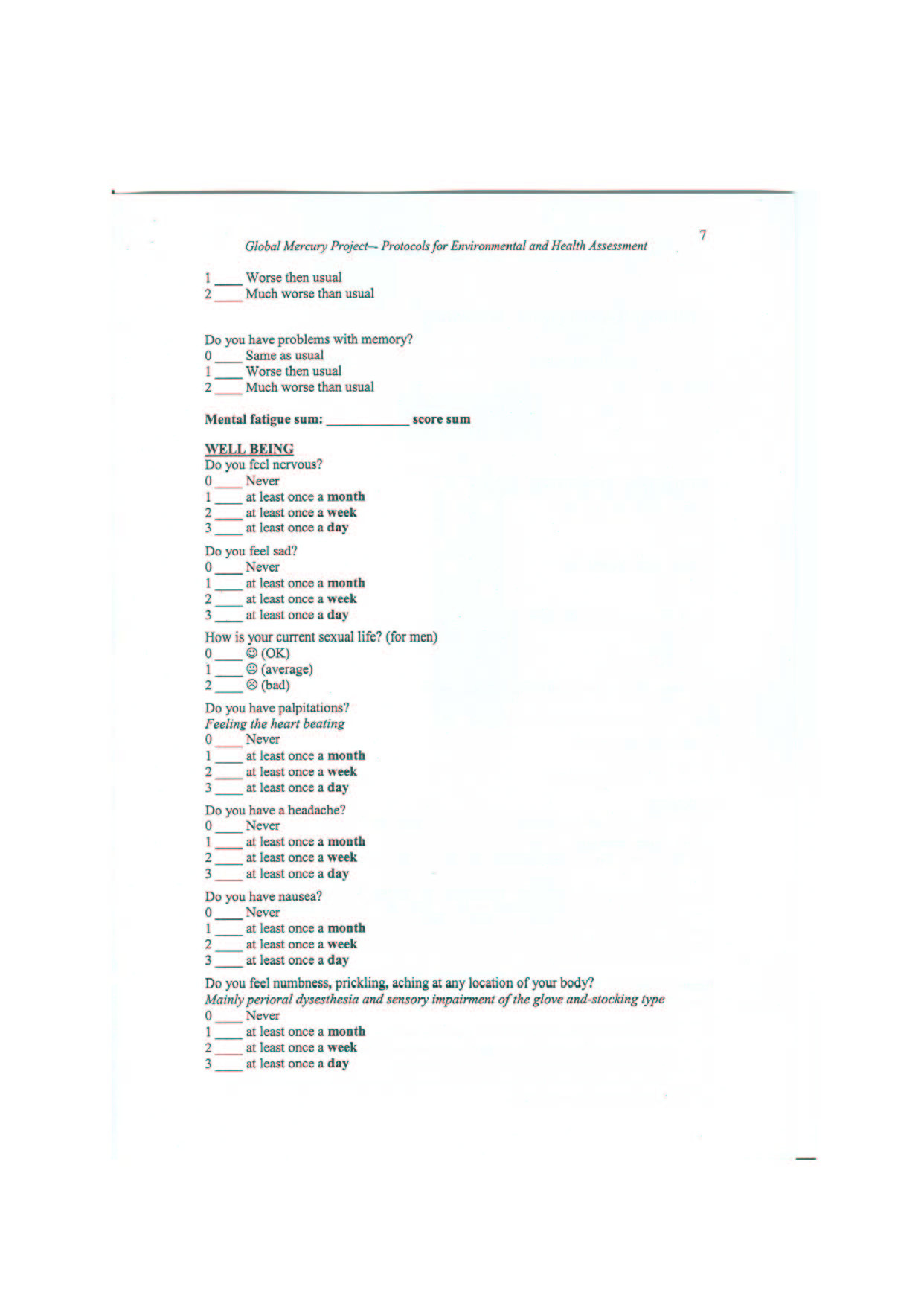
Global Mercury Project - Lao PDR Part B: Health Assessment
Rambaud A., Portet F., Fengthong T., Sychaleun V. Final report 63
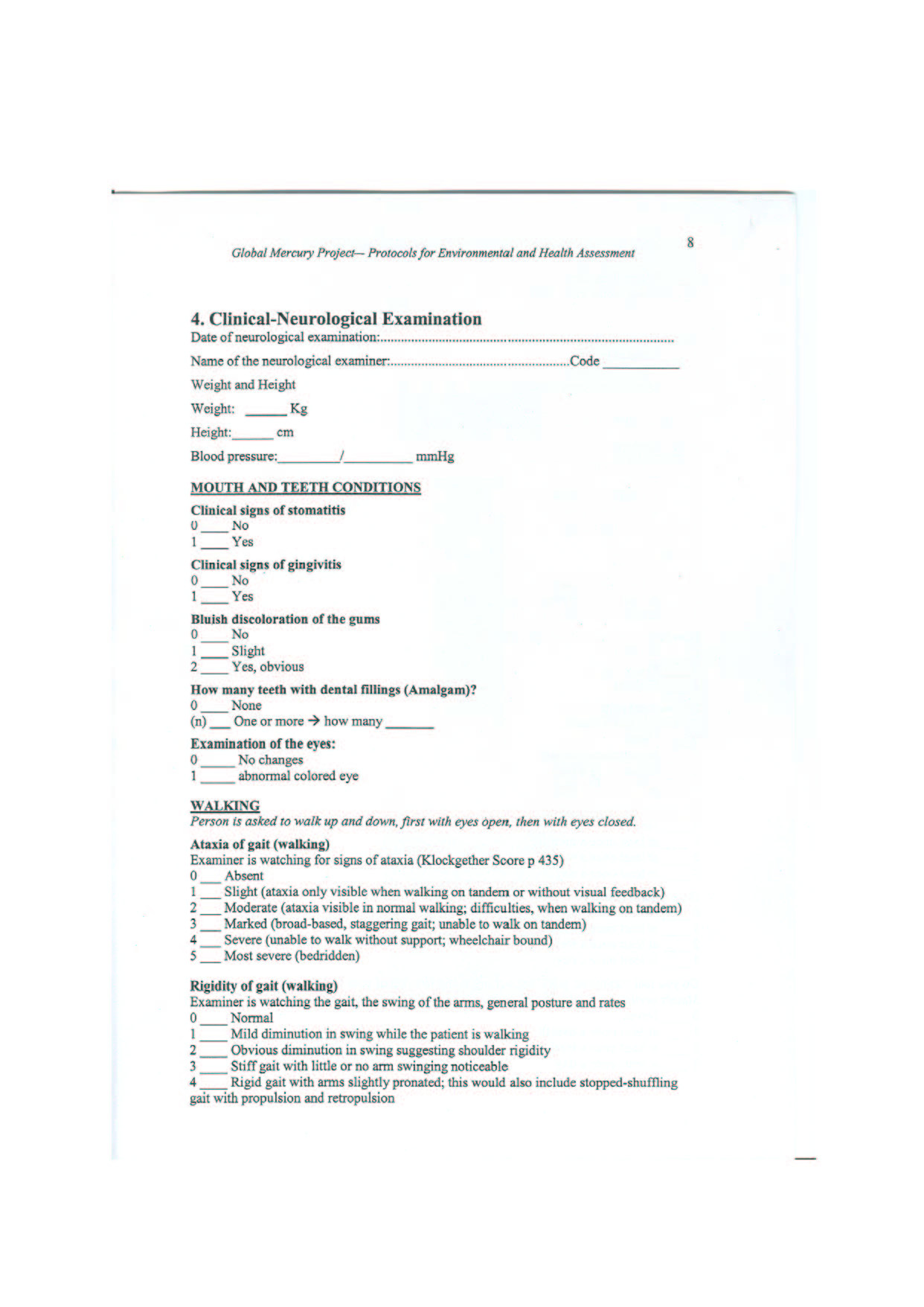
Global Mercury Project - Lao PDR Part B: Health Assessment
64 Rambaud A., Portet F., Fengthong T., Sychaleun V. Final report
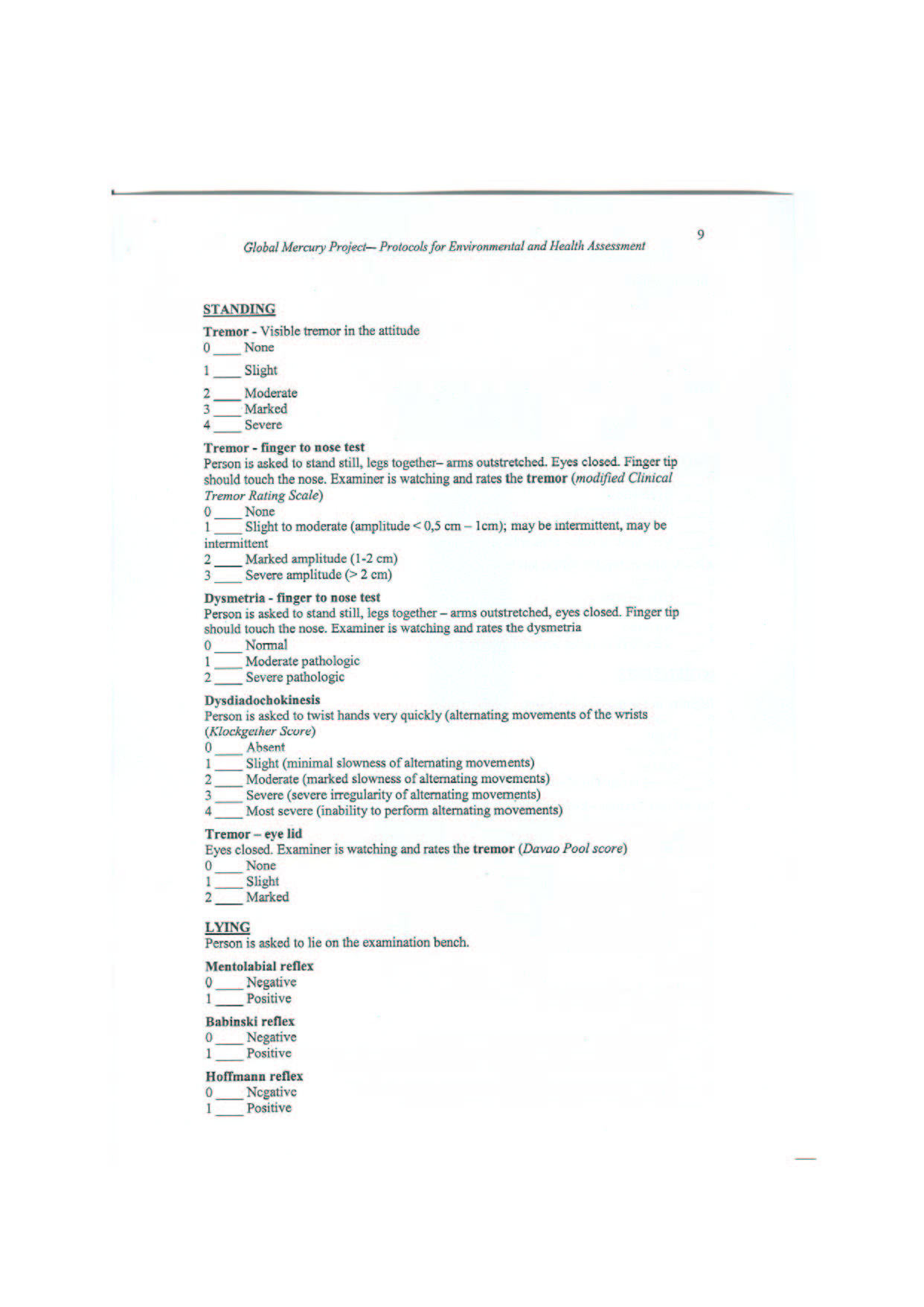
Global Mercury Project - Lao PDR Part B: Health Assessment
Rambaud A., Portet F., Fengthong T., Sychaleun V. Final report 65
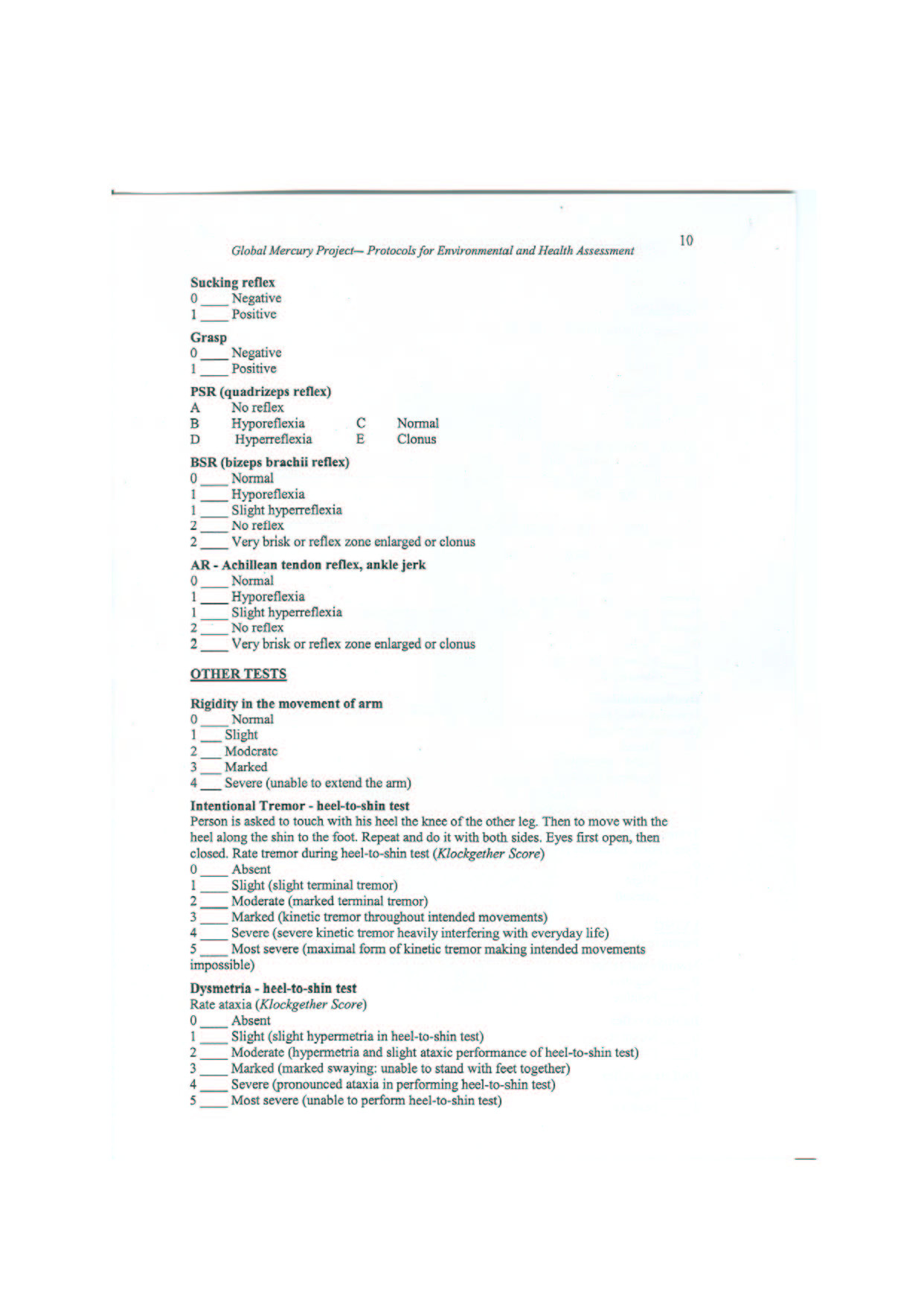
Global Mercury Project - Lao PDR Part B: Health Assessment
66 Rambaud A., Portet F., Fengthong T., Sychaleun V. Final report
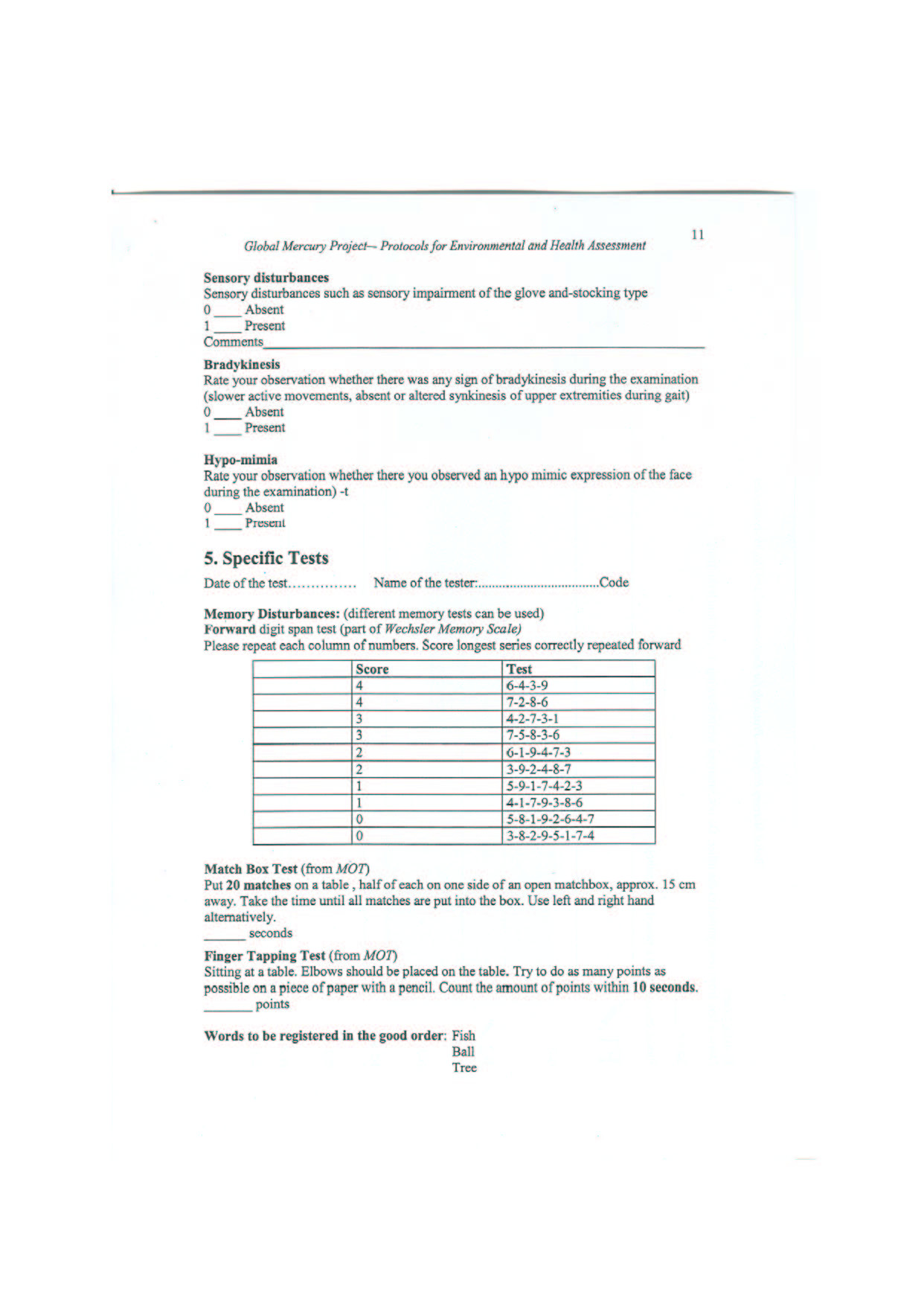
Global Mercury Project - Lao PDR Part B: Health Assessment
Rambaud A., Portet F., Fengthong T., Sychaleun V. Final report 67
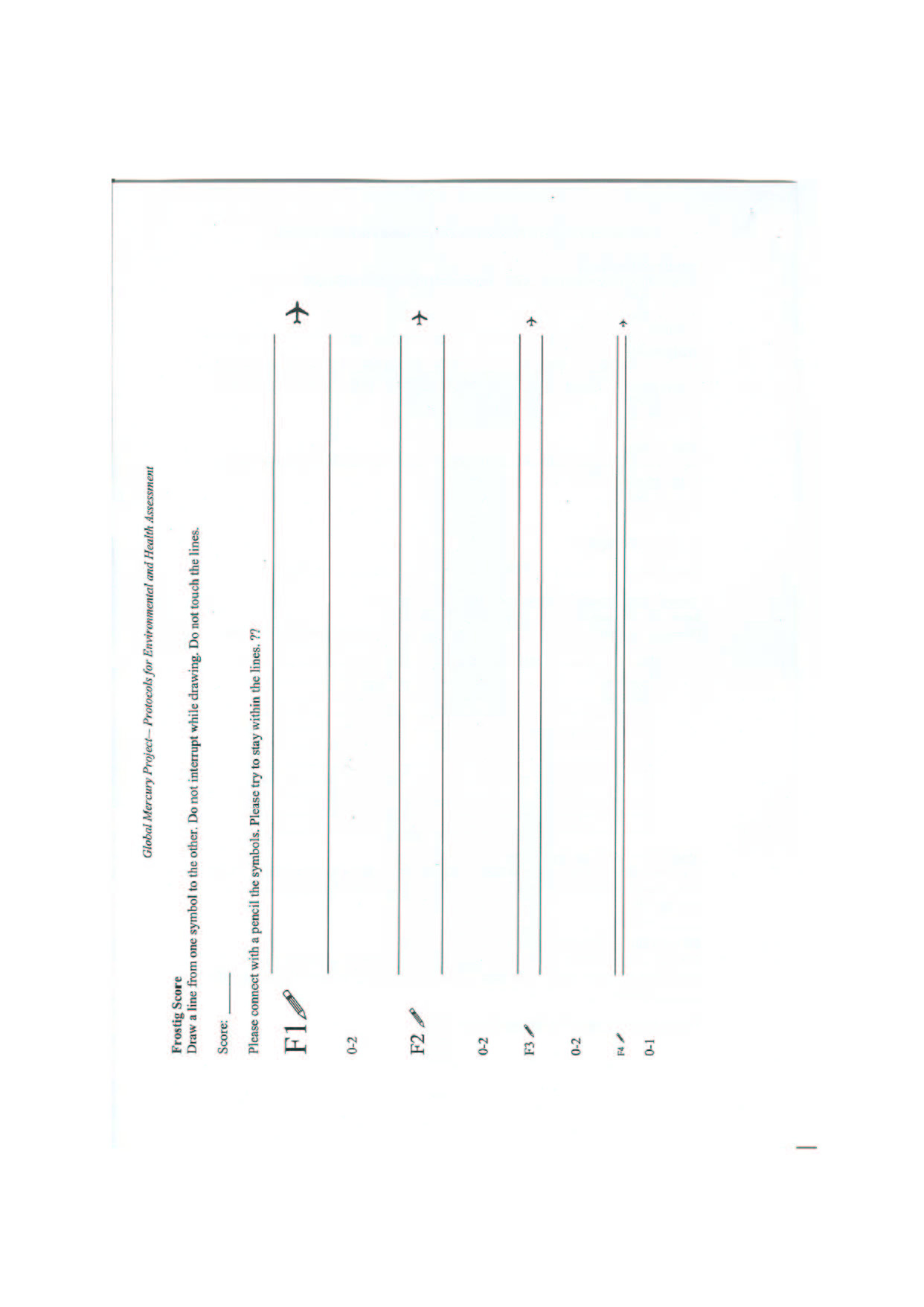
Global Mercury Project - Lao PDR Part B: Health Assessment
68 Rambaud A., Portet F., Fengthong T., Sychaleun V. Final report
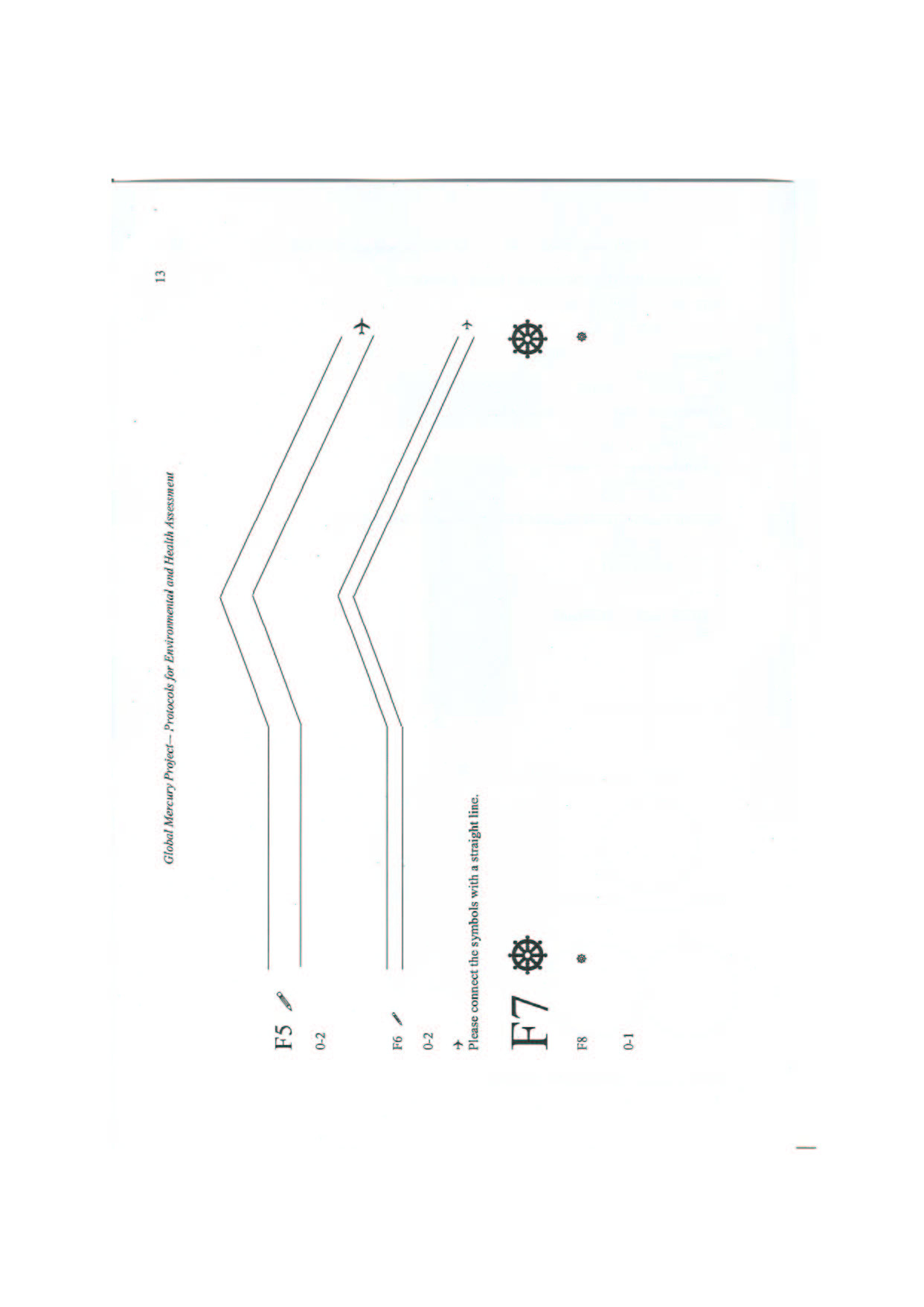
Global Mercury Project - Lao PDR Part B: Health Assessment
Rambaud A., Portet F., Fengthong T., Sychaleun V. Final report 68
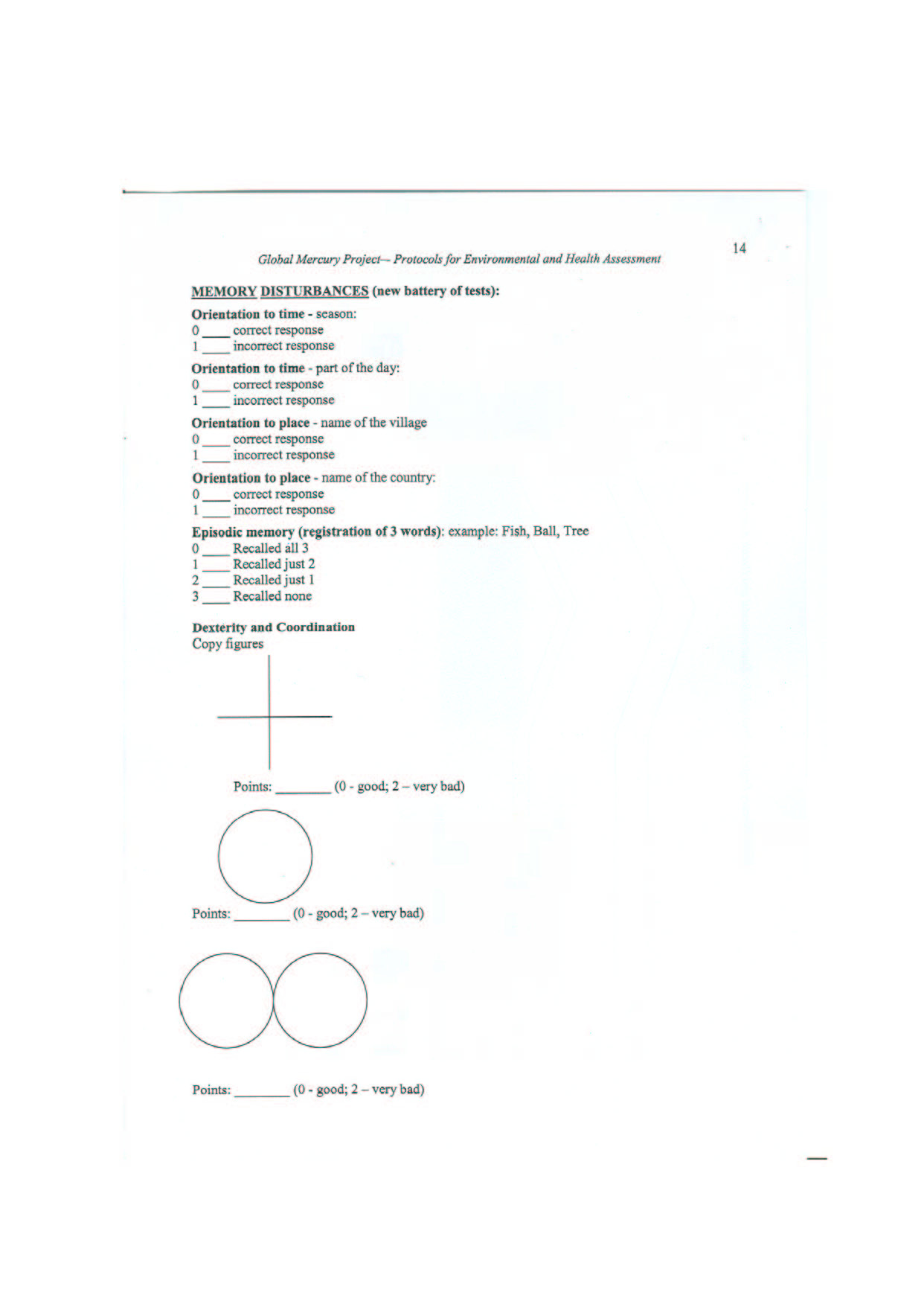
Global Mercury Project - Lao PDR Part B: Health Assessment
70 Rambaud A., Portet F., Fengthong T., Sychaleun V. Final report
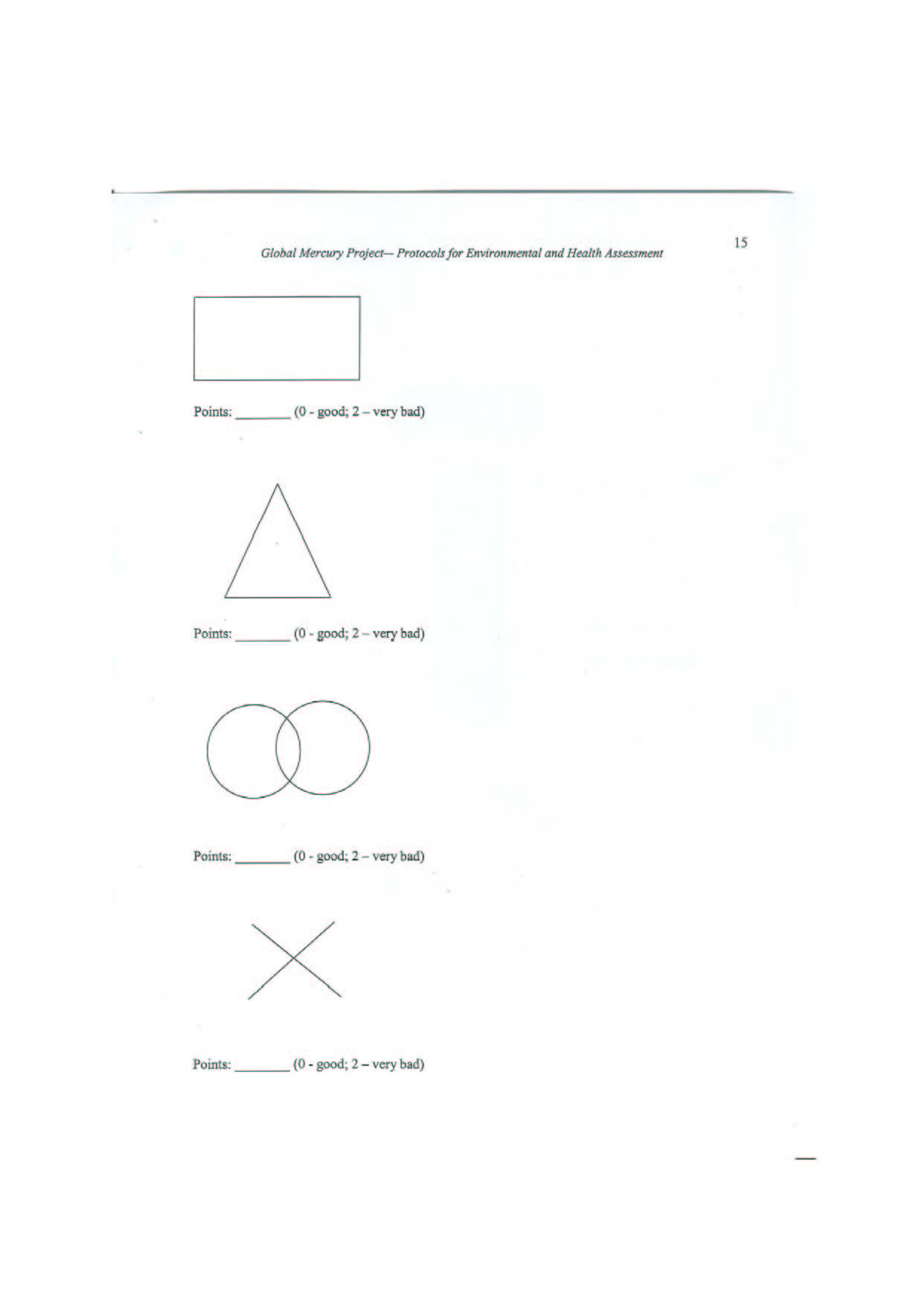
Global Mercury Project - Lao PDR Part B: Health Assessment
Rambaud A., Portet F., Fengthong T., Sychaleun V. Final report 71
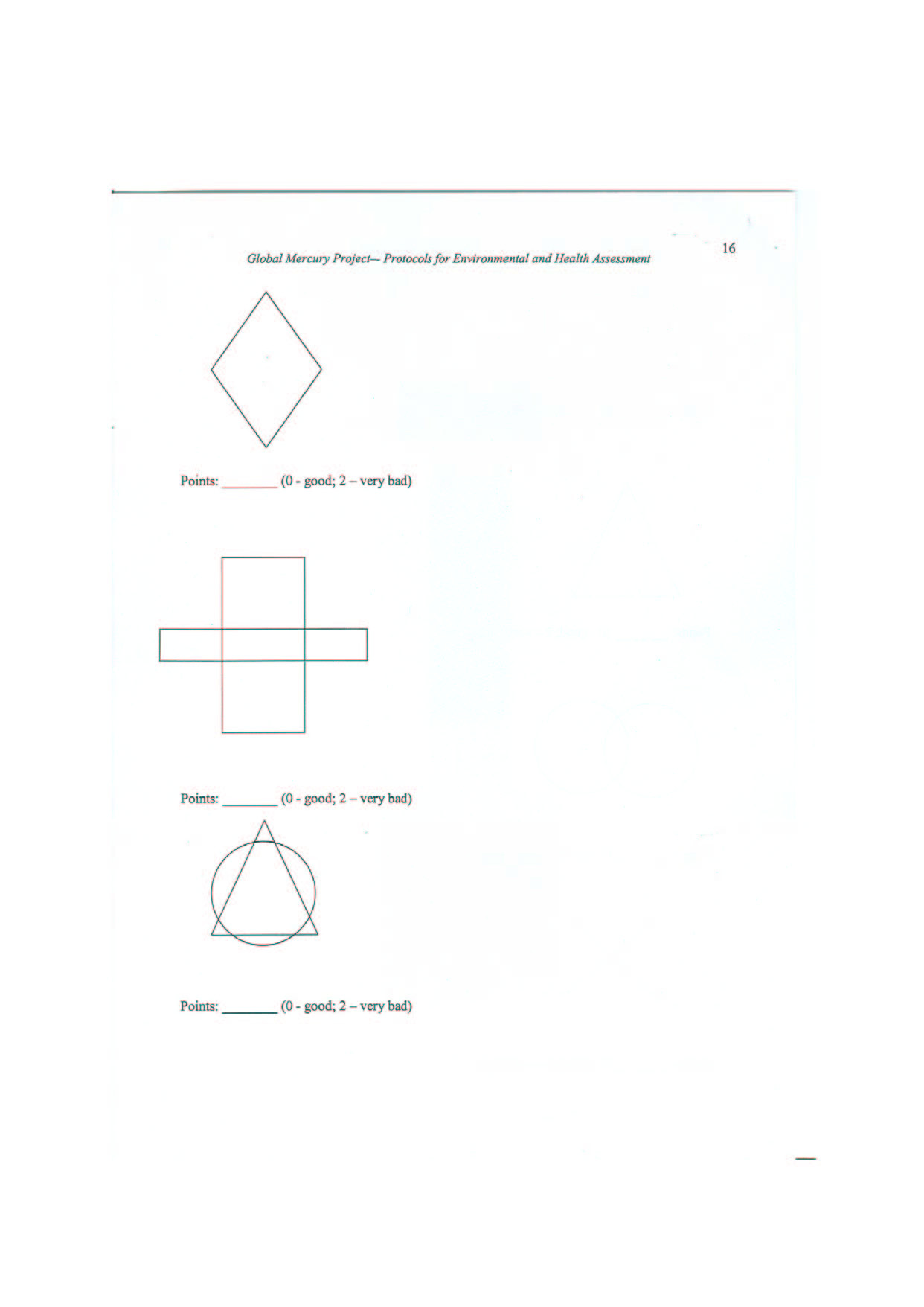
Global Mercury Project - Lao PDR Part B: Health Assessment
72 Rambaud A., Portet F., Fengthong T., Sychaleun V. Final report
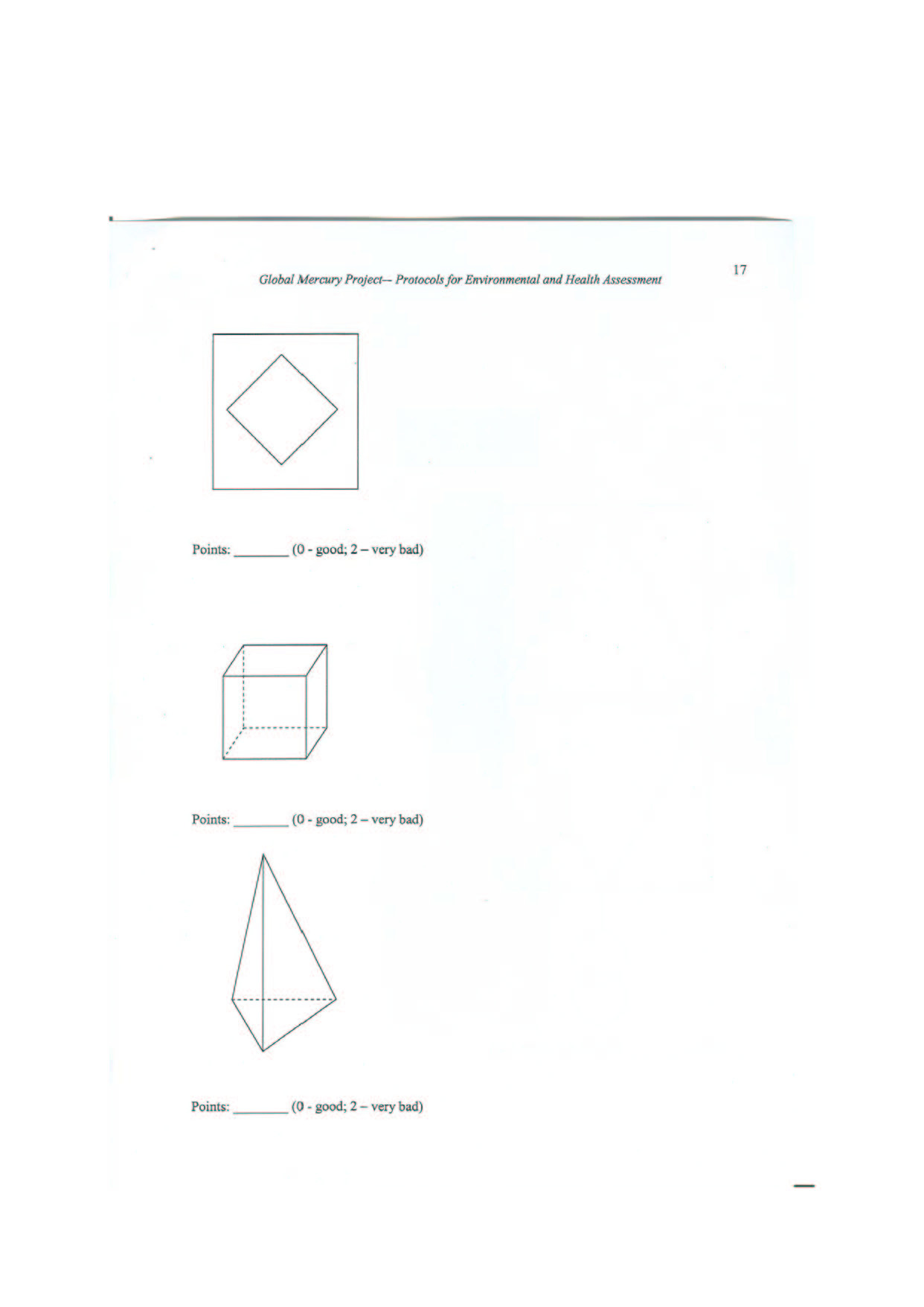
Global Mercury Project - Lao PDR Part B: Health Assessment
Rambaud A., Portet F., Fengthong T., Sychaleun V. Final report 73
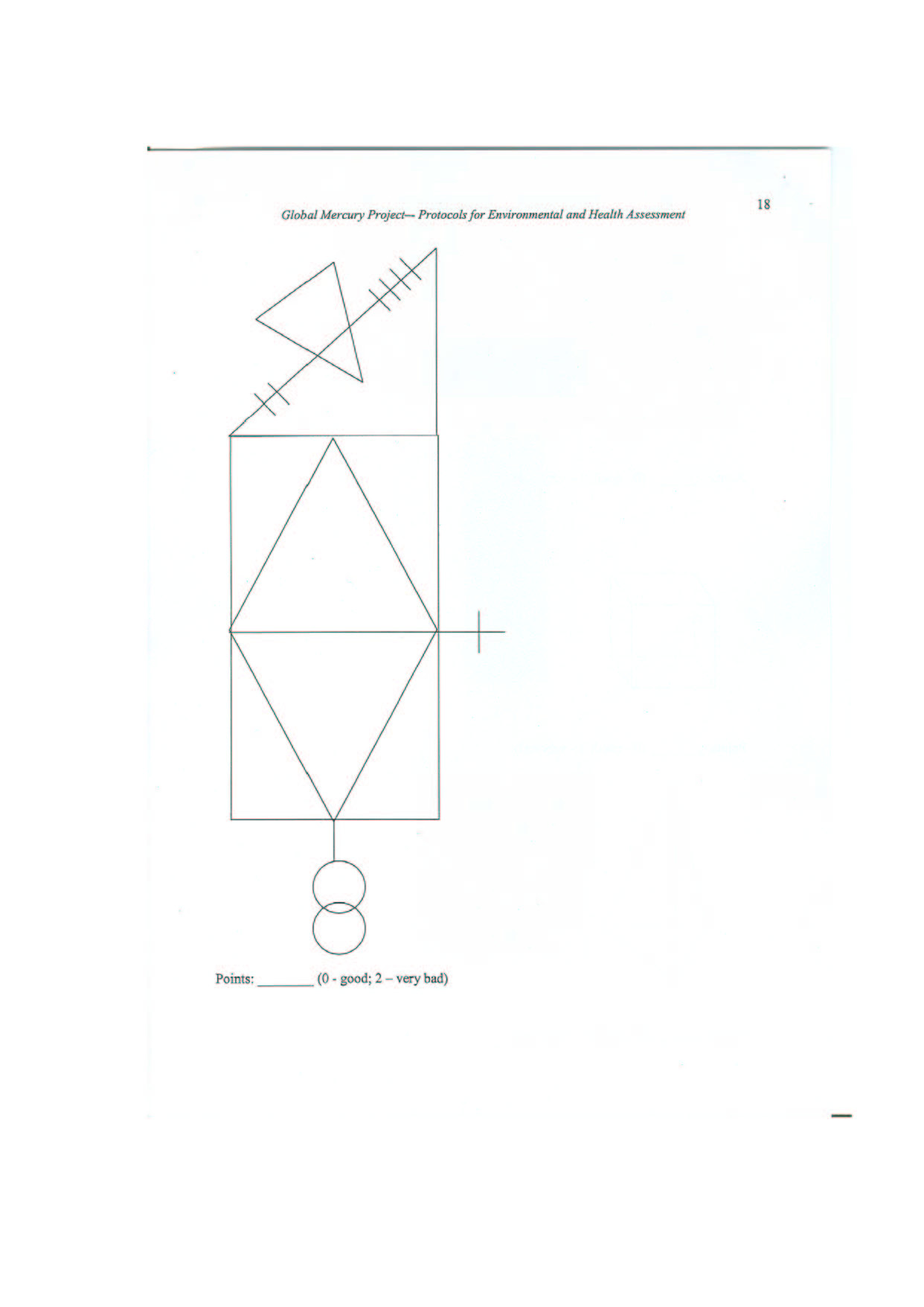
Global Mercury Project - Lao PDR Part B: Health Assessment
74 Rambaud A., Portet F., Fengthong T., Sychaleun V. Final report
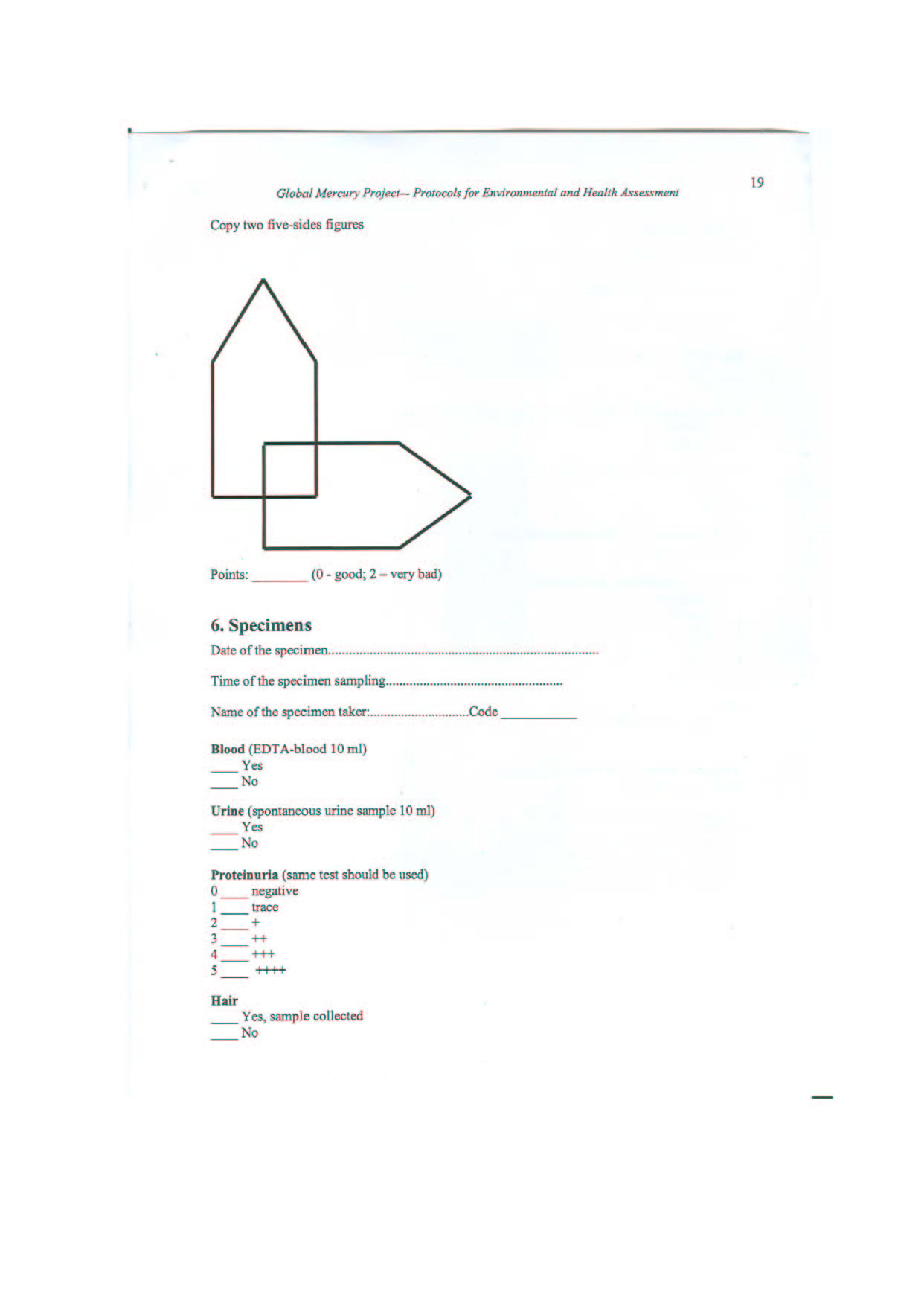
Global Mercury Project - Lao PDR Part B: Health Assessment
Rambaud A., Portet F., Fengthong T., Sychaleun V. Final report 75
Global Mercury Project - Lao PDR Part B: Health Assessment
76 Rambaud A., Portet F., Fengthong T., Sychaleun V. Final report
Global Mercury Project - Lao PDR Part B: Health Assessment
APPENDIX 3:
Biomarkers results
Blood, urine and Hair analysis
Rambaud A., Portet F., Fengthong T., Sychaleun V. Final report 77
Global Mercury Project - Lao PDR Part B: Health Assessment
Hg concentration (µg L-1) in adult urine and blood samples- creatinine concentration
(mmol/l) in instantaneous urine samples and Hg concentration (µg.g-1) in hair samples
of adults and children;
(sex: 1 = male and 2 = female Result < means < LD; for urine, milk & blood,
LD = <1 µg/L and for hair
= <0.25 µg/g )
51- 2 (Id.House-Id.N) Person who used Hg or assisted at the burning
Ref.Houayen Gnai
Id House Id.N sex age Hg ur µg/l Hg Blood µg/l Creat uri mmol/l Hg hair µg/g
1 1
1
46 <
1,0
24,56
0.5
1 2
2
38 <
1,4
18,02
<
1 3
1
20 <
<
26,92
<
1 4
2
18 <
1,0
19,88
<
1 5
2
11
<
1 6
1
4
0.4
2 1
1
51 <
1,0
17,94
0.4
2 2
2
37 <
1,2
19,90
0.6
2 3
1
14
0.5
2 4
1
13
0.3
2 5
2
10
<0.25
2 6
2
4
0.3
3 1
1
28 <
2,6
7,70
0.5
3 2
2
27 <
3,4
2.8
3 3
1
6
0.4
3 4
2
4
0.6
3 5
1
68 <
<
25,14
<
3 6
2
63 <
2,0
6,77
<
4 1
1
44 <
1,2
20,80
0.3
4 2
2
35 <
<
25,05
<
4 3
1
12
0.3
4 4
1
4
0.5
5 1
1
34 <
1,0
16,22
<
5 2
2
28 <
1,6
16,30
0.3
5 3
1
7
0.3
5 4
2
4
0.3
5 5
2
67 <
<
11,39
<
5 6
1
25 <
1,2
17,00
1.8
78 Rambaud A., Portet F., Fengthong T., Sychaleun V. Final report
Global Mercury Project - Lao PDR Part B: Health Assessment
Id House Id.N sex age Hg ur µg/l Hg Blood µg/l Creat uri mmol/l Hg hair µg/g
5 7
1
8
<
5 8
2
21
<
<
18,16
pas
6 1
1
30
<
1,0
20,57
0.3
6 2
2
28
1
3,0
9,80
2.1
6 3
1
10
0.3
6 4
1
6
0.4
6 5
2
3
1.1
7 1
1
40
<
<
19,11
<
7 2
2
30
<
1,2
18,51
<
7 3
1
6
<
7 4
1
4
<
7 5
2
4
0.3
8 1
1
45
<
1,4
16,40
<
8 2
2
35
<
<
13,36
0.3
8 3
2
23
2
<
12,89
1.1
8 4
2
2
<
8 5
1
24
<
<
17,02
0.4
8 6
1
1
<
8 7
2
1
0.3
8 8
2
1
<
9 1
2
52
<
<
13,11
0.5
9 2
2
18
15
1,2 25,79
11.0
9 3
1
17
<
1,8
18,09
0.3
9 4
1
6
<
9 5
1
18
<
1,2
17,74
0.3
10 1
1
45
<
1,0
13,71
<
10 2
2
50
<
<
11,65
<
10 3 2 11
0.3
Houay Gno
Id House Id.N sex age Hg ur µg/l Hg Blood µg/l Creat uri mmol/l Hg hair µg/g
51 1
1
64
<
5,2
18,36 0.9
51
2
2 59
<
4,8
11,96
1.1
51 3
2
17
<
3,4
7,59
3.3
51
4
2 18
1
3,0
17,33
2.7
52 1
1
52
<
5,0
14,33 0.9
52 2
1
23
<
3,2
3,36
1.3
52 3
1
21
<
6,2
13,06 1.2
52
4
2 18
<
3,2
16,93
0.5
52 5
1
13
0.7
52 6
2
11
0.7
Rambaud A., Portet F., Fengthong T., Sychaleun V. Final report 79
Global Mercury Project - Lao PDR Part B: Health Assessment
Id House Id.N sex age Hg ur µg/l Hg Blood µg/l Creat uri mmol/l Hg hair µg/g
53 1
1
75 <
2,2
18,12
0.5
53
2
2 64
<
3,0
13,90
0.8
53
3
2 39
<
1,4
8,36
0.7
55 1
1
36 <
2,0
25,92
0.7
55
2
2 35
1
4,0
2,33
6.0
56 1
1
41 <
2,2
24,97
<
56
2
2 29
<
1,2
7,67
1.6
56 3
1
11
0.4
56 4
2
3
1.0
58 1
1
33 <
4,2
12,30
1.3
58
2
2 28
<
3,2
4,33
5.4
58 3
1
8
0.5
58 4
1
4
0.9
59 1
1
57 <
8,4
13,43 1.4
59 2
2
40 <
5,0
14,98 0.8
59 3
1
8
1.2
60
1
1 48
<
4,2
12,82
0.8
60
2
2 44
<
3,2
8,23
2.8
60 3
1
19 <
4,4
10,85
1.1
60 4
1
14
0.5
60 5
1
11
0.6
60 6
2
64 <
pas
0.5
61 1
1
42 <
2,0
0.6
61
2
2 36
<
1,0
16,24
0.6
61 3
1
11
0.3
61 4
1
8
<
62 1
1
29 <
2,8
11,84
0.9
62 2
2
28 1
2,2
16,63
1.6
62 3
2
7
1,3
62 4
2
3
0.6
62 5
2
1
0.3
63
1
1 37
<
3,4
13,42
1.0
63
2
2 32
<
3,6
14,15
0.7
63 4
1
8
0.6
63 5
1
6
0,9
63
7
2 62
<
3,2
2,77
1.3
65
1
1 62
<
5,4
22,33 0.9
65
2
2 45
<
5,8
11,94 0.9
65
3
1 22
<
5,0
14,02 0,6
65 4
2
19 <
2,6
12,20
0.5
80 Rambaud A., Portet F., Fengthong T., Sychaleun V. Final report
Global Mercury Project - Lao PDR Part B: Health Assessment
Id House Id.N sex age Hg ur µg/l Hg Blood µg/l Creat uri mmol/l Hg hair µg/g
65 5
2
17
<
4,0
14,15
0.6
65 6
1
15
<
4,6
10,68
0.6
65 7
2
12
0.8
65 8
1
8
1.1
66 1
1
34
<
3,0
20,28
0.5
66
2
2 29
<
1,6
22,61
1.3
66 3
2
12
0.4
66 4
1
9
0.6
67
1
1 63
<
4,0
28,94
0.9
67
2
2 60
<
3,8
3,85
0.4
67 3
1
21
<
1,8
5,24
0.6
67 4
2
19
<
1,6
15,20
0.3
68 1
1
36
<
3,2
12,12
0.5
68
2
2 35
<
2,4
10,50
0.6
68 3
1
14
0.5
68 4
2
12
<
70 1
1
42
<
5,8
12,16 0.9
70 2
2 39
<
3,6
13,00
0.6
70 3
1
20
<
6,4
9,63 0.9
70
4
2 18
<
4,8
20,22
3.5
70 5 1 10
0.7
Houay Koh.
Id House Id.N sex age Hg ur µg/l Hg Blood µg/l Creat uri mmol/l Hg hair µg/g
71 1 1 30
<
1,4
18,55
2.8
71
2
2 25
2 3,8 6,86 1.9
71 3 1
2
16.8
73 1 1 27
<
1,4
11,22
0.3
73
2
2 28
2 1,0 12,71 0.9
74
1
1 44
< 2,4 12,19 0.7
74 2 2 34
4
3,0
11,25
3.5
74 2
5
1.0
74 2
6
0.9
75 1 1 47
1
2,0
15,25
0.5
75
2
2 42
2 1,6 6,89 0.3
75 3 1 17
<
2,6
13,36
0.7
75 4 1 15
0.6
75 5 2
8
0.5
75 6 2
6
<
75 7 1
4
<
Rambaud A., Portet F., Fengthong T., Sychaleun V. Final report 81
Global Mercury Project - Lao PDR Part B: Health Assessment
Id House Id.N sex age Hg ur µg/l Hg Blood µg/l Creat uri mmol/l Hg hair µg/g
75 8 2
1
<
76 1 1 44 <
2,2
16,34
<
76
2
2 41
13 12,2 11,21 1.5
76 3 2 16 <
1,2
5,31
0.3
76 4 1 12
0.6
76 5 2
9
0.3
79 1 1 44 <
1,4
10,54
0.4
79
2
2 24 <
1,4
21,45
0.4
79
3
2 16 4
1,0
24,49
1.1
79
4
2 15 <
1,6
15,19
0.6
79 5 1 11 <
<
79 6 2 10
0.5
79 7 1
7
0.4
79 8 2
5
0.3
80 1 1 69 <
1,6
16,94
0.5
80
2
2 59 4
4,0
10,64
0.3
80 3 2 14
0.7
81 1 1 39 <
1,6
16,24
0.6
81
2
2 45 1
3,6
3,63
18.6
81 3 2 10
0.4
82 1 1 28 <
3,2
9,01
0.8
82
2
2 25 <
1,8
6,91
0.9
82 3 1
5
1.2
83 1 1 35 <
1,6
15,73
0.3
83
2
2 33 2
2,6
17,08
0.9
83 3 2
1
0.5
84 1 1 21 <
2,2
19,78
0.5
84
2
2 31 <
1,4
7,04
0.3
84 3 2
8
0,3
84 4 2
1
0,3
85 1 1 45 <
3,0
12,77
0,3
85 2 2 38 <
2,2
7,94
4.5
85 3 1 66 <
3,2
12,74
<
85 4 1 12
0.3
85 5 1 10
<
86
1
1 33 <
2,8
28,87
0.8
86
2
2 32 <
1,4
10,07
1.0
86 3 2 17 <
1,8
16,03
0.3
87 1 1 36 <
1,8
19,52
0.3
87
2
2 31 <
2,2
5,44
0.5
82 Rambaud A., Portet F., Fengthong T., Sychaleun V. Final report
Global Mercury Project - Lao PDR Part B: Health Assessment
Id House Id.N sex age Hg ur µg/l Hg Blood µg/l Creat uri mmol/l Hg hair µg/g
88
1
1 51
< 2,4 19,88 0.4
88
2
2 50
3 3,2 18,35 0.3
88
3
2 78
< 1,6 9,78 0.3
88 4 2 12
<
88 5 1
2
0.6
89 1 1 59
<
1,6
19,44
?
89
2
2 47
< 2,0 16,06 0.4
89 3 1 28
<
1,4
12,73
1.0
89
4
2 25
12 7,8 12,74
5.4
89 5 1
6
1.0
89 6 1
4
1.6
91
1
1 55
< 2,0 14,30 0.3
91
2
2 53
< 1,4 8,39 0.4
93
1
1 39
< 2,2 22,42 0.7
93
2
2 35
pas 1,2
pas
<
93 3 1 16
0.3
93 4 2 13
<0.25
93 5 2
8
0.3
93 6 2
6
0.5
93 7 2
1
<
94 1 1 65
<
3,0
28,91
1.0
94 2 2 56
7
4,8 16,00 0.6
94 3 1 18
<
3,6
17,59
0.8
95 1 1 55
<
1,8
5,86
0.4
95
2
2 50
1 3,8 10,92 2.6
Lattha Hai
Id House Id.N sex age Hg ur µg/l Hg Blood µg/l Creat uri mmol/l Hg hair µg/g
152
1
1 31
< < 4,91 0.3
152
2
2 27
< < 11,95 0.5
152 3 2 10
0.4
152 4 2
6
0.3
152 5 1
5
0.3
155 1 1 27
<
<
5,27
<
155
2
2 27
< <
20,32 0.8
155 3 2
5
0.5
155 4 1
3
0.5
163 1 1 39
<
2,4
18,98
0.6
163
2
2 38
< 1,8 27,02 0.5
166 1 1 49
<
<
3,85
<
Rambaud A., Portet F., Fengthong T., Sychaleun V. Final report 83
Global Mercury Project - Lao PDR Part B: Health Assessment
Id House Id.N sex age Hg ur µg/l Hg Blood µg/l Creat uri mmol/l Hg hair µg/g
166
2
2 41 <
<
17,16
<
167 1 1 58 <
4,0
16,43
0.7
167
2
2 55 <
3,4
16,94
0.3
167 3 2
3
0.6
169
1
1 46 1
3,4
23,47
0.8
169
2
2 43 2
4,4
18,50
2.4
169 3 1 20
0.6
169 4 2 13
0.6
171 1 1 32 <
<
8,16
0.6
171
2
2 30 <
1,2
14,05
1.0
171 3 2 13
0.3
171 4 2
5
0.8
172 1 2 55 <
2,2
12,88
0.3
173 1 1 48 <
2,6
15,05
0.7
173
2
2 45 <
1,0
15,91
0.4
173 3 2 12
0.6
173 4 2
5
0.5
174 1 2 24
18,65
2.3
174 2 2
8
0.6
174 3 2
6
0.6
175 1 1 55 <
<
20,74
0.5
175
2
2 45 <
<
9,68
<
175
3
2 16 <
1,8
10,29
1.8
175 4 2 11
0.3
175 5 2 10
0.4
175 6 2
8
0.3
175 7 1
3
0.6
176
1
1 34 <
3,0
7,21
0.8
176
2
2 35 <
2,2
12,20
0.6
176 3 1 13
0.5
176 4 1 11
0.5
176 5 2
5
0.8
177 1 1 57 <
1,2
19,59
0.4
177
2
2 53 <
<
13,86
0.4
177 3 2 22 <
1,2
13,63
0.5
177 4 1 21 <
2,4
9,96
0.8
177 5 1 15
0.4
177 6 1 13
0.4
180 1 2 25 <
<
18,58
0.7
180
2
1
5
0.6
82 Rambaud A., Portet F., Fengthong T., Sychaleun V. Final report
Global Mercury Project - Lao PDR Part B: Health Assessment
Id House Id.N sex age Hg ur µg/l Hg Blood µg/l Creat uri mmol/l Hg hair µg/g
180 3 1
1
0.4
181
1
1 57
< 2,0 16,64 0.4
181
2
2 50
< 1,8 15,05 0.4
181 3 2 21
<
2,4
14,71
0.9
181 4 1 12
0.9
181 5 1
5
0.6
187 3 2 13
no
no
no
1,4
188
1
2 39
< < 10,47 0.5
189 1 1 61
<
3,2
25,51
1.2
189
2
2 58
< <
0.5
189 3 2 14
0.4
189 4 2 11
0.3
189 5 2 10
0.4
189 6 2
3
1.1
Pak Ou
Id House Id.N sex age Hg ur µg/l Hg Blood µg/l Creat uri mmol/l Hg hair µg/g
212 1 1 28
<
5,0
10,33
2.0
212 2 2 22
<
2,0
15,28
0.8
212 3 2
3
1.3
213
1
2 54
< 2,6 17,09 0.4
213 2 1 11
0.5
215
1
2 47
< 2,8 14,41 2.4
215 2 2
7
1.4
216
1
2 34
1
6,0
7,34 1.2
216 2 2 56
<
1,8
7,70
0.5
216 3 2 11
1.2
216 4 1 10
1.1
216 5 1
4
1.1
217
1
2 52
< 3,4 11,39 0.7
217
2
1 26
<
8,8
11,64
2.9
219
1
1 51
< 4,0 14,60 1.0
219
2
2 40
< 1,6 15,67 1.3
219 3 2 18
0.7
219 4 2 17
1.9
220
1
2 71
< 4,8 17,08 0.8
223
1
1 66
< 4,0 15,66 0.9
223
2
2 60
< 3,0 11,78 1.3
223 3
5.2
223 4
1.2
Rambaud A., Portet F., Fengthong T., Sychaleun V. Final report
83
Global Mercury Project - Lao PDR Part B: Health Assessment
Id House Id.N sex age Hg ur µg/l Hg Blood µg/l Creat uri mmol/l Hg hair µg/g
224
1 2 56 2
2,2
17,96
2.0
227
1 2 64 <
2,6
15,80
<
228
1 2 57 <
10,0
9,60
2.5
228
2 2 19 <
7,4
6,33
3.7
228 3 1
2
1.3
229
1
1 56 <
2,2
25,47
1.0
229
2
2 54 <
2,8
16,93
1.0
229
3
2 19 1
5,8
13,30
2.0
229 4 2 12
1.6
229 5 1 10
2.0
230
1
2 57 1
8,0
10,51
3.4
231
1
1 48 <
5,8
16,05 2,3
231
2
2 43 <
2,8
20,59
1.0
232
1
1 52 <
10,6
10,09
2.1
232
2
2 32 <
5,6
8,25 1.8
232 3 2 10
2.5
232 4 2
8
2.5
232 5 1
3
1.5
235 1 1 47 1
8,8
16,17
2,7
235
2
2 37 1
5,8
12,20
2.6
235
3
2 67 <
3,2
9,40
0.6
235 4 2 12
2.2
· Out of the 6 milk samples, one (n° 93-2) had insufficient quantity to be analysed
and 5 (n° 62-2; 73-2; 83-2; 86-2; 219-2) were <LD.
86 Rambaud A., Portet F., Fengthong T., Sychaleun V. Final report
Scientific and technical Centre
Division EPI
3, avenue Claude-Guillemin - BP 6009
45060 Orléans Cedex 2 France Tél. : +33 (0)2 38 64 34 34