
Global Mercury Project
Project EG/GLO/01/G34:
Removal of Barriers to Introduction of Cleaner Artisanal Gold Mining and Extraction Technologies
Lao People's Democratic Republic (PDR)
Final Summary Report
April, 2007
Global Mercury Project Final Report Lao PDR
Project EG/GLO/01/G34
Removal of Barriers to Introduction of Cleaner Artisanal Gold Mining and Extraction Technologies
Lao PDR Summary Report
Global Mercury Project, Coordination Unit, Vienna
Pablo Huidobro, Project Manager, UNIDO
Marcello M. Veiga, Chief Technical Advisor, UNIDO
Svitlana Adler, Administrative Assistant, UNIDO
Primary Authors
Randy Baker, Azimuth Consulting Group, Vancouver BC
Hermann Wotruba, RWTH Aachen University, Germany
Erin Aucoin, Earth Systems Lao, Vientiane, Lao PDR
Kate Figueiredo, Earth Systems Lao, Vientiane, Lao PDR
Eravanh Bougnaphalom, Department of Geology and Mines, Lao PDR
Disclaimer: The designations employed and the presentation of the material in this document do not imply the
expression of any opinion whatsoever of the Secretariat of the United Nations Industrial Development Organization
(UNIDO) concerning the legal status of any country, territory, city or area of its authorities, or concerning the
delimitation of its frontiers or boundaries.
Mention of company names and commercial products does not imply the endorsement of UNIDO.
©Copyright UNIDO, 2007
ii
Global Mercury Project Final Report Lao PDR
Table of Contents
Introduction and Overview ............................................................................................ 2
Background ................................................................................................................... 2
2003 Environmental and Health Assessment in Laos .................................................. 2
Revised GMP Focus in Lao PDR................................................................................... 3
Implementation of GMP Objectives .............................................................................. 3
Extent of ASM in Lao PDR............................................................................................ 4
GMP Project Implementation Sites ............................................................................... 6
Lak Sao, Bolikhamxay Province ................................................................................... 7
Sanamxay, Attapeu Province...................................................................................... 10
Awareness Campaign and Materials .......................................................................... 11
Health Awareness ....................................................................................................... 12
Technology.................................................................................................................. 13
Legislation ................................................................................................................... 13
Achievements and Challenges.................................................................................... 16
Health Awareness ....................................................................................................... 16
Technology.................................................................................................................. 17
Infrastructure and Logistics......................................................................................... 18
Acknowledgements ...................................................................................................... 20
List of Appendices
1. Regional Workshop Participants List
2. ASM Activities in Lao PDR
3. Awareness Materials : Posters
4. GMP Brochures in Lao Language
5. Draft Codes of Practice for Artisanal and Small-Scale Mining In Lao PDR
iii
Global Mercury Project Final Report Lao PDR
Introduction and Overview
Background
Artisanal and small-scale gold mining (ASM) is a poverty-driven activity that provides an
important source of livelihood for perhaps 10 15 million people, but is also one of the major
global sources of mercury contamination. It is estimated that artisanal gold miners produce up
to 800 tonnes of gold annually, but releasing as much as 800-1000 tonnes of mercury to the
environment in the process. These activities are frequently accompanied by extensive
environmental degradation and deplorable socio-economic conditions.
The use of mercury to recover gold, a process known as amalgamation, is a common and
simple gold extraction process that has been used for centuries. However, it is only relatively
recently that the hazards of mercury have been understood and how ASM activities can
contaminate air, soil, rivers, lakes and their fish communities with mercury, both locally, and
ultimately, on a global scale. The health of the miners and other people living within the area is
adversely affected primarily through inhalation of mercury vapour, and the consumption of
mercury contaminated fish. Environmental and health impacts of amalgamation by the artisanal
gold miners and their effects on international water bodies are similar in nature in most
developing countries and solutions to these problems require concerted and coordinated global
responses. The Global Mercury Project (GMP) was initiated to begin this global response to
address environmental impacts resulting from mercury released by the artisanal mining sector.
This report addresses the GMP's efforts to introduce technology, educate miners and reduce
mercury use and loss to the environment in Lao People's Democratic Republic (Lao PDR).
2003 Environmental and Health Assessment in Laos
Very little information about ASM and mercury exists for Lao PDR, where the Mekong River
forms the westernmost border of most of the country (Figure 1). This large river, bordering
several other countries including Cambodia, Vietnam, Thailand and Myanmar is a significant
trans-boundary river that discharges to the Gulf of Thailand and international waters. Loss of
mercury to this waterway and its downstream transport potentially endangers people and fish-
eating wildlife over a wide geographic area. Thus, in 2003 an Environmental and Health
Assessment (EH&A) was conducted in the Champat and Pak Ou districts on the Mekong and
Nam Ou rivers with the aim of identifying mining and environmental hotspots in project
demonstration sites, assessing the extent of environmental pollution in surrounding water
bodies and the level of human exposure. This was accomplished from biological samples
including medical exams, blood, urine and hair testing of mining and non-mining communities.
Chomphet and Pak Ou Districts are located north of Luang Prabang where there are about 500
part-time small-scale gold miners that live in eight villages composing the study area. Rice
farming is the primary occupation in the region and mining only takes place during the dry
season between January and June, when access to deposits in the river is possible. This is
common for all alluvial mining activities in Laos, regardless of geography because of the wet
versus dry season dynamics of river hydrology. Mining only occurs during the dry season when
water levels are low. Mining is typically very rudimentary with entire families including children,
excavating alluvial material by hand with bowls, buckets and chisels. On the Nam Ou, gold
2
Global Mercury Project Final Report Lao PDR
flakes are coarse and are separated from other heavy sand particles by drying and mouth
blowing. No mercury was used here. On the Mekong River, fine gold particles are amalgamated
in the river using large wooden pans with small amounts of mercury. Roasting is performed by
women along the riverbank over an open fire or in their kitchens. Overall gold production is
relatively low and is estimated at only 3 kg/year in total from this area. The amount of mercury
used is also relatively low, at approximately 2-2.5 kg/year, or less than 50 g per household per
mining season.
Given the low amount of mercury use/loss and the large size of the Mekong River, no
environmental contamination in water, sediment or fish was identified and levels were
considered background. None of the miners or their family members was considered to have
been adversely affected by mercury because exposure was so low. It is partly for this reason
that further effort was not expended in this area and instead, devoted elsewhere where mercury
use was much greater.
Revised GMP Focus in Lao PDR
Given the recent increase in ASM in different regions of Lao PDR, UNIDO's focus shifted from
the EH&A location to address other areas where mercury use was much greater and to gather
information on ASM activities and mercury use. The specific objectives of the program in Lao
PDR were as follows:
· Increase awareness of the GMP objectives to local government agencies, and where
possible, local communities involved in smal -scale gold mining using mercury;
· Introduce appropriate ASM equipment to the Department of Geology and Mines to
increase capacity;
· Introduce new legislation specific to artisanal and small-scale mining (ASM) activities;
· Understand the extent and magnitude of small scale and intermediate gold mining
activities in Lao PDR and the Mekong basin.
· Involve other stakeholder groups (e.g., federal, regional and local government, UN
agencies, NGOs, etc.) to assist in implementation of GMP goals.
· Recommend policies that will insure that human, animal and aquatic ecosystems are
protected from mercury contamination and other mining waste.
An important component of the revised focus was to undertake a country-wide investigation to
determine the spatial extent and magnitude of ASM activities in Lao PDR and implications on
the Mekong River basin. Partnerships and coalitions were developed with international,
national, regional and local stakeholders to optimize acquisition, understanding and reliability of
information related to this task. Liaison and consultation with the fol owing national and
international organizations was accomplished: World Wildlife Fund (WWF), International Union
for the Conservation of Nature (IUCN), Mekong River Commission (MRC), Care International
(CARE), Australian embassy, Wildlife Conservation Society, World Bank (WB), and the Japan
International Cooperation Agency (JICA). A summary of participants in each of the many
workshops held around the country during 2006/2007 are presented in Appendix 1.
Implementation of GMP Objectives
Results of field visits and assessments concluded that Luang Prabang, the site of the original
EH&A was not appropriate for implementation of technology introduction and a health
awareness campaign. Mining activities here were seasonal, itinerant, inconsistently practiced,
3
Global Mercury Project Final Report Lao PDR
and had low to nil mercury use. Furthermore, the recent increase in tourism in the Luang
Prabang area had encouraged many people to abandon mining in favor of providing garden
produce and fish for sale to restaurants.
Artisanal or subsistence level gold mining in Lao PDR is not considered illegal. No license is
required and the government levies no tax or fee. However, the recent increase in mining
activity and the possible introduction of more sophisticated technologies have suggested that
some mining ventures could no longer be considered artisanal. Thus the central government
has considered mechanisms to apply a tax. An `official' moratorium on all non-licenced mining
activities was enacted by the Department of Geology and Mines in July 2005 while decisions
were being made. Nevertheless, traditional, mostly al uvial mining at the family and community
level continued and more sophisticated mining operations were recently introduced and have
expanded in isolated areas, presumably with funding and technology from entrepreneurs from
other countries such as Vietnam and Thailand.
Since 2005, UNIDO had been informed by the DGM that there are other areas in Laos where
mining had recently increased, both alluvial and primary ore (i.e., hard rock) and where mercury
is being used. Subsequent field investigations, with Earth Systems Lao (ESL), the local
contractor, focused on identifying locations, with the participation of DGM, where technology
introduction and health awareness campaigns would be more appropriate, result in greater
benefit to local communities and reduce environmental mercury contamination.
Extent of ASM in Lao PDR
One of the primary objectives of the GMP in Lao PDR was to determine the spatial extent and
magnitude of ASM or small-scale mining activities in the country. There is very little information
available on the extent of mining and particularly, the use of mercury in gold mining. Mercury is
readily available in Lao PDR, where in town centers it can be purchased directly from gold
shops for about US $60 per kg. Regional sources of mercury include China and Kyrgyzstan. It is
likely that the transport of mercury from these mines to ASM areas in Lao PDR involves
numerous `middle-men' and an informal trading network. Mercury was reported to enter Laos
via Vietnam and Thailand.
Earth Systems undertook a country-wide investigation, with the assistance of other non-
governmental organizations (NGOs), such as World Wildlife Fund, Mekong River Commission
and others, to inventory small-scale gold mining and mercury use. A complete summary of their
findings are presented in Appendix 2 of this document.
Non-Mechanized Mining Non-mechanized ASM activities were reported by provincial
government officials in eleven (11) of the seventeen (17) provinces in Lao PDR involving
upwards of 8,000 people, although data were not available for all provinces. The areas
reported to have the highest intensity of artisanal mining included:
1. Bolikhamxay Province, in the Lak Sao area (near Nakadok Village) (Figure 2);
2. Attapeu Province along the Sekong River (Sanamxai District) (Figure 3).
Bokeo and Luang Prabang provinces also reported significant numbers of people involved in
artisanal mining. For reasons outlined earlier, mining is not the primary source of income in the
villages, but is supplementary. This estimate of artisanal miners is under estimated because of
limited capacity for field monitoring of mining activities by government authorities, absence of
licensing procedures, and the itinerant and subsistence nature of mining. A recently published
4
Global Mercury Project Final Report Lao PDR
World Bank study has independently estimated that there are between 7,000 and 15,000
people involved in artisanal gold mining in Lao PDR (Mindeco, 2006).
Mechanized Mining ASM activities involving some form of mechanization, including pumps,
ball mills, and dredges was reported by provincial government officials in nine (9) of the
seventeen (17) provinces in Lao PDR and was estimated to employ upwards of 1,000 people.
The highest intensity of small-scale mining activity was reported in:
1. Attapeu Province along the Sekong River ;
2. Bolikhamxay Province, in the Lak Sao area near Vietnam; and
3. Xiengkhouang Province.
Similar to non-mechanized operations, the number of miners is underestimated because of
limited field monitoring of mining activities by government authorities and unclear licensing
procedures for small-scale miners and hence limited data.
All small-scale mining activities were reported to have ceased fol owing release of the
Ministerial Notice in July 2005. However some provincial authorities, in particular Attapeu and
Xiengkhouang, requested the DGM to consider the resumption of small-scale mining to enable
the return of valuable provincial revenue streams from these activities.
Provincial government officials confirmed the following general characteristics regarding ASM
over the last three years:
i. Growth in the sector has increased but still primarily occurs during the dry season from
January to June.
ii. Mining deploys both mechanized and manual technologies - methods vary depending on
the type of resource exploited. The mechanized exploitation of alluvial deposits typically
involves barges fitted with excavators, conveyors, and sluices. The exploitation of
primary ore deposits typically involves manual excavation methods, mechanized
crushing, sluices and copper plates.
iii. There is limited knowledge or consideration of health, safety and environment issues.
iv. Non-mechanized activities are subsistence related and primarily undertaken by local
residents (rather than migrants), on nearby land, to supplement agricultural income.
v. Mechanized activities proceed without formal licensing or regulation, by local investors
with support from foreign investors from neighbouring countries including China, Vietnam
and Thailand. Migrant workers frequently participate in this activity and it tends to be less
seasonal and less subsistence related.
vi. Mercury use was confirmed in four (4) of the ASM mining areas. Mercury use was
confirmed in five (5) of the smal -scale, mechanized mining areas. Use of mercury in
`open circuit' sluice boxes was confirmed in Attapeu, Bolikhamxay and Xiengkhouang
provinces.
Artisanal miners commonly add mercury to the gravity concentrate. It was reported that some
miners recover mercury during the burning of the amalgam using traditional methods such as
bamboo retorts, however open burning of the amalgam is more common.
5
Global Mercury Project Final Report Lao PDR
Smal -scale mining operators in Attapeu, Bolikhamxay, and Xiengkhouang provinces are
allegedly using mercury in `open-circuit' sluice boxes for the processing of crushed primary ore
(Appendix 2). In the Nakadok Village implementation area, copper plates covered with mercury
are used to capture fine gold particles from crushed ore. Tailings from these operations, which
are likely to contain elevated levels of mercury, are contained in ponds, but during the rainy
season will overflow and ultimately will likely be discharged to aquatic environments.
In addition to the regional workshops and field visits to the ASM focal areas, NGOs and private
companies working within Lao PDR were contacted to gather further information on mining sites
in Lao PDR.
NGOs witnessed mining activity in the following areas during their field work:
· Alluvial mining in Sepone District, (near Sepon Mine large scale gold mine)
Savannakhet Province. Traditional methods are used, although the extent of mercury use
is unknown. Identified by Handicap International France.
· Alluvial mining in Kengbit Village, Khamkeut District, Bolikhamxay Province. Traditional
methods, mercury use unknown. Identified by Wildlife Conservation Society.
· Alluvial mining on Nam Kading River, near Phon Ngam and Phon Si Villages, Pakkading
District, Bolikhamxay Province. Four gold dredges in operation, mercury use assumed,
but unconfirmed. Vietnamese owned. Identified by Wildlife Conservation Society.
· Alluvial mining on the Sekong River, Attepeu Province using suction dredges as a joint
venture between the State Geological Exploration Unit (on technical matters), and
Sitthisay Saysana Company. Twenty-five operating units are reportedly underway and a
number of new mining projects are planned. Environmental Impact Assessment (EIA)
regulations state that an EIA should be conducted and approved and certificate issued
prior to implementation. This procedure has not been followed in this case with contracts
signed and implementation underway prior to submission of an EIA report. Subsequent
comments provided by PSTEO to the EIA document have been provided, however the
status of amendments is unknown. Approximately 5 hundred cubic meters of aggregate
are excavated per hour, yielding 0.6 2.5 g of gold per m3, depending upon location.
Mercury is then used during the extraction process. It is mixed with the concentrate
derived from the sediment. The recovered amalgam is then heated with acid to dissolve
the mercury and purify the gold. After the gold has been extracted, most of the mercury is
then recovered through a simple recovery process using precipitation by aluminum foil.
Though largely re-used, the mercury acid mix derived from the extraction process may be
released in small amounts into the environment through; evaporation from the heating
process (unless a fume cupboard is used); as a residual quantity left behind from the
recovery process; and, by accidental spillage. This information provided by Mekong
Wetlands Biodiversity Conservation and Sustainable Use project.
· Alluvial mining on Mekong River near Phakhao Village, Meung District and Hatsa Village,
Paktha District in Bokeo province. Traditional panning methods without the use of
mercury Identified by VECO (Vredeseilanden).
GMP Project Implementation Sites
Two case study areas were selected for implementation in Lao PDR. These sites were
eventually chosen by UNIDO and ESL based on information provided by the DGM and NGOs
6
Global Mercury Project Final Report Lao PDR
where there was reported to be significant mining activity. The specific implementation areas
(Figure 1) are:
· Lak Sao area, Khamkeut District, Bolikhamxay Province, mid-eastern Lao PDR, near
Vietnam (Figure 2); and
· Sekong River, Sanamxai District, Attapeu Province southern Lao PDR (Figure 3).
Criteria applied in the selection of these areas included:
i. Political support at the central and provincial level;
ii. Reported mercury use in the conduct of mining activities;
iii. Recognized environmental and social impacts arising from mining activities and hence
an anticipated willingness for mining communities to adopt interventions proposed under
the GMP; and
iv. Potential for these focal areas to be suitable case studies for other mining communities
in Lao PDR.
The first round of field activities was held in January 2007 to coincide with the start of the mining
season and involved a reconnaissance survey of existing ASM activities and confirmation of the
work program. Two subsequent field visits were made in February and March 2007, each meant
to customize and focus technology introduction and health awareness campaign activities.
Key implementation features of the technology and health awareness programs are the direct
involvement of district and provincial government staff, conduct of site visits by government and
mining representatives from other provinces to the focal areas, and preparation of literature and
visual media for distribution to government and mining representatives from other provinces.
A description of mining activities, extent of mercury use and loss relative to gold production and
sources of mercury loss from each of the implementation areas is described below.
Lak Sao, Bolikhamxay Province
Lak Sao is situated in central Lao PDR, approximately 50 kilometers from the Vietnam border
(Figure 2). Mining activity in this area was initial y discovered when water quality tests, as part of
a resettlement program for the Nam Theun 2 Hydroelectric Dam, determined elevated mercury
in streams. In 2005 there were at least three different hard rock (`primary') mining operations in
the area, as well as artisanal alluvial mining by villagers.
In addition to ASM, a Chinese company has been granted a license for small-scale primary ore
mining. After this, village activity increased, possibly motivated by activities of the Chinese
company. Villagers began to mine the primary ore deposits in groups of 10-15 people using
rock crushers bought from Vietnam. Migrants moved in from other areas to participate in mining.
The DGM estimated that at the height of activities, between 500-1000 people were involved in
gold mining. The number of gold shops in nearby markets increased from four in mid-2004 to 15
by December 2005. This mining occurred for approximately 6 months in 2005, until miners were
asked to stop mining the primary ore deposits. They returned to alluvial mining near their
village, but in a very organized manner and with almost total village involvement. The Lao
military had also been issued a primary ore mining license, and established two camps of
approximately 25 people each in the area. The July 2005 ban on small-scale mining activities
targeted mechanized activities and did not really halt non-mechanized artisanal mining which is
a subsistence activity and much more difficult to monitor or control.
7
Global Mercury Project Final Report Lao PDR
In the area surrounding Lak Sao there are five ASM areas that involve exploitation of both
alluvial and primary deposits. These activities are concentrated around the village of Ban
Nakadok. Currently, 1500-2000 people are believed to be involved in ASM activities including
local residents, and both local and foreign companies, in addition to the military mining
concession in the area.
With respect to the criteria outlined above for the selection of focal areas, the Lak Sao area
near Nakadok Village, Bolikhamxay Province was selected because:
i. There is strong support by the provincial and district government for implementation of
the GMP. Specifically the provincial government has requested: clarification with respect
to licensing procedures for ASM; a better understanding of the nature and extent of
impacts arising from mining activities.
ii. Mercury use was reported in both alluvial and primary deposits, including the use of
mercury in `open-circuit' plate amalgamation.
iii. Environmental impacts associated with mining in the Lak Sao area, came to the attention
of the government following a water quality and sampling investigation of the Nam Pan
undertaken by the Nam Theun 2 Power Company (NTPC).
There are 6 villages near the town of Lak Sao that have been granted a 6 hectare concession
by the Prime Minister's Office. This happened in January 2007 without the knowledge of the
DGM. It has been estimated by the Watershed Management Protection Authority (WMPA), that
approximately 20 ha are currently actually being mined. The 6 villages are Ban Nakadok, Ban
Thongkhe Khae, Ban Nahay, Ban Vang Kor, Ban Namouang and Ban Nathorn (Figure 2).
Traditional alluvial mining has been practiced here using pans for more than 100 years. Gold in
the Nam Thop River was coarse enough to allow miners to remove it from the concentrate with
their fingers. However, much of the coarse gold has been extracted by a Chinese company that
began mining in the area approximately 5 years ago.
Now, both alluvial and primary ore deposits are mined. Primary ore mining is now preferred
because it provides greater profit. This has resulted in nearly a complete shift away from alluvial
mining. Primary ore mining requires an economic input that requires the coordinated efforts of
many impoverished people, or external investment or seed money.
Alluvial deposits are mined by panning heavy sediment with mercury to amalgamate gold using
traditional wooden pans. During the February 2007 field visit there was only one group of
people alluvial mining. The amount of mercury used in primary mining is thus quite small and
probably amounts to 1 to 2 kg annually. It is not known how much gold is produced using this
method, nor an accurate estimate of mercury loss.
Primary ore deposits have been mined for approximately 3 years, though activities have
recently intensified. At one primary ore mining site next to the former village of Na Feuang,
miners removed ore from a hillside using steel bars and hammers. The ore was crushed with a
hammer before being transported in bags approximately 1km to the river where the ore was fed
into a combination mill / mercury sluice machine used to extract the gold. The machines consist
of a motor, a crushing machine, and a sluice box containing copper plates covered with
mercury. Water was pumped from the nearby river into the machine.
These machines are imported from Vietnam and cost approximately $600. As a result of the
expense, these machines are often bought cooperatively by the households. During the site
visit, it was not possible to get an exact number of the machines in operation, or how many of
8
Global Mercury Project Final Report Lao PDR
the six villages own such machines. Villagers are aware that using the mechanized mining
equipment is illegal (i.e., since July 2005) thus few details were provided. Tailings from these
machines are not treated and are discharged directly into the environment. Miners reported that
they run the machines continuously for 8 hours each day, and remove the amalgam every two
days. No detail on the amount of gold mined was provided, party because of the legality issue,
for potential tax reasons and because they do not want to attract other miners to the area.
Miners did mention that when they are lucky they have pieces of amalgam the size of an egg,
perhaps 300 gm.
Mercury amalgam is burned over an open flame without the use of retorts and in very enclosed
spaces. Small amalgams are also burned on a spoon over a kitchen fire, inside the house. This
process only takes a few minutes, but no precautions are taken while burning the mercury.
Miners travel to Lak Sao to sell their gold, and purchase mercury at the same time. Over a very
short period of time mercury became unavailable in gold shops, and had to be procured from a
Vietnamese equipment shop (selling other mining equipment such as mills and generators) at a
price of $60 USD/kg.
Recently, ESL and UNIDO learned about a new primary ore mining site which changed the
focus of technology introduction and health awareness training at the field level for province.
The site is located near Nakadok village, on a concession previously mined by a military mining
company, where as previously mentioned, the Prime Ministers office had granted a 6 ha
concession to six villages. The permission does not identify the exact area of the concession,
does not have a validity period, and does not identify what equipment the miners may use, and
does not cite any legislation or allocate responsibility for managing the mining activity in the
area.
Although it is difficult to estimate the amount of mercury being lost to the environment, a simple
ballpark estimate can be made. We estimated that approximately 40 mills are in operation in the
Nakadok Village implementation area. The mills have a capacity of 1.0 to 1.5 tonnes per day.
However, the limiting factor for gold production is the quantity of ore that can be mined. Thus,
mills were in operation only about half of the time. Gold grade was reported to be 7 grams per
tonne and that 3 grams of mercury were used to capture 1 gram of gold, a ratio of 3:1 Hg to Au.
We are also aware that some visible, high grade ore is recovered and sometimes processed in
the home, so gold grade may be closer to 10 gm/tonne.
Mercury lined copper plates are used to capture fine gold. These plates are actually quite
effective. A sluice box was set up and operated at the distal end of the copper plate sluice and
very little mercury was lost. Thus, most Hg is lost during the amalgamation process rather than
being lost in the tailings. However, burning of large amalgams (up to 300 gm) releases a
considerable amount of mercury to the environment. These mercury amalgams are burned in
extremely close, enclosed and confined spaces because of the secrecy of the operations.
Assuming that 1.5 tonnes per day are processed, with a gold grade of 10 gm per tonne, with a
mercury loss to gold production ratio of 2:1 to 3:1 (according to the miners), this amounts to 30
45 gm of mercury loss per operation per day. Assuming that there are 20 mills in operation,
this amounts to 600 to 900 gm of mercury loss per day from this area.
The main form of sustenance of the villagers in this area is farming, so primary mining may only
occur over a five or six month period. Assuming that mills are in operation for half of the time
over a five month period, assuming a six day work week, each mill is in operation for 75 days.
Thus, total mercury loss is approximately 67.5 kg per mining season (i.e., 75 days x 0.9 kg Hg
loss/d). This estimate is may be conservative and the actual amount of mercury loss might be
9
Global Mercury Project Final Report Lao PDR
higher. The miners have only recently begun to exploit this area and have not been active here
long. However, there has been a considerable investment of funds and infrastructure, so it can
reasonably be assumed that mining will continue at least until the rainy season and will re-start
the following dry season, in January 2008.
Although the Head of Nakadok Village reported that villagers are familiar with the dangers of
mercury and how to protect themselves we saw little or no evidence of this. We were advised
that all Village Heads had held meetings with their villagers as requested by the Project and the
DGM, to disseminate information mercury safety and awareness donated by the Project.
However, after visiting the field and speaking with miners, we determined that this had not been
accomplished. Notwithstanding the apparent lack of education, we did observe a burner
covering his face with a cloth demonstrating that he is aware that mercury holds some
dangers, but was unaware that a cloth will not protect him from mercury. Burners do not
understand what safety measures should be taken to protect against mercury exposure. Thus,
the Mercury Health Awareness Campaign for the miners and families working at the primary ore
mining site was held near Nakadok Village in February and March 2007.
Problems to be addressed at the primary ore mining site included:
· Lack of concern for environmental protection (including water sanitation)
· Lack of environmental rehabilitation
· Lack of plans for tunneling or mapping of tunneling
· Lack of structural reinforcement of tunnels
· Lack of fresh air in tunnels
· Lack of personal safety equipment (hard hats, cloves, earplugs, etc)
· Miners burning amalgam in enclosed areas
· Miners using mercury coated copper amalgamation plates in sluices
· Miners likely burning inside their homes at night
· Likely use of explosives for mining
Sanamxay, Attapeu Province
The region of Sanamxay, Attapeu Province in southern Laos was chosen as our second
implementation site (Figure 3). This was decided based on reports of both large scale mining as
well as ASM activities on or near the Sekong River based on observations by WWF and
feedback from regional DGM staff during a workshop in Pakse.
Field demonstrations took place in areas where a Lao-Chinese company, Sittxay Company had
already excavated sand from the Sekong River in Attapeu. Demonstrations were carried out
over 2 days at 4 sites with the assistance of provincial DGM staff. Both sites for retort
demonstration were held in the villages nearby to sluice demonstration sites. Short technical
presentation on equipment including high-banker screen sluice, tray sluice, plumbing pipe retort
and kitchen bowl retort were demonstrated. Details of implementation of technology
demonstrations, brochures and health awareness are detailed in the main document prepared
by Earth Systems.
10
Global Mercury Project Final Report Lao PDR
Participants were enthusiastic about the new technology and were immediately able to operate
the sluice boxes without difficulty. Miners suggested adding a rock separator (screen) to the tray
sluice, similar to the high-banker sluice design. A water pump for washing the sand on the
sluice was also suggested. The sluice box was much more efficient and faster than panning and
was quickly adopted by local villages. Some villagers who had not mined in several years
considered re-starting mining again, using the new technology. At the same time, a
presentation on the health hazards of mercury and how to work safely with mercury was held
villages Ban Oudomsouk and Ban Hat Xaykham. The plumbing pipe and kitchen bowl retorts
were demonstrated to villagers to demonstrate mercury recover.
After the demonstrations, the Permanent Secretary of the Sanamxay District Office was briefed
on Project activities. We were advised that there are at least 15 villages further down the
Sekong River where there is active gold panning during the dry season. This is a traditional
activity that has been carried out for many years. It is unknown whether some or all of these
communities use mercury. Introduction of the manual sluice is expected to proliferate to other
communities because it is a large step forward in the amount of material that can be processed
each day, and significantly increase the amount of gold acquired. It is very important that retort
technology also keep pace with the sluice technology to ensure that a greater problem is
created where one did not exist before. Amalgamation probably occurs in or near rivers, thus
there is inevitably some loss of mercury to the aquatic environment.
Unfortunately, the scope of ASM activities and extent of mercury use is not known at this time,
as this was not a specific goal of this aspect of project implementation. However, the DGM may
be able to provide some technical support in the future.
A group of women at the demonstration noted that they had not previously heard of the health
hazards of working with mercury. Women burned amalgam in a spoon over an open kitchen fire
(indoors), and then proceed to eat with the same spoon. They realized how dangerous their
behavior had been with mercury and were interested to learn how to work safely with mercury.
It was discussed that Local government will continue the technology introduction and health
awareness initiatives. Barriers to continuing the initiatives include limited financial and human
resources at all levels of government in Lao PDR.
It is unknown if there are gold shops in the vicinity of these villages. Given their small size, it is
unlikely. Gold is probably purchased by traveling gold buyers. It is not known if they also provide
mercury.
Awareness Campaign and Materials
Awareness campaign activities in Lao PDR were numerous and varied and took the form of:
· Workshops with government agencies including Department of Geology and Mines,
Health, Environment, Science, Technology and Environment (STEA),
· Workshops with non-Governmental agencies including World Bank, World Wildlife Fund,
Australian embassy, Wildlife Conservation Society, Mekong River Commission, Japan
International Cooperation Agency (JICA) and CARE
· Workshops and meeting with local government officials in regional centers
· Direct interaction with miners and their families and involved workshops,
demonstrations, distribution of awareness campaign materials including posters,
11
Global Mercury Project Final Report Lao PDR
brochures, technology demonstrations, one-on-one consultation and on-going training
by ESL staff or DGM staff in the field
· Brochures and posters (see Appendices 2 and 3), informational sessions, group
meetings, question and answer sessions and direct interaction with the mining
community, especially in the Nakadok area, site of the largest ASM activities.
· Training of local DGM and health officials during site visits to each province.
Brochures originally prepared in English were adapted to the local situation and translated into
Lao language. These included Mercury and Family Health, Protect Your Water and How to Get
More Gold. Examples of the translated materials are provided in Appendix 3. Posters were
specifically designed and prepared for our implementation sites, printed (500 copies) and were
spread throughout the implementation areas. Copies of the posters are depicted in Appendix 4.
Health Awareness
Regional workshops were held in three areas Southern (Pakse), Central (Vientiane), and
Northern (Luang Prabang) Lao. An International Stakeholders Workshop was also held in
Vientiane (Appendix 1). The workshops increased the awareness of GMP objectives to Central
and Local Government, small scale mining companies, and artisanal and small scale gold
miners. During the workshops, health awareness materials were presented and disseminated.
Most participants were unaware of the negative effects of mercury on the body, and many were
unaware of the way mercury is used by local miners to process gold. The Health Awareness
Campaign provides participants with a reason to adopt the new technology, and is therefore an
integral to its successful introduction. The workshops succeeded in increasing participants'
knowledge regarding methods of mercury poisoning, how mercury can enter and persist in the
environment, symptoms of mercury poisoning, who is most sensitive to mercury poisoning, and
how to protect oneself and one's family from mercury poisoning.
A specific Mercury Health Awareness Campaign was developed for miners working in the
primary ore mining area in Bolikhamxay led by Dr. Vilayvone from the Ministry of Health. Other
team members included the Earth Systems Lao, and the Environmental Management Unit from
the Science Technology and Environment Agency.
The health campaign was held over three days. Miners at the primary ore mining site near
Nakadok were divided into three groups, each participating in the campaign on separate days.
On each day, a morning session was held for both men and women, and a separate afternoon
session was conducted for women and children. Approximately 100 people attended the
session. Questions surrounded the potential health effects of mercury and whether there were
any treatments or cures for poisoning. Most miners admitted to a lack of concern about mercury
as they had more immediate health issues to deal with such as accidents, diarrhea, malaria and
sexually-transmitted diseases. Health materials were left with the Bolikhamxay Provincial
Department of Hygiene and Disease Prevention to continue with awareness training.
Brochures (Mercury and Family Health, How to Get More Gold, Protect Your Water and
Mercury in Gold Shops; Appendix 3) and posters (Appendix 4) were translated into Lao
language and presented at each of the regional workshops. Brochures, posters, cd's and
informational sessions were provided to the central government Lao PDR DGM, Bolikhamxay
Provincial DGM, and Attapeu Provincial DGM as well as international organizations, WWF,
Care and SEM2. Five hundred posters of each theme were produced and distributed.
12
Global Mercury Project Final Report Lao PDR
Technology
In the earlier stages of the project it was agreed with the DGM that the technical focus of the
project will be artisanal alluvial mining only. In Lao PDR this takes place at the lowest possible
technological level where sluice boxes and retorts are unknown.
Alluvial sluice boxes
To improve gold recovery and income for the alluvial miners, it was decided to introduce hand-
fed sluice boxes for pre-concentration. We did not introduce larger sluices, with water pumps
because we did not want to create a larger problem than currently exists. Different models were
built, one high-banker type with screen, one "in-the-stream" type and zig zag. Eight sluices
constructed of wood or metal were provided using only locally available materials. Each type of
sluice was simple to use and efficient at recovering coarse and fine gold. The government of
Lao PDR was provided with five sluice boxes in Vientiane Central DGM (2), Luang Prabang
DGM, Nakadok Village, and Sanamxay District Office DGM. Although the miners liked and
understood the technology, no fol ow-up report on results and acceptance has been determined
because of the recent introduction of the technology and conclusion of the project.
Retorts (alluvial mining)
Following the general philosophy of the GMP, it was decided to introduce the most simple
retorts, plumbing pipe and kitchen bowl. Materials for their construction were not easily
available, especially in remote areas. A common problem is the very small amalgams produced
during one day of work, which can be as little as one third of a gram. Neither the kitchen bowl
nor small plumbing pipe retorts are suitable for these tiny amalgams. Therefore, several models
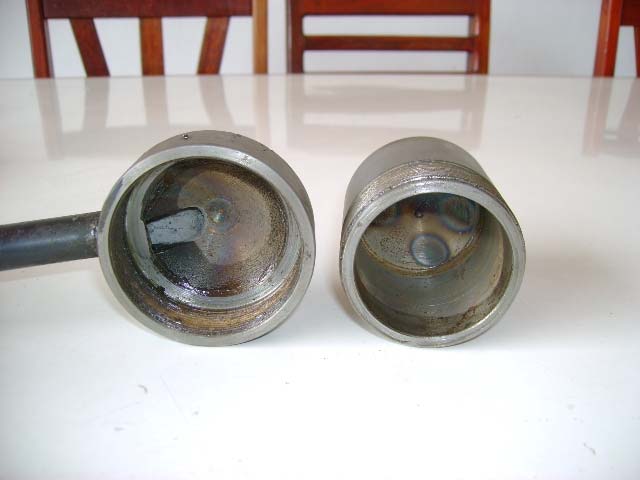
of mini-retorts were made, where a bended tube wherein a thread was lathed was closed with a
bolt and used as a retort. At the time of writing of this report, no information on how these mini-
retorts performed, or if the miners are using these or similar models.
Even for larger amalgams, neither the plumbing pipe retort nor the kitchen bowl retort proved
very successful. The metal tubes and fittings to construct the plumbing pipe retort were difficult
to find outside of Vientiane, because most tubes and fittings in the country are made from
plastic. Also, the tubes and fittings are galvanized with zinc, which when heated forms a zinc-
amalgam, which sticks inside the retort and impairs gold recovery. New retorts must be treated
with hydrochloric acid, but this too is difficult to find. Furthermore, mercury vapor emissions still
occur, making this type of retort an only apparently safe type of device.
Retorts (primary mining)
The primary gold rush site near Lak Sao is technologically much more advanced than the
manual alluvial operations. Kitchen bowl and pipe retorts were clearly insufficient and primitive.
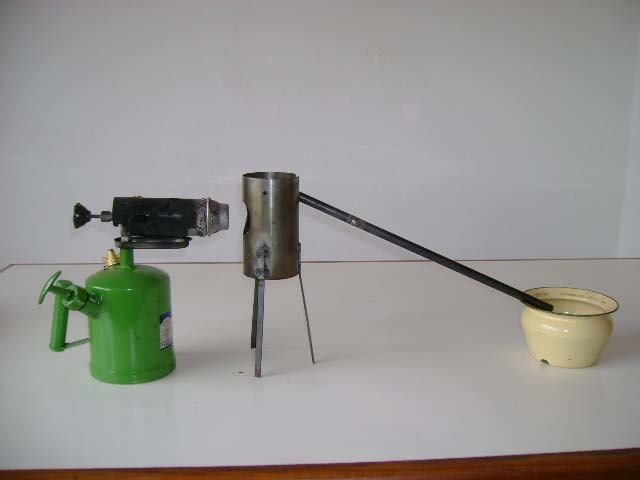
Consequently, two types of retort were constructed to fit their needs. The first option was a
small mobile lathed retort from black or stainless steel with a good blower. To provide an
adequate heat source different sizes of Chinese gasoline torches were used It is however not
clear, if these burners are easily available outside Vientiane.
Legislation
A significant gap in dealing with ASM in most countries is the lack of legislation specific to small-
scale miners, mining activity and in particular, the use of mercury. Over the past two years the
World Bank has been developing a new Mining Policy for Lao PDR, however, the focus is on
13
Global Mercury Project Final Report Lao PDR
larger, commercial scale mines as the country moves to exploit its natural resources to reduce
poverty in the country. There is very little text dealing specifically with ASM and mercury. Given
the importance of introduction of legislation specific to ASM is a primary goal of the GMP, this
provided us with an opportunity to introduce legislation to the central government for inclusion in
the new Mining Policy. The legislation took the form of "Codes of Practice" and used the mining
area in Nakadok Village, Bolikhamxay as an example of an area where the Codes of Practice
could be phased in. Codes of Practice were developed within the context of three themes: 1)
Mine Safety; 2) Environmental Protection; and 3) Protection of Human Health. The Codes or
Practice, as submitted to the central Department of Geology and Mines and as translated into
Lao language, are presented in Appendix 5.
Photos of lathed retort in burning pipe produced in Vientiane with Chinese gasoline burner
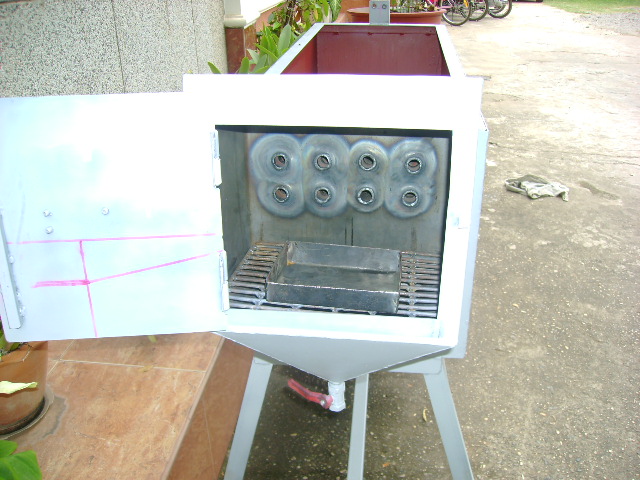
The second option is a large stationary fume hood style retort, to be used by all miners. This
retort was also built in Vientiane with locally available materials and transported to the mining
site close to Lak Sao. The stationary retort is composed of a burning chamber, condensation
pipes, a mercury collection chamber, charcoal filter and a burner with blower. The fan creates
suction, drawing mercury gas into the tubes where it is condensed. The charcoal filter captures
any truant gases. A separate building was constructed to house the retort in the Nakadok
Village area. Mercury recovered from the retort will be recycled and sold to miners at lower than
market price to encourage its reuse. Profits will be used to purchase materials such as fuel and
wages to operate the facility at no cost to the miner, thereby ensuring incentive. At the time of
writing of this report it was not known if this has been successful due to recent implementation
of the retort in the mining community. The assistant country focal point, Mr. Eravanh
Bougnaphalom of central DGM was trained on operation and maintenance of the stationary
retort.
14




Global Mercury Project Final Report Lao PDR
Photo of Stationary Community Retort Installed in New Mining Area near Nakadok Village
Photograph of Condenser Tubes Inside Stationary Retort
15
Global Mercury Project Final Report Lao PDR
In the Sanamxay area of Attapeu Province demonstrations were carried out over several days
at four sites to present technical materials, introduce sluice and retort technology, provide
technical guidance manuals and materials for sluice box and retort construction, guidelines for
safe handling and use of mercury and codes of practice.
Primary concentration
In the primary mining site near Lak Sao, small wet operated hammer mills are used in
combination with amalgamation plates. Milling is fine and throughput is low, and only small
amounts of mercury are scratched from the plates. Nevertheless, some loss of floured mercury
or mercury adhered to fine solids does occur. Carpeted sluice boxes have been introduced with
the aim of replacing copper plates; however, it will take some time for the transition to be made,
if attempted because the miners need to prove to themselves that they can capture as much or
more gold with the sluice box as they did with mercury lined copper plates.
Because of the limited time in the field, we were not able to successfully replace copper plates
with sluice boxes. We have left responsibility for this change in technology with the Department
of Geology and Mines, both at the local and central levels. Legislation introduced to the Lao
PDR government stipulates that copper plates should be phased out, after a grace period and
be replaced with sluice boxes.
Achievements and Challenges
Health Awareness
Key achievements of the Health Awareness Campaign included:
1. Mercury health awareness materials such as brochures and posters were disseminated
at the Regional Workshops held in Northern, Central, and Southern Lao PDR attended
by 70 people, including participants from: Central, Provincial, and District Government
from the Ministry of Energy and Mines (Department of Geology and Mines - DGM);
Dept. of Foreign Cooperation; Dept. of Public Health; Provincial Science Technology
and Environment Office; Southern Geological and Mining Sector; Lao National Mekong
Committee; representatives from private sector mining companies; and local artisanal
miners.
2. Mercury health awareness materials were disseminated at the International
Stakeholders Workshop in Vientiane. Participants included the Australian Embassy;
CARE Laos; Japan International Cooperation Agency (JICA); Mekong River
Commission (MRC); World Bank (WB); Wildlife Conservation Society (WCS); and World
Wide Fund for Nature Greater Mekong Programme (WWF).
3. Mercury health awareness materials (brochures, posters, and technical guidelines) were
disseminated to villagers and miners in both implementation areas during several field
visits to areas with mining activity.
4. Development and implementation of a targeted Mercury Health Awareness Campaign
for the miners and families of the newly formed village in the primary ore mining area
near Nakadok Village in Bolikhamxay Province. Ministry of Health personnel were
trained to deliver the awareness training so that this activity could continue after the
GMP project.
16
Global Mercury Project Final Report Lao PDR
5. Dissemination of technology and health awareness posters (Mercury and Family Health;
and Retort Use) to each province of Lao PDR through field visits and DGM's annual
conference.
6. Introduction of legislation specific to Mine Safety and Protection of Human Heath in the
specific context of ASM (Appendix 5).
The key challenges faced during implementation of the Health Awareness Campaign can be
summarized as follows:
1. It is difficult to communicate the potential impact of mercury exposure because the
health effects of mercury exposure are not manifest for a long time, difficult to diagnose,
and are often masked by other conditions.
2. Miners in Lao PDR have more immediate health concerns, such as malaria, malnutrition,
and unexploded ordinance and these tend to take priority over long-term health
concerns.
3. Raw materials for manufacturing retorts tend are difficult to acquire and capital funds of
villagers are limited, and often represents too large an investment.
Technology
Key achievements of the technology introduction include:
1. More efficient and safer gold mining technology (sluice boxes and retorts) was
introduced at the Regional Workshops held in Northern, Central, and Southern Lao
PDR
2. During the Regional Workshops, technology demonstrations were undertaken to
introduce workshop participants to carpet sluice boxes and plumbing pipe retorts.
Participants from Bolikhamxay and Attapeu invited the Project to visit mining areas in
their provinces and introduce this technology.
3. Introduction of the stationary retort to the primary ore mining area near Nakadok Village
in Bolikhamxay Province, including capacity training for Central DGM to use and
introduce the retort.
The key challenges faced during technology introduction are:
1. Materials required for the plumbing pipe retort were not always locally available. Metals
pipes, where available are coated with zinc, which must first be removed.
2. Bowls available in most rural markets are not suitable for the kitchen bowl retort
because they are the wrong shape, having a flat bottom which causes evaporated
mercury to re-condense and drip back into the crucible instead of being removed to the
sand.
3. Technology introduced by the project is in competition with technology introduced from
neighbouring countries, such as the copper plates introduced from Vietnam. Given the
significant financial investment to purchase this equipment, miners are unlikely to switch
to different technology introduced by the project if more funds are required.
17
Global Mercury Project Final Report Lao PDR
4. There is considerable outside influence on technology from other countries such as
Vietnam it is difficult to overcome this influence without a long-term and dedicate
effort.
Infrastructure and Logistics
Key challenges regarding infrastructure and logistics are:
1. The Government of Lao PDR has limited human and financial resources to support
implementation of project initiatives. While financing provided by the project has helped
overcome financial barriers during project implementation, this is expected to be a major
barrier to ongoing work, such as continued health awareness and technology
introduction.
2. There is limited technical expertise among staff at the Ministry of Energy and Mines,
Science Technology and Environment (STEA) and Health departments. Lack of
expertise and lack of time by those few qualified people is an impediment to progress.
3. Artisanal and small-scale mining is perceived as an activity that is difficult to manage,
requiring significant resources to do so properly, and providing little benefit in return.
Without sufficient resources, regulation of this activity will have limited success.
4. The Government of Lao has a complex system of communication between agencies.
Lack of communication within and between departments leads to an ad hoc and
ineffective system of governance.
5. Internal communication within Ministries is also difficult, and as a result, staff involved in
the project can be misinformed or uninformed of information relevant to the project. This
difficulty also applies to communication between Central Government and Provincial /
District Government staff.
6. Villagers were hesitant to provide information on small-scale mining when Government
personnel were present because, following the Ministerial Notice, all small-scale mining
activity is illegal. Note: In Lao PDR, it is necessary to involve Government in field visits
and community consultations.
7. Given the short mining season (roughly January April) there is limited time available in
the field during which to effect change.
Key achievements regarding infrastructure and logistics include:
1. A series of field visits to government identified areas with increased mining activity and
successfully introduced new technology to Village Heads and miners of 11 villages in 2
provinces including Bolikhamxay Province (6 villages), with 115 participants and
Attapeu Province (5 villages), with 75 participants.
2. Communication between Central and Local DGM was improved as was capacity to
carry out technology demonstrations and health awareness campaigns.
3. An inventory of existing and new mining areas was identified based on feedback from
government officials and a network of NGOs and external agencies operating in Lao
PDR (Appendix 2).
18
Global Mercury Project Final Report Lao PDR
4. Legislation specific to ASM and small-scale mining and mercury use was introduced at
the Central government level and has been carried forward to become part of the new
Mining Law being prepared by the World Bank.
5. NGOs and other agencies have become aware of the GMP objectives and are sensitive
to ASM activities and mercury use. GMP objectives have been incorporated into their
own activities.
19
UNIDO, Final Report Lao PDR
Acknowledgements
UNIDO would like to acknowledge the valuable contributions by the contractors and
technical advisors to the project, especially Dr. Hermann Wotruba, Department of Mineral
Processing, Aachen University, Germany with whose experience and insight made this
project successful. Randy Baker of Azimuth Consulting Group Vancouver provided
guidance and management throughout the project in addition to his input on mercury
related issues with respect to environmental and human health.
Earth Systems Lao, especially Paul Cannon, Erin Aucoin, Kate Figueiredo, Bouavong
Luangkhot, Nanong Khotpathoum, Xiong Tsechalicha, and ESL support staff are thanked
for their dedication, diligence and hard work to ensure the successful implementation of
UNIDOs GMP objectives in Lao PDR.
The assistance of Ms. Chansavath Boupha and Mr. Eravanh Bougnaphalom of the
Department of Geology and Mines, Vientiane are gratefully acknowledged for logistical
support, technical assistance, and project facilitation and implementation. Without their
support, this project would not have been possible.
Final y, we would like to thank Dr. Marcello Veiga Chief Technical Advisor of the GMP for
his guidance and support of the project and Ms Svitlana Adler for administrative support.
20