
Global Mercury Project
Project EG/GLO/01/G34:
Removal of Barriers to Introduction of Cleaner Artisanal Gold Mining and Extraction Technologies
INDONESIA
COUNTRY REPORT
June, 2007
Project EG/GLO/01/G34
Removal of Barriers to Introduction of Cleaner Artisanal Gold Mining and Extraction Technologies
Indonesia Country Report
Global Mercury Project, Coordination Unit, Vienna
Pablo Huidobro, Project Manager, UNIDO
Marcello M. Veiga, Chief Technical Advisor, UNIDO
Svitlana Adler, Administrative Assistant, UNIDO
Primary Authors
Rini Sulaiman, Indonesia Country Coordinator
Consultant to UNIDO,
2151 N.193rd St, Shoreline
WA 9813, USA
Randy Baker, Laos Country Coordinator
Consultant to UNIDO, Azimuth Consulting Group
218-2902 W. Broadway,
Vancouver, BC V6K2GB, Canada
Budi Susilorini, Assistant to Country Focal Point
UNIDO Indonesia
Menara Thamrin
Jl. MH Thamrin kav 3
Jakarta 10240, Indonesia
Kevin Telmer, Prevention and Reclamation Strategies Expert
Consultant to UNIDO
School of Earth and Ocean Science,
University of Victoria
Victoria, BC, V8W 3P6, Canada
Samuel Spiegel, Coordinator of Policy Development and Microfinance
Consultant to UNIDO
Norman B. Keevil Inst. Mining Engineering
350 Stores Rd.,
Vancouver, BCV6T 1Z4, Canada
Disclaimer: The designations employed and the presentation of the material in this document do not imply
the expression of any opinion whatsoever of the Secretariat of the United Nations Industrial Development
Organization (UNIDO) concerning the legal status of any country, territory, city or area of its authorities,
or concerning the delimitation of its frontiers or boundaries.
Mention of company names and commercial products does not imply the endorsement of UNIDO.
©Copyright UNIDO, 2007
Table of Contents
Acknowledgement
i
I. Overview
1
II. Implementation of Awareness Campaign
3
II.1 Project Site A: Galangan, Central Kalimantan
3
II.1.1
Introduction
3
II.1.2
Gold
Mining
and
Production
4
II.1.3
Mercury
loss
5
II.1.4
Campaign
Activities
6
II.1.5 Policy Development and Microfinance of Activities
9
II.1
6
Accomplishments
10
II.1.6.1
Peripheral
Benefits
13
II.1.6.2 Indications that Awareness will be sustained
13
II.1.7
Challenges
14
II.2 Project Site B: Tanoyan, North Sulawesi
17
II.2.1
Introduction
17
II.2.2
Gold
Mining
and
Production
18
II.2.3
Mercury
loss
20
II.2.4
Mercury
in
fish
21
II.2.5
Campaign
Activities
22
II.2.6
Accomplishments
23
II.2.6.1
Peripheral
Benefits
25
II.2.6.2 Indications that Awareness will be sustained
25
II.2.7
Challenges
25
II.3. Project Site C: Sekonyer River,
Central
Kalimantan
26
II.3.1
Introduction
26
II.3.2
Gold
Mining
and
Production
27
II.3.3
Mercury
loss
27
II.3.4
Campaign
Activities
28
II.3.5
Accomplishments
29
II.3.5.1
Peripheral
Benefits
30
II.3.5.2 Indications that Awareness will be sustained
30
II.3.6
Challenges
31
III.
Overall
Assessment
31
III.1 Achievements
32
III.2 Challenges
34
References
36
List
of
Source
Documents
36
Figures
Figure 1 Map of GMP sites in Indonesia
37
Figure 2 Map of six mining camps in Galangan, and the town of Kereng Pangi,
Katingan
District,
Central
Kalimantan 38
Figure 3 Examples of printed media for Campaign in Galangan
39
Figure 4 Map of GMP site Tanoyan and Manado
40
Figure 5 Examples of printed media for campaign in Tanoyan
41
Figure 6 Map of Sekonyer River, Central Kalimantan
42
Figure 7 Examples of printed media for campaign in Sekonyer River
43
Figure 8 Awareness campaign photos from all sites
45
Tables
Table 1 Estimated mercury emission from gold shops in the town of Kereng Pangi,
Central
Kalimantan
48
Table 2 List of TDU Components for Galangan, Central Kalimantan
49
Table 3 Amount of mercury lost to the environment on an annual basis from the 50
Bolaang Mongondow District
Acknowledgements
Many people were involved in the implementation of GMP Awareness Campaign in
Indonesia. First, I would like to thank Mr. Masayoshi Matsushita, the former UNIDO
Representative for Indonesia Field Office for providing genuine interest and support
throughout the project and Dr. Thamrin Sihite, GMP Country Focal Point and the Head
of Planning Bureau and Cooperation of Ministry of Energy and Mineral Resources.
Our partners in Central Kalimantan and North Sulawesi have worked relentlessly to
educate miners, gold shops operators, government authorities, journalists, academicians,
mine and or rig owners, students and general public on the health hazards of mercury and
technology introduction to reduce mercury contamination and loss. Heartfelt thanks to the
Bupati of Katingan and his dedicated staff, without their tremendous support and
cooperation, the campaign and policy development would have never attain the positive
outcome.
Sincere thanks to Bardolf Paul, Sumali Agrawal, Mayang Meilantina, Dzul Fikri, Kartie
Vitamerry and Yuliani Kristinawati from Yayasan Tambuhak Sinta based in Palangka
Raya who have made significant contribution to the achievements in Galangan, Central
Kalimantan.
Dr. Yenny Fildayani, Kay Howe, Masnun, Mochamad Kasri and Marini Budiarti from
FNPF in Kumai, worked under challenging conditions, long hours in the remote mining
camps along Sekonyer River, in Central Kalimantan. Thank you for your dedications and
countless hours of volunteer work.
Thanks to Sri Hardiyanti Gunadi, Purnama Nainggolan, Dr. Henry Palandeng, Melanie
Palandeng and Raymond Mudami from Yayasan Lestari in Manado who have conducted
excellent media campaigns to raise awareness among miners and general public in
Minahasa and Bolaang Mongondow Districts in North Sulawesi.
Many thanks to all instructors and trainees who have participated in the training of
trainers conducted in Kalimantan, Sulawesi and Sumatra. Trainers have applied their
knowledge and skills well during field visits as part of the Transportable Demonstration
Unit. In addition to the authors of this report, Marcello Veiga, Bern Klein, Hermann
Wotruba and Lars Weitkaemper have provided valuable technical inputs throughout the
campaign. Thanks to Dr. Shunichi Honda of the National Institute of Minamata Disease
in Japan who has kindly analyzed human and environmental samples to provide better
baseline data.
Special thanks go to Imelda Hutabarat, the national mining technical expert who was also
an excellent instructor. She was always happy to provide assistance to GMP team.
Additional thanks to other national experts including Virza Sasmitawidjaja, the
microfinance expert who has conducted pre-feasibility study on microfinance; and
Darmae Nasir, the national policy expert who organized a policy workshop and policy
analysis.
i
Lastly, I thank the miners, gold shop operators and mercury traders who have opened
their doors to welcome trainers to discuss new technologies and have provided input to
find the best sustainable technical solution. Without their active participation this project
would have not produced any meaningful result.
Rini Sulaiman
GMP - Indonesia Country Coordinator
ii
Indonesia Country Report
I. Overview
UNIDO has selected Indonesia, along with Laos, Brazil, Sudan, Tanzania, and Zimbabwe as pilot
countries, to implement field activities for the Global Mercury Project (GMP). The main objectives
were to assist countries in assessment of mercury contamination from current ASM activities,
introduce cleaner extraction technologies, develop capacity and regulatory mechanisms that will
enable the sector to minimize negative environmental and health impacts. The project also aims to
increase awareness among miners, gold shop owners, government institutions, community based
organizations and general public of the health risks of mercury exposure, use in gold extraction
process.
Environmental and health assessments were conducted during the first phase of GMP (2003-2004),
to identify hot spots, determine baseline condition and ensure that the following activities were
tailored to the target population (Gunson et al., 2006). Based on analyses of soil, sediment, water
and fish samples, Galangan located in Central Kalimantan and in Talawaan-Tatelu in North
Sulawesi were identified as environmental "hotspots" (Figure 1). The health assessment included
sampling and analyses of blood, urine and hair samples of miners, residents of the mining camps
and villagers. In addition, a series of amnestic/clinical/neurological/toxicological tests were
conducted to identify mercury intoxication. Symptoms such as ataxia, tremor, pathological reflexes,
hand coordination and difficult to concentrate were documented during clinical tests. Results of the
health assessment confirmed the presumption that miners and others have significant body burden
from mercury exposures. Some have shown the typical symptoms associated with damage to motor
neurological functions. Two major exposure pathways were established: inhalation of mercury
vapor releases during burning of the gold-mercury amalgam, and by ingestion of mercury
contaminated fish caught from the rivers or grown in the amalgamating ponds. Additional minor
exposure pathway is from skin contact when miners use bare hands to add mercury to the gold
concentrate. Field activities for the following phase were planned for these two sites.
However, prior to launching the second phase, Talawaan-Tatelu site was replaced with Tanoyan
based on the request of the Head of Provincial Mining Department in North Sulawesi. Since both
sites are using similar mining technology, it was assumed that the two communities are facing
similar issues. Talawaan-Tatelu is located in Minahasa District while Tanoyan is in Bolaang
Mongondow District, separated by a distance of approximately 250 km.
An additional site in Central Kalimantan was added based on a request from a local non-
governmental organization in Kumai, Central Kalimantan. Although there was no prior
environmental or health assessment for Sekonyer River, it was assumed that the sites are highly
contaminated with mercury from small scale mining activities that have been going on for the last
1
Indonesia Country Report
20 years. Aspai and Rasau mining camps on Sekonyer River are located approximately 300 km
from Galangan in Central Kalimantan Province. Hence, the GMP Indonesia team has a total of three
sites in the portfolio, each with different cultures, infrastructure, processing methods, understanding
and knowledge of health risks, government capacity, affluence and other unique sets of issues.
Following a period of interval, the second phase of GMP began in mid-2005 with selection of
partners to implement awareness campaigns in the selected sites. Meetings with multi-stakeholders
at the national and district levels were conducted to establish enabling conditions, in addition to
getting the necessary approval and support. Since capacity building is an important component,
three Training-of-Trainers (ToTs) were held in 2006. Two were held in Rungan Sari, Central
Kalimantan and one was held in Kotamobagu, North Sulawesi. Additionally, an introductory
workshop on cyanidation process was held in Pasaman, West Sumatra, following a request from the
Pasaman District's environmental agency. The trainings provided health and technical information,
in addition to teaching skills necessary to motivate behavior change in miners and vulnerable
population. Trained health and technical experts were deployed to educate target populations during
the six to eight months interval in 2006-2007.
The campaign aimed to raise awareness of health risks to mercury and cyanide exposure as well as
change behaviors of miners and others who handled mercury or exposed to mercury unknowingly.
It included frequent field visits, direct presentations, and combined with saturation style media
campaign aimed at target populations identified previously. Trainers demonstrated a variety of
equipments and gold processing techniques using Transportable Demonstration Unit (TDU) as an
educational platform. At the conclusion of the project in February 2007, quantitative and qualitative
indicators have been collected to assess changes in awareness and or behaviors of the target
populations within the project sites.
As a part of the capacity building and policy development initiatives, the GMP team has been
working with the Katingan District Government in Central Kalimantan to develop new laws and
policies to assist miners and the community as a whole. Starting in 2005, the team initiated
discussions with local stakeholder on policy concerns related to mercury and ways to strengthen
laws and governance institutions to support the sustainable management of artisanal and small-scale
gold mining. A key policy recommendation was to develop a legal framework to formalize the
rights of indigenous miners. In 2006, the District Government established a legal framework that
created a licensing system to register miners. By early 2007, a workshop was conducted with
government officials focusing on how to obtain commitments by related agencies to reduce mercury
exposure and prevent mercury loss from gold processing. A final policy workshop in March 2007
established plans to formally introduce the Regulation on Mercury Management in 2007. A micro-
2
Indonesia Country Report
finance study was also conducted, based on consultations with banks and other stakeholder groups,
identifying possibilities for utilizing economic loan facilities to support technology improvements.
Policy consultations were also held at the national level, with authorities in the Ministry of
Environment and the Ministry of Energy and Mineral Resources, as well as the provincial
government level. These consultations underscored the importance of building strong relationships
and successes at the local governance level, recognizing that governance of small-scale mining (and
many other sectors) has mainly been decentralized in Indonesia. It was emphasized that other
regions of the country should learn from the knowledge and lessons acquired in the pilot regions.
This report describes the preparation, implementation, monitoring, and closure activities of the
awareness campaign, the pre-feasibility study of microfinance and development of policy conducted
by GMP and its implementing partners in Galangan and Sekonyer River in Central Kalimantan and
Tanoyan, North Sulawesi. GMP team for Indonesia, including the Country Coordinator, Assistant-
to-Country-Focal Point and many technical advisors were actively involved in the management,
providing technical and administrative support as well as representation of UNIDO in the field.
Each project site is presented separately. The quality of data varied from one site to the next, for
example in North Sulawesi the focus was on raising the awareness not on technology introduction
since most miners are using already switching to cyanidation process. A description of the project
site, mining practice, gold recovery, as well as mercury contamination is followed by complete
description of campaign activities and the accomplishments at the closure of the project.
Assessment of relative success using quantitative/qualitative indicators is also presented to the
extent that is possible. Finally, recommendations for future project are drawn from lesson learned
extracted from all sites in Indonesia.
II. Implementation of GMP Awareness Campaign
II. 1. Galangan, Central Kalimantan
II.1.1 Introduction
Gold mining in Galangan, also known as Ampalit or Hampalit, has been going on for more than 20
years. It was formerly an operational area for PT Hampalit Mas Perdhana, a mining company that
ceased to operate in 1997. ASM activities that sprang up around the company's concession quickly
took over exploiting the gold deposit. It is located approximately 100 km from Palangka Raya, the
capital of Central Kalimantan Province, but only 10 km directly to the south of the town of Kereng
Pangi, a jump off town that provides services for Galangan and many other mining camps in the
region (Figure 2). Galangan gold field is located approximately 1 km from the vast Katingan River
3
Indonesia Country Report
covering over 200 km2 area and extremely degraded from deforestation, desertification and
mercury contamination as a result of artisanal gold mining. A recent assessment derived from
satellite imagery reported that between 1999 to 2002 mining operation claimed a rate of growth of 8
km2 per year and only 30% (2.4 km2) of that has been mined effectively, leaving the remainder as
overburden pilling. (GMP website, 2007).
Mercury contamination in the study area stems from processing ore in the mining field of Galangan
and from amalgam burning in township of Kereng Pangi. The awareness campaign has targeted
approximately 9,500 permanent resident of the urban center and 5,000 non-permanent residents
from the surrounding goldfields of Galangan.
Miners working in this area are mostly men in their twenties originally from villages in Java and
other provinces in Kalimantan. Men from the same village usually form a group of five, hired by
processing unit owners, toiling 8 to 10 hours per day for six days a week under supervision of a
location unit boss. This operation has a high turn over rate, with 9 to 12 months interval. Ninety
percent of the miners in the field have work for one year or less. Fresh labor pool usually appears
after the end of Muslim fasting month of Ramadan.
At the peak of gold rush in the late 90s, the area attracted more than 10,000 miners. However, in
2006 only 1,000 migrant miners were operating 250 sluice boxes in Galangan. Some long term
miners migrate to new locations with greater yields, such as Kelaruh Lake located south of
Galangan, accessible only by motorcycle and canoe. Others have switched to work for zirconium
mining and processing that provides less but stable income.
II.1.2 Gold Mining and Production
Gold is found in the Quarternary-Tertiary (Pleistocene) alluvial-quartz ore deposit located beneath
the primary or secondary forest. Miners often seek new deposit on recent clearings, following the
footsteps of illegal loggers. Gold grade from Galangan is estimated around 0.07g/ton (GMP
Website, 2007).
Miners in this area use hydraulic monitors to strip the subsurface soil and formed excavation pit 10
to 30 m deep. Slurried material is then pumped to the surface where it is passed over carpeted
sluices. Gold and other heavy minerals are trapped by the carpet. At the end of the day, the carpets
are rinsed over a bucket to collect the gold concentrate. On the average, one operating unit yield is
around 10 g of gold per day (with a wide range of 5 to 50 g/d).
4
Indonesia Country Report
Approximately 200 to 400 g of mercury is added to the gold concentrate followed by manual
mixing in a bucket and gold pan. This is frequently conducted in the flooded open pits or
constructed ponds by the camps. Mercury is squeezed through a synthetic piece of cloth to acquire
gold-mercury amalgam and miners have to return the unused mercury. The amount of mercury
consumed in this process is equal to the amount that forms the amalgam and the amount lost to the
tailings. It was estimated that 75% are bound to the amalgam and 25% lost to tailings.
Based on mass balances calculated from the analysis of amalgamated waste material and interviews
with the miners, the ratio Hg lost:Au produced in Galangan is estimated to be 1.3:1 (Telmer, 2007).
The amalgam formed consists of half gold and half mercury. Observations in the field and gold
shops confirmed this equal values of Au:Hg in the amalgam.
In Galangan, the mercury is always supplied free of charge, and individual miners have no control
over the amount of mercury prescribed for use. Gold shop operators in Kereng Pangi supplied
mercury and retained the right to purchase the gold amalgam produced at that location. Tightly-
controlled syndicates service each location and it is obligatory for miners to use their services.
Under tight supervision of unit bosses, miners cautiously return the excess mercury containing
trapped fine gold to be recovered by the supplier.
Subsequently the amalgam is burned to obtain gold. Only 40% of amalgam produced is pre-burned
near the mine sites. Unit bosses deliver 60% to gold shop operators in town for further processing.
Burning generally occurs within a chimney with no filter, ventilation, worker protection, or external
exit for fumes and takes place in the presence of women and children who are unaware of the health
hazards posed by inhaling gaseous mercury.
II.1.3 Mercury loss
Quantitative data of amalgam burned in the gold shops have been collected to determine mercury
emitted at each establishment on a daily basis. There was a wide degree of variation between shops,
depending on relationships each had established with network of miners and what percentage of
gold was delivered as unburned amalgam. Estimated daily emission ranged from 17 g to 488 g, with
an average of 143 g per day. Collectively, the thirty five gold shops in the town of Kereng Pangi
emit over 1,500 kg of mercury per annum in gaseous form (Table 1). Since the gold shops are
located in the centre of the town near a central market, residents are exposed to relatively high
concentration of gaseous mercury.
Furthermore, over 700 kg of mercury is combusted in the field as a result of the trade to these gold
shops, as 40% of the amalgam received by gold shops is pre-burned. This increases the total
5
Indonesia Country Report
quantity of mercury combusted annually to 2,200 kg. In addition to the release of the mercury
bonded in the amalgam, mercury is also released into the tailings wastes of the gold sluices during
the amalgamation process. However, the amount is much less than mercury loss from burning the
amalgams. Miners are very careful when they add mercury to the gold concentrate. Any excess
mercury is retuned to the supplier. It is estimated that a total of 3,000 to 4,000 kg of mercury was
released in the study area during 2006 from both sources.
A recent demand for zirconium has an implication on the distribution of mercury contaminated
tailing beyond the gold mining camps. After the gold is amalgamated, miners retained the mineral-
rich tailings to collect the zirconium sand. Prior to packing zirconium to ship for overseas buyers, it
is processed at a few operational units in town. Some burned the tiny globules of mercury found in
the sand, adding to the mercury emission from gold shops. It is reported that a few Chinese ports
have rejected shipments from Kalimantan since high level of mercury was detected in the zircon
shipments.
II. 1.4 Campaign Activities
Yayasan Tambuhak Sinta (YTS), a local non-governmental organization based in Palangka Raya,
was awarded a contract to implement campaign activities specified in the project's Term of
Reference provided by UNIDO. The project was conducted for nine months from June 2006 to
March 2007 in four phases including preparation, implementation, monitoring and documentation.
It was culminated with a wrap up workshop to disseminate the results to all stakeholders involved
in Katingan District.
A baseline study was performed to profile the mining community and to assess the current levels of
awareness about mercury health hazards in the fields and in urban center. It was conducted using
structure-interview approach from random samples of all target populations prior to launching of
the campaign. The interview was replicated for comparison at the end of the campaign. The data
obtained before and after the campaign provides measurable success indicators.
To provide local government officers with the skills necessary to conduct training in the field, as
well as a working knowledge of the appropriate technology, a second Training-of-Trainers event
was held in September 2006. In addition, trainers learned the necessary social marketing skills to
effectively deliver messages to the target audiences.
The awareness campaign focused on several stakeholders, targeting the general public, schools and
clinics, communities, miners and families, gold shops, rig owners, and the government, clustered
into three main groups. The primary target of mercury handlers were miners, suppliers and,
processors. Secondary target of people exposed to vapors including residents of Kereng Pangi. A
6
Indonesia Country Report
tertiary target was residents who resided at a distance from emissions but whose health was
nonetheless impacted upon.
YTS has developed a saturation style media campaign that utilized billboards, posters, flyers,
stickers and broadcast media to spread a health warning about mercury to the community. Five
UNIDO booklets were translated and also adapted to the local dialect. Separate materials and
messages were directed to specific target audience. A strong visual identity and message was
created for the campaign, incorporating catch phrases and easy to remember logos and slogan
(Figure 3). These elements were incorporated in all of the media materials, creating a strong and
unified media campaign that enhanced and supported all of the field activities. In an effort to inform
the campaign and its progress to all stakeholders, four issues of bimonthly newsletters were
published in English and Indonesian languages. The extent of campaign activities was captured in a
documentary video.
A public launch in September 2006 marked the start of the campaign. It was well attended by key
figures, government and around 500 community members. The program incorporated educational
and entertaining elements to transmit key messages to a wide cross section of the community.
During the launch, equipments for the Transportable Demonstration Unit (TDU) were on display.
Immediately after, field work commenced in the town of Kereng Pangi and the goldfields of
Galangan.
In town, the primary target for behavior change was the thirty five (35) gold shops operators.
Participatory discussions related to reducing levels of mercury emissions from the gold shops into
the urban atmosphere followed screening of educational and documentary films. Gold shop
operators provided valuable technical feedback with regards to adopting cleaner technology of the
prototype fume hood presented. Early in the campaign, five skilled trainers visited individual gold
shops to promote heavily the use of locally made stainless steel (Fauzi's) retort along with three
alternative models and the prototype fume hood. One shop operator agreed to install the prototype
fume hood for trial. Later in the campaign, the trainers also promote a condenser/filter system to
modify the existing chimney, adapting the fume hood technology.
Through the course of the program, trainers established a friendly rapport with gold shop operators
that overcame the barriers of hostility and suspicion through non-confrontational support for their
activities, while suggesting alternative approaches to mercury use.
Since the amalgam delivered is usually small (1 to 10 g) and required immediate processing, it
became evident that many operators were reluctant to use closed retorts. An effective solution using
the principle of the fume hood technology was developed by adding on a condenser/filter system to
7
Indonesia Country Report
the already existing chimney in a gold shop. Soon after a few operators adopted this condenser/filter
system, others became interested and request to be fitted. Towards the end of campaign, trainers
have devoted additional time focusing on promoting the condenser/filter system).
Advice, information and guidance on health matters related to mercury exposure and intoxication
were provided to school children through lectures, screened films, and distribution of booklets to
raise awareness issues on mercury as well as on HIV/AIDS. To encourage wider exposure, an art
competition with mercury reduction message was held for elementary, junior and senior high school
students. Women who attended the regular health clinic for mothers and infants (Posyandu) were
educated on the health impact of methyl mercury in fish. In addition, door to door campaigns
distributed flyers in the areas of town where miners live.
In parallel with urban activities, trainers went to five camps in Galangan gold fields (Figure 1) to
demonstrate all stages of gold production from concentration, separation, amalgamation, retorting
and refining. Trainers established each camp for one week with several follow-up visits. From
these base camps, trainers visited other mining camps in the surrounding area. Thus, the TDU was
not restricted to one location but roved about to visit mining camps as they re-established
themselves especially after the heavy smoke and fire.
A variety of portable equipments assembled for TDU (Table 2) were demonstrated to miners in the
camp. In the evening miners and camp residents screened awareness films, followed by discussions
of mercury contamination and health risks with the trainers. Distribution of booklets were
accompanied with explanation by trainers
Demonstrations in the gold field including improved sluice-box design, amalgamation drum, as
well as how to operate retorts and get more gold from the amalgamation process. Trainers have
demonstrated two types of sluice boxes, four types of retorts, a step pump and concentrator and the
portable magnetic CleanGold© sluice. Advice to construct an amalgamation pond to contain
mercury contamination was also provided.
A significant amount of research and experimentation went into designing and building fumehood,
condenser/filter system, retorts and sluice boxes. Solutions to technical challenges in the field were
formulated by consultations with miners and gold shops operators, as well as valuable inputs from
technical experts (Dr. KevinTelmer, University of Victoria; Dr. Hermann Wotruba and Lars
Weitkaemper, University of Aachen; Randy Baker, Azimuth Consulting and Dr. Marcello Veiga,
CTA). YTS has redesigned the campaign strategy and developed research and experimentation
approach to obtain the appropriate technology intervention.
8
Indonesia Country Report
With supervision from YTS, students from a technical high school in Palangka Raya built two
prototypes of fumehoods based on rudimentary sketches provided by UNIDO. Locally-available
materials were used for the fume hoods and other TDU equipments to the extent possible.
II.1.5 Policy Development and Microfinance Activities
As a part of the capacity building and policy development initiatives, the GMP team has been
working with the Katingan District Government in Central Kalimantan to develop new laws and
policies to assist miners and the community as a whole. Starting in 2005, the team initiated
discussions with local stakeholder on policy concerns related to mercury and ways to strengthen
governance institutions to support the sustainable management of artisanal and small-scale gold
mining.
The policy discussions recognized that there are many factors that should be taken into account
when identifying how to remove barriers to the adoption of improved methods, including:
building good governance institutions that provide sustained education and training services
and that are responsive to the concerns of grassroots operators
developing clear and simple laws enabling informal rural miners to be become legalized,
recognizing artisanal and small-scale mining as a poverty alleviation activity
developing clear policies on mercury use and technology standards, particularly to prevent
mercury emissions in urban gold shops and in rural mining areas, that are appropriate and
effectively embraced by grassroots operators
developing clear policies on mercury trade that can be easily understood and implemented
developing a clear governance administrative framework with responsibilities delegated
From consultations conducted in 2005, a key policy recommendation was to develop a legal
framework to formalize the rights of indigenous miners. In 2006, the District Government
established a legal framework that created a licensing system to register miners.
By early 2007, a workshop was conducted with government officials focusing on obtaining
commitments by related agencies to reduce mercury exposure and prevent mercury loss from gold
processing. A final policy workshop in March 2007, involving over 40 government officials in
consensus-building discussions, established plans to formally introduce the Regulation on Mercury
Management in 2007. The regulation covers minimum technology standards addressing mercury
use in gold shops as well as in the mining areas. The policy address measures on technology design,
occupational and public safety measures, as well as measures to regulate mercury trade.
9
Indonesia Country Report
Representatives from 5 government departments (Environment, Health, Education, Mining, and
Industry and Trade) coordinated an action plan to address field implementation strategies.
A micro-finance study was also conducted, involving consultations with banks and other
microfinance institutions, to identify possibilities for utilizing economic loan facilities to support
technology improvements. Microfinance refers to finance services such as credit and savings for
low-income people, and has been applied in a variety of development contexts globally to empower
the poor. This study explored the feasibility of applying microfinance scheme for artisanal gold
mining in the District of Katingan, based on field trips for collecting primary data and information
on the business structure of grassroots operations.
The general conclusion of the above pre-feasibility study was that the application of microfinance to
support technology improvement for poor miners in Katingan would encounter several challenges:
high risk of business, unorganized groups of people, and nomadic behavior type of communities
with shifting profession. These challenges, under the status quo, prevent many miners from being
able to access micro-finance services. It was concluded that encouraging microfinance effectively
would require special development funds to identify and work with target groups for training - on
business management, loans and repayment strategies - and in some cases, may need to partially
bare some of the financial risk so that local banks are able to extend services.
II.1.6 Accomplishments
YTS has combined a campaign to raise the awareness with technology intervention that resulted in
adoption of cleaner technology, as well as significant changes in attitude and behavior of the target
populations. Result of the final survey has shown that a positive increased in awareness among
miners and members of the community has occurred after the campaign activities. Emission of
mercury contaminating the urban environment is also reduced as the result of promoting a piece of
equipment as an add-on to an existing system. Implementation and behavior/technology indicators
have been collected to provide general evaluation.
For the duration of campaign, the project has delivered its message to well over 1,500 members of
the town community through combined activities of the launch; continual consultations with gold
shops operators, information sessions at mothers' groups; film screening nights and seminars.
Additionally over 600 students participated in learning exchanges and in the making of poster-art
competition at three local schools.
Through the educational platform of TDU, trainers provided consultation and advice on both health
issues and technical issues to over 1,000 members of the mining community during the initial field
10
Indonesia Country Report
campaign and the follow-up visits. Thus, over 2,500 people received information and advice by
direct consultation.
A total of 3,000 booklets were printed and distributed to target audiences during the course of the
project. In addition, 500 awareness booklets on HIV/AIDS provided by UNAIDS/Family Health
International (FIH) were distributed to teenagers in the junior and senior high schools during an
AIDS awareness seminar held by the health trainers;
A two minute health advisory, warning people to avoid mercury exposure, was broadcast 150
times per month, and a half-hour interview segment with the local doctor and trainer was broadcast
12 times a month. Thus, a total of 450 advisories, plus a total of 36 half-hour interviews, were
broadcast on the local radio from December 2006 until the end of February 2007. Radio Zona
based in Kereng Pangi has approximately 2,400 listeners living in mining communities within 50
km radius in Katingan District.
Building local capacity in the form of Training of Trainers (ToT) was conducted twice, with the
assistance of experts from UNIDO. The main objectives were to provide local government officers
and others with the skills necessary to conduct training in the field, as well as a working knowledge
of the appropriate technology. Fourteen government officers from the Mining, Environment,
Health, Education and Industry and Trade Departments have received training. Four community
based organization or cadres of women's health group, two members of other NGOs have also
participated in the training.
At least five Fauzi's retorts were purchased by rig owners in the field by the end campaign in
February 2007. Purpose-built amalgamation pond was adopted widely. This practice has dual
purposes of prevent mercury-contaminated tailing from dispersing into the waterways as well as to
retain the secondary minerals trapped for sale to the zircon industry.
However, the campaign was most effective at addressing the issue of amalgam burning in the urban
environment. Gold shop operators have expressed strong desire to work together with trainers to
improve their existing system for safer work place as well as gained financial benefit from
harvesting recycled mercury. One gold shop operator who tested the first prototype fume hood
reported of harvesting recycled mercury around 5 kg per month. A total of 17 out of 35 gold shop
operators in Kereng Pangi have installed the water condenser/filtration unit to modify their
system. Unfortunately the project ended before data on total recycled mercury could be collected
from all shops. Based on the calculation from similar technology used in the fume hood prototype,
the condenser/filtration unit can captured 500 to 600 kg of mercury annually, significantly
reducing mercury emission in town (Table 1)
11
Indonesia Country Report
A significant increase in the level of awareness in regards to mercury health hazard has been
reported. The majority (60%) of gold shop owners interviewed (20 out of 35) have understood the
health risks associated with mercury exposure. In the field, the awareness was elevated by 72%
among miners and 76% among women with supporting roles in the field.
The significance of the new legal and policy measures that were proposed and adopted by the
District Government of Katingan should be measured over a period of time. In 2005, one of the
most important recommendations was to develop a clear and simple policy to allow illegal miners
to become legalized workers, recognizing artisanal and small-scale mining as a poverty alleviation
activity. In 2006, the Government introduced a new law - "Regulation on People's Mining"
(Law No. 3 of 2006) - creating a licensing system and policy framework for small-scale miners.
One necessity for success is to educate miners and provide incentives showing miners why it is
beneficial to register. The government can play a key role by discussing this with miners, gaining
more inputs, and monitoring compliance. Registering legally will help miners obtain secure land
rights and improve their role in the economy. The registration process also aims to ensure that
miners manage the environment responsibly - a crucial aspect. Some of the most important parts of
the regulation are as follows:
1. The area that a people's mining permit given to an individual may cover a maximum of 5
(five) hectares.
2. A cooperative may be provided with a people's mining permit covering an area of a
maximum of 25 (twenty five) hectares.
3. An individual that has already had a people's mining permit is no longer allowed to have
another permit unless his or her previous permit has expired [or is no longer effective].
4. A people's mining area shall be situated on land and shall be at least 200 meters away from
the bank of a river.
Significantly, in March 2007, a government policy was adopted to specifically address mercury.
The Bupati hosted a workshop with the Global Mercury Project team and over 40 officers in the
Katingan District Government, from 5 departments. This process of consensus-building reinforced
the shared commitment to reduce mercury use in mining and eliminate certain hazardous ways of
using mercury. The Government established plans to formally introduce the Regulation on
Mercury Use and Management in 2007. This regulation focuses on mercury use in gold shops
and mercury use in mining. The regulation covers minimum technology standards and associated
occupational, public health and environmental safety measures, as well as measures to regulate
mercury trade. One of the major new developments is that it establishes the legal standard that
all gold shops must use proper fume-hoods.
12
Indonesia Country Report
The regulations on mercury include mechanisms for community-based monitoring and self-
enforcement; owners of mines and gold shops, miners, and other mercury-users share responsibility
for safe management. It was agreed at the meetings that the government policies should prioritize
education and knowledge dissemination before any strict legal enforcement is to be implemented.
The government committed a portion of financial resources in its 2008 budget towards
educating and training the community further on technology issues. The Bupati announced the
intention to reach out to all the gold shops in the district to implement technology transfer, and to
reach out to mining areas as well. Ongoing monitoring should be conducted to evaluate the success
of the implementation of these new policies.
II.1.6.1 Peripheral Benefits
UNIDO's health and technical booklets in Indonesian language attracted a high level of interest
from the outset. At request from mining community outside the study area, 100 booklets were
distributed 200 km to the north in the upper Kahayan river region, 180 km to the south east in the
lower Kapuas river region, and a further 100 booklets along the road to Kalanaman village.
Katingan District Mining Office took their own initiative to promote the use of retorts in the field
Kelaruh, as well as in Kalanaman. The project supported this local initiative with follow-up visits to
communities along the road to Tumbang Samba. One gold shop received equipment to modify its
fumehood as a result.
Another potential peripheral benefit of the GMP intervention centers on the issue of secure land
titles. The new Regulation on People's Mining, as adopted in 2006, provides a way to regulate
mining and provide formal rights for indigenous mine workers. If it is implemented and managed
successfully, this policy could help to prevent or resolve land disputes and conflicts between miners
and other developers, and generally provide a more secure environment for registered indigenous
miners to pursue sustainable operations, under a system of formal legal entitlement. Becoming legal
could also potentially help miners to access education, health, technological and financial services
that are usually available only to formal sector workers.
II.1.6.2 Indications that Awareness will be Sustained
Due to the high turnover of miners towards the end of 2006, much of the mining community had
been replaced by new immigrants by January 2007. Interestingly, the comparison study found that
new arrivals were now often aware of mercury hazards, despite having had no contact with the
TDU. Apparently, word-of-mouth is perpetuating the message within the community despite the
13
Indonesia Country Report
high labor replacement rate. However, without a continuation of awareness-raising activities and the
active promotion of retort and fumehood technology, the heightened level of awareness will be
subject to entropy.
Fortunately, strong commitments to further the aims of the project were obtained from five District
level departments during the wrap-up workshop in February 2007. The wrap-up workshop sought to
develop partnerships and a coalition among stakeholders through an open forum that encouraged
contributions promoting the concept of recycling and the use of intermediate technology. The
departments of Mining, Industry, and Environment discussed how to promote the recycling
technology of fumehoods and retorts, and the departments of Health and Education discussed how
to educate the mining community to handle mercury as a toxic substance. At the conclusion each
department provided meaningful statements that will translate into local action plans and new
government regulations.
II.1.7 Challenges
The TDU concept has a lot to offer miners, as it takes the activity directly to the field and allows for
direct interaction. Unfortunately, without prior field-testing of the equipments, implementation
easily devolves to experimentation. Early in the campaign, significant effort was devoted to
improve the existing technology to increase gold recovery. This was based on the assumption that
miners in Galangan have not used optimum technology. After many trials using improved sluice
boxes, it was evident that miners already utilized efficient concentrating technology to recover
larger gold particles from the ore (which constitutes the bulk of the gold in the ore). Recovery of
fine gold is essentially beyond the miners' present economic means.
Miners who are working under the control of a boss usually cannot control the amount of mercury
used for amalgamation, as the labor structure does not give them this authority. The current practice
of supplying free mercury benefits location and rig bosses since they have the rights to collect fine
gold from excess mercury. Intervention is not just about introducing an efficient technology, as
there are several concerns that must be addressed relating to labor organization. It is difficult to alter
the on-going mercury supply mechanism. Due to this fact, the introduction of amalgamation barrels
did not receive positive responses.
Due to prevailing superstitions and the practice of `black magic' by local shamans, there is a
common misconception that the application of mercury to the skin, or drinking doses of it while
reciting a mantra, can make a man stronger. Reportedly, some miners do rub mercury directly onto
their skin in a ritual practice, in the belief that this will protect them, make them stronger, and
perhaps even invulnerable to attacks by knives and bullets. Most community members are aware of
14
Indonesia Country Report
this practice and can cite examples of people who have done it. Several individuals were
encountered who had themselves drunk regular doses of mercury. This cultural anomaly is the
cause of a widespread disbelief in the community that mercury is dangerous to human health,
because these individuals are evidently healthy.
Gold shop operators resisted the idea of using closed retort because they believed it is impractical,
required too much time to operate, and gold is lost if burned for too long. They also believed the
sellers will want to see the maturity of the gold as the amalgam burns and would feel cheated
otherwise. Trainers failed to convince the shops to adopt retort; instead, an intermediate technology
as built on to the existing chimney to reduce mercury emission.
Another challenge was that on-the-ground technical support was lacking during preparation phase.
The project trainers were not trained to experiment with technology, and a significant amount of
time was taken away from reaching the target population by having to experiment with technology.
In this respect, it was learned that local processes of "learning-by-doing" should start early in the
process to ensure maximum efficiency in the intervention.
Although significant progress has been made with regards to the development of policy and
governance issues, there are also several challenges that should be recognized. In many developing
countries, new policies often have the potential to be "on-paper" developments with little on-the-
ground impacts. It is important to recognize that the government departments in Katingan, after
serving as leaders in the GMP training and leading policy workshop discussions, developed a well-
coordinated action strategy to implement the policies on technology education and promotion.
Furthermore, they devoted financial resources from the government budget to support the
implementation of the policies. However, there is often a view in communities that government
agencies are too bureaucratic and ineffective in service delivery. Overcoming the factors that
contribute to these challenges is an important part of the development process. The continued
involvement of government workers in field training and education services may help in building a
strong sense of local leadership, trust and community organization.
The recent decentralization of powers from the national to district governments in Indonesia means
that the local levels now have considerable responsibility over mining issues. District Governments
now have new responsibilities and are building new experiences. There are many challenges
associated with newly formed governments building solid administrative capacities, etc.
The perception that indigenous people's mining is an "illegal" activity is also a serious challenge in
Katingan and across Indonesia. Although much of the GMP campaign focused on urban gold shops
(legal businesses), a very significant amount of mercury is used in mining areas. The new policy
15
Indonesia Country Report
adopted (discussed above) to legalize people's mining is an important step towards incorporating
indigenous mining into a poverty alleviation framework. Yet, the management of "illegal" gold
mining remains an issue that requires further analysis and discussion because there are many
conflicting perceptions; these affect how miners are (or are not) involved in development programs.
16
Indonesia Country Report
II.2 Project Site B: Tanoyan, North Sulawesi
II.2.1 Introduction
Implementation of follow-up health awareness and technology introduction took place in the
Tanoyan, situated approximately 15 km south of Kotamobagu, Bolaang Mongodow District, North
Sulawesi and 200 km southeast of Manado, the Province's capitol (Figure 4). Mining activity
started in 1986 and has continued unabated over the last 20 years. Access to mining shaft and ore
processing operations are moderately challenging. The majority of miners are local residents from
nearby villages; however, some are itinerant migrants who have travelled a long distance from other
provinces.
Although rice farming is the primary income source for most people in the Tanoyan area, there are
perhaps several thousand people who make their living full-time by small scale gold mining. The
mining area is spread out within the headwaters of the Tanoyan River and its tributaries (e.g.,
Ongkag Mongondow) and is surrounded by rice paddies, coconut plantations and cornfields. Local
streams are used to draw water to flood the paddies. During rainy season, the streams overflow and
flood the surrounding landscape, including paddies, potentially introducing mercury contaminated
sediments from mining operations. These ponds are also used to grow fish.
Health conditions among many workers in Talawaan are poor with a variety of problems including
collapsing tunnel accidents, infectious diseases (malaria and TB), diarrhea, skin diseases and
parasitism. There is no clean, safe drinking water and no safe means of disposal for mercury or any
other waste. Contact with elemental mercury and cyanide is routine and burning of amalgam is
common and takes place with no protection in the immediate vicinity of workers and their families.
Health awareness of mercury and cyanide toxicity among miners and residents is very low. Local
authorities do not have technical or financial resources to address the problem in any meaningful
way.
Mineral rights to the area being mined in Talawaan belong to Archipelago Resources Pty Ltd. An
Australian company with Indonesian partners PT Meares Soputan Mining and PT Tambang
Tondano Nusajaya. Thus, there was a legality issue in the Talawaan area that prevented UNIDO
from conducting formal training of miners in awareness of mercury contamination. Furthermore,
there was a memorandum of understanding between UNIDO and the central and provincial
governments indicating that an awareness campaign could be mounted in Talawaan, but that
training and technological improvement would be conducted in Lanud/Perintis area in Bolaang
Mongondow District. Following discussions with the Departments of Environment and Mining, it
was decided that technology introduction was carried out only in Tanoyan instead of
Lanud/Perintis, Bolaang Mongondow District. However, health awareness campaign material was
distributed and broadcast throughout North Sulawesi, primarily in newspapers inserts and other
17
Indonesia Country Report
media (radio and TV) to make the general population aware of the health hazards of exposure to
mercury, regardless of geographic location.
Historically, most of the villages exclusively used mercury to amalgamate gold during the crushing
phase. Now, mercury use is less common but the amalgamation process remains the same. Miners
excavate ore from deep (up to 50 m), hand dug shafts and crush the ore in stamp mills before
transferring it to trommel (drum) mills that grind it to a fine powder. Between 0.5 and 1.0 kg of
mercury is added to each trommel containing about 40 kg of raw ore with an average gold grade
that ranges from <5 gm to 10 gm/tonne. Each trommel is run about 10 times, processing 400 kg of
ore before the mercury/gold amalgam is removed. The amalgam is then heated with a torch, usually
in the open, very near to the milling operation and living quarters of miners with no retort. The
amalgamation and burning process has resulted in excessive loss of mercury and considerable
environmental contamination over the last 20 years. Estimates of mercury loss during this process
vary widely and depend on the amount of mercury added to each trommel, the amount of ore
processed, the frequency of operation, ore type, and experience of the operator.
First introduced to the Talawaan/Tatelu region near Manado in early 2000, cyanidation process has
since spread to several other provinces and is gaining acceptance. Although it was believed that
cyanidation had virtually replaced whole ore amalgamation, investigations by UNIDO since 2003
have revealed that mercury is still being used at all steps of the mining process in most of the
mining operations. This incomplete transition towards the cyanidation process creates conditions
that favor the creation of mercury cyanide complexes, as well as causing direct mercury
contamination of soils and streams.
In North Sulawesi (Dimembe and Bolaang Mongondow Districts), there are at least 200 tanks.
Approximately 80% are operational, and more are under construction. In 2003, the GMP team
collected 142 samples of sediments, soils, plants, mollusks and 156 fish comprised of 11 species in
the Talawaan area as part of the Environmental and Health Assessment. Mercury in stream
sediments near mining operations and in biota was elevated relative to downstream concentrations
and revealed a distinct gradient of mercury contamination due to mining. It is suspected that
mercury concentrations in biota are exacerbated by the interaction of cyanide and mercury, which
may cause mercury to become more easily dissolved and available to be methlyated and taken up by
biota, ultimately becoming most concentrated in fish.
II.2.2 Gold Mining and Production
Understanding and quantifying the grade of gold and how much gold is produced in North Sulawesi
has not been officially undertaken. Although there has been a transition to cyanide, mercury is still
widely used. Thus, the focus of the program was not to quantify gold production and mercury use,
18
Indonesia Country Report
but on education and awareness of the health hazards of mercury use and by introducing simple
technology, such as gravity concentration (to replace whole ore amalgamation) and retorts.
Reducing or eliminating mercury use would have also minimized the mercury cyanide complexes
discharged to the environment.
There are many issues that dictate or govern gold production. In the Talawaan and Bolaang
Mongondow districts, mine shafts are becoming too deep, and groundwater is being intercepted,
making them increasingly difficult to dig. Ore is now being shipped to the Talawaan region from
Bolaang Mongondow because of the shortage of local ore and the difficulty in acquiring mercury.
Gold is primarily acquired from the cyanidation process. Grain size of gold particles is exceedingly
small and gravity concentration of ore has not proved successful enough to provide the miners with
confidence to adopt the technology because there is still the need for `quick cash'. It takes between
one and three months to acquire enough ground ore to operate a cyanidation tank through an entire
cycle and most miners do not have sufficient capital on hand to pay for day-to-day expenses and
wait for profits from the operation. Most miners realize that they loose money by using mercury
before sending ore to the cyanidation tank, but they simply cannot afford to wait. Wealthy operators
with sufficient capital do not mercury-amalgamate ores before sending ground ore to the tongs as
they know they will get all the gold without losing time and money in the amalgamation process.
Those who do not have enough capital to wait for production from cyanidation tank use mercury to
acquire the necessary capital needed to purchase materials (cyanide,carbon) and operate a
cyanidation tank.
We estimate that perhaps up to one-third of the gold yield in North Sulawesi is still obtained using
mercury in the whole ore amalgamation process, with two-thirds acquired in cyanidation tongs.
The operation and management of cyanidation tanks is complex. A full cycle of the cyanidation
process takes about 1 month. Typically, a 20 ton tong is run between three and five times with fresh
ore (much already having been amalgamated with mercury) collecting and re-using the same
activated carbon for each batch. Each run takes 3 5 days. However, the bottleneck in gold
production is ore supply and capital. Thus, tongs are run only every two to three months, and sit idle
when not being used. Gold recovery from a single run in the 20 ton cyanidation tank ranges from
100 200 grams. If a tank is run 4 5 times with an average gold yield of 150 gm, this totals 0.75
kg of gold. Based on the density of slurry, number of times a tank is run, and gold recovery, we
estimate the gold grade to be about 7 g per ton, not including what is recovered by mercury. Thus,
gold grade probably ranges from 10 12 gm per ton.
Based on interviews of several independent owners and operators of cyanidation tanks, we were
told that approximately 1.0 kg of gold is acquired through an entire cyanidation cycle, which is
close to our estimate of recovery. Therefore, if it takes between 2 and 3 months to acquire sufficient
ore to run a cyanidation tank through its full cycle, conservatively speaking, there are four runs
annually times 0.75 kg of gold or 3 kg gold / tong. Assuming that 80% of the 160 tongs in North
19
Indonesia Country Report
Sulawesi are operational and each produces 3 kg of gold, this amounts to 384 kg, just from the
cyanidation process. Assuming that up to one-third of the gold is acquired from mercury
amalgamation, total gold production from `legal' operations in North Sulawesi may exceed 500 kg
annually.
There are many operations that operate far out of sight of government authorities in remote forested
regions or in protected reserves. The vast majority of these operations produce gold exclusively
with mercury, although we are aware that some of the ore from these illegal operations is
transported to the tongs for further gold extraction. Thus, the true amount of gold produced is
probably much more, perhaps 3 or 4 times greater. Also, the amount of mercury loss may be
correspondingly higher.
II.2.3 Mercury Loss
Mercury is lost to the environment in two ways; as gaseous mercury during burning of amalgams,
and adhered to fine particles in the grinding/milling process in the trommels as `floured' mercury.
When ore that has already been amalgamated with mercury is introduced into the cyanidation
process, floured mercury is dissolved and can be adsorbed onto the carbon and lost when burned, or
released as mercury-cyanide complexes to holding ponds. These ponds fill and overflow during the
rainy season, discharging contaminants to local streams. Thus, there are several avenues for loss of
mercury to the local environment. In the Manado area, the Talawaan River carries mercury
contaminated water and sediment to the local marine environment where it is already acknowledged
that fish are mercury contaminated. In the Bolaang Mongondow area, mercury contaminated water
and sediment is carried north and accumulates in small reservoirs that have been constructed along
the river, or is deposited into rice paddies during the rainy season. Although rice is not affected,
these ponds are also used to grow fish and elevated mercury in fish taken from these ponds has been
documented by our studies.
In the Talawaan and Kotamobagu areas, amalgamation of raw ore using mercury is common
practice in many operations, although some have made the complete transition to cyanidation.
Given the large area and diversity of operations it is difficult to definitively estimate mercury loss.
The price of mercury has increased considerably in recent years from $10 US to at least $60 US,
which has caused operators to abandon mercury or use less mercury. Also, mercury has been
classified as a hazardous substance and it is becoming increasingly difficult to find in the
marketplace. However, it is now illegal to sell cyanide without a license, and we are concerned that
this will drive some operators back to mercury.
Based on our observations and information gathered from many operations, we estimate that
between 50 to 100 gm of mercury is lost per 400 kg ore processed within individual trommels
20
Indonesia Country Report
(grinding mills). Total loss of mercury per 10 trommels is roughly 10 kg mercury per month. So, it
is relatively simple to determine total mercury loss during the amalgamation process. However,
there are a wide variety of frequencies that mercury is used in trommels. For example, many
licenced operations use mercury in all trommels all the time. However, some operations only use
mercury once in awhile for `fast cash'. Others use mercury all the time, but only in one trommel to
test the gold grade of the ore. There is a small percentage of operations that do not use mercury at
all, having sufficient capitol to send all ore to the cyanidation process. Table 3 provides an estimate
of the amount of mercury lost to the environment on an annual basis from the Bolaang Mongondow
District, based on the frequency of mercury use in various operations (i.e., from all mercury all the
time, to no mercury use). Using this calculation, we estimate approximately 2,700 kg of mercury is
lost from whole ore amalgamation, not including the amount of mercury lost to the atmosphere
from burning of amalgams. This is a large amount of mercury lost relative to gold produced (i.e.,
about 500 kg), for a ratio of mercury loss to gold produced of 6 or 7:1. However, on the sites that
use mercury amalgamation only, the ratio can be as high as 20:1.
Assuming that about 390 kg of gold is produced annually in the cyanidation process which accounts
for two-thirds of annual gold production, one-third, or 130 kg of gold is acquired using mercury.
Assuming the mercury / gold amalgam is a 50:50 ratio, a further 390 kg of mercury is lost directly
to the atmosphere.
There are a larger number of unlicensed operations in more remote areas and in a protected wildlife
reserve, that still use mercury in trommels to amalgamate whole ore. While some of these
operations also probably transport Hg amalgamated ore to cyanidation plants, the majority do not
and the loss of mercury relative to gold produced is quite high. The number of these trommel
operations is unknown, but may equal or exceed the number of licenced operations. Thus, the actual
amount of mercury lost is likely much greater than 3,000 kg annually from Bolaang Mongondow
District. This does not include mercury loss from the Talawaan District or other mining areas in
North Sulawesi.
II.2.4 Mercury in Fish
In March 2006 there was a flood and many of the tong operations and the cyanidation ponds were
flooded and released sediments to the terrestrial landscape and into streams. This prompted the
Health Department to sample well water for mercury, because of their concerns about mercury loss.
Results showed mercury in water exceeded 1 part per million, the human health standard, and the
Health Department advised residents not to drink well water. This caused uncertainty as to whether
other foods, such as rice, vegetables and fish were also contaminated. As no information existed on
this, in cooperation with Sam Ratulangi University Manado and the University of Victoria, BC, fish
samples were collected from streams and rice paddies impacted by mining operations. Results of
this study are documented in Baker (2007).
21
Indonesia Country Report
Five species of fish were captured including Nile tilapia or nila (Oreochromis niloticus),
Mozambique tilapia or mujair (Oreochromis mossambicus), silver sharkminnow or nilem
(Osteochilus hasseltii), walking catfish or lele (Clarias batrachus) and Java barb or tawes
(Barbonymus goniontus). In rice ponds, fish had up to double the mercury concentration of fish
captured in streams that are directly affected by mining. We suspect that inorganic mercury from
mining operations is carried or discharged (directly or atmospherically) into ponds and paddies
adjacent to the river. Such ponds are good environments for mercury methylation and may be
responsible for higher mercury observed here. Silver sharkminnow captured from streams near the
mining area had mean mercury concentration of 0.25 ppm; in ponds the concentration was 0.5 ppm.
These are high concentrations for such small (12 15 cm) fish. Fortunately, most people consume
fish from the fish market and not the streams. Market fish are either farmed or from the nearby
marine environment and presumably, have lower mercury concentrations than observed here,
although this has not been confirmed.
II.2.5 Campaign Activities
The focus of activities in North Sulawesi was on awareness of the health hazards of mercury
exposure because of the large number of people in the industry, the recent awareness by
government authorities about mercury contamination (e.g., impacts to the tuna fishery and
contamination of drinking water in Kotamobagu), and the collateral effects on the non-mining
population, through fish consumption or exposure via other media. Given that there has been an
incomplete transition towards cyanide and mercury is used less than historically, and given the
limited funds and local expertise available, the contractor, Lestari, focussed on media campaign
activities, which is their forte. Technology introductions were limited to sluice box introduction
(i.e., gravity concentration) as a means of replacing whole ore amalgamation as a means of "fast
cash"; and retorts, to recapture mercury during burning of amalgams. There was little effort made to
improve the efficiency of the cyanidation process because of the persistent, widespread use of
mercury, which was identified as a greater priority to change.
A wide variety of media campaigns were launched between August 2006 and February 2007 in all
of North Sulawesi in addition to specific activities in Bolaang Mongondow District. These included
brochures and posters, meetings with government offices, television, radio and newspaper articles
and inserts with wide readership.
The mining communities of Tanoyan and Talawaan in particular, have adopted cyanidation as the
primary means of extracting gold from raw ore. However, mercury is still routinely used in many
operations and there is significant environmental contamination and direct and indirect exposure of
people to the harmful effects of mercury. At the outset of the project, UNIDO attempted to assist
villagers in the Tanoyan area, with optimization of cyanidation practices to recover more gold. This
was a logical follow-up step to the efforts made by the US Department of Interior. However, there
22
Indonesia Country Report
were no good technical resources in the country to do this effectively. Moreover, during subsequent
visits, UNIDO contractors learned that mercury was still being widely used, more so than we were
initially led to believe by the miners. Thus, there was a mid-course correction to attempt to reduce
mercury use through the health awareness campaign, but also by the introduction of gravity
concentration.
Sluice box technology, which can be very simple and effective, was introduced to Tanoyan late in
2006. Several demonstrations were made with the cooperation of the mining community. The
miners were quite curious and willing to adopt the technology, as they could see the benefits of
eliminating or reducing mercury use, beyond the high price they pay for mercury. Rather than
treating a few trommels, or all trommels periodically with mercury, the ground ore from all
trommels could be passed over a sluice box and the larger gold particles recovered for `fast cash'.
Thus, mercury would not be introduced into the raw ore that is sent to the cyanidation tanks.
Despite our attempts and the attempts of the miners, it appeared that gravity concentration would
not be adopted. Gold particles are simply too fine to be captured by the carpeted sluice box in
sufficient quantity to warrant the time and effort required to do this. Ore shipped to the University
of British Columbia where further testing was done revealed that this was indeed the case the gold
particles were too fine to be captured even by more sophisticated gravity concentration means, such
as a centrifuge and shaking table.
Lestari did manage to demonstrate, however, with the participation of some miners, that gold
recovery by the sluice boxes was possible, at about half the yield of whole ore amalgamation with
mercury buy not consistently or reliably enough; especially with low grade ore.
Gravity concentration has not been adopted by the local community because the technology is not
appropriate for this ore type. Although optimization of cyanidation technology might be the focus
of future work, this does not address the need for `fast cash' that is currently supplied by mercury.
Testing by the University of British Columbia on `small-scale cyanidation' may provide this
solution.
In addition to the sluice box, retorts were introduced, both pipe and kitchen bowl retorts. The
mining community was very interested and willing to adopt this technology because they
appreciated the obvious benefits for minimizing exposure to gaseous mercury, and to recover
mercury for re-use. Because burning of amalgams does not occur with great regularity, and is not
conducted openly, in the view of strangers, the contractor was not able to determine the extent to
which retorts were adopted, if at all.
II.2.6 Accomplishments
The incomplete transition to cyanidation technology, relatively advanced knowledge of the
principals of cyanidation and the large infrastructure investment in this technology in North
23
Indonesia Country Report
Sulawesi precluded UNIDO from undertaking a large, technology driven program here. Instead,
because of the widespread use of mercury in whole ore amalgamation practices and its dangerous
combination with cyanide, we focused on health awareness over a large area both within and
outside of the mining community.
Mining in the area is widespread and has been ongoing for nearly 20 years and there are likely
health effects in both the mining and non-mining communities. Thus, focus of the program was on
health awareness, hazards of mercury exposure, understanding mercury pathway and effects and
how to protect individuals. This was accomplished through a variety of media with widespread and
frequent messages.
· Two, four-page color inserts were published in the Manado Post with a circulation of
25,000.
· One hundred color and black and white booklets were printed and distributed focusing on
`Mercury and Family Health', `How to Get More Gold' and `Protect your Water'.
· Five hundred color posters were printed and distributed emphasizing the importance of
avoiding exposure to mercury.
· Five hundred leaflets were printed detailing materials, processes and objectives of using
retorts and sluice boxes.
· At least 8 radio talk shows dealing with a variety of issues involving mercury were
presented with an audience throughout North Sulawesi, including Talawaan and Manado. It
is difficult to say how many people listened to the broadcast, but it may number in the tens
of thousands.
· Three television broadcasts were made on two stations in the Bolaang Mongondow District
and in Manado involving senior officials from several government departments including
Environment, Health and Mining. These broadcasts reached a wide audience in North
Sulawesi. Again, although viewership is unknown, the likely audience is probably in the
tens of thousands.
· Several direct meetings were held with senior government officials to appraise them of the
situation, educate them and provide them with information to allow intervention.
· Several meetings with leaders of the mining community were held to provide information,
answer questions, introduce technology, discuss brochures, and distribute pamphlets.
Lestari's survey indicated that there has been a great increase in awareness within the local mining
community about the health hazards of mercury. Most respondents (86%) knew that mercury was
bad for their health. Most respondents heard about this information either directly from the
contractor (19%) or from awareness campaign media including radio (20%), TV (8%), newspaper
24
Indonesia Country Report
(4%) and posters (18%). There has obviously been an influence on government agencies as well
(23%).
II.2.6.1 Peripheral Benefits
A network of journalists in North Sulawesi has been educated about ASM issues and has developed
valuable experiences during the GMP campaigns reporting on gold mining an important
livelihood for the region. As a result of the campaign, these journalists will be more likely to report
on environmental and health impacts of large and small scale mining activities in the future. This in
turn will stimulate the public to continue putting pressure on the provincial government to regulate
and monitor mining in general and control hazardous substance use and waste disposal.
II.2.6.2 Indications that Awareness will be sustained
In general, the artisanal mining community in North Sulawesi is more educated compared to other
provinces in Indonesia. They were the first to experiment with and benefit from training on cyanide
processing techniques. There are strong economic incentives to adopt new technology (in addition
to environmental and health considerations). Operators in the area are receptive to new ideas and
technology advancement as long as it will increase their profit. Because the current cyanide process
is not optimal, mercury is still being used. However, when cyanide technology is improved, it
would be relatively easy to convince miners to eliminate mercury altogether.
II.2.7 Challenges
In North Sulawesi, mining has been underway for 20 years, and during the last 10 years or so, there
has been a transition to cyanidation. However, this transition has been incomplete and for a variety
of reasons, the use of mercury in the practice of whole ore amalgamation still persists. GMP did
not have sufficient resources to assist miners in improving the cyanidation process thereby
eliminating the need to use mercury.
An entrenched mining infrastructure is difficult to change. The need for `fast cash' by operators that
cannot afford not to wait until they have sufficient capital to operate a tank, continue to use
mercury. Some members of the local population, especially in Talawaan are relatively affluent
because of profits generated from gold mining. Subsurface mining without a license is illegal, yet
there is no motivation by the local government to halt this profitable activity.
Cyanide has recently been classified as a `hazardous substance' in the Kotamobagu area. Its sale is
only permitted by a single licenced outlet and it can only be purchased by a licenced purchaser.
Thus, difficulty in obtaining cyanide may drive both legal and illegal mining operations back to
mercury.
25
Indonesia Country Report
Although several permits are required from several levels of government to own and operate and
approvide cyanidation facility, there is no enforcement and tailings ponds are perched on the edges
of streams. During the rainy season, these ponds fill and overflow, discharging sediments, probably
containing decyanidation by-products and mercury, into fish-bearing streams.
II.3. Project Site C: Sekonyer river, Kotawaringin Barat District, Central Kalimantan
II. 3.1 Introduction
Rasau and Aspai are two remote mining camps along the west side of Sekonyer river in Kota
Waringin Barat District, Central Kalimantan province. Tanjung Puting National Park, a world
famous natural reserve is located directly across, on the east side of the river. The park covers an
area of 415,040 providing native habitat for the endangered orang utan (Pogmo pigmaeus) and other
protected tropical fauna and flora species. The two sites are located approximately 5 km apart, on
the south coast of the world's largest protected tropical rain forest in Kalimantan known also as
Borneo (Figure 6 ). Since there are no accessible roads, the only reliable form of transportation for
people and goods is by boat or canoe. Even though its only 60 km from Pangkalan Bun, the capital
of Kotawaringin Barat District, it takes most of the day to journey to the camps since it involves
land and water transportations. A short 30 min taxi from Pangkalan Bun to Kumai port town is
followed by a 3 hours boat ride to Sungai Sekonyer village (pop 200), the nearest village where
miners obtain supplies. From the village, it takes only 30 min to the camps.
Mining for gold along Sekonyer River has been going on for over 20 years. Miners have cleared
forested area to dig deep pits on land as well as pumping sediment with dredges on the river,
negatively impacting the river ecology and threatening the protected area. Occasionally miners have
crossed over into the Park to explore for new deposits. Options for livelihood for most people are
limited to illegal mining (gold and zircon), illegal logging or poaching, continuing the cycle of
poverty and degrading the forested area further. Access to educational and health services are
sporadic to non-existent. Children from mining camps do not attend school unless their families can
afford to send them to Kumai, the nearest port town. Aspai, being the largest camp along the river,
has about 1,000 miners and temporary occupants, while Rasau has only about 500 miners The
majority are migrants from Kumai, Java, Banjar (South Kalimantan), Sumatra, Sulawesi and a few
local Dayak mixed in the camp's population.
GMP has not conducted any baseline study to identify the state of socio-economic or environmental
and health of mining community in this area. UNIDO grant was limited to developing activities for
an awareness campaign. Friends of the National Park Foundation (FNPF), our local partner for the
campaign, has initiated a study collecting data to identify the concentrations of mercury in soil,
fish, and human's hair. Analyses for total mercury and methyl mercury were conducted by Dr.
26
Indonesia Country Report
Shunichi Honda from National Institute of Minamata Disease (NIMD) in Japan. The concentrations
of total mercury in a few fish species frequently consumed by the locals such as Ikan Harwan and
Ikan Baung were higher than the concentration for human consumption recommended by WHO.
Total mercury concentration from hair of zircon miners, burners, mixers, shop owners, and
housewife were relatively higher than those of other occupations. Further, the overall average total
mercury concentration in this community is much higher compared to general population collected
from countries around Asia (Honda, 2007). The results of fish and hair sampling and analyses also
confirmed the assumption that Aspai and Rasau camps are mercury "hot spots" in Central
Kalimantan. Miners and residents have been exposed to mercury inhalation and consuming
contaminated fish unknowingly.
II. 3.2 Gold Mining and Production
Miners exploit alluvial deposit on land using hydraulic pumps in both camps, but river dredging
(locally known as melanting) is practiced only in Aspai. Information about the gold grade is not
available. In 2006, the average gold recovered from Rasau is estimated 4.1 gram/day/group or 1.230
kg/year/group. Since there was only 15 groups mining gold in this area, total gold produced would
have been 18.45 kg for 2005. Gold is sold for approximately US $17.20/g and mercury cost US$
86 per kg. Miners in Aspai Sebrang, an extension of Aspai camp, claimed to have recovered large
amount of gold from this site (50 70 grams per day for about a month). It is estimated that gold
production in 2006 was 7.7 gram/day/group or 2.3 kg/day/group or 32.2 kg/month total. Gold
production data needs to be verified further.
Similar to the situation in Galangan, miners work in a group of 2 to 5 attending one hydraulic pump
and sluice box lined with carpets, working 8 to 10 hour shifts 6 days a week. Many sluice boxes are
located at the waters edge, or in some cases on the river. At the end of the day, the carpets are
rinsed on to a bucket to obtain gold concentrate. Mercury is added to form amalgam by manual
mixing for 5 to 10 minutes, followed by squeezing the amalgam through a synthetic piece of cloth
for future use. Some small amount escaped, and along with the contaminated tailing is discharged
directly into the flooded pits or river. The dredging operation has caused heavy siltation, degrading
aquatic habitat and ecology of approximately 100 km down river. Amalgam is often burned either
in the kitchens, living room or porches of the rig owners. Some miners simultaneously mined for
zircon in addition to gold. Women in the two camps are involved in all phases of gold recovery,
including burning of amalgam, unlike the more traditional practice where only men are allowed to
work in the gold fields.
II.3.3 Mercury loss
27
Indonesia Country Report
Information on gold mercury use/loss is not available at this time. However, it is assumed that a
mercury loss from burning the amalgam is much greater than loss from amalgamation process.
FNPF conducted preliminary survey prior to campaign activities. They have discovered that miners
had no prior knowledge about the health hazards of mercury or any alternative technology to
reduce exposure. Everyone in these mining communities is unknowingly exposed to high
concentration of mercury, particularly those living in the proximity of a gold shop or amalgam
burning area. Health assessment to identify neuropsychological symptoms of mercury intoxication
from chronic exposure has not been conducted.
II.3.4 Campaign Activities
FNPF has implemented the awareness campaign for six months starting in September 2006 to
February 2007. During that time, the group made direct contact with miners and
and non-miners in the attempt to raise awareness of mercury health hazard and introduce cleaner
technology. The campaign focused on broad target audiences including miners, spouses, school
children, government officials, and general public in Rasau and Aspai mining camps, in Sekonyer
River village, in port of Kumai and Pangkalan Bun, the capital. To achieve the objectives, FNPF
has conducted numerous activities combining social marketing and demonstration of alternative
technology using Transportable Demonstration Unit (TDU) as an educational platform.
FNPF has produced materials for mass media campaign. Simple and easy messages about mercury
health hazard and alternative technology were broadcasted to reach the general public by
Primadona, a local radio station in Kumai with listeners up and down the Sekonyer and Kumai
rivers. Additional health issues such as malaria, filariasis (elephantiasis), and HIV/AIDS were
discussed during the three sessions of one hour each long program. Brochures, posters, fact sheet
and booklets were distributed during presentations and the campaign emphasized direct personal
contact with miners, school children, government officials and gold shop owners. Information
about health hazards of mercury was also developed as a curriculum for the local school. Articles
on mercury use in gold mining and the result of fish analyses were published in Kalteng Post, the
most prominent local newspaper in Central Kalimantan.
The most crucial activity was FNPF's team visits to Aspai and Rasau camps and direct interactions
with miners. Even though the logistics to get to the camps were challenging, the team visited these
camps on a regular basis. They were able to gather valuable data, built trust, and disseminated
information via presentations and distributions of printed material. On one occassion, the team
visited to Rasau camp together with nurses from Puskesmas (Community Health Center), whose
mission is to reduce the outbreak of Elephantiasis, a serious parasitic infection. Elephantiasis is
closely associated with mosquitoes breeding in the stagnant water of flooded mining pit.
28
Indonesia Country Report
Consultations with miners and gold shop owners were focused on improving technologies in gold
processing techniques. Prior to visits, two members of FNPF attended the Training of Trainers
workshop coordinated by UNIDO and YTS. Health and technical knowledge as well as skills to
built equipments gained at the training were applied during the field trips to the camps.
Using TDU concept, trainers demonstrated the use of three retorts (pipe, Fauzi and kitchen bowl
retorts), amalgamation drum, fume hood with filter and personal protection tool (rubber gloves). All
equipments, except for the Fauzi retort and the rubber gloves, were made locally. The team
combined health consultations with introduction of these equipments and techniques including
Pantoja's method to reactive mercury.
II.3.5 Accomplishments
By the campaign's mid-term, a total of 4,750 brochures, 50 booklets and 25 posters were printed
in Indonesian language and distributed to the target populations mentioned earlier. Two hundred
fifty brochures and one banner were also printed in English for International visitors to Tanjung
Puting National Park. Posters containing message about mercury health hazard were distributed to
schools and government offices including the National Park Services, District Health Department,
Community Health Center, Department of Fisheries, Department of Environment, rig bosses and
leaders in the communities. The result of hair and fish sampling and analyses was published in an
article in Kalteng Post, a local newspaper with daily circulation of 24,000 readers throughout
Central Kalimantan province.
Radio Primadona, based in Kumai has broadcasted program discussing health and mining issues for
a total of three times, each one hour long. It is estimated to reach 2,000 listeners mostly miners
living in the gold fields and mining camps.
During the campaign FNPF have trained 3 staff and 2 volunteers about the health hazard and
technology improvement. Eight high school students from Heal Green Conservation Club were
trained to assist with gold shop survey in Pangkalan Bun. The students also wrote and performed
a play to convey health messages in meetings with local government officials. FNPF team
presented to a total of 15 government officials; 7 from the National Park Authority, 3 from Health
Department, 1 from Environment Department and 2 medical doctors from Community Clinic
(Puskesmas) in Kumai. One staff from Orangutan Foundation (OTI) and one from Dian Tama
Foundation (DTF) also received the information. Health education materials have been distributed
to 583 students during visits to the local schools.
Direct consultations and advisory regarding mercury health hazard were provided to 71 miners and
54 families or 264 non-miners in Rasau and Aspai and other camps along Sekonyer River.
29
Indonesia Country Report
Seventeen fishermen and one member of the local Parliament also received the health
information and the result of fish analyses. Seven gold shop owners in Pangkalan Bun were visited
and consulted regarding the use of cleaner technology such as retort and fumehood.
Behavior change takes time. Miners, and other target populations in Aspai, Rasau, Pangkalan Bun
and Kumai have learned the health hazard from mercury use and contamination in gold mining.
FNPF's team reported that many miners and their families were grateful to have received this
information. One rig owner had obtained the kitchen bowls to make his own retort and one set of
pipe retort was given to a rig boss in Rasau However, due to lack of practice with real amalgam to
burn, as well as insufficient information on the equipment specification from UNIDO/GMP, the
effort has not produced the desired results.
Towards the end of campaign, FNPF team has randomly surveyed 20 miners and residents of the 2
camps (18 men and 2 women) to assess the level of awareness in regards to health hazard of
mercury exposure and knowledge of the technological solution to reduce mercury contamination.
The result shows 50.6% increase of awareness among camp residents whilst 38.7% of increase
was reported among students in Kumai (39 total). The team did not have resources to conduct a
full survey to assess changes in the awareness in all target populations.
II.3. 5.1 Peripheral benefits
During workshops to build capacity, government officials and members of other NGOs in this
remote area learned for the first time, health issues related to mercury use in gold mining. Some
were taken aback upon learning the fact that mercury intoxication can have profound health impact,
especially to the development of children. Staff from Dian Tama Foundation, an NGO based in
Pontianak, capital of West Kalimantan province has already expressed interest in conducting similar
campaign in West Kalimantan. Other local community-based organizations facing the same issues
have inquired FNPF and GMP assistant to country focal point to be included in future GMP project.
Many foreign visitors to Tanjung Puting National Park will learn about the mercury issues from
park rangers previously trained. Additionally, the Fisheries District's staffs are also beginning to
take interest in protecting the fishing industry from mercury contamination.
II.3.5.2 Indicators that Awareness will be sustained
The awareness campaign was well-received by the government officials including staff of the
Department of Fisheries, Department of Environment and the National Park Services. Local
fishermen have expressed concern about methyl mercury in fish and the potential threat to their
30
Indonesia Country Report
livelihood. A village official in port of Kumai stated his intention to alert the Bupati or Head of
Kota Waringin Barat regarding issues related to mercury contamination.
II.3.6 Challenges
Miners have shown high level of interest in adopting new technology, primarily the retort that
would recover mercury as well as reduce operational cost. However, due to the small size of
amalgam and the relatively longer time needed to burn amalgam using retort, miners prefer using
communal torch to burn amalgam in the open for quick result. It is understandable that they were
reluctant to combine smaller amalgams belonging to several miners prior to burning. It is difficult
to divide the amount of gold recovered. In some instances, demonstration of retort did not produce
the expected result. In spite of difficulties producing results during the demonstration, the
introduction of retorts has generated curiosity and willingness to experiment among miners.
GMP has a limited amount of fund and support for this project site. FNPF field staffs have applied
their knowledge and skills gained during Trainings of Trainers. However, they did not received
adequate technical support from UNIDO to implement the campaign including building TDU
equipments.
Unlike Galangan or Tanoyan, these two mining camps are located in a remote area, with hardly any
basic infrastructures, only accessible by boat. Cost of transportation for the field visits was very
high. FNPF is a small NGO with a limited budget. When UNIDO was late in providing fund, it
caused a long setback in the implementation.
In October 2006, Kalimantan faced the worst forest fires in history, damaging massive standing
timber within the Park and elsewhere. The resulting smoke/haze covered an extensive area in
Kalimantan and neighboring countries such as Singapore and Malaysia for several months. FNPF
staff had to stop all campaign activities to work on fire management issues to protect the Park.
III. Overall Assessment
In Indonesia, the GMP managed to introduce technology and conduct health awareness campaigns
on three sites, each with different cultures, infrastructure, processing methods, understanding and
knowledge of health awareness, government capacity, affluence and other issues. These three sites
were geographically remote and far apart including a site in North Sulawesi and two sites in Central
Kalimantan, while being administered out of UNIDO office in Jakarta. Each mining community
exists under vastly different organizational and government structures with diverse levels of
understanding and attitudes towards mining, mercury use, legal status and environmental and
human health. Despite this diversity, many achievements were accomplished. The purpose of these
31
Indonesia Country Report
interventions was to instill capacity so that the GMP objectives can be sustained and developed
further within the pilot regions and beyond.
III.1 Achievements
Achievements are summarized within the context of technology introductions and sustainable
awareness of the hazards of mercury exposure and implications for protection of human health and
environmental health.
Health awareness
Throughout Indonesia, there is limited awareness of the potential health hazards from mercury
exposure. In fact, some people believe that rubbing mercury on their skin would afford them
protection and make them stronger. The level of awareness of dangers of mercury exposure was not
correlated with affluence, or level of education. Even the most senior people in local government
agencies were often completely unaware that exposure to mercury is harmful and that the greatest
harm is caused by inhaling mercury vapor during burning of amalgams and from consuming
mercury contaminated fish; not from skin contact. Health awareness was accomplished via direct
and indirect interventions with miners and their families and local government authorities in
mining, environment, health, education and industry and trade departments. These messages were
disseminated via many different avenues including, but not limited to the following:
· Media campaign materials, appropriate for each local community, including radio and
television broadcasts, printed materials such as posters and brochures, newspaper inserts,
and billboards
· Capacity building within local government agencies was achieved and in Galangan, Central
Kalimantan; progress will be sustained because the local leaders including the head of the
District government (Bupati) assumed responsibility and enacted new policies (on various
mining and mercury-related issues) and financial resources to promote the health and well-
being of the mining community as well as those indirectly affected by mining.
· Education materials also focused on school-children, within and outside of the mining
community to educate them about the routes of exposure of mercury, how to avoid mercury
exposure and raise consciousness in current and future generations.
· Local people were actively engaged and involved in the project in all areas. This will
increase the likelihood that capacity has been instilled in the community so that messages
delivered are sustained.
Technology
32
Indonesia Country Report
Technology was introduced where appropriate, with the dual objectives of increasing gold recovery
and reducing mercury. However, prior to implementation of this phase of the GMP there was no
information on gold grade of different ores, efficiency of gold recovery, nor how the existing
systems could be improved. Thus, there was no clear path for our contactors to take, especially
given the short time-frame for implementation, and this had to be conducted via trial and error.
A significant impediment to effective technology introduction was also the insufficient amount of
time, materials and expertise available to quantitatively assess gold recovery using their existing
technology and deduce ways to improve on it. For example, in North Sulawesi there is an
incomplete transition towards cyanidation. Initially, technology solutions were focused on
improving efficiency of cyanidation. However, given the lack of technical resources (local and
within UNIDO) on this aspect and the fact that mercury is still widely used, our efforts shifted
towards mercury reduction and the means to avoid or reduce the interaction between mercury and
cyanide in the gold production cycle.
In central Kalimantan, we learned that ore concentration using sluice boxes was efficient and that
the greatest loss of mercury was primarily to the urban environment from burning of amalgams in
gold shops. Therefore, technology efforts shifted away from optimization of sluice boxes towards
retorts as the primary means of limiting mercury contamination. Thus, technology interventions
evolved to focus on reducing the greatest point-source losses of mercury to the environment, and
were less focused on optimizing gold recovery. Nevertheless, several significant improvements in
advancing technology were achieved in each area.
· A complete transportable demonstrate unit (TDU) was established at six mining camps of
Galangan, complete with examples of technology, health information, videos, posters and
brochures and other kinds of assistance in general health awareness (e.g., malaria,
HIV/AIDS, water quality, sanitation and hygiene).
· The most successful technological advances were achieved with the input and participation
of local miners and gold shop operators, not via unilateral interventions by UNIDO experts.
· In Kereng Pangi, Central Kalimantan, condenser/filtration boxes that function as retorts
were retrofitted into at least half of the gold shops by the end of the program, with
likelihood that most if not all gold shops would adopt the technology in this community.
· Technology intervention could only be achieved within the context of appropriate cultural
sensitivity. In Central Kalimantan, where the distribution and use of mercury is tightly
controlled, any intervention to reduce or re-capture mercury was only achieved with the
blessing of all parties involved. This effort is still on-going.
· Amalgamation drums, rubber gloves, fumehoods and retorts were introduced as means of
reducing direct contact and exposure to mercury. Over time miners may adopt this new
33
Indonesia Country Report
technology. A few field demonstrations at the mining camps had not convinced the majority
of miners but had certainly raised the level of interest.
III.2 Challenges
As in any developing nation, there are many challenges facing governments, non-governmental
agencies, and mining and non-mining communities, apart from the issue of mercury and its
potential adverse effects on environmental and human health. These are common to most countries,
such as lack of expertise, an entrenched system of social disparities, a top-down hierarchy of
authority that does not easily change, and so on. In the areas we surveyed in Indonesia, mining has
been underway for at least 20 years and there is a diversity of situations among them. For example,
in North Sulawesi, there has been an incomplete transition to cyanidation, which poses its own
unique problems. In central Kalimantan, most miners are itinerant, being mostly from Java, so they
do not have the same respect for the landscape that local residents might. Given that mining is the
primary means of sustenance for day to day living by many people, shifting away from mining to
engage in another livelihood is simply not a viable option. Challenges facing Indonesia include, but
are not limited to the following:
· Absence of laws, regulations or codes or practice to regulate and control ASM activities and
use of mercury and cyanide. This is a significant limitation to governmental responsibilities
for monitoring, regulating and controlling ASM. (The recent decentralization of powers
from the national government in Indonesia to local levels of government means that there is
a new governance climate - in which many district governments have much greater
responsibilities now than before. The recent policy developments in Katingan on mercury
and ASM are some of the first district policy developments on these issues in Indonesia.)
· There is a lack of local government expertise, infrastructure and resources, both human and
financial, to monitor operations and enforce legal requirements (if any).
· Discharge of waste products (e.g., mercury contaminated soils and sediment, mercury-
cyanide complexes) to nearby aquatic environments are not adequately controlled and there
is no knowledge of the potential downstream and ancillary effects of this practice.
· Dredging of rivers for alluvial gold adversely impacts water quality, notwithstanding direct
loss of mercury to the aquatic environment, causing direct and indirect impacts to fish and
fish habitat. This significantly affects both mining and non-mining communities for great
distances downstream.
· Deforestation and destabilization of soils due to mining creates erosion and further
contributes to environmental degradation of both terrestrial and aquatic environments,
independent of issues related to mercury.
· Rehabilitation of mined areas by small scale operators is non-existent.
34
Indonesia Country Report
· In most areas of Indonesia, ASM is illegal, yet there is often little or no motivation by local
governments to halt (or regulate) this profitable activity. Many ASM operations are
conducted in remote areas, away from scrutiny. With an illegal status, or remoteness of the
operation, there is generally a `hands-off' attitude.
· Despite increasing awareness that exposure to mercury is harmful, effects are not
immediately manifest and are difficult to detect over and above other health issues, so there
is no strong motivation to change.
· Mercury and cyanide have been classified as `hazardous substances' in some areas, thus
there is a strong black market for these commodities that is difficult to control.
· Some technology is inappropriate. For example, pipe and kitchen bowl retorts are not ideal
for burning small (1 5 gm) amalgams. Better technology is required to recover these small
quantities of mercury that over time, add up to large amounts lost if retorts are not used. The
burden of experimentation should not be left up to the contractor. This led to inefficiencies
of time and funds.
· Empower the poorest workers, and enhancing their technologies, often requires the
development of adaptive action-oriented education programs, new labor structures and
building trust in new ways. Breaking old habits and customs can take time and often
requires innovative community-based development models. Sharing knowledge between
groups requires transcending well-established perceptions about development through
innovation.
These issues are common in other areas of Indonesia, and are probably typical for many other
countries. Although many challenges remain, significant progress, especially in the area of
education and awareness of both mining and non-mining communities in Indonesia has been
achieved.
35
Indonesia Country Report
References
Baker, R and Telmer, K (2007) Summary of Fish Mercury Data from Tanoyan Mining Area,
Bolaang Mongondow District, North Sulawesi.
Global Mercury Project website. (2007) Galangan, Indonesia Page
(http://web.uvic.ca/~gmp/countries/indonesia/indonesia.htm)
Gunson, A.J., Thompson, M., Baker, R., Veiga, M., Spiegel, S. and Cannon, M. (2006)
Environmental and Health Assessment Report, UNIDO Global Mercury Project. UNIDO
Publication
Honda, S. (2007). Report on the Hg concentrations in hair samples at Artisanal and Small Scale
gold mining locations in Central Kalimantan.
Telmer, K. (2007) Report on small scale mining operations in Kalimantan (Draft). Report to
UNIDO
Veiga, MM (2003) Information about Project Sites in Indonesia. Report to UNIDO
Source Documents:
Friends of the National Parks Foundation, (2007). Final Report. Raising general Community
Awareness on the Health Risk of Mercury and Introducing Cleaner Technology for Gold Recovery
along the Sekonyer River, Kota Waringin Barat District, Central Kalimantan, Indonesia.UNIDO
Project #16001070.
Global Mercury Project website, (2007), Galangan, Indonesia Page
(http://web.uvic.ca/~gmp/countries/indonesia/indonesia.htm)
Yayasan Tambuhak Sinta, (2007) Final Report. Community Awareness on Hazards of Exposure to
Mercury and Supply Equipment for Mercury-cleaner Gold Processing technologies in Galangan,
Central Kalimantan, Indonesia. UNIDO Project# 16001054/ML
Yayasan Tambuhak Sinta, (2007).Baseline and Comparison Study. UNIDO Project #16001054/ML
36
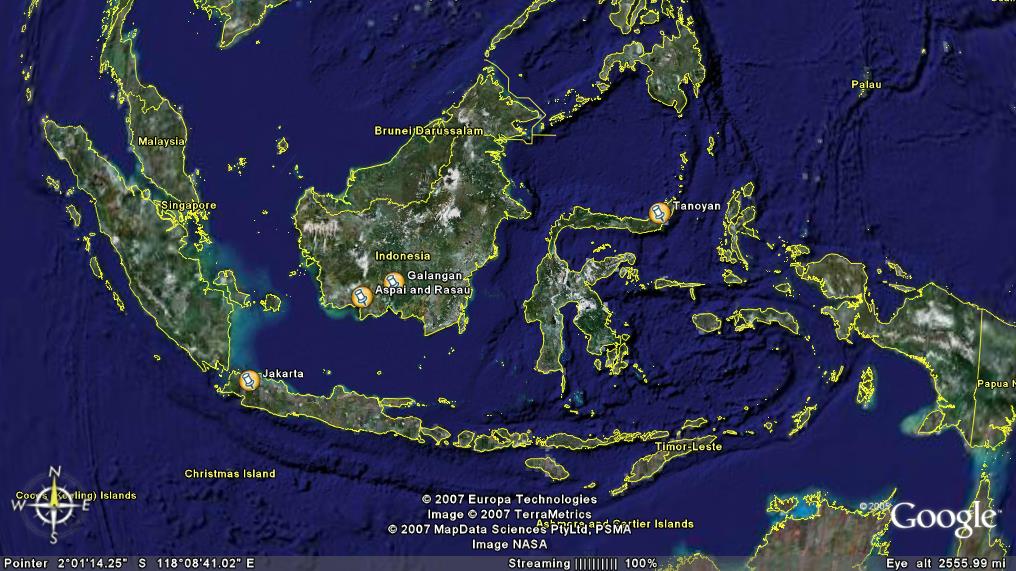
Fig1. Map of GMP sites in Indonesia: Galangan, Aspai & Rasau in Central Kalimantan and Tanoyan in North Sulawesi.
37
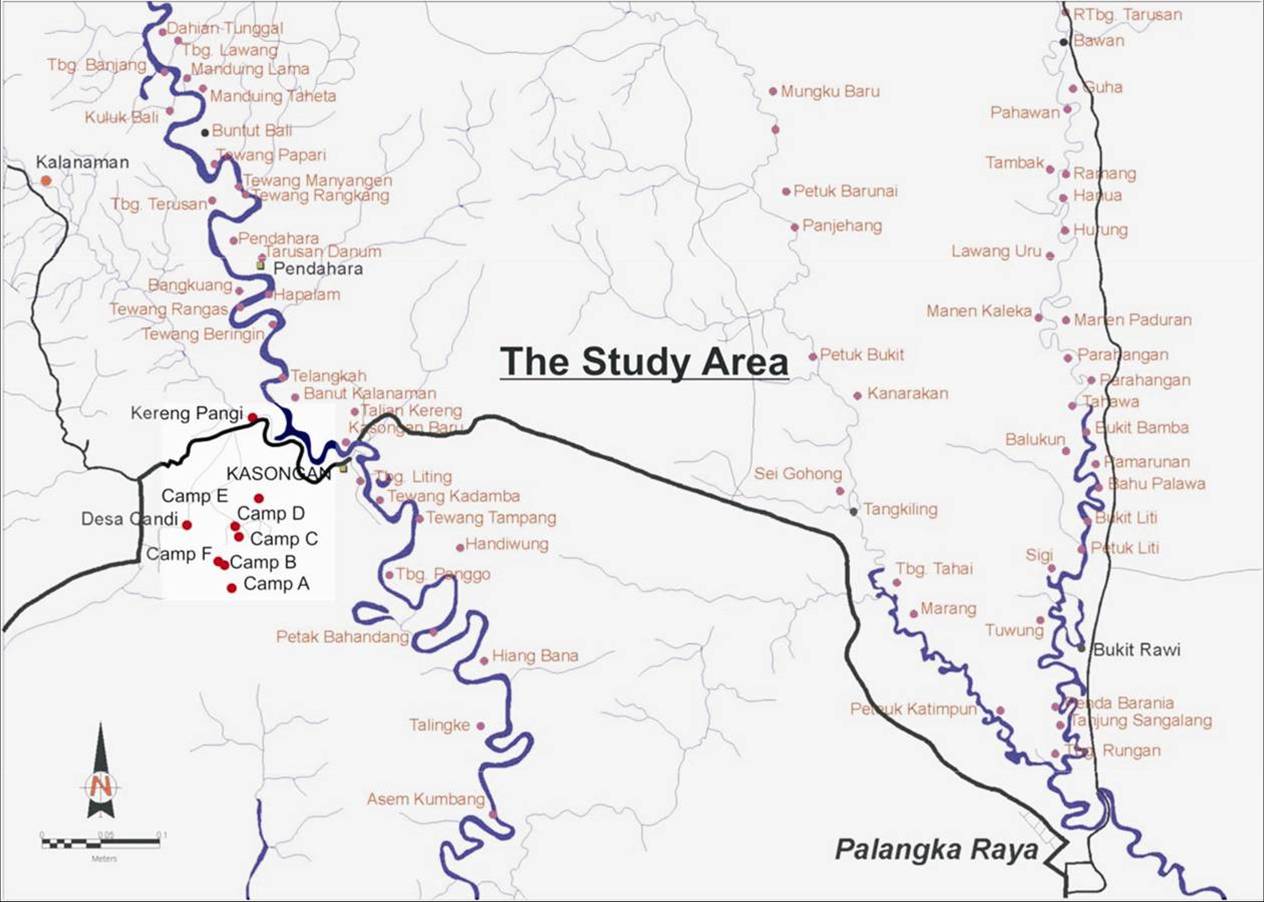
Figure 2. Map of six mining camps in Galangan and the town of Kereng Pangi, Katingan District, Central Kalimantan.
38
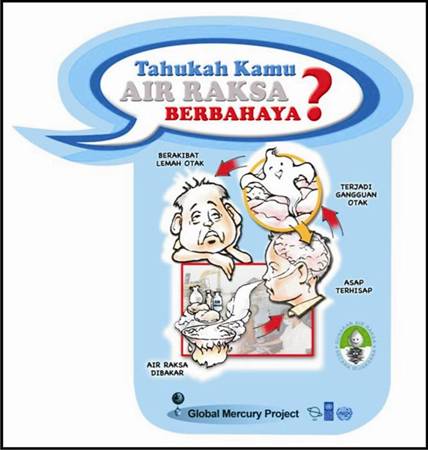
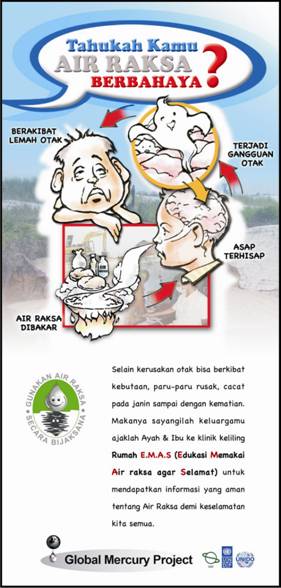
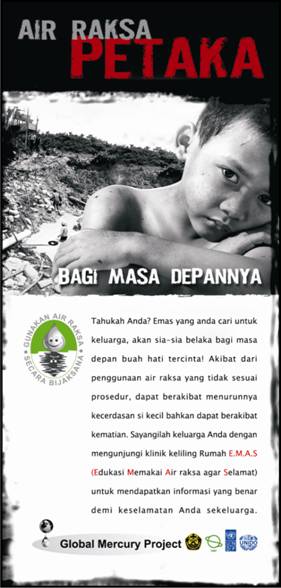
Figure 3: Examples of printed media for campaign in Galangan
39
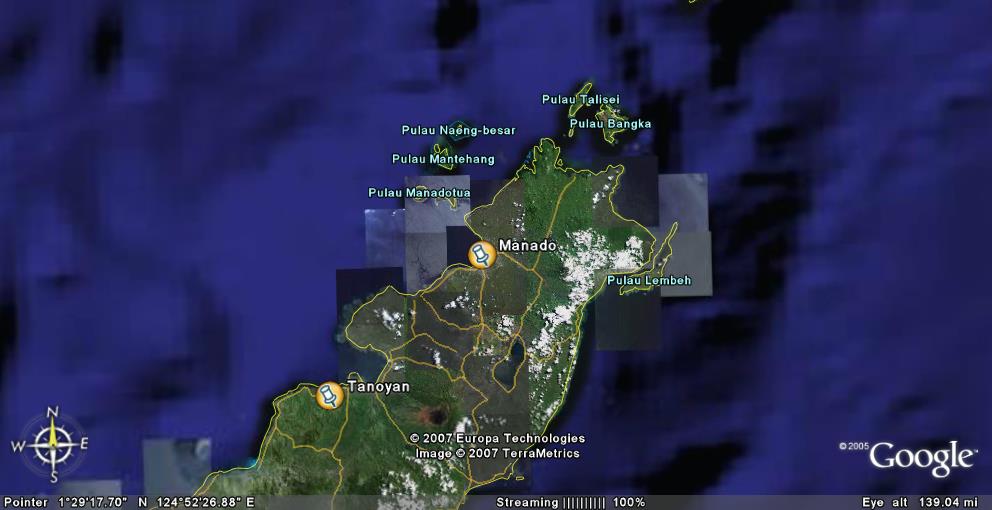
Figure 4 Map of GMP site Tanoyan and Manado, the capital of North Sulawesi Province
40
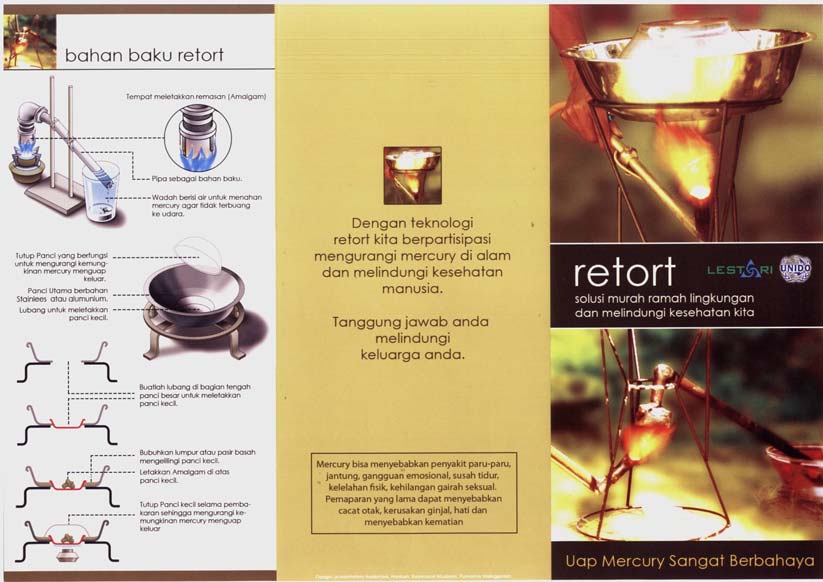
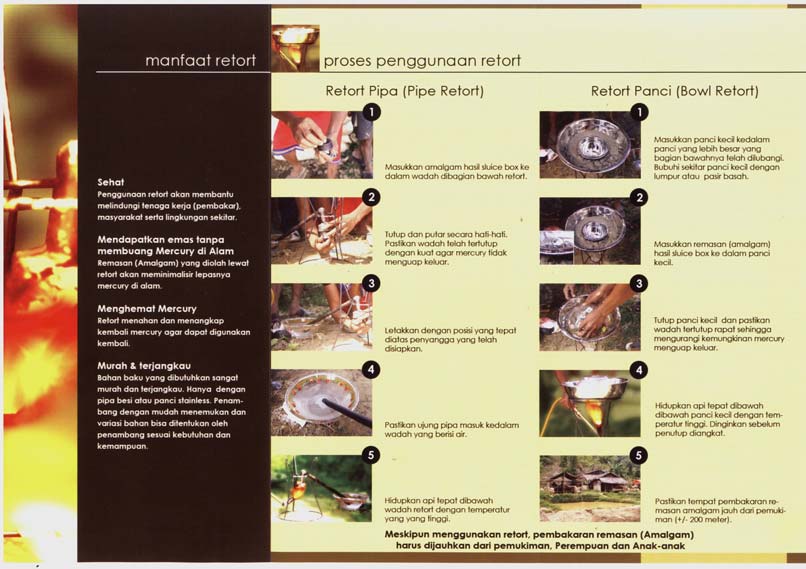
Figure 5 Examples of printed media for campaign in Tanoyan
41
Aspai
Figure 7. Map of Sekonyer River. Aspai and Rasau mining camps are on the middle
reach of the river, opposite from Tanjung Putting National Park (adapted from Orang Utan
Foundation International's website http://www.orangutan.org/).
42
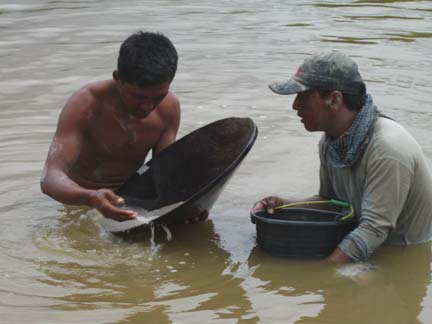
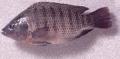
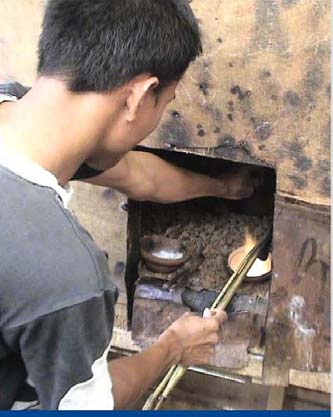
Health risks of long-term Mercury
People can be exposed by :
·
Contaminated fish
exposure :
consumption
· Skin absorption
· Blindness, liver and renal
disturbance
· Sexual dysfunction
· Brain damage & neurodevelopment
effect
Contaminated fish, including::
· Amalgamation pond fish
· Large size fish that eat
smaller size fish,
· Inhalation
including: Toman, shark
and telang
Uncontaminated fish, including:
· Other Health
· Plants eater fish
risks
· Pond fish ; mujair, seluang
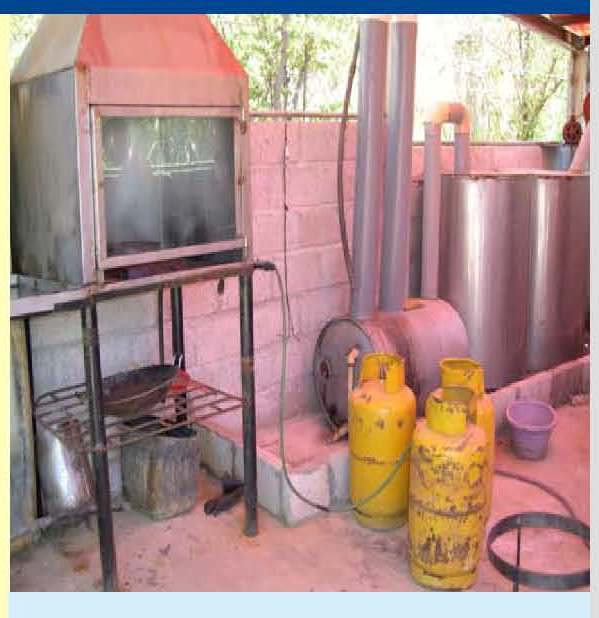
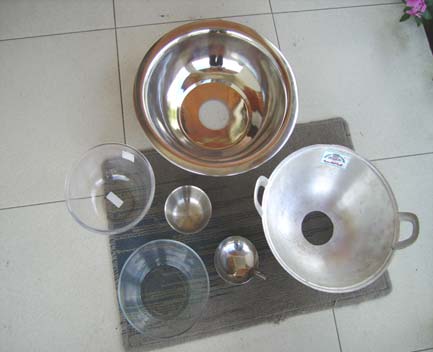

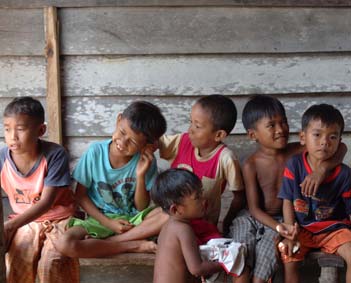
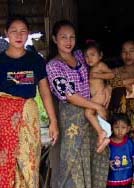


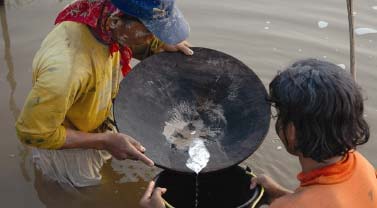
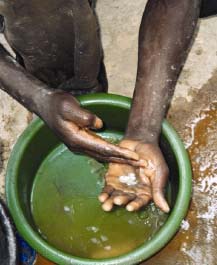
Use Mercury wisely, for example:
· Use Retort to burn the amalgam
· Burn the amalgam outdoor
· Don't mix the mercury with your
hand
GLOBAL MERKURY PROJECT
For Further Information :
Yayasan Pecinta/Penyantun Taman Nasional
(Friends of The National Parks Foundation)
Jl. Pelita No 51, Kelurahan Candi, Kec Kumai,
Pangkalan Bun Kalimantan Tengah
Phone/Fax : (0532) 61212
www.fnpf.org
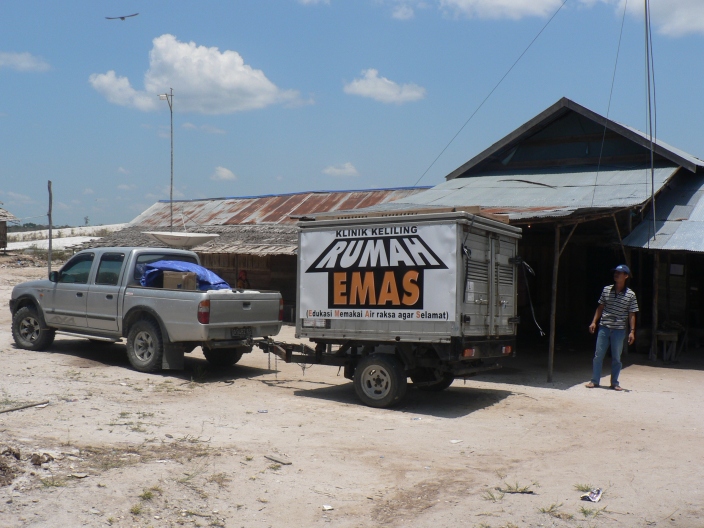
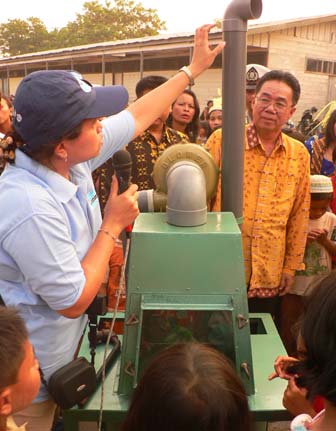
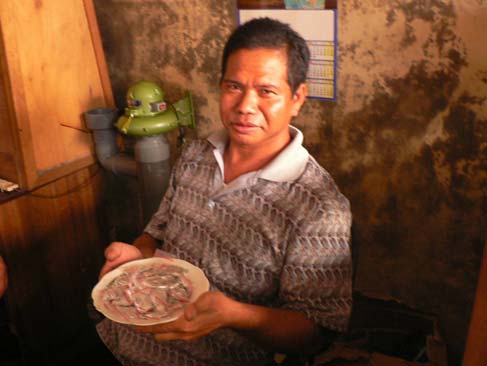
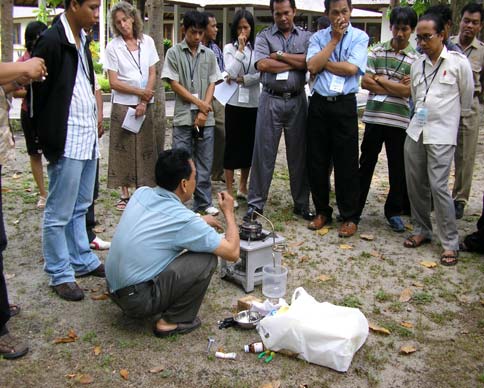
Figure 8 Awareness campaign photos from all sites
GALANGAN, CENTRAL KALIMANTAN
YTS staff and the complete TDU on duty at a mining camp in
Galangan, Kalimantan
GMP trainer is seen explaining the fume hood airflow to the
head of Katingan District during at the launching day.
A happy gold shop operator with a plate full of recycled
mercury captured in the water condenser, a new technology
Mr. Fauzi explains his retort to trainees at the first TOT in
introduced by GMPin Kereng Pangi.
Rungan Sari, Kalimantan
45
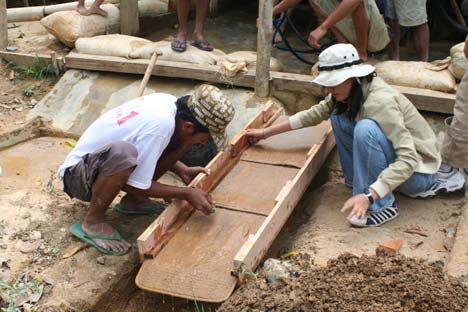
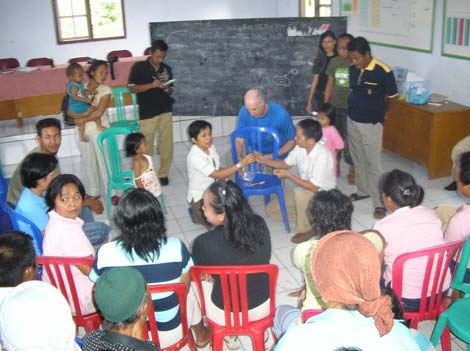
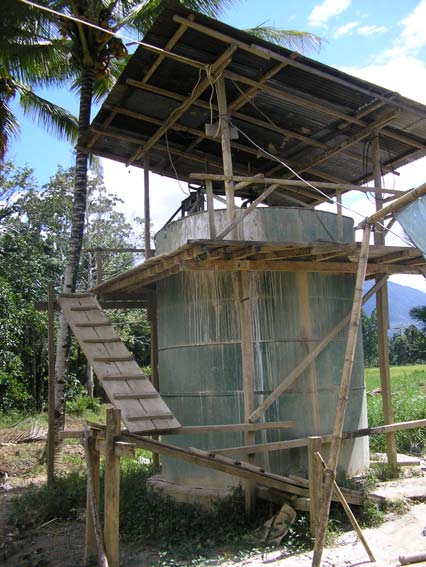
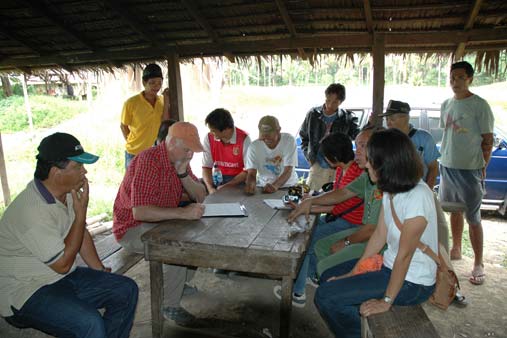
A local miner and Lestari's trainer testing sluice box in Tanoyan,
Sulawesi.
Budi Susilorini, Randy Baker and Dr. Henry showed miners and
the public how to reactivate mercury at Tanoyan community
center.
NORTH SULAWESI
GMP team discussed the mercury use in cyanidation process with
local miners and a staff of Mining agency in Talawaan, North
Sulawesi
Mid-size cyanidation tank in Tanoyan
46
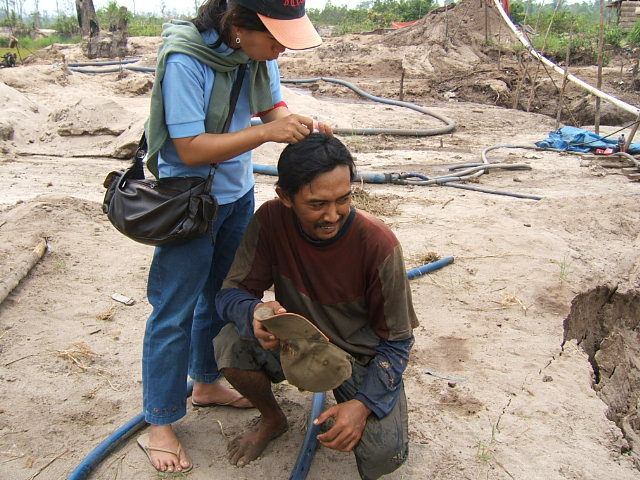
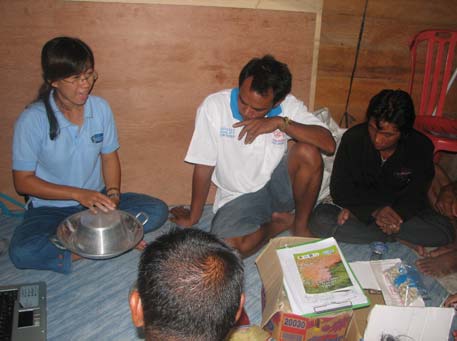
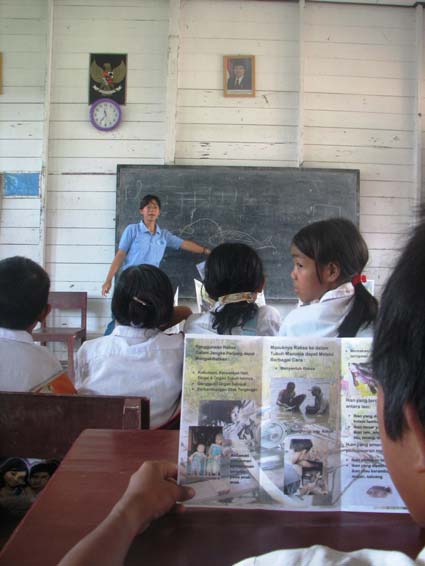
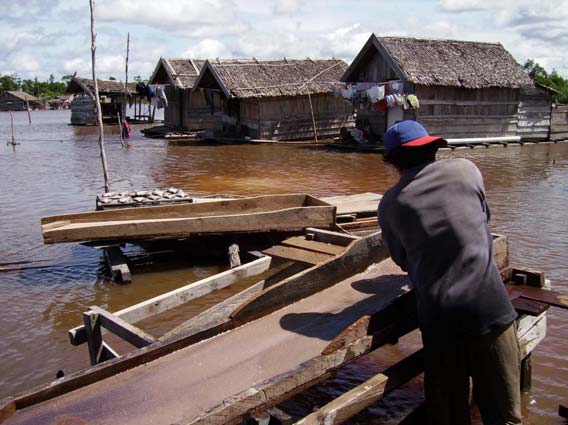
Demonstration of kitchen bowl retort
Dr. Yeni Fildayani (FNPF) collecting hair sample from miner
in Aspai
SEKONYER RIVER, CENTRAL
KALIMANTAN
A miner fixing his sluicebox on Sekonyer River
An elementary student reading a booklet on the health hazard
of mercury during awareness campaign conducted by trainers
from FNPF..
47
Table 1 Estimated mercury emission from gold shops in the town of Kereng Pangi,
Central Kalimantan
Gold Shop
Percent
Total Hg
Estimated
amalgam
vaporized
ANNUAL Hg
Recovery w/
received
daily
Vaporized
water
ANNUAL
unburned (gm/Hg)
(Kg)
condenser
EMMISSION
Huda
30%
Delta 75%
38.9 14,180
7,090 7,090
Jonito 80%
488.3 178,211 7,200
171,011
Aulia Indah
75%
328.0
119,720
36,000
83,720
Dua Saudara
80%
26.2
9,578
0
9,578
Karya Famili
60%
204.8
74,752
8,000
66,752
Al Karomah
40%
41.4
15,111
3,600
11,511
Sahabat Baru
40%
33.1
12,089
0
12,089
Maskanah 40%
16.6
6,044
0
6,044
Kenangan Baru 50%
75.6
27,603
400
27,203
Sumber Kayu
50%
132.0
48,180
500
47,680
Noor Yahya
50%
90.8
33,124
4,000
29,124
Pancar Indah
85%
454.1
165,756
4,000
161,756
Sentral 50%
82.5 30,113
0 30,113
Karya Baru
70%
142.4
51,958
3,000
48,958
Swarga 80%
54.1 19,754
0 19,754
Shop Average
60%
142.7 52,083
4,799
47,284
TOTAL
2,283 833,328 76,790 756,538
Gold Shop
Percent
Total Hg
Estimated
amalgam vaporized
ANNUAL Hg
Recovery w/
received
daily
Vaporized
water
ANNUAL
burned
(gm/Hg)
(Kg)
condenser
EMMISSION
Huda
70% 66.2
24,145
0
24,145
Delta
25% 141.8
51,739
0
51,739
Jonito
20% 72.0
26,280
0
26,280
Aulia Indah
25% 21.6
7,884
0
7,884
Dua Saudara
20% 5.8
2,102
0
2,102
Karya Famili
40% 115.2
42,048
0
42,048
Al Karomah
60% 48.6
17,739
0
17,739
Sahabat Baru
60% 38.9
14,191
0
14,191
Maskanah
60% 19.4
7,096
0
7,096
Kenangan Baru
50% 61.9
22,584
0
22,584
Sumber Kayu
50% 108.0
39,420
0
39,420
Noor Yahya
50% 74.3
27,101
0
27,101
Pancar Indah
15% 70.9
25,869
0
25,869
Sentral
50% 67.5
24,638
0
24,638
Karya Baru
30% 52.7
19,217
0
19,217
Swarga
20% 11.9
4,336
0
4,336
Shop Average
40%
61.0
22,274
0
22,274
TOTAL
976
356,390
0
356,390
Note: Data was collected from 16 of 35 existing gold shops in Kereng Pangi
48
Table 2: List of TDU Components for Galangan, Central Kalimantan
1.
Transportable Demo Unit (TDU)
Trailer- Mounted Aluminum Cargo Box with TDU Signage
2. TDU
Components
Sluice Box Model
Elutriation Column
Retorts: Fauzi Retorts / Salad Bowl Retorts / RHYP Retorts
Portable Stove (Kerosene)
Portable Propane Torch
Amalgamation Drum 10-20 Kg
Amalgam
Gold Pans
Fumehood
Activated Carbon Filters
Scales: Gold Scale (20 Gram) / Sample Scale (200 Kg)
Slurry & Water Pump
Sieves (25mm, 2mm, 1mm, 0.5mm, 0.3mm, 0.15mm, 0.75mm)
Grizzley Screen (1 x 1 x 2.5 Cm)
Buckets
Tubs
Wheelbarrow
Shovels
Magnetic Sheet
Various Carpets
Mercury Reactivation Cell
Protective Equipment (Gloves, dust masks, boots, safety glasses)
Tent (6m x 6m)
Small Tools (Hammer, Screwdrivers, etc)
3. TDU
Operational
Supply
Tables
Mat
Tarp
Portable Power Generator
Tent Lighting
VCD Player
Voltage Regulator
Computer Projector and Screen
Cabinet
Cutlery, Glasses and Dishes
Camping Stoves & Cooking Material
Bedding Set
200 L Water Tank
49
Table 3: Mercury Use in Licenced Trommel/Tong Operations - Bolangmongodou North Sulawesi
Total Hg
Number of
Total Trommels = 600
% Freq of
Frequency
# of
Hg Loss /
Loss per
Days
Total
Day (kg)6
Operation/y7
Frequency of Hg Usage in
#
Operations2
of Hg
Trommels
Trommel
Annual Hg
Trommels
Trommels1
Addition3
with Hg / d 4
(g/d)5
Loss (kg)
Full
Time
400
0.35 1.00
140 50 7.0 260 1820
1 - 2 Trommels Full Time (30%)
400
0.20
0.25
20
50
1.0
260
260
All Trommels 2 x per week (20%) 400
0.15
0.30
18
50
0.9
260
234
1 Trommel gold grade check
400 0.15 0.50 30
50 1.5 260 390
(15%)
No Mercury use (15%)
400
0.15
0.00
0
50
0.0
260
0
Total
1.00
208
10.4
2704
The following assumptions are made:
1
Of the total number of trommels (~600) in Tanoyan, about two thirds are in operation at any one time
2
This is the presumed that the percent frequency of Hg use in trommels; for example, 35% use Hg all the time; 15% use no Hg; 15% use Hg in all trommels
2 x /week
3
This is the precent of trommels that receive mercury according to the type of operation (i.e., all get Hg, some get Hg, none get Hg)
4
This is the number of trommels in Tanoyan to which mercury is added every day
5
Daily loss of Hg to the tailings, assuming 5 x 2 to 3 hour runs of 40 kg of ore (200 kg ore); maximum 100 gm may be lost in 400 g
6
Estimated total daily loss of Hg from each type of trommel operation
7
Estimated number of days of operation per year
Footnote:
This does not include mercury lost to the mercury/gold amalgam and subsequent burning; mercury loss in subsequent amalgamation steps at the end of the
cyanidation process (eg. Canapa); and mercury loss from illegal mining operations. If we assume a 1:1 Hg to Au ratio 'lost' during the amalgamation
process, we can estimate the amount of atmospheric Hg lost from burning annually. That is, one third of gold produced annually is from Hg. A similar
amount of Hg is lost from burning.
50
Document Outline
- Cover and TOC1.pdf
- Ack.pdf
- Indonesia CR_061907.pdf
- CR Figs and Tables.pdf
- Figures and Tables.pdf
- Figures1_4.pdf
- Figure_1 Map of GMP sites.doc
- Figure 2_map of Galangan.doc
- Figure 3_Examples of printed media for campaign in Galangan.doc
- Figure 4- Map of Tanoyan and Manado.doc
- Figure5_6.pdf
- Figure 5- Examples of media tanoyan.doc
- Figure 6_map of Aspai and Rasau.doc
- Figure 7_Examples of printed media for campaign in Sekonyer River.pdf
- Figure 8.pdf
- Table 1 and 2.pdf
- Table 3.pdf