PROJECT BRIEF
1. IDENTIFIERS
PROJECT NUMBER: GLO/01/ (PIMS #2198)
TITLE: Global: Removal of Barriers to the Introduction of Cleaner Artisanal Gold Mining and Extraction Technologies
DURATION: 3 Years
IMPLEMENTING AGENCY: United Nations Development Programme (UNDP)
EXECUTING AGENCY: United Nations Industrial Development Organization (UNIDO)
REQUESTING COUNTRIES: Brazil, Indonesia, Laos, Sudan, Tanzania and Zimbabwe
ELIGIBILITY: Eligible according to paragraph 9(b) of GEF Instruments
GEF FOCAL AREA: International Waters
PROGRAMMING
FRAMEWORK: OP#10: Contaminant-Based Operational Program
2. SUMMARY
Environmental impacts resulting from the application of mercury in the processing of gold within the artisanal mining sector and their effects on International Waterbodies require concerted and coordinated global responses. The long-term objective of this project is to assist a pilot suite of developing countries located in several key transboundary river/lake basins in assessing the extent of pollution from current activities, introduce cleaner gold mining and extraction technology which minimize or eliminate mercury releases and develop capacity and regulatory mechanisms that will enable the sector to minimize negative environmental impacts. This will be accompanied by development of monitoring programs and in collaboration with participating Governments, development of policies and legislation that will lead to practical and implementable standards for artisanal gold mining. In order to ensure sustainability of the monitoring programs, the project will aim to build capacity of local institutions, e.g., local laboratories through training and material support so as to enable them carry out continuous monitoring beyond the project three-year term. The project will also aim to increase knowledge and awareness of miners, Government institutions and the public at large on the environmental impacts associated with the application of the current technology. This will be enhanced through introduction and demonstration of cleaner and efficient technology that apart from minimizing negative environmental impacts, will improve earnings, health and safety.
3. COST AND FINANCING (MILLION US$):
|
|
Total |
|
GEF |
Project
PDF-B
Sub-Total |
6.806800
0.318182
7.124982 |
|
CO-FINANCING |
UNIDO
UNDP
Countries: Brazil Indonesia
Laos
Sudan
Tanzania
Zimbabwe
Sub-Total |
0.360000
0.140000
2.953000
2.089000
0.060000
0.200000
1.630000
5.450000
12.882000 |
|
TOTAL PROJECT COST |
20.006982 |
4. ASSOCIATED FINANCING (Baseline): Estimated at US $ 72.817 Million over three years.
5. GEF FOCAL POINT ENDORSEMENTS:
Name: M.T. Chinamore Position: Secretary for Environment and Tourism
Date: 1 Sept. 2000 Organization: Ministry of Environment and Tourism, Zimbabwe
Name: Abubakar R.M.S. Rajabu Position: Permanent Secretary
Date: 1 Sept. 2000 Organization: Vice President’s Office, United Republic of Tanzania
Name: Yasin Eisa Mohamed Position: Undersecretary of Finance & National Economy
Date: 18 Oct. 2000 Organization: Ministry of Finance & National Economy, Sudan
Name: Effendy A. Sumardja Position: Assistant to the Minister for Global Environmental Affairs
Date: 10 Nov. 2000 Organization: Ministry of Mines & Energy, Indonesia
Name: Washington Aquiono de Mendonca Position: Coordenador Geral de Operacoes Socials
Date: 11 Jan 2001 Organization: Ministerio do Planejamento, Orcamento e Gestao, Brazil
Name: Xayaveth Vixay Position: National GEF Focal Point, Dept. of Environment
Date: 23 March 2001 Organization: Science, Technology and Environment Agency, Laos Peoples Democratic Republic
6. IMPLEMENTING AGENCY CONTACT:
Andrew Hudson, UNDP-GEF, Principal Technical Advisor, International Waters, Tel. (212) 906-6228, Fax. (212) 906-6998, e-mail: andrew.hudson@undp.org
LIST OF ACRONYMS/ABBREVIATIONS
PCU = Project Coordination Unit
CTA = Chief Technical Advisor
SSME = Small-Scale Mining Expert
PADCT = Programa de Apoio ao Desenvolvimento Científico e Tecnológico
CNPq = Conselho Nacional de Desenvolvimento Cientifico e Tecnologico
CYTED = Ciencia y Tecnologia para el Desarrollo
Faperj = Fundaçao de Amparo a Pesquisa do estado do Rio de Janeiro
UNDP = United Nation Development Programme
UNIDO = United Nations Industrial Development Organization
GEF = Global Environmental Facility
CETEM = Centro de tecnologia Mineral
NGOs = Non-Governmental Organizations
CPTF = Country Project Task Force
BPTF = Basin Project Task Force
GPTF = Global Project Task Force
UNEP = United Nations Environment Programme
MTRDC = Mineral Technology Research and Development Centre
SADC = Southern Africa Development Cooperation
I. Project Description
Background and Context (Baseline Course of Action)
Introduction
1. Artisanal mining which is sometimes used synonymously with small-scale mining means different things to different people. There is no universal definition of what constitutes an artisanal or small-scale mine. However, in this proposal, artisanal mining is used to refer to those mining activities carried out by individuals, families, and/or adhoc groups (some form of co-operatives) of indigenous people, the majority of which have no technical skills and lack adequate working tools. Similar activities in Brazil are commonly referred to as “Garimpos” and those carrying out the activities as “Garimpeiros”. Although the term “artisanal mining” is used in some countries, e.g., Zimbabwe, to refer to illegal alluvial gold mining activities, it is used in others to refer to those activities that are carried out without following conventional mining engineering norms. As such a good number of artisanal miners in countries like Brazil, Indonesia and Tanzania are licensed and there are policy drives to get all mining activities licensed as a way of transforming them into organized small-scale mining activities. Although there have been improvements by various countries in recognizing artisanal mining as a significant economic sector, the promulgation of legal frameworks that are conducive to this sector remains elusive. In Sudan, for example, the activities are not recognized by any legal framework although individuals can be licensed through special agreements in which conditions for conducting mining activities are set. Although there are visible attempts within the participating countries to transform this sector into an economic sector, the lack of adequate resources means that illegal activities are still wide spread.
2. Despite these activities being individually small, their combined economic and social impacts are substantial for the economies of many developing countries. Globally, it is estimated that up to 12% of metallic minerals, 31% industrial minerals, 20% coal, 10% diamonds and 75% of gemstones production come from small-scale mining operations. In individual countries the economic benefits are even higher. For example, whereas in Brazil activities by Garimpeiros, are estimated to produce 50% of the country’s total gold production averaging around 60 tons, it is estimated that in both Tanzania and Zimbabwe artisanal miners have the capacity to produce 10 tonnes of gold per year. On average, it is estimated that artisanal miners in Indonesia and Laos have annual gold production of nearly 50 and 0.5 tonnes respectively. Although statistics are hard to establish, estimates show that in Sudan where artisanal gold mining is relatively small, 10 tonnes of gold have been produced over the last thirty years (1970 to 1999). These activities provide considerable employment especially in the rural areas and thus contribute substantially to poverty alleviation. It was estimated in 1993 by the International Labour Organization, (ILO), that out of the 30 million or so mineworkers throughout the world, 6 million were engaged in artisanal mining in developing countries. Within the six participating countries, available figures show that nearly 2.0 million people are directly involved in artisanal mining activities and a number of those whose livelihoods depend on these activities in one way or another is over 10 million. Given the fact that rural poverty is prevalent in most developing countries, artisanal mining has room to contribute fully to economic and social development. It is now widely accepted by large mining companies the world over that artisanal miners are one of the most important tools for finding sizeable gold deposits. Artisanal mining also allows the exploitation of marginal reserves that would otherwise be classified as uneconomical.
3. Although artisanal mining has shown some positive contributions, it has also suffered negative conceptualization as a misnomer to mineral sector development by host Governments. Whereas some countries choose to ignore the existence of such activities, others lack adequate legal frameworks to regulate them. As a result, the activities are carried out illegally thus denying the host Governments the badly needed revenues. Even in countries that have enacted legal and regulatory frameworks for controlling such activities, the lack of adequate resources limits the capacity to institute them effectively. The combination of this and the lack of technical know-how and financial means make it difficult for miners to invest in appropriate technology. Mining and processing activities are carried out by manual means or through application of locally improvised but inefficient equipment and tools. As a result, the activities have become synonymous to negative environmental impacts, inefficiency, lack of adherence to health and safety standards, and activities that have negative social impacts. The uncontrolled use of mercury as a cheap means for recovering gold is now threatening the health of miners and members of communities far away from mining areas. Most of the negative factors tend to reinforce one another resulting in a vicious circle that is difficult to break. For example, the lack of regulatory mechanisms means that Governments lose the much-needed revenue that in turn makes it impossible to provide adequate control due to lack of resources. The lack of, technical know-how, access to credit facilities, and technical support coupled with poor organizational structures means that miners are unable to invest in technology and hence cannot improve their working methods. This results in negative environmental impacts, low productivity and hence earnings and the vicious circle continues.
4. In all the participating countries, women are major participants in artisanal mining activities. In Laos it is estimated that almost 80% of all artisanal gold panners are women. In Zimbabwe, the majority of the 350,000 estimated artisanal miners are in gold digging and panning with 50% comprising of women and children. In Tanzania, 26% of all 600,000 artisanal miners are estimated to be women most of which mine gold and gemstones. In Sudan it is estimated that 35% and 10% of the miners is comprised of women and children in the Southern Blue Nile and Eastern Bayuda Desert regions respectively. Despite these impressive figures, the number of women miners with mineral rights is still limited. In other words the majority of women operators are still in the illegal miners category. Direct entry into mining production activities is often determined by taboo, socio-cultural factors, financial and economic capacity, technology and organizational aspects.
Artisanal Gold Mining Activities in International Waterbodies
5. The selection of countries participating in this project was done based on the intensity of mercury based artisanal gold extraction activities and their impacts on water bodies of global significance. In the South American region, the Amazon Basin is the largest drainage system in the world with an area of about 6.0 million square kilometres. The Amazon River has a total length of 6400 kilometres, which is slightly shorter than the Nile. Stretching almost 2760 kilometres from north to south at its widest point, the Basin occupies a great part of Brazil and Peru, significant parts of Columbia, Ecuador and Bolivia and a small area of Venezuela. Almost two-thirds of the Amazon’s main streams and by far the largest portion of its Basin are within Brazil. More than two thirds of the Basin is covered by an immense Amazon Rain Forest which represents about half of the Earth’s remaining rain forest and constitutes the largest reserve of biological resources. Artisanal gold mining activities in the area are probably the most in the world with one of the largest area, Tapajos in the Para State occupying an area of up to 2.9 million hectares. At the peak of the gold rush in the 1980s, it was estimated that nearly 1.0 million people were directly involved in the activities, with 400,000 of those being in the Tapajos area alone. Available figures show that nearly 1,000 tonnes of mercury were dumped into the Amazon Basin during the 1980s and nearly 130 tonnes are currently dumped annually.
6. Within the participating countries of the African Region, the significant International Waterbodies include the Nile River system, Lake Victoria and the Zambezi River system. The Nile River system is composed of the Blue Nile (Abbai) River that originates from Lake Tana and the White Nile that rises from Lake Victoria. Sudan occupies a major part of the River Nile basin. Along its course (6825 km), the Nile drains a total area of 2.96 million square kilometres from the Equator up to the Mediterranean coast in Egypt. Areawise, the Nile basin represents one tenth of the African continent. Mining along the Nile covers nearly 2,000 km2 in the Southern Blue Nile region with mine workings developed in old river terraces along the riverbanks and its tributaries at the foothills of the Ethiopian highlands. It is estimated that nearly 120,000 people are engaged in these activities. On the other hand, Lake Victoria which has an area of more than 70,000 km2 is Africa’s largest lake and second largest in the world only to North America's Lake Superior. The Lake, which is surrounded by one of the most highly populated areas in the world and is shared by Tanzania (51% of the Lake area), Uganda (43%) and Kenya (6%), is a source of employment for nearly 30 million people. The Lake Victoria Goldfields which cover almost 200,000 km2 is estimated to employ nearly 300,000 people and produce nearly 70% of the country's total gold production. Nearly 12 tonnes of mercury are released to the environment in Tanzania alone. More than 50% of artisanal gold panning activities in Zimbabwe are carried out within the Zambezi River system (more than 2400 kilometres are panned) and its tributaries. The Zambezi flows along the northern and Southern borders of Zimbabwe and Zambia respectively before cutting across central Mozambique on its way to the Indian Ocean. There are about 350,000 gold panners in the country with as many as 300 panners concentrated in every kilometre of the widely panned sections of the Zambezi River system river and releasing nearly 12 tonnes of mercury annually to the environment.
7. River Mekong in Laos and River Kahayan in Central Kalimantan, Indonesia are the significant International Waterbodies within the Asian participating countries. The River Mekong which is about 4,500 kilometres long and is a life-stay for almost 50 million people and their cultures, sets out at the Qinghai plateau in Western China before flowing into Laos, Mynmar, Thailand, Cambodia and Vietnam. Although the upper portions of the river are characterized by turbulence, the lower Mekong is more placid, and the annual flooding supports a biologically diverse ecosystem. In Laos, alluvial mining activities are carried out as seasonal activities during the dry non-agricultural season mainly by dredging on the River Mekong and its tributaries. Up to 3,000 miners have been found at any one time working on River Mekong. The Kahayan River, is the largest river in Central Kalimantan and drains directly into the Java sea and thus with effects to Singapore, the Islands of Sumatra, Java, Bali and others. Most activities are based on alluvial operations within the river systems with a few mining hard rock gold veins. However, even those in hard rock mining transport the ore to the rivers for processing. The Kahayan River in Central Kalimantan and the Tapian River in North Sulawesi are known to have a high concentration of miners per kilometre length. It has been reported that more than 2,000 illegal miners would converge on single mining site following a reported gold recovery. In Indonesia where artisanal gold mining activities are carried out either through village cooperative units or through illegal operations and are found in the provinces of West and Central Java, Sumatra, Central and East Kalimantan, North Sulawesi and others, nearly 180 tonnes of mercury are released to the environment annually.
Negative Environmental Impacts due to Artisanal Gold Mining
8. Artisanal gold mining activities within the participating countries under review show negative environmental impacts that tend to overshadow their positive contributions. Mining is carried out either by pitting in both hard rock and in old riverbed alluvium or by dredging existing riverbeds all of which generate substantial amounts of rubble. Whereas obscured pits in abandoned areas are dangerous to people and animals, the mined rubble blanket the top fertile soil and thus lead to loss of grazing and agricultural land. The exposed mined areas are susceptible to accelerated erosion from both wind scour and surface runoffs and may lead to Acid Mine Drainage. Piles of tailings most of which contain toxic chemicals, e.g., mercury, are directly washed into rivers resulting to siltation and water pollution problems. Pools of stagnant water left behind during washing and abandoned flooded pits turn into breeding grounds for Malaria spreading mosquitoes. Poor sanitation from mining camps, hydrocarbons from machinery, uncontrolled use of explosives and others, add to pollution of surface and ground water systems. During PDF-B phase of this project, it was revealed that mercury is directly released into rivers and lakes through adding mercury during panning of the alluvial ore or washing of the hard rock-based ore within the waterbodies that is transported from far areas. The key concerns here are the direct release of mercury into the waterbodies, its accumulation and subsequent methylation to organo-mercury and hence transfer into the food chain through the aquatic ecosystem. The behaviour and fate of mercury in the environment is much dependent on its chemical form with the metallic, divalent and mono-methylated forms being of most concern. The oxidation or conversion of metallic mercury to the divalent form occurs in the presence of oxygen, certain types of bacteria, SH-compounds with affinity to divalent mercury or the acidity environment, e.g., that found in most forest rivers. The formation of methyl mercury from the divalent mercury is then aided by bacteria that are found in bottom sediments in rivers, estuaries and oceans, intestines, faeces, soils and yeast. These processes are crucial to the transfer of the rather inactive metallic mercury released by gold miners to the food chain. The transformation of inorganic mercury to an organo-metallic compound, methyl mercury, is the most significant in terms of uptake and accumulation of mercury by man as this compound can block enzymes and so damage essential metabolic processes. Available data indicate that the amount of mercury released during burning of the amalgam is approximately in the ratio of 1.2 - 1.5:1 to the amount of gold produced. It was observed by STAP that “… one important piece of background information is missing and this concerns hard data on mercury poisoning in humans in the countries concerned.” Apart from Brazil where detailed studies on mercury pollution and poisoning have been carried out and is readily available, there is limited data from the other participating countries. However, as shown from Annex I, even from the available limited data mercury poisoning in both Tanzania and Zimbabwe is already a cause for concern. For example, whereas the WHO threshold limit for mercury level in urine is 50 ng/ml, miners in Tanzania show level of up to 411 ng/ml.
9. At present, there is not any single “off-shelf ” solution to problems related to artisanal mining. The introduction of cleaner mining and extraction technology would go a long way to minimize the activities impacts to the environment, maximize the socio-economic benefits and ensure that operations are sustainable and adhere to health and safety standards. Although piecemeal solutions have been tried in many countries, a more holistic approach is required in dealing with artisanal mining problems. Attempts to such an approach that will ensure the introduction of cleaner mining and extraction technologies is a priority for UNIDO, the executing agency of this proposal.
International and National Actions
10. The plight of artisanal and small-scale mining has attracted the world attention since the seventies. In 1972, the United Nations Department of Economic and Social Affairs published the proceedings from a seminar organized to discuss small-scale mining activities. Although a number of meetings have since been held and strategies laid on how to transform the sector, there have been limited actions "on the ground". A meeting of different international organizations and mining experts that was convened in Harare, Zimbabwe in 1993 in search for solutions to artisanal mining problems, came up with what is known as “The Harare Guidelines on small / Medium-Scale Mining”. The implementation of the guidelines whose main objective was to provide a framework for encouraging development of small and medium-scale mining as legal sustainable activities was left to individual countries and have had limited impacts.
11. In 1995 the World Bank hosted a “Round Table on Artisanal Mining” meeting in Washington to chart out a strategy for dealing with the sector's problems. The meeting came up with what the Bank published as a proposal for assistance known as “A Comprehensive Strategy Towards Artisanal Mining” aimed at minimizing the negative side effects and thus maximize socio-economic benefits of artisanal mining. The strategy which has since been implemented in a number of countries identified the negative side effects of artisanal mining as being; unacceptable environmental practices; poor social, health and safety conditions; illegal mining and marketing and waste of resources. Where it has been implemented, the program has succeeded in strengthening the institutional capacity and introducing internationally competitive legal, regulatory and fiscal frameworks and hence enhanced the process of legalizing the artisanal mining activities. This program however has not adequately addressed itself to finding solutions to problems associated to artisanal mining environmental impacts. With the increase in poverty in the developing world and the lack of coordinated international actions, the amount of mercury that has is released to the environment from artisanal gold mining activities is bound to keep increasing.
12. Following the problems of the gold rush experienced during the 1980s, the Brazilian House of Representatives commissioned the Center for Minerals Research, CETEM, of the Brazilian Research Council, to evaluate the state of the art of the operations, propose solutions, and advise the House on possible control legal measures. Through a four-year program, comprehensive descriptions of the activities, data related to mercury and particulate matter pollution, proposals for control legislative measures, were produced. However, practical implementations of the findings of this program were hampered by the lack of adequate resources especially when dealing with such a large area like the Amazon Basin. On the other hand, the Government of Tanzania in collaboration with the World Bank formulated the Mineral Sector Development Technical Assistance Project in 1994 in order to provide the Government with necessary technical, managerial and material support for the implementation of its new private sector oriented mining development strategies. One of the major components of the US $13.9 million five-year project was to improve the economic, social and environmental performance of the artisanal mining in order to encourage and expand private investment in the mining sector. Although the project resulted in the country's first mining environmental legal and regulatory framework, it has not addressed itself fully to the negative environmental impacts resulting from artisanal mining activities. The European Union in collaboration with the Government of Zimbabwe has embarked on a US $38.7 million project part of which will be spent on development and control of the small-scale mining sector. Although there are similar programs in other countries, most have not addressed themselves to the artisanal mining environmental problems of a global nature.
UNIDO’s Relevant Experience
13. Over the years, UNIDO has gained a lot of experience in dealing with artisanal related problems especially in developing countries. In 1995, UNIDO initiated a program named “High Impact Program No 4” with the main theme being to “Introduce New Technologies for the Abatement of Global Mercury Pollution”. Following the launch of this program, an international workshop was conducted in November 1995, in Jakarta, Indonesia on “Ecologically Sustainable Gold Mining and Processing” and it attracted 41 participants from 14 countries. Based on the recommendations of the workshop and with support from the donor community and host Governments, UNIDO initiated programs in a number of countries, e.g., Cameroon, Ghana, Philippines, and Tanzania, aimed at assessing the potential for the introduction of new technologies for the abatement of mercury pollution. These programs, some of which are on-going, have enabled UNIDO to gain experience and appreciation of the magnitude of the mercury pollution problems, project co-ordination and establishment of working relationships with Governments and local institutions. In addition, during the PDF-B phase of this project, UNIDO conducted preliminary investigations in the six countries participating in order to establish the intensity of the artisanal mining activities and their impacts on the International Waterbodies. Review of previous related studies, identification of the “hot spots” areas (rivers and waterbodies) and estimation of levels of pollution resulting from the application of mercury around these areas, were carried out. Apart from establishing the most affected International Waterbodies, barriers limiting the introduction of cleaner technologies were established in each of the participating countries.
Current options for developing sustainable artisanal mining
14. The barriers limiting artisanal miners from adopting sustainable and cleaner technology results from the fact that both the miners and the relevant Governments find themselves in negative circles of cause and effect. The application of poor technology leads to low productivity that in turn results in low revenue earnings and hence inability to invest in appropriate technology, it traps miners in crude and inefficient working methods and hence results in severe negative impacts to the environment, health and safety. On the other hand, the institutional weaknesses that lead to inability to enforce the existing legislation results in illegal operations, poor environmental, health and safety standards and loss of the badly needed fiscal revenues. The loss of fiscal revenues makes the authorities unable to perform their regulatory functions and hence perpetuates uncontrolled artisanal mining. In order to develop artisanal mining into sustainable and environmentally acceptable activities, both negative circles must be broken.
15. In view of the difficulties facing both miners and the governing authorities, the increase in knowledge and awareness and the introduction of efficient and cleaner technologies are at present the best option for developing environmentally acceptable activities. Prior to such intervention measures, the baseline data regarding environmental, technological and socio-economic issues, should be established. The increase of knowledge through training should make use of the UN Train-X network and its training development methodology in order to create course modules that are targeted and that can be easily adapted by others. Both training and awareness campaigns should be developed through involvement of miners and their organizations in order to enhance their acceptability. Such programs should provide special considerations for women whose direct entry into artisanal mining activities is often limited by socio-cultural issues and the strenuous nature of the activities. The STAP Reviewer states that “In addition, there appears to be medical evidence that the unborn child is particularly sensitive to mercury. Hence on medical ground the further involvement of women in mining activities involving mercury should be subject to caution”. It is true that one of the dangers facing women miners using mercury is the effect on unborn babies. However, it is also true that in both Africa and Asia where poverty remains prevalent and women are the major bread winners, it is almost impossible to prevent them from participation in artisanal gold mining activities. It is therefore regarded practical to give priority to women miners during training and awareness campaign programmes so that the majority of them can adopt cleaner technology. Demonstration of efficient and cleaner technologies should be conducted in selected demonstration sites so as to enable miners appreciate the monetary and non-monetary benefits. Assistance should be provided to Governments to enable them develop policies and legislation that would lead to implementable standards. Development of enforcement programs and capacity to enable local institutions carry out continuous monitoring, are essential for promotion of environmentally acceptable artisanal gold extraction activities.
Importance of the GEF Intervention
16. It is now widely accepted that the problems associated with artisanal mining in developing countries are similar and require integrated solutions and partnership between different players. The problems relate to protection and effective resources utilization, to general environmental conditions in areas surrounding the mines and in remote areas receiving mine waste and contaminants and to safe working and health conditions of miners. Whereas most attempts indicate appreciation of the extent of the negative environmental impacts resulting from these activities, no single program within the six countries has addressed itself to the effects of these impacts on International Waterbodies. The significance of the waterbodies surrounded by these activities has not been taken into consideration in some of the work that has attempted to solve artisanal mining problems. The work done during PDF-B phase of this project indicated the barriers to include little awareness amongst miners, the public and Government institutions on the impacts resulting from mercury pollution, lack of adequate policies and regulatory frameworks, application of poor technology, and lack of access to information and technology and the overall lack of local capacity to carry out continuous monitoring on mercury pollution.
17. The proposed GEF intervention will show, through the establishment of the envisioned demonstration projects, how the current uncontrolled artisanal mining activities can be transformed into more organized, environmentally acceptable and sustainable operations. In each of the participating countries, the program will aim at assessing the extent of mercury pollution, raising awareness and increasing knowledge of the miners and the public, introducing and demonstrating the application of cleaner and efficient technology, assisting the Government to put in place practical and implementable policies and legislation and building capacity to ensure continuous monitoring of mercury pollution on the surrounding waterbodies. This program will also help to demonstrate to relevant Governments on the approach towards abatement of mercury pollution. The absence of the proposed GEF intervention will not only allow the continuation of unorganized artisanal mining and its negative effects, but will allow the incremental build-up of mercury pollutants within the targeted international waters and its eventual transmission to other countries and regions.
II. Rationale and Objectives (Alternative Course of Action)
Long-term Objective
18. The long-term objective of this project is to assist a pilot suite of developing countries located in several key transboundary river/lake basins in assessing the extent of mercury pollution from current activities, introduce cleaner gold mining and extraction technology that minimize or eliminate mercury releases and develop capacity and regulatory mechanisms that will enable the sector to minimize negative environmental impacts. The STAP reviewer states that “It is not clearly stated that the main objective of the project is be to reduce the introduction of mercury in the environment (e.g. international waters) and that the various methods mentioned are only instruments in order to achieve this goal”. It is true that reduction of the introduction of mercury to the environment is the main goal of this project. It is however imperative that the main instruments of achieving that goal and that lead to global environmental benefits are part and parcel of the project’s long-term objective. STAP further observes that “This goal can be achieved through a top-down approach (regulatory framework) addressing government officials and enforcers and a bottom-up approach (awareness on the danger of mercury and introduction of new technology) by direct involvement of the individual miners. This clear distinction is not made in the proposal and hence it gives the impression of muddled objectives”. Experience acquired by UNIDO over the years in dealing with artisanal mining problems in countries like Ghana, Philippines and Tanzania has shown that the complexity associated with achieving the project goals while meeting the needs of miners and their organizations, the Government and other parties, require a combination of these approaches. While it is rare to hear artisanal miners playing a role in formulation of a country’s mining policy and legislation, this was achieved in Tanzania where awareness campaigns to miners were run concurrently with drafting the legislation and bringing the two parties through workshops to debate and suggest improvements. This combination of top-down and bottom-up approaches will be applied in achieving the project goals and Annex H shows some of the proposed approaches.
Specific Project Objectives
The following specific project objectives and related activities will be implemented within the participating countries.
Objective 1A: To ensure effective project coordination and support (providing information, communications, professional assistance, program implementation and evaluation and assessment) through establishment of a UNIDO based Program Coordination Unit (PCU) and a Global Project Task Force.
Objective 1B: Identification of, and provision of resources for the establishment of the program management structures in each of the six participating countries and the creation and operation of the basin and country specific project task forces.
Objective 2: Identify project demonstration sites and organize training aimed at increasing knowledge and raising awareness of miners, Governments, NGOs and the general public on the environmental and health impacts associated with the current artisanal mining practices and the environmental, health and economic benefits of employing appropriate technology.
Objective 3: Identify hotspots in project demonstration sites, conduct geochemical and toxicological studies and other field investigations in order to assess the extent of environmental (mercury) pollution in surrounding water bodies and devise intervention measures.
Objective 4: Establish a databank comprising of technological requirements relevant to artisanal gold mining and extraction activities through field investigations, interviews with miners, miners' associations and other relevant institutions.
Objective 5: Acquire and demonstrate, within the project demonstration sites, the application of affordable high-efficiency clean technology with improved gold processing methods while avoiding environmental degradation from mercury contamination.
Objective 6: Based on the acquired experience, develop sustainable extraction indicators and hence assist Governments to develop generic and to the extent possible, country specific policies and legislation that will lead to implementable standards on the application of mercury with special attention to minimization of environmental impacts.
Objective 7: Promote the dissemination of the produced project results and identify opportunities that will allow the project to continue beyond the three year time frame through self-financing and to initiate and conduct a Donor Conference to solicit financing.
Rationale for GEF Intervention
19. One of the priority areas identified by GEF under the “international waters focal area” is the “degradation of the quality of the transboundary water resources, primarily due to pollution from land-based activities". The negative impacts resulting from artisanal mining, which are land-based activities, lead to degradation of the selected International Waterbodies resulting to far reaching consequences. This project is also consistent with the GEF Operational Program #10 which targets projects that “help to demonstrate ways of overcoming barriers to the adoption of best practices, waste minimization strategies and pollution prevention measures that limit contamination of the international waters environment”. The proposed activities aim at removing barriers that inhibit artisanal miners from applying cleaner and efficient technology. Apart from removing the barriers the project will demonstrate the application of cleaner technology and conduct training to the miners in order to enhance the application of cleaner technology and thus reduce pollution and minimize waste resulting from the currently applied poor technology.
20. In all the six countries, artisanal miners use mercury as a major component in gold recovery. The focus of Operation Program #10 is stated as being on poorly addressed global contaminants such as mercury. Apart from introducing alternative techniques that will minimize the application of mercury, methods for recirculating mercury during distillation and thus avoid its direct release to the environment, will be introduced. As such, the proposed project represents an important step towards realizing the GEF operational program objectives.
III. Project Activities / Components and Expected Results
GEF Project Objectives and Activities
Objective 1A: To ensure effective project coordination and support (providing information, communications, professional assistance, program implementation and evaluation and assessment) through establishment of a UNIDO based Program Coordination Unit (PCU) and a Global Project Task Force.
Rationale:
21. It is now widely accepted that problems associated with artisanal mining practiced in different developing countries are similar in nature. As such, solutions to these problems need a globally consistent approach that is effectively coordinated in order to deal with the interrelationships of the individual problems. Past approaches which have been implemented in individual countries with a focus on isolated problems have had limited impact. UNIDO’s experience in dealing with problems of a similar nature and its international network, will be an added value in this project. In addition, UNIDO will commit on full time basis a senior professional staff who will work as the Chief Technical Advisor as part of assistance in co-financing of the project. This objective focuses on the establishment of a Project Coordination Unit (PCU) based at the UNIDO Headquarters in Vienna under the leadership of the Chief Technical Advisor (CTA) and with the assistance of a Small-Scale Mining Expert (SSME) and supporting staff from UNIDO itself. It is envisaged that the work of the PCU will be supported by GEF over the three years of the GEF sponsored project. It is expected that after three years, mechanisms will have been established within the participating countries and UNIDO that will enable the project to continue beyond this period. This will enable UNIDO to remain with the monitoring role, in collaboration with respective Governments, and use the experience to extend the project to other countries. At a global level, a Global Project Task Force (GPTF) comprising of members from various task forces, country focal points, PCU, UNDP and UNIDO will be set-up to assess the achievements and failures and recommend strategies for future directions.
Activity 1A.1 Recruit and hire the Chief Technical Advisor (CTA), a Small-scale Mining Expert (SSME) and supporting staff.
Activity 1A.2 Establish the Project Coordinating Unit (PCU) responsible for overall coordination and facilitation of the project and establish communication channels between participating countries.
Activity 1A.3 Create and manage a Global Project Task Force (GPTF) with representatives from the (CPTFs), country focal points, PCU, UNIDO and UNDP.
Activity 1A.4 Establish a project Website and set-up a global resource information centre where reviews of past and existing studies on the application of mercury in artisanal gold processing both in individual countries, regional and globally can be stored and shared accordingly; establish and maintain internet links with all participating countries.
Activity 1A.5 Make arrangements for evaluation and assessment of project results.
Objective 1B: Identification of, and provision of resources for the establishment of the program management structures in each of the six participating countries and the creation of the basin and country specific project task forces.
Rationale:
22. In addition to effective project coordination globally, it is imperative to ensure smooth implementation of the project activities at the country level. This will be achieved through identification of a senior Government official within the institution responsible for mining affairs as the country focal point to oversee the implementation of the project activities. It is imperative that the project is placed under the leadership of a senior Government official in order to ensure the long-term sustainability, Government’s commitment and assistance in co-financing. In order to enhance effectiveness, an assistant to the country focal point will also be recruited. The assistant, who will be a person with extensive experience in the areas of mining and environment, will be responsible for the day to day running of the project activities. The country focal point and his assistant and in collaboration with the PCU will be responsible for convening an inter-ministerial project awareness workshop prior to project commencement that will select members of the Country Project Task Force (CPTF) that will review from time to time and provide guidance towards effective implementation of the project objectives.
23. The selected study areas are within basins the interests of which are shared by countries other than those participating in the project. Although some of these countries have no active artisanal gold mining activities, they are bound to be victims of the resulting negative environmental impacts. In order to ensure that the project raises awareness of wider audiences, Basin Project Task Forces, (BPTF), will be created to comprise members from countries sharing a particular basin. BPTF meetings will therefore be convened annually to discuss the project implementation, results and problems at the regional level and hence recommend future strategies. This will facilitate sharing of information and development of strategies that will bring wider regional and hence global benefits. Over the long-term, i.e., looking beyond the three-year project term, cooperation through BPTFs will facilitate extension of the project and replication of its results.
Activity 1B.1 In consultation with the Government institution responsible for mining, identify a senior official to act as the country focal point and thus assume leadership of the project activities, recruit an assistant for the day-to-day running of activities and provide working facilities.
Activity 1B.2 In collaboration with the PCU, recruit and hire project consultants, preferably local consultants, in the areas that are specific to the project activities and time schedules.
Activity 1B.3 Review past, existing and prepare new case studies focusing on the applied methodologies and lessons learnt and identifying impacts associated with the application of mercury in artisanal gold processing; Exchange the results with other participating countries in order to share experiences.
Activity 1B.4 With the assistance of the PCU, plan and hold country-based project awareness workshops, one in each participating country, that will raise awareness of the addressed problems, educate participants and improve communication capacities. With participants being multi-sectoral, create the Country Project Task Force (CPTF) that will be responsible for reviewing and giving advice on the project directions at the country level.
Activity 1B.5 Create a Basin Project Task Force (BPTF) and provide resources to enable both CPTF and the BPTF to carry out their roles.
Objective 2: Identify project demonstration sites and organize training aimed at increasing knowledge and raising awareness of miners, Governments, NGOs and the general public on the environmental and health impacts associated with the current artisanal mining practices and the environmental, health and economic benefits of employing appropriate technology.
Rationale:
24. During the PDF-B phase it was established that the majority of artisanal miners were not aware of the negative environmental and health implications associated with mercury use. The lack of awareness, technical knowledge, support programs and information on different aspects of artisanal mining make the situation more precarious. It was also revealed that the institutional weaknesses limit the capacity of Governments to carry out their regulatory functions effectively. Besides, although environmental issues are multi-sectoral, there is lack of coordination and cooperation among various relevant Government institutions. Bureaucratic procedures within the relevant institutions force most miners to opt for illegal mining and trading activities. As such, training and awareness campaigns would go a long way to change the miner’s attitudes towards adopting cleaner working techniques and enable Government institutions to institute mechanisms for efficient regulation of these activities. In addition, it is envisaged that training and awareness campaigns will enhance direct participation of women to mine production activities whose involvement are currently limited by a number of socio-cultural factors. UNIDO has an agreement for cooperation with the United Nations Environmental Program, (UNEP), which it intends to utilize in order to enable participating countries access more professionally developed training programs. In addition, the project will make use of the UN Train-X network which is coordinated by UNDP and its training development methodology so as to enable participating countries to create course modules that are targeted and that can be easily adapted by other members of the project. By using the TRAIN-X methodology the project will engage a consultant to assess potential course development units and/or delivery units in the six participating countries and run two-weeks course development workshops that will enable the adaptation of training packages using TRAIN-X methodology. On providing education and awareness campaigns STAP observes that “… individual approaches are needed taking into account the level of education and the local languages”. This is true and is addressed in this proposal through Activity 2.5 of Objective 2 that proposes to conduct awareness programmes (and also training) in national and local languages. The different levels of education of various groups will be taken into consideration during preparation of the programmes and since this will be done through consultants and sub-contracts, it will form part of the terms of reference.
25. In order for the project to be focused and thus deal directly with the environmental and health problems resulting from the application of mercury in artisanal gold extraction, it is of the essence that the project be implemented in selected demonstration sites in each participating country. By concentrating the efforts to individual demonstration sites, the project will be able to demonstrate the effectiveness of the proposed interventions and thus produce measurable results that can be easily corrected and replicated accordingly. The STAP Reviewer states that “My suggestion would be to have a demonstration site where this improved technology (mechanical) is applied and results in improved gold recovery, and then have an exchange of the miners themselves (with interpreters) to introduce the technique in other mining sites regionally and globally. Such a bottom-up approach and sharing of experiences by actual miners across the continents would be innovative”. This would definitely be innovative although the practicality of it is doubtful. The cultural influences, the differences in legal frameworks, the thousands of vernacular languages even within the same country and other factors would make this innovative approach difficult to implement. Interpreters will not only be needed for the national languages of the six countries, but for the particular dialect for a certain group of miners. It is therefore regarded more practical to set demonstration sites in each of the participating countries from where the project achievements can be extended to other parts of the country and region. Selection of a project demonstration site will take into consideration, location in relation to the waterbody, intensity of gold extraction activities, extent of the application of mercury, extensiveness of the areas and willingness of miners to participate in the project. Based on the results of surveys conducted during PDF-B of this project, the countries of Brazil, Indonesia, Tanzania and Zimbabwe will each have two project demonstration sites while Sudan and Laos will have one site each. Final selection of the sites will be carried out in collaboration with the relevant Government institutions in order to ensure that the country's mining development programs are taken into consideration.
Activity 2.1 Conduct survey and identify appropriate project implementation sites for the demonstration of efficient and cleaner technology and conduct consultations with stakeholders regarding the project objectives.
Activity 2.2 Collect and compile information through detailed analysis of the legal and regulatory framework and its application to artisanal mining.
Activity 2.3 Conduct artisanal miners’ training needs assessment through consultations with miners, miners’ associations, local Governments, NGOs, mineral dealers and relevant Government institutions.
Activity 2.4 Organize and conduct stakeholders’ awareness campaigns with target groups being the miners and their associations, NGOs, members of public, relevant Government institutions, local governments, etc., covering different aspects of artisanal mining.
Activity 2.5 Prepare and conduct awareness programs through different media, e.g., Televisions, Radio and Newspapers, in national and local languages aimed at raising awareness of the public at large on the environmental and health effects of mercury.
Activity 2.6 Based on the results of Activities 2.1 and 2.2 and those from the awareness campaign programs, create generic and adaptable versions of course packages which will form a targeted educational and training program for artisanal gold miners, relevant NGOs and Government institutions. The training program should make participants aware of the negative impacts of the current operations and the advantages of adopting efficient and cleaner technologies. By using the TRAIN-X methodology, engage a consultant to assess potential course development units and/or delivery units in the six participating countries and run two week course development workshops which will enable the adaptation of training packages using TRAIN-X methodology.
Activity 2.7 Through the CPTF, assist the Government to prepare programs that will lead to improved institutional cooperation for the institutions dealing with environmental issues in the country.
Objective 3: Identify hotspots in project demonstration sites, conduct geochemical and toxicological studies and other field investigations in order to assess the extent of environmental pollution in surrounding waterbodies and devise intervention measures.
Rationale:
26. Most gold miners use mercury for amalgamation as a cheap and fast method for recovering gold. It has been established that even those working on ores with large particles of gold that can be recovered by gravity separation, look into mercury as the most efficient way of gold recovery. The major concerns due to application of mercury in gold recovery is its direct release into the waterbodies, its accumulation and subsequent methylation to organo-mercury and hence transfer into the food chain through the aquatic ecosystem. Since most artisanal gold mining in the six countries is carried out around International Waterbodies, the pollution does affect also the environment and innocent populations downstream. From a few existing studies and some preliminary investigations conducted during PDF-B phase of this project, it is clear that the levels of mercury poisoning amongst miners who handle mercury regularly and mercury pollution levels in different media with mining areas and within the waterbodies, are already too high. Apart from being the major sources of water for the miners and the neighbouring communities, the international waterbodies surrounded by the mining activities are the major sources of fish through which methylated mercury is known to be bio-magnified and thus spread to even further areas through the food chain. As shown in Annex I, the level of mercury poisoning amongst miners and those living downstream of the polluted waterbodies, are already high. It should be noted however, that, apart from Brazil where detailed studies have been carried out to assess mercury contamination resulting from artisanal gold mining in the Amazon Basin, there have been limited studies in the other five countries. Some studies that have been carried out in Tanzania and Zimbabwe have been limited in their scope and study boundaries. In Brazil where a large amount of data has been established regarding the extent of mercury pollution, limited resources have made implementation of intervention measures almost impossible.
Activity 3.1 Conduct interviews and develop a questionnaire in order to establish the general health conditions of the members of communities living in the mining areas.
Activity 3.2 Conduct geochemical sampling and analysis of the mining area (water, soils and river sediments) and use the results to identify "hot spots" areas with the project implementation sites.
Activity 3.3 Collect human specimens and other biological samples and assess the impact and extent of mercury pollution along waterbodies.
Activity 3.4 Conduct surveys and establish the extent of mercury migration from the selected mining area to surrounding waterbodies and the vertical migration within the identified hot spots.
Activity 3.5 Organize permanent visits of medical doctors who are experienced in dealing with mercury intoxication problems to carry out specific medical checkups.
Activity 3.6 In collaboration with the Government identify a local laboratory and enhance its resources capacity to enable it to conduct continuous monitoring of mercury pollution in waters surrounding artisanal gold mining areas; Assist in the introduction and set-up of a continuous monitoring program.
Activity 3.7 Formulate and carry out measures for remediation of the "hot spots" through identification and isolation of mercury containing tailings followed by recovery and/or immobilization of mercury.
Objective 4: Establish a databank comprising of technological requirements relevant to artisanal gold mining and extraction activities through field investigations, interviews with miners, miners' associations and other relevant institutions.
Rationale:
27. Technological problems feature out strongly in artisanal mining because of their direct relationship to productivity and the environmental scars left behind. Apart from the visible physical damages caused on the environment, different studies have shown that use of poor technology results in pollution that affects even those living far from mining areas. The impacts of mercury on the aquatic ecosystem are a good example. Consequently, any program attempting to transform artisanal mining activities into sustainable operations cannot ignore the influence of technology. Because of its direct influence on productivity and the overall working environment, technology has been shown to influence all approaches towards poverty alleviation. The choice for the efficient and cleaner technology should however, be carried out with full participation of the target groups. Imposition of technology through solutions developed behind closed doors has in most cases proved unworkable. This project will avoid such traps by working hand-in-hand with the miners, their associations, NGOs and the Government in the choice of the appropriate technology. The STAP reviewer observed that “Direct involvement of the miners is not well presented and probably very difficult to achieve”. The relationships between miners and this project were initially established during the PDF-B phase of this project. Apart from discussing the background to the project, identification of the barriers limiting the adoption of cleaner technology was carried out in consultation with miners. The preliminary investigations and results of the levels of mercury pollution and the possible consequences were presented to the miners. The collection of body fluids (urine, blood) and hair samples will be carried out on voluntary basis. Our experience from a similar programme in the Philippines is that once the results have been obtained, they are presented to the miners as part of the awareness campaign programme, and where possible treatment for those highly intoxicated organized. Apart from demonstrating the negative side of the existing technology, this project plans to demonstrate the cost effectiveness of the new technology and thus enable miners appreciate increased earnings associated with the new approach. It is envisaged that the combination of training, awareness campaigns and involvement in the selection, installation and running of the new technology will enable miners to closely associate themselves with project. The campaigns and training will employ real case studies based on videos that UNIDO has accumulated from other projects, e.g., in the Philippines. Glass retorts that allow miners to see clearly the all process and the increase in quality of the produced gold by removing all the mercury and other impurities, will ensure miners of a good gold price. The main target of this objective however, is to establish a database of the current technology and its deficiencies. The collected data will be used to categorize the existing tools into those that can be modified in order to improve their efficiency, those that need to be replaced and production of a manual for such technologies. Such data will be used to demonstrate to miners the advantages of the new technologies.
Activity 4.1 Through field investigations compile a database on the existing artisanal mining and processing technology and establish technological requirements.
Activity 4.2 Establish Info-base for local and foreign suppliers and supply routes of equipment and tools with the view of establishing suppliers of environmentally acceptable equipment and tools.
Activity 4.3 Identify existing facilities and their capacities within mining areas and neighbouring towns that can be used for fabrication of simple working tools.
Activity 4.4 Establish, through interviews with relevant Government institutions, the tax regime and restrictions on importation of mining equipment and supplies.
Activity 4.5 Conduct investigations and test the establishment of micro-credit schemes that will enable artisanal miners to shift to more benign technologies indicating clearly the conditions for accessibility, likely participants in the program, modes of financing and other considerations.
Objective 5: Acquire and demonstrate, within the project demonstration sites, the application of affordable high-efficiency clean technology with improved gold processing methods while avoiding environmental degradation from mercury contamination.
Rationale:
28. The alternative of not introducing efficient and cleaner technology is to allow the negative environmental and other impacts resulting from current artisanal mining activities to continue. Continued negative impacts from artisanal mining, especially the pollution from mercury on International Waterbodies and the populations at large, will have far reaching consequences. Over the long-term, the negative impacts are bound to override the economic short-term benefits. To most miners, the quest to break from the chains of poverty is usually the driving force for their entry in artisanal mining. This objective aims at introducing technology that will minimize the release of mercury into the environment including the recovery and/or immobilization of mercury left in tailings that is usually a source of environmental mercury contamination. The immobilization technology that has already been tried in Brazil allows mercury to remain in controlled tailings without being released to the environment. Application of gravity concentration techniques and utilization of mercury amalgamation retorts will not only eliminate the loss of mercury to the environment, but save miners money through recirculation and hence reuse of mercury. The overall approach to introduction of clean technology must target the application of "closed circuit processing", i.e., processing flow-sheets that do not allow the release of mercury outside the control boundaries. Further to these approaches, it is imperative to demonstrate simple techniques for concentrating and recovering gold without the use of mercury. The fact that miners of alluvial gold ore that is known to have coarse gold particles use mercury indicates the problem associated with the lack of technical know-how. Training on different mining and processing techniques that are not only efficient, but also environmentally acceptable, will enhance the minimization of negative environmental impacts. It is also appreciated that any technology introduced must be easily accessible and affordable by the stakeholders. In order to ensure this, the project will identify local fabricators and manufacturers who will be trained in the production of the identified technology.
Activity 5.1 Organize on the job training in order to introduce miners to the new working methods and equipment.
Activity 5.2 Identify and conduct training to local fabricators and manufactures and work closely with the trainees to enable them to produce tools, e.g., sluice boxes, mercury retorts, gravity concentrators, shaking tables and others that conform to specified project requirements and that will be used during the project implementation and beyond.
Activity 5.3 Demonstrate competitive basic mechanical alternatives to mercury amalgamation and introduce "closed circuit processing" methods for activities still based on amalgamation and show the cost effectiveness of the introduced equipment.
Activity 5.4 Construct demonstration high-recovery gravity concentration equipment, install on selected sites, assess and evaluate their cost effectiveness.
Activity 5.5 Establish equipment supply channels through linking miners to the suppliers and through collaboration with the relevant Government institutions.
Activity 5.6 Conduct mercury immobilization through extraction in areas identified as being highly polluted.
Activity 5.7 Compile and as necessary produce documentary videos on the operations of the different introduced technology for use on future training purposes.
Objective 6: Based on the acquired experience, develop sustainable extraction indicators and hence assist Governments to develop generic and to the extent possible, country specific policies and legislation that will lead to implementable standards on the application of mercury with special attention to minimization of environmental impacts.
Rationale:
29. Not all of the six participating countries have instituted environmental policy, legislation and regulations for artisanal mining activities. Even where the environmental legislation has been introduced, there is lack of capacity and systematic implementation programs to ensure effective compliance. Also, the development processes of most artisanal legislative and regulatory frameworks do not take into consideration the need to promote sustainable operative procedures for the sector. As a result, the existing legislation try to regulate activities that are unsustainable and with intrinsic negative environmental impacts. Even with these legislation, the combination of the miners’ lack of technical know-how and the lack of trained and experienced environmental experts within Government institutions, make their implementation difficult. In other countries, the existing legislation and regulations do not differentiate between the artisanal and the large-scale mining sectors and as such contain requirements that are not implementable within the artisanal mining sector, e.g., the requirements to conduct Environmental Impact Assessments. The worst cases of course are with those countries that do not have any legislation or regulatory framework for this sector. Consequently, these activities continue to operate unregulated and thus leading to significant negative environmental impacts. It is therefore important that Governments should be assisted to develop policies and legislation that are practical and geared towards the needs of the artisanal mining sectors. In order to achieve that, this objective will aim at developing "sustainable gold extraction indicators" or a set of rules developed to promote gold extraction activities within the following framework:
· processes that minimize mass-flows of overburden and/or gravel/sand;
· minimizes processes energy requirements and, if possible uses clean energy;
· minimizes environmental impacts (effluents to the environment, be it solid, liquid or gaseous);
· maximizes the social satisfaction of the living community and nearby villages.
30. A monitoring program will also be developed and as shown under activity 3.5, capacity of local laboratories to carry out continuos monitoring of mercury pollution to the waters surrounding the mining activities, will be enhanced. As a result, the developed policies and legislation coupled with a continuous monitoring program will lead to setting of achievable and enforceable standards within the artisanal mining sector.
Activity 6.1 Conduct literature review on artisanal gold extraction activities "sustainable indicator", policies and legislation on environmental aspects and associated standards paying attention to mercury pollution resulting from gold processing activities.
Activity 6.2 Carry out review of the identified indicators, legislation and regulations and compare them to those existing in the country.
Activity 6.3 Based on the results of Activity 6.2, prepare and give recommendations on new or revised indicators, policies and legislation.
Activity 6.4 Conduct consultations with various stakeholders on the recommendations and collect views regarding sustainable operative indicators, policies and legislation that will lead to achievable and enforceable standards.
Activity 6.5 Assist the Governments to develop guidelines on extraction indicators, and policies and legislation that will lead to achievable and enforceable standards within the artisanal mining sector.
Activity 6.6 Conduct a workshop with representatives from the stakeholders, relevant Government institutions, the private sector and general public to discuss the proposed guidelines, policies and legislation.
Activity 6.7 In collaboration with the Government, develop enforcement programs.
Objective: 7 Promote the dissemination of the produced project results and identify opportunities that will allow the project to continue beyond the three year time frame through self-financing and to initiate and conduct a Donor Conference to solicit financing.
Rationale:
31. Mercury pollution resulting from artisanal gold mining and extraction activities conducted around or within the identified International Waterbodies, affects more countries than those participating in this project. Also, within the participating countries, mercury is applied by artisanal miners in many other areas than those selected for project demonstration. Some neighbouring countries also have artisanal mining activities although not to the same extent as those in the participating countries. Over the long-term, the interventions proposed should be expanded to cover wider areas within the same country and those sharing the target basin. It is envisaged that the project training programs, awareness campaigns, capacity building and enhancement of the Governments capacity to develop practical policies and legislation will ensure sustainability of the project. In collaboration with the Government, the CPTF will be able to develop strategies for expansion of the project within the country. Similarly, the BPTF in consultations with basin member countries should be able to recommend strategies for extension of the project in other areas of the basin. The implementation of such strategies will be realized by raising finance through demonstration of the current project achievements. The achievements should also be disseminated both locally and internationally in order to ensure that the project has a much wider contribution towards minimization of mercury pollution.
Activity 7.1 Organize country based annual workshops on sustainable artisanal gold extraction techniques with participants from the stakeholders, relevant institutions and the general public.
Activity 7.2 Organize and conduct three regional annual workshops, one in each of the three regions, on sustainable gold extraction procedures and techniques with participants from the stakeholders, relevant institutions and the general public.
Activity 7.3 Review the opportunities for self-financing of project components at the global, national and regional levels, pinpointing the potential economic sources and mechanisms.
Activity 7.4 Organize and sponsor a donor conference using the ongoing GEF project as a leverage for the creation of necessary additional financiers.
IV. Risks, Sustainability and Commitments
Possible Risks
32. Political willingness: The long-term success of the global attempt to minimize negative environmental impacts associated with artisanal gold extraction activities through the introduction of efficient and cleaner gold mining and extraction technologies depends on one hand on the political willingness of the participating countries. Political willingness of individual countries is important in ensuring that barriers resulting from existing policies, legislative and fiscal frameworks, infrastructural and other socio-economic related factors are removed. The removal of such barriers will create an environment for effective execution of the project objectives. The political willingness factor is however regarded as a moderate risk at this time as most participating countries have already initiated reforms for the promotion of this sub-sector. The countries have either enacted new policies and legislations that recognize artisanal mining as an important economic sector or are in the process of doing so. In addition, all the participating countries have made specific commitments towards support of this project.
33. Miners' willingness: The miners’ willingness to participate is crucial to the success of the project. Miners should be able to associate themselves to the overall approach that attempts to change the fabrics of their mining culture. Although inefficient, environmentally unacceptable, have poor and health standards and mostly illegal, most miners see artisanal mining activities as the only way of getting out of the poverty trap. Miners need to be assured of the economic gains associated with the envisaged changes in technology and the overall work organization structures. Cultural factors play major roles in the management of mining operations and living conditions within the mining camps. Compromises on the cultural and economic aspects of artisanal miners may wither the miners' willingness to participate in the project. This is not regarded as a major risk for this project as the proposed intervention program will involve the miners from the planning, implementation, testing, evaluation and monitoring to the conclusion of the project. The STAP Reviewer observes that “The project abounds with remarks that mining is carried out often illegally, that no miner’s organisations exist, that mining takes place in remote areas, low level of education etc. Nowhere in the project it is convincingly shown how these formidable barriers will be tackled, yet the proposers do not consider it a major risk.” As stated in Section 25 under Objective 2, this project will be implemented through one or two demonstration sites in each country. Among the factors considered in the selection of the demonstration sites is stated as “the willingness of miners to participate in the project". In addition, these sites will be limited to licensed areas in order to enhance the Governments’ efforts in legalizing the sector and thus encourage illegal miners to register. The project will not attempt to cover the entire country to solve artisanal mining problems. It is expected that at the end of three years, mechanisms will have been developed to allow miners and the Government to extend the project to other areas. As such these barriers are not regarded as a major risk.
34. Volatility of the mineral commodity prices: Low mineral commodity prices in world markets would normally make a mining venture uneconomic taking into consideration the costs of production. Poor gold prices would compromise the willingness of artisanal miners to participate in the project. Although gold prices in the world markets are still low, the downward trend has been reversed and prices are on the rise again. However, while this is a major risk to large-scale mining companies, it is regarded moderate for artisanal mining. The low production costs of artisanal mining activities normally allows them to exploit marginal reserves that are usually regarded as uneconomical by large-scale mining companies. The increase in knowledge and awareness of miners on different mining issues, will help minimize this risk.
Sustainability
35. At the country level, the project components have been designed to impart knowledge and raise awareness among participants, build capacity amongst different Government institutions and NGOs and introduce technology that is efficient, environmentally acceptable and that adhere to health and safety standards. The training component of the project is to ensure that miners, equipment manufacturers and those in control of these activities become increasingly aware of the economic, environmental and human health risks that result from the current working practices. Sensitization of Government institutions and NGOs will enable them to develop strategies for ensuring that safer and sustainable activities are carried out. The combination of these approaches and the existence of pilot project results, will ensure that countries identify elements of sustainability for such activities.
36. The project is designed to exchange information and data and thus utilize the experience of one country for the benefit of others. A UNIDO maintained Website and a global resource information centre where reviews of past and existing studies on the application of mercury in gold processing can be stored and shared accordingly, will be set-up. This will also ensure that proceedings of meetings of the CPTFs, BPTFs and the GPTF can be exchanged between the participating countries. At the end of the project, a program for self-financing will be worked out and a donors' conference organized in order to attract more financing into the project. Attraction of donor funds will be based on demonstration of the achievements over the three years and the ability to replicate these into other countries and regions and hence ensure global benefits. It is observed by the STAP Reviewer that “If the website is in English only (as the amount of money allocated seems to suggest), its access will be severely restricted for regional and local government officials, local NGO’s and mining associations. Nowhere in the budget money is allocated for translation services”. In consideration to extending the Website services it must be appreciated that the barriers facing most of the stakeholders groups is not limited to language but also access to computers, computer literacy and hence the Internet. In addressing these problems, it is regarded feasible within the project timeframe to create a Website that will establish and strengthen the exchange of information and experiences on country-to-country basis that do not exist today. Having established this link and over the long-term, countries would have gained experiences and capacity to extend it to grassroots levels.
Commitment of the Participating Governments and UNIDO
37. This proposal has been prepared with full long-term commitments of participating countries and UNIDO. Each country is committed to provide one senior government official to lead the project in additional to providing office space and facilities. On the other hand, UNIDO’s commitment to the project is demonstrated by its willingness to commit a senior technical staff (P5) as full-time member of the Project Coordination Unit that will be based in Vienna. This will enable UNIDO to utilize its experience in similar projects and international network for smooth coordination, implementation and follow-up of the project.
V. Stakeholders Participation and Implementation Arrangements
Stakeholders Participation
38. During the PDF-B phase of this project, miners, local experts, the Government and local NGOs participated fully in identifying barriers limiting the introduction of cleaner technology to artisanal mining activities. Whereas local experts collected data and prepared country reports, the Governments provided information regarding sectoral development plans and the associated budgets. It is further appreciated that the success of the implementation phase will also depend on the commitment and participation of the stakeholders. In order to avoid mistakes of other projects that tend to ignore the significance of the stakeholders’ participation and thus turn them into sources of data, this project intends to involve them at all implementation levels. After the project has been approved, six project awareness workshops will be organized, one in each country, in order to raise awareness of the miners and their leadership, the Government, NGOs and the general public on the issues to be addressed and exchange views. This will be followed by a field visit by the country focal point and his assistant in order to conduct close consultations with the miners and their associations and provide elaboration of the envisaged project implementation. This will enable adoption of the miners' views into the program and thus move towards development of a close working partnership between management, consultants and stakeholders.
Project Implementation
39. UNIDO, which co-ordinated work done under PDF-B and based on its direct international network and project management experience, will be the executing agency of the project. Through the PCU and in collaboration with Governments in participating countries, UNIDO is well situated to implement the project.
Institutional Framework
40. In each participating country the project will be under the leadership of a senior Government official and will be based within the institution responsible for mining affairs. In order to enhance effective implementation of the project activities, an assistant to the country focal point will be recruited to oversee the day-to-day running of the project. A Project Coordination Unit (PCU) based at UNIDO in Vienna will be responsible for the overall coordination and overseeing implementation of the project activities globally. The PCU will be comprised of a Chief Technical Advisor (CTA) (Level P5) who will be assisted by a Small-Scale Mining Expert (Level P3) and supporting staff provided from time to time by UNIDO. Specific activities will be carried out by both local and international consultants who shall be recruited by the PCU in collaboration with country focal points.
41. Country Project Task Forces (CPTF) comprising of members from relevant Government institutions will be established to review, give advice and comments on the project implementation from time to time. In additional, there will be a Basin Project Task Force (BPTF) which will bring together representatives from countries sharing the basin upon which the project is being implemented. BPTF meetings will also be attended by representatives from the PCU, UNIDO and UNDP. The main task of the BPTF will be to review the project activities, their implementation and give recommendations that will ensure regional benefits. A Global Project Task Force (GPTF) comprising of members from the country focal points, CPTF, PCU, UNDP and UNIDO will be set-up to assess the achievements and failures and recommend strategies for future directions.
VI. Incremental Costs and Project Financing
42. The execution of the project objectives through pilot projects in selected demonstration sites will demonstrate the strategies that can be adopted by developing countries in order to minimize the negative environmental impacts resulting from artisanal gold extraction activities. Artisanal miners use mercury as an easy and cheap way for recovering gold which in turn is released to the environment with far reaching negative impacts to human health and the environment at large. Whilst mercury released in a vapour form can be transported further by wind, that reaching the water systems accumulates in bottom sediments from where it may be oxidized and finally converted to methyl mercury. As the bottom sediments are transported by water currents to distant locations so is methyl mercury which is known to accumulate in biota, particularly in fish and hence entering the food chain. These processes make mercury a global contaminant with potential transboundary impacts due to atmospheric, riverine and biological transportation. Despite these transboundary negative impacts, artisanal mining activities are significant to the economies of most developing countries through their capacities to provide employment to the rural majority, generate foreign earnings to Governments, exploit marginal uneconomical reserves and assist large companies in the discovery of potential economic reserves. It is therefore of the essence that strategies aimed at transforming artisanal gold extraction activities to environmentally acceptable operations be introduced and demonstrated in relevant developing countries.
43. The cost of inaction is continued pollution, especially that resulting from the use of mercury which is known to be biomagnified within the aquatic ecosystem and hence spread further through the food chain. The incremental costs (IC) associated with the project, and which are the subject of the following table, are those which are deemed necessary to bring transformation of artisanal gold extraction activities and thus bring global and regional benefits consistent with the GEF Operation Strategy and OP #10 of the Operational Programs document.
|
PROJECT BUDGET |
|
|
|
|
|
|
|
|
|
|
Objective 1A |
Project Coordination and Support |
Incremental
Costs (US $) |
|
Activities |
|
|
|
|
|
|
|
|
1A.1
|
Remunerations for the Small-Scale Mining Expert and PCU travel costs. |
348,000 |
1A.2
|
Establish the Project Coordinating Unit (PCU) responsible for overall
coordination and facilitation of the project. |
|
|
20,000 |
1A.3
|
Create and manage a Global Project Task Force (GPTF). |
86,000 |
1A.4
|
Establish a project Website and set-up a global resources information centre. |
25,000 |
1A.5
|
Make arrangements for evaluation and assessment of project results. |
100,000 |
|
OBJECTIVE 1A INCREMENTAL COSTS TOTAL |
579,000 |
|
|
|
|
|
|
|
|
|
|
Objective 1B |
Establish of country program management structures and Task Forces |
1B.1
|
Recruit an assistant to the country focal point and provide working facilities
Including project vehicle, office facilities and others. |
|
|
1,176,000 |
1B.2
|
Recruit and hire local project consultants in the areas that are specific to the
project activities and time schedules. |
|
|
30,000 |
1B.3
|
Review past, existing and prepare new case studies focusing on applied
methodologies and lessons learnt while identifying impact associated with
mercury application in artisanal gold processing. |
|
|
|
|
60,000 |
1B.4
|
Plan and hold country based project awareness workshops, one in each
country and select an inter-ministerial Country Project Task Force (CPTF). |
|
|
64,000 |
1B.5
|
Create a Basin Project Task Force (BPTF) and provide resources to enable |
|
|
both the BPTF and CPTF to carry out their roles. |
362,000 |
|
OBJECTIVE 1B INCREMENTAL COSTS TOTAL |
1,692,000 |
|
|
|
|
|
|
|
|
|
|
Objective 2 |
Increase artisanal mining knowledge and awareness |
|
2.1
|
Conduct survey and identify appropriate project implementation sites for
demonstration of new technology. |
|
|
38,000 |
2.2
|
Collect and compile information through detailed analysis of the legal and
regulatory regimes as they apply to artisanal mining. |
|
|
24,000 |
2.3
|
Conduct miners' training needs assessment through consultations with miners, miners' associations, local Governments, NGOs and relevant institutions. |
|
|
28,500 |
2.4
|
Organize and conduct stakeholders' awareness campaigns with target groups being miners and their associations, NGOs, the public, relevant Government institutions, local Governments, etc., on different aspects of artisanal mining. |
|
|
|
|
94,000 |
2.5
|
Prepare and conduct awareness programs through different media e.g., Radio, Television and Newspapers, in national and local languages on effects of mercury. |
|
|
160,500 |
2.6
|
Based on the results of Activities 2.1 and 2.2 and those from awareness programs, create generic and adaptable versions of course packages by using the TRAIN-X methodology which will form targeted educational and training programs for miners, relevant NGOs and Government institutions. |
|
|
|
|
|
|
90,000 |
2.7
|
Through the CPTF, assist the Government to prepare programs that will lead to improved institutional cooperation for the institutions dealing with
environmental issues in the country. |
|
|
|
|
30,000 |
|
OBJECTIVE 2 INCREMENTAL COSTS TOTAL |
465,000 |
|
Objective 3 |
Establish human exposure to mercury and pollution impacts of the affected areas |
3.1
|
Conduct interviews and develop a questionnaire in order to establish the
general health conditions of miners and surrounding communities. |
|
|
34,000 |
3.2
|
Conduct geochemical sampling and analysis of the mining area and use the
results to identify "hot spots" areas within the project implementation areas. |
|
|
350,000 |
3.3
|
Collect human specimens and other biological samples and assess the impact and extent of mercury pollution along waterbodies. |
|
|
220,000 |
3.4
|
Conduct surveys and establish extent of mercury migration from the mining areas to other areas and the vertical migration within the affected areas. |
|
|
110,000 |
3.5
|
Organize permanent visits of medical doctors who are experienced in dealing with mercury intoxication problems to carry out specific medical checkups. |
|
|
30,000 |
3.6
|
In collaboration with the Government, identify a local laboratory and enhance its resources capacity to enable it to conduct continuous monitoring of mercury pollution in waters surrounding artisanal mining areas. Assist in the development and set-up of the monitoring program. |
|
|
|
|
|
|
300,000 |
3.7
|
Formulate measures for remediation and rehabilitation of the "hot spots" areas
including the strategy for immobilization or recovery of mercury. |
|
|
90,000 |
|
OBJECTIVE 3 INCREMENTAL COSTS TOTAL |
1,134,000 |
|
Objective 4 |
Establish Technological Requirements |
4.1
|
Through field investigations compile a database on the existing artisanal
mining and processing technology and establish technological requirements. |
|
|
31,000 |
4.2
|
Establish Infobase for local and foreign suppliers and supply routes of environmentally acceptable equipment and tools. |
10,250 |
4.3
|
Identify existing facilities and their capacities within mining areas and
neighbouring towns that can be used for fabrication of simple working tools. |
|
|
19,500 |
4.4
|
Establish through interviews with relevant Government institutions the tax regime and restrictions on importation of mining equipment and supplies. |
|
|
11,250 |
4.5
|
Conduct investigations and develop micro-financing programs that will enable artisanal miners to shift to more benign technologies. |
|
|
500,000 |
|
OBJECTIVE 4 INCREMENTAL COST TOTAL |
572,000 |
|
|
|
|
|
|
|
|
|
|
Objective 5 |
Introduce efficient and clean technology |
5.1
|
Organize on the job training in order to introduce miners to the new working
methods and equipment. |
|
|
218,000 |
5.2
|
Identify and conduct training to local fabricators and manufacturers and work
closely with trainees to enable them produce tools that conform to specified requirements and that will be used for project implementation and beyond. |
40,500 |
5.3
|
Demonstrate competitive basic mechanical alternatives to mercury amalgam-
ation and introduce "closed circuit processing" methods for activities based
on amalgamation; show cost effectiveness of the introduced equipment. |
425,000 |
5.4
|
Construct demonstration high-recovery gravity concentration equipment,
install on selected sites, assess and evaluate their cost effectiveness. |
|
|
420,000 |
5.5
|
Establish equipment supply channels through linking miners to the suppliers
and through collaboration with the relevant Government institutions. |
|
|
19,500 |
5.6
|
Conduct mercury immobilization through extraction in areas identified as
being highly polluted. |
|
|
110,000 |
5.7
|
Compile and as necessary produce documentary videos on the operations of the different introduced technology for use on future training purposes. |
45,000 |
|
OBJECTIVE 5 INCREMENTAL COST TOTAL |
1,278,000 |
|
|
|
|
|
|
|
|
|
|
|
|
Objective 6 |
Assist Governments to develop implementable policies and legislation |
6.1
|
Conduct literature review on artisanal gold extraction activities "sustainable
indicators", policies and legislation on environmental aspects and associated
standards with attention to mercury pollution from gold processing activities. |
13,500 |
6.2
|
Carry out review of the identified indicators, policy and legislation and compare them to those existing in the country. |
|
|
21,000 |
6.3
|
Based on the results of Activity 6.2, prepare and give recommendations on new and revised indicators, policies and legislation. |
|
|
16,000 |
6.4
|
Conduct consultations with various stakeholders on the recommendations
and collect views regarding sustainable operative indicators, policies and
legislation that will lead to achievable and enforceable standards. |
22,000 |
6.5
|
Assist the Governments to develop guidelines on extraction indicators, and policies legislation that will lead to achievable and enforceable standards. |
61,500 |
6.6
|
Conduct a workshop with representatives from the stakeholders, relevant
Government institutions, the private sector and the general public to discuss
the proposed guidelines, policies and legislation. |
|
|
|
|
50,000 |
6.7
|
In collaboration with the Government develop enforcement programs. |
67,000 |
|
OBJECTIVE 6 INCREMENTAL COSTS TOTAL |
251,000 |
|
|
|
|
|
|
|
|
|
|
Objective 7 |
Self-financing and Donor conference |
7.1
|
Organize country based workshops on sustainable gold extraction techniques
with participants from the stakeholders, relevant institutions and the public. |
89,000 |
7.2
|
Organize and conduct three regional annual workshops, one in each of the
three regions, on sustainable gold extraction procedures and techniques with
participants from the stakeholders, relevant institutions and the public. |
|
|
|
|
60,000 |
7.3
|
Review opportunities for self-financing of project components at the global,
regional and national levels, pinpointing potential sources and mechanisms. |
26,000 |
7.4
|
Organize and sponsor a donors conference using the ongoing GEF project as a
leverage for the creation of necessary additional financiers. |
|
|
42,000 |
|
OBJECTIVE 7 INCREMENTAL COSTS TOTAL |
217,000 |
|
|
|
|
|
|
|
SUB-TOTAL PROJECT BUDGET = |
|
|
|
|
6,188,000 |
|
Executing Agency Support Costs (10%) = |
|
|
|
|
618,800 |
|
|
|
|
|
|
|
TOTAL PROJECT BUDGET = |
|
|
|
|
6,806,800 |
44. As regards the project period, the STAP reviewer states that “a five-year period seems to be more appropriate”. However, from the experience gained and lessons learnt by UNIDO in conducting artisanal mining projects in Tanzania, Ghana and Philippines, the three-year timeframe is adequate for the presented activities. It must also be mentioned that the implementation of most of the project activities in one or two project sites allows concentration of efforts and improves time efficiency. In addition, STAP doubts whether “the funding level is sufficient for the awareness part and for the introduction of new technology to the mining community at the individual level...” The execution of activities in individual countries is designed to take advantage of what already exists. For example, in Brazil where extensive data has been gathered on the extent of mercury pollution, such activities will not be given similar emphasis as in Sudan or Lao PDR where not even basic data exist. As such, the sufficiency of funds is assured through giving varying emphasis on activities in accordance to varying levels of development of the artisanal mining sectors in different countries. On the funding of activity 3.5 above, the STAP reviewer observed that “For this important activity US$ 30.000 is allocated. However, with six countries and 10 pilot sites this amounts to US$ 3000 per site. It is doubtful whether this is sufficient for permanent visits. Furthermore it is doubtful whether there is the experience in each of countries to identify mercury intoxication”. It is true that there is lack of experience in other countries apart from Brazil to identify mercury intoxication and this has been appreciated by the proposers. With this in mind, the US $30,000 is a budget allocated only to Brazil. The idea is that the three years project period will be used to build the experience in other countries to the level were medical visits can be organized.
VII. Monitoring, Evaluation and Dissemination
Monitoring and Evaluation
45. The CPTF is expected to have regular quarterly meetings in order to review the implementation of the project and thus be able to give advice from time to time on the course of action. In addition, the CPTF will have resources to visit the project implementation sites, review implementation of the project objectives and advise accordingly. The BPTF will also meet once a year through which the emerging issues that are affect countries within the basin will be reviewed in order to ensure regional and global benefits from the project. The project will also be subjected to various evaluation and review mechanisms of UNDP, including the Annual Project Review (APR), an independent final evaluation and an annual Tri-Partite Review (TPR). There will also be a Final Report prior to the termination of the project. At the country level, the project will also be subject to the GEF review process including PIR and will aim to establish process (e.g., changes in practices, laws, etc.), stress reduction (e.g., reduced mercury emissions) and environmental status indicators (e.g., indication of the reduction of mercury in the environment) and the review of the project implementation processes. The STAP reveiewer observes that “There is no Gantt chart to show the duration (start and end point) of each objectives and underlying activities” and that “there is no indication of who is responsible for each of the activities under the 7 objectives”. The point is well taken and Annex J is attached showing the implementation plan through allocation of activities and the time schedule associated with each of the activities.
Dissemination of Results
46. Dissemination of the project results will be carried out through meetings, workshops and seminars with stakeholders and other relevant institutions. At the local level, there will be an annual workshop organized in each country and attended by stakeholders and representatives from relevant institutions. Three international workshops, one in each region, are planned and will be attended by representatives from stakeholders, Government institutions and members of the international community interested in the subject. Meetings of task forces will serve to disseminate the project results both at national, regional and international levels. The established global resource information centre that will have a project specific Website will be used to disseminate the project results to a much wider audience.
ANNEX A: INCREMENTAL COST ANALYSIS
1. Broad Development Objectives
1.1 The broad development objectives of the six participating countries is to transform the current artisanal mining activities into organized activities in order to enhance incomes of the participating members of the population, minimize negative environmental impacts and enhance development of the mineral sector and hence the economy. Like in many developing countries, artisanal mining activities are carried out in the six participating countries mainly as a way of dealing with poverty by the rural populations. Its popularity is enhanced by the fact that its entry does not require much investment and in most cases it operates outside the formal business procedures. With little or no mining knowledge, minimal investment capital and poor legislative frameworks, most activities are disorganized, unregulated and their formal recognition is only recent following the new international drive to fight poverty. As a result, the short-term gains envisaged by miners in order to break away from poverty have largely been outweighed by the negative impacts caused by these activities to the environment, health and safety of the miners and the neighbouring communities. In addressing the negative environmental impacts resulting from these activities, some Governments have initiated programs to address the issues related to the uncontrolled use of mercury in the recovery of gold. However, since most activities have been operating outside the legal framework, major efforts are still directed towards putting in place legislative and regulatory frameworks upon which artisanal mining activities can be conducted.
2. Global Environmental Objective:
2.1 The global environmental objective is to assist developing countries create conditions necessary to minimize mercury pollution and other negative environmental impacts on International Waterbodies resulting from artisanal gold mining and extraction activities. Most artisanal gold mining activities within the participating countries are carried out within basins of major ecological significance and that cross geographical boundaries to many countries, e.g., the basins of the Amazon, River Nile, Lake Victoria, River Zambezi, River Mekong and River Kahayan in Indonesia. As such, the negative environmental impacts on the International Waterbodies within these basins are bound to affect many countries most of which do not even have gold mining activities. Whereas the Amazon Basin is the largest drainage system in the world with more than two thirds of its area covered by an immense Amazon Rain Forest which represents about half of the Earth’s remaining rain forest and constitutes the largest reserve of biological resources, estimates show that gold mining activities dump nearly 130 tons of mercury annually within Brazil alone. Nearly 200 tons of mercury are dumped into the environment by these activities in Indonesia and the amount is on the rise in other countries due to the increase in artisanal gold mining activities. The Governments of the participating countries, acting unilaterally are unable to finance the high initial start up costs of dealing with mercury related pollution problems. The proposed project will lead to the establishment of the extent of mercury pollution, increase of knowledge and awareness on environmental issues, introduction and demonstration of the application of efficient and clean technology and provision of assistance to Governments to enable them develop policies and legislation that are practical and enforceable. These efforts will in turn lead artisanal mining activities that are efficient and environmentally acceptable.
Within the above basins being focused by the project, GEF is already supporting a project within the Lake Victoria basin that is shared between the countries of Kenya, Tanzania and Uganda, and another project within the Nile River Basin is in advanced stages. The two projects, inter alia, address environmental impacts to these International Waterbodies resulting from industrial pollution. This project will benefit from experiences gained from the two projects by establishing close cooperation through exchange of information, meetings, conferences and workshops. It is envisaged that such close cooperation will bring regional and global environmental benefits by extending the gained experiences to other regions of Asia and Latin America and even beyond.
3. Baseline:
3.1 The barriers to the introduction of clean and efficient artisanal gold mining and extraction technologies that were identified during the PDF-B phase of this project are summarized in Annex D. The barriers include, inter alia, the weak institutional set ups, lack of or poor legal and regulatory frameworks, lack of technical know-how, lack of access to appropriate technology, lack of information and support programs, restrictive minerals marketing systems, inefficient organizational systems and limited access to finance. Individual participating countries have on-going or planned programs to address some of these barriers as discussed below. However, the single country approach is not sufficient to achieve global environmental benefits. As the baseline scenario indicates, emphasis in each country has been towards reducing the illegal artisanal gold mining activities through enactment of legislation and relevant regulations. Whilst this is essential in order to ensure adequate control, there is still limited support towards increasing the miners knowledge and awareness on the effects of mercury pollution, there is limited access to clean and efficient technology, information on the extent of mercury pollution is almost non-existent, there is not enough information regarding the employed technology that would enhance introduction of new technology, there are limited micro-financing schemes and the most of the developed legislative frameworks are difficult to implement and sometimes are not addressed to the requirements of artisanal mining activities.
Increasing of knowledge and raising awareness: A number of activities aimed at raising awareness and enhancing the knowledge of miners, the public and Governmental officials have been initiated mainly in Indonesia, Tanzania and Zimbabwe. In Indonesia, a project for training and capacity building of Government officials and local administrators in North Sulawesi on different issues related to artisanal mining has been going on since 1997 under the financing of Deutsche Stiftung fuer Internationale Eutwicklung (DSE) of Germany and the Java Provincial Government. However, most of the investment for the years 1997 - 1999 has been treated as sunk costs and thus leaving only US $340,000 for the year 2000 to 2001 as being relevant to this project. In addition, a training program for artisanal miners is being financed by the Directorate General of Mines (US $1.25 million) as part of the project to promote the small-scale mining sector (US $2.50 million). In Tanzania, a program financed (US $2.15 million) by the World Bank and the Government of Tanzania has been conducted since 1995 in order to improve the economic, social and environmental performance of the artisanal mining sector. The budget under the baseline scenario is taken as US $915,000. Apart from the small-scale mining component of the project, there is also a component with a budget of US $6.0 million for training of the Government staff, provide working facilities as part of the efforts to strengthen capacity of the Government institutions. In Zimbabwe, the Government in collaboration with the European Union are financing (US $37.8 million) part of which is building capacity for the mining training institutions (US $12.0 million). In addition, the Canadian International Development Agency (CIDA) and the Government are financing (US $ 2.0 million) a program on mining titles and environmental legislation part of which is the development of a system for information exchange between mining and environmental departments. The budget for this component that will be implemented between 2000-2001 is US $800,000. Apart from not covering all the participating countries, these investments are too small when considered in terms of the extent of the mining activities in those countries. Additional investment that is more directed to demonstrate the effectiveness of increased knowledge and awareness in order to minimize environmental impacts resulting from mining activities, is required.
Assessment of the extent of mercury pollution in surrounding Waterbodies: There is increased awareness among participating countries on the seriousness of the problems related to mercury pollution resulting from artisanal gold mining and extraction activities. The countries with intervention programs within the baseline scenario include Brazil, Indonesia and Zimbabwe. In Brazil a program to conduct studies within the Amazon Basin in order to establish the extent of mercury pollution, migration paths, accumulation of mercury in fish, sediments and the amount of mercury released to the atmosphere, is being carried out. The program which is financed by different Government institutions, i.e., PADCT, Ministry of Health and CNPq, has a budget of US $1.596 million. In addition, a program aimed at building capacity for the mercury testing laboratories to enable them acquire international standards is being carried out with a budget of US $1.334 million and is financed by CNPq, PADCT, Faperj and the Ministry of Science and Technology. These two Brazilian budgets cover the period 2000 - 2003. The Indonesian Sciences Agency (LIPI) is financing (US $5,000) a program to study the effectiveness of heavy metal adsorption, specifically mercury and zinc, by water vegetation Monocharis vaginalsis from surface waters. Furthermore, a program financed (US $140,000) by the Germany Development Agency (GTZ) and an Indonesian Environmental Impacts Management Agency, BAPEDAL, aims at improving environmental management of artisanal mining activities at local and Government levels. The Government of Zimbabwe and the Canadian International Development Agency are financing (US $2.0 million) a program on mining titles and environmental legislation part of which is a component to draw new or modified statutes, policies and guidelines for EIA and mine site rehabilitation. The budget for development of procedures for mine site rehabilitation component during 2000 - 2002 is US $600,000. Only three of the six countries have some programs addressing mercury-related pollution to the environment directly. Even those countries with existing programs, the investment involved is small compared to the extent of the existing activities and they have not been directed towards demonstrating the effectiveness of the applied approaches. This necessitates further investment in order to enable all participating countries establish the extent of mercury pollution and hence devise measures for its minimization.
Establishing a databank of existing technology and development of micro-financing program: There are no plans to establish a databank of existing technologies and develop micro-financing programs. However, the Government of Tanzania and the World Bank through the "Mineral Sector Development Project" small-scale mining component, financed (US $50,000) a sub-component to conduct a baseline survey and recommend a development strategy for artisanal and small-scale mining. Although this is an important objective that would enable countries and the donor community to have basic data upon which intervention measures can be developed, this is the only known program. The lack of basic data is one of the barriers limiting the introduction of effective measures for the transformation of the sector. Micro-financing programs that exist in the participating countries usually focus on sectors like agriculture, fishing, trading and others due to lack of reliable information regarding the sector.
Introduction and demonstration of efficient, affordable and cleaner technology: Several intervention plans exist within the participating countries to introduce new technology to artisanal mining activities. In Brazil, the Brazilian House of Congress financed (US $6.2 million) part of which was to identify the technological problems of the artisanal gold miners, develop, test and install new technologies in order minimize environmental impacts and improve health and safety. This component has a budget of US $3.2 million. In Indonesia, part of the promotion of the small-scale mining sector program financed by the Directorate General of Mines, is the introduction of cleaner technology (US $1.25 million). In Zimbabwe, a program financed by the Germany Development Agency (GTZ) (US $50,000 for 2000 - 2002) and implemented by the Mining Department of the University of Zimbabwe aims at controlling alluvial gold panning and associated environmental damage by introducing basic and efficient gravity technology based on sluice boxes. The Government of Zimbabwe and SADC are also financing a small project aimed at exploring the elimination of environmental impacts through introduction of efficient technology (US $68,000). The Government also finances on annual basis, the Metallurgy Department to provide extension advisory services including free laboratory analytical services. The budget for the three-year period of the project is US $410,000. This is an area that requires a lot of investment that most of the participating countries cannot afford. Attempts made by the above three countries which address the entire small-scale mining sector are bound to have limited impacts. More targeted financing is required in order to demonstrate the impact of efficient and clean technology on productivity and environmental management.
Development of implementable policies and legislation: Since most of the artisanal mining activities have been carried out illegally, most countries have moved to introduce legislative measures required to control the sector. As such, this is the objective where all the participating countries have intervention measures within the baseline scenario. In Brazil, the Ministry of Science and Technology in collaboration with CYTED (Iberoamerica) and CNPq are financing a project (US $950,000) to study the current activities using mercury, establish sustainability criteria for such activities and use the criteria for development of artisanal mining legislation. The study, which is being conducted by CETEM, will be carried out during the period 2000 - 2002. Furthermore, the Ministry of Science and Technology is collaborating with IDRC - Canada and CNPq to finance (US $2.56 million) a study aimed at reviewing the current legislation, identify flaws and develop new environmental legislative framework for artisanal mining activities. In addition, the program financed by the Brazilian House of Congress had a budget of US $3.00 million for reviewing the mining legal, regulatory and fiscal frameworks and develop new frameworks and prepare recommendations for the House intervention. In Indonesia, a program to carry out policy and legislation reviews, training and capacity building in order to significantly reduce illegal mining activities in the country is being financed by the office of the President at a cost of US $5.00 million over a five year period, 1999 - 2004. The Lao Peoples Democratic Republic is financing a program to develop new small-scale mining fiscal revenue collection and licensing system. In addition, the Government plans to develop a computerized licensing system that will enable linkage between the provincial and central Government authorities. The two programs have a budget of US $1.25 million. The Geological Research Authority of Sudan is financing (US $1.5 million) a project to review the 1967 Mining Act which does not address artisanal mining activities and develop a new licensing system for these activities. In addition, the Authority in collaboration with the Ministry of Industries are financing (US $325,000) a review and development of a gold marketing system in the country. In order to build capacity of the Government institutions responsible for mining activities, the Government is financing (US $900,000) an institutional strengthening program. In Tanzania, part of the World Bank and Government of Tanzania financed project to strengthen the institutional capacity, is the development of the legal, regulatory, fiscal and environmental management frameworks for the mining sector. This component has a budget of US $4.00 million. In Zimbabwe, a program on mining titles and environmental legislation which is financed by the Government of Zimbabwe and the Canadian International Development Agency, (US $2.0 million) has a component to draw new or modified statutes, policies and guidelines for EIA and mine site rehabilitation. The budget for the development of the policies and EIA guidelines sub-component during 2000 - 2001 is US $600,000. Furthermore, the Government of Zimbabwe is financing a program for enforcement of environmental regulations within small-scale mining areas at a cost of US $24,000 during the period 2000 - 2002. Within the European Union and Government of Zimbabwe supported project, there are components for development of simple licensing systems, organization and regulation of the small-scale mining sector and restructuring of the responsible institutions in order to improve their efficiencies. The components have a combined budget of US $22.70 million. Although there are commendable efforts towards development of legislative frameworks and policies for controlling artisanal mining activities, most frameworks are either difficult to implement or the relevant Governments lack the capacity to do so. Financing is required to assist the participating countries develop policies and legislation that are implementable under the existing conditions whilst ensuring that the conducted activities are environmentally acceptable.
Dissemination of information and fund raising: There are neither plans to finance dissemination of information outside the countries nor to develop new financing instruments for extension and expansion of the current programs.
4. GEF Alternative:
4.1 The GEF alternative will introduce a global approach through support of efforts at the national, regional and global levels to assist developing countries address global problems ensuing from mercury pollution and other negative environmental impacts due to artisanal gold mining and extraction activities. The project will be implemented through a participatory paradigm, involving all major stakeholders, mainly, miners and their associations, relevant Government institutions, and the local communities within the project demonstration sites. The demonstration sites will be selected by taking into consideration the intensity of the artisanal gold mining and extraction activities that use mercury for gold recovery and the location of these activities in relation to international waterbodies. In addition, the selected sites represent locations in the world's developing regions (Africa, Asia and Latin America) upon which significant International Waterbodies (Amazon Basin, River Nile, Lake Victoria, River Mekong and River Zambezi) are intensely being polluted. All the participating countries are faced with the problems of increasing poverty which in turn forces the rural populations to engage in informal activities like artisanal mining. With the increase in informal unregulated activities, especially those employing toxic chemicals like mercury, global environmental pollution is bound to increase as well.
4.2 The project proposes seven outputs:
Output 1: This has been separated into two outputs to differentiate the project activities that are of a global nature and those that are country specific; i.e., Output 1A: Project coordination and support: Recruitment of a CTA and SSME [GEF: US $348,000; Co-financing (UNIDO) US $360,000]; Establishment of the Project Coordination Unit [GEF: US $20,000]; Creation and management of GPTF [GEF: 86,000; Co-financing US $23,000]; Establish a UNIDO maintained Website and a resources information centre [GEF: US $25,000]; Project monitoring, evaluation and assessment [GEF: US $100,000]. Output 1B: Resources for country project management: Recruitment of an assistant to the focal point and provision of working facilities [GEF: US $1,176,000; Co-financing US $701,000]; Recruitment of local consultants (administrative) [GEF: US $30,000]; Review past and existing case studies [GEF: US $60,000]; Project awareness workshops [GEF: US $64,000]; Resources for CPTF and BPTF [GEF: US $ 362,000; Co-financing US $90,000].
Output 2: Increased artisanal mining knowledge and awareness: Selection of demonstration sites [GEF: US $38,000]; Analysis of the regulatory frameworks [GEF: US $24,000]; Training needs assessment [GEF: US $28,500]; Stakeholders' awareness campaign programs [GEF: US $94,000; Co-financing US $514,000]; Awareness programs through media [GEF: US $160,500]; Development of TRAIN-X training methodology [GEF: US $90,000; Co-financing US $587,000]; Develop programs for institutional cooperation [GEF: US $30,000; Co-financing US $187,500].
Output 3: Extent of mercury pollution and migration to other areas: Establish general health of miners [GEF: US $ 34,000]; Identify pollution "hot spots" areas [GEF: US $350,000; Co-financing US $900,000]; Assess extent of pollution through biological samples [GEF: US $220,000; Co-financing US $985,000]; Establish extent of mercury migration to other areas [GEF: US $110,000; Co-financing US $387,000]; Permanent visits by medical doctors for checkups [GEF: US $ 30,000]; Enhance capacity of local laboratories [GEF: US $300,000; Co-financing US $667,000]; Formulate measures for remediation and rehabilitation of "hot spots" areas [GEF:90,000; Co-financing US $98,750].
Output 4: Technological requirements and micro-financing program: Establish database of existing technology and requirements [GEF: US $31,000]; Establish InfoBase of technology suppliers [GEF: US $10,250]; Identify local fabrication facilities and capacities [GEF: US $19,500]; Analysis of tax regimes and import restrictions [GEF: US $11,250]; Investigate and develop micro-financing programs [GEF: US $500,000].
Output 5: Introduction and Demonstration of efficient and clean technology: Organize on-the-job training [GEF: US $218,000; Co-financing US $400,000]; Training for local fabricator and manufacturers [GEF: US $40,500]; Demonstrate competitive basic mechanical alternatives to amalgamation [GEF: US $425,000; Co-financing US $327,000]; Construct and demonstrate high recovery gravity concentration equipment [GEF: US $420,000; Co-financing US $ 850,000]; Establish equipment supply channels [GEF: US $19,500]; Conduct mercury immobilization through extraction [GEF: US $110,000]; Compile and produce documentary videos [GEF: US $45,000].
Output 6: Development of policies and legislation: Literature review of sustainable artisanal mining indicators, policies and legislation [GEF: US $13,500; Co-financing US $33,000]; Analyze and compare with country indicators and legislation [GEF: US $21,000]; Recommend new indicators, policies and legislation [GEF: 16,000]; Collect stakeholders' views on the recommendations [GEF: 22,000]; Assist the development of guidelines to indicators, policies and legislation [GEF: US $61,500; Co-financing US $5,720,750]; Workshop to discuss developed guidelines, policies and legislation [GEF: US $50,000]; Assist development of enforcement programs [GEF: US $67,000; Co-financing US $24,000].
Output 7: Dissemination of results, self-financing and donor conference: Country based workshops [GEF: US $89,000]; Regional annual workshops [GEF: US $60,000; Co-financing US $20,000]; Review opportunities for project self-financing [GEF: US $26,000]; Donors conference [GEF: US $42,000; Co-financing US $7,000].
5. Incremental Costs:
5.1 The scope of the analysis is defined geographically by the mining areas located within the Tapajos area in the Amazon Basin in Brazil, the Kahayan River basin in Northern Sulawesi, Indonesia, the Mekong River basin in Laos, the Nile River basin in Sudan, the Lake Victoria basin in Tanzania and the Zambezi River Basin in Zimbabwe. These areas were established during the PDF-B phase of this project in collaboration with the host Governments in order to capture the areas most affected by mercury pollution resulting from artisanal gold mining and extraction activities. The system boundary is also defined temporarily by the life of the project (3 years) and thematically by the bundles of interventions proposed to minimize pollution of the international waterbodies as a result of artisanal gold mining and extraction and their accompanying baselines. The baseline cost estimate captures the projected expenditures of the host Governments, the private sector and donor communities in the participating countries.
The business-as-usual baseline has been costed at US $72,817,000 and captures the projected expenditures of the host Governments, the private sector and donor communities in the participating countries. The incremental costs funded by GEF amount to US $6,806,800without the cost of the PDF-B phase. The cost of PDF-B phase was US $318,182. From the baseline and with additional funding from UNIDO, UNDP and the participating Governments, US $12,882,000 will be provided as co-financing of the proposed interventions and thus making the total project cost equal US $20,006,982. The GEF contribution (inclusive of PDF-B) amounts to 7.7% of the cost of the alternative (US $92,505,800) including the baseline and increment. The GEF would provide funding for activities that generate clear global benefits. The proposed intervention measures have been structured to ensure the project generates clear global benefits.
INCREMENTAL COST MATRIX
|
Component |
Cost |
Cost (US $)* |
Domestic Benefit |
Global Benefit |
|
Output 1A:
Project coordination and support |
Baseline
|
-
|
Program coordination and support capacities are weak at national level. |
Limited capacity for regional and global coordination and knowledge sharing |
|
GEF
Alternative
|
Total = 1,019,900 |
Program coordination and support capacity enhanced at national level. |
Program coordination and support at regional and global levels. |
|
Increment
|
GEF: 636,900
UNIDO: 360,000
UNDP: 23,000
Total = 1,019,900 |
|
|
|
Output 1B:
Resources for country project management |
Baseline
|
-
|
Limited resources to carry out environmental management programs in mining sector |
Minimal capacity for international coordination and knowledge sharing. |
|
GEF
Alternative
|
Total = 2,652,200 |
Increased capacity to create national environmental and health benefits |
Basin-wide coordination and knowledge sharing. |
|
Increment
|
GEF: 1,861,200
Countries: 701,000 UNDP: 90,000
Total = 2,652,200 |
|
|
|
Output 2:
Increased artisanal mining knowledge and awareness |
Baseline
|
Total = 21,305,000 |
Continued use of environmentally damaging technologies due to lack of knowledge and awareness |
Increased pollution of International Waterbodies due to application of poor technology |
|
GEF
Alternative
|
Total = 23,105,000 |
Increased knowledge and awareness in 6 pilot countries on environmental protection and technology. |
Increased basin-wide and global awareness of artisanal gold mining impacts and alternatives. |
|
Increment
|
GEF: 511,500
Countries: 1,288,500
Total = 1,800,000 |
|
|
|
Output 3:
Extent of mercury pollution and migration |
Baseline
|
Total = 3,675,000 |
Limited national data on extent of mercury pollution and capacity for continuous monitoring |
Limited capacity to control transboundary threats from mercury pollution result in erosion of environmental benefits |
|
GEF
Alternative
|
Total = 7,960,150 |
Increased national capacity to conduct continuous monitoring of mercury pollution on waterbodies |
Increased knowledge of transboundary mercury impacts and hot spots |
|
Increment
|
GEF: 1,247,400
Countries: 3,037,750
Total = 4,285,150 |
|
|
|
Output 4:
Technological needs and micro-financing program |
Baseline
|
Total = 50,000
|
Weak national databases on existing technology and limited access to finance |
Minimal opportunities to decrease transboundary pollution via technological substitution |
|
GEF
Alternative
|
Total = 679,200 |
National capacities to apply improved technologies enhanced |
Increased capacity for cleaner production to reduce transboundary mercury pollution |
|
Increment
|
GEF: 629,200
|
|
|
|
Output 5:
Introduction and Demonstration of efficient and clean technology |
Baseline
|
Total = 4,978,000 |
Inadequate knowledge of, and limited access to clean technologies at national level |
Utilization of inappropriate technology perpetuates transboundary contamination |
|
GEF
Alternative
|
Total = 7,960,800 |
Utilization of clean & efficient technology increased in participating countries with associated domestic environmental and health benefits |
Application of clean technology mitigates transboundary threats and provides incentives for environmental protection |
|
Increment
|
GEF: 1,405,800
Countries: 1,577,000
Total = 2,982,800 |
|
|
|
Output 6:
Development of policies and legislation |
Baseline
|
Total = 42,809,000 |
Lack of, or weak mining and environmental policies and legislation |
Global environmental benefits continue to be eroded by inability to regulate artisanal gold extraction |
|
GEF
Alternative
|
Total = 48,862,850 |
Implementable national policies and legislation developed and enforcement program initiated |
Newly enforced policies and laws reduce transboundary mercury pollution |
|
Increment
|
GEF: 276,100
Countries: 5,777,750
Total = 6,053,850 |
|
|
|
Output 7:
Dissemination of results, self-financing and donor conference |
Baseline
|
-
|
Lack of capacity for exchange of information and extension of introduced intervention measures |
Limited regional knowledge sharing; project impacts end. |
|
GEF
Alternative
|
Total = 265,700 |
Increased awareness in participating countries; project activities continue and are institutionalised by Executing Agency |
Increased regional and global awareness of the issue; project activities sustained beyond 3 year time fram.e |
|
Increment
|
GEF: 238,700
UNDP: 27,000
Total = 265,700 |
|
|
|
Total |
Baseline
|
72,817,000 |
|
|
|
GEF
Alternative
|
92,505,800 |
|
|
|
Incremental Cost
Full project
GEF (incl. Exec. Agency Support Costs)
Non-GEF
Total
Preparation
GEF
Non-GEF
Total |
US $ 6,806,800
US $ 12,882,000
US $ 19,688,800 US $ 318,182
-
US $ 318,182
|
|
Grand Total
GEF
Non-GEF
Total |
US $ 7,124,982
US $ 12,882,000
US $ 20,006,982 |
ANNEX C: STAP REVIEW
Technical review
Removal of barriers to the introduction of cleaner artisanal gold mining and extraction techniques
Summary:
The proposal gives a description of all the actions needed to tackle the issue of mercury pollution from gold mining in International Waters. The main countries where mercury pollution from gold mining is an issue are represented in the proposal. The part dealing with setting up regulatory frameworks, exchange of experience, setting up of databases between the participating countries and involving government officials is well described. These objectives and associated activities are feasible within the three-year period. The part dealing with those issues where the direct involvement with the miners is needed, in order to decrease the losses of mercury to the environment, is less convincing. A three-year period for reaching the objectives and completing all the activities appears to be optimistic.
Introduction
Artisanal gold mining is widespread globally and takes place in nearly all continents. Apart from the fact that it is often not regulated and cause wide-scale disruption of the landscape in a physical sense (e.g. tailings, abandoned sites etc.) one of the perceived major concerns is the use of mercury for concentration of the gold (amalgamation). Mercury is released during the amalgamation step (spilling), during burning at the mining site and subsequent refining by dealers. Hence mercury is introduced into waterways and in the atmosphere. Health hazards are imposed in two ways: during the heating process, through mercury vapour inhalation and secondly through the introduction into the environment by spillage and the atmospheric pathways. Once in the environment, elemental mercury is transformed into methyl-mercury by bacterial action, this form of mercury is more toxic and easily taken by fish. For people depending on fish as a major protein source and living downstream from a mining site, this may be a major pathway for the human uptake of mercury. Once in the atmosphere or in the waterways mercury becomes a trans-boundary pollutant.
The use of mercury for the concentration of gold occurs on a global scale. This shows that the technique in itself can be easily adopted by miners in widely varying environments and requires little technical know-how and is successful in the recovery of gold. Not surprisingly this technique has been around for centuries and was already widely used by the conquistadors in the Americas.
This project in which six countries participate deals with (nearly) all the aspects of gold mining: from the regulatory framework, the build-up of awareness to the introduction of new technology.
Relevance to GEF
The project is unique in the sense that it addresses a global issue, which has similar characteristics in the countries and regions involved:
- The widespread use of a low technology for the concentration of gold through amalgamation. This technique is similar in the countries concerned and hence poses similar environmental problems.
- In all countries the involvement of non-organised miners and in many cases individuals
- Carried out by individuals who are in the lower/lowest scales of poverty
- Identical negative impacts: e.g. health of miners, dispersion of mercury through (international) waterways and (international) atmospheric pathways
Dispersion through waterways and through the atmospheric pathway affects international waters, which is one of the focal points of GEF. Furthermore once it has been introduced into the environment it will remain there and be slowly converted o the more toxic methyl-mercury from. Also the mining sites themselves will remain contaminated after end of the “gold rush” and will be a source of mercury slowly leaking to the waterways and the atmosphere.
These similarities warrant the global approach as described in the project.
Objective
The objectives and activities are numerous and one gets the impression that the proposers wanted to cover everything. The prospers want to strengthen the regulatory framework in the countries but at the same time have several objectives to increase the awareness of the mining and its larger community to the danger of mercury and introduce techniques to decrease the release of mercury to the environment.
It is not clearly stated that the main objective of the project is be to reduce the introduction of mercury in the environment (e.g. international waters) and that the various methods mentioned are only instruments in order to achieve this goal. This goal can be achieved through a top-down approach (regulatory framework) addressing government officials and enforcers and a bottom-up approach (awareness on the danger of mercury and introduction of new technology) by direct involvement of the individual miners. This clear distinction is not made in the proposal and hence it gives the impression of muddled objectives.
The objectives and activities relating to the regulatory framework and exchange of information between the government agencies (PCU, CPTF, BPTF) is the rather straight forward approach of workshops and meetings etc. and will result in an valuable exchange of experiences between the participating countries (objective 1, 6 and 7) and increased awareness at the government level.
There is no Gantt chart to show the duration (start and end point) of each of the objectives and underlying activities (page 8 to 18 of the project description). This omission will make the evaluation of the project (section 44) during the quarterly meetings extremely difficult (also for the reviewer). If such a chart would be drawn up it would clearly show that they are many overlapping activities. E.g. is does not make sense to introduce new technology and training courses (items 4 and 5) if the awareness and need for change of mining methods have not been established (objective 2 and activity 4.5). There is no indication of who is responsible for each of the activities under the 7 objectives. Money is allocated but no responsibilities (section 43, page 19 through 21).
This reviewer has the strong impression that nearly all the activities needed for tackling the issue have been identified but that completion within a three-year period might prove to be optimistic. A five-year period seems to be more appropriate. In the first half the activities should be focused on infrastructure (government, legislation etc) and awareness; the second half primarily focusing on the activities relating to the implementation of new technologies in the mining communities itself (provided that the government infrastructure is in place and awareness has been build-up).
Approach
Six countries including 10 test sites are part of the project. The major countries with gold mining activities are included.
The various objectives are logically in themselves, but as mentioned before they are a mixture of the top-down and the bottom-up approach, although the top-down approach is predominant. Direct involvement of the miners is not well presented and probably very difficult to achieve. However, this part is the essential (see also section 33 of the project) component of the project. This part of the project description needs be “beefed up”. A number of remarks to this extent are given in the Appendix.
Background information
The background information is very detailed in showing the massive effort, which is already undergoing in the participating countries and in particular in Brazil. However, one important piece of background information is missing and this concerns hard data on mercury poisoning in humans in the countries concerned.
The inherent toxicity of mercury through inhalation of through consumption of protein sources with (too) high concentrations of mercury leads to serious diseases is well known. This is known from the well-documented cases of Minnemata Bay or the consumption or consumption mercury treated grain. However, the proposers mentioned only tonnes of mercury introduced into the environment but fail to give hard data on observed impacts on human health in the gold-mining regions or downstream from these regions. Hence it is not clear from the proposal to what extent the reduction in mercury losses to the environment improves human health in the regions concerned.
Funding level:
It is difficult to evaluate the funding level. Apart from the money allocated to objective 1, it is not clear how the funding for the other objectives ties in with the ongoing programs in the various countries and how the funding is split up between the countries involved. Brazil for instance has already a lot of experience with the gold mining issue, whereas Laos might still be on the learning curve and needing more assistance.
Qualitatively one gets the impression that the funding level is sufficient to get together a global network on regulatory issues and on available technology in place. Whether the funding level is sufficient for the awareness part and for the introduction of new technology to the mining community at the individual level, there remain some doubts with this reviewer. This refers in particular to language problems, the expected low literacy of the mining community and reaching remote areas; all barriers for which conventional methods like reports, workshops, Internet sites etc. do not seem to be that appropriate.
Innovation
There is innovation in the fact that this project brings together government officials and regulators from different continents that face identical issues. This will be extremely useful since it allows the exchange experience and comparison of approaches. However, there is no innovation in on how to reach the miners and how to convince them to be more efficient in the their use of mercury. The identified (conventional) methods look more like the same ones tried out in Brazil already
Let me dwell a little bit on this, also because the proposers identified this problem (“willingness of the miners”) as a major issue in their proposal. It is highlighting that in the proposal no information is given on proven health problems in the mining areas and people living downstream who depend in fish for their primary protein intake. Hence a convincing argument (as with smoking) is missing to convince the miners that their future health is endangered. It won’t be sufficient to show clips of old movies of the proven cases of mercurialism in Japan as has been done in videos prepared for the Brazilian mining community. Furthermore in Japan it was industrial pollution and not related to mining activities. Also the use of retorts, with the argument that mercury can be recycled has its problems of convincing miners. The prospers fail to explain convincingly the fact that even providing this type of equipment free of charge did not result in their adaptation. What are the reasons behind this, if we don’t understand the reasons it does not make sense to ask local manufacturers to construct them or to use micro-financing schemes for their introduction. Hence, the only way to convince the miners is to show convincingly that improved techniques can yield higher gold recoveries.
My suggestion would be to have a demonstration site where this improved technology (mechanical) is applied and results in improved gold recovery, and then have an exchange of the miners themselves (with interpreters) to introduce the technique in other mining sites regionally and globally. Such a bottom-up approach and sharing of experiences by actual miners across the continents would be innovative.
7. Strength/weaknesses
The main strength of the project is that six countries representing the major regions were artisanal mining is taking place team up to address common issues. The objectives and activities for the exchange experiences with regulations, assistance in setting up appropriate regulations, web site and database is important from a global perspective. This is well described.
The major weaknesses are twofold. It is not clear whether the instruments mentioned will be sufficient to reach the mining community and individual miners (see remarks in the other sections). If these stakeholders can’t be reached in a sense that they change their methodology, the mercury problem will remain. The second weakness is the timeframe: the many objectives will be difficult to reach over a three year period; a five year period seems to be more appropriate.
Annex
The remarks below are a few examples of issues which have to be addressed and/or are not covered well enough in the project proposal.
1. Section 4 of the project description (page 4) gives hard data on the involvement of woman in the mining activities. This involvement is high in Asia and Africa. In section 14 it is advocated that woman should play a larger role in the mining activities since it is limited by “socio-cultural issues…”. This is a contradiction. In addition, there appears to be medical evidence that the unborn child is particularly sensitive to mercury. Hence on medical ground the further involvement of women in mining activities involving mercury should be subject to caution.
2. Objective 3, activity 3.5. “permanent visits of medical doctors who have experience in mercury intoxication”.
For this important activity US$ 30.000 is allocated. However, with six countries and 10 pilot sites this amounts to US$ 3000 per site. It is doubtful whether this is sufficient for permanent visits. Furthermore it is doubtful whether there is the experience in each of countries to identify mercury intoxication. May be there is a need for training need for medical personnel in the participating countries (TRAIN-X methodology ?) before embarking on regular check-ups of the miners.
3. Training, awareness, videos, workshops, website etc.
In all the activities the target groups: mining individuals, their associations, NGO’s, government officials and their agencies are put into “one basket” and defined as stakeholders. However, each of them needs an individual approach. While one might expect that high ranking officials will be able to read English and may be speak, this is certainly not the case for the local NGO’s and miners. Also the level of education will range from academic to illiteracy. Hence individual approaches are needed taking into account the level of education and the local languages. Considering the amounts of money allocated one gets the impression the complexity of six countries (languages) and various levels of education is not fully realised.
A case in point is the website (US$ 25.000) at UNIDO which a.o will be used to exchange of proceedings of meetings of CPTF’s, BTBF’s and GPTF and will be used as a technology database (section 36 of the project description). Again this website should be in the various languages of the countries concerned. If the website is in English only (as the amount of money allocated seems to suggest), its access will be severely restricted for regional and local government officials, local NGO’s and mining associations. Nowhere in the budget money is allocated for translation services.
4. Annex D. section (b). Lack of technical know-how
In this section it is described that providing free of charge equipment for miners in Brazil, Tanzania and Zimbabwe was not successful. This raises some doubts on the activities relating to the training of local manufacturers, micro-financing schemes etc. in order to introduces new technology to the mining communities.
The only reason for their reluctance given is the lack of visits of district mining engineers. This reviewer has the strong opinion that a more in depth analysis (cultural, socio-economic, or simply the lack economic gain) of this reluctance is warranted before embarking on even larger schemes as described in the project.
5. Section 33 of the project description
“This is not regarded as a major risk………..will involve the miners from the planning, implementation, testing, evaluation and monitoring to the conclusion of the report”. The project abounds with remarks that mining is carried out often illegally, that no miner’s organisations exist, that mining takes place in remote areas, low level of education etc. Nowhere in the project it is convincingly shown how these formidable barriers will be tackled, yet the proposers do not consider it a major risk.
ANNEX D: BARRIERS TO THE INTRODUCTION OF CLEAN TECHNOLOGY
Barriers limiting the introduction of cleaner artisanal gold mining and extraction technology are evident at every stage of the mineral extraction processes and can be associated with the weak institutional set-ups, lack of or poor legal and regulatory frameworks, lack of technical know-how, lack of access to appropriate technology, limited access to finance, lack of information and support programs, restrictive minerals marketing systems and inefficient organizational systems. These main barriers are discussed below.
(a) Institutional Set-ups, Legal and Regulatory Frameworks
Weaknesses in the institutional set-ups and the lack of resources to institute adequate legal and regulatory mechanisms result in most artisanal mining and extraction activities being carried out illegally. There are countries that have accommodated artisanal mining within the overall mining legal and regulatory framework, e.g., Brazil and Tanzania, and those who have moved control of these activities to the local governments, e.g., Indonesia and Zimbabwe. Whereas the Laos mining legislation recognize artisanal mining activities, it lacks specific regulations for administering the sector. In Sudan, the activities are not recognized by any legal framework although individuals can be licensed through a special agreement through which conditions for conducting artisanal and/or small-scale mining activities are set. Although there are visible attempts within the participating countries to transform this sector into an economic sector, the lack of adequate resources means that illegal activities are still widespread. The speed at which these activities have been increasing coupled with the fast growth of the formal mining sector have stretched these institutions to their limits. The poor employment packages offered by Government institutions compared to the private sector have resulted in an exodus of qualified personnel to join the private mining companies. In some countries (Laos, Sudan, Tanzania) there is limited local mining experience that inhibits effective contribution by the Government staff in control and overall development of the sub-sector.
(b) Lack of technical know-how
Most of the technological problems facing artisanal and small-scale miners can be associated to the lack of technical know-how. In addition, there is little or no advisory services provided by the Government, e.g., through extension schemes, to provide miners with technical know-how. Miners are also reluctant to pay for advisory services that are available through private consultants probably due to lack of appreciation for such services. There is prevalent attitude amongst the miners that their Governments should provide them with all the support although very few are willing to pay any taxes. In Zimbabwe, limited support is provided to miners through the district mining offices. Miners may approach these offices and seek help from the district mining engineer, geologist or metallurgist. However, limited resources mean that these engineers cannot visit the mining sites regularly. As a result, even when miners are provided with free equipment, e.g., amalgamation retorts in Brazil, Tanzania and Zimbabwe that would protect their health and save them money through reusing mercury, they were reluctant to use them. A survey conducted in the Midlands region in Zimbabwe to assess miners’ awareness on hazards associated with mercury found out that 44.1% did not know that mercury can be a poison, 51.6% did not know that mercury can kill and 3.1% said mercury is used a medicine. In all participating countries the following common features demonstrate the lack of technical know-how:
a) There is lack of knowledge of mining methods that are suitable for the type of rock mass and geological conditions in the locality.
b) Miners do not conduct prospecting or exploration and thus lack basic geological data that are usually required in the design and selection of mining methods.
c) Processing activities using mercury are carried out within waterbodies that are also sources for drinking water and sometimes fishing.
d) Tailings and other mine waste sediments are left within waterbodies resulting in change of water courses and sometimes lead to water shortages.
e) Location of pits is done haphazardly without any technical consideration thus endangering their stability.
f) The sizes of pits are too small to warrant arrangement of a formal shaft.
g) Supports are not used and when used, they are inadequate.
h) There is a complete lack of adequate ventilation that has sometimes lead to fatal accidents.
i) In all mining sites, movement of ore from the face to hoisting point, is carried out manually. As a result, a lot of ore and waste rocks are stocked underground and hence leading to complication of both miners and material movement and ventilation.
j) While most mining operations are suspended once underground water has been encountered due to lack of pumping equipment, processing activities run into problems during the dry season due to an acute shortage of water.
The STAP Reviewer comments that “In this section it is described that providing free of charge equipment for miners in Brazil, Tanzania and Zimbabwe was not successful. This raises some doubts on the activities relating to the training of local manufacturers, micro-financing schemes etc. in order to introduce new technology to the mining communities”. The case cited in the document was the supply of free retorts that miners rejected. From our experience in the three countries the rejection of the retorts was based on the following major reasons; they were too bulky and miners were not willing to share them; due to lack of knowledge miners were suspicious of loosing gold inside these black boxes and there were no training or awareness programme of any kind prior to supply of the retorts. The distributors imagined that miners would rush to use these tools which were meant to improve their health and save them money through the re-use of mercury. The message was not well put and hence not understood by the miners. UNIDO has in the last three years worked with glass retorts in Ghana, Tanzania and Philippines and the miners’ responses have been positive. It is our view that by combining training, awareness programmes and demonstration of how the application of a particular technology can improve the miners’ earnings, their health and the surrounding environment, its adoption would be easier.
(c) Lack of access to appropriate technology
Whilst over the years miners have made slight improvements in the type of tools and technology used, the majority still use manual techniques and rudimentary tools. The area that reflects improvement is mineral processing, especially crushing and grinding where locally fabricated hammer mills and ball mills are used for grinding the mined ore. However, most miners still rely on dry processes (Sudan, Tanzania, Indonesia) which generate large amounts of dust. In Brazil and Zimbabwe, grinding is carried out by both hammer and ball mills and water is added to suppress dust. However, the major problem facing most miners is the lack of direct supply channels through which any type of equipment can be acquired. Most of the locally fabricated equipment are inefficient due to lack of design and fabrication knowledge and facilities. Consequently, miners are unable to practice closed circuit processing which limits the amount of waste outside the system boundaries with negative consequences to the environment. In addition, productivity continues to be low and thus resulting in meager earnings that in turn limits their ability to invest in cleaner technology.
(d) Limited Access to Finance
Artisanal miners usually have limited access to finance and as such are unable to invest in appropriate technology. The lack of technical know-how means that miners cannot prepare feasibility studies required by financial institutions for assessing the project viability. In addition, miners cannot afford to pay consultants for such services. Most miners lack collateral or any form of guarantee that will be required by any financier. In Zimbabwe, the Government created the Mining Industry Loan Fund that is administered by the Mining Affairs Board that provides loans amounting to about US $50,000. The fund, probably the only one in most developing countries, is usually inadequate to cover the needs of the ever-expanding sub-sector. However, limitation of resources and the experienced economic problems have dried up this channel of funds for miners. Banks and other financial institutions in all the countries charge interest rates that are too high for any small-scale business. For example, a charge (not called interest according to Sharia Law) payable in advance of around 18% in Sudan, interest rates of around 24% in Tanzania and above 30% in Zimbabwe, make it difficult to access any loan from financial institutions. Although micro-financing programs exist in these countries for other economic sectors, artisanal mining is still regarded as too risky for any such programs.
(e) Lack of Information and Support
Miners usually lack basic information on different aspects of mining and processing and there is little, if any, technical support provided to them. It is almost impossible for artisanal miners to have local access to information regarding technical mining aspects, the environment, available technology, legal and regulatory aspects, mineral markets, price fluctuations, local fiscal requirements, raw material supplies and other basic information that is necessary for running a mining business. Given the remoteness of most mining areas, most miners end up being exploited by mineral dealers who are usually armed with different up-to-date information and data. Most miners also lack any kind of support mainly from the Government. Although most countries have offices spread in active mining areas, there is little support accorded to artisanal miners. Even in countries where local mining offices have been set up to provide support to miners, the limitation of resources means that Government technical personnel cannot visit these areas regularly.
(f) Restrictive Marketing Systems
There are currently many deficiencies in the countries' minerals marketing systems that have direct implications to the artisanal miners. In some countries there are no licensed private gold dealers and as such miners are required to sell their gold through Government institutions. The bureaucracy and sometimes corrupt tendencies within these institutions, make it difficult for miners to utilize them. For example, in Zimbabwe all the gold have to be sold through the Reserve Bank of Zimbabwe which through its agent Fidelity Printers only accepts gold deposits of not less than 50 grams for logistical reasons. This requirement tends to discourage small-scale miners who produce smaller amounts from selling through the official channels and even those selling through the agent have to contend with the time lag of up to two weeks between depositing the gold bullion and getting paid. In addition, any one without a mining license, e.g., most artisanal gold panners, as it considered illegal according to the present Gold Trading Act, cannot trade through this channel. As a result all gold is sold through illegal dealers who take advantage of the miners’ lack of information on gold prices. In countries with licensed private mineral dealers, e.g., Tanzania, the high tax rates forces most miners to sell through illegal channels.
(g) Inefficient Organizational Setups
Labour and general organizational setups within artisanal mining camps reflect activities that are being carried in a chaotic manner. Labour organizations are usually based on exploitation of cheap labour where miners work for a little share of the realized minerals. Mineral rights owners lease their areas to individuals with some mining knowledge who in turn assemble a team of miners to carry out the extraction activities. Once the minerals have been realized, the mineral rights owner collects 30-40%, 30% is set aside to meet the costs of running the mine and thus leaving 40-30% for the miners to share. The social welfare of the miners, security and other considerations are usually in their own hands. Even where the employer – employee relationship exists, the paid wages do not comply with the rest of industry’s set minimum wage. Although small-scale miners associations do exist in some countries, their representativeness of the miners’ interests is limited.
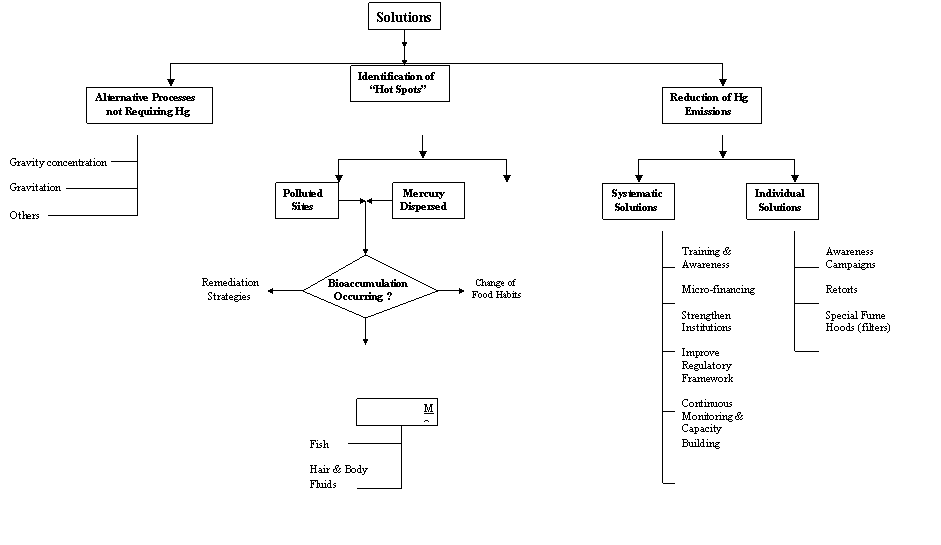
 1A.1
1A.1 1A.2
1A.2


 1A.3
1A.3
 1A.4
1A.4 1A.5
1A.5 1B.1
1B.1 1B.2
1B.2 1B.3
1B.3


 2.1
2.1 2.2
2.2 2.3
2.3


 2.5
2.5 2.6
2.6 2.7
2.7 3.1
3.1 3.2
3.2 3.3
3.3 3.4
3.4

 3.5
3.5
 3.6
3.6 3.7
3.7 4.1
4.1 4.3
4.3 4.4
4.4
 4.5
4.5
 5.1
5.1
 5.2
5.2 5.3
5.3 5.4
5.4 5.6
5.6


 5.7
5.7 6.2
6.2 6.5
6.5 6.6
6.6 6.7
6.7

 7.1
7.1

 7.2
7.2 7.3
7.3 7.4
7.4