1. Identifiers:
Project Number: [Implementing Agency Project Number not yet assigned]
Project Title: Russian Federation – Support to the National Programme of Action for the Protection of the Arctic Marine Environment
Implementing Agency: United Nations Environment Programme (UNEP)
Executing Agencies: Ministry of Economic Development and Trade of the Russian Federation; Advisory Committee on Protection of the Sea (ACOPS)
Requesting Country: Russian Federation
Eligibility: The Russian Federation is eligible under paragraph 9(b) of the GEF Instrument.
GEF Focal Area: International Waters
GEF Programming Framework: Contaminant-based Operational Program #10
2. Summary:
Major outcomes will include a nationally approved Strategic Action Programme to address damage and threats to the arctic environment from land-based activities in the Russian Federation; direct and related improvements to environmental protection (legislative, regulatory and institutional and technical capacity) within the Russian Federation; the completion of ten pre-investment studies to determine the highest priority and tractable interventions to correct or prevent transboundary impacts of land-based activities; and three categories of demonstration projects dealing respectively with marine environmental clean up, the transfer of two decommissioned military bases to civilian control, and involving indigenous peoples in environmental and resource management. The results are intended to benefit the international arctic environment, particularly the Arctic Ocean basin and its shelf seas, and contribute to two principal international agreements: the Arctic Council Plan of Action to Eliminate Pollution of the Arctic; and the Global Programme of Action for the Protection of the Marine Environment from Land-Based Activities (GPA) as implemented in the Arctic Region through the Arctic Regional Programme of Action and the Arctic Council Plan of Action to Eliminate Pollution of the Arctic (ACAP).
3. Costs and Financing (Million US $):
GEF: Project tranche I* : US$ 5.885
Project tranche II : US$ 4.425
Subtotal GEF : US$ 10.616
Co-financing: PDF-B (all sources) : US$ 0.474
Russian Federation (in cash & kind) : US$ 10.150
Other** (see Section 4 below) : US$ 10.050
Subtotal Co-financing : US$ 20.674
* Commitment sought by Council at its December 2001 session.
** Based on pledges at the time of project brief submission
4. Other Government Co-Financing (Million US $ - including PDF-B):
Canada: : US$ 1.100
Finland: : US$ 1.100
Iceland: : US$ 0.150
Norway: : US$ 1.100
Sweden: : US$ 1.100
United States of America: : US$ 2.500
TOTAL US$ 10.350
5. Operational Focal Point Endorsement:
Mr. Maxim Yakovenko, Deputy Minister, Ministry of Natural Resources, 17/10/01
6. IA Contact: Mr. Ahmed Djoghlaf, Executive Co-ordinator, UNEP/GEF Co-ordination Office, UNEP, Nairobi, Tel: 254-2-624165; Fax: 254-2-624041; Email: ahmed.djoghlaf@unep.org
GLOSSARY
ACAP: Arctic Council Action Plan to Eliminate Pollution of the Arctic
ACOPS: Advisory Committee on Protection of the Sea
AMAP: Arctic Monitoring and Assessment Programme (Arctic Council Programme)
CAFF Conservation of Arctic Flora and Fauna (Working Group of the Arctic Council)
COMECON: Council for Mutual Economic Aid (among Warsaw Pact states)
GPA: Global Programme of Action for the Protection of the Marine Environment from Land-Based Activities concluded in Washington, D.C., in 1995.
FTOP: Federal Target-Oriented Programme (Russian Federation)
MARPOL: International Convention for the Prevention of Pollution from Ships
NPA-Arctic: National Plan Of Action For The “Protection Of The Arctic Marine Environment From Anthropogenic Pollution In The Russian Federation”
PAME: Protection of the Arctic Marine Environment (Arctic Council Programme)
RAIPON: Russian Association of Indigenous Peoples of the North
SAP: Strategic Action Programme
1. The Arctic Ocean and its shelf seas represent an area of global significance both in terms of their influence on global oceanic and atmospheric circulation and their unique biological species that constitute an essential element of global biological diversity. Although the smallest of the major ocean basins of the world, the Arctic Ocean plays a crucial role in the movement of oceanic waters through connections and exchanges with the Atlantic and Pacific Oceans. Its characteristics are influenced by major inflows from the Atlantic Ocean, secondary inflows through the Bering Strait and continental runoff. The Arctic is the major driving force for the deep circulation of the oceans with cold deep water formation on the peripheries of the Arctic Ocean giving rise to the deep western boundary undercurrent which can be regarded as the starting point for Henry Stommel’s ‘Tour de Force’ (or ‘oceanic conveyor belt’ circulation model). The Arctic marine environment is heavily ice-covered throughout most of year with seasonal fluctuations in ice-cover enabling the recovery of important fisheries resources from its shelf seas, particularly the Barents and Kara Seas. The largest fisheries landings are made by Russia and Norway with Barents Sea cod among the most important species. The predominant shelf areas lie along the northern Russian coast and in the Canadian Arctic Archipelago. The Russian landmass occupies over 38% of the circumpolar arc - approximately twice that of the next largest country Canada.
2. The Arctic marine environment is home to a wide range of unique species with the most well known among them being polar bear, narwhal, walrus and white whale (beluga). Over 150 species of fish inhabit arctic and sub-arctic waters; important among these are cod and American plaice, which is the most abundant flatfish in the Barents Sea. There is also a wide variety of birds. Some of these are species found in other oceans but several are unique to the Arctic such as several species of auk and ivory gulls that maintain close contact with ice-covered areas throughout their lives. Each summer over 120 bird species migrate from temperate and tropical regions to the Arctic where they breed. Of the many bird species that inhabit and nest in the Arctic terrestrial environment during the summer months, very few remain in the far north year-round. Raven, snowy owl, rock ptarmigan and willow ptarmigan are predominant among the few year round resident birds.
3. A further important feature of the Arctic is its indigenous inhabitants. Indigenous peoples have been living as part of the Arctic ecosystem for millennia, and in most areas, continue to do so. As consumers of local resources, they are frequently the most exposed recipients of contaminants from local and distant sources. Many of the effects of large-scale environmental contamination are likely to be most pronounced among indigenous peoples. The cultures and traditions of Arctic indigenous peoples are unique. Most of these groups continue their traditional patterns of resource use, maintain their cultural heritage and fight for their rights to continue to do so. There exists a close bond among all the indigenous arctic peoples of which the major groupings are the Saami, Inuit, Aleut, Athabascan, Eyak and Métis. There are eleven indigenous minority peoples in Russia considered to be Arctic. These are the Saami, Enets, Nenets, Khanty, Nganasan, Dolgan, Even, Evenk, Chukchi, Eskimo (Yu-pik), and Yukagir. These indigenous populations are threatened by dislocation, interactions with immigrants and the associated decline of traditional activities and values. Some have become extinct, even within the twentieth century. With the increased exploitation of natural mineral resources in the Arctic, the very existence of the indigenous community is at risk. Arctic indigenous peoples are the most fragile elements of human society in the Arctic and the most susceptible to environmental change. As such, they deserve special attention to their ways of life, living conditions and prospects for the future. The impacts that both contaminants and, more insidiously, the fear of contaminants have on these indigenous peoples and cultures demonstrate the need for effective communication and for action to prevent contamination that may lead to adverse effects.
4. The Contaminant-based Operational Program No. 10 “focuses on poorly addressed contaminants and aims to utilize demonstrations to overcome barriers to adoption of best practices, waste minimization strategies, and pollution prevention measures.” The description of Operational Program No. 10 states that the “contaminant-based operational program is intended to include an array of projects that address certain high priority contaminants in the areas of land-based activities which degrade marine waters, global toxic pollutants, and ship related contaminants.” While pollution prevention is stressed in this Operational Program on the basis that: “Prevention, not remediation, is a more cost effective strategy”, the particular situation in the Russian Federation largely obviates the ability to take a predominantly preventative approach. This is related to the consequences of the intensive industrial development of the Arctic in the last several decades that has led to a vastly degraded environment and weak infrastructure. Superficial evidence of this situation is widely evident especially in heavily industrialized areas and in the vicinity of decommissioned military bases. However, associated compromise of the environment is much more widespread as has become clear during the decade or so since perestroika. Thus, one of the main requirements of interventions in favour of environmental improvement in the Arctic is to deal with this decline and restore environmental conditions while at the same time endeavouring to prevent further deterioration and new threats.
5. The Russian Federation is now attempting to rectify past deficiencies and to formulate a comprehensive approach to environmental protection including that of the Arctic and its indigenous arctic peoples. A significant first step in this direction was its involvement with the other seven Arctic States (Canada, Denmark, Finland, Iceland, Norway, Sweden and the United States) in an Arctic Environmental Protection Strategy adopted in Rovaniemi, Finland, in 1991 and the subsequent assessment of the state of the environment of the entire Arctic defined on political boundaries though the Arctic Monitoring and Assessment Programme (AMAP) the first stage of which was completed in 1998. The first pan-arctic assessment set the stage for all the Arctic States to devise a common approach to the restoration and protection of the arctic environment, its living resources, its biodiversity and its indigenous population. Russia continues to be an active participant in the bilateral and multilateral environmental programmes carried out within the framework of the Rovaniemi agreement. In 1996, Russia became a founding member of the Arctic Council that assumed the overall consultative process for the Arctic initiated in Rovaniemi in 1991.
6. A further, global, initiative is directly relevant to this proposal. This is the Global Programme of Action for the Protection of the Marine Environment from Land-Based Activities (GPA) that was adopted in Washington, D.C., in 1995 by more than 100 countries. This agreement was the first to deal directly with marine protection from non-maritime activities unlike many previous agreements, such as the London Convention 1972 that addresses dumping at sea from vessels and aircraft and the MARPOL 73/78 Convention that addresses operational discharges from ships. It is unarguable that the greatest damage to the marine environment, its resources and amenities, stems from activities conducted on land whether in coastal areas or in the hinterland mediated by runoff and atmospheric transport of material, including contaminants, from the continents to the ocean. Furthermore, there are now perceived to be even greater threats on a global basis than the effects of classical contaminants. These include the effects of nutrient and sediment transport into the marine environment and, of particular relevance to the Arctic, the damage caused by physical alterations to coasts, hinterlands and waterways. The accelerated exploitation of hydrocarbons from the Russian arctic shelf increases the threat to the international waters of the Arctic, not only directly but also through the construction of coastal support and transhipment wharves. The adoption of the Global Programme of Action (GPA) stimulated nations to develop “National Programmes of Action” and “Regional Programmes of Action” for the protection of the ocean from land-based activities. Accordingly, the Arctic States, in compliance with their commitments under the Rovaniemi Agreement and the Arctic Council, have taken a forceful role in ensuring that such programmes are prepared for the arctic marine environment. It led to the formulation and adoption of a Regional Plan of Action for the Protection of the Arctic Marine Environment from Land-Based Activities (RPA) and an Action Plan for the Elimination of Pollution in the Arctic (ACAP) by the Arctic Council.
7. It is noteworthy that under “Program Outputs” Operational Program No. 10 (Paragraph 10.10) specifies that: “the outputs of the operational program encompass a number of projects that focus on certain types of contaminants that degrade the International Waters environment. Consequently, GEF interventions in this operational program tend to demonstrate that technological barriers can be overcome or that measures aimed at removing barriers can be implemented. Some barriers involve lack of information or the lack of training. Others involve the legal, regulatory, or sectoral policy adjustments needed to reduce environmental stress. Innovative programs, financing measures, and demonstrations of technologies characterize certain projects.” It further notes in relation to Land-Based Activities (Paragraph 10.13) that it:
“includes a series of demonstration projects (at least one in each development region of the world) consisting of basins or areas draining to coastal/marine waters. Fast-track demonstrations of approaches, techniques, pilot projects, innovative technologies, institutional arrangements, and contaminant release show how these should be addressed in relation to other stresses. In particular, several demonstrations involving the use of economic instruments are of high priority. Project preparation should include an analysis of priority contaminants, the barrier being removed, and a strategy for implementing needed baseline and additional actions. These demonstration projects may be useful for testing strategies countries might wish to pursue under the Global Programme of Action for land-based activities that degrade marine waters.”
8. This proposal for a Full Project is made in a manner consistent with GEF policies as articulated in the description of Operational Program No. 10. It deals predominantly with land-based activities that have either compromised, or threaten to compromise, the arctic marine environment with consequences for other states bordering this ocean but, more significantly, the global marine environment in which the Arctic plays a pivotal role.
9. This proposal stems from a PDF-B, approved in 1998 that has been executed during 2000. During the PDF-B a number of preparatory activities were undertaken including: (1) the identification and prioritisation of hot-spots (i.e., areas of environmental degradation and threat) within the Russian Arctic; (2) an analysis of the mechanisms of hydrological and atmospheric transport of contaminants within the Arctic with primary emphasis on processes within the Russian Federation; (3) an analysis of the current environmental policy and legislative situations in Russia including an assessment of contemporary initiatives and future directions; and (4) an analysis of infrastructural and institutional capacities within Russia. The products of all these activities and other recent international and Russian initiatives dealing with the protection of the arctic environment and the sustainable use of its resources and amenities, some of which were carried out in association with the GEF PDF-B activities, have been used as background to the preparation of this brief. A list of publications prepared during the PDF-B is shown at Annex V.
10. The Russian Federation implements Federal Target Oriented Programmes (FTOPs) that are the basic tools for providing state support to the solution of economic, social and environmental problems. The FTOP ‘World Ocean’ and its sub-programme ‘Use and development of the Arctic’, adopted by the Russian Government in 1998, constitute the basic instruments within Russia for policy directions for oceans and the Arctic to be fostered by the government. The FTOP ‘World Ocean’ is the most relevant to the interventions proposed here. Within the FTOP ‘World Ocean’, a framework is established for the development of a ‘National Plan of Action for the Protection of the Arctic Marine Environment from Anthropogenic Pollution in the Russian Federation’. This reflects the Russian Federation’s commitment to the implementation of the Global Programme of Action in the arctic region through the RPA and ACAP initiatives of the Arctic Council.
11. The system boundaries for interventions within this project are northern Russia as politically defined for the purposes of the AMAP Assessment completed in 1998. The marine area that is the focus of protective activities among the Arctic States is similarly defined on political grounds and extends generally northwards of latitude 60oN. It therefore includes not only the entire Arctic Basin but also several adjacent marine areas such as the Barents Sea, the Greenland Sea, Baffin Bay and some parts of the Bering Sea. The project outlined here deals specifically with interventions within the Russian Federation to address the most seriously affected marine areas of the Arctic. This is an issue of direct concern to the Russian Federation as the most affected coastal seas are the Barents, Kara and Chukchi Seas all of which are partially within Russian jurisdiction and subjected to significant anthropogenic impact. These are shelf seas that are the major areas of ice formation, leading to brine rejection, sinking and export, which directly influence the internal structure of the Arctic Ocean and the character of its waters. However, the adverse effects of previous and contemporary anthropogenic activities in the Russian Federation extend beyond these seas to both international waters and those under the jurisdiction of other countries most particularly Norway. Through the role played by the Arctic Ocean in the formation of Atlantic Ocean deepwater, the transboundary effects of Russian activities can extend beyond the Arctic Basin to the major deep water masses of the global ocean through the “oceanic conveyer belt” process. The dominantly cyclonic surface circulation of the Eurasian Basin of the Arctic Ocean in surface drift to the east along the coast of northern Russia provides a further avenue of transboundary movement of surface water constituents. Arctic tracers (radionuclides) derived from western European sources after entry into the Arctic through the Norwegian Current have been shown to enter the East Greenland Current, the West Greenland Current and are expected to continue surface transport through the Greenland Sea into the surface boundary flow southwards along the eastern seaboard of North America. This demonstrates the interconnectivity of the Arctic with the North Atlantic and other oceans through surface flows. This surface flow is complemented by flow into the deep Western Boundary Undercurrent of the Atlantic as a result of overflow across the Iceland-Scotland and Scotland-Faeroes Ridges. Thus contaminants in the Arctic can be subsequently distributed relatively rapidly to the North Atlantic and then enter the global ocean circulation and reach other oceans. The role of the Arctic in influencing global climate and its unique contribution to global biological diversity, which are directly and adversely affected by Russian activities, are topics of legitimate concern to all countries of the world. All this adds a global dimension to a topic that would, at first glance, appear to be a matter of concern only to the arctic states.
12. The United Nations Conference on Sustainable Development (Rio de Janeiro, 1992) gave major impetus to Russian activities to resolve environmental protection issues. In 1996, the President of the Russian Federation endorsed the ‘Concept of Transition of the Russian Federation to Sustainable Development’ that, in particular, stipulates the need to adopt measures to reduce the impact of industrial activities on the global environment and to stabilize the condition of the arctic environment. The ‘State Strategy for Sustainable Development of the Russian Federation’ and the ‘Concept of Sustainable Development of the Russian Arctic’ focus on conserving a favourable natural environment for present and succeeding generations. Yet, the gradual depletion of natural resources in previously developed areas of the Russian Federation results in their increased extraction from the Arctic where the environment is fragile and ecosystems are comparatively sensitive to the effects of anthropogenic activities. This could lead to further aggravation of the already serious environmental situation in the Arctic and the emergence of additional “hot spots” characterized by levels of contamination much greater than the regional background. In many of these ecosystems are altered or destroyed and there are increased threats to inhabitants, especially to indigenous peoples and children. This project aims to address both environmental problems and threats in the Arctic that also play a role at both regional and global levels.
13. There are a number of barriers to environmental remediation in the Arctic. The major barrier is the need to resolve a number of problems caused by Russia’s transition to a market economy that results in a shortage of financial resources for environmental protection. A further barrier is the outdated nature of current environmental regulations that are largely incompatible with Russia’s new economic situation. Environmental protection activities in the Arctic and the adoption of environmental regulations is carried out under federal environmental protection legislation that has been drawn up on the basis of an approach that takes little account of regional variability within the country. There are currently no legislative norms to provide a framework for fulfilling the responsibilities of federal, regional and local executive bodies and economic entities that takes account of either the special features and uses of nature in the Arctic or the need for the Russian Federation to complete the transition to market conditions.
14. This makes it crucial that a Strategic Action Programme (SAP) be designed and implemented that includes measures for the identification and resolution of priority issues having specific target dates and costs. Several of the issues covered by the SAP will be of substantial importance to the Russian Federation alone and these will be addressed as priority issues using national resources. Other issues, however, involve serious consequences for the environment and natural resources beyond the Russian Federation in the international waters of the Arctic. These issues merit high priority at an international level so that concerted multilateral efforts can be made to resolve them. This, in major part, constitutes the underlying basis of this project – to enable the adoption of a comprehensive approach for the reduction of environmental degradation that provides the greatest net benefits to the Russian Federation, its Arctic neighbours and the entire global community.
RATIONALE AND OBJECTIVE (ALTERNATIVE)
15. The overall objective is to protect the arctic marine environment. Consistent with this overall objective, the project embodies three main objectives: ensure a coherent basis for the identification of priorities associated with the adverse effects of land-based activities; meet Russia’s obligations under the GPA and other international agreements; and prepare the ground for environmentally sustainable development of the Arctic. Project outcomes will be an agreed SAP at an advanced stage of implementation, draft Acts, a regulatory framework complemented by adequate infrastructural and technical capacities and prepared ground for substantial investments in remediation/prevention of damage to the arctic environment.
16. To satisfy the objectives, the project is divided into four major components; namely:
1) Formulation of a Strategic Action Programme;
2) Pre-Investment Studies;
3) Legislative, Administrative and Institutional Capacity Improvements;
4) Demonstration interventions.
The project will first develop and initiate the implementation of a Strategic Action Programme for the Protection of the Arctic Marine Environment from Land Based Activities in the Russian Federation that identifies and addresses priority issues from both national and international (i.e., transboundary) perspectives. This Strategic Action Programme will correspond to a National Programme of Action to address land-based activities developed from the FTOP ‘World Ocean’ initiative. The SAP will cover all matters relating to land-based activities within the Russian Federation within the scope of the NPA-Arctic that affect or threaten the arctic marine environment, whilst the second component deals with pre-investment studies for already-identified priority hot spots in the Russian Arctic. The PDF-B activities identified 21 priority hot spots corresponding to either land-based activities having serious adverse effects on the environment or seriously degraded environments themselves that deserved urgent remedial attention. This work extends the detail and resolution of the priority environmental issues identified in the AMAP Arctic Assessment. These priority hot spots are either regions of severe environmental damage threatening international waters or major sources of contaminants in Russia that have widespread adverse effects, both on the Russian Federation and on international waters areas beyond Russian jurisdiction. It is intended that this package of issues, for which technical evaluations have been completed during the PDF-B phase, will be further evaluated from social, economic and political perspectives and prioritised with emphasis on the extent of associated transboundary impacts. Pre-investment studies will encompass issues derived from the FTOP ‘World Ocean’ and the problems associated with decommissioned military bases and radioactive wastes in the Arctic carried out concurrently with the PDF-B activities. It is further intended that some of the priority issues so identified be subjected to pre-investment studies as a basis for presentation at a Partnership Conference in 2002 at which funding partners would be solicited to make sizeable investments to resolve specific major problems under bilateral or multilateral arrangements. In the baseline case (i.e., in the absence of GEF intervention), adverse effects on the Russian Federation would dominate the selection of priorities and when these were addressed, only incidental transboundary benefits would ensue. GEF support for this activity would enable the adoption of a more balanced approach to national and transboundary effects and ensure that a more holistic perspective of the severity of damage and risks was attained.
17. The remaining activities, like component 2 above, are aimed at accelerating action on environmental remediation in the Arctic. The third component within the project follows directly from the SAP and provides for the introduction of legislative reforms and administrative arrangements, incorporating federal, regional and local entities and drawing on international experience. Accordingly, it will provide a coherent basis for meeting Russian obligations under international agreements to reduce the adverse effects of anthropogenic activities on the marine environment in the Arctic pursuant to the resolutions of the Arctic Council. The project will also facilitate the identification of transboundary issues warranting urgent attention to reduce effects on other countries occurring through the medium of international waters.
18. The fourth component comprises three demonstration projects. The first of these involves the establishment of a demonstration of new and efficient legal and economic mechanisms to harmonize the interests of companies extracting natural resources with those of the indigenous peoples while protecting the latter’s traditional way of life and habitat. It also includes a demonstration of the benefits of creating special zones. These would be territories of traditional nature use by indigenous peoples of the North based on the Russian Federation Act on ‘Territories of Traditional Nature Use by Indigenous Peoples of the North, Siberia and the Far East’ dated May 7th 2001 (No. 49-FZ). The activity includes development of: (1) proposals regarding the organization and structure of territories of traditional nature; and (2) principles, procedures and methods for the development of the territories of traditional nature use by indigenous peoples of the North, Siberia and the Far East. GEF support will accelerate the development and assessment of the efficacy of these legal and economic mechanisms, their benefits to indigenous peoples and the improvement achieved in the management of resources in the Arctic.
19. The second demonstration project involves the use of a novel procedure for the cleanup of contaminated marine areas that has been developed in the Russian Federation. This involves the use of brown algae (Fucus) that can be deployed for decontamination purposes and then processed for use in a number of industrial applications. This demonstration would provide a full test of a business plan developed by a Russian agency for the large-scale application of the concept as a commercially viable operation. Under baseline circumstances, it is unlikely that the resources could be found to undertake a realistic test of this methodology within the Russian Federation. GEF co-financing would allow accelerated testing and, if successful, the fostering of a commercial environmental services business within the country. This is the equivalent of removing barriers by demonstrating the viability of the technology so that others can replicate and apply the technology elsewhere in Russia.
20. The third demonstration project involves environmental remediation of decommissioned military bases in the Arctic. The current damage to the environment associated with abandoned military bases, many of which are located on coastal sites, not only adversely affects the Russian Federation but poses substantial threats to international waters resulting from waste containment failures that are likely to occur. While there exists willingness on the part of the military for these bases to be transferred to the civilian sector for further use, the wastes and chemical residues at these sites need to be collected and disposed of in a safe manner. The military lacks the financial resources to undertake this task and the civilian sector is not willing to assume such responsibilities. No doubt there are cases in which the beneficial civilian use of ex-military bases could be achieved in a manner that would reimburse communities for the cleanup costs. This, however, will have to be demonstrated to convince local community representatives. Thus, a demonstration project would extend the assessments of the condition of decommissioned military bases carried out in conjunction with the PDF-B activities to the assessment of potential benefits of transfer to civilian responsibility and then demonstrate in practice how this could be achieved without undue financial liability being placed on the community concerned.
21. The medium-term objective of the project is to formulate and adopt a Strategic Action Programme for the protection of the arctic marine environment from land-based activities. This SAP will comprise specific targeted and costed actions for longer-term implementation to address priority issues and concerns relating to existing damage to the Arctic and threats to its future integrity. This SAP will accommodate three principal thrusts: the Arctic Environmental Protection Strategy agreed in Rovaniemi in 1991 by the eight arctic states (subsequently subsumed under the Arctic Council); the Global Programme of Action for the Protection of the Marine Environment from Land-Based Activities concluded in Washington, D.C., in 1995 by over 100 countries; and the ‘World Ocean’ Federal Target Oriented Programme adopted by the Russian Government in 1998. The workplan and timetable of project activities shown in Table 1 provides a list of initiatives to deal with obvious and existing damage and threats to the arctic marine environment and the development of an overarching strategy for its sustained protection.
22. Some of the specific environmental targets outlined within the framework of the SAP will extend beyond the life of the present project. These targets are summarized in Annex VI.1 while the logical framework matrix presented at Annex II outlines the milestones, indicators, risks and assumptions that can be used to measure progress towards achieving these targets over the life of the project.
PROJECT ACTIVITIES/COMPONENTS AND EXPECTED RESULTS
23. The four principal components of the project, namely
(1) Formulation of a Strategic Action Programme
(2) Pre-Investment Studies
(3) Legislative, Administrative and Institutional Capacity Improvements and
(4) Demonstration Interventions,
offer the greatest potential long-term benefits in terms of environmental protection from both national and transboundary perspectives. In the context of environmental degradation, chemical pollution issues remain a dominant focus within the Russian Federation. The most instructive manner of fostering a broader perspective is through the careful and deliberate formulation of a SAP that deals with all sources and aspects of aquatic degradation and its effects on both national and international waters, their resources and amenities. It also allows the adoption of the broadened classes of land-based activities specified within the GPA and even extends them to biological diversity and climate-related issues although the latter primarily relate to meso-scale and micro-scale climate modifications. Equally importantly, it aligns with the broad perspectives of Arctic Council activities reflected in the AMAP assessment of the Arctic. Furthermore, it provides a basis for legitimate interactions between the Russian Federation and the other Arctic State members of the Arctic Council to ensure that the Russian Arctic SAP takes account of regional concerns.
24. Activities within Component 1 relating to the formulation of a Russian Arctic SAP for addressing damage and threats associated with land-based activities will include the creation of a Task Team under the Chairmanship of the Ministry of Economic Development and Trade comprising representatives of federal departments, concerned and regional executive bodies, indigenous organizations and communities and the Co-Executing Agencies. This group would be tasked with the development of a Strategic Action Programme consistent with the Russian FTOP ‘World Ocean’ initiative, the provisions of the GPA and initiatives and agreements within the Arctic Council. The Task Team would establish any necessary sub-groups on an ad hoc basis to complete the development of a Strategic Action Programme within 15 months of the commencement of the project. The product of this activity would be a comprehensive SAP containing specific targeted and costed measures for addressing priority environmental issues derived from land-based activities within the Russian Federation. The Task Team will ensure consultation with appropriate international organizations through invitations to such agencies to have representatives attend the meetings as observers and requesting reviews of its work and products.
25. Component 2 comprises pre-investment studies. The objective of this component is the conduct of pre-investment studies to determine the optimum set of investment projects dealing with environmental damage and threats in the Arctic stemming from activities within the Russian Federation. During the PDF-B phase, 21 priority hot spots and impact zones, either anthropogenic sources or damaged environments were found to merit from scientific perspectives the highest priority for corrective intervention. The comparative technical assessments carried out in the PDF-B need to be extended into the social, economic and political domains as a means of obtaining a more holistic perspective on priorities. The actual nature, timing and costs of priority interventions would be included in the SAP. In view of the limited national resources available for addressing environmental problems, the Russian Federation would necessarily give greatest priority to interventions to rectify adverse effects on areas of Russian jurisdiction and its national population. Thus, in order to improve the comprehensiveness of national interventions and to deal incrementally with adverse effects on areas in the jurisdiction of other states and on international waters of global interest, there will be a need to solicit additional financial contributions. Such solicitation would be greatly enhanced if there were a body of pre-investment studies that would lead to the funding of the most beneficial and effective interventions. This component of the GEF project will therefore comprise a series of pre-investment studies that could be used as background material for a Partnership Conference to obtain additional international funding for environmental interventions to resolve serious environmental compromises stemming from anthropogenic activities within the Russian Federation.
26. Component 3 represents the initial steps in the implementation of the SAP for a National Programme of Action addressing land-based activities as a component of the NPA-Arctic. It contains three parallel activities that must be carried out in a coordinated fashion to create the legal, administrative and technical conditions to enable on-the-ground remedial and preventative measures to be conceived and implemented. All three sub-activities of Component 3 are to be completed in a period of 36 months following the adoption of the SAP. A Working Group on SAP Implementation comprising representatives of federal departments and provincial regions and indigenous peoples organizations will be responsible for coordinating three subordinate Working Groups on Legislative Initiatives, Administrative Arrangements and Institutional Capacity. The Working Group on Legislative Initiatives would draw up the legal framework and regulations required to facilitate the implementation of the SAP. The Working Group on Administrative Arrangements would design a system of division of responsibilities and the assignment of agency responsibilities for the institutional implementation of the SAP. The Working Group on Institutional Capacity would assess the technical and human resource requirements for implementation of the SAP and specify what administrative structures, designation of responsibilities, information exchange and assessment procedures are required to fulfil appropriate monitoring and compliance functions. These three Working Groups will be directed by the Working Group on SAP Implementation to which they would report periodically. The Working Group on SAP Implementation will convene frequently enough to ensure that the work programme is coordinated and that any inconsistencies among the recommendations of the Groups were resolved before undue misdirection of resources occurred. This Working Group will also ensure that appropriate consultations are maintained with relevant international organizations through invitations to observe proceedings and through requests for review of interim products from the process. The outcome of these activities will include specific proposals for new or revised legislation; administrative and institutional changes and/or restructuring; and targeted programmes for capacity building within the Russian Federation.
27. Component 4 comprises three demonstration projects that will provide a basis for wider application of approaches and techniques for environmental restoration and damage prevention within Russia, within the arctic community of states and globally. As a result of the PDF-B and related activities (including those under the FTOP ‘World Ocean’) funded by the Russian Federation and other arctic states, a number of demonstrable interventions having the potential for wider application have been identified. One of these demonstrations will deal with developing and setting the conditions to encourage and facilitate co-management of the environment by resource development companies and indigenous communities of the North. Such a demonstration will be an important indicator of the social and environmental improvements that can be gained from increased indigenous peoples involvement in resource and environmental management in the Arctic. Another demonstration will involve assessing the potential of the brown alga Fucus to act as a cleanup agent in arctic marine areas that could then be used for large-scale remediation in chemically contaminated coastal areas thereby lessening the impacts of Russian activities on arctic international waters. The proposal envisages the deployment of brown algal mats in contaminated coastal areas that absorb contaminants. The brown algae is then used in a variety of industrial applications (e.g., human and livestock foods, fertilizer, thermal insulation) offering the potential for financially self-sustaining commercial activities. Finally, this component includes a demonstration of environmental remediation of two decommissioned military bases in differing locations and condition thereby enabling them to be transferred to public or private sector use for the benefit of communities or companies. The emphasis in this latter demonstration activity will be on cost-effectiveness and utility in the use of these bases by the public and/or private sectors.
RISKS AND SUSTAINABILITY
28. The logframe matrix presented at Annex II details the project-related risks and assumptions. In addition there is one further externally derived risk that might affect the operation of this project. This risk is associated with international initiatives in the implementation of the Global Programme of Action for the Protection of the Marine Environment from Land-Based Activities (GPA). A first review meeting of progress in the implementation of the GPA will take place in Montreal in November, 2001. This meeting will foster priority attention to problems of universal or global importance and creates two risks to successful project outcome: first, that primary attention will be to topics such as sewage management that may divert international attention and funding from the kinds of pollution problems that are the most important in Russia; and, second, that the other arctic states might contest the extent of transboundary impact judged by the Russian Federation and therefore be unwilling to support the priorities identified by Russia in its development of the Strategic Action Programme that will primarily address land-based sources in the Arctic territories of the country. Of these two risks, the former one is the greater although it would seem very unlikely that an agreement that sewage was the number one global problem would be thought to apply to the Arctic. The latter risk is wholly mitigated by the degree of support elicited for this project from the arctic states and their mutual commitment to deal with arctic environmental problems in a coordinated manner through agreements within the Arctic Council.
29. The probability that measures initiated during the project will be sustained beyond the GEF project stage has improved substantially since the PDF-B phase was initiated. The Russian Government has adopted the Federal Target-Oriented Programme (FTOP) ‘World Ocean’ that is scheduled to run until 2012 that includes a National Plan of Action for the 'Protection of the Arctic Marine Environment from Anthropogenic Pollution in the Russian Federation (NPA-Arctic)'. This programme is being implemented by federal agencies, including the Ministry of Economic Development and Trade (Minekonomrazvitiya), the Ministry of Natural Resources and the Federal Service for Hydrometeorology and Environmental Monitoring (Roshydromet), and the Russian Academy of Sciences. The FTOP ‘World Ocean” is supported by the authorities of the arctic region and a number of private companies. It has also received recognition and endorsement by a parliamentary hearing in the State Duma. There is accordingly strong evidence of a new
Table 1: Workplan and Timetable – Overall duration of the project 60 months
|
Component / Sub-Component |
GEF Project Implementation | ||||||||||||||||||||
|
TRANCHE I |
TRANCHE II | ||||||||||||||||||||
|
2002 |
2003 |
2004 |
2005 |
2006 | |||||||||||||||||
|
1. Strategic Action Programme Development |
|||||||||||||||||||||
|
1.1 Interagency Task Team Meetings |
|||||||||||||||||||||
|
1.2 Drafting of Strategic Action Programme |
|||||||||||||||||||||
|
1.3 Review by federal and provincial departments and agencies |
|||||||||||||||||||||
|
1.4 Revision of Draft Strategic Action Programme |
|||||||||||||||||||||
|
1.5 International Review |
|||||||||||||||||||||
|
1.6 Finalization of Strategic Action Programme |
|||||||||||||||||||||
|
2. Pre-investment Studies |
|||||||||||||||||||||
|
2.1 Formulation of criteria for selection of pre-investment projects |
|||||||||||||||||||||
|
2.2 Completion of candidate list of potential pre-investment studies |
|||||||||||||||||||||
|
2.3 Selection of pre-investment studies based on priority and tractability |
|||||||||||||||||||||
|
2.4 Conduct of pre-investment studies |
|||||||||||||||||||||
|
3. Environmental Protection System Improvements |
|||||||||||||||||||||
|
Preparation of Terms of Reference and establishment of Working Groups |
|||||||||||||||||||||
|
3.1 Legislative Improvements |
|||||||||||||||||||||
|
3.2 Regulatory Improvements |
|||||||||||||||||||||
|
3.3 Institutional and Technical Improvements |
|||||||||||||||||||||
|
4. Demonstration Projects |
|||||||||||||||||||||
|
4.1. Project Design for Indigenous Environmental Co-Management Demonstration |
|||||||||||||||||||||
|
Conduct of demonstration |
|||||||||||||||||||||
|
Preparation of replicability specifications |
|||||||||||||||||||||
|
4.2 Project Design for Contaminant Clean-up Demonstration |
|||||||||||||||||||||
|
Conduct of demonstration |
|||||||||||||||||||||
|
Preparation of replicability specifications |
|||||||||||||||||||||
|
4.3 Project Design for Remediation Decommissioned Military Bases Demonstration |
|||||||||||||||||||||
|
Conduct of demonstration at site 1 |
|||||||||||||||||||||
|
Conduct of demonstration at site 2 |
|||||||||||||||||||||
|
Preparation of replicability specifications |
|||||||||||||||||||||
|
Project Coordination and Management |
|||||||||||||||||||||
|
Steering Committee Meetings |
|||||||||||||||||||||
|
Reporting to the Arctic Council and the Global Programme of Action |
|||||||||||||||||||||
commitment in Russia to work both federally and in consultation with the regions to improve conditions in the Arctic and to fulfil its obligations within the international arctic community, especially those formulated through the Arctic Council. This project offers the real prospect of fostering even more increased commitment to environmental protection in the area of international waters of the arctic through the development of new legislative, regulatory and institutional mechanisms for coordinated environmental protection within the Russian Federation. The existence of the Arctic Council as an international mechanism to monitor progress and to take continued steps towards the restitution of the arctic environment also provides additional assurance of sustainability of actions beyond the period of this project. Indeed, the GEF project will provide a basis for honing the interdepartmental, federal-provincial and international consultations that provide much greater confidence of sustainability.
STAKEHOLDER PARTICIPATION AND IMPLEMENTATION ARRANGEMENTS
30. The primary stakeholder is the Ministry having overall charge of arctic policy development and co-ordination of the FTOP ‘World Ocean’, the Ministry of Economic Development and Trade (Minekomrazvitiya). This Ministry will co-ordinate work with other government departments, particularly the Ministry of Natural Resources and Roshydromet. These ministries will be involved in project oversight through high-level involvement in the Working Groups and Steering Committee. Representatives of the Arctic Council, particularly its Protection of the Arctic Marine Environment (PAME) and Arctic Monitoring and Assessment Programme (AMAP), will also participate in Steering Committee Meetings, the latter also as the Executing Agency for the GEF Project “Persistent Toxic Substances (PTS), Food Security and Indigenous Peoples of the Russian North”. Additional stakeholders will include several provincial governments and RAIPON (the Russian Association of Indigenous Peoples of the North). Aspects of the project, especially the demonstration of ecological co-management in Component 4, will provide for direct involvement by indigenous communities of the Russian North. The alignments between the indigenous peoples demonstration component of this project with the GEF Medium-Size Biodiversity Project on the Central Taimyr entitled “Conserving Globally Significant Biodiversity of Taimyr including its Keystone Population of Wild Reindeer: a demonstration” will be maintained through direct interactions once this latter project commences implementation. Similarly, consultation with those involved in the Russia/CAFF/UNEP Biodiversity activities in the Russian Arctic will also be maintained through direct contact.
31. Implementation of the project will be overseen by a Steering Committee comprising the principal federal agencies responsible for arctic environmental protection within the Russian Federation, the Russian Association of Indigenous Peoples of the North (RAIPON), representatives of provincial governments, the Arctic Council, the co-financing governments and UNEP/GEF, a representative of an international indigenous peoples organization and representatives of the co-executing agencies. A high-level representative of the Russian Ministry of Economic Development and Trade will chair the Committee.
32. The project will be jointly executed by the Ministry of Economic Development and Trade of the Russian Federation (Minekonomrazvitiya) and ACOPS. Minekonomrazvitiya will provide political leadership and deal with the coordination of the project with other government departments of the Russian Federation. ACOPS will be responsible for the financial and project management aspects of project implementation. These co-executing agencies will establish a project coordination office in Moscow and will consult regarding the selection of staff and consultants. A protocol between Minekonomrazvitiya and ACOPS to this effect is attached at Annex VI.3.
INCREMENTAL COSTS AND PROJECT FINANCING
Table 2: Baseline and Incremental Costs and Global and Domestic Environmental Benefits
|
Baseline |
Alternate |
Increment | |
|
GLOBAL ENVIRONMENTAL BENEFITS |
11.124 |
21.740 |
10.616 |
|
PDF-B Phase |
0.474 |
0.780 |
0.306 |
|
Component 1 – SAP Development |
0.700 |
1.220 |
0.520 |
|
Component 2 – Pre-investment Studies |
3.500 |
7.000 |
3.500 |
|
Component 3 - Env. Protection System Improvements |
|||
|
Sub-Component 3.1 – Legislative Improvements |
0.750 |
1.630 |
0.880 |
|
Sub-Component 3.2 - Regulatory Improvements |
0.760 |
1.440 |
0.680 |
|
Sub-Component 3.3 - Inst. and Tech. Improvements |
0.740 |
1.470 |
0.730 |
|
Component 4 – Demonstration Projects |
|||
|
Sub-Component 4.1 – Marine Waters Remediation |
1.300 |
2.070 |
0.770 |
|
Sub-Component 4.2 - Military Base Remediation |
0.500 |
1.340 |
0.840 |
|
Sub-Component 4.3 - Indigenous Env Co-Management |
1.000 |
2.190 |
1.190 |
|
Project Coordination and Management |
0.500 |
1.700 |
1.200 |
|
Executing Agency Regional Coordination |
0.900 |
0.900 |
0 |
|
DOMESTIC ENVIRONMENTAL BENEFITS |
9.550 |
9.550 |
0 |
|
PDF-B Phase |
0 |
0 |
0 |
|
Component 1 - SAP Development |
0.700 |
0.700 |
0 |
|
Component 2 - Pre-investment Studies |
3.500 |
3.500 |
0 |
|
Component 3 - Env. Protection System Improvements |
|||
|
Sub-Component 3.1 – Legislative Improvements |
0.750 |
0.750 |
0 |
|
Sub-Component 3.2 - Regulatory Improvements |
0.760 |
0.760 |
0 |
|
Sub-Component 3.3 - Inst. and Tech. Improvements |
0.740 |
0.740 |
0 |
|
Component 4 – Demonstration Projects |
0 | ||
|
Sub-Component 4.1 - Indigenous Env Co-Management |
1.000 |
1.000 |
0 |
|
Sub-Component 4.2 – Marine Waters Remediation |
1.300 |
1.300 |
0 |
|
Sub-Component 4.3 - Military Base Remediation |
0.300 |
0.300 |
0 |
|
Project Coordination and Management |
0.500 |
0.500 |
0 |
|
Executing Agency Regional Coordination |
0 |
0 |
0 |
33. Table 2 presents an incremental cost table based on the component costs presented in Table 3 and the more detailed analysis contained in Annex I. As noted in the latter Annex, benefits accrue at the global, regional and national levels. The long-term benefits of the project outcomes are substantial in comparison with the baseline case, especially in relation to improvements to the international waters environment of the Arctic. These will follow from a coherent and coordinated multi-sectoral approach to social and economic development balanced by much greater attention to environmental protection. This will constitute major progress towards the sustainable development of the Arctic and its resources. By comparison, the immediate environmental benefits that accrue as a direct consequence of project activities will be smaller except where pre-investment studies generate independent financing as a result of the Partnership Conference and the direct environmental benefits to local and international waters accruing from the demonstration projects. The main purpose of the project is to establish a coordinated national system for marine environmental protection within the Russian Federation that also provides a basis for sustained improvements to international waters by addressing land-based activities in a regional context in concert with other arctic states.
34. Table 3 presents the project budget and component financing. The total cost of the project (including the PDF-B phase) is $31.26 million of which $10.32M is the anticipated cost to the Russian Federation in cash and in kind. Significant co-financing is assured in principle from a number of sources, subject to the approval of the core funding by the GEF. Commitments of co-financing in the amount of $10.35M have been made subject to GEF approval of the project. The requested GEF contribution is $10.62M. The breakdown of total project costs (GEF contribution) by component is: SAP Development $1.92M ($0.520M); Pre-investment Studies $10.50M ($3.50M); Environmental Protection System Improvements $6.79M ($2.29M); Demonstration Projects $8.40M ($2.80); Project Coordination and Management $2.20M ($1.20M); and Executing Agency Regional Coordination $0.40M ($Nil). Thus the incremental proportion of this project is 33.9%.
35. The Co-Executing Agency, ACOPS, will establish a Trust Fund for the receipt of contributions to the co-financing of project activities. Although donors will not become directly involved in project design, appraisal, negotiation or implementation, consultations will be held, as deemed necessary, regarding specific project proposals and activities or relevant junctures. ACOPS and the Russian Ministry of Economic Development and Trade will jointly report Trust Fund income and expenditures to the Steering Committee and to UNEP, as the GEF Implementing Agency, on a biennial basis. The costs attributed to project coordination and management on the part of the co-executing agencies ACOPS and the Russian Ministry of Economic Development and Trade comprise: telecommunications; project and financial management; office support and secretarial assistance and consumables in London and Moscow. Regional Coordination comprises contracting of some international expertise as required to support or advise Russian personnel engaged in the project; consultations with, and financial reporting to, the co-financing agencies; and liaison with the Arctic Council, PAME, AMAP and the GPA Secretariat in the Hague. It should be noted that none of the costs of this latter function are attributed to the GEF.
Table 3: Project Budget Summary and Component Financing in Million US$
|
Co-Financing |
Grand Total | |||
|
Project Activities |
GEF |
Russia* |
Other |
|
|
1. SAP Development |
0.520 |
0.700 |
0.700 |
1.920 |
|
2. Pre-Investment Studies |
3.500 |
3.500 |
3.500 |
10.500 |
|
3. Environmental Protection System Improvements |
||||
|
3.1 Legislative Improvements |
0.880 |
0.750 |
0.750 |
2.380 |
|
3.2 Regulatory Improvements |
0.680 |
0.760 |
0.760 |
2.200 |
|
3.3 Institutional and Technical Improvements |
0.730 |
0.740 |
0.740 |
2.210 |
|
4. Demonstration Projects |
||||
|
4.1 Indigenous Environmental Co-Management |
1.190 |
1.000 |
1.000 |
3.190 |
|
4.2 Rehabilitation |
0.770 |
1.300 |
1.300 |
3.370 |
|
4.3 Transfer of Military Bases |
0.840 |
0.500 |
0.300 |
1.640 |
|
Project Coordination and Management |
1.200 |
0.500 |
0.500 |
2.200 |
|
EA Regional Coordination |
0.400 |
0.500 |
0.900 | |
| PROJECT TOTAL |
10.310 |
10.150 |
10.050 |
30.510 |
| PDF-B |
0.306 |
0.171 |
0.303 |
0.780 |
|
GRAND TOTAL |
10.616 |
10.321 |
10.353 |
31.290 |
* In cash and in kind
MONITORING, EVALUATION AND DISSEMINATION
36. Monitoring of the progress in executing the components and activities will be undertaken by UNEP in accordance with its internal guidelines for project monitoring and evaluation. In addition, the GEF Co-ordination Office will, in consultation with the Co-Executing Agencies, develop process indicators during the appraisal phase of the project that will serve as evaluation benchmarks during project execution. The Project Steering Committee will be responsible for providing guidance on stress reduction indicators and environmental status indicators. Specific indicators in each of these latter categories will be developed by the Working Groups tasked with the execution of components 2, 3 and 4 and their sub-components.
37. The Project Steering Committee will monitor progress on an annual basis and will advise the project manager and Co-Executing Agencies of any adjustments to annual workplans and timetable that may be necessary as a result of unplanned contingencies. The Project Manager and Project Steering Committee, which will serve as the primary oversight vehicle for the Russian Government and the Co-Financing agencies, will report on an annual basis.
38. Independent evaluations will be managed by the GEF Co-ordination Office of UNEP. This will involve a mid-term evaluation to be completed prior to the Arctic Council meeting in 2004 and a terminal evaluation to be completed within three months of the completion of project activities. A post hoc evaluation will also be undertaken by GEF/UNEP two years after completion of the project to ascertain its longer-term impacts, the sustainability of the mechanisms put in place through the project, the extent of replication of demonstration projects and the contribution made by the project to regional cooperation among the arctic states.
39. Dissemination of the results of the project will take place through the medium of the Arctic Council and the occasional meetings that will no doubt occur in conjunction with the implementation of the Global Programme of Action for the Protection of the Marine Environment from Land-Based Activities.
LIST OF ANNEXES
I. INCREMENTAL COST ANNEX (7 PAGES)
II. LOGFRAME MATRIX (2 PAGES)
III. STAP ROSTER TECHNICAL REVIEW
III.1 IMPLEMENTING AGENCY RESPONSE TO STAP/COUNCIL/IMPLEMENTING AGENCY COMMENTS
IV. ROOT CAUSE ANALYSIS: CAUSES OF DEGRADATION OF THE ARCTIC MARINE ENVIRONMENT (6 PAGES)
V. LIST OF PUBLICATIONS PREPARED UNDER THE PDF BLOCK-B GRANT (2 PAGES)
VI. OTHER DOCUMENTS:
VI.1. DOCUMENT 1: NATIONAL PLAN OF ACTION FOR THE “PROTECTION OF THE ARCTIC MARINE ENVIRONMENT FROM ANTHROPOGENIC POLLUTION IN THE RUSSIAN FEDERATION (NPA-ARCTIC)” (14 PAGES)
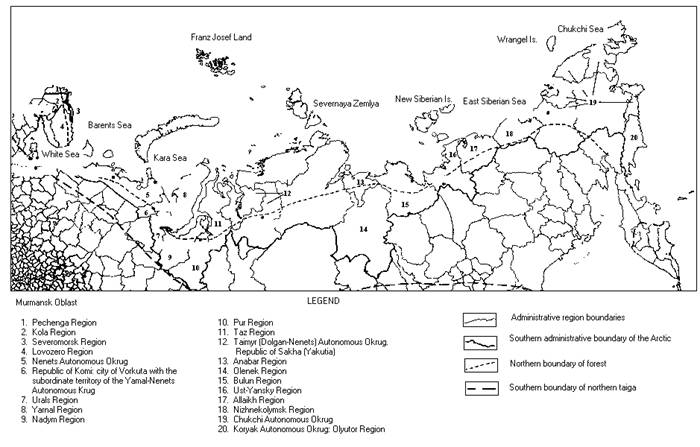
VI.2. DOCUMENT 2: REGIONS OF THE RUSSIAN ARCTIC (MAP) (2 PAGES)
VI.3 PROTOCOL ON THE DISTRIBUTION OF DUTIES BETWEEN MINECONORAZVITIYA OF RUSSIA AND ACOPS IN THE IMPLEMENTATION OF THE UNEP/GEF PROJECT “SUPPORT OF NPA-ARCTIC OF RUSSIAN FEDERATION” (2 PAGES)
VII.1 LETTER OF COMMITMENT OF FINANCIAL RESOURCES FROM THE GOVERNMENT OF THE RUSSIAN FEDERATION, FROM MR. BORIS A. MORGUNOV, DEPUTY HEAD OF THE DEPARTMENT ON AFFAIRS OF THE NORTH OF THE MINISTRY OF ECONOMIC DEVELOPMENT AND TRADE (1 PAGE)
VII.2 ENGLISH TRANSLATION OF THE LETTER OF COMMITMENT DEPICTED IN ANNEX VII.1
ANNEX I
INCREMENTAL COSTS AND BENEFITS TO THE PROJECT:
RUSSIAN FEDERATION - SUPPORT TO THE NATIONAL PROGRAMME OF ACTION FOR THE PROTECTION OF THE ARCTIC MARINE ENVIRONMENT
BACKGROUND
The GEF Incremental Cost analysis requires consideration of the baseline and incremental costs associated with achieving domestic and global environmental benefits respectively (Table 2). In the case of this project, benefits accrue at national (domestic), regional and global levels. This is because the transboundary effects of activities within the recipient country, the Russian Federation, occur on scales that affect both the territories of other arctic states and the global commons by virtue of the unique nature of the Arctic and the role the Arctic plays in ocean circulation, climate and biological diversity at a global level.
BASELINE ACTIONS
The Russian Federation has adopted a number of ‘Federal Target Oriented Programmes’ (FTOP). One of these initiatives is entitled ‘World Ocean’. The Russian Federation, represented by the Ministry of Economic Development and Trade, has defined responsibilities for environmental management in the Russian north and is charged with the implementation of the Russian ‘World Ocean’ FTOP. The FTOP “World Ocean” and its subprogramme “Use and development of the Arctic” constitute the basic instruments within Russia for determining federal policy directions regarding the use and protection of the arctic marine environment. These initiatives include a National Plan of Action for the “Protection of the Arctic Marine Environment from Anthropogenic Pollution in the Russian Federation (NPA-Arctic)” (see Annex VI-1). Collectively they represent a policy commitment that extends well beyond the life of the proposed GEF project and provide some assurance of sustainability. It includes a series of actions to address the issues of degradation and threats to the arctic marine environment.
This catalogue of actions does not, however, constitute the equivalent of a ‘Strategic Action Programme’ in GEF parlance because the actions are not accompanied by costs, targets and a timetable. The scale of actual intervention likely to be carried out by the Russian Federation to correct existing environmental compromises in the Arctic and to forestall threats is not wholly clear. They have, however, been estimated on the basis of the discussions that have taken place within the execution of the PDF-B and the intent exemplified by the NPA-Arctic. There are clear pressures to resolve current radioactive waste management issues because of the potential severity of the consequences to all arctic states of accidents in this sector. The Russian Federation is receiving considerable support for such latter interventions directly from the other arctic countries. This support constitutes associated direct financing but is not included in the representation of baseline costs attributed to Russian Federation activities. Similarly, there are pressures to resolve some existing cases of damage and threat associated with military activities and mining and smelting operations in northwestern Russia that affect the Nordic countries. Existing support for such interventions are not as great as those in the radioactive waste management sector whereas they are included as some of the priority issues to be addressed in the pre-investment studies within this project.
Thus, the principal baseline activities and costs are those associated with the implementation of the FTOP ‘World Ocean’ as it applies to the Arctic. The costs of such activities, estimated over a 5-year period, are those included as baseline project costs of $10.321M attributed to the Russian Federation in the project brief (Table 3). These have been incorporated as baseline activities in this proposal. They comprise primarily legislative and regulatory enhancements and capacity building to enable the provision of far more and reliable information regarding discharges to the environment and the state of the marine environment within Russian jurisdiction. They also include the estimated costs over a 5-year period of Russian national action to correct environmental degradation that directly and adversely affects the health of the population and that hinders the further development of arctic resources where these are beneficial to the balance of payments situation.
NATIONAL (DOMESTIC) BENEFITS
The national benefits from this project fall into four categories: improvement of the national capacity to manage and control national land-based activities in a manner that more effectively limits adverse environmental impacts and forestall threats to the national environment; the restoration of the environment for enhancement of resource sustainability and public health; reduced dependence of indigenous peoples on state support; and increased economic prosperity associated with the enhanced use of the arctic, particularly accelerated mineral resource development, without large-scale environmental damage and costs. Benefits to the Russian Federation will accrue in all of these areas as a result of the proposed GEF project. The benefits of improvement in human health of arctic inhabitants have been modestly estimated to be 60 Million Roubles ($2 Million US). The longer-term benefits achieved through the interventions designed through pre-investment studies are likely to be considerably greater but these cannot be estimated precisely until the specific investment projects are decided. The benefits of improved resource sustainability as a result of improved management and the demonstration project involving indigenous peoples are estimated to be 100 Million Roubles ($3.4 Million US). The enhanced prosperity among Russian arctic inhabitants and the reduction in demands for state financing over the longer term is anticipated to be 120 Million Roubles ($4.1 Million US). In all cases these are relatively crude and imprecise estimates. Nevertheless, they are conservative and closely correspond to the aggregate costs of obtaining domestic benefits in the project components shown in Table 2.
The estimates of benefit in each of the components of the project can only be stated with relatively low precision but have been calculated on the basis of the lowest national benefits that might accrue from the project activities. This calculation omits the benefits that might accrue in the broader application of approaches (to pre-investment studies and demonstration projects) developed through the GEF project to other areas of the Russian Federation (i.e., indirect benefits) although it might be wholly reasonable to expect the Russian Government to take full advantage of the opportunities for such wider application. It also discounts the long-term benefits associated with the application of demonstrations included within the project. In the case of both the decommissioned military bases and indigenous peoples environmental management demonstrations there would be expected to be subsequent benefits from the wider application of the mechanisms developed. As the costs of further national application of the methodologies proven through the demonstrations would be borne by the Russian Federation, this appears to be a reasonable approach.
INCREMENTAL ACTIONS
The incremental actions included in the project are substantial and represent, overall, some 65% of the overall activities with essentially half of these incremental actions funded by co-financing agencies. The extent of incremental activities varies considerably among the project components with the pre-investment studies component, demonstration projects and project coordination and management having the highest incremental/baseline ratios. Nevertheless, each of the main project components has an incremental element that varies according to the extent of supranational interest and potential transboundary benefit.
Development of a Strategic Action Programme
The Strategic Action Programme development component is augmented significantly to increase the extent to which adverse effects of land-based activities that occur beyond the territory of the Russian Federation are taken into account. This augmentation provides an essential counterbalance to the otherwise dominant national considerations that would go into the development of a NAP. Indeed, without the GEF project, it is unlikely that a comprehensive, costed and targeted SAP for addressing the effects of land-based activities would be formulated. Not only will GEF intervention result in such a SAP but also it will be one that fully incorporates the international aspirations reflected in the GPA and the Arctic Council plan of action for the elimination of pollution in the Arctic.
Pre-Investment Studies
The pre-investment studies component is assigned the highest proportion of incremental costs because these offer the greatest potential benefits to international waters and neither the types nor number of such studies could have been conducted without external support. From the perspective of the use of national resources, it is likely that only one or two major sources or areas of severe environmental damage would be addressed by the Russian Federation over the 5-year life of this project. Furthermore, as has already been indicated, they would be those having the greatest adverse health effects on the Russian population or those presenting barriers to the rapid exploitation of natural resources. The baseline costs reflect this level of activity for which there would be purely incidental benefits to international waters.
The PDF-B phase has provided abundant evidence of severe compromises to the environment of both Russian and international waters areas resulting from land-based activities within the Russian Federation. The initial list of compromised environments identified in the PDF-B comprises 147 sites. These include marine areas partly within Russian jurisdiction and partly international waters areas. There is an urgent need to determine the most effective and optimum interventions to resolve some of the priority sources and environmental hot spots, characterized and prioritized during the PDF-B phase, through pre-investment studies. GEF funding of this project will allow this to be done in a holistic manner that balances the benefits to national and international waters environments. Opportunities for subsequent external funding under bilateral and multilateral arrangements to undertake these priority interventions exists largely because of the very successful Arctic Environmental Protection Strategy adopted originally under the Rovaniemi Agreement and later subsumed under the Arctic Council. Clearly, the degree to which such funding for large-scale interventions can be secured will depend on the unambiguous prediction of the benefits to the Arctic and global environments. This provides a valuable incentive to give high priority to interventions resulting in reductions in transboundary damage and threats. Without this project, it is unlikely that the most expedient and effective interventions yielding the greatest transboundary benefits could be specified.
The assignment of incremental funding to Environmental Protection System Improvements is the least of all the project components but serves to ensure that external considerations and criteria (i.e., applying beyond the territory of the Russian Federation) are fully taken into account in the development of revised legislation and administrative arrangements. The highest proportion of incremental costs in this component is assigned to capacity building in the institutional and technical area. This is to guarantee that the Russian Federation has the capacity to assess and ensure adherence to the new legislation and associated regulations and standards but above all, to ensure compliance.
Demonstration Projects
The demonstration project component also has substantial incremental cost assignments. However, if there exists the potential for replicability beyond the Russian Federation, these projects could be argued to be entirely incremental. This has not been done because there is a greater likelihood of replicability within the Russian Federation rather than within the other arctic states or elsewhere. Nevertheless, each of the three categories of demonstration projects offers distinct potential benefits to reducing transboundary damage and threats emanating from activities in the Russian Federation.
The greatly increased scale of activities in this project beyond what could be realistically attained under baseline conditions results in considerable assignment of incremental costs to project coordination and management. This, in turn, permits wider involvement and improved oversight to what would otherwise be Russian national activities. The costs of regional coordination and consultation associated with ensuring that transboundary concerns are wholly reflected in the direction and management of project activities are included as incremental costs. This is justified on the basis that transboundary consequences of Russian activities would not otherwise form part of Russian national obligations. Similarly, consultations and coordination within the context of the Arctic Council and directly with the Nordic countries regarding project activities have been included as incremental costs. Finally, the costs associated with multilateral consultations on the implementation of the GPA and the costs of associated bilateral and multilateral coordination have also been included as incremental.
INCREMENTAL BENEFITS
Assessing the global benefits of a GEF project requires an appreciation of the relative environmental importance, in global terms, of the region or area covered by the project together with knowledge of the extent to which the project reduces environmental damage or threat. The overall reduction in environmental degradation or threat represents the aggregate environmental benefit of the project at all scales. Partitioning the benefits at global, regional and national scales poses some difficulties because benefits cannot always be expressed in monetary terms on a universally acceptable basis and the scientific understanding necessary to translate reductions in stress in the Arctic into improvements in conditions beyond the region is incomplete. Moreover, the assessment of social and economic impacts in an area as socially and politically diverse and so recently developed as the Arctic is fraught with complexity. In the context of international waters, however, interventions addressing transboundary environmental issues and concerns are considered to be wholly incremental.
Many of the kinds and severity of environmental compromises engendered in the Arctic as a result of land-based activities in the Russian Federation have come to light in the conduct of the PDF-B phase of this project. Furthermore, the threats posed by accelerated non-renewable resource development, especially in offshore areas, brought on by the transition to a market economy have been clarified to the degree that makes the revision of the policy, legislative, administrative and compliance frameworks so necessary and urgent. Suitable revision of the framework for industrial development in the Russian Arctic would allow the immense economic benefits associated with mineral recoveries, such as oil and gas from the Russian offshore, to be realized without concomitant environmental degradation and losses of far greater magnitude. This appears not yet to be fully appreciated within the Russian Federation but is widely understood by the other arctic states.
In the following two subsections the nature and magnitudes of benefits that accrue is presented. As will be seen a distinction is drawn between benefits to the international waters of the arctic region and those beyond.
Global Benefits
The important role played by the Arctic in world ocean circulation, global biodiversity and planetary climate control is unquestionable. It is in the Arctic and Antarctic that any major change in conditions, such as modified albedo resulting from particulate contamination of ice and snow surfaces, will result in direct effects on global climate. The microclimate of the Russian Arctic has already been modified as a result of industrial activities and there are consequent adverse effects on vegetation, including forest stands, over mesoscales.
The global significance of the biodiversity of the Arctic should be also immediately obvious. Here the role of the two poles, South and North, is of major but quite differing importance. Many species inhabiting the Arctic are not found elsewhere on the planet. In addition, the Arctic is the seasonal home of many migrating species of marine mammals and birds that are important to the global community and its biodiversity. Damage or threats to such species will have a direct and adverse effect on global biodiversity. Distinguishing among species of direct significance to the Russian Federation from those of importance to the other arctic states and the world is neither possible nor necessary simply because all such arctic species play a role in global biodiversity. Thus, it can be argued that any measures to protect biodiversity in any of the arctic states or within arctic international waters provide global benefits.
Similarly, the global significance of the arctic marine environment from a physical oceanographic standpoint is also indisputable. However, it is more difficult to assess its significance in a marine biogeochemical context that includes considerations of chemical exposures to organisms and associated adverse effects. Nevertheless, this is the primary context relevant to the types of interventions included in the proposed project. Any changes in arctic surface albedo will alter the balance of thermal energy exchange between the atmosphere and the Arctic Ocean thereby having direct effects on the euphotic zone of arctic surface waters and the physical oceanographic characteristics of the region. Accordingly, any measures to reduce emissions of particulate matter to the atmosphere from industrial sources and earthworks will have benefits in moving towards the restoration of Arctic Ocean albedo to that prevailing under pre-industrial conditions. The other benefit of the environmental protection initiatives in this proposal likely to be manifest beyond the Arctic would be reductions in the extent of chemical contaminants derived from Russian activities entering the deep waters of the Atlantic Ocean and thus the oceanic ‘Tour de Force’. If contamination could be equated to damage, and therefore reductions in contaminant emissions could be equated directly to benefits, this would be a simple calculation. Unfortunately, this is not the case and the scientific understanding required to undertake a calculation of benefits in terms of the reduction in adverse effects achievable within the project is, as yet, inadequate.
Thus, while there will be unambiguous qualitative benefits to international waters beyond the Arctic resulting from this GEF project, they cannot be quantified with sufficient confidence to provide a component of incremental benefit estimates. It follows that the most appropriate manner of conservatively estimating such benefits is to concentrate upon benefits that accrue in the international waters of the Arctic.
Arctic Regional Benefits
The primary transboundary damage and threats arising from land-based activities in the Russian Federation is to the Arctic marine environment. Furthermore, aside from the introduction and effects of contaminants derived from temperate and equatorial latitudes through meridional atmospheric transport, the predominant adverse effects on the marine environment stem primarily from Russian land-based activities. The international nature of the Arctic marine environment itself is reflected in the 62% of the polar sector that resides within the territories of other states compared with the 38% for the Russian Federation.
In an arctic international waters context, first consideration can be given to fisheries resources. The primary commercial fishery is that of Arctic cod in the Barents Sea that is exploited primarily by Norway and Russia. These fisheries do not seem to be under substantial threat from land-based activities in Russia or elsewhere other than the threat of adverse public perceptions regarding radioactive contamination of fisheries products that might result in reduced market demand for such products. There are, however, other nationally important fisheries in the Kara Sea. There are also living resource harvests conducted by indigenous peoples that include fish (both marine and freshwater) and mammals. As long as these fisheries are exploited in a sustainable and conservative manner, they will have negligible impact on the livelihoods of future generations of native peoples or on the environment and its resources. However, the encroaching degradation caused by industrial activities in Russia is altering the availability of these long-standing resource stocks that are important to both indigenous communities and other Russian arctic inhabitants. This is the kind of ‘threat’ that this project addresses in addition to the causes of existing damage. Thus, while the benefits to international waters in terms of fisheries are likely to be minor in the short term, any reduction in chemically-induced stress on marine ecosystems is likely to have a positive effect on fisheries yield over the longer term. Unfortunately the science of exposure-response relationships for chemical contaminants within ecosystems is not yet at a state that permits quantification of such benefits.
There are potential recreational and tourism opportunities in the Russian Arctic. This is a topic that is amenable to evaluation because of the documented growth in both so-called ‘eco-tourism’ in tropical and temperate latitudes and the interest in the Arctic itself as evidenced by the increased cruise ship activities in Alaska and the Arctic Ocean. In 1999, the number of tourists visiting the Arctic was over 900,000 distributed among the circumpolar countries (Global Environmental Outlook 2000). Only a few thousand of these visits occurred within the Russian Federation. Thus, the claim seems entirely justified but could not be capitalized upon without the conducive port infrastructure required for servicing both ships and tourists in northern Russia. Any move to encourage arctic tourism would require a major sea-change in environmental awareness and the coastal area cleanliness within the country. This project does offer the opportunity of examining the barriers to both such enterprises within the pre-investment studies component should these be shown at the economic and social level to constitute priority issues. This project is also intended to provide the initial stimulus for this to occur showing how economic and social gain can be achieved from sound environmental stewardship.
The predominant adverse effects on the Arctic are caused by contaminants from human activities as concluded in the AMAP assessment of 1997 and by the results of the PDF-B phase of this project. The contaminants of greatest concern to the arctic countries are organochlorines, mercury and cadmium. Of these, long distance atmospheric transport is most important for organochlorines and mercury. Therefore in the cases of these contaminants, emissions from the Russian Federation, while major, probably represent a minor fraction of the total burden. This is not the case for cadmium, whose atmospheric transport is on scale lengths of the order of 100 km. The Russian Federation is undoubtedly the major anthropogenic source of this element for the arctic marine environment and there are clear indications of associated damage to marine organisms as reflected in the conclusions of the AMAP assessment. Similarly, the influx of hydrocarbon residues is probably also greatest for the Russian Federation simply because of the magnitude of its northern population and the intensity of associated industrial activities in the north of Russia. This is also the case for pulp and paper effluents containing a wide variety of organic and inorganic chemicals although in this case transport of these constituents does not occur normally over large distance scales.
In contrast, the other heavy metallic contaminants, copper, zinc, nickel, tin and manganese, which are primarily derived from Russian sources, influence the condition of the arctic marine environment over large spatial scales. This is made abundantly clear by the analysis of sources and environmental hot spots conducted during the PDF-B phase of this project. If contamination, per se, was a reflection of damage to the condition of the arctic marine environment, there is little question that Russian emissions into the atmosphere and discharges to runoff (rivers, lakes, etc) would be the major source of damage. While this is not a scientifically viable perspective, it is clear that such substances do have adverse effects in the marine environment remote from local discharges or major river runoff. Unfortunately, these effects are subtle and not yet amenable to reliable scientific assessment in a manner that would provide quantitative estimates of the benefits of measures to reduce their emissions incorporated into the project.
Reference has already been made to the effects of particulate contaminants on arctic albedo. There are far more direct and immediate effects evident of particulate emissions on human health and natural vegetation as evidenced by the results of the PDF-B. Furthermore, losses of forest vegetation are having adverse effects on the micro- and meso-scale climate in the Russian Arctic. Reductions in such industrial emissions in northern Russia will allow the original natural vegetation to recolonize with direct beneficial effects on Russian territory and probably similar, if less easily measurable, effects on the climates of Russia’s immediate neighbours to the west in the direction of prevailing airflow (Finland, Sweden and Norway).
Other damage to the arctic marine environment associated with anthropogenic activities within the Russian Federation results from litter and physical disruption in coastal areas and changes in sediment discharges from rivers caused largely by forestry. There is pressure for increased production of paper and timber products and this could lead not only to further land erosion and coastal siltation but serious depletion of boreal forest that is so slow to regenerate in the harsh arctic climate. Siltation effects would occur predominantly in waters within national jurisdiction but the effects of meso-scale climatic changes induced by such activities may well extend beyond into international waters areas.
It is an inescapable conclusion of this discourse that considering the magnitude of incremental environmental benefits associated with interventions within the Russian Federation is fraught with difficulty not least because of scientific limitations. If we consider the current policy perspective adopted within some international and regional agreements such as the OSPAR Convention (pertaining to the protection of the marine environment of western Europe), that the levels of naturally-occurring substances should be as close to those prevailing historically and that the levels of wholly artificial substances should be as close to zero as possible, we can estimate the extent to which interventions in Russia result in approaches to this objective. However, these benefits cannot be costed simply because there exists, as yet, no basis for the conversion of such improvements into monetary values.
Accordingly, purely in an arctic region context, any restorative or preventative measures adopted by the Russian Federation that address adverse transboundary effects should be implicitly beneficial to the other arctic states to the extent of the ratio of their proportions of the polar arc. As noted earlier, 38% of the polar sector is occupied by the Russian Federation. Thus, in principle any actions in Russia benefiting the Arctic Ocean should be incremental in a ratio of 62/38 or a factor of 2.6 applied to funding from Russian sources. The incremental costs of the project are well below this factor at 2.03 and, in GEF incremental cost terms, much lower again at a factor of 1.03.
LOGICAL FRAMEWORK MATRIX
Project Planning Matrix | |||
Summary |
Objectively Verifiable Indicators |
Means of Verification |
Critical Assumptions and Risks |
|
Overall Goal |
|||
|
Protect the Arctic marine environment from land-based activities in the Russian Federation. |
Specific process, stress reduction, and environmental status indicators and their means of verification will be developed within the context of the SAP. |
The risk is that political support for the sustainable development of the Arctic falters in the face of the appeal of short-term economic benefits. This risk is alleviated by the policy framework provided by the FTOP ‘World Ocean’ and by the existence of the Arctic Council as a forum to ensure long-term circumpolar support for the proposed activities. | |
|
Objectives |
|||
|
Improved management of the Arctic environment in the Russian Federation and clear appreciation of priorities. |
Adoption of the Strategic Action Plan (SAP) for the Protection of the Arctic Marine Environment from Land-based Activities by the Government of the Russian Federation. |
Adoption of the SAP for the Arctic as a component of the FTOP ‘World Ocean’ by the Russian Federation. |
The assumption is that all relevant Ministries and Agencies in Government will adopt the SAP for the Russian Arctic. This seems likely as it stems from the NPA Arctic, itself adopted formally by all relevant Ministries as part of the FTOP ‘World Ocean’ initiative. |
|
Environmentally sustainable development of natural resources in the Russian Arctic. |
The reformed regulatory framework is implemented by local, provincial, federal administrations. |
Report in National Gazette and other official media of application decrees and circulars. |
The risk is that legislation is not implemented. This risk is considered low due to the strong political commitment in the Russian Federation. |
|
Improved regional co-ordination of the management of the Arctic; and Russia meeting its obligations under the AEPS and the GPA. |
Contributions by the Russian Federation to the Arctic Environment Protection Strategy of the Arctic Council. Acknowledgement by the Arctic Council of the SAP as a component of the Regional Programme of Action for the Arctic. |
Reports of Arctic Council meetings. |
The risk is that future Arctic Council policy directions may differ from current thinking. This is unlikely because of the consistency of past track record among Arctic states. While there is a risk due to changing priorities in the Arctic Council and the GPA, this is unlikely to undermine the acceptance of a well-considered and comprehensive SAP. |
|
Outcomes |
|||
|
Finalisation and endorsement of the SAP for the Russian Arctic. |
Review* and publication* of the SAP for the Arctic. |
Steering Committee meeting report. |
While delays may occur with ministerial review, endorsement is likely due to inter-departmental involvement and commitment |
|
Improved legislation, administrative procedures and institutional capacity for the environmental protection of the Arctic environment. |
Adoption of revised legislation and new administrative arrangements, including assignments of responsibility and capacity requirements, by the relevant federal Ministries the Government of the Russian Federation and provincial governments. |
Publication in National Gazette and other official media. |
The risk is of lack of agreement among departments and provincial authorities. The inter-ministry committees that include representatives of provincial governments will play a key role in reducing this risk |
|
Conditions for further interventions and investments to remediate or prevent the degradation of the Arctic Environment are realised. |
Investments are prepared based on the preinvestment studies. Demonstration projects are replicated elsewhere in Russia. |
Project documents and business plans. |
The risk is that financing is not readily available. This is mediated by the interest showed by circumpolar countries through the Arctic Council in preserving the quality of the Arctic environment, the involvement of the private sector in the project since the PDF-B phase and the commitment shown by the Russian Government though its cash contribution to the project. |
Results |
|||
|
Identification of the highest priority damage and sources of damage to the environment of the Russian Arctic and acceptance by the Russian Government of the priority list of interventions proposed for investment by Russian sources and/or other countries. |
Review* and publication* of the analysis including specification of priorities for interventions in the Russian Arctic. |
Official media and Steering Committee meeting reports |
The risk is of lack of agreement among federal departments and provincial governments. The inter-ministry committees will play a key role in reducing this risk. |
|
10 pre-investment studies are submitted to potential financiers, including bilaterals and the private sector, and/or to a Partnership Conference. |
Pre-investment studies are submitted to and discussed at the Partnership Conference. |
Report of the Partnership Conference. |
The assumption is that the pre-investment studies will be completed to the highest international standards. Consulting specialists in pre-investment studies in Europe ensure this. |
|
Results of 3 demonstration projects, including specifications for replicability elsewhere disseminated widely within Russia. |
Number of reports printed and distributed. Number of agencies, provincial administration, community leaders etc that have been sent the reports. |
Progress report to UNEP/GEF from co-executing agencies. |
Every effort will be made to ensure beneficial replicability in Russia and/or other areas of the Arctic taking full account of any other potential barriers to their replication. |
|
Revised national water-quality objectives and effluent and emission standards fully consistent with relevant international guidelines and agreements. |
Adoption of revised environmental quality and standards, effluents and emission standards by the Government of the Russian Federation and other relevant administrations. |
National Gazette and other official media. |
Risk of lack of agreement among federal departments and provincial governments. Mitigated by having all relevant departments and ministries involved in the development of legislation, administrative procedures and consistent quality standards. |
|
Improved compliance assessment procedures. |
Adoption of new compliance assessment procedures fully supported by technical capability by the Government of the Russian Federation and other stakeholders. |
National Gazette and other official media. |
Time will have to be allowed for the introduction of new compliance assessment procedures and techniques. Appropriate time allowance has been made in the work plan. |
|
Demonstration that increased involvement of Indigenous Peoples in Governance can increase the level of protection the Arctic Environment whilst increasing their quality of life. |
Acceptance by the Russian Association of Indigenous Peoples Of the North (RAIPON) of the plans for and the analysis of replicability of the demonstration project. |
Publication of the results of the indigenous people management of the environment demonstration project. |
Limited buy-in by communities of indigenous people. This is mitigated by the participation of representatives of RAIPON in the Project Steering Committee and relevant components of the GEF Project. |
Components/Activities |
|||
|
Establishment of National SAP Working Group and preparation of a comprehensive SAP for the Russian Arctic. |
Review of draft SAP by major stakeholders; independent Russian reviewers; international reviewers, and submission to the Project Steering Committee. |
Quarterly report to UNEP/GEF from Co-Executing Agencies on progress on project execution and Steering Committee meeting report. |
Ministries and other agencies might be slow to respond and reviews might not be completed to the planned schedule. Based on experience gained during the PDF-B phase, the timetable has been adjusted to make adequate time allowance. |
|
Preparation of revised legislation, administrative procedures including compliance assessment, and guidelines and standards. |
Review* and publication* of draft proposals for the revision of legislation, administrative procedures and environmental guidelines and standards by stakeholders and independent reviewers and submission to the Project Steering Committee. |
As above |
As above |
|
Conduct of 10 pre-investment studies. |
Review* and publication* of investment proposals and submission to the Project Steering Committee according to workplan and timetable. |
As above |
As above |
|
Development of criteria for selection of pre-investment studies. |
Review* and publication* of criteria for pre-investment studies and submission to the Project Steering Committee according to workplan and timetable. |
As above |
As above |
|
Conduct of indigenous peoples environmental and resource management demonstration. (Establishment of task team; documentation of plans; report of the demonstration including replicability assessment.) |
Submission of the design and endorsement of management plans for selected sites to the Co-Executing Agencies and subsequent endorsement by the Project Steering Committee according to workplan and timetable. |
As above |
The only risk foreseen is a lack of agreement among federal departments and provincial authorities on the choice of demonstration sites. Mitigated by the existence of inter-ministry committees that include representatives of provincial governments. |
|
Conduct of algal cleanup demonstration. (Establishment of task team; documentation of plans; report of the demonstration including replicability assessment.) |
As above |
As above |
As above |
|
Conduct of 2 military base transfer demonstration. (Establishment of task team; documentation of plans; report of the demonstration including replicability assessment.) |
As above |
As above |
As above |
* The terms “review” and “publication” in this matrix refer to project documents distributed to major stakeholders and submitted for endorsement by the Project Steering Committee.
ANNEX III
STAP EXPERT ROSTER REVIEW
by
John S. Gray
16 August 2001
Key Issues
1. Scientific and technical soundness of the project
The primary aims of this project are to develop a Strategic Action Programme to address damage and threats to the arctic marine environment from land-based activities in the Russian Federation; to improve environmental protection by means of changes to legislative, regulatory procedures and institutional and technical capacity; complete 10 pre-investment studies aimed at cost-effective interventions to reduce trans-boundary impacts of pollutants; and to complete three demonstration projects on reducing heavy metal contamination by means of algae, methods of decommissioning of military bases and enhanced environmental and resource management by indigenous peoples. The background scientific material outlined in the proposal are the AMAP reports of 1997 and 1998 and a follow-up PDF-B project executed in 2000 which had the aim of identification and prioritization of hot-spots.
The PDF-B document gives the scientific basis for the priorities given and is a most comprehensive and informative document. In total 147 hot spots were identified on the basis of a number of criteria and especially the size nature and scale of adverse effects. From this list a procedure was adopted to prioritise among hot spots based on the severity of environmental impacts. The chemicals studied included heavy metals and other forms of inorganic pollutants but I was pleased to see that there were also data on a wide range of organic chemicals and in particular persistent organic pollutants (POPs) which are of great concern. Fig 3.1 in the PDF-B report shows the locations of the Hot Spots of marine impact and as expected most are concentrated towards the western borders adjacent to the Barents and Kara Seas. (My knowledge of Russian geography is not good but on Fig 2.1 the regions of the Russian Arctic I could not see a name given to a large region between Taimyr and Anabar yet this must have been taken into account as Hot Spot 143 is within this area).
What is impressive about the approach is that it has taken into account sources of pollutants in both the river-catchment areas and direct discharges to the ocean, which includes atmospheric inputs. Whilst the indices used for atmospheric and water pollution are simple they are in general use internationally. Then follows criteria for evaluating specific industries and for ecosystem changes, based mainly on plant and forest criteria and finally marine hot spot identification, which considers hydrodynamics, contamination, navigation and drilling and dumping activities. Fig 3.6 summarises the hot spots and their likely impacts on the marine environment in general. It shows that the primary impacts are likely to be within the EEZ of the Russian Federation but that long distance transport across the Arctic Ocean and ultimately into the oceanic deep water circulation is possible. The Annexes provide the detailed data that have been used to provide the basis of the assessment. I find that the approach taken to be both a comprehensive and an objective analysis and uses criteria that have been accepted internationally. Furthermore, there has been some international peer-review of the document in that one of the co-authors and editor is a respected marine chemist of wide experience Dr Mike Bewers.
One of the key features of the Arctic region within the Russian Federation is the diversity of the indigenous peoples in the area. There are eleven indigenous minority peoples and no other country has such a diversity. Yet it has been well documented that these peoples are at risk from declines in traditional activities and values and are at extreme risk from environmental change caused by exploitation of Arctic resources and to their health from sources of pollution. Thus it is right that a major focus of the project is based on indigenous peoples.
I was particularly interested to read the honesty of the statements concerning the legislative framework (Annex VI-l p 3) and the funding situation. It is acknowledged that the present legislative framework is weak and not very relevant to the Arctic region. Furthermore, the closure of key hydrometeorological stations means that data collection is also compromised and that there is a lack of investment in environmental protection. This is a refreshingly honest statement of reality and all of these are major factors affecting the implementation of the project.
The project itself is focused on four main objectives 1) formulation of a Strategic Action programme, 2) Legislative, Administrative and Institutional Capacity Improvements, 3) Pre-investment studies and 4 Demonstration interventions. Whilst these in themselves are not scientific the success of the whole project relies on a focused strategy, which will lead to changed legislation and identification of where and how investment should occur and finally demonstration in a series of limited projects how to proceed. I believe firmly that this is the right approach. A strategic programme is needed to direct and focus the project. It is abundantly clear that the legislative framework in the Federation needs to be revised and updated and appropriate institutional capacity enhanced to implement the strategic plan.
The demonstration projects cover firstly, a focus on indigenous peoples with the aim of improving governance, human health and integrating needs of indigenous peoples with resources development needs nationally. I value this very highly as with the diversity of indigenous peoples and their acknowledged poor state of health there are pressing needs for improvements and those suggested are sound.
The second demonstration project on using the alga Fucus to remove heavy metal contamination is an innovative, but I have to say rather speculative project. Algae are known to take up metals readily, but I am unsure on how the contaminated algae will be used in industrial applications. I note that the technology has been developed in the Russian Federation but the science and results are not in the general literature and I am unfamiliar with the results. I regard this as an interesting long-shot with a better than 50% chance of success.
The third demonstration project is that of restitution of decommissioned military bases. I know that NATO is strongly supportive of this programme and that there is keen international interest to participate particularly in order to decontaminate areas contaminated with radioactivity. Due to the perceived severity of the problem this is rightly seen as a key demonstration project, a view that I support strongly.
ANNEX II shows the logical framework matrix with the goals, objectives and outcomes and their verifiable indicators listed. This is a sound and balanced approach that clearly spells out the assumptions and risks. Again I am impressed with the objectivity of the document and the acknowledged difficulties of working with the Russian Federation’s economic and political/legislative system.
In summary I find that the project is scientifically and technologically well-conceived and designed with use of a variety of expertise in the preparation of the document. The document itself is extremely well-written and presented.
2. Identification of the global environmental benefits and/or drawbacks of the project
The GEF priority areas within the International Waters programme include: (1) degradation of transboundary water quality, primarily due to pollution from land-based activities; (2) physical habitat degradation of coastal and near-shore marine areas, lakes and watercourses (wetlands, mangroves, coral reefs, estuaries) due to inappropriate management; (3) introduction of non-indigenous species that disrupt aquatic ecosystems and cause negative impacts on human health; and (4) excessive exploitation of living and non-living marine resources due to inadequate management and control measures. The proposed National Programme of Action will address items 1, 2, and 4 and is thus clearly integrated in the International Waters programme of GEF.
Within the International Waters Operational Programmes there are 3 priorities: 1. Waterbody-based projects that focus mainly on seriously threatened waterbodies and the most imminent transboundary threats to their ecosystems, with priority placed on changing sectoral policies and activities which lie at the root of the most serious transboundary concerns. 2. Integrated Land and Water/Multiple Focal Area projects focus on integrated management approaches to the sustainable use of land and water resources on an area-wide basis. 3. Cross-cutting issues of Land Degradation and the Arid and Semi-Arid Ecosystems Biodiversity Operational Programme. Again there can be no doubt that this proposed programme addresses all 3 of these issues. The project has identified on sound scientific grounds the hot-spots of high contamination that lead to transboundary threats, deals in an integrated way with land and water as it focuses on land-based sources of pollution and addresses arid and semi-arid ecosystems in the Arctic tundra.
At the global level the Russian Federation covers over 35% of the land area adjacent to the Arctic. Yet the contribution of contaminant loading from the Federation to pollution of the global Arctic region is far greater as there are few industries developed on the Arctic rim except for oil exploration in Alaska and the Barents Sea off Norway. Thus any remediation in the area covered by the Russian Federation will make a significant global contribution.
The proposal, in section 11, documents carefully the possible wider range impacts of transboundary discharges from land-based sources of pollution from the Russian Federation. It is clear that discharges to the Arctic are spread rapidly around the basin. Furthermore, since the major deep-water circulation of the Atlantic Ocean is based on production of water derived from the Arctic there is a global component to discharges from the Russian Federation to the sea. Given the important role played by the Arctic in the global climate it is clear that improvements within the Russian Federation are likely to bring global benefits.
Yet perhaps the most significant aspect is the concern expressed for indigenous peoples. If the demonstration project proposed is successful then a model will be developed that should lead to substantial benefits for human populations in the Arctic region.
There are in my opinion no major drawbacks of the proposed project as the major issues have been identified and I see no reason to believe that efforts will be misplaced.
I do however have concern in the lack of financial commitment given by the Russian Federation. The letter from deputy Head Morgunov states that “federal budgetary sources may be allocated”. This is also repeated elsewhere in the project documents. If this project is to be successful it must have committed funding, commitment to changing the legislative framework and ensuring that appropriate data are collected. I am however, encouraged by statements on p 11 that with the reorganization of the ministries there are positive signs for better protection of the Arctic. This is encompassed within the World Ocean Federal Target-Orientated Programme that has a special National Plan for the Protection of the Arctic Marine Environment from Anthropogenic Pollution in the Russian Federation. I believe that this is a most promising development.
3. Regional context
The project is clearly focused on the Arctic regions of the Russian Federation and thus has a clear regional focus. But since the Federation covers such a huge geographical range the regional nature of the project will be addressed by focusing on developing demonstration projects, which can then be evaluated and their cost-effectiveness assessed before being generally applied in the differing regions.
The benefits of reduced transboundary pollutants on living resources and indigenous human populations of the Arctic are highlighted (ANNEX I p 5). Now that the key sources are identified it should be possible to achieve substantial reductions in pollutant loads. However, whilst it will be possible to measure for example, direct reduction in PCBs in human milk the effects on the marine ecosystems are more diffuse and difficult to measure as the report rightly acknowledges.
There is one problematical aspect and that is the sheer scale of the Russian Federation’s Arctic provinces. There may be differences in ecosystems across the area that renders direct transference of a successful demonstration project problematical. Yet I have faith in the expertise and quality of the Russian scientists who prepared the PDF-B document, as it is apparent that they cover a wide range of relevant expertise.
4. Replicability of the project
As stated above the huge area covered by the Arctic regions of the Federation are such that replicability within the Federation will be an achievement in itself without the need to transfer projects to other regions of the globe. However, on the scientific and technical aspects of decommissioning of military bases there may well be aspects that can usefully be transferred to other areas.
5. Sustainability of the project
The sustainability of the project depends greatly, in my opinion, on international support. The plans are for ca 33% of the initial costs to come from GEF, ca 33% from donor nations all Arctic rim nations and the European Union with ca 33% from the Russian Federation. This implies that to be sustainable, and due to the Federation’s well-known economic situation, it is likely that continued international support will be needed. Whilst I have no means of knowing future intentions of governments I would argue that in scientific and humanitarian terms there are strong arguments for continued international support. I will make a point of lobbying within Norway for such support!
6. Contribution to implementation of GEF’s strategies
I have already alluded to how this project fits within the GEF strategies. This is a highly ambitious and demanding project. I believe that it can succeed and should it do so then it should contribute substantially to development of future GEF plans. In particular the integration of science, legislation and stakeholder decision-making are still rather unique in an international context.
Secondary issues
1. Linkages to other focal areas
I am not very familiar with other focal areas and hope that other consultants can provide this information.
2. Linkages to other programmes and action plans at regional level
The AMAP programme has been mentioned in the documentation and the regional Programme of Action of the Arctic Marine Environment from Land-based Activities is clearly central. Likewise the scientific programme of the Land Ocean Interactions in the Coastal Zone (LOICZ) project is highly relevant.
3. Other beneficial or damaging environmental effects
Development of oil and gas reserves is and will become a huge development within the Federation’s coastal areas in the Arctic Ocean. It is important that the environment is protected and managed in the best scientific way. Norway has been the leading nation within OSPAR on development of guidelines and on the monitoring of effects of industry on the marine environment. There may well be advantages in contacting the Norwegian Government with a view to the transfer of technology and expertise for the management and monitoring of the environment associated with oil and gas development.
4. Degree of involvement of stakeholders in the project
The demonstration project on involvement of stakeholders in governance and management of resources is innovative and in my opinion, one of the key and exciting parts of the programme. I would give this priority funding with the view of shortening the time for implementation and application to other regions. The need is huge among the indigenous peoples and time is not on our side. This is shown clearly in Annex I where the benefits of improved human health and resources sustainability are put at ca US 10 million p.a. and I regard this as a large underestimate!
5. Capacity-building aspects
Capacity building is listed as one of the priorities and in this context the primary aspect is that spelt out in ANNEX VI-I on monitoring an assessment. This part of the project will develop a data bank in international format based on a modern observational and inspection system. This is a sound idea and one that is urgently needed.
6. Innovativeness of the project
Whilst I judge the science to be pretty standard the innovative aspects are at the boundaries between natural and social sciences. In the project legislative and regulatory systems will be analysed to establish a rational system of natural resource use in the Arctic. Here both natural and social science is needed. Likewise, the development of investment projects is seen as a major and crucial aspect of the whole project. This too will need proper integration of natural and social sciences and will need an innovative approach to do this successfully. Whilst there are major financial incentives for keeping this an internal issue there will be great benefits from using the international scientific communities in this part of the project.
John S. GrayANNEX III.1
IMPLEMENTING AGENCY RESPONSE TO STAP/COUNCIL/IMPLEMENTING AGENCY COMMENTS
STAP Expert Review
Overall the comments of the STAP Expert Reviewer are extremely positive and supportive and require no response. In several instances comments are made about risks associated with specific activities (e.g., with respect to the use of Fucus as an agent of marine environmental remediation, the diversity of arctic ecosystems that might present barriers to the replication of successful demonstrations) but, in each case, the reviewer concludes that the risks are acceptable.
The sole critical comment of the STAP Reviewer is that dealing with the form of the financial commitment provided by the Russian Federation that states, “federal budgetary sources may be allocated”. This point has been noted and steps have been taken to obtain a stronger form of commitment from the Russian Government. Such a statement will in any event be required at the time that concrete commitments to co-financing have been secured for inclusion in the operational Project Document.
UNDP Comments
UNDP expresses support for the proposal and makes three recommendations which are addressed as follows:
UNDP’s recommendation to mention the GEF Medium-Size Biodiversity Project on the Central Taimyr entitled “Conserving Globally Significant Biodiversity of Taimyr including its Keystone Population of Wild Reindeer: a demonstration” and the Russia/CAFF/UNEP Biodiversity Project in the Russian Arctic has been followed in the revised project Brief.
UNEP acknowledges the importance of a clear definition of the participation and roles of the various Ministries and Agencies involved. The Ministry of Economic Development and Trade is the lead Executing Agency on the Russian side as it has been given the responsibility to lead and coordinate NPA Arctic activities under the Federal Target Orientated Programme World Ocean, to which this project will contribute. The other relevant Ministries and Agencies, and particularly the Ministry for Natural Resources and Roshydromet, are party to the development of the NPA Arctic, have been involved in project development, and will be involved in the execution of relevant project activities.
UNDP recommends to break down the contributions from the Russian Federation between cash and in-kind. This will be defined during the appraisal phase and described in the operational Project Document.
World Bank Comments
The questions and observations raised by the World Bank on the proposed implementation arrangements, as well as on the strength of the Russian Federation commitment to co-financing, have been addressed in the responses to UNDP and STAP respectively.
In addition, the World Bank makes specific comments and recommendations regarding the structure of the document, and the description of components and activities. These comments have been addressed and the document has been revised as follows:
Component 1, Objectives of the SAP: The Project Brief has been revised to indicate that the scope of the SAP parallels that of the NPA-Arctic. It therefore covers the effects of land-based activities on the arctic beyond those covered by components 2 and 4 which deal with already identified priorities.
Component 2, Pre-Investment Studies: During the PDF-B phase, as noted in the Project Brief, a wide variety and large number of existing environmental compromises were identified. However, the prioritisation of these issues in socio-economic terms was not possible to complete during the PDF-B phase, as stated in the proposal. The intention is to undertake Pre-Investment Studies within the current project on issues of the highest priority, taking into account socio-economic and policy levels.
Component 3, Legal, Administrative and Technical Aspects of SAP Implementation: The products from Component 3 have now been appended to the paragraph concerned in the revised Project Brief in order to better justify the proposed expenditure.
Component 4, Demonstration Projects: The comment regarding emphasis on cost effectiveness in respect to remediation of military bases has been noted and such emphasis has been introduced in the revised Project Brief. The recommendation to emphasise stakeholder identification and involvement as an important criteria in the selection of candidate demonstration sites in the early stages of project implementation is noted and will be followed. In response to questions regarding the use of Fucus for marine remediation, it is noted that the STAP Reviewer, while having reservations, believes that the risks associated with testing of this procedure are reasonable. Fucus is expected to remove any non-conservative, particle and organic matter associative contaminants from water. Indeed, this is a major use to which such algae are put in common marine environmental monitoring applications in Western Europe, for example.
ANNEX IV
ROOT CAUSE ANALYSIS FOR THE PROJECT:
RUSSIAN FEDERATION – SUPPORT TO THE PROGRAMME OF ACTION FOR THE PROTECTION OF THE ARCTIC MARINE ENVIRONMENT
BACKGROUND
Transboundary Diagnostic Analysis was used in the PDF-B phase of this project for determining the root cause of a wide range of environmental compromises within the Russian Arctic and international waters of the Arctic Ocean. The Working Groups undertaking the identification and evaluation of hot spots, in particular, used causal chain analysis as a means of categorising the hierarchy of immediate through to ultimate causes of each of the priority environmental sources of damage and damaged areas. The analysis presented here relies heavily upon the results of this work.
DIFFICULTIES EXPERIENCED IN CONDUCTING THE ANALYSIS
The most serious difficulty encountered in the course of root cause analysis was the lack of familiarity with such concepts within the Russian Federation. Following 70 years of centrally organized economic and social development, the socially-defined boundaries to the disciplines in Russia are engrained on society – scientists tend to think along scientific lines and are reluctant to transgress into domains that historically were regarded as the province of other disciplines. The hard boundaries among the scientific, social and political spheres are a real barrier to what in the west would be called “lateral thinking”. This coupled with the need to embrace a wholly foreign concept resulted in the process of causal chain analysis for the cases examined during the PDF-B becoming primarily a learning exercise.
A further complication is the limited knowledge of conditions and cause-effect relationships in the Russian Arctic. Conditions are poorly known even in the developed areas of the Arctic where substantial efforts have been made in recent years to improve understanding. Thus, even here, there exist limits to assessment and predictability, both hindcasting and forecasting. This is evident in the most comprehensive assessment of the Arctic conducted to date (AMAP 1997, 1998). Because of the limitations in information derived from Russian sources, there exists insufficient knowledge of the impacts of land-based activities within the country itself, let alone on international waters areas. The situation was further compounded by a widely-held perception that chemical contamination per se constitutes “pollution” in the sense of damage to the environment or natural resources and amenities. Nevertheless, there existed a degree of consensus and uniformity in the root cause analyses conducted for some 20-30 major impact zones and sources that provides an adequate basis for an explanation of the causal chain hierarchy for environmental damage caused by Russian land-based activities.
NATURE AND CAUSES OF ENVIRONMENTAL CHANGE IN THE ARCTIC OCEAN
The AMAP assessment provides an independent method of approaching the specification of the types and extent of damage to the arctic environment and their causes. Its conclusions provide some independent background to the work carried out under the PDF-B phase of this project. The AMAP assessment concludes:
“In comparison with most other areas of the world, the Arctic remains a clean environment. However, the following conclusions illustrate that, for some pollutants, combinations of different factors give rise to concern in certain eco-systems and for some human populations. These circumstances sometimes occur on a local scale, but in some cases may be regional or circumpolar in extent.”
The following initial (bulleted) statements, which are particularly relevant to the GEF Full Project, have been drawn from the AMAP assessment. Each is followed by the relevant findings from the PDF-B studies.
· Two-thirds of heavy metals in air in the High Arctic originate from industrial activities on the Kola Peninsula, the Norilsk industrial complex, the Urals (outside the Arctic) and the Pechora Basin.
During the PDF-B a wide variety of Russian sources of heavy metals, including Norilsk and the Pechanganikel complex, were characterized and the emissions from each source estimated on the basis of available information. A document entitled “Hot Spots of the Russian Arctic” has been prepared as a product of the PDF-B. This document includes specific information on: 10 mining and smelting sources in the Murmansk Oblast; 1 source in the Arkhangelsk Oblast; 5 in the Komi Republic; 4 in the Dolgan-Nenetz Autonomous Okrug; 4 in the Sakha Republic; and 7 in the Chukchi Autonomous Okrug. These generally confirm the high levels of metal emission from industrial sources in northern and central Russia.
· At point sources such as mine sites, heavy metals may exceed local background concentrations at distances up to 30 km from the site.
The sources and extent of dispersion and fallout of contaminants from mining activities and other industries were identified in greater detail by the detailed evaluations of the PDF-B. These are characterized in the PDF-B product “Hot Spots of the Russian Arctic”.
· Industrial activities in northwestern Russia, including the Kola Peninsula, and at Norilsk are the dominant sources of sulfur north of 60°.
Contamination with sulphur derived from Russian sources was considered in the PDF-B but this contaminant does not constitute an issue of concern in respect to effects on international waters.
· Severe local and regional problems have occurred recently, associated with the exploration, development, and transportation of oil and gas.
The nature, locations and effects of hydrocarbon exploitation in the Russian north were extensively documented in the results of the PDF-B in the document “Hot Spots of the Russian Arctic”. Particular attention was paid to the threats posed by the accelerated development of oil and natural gas deposits in the Arctic shelf seas, particularly the Pechora Sea.
· The most exposed animals to many contaminants are those high in the food webs, such as marine mammals, including polar bears, and birds of prey, but also some fish species.
This was confirmed and elaborated in the PDF-B with additional affected and threatened species identified in relation to specific contaminant sources and for damaged terrigenous and aquatic areas.
· Arctic rivers are a significant pathway for contaminant transport to the Arctic, often associated with extreme seasonal fluctuations due to freeze-up and meltwater flushing characteristics. Suspended solids carry high levels of PCB and DDT in the Ob and Yenisey river deltas, as do sediments in the Indigirka and Pechora rivers. Sedimentation processes play a critical role in depositing particles in estuaries, deltas, and Arctic coastal shelves. These riverine pathways lead to local and regional dispersal of radionuclides, some heavy metals, and oil.
Particular attention was paid to contaminant transport mechanisms in the Arctic within the PDF-B. Considerable detail regarding the inputs to, and transport of, substances by the major Russian rivers draining into the Arctic Ocean was obtained through the conduct of the PDF-B. The topic is covered in considerable detail in a PDF-B product entitled “Pollutant Transport Mechanisms and Zones of Impact”.
· Ocean waters are a major storage reservoir and transport medium for water soluble POPs. Sea ice may be important in transporting POPs and other contaminants from coastal sediments during the winter, and from deposition from the atmosphere, with subsequent redistribution during ice melt.
Russian sources of POPs from a variety of industries and the military sector were identified and characterized in the PDF-B.
· Cadmium levels are high enough in some terrestrial and marine birds and mammals to pose a threat of kidney damage.
The predominant sources of anthropogenically-derived cadmium in the Arctic are mining and smelting industries in the Russian Federation. Individual sources and the extent of dispersion of metallic contaminants were identified and characterized during the course of the PDF-B activities.
· Mercury seems to be increasing in aquatic sediments and in marine mammals. It is biomagnified but its effects appear to be suppressed by current levels of selenium.
Sources of mercury and other hazardous metals in the Russian Federation were identified and characterized during the course of the PDF-B.
· Several groups of people in the Arctic are highly exposed to environmental contaminants. Persistent contaminants, derived from long-range transport or local sources, accumulate in animals that are used as traditional foods. Thus, variation in human exposure depends on a combination of 1) varying environmental concentrations of contaminants, 2) local physical and biological pathways which make the contaminants available, and 3) the local dietary habits of the people.
Long distance transport by atmospheric and aquatic pathways of a wide variety of chemical contaminants derived from Russian sources and their effects on indigenous communities in the Arctic were documented in the results of the PDF-B.
While the AMAP assessment constituted the background to the PDF-B, the PDF-B activities were able to provide much greater detail and insight regarding specific sources and activities within the Russian Federation and to characterize the extent of environmental compromise and threat to the arctic environment in a technical and scientific context.
During the PDF-B phase of this project, a total of 147 hot spots of environmental compromise were identified. Most of these are regions damaged by specific industrial activities or regions surrounding multiple and major sources of industrial activity. There are many similarities among the causes and types of damage to both land and marine areas within Russia. Implicitly, this suggests that the cumulative effect of so many damaged land and freshwater areas is likely to be evidenced in international waters areas of the Arctic although, in most instances, there is neither the data nor the understanding to conduct comprehensive assessments in such cases. The Russian Federation contains three of the major arctic drainage basins, the Ob, Yenisei and Lena. The fourth is the Mackenzie basin in Canada. The Ob and Yenisei drainage basins extend over 2000 km south into central Russia wherein resides most of the industrial activity of this vast country. This contrasts with the Lena and the Mackenzie River basins that contain comparatively minor amounts of industrial activity. Even the shorter rivers of the Kola Peninsula assume some importance in this context as the Kola has the highest concentration of civilian and military activities in the entire arctic.
The major sources of damage to both the Russian and international Arctic environments stemming from Russian land-based activities are associated with poorly-designed industrial activities. This is one of the legacies of the Soviet era although such damage stems primarily from the rapid industrial expansion, especially in heavy industry, that occurred in Russia from the 1930s onwards. While the greatest burden on the environment is arguably caused by chemical emissions to surface waters and the atmosphere, it is clear that particulate emissions to the atmosphere are also very damaging to local environments. Major effects also stem from earthworks associated with plant construction, opencast mining and community construction and expansion. While these effects are most pronounced at a local level, there are clearly adverse effects on surface waters draining to the marine environment. Of particular relevance to direct effects on international waters is the recent and further planned exploitation of offshore oil and gas reservoirs in the Pechora Sea basin. These concerns are exacerbated by the regulatory regime in Russia, which is widely perceived as lax and ineffective, the vastly increased transport of hydrocarbons and products within the arctic basin and the major expansion in shore-based infrastructure needed to sustain this industry.
Categorization of environmental impacts on the international waters of the Arctic of greatest severity are:
· ice surface contamination by particulates affecting albedo;
· chemical contamination of coastal areas of the Arctic Ocean adversely affecting marine organisms and migratory species;
· transport of contaminants to the ocean interior through ice rafting with consequent effects on pelagic and benthic species;
· physical damage to coastal areas caused by litter and mechanical disturbance.
The latter category adverse effects are primarily manifested in areas of the Russian nearshore but the others remain of considerable to concern to all arctic states. To these long-standing effects may be added the threat of major damage associated with the burgeoning exploitation of offshore oil and gas resources in the shelf seas, especially the Pechora Sea. The concerns here relate both to physical modification of the environment and potentially severe contamination by oil residues from drilling activities, oil and condensate recovery, flaring and shipping. This relatively new activity alone justifies an urgent re-examination of the legal and regulatory framework for industrial development in the Russian north.
Although there are other types of impact on international waters such as depletion of coastal fisheries resources, the most obvious consequences are on the Russian Federation. There is little evidence of major impacts on the major commercial fisheries resources of the Barents Sea stemming from land or marine-based activities within the Russian Federation. The one potential exception to this is the possible economic damage to the fishery caused by public perception of radioactive contamination of the area and its fisheries as a consequence of Russian nuclear-powered vessel operations in the north, especially on the Kola Peninsula. Such concerns have yet to become apparent despite the loss of two nuclear-powered submarines in the area (the Komsomolets and the Kursk), the widespread dissemination of information about military activities on the Kola Peninsula and the major civilian nuclear power plant situated there.
Overall, apart from concerns about the widespread and insidious contamination of the Arctic and its higher trophic species by persistent organic compounds that has been derived from the widespread (principally northern hemispheric) use of such compounds and their subsequent atmospheric transport into polar regions, it would appear that the Arctic Ocean proper remains a fairly pristine area as was concluded in the AMAP assessment (AMAP 1997, 1998). Nevertheless, maintaining the Arctic in this state is vital if its critical role in climate formation and global biodiversity is to be maintained. Accordingly, correcting existing damage to this international waters environment and forestalling new impacts assumes the highest importance for the bordering states including the Russian Federation.
CAUSAL CHAIN ANALYSIS
During the PDF-B stage, a total of 147 hot spots of environmental damage or damaging sources of activities were identified. These are associated with a wide variety of industrial activities in Russia particularly in the mining and smelting, the petroleum and natural gas refining and transport, pulp and paper, food production, power generation and transport industries and military activities. For all these hot spots their proximity to, and effects on, the marine environment of the Arctic was characterized. This led to prioritization of these hot spots based solely on the severity of damage or risk to the arctic marine environment from technical and scientific perspectives. Unfortunately, there was neither the information nor capacity to undertake prioritization in rigorous social and economic terms. The technical prioritization resulted in the selection of 21 hot spots, in terms of sources or affected areas, warranting priority consideration for intervention. It is these hot spots that have been initially included in the proposed list of pre-investment studies. Nevertheless, a set of criteria will have to be established based on technical, social and economic criteria to revise the priority selection and to enable an analysis of options for intervention.
The causal chain analyses developed during the PDF-B show a remarkable degree of commonality despite the diverse nature of the activities giving rise to environmental damage and the large geographical spread of impact zones. The causal chain hierarchy can be summarized as follows:
1. specific industrial activities;
2. inadequate regulation of industrial activities;
3a. lack of commitment to the enforcement of legislative provisions;
3b. lack of environmental monitoring and surveillance to indicate onset of adverse effects;
4. low priority assignment to the prevention of environmental damage compared with that assigned to industrial development at policy and administrative levels; and, ultimately,
5. national demand for foreign currency earnings to support the economy.
Thus, although at the first hierarchical level in the causal chain, the nature of the industries causing damage to the arctic marine environment is diverse, the subsequent steps in the causal chain are essentially identical. An analysis of this very common causal chain would reveal the following. The Russian Federation inherited from the Soviet Union a remarkably stringent set of legal provisions for the protection of the environment. However, these stringent provisions have not been applied for two main reasons: (1) the ‘blind eye’ attitude to any impediments to industrial growth in the country; and (2) the lack of technical capacity, both in amount and quality, to enforce these requirements. Further analysis would reveal that the quality standards generated under the legislative framework take inadequate account of the effects of industrial activities rather than the mere contamination they cause and that no attempt has been made to improve their practicality by ensuring that requirements are adjusted to take into account prevailing circumstances for specific industrial installations.
Realistic opportunities for intervention lie at the fourth and lower levels in the causal chain. Thus, the GEF project focusses on changes to the policy, legislative regulatory framework; improvements to the capacity to undertake meaningful and timely measurements to detect and assess environmental degradation; and direct interventions to address priority environmental insults.
It follows from this root-cause analysis that urgent attention to the legislative and regulatory framework is warranted. This has already been acknowledged both in the PDF-B results and in the adoption by the government of the Russian Federation of the FTOP ‘World Ocean’ “National Plan of Action for the Protection of the Arctic Marine Environment from Anthropogenic Pollution In The Russian Federation (NPA-Arctic)” which constitutes a framework for systematic action to address environmental damage and threats to the Arctic. Nevertheless, this does not constitute a Strategic Action Programme in which priorities are established and the costs and timetable for interventions to deal with priority issues are presented.
Accordingly, a major feature of the proposed GEF project is the further development of a Strategic Action Programme for the protection of the arctic marine environment from land-based activities. From this SAP will develop the legislative, regulatory and capacity-building requirements that can be formulated at an early stage in the project.
The existence of some cases in which problems occur in various locations that directly affect the arctic marine environment adversely or constitute a threat to its future degradation leads to the inclusion in the GEF project of pre-investment studies for interventions to address priority environmental compromises in international waters and demonstration interventions that, if successful, offer widespread benefits in lowering environmental pressures on the Arctic over large geographical areas. It is for this reason that the demonstration projects address the enhancement of indigenous peoples involvement in environmental management on the one hand and the cleanup of military bases for transfer to, and use by, the civilian sector on the other. The demonstration involving the use of brown algae to reduce contamination in receiving areas of drainage from contaminated sites and streams has similarly widespread potential application to the entire northern marine boundary of the Russian Federation.
CONCLUSIONS
While changes in attitude are occurring at the highest political levels within the Russian Federation, these have yet to result in the formulation and promulgation of a more rational framework for environmental protection that still provides sensible restraints on the processes of industrial development and resource exploitation. This, then, is the most urgently required action on the part of the Russian Federation authorities – the development of a Strategic Action Programme that provides a basis for the development of a rational and comprehensive system of legislation, guidelines and standards that are mutually agreed among all relevant departments of the government and provinces. Once this has been done, the tertiary step will be to develop and install the technical capacity and infrastructure that will enable compliance with the new framework to be assessed and ensured. This work therefore forms the backbone of the present project proposal.
There are, however, cases of widespread damage to marine areas within the Russian Federation that implicitly involve damage or threats to the international waters of the Arctic. Thus, there is a need to develop, on an urgent basis, restorative interventions to correct obvious and major damage to arctic marine areas. It is for this reason that the GEF project includes the conduct of pre-investment studies of priority interventions. This will enable initial attention to be focussed on interventions that will provide the greatest return on manpower and financial investment.
Finally, there are cases of compromises of the arctic marine environment stemming from widely-dispersed but similar activities such as mineral resource exploitation and ex-military bases that are heavily contaminated with wastes. For this reason, the project includes three demonstration activities having the potential for widespread replication within the Russian Federation to the immediate benefit of arctic marine environmental protection. Primary among these are the demonstration of the manner and benefits of increased indigenous peoples involvement in environmental and resource management and the demonstrations of transfer of military bases to the civilian sector.
1. A.V. Evseev, A.P. Belousova, V.V. Ivanov, T.M. Krasovskaya, T.G. Sazykina, and N.P. Solntseva, Environmental Hot Spots and Impact Zones of the Russian Arctic, Moscow-London, 2000, pp. 328.
2. A. G. Terekhov, Y.L. Maksimenko, M. I. Kotovrasova, G. A. Mashanova, S. N. Khursevich, and A.A. Khusainova Manual on the Preparation of Pre-Investment Studies and Analysis of Existing Practice on Conducting Pre-Investment Studies in the Russian Federation, Moscow-London, 2000, pp. 135.
3. Report of the Second Extended Meeting of the NPA-Arctic Section of Scientific Expert Council of the “World Ocean” Federal Target-Oriented Programme (FTOP) on the Preparation of a GEF Full Project and Proposals and Documents for the Partnership Conference (Moscow, 21-22 June 2001). Document NPAFTOP 2/3.
4. Report of the First Extended Meeting of the NPA-Arctic Section of Scientific Expert Council of the “World Ocean” Federal Target-Oriented Programme (FTOP) on the Preparation of a GEF Full Project and Proposals and Documents for the Partnership Conference (Moscow, 24-25 April 2001). Document NPAFTOP 1/3.
5. Third Six-Monthly Progress Report on the Implementation of the GEF PDF-B Russia Project (London, 30 April 2001).
6. Report of the Third Meeting of the Working Group on Analysis of the Existing Practice in Preparation of Pre-investment Studies in the Russian Federation and Development of Guidelines for their Future Preparation (Moscow, 5 December 2000). Document PDF-B R WGP3/3.
7. Report of the Second Meeting of the Steering Group for the PDF-B Russia Project (GF/1100-99-13) (London, 19-20 October 2000). Document PDF-B R SG2/4.
8. Report of the Ad Hoc Meeting of the Working Group on Analysis of Pollutant Transport Mechanisms and Zones of Impact (Moscow, 27-28 September 2000). Document PDF-B R WGTah/3.
9. Second Six-Monthly Progress Report on the Implementation of the GEF PDF-B Russian Project (April-September 2000). Document PDF-B R SG2/2.
10. Report of the Second Meeting of the Expert Group on the Identification and Characterisation of Hot-Spots (Moscow, 25-26 Sept. 2000). Document PDF-B R WGHS2/3.
11. Report of the Second Ad Hoc Intersessional Expert Meeting on the Identification and Characterisation of Hot-Spots (Moscow, 28-29 June 2000). Document PDF-B R WGHSi2/3.
12. Report of the Second Meeting of the Working Group on Analysis of Existing Practice in the Preparation of Pre-Investment Studies in the Russian Federation and the Development of Guidelines for their Future Preparation (Moscow, 21-22 June 2000). Document PDF-B R WGP2/3.
13. Report of the Ad Hoc Intersessional Expert Meeting on the Identification and Characterisation of Hot-Spots (Moscow, 18-19 April 2000). Document PDF-B R WGHSi/3.
14. Report of the Second Meeting of the Working Group on Analysis of Pollutant Transport Mechanism and Zone of Impact (Moscow, 17-18 April 2000). Document PDF-B R WGT2/3.
15. Report of the Second Meeting of the Working Group on Review and Evaluation of Relevant Legislative and Administrative Arrangements at Federal and Regional Levels (Moscow, 10-12 April 2000). Document PDF-B R WGL2/3.
16. Report of the First Expert Workshop on the Identification and Characterisation of Hot-Spots (Moscow 13-16 March 2000). Document PDF-B R WGHS1/3.
17. Report of the Expert Workshop on Methodology and Policy Considerations (Moscow, 17-19 January 2000). Document PDF-B R WGMHS/3.
18. Report of the First Meeting of the Working Group on Analysis of the Existing Practice in Preparation of Pre-investment Studies in the Russian Federation and Development of Guidelines for their Future Preparation (Moscow, 6-7 December 1999). Document PDF-B R WGP1/3.
19. Report of the First Meeting of the Working Group on Review and Evaluation of Relevant Legislative and Administrative Arrangements at Federal and Regional Levels (Moscow, 16-17 November 1999). Document PDF-B R WGL1/3.
20. Report of the First Meeting of the Working Group on Analysis of Pollutant Transport Mechanisms and Zones of Impact (Moscow, 10-11 November 1999). Document PDF-B R WGT1/3.
21. Report of the First Meeting of the Steering Group for the PDF-B Russian Project (GF/100-99-13) (London, 18-19 October 1999). Document PDF-B R SG1/8.
22. First Six-Monthly Report of the GEF Project for the Support to the National Plan of Action for the Protection of the Arctic Marine Environment from Anthropogenic Pollution in the Russian Federation (October 1999-March 2000) containing all the Working Group reports pertaining to this project.
ANNEX VI-1
REFERENCE DOCUMENTS FOR THE GEF PROJECT:
RUSSIAN FEDERATION – SUPPORT TO THE NATIONAL PROGRAMME OF ACTION FOR THE PROTECTION OF THE ARCTIC MARINE ENVIRONMENT
DOCUMENT 1NATIONAL PLAN OF ACTION FOR THE “PROTECTION OF THE ARCTIC MARINE ENVIRONMENT FROM ANTHROPOGENIC POLLUTION IN THE RUSSIAN FEDERATION
(NPA-ARCTIC)”
OF THE RUSSIAN FEDERATION
Moscow, 2001
Introduction
Issues relating to the environmental safety of the Arctic are especially important because of the particular vulnerability of the environment, the intensive way in which the region’s natural resources are being developed and the Russian Federation’s need to move towards a model of sustainable development in the interest of people today and in the future.
Numerous studies by Russian and international specialists have shown that, while the arctic seas are comparatively unpolluted, the anthropogenic stress on the environment in the higher latitudes increases in proportion to the development of economic activity in the arctic region, including the continental shelf.
The pollution comes from sources both within the Arctic itself and elsewhere. The sources in the Arctic include marine ports, vessels, floating assemblies, refuelling bases and their coastal infrastructure and raw materials extraction and processing enterprises.
Industrial regions outside the Arctic also make a considerable contribution to pollution of the arctic seas through transboundary transport by sea currents (the Gulf Stream), air flows and river flows. For example, the region is polluted by radionuclides from Sellafield (UK) and oxides of sulphur and nitrogen from North America and Europe.
Up to one-third of the heavy metal pollution entering the Arctic environment is from industrial sources in Europe and North America. The levels of sulphur and nitrogen compounds originating in industrial, power engineering and transport sources outside the Arctic are not particularly high, but are perceptible throughout the Arctic. The widespread presence of POPs in the Arctic can be attributed only to transport from more southerly regions.
A considerable contribution to pollution of marine waters is also made by industrial enterprises located in the coastal zone of the Russian Federation (in the vicinity of Murmansk and Norilsk). For example, Murmansk Oblast releases a total of 600,000 tonnes of pollutants annually, including 500,000 tonnes of liquid and gaseous wastes. Pollution levels in the vicinity of the mining and metallurgical complexes at Pechenga and Monchegorsk are significantly higher than background levels.
Pollutants are also released into the arctic seas by navigation, fishing and military activity. In the course of a year, the Northern Fleet releases some 10 million cubic metres of unprocessed effluent, of which up to 200,000 m3 is dumped directly into the sea from vessels. Refuelling bases and depots at bases are the main source of oil product pollution of the seas and inland reservoirs. Pollution also enters the water when ships and nuclear submarines are dismantled.
A large quantity of spent nuclear fuel has accumulated on the Kola Peninsula, consisting of over one million curies in solid waste and 7,000 m3 of liquid radioactive waste.
Considerable pollution is also produced by the pulp and paper factories at Arkhangelsk, Koryazhma and other locations. The ambient air is quite heavily polluted by sulphur compounds emitted by these enterprises. For example, methyl mercaptan levels in those two cities exceed the MPC by 7-15 times.
In the Nenets Autonomous Okrug, pollutants are released because of the poor state of repair of pipelines used by oil extraction enterprises and inadequate sewerage and decontamination facilities in inhabited areas and at farms in areas prone to flooding. Some regions in the okrug are affected by debris from launch rockets, which litters the landscape and pollutes with toxic rocket fuel residues.
In Krasnoyarsk Kray, 2.6 million tonnes of pollutants are emitted annually into ambient air. The Norilsk Mining and Metallurgical Complex emits up to two million tonnes of sulphur dioxide. Up to 2.3 m3 of effluent is released into surface waters.
The pollutants enter the arctic zone by various means and are eventually assimilated by plants and animals, thus entering the food chain of the human population on the arctic coast. This particularly affects the indigenous peoples of the North because of the nature of their economic activities and way of life.
It should be noted that some animal species themselves participate in transboundary transport since their bodies contain high levels of heavy metals and POPs after they have wintered in more moderate latitudes.
The Russian Federation has adopted a number of federal acts and governmental decrees on environmental protection, some of them relating to the Arctic, but still more needs to be done.
Analysis of the state of the environment of the arctic seas, continental shelf and coastline confirms the need for the National Plan of Action for the Protection of the Arctic Marine Environment from Anthropogenic Pollution in the Russian Federation (NPA-Arctic).
The need is even greater because of the following factors:
· the lack of an adequately developed legislative framework which could support the interaction of the federal, regional and local executive authorities and economic entities in pursuit of the goals of rational use of natural resources and environmental protection in the Arctic and take properly into account the special circumstances arising from the economic transition;
· the closure in recent years of half of the hydrometeorological stations on the observing network and the lack of a reliable network to observe transboundary transport of pollutants into the Arctic;
· the lack of investment sufficient for the implementation of environmental protection projects adapted to arctic conditions; and
· the need to coordinate the Russian Federation’s arctic marine and other environmental protection activities with those of other Arctic countries, including within the Regional Plan of Action adopted by the Arctic Council.
The main purpose of the NPA-Arctic is to develop and implement effective measures to protect the public and biosphere in the marine, shelf and coastal zones of the Arctic and contiguous zones from anthropogenic pollution.
The main environmental protection activities envisaged in the Plan correspond to those of the Russian Federation’s overall environmental policy, which is geared to “greening” the country’s socio-economic development and fulfilling the Russian Federation’s international obligations with regard to environmental safety.
The goals of the NPA-Arctic
The goals and measures included in the NPA-Arctic were developed on the basis of analysis and assessment of:
· the existing system of legislative and regulatory acts of the Russian Federation relating to environmental protection;
· the Russian Federation’s obligations in respect of protection of the arctic environment ensuing from the Arctic Environmental Protection Strategy (AEPS) adopted by the Arctic countries;
· the National Plan of Action for the Protection of the Environment in the Russian Federation, 1999-2001; and
· current federal target-oriented programmes covering various fields of activity in the Russian Arctic, taking into account the fact that State support for federal-level measures in the Arctic is provided through such programmes.
The NPA-Arctic has been prepared as a component part of the World Ocean FTOP and the two programmes are coordinated as closely as possible in terms of measures to protect the arctic marine environment from anthropogenic impact. It is envisaged that measures from other federal target-oriented programmes may be incorporated in the NPA-Arctic during its implementation. Should that be the case, it may be expedient to grant the NPA-Arctic independent status and prepare proposals to that effect for submission to the Government of the Russian Federation.
The measures are grouped in five broad activities so as provide the best possible reflection of planned national-level activities to protect the arctic marine environment from anthropogenic impact in the next few years and the longer term.
1. Monitoring and assessment of the level of anthropogenic pollution of the arctic seas of the Russian Federation
This activity includes a broad set of measures to develop monitoring of pollution of the arctic seas and develop a complex and accessible data bank constructed in accordance with international formats. This will not only provide the Russian Arctic with a modern environmental observation and inspection system compatible with international systems and programmes, but also allow the “right to information” of the population, including the indigenous peoples of the North and the wider public, to be exercised through access to regional information networks.
The measures included in the activity will allow the following basic goals to be attained:
· the improvement of mechanisms and methods for assessing the nature and scale of pollution of the arctic seas and coastal zones through the implementation of an up-to-date system of target and control indices of arctic environmental quality and the development of an arctic sub-system of the Common State Environmental Monitoring System;
· the creation of publicly accessible data banks using GIS technologies;
· the compilation of periodic forecasts of changes in pollution conditions in the arctic seas in connection with the development of economic activity in the Arctic and contiguous zones of the Russian Federation;
· the identification of pollution sources both within and outside the Arctic and the development of methods and technologies for the preparation of information products relating to pollution conditions in the arctic seas and possible changes in those conditions;
· the extension and modernisation of the network of coastal and sea observation platforms for monitoring of the marine environment and coastal zones; and
· the development of a Centre for the Integrated Analysis of Regional Primary Environmental Information on Arctic Marine Pollution.
2. Development of legislative and other regulatory measures to establish a system of rational use of natural resources in the Arctic and protect the arctic seas from anthropogenic impact
The main purpose of implementing a series of measures at federal and regional levels is to establish a specialised legal framework to protect the arctic natural systems and Russian Arctic population from pollution and unsustainable, unbalanced use of the mineral, fuel and biological resources of the coastal zone and arctic seas. The proposed measures will also provide the constituent parts of the Russian Federation located in the Arctic with additional instruments, adapted to market conditions, to strengthen regional budgets and reduce reliance on central subsidies.
In the first instance, it is proposed to conduct a systematic analysis of a broad range of political and economic documents and legislative and other regulatory legal acts on environmental protection and rational use of natural resources in arctic regions at federal, departmental and regional levels, taking into account international legal standards.
This will serve as the basis for the creation of a national integrated system of political, economic and legislative measures at federal and regional levels to provide effective protection of the Russian arctic marine environment from pollution and the development of the necessary draft legislative and other regulatory legal acts (or amendments and addenda to existing instruments) at federal, departmental and regional levels.
3. Development of investment projects for the implementation of measures to prevent anthropogenic pollution and protect the arctic seas of the Russian Federation from such pollution
This is one of the most crucial sections for the successful implementation of the NPA-Arctic.
With due attention to the special features, nature, scale and geography of the sources polluting the arctic seas, it is planned to develop investment projects at existing industrial (especially mining and metallurgical) enterprises and facilities, and in inhabited areas, in order to develop economic activity. It is important also to create effective mechanisms and develop methods for combating environmental emergencies in ice-covered regions, clear the Russian arctic coast of jetsam and scrap metal and take environmental protection measures in connection with the burgeoning development of oil and gas deposits on the arctic continental shelf.
4. Organisational and technical measures to protect the arctic seas from pollution and eliminate its consequences
This activity consists of measures to ensure the further development and expansion in the Russian Arctic of a mechanism to protect unique natural systems, both land-based and marine, encourage tourism, monitor and improve the sanitary and epidemiological situation in the Arctic and conduct a targeted human resources policy in connection with environmental protection and rational use of natural resources. The impact of arctic marine pollution on the health of the indigenous and immigrant population will be studied and appropriate protection measures proposed.
5. Participation by the Russian Federation in international programmes to protect the arctic seas from anthropogenic pollution
The measures proposed under this section reflect the role and position of the Russian Federation in the system of environmental protection measures adopted by the Arctic countries.
In particular, it is proposed to develop proposals for inclusion in the Regional Plan of Action for the Protection of the Arctic Marine Environment from Land-based Activities and measures to implement the Arctic Council Action Plan to Eliminate Pollution of the Arctic and its Emergency Prevention, Preparedness and Response programme, for the development of Russian-Canadian cooperation in the Arctic and for encouraging participation in the scientific projects of the International Arctic Science Committee.
Particular attention will be given to developing proposals to reduce pollution of Russia’s arctic seas from pollution originating outside the Russian Federation.
Financing of the NPA-Arctic
As a constituent part of the World Ocean FTOP, the NPA-Arctic is financed in accordance with the procedure established by Governmental Decree No. 594 dated 26 June 1995 for federal target-oriented programmes and intergovernmental target-oriented programmes in whose implementation the Russian Federation is participating.
The sources of finance are the federal budget, the regional budgets and extra-budgetary funds. Most of the financing will be provided by the regional budgets and extra-budgetary funds. State federal budgetary support will be provided to investment projects only where the proportion of financing from extra-budgetary funds and regional budgets is of the order of 80-90%. An exception is made for scientific research projects, which may receive a greater proportion of their financing from the State budget, even up to 100% in some cases.
The implementation of the NPA-Arctic will not imply additional federal budgetary spending over and above the annual allocation for the implementation of the World Ocean FTOP (the relevant sum for 2001 is approximately 112 million roubles). As the State purchaser and coordinator, the Ministry of Economic Development of the Russian Federation may redistribute funds between sub-programmes and this could mean that funds are redirected towards the NPS-Arctic in accordance with a given year’s priorities.
During the approval process for the NPA-Arctic, the organs of executive authority of the constituent parts of the Russian Federation and the interested economic entities must confirm their agreement to participate on a proportional basis in the financing of the relevant measures as established in protocols or agreed with the Ministry of Economic Development of the Russian Federation. In accordance with the established procedure, the constituent parts of the Russian Federation are entitled to grant certain regional taxation privileges to economic entities and foreign investors.
Foreign investors may be invited to participate in the implementation of the NPA-Arctic in accordance with the legislation of the Russian Federation. The Global Environment Facility (GEF) has in principle agreed to allocate up to US $20 million on certain conditions, the principal condition being that a significant proportion of the investment should be provided by the Russian side. These conditions need to be clarified further through discussion with GEF.
The planned Partnership Conference will provide a forum for exploration of potential for financing of the NPA-Arctic by other international organisations and States.
The State purchasers of the relevant sub-programmes of the World Ocean FTOP will monitor the effectiveness with which the federal budgetary funds are used. The Ministry of Economic Development of the Russian Federation, jointly with the Ministry of Finance, the Ministry of Natural Resources, Roshydromet and the organs of State authority of the constituent parts of the Russian Federation may conduct periodic expert verification of the progress of implementation of the NPA-Arctic, with particular emphasis on the effective, targeted use of federal budgetary funds and the results obtained.
Managing the implementation of the NPA-Arctic
The NPA-Arctic, as a constituent part of the World Ocean FTOP, will be implemented in accordance with the procedure established by Governmental Decree No. 594 dated 26 June 1995 for federal target-oriented programmes and intergovernmental target-oriented programmes in whose implementation the Russian Federation is participating.
There are certain special arrangements, reflecting the fact that the NPA-Arctic is based on three sub-programmes of the World Ocean FTOP, each of which has its own State purchaser, namely:
· the Sub-Programme on Development and Use of the Arctic (State purchaser: Ministry of Economic Development of the Russian Federation);
· the Sub-Programme on Mineral Resources of the World Ocean, Arctic and Antarctic (State purchaser: Ministry of Natural Resources of the Russian Federation); and
· the Sub-Programme on Creation of a Common Information System on the Conditions in the World Ocean (State purchaser: Roshydromet).
The Ministry of Economic Development, as the State purchaser for the overall World Ocean FTOP, will act as coordinator for the implementation of the NPA-Arctic.
In addition to the Ministry of Economic Development of the Russian Federation, the Ministry of Natural Resources and Roshydromet, the interested parties include a number of other federal organs of executive authority (such as the Ministry of Defence, the Ministry of Transport, the Ministry of Energy and the State Committee on Fisheries). A particular role in the implementation process will be taken by the constituent parts of the Russian Federation which border on the arctic seas and economic entities that are the main polluters of land and water areas in the Arctic. It is important to coordinate the activities of all of the above and, especially, their participation in financing measures under the NPA-Arctic. It should be noted that, under the established procedure, the State purchasers of the sub-programmes may transfer part of their functions to other organs of executive power or organisations (including constituent parts of the Russian Federation in whose territory an investment project is being implemented). It is also important to coordinate work under the NPA-Arctic with programmes conducted by international organisations (such as the Arctic Council and the International Arctic Science Committee) and conducted under bilateral agreements to which the Russian Federation is party (notably the agreement with Canada).
The implementation itself will be organised by the same structural subdivisions of the Ministry of Economic Development of the Russian Federation, the Ministry of Natural Resources and Roshydromet that are responsible for implementing the relevant sub-programmes. The work will be coordinated by the Department of Northern Affairs of the Ministry of Economic Development (Arctic and Antarctic Affairs Division).
The implementation of investment projects under the NPA-Arctic must include examination of the possibility of establishing management bodies with independent corporate body status. This issue should be explored at the preparation stage of investment projects.
A scientific advisory organ will also be created, known as the NPA-Arctic Section of the Scientific Expert Council on the World Ocean FTOP. It will include representatives of the State purchasers and a number of suitably qualified specialists on environmental pollution issues. Its main tasks will be to develop recommendations on priority measures for each year, assess the work carried out under the NPA-Arctic and participate in the consideration of applications made on a competitive basis by potential executors.
The NPA-Arctic incorporates, out of the system of programme measures of the World Ocean sub-programmes, the basic measures for the adoption of activities to protect the marine environment from anthropogenic pollution in the Arctic region of the Russian Federation. Every year, when preparing the draft forecast of the socio-economic development of the Russian Federation and the draft federal budget for the year ahead, the State purchasers will consider a list of specific measures representing stages of implementation of the basic measures. Taking into account the priorities and the expected finance volumes from all sources (the federal budget, regional budgets and extra-budgetary funds), they will prepare annual budgetary applications for their sub-programmes, including the measures to be conducted under the NPA-Arctic. In its collated budgetary application for the World Ocean FTOP, the Ministry of Economic Development will include the NPA-Arctic activities as a whole.
The implementation of the NPA-Arctic will be monitored by the State purchasers, the State purchaser-coordinator, the Inter-Agency Commission on the Implementation of the World Ocean FTOP, the Scientific Expert Council on the World Ocean FTOP and its NPA-Arctic Section. The Information and Reference System on the Arctic Regions, to be developed by the Ministry of Economic Development under the terms of the World Ocean FTOP, will enhance monitoring of the implementation of the NPA-Arctic and allow analysis of the current environmental (as well as economic and social) situation in the Russian Arctic.
An account of the progress made in implementation of the NPA-Arctic will be submitted on a quarterly basis in the format established for FTOPs. There is also a need to examine whether the State statistical accounting indices should be amended. If necessary, proposals will be prepared for submission to the State Committee on Statistics of the Russian Federation. It is planned that the public will be kept informed of progress in implementing the NPA-Arctic.
BASIC MEASURESof the World Ocean Federal Target-Oriented Programme
for action to protect the marine environment from anthropogenic pollution
in the Arctic region of the Russian Federation
|
No. |
Measure |
Sub-programme |
|
I. Monitoring and assessment of the condition of anthropogenic pollution of the arctic seas of the Russian Federation |
||
|
1. |
Creation of territorial arctic sub-systems of the Common State Environmental Monitoring System |
Arctic |
|
2. |
Re-equipment of the network of coastal and sea-based observing platforms in order to conduct monitoring of the condition and pollution of the marine and coastal environment |
Information |
|
3. |
Development of a Centre for Integrated Analysis of Regional Primary Environmental Information |
Information |
|
4. |
Creation of “Environmental Condition of the World Ocean” electronic reference manuals |
Information |
|
5. |
Development of methods and technologies for the preparation and dissemination of specialised information on the condition characteristics and potential development of processes and phenomena in the environment of the world ocean |
Information |
|
6. |
Creation and maintenance of scientific, technical, metrological, regulatory, legislative and other information on the world ocean |
Information |
|
7. |
Creation, on the basis of GIS technologies, of environmental atlases of regions of geological and geophysical research, indicating vulnerable, especially protected and other valuable marine regions and coastal territories, using appropriate thematic maps |
Resources |
|
8. |
Creation of the technical framework for the Arctic Regions information system of the Ministry of Economic Development of the Russian Federation |
Arctic |
|
9. |
Scientific survey of the long-term outlook for various types of economic activity in the Arctic |
Arctic |
|
II. Development of legislative and other regulatory acts in order to create a framework for the rational use of the Arctic’s natural resources and the protection of the arctic seas from anthropogenic pollution |
||
|
1. |
Development of a package of regulatory instruments relating to the special regime for nature use in the Arctic |
Arctic |
|
2. |
Development of target and control indices of quality of life, economic development and environmental well-being in the Arctic |
Arctic |
|
III. Development of investment projects to protect the arctic seas from anthropogenic pollution |
||
|
1. |
Development of measures to prevent the pollution of the arctic seas during activities at sea |
Arctic |
|
2. |
Transfer of energy users in remote regions to viable methods of using small-scale and alternative energy production |
Arctic |
|
3. |
Completion of the construction of decontamination installations at Kachgort, Nenets Autonomous Okrug |
Arctic |
|
4. |
Construction of water supply infrastructure at settlements in the Nenets Autonomous Okrug |
Arctic |
|
IV. Organisational and technical measures to protect the arctic seas from pollution and eliminate its consequences |
||
|
1. |
Support to projects for the improvement of the sanitary and epidemiological condition of arctic territories |
Arctic |
|
2. |
Creation of a mechanism to protect unique water and land-based natural systems |
Arctic |
|
3. |
Instruments to develop arctic tourism |
Arctic |
|
4. |
Targeted training of specialists for innovatory activity in the Arctic |
Arctic |
|
5. |
Training of ethnic managers for the arctic regions at the Polar Academy and other specialised institutes |
Arctic |
|
V. Russian Federation participation in bilateral and multilateral programmes to protect the arctic seas from anthropogenic pollution |
||
|
1. |
Development and implementation of measures within the framework of the Arctic Council and participation in its work |
Arctic |
|
2. |
Development and implementation of measures and scientific projects within the framework of the International Arctic Science Committee and participation in its work |
Arctic |
|
Notes |
1. The full titles of the sub-programmes of the World Ocean Federal Target-Oriented Programme are as follows: | |
|
Short title |
Full title | |
| “Arctic” - |
Sub-Programme on Development and Use of the Arctic (State purchaser: Ministry of Economic Development of the Russian Federation) | |
|
“Information” - |
Sub-Programme on Creation of a Common Information System on the Conditions in the World Ocean (State purchaser: Roshydromet) | |
| “Resources” - |
Sub-Programme on Mineral Resources of the World Ocean, Arctic and Antarctic (State purchaser: Ministry of Natural Resources of the Russian Federation) | |
|
2. Every year, during preparation of the draft forecast of the socio-economic development of the Russian Federation and the draft federal budget for the year, a list of specific measures (developed from the basic measures of the World Ocean programme) will be finalised, together with the value of their financing from the federal and regional budgets and extra-budgetary funds. |
of actions (stages of implementation of the Basic Measures) on protection of the marine environment from anthropogenic pollution in the Arctic region of the Russian Federation
(to be finalised after discussion with the interested ministries, departments and constituent parts of the Russian Federation)
I
Monitoring and assessment of the condition of anthropogenic pollution of the arctic seas of the Russian Federation
_______________________________________________________________
1.1 Analysis of the structure and effectiveness of the State system of monitoring and inspection of the Russian arctic seas and development of proposals to improve the system.
1.2 Development (with participation by public and indigenous associations) of an investment project to create territorial arctic sub-systems of the Common State Environmental Monitoring System, taking into account the potential for integrating them into the Arctic countries’ circumpolar environmental monitoring system.
1.3 Creation of a Geographical Information System (GIS) on Pollution of the Arctic Seas of the Russian Federation.
1.4 Regular provision of information to the public on progress in implementing the NPA-Arctic.
2. Re-equipment of the network of coastal and sea-based observing platforms in order to conduct monitoring of the condition and pollution of the marine and coastal environment in the Russian Arctic.
3. Development of a Centre for Integrated Analysis of Regional Primary Environmental Information (covering, amongst other topics, pollution of the Russian arctic seas).
4. Creation of “Environmental Condition of the World Ocean” electronic reference manuals (covering, amongst other topics, pollution of the Russian arctic seas).
5. Development of methods and technologies for the preparation and dissemination of specialised information on the condition characteristics and potential development of pollution processes in the Russian arctic seas.
6. Creation and maintenance of scientific, technical, metrological, regulatory, legislative and other information on pollution of the Russian arctic seas.
7. Creation, on the basis of GIS technologies, of environmental atlases of regions of geological and geophysical research, indicating vulnerable, especially protected and other valuable marine regions and coastal territories, using appropriate thematic maps.
8. Creation of the technical framework for a subsystem on Pollution of the Arctic Territories and Water Areas of the Russian Federation within the Arctic Regions information system of the Ministry of Economic Development of the Russian Federation.
9. Prediction of changes in pollution conditions in the arctic seas in connection with the development of economic activity in the Arctic.
Development of legislative and other regulatory acts in order to create a framework for the rational use of the Arctic’s natural resources and the protection of the arctic seas from anthropogenic pollution
_______________________________________________________________
1.1 Analysis of political, legislative and other regulatory acts on environmental protection and nature use in the Russian Arctic at federal, regional and departmental levels, taking into account international legal standards.
1.2 Analysis of the international obligations of the Russian Federation in connection with pollution of water and land areas in the Arctic and preparation of proposals for necessary measures.
1.3 Preparation (with participation by public and indigenous associations) of draft legislative and regulatory acts at federal, regional and departmental levels for the protection of the Russian Arctic marine environment from pollution (including such issues as limits for emissions, dumping and waste disposal, standards and regulations for economic activity in the Arctic, payment for the use of natural resources, compensation for damage to the environment and improvement of EIA procedures), taking into account international legal standards.
1.4 Development of a methodology for pre-investment studies for projects connected with protection of the Arctic environment.
1.5 Development of a Procedure for the transfer of military objects and territories on the islands and mainland of the Russian Federation’s arctic coastline into civil use, taking into account the principles of rational use of natural resources and environmental protection.
2.1 Development of a federal and regional-level system of target indices of environmental quality in the Arctic.
2.2 Development of a methodology for assessing environmental quality in the zone of the Russian arctic seas and contiguous land areas.
Development of investment projects to protect the arctic seas from anthropogenic pollution
____________________________________________________________
1.1 Identification of sources and scales of pollution of the Russian arctic environment, including as a result of transboundary transport by air flows, sea currents and river flows, and selection of priority objects for investment projects.
1.2 Development of investment projects to protect the Russian arctic seas from pollution by the main known pollution sources located in the Russian Arctic, including:
· the mining and metallurgical complexes at Norilsk, Pechenga and Monchegorsk;
· the pulp and paper plants at Arkhangelsk and Solombalsk;
· the oil and gas production fields in the Pechora Sea and the Nenets and Yamal-Nenets Autonomous Okrugs; and
· the mineral extraction enterprises in the northern part of the Republic of Sakha (Yakutia) and the Chukchi Autonomous Okrug.
1.3 Development of an investment project on clearing the Russian arctic coastline of submerged logs, flotsam and abandoned metal scrap.
1.4 Development of an investment project on preventing pollution of the Russian arctic seas resulting from navigation on the Northern Sea Route.
1.5 Development of an investment project on the use of brown seaweed to combat pollution of the arctic marine waters and coastal zone as a result of economic activity;
1.6 Development of methods and technologies for eliminating the consequences of oil spills in ice-covered marine regions.
2. Development of an investment project on the use of environmentally clean alternative energy production for Russian arctic coastal settlements.
3. Completion of the construction of decontamination installations at Kachgort, Nenets Autonomous Okrug.
4. Development of an investment project on the construction of water supply infrastructure at settlements in the Nenets Autonomous Okrug.
Organisational and technical measures to protect the arctic seas from pollution
and eliminate its consequences
________________________________________________________________
1.1 Study of the impact of arctic marine pollution on the health of the indigenous and immigrant populations.
1.2 Preparation of proposals on protecting the health, habitat and way of life of the indigenous peoples of the North and the immigrant population in connection with anthropogenic marine pollution in the Arctic.
2. Developmejt of a system of especially protected natural territories in the Russian Arctic, including in water and coastal regions.
3. Preparation of investment projects on developing tourism in the Russian Arctic.
4.1 Analysis of the need for additional specialists on arctic environmental protection.
4.2 Improvement of the system for training and retraining civil servants in arctic environmental protection.
4.3 Improvement of the training of specialists in technical issues of “greening” production and other economic activities in the Arctic and of environmental economists.
4.4 Development of methodologies for assessing environmental innovation projects for the training of specialists in arctic environmental protection issues.
5. Training of ethnic specialists in arctic environmental protection issues from the indigenous peoples of the North, taking into account their traditional knowledge.
Russian Federation participation in bilateral and multilateral programmes to protect the arctic seas from anthropogenic pollution _______________________________________________________________
1.1 Development of measures by the Russian Federation to implement the Regional Plan of Action for the Protection of the Arctic Marine Environment from Land-based Activities adopted by the Arctic Council.
1.2 Development of measures by the Russian Federation to implement the Arctic Council Action Plan to Eliminate Pollution of the Arctic.
1.3 Development of the Russian component of the circumpolar environmental monitoring system under the Arctic Council AMAP programme. Preparation of proposals for improvement of the AMAP State of the Arctic Environment report.
1.4 Development of proposals for presentation by the Russian Federation to the Arctic Council on strengthening monitoring of transboundary transport of pollutants into the Arctic.
1.5 Development of proposals for presentation by the Russian Federation to the Arctic Council on preparing joint investment projects for the reduction of pollution of the arctic seas by sources outside the Russian Federation.
1.6 Development of measures by the Russian Federation to implement the Arctic Council’s Emergency Prevention, Preparedness and Response programme in the Arctic.
1.7 Development of proposals by the Russian Federation for the Concept of Circumpolar Arctic Sustainable Development, including the issue of protecting the arctic seas from pollution.
2. Participation in the implementation of projects by the International Arctic Science Committee on arctic marine pollution, including the Contaminants and Human Health in the Arctic, Sustainable Use of Living Marine Resources in the Arctic and Problems of the Indigenous Peoples of the Russian North projects.
Notes |
1. NPA-Arctic activities are included in the annual budgetary application for implementation of the World Ocean FTOP, taking into account anticipated financing from the federal and regional budgets and extra-budgetary funds and priority measures for the specific year. 2. The priority NPA-Arctic activities for the specific year are determined by the Ministry of Economic Development jointly with the Ministry of Natural Resources and Roshydromet, taking into account the recommendations of the NPA-Arctic Section of the Scientific Expert Council on the World Ocean FTOP. |
ANNEX VI-2
REFERENCE DOCUMENTS FOR THE GEF PROJECT:
RUSSIAN FEDERATION – SUPPORT TO THE NATIONAL PROGRAMME OF ACTION FOR THE PROTECTION OF THE ARCTIC MARINE ENVIRONMENT
REGIONS OF THE RUSSIAN ARCTIC
ANNEX VI-3
PROTOCOL ON THE DISTRIBUTION OF DUTIES BETWEEN MINECONORAZVITIYA OF RUSSIA AND ACOPS IN THE IMPLEMENTATION OF THE UNEP/GEF PROJECT “SUPPORT OF NPA-ARCTIC OF RUSSIAN FEDERATION”
Ministry of Economic Development and Trade of the Russian Federation (Minekonomrazvitiya of Russia) and Advisory Committee on Protection of the Sea (ACOPS)
Noting that in the framework of existing cooperation and as the result of work coordination provided by Mineconomrazvitija of Russia with other ministries and departments the National Plan of Action for Protection of the Marine Environment from Anthropogenic Pollution in the Arctic Region of the Russian federation (NPA Arctic) was adopted and brief for full scale project GEF was prepared.
Have signed the following Protocol on distribution of duties in the execution of the GEF Project “Russian Federation – National Plan of Action for the Protection of the Arctic Marine Environment”
1. Minekonomrazvitiya and ACOPS will act as co-executing Agencies for the GEF Project;
2. Minekonomrazvitiya:
· provides the general leadership and takes decisions on matters which relate to coordination of work with other federal and regional executive power agencies of Russian Federation;
· controls the execution of work by relevant agencies and ensure that the interests of the Russian Federation are fully and adequately safeguarded at all times;
· assures that the benefits to the Russian Federation are fully realised throughout the execution of this Project;
· secures the flow of national financial resources, as provided for in the financial section of the GEF Project brief;
· prepares together with ACOPS reports and leads necessary financial documentation;
· represents the GEF Project at national and international meetings;
· proposes to executive structures of GEF project national experts to be hired as consultants and managers for the implementation of the GEF Project;
· chairs the Steering Committee of the GEF Project;
· forms together with ACOPS GEF project Directorate to be defined in a month time after formal submission of project to the GEF Council by special document.
3. ACOPS will facilitate and assist the Minekonomrazvitiya executing the following tasks by:
· forming a part of the Directorate and participating in its work especially with a view of securing participation of multilateral and bilateral donors, organization of external audit and provisions for the work of Secretariat of the Steering group of the Project;
· passing on the funds from foreign sources to the Russian Federation in accordance with the agreed provisions of the UNEP/GEF Project document;
· preparing together with Mineconomravitiya reports and leads necessary financial documentation;
· proposing to executive structures of GEF project international experts to be hired as consultants and managers for the implementation of the GEF Project;
· representing the GEF Project in co-ordination with Minekonomrazvitiya at international meetings;
From Mineconomrazvitiya of Russia From ACOPS
Deputy Head of Department Executive Director
B.A. Morgunov V. Sebek
ANNEX VII.1
LETTER OF COMMITMENT OF FINANCIAL RESOURCES FROM THE GOVERNMENT OF THE RUSSIAN FEDERATION, FROM MR. BORIS A. MORGUNOV, DEPUTY HEAD OF THE DEPARTMENT ON AFFAIRS OF THE NORTH OF THE MINISTRY OF ECONOMIC DEVELOPMENT AND TRADE
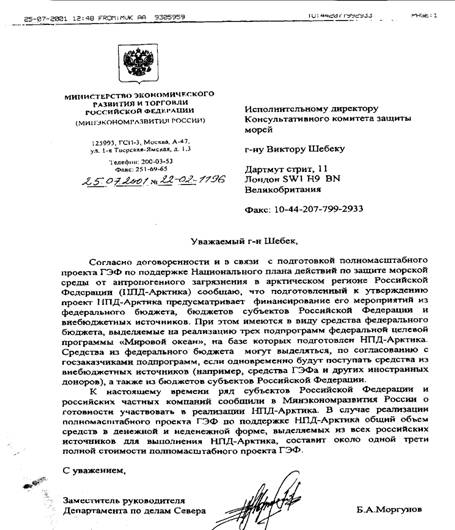
Dr. Viktor Sebek
Executive Director
ACOPS11 Dartmouth Street
LondonFax: 44 207 799 2933
Dear Dr. Sebek,
Under the terms of the agreement, and in connection with the preparation of the full GEF project “Support to the National Plan of Action for the Protection of the Marine Environment from Anthropogenic Pollution in the Arctic Region of the Russian Federation (NPA-Arctic), I write to inform you that the draft NPA-Arctic prepared for implementation envisages that the measures contained therein will be financed from the Russian federal and regional budgets and extra-budgetary sources. Specifically, it is planned to use federal budgetary resources allocated for the execution of the three sub-programmes of the World Ocean FTOP that served as the basis for the preparation of the NPA-Arctic. By agreement with the State commissioners of the sub-programmes, federal budgetary resources may be allocated if financing is received simultaneously from extra-budgetary sources (e.g. GEF and other foreign donors) and from the Russian regional budgets.
To date, a number of Russian regions and Russian private companies have informed the Ministry of Economic Development and Trade (Minekonomrazvitiya) of the Russian Federation that they wish to participate in implementing the NPA-Arctic. If the full GEF project in support of the NPA-Arctic is implemented, the total Russian cash and in-kind contribution to the execution of the NPA-Arctic will represent approximately one third of the total cost of the full GEF project.
Yours sincerely,
Boris A. Morgunov
Deputy Head, Department on Affairs of the North
Ministry of Economic Development and Trade