M i n i s t r y o f W a t e r s a n d E n v i r o n m e n t a l
P r o t e c t i o n
E s t i m a t i o n o f c o s t s a s s o c i a t e d
w i t h t h e I m p l e m e n t a t i o n P l a n
o f E C N i t r a t e s D i r e c t i v e ( 9 1 / 6 7 6 / E E C )
i n R o m a n i a
Bucharest
2003
I . E s t i m a t i o n o f c o s t s a s s o c i a t e d w i t h
t h e I m p l e m e n t a t i o n P l a n
o f E C N i t r a t e s D i r e c t i v e ( 9 1 / 6 7 6 / E E L )
i n R o m a n i a
Approximation of directive
1.1. Legislative framework
The Directive 91/676/EEC on protection of waters against pollution caused
by nitrates from agricultural sources was totally approximated as early as 2001, by
adopting the following national acts:
- Romanian Government Decree no. 964/2000 approving the Action Plan for
protection of waters against pollution caused by nitrates from agricultural
sources and setting up the Commission and Assistance Group for the application
of Action Plan to protect the waters against the pollution caused by nitrates from
agricultural sources. The Commission for application of Action Plan to protect
the waters against pollution caused by nitrates from agricultural sources
includes specialists in the Ministry of Waters and Environmental Protection,
Ministry of Agriculture, Food and Forests and Ministry of Health and Family.
Besides the Commission there is an Assistance Group including representatives
of the National Administration "Romanian Waters", committees of watersheds
and some institutes and institutions of specialty which are subordinated,
coordinated by the three ministries or under their authority.
- Common Order no. 425/2001 and 105951/2001 of the Minister of Waters and
Environmental Protection and Minister of Agriculture, Food and Forests,
respectively, regarding the approval of the organization and function rules, tasks
and members of Commission and Assistance Group to apply the Action Plan for
protection of waters against the pollution caused by nitrates from agricultural
sources.
- Order no. 740/2001 of the Minister of Waters and Environmental Protection
approving the nominal composition of Commission for application of the Action
Plan to protect the waters against pollution caused by nitrates from agricultural
sources.
The provisions of this Directive are included in the Action Plan for protection of
waters against pollution caused by nitrates from agricultural sources, approved by
the Romanian Government Decree no. 964/2000, called hereafter Action Plan.
1.2. Responsabilities
The Ministry of Waters and Environmental Protection (MWEP) has the
responsibility to implement the Nitrates Directive in Romania. In this activity,
MWEP cooperated with the Ministry of Agriculture, Food and Forests (MAFF) and
the Ministry of Health and Family (MHF).
Activity purpose: protection and monitoring of water quality, cadastre of
waters affected by pollution with nitrates and location of vulnerable zones.
1.3. Main objectives of Action Plan
The main objectives of Nitrates Directive, included in the Action Plan, are as
follows:
· Mitigation of pollution caused or induced by nitrates from agricultural
sources;
· Prevention of water pollution caused by nitrates;
· Rationalization and optimization of using the chemical and organic
fertilizers.
1.4. Plan to meet the requirements of Directive and Action Plan
A. Main requirements of Action Plan
1. Identification of waters affected by pollution caused by nitrates or susceptible to
be exposed to such a pollution and establishment of some adequate monitoring
and control programs.
2. Setting up the cadastre of these waters.
3. Location of vulnerable zones.
4. Preparation of a code of good agricultural practices and of some programs to
train and inform the farmers in order to promote this code.
5. Elaboration, implementation and practical application of action programs.
6. Other implementation requirements:
6.1. Duties.
6.2. Reports.
6.3. Periodical revisions of Action Plan.
6.4. Elaboration and adaptation of national rules needed for Action Plan
implementation.
B. Implementation plan of requirements
1. Identification of waters affected by pollution caused by nitrates or susceptible to
be exposed to such pollution and establishment of some adequate monitoring
and control programs
a) Summary of objectives
Identification of waters affected by pollution caused by nitrates or susceptible to be
exposed to such a pollution, especially of the surface, ground or eutrophic waters.
The Action Plan emphasizes the importance of monitoring the concentrations of
nitrates in all the water categories establishing also a graph of this monitoring
operation, the water presenting an eutrophic state included. The basic criteria to
identify the waters affected by pollution with nitrates and the waters susceptible to
be exposed to such a pollution are provided in the Action Plan. When these criteria
are applied, the physical, chemical and biological characteristics of water and soil,
the present condition of impact of nitrogen compounds on environment and the
present situation of the applied measures are also taken into account.
As concerns the requirements of Nitrates Directive, which are identical with
those of the Action Plan, a distinction should be considered between two different
monitoring types:
· That has in view the identification of polluted waters being in danger to be
polluted and on basis of which the vulnerable zones are located;
· That which is performed to evaluate the efficiency of action programs.
The first monitoring type, fulfilled by surveillance and control, within a
monitoring program, covers the whole Romania's territory. The monitoring of the
concentrations of nitrates in fresh waters is performed along the whole year, at least
every month or more frequently during the rainy or flooding periods in the control
sections for the surface waters, and at the regular intervals for the control sections
representative for aquifers. Eutrophic conditions of fresh waters and coastal water
is checked every four years.
The factors enabled to carry out this monitoring submit, every four years, to
the Ministry of Waters and Environment Protection reports on the results of these
activities, excepting when the concentration of nitrates in previous samples,
collected from the control sections, were less than 25 mg/l and no new factor of a
probable increase of nitrate content occurred. In this case, the monitoring program
will be carried out every eight years.
The other monitoring type refers only to the vulnerable zones and it will be
applied to the polluted waters or the waters threatened by pollution, identified by
the first monitoring type. Besides the monitoring of nitrates in water, it is also
necessary to establish the inputs of nitrates and their levels in soil, and the
contamination degree.
In this view, it is necessary to design a project containing sets of measures to
implement the Action Plan which will include also the procedures and instructions
for the surveillance and monitoring systems and for both the monitoring types.
b) Identification of implementation stages. Preparing implementation stage.
· Analysis of present condition of water according to the Plan Action
requirements.
· Identification of necessary data (qualitative parameters of waters and points of
collecting the water samples).
· Collecting the needed data regarding the quality of waters.
· Preparing the methods for water quality evaluation taking into account the
sources of pollution caused by nitrogen of agricultural origin.
· Evaluation of data regarding the quality of waters.
Implementation stage
· Specification of criteria and methodology to identify the waters affected by
pollution caused by nitrates from agricultural sources and the waters susceptible
to be exposed to such o pollution.
· Identification of waters affected by pollution caused by nitrates from
agricultural sources and of waters susceptible to be exposed to such a pollution
and making the cadastre of these waters.
Surveillance and control stage
· Preparation/adjustment of methods.
· Monitoring and control program preparation for the surveillance and monitoring
system.
· Procedures, methodologies and instructions for evaluating the monitored data.
· Setting up a Focal Center to monitor the waters polluted with nitrates (within the
National Agency "Romanian Waters"), and of a Focal Center to monitor the soil
pollution caused by nitrates (within the Research Institute for Soil Science and
Agrochemistry - RISSA) having the mission to collect, store, evaluate and
report the data supplied by the periodical monitoring networks.
· Periodical presentation (every four years) to the Commission for application of
Action Plan for protection of waters against pollution caused by nitrates from
agricultural sources of report on the results of monitoring activity in order to
establish and/or revise and complete the list of vulnerable zones.
· Periodical revision of cadastre of waters affected by pollution caused by nitrates
from agricultural sources and waters susceptible to be exposed to such a
pollution.
II. Designation of vulnerable zones which drain in waters
affected by pollution caused by nitrates or are susceptible
to be exposed to such a pollution and which contribute to
their pollution
a) Summary of objectives
The provisions and procedures for designating the vulnerable zones which drain
in waters affected by pollution caused by nitrates or which are susceptible to be
exposed to such a pollution and contribute to their pollution, as well as their
revision are specified in Article 3 of the Action Plan. In this view, within two years
from coming into force of the Action Plan, MWEP together with MAFF will
designate the list including the vulnerable zones that drain into the waters affected
by pollution caused by nitrates or susceptible to be exposed to such a pollution and
which contribute to their pollution.
MWEP and MAFF will revise and/or complete, every four years, the list including
the vulnerable zones, analyzing and taking into consideration the changes and
factors unforeseen when the list was made.
The Commission for application of the Action Plan for protection of waters against
the pollution caused by nitrates from the agricultural sources will be, within three
months since the operation time, informed on any change or modification in the list
of the vulnerable zones.
b) Identification of individual stages
Preparatory stages of implementation
· Identification of data needed for designation of vulnerable zones. Setting up a
Geographic Information System for designating the vulnerable zone.
· Preparation of methodologies for designating the vulnerable zones.
· Evaluation of data for designation.
· Designation of vulnerable zones and execution of cadastre and maps regarding
these zones.
Implementation stage
· Detailed designation and statement to revise the vulnerable zones.
· Revision stage.
· Setting up the periodical monitoring network and factors that will collect, store,
evaluate and report the obtained data to the Commission for application of the
Action Plan for the protection of waters against pollution caused by nitrates
from agricultural sources in order to revise the cadastre and maps of vulnerable
zones.
· Periodical revision of vulnerable zones.
· Preparation/adjustment of methodologies to revise the vulnerable zones.
Application
· Information of public (especially farmers) on the designation of vulnerable
zones and their revision.
III. Elaboration of a code of good agricultural practices
a) Summary of objectives
The code of good agricultural practices includes a set of requirements for
agricultural management methods that can avoid excessive loading of surface and
ground waters and agricultural lands with polluting substances from agricultural,
especially nutrients. The main purpose of this code is to ensure a general level of
protection of surface and ground waters against pollution.
The provisions of code will be adopted and applied by farmers voluntarily
and without financial compensation, excepting some areas in the vulnerable zones
where they will be applied with the assistance of local authorities and other
implicated organizations.
The code will be updated according to the occurrence of new agricultural
technologies and practices with low impact on environment.
The code refers to the problems generated by the inadequate management of
animal dejecta and organic and inorganic fertilizers, agricultural lands, associated
with the soil erosion problems, compaction and soil structure degradation, that have
unfavorable implications on the quality of water bodies. To solve these problems,
the recommendations and procedures included in the code for each of the above
mentioned aspects should take into consideration the specific conditions of the
country. Therefore, these recommandations and procedures should be elaborated on
the basis of the experience and be effective and proper for application in all the
areas.
When it is necessary, the code of good agricultural practices will be
promoted by information programs and training of farmers.
The funding for code preparation and printing will be supported by the GEF
Agricultural Pollution Control project, a project that is coordinated by MWEP.
b) Identification of implementation stages
Preparatory of implementation stage
· Evaluation of agricultural works and harmonization of objectives with the
acceptability of measures by farmers.
· Elaboration of a preliminary draft of the code of good agricultural practices.
· Preparation and publication of the code of good agricultural practices.
Revision stage
· Revision of the code of the good agricultural practices.
· Periodical monitoring of code implementation.
Application
· Achievement of program for awareness, information and professional training
of farmers.
· Establishment of measures and instruments to implement the code of good
agricultural practices.
· Awareness, information and professional training of farmers.
IV. Establishment, implementation and putting into force
the Action Plan
a) Summary of objectives
The articles 6 and 7, as well as the ANNEX no. 4 in the Action Plan contain
provisions for establishing and implementing the action programs referring to the
vulnerable zones. Thus, in term of two years since the designation of vulnerable
zones and, respectively, in term of maximum one year since the modification or
completion of list of the vulnerable zones, the Commission of Action Plan
application for the protection of waters against pollution caused by nitrates from
agricultural sources will establish action programs referring to the vulnerable
zones. The action programs are established for all the vulnerable zones in the
country, as well as different programs for certain vulnerable zones or parts of
vulnerable zones, if it is necessary.
The action programs will be established for a period of at least four years and
they will include the measures stipulated in the code of good agricultural practices,
as well as those stipulated in ANNEX no. 4 of the Action Plan. Also, they will take
into account the available scientific and technical data, first of all those referring to
the input of nitrates from the agricultural sources and other sources, as well as the
environment conditions in the respective regions.
In order to implement the action programs, the Commission for application of
Action Plan for the protection of waters against pollution caused by nitrates from
agricultural sources will take supplementary measures, at least every four years,
depending on the modifications occurred in the cadastre of waters affected due to
the pollution caused by nitrates and in the list of the vulnerable zones.
b) Identification of implementation stages
· Analysis of present situation of legislative measures regarding the agricultural
management.
· Preparation of some preliminary projects of Action Plan.
· Pilot project in the potentionally vulnerable zone (predominantly agricultural
and animal husbandry sector).
· Identification of soil survey and soil testing data in zone and of water quality.
· Collecting the needed data regarding the agricultural management and natural
conditions of zone.
· Elaboration of list of the measures for decreasing the water contamination with
nitrates in zone.
· Elaboration of methods for evaluation of data regarding the agricultural
management and natural conditions in zone.
Implementation stage
· Harmonization of objectives with the acceptability of measures by farmers.
· Elaboration of action programs (identification of measures specific to the
vulnerable zones).
· Adaptation of action programs.
· Implementation of action programs.
Revision stage
· Periodical collecting, storage and evaluation of data regarding the agricultural
management and environment conditions in zones declared vulnerable.
· Periodical collecting, storage and evaluation of soil survey and soil testing data
of agricultural lands and of water quality data in zones declared vulnerable.
· Periodical revision of action programs.
· Implementation of revised action programs
Application
· Utilization of instruments established for implementation of objectives.
· Establishment and implementation of application measures according to the
action programs.
· Awarness and professional training of farmers
2. Costs associated with implementation plan of Nitrates Directive
in Romania
The costs associated with implementation plan of Nitrates Directive should
better be presented in a large perspective including the evaluation of direct and
indirect costs and of benefits. In this view, the analysis of evaluation regarding the
impact of decreasing the pollution caused by nitrates should also include the
economic value obtained by increasing employment due to the improved
management of manure. These costs are not included in the analysis of this project
stage.
The main costs of investments needed for the implementation of the Nitrates
Directive are those referring to develope the platforms for manure storage and to
get the equipment for manure distribution in zones vulnerable to pollution caused
by nitrates from agricultural sources. The estimation of costs were made taking into
account two options of Nitrates Directive implementation (Annex 1).
In case the whole country is declared a vulnerable zone ("a" option), the
costs for this chapter amount to 1, 116,130, 570 E.
In case the zones vulnerable to nitrates are established according to the local
conditions (sources, transmitting the flow of pollutants towards the ground aquifers
and surface waters - "b" option), the needed funds for this chapter amount to 140,
669, 000
· Costs to provide the rural communities in vulnerable zones with equipment for
spreading the manure on the surface of the land: it is considered that, at the
level of each locality, at least an equipment is necessary spreading the manure.
Therefore, the results are:
- first option (a): 13,000 localities x 3,000 E/equipment = 39,000,000 E
- second option (b): 750 localities x 3,000 E/equipment = 2,250,000 E
· Operation costs to monitor the aquifers and surface waters: the network to
monitor the quality of the aquifers includes 2172 drillings of which 500 drillings
are located in the vulnerable zone established according to the "b" option in
Annex A1. As compared to the distribution of the present drillings for collecting
the water samples from aquifers, it is considered that, on the basis of the
potentially vulnerable zone established in the Annex A1 - Figure 1, the present
network for monitoring should be supplemented with about 500 new drillings.
Therefore, the costs to ensure the measurement of the nitrates in ground waters
twice a year will be:
- in the first case ("a" option), when all the country is declared vulnerable:
(2172 + 500 drillings) x 300 E / drilling x 3 measurements a year = 2,404,800 E;
- in the second case, when only some land areas are designated as being
vulnerable (500 + 500 drillings) x 300 E/drilling x 4 measurement a year =
1,200,000 E. These costs are increased by the costs necessary to monitor once a
year the drillings located beyond the vulnerable zones, that is 1,672 drillings x 300
E / drilling = 501,600 E. Therefore, the total costs in this case represent 1,701,600
E.
The costs for building up 500 new drillings in the vulnerable zones: 500
drillings x 3,000 E / drillings = 1,500,000 E.
The costs to monitor the surface waters regarding the nitrate content are
evaluated to 1,000,000 E / year.
The operation costs to monitor the soil, vegetation and organic residues in
zones vulnerable to pollution caused by nitrates from agricultural sources were
evaluated for the two designation options of the vulnerable zones thus:
- "a" option presumes the establishment of a network for monitoring the soil
in each locality (13,000 localities), depending on the local soil/land characteristics.
The preliminary estimations lead to a necessity of two profiles/locality. The year
cost of soil monitoring in one place is of 400 E, hence, the total operation costs
regarding this chapter are: 13,000 x 400 x 2 profile = 10,400,000 E/year.
- "b" option presumes an intensive program (4 profiles/locality) for the
monitoring in the vulnerable zone (750 villages in 250 communes) and a
background monitoring (1 profill/locality) in the other localities (12,250 localities).
The costs needed for this monitoring are: {(750 localities x 4 profiles/locality) =
12,250 localities x 1 profile/locality} x 400 E/profile = 6,100,000 E/year.
· Supplying the mobile laboratories to collect and analyze the water
samples (1 laboratory/direction): 11 directions x 100,000 E/mobile
laboratory = 1,100,000 E.
· Supplying the mobile laboratories to collect and analyze the samples of
soil, plant and residues from animal husbandry (2 laboratories): 300,000
E.
· Supplies (measurement equipment, logistics, birotics office furniture) for
the Focal Centre monitoring the waters polluted with nitrates: 1,000,000
E.
· Operational costs for the activities of the Focal Centre monitoring the
waters polluted with nitrates: 150,000 E.
· Supplies (measurement equipment, logistics, birotics, office furniture) for
the Focal Centre monitoring the soil pollution caused by nitrates:
1,000,000 E.
· Operational costs for the activities of the Focal Centre monitoring the
soils polluted with nitrates: 120,000 E.
· Costs need to accredit the laboratories for monitoring pollution of
soil/waters caused by nitrates: 4,000,000 E.
· Supplying land cars for the local factors (Water Directions, Country Soil
Survey and Soil Testing Offices) involved in monitoring the pollution
caused by nitrates: 40 land cars x 30,000 = 1,200,000 E.
· Operational costs for Country Soil Survey and Soil Testing Offices
(CSSSTO): 10,000 E x 38 CSSTO = 380,000 E.
· Operational costs for Water Directions: 10,000 x 11 Water Directions =
110,000 E.
· Elaboration of operational methodologies for soil and water monitoring:
100,000 E.
· Personnel (staff) costs (Focal Centres, Water Directions and CSSSTO) =
5,000,000 E/year.
· Investment costs for Watershed Directions regarding the laboratory
aparatus needed to analyze the nitrates in waters: 350,000 E x 11
Watershed Directions = 3,850,000 E.
· Costs of investments for laboratory aparatus to analyze the nitrates in soil
and plant for CSSSTO: 350,000 E x 39 CSSSTO = 13,300,000 E.
· Development of logistics needed to develop/integrate the Geographic
Information Systems: 500,000 E.
· Development/implementation of Decision Support Systems for the
management of the animal husbandry farms at the level of the Vulnerable
Zones and Watershed Basins: 500,000 E.
· Costs of training the specialists: 550,000 E.
· Estimation of costs for the activities of training/awareness, etc. was made
considering the "a" option - the whole country is vulnerable, taking into
account (1,900 training sessions at the communal level (1,900 x 1,000
E/session = 1,900,000 E) and 50 trainings for trainers (50 x 1,500
E/training = 75,000 E )}. In the case of this option, the total cost amounts
to 1,975,000 E.
In case only some vulnerable zones are declared, it is necessary to have only
250 training sessions at the communal level (250 x 1,000/training = 250,000 E)
and 20 trainings for trainers (20 x 1,500 E/training = 30,000 E). For this chapter in
the "b" option, the cost amounts to a total of 280,000 E .
Costs needed to apply the Nitrates Directive in urban zones are estimated, in
a first approximation, having in view the case study for the region regarding the
Bucharest municipality (see Annex 2): 300,000 E. Taking into account the weight
of this municipality in the total urban areas of Romania, it results, as a first
estimation about 10,000,000 E for the application of the Nitrates Directive in the
urban zones of Romania.
The centralised costs (investments, operations and training), under the two
options, regarding the designation of the vulnerable zones (all the country and only
certain zones depending on the pollution sources and the transmission
characteristics towards the ground and surface waters) are presented in Tables 1
and 2.
The option of designing the vulnerable zones corresponding the best to the
present situation and medium term predictions in Romania is the "b" option which
designs approximately 10 per cent of the country's territory as vulnerable zones to
pollution caused by nitrates (see Annex A1).
Tables 3 and 4 present the cost needed to implement the Nitrates Directive in
the two variants of declaring the vulnerable zones in the case of considering that
the use of some laboratory equipments/tools corresponds to a mderate technology.
Having in view the costs implicated in each analyzed variant, Romania
should adopt the "b" option of declaring the vulnerable zones (only some areas in
the country's territory are declared vulnerable depending on the inputs of nitrates
from animal husbandry sector and the transfer conditions of nitrates towards the
ground waters, aquifers and surface waters).
Table 1. Centralization of costs to implement Nitrates Directive considering
the option by which all the country is designated as a vulnerable zone and the
equipment of a modern technology (Euro).
Costs for:
Activity
Investments
Operations
Training
Storage platforms
1,116,130,570
Equipment for manure spreading
39,000,000
Ground water monitoring
2,404,800/year
Surface water monitoring
1,000,000/year
Monitoring of soil, vegetation and
6,100,000/year
animal husbandry residues
New drillings in vulnerable zones 1,500,000
Mobile laboratories
1,400,000
Focal Centre - water
1,000,000
Focal Centre - soil
1,000,000
Land cars
1,200,000
Laboratory equipment-CSSSTO
13,300,000
Laboratory equipment - Water 3,850,000
Directions
Logistics GIS
500,000
Operation costs CSSSTO,
760,000/year
Water Directions
GIS operation
500,000/year
Elaboration of methodologies
100,000
Accreditation
4,000,000
Salaries
5,000,000/year
Training of specialists
550,000
Local trainings
1,975,00
0
Urban zones
10,000,000
TOTAL
1,178,880,570
16,034,800/year 2,525,00
+14,100,000
0
Table 2. Centralization of costs to implement Nitrates Directive considering
the option "b" (only some zones of the country are declared vulnerable) and the
equipment of a modern technology (Euro).
Costs for:
Activity
Investments
Operations
Training
Storage platforms
140,669,900
Equipment for manure spreading
2,250,000
Ground water monitoring
1,701,600/year
Surface water monitoring
1,000,000/year
Monitoring of soil, vegetation and
6,100,000/year
animal husbandry residues
New drillings in vulnerable zones 1,500,000
Mobile laboratories
1,400,000
Focal Centre - water
1,000,000
150,000/year
Focal Centre - soil
1,000,000
120,000/year
Land cars
1,200,000
Laboratory equipment-CSSSTO
13,300,000
Laboratory equipment - Water 3,850,000
Directions
Logistics GIS
500,000
Operation costs CSSSTO,
760,000/year
Water Directions
GIS operation
500,000/year
Elaboration of methodologies
100,000
Accreditation
4,000,000
Salaries
5,000,000/year
Training of specialists
550,000
Local trainings
280,000
Urban zones
10,000,000
TOTAL
166,669,900
15,331,600/year 830,000
+14,100,000
Table 3. Centralization of costs to implement Nitrates Directive considering
the option by which all the country is designated as a vulnerable zone and the
equipment of a moderate technology (Euro).
Costs for:
Activity
Investments
Operations
Training
Storage platforms
1,116,130,570
Equipment for manure spreading
23,400,000
Ground water monitoring
1,923,840/year
Surface water monitoring
1,000,000/year
Monitoring of soil, vegetation and
4,575,000/year
animal husbandry residues
New drillings in vulnerable zones 1,500,000
Mobile laboratories
910,000
Focal Centre water
850,000
150,000/year
Focal Centre soil
850,000
120,000/year
Land cars
800,000
Laboratory equipment-CSSSTO
9,500,000
Laboratory equipment - Water 2,750,000
Directions
Logistics GIS
500,000
Operation costs CSSSTO,
760,000/year
Water Directions
GIS operation
500,000/year
Elaboration of methodologies
100,000
Accreditation
4,000,000
Salaries
5,000,000/year
Training of specialists
550,000
Local trainings
1,975,00
0
Urban zones
10,000,000
TOTAL
1,154,715,570
14,028,840/year 2,525,000
+14,100,000
Table 4. Centralization of costs to implement Nitrates Directive considering
the option "b" (only some zones of the country are the declared vulnerable) and the
equipment of a moderate technology (Euro).
Costs for:
Activity
Investments
Operations
Trainin
g
Storage platforms
140,669,900
Equipment for manure spreading
1,350,000
Ground water monitoring
1,361,280/year
Surface water monitoring
1,000,000/year
Monitoring of soil, vegetation and
4,575,000/year
animal husbandry residues
New drillings in vulnerable zones 1,500,000
Mobile laboratories
910,000
Focal Centre water
850,000
150,000/year
Focal Centre soil
850,000
120,000/year
Land cars
800,000
Laboratory equipment CSSSTO 9.500,000
Laboratory equipment - Water 2,750,000
Directions
Logistics GIS
500,000
Operation costs CSSSTO,
760,000/year
Water Directions
GIS operation
500,000/year
Elaboration of methodologies
100,000
Accreditation
4,000,000
Salaries
5,000,000/year
Training of specialists
550,000
Local trainings
280,000
Urban zones
10,000,000
TOTAL
159,679,900
13,466,280/year 830,000
+14,100,000
Annex 1
Calculation of costs to implement Nitrates Directive for developing the
manure storage platforms
This estimation has in view the costs to implement a system of managing the
rural domestic wastes and manure at the level of communes and farms in zones
vulnerable or potentially vulnerable to pollution caused by nitrates from
agricultural sources, a system whose major purpose is to reduce the level of
nutrients and pollutants of agricultural and rural origin entering the soil and
implicitly the water bodies. To evaluate a maximum level regarding the costs of
this measure, the estimation was made considering the most expensive method
building on of some communal garbage storage platforms. The methods specific
for each rural zone (adapted to local nutrient flows and socio-economic conditions
specific to each rural community) are going to be developed in the framework of
the implementation plans of Nitrates Directive in the vulnerable zones.
The implementation of Nitrates Directive in Romania can be carried out by
two ways:
a) definition of the whole Romania's territory as a vulnerable zone (option
adopted by some European countries: Germany, Austria, Denmark, Finland,
Luxembourg, Holland); and
b) definition of vulnerable zones according to the sources of pollution caused
by nitrates and the characteristics of soil/unsaturated zone to transmit the nitrates
towards the ground aquifers, ground waters and/or surface waters.
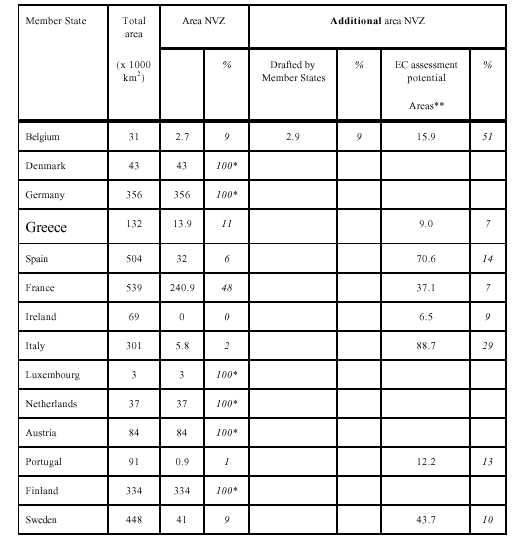
Table A1-1 presents the situation designing the zones vulnerable to pollution
caused by nitrates in the UE countries with the potential evaluation of UE
Commission.
Table A1.1. Designation of zones vulnerable to pollution caused by nitrates in UE
countries
When the establishment of zones vulnerable and potentially vulnerable to
pollution caused by nitrates from agricultural sources is made according to the "b"
way, the Methodology concerning the pollution of surface and ground waters
caused by nitrates, prepared by the National Institute for Hydrology and Water
Management (NIHWM) in cooperation with the Research Institute for Soil Science
and Agrochemistry (RISSA) is used.
Figure 1 represents the potentially vulnerable zones in Romania.
The land area of these zones is:
(A) - potentially vulnerable zones as a result of conveying the nitrates
towards the surface water bodies by run-off on the slope lands: 5,050 km2, that is,
2.37 per cent of the country territory and 3.82 per cent of the agricultural area;
(B) - potentially vulnerable zones (moderate risk of vulnerability) by
percolation of nitrates below the soil profile towards the free aquifers: 13,759 km2,
that is, 5.77 per cent of the country territory and 9.30 per cent of the agricultural
area, respectively;
(C) - zones with high risk of vulnerability to the nitrates percolation below
the soil profile towards the free aquifers: 1,200 km2, that is, 0.50 per cent of the
country territory and 0.81 per cent of the agricultural area, respectively.
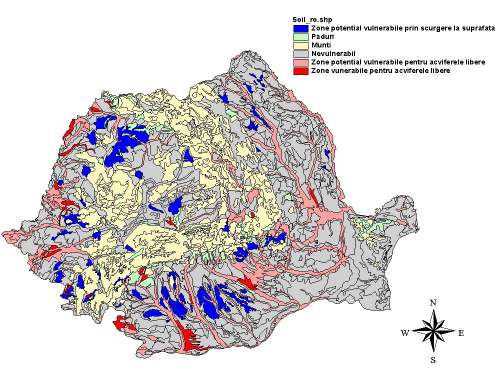
Figure 1. Zones vulnerable to pollution caused by nitrates from agricultural sources
(Legend: Zones potentially vulnerable to run-off;
Forests; Mountains;
Non-vulnerable; Zones potentially vulnerable for free aquifers;
Zones
vulnerable for free aquifers).
In a Geographic Information System, the map of potentially vulnerable zone
can be overlaid on map of nitrate inputs/outputs at the level of communes and on
the map of nitrate flow towards the surface/ground waters established according to
the number of animals in commune, cultivated crops, soil type, hydrogeological
conditions. Such maps are going to be prepared for the whole country territory.
The first evaluation of these zones leads to the following situation:
- positive balance sheet of nitrates in potentially vulnerable zones of A
category: 474, 685 km2;
- positive balance sheet of nitrates in potentially vulnerable zones of B
category: 2,511,155 km2;
- The identified zones, at the communal level within the counties, and the
classification according to the categories of vulnerable zones, are presented in
Table A1.2.
Figure 2. presents the location of communes where the difference between
the inputs and outputs of nitrates is higher than the threshold value designated for
establishing the vulnerable zones.
Table A.1.2. List of communes where the balance sheet of nitrates exceeds
the threshold value for the designated vulnerable zones.
Affected zone
County
NO3
Land Vulnerability
Locality
(kg/ha/year)
area
category
input/output
Km2
Francesti
VL
740
30.15
B
Blejoi
PH
516
15.55
B
Frumuseni
CL
515
64.54
B
Lipanesti
PH
361
15.07
B
Baile Govora
VL
305
5.31
B
Bucov
PH
253
28.44
B
Chiscani
BR
247
53.56
B
Gugesti
VR
234
26.39
B
T. Vladimirescu
BR
184
87.72
B
Crevedia
DB
139
45.46
B
Vadeni
BR
121
119.04
B
Babeni
VL
117
24.78
B
Tg. Jiu
GJ
84
60.15
B
Cocorasti Misli
PH
82
11.14
B
Balan
HG
75
0.72
B
Seini
MM
71
39.65
AB
Balesti
GJ
67
56.62
B
Codlea
BV
51
52.25
B
Doicesti
DB
35
6.48
B
Bod
BV
31
29.02
B
Cleja
BC
26
26.09
B
Chiuza
BN
26
26.96
B
Tatarani
DB
15
21.64
B
Ticleni
GJ
13
24.52
B
Saulesti
GJ
12
23.37
B
Sohatu
CL
11
70.35
B
Campina
PH
10
5.67
AB
Bran
BV
6
36.45
ANB
Zimnicea
TR
6
126.15
B
Moieciu
BV
4
23.64
A
Mircesti
IS
4
26.66
B
Chitila
SAI
4
7.83
B
Jebel
TM
4
99.68
B
Periam
TM
1
90.5
B
Botosana
SV
-1
27.52
A
Maliuc
TL
-2
18.17
C
Cosesti
AG
-4
26.82
B
T. Vladimirescu
GL
-4
43.55
C
Tatarusi
IS
-6
32.2
AB
Baia
SV
-6
32.08
B
Gaesti
DB
-7
17.78
C
Bivolari
IS
-7
59.27
B
Danesti
GJ
-7
48.82
B
Solca
SV
-8
25.27
A
Ciurea
IS
-9
26.94
B
Udesti
SV
-10
52.55
AB
Sieut
BN
-10
47.39
B
Salva
BN
-10
30.07
B
Ivesti
GL
-11
64.64
B
Bosanci
SV
-11
45.18
AB
Tismana
GJ
-11
96.36
AB
Fieni
DB
-13
10.62
A
Ipotesti
SV
-13
17.26
A
Moreni
DB
-13
9.57
B
Urziceni
SM
-14
27.42
C
Glogova
GJ
-14
13.78
B
Malini
SV
-14
42.85
AB
Salacea
BH
-15
56
B
Capreni
GJ
-15
27.66
A
Tasnad
SM
-15
93.93
AB
Tamaseni
NT
-16
20.46
B
Turceni
GJ
-17
44.18
B
Macea
AR
-17
66.2
B
Costuleni
IS
-17
43.39
B
Paunesti
VR
-17
41.5
B
Prejmer
BV
-18
53.75
B
Gaiesti
GR
-18
23.45
C
Strehaia
MH
-18
41.63
B
Buhusi
BC
-18
24.81
B
Boldesti - Gradiste
PH
-18
32.45
B
Farcasele
OT
-18
28.69
B
Crucisor
SM
-19
16.5
A
Sintereag
BN
-19
45.27
B
Odobesti
DB
-19
28.57
C
Cracaoani
NT
-19
31.93
A
Cetateni
AG
-20
19.24
B
Caiuti
BC
-20
34.12
B
Pristol
MH
-20
32.69
B
Gheraesti
NT
-20
28.51
AB
Casin
BC
-20
24.82
B
Pucioasa
DB
-20
21.51
A
Aroneanu
IS
-20
29.76
B
Bustuchin
GJ
-20
36.1
A
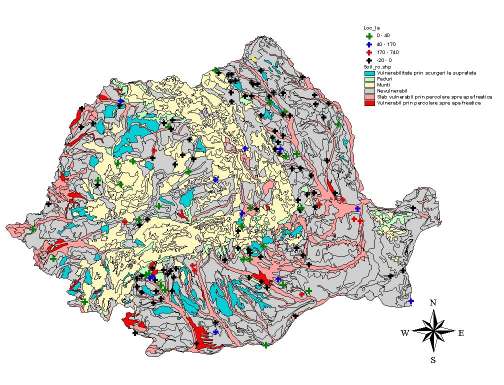
Figure 2. Location of communes where the balance sheet of nitrates exceeds
the threshold value for designed vulnerable zones
Figure 1. Zones vulnerable to pollution caused by nitrates from agricultural sources
(Legend: Zones potentially vulnerable to run-off;
Forests; Mountains;
Non-vulnerable; Zones potentially vulnerable for free aquifers;
Zones
vulnerable for free aquifers).
A1.1. Evaluation of present situation in households of population
At present, the manure administration system is managed together with the
administration system of domestic garbage and rubbish which can be characterized
as follows:
- the domestic wastes of households in rural zone include plastic, glass,
metals, vegetal residues, etc. mixed with manure coming from the animals in
households of owners;
- these wastes are accumulated in a deposit directly improvised on soil,
inside the yard of each household, before their evacuation;
- urine and liquid part resulted from the decomposition of these wastes are
free to infiltrate directly into soil;
- the diffusion phenomenon of these liquids in ground water is amplified in
such larger zones by precipitation water;
- the manure manipulation at the level of each household frequently implies
two operations, when, in fact, only one operation is possible;
- improvised deposits directly on the soil makes difficult the manipulation
and loading of wastes in order to be evacuated;
The presence of maize stalks resulted from animal feeding or bedding makes
almost impossible the utilization of fresh manure as fertilizer for agricultural soils,
without their previous decay.
The evacuation is performed after the accumulation of a high quantity of
such wastes by loading and transporting using a wagon or trailer to the so called
communal storage platform, that is also a source of pollution with the following
negative aspects concerning the environmental protection:
- non-point pollution with nitrates and other substances in domestic garbage
and rubbish;
- administration of wastes accumulated on these platforms, mostly
improvised, is at a minimal level, so that they are practically spread on large land
areas in a very thin layer;
- irrational spreading of domestic wastes in this way, which can be also
accompanied by their application to zones located near some water bodies or
conveyance or drainage canals, increases the potential of polluting the ground and
surface waters, phenomenon which is also amplified by the large land area
collecting the precipitation water;
- mixing the manure with various wastes in household practically makes
hardly possible the use of these wastes in agriculture;
- frequently, the unloading of wastes in these improvised platforms is
undertaken more years, becoming by accumulation major sources of pollution with
nitrates and other polluting agents which are very difficult to be avoided, recycled
or stabilized.
A.1.2. Problems regarding the evacuation of solid and liquid wastes at the
level of households of population
Urine and slurry resulted by decaying the excreta from cattle and horses in
the households are usually collected in unlined ground pits allowing the leaching of
nutrients to ground water, especially nitrates. In the case of pigs, this effluent
infiltrates directly in soil with no possibility to be collected by any type of canal.
The householder is not able to evaluate the magnitude of slurry accumulation
in pit due to the quasipermanent phenomenon of evaporation and infiltration in soil.
The soil infiltration is amplified during the wet seasons due to the precipitation
which also washes the garbage accumulated on soil and the areas where yard
poultry are to freely circulate.
Besides the fact that the householder has not waterproof vessels to deposit
the effluent from animals, he also has not the equipment to empty the vessels and
apply the effluent to the land.
A.1.3. Evaluation of present situation in animal husbandry farms
Where these farms survived the disintegration of state and cooperative farms,
the animals are reared under industrial confined conditions provided with shelters
and central canal situated under the floor for collecting the slurry. The slurry is
mechanically evacuated either to a place located behind the shelter or loaded
directly in trailers by means of conveyors. Then the slurry is transported to the farm
platform.
Straw bedding of animals, after use, are transported to the same manure
platform. The precipitation water washes the excreta existing on the outside
concrete parts, polluting the areas around the farm.
In the pig farms, the excreta collected in the canals provided below the
shelter floor are transported by pumping in non-waterproof pits of large sizes,
located outside the farm. Efforts to use the manure are made only exceptionally,
where there is also a clearing of liquids resulted from the liquid-solid separation
using adequate equipment.
In general, the platform in the dairy farm has a typical area (230 m x 30 m).
The manure is stockpiled in heaps of 3 m high and left for maturation up to one
year. Usually the manure thus composed is used as fertiliser.
A.1.4. Design and implementation of manure storage system at individual
household level
The activity of manure management should include the following key
elements:
1. Separation of inert and recyclable materials in manure by providing some
adequate containers.
2. Building an adequate facility (platform) to allow the rational manure
storage in household, on a concrete area, with sufficient capacity to accumulate the
manure for a month.
3. Manure transport to the communal platform using the wagon by those
having such transport means.
4. Paid manure collecting service for those lacking the adequate transport
means.
5. In this way, there is one operation for manure loading from the deposit in
household and an other unloading operation to communal platform, thus allowing
also the aeration of manure mass.
6. The communal platform will be provided with special containers for the
inert materials.
7. At the level of communal platform, the manure will be stockpiled in heaps
3 m high.
8. The manure containing vegetal residues will be stockpiled in heaps for
composting.
9. The relatively great hight of heaps is necessary to reduce the area that can
collect the precipitation water.
10. The communal platform will have such a size to allow the manure
deposition for minimum five mouths, so that the manure can be matured and used
as fertilizer.
The system will have in view the following requirements:
- the concrete storage for manure will be near the animal stable, thus the
double manure handling will be avoided;
- the storage will have a concrete floor provided with canals draining the
effluent towards the waterproof collection basin that has the role to
collect the urine, too;
- the manure will be accumulated in heaps;
- the precipitation water will be conveyed outside the storage zone;
- optionally, the facilities needed for composting the accumulated manure
mass will be developed;
- the platform will be sufficiently large to ensure the manure accumulation
for at least one year.
The size of such a platform will be directly proportional with the number of
animals in household, and the hight of heaps will be of 1.2 m.
A.1.5. Design and implementation of manure storage system at communal
platform level
The communal platforms will fulfil the following conditions:
· the platform structure harmonized with the zone landscape, and provided
with:
- concrete floor;
- waterproof effluent collecting canal and the collecting basin;
- containers to store the inert residues of metal, glass and plastic;
· adequately fence enclosing the platform and storage basin
· facilities for the platform staff;
· wells for hydrological observation to monitor the ground water quality in
zone.
The manure administration and storage period will be of minimum five
months. The best is to empty the store late in the autumn.
A.1.6. Concept of manure storage within animal husbandry farms
For the farms with up to 30 cows and 200 pigs the problem can
be addressed similarly with the case of peasant household, excepting
the fact that the farmer will use the material resulted after manure
storage as fertilizer for his own agricultural lands.
As concerns the farms exceeding the above mentioned figures, the problem
can be addressed separately, having in view that the farmer should manage the
manure on his own expenses. Anyhow, it is necessary to receive technical
assistance regarding the organization of the optimum system of dejecta
management.
A.1.7. Proposals of manure storage facilities at the level of individual
household and estimation of costs
These estimations are based on the results presented in the
"Report on design of system for manure management at communal
level, prepared within the framework of the Project "Control of
agricultural pollution", funded by the World Bank in accordance with
the Global Environmental Fund (GEF).
In order to calculate the platform capacity at the level of a household, the
calculation had taken into account the mean manure volumes generated by such a
household dealing with animal husbandry. In most cases, a simple structure,
opened in the frontal part, provided with concrete floor and sufficiently high 1.2
m is enough.
To collect the inert materials resulted at the household level, a small
container with a capacity of about 90 dm3 should be separately provided.
The concrete floor, gently sloping through the frontal part, should be
provided with a canal for draining the effluent. This canal is discharged into a
covered basin, built in excavation with a capacity of 500 litres.
The typical dimensions of such a platform are:
- Volume 5.4 m3
- Height 1.2 m
- Area 4.5 m2
- Length 2.2 m
This typo-dimension is recommended for all the households dealing with
animal husbandry. The householders having more animals will empty the platform
more frequently.
The costs were estimated having in view a general sketch of a type platform
and they amount to 325 .
A.1.8. Proposals of manure storage facilities at the level of communal
platform and estimation of costs
The platform will be rectangular, provided with walls on the
three of the four sides. The frontal part is provided with a threshold to
manipulate the equipment. Along the frontal side, a canal with a grill
is provided to collect the effluent and which gets also the precipitation
water and conveys them in a storage basin. Close to the platform there
are three bunkers for collecting the inert materials of metal, glass and
plastic.
For a typical rural locality, a capacity of 3,200 or 4,800 t of manure
depending on the locality size is recommended. The storage basin for the slurry
will have a volume of minimum 76 m3.
The estimated costs are:
- 159,232 for a platform of 4,800 t;
- 109,200 for a platform of 3,200 t.
A1.9. Proposals of facilities for the system of manure manipulation and
application to land and estimation of costs
In order to manipulate and spread the manure and the resulted
liquids on the land, each communal platform needs the following
equipment, the acquisition costs being also indicated:
- 1 loading equipment (JBC/WOLA) 18,819 ; total 18,819 ;
- 10 loading equipments 7,425 ; total 74,250 ;
- 1 cisterna provided with emptying equipment 5,566 ; total 5,566 ;
- 1 trailler 3,975 ; total 3,975 ;
- 2 tractors 9,275 ; total 18,550 ;
- 1 equipment to break up and chop 3,300 ; total 3,300 .
In conclusion, the total cost of the equipment for a commune amounts to
124,461 .
A.1.10. Estimation of costs all over the country corresponding to vulnerable
zones
Estimation of costs all over the country was carried out having in view the
two ways to establish the considered vulnerable zones (a all the country, b only
some zones according to the methodology presented in A1.1.)
In the case of "a" variant, the following data are considered:
- number of communes needing platforms: 1,965 of which 1,179 require
platforms of 4,800 t;
- number of individual households needing platforms: 1,840,000.
Total costs estimated all over the country, in the case of peasant
householding, is 1,840,000 x 325 = 598,000,000 .
Total costs, in the case of one communal platform, are:
- for a platform of 4,800 t:
159,232 + 124,461 = 283,692
- for a platform of 3,200 t:
109,200 + 124,461 = 233,661
Total costs all over the country, in the case of communal platforms, are:
1,179 x 283,692 + 786 x 233,661 = 334,473,110 + 183,657,460 =
518,130,570 .
Total costs all over country totalizing the cases of platforms in the
households of population and communal ones are:
598,000,000 + 518,130,570 = 1,482,290,570 .
In the case of "b" variant, the following data are considered:
· number of communes needing platforms:
- 150 requiring platforms of 4,800 t and
- 100 requiring platforms of 3,200 t.
These data are obtained by the evaluation of animal number corresponding to
the standards established by the Code of good agricultural practices for the
respective communes:
- number of individual households needing platforms: 230,000
Total costs estimated for the whole country, in the case of peasant
households, are:
- for a platform of 4,800 t:
150,232 + 124,461 = 283,692 ;
- for a platform of 3,200 t:
109,200 + 124,461 = 233,661 ;
Total costs all over the country, in the case of communal platforms, are:
150 x 283,692 + 100 x 233,661 = 65,919,900 .
Total costs all over the country referring to the cases of platforms in the
households of population and of communal platforms are:
74,750,000 + 65,919,900 = 140,669,900 .
Annex 2
I m p l e m e n t a t i o n o f N i t r a t e s D i r e c t i v e i n
u r b a n a g r i c u l t u r a l z o n e s
A2.1. Relevance of urban agriculture activities
Agriculture in intra-, sub- and periurban zone is intimately connected
with the ecological, social and economic local and municipal systems,
supplying particular benefits to individual farmers and their communities. If it
is adequately practised, it has an important contribution both to maintain public
health and to reduce some social and environmental factors of risk. Thus, the
urban agriculture, besides the fact that it represents a local source of food
products, determines also the fertility increase of some marginal soils,
"greening" the environment and absorbing a part of wastes that are used as
compost and fertilizers. Besides the improved food diet, those involved in
urban agriculture enjoy frequently a supplementary income.
Urban agriculture implies a technological and managerial precision
higher than that of agriculture practised in rural environment, because it needs
in most cases multiple precautions concerning the public health and permanent
monitoring of its effects on environment. This type of practices constitute a
recent phenomenon only in very few cities. All over the world, there is an old
tradition of agricultural practices inside and outside the urban zones. The
present systems of urban agriculture were modelled by four major "forces":
· continuity of traditional practices;
· revolution of industrial type agriculture;
· rapid post-war urbanization;
· expansion of population segment with low incomes.
The first two constitute also the roots of urban agriculture, explaining
both the continuity and transformations of agricultural practices. The other two
surprise the recent developments: rapid urbanization forced an increased
number of residents especially poor people in extending the agricultural
activities.
A 2 .2 . Si tu at i on o f u rb a n a gr ic u ltu r e i n Ce nt ra l -Ea st E ur o p e
I n th e mo s t coun tr ies o f C ent ra l - Ea st E ur op e , th e urb an
a gr ic ultu r e r ep rese nts a so ci al s ys te m o f su rvi val int eg ra ted into th e
t r ansit ion
b e t we en
th e
ma i n
s uc c essi ve
ec ono mi c
s tag es
c ha r ac te ris ti c fo r th e l ast c entu r y: in dust ri ali z ation, so ci ali s m a nd
r e sto ra tion of f re e ma r k e t eco nomy. T h e l oc al foo d p rodu cti on ,
f r equ ent l y op er ate d b y f ood les s fa vo red soc ia l c ate go ri es , p rov ed a
me a s u r e of autono my a n d p rot ect ion f a cing t he p rodu ct ivit y a nd
di st rib ut ion p ro b le ms s p ec if ic to the so ci ali st ce nt ralis m a s w e l l t he
in a cc ess ib l e
p ric es
o f
so me
f ood
p rodu cts
a nd
th e
h igh
un e mp lo yme n t rat e cha r act e ris tic to t he ass i mi la tion o f s o me ma r k s
o f ma r k et e con o my.
Wh i le th e a gr icul tur al act ivit ie s in t he in tr au rb an zon es or
n ea r the b ig cit ie s ar e o p e ra te d b y r e l ativ el y s t ron g c o mme r c ial
c o mp an ies and unit s , w hi ch c onst itut e th e ma jo r ob je ctiv es
st at isti c all y a n alyz e d b y sp ec ial ag ri cult ur al d ep ar tme n t s , th e s ma ll
in divid ual fa r me r s a r e f re que ntl y ig nor ed , h elp l ess an d s o me ti me s
e ve n th re at en ed .
I n so me u rb an zon es o f the Eu rop ea n C ent ra l- E ast count ri es ,
s ev er el y a f f e ct ed b y t h e p h eno me non o f envi ronme n t a l p oll ution ,
th e lo c all y p rodu ce d foo d is exp ose d to toxi c c ont a mi na tions
a f f ect ing the h eal th o f cons u me r s. T h e sust ain ab ili t y o f t he ur b an
f ood p rodu ction d oe s no t cons ti tut e on l y a l oca l te chno logi ca l
p rob l e m. T h e p rob l e ms a r e co mp lic at ed b y th e n eg at ive e ff e cts t hat
c an a ff e ct th e envi ron me n t , p ub li c h ea lth and food se cu ri t y.
A 2 .3 . Si tu at i on o f u rb a n a gr ic u ltu r e i n Ro man i a
T h e act ivit ies in clud ed i n th e sp he r e of urb an a gr ic ultu r e a re
e xt re me l y d i ve rsi fi ed in Ro ma n ia . S o me o f th em a r e la rg el y
r e cogn iz ed suc h a s t he co mme r c i al unit s in th e p roxi mi t y o f c iti es
( e sp e ci all y g la sshou ses and so la ri a) , unit s of v eg etab l e res e ar ch a nd
p rodu ct ion , d endr olog y, f r u it -g row i ng and oth er s , o p e r at ed u nde r
th e qu asi anon ymyt y s uc h as g a rde ning o n p ub li c la nd b et w een t he
b u ildin gs . So me t yp es o f a cti vitie s ar e re p udi at ed and fo rb i dde n
su ch a s the g a rdeni ng on roo fs o r p i g and p ou lt r y ra isi ng in urb an
c en te rs . At th e sa me t i me , so me a ct ivit ie s h av e b e en on l y r ec ent l y
in iti at ed h aving a r e al d ev elop me n t p ote nti al su ch as t he b iolog ic al
mi c r o f ar ms .
A g ri cul tur e go es on t aking up on it sel f th e ro le o f b u ff e r
a ga inst the un e mp l o yme n t r at e in cr e as e , and th e s ub - and p e riu rb an
z on es ar e th e mo st de si red p l ac es b y t h e r e ce nt u rb an un e mp lo ye d
w o rk er s look ing fo r a su rviv al so lut ion .
T h e mo st co mmo n fo r m o f u rb an a gr ic ultu r e is th e g ar den ing
p ra ct ise d in th e hou seh old ya rd comb i n ed with r aising 1 -2 p ig s and
10 -20 p o ult r y. M an y o f th e old s ub u rb a n outsk ir ts r e ma i ned
un a ff e cte d b y the l and us e p l annin g op er at ed in th e 80 ' a nd h ave
c onti nue d th e ag ri cult ur al p r a cti ce s i niti at ed ev en sin ce th e
b u ildin g of hous es i n th e r esp e ctive hous eho lds .
A 2 . 4 S i t u a t i o n o f u r b a n a g r i c u l t u r e i n
B u c h a r e s t ( B u c h a r e s t m u n i c i p a l i t y ) a n d
I l f o v A g r i c u l t u r a l C o u n t y
T h e hug e ma r k et r ep r es ent ed b y th e Buc ha r est mun ici p a lit y
c onst itut es a de ter mi n an t f ac to r for th e ag ri cult ur al p ra cti c e b oth in
th e i mme d i at e p rox i mi t y of th e cit y a nd insi de th e ad mi n ist ra tiv e
l i mi ts on va rious a re as b oth as s iz e and o wn e rsh ip t yp e . It is
ob vious th at v eg et ab l es , s eed p e as and p ot ato es ar e cu ltiv at ed
e sp ec ial l y in th e p riv at e s e cto r , tha t ma y b e e xp l ain ed b y b ot h th e
p rodu c er 's n eed to en su re his o wn c on su mp tion a nd h is c ap ac it y t o
s ell mo r e e f fi ci ent b y t he p rodu ct ion d ir e ctl y t o th e fr e e ma r k et .
T h is ac tivit y a s w e ll as th e fa ct th at p r odu ce rs c an al so us e t he ir
o wn so ur c es of ir r iga tion e xp l ains th e in cr ea se o f a r ea c ultiv at ed
w i th ve get ab les in th e l ast ye a rs , a s it re sult s f ro m th e st ati sti cs o f
th e G en er al Di r ect ion for A gr icu ltur e and Foo d , Bu ch ar es t .
I n the B uch a re st mu n ici p a lit y t h er e a r e 5 ,4 49 h a a gr ic ultu r al
l and , and in the Il fov coun t y 11 3 ,056 h a ( tota l 118 , 505 ha
a gr ic ultu r al la nd o f w hi ch 111 ,459 h a a r ab l e land ) . Th e ani ma l
lo adi ng p er h e cta r e is r ela tiv el y mo d e r at e with 20 .6 c attl e , 127 .0
p i gs a nd 1 .65 4 p oul tr y p e r 10 0 he cta r es o f ag ric ultu ra l l and .
O t he r wis e , wh il e th e l ev el o f in p uts is v er y l o w as c o mp a re d to t he
n atio na l l ev el , it is evid ent l y highe r in th e sub - and p e ri urb an z one s
o f th e Bu cha r est mu n ici p al it y, du e to th e p res en ce of so me
in ten siv e c o mme r c ial unit s a nd s ma l l p rodu c er s s p e ci ali ze d in
p rodu cin g p e risha b l e p rod uct s , o ri ent ed to w ard s t h e mu ni cip al
ma r k e t . At th e l ev el of s ma l l p r odu ce rs , th e re a r e a s er ies o f
c ha r ac te ri za tion d at a ( exp lor ato r y st ud y on a s a mp le of f ar me r s ) .
A 2. 5. I nt r au r b an z o nes
T h e si ze o f p a rc el s u sed fo r ag ri cult ur e f re quent l y r ang es
b et w ee n 100 a nd 400 m2 , o n an av e rag e 275 m2 . T h e g e ne ral
so ur c e o f i rr iga tio n w at e r i s the t ap w at e r . T he mo s t i mp or ta nt
c ro p s a r e to ma toe s ( 87 % of t he int e rvi e we d f ar me r s cu ltiv at ed th is
c ro p ) , o nion (60% ) , gr ap e vin e (60 % ) , g ar li c (46 .7 %) , f ru it t re es
( 40 % ) , flo w e rs (36 . 7 %) , st ra w b e rr i es (20 % ) and r oot veg et ab l es
( 16 .7 % ) .
A b o ut 63 p e r cent o f the l ands cul tiv at ed b y t he me mb e r s o f
th e i nt erv ie w ed h ous ehold s a r e l oc at ed i n th e ya r d s o f the
ho use holds , 20 p e r cen t o n p u b li c la nds , an d 1 7 p er c ent a re i n t he
r u ral zon e . A b out 71 p er cen t o f th e cu ltiv at ed la nds ar e o wn ed b y
th e us e rs , and 20 p er c ent h av e a qu asi leg al s ta tut e .
O n l y 20 p e r ce nt o f int erv iew e d p e rso ns use ( red uc ed
qu ant iti es ) ch e mi c al f er tili z er s as a mmo n i u m n itr ate ( ab ou t 40kg /ha
a ct iv e i ngr edi ent a . i .) o r N P K (ab o ut 100kg/ ha a .i. ) . A b out 25 p e r
c en t o f int er view e d p e rson s use r e duc ed a mo unt s o f org ani c
f e rti li ze rs (usu ally b e t w ee n 5 and 10 t co mp ost /ha) . T he c rop s o f
g ra p e vin e , f rui t t r ees and f lo we rs a r e no t f e rti liz ed w ith ch e mi c al
o r o rg ani c f er tiliz e rs . T he c ro p rot ati on i s app li ed b y 5 0 p e r c ent of
th e in te rvi e w ed p e r sons .
I n ge ne r al , me a su re s to r edu ce the n eg ativ e i mp a ct o f
a gr ic ultu r al ac tivi tie s on ne ighb ou rs (un p le as ant odo ur , con tr ol o f
r od ents , et c . ) a re no t ap p li ed .
O n l y a s ma ll s eg me n t of int e rvie w e d p e rsons rea r li ves toc k .
A b o ut 10 p er ce nt re a r p oult r y, a nd 6 .7 p er c ent p igs . Tho se
i mp l ic at ed i n r e ar ing p igs ha ve 2 o r 3 -5 p igs , an d th ose i mp li ca ted
in r ea rin g p oul tr y h av e , on an a ve ra ge , 6-1 0 he ns .
A 2. 6. Su b u rb a n z o n es
T h e me a n s iz e of p a rc els in th e h ous ehold ya r d , wh er e
a gr ic ultu r e is p ra ct is ed , i s o f 535 m2 , a n d th e me an si ze o f a r ea s
lo c at ed in op en ed fi eld i s of 1 2, 16 0 m2 . T h e ma jo r sou r ce of
i r rig atio n wa te r f o r th e p a r ce ls in t he ya r d o f hou seh olds is th e
g roun d w at e r (80 % o f inv est iga te d hous eho lds ) . I n th e f iel d , the
c ro p s ar e i rr ig ated v e r y r a re l y.
T h e mo st i mp or ta nt c rop s a re toma t o es ( 70 % o f in te rvi e w ed
p er sons cult iva ted th is sp eci es ) , oni on (5 0 %) , g ra pe vin e (52 . 2 %) ,
p epp er (42 . 5 %) , ma i z e ( 32 .5 % ) and g a rli c ( 30 % ) .
O n l y 15 p e r ce nt o f in te rvi ew e d p er sons use ch e mi c al
f e rti li ze rs ( esp ecia ll y a mmo n iu m n i tr at e a t a r ate of 50 -20 0 kg/h a ) ,
70 p e r c ent o f thos e int erv ie w ed us e r edu ced qu ant iti es o f o rg ani c
f e rti li ze rs (u sual l y 5 -10 t/h a ma n u r e o r 1 -2 t /h a c o mp o st ) .
F e rt ili ze rs a re us ed p r edo mi n antly f o r v eg et ab l es a nd to ma t oe s .
G r a p e vin e a nd f r uit t re es a r e onl y s p o rad ic all y f e rtil iz ed with
o rg ani c o r chemi c a l f e rtil iz er s. A b out 8 5 p er c e nt o f t hos e
in te rvi e w ed p ra ctis e t he rot ati on of c rop s .
A l mo s t t wo thi rds o f th ose i nte rv ie w ed ar e d ea ling w ith
a ni ma l husb and r y. A b out 6 4 .3 p er c en t o f th e m r e a r p o ult r y, 5 0 p e r
c en t - p igs , 11 .9 p e r c ent sh e ep , a nd 7 .1 p e r c ent b e e k ee p ing .
T ho se k eep ing sw i nes h ave 2 ( 38. 1 % ) or 3 -5 p igs (4 2 .9 %) . Tho se
i mp l ic at ed in ra isi ng p ou ltr y h av e 6- 10 h ens ( 44 .4 %) , 11 -25
( 18 .5 % ) o r 3 -5 he ns (14 .8 % ) and a si mi l a r nu mb e r o f chi cke ns wit h
e a ch ca teg or y. T ho se i mp li cat ed in sh eep r ea ring h av e 2 s he ep
( 40 % ) , 1 , 3 -5 o r 11 -25 she ep (20 % f o r e ac h c at ego ry) .
T o r edu c e t he n eg ativ e i mp a ct of a gr ic ultu r al ac tivi tie s on th e
n eigh b ou rs , 25 p er c ent of thos e in te rv ie w ed d o not b u rn the veg et al
r e sidu es in the ir ya r d , 2 5 p er cen t do not ch aot ic all y di sp e rs e the ir
do me s ti c r esi dues re sult ed f ro m t h e co nsu mp tio n of p ro duc ts , 5 p e r
c en t s he lte r th e ma n u r e or c o mp ost , 10 p er cen t p ay a t te ntio n t o th e
lo c atio n o f sh elte r s fo r ani ma l s and ma nu r e p la tfor m, 2 5 p er c ent
p er iodi c all y c l e an th e ani ma l s hel te rs , 13 p e r c ent a pp l y me a s ur es
to co mb a t th e rode nts .
T h e mo st i mp o rta nt sou r ce s o f ag ri cult ur al in fo rma t i on for
v eg eta l p ro duc tion (as a fi rst me n t ion ) a re rel ati ves (42 .5 % ) ,
n eigh b ou rs/ fr ie nds (20 % ) and n e wsp ap e rs ( 20 %) . A s ec ond me n tion
r e f er s to n eighb o urs /f ri end s (37 .5 % ) and ra dio - T V p rog r a ms
( 17 .5 % ) . Th e mo st i mp or tan t sou r ce s o f ag ri cultu r al i nf or ma t ion fo r
a ni ma l hus b and r y ( a s a fi rst me n tion ) a re ne w sp a p er s (22 .5 % ) and
r e lat ive s ( 17 .5 % ). T h e s ec ond me nt ion re f er s to n eig hb ou rs/ f ri ends
( 22 .5 % ) .
T w o th ir ds of int e rvi e wed fa r me r s wou ld lik e t o k ee p t hei r
a gr ic ultu r al act ivi ti es at th e p r es ent lev el , 22 .5% - to di mi ni sh
th e m, 1 0 % - to in cr e as e th e m b y a g ri cultu r al l and a cquis itio n . A
p ar t o f t hos e i mp l ic at ed i n a ni ma l r e a rin g (27 .5 % ) w i sh to in c re as e
th e nu mb e r o f an ima l s , b ut mo st o f th e m ( 60 % ) did no t ma k e a cl ear
d ec isio n . Ab ou t 20 p e r c ent wo uld int eg rat e n e w a ct ivit ie s , b ut 80
p er c ent hav e not de cid ed ye t . T h e ma i n sp e cies con sid er ed to
in c re as e th e ef f ect ive a re t he la yi ng h ens (54 . 5 % of th ose w ho wis h
to in cr e as e th e nu mb e r ) and p igs ( 36 .5 % ) . Ab out 25 p e r ce nt wou ld
l ike t o inc r ea se th e qu anti tie s o f ch e mi c al f er ti liz e rs us ed at
p re se nt .
A 2 . 7 .
P e r i u r b a n
z o n e s
( m a x i m u m
2 5 k m f a r f r o m m u n i c i p a l b o r d e r )
T h e av e ra ge si ze of p a rc els in th e hou seh old ya rd , w he re
a gr ic ultu r e i s p ra ct is ed , is of 2 ,21 3 m³ , and th e a ve r ag e s iz e of
p ar c els in the f ie ld is o f 18 ,095m2 . T h e ma i n sou rc e of i rr iga tion
w a t er (1 00 % o f int e rvi e we d hou seho lds ) for th e hous eho ld p a rc els
is th e gr ound w ate r . In o p en fi eld , th e cr op s ar e ra rel y i r rig at ed .
T h e mo st i mp o rt ant c rop s a re t o ma to es (80 ,5 % of int e rvi e we d
p eop l e cult iva ted t his sp e ci es) , ma i z e ( 75 .6 % ) w in te r wh e at
( 53 .7 % ) , g ra p e vi ne (48 .8 % ) , oni on (41 .5 % ) , p e pp er (41 . 5 %) ,
f lo w e rs ( 41 .1 % ) , c ab b ag e (31 .7 % ) a nd root v eg et ab le s (29 % ) .
A b o ut 65 p e r c ent o f t hos e int e rvie w e d us e ch e mi ca l fe rti li ze rs
( e sp e ci all y a mmo ni u m n it r ate a t a r a te of 100 -20 0kg/ ha ) . A b out 65
p er c ent o f thos e i nte rv ie w ed us e r ela tiv el y l o w qua ntit ie s o f
o rg ani c fe rti liz e rs (us ua ll y, 10 -20 t/h a ma nu r e or a b out 10 t/h a
c o mp ost ) . Fe rt ili ze rs a r e p red omi n a ntl y a p p li ed to v eg eta b l es
( ch e mi c al and o rg ani c f e rti liz er s ) , b ut al so to s ma l l g r ains
( ch e mi c al f e rtil ize r s) . T he g rap e vin e is on l y s p or adi c all y f e r til iz ed
w i th c he mi c a l f e rt ili ze rs .
A b o ut 90 % o f thos e int erv ie w ed p r a cti se th e c ro p rot at ion and
on l y 14 . 6 p er c ent o f th e m i n co rp o r at e th e v eg et al r esid ues in soil
in st ead of b urn ing t he m.
A p er c ent age o f 90 .2 fa r me r s imp l i c ate d in an ima l r e a ring
h av e p ou lt r y, 87 .8 p e r ce nt p igs, 1 9 .5 p e r c ent c a ttl e , 12 . 2 p er
c en t r abb its and 9 . 8 - ho rs es . T ho se i mp l ic at ed in r aisi ng p ig s
h av e 2 ( 47 .2 % ) , 1 (2 5 %) , 3 -5 (19. 4 % ) or ev en 11 -25 p ig s (5 .6 % ) .
T ho se invol ved in p oult r y h av e 26- 50 (35 .1 % ) , 11 -25 (21 . 6 %) , 6 -10
( 16 .2 % ) , ov e r 51 h ens (16 .2 % ) and a si mi l ar nu mb e r o f c hic ken s of
e a ch c at ego r y. T ho se i mp l ic at ed in ra ising ca ttl e ha ve 1 (75 % ) o r 2
( 25 % ) c o ws .
T o r edu c e t he n eg ativ e i mp a ct of a gr ic ultu r al ac tivi tie s on th e
n eigh b ou rs , 51 p er c ent of thos e in te rv ie w ed d o not b u rn the veg et al
r e sidu es in the ir ya r d , 4 1 p er cen t do not ch aot ic all y di sp e rs e the ir
do me s ti c r esi dues res ult ed f ro m th e co nsu mp ti on o f p rod uct s , 1 8
p er c ent she lte r th e ma n ur e o r c o mp ost h e ap s , 38 p e r cen t p a y
a tt enti on to the lo cat ion o f s he lt er s fo r ani ma ls and ma nu re
p l at fo r m, 46 p er c en t p e riod ic all y c le an th e ani ma l sh el te rs , 13 p e r
c en t ap p l y me a sur e s to co mb at the r od ents .
T h e mo st i mp o rta nt sou r ce s o f ag ri cult ur al in fo rma t i on for
v eg eta l p rodu ction ( as a f irs t me n t ion ) ar e radi o- TV p r ogr a ms
( 26 .8 % ) , ne ighb ou rs/ f ri ends (24 .4% ) . T he s e cond me n t ion re f er s to
n eigh b ou rs/ fr ie nds (22 % ) a nd r el ati ves (14 . 6 %) , a nd th e thi rd
me n t ion re f er s to r ad io - T V p rog rams ( 2 4 .4 % ) . Th e mo st i mp o rt ant
so ur c es of agr icul tur al in fo r ma t ion f or ani ma l hu sb and r y ( as a fi rst
me n t ion ) a re ne ighb our s/ fr ien ds ( 34 .1 % ) , r adio - T V p rog ra ms
( 17 .1 % ) and r ela tiv es (1 4 .6 % ) . T h e s eco nd me ntio n re f er s to
r e lat ive s ( 14 .6 % ) a nd th e th ir d- r adi o- T V p r ogr a ms ( 19 .5 % ) .
A p e rc ent ag e o f 5 1 .2 in te rvi e we d fa r me r s w ould lik e t o
ma i n t ain th ei r ag ri cult ur al ac tivit ies at t he p r esent lev el , 7 . 3 p e r
c en t to eli mi n at e th e m, 39 . 5 p er ce nt to inc r e ase the m b y
a gr ic ultu r al lan d a cq uisi tion . A p ar t of t hos e i mp lic at ed in ani ma l
r e a ring (43 .9 % ) w i sh to in cr e ase th e nu mb e r o f anima l s , b ut mo st o f
th e m ( 51 . 2 %) d id not ma k e a cl e ar de cis ion in t his vi e w , 26 .8 p er
c en t woul d int egr a te n e w a ctiv itie s , wh ile oth er s ( 12 .2 % ) wo uld
l ike t o st art ev en a ct ivit ies o f p rodu ct p ro ce ssing . T h e ma in s p e ci es
c onsi de r ed fo r in cr e asin g th e ani ma l nu mb e r a r e p igs (7 7 .8 % o f
th ose w ish ing to in cr e as e th e e f fe ctiv e ) a nd l a ying he ns (27 .8 % ) . As
c on ce rns th e f utur e act ivit ies re ga rdi ng f er tili z atio n a nd dis e ase and
p est co nt rol , mo st of th e int erv ie we d fa r me r s ( 63 .4% ) w o uld lik e to
in c re as e th e a moun t of ch e mi c al fe r tili z ers us ed a t p re se nt .
A 2 . 8 N i t r a t e c o n t e n t i n s o i l a n d w a t e r w i t h i n t h e
u r b a n a g r i c u l t u r e
I n t he la st ye a r s , a s e ri es o f c as e s tudi es w e r e ca rr i ed ou t in
th e ve get ab l e p er iu rb an zon es to de te r mi ne th e ni tr at e l oad ing in
so il , v eg eta b le s (e dib l e p a rts ) a nd g roun d wa te r .
S t atis tic al
p a r ame t e r s
o f
nit ra te
c ont ents
in
top so ils ,
in ves tig at ed in some c o mmu n al t e rr ito ri es t r adit ion al l y us ed f or t he
c o mme r c i al p rodu ctio n of v eg eta b l es , rev e al a l ar ge disp e rsa tion of
a na l yti c al d at a du e to th e app li ca tion o f c he mi c a l fe rt ili ze rs at
v ar ious r at es witho ut r es p e ctin g ce r tai n t echn ologie s re co mme n d ed
b y e xp e rts .
U n cont ro lle d app l ic atio n of ch e mic al n it rog en , p hosp hor us an d
p o tas siu m f e r ti li ze r s c aus es an ex ce ss of nit ra te s tha t , du e to t hei r
hi gh sol ub il it y, a r e le ac hed in soi l p ro fil e do wn to th e g round w at er
t ab l e . Lo ading o f g round w at er with n it rat es in c re as es th e r isk o f
p o llut ion cau sed b y n it r at es b eca us e , in the studi ed c ase s , th e
g roun d w ate r is us ed fo r b oth the do me s ti c consu mp ti on and the
i r rig atio n of p lants al r ead y c on ta min at ed b y e x ce ssiv e f e rtil iz ati on ,
d et er mi n ing a p e rma n e nt fl o w o f nit ri c nit ro gen at t oxi c l ev els .
I n th e a qui fe rs i nt e rc ep t ed b y w e l ls i n th e stud ied zon es n it ric
ni tr oge n c ont ents w e r e f ound tha t i n a ll t he c as es ex ce ed the
ma x i mu m
a l lo wa b l e
li mi t
a cce p t ed
b y
t he
Wo r ld
H e alth
O r g ani zat ion (10mg / l N N O3 , 45 mg /l n it rates , resp ectiv el y) of 2
up to 11 . 5 ti me s hi ghe r . Th e s ta tist ic al p a ra me t e rs o f ni tr ic nit rog en
c ont ent s i n the g round w at er w i thin th e t er rito r y o f stud ied
c o mmu n es re ve al th e s a me un uni fo r mi t y, a n i ma g e o f a ch aoti c u se
o f mi ne r al ni tr oge n f e rti liz e rs , as in t he ca se of s oil .
A s it w as ex p e cte d , th e ex ce ssiv e q uan titi es of nitr i c nit ro gen
d et er mi n ed in s oi l a nd g roun d w at e r w er e foun d als o in co ll ect ed
p l ant sa mp l es (ve ge tab le s - ed ib le p art ) w ith v alue s exc e eding th e
ma x i mu m a l lo w ab l e li mi t with 5- 105 p er c ent in al mo s t all th e
c as es .
E v en if the r esp e ct iv e stu die s h av e a p un ctu al cha r a cte r and
r e f er to th e zon es i nt ensi vel y u s ed f o r veg et ab l es ( "ho t sp ots ") , th e
r e c ent inv esti gat ion s ca r ri ed ou t in th e i ntr a - , s ub - a nd p e riu rb an
a gr ic ultu r al zone s , sel e ct ed ac co rdin g to a r ela tiv el y u ni fo r m
sp at ial dis tr ib ution , r ev ea led the e xist en c e o f s o me n it rog en
c ont ent s s igni fic an t in soi l and ex ce ssiv e in th e g rou nd w at e rs . In
th e c ase o f w ate r sa mp l e , 80 p e r c ent of th e an al yz e d s a mp les
c oll e cte d fro m w e lls ex c ed s o me ti me s th e ma x i mu m l o adi ng l i mi t
up to 3 -5 ti me s high e r .
H o w ev er , it is le ss p rob ab le tha t t hes e h igh n it rat e cont ent s
me a s u r ed in w a ter a r e ex clus ive l y du e to th e ag ri cul tur al p r a cti ce s .
I t shou ld b e also c onsi de r ed the i np u ts f ro m t he s ew e r ag e s yst e m i n
B uc ha r est ( int ra ur b a n zon es ) an d in ad equ at e loc at ion and s eep age
o f s anit a r y in fr ast ru ctu r e ( mo st l y i mp r op e r in t he sub u rb an and
p er iu rb a n z one s w ithou t s e w era ge s ys te m) . S yst e ma t ic stud ies
r eg a rdin g th e p rop o rt ion al co nt rib ut ion o f e a ch f a cto r , d et er mi n ing
th e hig h lev el o f nit r at es in g round w at er i n the re sp ec tiv e zon es ,
w e r e no t c a rri ed ou t .
A n al yt ic al d et e rmi n a tion s o f nitr a te con ce ntr at ion i n de ep
a qui f ers a r e not a va il ab l e . Th e nit r ate co nc ent r ations in t he se de ep
a qui f ers a re not p r ob ab l y h igh er tha n th e ma xi mu m a llo w ab l e l i mi t .
A 2 .9 Co nc l us io ns o n u rb a n ag r icu l tu r e
T h e u rb a n ag ri cul tu re is a co mmo n p h eno me n on ins ide and
n ea r the mu n ic ip a l b o rd e rs . Che mi ca l and o rg ani c f e rt ili za tion of
a gr ic ultu r al cro p s in th e i nt rau rb an zon es is app li ed at a l o w l evel
a nd i t is ass ign ed to ve get ab l e cr op s . T he tr adi tiona l app li c atio n of
so me t e chnol ogic al co mp on ents o f org ani c ag ri cul tu re look s l ike
b eing a co mmo n p h eno me n on , esp e ci al l y in s ub u rb a n sit es . In t he
p er iu rb a n zo nes , s ite s o f int ensiv e ag ric ultu r e w e r e i den tif ie d
p rovi ded wi th a hig h lev el o f inp uts , co mme r c i all y or i ent ed th rough
th e mu ni cip al s ell ing ma r ke ts . The te nde nc y o f th es e f a r me r s is to
go on i nc re as ing th e l eve l o f f e rti li zat ion a nd c he mi c al p lant
p rot e ction .
T h e loa ding of ani ma l s on the agr i cultu r al lan d is r e l ativ el y
mo d e r at e , b ut it i s ob s e rve d a lo w p e rc ep tion of u rb a n f a r me r s
r eg a rdin g th e envi ron me n t al p rob l e ms . F o r ins tan ce , th e re ga rdi ng
o f th e w ast es in th e hou seh old is at a lo w lev el .
T h e ma i n sou r ces o f in fo r ma t ion on ag ri cultu r al p rob le ms a r e
b as ed on r ela tiv es , n eig hb ou rs and f rie nds , and l ess o n ne w sp ap e rs
a nd rad io- T V p r og ra ms . E x ten sio n se rvi c es h av e r e cor ded an
in sign ifi c ant i mp a ct so fa r .
I n th e g ro und w a t er s i nt er ce p ted b y w e lls , n itri c nit rog en
c ont ent s w e re c onst an tl y de te rmi n e d ex c eed ing th e ma xi mu m
a llo w ab l e li mi t so me t i me s at d rama t i c l ev els . How e v er , it i s litt le
p rob ab l e t hat th es e h igh n it rat e con ten ts i n w ate r a r e ex clu siv el y
du e to the ag ri cultu r al p ra ct ic es .
A 2 .1 0 E va l u at i on of c os ts f o r des i gn i n g t h e B uch a r est r e gi o n
( B uc h ar es t mu nic i pa l it y, I lf o v Co u nt y) a s a z one vu l n e r a bl e t o
p o l l ut io n ca us e d b y n it r at es Ca s e st u d y
A 2 .1 0. 1. Ch a r act e ri st ics
T o tal lan d a r ea: 182 , 115 h a , o f whic h:
- to ta l ag ri cul tur al a r e a: 118 ,5 05 h a , o f whi ch:
- to ta l a ra b l e a re a: 11 1 ,459 h a .
C li ma t e: t e mp e r at e - c ontin en tal (me a n an nua l te mp er at ur e is 110 C,
w i th a me a n an nua l a mp litud e o f 25 .2 0C , me a n ann ua l p re cip it ation
58 9 mm)
S oil : R eddi sh B ro wn soil s , A rg illuv ial soil s , C a mb i c Che rno z e ms
on loe ssli ke d ep osi ts ( me diu m t e xtu r e) .
R e lie f: r el ativ e p l an e , slo p e s at t r ansit ion b et we en te r ra c es a nd
f lood p l ain s o f th e Col ent ina , Dimb o vi ta , C io rogar l a , A rg es and
P a sa r ea riv e rs .
D e p th o f g round w a te r t ab l e: l arg e va ri ati on b e tw e e n 0 -3 m
n ea r th e floo d p la in of riv er s and 10 -20 c m on t e rr a c es ( ma x i mu m,
si gni fi can t , r esp ec tiv el y, r is k of con ta mi n ati on and p ol luti on c aus ed
b y n it ra tes .
S t ruc tu re of lo cal iti es: 1 mu ni cip a lit y ( c a p it al of R o ma ni a ) , 2
c iti es , 1 7 co mmu n es , 10 2 vill ag es .
P op ul at ion: 2 , 462, 30 0 .
A 2 . 10 . 2 . P rob l em o f p ol luti on c aus ed b y ni tr at es fr o m a g ri cultu r al
a ct ivit ie s w ith ag ri cult ur al a ct ivit ies ac co rdin g to p rovi sions o f
N i tr at es Di r ec tive
Wh i le th e c onsump t io n o f fe rti liz e rs a nd p e sti cid es h as a
r e lat ive l y lo w lev el , t he p rox i mi ty o f a mu n i cip al ma r k e t g en er at ed
op p or tunit ie s t o or gan iz e so me ag ri cul tur al sit es int ens ive l y
sp e ci ali zed
in
p er ish ab l e
p rod uct s
th at
requ ir e
e xc ess ive
a gr ic ultu r al inp ut s ( co mme r c i al unit s and s ma ll sp ec ia liz ed
p rodu c er s) .
A p r e cis e inv ento r y of th es e "hot sp ot s" do es not e xis t and it
is l ess p rob ab l e th at th es e fa r me r s w il l eas il y g ive up a p re sen t
p ro fit ab l e ma n ag e me nt tha t has an old t r aditio n and w hos e
p rop ag ation w a s f ull y b y t h e a gr icul tu ral r es ea r ch ins titu tes in this
r eg ion su st ain ed b et w ee n 79 ' a nd 80 ' .
A n i nst ru me n t ab l e to mi ti gat e the ex c essiv e us e o f c he mi c al
f e rti li ze rs could b e th at p rovid ed in t he 2 .3 . ag ro -e nvi ron me n ta l
me a s u r e of S A PA R D th at stip u lat es fin an ci al calc ul atio ns on t he
b asi s of inc o me los se s .
A s c onc e rns th e lo adi ng o f an i ma ls p er h ec ta r e , the s itu ation
is r at he r s i mi la r, i n a s ma l l er p r op o rti on , wi th th e s itu atio n o f
ho use holds o r co mme r c i al un its ha ving a signi fi ca nt nu mb e r o f
a ni ma l s ( esp ec ial l y p igs an d p oul tr y) r el ati ve l y isol at ed in th e
t e rri to r y. T h e li mi t ati on o f ani ma l d ens it y i s q ue stion ab le .
C o mp ulso r y r ul es c an b e s tip u lat ed i n or de r to li mi t th e loss es of
ni tr at es f ro m ma nu r e and f or ag e si lo due to l e akag e b y col le cti ng
th e slu r r y int o ade qu ate cont ain e rs c or r esp ond ing to th e nu mb e r o f
a ni ma l s a nd to elimi n a t e th e le a ching into t he g rou nd w at er .
M ost of th e u rb an ag ri cult ur al hous eho lds f ac e t he s ho rta ge of
c ap it al an d inp uts , b u t al so an i na de qua te ma n ag eme n t of w ast es
( b oth do me s ti c wa st es and t hos e co mi ng f ro m t h e ve ge ta l r esi due s ,
ma n u r e an d san ita r y f a ci liti es ) . The con tri b uti on of th e l att er t o the
hi gh l ev el o f ni tr at e c ont ent in the gro und w a t er shoul d b e
e sti ma t e d b y s p e ci al inv est iga tions, a nd th e p ro c edur e to co ll ect th e
w a t er s a mp le in th e te r rito r y s houl d b e s yst e ma t iz ed . B oth in the
su b ur b an and p e riu rb an zon es , it is o b se rv ed t he exis te nc e o f so me
h ea p s of do me s ti c w as te s at th e p e ri p he r al a re as o f r esid ent ial
z on es , in clu ding no n-s el e cte d wa st es un de r di f fe r ent st age s of
d ec a y.
L i ke wi se , th e sma l l p rodu c er s f a c e an acu te sho rt ag e o f
c ont ac t wit h the p rof es sion al in fo r ma ti on sou rc es , p ub l ic and
a d mi nis tr ati on inst itut ions an d do n ot h av e a ma n ag er ia l re co rd o f
th ei r a ctiv iti es in th e hous eho ld . Th e g rou nd w a te r sou rc es
c ont a mi na te d with nit r at es i n su b - an d p er iu rb an zon es a re
c onst an tl y u sed fo r d rin king , h ygie ne an d i rr ig ation . T he r e a r e no
us e re st ric tions fo r th e t wo la tte r si tua tions .
I n th e u sua l s tr uc tu re o f c rop s , th e veg et ab le g ro w ing
a ct ivit ie s (b oth f o r th e h ous ehold c onsu mp ti on a nd ma r k eti ng)
c an not b e t he ob je ct o f so me c h ang es r ega rdi ng th e f a r m p l an , c rop
r ot atio n or a conv e rsion to ot her c rop s , ex c ep ti ng t he r egi me o f
in p uts a nd t he limi t a tio n o f org ani c f er tili z ation p er iod ( int er dic ion
o f or gan ic fe rti liz at ion in l at e autu mn - wi nt er p e r iod , on sno w ,
w h en th e nit ra te w a shi ng is p a rti cul a rl y hig h) . O rga ni c f er tili z ation
o f ve get ab l es du rin g su mme r c an not b e r equ ir ed due to th e ris k of
c ont a mi na tion o f p rodu cts wi th p atho gen s , ev en i f , und er the
t e mp e r ate - c ontin ent al , cl i ma ti c con ditio ns , the l eac hing o f n it rat es
in so il p r ofi le is lo w , an d , o n t he cont r ar y, t he r e is an as cend ent
f lo w i n dr y p e ri ods .
T h e fi eld cr op s c an const itut e the o b je ct o f i mp rov ing th e
b al anc e sh ee t b e t w een th e r o w c rop s and s ma ll g ra in c rop s
( e sp e ci all y w i nt er c e re als ) . Th e cr op rot atio n p l ans s hould inc lude
v eg eta b l es in a l i mi ted p r op o rtion , the nit ra te lea ch ing ra te s f or
th es e c rop s b e ing hi gh . Th e org ani c fe rti li zat ion c an b e res tr ic ted
i mme d i at el y a f ter h a rv estin g the w int e r c rop s (on stu bb l e) . Th e
sl op e lan ds c an b e c ulti vat ed w i th gr a mi n eous c rop s . Th e
in te rdi ct ion o f fe r tili z ation on th e slo p e lan ds is a qu est ina b le
op tion (on slop e lan ds th rough) the riv e r v all e ys th e re ar e
E r odi sols , g ene r al l y p o or l y s upp lie d w ith nuti ent s) . A n yh o w , the
p rob l e m o f s lop e l ands ha s no t a s igni fi ant i mp o rt an ce in the
c onsi de r ed z one .
I n this ar e a , the g rap e vin e , p a rti cul a rl y ex p os ed on nit r at e
w a shi ng , is f e rtili ze d onl y sl ight ly a n d sp o r adi call y. I t sho uld b e
f o rb idd en the a b a ndon me n t o f a g ri cult ur al la nd w ithou t a
r e aso nab le mo t iva tion ; th e ni tr at e w a shi ng r e ac hes si gni fi can t r at es
on nonc ulti vat ed l ands .
C he mi c a l an d org ani c f e rtil iz ati ons s hould b e ma de a cco rd ing
to a p lan in cl udi ng env iro n me nt all y op ti mu m a pp lic at ion r at es,
a pp li c atio n p e riod a nd co r re ct dist rib ution on l and, an d the in p uts
o f fe rt ili ze rs shou ld b e re co rd ed in th e f ar m b o ok . Che mi c al
f e rti li zat ion op tion s wi th p rod ucts b as ed on ni trog en w ith lo w
r e le as e o f a ctiv e in gr edi ent in soi l so luti on c an b e in clud ed .
A 2 .1 0 .3 . Ob je ctive s a nd p rio rit ies to
I mp l e me n t Ni tr ate s Di r ect ive
I t i s l ess n e ce ssar y ( h a ving in vi ew t he p r es ent data ) th at th e
a ct ion p rog ra m ma y p r ovi de a de c r eas e of p r esent ani ma l d ens it y
a nd ev en a consist en t redu ct ion of c he mi c a l and or ga ni c f e rti liz e r
a pp li c atio n lev el on fa r me r s . Th e ac tion p rog r a m shou ld b e di r ec ted
to w a rds th e loc al ma n a ge me n t me a su re s , co mp uls or y i n "hot sp ots"
a nd vol unt ar y i n th e res t of the t er ri to r y, b a sed on p rop h yl act ic
me a s u r es . To dev elop an a ctio n p rog r a m, t he fo llo w ing s p e ci fic
ob je cti ves ar e ide nti fi ed , th e p ri or iti es b eing est ab l ish ed a cco rdi ng
to a lo gi c sc he me o f i mp l e me nt at ion:
O b je ctiv e 1: Co lle ct ing t he n e ede d in fo r ma t ion in the te r rit or y
· Stud y o f soil and wat er resou rces in t he i mp l emen tat ion zone.
I t is ne ce ss ar y t o h av e a s oil su rve y ( a c c o mp ani ed b y a h yd ro logi c
st ud y) a t a 1:25 ,00 0 s ale to i den ti f y a nd ev alu at e th e ed ap hi c and
h yd ro logi c r esour c es . Th e s tud y w i ll b e c a rr ied ou t b y up dat ing
e xis ten t da ta and c o mp le ting the "w h ite sp ots " (subu rb an si tes ) .
· Identi fi cation and lo cation o f "hot spo ts" o f pollutio n caused b y
ni tr at es fr o m a g ric ultu r al ac tivit ie s.
A c c ord ing to the p re se nt d ata r ecor de d b y th e G ener a l Dep a rt me n ts
o f Ag ri cultu r e and O f fic es o f Ag ric ultu r al Consu ltat ion , a nd to th e
f i eld ex a mi nat ions , the r esp e ctiv e p o ints and a re as ( f a r m w i th la rg e
nu mb e r of an i ma ls , co mme r c i al inte nsiv e ag ri cultu ra l un its , s it es o f
in divid ual f a r ms o r co mme r c i all y a sso ci at ed un its ) w i ll b e ma p p ed
to r ea liz e a sp at ial i ma g e on the p r ob l e m a nd to o rg ani ze and
i mp l e me n t th e moni to ring n et wo rk .
O b je ctiv e 2: E sta b li sh me nt o f ne t wo rk for mo nito ri ng an d
c ont rol ling t he wa te r q ual it y i n the i mp l e me nt atio n z on e
· Org ani zat ion o f net wo rk fo r mon ito ring th e wat er quali t y
S in ce Bu cha r est M uni cip alit y i s lo ca te d in th e mi d dl e o f the
i mp l e me n tat ion
z on e ,
the
ne t wo rk
c annot
h av e
a
r egul a r
c on figu r ation . I t is sug ge ste d to s el ec t , f ro m t h e exist en t w ells us ed
f o r w at er su pp l y (o r , e ven tua ll y, i r rig atio n) in th e I lfo v coun t y, 6
s ec to ria l p oi nts fo r mo nit ori ng in sid e t he mu ni cip al b o und ari es and
ma x i mu m 2 p oin t o n ca rdin al co ordo nat es ( a t ota l o f ma x i mu m 8 ) .
T h e net w or k for mo n it or ing the qu ali t y o f su rf ac e wa t er s is dou b le d
b y a p ar al lel n etw o rk f or mo nito rin g t he wa te r qua lit y in th e de ep
a cq ui fe rs , on long t e r m, b y ins ta lli ng a p i ezo me t ri c lin e w ith 4
s a mp ling p o ints o n t he c a rdin al N W- S E a x is o f the t er ri tor y
( ge ne r al mo v e me nt di re cti on o f riv er s cro ssing th e t e rr ito r y) . F ix ed
p o ints fo r sa mp l ing s ur f ac e wa te rs w il l b e est ab l ishe d a cc or ding to
th e ful fil led h yd rol ogi c inv ento r y.
· Coll ecting water s amp l es and anal yzing th e ni trat e cont ent o f
w a t er
I n the fi rst ye ar ( at mo s t the s ec ond a ft er th e noti fi c ation o f
N i tr at es D ir e ctive ) , th e su r fa c e wa te r sa mp l es a re c ol le ct ed ev er y
mo n th , gr ound w a t er sa mp l es - e v er y t h re e mon ths , and de ep
a cq ui fe rs - e ve r y t wo ye a rs . The mo n ito ring p rogr a m i s r ep eat ed
a f te r 4 ye a r s , exc ep ting the zon es w he r e th e nit r at e con cen tr ati on
d et er mi n ed in the f ir st ye a r w as c onst an tl y s tab le b elo w 25 mg . l ,
a nd l at e r c ont a min atio n risks did no t o ccu r ac co rding to A rt . 6 .1 .6 .
in N it ra tes D ir e ctiv e .
O b je ctiv e 3 E limi n a tion o f p oint s o f p ol lutio n c aus ed b y
ni tr at es i n "ho t p oi nts " .
· El i mi nat ion o f poi nts o f pollu tion cau sed b y ni trates in an i mal
hu sb a ndr y f a r ms .
T h e ac tions ha ve i n vi e w t he u nits w ith high and mo d e r at e nu mb e r
o f a ni ma l s (o ve r 30 0 U V , b e t we en 100 and 300 U V) . A c co rdin g to
A r t 5 . 4 a nd Anne x II I in Ni tr at es D i re ctiv es , the a ct ions inc lud e
th e est ab li sh me nt o f f a cili tie s to sto re , han dle and app l y th e ma nu re
( sp ec if yi ng th e n ec es siti es reg a rdi ng th e ap p li cat ion a r ea s) . Th e
f undi ng o f a ct ions fo r envi ron me n ta l p rot ec tion w ill b e p re c ede d b y
a n e cono mi c an alys i s on th e p ro fi ta b il it y o f u nits b y i mp l e me nt ing
th e exp ec ted env ir on me n ta l me a sure s .
· El i mi nat ion o f poi nts o f poll ution cau sed b y n it rates in s it es of
in ten siv e a gri cu ltu re .
A no the r i mp o rta nt c o mp o nen t o f the a c tions h as in vi e w th e si te s of
in ten siv e ag ri cultu re co mme r c i all y or ien ted to w a rds th e mu ni ci p al
ma r k e t , s ub jec t to a sp e ci al p l an o f ag ro -env ir on me nt al conv e rsio n ,
on the b a sis o f ela b o ra ting s o me e c ono mi c s cen a rios o f conv e rsio n,
a stud y r e ga rdin g th e opp o rtun iti es o f mu n ic ip a l e col ogi ca l ma r k et
a nd a Fin an ci al S upp o rt P lan ( simi l a r to th e co mp o nen t 3 .3 in the
S A P A R D P rog ram) f o r c onv er sion o f th es e f a r ms .
T h is t yp e of act ions ma y b e in clude d in th e ob ject ive r ef e rr ing
to sp e ci al p rog r ams .
O b je ctiv e 4 : El ab o ra tion of ma n a ge me n t me a s ur es at th e l ev el
o f ind ividu al mi c r o -f a r ms .
· Es tab lish ing th e fertili zation plans
A
r e co mme n d ed
org an ic all y/ ch e mi c all y
a l t ern ativ e
p la n
is
e la b o rat ed fo r th e ma i n c rop s i n t he i mp leme n t a tion zon e ,
di f fe r enti at ed a cco rdin g to th e mi c r oz one s (t aking int o ac coun t th e
so il and r el ie f cond ition s) , a c co rding to th e p rov ision s in th e Cod e
o f G ood P ra cti c es , th e esti ma t ion o f nit rog en ne ce ssi t y f o r cr op s ,
th e e sta b lish me n t of a via b le cr op r ot atio n s ys t e m a nd th e p rovis ion
o f th e qu anti tat ive and s e ason al li mi t at ions r eg a rding the
f e rti li zat ion ap p li ca tion , ac co rding to Ann ex I I I in th e Nit r ate s
D i r ec tiv e .
O b je ctiv e 5: T r aini ng
· Training of p ersonn el i nvolv ed i n mo n it oring water qu ali t y.
T h e tr ain ing of un its invo lve d in mo nito rin g w at e r qu al it y an d
me a s u r e me nt o f ni tr at es h as in vi ew th e ob s e rva nc e o f p ro visi ons of
D i r ec tiv e 75/44 0/ E E C ( mo nito ring o f su r fa ce w at e rs) , D ir e ctiv e
80 /778/ E E C ( mo ni to ring o f g round w at er s) , Co mmis sion D ir e ctiv e
77 /535/ E E C co mp l et ed wi th Di rec tiv e 89/ 519/ E EC (d et e r mi nat ion
o f co mp o nen ts w i th nit rog en in fe rti li ze rs ) , Cou nci l D ir e ctiv e
77 /795/ E E C
comp l e t ed
b y
D e ci sion
86/ 574/E E C
( c o mmo n
p ro ced ur e o f in for ma t i on e xch ang e on sur f ac e w at er qu ali t y) .
· Training of farme rs
T h e tr ain ing a ction s h av e i n vi e w t o cov e r b o th the n ec es siti es to
in c re as e the e duc at ion le vel o f ind ividu al s ma l l fa r me r s a nd the ir
d eg re e of cont a ct wi th the ad mi ni st rat iv e and p ub l ic autho ri tie s,
a nd th e l a rg est p ar t o f me a su res to p re ven t t he cont a mi n ation
c au sed b y n it ra tes in ag ri cultu r e . T h e t r aini ngs shou ld b e fo cus ed
on me a s ur es stip u lat ed in th e C od e o f Good P r a cti ce s wit hout
in clu ding so me imp o r ta nt in ves t me nts at the f a r m l ev el , and t he
a d mi nis tr ati on o f t r ain ings c an b e st ru ctu r ed on t he l ine o f s el ec ting
th e l oc al l e ad ers o f fa r me r s c re at ion o f d ise mi n atio n nu cl eus
f a r me r to f ar me r p rop ag ation .
O b je ctiv e 6 . Sp eci al coll at e ral p r og ra ms
· Identi fi cation and man ag ement of wast e h eap s
T h e a ctio ns hav e in vi e w to id enti fy a n d eli mi n at e th e he ap s o f n on-
s el ec ted w ast es lo ca ted n e ar th e a gri cu ltu ra l an d r esid ent ial
( sub u rb an ) si tes . S o me o f th e re sp e ct iv e was te he aps ca n b e use d in
a gr ic ultu r e a ft e r a d et ail ed s tud y o n co mp osi tion and th eir
r e c yc lin g fe asi b i lit y. T h e a ct ions sho uld b e c or r el at ed wi th
d ev elop me n t o f so me p r og ra ms to mi n i mi z e the e nvi ro n me nt al
i mp a c t of w as te he ap s .
A l so , the i mp l eme n t a tion o f N it r ate s D ir e ctiv e shou ld b e
c oo rdin at ed wit h th e i mp l e me n tat ion o f Coun cil D ir e cti ve o n U rb an
Wa s t e Wa t e r T r ea t me n t n o . 91/271/ E E C , i mp r ov ed b y C o mmi s sion
D i r ec tiv e no . 98/1 5/ E C an d Coun cil D ir e ctiv e on th e L and fill of
Wa s t e no .99 /31/ EC . T h e e f fe cts o f r ed uc tion o f p o llut ion cau sed b y
ni tr at es f ro m a g ri cul tur e a r e p e rce p tib le on l y a ft er th e el i mi nat ion
o f p ol luti on sou rc es in u rb an a gglo me r a tio ns .
Achievement plan and estimated budget to apply Nitrates Directive in Bucharest urban region
Objectives
Actions
Estimated budget
Implementation year
(euro)
1
2
3
4
5
6
7
8
9
1.
Collection
of
needed Study of soil and water resources in
60.000
X
information in territory
implementation zone
Identification and location of "hot points" of
pollution caused by nitrates from agricultural
10.000
X
activities
2. Establishment of network of Organization of network for water quality
15.000
X
monitoring and controlling the monitoring 1
water quality in zone of Collecting the water samples and analysis of
40.000
X
X
X
implementation
nitrate content in water
3. Elimination of points of Elimination of points of pollution caused by
65.000
pollution caused by nitrates nitrates in animal husbandry farms 2
from "hot spots"
Elimination of points of pollution caused by
nitrates in sites of intensive agriculture
80.000
4. Elaboration of measures to Elaboration of Code of Good Practices to
30.000
X
monitor the individual micro-
reduce pollution caused by nitrates from
farms
agriculture 3
25.000
X
Establishment of fertilization plan 4
5. Training
Training of personnel involved in monitoring
5.000
X
X
X
water quality
40.000
Training of farmers
6. Special collateral programs
Identification and management of waste
20.000
X
X
heaps 5
10.000
Case study