|
Biodiversity baseline monitoring on the territory of Persina Natural Park
/Preliminary Report/
Veselin KOEV
August 2004
Contents:
- Introduction………………………………………………………………………...…4
1.1. History of the “Wetlands Restoration and Pollution Reduction Project”……………………………………………………………………….4
1.2. Territory coverage of the “Wetlands Restoration and Pollution Reduction Project”…………………………………………………………………….…4
- Bio-geographical characteristic……………………………………………………...6
- Persin Island prior to WRPRP……………………………………………………....6
- Report objective……………………………………………………………………....7
- Used methods for baseline monitoring………………………………………………8
5.1. Monitoring spots and transects …………………………………………….8
- Short description of baseline monitoring…………………………………………....9
6.1. Fish …………………………………………………………………………...9
6.2. Amphibians………………………………………………………………..…9
6.2.1. Monitoring Recommendations………………………………....11
6.2.2. Amphibians of conservation importance……………………....11
6.2.3. Territory of importance for conservation species………….…12
6.2.4. Endangering factors……………………………………………12
6.3. Reptiles………………………………………………………………………12
6.3.1. Monitoring Recommendations…………………………………14
6.3.2. Reptiles of conservation importance………………………..…14
6.3.3. Territory of importance for conservation species…………….14
6.3.4. Endangering factors…………………………………………….14
6.4. Mammals…………………………………………………………………....14
6.4.1. Monitoring Recommendations…………………………………16
6.4.2. Endangering factors…………………………………………….16
6.5. Birds…………………………………………………………………………17
6.5.1. Monitoring Recommendations………………………………...23
6.5.2. Birds of conservation importance…………………………..…23
6.5.3. Territory of importance for conservation species……………23
6.5.4. Endangering factors……………………………………………24
- General characteristic of the defined biodiversity………………………………...24
- Bibliography…………………………………………………………………………26
- Annex………………………………………………………………………………...27
9.1. Annex 1……………………………………………………………………...27
9.2. Annex 2…………………………………………………………………...…29
9.3. Annex 3…………………………………………………………………...…30
9.4. Annex 4……………………………………………………………………...31
9.5. Annex 5…………………………………………………………………..… 32
- Introduction
1.1. History of the “Wetlands Restoration and Pollution Reduction Project”
June 2002 the Global Environment Fund (GEF) released financial help to the Bulgarian government in order to carries out activities related to wetlands restoration and pollution reduction of biogenetic elements.
The global subject of the project is to demonstrate a model for reduction of trans- border biogenetic pollution coming from the agricultural processes around the Danube rive and Black Sea basins, as in the same time protects threatened species at the protected territories.
The basic project component is a restoration of the wetlands on Belene Island and Kalimok Brashlen site. Such a component will support a development of small infrastructure, needed for purposes of the wetlands restoration project, which contents as elements the development of canals, embankments and paths for wetland controlling and optimal absorption of biogenetic elements. With restoration of the wetlands, as a result will be expected the total reduction of biogenetic elements in the Danube river and Black sea as well as a possible restoration of the biodiversity which is typically for the region.
1.2. Territory coverage of “Wetlands Restoration and Pollution Reduction Project”
The Persin Island is situated between 560 and 576 km. of the Danube River in front of Belene town, west of Svishtov and east of Nikopol. Also, The Persin Island is part of The Persina Natural Park, which is was established as such with ordinance of the Minister of Environment and Waters № RD – 648, issued on 4th December 2000.
On The Persin Island is situated the Protected Site “Persina East” and “Persina Swamp” reserve. Protected Site “Persina East” is part of the eastern Side of the Persina Island and covers mainly temporally formed trough out the year swamps (Iamelieva Bara, Danube bara etc.), and naturally grown willow and poplar forests. The “Persina Swamps” reserve includes in itself three major swamps of the Island (Dead Swamp, Peschinsko and Dulova bara).
Dead swamp is located no the northern part of the restoration territory – west-east direction and is formed as long-oval, natural relief lowering. Its bottom is quite sandy with existing 10-15 cm organic layer (mud). Dead swamp is surrounded by natural willow forest and is rich with Reed (Phragmites australis) on its shores. After the swamp is full of water, usually begins a fast growing process of Reed (Phragmites australis) and shortleaf Rush (Typha angustifolia). The western part of the swamp is usually fully covered by rush. In the remaining part of the water mirror there is periodically growth of Great Yellowcress Rorippa amphibia, which after the blossom process is changed by Water Dropwort Oenante aquatica. At the end of the period could be seen a growth of Nympgoides peltata. Only in the eastern part of the swamp small water mirror remains.
The Peschinsko swamp is located parallel to Dead swamp and at firs glance of a eye it resembles as it is dead. There are also surrounding zone of willows, which is partly divided in its south part. It is fully grown with reed (Phragmites australis). In its east part there is a small water mirror path which goes south-east and when the swamp contains water, extensive growth of rush (Typha angustifolia), Rorippa amphibia and Oenante aquatica could be seen. There are natural connection between Peschinsko and Dead swamps.
Quite interesting is the fact that in the process of zooplankton collection, in the Peschinsko swamp by the project coordination unit it was defined that the zooplankton was in a lot more bigger proportion compared to Dead swamp.
Duliovata bara is shallower than the two mentioned swamps and surrounded by reed zone with enormous width. In the small part of the swamp, which does not contain reed is full of rush. In the center of the Dulova bara, small relief swelling can be seen which is formed like a Island with natural willow tree forest, periodically flooded.
On 24.09.2002, the “Belene Island Archipelago” and its belonging temporary flooded territories were included at the Wetlands Protected Sites List, which is of international importance – Rome Convention, code № 1226 with estimated territory altogether 6898 ha.
The east part of Persin Island – Managed Reserve “Persinski blata”, Protected Site “Persina East” and the reserve “Kitka”, are identified as Important Bird Area (IBA) (called “Belene Island Complex with ID code BG017), with estimated territory of 1714 ha (BirdLife International).
IBA is also included at the CORINE – BIOTOPS list with place № F 00011400, as one of the most important places for waterfowl.
- Bio-geographical characteristic
Bulgaria is fully situated at the European-Western-Siberia region of Pale-arctic biogeographically kingdom. In the country’s territory have been developed North-Bulgarian region and respectively Danube Biogeographically Sub-region.
In relation to the Flora, The Danube Sub-region has been seriously transformed. Only on some places at the Danube’s right bank are observed old formations of Hungarian Oak, Turkey Oak and, Italian Oak and Common Oak. In some deserted lands and territories we may come across of pale-arctic, steppe and other species of grass.
In relation to Fаunа, the Danube Sub-region is characterized mainly with water and connected to water animals. The Fauna is constructed basically of European, Euro-Siberian and other species of animals.
- Persin Island prior to WRPRP
The Persin Island is the biggest of all Danube Islands. It is 15 km long and 6 km. wide. In the Island’s west part there were huge meadows, which use to be treated only as a source of fresh grass for pasture. The Island’s east part is occupied mainly from impenetrable willow and poplar forests, which are flooded periodically. In the east part are situated three bigger swamps – Dulova Bara, Peschinsko and Dead swamps which use to be connected to each other before. The all swamps of the Belene Island use to more look like “lakes” with clear and clean water. They were also surrounded by a zone of willow tree forests and on their shores there were reedy and rushy all over, and in clear water places could be observed blossomed White and Yellow Water Lilies. In Dulova Bara use to station the biggest population of White Water Lily (Nymphaea alba).
Formations of Yellow Pond Lily (Nuphar luteum), Yellow Floating Heart (Nymphoides peltata) and Water Chestnut (Trapa natans) were discovered in the Dead swamp.
A lot of species of birds use to find places for shelter in the swamps of Persina Island. Here a many of them stayed during nesting periods of time and the Island was one of the rare spots for nesting of Pygmy Cormorant (Phalocrocorax pygmeus), Spoonbill (Platalea leucorodia), Graylag (Anser anser), Gadwall (Anas strepera), Shoveler (Anas clypeata), Ferruginous Duck (Aythya nyroca), etc. (Ivanov, 1993). According to the writer Persin Island is an important living place of the White-tailed sea eagle (Haliaeetus albicillia). There use to be colonies of Great Cormorant (Phalocrocorax carbo). Also, on the Island a small numbers of Corncrake (Crex crex) use to nest, which is one of the world endangered species. At a time of migration, big flocks of Black Storks (Ciconia nigra) rested here. A huge flocks of White-fronted Gooses (Anser albifrons), Graylag (Anser anser) and Red-breasted gooses (Branta ruficollis), are wintering on the Island.
In the late 40s of 20th century on the Persin Island were constructed embankments around the Island’s shores and a canal system for ingoing and outgoing water, and also for flooding. Embankments were constructed in the inner part of the Island and also where the Dead swamp goes at a special canal (throat), called “Garda”, where a small passage was left. At the “Garda’s mouth”, a canal lock made of concrete was constructed leading to it. A water pump station was built – PS “Persin 2” – with the assumptions of out flooding agricultural fields and lands.
Up until late 80s of the last century, the Gardas’ locks were regularly kept open during springs, so that in the swamps a measured amount of water had been allowed in and they were used like fish breeding-ponds. During the summer when the water level is low, all the lacks were shut and the water was kept at high level.
During the autumn, the “Garda” once again is opened and the swamp’s water is released back into the river, allowing people to do an easy fishing. With the mentioned above process of allowing the water in and out, the natural face of the Island was very well preserved. In the end of 20th century, the “Garda” has been permanently closed and fresh river water has not been allowed in since and the swamps and gradually accumulated different types of organic layers. At the moment intensive ecological succession activities are going on causing shallowing of the swamps. The swamps are periodically filled from high under land waters, caused by high river levels. Quite often, during hot and dry summers the swamps and ponds run completely dry and at the present time, it is well appropriate to be named periodically flooded reedy lands.
- Report objective
Preliminary report for carrying out “Baseline monitoring on biodiversity at the Persina Natural Park territory” with the “Wetlands Restoration and Pollution Reduction Project” GEF TF 050706 BUL, contract CS/Ind-2/1-14 for executing consulting services with Project Coordination Unit (PCU from now on).
The main object for the report is to give primary information and data, about biodiversity on the Persina Natural Park territory and respectively on the territory related to the Wetlands Restoration and Pollution Reduction Project. Important information is given about the fauna and in the same time enormous attention is paid to the project’s territory.
- Used methods for baseline monitoring
In the process of monitoring carried out by the PCU, are carefully considered all the recommendations stated at the “Recommendation for Baseline Monitoring 2004” by Ulrich Zeidler, 24 January 2004. The used methods are transects and spots for observation proposes (see Annex 1), aiming for more precisely registration of all types, species and populations.
As a describing method, the monitoring is considered to contribute for:
- developing of clear lists of species;
- choosing indication species;
- developing methods for baseline monitoring on the Persina Natural Park territory;
- construction of primary database, which will be supplied and updated with new data, derived form the monitoring Process.
5.1. Monitoring spots and transects
In Annex 1, we are able to see a map of all monitoring spots and transects as well as short description of them. Fife transects are clearly marked – three on the Persin Island territory: – 3, 4 and 5; two outside of the Island – 10 and 13. The two are observer spots – Persin Island – 1, 2 and 6; out of the Island – 7, 8, 9 and 14; spot 11 is on the park’s border. The monitoring places are marked in accordance to different areas, in order for a maximum objectivity. The monitoring places have been chosen according to the examinations, executed in the past. Some of the places are changed:- for instance transects 10 and 13 could be observed only when the river level is relatively high and temporarily swamps are formed attracting a lot of birds. So formed swamps are important places for the fauna in the region. Near the swamp at spot № 13 on 04.06.2004 - Triops cancriformis was seen, between 90-100 of them on m2. When trial fishing is applied on 1 m2 was concluded 3-4 fry of Goldfish (Carassius gibelio), 5-6 larvae of Spade-foot toad (Pelobates ssp), 10-15 spec. of Tree frog (Hyla arborea) and other amphibians.
Danube rive is a major factor, which determines the numbers and type of the fauna in the region, considering to be a reason for flexibility of the park’s monitoring program. Monitoring spots are situated where of course there is something to be observed.
6. Short description of baseline monitoring
6.1. Fish
Ichthyofauna examinations have not been carried out. Only in the AGG report about the preliminary ecological assessment are mentioned two species: - Sunbleak (Leucaspius delineatus) and Goldfish (Carassius gibelo) in the Persina 1 canal. After the heavy drying period in 2003, the aboriginal ichthyofauna no longer existed anymore. On the “Garda” was observed a single Pike (Ezox lucius). Most likely, this year through the “Garda” despite of the fact that the locks are practically shut, in the Dead swamp a small number of fish has entered, which gives us explanation of why a number of fish-feeding birds are observed (for instance Pygmy cormorant) and the lack of big feeding zooplankton representatives. The swamp is quite unsuitable for net-fishing because of its shallowness and thick flora. After applying trial fishing at the end of July, nothing was caught.
6.2. Amphibians
In the literature, information and data about the Persin Island were published only in the Green Balkans report – “Biodiversity of Persin Island, March 2001”. Descriptions of 7 types of amphibians are given:
1. Danube newt (Trituris cristatus dobrogicus)
2. Tree frog (Hila arborea)
3. Spade-foot toad ( Pelobates fuscus fuscus)
4. Balkan spade-foot toad (Pelobates syriacus balkanicus)
5. Fire-bellied toad (Bombina bombina)
6. Common toad (Bufo bufo)
7. Frog (Rana ridubunda)
In the Bulgarian Red Data Book is mentioned about the Balkan spade-foot toad from Belene, but is not clarified where exactly – the Islands, the park’s main land etc.
From the territory examinations which have been carried out by us at the Persin, aiming basically to define the type and species structure, 10 different species of amphibians have been detected (see table 1). The examinations have been carried out using a special route according to the existing transects. In the process of examination, priority is given to the east half of Persin Island, which is main object to the WRPRP.
Table 1
|
№ |
Species |
Persin Island |
Nature Protection Statute | ||||
|
Name |
Latin name |
BL |
RB |
IUCN Redlist |
BERN | ||
|
1 |
Common toad |
Bufo bufo |
* |
+ |
III | ||
|
2 |
Green Toad |
Bufo viridis |
+ |
II | |||
|
3 |
Common newt |
Triturus vulgaris |
* |
+ |
III | ||
|
4 |
Danube newt |
Triturus dobrogicus |
* |
+ |
DD |
II | |
|
5 |
Balkan spade-foot toad |
Pelobates syriacus balcanicus |
+ |
3 |
II | ||
|
6 |
Spade-foot toad |
Pelobates fuscus fuscus |
+ |
II | |||
|
7 |
Tree frog |
Hyla arborea |
* |
+ |
LR/nt |
II | |
|
8 |
Fire-bellied toad |
Bombina bombina |
* |
LR/cd |
II | ||
|
9 |
Agile frog |
Rana dalmatina |
* |
II | |||
|
10 |
Frog |
Rana ridibunda |
* |
III | |||
Persin Island
Two types of amphibians are observed, which have not been described from “Green Balkans” (Zeleni Balkani):- Long-legs forest frog (Rana dalmatina) and Common newt (Triturus vulgaris).
Bombina bombina – one of the most popular amphibians which can be observed no the Persin Islannd. Closely linked to water and in extremely rare occasions can be found out of it. This explains its connections to the Persin Island. It has been detected in all of the Island’s swamps and in some canals during March it reaches population of 15-20 on m2.
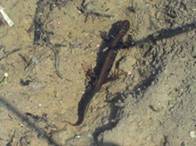
Triturus dobrogicus – Danube newt is observed in most of the Island’s swamps, canals and ponds of the river. In the Persin Island, only two of them have been detected: - at Peschina swamp – 18.03.2004 (see Annex 5). After a water level rising in the swamps, it is extremely difficult tritons to be found. Probably the two detected tritons were coming from hibernation. It has not been detected out of the Persin Island.
Triturus vilgaris vilgaris – it is quite widespread, comparing to the upper one. In some of the canals it reaches population 5 of them on m2 (18.03.2004 PS “Persina 2” canal).
Bufo bufo – this species can be seen quite often on the canals of “Persin east” protected site: 03.03.2004- three of them; 04-05.03.2004- two of them; 04.04.2004-two of them (see annex 5). The Persin Island might be considered of the so call important places for this species protection.
Rana dalmatina – one of the rare amphibian species on the Island. So far only three of them have been detected: two on 15.04.2004 into one of the concrete shafts of “Persin 2” PS and the other one at “Trapa”, near to middle embankment which divides the Island on west and east parts.
Rana rididunda – quite contrary on most expectations, ordinary water frog comes to be rare species in the central part of the Island. It has been concluded so, simply because of the lack of water, due to so often in last years drying periods. Some small representatives have been detected this year for the first time - at the end of July and the beginning of August in Dead swamp. On the Island shores, this species can be seen trough out the whole year but only in small numbers.
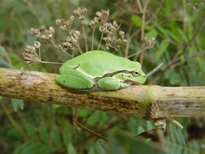
Hyla aborea – widespread species and together with fire-bellied toad are the most numerous amphibians on the Island (see annex 5). It could be observed on whole territory of the Island except for fields.
It is presumed that minimum 70% of the amphibian species are detected on Persin Island. It is expected to be found also Pelobates syriacus and Pelobates fuscus. Due to the fact that they are active mostly during nights and are supposed to be in small populations, so far those two species has not been detected on the Island. Next spring special examinations are planned to be carried out in order to be observed all species and calculating their populations. It is possible to be found Bufo viridis, which is one of the most widespread species in the rest of the park’s territory and Belene as well.
6.2.1. Monitoring Recommendations
- monitoring of old amphibians;
- the monitoring to take place at the period March – April, three times per month using the marked transects;
- monitoring of larvae – May and June, three times per month in the swamps and canals on the Island’s east part.
-6.2.2. Amphibians of conservation importance
Two different species, entered in the world Red Book – Fire-bellied toad and Tree frog proved to be quite widespread.
Common toad – Bufo bufo
Danube newt – Triturus dobrogicus
Agile frog – Rana dalmatina
6.2.3. Territory of importance for conservation species
The canals on the east part of the Island.
6.2.4. Endangering factors
Potential use of pesticide in the fields
6.3. Reptiles
There is no available literature about the reptiles on the Persin Island. At the report of “Zeleni Balkani” (Green Balkans) – “Biodiversity on Persin Island, March 2001, four species are defined:
Grass Snake (Natrix natrix)
Dice Snake (Natrix tessellata)
Balkan Wall Lizard (Podarcis taurica)
Pond Terrapin (Emys orbicularis)
During the field work examinations on the Prsina Natural Park, ten species of reptiles have been detected, four of which could easily be observe at the Persin Island.
Table 2
|
№ |
Species |
Persin Island |
Statute | ||
|
Name |
Latin name |
BL |
RB | ||
|
2 |
Balkan Whip Snake |
Coluber caspius |
|||
|
3 |
Grass snake |
Natrix natrix persa |
* |
||
|
4 |
Dice snake |
Natrix tessellatа |
* |
||
|
5 |
Green southern lizard |
Lacerta viridis meridionalis |
|||
|
6 |
Green northern lizard |
Lacerta viridis viridis |
|||
|
7 |
Balkan green lizard |
Lacerta trilineata dobrogica |
|||
|
8 |
Balkan Wall Lizard |
Podarcis tauricus tauricus |
|||
|
9 |
Meadow Lizard |
Darevskia praticola pontica |
* |
||
|
10 |
Pond Terrapin |
Emys orbicularis |
* |
+ |
|
Persin Island
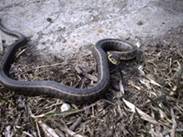
Natrix natrix – Grass snake could be observed in their two sub-species: - striped (see annex 5) and without stripes. It is widespread, but usually uses the Island for wintering. Many of them hunt in the river and a small fraction of them remain in the Island because of limited food sources. At the population counting on 22.03.2004 (see annex 1 – transect 4) on 2 km2 - 19 of them were detected – 15 with stripes and 4 without. After April, the yellow-ear water snake has been observed only on the Persin Island territory and more precisely its shores (the shore near the “fisherman’s hut”- 24.06.2004-two of them; 29.06.2004-one of them; 29.07.2004-one of them). Sometimes it could be seen near Dead swamp (as on 29.06.2004-one of them between second base and Dead swamp).
Natrix tessellata – much rarer than the one above and so far detected only one of them at the Dead swamp (11.08.2004). This is not unusual, because the Dice Snake feeds mainly with fish, while Grass Snake hunts mainly amphibians. It is expected after the process of wetlands restoration, the number of Dice Snakes to increase and also is expected more of the Grass Snake populations to stay on the Island not only during the winter season.
Darevskia praticola pontica – it the Green Balkans report, the Meadow Lizard is nowhere mentioned at all. The whole population on the Persin Island is constructed mostly of Darevskia praticola pontica. For a very first time, the Meadow Lizard was detected on 18.03.2004 at Protected Site “Persin East”, on the canal’s side bank near “Persin 2” PS. Especially on sunny places, they may run over 3-4 of them on m2. On the Persin Island has not been observed another species of Lizards (see annex 5). Meadow Lizard has quite thick population, it might be discovered almost everywhere on the Island’s territory (canal banks and swamps, embankments, forests and another sunny places) with exception of fields. Interesting is the fact that at the rest of Persin’s territory, we have not detected Meadow Lizard so far. The Persin Island might be the only place that species of lizard occupies from whale the park’s territory.
Emys orbicularis – the species is well represented. It was seen in swamp at the beginning of the wetlands restoration territory (22.05.2004-19 of them), on Dulova bara (15.04.2004 – one of them), in the second canal near the road leading to “Persin 2”PS (22.03.2004 – three of them), in an excavation near an embankment on the southern part of the Island, where the broken embankment – “Skasanata diga”(Broken embankment)- connects itself to the main one (see annex 5). Most likely, the lizard could be observed near the Dead swamp and Peschinsko.
With the stated examinations we believe that the species structure of the reptiles occupying the Persin Island is practically defined. Any major alteration of the list of species is not expected. If new species are about to be found and detected, there will be no major population. In spite of that, it is possible new species to enter and to be detected on the Island’s territory, which are ordinary and even highly widespread across the park.
6.3.1. Monitoring Recommendations
- monitoring of old reptiles – March-April, once per week every year
- already marked transects and roads to be used which are shown on the maps
6.3.2 Reptiles of conservation importance
Two of them: - Pond Terrapin (Emys orbicularis) and Meadow Lizard (Darevskia praticola pontica) which may be seen only on the Island’s territory.
6.3.3. Territory of importance for conservation species
Canals and swamps in the Islands’ east half.
6.3.4. Endangering factors
Not identified
6.4. Mammals
The mammals on the Persina Park are not very well examined and other examinations before the project implementation have not been carried out. Information and data for the mammals we have been able to find in “Zeleni Balkani”(Green Balkans) report – “Biodiversity of Belene Island, March 2001. It describes 38 different species of mammals which occupy the Danube plain. At the Bern convention (see annex 2), considerable attention is paid to the river otter (Lutra lutra), as well as to the enormous wide spreading of Wild Boar (Sus scrofa).
Up until now (20.08.2004), the PCU has not performed any activities related to the monitoring of mammals. According to the field’ examinations on the Persina NP territory, 11 species of mammals have bee detected.
Table 3
|
№ |
Species |
Persin Island |
Statute | ||||
| Name |
Latin name |
BL |
RB |
IUCN Redlist |
BERN | ||
|
1 |
Roe Deer |
Capreolus capreolus |
* |
III | |||
|
2 |
Stone marten |
Martes foina |
* |
III |
З |
III | |
|
3 |
Fox |
Vulpes vulpes |
* |
||||
|
4 |
Jackal |
Canis aureus |
* |
IV |
|||
|
5 |
Hare |
Lepus europeas |
* |
III | |||
|
6 |
European souslik |
Spermophilus citellus |
* |
II |
VU A1c |
II | |
|
7 |
Wild cat |
Felis silvestris |
* |
IV |
II | ||
|
8 |
Noctule bat |
Nyctalus noctula |
II;III |
II | |||
|
9 |
Badger |
Meles meles |
III |
III | |||
|
10 |
Mole |
Talpa europaea |
* |
||||
|
|
Hedgehog |
Erinaceus concolor |
|
III |
|||
 11
11
Persin Island
On the Persina Island eight species of mammals so far have been detected:
Spermophilus citellus – observed only once in 14.07.2004 on the road between pontoon bridge and 1st zone. The Souslik is protected species, entered in the world red list of protected animals. In Bulgaria places still remain where some of them could be observed in not a small numbers. With the fast growing process of agricultural developments and the use of more pesticide and manure, the wetlands restoration territory on the Persin Island is likely to be considered as an important place for developing of souslik populations in the Persina Natural Park territory.
Capreolus capreolus – Seen on 08.04.2004 at the protected site “Persina East”, 15.07.2004 near to the Broken embankment and on 30.07.2004 crossing the concrete road near to Peschinsko swamp. According the information from Persin’s workers, the roe population has gradually decreased in the past years.
Martes foina – seen just once on 14.07.2004 on a path between the pontoon bridge 1st zone.
Vulpes vulpes - seen on 28.05.2004 on the Southern embankment and on 28.07.2004 young one in the Persin Island’s west part near the “Granda”.
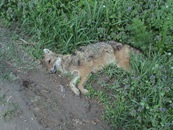
Canis aureus – has not been seen alive. On 15.04.2004 dead one (see annex 5) on the Broken embankment.
Lepus europeas – seen only once in Dulova Bara on 15.04.2004
Felis silvestris – night active. It was seen two times on 04.05.2004 near the southern embankment, close to the Pump station and on 10.06.2004 on the broken embankment near “Trapa” place.
Field examination observations on the Persin Island and more precisely around Dead swamp and Peschinsko, clearly show signs of mole tracks and most likely it is Talpa europaea. More careful examinations have not been done.
During the embankment observations on the Perin Island, we have detected a lot of the Badger’s hiding holes and we are pretty much sure that it is Meles meles. Badgers are one of the problems, which the department working on embankment maintenance experiences and try to come up with solution, because the holes are quite long and often get to about 15-20 m long. There is a danger of embankment failure. Workers often destroy the badger’s hiding places.
Interesting is the fact that everywhere in the literature, a strong and huge Wild Boar population is described (Sus scrofa), but under our observations we still have not detected any. Wild boars are active usually in early mornings and evenings and around the swamps, marks and traces are clearly recognizable.
According to information from the Island’s workers, there is a presence of a Red Deer (Cervus elaphus). Often in time of observation, we are able to see tracks and marks similar to these of the royal slag (29.07.2004), but apart from that we do not possess any further proof. Under the carried out observations we have not seen any Red Deer, Wild Boar or Badgers but the above stated facts show their actual presence.
As a result from our observations and examinations we believe that we managed to defined about 75% of the large mammal species, but here are not included the species we have not observed (Red Deer, Wild Boar and Badgers). The possibility of new species to show off is not or less likely.
At the autumn of 2004, our PCU will execute small mammal monitoring aiming to define their species structure.
Monitoring of Bats has not been carried out.
6.4.1. Monitoring Recommendations
Large mammals monitoring: – trough out the whole year and filed examinations of marks and traces.
Small mammals monitoring:
- Inventory making – during autumn - August and September, at least 10 training examinations every 3 years.
- Counting the old once – early spring after the hibernation process, at least 2 weeks every day, every year.
Methods: transects using traps and marking
6.4.2. Endangering factors
It is the potential use of pesticides at the fields. Also there is a possibility after the wetlands restoration process and the flooding some of them to be reduced in numbers.
It is quite probable that the new environment will be occupied by new species connected closer to water.
6.5. Birds
There is an enormous amount of data and literature about the Island’s birds but generalized and detail information we obtain from “Green Balkans” report – “Biodiversity of Belene Island, March 2001”. It contains 154 described species.
Under the close examinations carried out by PCU, on the Persina NP territory up until now 99 different species of birds have been detected and observed and 84 of them could be seen on the Island.
Table 4
|
№ |
Spicies |
Persin Island |
Statute | ||||
|
Name |
Latin name |
BL |
RB |
IUSN Redlist |
BERN | ||
|
1 |
Great Reed Warbler |
Acrocephalus arundinaceus |
* |
+ |
II | ||
|
2 |
Sedge Warbler |
Acrocephalus schoenobaenus |
* |
+ |
|||
|
3 |
Kingfisher |
Alcedo atthis |
* |
+ |
II | ||
|
4 |
Shoveler |
Anas clypeata |
* |
+ |
III | ||
|
5 |
Mallard |
Anas platyrhynchos |
* |
+ |
III | ||
|
6 |
Garganey |
Anas querquedula |
* |
+ |
III | ||
|
7 |
Gadwall |
Anas strepera |
+ |
З |
III | ||
|
8 |
Greylag Goose |
Anser anser |
* |
+ |
З |
III | |
|
9 |
Swift |
Apus apus |
+ |
||||
|
10 |
Lasser Spotted Eagle |
Aquila pomarina |
* |
+ |
З |
II | |
|
11 |
Grey Heron |
Ardea cinerea |
* |
+ |
III | ||
|
12 |
Purple Heron |
Ardea purpurea |
* |
+ |
З |
II | |
|
13 |
Squacco Heron |
Ardeola ralloides |
* |
+ |
II | ||
|
14 |
Pochard |
Aythya ferina |
* |
+ |
З |
III | |
|
15 |
Ferruginous Duck |
Aythya nyroca |
* |
+ |
З |
LR/nt |
III |
|
16 |
Stone-curlew |
Burchinus oedicnemus |
+ |
З |
II | ||
|
17 |
Common Buzzard |
Buteo buteo |
* |
+ |
II | ||
|
18 |
Long-legged Buzzard |
Buteo rufinus |
+ |
З |
|||
|
19 |
Goldfinch |
Carduelis carduelis |
* |
+ |
III | ||
|
20 |
Greenfinch |
Carduelis chloris |
* |
+ |
III | ||
|
21 |
Little Ringed Plover |
Charadrius dubius |
+ |
II | |||
|
22 |
Whiskered Tern |
Chlidonias hybrdus |
* |
+ |
З |
II | |
|
23 |
White stork |
Ciconia ciconia |
* |
+ |
II | ||
|
24 |
Black stork |
Ciconia nigra |
* |
+ |
З |
II | |
|
25 |
Marsh Harrier |
Circus aeruginosus |
* |
+ |
З |
II | |
|
26 |
Stock Dove |
Columba oenas |
* |
+ |
З |
III | |
|
27 |
Wood Pigeon |
Columba palumbus |
* |
+ |
III | ||
|
28 |
Roller |
Coracias garulus |
* |
+ |
II | ||
|
29 |
Hooded Crow |
Corvus coronae cornix |
* |
||||
|
30 |
Rook |
Corvus frugilegus |
* |
||||
|
31 |
Jackdaw |
Corvus monedula |
* |
||||
|
32 |
Quail |
Coturnix coturnix |
* |
+ |
III | ||
|
33 |
Cuckoo |
Cuculus canoris |
* |
+ |
III | ||
|
34 |
House Martin |
Delichon urbica |
+ |
II | |||
|
35 |
Syrian woodpecker |
Dendrocopos syriacus |
+ |
II | |||
|
36 |
Great Spotted Woodpecker |
Dryocopus martius |
* |
+ |
P |
II | |
|
37 |
Great Egret |
Egretta alba |
+ |
З |
II | ||
|
38 |
Little Egret |
Egretta garzetta |
* |
+ |
II | ||
|
39 |
Yellowhammer |
Emberiza citronella |
* |
+ |
III | ||
|
40 |
Reed Bunting |
Emberiza schoeniclus |
* |
+ |
II | ||
|
41 |
Robin |
Erithacus rubecula |
* |
+ |
II | ||
|
42 |
Hobby |
Falco subbuteo |
* |
+ |
З |
II | |
|
43 |
Kestrel |
Falco tinunculus |
* |
+ |
II | ||
|
44 |
Vhaffinch |
Fringilla coelebs |
* |
+ |
III | ||
|
45 |
Coot |
Fulica atra |
* |
+ |
III | ||
|
46 |
Crested Lark |
Galerida cristata |
+ |
III | |||
|
47 |
Snipe |
Gallinago gallinago |
* |
+ |
И |
||
|
48 |
Moorhen |
Gallinula choropus |
* |
+ |
III | ||
|
49 |
Jay |
Garrulus glandaris |
* |
+ |
|||
|
50 |
White-tailed Eagle |
Haliaeetus albicilla |
* |
+ |
З |
LR/nt |
II |
|
51 |
Black-winged Stilt |
Himantopus himantopus |
* |
+ |
З |
||
|
52 |
Red-rumped Swallow |
Hirundo daurica |
+ |
||||
|
53 |
Barn Swallow |
Hirundo rustica |
* |
+ |
II | ||
|
54 |
Little Bittern |
Ixobrychus minutus |
* |
+ |
II | ||
|
55 |
Wryneck |
Jynx targuilla |
* |
+ |
II | ||
|
56 |
Red-backed Shrike |
Lanius collurio |
* |
+ |
II | ||
|
57 |
Great Grey Shrike |
Lanius minor |
* |
+ |
II | ||
|
58 |
Yellow-legged Gull |
Larus cachinnans |
III | ||||
|
59 |
Black-headed Gull |
Larus ridibundus |
+ |
P |
III | ||
|
60 |
River Warbler |
Locustella fluviatilis |
* |
+ |
II | ||
|
61 |
Savi’s Warbler |
Locustella luscinioides |
* |
+ |
II | ||
|
62 |
Nightingale |
Luscinia megarhinchos |
* |
+ |
II | ||
|
63 |
Bee-eater |
Merops apiaster |
* |
+ |
II | ||
|
64 |
Corn Bunting |
Miliaria calandra |
* |
+ |
III | ||
|
65 |
Waite/Pied Wagtail |
Motacilla alba |
+ |
||||
|
66 |
Yellow Wagtail |
Motacilla flava |
* |
+ |
II | ||
|
67 |
Spotted Flycatcher |
Muscicapa striata |
* |
+ |
II | ||
|
68 |
Night Heron |
Nicticorax nicticorax |
* |
+ |
II | ||
|
69 |
Golden Oriole |
Oriolus oriolus |
* |
+ |
II | ||
|
70 |
Blue Tit |
Parus caeruleus |
* |
+ |
II | ||
|
71 |
Great Tit |
Parus major |
* |
+ |
II | ||
|
72 |
House Sparrow |
Passer domesticus |
* |
||||
|
73 |
Spanish Sparrow |
Passer hispaniolensis |
* |
+ |
|||
|
74 |
Tree Sparrow |
Passer montanus |
* |
+ |
|||
|
75 |
Dalmatian Pelican |
Pelecanus crispus |
* |
+ |
З |
LR/cd |
II |
|
76 |
Honey Buzzard |
Pernis apivorus |
* |
+ |
З |
II | |
|
77 |
Pygmy Cormorant |
Phalacrocorax pygmaeus |
* |
+ |
З |
LR/nt |
II |
|
78 |
Cormorant |
Phalocrocorax carbo |
* |
+ |
З |
III | |
|
79 |
Pheasant |
Phasianus colchicus |
* |
+ |
III | ||
|
80 |
Magpie |
Pica pica |
* |
||||
|
81 |
Spoonbill |
Platalea leucorodia |
* |
+ |
З |
II | |
|
82 |
Glassy Ibis |
Plegadis falcinellus |
* |
+ |
З |
II | |
|
83 |
Red-necked Grebe |
Podiceps grisegena |
* |
+ |
P |
II | |
|
84 |
Penduline Tit |
Remiz pendulinus |
* |
+ |
III | ||
|
85 |
Sand Martin |
Riparia riparia |
* |
+ |
II | ||
|
86 |
Whinchat |
Saxicola rubetra |
* |
+ |
|||
|
87 |
Little Tern |
Sterna albifrons |
+ |
З |
II | ||
|
88 |
Common Tern |
Sterna hirundo |
+ |
II | |||
|
89 |
Collared Dove |
Streptopelia decaocto |
* |
||||
|
90 |
Turtle Dove |
Streptopelia turtur |
* |
+ |
III | ||
|
91 |
Starling |
Sturnus vulgaris |
* |
||||
|
92 |
Little Grebe |
Tachybaptus ruficolis |
* |
+ |
II | ||
|
93 |
Wood Sandpiper |
Tringa glareola |
* |
+ |
|||
|
94 |
Green Sandpiper |
Tringa ochropus |
* |
+ |
З |
II | |
|
95 |
Wren |
Troglodytes troglodytes |
* |
+ |
II | ||
|
96 |
Blackbird |
Turdus merula |
* |
+ |
III | ||
|
97 |
Song Thrush |
Turdus philomelos |
* |
+ |
III | ||
|
98 |
Hoopoe |
Upupa epops |
* |
+ |
II | ||
|
99 |
Lapwing |
Vanellus vanellus |
* |
+ |
III | ||
Persin Island
From the above exposed species, only to some of them with special conservation importance for the wetlands will be paid attention.
Podiceps grisegena – rare species, defined by us near Dead swamp by its specific nose - three times (15.04.2004 – 7, 8 of them; 10.06.2004 – 15 of them). 1998 – 5, 6 pairs and 10-15 during 2001 and 2003 (Tzonev, R., Shurulinkov,P., Nikolov, B., Stojanov, G. Asenov, L./ script ). In the past: 20 – 25 couplse (Ivanov, 1985).
Tachibartus ruficolis – more often seen than the other one. On Dead swamp we have got around 10 pairs (11.08.2004 – 15 of them, 05.08.2004 – 11, 21.07.2004 – 3), on Peschinsko swamp – 5 (13.07.2004 – 1, 21.07.2004 – 5, 27.07.2004 – 4 and 29.07.2004 – two of them).
Phalocrocorax carbo – quite often can be observed on the Danube River. On the Persin Island territory has been seen fling by. Nesting birds have not been detected no the Island. Close to 573 kilometer on the two nameless Romanian Islands, there is mixed colony of cormorants and herons which is not examined. In 2003 there were 310 Great cormorant nests, situated on big black poplars (Tzonev, R., Shurulinkov,P., Nikolov, B., Stojanov, G. Asenov, L./ script ). This colony is considered to be а successor of old mixed cormorant-heron colonies on the Persin Island.
Phalacrocoras pygmaeus – rarer seen species. On the Persin Island in 2004 was registered as nesting. Most likely around 10 -15 pairs are nesting in the above described colony. On the Island’s territory it was observed flying by, and more precisely near Dead swamp (10.06.2004 – 2; 13.07.2004 – 3; 27.07.2004 – 10; 05.08.2004 – 1; and 11.08.2004 – 3).
Pelecanus crispus – could be observed mainly during late summer, autumn and winter. Usually it may be seen on the two nameless Rumanian Islands’ sand stripes, opposite HTC (Hydro-technology complex). It is detected to fly on the Island and landed near Dead swamp (10.06.2004). It has been seen to hunt with a flock of big cormorants on the Belene beach (07.06.2004 – 2; 23.07.2004 – 3; 11.08.2004 – 44 of them). It is not detected to nests on the Persina Island. In the past it use to nest – 10, 12 pairs altogether, 1958 (Paspalieva – Antonova, 1961).
Nicticorax nicticorax - probably nests in the colony of two nameless Romanian Island. Nests on the Persin Island have not been detected. Sometimes it forms small groups near Dead swamp (11.08.2004 – around 70, 80 birds). It is often seen to feed near and around Danube and Belen region. In 1998 in the Belene Islands’ region, it use to nest - around 25 pairs, 2001 – 11 pairs (Tzonev, R., Shurulinkov,P., Nikolov, B., Stojanov, G. Asenov, L./ script ).
Ardeola ralloides - most likely it nests on the Romanian Island archipelago. Nests on the Perin Island have not been detected. It is observed feeding around Danube, near to Belene region.
According to B. Ivanov during 1968 – 1971, there use to breed around 380 – 5197 pairs on the Persin Island. In 1983 the population decreased to 58 pairs.
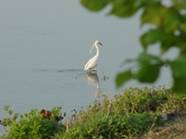
Egretta garzetta – Probably nests on the Rumanian Island archipelago. Nests have not been detected on the Perin Island. Often seen to feed near the Danube river on the east and west part of Belen (see annex 5). Small numbers are observed to fly over the Perin Island. The numbers of nests are not examined closely. In the Belene Islands archipelago in 1998 – 30 nesting pairs; 2001 – 33 nests (Tzonev, R., Shurulinkov,P., Nikolov, B., Stojanov, G. Asenov, L./ script ). It was seen for a first time in 2004 on the Island’s territory, early spring – 15.04.2004 – 2 of them in Dead swamp.
Ardea cinerea – the grey heron is in a smaller population than the previous one. Most likely it nests at the Romanian Island archipelago as well. Nests on the Persin have not been detected. In small flocks have been observed to fly above the project territory. Often is seen to feed around Belene. Nests in the Persin Island region: 1998 – 15; 2001 – 13 (Tzonev, R., Shurulinkov,P., Nikolov, B., Stojanov, G. Asenov, L./ script ).
Ardea purpurea – It is extremely rare species and has been seen only on the Persin Island. Most likely nests in small groups: 1-2 pairs near Dead swamp or the detected once are early migrants (27.07.2004 – 2; 05.08.2004 – 1). In the past 1968-1983 on the Persin Island use to nest 1-70 pairs (Ivanov, 1985).
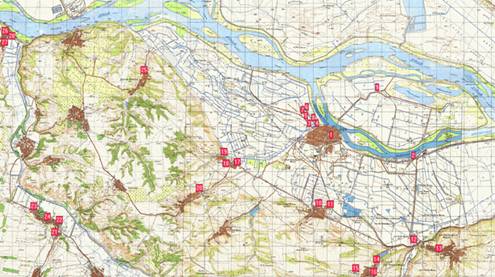
Ciconia ciconia – At the Persina NP region, 10 nests have been marked as follows: Belene – 9, youngsters – 20; Dragash Voivoda – 1 with 4 youngsters (see annex 2|). On the Persina Island only one nest is marked, where this year no birds nested. The Persin Island territory is a preferred feeding place for the White stork. The Island is a proper place for gathering of birds, right before autumn migration (28.05.2004 – 10; 10.06.2004 – 53; 28.07.2004 – 58 birds). The autumn migration at the Persina NP has commenced after the 3rd week of August.
Ciconia nigra – the black stork is rarely seen bird on the Persin’s territory. Outside of the Island, it was observed to feed mainly in the flooded from the river territories around Belene (15.06.2004 – 1). Most likely there are a few (1-2 pairs) of them nesting on the territory of Persin and Goliama Barzina Islands. On the Persin Island territory, a black stork was detected to feeds and rests near Dead swamp 13.08.2004 – 2 of them, Peschinsko swamp 26.05.2004 – 2 flying once, the swamp at the very beginning of wetland territory – 28.07.2004 – 1 flying, south embankment – 22.03.2004 -1 flying, “Persin 2” PS – 22.03.2004 – 12 flying.
Platalea leucorodia – it has not been detected as a nesting species on the Persin Island. Most likely there are about 10 nesting couples in the Romanian Islands. It happens to feed itself in the flooded areas, east of Belene, transect 13 (see annex 1) 28.05.2004 – 1, 04.06.2004 – 7, 07.06.2004 – 17, 09.06.2004 – 16, 10.06.2004 – 11. In 1999 was detected 15 and in 2001 between 5 – 10 nests (Tzonev, R., Shurulinkov,P., Nikolov, B., Stojanov, G. Asenov, L./ script ). On the Belen Island in1968 – 71 it use to nest irregularly – about 61 pairs at the time (Ivanov, 1985).
Plegadis falcinellus - observed only once on 05.08.2004 hear Dead swamp: 15 – 20 pairs. It has not been detected during breeding period. Probably it was wounded.
Anas platyhynchos – small number species. Nests in Dead swamp and Peschinsko: 15 – 20 pairs. On the Persin Island was detected during March – to the end of the period (Dead swamp – 18.03.2004 – 8 pairs, 05.08.2004 – 29 singles; Pescinsko 28.05.2004 – 2 pairs). In 1998 at the swamps and forests of Belene Island 550 – 600 singles (Tzonev, R., Shurulinkov,P., Nikolov, B., Stojanov, G. Asenov, L./ script ).
Anas clypeata – It is rarely seen species. Nests in Dead swamp – around 5 to 10 pairs. On 11.08.2004 – 40 of them were observed but not all of them were breeding.
Anas querquedula – small number species and nests in the swamps of Persina Island. Seen near Dead swamp and Peschinsko, about 15 – 20 pairs (15.04.2004 – 55, 27.07.2004 – 4, 05.08.2004 – 23, 11.08.2004 – 60)
Aythya ferina – small population. Nests in the Island’s swamps- 15 to 20 pairs (Dead swamp: – 21.05.2004 – 2, 10.06.2004 – 13, 11.08.2004 – 30 and Peschinsko swamp: – 28.05.2004 – 6, 27.07.2004 – 4).
Aythya nyroca – rare species and also world threatened once. It nests in the swamps of Persin Island – about 10 pairs. In Dead swamp and Peschinsko swamp: - 4, 5 (Dead swamp – 10.06.2004 – 6, 13.07.2004 – 4, 11.08.2004 – 10 and Peschinsko – 10.06.2004 – 9, 29.07.2004 – 2). It was detected in the artificial lake near Kolina voda during the breeding period (18.06.2004 – 2 males). Most likely, it also nests on the Goliama Barzina Island in small numbers – 2 to 3 pairs.
Aquila pomarina – the small screaming eagle is rare species. On the Persiana Island up until now, nests have not been detected on Persin Island. It was seen flying above the project’s territory on 30.07.2004 – 1 single, 13.08.2004 – 2 singles. Most likely 1 or 2 pairs exist on the Goliama Barzina Island.
Haliaeetus albicilla – extremely rear species, nesting on the Persin Island. Nests have been located mainly on old poplar trees on the Islands’ territory: 4 in the Belene Islands archipelago and 2 of them in the Nikopol Island archipelago. Unfortunately we have not examined the breeding rates so far.
Crex crex - accorting the literature, it nests on the Persin Island (Green Balkans). The observation processes present no signs of it on the Island. Any further examinations have not been carried out.
Chlidonias hybrdus – small numbers. During mentioned period, it has been observed to nest only on the Persin Island territory near Dead swamp. There are approximately 50 -60 pairs nesting. For a very first time, whit cheek fisher was detected on the Persin Island this year – 21.05.2004. The colony was situated on the east part of Dead swamp in areas of Nymphoides peltata and Rorippa amphibia.
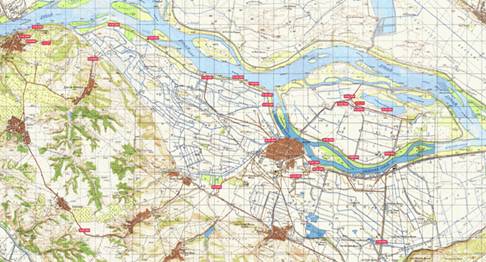
Lanius minor - small number population. It is a territorial bird and that is why, it was possible to be mapped correctly (see annex 3). On the territory of Persin Island 8 breeding pairs have been seen and on the whole park’s territory – 27.
On the ground of our examinations, it is quite obvious the enormous populations of Red-baked Shrike (Lanius colurio) and Pheasant (Phasianus colchicus).
From estimating the effectiveness of our preliminary examination and observation processes we declare that around 70% of all birds’ populations on the Persin Island have been observed and detected. Our on field observations took place during April-August period. We do not possess any information about the Owls, a part of Passerines, Migrating and Wintering birds. Mainly because of the specific permition procedure on the Persin Island, general observations have not been executed. After the wetlands restoration on the Persin Island, the number of water-living birds is expected to increase, as well as some of the birds nesting around also to nest on the Island. The number of globally threatened species like Ferruginous Duck is expected to rise in number as well as other waterfowls.
6.5.1. Monitoring Recommendations
Monitoring of nesting species:
- two time per month in the April-June period, each year. The monitoring is to be carried out according a described transects and observation spots.
Monitoring of migrating species:
- two times per month in the period starting from August to the first cold day, each year. The observation spots are necessary to be mainly along the Danube River, where a lot of nights spending birds gather. On the Persin Island main land, a bird gathering is not expected. Every year the observation spots for migration will be changed according to the river level. In the process of situating the observation spots, it is necessary a gathering of birds to be detected along the river.
Monitoring of winter spending species:
- one time per month in the December-March period each year. The observation spots should be along the Danube River and the inside wetlands.
Used methods:- transects and spots marked on a map, as well as additional spots according to the current situation and location.
6.5.2. Birds of conservation importance
The species defined above. Quite important for the wetlands restoration is all water-living birds to be periodically observed. It is necessary because the flooding will have a big influence of their occupation environment.
6.5.3. Territory of importance for conservation species
The Dead, Peschinsko and Dulova bara, the swamp formed in the beginning of project territory and the smaller swamps in the “Persina East “protected site.
6.5.4 Endangering factors
Such an endangering factor is mostly the live stock from Belene Prison farms, which causes disturbance to different breeding pairs on the Island.
7. General characteristic of the defined biodiversity
After detailed examinations and observations on the “Persina” NP territory, as a component of the “Wetlands Restoration and Pollution Reduction Project”, the following has been concluded:
Persin Island
The swamps’ territory on the Island has been gradually occupied by reed and rush and with every passing year they become shallower and smaller. Water mirrors are difficult to be found and the swamp territories decrease dramatically from organic material and flora. In the resent years in Dead swamp, a small willow forest has begun to form – more precisely on the east part (“Varbov ezik”-willow tongue). The White Water Lily (Numphea alba) has disappeared and also the Yellow Pond Lily (Nymphur luteum) and Water Chestnut (Trapa natans). The invasive plant species Indigo brush (Amorpha fruticosa) is fast expanding and replaces other species widespread in the region.
The fact that all the existing swamps on the Island are not regularly flooded is a reason for their decrease in numbers and fauna species structure changes. The lack of ihthyofauna and the small number of amphibians leads to increasing of mosquitoes which is considered as a main problem for the people living around the wetlands.
Breeding colonies of Great Cormorant, Pygmy Cormorant, Little Egret, Squacco Heron, Night Heron, Grey Heron, Spoonbill and Glossy Ibis have not been observed on the Persin Island. During the so mentioned period, a glossy ibis was seen once in the beginning of August. During the nesting period it is not observed, which leads us to the conclusion that it does not nest on and around the Persina NP territory.
A nesting pair of Sea Eagles remains on the Island. Probably in the past sea eagle could have been observed more often. We were able to find a lot of nests deserted from Sea eagles.
The globally threatened species Corncrake has not been found on the Island.
Quite optimistic is the fact that with a water coming into the swamps it attracts other water-living species as Pochard, Ferruginous Duck, Whiskered Tern, Moorhen and Coot, which prefer the rich on vegetation swamps. If the swamps have got any connecting spots with the river and the water stays through out all year round or at least long enough for fish to breed easily, then there is a possibility a many of the nesting birds around to start occupying the Persin Island. It offers optimal conditions for new colonies. The only problem comes to be the feeding resources, which are limited and because of that the birds fly away to other more productive lands and territories.
8. Bibliography
Tzonev R., Surulinkov P., Nikolov B., Stoianov G., Asenov L. Birds of the middle Danube plain. Script.
BAS (1985), Red book of Bulgaria. 2nd edition, Animals.
BAS (1978), Limnology on the Danube River, Bulgarian sector. Edition – BAS
Green Balkans (2001). Biodiversity of Belene Island. Report on al.6 from the edition of the contract from Zeleni Balakni and WWF – Greece, 2000.
Ivanov B. (1985b) Colony nesting birds on the Belene Island. International conference for project 8 – MAB (UNESCO) – “Nature territory protection and existing genetic elements” 23-28.09.1985, Blagoevgrad, report books: 296-305
Kostadinova I., (1997) Important Bird Areas in Bulgaria. BSBP, Nature protection edition, book 1, Sofia
Kostadinova I., Derliev S.: Results of waterfowl’s midwinter counting in Bulgaria for 1997-2001 periods, BSBP Nature protection edition – book 3, 2001
Kochev H., Jordanov D (1981) Wetlands biodiversity of Bulgaria. BAS Institute of Botany
Mihov S., (2002) Field guide of the amphibians in Bulgaria. Bulgarian – Swiss program for biodiversity protection. Buragas Wetlands Project
Paspaleva M. (1970) “Babush” is coming down the river. The National Youth - Sofia.
Petrov Tz., Minchev T. – (1985) Nest spreading, numbers and protection of Marsh Harrier (Circus aeruginosus Linaeus, 1758) in Bulgaria. International conference for project 8 – MAB (UNESCO) – “ Water territory is genetic fund” 23-28.08.1985, Blagoevgrad, report books: 305-312
Iankov P., (2002) Globally threatened species of birds in Bulgaria. National protection strategy – part 1
9. Annex
9.1. Annex 1
Transect and spot locations for observation at the Persina Natural Park territory.
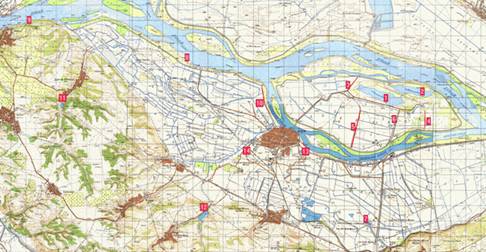
Key explanations of transects and observation spots:
1. Persin Island. Observation spot on Pescinsko swamp. Coordinates: - 43o 40,104 N; 25012,575E
2. Persin Island. Observation spot on Dead swamp. Coordinates: - 43040,371 N; 25014,358E
3. Persin Island – “ Paving transects” – at the beginning of wetlands restoration territory. Form the east side a swamp has been formed. Coordinates: - beginning 43040,512 N; 25010,676E, end 43041,002 N; 25011,161E
4. Persin Island – “Small transect”. Transect at the PS”Persin East” for birds and reptiles observation. Coordinates: - beginning - 43039,183 N; 25014,492E, end 43039,876 N; 25014,503E
5. Persin Island – “Skasanata Diga” (Broken Embankment). Transect on the embankment separating the project’s territory from the fields. Coordinates: - beginning 43о39,816 N; 25o11,338E, end -43о38,562 N; 25o10,9241E
6. Persin Island – observation spot on the road near Pump Station 2 – deserted field of Belene Prison. Coordinates: - 43о39,383 N; 25o13,005E
7. “Kaikusha” Protected Site. Coordinates: - 43о35,858 N; 25o11,736E
8. Hidden for observation (Belene-hydro – technology complex). Coordinates: - 43о41, 364 N; 25o02, 789E
9. “Plavala” Protected Site. Coordinates: - 43о42, 541 N; 24o55, 025E
10. Transect for birds observation on the Belene western embankment. From the out side part of the embankment toward Danube River, temporary swamps have been formed. Coordinates: - beginning -43о39, 534N; 25o06, 963E, end -43о40, 557 N; 25o06, 495E
11. Reserve near Dragash Voivoda village. Coordinates: - 43о39, 828 N; 24o56, 752E
12. Reseve near Kaikusha villige. Coordinates: - beginning -43о36, 150 N; 25o03, 805E
13. Transect for birds observation on the Belene east embankment. From the outside part of the embankment toward Danube River, swamps have been formed. Coordinates: beginning – 43о38, 654 N; 25o08, 554E, end -43о38, 399 N; 25o08, 903E
14. Observation spots for ordinary and predatory birds no the Belene’s surrounding road. Coordinates: - 43о38, 150 N; 25o05, 809E
9.2. Annex 2
Nesting spots of White Stork (Ciconia ciconia) on the Persina Natural Park territory
9.3. Annex 3
Nesting spots of Lesser Grey Shrike (Lanius minor) on the Persina Natural Park territory.
9.4. Annex 4
Persina Island. The Dead Swamp prior and after flooding.
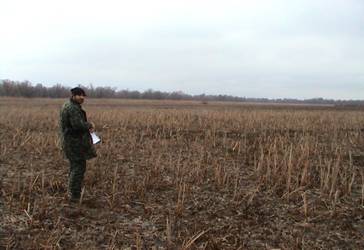
The Dead Swamp - 25.02.2004
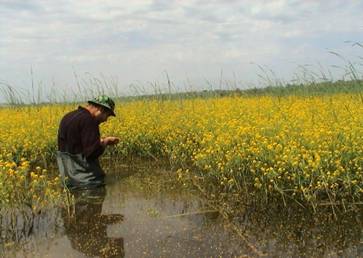
The Dead Swamp -13.05.2004
9.5. Annex 5
Some interesting species on the Persina Natural Park territory
|
Persin Island- Danube newt (Triturus dobrogicus) |
Persin Island- Tree frog ( Hyla arborea) |
|
Oresh Village – Spade-foot toad (Pelobates fuscus) |
Persin Island- Common toad (Bufo bufo) |
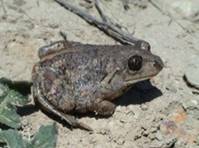
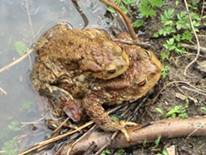
|
Persin Island- Pond Terrapin (Emys orbicularis) |
Persin Island- Meadow Lizard (Darevskia praticola pontica) |
|
Persin Island- Grass snake (Natrix natrix persa) |
Belene- Little Egret (Egreta garzeta) |
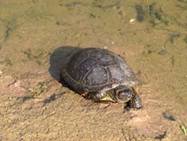
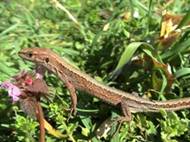
|
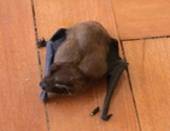
Belene- Noctule bat (Nyctalus noctula) |
Persina Island- Jackal /Dead/ / (Canis aureus) |
|
Dragash Voivoda Village /reserve/- European souslik (Spermophilus citellus) |
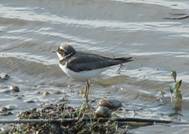
Belene /Belene beach/- Little Ringed Plover ( Charadrius dubius) |