|
1
|
|
|
2
|
- Presentation of HELCOM
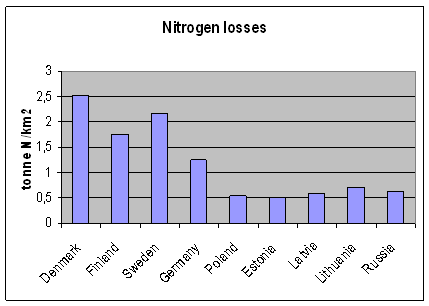
- Results and trends in nutrient loads
- Future work on nutrients
- How does the BSRP contribute to this work
- Conclusions
|
|
3
|
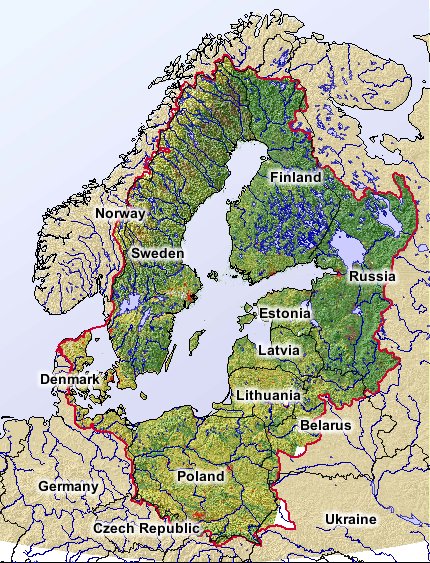
- 85 million people
- Brackish water
- Low temperature
- Long residence time of water
- Slow degradation of hazardous substances
|
|
4
|
- Governing body of the Helsinki Convention
- International co-operation for the protection of the marine environment
of the Baltic Sea area since 1974
- 1992 the new Convention on the Protection of the Marine Environment of
the Baltic Sea Area was signed (entered into force Jan 2000)
|
|
5
|
- to protect the marine environment of the Baltic Sea from all sources of
pollution
- to restore the ecosystem and preserve its balance
- to ensure sustainable use of the natural resources
|
|
6
|
- à All resulting in visible
improvements of the Baltic Sea, fauna and flora in the Baltic Region
|
|
7
|
- Based on the eco-system approach:
- Joint monitoring and assessment;
- Nature conservation and biodiversity;
- Eutrophication;
- Hazardous substances relevant for the Baltic Sea;
- Maritime safety and shipping, including response activities
|
|
8
|
|
|
9
|
|
|
10
|
|
|
11
|
|
|
12
|
|
|
13
|
|
|
14
|
- Plant nutrients
- E.g. animal density, manure storage, application of organic manures
- Application rates for nutrients, winter crop cover
- Water protection measures and nutrient reduction areas
- Plant protection products
- Registration and approval, storage and handling
- Application technology, testing of spraying equipment
- Environmental permits, monitoring, education,
|
|
15
|
- The Ministers acknowledged:
- Agriculture main source of nitrogen input, especially in present EU
countries
- EU enlargement may lead to even higher nutrient inputs
- Measures agreed:
- more sustainability through implementation of reforms in the Common
Agricultural Policy
- implementation of related EU directives important as well as Annex III
of the Helsinki convention
- to ensure efficient nutrient utilisation
|
|
16
|
- Less work to have new requirements
- Environmental focal point influencing decision making in other fora
- use of tools to assess the implications of different policy scenarios,
including implementation of EU CAP
- indicate the most cost-effective measures of most important pollution
sources
- Identify where to implement these measures
- address inputs from other sources of nutrients, such as airborne
nitrogen and small municipalities
|
|
17
|
- HELCOM has been prioritizing the use of the ecosystem approach for
setting especially tailored ecological quality objectives (EcoQOs) for
the Baltic Sea.
- EcoQOs will provide the Baltic Sea region with the tools for setting
“measurable” future policy goals and a means to evaluate management
outcomes.
- The BSRP goal to improve the management of all relevant activities by
introducing an ecosystem approach will contribute to this work
- The integration of open sea and near shore activities is important
(filling in gaps)
|
|
18
|
- Capacity Building and Institutional Strengthening, raising awareness of
farmers –forms the basis of improved implementation of measures
- Development of tools and mechanisms for investments -helps to implement
HELCOM regulations at farm level and GAP codes
- Nutrient balance calculations –link between investments and
environmental effects.
|
|
19
|
- Monitoring and assessment activities supports HELCOM work:
- improved data on loads from agriculture
- links the activities on land to the effects in the sea
- The modelling work can contribute directly to increased use of models in
HELCOM to assess changes in inputs
- Helps in facilitating national programmes for nutrient reduction
|
|
20
|
- Land-based coastal zone management
- - follow up to the HELCOM JCP Hot Spots
- - supports the implementation of HELCOM Recommendation 24/10 on ICZM
- - the restoration of wetlands, small scale wastewater treatment and
spawning ground interventions are important for the near-shore fishing
issues
|
|
21
|
- Less progress in reduction of nutrients from agriculture
- Input might increase with EU enlargement
- Effective implementation of regulations in Annex III and EU measures
needed
- Specific tailor-made measures for the Baltic Sea Area should be
considered
- The BSRP helps in implementing different aspects of agricultural
measures
|
|
22
|
|

 Notes
Notes