Policy and regulatory mechanisms necessary for promoting
nutrient reduction
and
Developing a Code of Good Agricultural Practices -
Harmonization with EU Legislation
by
Henning Lyngsø Foged
Projects Manager, M. Sc. Agricultural Science
International Department
The Danish Agricultural Advisory Centre
E-mail hlf@lr.dk
Web http://www.lr.dk
Abstract
Eutrophication and methemoglobinaemia can be fatal for human and animal and is
caused by especial y nitrate in waters originating from mainly inefficient use of nitrogen
in the agricultural production. Problems are correlated with inefficient use of livestock
manure, increasing herd sizes, increasing animal density and increased use of mineral
fertilisers. Problems in former Soviet Union Countries are furthermore connected with
lack of livestock manure storage facilities and bad manure management practices.
Policies has first been developed and enforced during the last 15 years, but due to a
big inertia in the nutrient turnover it might take decades before this will respond on
water quality indicators. Denmark has been and is a country with a foremost leading
agro-environmental policy, which has served as inspiration for other countries. A
Danish National Nitrogen Management Programme from 1987 has resulted in a 28%
decrease of the nitrogen load from Danish agriculture without harming the agricultural
productivity. The instruments to achieve those goals have been very similar to those
prescribed by EU's Nitrates Directive, here under the need for clear guidelines for
farmers. It is very important to make the elaboration of Code of Good Agricultural
Practices' a process of discussions, where all stakeholders are involved, not at least
farmers' organisations.
Key words: Environment, agriculture, agro-environment, nitrogen, nitrate, policies,
Code of Good Agricultural Practices, nutrient balance, nutrient load, livestock manure,
fertilising
1
Problem complex and definitions
Nutrient reduction deals with reduction of the leaching, surface run-off, sub-surface flow and
soil erosion of plant nutrients - especially N (nitrogen) and to less extent P (phosphorus) to
the environment, especially to water courses.
1
Nutrients cause eutrophication1 of water, which upsets the ecological balance and can result in
undesirable effects, such as fish death and algal blooms. Problems are greatest where farming
is not intensive, and lower in southern Europe.
Nitrates are particularly prone to leaching, and concerns over nitrates in water supplies have
led to legislation in the form of the EU Nitrates Directivei and the setting of limits in drinking
water under the Drinking Water Directive.
Nitrate is soluble and enters water via leaching and run-off while phosphate molecules bind to
eroded soil particles and enters water courses as run-off. Both nutrients can cause severe
eutrophication of water, nitrates affecting mainly coastal waters such as the North Sea and the
Baltic Sea and phosphates affecting rivers and lakes. Eutrophication in both coastal and inland
waters can result, through excessive growth of phytoplankton, in depletion of oxygen from
water bodies, and subsequent death of fish and other aquatic animals. Blue-green algae
associated with eutrophication produce toxins to which fish and terrestrial animals are
susceptible. Changes in the composition of aquatic fauna resulting from eutrophication are to
the detriment of species with high oxygen requirements and the invertebrate community
becomes less diverse. Eutrophication of inland waters, as well as coastal waters, is an
international problem. Symptoms of eutrophication are in Denmark seen mainly in the late
summer, when climatic conditions are optimal for phytoplankton growth.
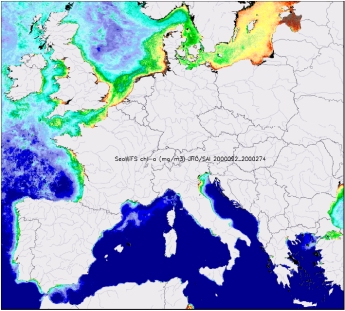
Figure 1
Satellite picture of EU seas chlorophyll-a concentrationsii. Average summer
2000. The red and yellow areas show strong phytoplancton development, one
of the most visible symptoms of eutrophication, with potential adverse effects
(toxic dinoflagellates, oxygen depletion, changes in bottom flora and fauna, etc).
N.B.: Interferences of humid and suspended matters near estuaries have to be
taken into account.
1
Excessive growth of algae and plants, with potential adverse effects on biodiversity or human uses of water. The precise
definition in the Directive (art. 2.i ) is "Enrichment of water by nitrogen compounds, causing an accelerated growth of
algae and higher forms of plant life to produce an undesirable disturbance to the balance of organisms present in the
water and to the quality of the water concerned".
2
Many believe that ecologic/organic farming (governed by the EU Organic Farming Directive
2092/91iii) without use of mineral fertiliser is a production method, which leads to reduced
leaching of plant nutrients. Investigations carried out by DAACiv have not been able to confirm
this. Organic farming incur use of different practices, whereof some
contribute to reduce nutrient leaching for instance a larger area with
grasslands, while other practices contribute to increase leaching of
nutrients for instance higher use of organic fertilisers and a higher
degree of nitrogen fixating crops in the crop rotation.
Nitrates in potable water are limited by the EU Drinking Water Directivev
to 50 mg/l because of risks to human health such as
methaemoglobinaemia (blue baby syndrome). The period between
leaching and appearance in the saturated zone of the aquifer depends
on geology and can exceed 40 years on sandstone and chalk but is
considerably less than this on more pervious rocks such as limestone.
2
Materials and methods
The present paper is based on own experiences from being project manager and having
provided technical expertise for around 25 projects to assist East European countries with
various aspects of agro-environmental issues in the period from 1994 till now, most of them
having the objectives to harmonize with or implement EU regulations or other international
conventions, here under the provisions of EU's Nitrate Directive. Examples of those projects
can be seen on the homepage for 6 of the projects, which in the period 1997 to 2001
developed improved/new manure standards and fertiliser norms for Baltic countries- the
homepage is seen on http://www.lr.dk/fertilising-baltic. This homepage does also include
presentation of the results of other projects, namely the Codes of Good Agricultural practices
for Baltic countries, Denmark and Poland.
Figure 2
Logo of the fertiliser normative projects.
3 Justification
Nitrates in waters can, as mentioned above be fatal for as well human and animal, here under
fish, and Figure 1 gives are rather good impression of how worried we should be for the quality
of the waters. EU water surveys reveal, that 20% of the monitoring stations in member states
shows values above 50 mg NO3/l. The reason for the high values is a result of several factors,
here under increased number of livestock (livestock density), increased use of mineral fertiliser
and larger herds.
3
Effect of animal density on N-balance
200
e
r
ha
y = 93,609x
150
p
g
R2 = 0,3052
,
K 100
N
of
lus
50
r
p
u
S
0
0
0,2
0,4
0,6
0,8
1
AU per ha
Figure 1
Calculated nitrogen balances at 17 Estonian farms for 2000 and 2001. Although
without statistical significance there is a clear tendency for correlation between
animal density and nitrogen balance.
Holland has according to Andrews (2001)vi a special big problem with the nitrogen balance
(Table 1), which is not surprising, considering the livestock density there. Livestock keeping
combined with bad manure management practices are the main reason for a high nitrogen
balance because the efficient uptake of nitrogen from manure in the crops varies from 0 to
around 75%.
Table 1
Average nitrogen balance in EU member states (Andrews, 2001).
The efficiency of the nitrogen in mineral fertiliser is higher and more stable, i.e. relatively
independent of management practices, namely around 80%. However, the bare rise in use of
mineral fertiliser through the last 50 years gives of course reason for a big increase in the
outlets to the nature, because 20% of nitrogen in mineral fertilisers used today is much more
than it was some years ago.
4
Figure 2
Use of mineral fertiliser in EU 15 member states.
Farm size effect on the N-balance
200
a
/
h 150
kg
ce, 100
a
l
a
n
-
b
50
y = 0,0254x
N
R2 = 0,3862
0
0
1000
2000
3000
4000
5000
6000
7000
Farm size, ha
Figure 3
Calculated nitrogen balances at 17 Estonian farms 2000 and 2001. Although
without statistical significance there is a clear tendency of highest balance at the
biggest farms.
5
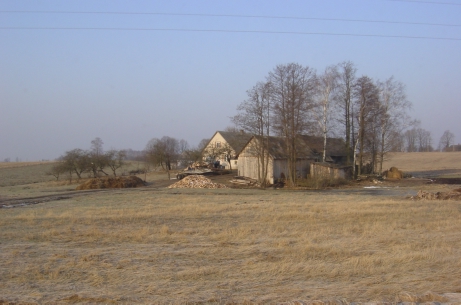
Figure 4
Average nitrogen turnover on European farms (Andrews, 2001).
Countries in the former Soviet Union has a special problem with the nutrient balances on farms
although a) they have a very low livestock density for instance in Latvia around 0.1 AU per
ha, b) they have in general small herd sizes for instance in Lithuania 2 cows per cattle herd
in average, and c) they have a very small use of mineral fertiliser. The reason is that by the
livestock upon the collapse of the Soviet Union was spread on private farms without manure
stores and without any understanding of manure management practices.
Picture 1
Most of private farms emerged in the FSU has none or insufficient storage
capacity of livestock manure. Photo from Latvia.
Manure management practises were influenced by changed price relations in the FSU on big
farms where the livestock production was continued. On the pig production complex near
6
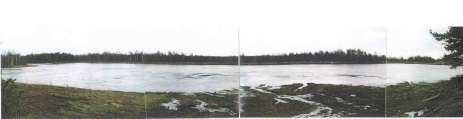
Pskov city in Russia the farm stopped to mix the slurry with peat for composting/storage and
they had problems to cover the price for spreading of the water diluted slurry on the fields and
started in stead to dump it in a nearby forest, creating a big slurry lake.
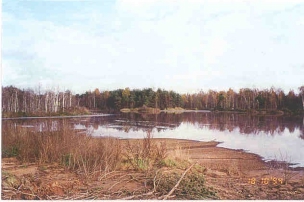
Picture 2
Part of slurry lake near Pskjovskij farm.
Picture 3
Surry lake near Pskjovskij farm.
Sileika (2002)vii has made the following figure, which document the special FSU problem
described above for Lithuania. Although the levels of NO3-N are low as compared to the EU
countries it is clearly demonstrated in Figure 5, that a substantial change happened when the
Soviet Union collapsed.
7
3,50
Agricultural rivers
3,00
Natural rivers
l 2,50
mg/
2,00
a
t
i
on,
tr 1,50
e
n
onc 1,00
C
0,50
0,00
1981 1986 1987 1988 1989 1990 1991 1992 1993 1994 1995 1996 1997 1998 1999 2000 2001
Figure 5
Nitrate nitrogen (NO3-N) concentration in the rivers flowing through agricultural
and natural lands in Lithuania.
It should be noted, that there is an enormous inertia in the system of nutrient turnover in the
nature. Grimvall et al. (1997viii) has made a study that reveals, that the inertia of the system of
nutrient loss from land to sea is underestimated; the relatively rapid water quality response to
increased point source emissions and intensified agriculture does not imply that the reaction to
decreased emissions will be equally rapid; long-term experiments with fertilisation have shown,
that important processes in the large scale turnover of nitrogen operate on a timescale of
decades up to at least a century. In line with this the EU Commission writes in a status report
for implementation of the Nitrate Directive, that "it is emphasized, that there is a considerable
time lag between improvements at farm level and soil level and a response in waterbody
quality". The effects of the last 15 years agro-environmental policies and measures in EU will
therefore probably first give full response after several decades.
Picture 4
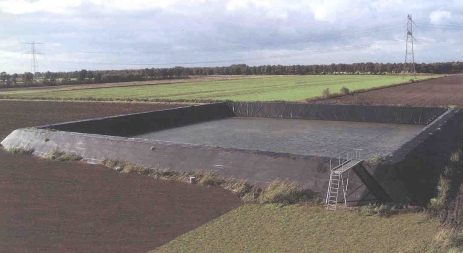
Simple lagoons like this provides a cheap way of storing livestock manure.
8
4
Brief history of agro-environmental policies
4.1
International agro-environmental policies
EU is the most interesting institution when it comes to agro-environmental policies. In the
following are mentioned some major milestones in the development of the present agro-
environmental policy:
· EU was established in 1957, based on the Rome Treaty. EU's environmental awareness
started in beginning of the 70'es with the elaboration of the 1st environment action program.
· A chapter on environment was included in the EU Treaty in 1986, which gave basis for
issuing of regulations in so far unanimously agreement in the European Council was
reached. Regulations that could be introduced would set a minimum standard for the
member countries that could have stronger rules themselves.
· UN organised the elaboration of the Brudtland Report in 1987:
Brundtland Report
In 1987 the Brundtland Report, also known as Our Common Future, alerted the world to the urgency of
making progress toward economic development that could be sustained without depleting natural
resources or harming the environment. Published by an international group of politicians, civil servants
and experts on the environment and development, the report provided a key statement on sustainable
development, defining it as:
· Development that meets the needs of the present without compromising the ability of future
generations to meet their own needs.
The Brundtland Report was primarily concerned with securing a global equity, redistributing resources
towards poorer nations whilst encouraging their economic growth. The report also suggested that
equity, growth and environmental maintenance are simultaneously possible and that each country is
capable of achieving its full economic potential whilst at the same time enhancing its resource base.
The report also recognised that achieving this equity and sustainable growth would require
technological and social change.
The report highlighted three fundamental components to sustainable development: environmental
protection, economic growth and social equity. The environment should be conserved and our resource
base enhanced, by gradually changing the ways in which we develop and use technologies.
Developing nations must be allowed to meet their basic needs of employment, food, energy, water and
sanitation. If this is to be done in a sustainable manner, then there is a definite need for a sustainable
level of population. Economic growth should be revived and developing nations should be allowed a
growth of equal quality to the developed nations
The term "Sustainable development" which we use so often today, comes from the
Brundtland Report, which is only 15 years old. Today "Sustainable development" is a
central issue in EU's development objectives.
Article 2 (ex Article B) of the Treaty of the European Unionix
The Union shall set itself the following objectives:
· To promote economic and social progress and a high level of employment and to achieve balanced
and sustainable development, in particular through the creation of an area without internal
frontiers, through the strengthening of economic and social cohesion and through the
establishment of economic and monetary union, ultimately including a single currency in
accordance with the provisions of this Treaty;
9
· To assert its identity on the international scene, in particular through the implementation of a
common foreign and security policy including the progressive framing of a common defence policy,
which might lead to a common defence, in accordance with the provisions of Article 17;
· To strengthen the protection of the rights and interests of the nationals of its Member States
through the introduction of a citizenship of the Union;
· To maintain and develop the Union as an area of freedom, security and justice, in which the free
movement of persons is assured in conjunction with appropriate measures with respect to external
border controls, asylum, immigration and the prevention and combating of crime;
· To maintain in full the acquis communautaire and build on it with a view to considering to what
extent the policies and forms of cooperation introduced by this Treaty may need to be revised with
the aim of ensuring the effectiveness of the mechanisms and the institutions of the Community.
The objectives of the Union shall be achieved as provided in this Treaty and in accordance with the
conditions and the timetable set out therein while respecting the principle of subsidiarity as defined in
Article 5 of the Treaty establishing the European Community.
· EU's Nitrates Directive was issued in 1991
· EU's CAP reform came in 1992, introducing cross compliance (subsidies for production
conditioned agro-environmental measures taken). When the CAP was reformed in 1992 it
was decided that the intensive production had some unwanted effect on the environment.
Therefore the so-called accompanying measures were introduced. It consisted of an
environmental scheme, a forestall scheme and an early retirement scheme for farmers.
According to the environmental scheme (Directive 2078/92) aid can be given to farmer who
for a period of at least 5 years reduce the use of pesticides and fertilisers, convert
agricultural land into grass-land or introduce organic farming or in other ways extensify the
production. The member states decided which of the measures they would introduce.
· The EU Maastricht Treaty, which came into force in 1993, made it possible to introduce
environmental regulations on basis of qualified majority (62 of 87 members) in the
European Parliament. The treaty introduces integration of environmental considerations in
all sectors.
· The Amsterdam Treaty of 1999 gives further the environmental issues a further focus,
without substantial changes in the principles for implementation of the policies.
· Agenda 2000 CAP reform: Greater consideration of environmental concerns and the
enhancement of an integrated rural development. The generalisation of the remuneration of well-
specified and monitored ecological services is considered as a more efficient instrument for the
protection of the environment than the mere application of cross-compliance conditions.
HELCOM and AGENDA 21 are to my mind not interesting when it comes to environmental
policies as their policies are based on especially EU policies. Sanctions and instruments to
implement decisions are rather limited, which also shows in the performance figures: There are
per 6. Marts 2002 134 valid HELCOM recommendations (the first being from 5 May 1980), and
only 23 of them are implemented (10 of the HELCOM recommendations deals with agriculture
but non of them are implemented!!).
4.2
Danish agro-environmental policies
The Danish Government issued already in 1987 the "National Nitrogen Management
Programme2", which in EU Nitrate Directives terminology an Action Programme stipulating
2
In Danish: "Vandmiljøplanen"
10
mandatory measures for the whole Danish territory. The goal was to reduce the outlet of
nitrogen from agriculture with 100,000 tonnes. The instruments were e.g.
· building of storage capacity for manure;
· fertiliser planning;
· green cover;
· requirements to nutrient efficiency;
· requirements to animal density;
· rules on spreading time for manure; etc.
All in all it seems as though EU's Nitrates Directive, which came 4 years after, was heavily
influenced by the Danish National Nitrogen Management Programme.
A National Nitrogen Management Programme II was launched in December 1998, sharpening
the requirements, for instance by introducing a 10% reduction of fertiliser norms from the
agronomy based recommendations, increasing the requirements to storage capacity for
manure, animal density on farms, utilisation of nutrients in the manure, etc.
5 Policy
instruments
Policies without instruments to carry them out are worthless. Basically there are two major sets
of instruments, which in popular terms can be characterised as "whips" or "carrots":
· The "whips" means measures, which have the goal to force decisions to be implemented,
i.e. regulations and standards, enforced by control units. One (principal) example is the
Nitrate Directive including its requirements for Code of Good Agricultural Practices,
vulnerable zones, mandatory measures, etc.
· "Carrots" means generally financial incentives, for instance subsidies. One
example is EU's LIFE program which supports the sustainable
development objectives of the EU with 640 million in the period 2000-
2004.
The effect of advice, training and information should, however, not be underestimated as
efficient instruments to carry through decided agro-environmental policies. An environmental
and economic interest goes hand in hand a long part of the way: Fertiliser planning, nutrient
balance calculations and soil sampling are examples of measures which are directly profitable,
while agro-environmental investments in storage capacity or improved spreading technology
require 50% subsidisation to be profitable for the farmers. It should also be noted that farmers
are much more happy to achieve environmental goals by own voluntary initiative than by
enforcement or financial support, the latter being affiliated with much administration and
creating envy in the society.
The basis for use of instruments have since the 70'ties been the EU environment action
programs. The present 6th environment action program sets the frames for the European
environment policies until 2010: Increasing awareness for the need to integrate environmental
policies in other sector policies: Agriculture, Transport, Business and Energy.
Examples of financial incentives to Danish farmers:
· 45%-50% support was given to establish storage capacity for manure
· The Danish Ministry of Food, Agriculture and Fisheries gives a financial support to farmers
who elaborate "green accounts" for their farms; the support is 805 per year if the farmer
makes the green accounts for at lest 5 years.
· Subsidies are given on basis of Directive 2078/92 see Table 2.
11
Table 2
Subsidies in connection with the Danish environment protection program.
Subsidies, DKK3/ha
Yield in spring barley, hkg/ha
< 45
45-60 60-70
> 70
60% N-fertilisation
500 625 850 950
Non-use of pesticides
600 650 700 700
Non-use of pesticides in zones
1,65 kr./m
Catch-crops in cereals etc.
750 900 1,100
1,300
Extensive management of permanent grassland, < 80 kg N/ha
815 1,115 1,415 1,500
Do, 0 kg N/ha
1,300 1,600 1,950 2,150
Set-aside
2.600
Set-aside in drinking water areas
2,780 3,500 4,500 5,000
Preservation of grassland and nature areas
200 - 2.300
Yield in spring barley, hkg/ha
u. 30
30 45
o. 45
Restoration of wetlands
1,500
3,175 / 3,275
3,275
6
Developing a Code of Good Agricultural Practices -
Harmonization with EU Legislation
The Danish Agricultural Advisory Centre was in 1997 contacted by Dr Torben Bonde, who was
then an employee of The Danish Environmental Protection Agency, the official Danish
representative of EU's Nitrate Commission as well as of a formal work group established by
HELCOM, the HELCOM PITF/Project Team on Agriculture. Dr Torben Bonde requested on
behalf of the HELCOM4 work group The Danish Agricultural Advisory Centre to assist Baltic
countries and Poland in their preparation of Codes of Good Agricultural Practices. The Danish
Agricultural Advisory Centre had already prepared projects within the agro-environmental
sector in those countries since 1994, and had therefore a good insight into the present
3
DKK 1.00 = 0.134
4
HELCOM: The Helsinki Commission - http://www.helcom.fi
12
legislation, institutional set-up etc. and soon project documents for Latvia, Lithuania and
Poland were produced and approved for funding from DANCEE5.
Denmark had with the launch of the National Nitrogen Management Programme in 1987
already decided to designate the whole territory as vulnerable zone (like later on Germany,
Austria, Luxemburg, Netherlands and Finland did), and has therefore with reference to article
3.5 of the Nitrate Directive no obligation to elaborate an official Code of Good Agricultural
Practices as the Action Programme covers the whole territory. Actually due to the National
Nitrogen Management Programme we did hardly feel in Denmark that EU's Nitrate Directive
was issued in 1991.
Anyway it was decided by Danish farmers' organisations, under which The Danish Agricultural
Advisory Centre belongs, to elaborate an unofficial Code of Good Agricultural Practices to
encourage farmers to raise standards even more; Danish agriculture exports 2/3 of the
production, and have always been dependent on a good product quality image, which today is
much associated with ethics standards of the production methods. The Danish Agricultural
Advisory Centre coordinated the elaboration of this voluntary Code of Good Agricultural
Practices, and of its up-date 2 years ago.
6.1 Methodology for elaboration of Codes of Good Agricultural
Practices
Handbooks and manuals are available on the Internet concerning elaboration of Code of Good
Agricultural Practices for instance Handbook for Implementation of EU Environmental
Legislationx. We did, however not find those guidelines useful. The main pre-conditions for a
successful CGAP development are the following:
· It shall be understood by the actors, that the elaboration of CGAP's require the
undertaking of a process of discussions, which can increase the perception of the subject
and try the arguments of own and opposite views.
· It is important to involve all stakeholders in a balanced discussion where both agricultural
and environmental interests are heard and considered.
· It is important to understand the code as an instrument, a political manifesto based on
agro-environmental facts, and that codes are a mix of recommendations and already
existing rules, here under also the importance of the designation of vulnerable zones.
CGAP's were elaborated in Poland, Latvia and Lithuania on basis of discussions in work
groups, where experts from authorities (ministries, etc.), education, science, advisory services,
and not at least farmers' organisations took part. The number of work group experts was 35-
60. The broad composition of the work groups ensured a very high degree of ownership to the
CGAP's among all stakeholders afterwards, and comforted both the dissemination of the
booklets with the CGAP's but especially of the messages contained in it. It is possible to
elaborate a CGAP as a work of a few scientists or ministry employees, but in that case the
CGAP will never be accepted by stakeholders, and difficult to disseminate.
6.2 Major difficulties for elaboration of Codes of Good Agricultural
Practices
The elaboration of Codes of Good Agricultural Practices is a very interesting work, but it will
only be successful if there are taken hand of the major difficulties:
· It shall be ensured any qualified discussion takes place on basis of (an understanding for
what is) a manure standard, and secondly on information on agricultural and environmental
5
DANCEE: Danish Cooperation for Environment in Eastern Europe see under
http://www.mst.dk
13
statistics. Most experts we have worked with did not know what a manure standard is, and
this is hampering the work, as the Nitrate Directive in its essence deals with livestock
manure. It also took many efforts to explain that manure standards must be expressed as
ex. storage values as the Nitrate Directive is concerned about the amounts of manure
coming to the fields.
· Most experts want to write lyrics, but this cannot be used in a Code of Good Agricultural
Practices. It is necessary to be precise and concrete if the codes shall give any meaning,
and if it shall be possible to implement (and control) in practice.
· Some experts want to neglect the existence of the EU Nitrates Directive and instead
discuss phosphorus.
· It is necessary to specify codes, that are voluntary, that are compulsory (based on existing
legislation) and that are not relating to the EU Nitrates Directive (if all types shall be
included in the Code of Good Agricultural Practices).
· It is necessary to write in a pedagogic language and with an appealing layout.
· It is necessary to exclude all non-relevant text.
· Balancing agricultural and environmental interests require a highly respected, unbiased
local project manager. The foreign project manager shall not be part of the negotiations.
Some main goals for any CGAP should be the following:
· It will be possible to elevate the CGAP or part hereof to national law without further elaboration.
· The provisions should therefore in general be presented in a pedagogic and transparent way -
calculation examples are good for understanding, and it must be ensured all relevant help tables
are present.
· There should be added practical guidelines for the farmers, such as reference to handbooks and
institutions that can provide information, training and advise on the touched subjects.
· A farmer should for his own farm and with help of the CGAP booklet be able to calculate 1) animal
units on his farm, 2) a fertiliser plan for each of his fields, and 3) the necessary storage capacity for
manure, here under for silage effluents and other liquid and solid substances that are stored
together with the manure.
The codes should be as short and precise as possible. They should also have the following
characteristics:
1. They
should
be
possible to implement in practise.
2. They
should
be
possible to control for implementation on the individual farm.
3. They
should
be
formulated in a way so it is easily understood whether they are
compulsory (based on legislation) or voluntary (recommendations).
4. They should be expected to have an environmental effect if they are implemented, and the
environmental effect should be possible to measure by environmental indicators.
5. They should be explained in plain language, without specific academic and technical
terms.
6. They should describe what the farmer should do or have to do, and not contain explanations,
guidelines and alike.
7. They
should
not contain adjectives like good, soon, shortly after and alike.
14
6.3 Examples of difficulties with formulation of codes
In the following are some examples from Lithuania, which shows how difficult it can be to
formulate codes. 2.12 is not a code but an explanation:
2.12
Perennial meadows and pastures protect the environment from pollution (especially those that
are located close to water bodies, in flooded places, in soils with high water level, and on very
steep slopes) and on the same time they are cheap and valuable fodder for animals.
3.12 is not concrete (it must be explained what soon is), and it is not based on present
legislation, but a HELCOM recommendation, that shall be transposed to Lithuanian law - in
stead of "have to" it should say "should":
3.12
Slurry and urine spread on bare soils have to be incorporated by effective measures such as
trailing hoses (trailing hoses does not incorporate slurry and urine into the soil!) or harrowing as soon
as possible after application. In crop fields urine has to be incorporated by special sprinklers
and if crop cover is thick then by drag hoses or other effective measures.6
Code 3.14 is not concrete - "most suitable technology" must be replaced with concrete
explanation of which technology there "should be" used (not has to as it is based on a
HELCOM recommendation), and the phrase "shall ensure higher fertiliser effectiveness
causing lowest negative effect on crops and environment" should be replaced with a "should
be" phrase and a precise statement about the fertiliser efficiency (for instance 50% utilisation
of N):
3.14
Farm has to choose the most suitable (available) fertiliser application technology that shall
ensure higher fertiliser effectiveness causing lowest negative effect on crops and environment.7
Code 4.10 includes a very specific academic and technical term "entomophylic" which should
be replaced by other words that explains the same, or followed by a list of these plants under
the code:
4.10
Plants that necessarily require pesticides should not be sown close to entomophylic plants that
have plenty of beneficial insects, pollinators, and close to territories of vulnerable environment,
i.e. water bodies, karstic pits, preserves, etc.
Alternative: There should be established a no-spray boundary zone towards entomophylic plants
that have plenty of beneficial insects and territories of vulnerable environment, i.e. water bodies,
karst pits, preserves, etc.
Code 4.14 is not possible to control in practise; it is not a code but an explanation:
6
4 HELCOM 1992 February 6. Recommendation 13/8. Reduction of ammonia emissions from
manure during field fertilisation
7
HELCOM 1992 February 6. Recommendation 13/9. Reduction of nitrogen, mainly nitrate, leaching
from agricultural land
15
4.14
Quality of spreading (or spraying) of crop fields with plant protection products is one of the main
requirements for good agricultural practice.
To make Code 4.14 correct (if we have understood the meaning of it), it should probably be
formulated as (but is it then overlapping with Code 4.3?):
4.14
Persons who spray field crops should have undergone a practical and theoretical training and
certification.
4.4 is probably not possible to implement on very many farms, as they can't reduce the use of
pesticides if they (as most farms) don't use any pesticides on beforehand:
4.4
In farm of good agricultural practice the amount of pesticides has to be reduced.8
We question the possibility to implement code 3.4. We are in doubt whether farmers will find it
economically justified analysing soil samples on a routine basis for "the amount of humus,
calcium, magnesium, sulphur and micro elements (boron, manganese, zinc, molybdenum,
copper and cobalt)", and to our professional knowledge we also question the relevance for
subsidisation of this:
3.4
It is necessary to analyse agrochemical characteristics of arable layer every five years at least in
order to regulate proper plant nutrition and soil fertility. The following characteristics have to be
investigated: pH, the amount of humus, mobile phosphorus and potassium, calcium,
magnesium, sulphur and microelements (boron, manganese, zinc, molybdenum, copper and
cobalt). (It is for practical farming not necessary to analyse soil samples for these things.)
i
Council Directive 91/676/EEC of 12 December 1991 concerning the protection of waters against
pollution caused by nitrates from agricultural sources
ii
The Implementation of Council Directive 91/676/EEC concerning the Protection of Waters
against Pollution caused by Nitrates from Agricultural Sources. Synthesis from year 2000
member States reports Report COM(2002)407.
iii
Council Regulation (EEC) No 2092/91 of 24 June 1991 on organic production of agricultural
products and indications referring thereto on agricultural products and foodstuffs
iv
Knudsen, Leif, Hans Spel ing Østergaard & Ejnar Schultz. 2000. Kvælstof et næringsstof og et
miljøproblem (In English: Nitrogen a plant nutrient and an environmental problem.)
Landbrugets Rådgivningscenter. Århus. 112 p.p.
v
Council Directive 80/778/EEC of 15 July 1980 relating to the quality of water intended for human
consumption
8 Council Directive 91/414/EEC, Commission Directive 93/71/EEC
16
vi
Andrews, K. 2001. Study on the impact of community environment water policies on
economic and social cohesion.
http://europa.eu.int/comm/regional_policy/sources/docgener/studies/pdf/enviwat.pdf
vii
Personal information from Dr. A. S. Sileika, Lithhuanian Institute of Water Management.
viii
Timescales of nutrient losses from land to sea - a European perspective. Grimvall, A. Stålnacke,
P, and Tonderski, A. Proceedings from "With river to the sea". 7th Stockholm Water Symposium
and 3rd International Conference on the Environmental Management of Enclosed Coastal Seas
(EMES). Stockholm 10 15 August 1997. 12 p.p.
ix
Treaty of the European Union - http://www.europa.eu.int/eur-
lex/en/treaties/dat/eu_cons_treaty_en.pdf
x
Handbook for Implementation of EU Environmental Legislation -
http://europa.eu.int/comm/environment/enlarg/handbook/water.pdf
17