|
|
|
The compost pile
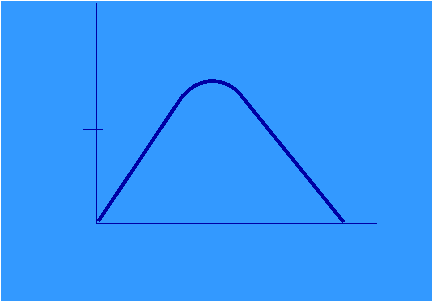
will pass through a wide range of temperatures over the course of the active
composting period. As the temperature
varies, conditions will become unsuitable for some microorganisms while at
the same time become ideal for others.
|
|
Initially, as the
microbial population begins to consume the most readily degradable material
in the compost pile and grow in size, the heat generated by the microbial
activity will be trapped by the self-insulating compost material.
|
|
As the heat
within the pile accumulates, the temperature of the compost pile will begin
to rise becoming inhabited by a diverse population of microorganisms
operating at peak growth and efficiency.
|
|
This intense
microbial activity sustains the vigorous heating that is necessary for the
destruction of pathogens, fly larvae, and weed seeds.
|
|
The diversity of
the microbial population also allows the decomposition of a wide range of
material from simple, easily degradable material to more complex, decay
resistant ones such as cellulose.
|
|
The temperatures
will continue to rise and peak between 130-160 degrees F. Once this peak is reached, microbial
activity begins to decrease in response to a depletion in readily degradable
material or excessively high temperatures that are detrimental to their
function.
|