




INTERNATIONAL WATERS
EXPERIENCE NOTES
2
http://www.iwlearn.net/experience
2006-001
Regional Conference on Parliamentary
Environment and Sustainable Use of
Marine Resources in the Yellow Sea
Abstract: Attracting high-level political commitment is an ongoing process that many GEF projects must
address during implementation. To use these important roles wisely, a mechanism was required to
involve the members of the parliamentary organizations. More than 50 persons from the participating
countries of the Yellow Sea Project attended a conference, including 14 members from the parliamentary
bodies. As a result, the parliamentary members deepened their understanding about the environmental
problems in the Yellow Sea, exchanged opinions about how to address its problems, and established a
mechanism to advance dialogue and cooperation between the two countries at the parliamentary level.
The Yellow Sea parliamentary conference was the first time a Global Environment Facility-funded project
has organised such an event with participants from parliamentary bodies participating in the project.
Isao Endo
isao@yslme.org
Programme Officer, Yellow Sea Large Marine Ecosystem Project
Mish Hamid, editor
GEF IW:LEARN
1
Regional Conference on Parliamentary Roles in Protection of Marine
Environment and Sustainable Use of Marine Resources in the Yellow
Sea
Experience of the GEF sponsored
Reducing Environmental Stress in the Yellow Sea Large Marine Ecosystem
(UNDP/GEF Yellow Sea Project)
GEF Project ID: 790, UNDP PMIS ID: 994
PROJECT DESCRIPTION
· Actions to reduce stress to the ecosystem;
· Actions to improve water quality and protect
The objective of the Yellow Sea LME (YSLME)
human health; and
Project is: ecosystem-based, environmentally-
· Regional institutional and capacity building
sustainable management and use of the Yellow
initiatives.
Sea and its watershed by reducing development
stress and promoting sustainable development
The Yellow Sea Project started in 2005, will be
of the ecosystem from a densely populated,
completed in 2009.
heavily urbanized, and industrialized semi-
enclosed shelf sea.
THE EXPERIENCE
To achieve this objective, the Yellow Sea Project
(a) Transboundary Water Management (TWM)
will:
Issue: Multilateral Stakeholder Involvement -
Parliamentarians
1) Prepare a Transboundary Diagnostic
Analysis (TDA);
A common issue facing GEF project remains
2) Prepare a regional Strategic Action
how to draw the attention of key decision-
Programme (SAP) and National Yellow Sea
makers at the country-level. Moreover, attracting
Action Plans (NYSAPs); and
high-level political commitment is an ongoing
3) Initiate demonstration and/or pilot activities
process that many GEF projects must address
under the SAP.
during implementation. The Yellow Sea Project
decided to address this issue in an innovative
The TDA identifies the priority transboundary
way.
problems, the underlying sectoral causes, and
the root causes of the problems. The SAP
There has been much effort put forth by the
outlines the actions needed to resolve the
governments of the coastal countries of the
priority problems and must be agreed before
Yellow Sea to protect its marine environment
technical assistance, capacity-building, or
and to use its marine and coastal resources in a
investment projects can be developed.
sustainable manner. It is widely recognised by
the governments of these countries that the
Representatives of numerous institutions from
reduction of environmental stresses is a long
People's Republic of China (PRC) and Republic
term task, and requires a wider participation of
of Korea (ROK) are actively participating in and
all stakeholders to ensure that their efforts are
contributing to the TDA, SAP, and NYSAP
meaningful and successful.
development.
As one of the key stakeholders, the National
The expected outputs of the Yellow Sea Project
Assembly in the Republic of Korea (R. Korea)
include:
and the National People's Congress in China
play an important role in deciding national
· Regional strategies for sustainable
regulations, national infrastructure and national
management of fisheries and mariculture;
budget. The parliamentary roles are very
· Regional initiatives for biodiversity
important in particular, for the preparation and
protection;
approval of the Strategic Action Programme
2
(SAP) and the National Yellow Sea Action Plans
with contributing efforts from the Ocean Forum
(NYSAPs). Furthermore, parliamentary
of the National Assembly of the R. Korea, the
participation and involvement also enhance
Committee of Environment and Resources
national coordination and regional cooperation.
under the National People's Congress of China,
To use these important roles wisely, a
the Ministry of Maritime Affairs and Fisheries of
mechanism was required to involve the
the R. Korea, the State Oceanic Administration
members of the parliamentary organisations in
of China, and the China Ocean News.
the protection of marine environment and
sustainable use of marine resources in the
More than 50 persons from the participating
Yellow Sea.
countries of the Yellow Sea Project attended the
conference, including 14 members from the
(b) How was issue addressed
parliamentary bodies. High-level members from
the parliaments attended the conference,
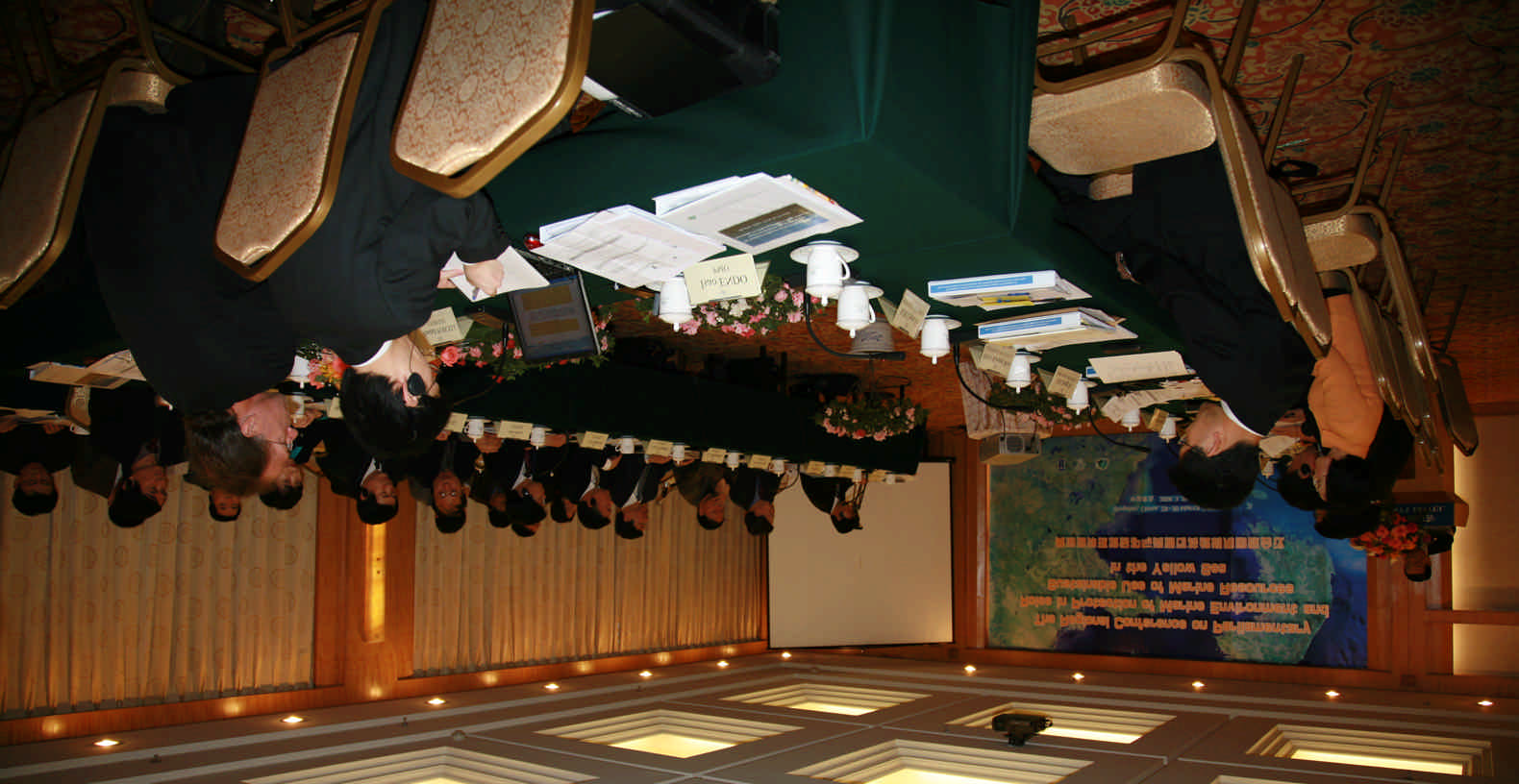
The Yellow Sea project organized an event, the
including a member of the Standing Committee
"Regional Conference on Parliamentary Roles in
of the National People's Congress of China, and
Protection of Marine Environment and
the Chairman of the National Defense
Sustainable Use of Marine Resources in the
Committee of the National Assembly of the R.
Yellow Sea" in Qingdao, China, from the 28th to
Korea.
30th of March 2006, as one of its public
awareness activities.
RESULTS AND LEARNING
The objectives of the regional conference were:
As a result of the conference, the parliamentary
members deepened their understanding about
(i)
to enhance stakeholders' participation in
the environmental problems in the Yellow Sea,
the activities of protecting the marine
exchanged opinions about how to address its
environment and sustainable use of
problems, and established a mechanism to
marine and coastal resources, in
advance dialogue and cooperation between the
particular the participation of
two countries at the parliamentary level. The
parliaments in the participating
following text summarises the major outcomes
countries;
of the conference, the understandings and goals
(ii)
to facilitate better understanding of the
shared by the parliamentary bodies, and the
requirements for harmonising national
agreed setup for future cooperation.
legislation and reform, based on the
knowledge and information obtained
(a) Major outcomes of the conference
from the Transboundary Diagnostic
Analysis (TDA) of the Yellow Sea
(i)
Parliamentary members from the
Project;
participating countries had a good
(iii)
to identify appropriate mechanisms to
chance to exchange their views on
ensure and/or enhance integrated
marine environmental issues, and
management for protection of marine
communicated face-to-face with
environment, and enhance national co-
counterparts in another country. A
ordination of all stakeholders, including
member of the National Assembly of the
governmental agencies; and,
R. Korea indicated that the conference
(iv)
to assist in mobilising necessary
provided a good chance for the
financial support for the integrated
parliamentary members to get together,
management of the marine and coastal
to better understand the Yellow Sea
resources.
marine environment's problems;
The three-day conference consisted of keynote
(ii)
The parliamentary members, in
speeches, invited reports, panel discussions,
particular those not familiar with marine
and a site visit. Presentation and discussion
environmental problems, have a better
topics included current marine environmental
understanding of the problems,
status, the need for environment protection,
including legislative and economic
legislation related to marine environmental
considerations and implications. As the
protection, and the economics of conserving
parliamentary organisations in the
marine resources. It was successfully organised
participating countries have the
3
responsibility to review and approve
to protect the marine environment and
legislation, budgets and institutional
promote the sustainable use of marine
arrangements, it was crucial to have
resources in the Yellow Sea, for the mutual
better understanding of the
benefits of our people and for long-term
parliamentary member on the relevant
friendly relations amongst the countries in
issues. These new circumstances will
the region; and
also ease the preparation and
· It is vital to involve and encourage the
approval of the SAP, to be prepared at
participation of a broader range of
a later stage;
stakeholder groups so that all their expertise
and experiences will be effectively utilised to
(iii)
With a better understanding of marine
design and formulate appropriate policies
environmental problems, the
and programmes for conservation of the
parliamentary members also realised
Yellow Sea's ecosystem.
that it is important to set-up appropriate
dialogues between the politicians
To achieve the common goals, the conference
and scientists. The conference
agreed to seek closer regional co-operation to:
provided good model for this kind of
dialogues. Therefore, the conference
· Encourage wider and more active
agreed to establish certain mechanisms
participation of all stakeholders in the
to sustain the momentum generated by
protection of marine environment and
the conference. It was agreed that the
sustainable use of marine and coastal
next conference will be organised in the
resources, and enhance national co-
R. Korea, with the project management
ordination amongst all relevant ministries,
office (PMO) acting as its secretariat;
local governments, research institutions and
and
non-governmental organizations (NGOs);
· Harmonise, as necessary and appropriate,
(iv)
As a number of parliamentary members
the relevant national legislations concerning
attended the conference,
public
protection of marine environment, and
awareness was raised during the
consider strengthening national institutional
conference. The participants from local
arrangements to meet the requirements of
governments, research institutes and
marine environment protection and
media also actively participated in the
sustainable use of marine resources,
conference.
following the recommendations in the TDA
and SAP that will be prepared by the Yellow
(b) Common understandings and goals
Sea Project;
· Suggest to consider initiating preparation,
The conference confirmed the following common
negotiation and finally, approval, by the
understandings and goals of mitigating
legislative bodies in the participating
environmental problems in the Yellow Sea:
countries, a regional agreement for
protecting the marine environment in the
· Successful co-operation in protection of
Yellow Sea;
marine environment and sustainable use of
· Initiate and maintain regional mechanisms to
marine and coastal resources in the Yellow
ensure and enhance effective dialogue and
Sea requires the active participation of all
co-operation for protecting the marine
stakeholders who are utilising resources,
environment and sustainable use of marine
and/or have responsibilities in managing the
and coastal resources in the Yellow Sea;
marine environment in the Yellow Sea;
and
· The National People's Congress of China
· Secure finances for sustainable protection of
and the National Assembly of Republic of R.
the marine environment and managing the
Korea, as one of the key stakeholders of the
marine and coastal resources in the Yellow
Yellow Sea, play important roles in
Sea.
exercising their authority in approving
national and international regulations,
(c) Mechanism for future dialogue and co-
national infrastructure, and budget;
operation
· It is essential to strengthen closer co-
operation between the parliaments in order
4
The conference agreed on a method for holding
changeable schedule of each participant, the
regular meetings of the parliamentary members
meeting was organised flexibly. The sequence
to advance dialogue and co-operation in the
of presentations was revised depending on the
region, such that:
speakers' schedule unless rescheduling did not
harm the integrity of the meeting.
· The parliamentary conference should be
organised annually, with certain flexibilities,
(iii)
Internal meeting to develop a
on a rotating basis for the venue;
mechanism for securing commitment of
· The host country will cover the local costs to
parliaments: To secure and maintain the strong
organise such meetings. The visiting
commitment from the parliamentary bodies, a
parliamentarians will cover their own travel
possible mechanism for future dialogue and co-
costs. Partial financial support will be
operation was discussed through the informal
provided by the Yellow Sea Project; and
meeting which was held during the conference
· The Project Management Office (PMO) of
period. Key participants from relevant
the Yellow Sea Project will provide
parliamentary organisations as well as
secretariat support to the conference.
government ones attended this informal meeting
and prepared a proposal for making conferences
The official Meeting Report captured both the
a regular activity. The proposal, drafted
impacts of the experience and bilateral
originally by the PMO, describes the rational and
agreement on what the participants have
objective of organising such regular
learned. The report included a summary of
conferences, suggests possible topics for the
meeting outcomes, including common
next conference, and specifies necessary
understandings, common goals and a
administrative and financial arrangements. The
framework for regional cooperation. The Meeting
proposal was then discussed and agreed during
Report is available at http://www.yslme.org.
the formal session of the conference.
REPLICATION
Creating the mechanism for continuing
interactions and dialogues with the
Although holding a meeting is an effective way
parliamentarians will enable the project to
to involve parliamentary members into a GEF
maintain their commitment and support. The
project, it is a challenge to attract their strong
internal meeting provided an opportunity to
attention and commitment to a planned meeting.
develop such mechanism. It is therefore highly
This is because most parliamentary members
recommended for similar GEF projects to
are busy and because they might not be familiar
arrange this kind of a meeting so that a
with issues that the project addresses. The
proposed mechanism is presented and
experience of the Yellow Sea Project suggests
discussed during the subsequent parliamentary
the following three points in the meeting
conferences.
preparation and implementation stage as
important factors to secure active involvement of
SIGNIFICANCE
the parliaments:
First and foremost, the Yellow Sea
(i)
Informal, continuous consultation
parliamentary conference was the first time a
with parliamentary organisations: From the
Global Environment Facility-funded project has
early stage of the preparation, the PMO
organised such an event with participants from
conducted a series of extensive consultations
parliamentary bodies participating in the project.
with key parliamentary bodies and government
As such, it presents a model for other projects in
agencies (e.g., the Ocean Forum of the National
terms of achieving stakeholder buy-in at high
Assembly of the R. Korea and the Committee of
political levels. It also presents a good model for
Environment and Resources under the National
blending the political and technical sides of a
People's Congress of China). These continuous
GEF project.
consultations greatly contributed to the
development of the meeting programme and to
REFERENCES
identification of speakers and participants.
Website and conference DVD,
(ii)
Flexible conduct of the meeting
http://www.yslme.org/ (publications available
programme: To accommodate the tight,
online)
5
UNDP/GEF Yellow Sea Project,
Korea Ocean Research and Development
Institute
1270 Sa-dong Sangnok-gu, Ansan-si,
Gyeonggi-do 426-744
R. Korea,
Tel: +82.31.400.7829
Fax: +82.31.400.7826
Email: info@yslme.org
KEYWORDS
S Stakeholder involvement
S Public awareness
S Political will
S Parliament
The Global Environment Facility (GEF)
International Waters Experience Notes series
helps the transboundary water management
(TWM) community share its practical
experiences to promote better TWM.
Experiences include successful practices,
approaches, strategies, lessons, methodologies,
etc., that emerge in the context of TWM.
To obtain current IW Experience Notes or to
contribute your own, please visit
http://www.iwlearn.net/experience or email
info@iwlearn.net.
6