


INTERNATIONAL WATERS
EXPERIENCE NOTES
2
http://www.iwlearn.net/experience
2008-002
Integrating Fisheries and Habitat
Management: Fisheries Refugia in the
South China Sea
Abstract: This note covers an effort to address the over-exploitation of fisheries. Increasing levels of
fishing effort, coupled with continued decline in the total area of habitats critical to the life-cycles of most
species, have raised serious concerns for the long-term sustainability of artisanal fisheries. Given the
feed back loops between fish stock and habitat quality on the one hand, and fishing activities and habitat
quality on the other it was necessary to develop a regional initiative aimed at improving the management
of fish stocks and their habitats. Fisheries refugia are, "Spatially and geographically defined, marine or
coastal areas in which specific management measures are applied to sustain important species [fisheries
resources] during critical stages of their life cycle, for their sustainable use." It appears that the refugia
concept is a successful approach to addressing a significant barrier to effective management action that
addresses fish stocks and habitats important to critical stages of the life cycle of those stocks, namely the
adverse reaction to the Marine Protected Area concept that is elicited from fishing communities and
fisheries officers at the local and provincial levels. It is anticipated that the experiences gained in this
region will be suitable for application in other large marine ecosystems where over-fishing and the use of
inappropriate fishing gear are significant impediments to more sustainable exploitation of fisheries
resources. This experience is considered important because of the potential global fisheries benefits
associated with effective fisheries and habitat management at the local level, which is particularly
important in the case of Southeast Asia due to the continuing importance of fisheries to food security, and
maintenance of livelihoods.
Christopher Paterson and John Pernetta
patersonc@un.org/pernetta@un.org
South China Sea and Gulf of Thailand Project
1
Integrating Fisheries and Habitat Management: Fisheries Refugia in
the South China Sea
Experience of the GEF sponsored
"Reversing Environmental Degradation Trends in the South China Sea and
Gulf of Thailand"
GEF Project ID: 885
PROJECT DESCRIPTION
important species are considered to be fully
fished or overexploited. Increasing global
The project entitled "Reversing Environmental
demand for fisheries products and the
Degradation Trends in the South China Sea and
dependence of coastal communities on fish for
Gulf of Thailand" is funded by the Global
food and income result in a continued increase
Environment Facility (GEF) and implemented by
in fishing effort. This has led to "fishing down the
the United Nations Environment Programme
marine food chain" and increasing dependence
(UNEP) in partnership with seven coastal states
of the artisanal sector on small pelagic stocks
bordering the South China Sea. The project
due to the decline in demersal species.
addresses three priority areas of concern
Declining fish availability has led to destructive
identified in the Transboundary Diagnostic
fishing practices by some fishermen in order to
Analysis (TDA), namely the loss and
maintain incomes and food production in the
degradation of coastal habitats, over-exploitation
short-term. Fisheries trends suggest that
of fisheries in the Gulf of Thailand, and land-
production from capture fisheries will decline
based pollution. The original outcomes and
over coming years unless total fishing effort and
outputs of the project were anticipated as being:
capacity are reduced. The obvious problem in
an approved Strategic Action Programme of
the reduction of fishing capacity is that most
targeted and costed actions; a recommended
fisheries are small-scale with the majority of
framework for improved regional co-operation in
participants being highly dependent on fisheries
the management of the environment of the
for income, food and well-being (Paterson et al.,
South China Sea; a series of national and
2006).
regional management plans for specific habitats
and issues; nine demonstration management
Whilst actions aimed at reducing the rate of loss
activities at sites of regional and global
of coastal habitats of significance to fisheries
significance; a system of refugia to maintain
have been implemented by the countries
important transboundary fish stocks in the Gulf
bordering the South China Sea, the decadal
of Thailand; and pilot activities relating to
rates of loss of such habitats remain high:
alternative remedial actions to address priority
seagrass (30%); mangroves (16%); and coral
transboundary pollutants. This note summarises
reefs (16%) (UNEP, 2007a). Increasing levels of
the experience of the project in establishing an
fishing effort, coupled with continued decline in
initial regional system of fisheries refugia in the
the total area of habitats critical to the life-cycles
South China Sea and Gulf of Thailand. It draws
of most species, have raised serious concerns
on the South China Sea Knowledge Document
for the long-term sustainability of artisanal
on Fisheries Refugia published in October 2007
fisheries in the region. The dilemma for the
(UNEP, 2007a1).
fisheries and environment sectors is that
conservation of habitat does not necessarily
THE EXPERIENCE
result in increased fish stocks; and lowering of
fishing effort does not necessarily result in
Issues
improved habitat condition. Although fish
production is intrinsically linked to the quality
Fish stocks in the South China Sea and Gulf of
and extent of habitats, and although the
Thailand are subject to high levels of fishing
dependence of coastal communities on fish for
effort, such that stocks of most economically
food and income is high, understanding of this
linkage is limited, such that intensive fishing in
1 All project related documents cited in this paper can be
inshore areas has been identified as a factor
found on the project website at www.unepscs.org.
2
contributing to the continued degradation and
between fish stocks and habitats; low level of
loss of seagrass and coral reef habitat and
community acceptance of "protected" area-
associated biodiversity in the region (UNEP,
based approaches to marine management in
2006a).
Southeast Asia; and, limited experience in
national fisheries and environment departments
The fact that many marine fisheries in Southeast
and ministries with respect to the
Asia are over-capitalised, unregulated, and
implementation of integrated fisheries and
subjected to illegal fishing has provided the
habitat management approaches (UNEP,
impetus for the development of innovative
2006b).
approaches to the management of fisheries in
the region. Significant efforts are being made in
The Approach
most countries to decentralise the responsibility
for fisheries management to the local level with
The UNEP/GEF Regional Working Group on
the aim of establishing co-management
Fisheries (RWG-F) agreed that, given the feed
particularly of demersal fish stocks (Lundgren et
back loops between fish stock and habitat
al. 2006). However, the intrinsic relationship
quality on the one hand, and fishing activities
between fish stocks and their habitats
and habitat quality on the other it was necessary
necessitates that fisheries management
to develop a regional initiative aimed at
involving decentralised and rights-based
improving the effective linkages between fish
systems will need to incorporate strategies that
stocks and habitats. Fol owing a review of
foster the improved management of fish stocks
existing fisheries and habitat management
and associated critical habitat linkages.
initiatives in the region, the RWG-F noted that few
of these focused on the above objectives and
Challenges
agreed to elaborate a system of fisheries
management areas (fisheries refugia) in the
The complexity of the key threats to habitats and
South China Sea and Gulf of Thailand that
biodiversity necessitate adequate cross sectoral
focuses on the critical links between fish stocks
consultation between fisheries and environment
and their habitats. The longer-term goal of this
departments in each country particularly in
system would be to build the resilience of
relation to the designation of Marine Protected
Southeast Asian fisheries to the effects of high
Areas and other habitat management zones in
and increasing levels of fishing effort (UNEP,
order to ensure that areas designated for
2006b).
protection are congruent with critically important
habitat areas for fish stocks.
Defining the Fisheries Refugia Concept
The notion of improving the integration of
The RWG-F is promoting the use of a broad
considerations regarding fish habitats with other
based definition of refugia (see Information Box
aspects of fisheries management represents a
1) for the identification of fisheries refugia to
significant challenge in that it involves the
"replace" those lost due to over-exploitation and
merging of two related but, until recently, very
the destruction of fisheries habitats. There is now
distinct management domains. The first, habitat
a common and widespread understanding that
management, aims to maintain the functional
fisheries refugia relate to specific areas of
integrity and biodiversity of ecosystems through
significance to the life cycle of particular species,
actions focused on the biophysical attributes of
and that they should be defined in space and
these systems. The second, fisheries
time, and serve to protect spawning
management, aims to secure sustainable
aggregations, nursery grounds, and migration
returns from resource use through actions
routes. (see text box on next page)
focusing on the relationship between fishing
activities and target species. Barriers for
Dissemination of Information on the
effective action were recognised, namely: limited
Fisheries Refugia Concept
information regarding fish life-cycle and critical
habitat linkages and the role that marine habitats
In order to promote mainstreaming of the
play in sustaining fisheries; low level of
concept within the fisheries and environment
understanding amongst stakeholders, including
sectors, and to enhance and sustain community
fisher folk, scientists, policy makers, and
participation in the initiative, the RWG-F
fisheries and habitat managers of the linkages
disseminated information on the refugia concept
3
T
publication of the "Regional Guidelines on the
HE RWG-F DEFINITION OF
F
Use of Fisheries Refugia for Sustainable
ISHERIES REFUGIA
Capture Fisheries Management in Southeast
Fisheries refugia in the context of the UNEP/GEF
Asia" as part of the ASEAN-SEAFDEC Regional
South China Sea Project are defined as:
Guidelines for Responsible Fisheries in
"Spatially and geographically defined, marine
Southeast Asia. These guidelines provide
or coastal areas in which specific
participating countries with an effective policy
management measures are applied to sustain
platform for the elaboration of the concept at
important species [fisheries resources] during
both national and regional levels. The outcomes
critical stages of their life cycle, for their
of extensive community and stakeholder
sustainable use."
consultations in the participating countries
Fisheries refugia should:
during 2005 and 2006 suggest that the refugia
NOT be "no take zones",
concept is also well accepted by small-scale
Have the objective of sustainable use for the
fishing communities and local officials (UNEP,
benefit of present and future generations,
2007b).
Provide for some areas within refugia to be
permanently closed due to their critical
To date fishing communities in Cambodia,
importance [essential contribution] to the life
Philippines, and Viet Nam have expressed their
cycle of a species or group of species,
strong support for the establishment and
Focus on areas of critical importance in the
life cycle of fished species, including
management of fisheries refugia in areas of
spawning, and nursery grounds, or areas of
critical fisheries habitats. Thailand is
habitat required for the maintenance of brood
successfully using the concept to achieve the
stock,
sustainable use of 50,000 km2 of critical habitats
Have different characteristics according to
along the western coast of the Gulf of Thailand
their purposes and the species or species
for regionally significant species, and have
groups for which they are established and
proposed plans to develop an additional area as
within which different management measures
refugia in the eastern Gulf of Thailand (UNEP,
wil apply,
2007b; 2007c). Similarly, the Research Institute
Have management plans.
for Marine Fisheries of Viet Nam's Ministry of
Management measures that may be applied
Fisheries has recently partnered with the
within fisheries refugia may be drawn from the
Departments of Environment and Science of
following [non-exhaustive] list:
Kien Giang Province to establish and manage a
Exclusion of a fishing method (e.g. light
fisheries refugia site covering a 10,000 ha
luring, purse seine fishing),
seagrass area on the east coast of Phu Quoc
Restricted gears (e.g. mesh size),
Island (UNEP, 2007c).
Prohibited gears (e.g. push nets, demersal
trawls),
Identification of Fisheries Refugia: Critical
Vessel size/engine capacity,
Seasonal closures during critical periods,
Spawning and Nursery Areas
Seasonal restrictions (e.g. use of specific
gear that may trap larvae),
The RWG-F noted that most fish populations are
Limited access and use of rights-based
vulnerable to the impacts of over-fishing in areas
approaches in small-scale fisheries.
and at times where there is high abundance of
(a) stock in spawning condition, (b) juveniles and
through: regional and national fisheries and
pre-recruits, or (c) pre-recruits migrating to
environment fora; national expert, stakeholder,
fishing grounds. It was highlighted that the
and community consultations; publication of a
impacts of over-fishing are intensified in
series of popular articles on the concept; and
instances where small-scale fishers and
promoted the concept online via the South
commercial fishers share the same stock, often
China Sea Project website. The concept has
leading to disputes of the relative impacts of
been well received at all levels, and has been
each group. Juveniles and pre-recruits are often
utilised within the participating countries to build
caught in inshore areas by small-scale fishers,
partnerships and to enhance communication
while commercial fishers catch adults of the
between the fisheries and environment sectors.
same species offshore. In circumstances such
as this, high levels of fishing effort in inshore
The refugia concept has also been well received
waters may drive growth over-fishing, while the
at the regional level and has led to the
same circumstances in offshore areas may
4
cause recruitment over-fishing of the same
collaborative programme of technical
stock. It was agreed that the use of inshore
consultations, working group meetings, and
nursery refugia to protect fish during the juvenile
training workshops, aimed at improving the
and pre-recruit phases of their life-cycle can
scientific basis for the identification of fisheries
assist in the prevention of growth over-fishing,
refugia was agreed between the South China
whereas spawning refugia may assist in the
Sea Project and the Southeast Asian Fisheries
prevention of recruitment over-fishing (Annex 5
Development Centre (SEAFDEC) during 2006.
of UNEP, 2006b).
SEAFDEC has worked with members of the
The RWG-F agreed to compile information on
RWG-F to develop a programme of work to
critical spawning and nursery areas for important
review past and ongoing fish early-life history
transboundary fish species including the
research work and to compile information on
identification of the UNEP/GEF South China Sea
known spawning and nursery areas for important
Project's Habitat Demonstration Sites that are
fish species including the utilisation of fish eggs
critical inshore nursery refugia for important
and larvae collected during the fisheries
demersal species, the identification of locations
resources assessment surveys by the M.V.
in the South China Sea and Gulf of Thailand that
SEAFDEC 2 in the South China Sea since 2004.
are utilised by important pelagic species for
To build technical expertise in the participating
spawning, and the evaluation of existing
countries for the analysis of fish egg and larval
fisheries management areas that might qualify
samples, the South China Sea Project has
as fisheries refugia. This information was used
initiated a collaborative training programme with
to list and characterise known fish spawning and
SEAFDEC on Larval Fish Identification and Fish
nursery areas (Annex 4 of UNEP, 2007b) and
Early Life History Science. Participants in the
the RWG-F reviewed the list of sites in relation
training events have formed national teams
to information on
the distribution and
abundance of fish
eggs and larvae in
the South China
Sea during the post
northeast monsoon
periods from 1996-
1999 and the
outcomes of
country
consultations on
the identification of
fisheries
refugia.
The group agreed
on 14 priority sites
for inclusion in an
initial system of
fisheries
refugia,
and an additional 9
sites for which
further information is required prior to their
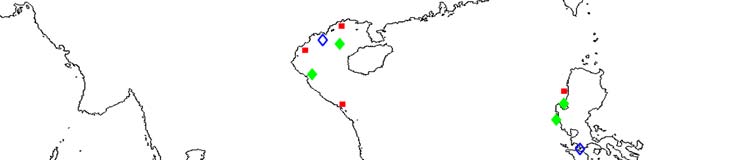
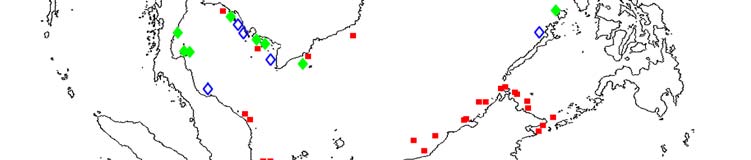
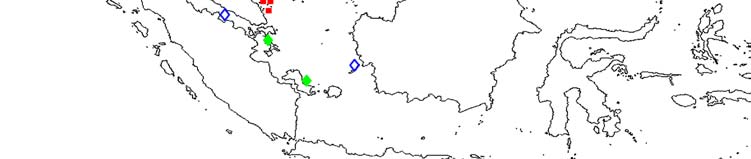
Figure 1
Location of: known spawning and nursery areas of
inclusion in the system (Figure 1).
transboundary fish species []; initial sites selected for inclusion in the regional
system of refugia []; sites of high priority for inclusion in the regional system
once the initial set are established
Improving the Scientific Basis for the
Identification of Fisheries Refugia
responsible for processing the samples required
to enhance the scientific basis for the
Initial constraints in the identification of fisheries
identification of important fish spawning and
refugia related to the lack of information regarding
nursery areas. Training materials used as part of
the early-life history of the majority of significant
this capacity building programme can be
species in the South China Sea and Gulf of
accessed by visiting
Thailand. In this connection, the development of a
http://www.unepscs.org/training.html.
5
Sea where over-fishing and the use of
RESULTS AND LEARNING
inappropriate fishing gear are significant
impediments to more sustainable exploitation of
The original outcome of the project was simply
fisheries resources. The concept is also under
anticipated as being "a system of refugia to
consideration by members of the Scientific
maintain important transboundary fish
Committee of the Western and Central Pacific
stocks in the Gulf of Thailand based on
Fisheries Commission for use in the
marine protected areas identified as critical
management of tuna stocks in the Western
habitats for fish stock conservation and
Pacific.
protection." The project document provides no
guidance regarding a definition of what
Many past marine protected areas established
constitute "fisheries refugia", or the criteria for
around the world have been promoted in terms
assessing the relative importance of individual
of their potential to improve the state of fisheries
areas as potential refugia. What has resulted
and their habitats, but have rarely included
from the work of the RWG-F are: (a) a listing of
mechanisms to ensure the effective integration
demersal species of fish, crustacea and
of fisheries considerations into management. In
molluscs of transboundary significance in the
contrast fisheries departments and ministries
region; (b) a list of 52 known spawning and
largely focus on achieving sustainable yields
nursery areas of which 14 have been prioritised
from fish stocks. Experience in the South China
as the initial set and a further 9 accorded high
Sea Project suggests that cross-sectoral co-
priority for development as refugia; (c) criteria for
ordination can be achieved through the fisheries
defining fisheries refugia; and, (d)
refugia concept that has provided a platform for
intergovernmentally approved guidelines for the
building partnerships and enhancing
establishment of fisheries refugia that constitute
communication between the environment and
part of the ASEAN SEAFDEC Regional
fisheries sectors.
Guidelines for Responsible Fisheries in
Southeast Asia (see SEAFDEC, 2006). Related
A second anticipated challenge in replicating the
information and outputs can be accessed by
experience is generating sufficient support at the
visiting the Fisheries Refugia Information Portal
fishing community level for proposed
at http://refugia.unepscs.org.
interventions. At present many small-scale
fishing communities, fisheries managers, and
It appears that the refugia concept is a
local government officials equate area-based
successful approach to addressing a significant
(zoning) approaches to fisheries management
barrier to effective management action that
as the equivalent of no-take Marine Protected
addresses fish stocks and habitats important to
Areas (MPA). The latter are often viewed as
critical stages of the life cycle of those stocks,
unacceptable at the fishing community level
namely the adverse reaction to the Marine
since they are rarely designated in locations of
Protected Area concept that is elicited from
importance to the life-cycle of important fish
fishing communities and fisheries officers at the
species and neither improve fish stocks, nor the
local and provincial levels. By emphasising the
community's income. The net result of
"sustainable use" aspects of refugia rather than
establishing classic MPAs has been the loss of
the "no-take" approach adopted by many
fishing areas for small-scale fishers and non-
ministries of environment in their approach to
compliance with fisheries management
marine protected areas adverse reactions are
measures in the "protected" areas.
avoided. More importantly perhaps the fisheries
refugia concept, since it is being promoted by
SIGNIFICANCE
fisheries departments, provides an initial
platform for dialogue between the government
The South China Sea and Gulf of Thailand is a
institutions responsible for environment and for
global centre of shallow water marine biological
fisheries.
diversity, supporting a significant world fishery
that is important to the food security of, and as a
REPLICATION
source of export income for, Southeast Asian
countries. Landings from this area contribute
It is anticipated that the experiences gained in
approximately 10 percent of reported global
this region will be suitable for application in other
fisheries production per annum and make
large marine ecosystems such as the Yellow
significant contributions to the economies of
6
countries bordering the Gulf of Thailand and the
the Seagrass Sub-Component.
South China Sea. The majority of fisheries are
UNEP/GEF/SCS/RWG-SG.7/3.
small-scale in nature, and fish are landed in a
UNEP, 2006b. Reversing Environmental
large number of decentralised locations for
Degradation Trends in the South China Sea
distribution through complex marketing networks
and Gulf of Thailand. Report of the Sixth
at the community level. As a consequence
Meeting of the Regional Working Group on
estimates of fisheries production are considered
Fisheries. UNEP/GEF/SCS/ RWG-F.6/3.
to be gross underestimates and do not
UNEP, 2007a. Procedure for Establishing a
adequately reflect the importance of the
Regional System of Fisheries Refugia in the
artisanal or subsistence production to the
South China Sea and Gulf of Thailand in the
fisheries sector as a whole.
context of the UNEP/GEF project entitled:
"Reversing Environmental Degradation
As noted above the decadal rates of decline in
Trends in the South China Sea and Gulf of
total area of critical habitats such as seagrass,
Thailand". South China Sea Knowledge
coral reefs, and mangroves are currently
Document No. 4. UNEP/GEF/SCS/Inf.4.
estimated at 30%, 16%, and 16% respectively.
UNEP, 2007b. Reversing Environmental
Fishing contributes to the loss and degradation
Degradation Trends in the South China Sea
of seagrass and coral reefs habitats and the
and Gulf of Thailand. Report of the Eighth
achievements of the fisheries component of the
Meeting of the Regional Working Group on
South China Sea Project have been significant
Fisheries. UNEP/GEF/SCS/RWG-F.8/3.
in developing the scientific, institutional, and
UNEP, 2007c. Reversing Environmental
policy basis required to reduce the rates of loss
Degradation Trends in the South China Sea
of globally significant habitats and biodiversity
and Gulf of Thailand. Report of the Ninth
due to fishing. This is considered important
Meeting of the Regional Working Group on
because of the potential global fisheries benefits
Fisheries. UNEP/GEF/SCS/RWG-F.9/3.
associated with effective fisheries and habitat
management at the local level, which is
KEYWORDS
particularly important in the case of Southeast
Asia due to the continuing importance of
Fisheries
fisheries to food security, and maintenance of
Refugia,
livelihoods.
Habitat
South China Sea and Gulf of Thailand
REFERENCES
ADDITIONAL GRAPHICS
Lundgren, R., Staples, D.J., Funge-Smith,
S.J. and Clausen, J. 2006. Status and
potential of fisheries and aquaculture in Asia
and the Pacific 2006. FAO Regional Office
for Asia and the Pacific. RAP Publication
2006/22. 62pp.
Paterson, C., Try, I., Tambunan, P., Barut,
N., Saikliang, P., Dao, M.S., and Chullasorn,
S. 2006. Establishing a Regional System of
Fisheries Refugia. Fish for the People, 4(1):
22-27.
SEAFDEC, 2006. Supplementary Guidelines
on Co-Management Using Group User
Rights, Fisheries Statistics, Indicators, and
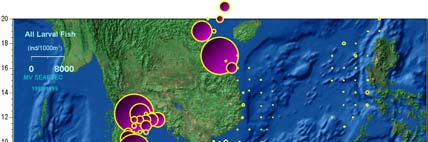
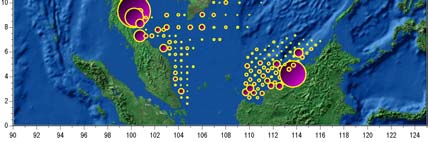
Distribution and abundance of fish larvae (all
Fisheries Refugia. Southeast Asian
species combined) in the South China Sea and
Fisheries Development Center, Bangkok,
Gulf of Thailand during the post-northeast
Thailand. 84pp.
monsoon periods from 1996-2000, by Dr.
UNEP, 2006a. Reversing Environmental
Somboon Siriraksophon.
Degradation Trends in the South China Sea
and Gulf of Thailand. Report of the Seventh
Meeting of the Regional Working Group for
7
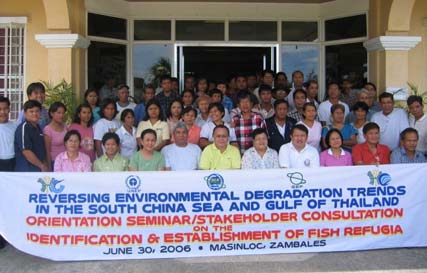
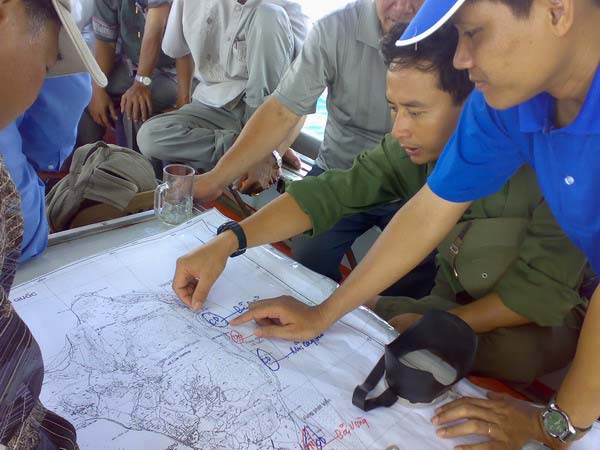









Fishing community consultation on the
identification and establishment of fisheries
Larval specimen of Scomberoides spp. collected
refugia at Masinloc in the Philippines, by Mr.
from the South China Sea as part of the
Noel Barut.
fisheries refugia training programme, by Dr.
Yoshinobu Konishi
Provincial fisheries and border army officers
working at-sea with fishermen and staff of Kien
Giang's Department of Environment to map
Screenshot of the Fisheries Refugia Information
fisheries refugia at Phu Quoc Island in Viet Nam,
Portal homepage (http://refugia.unepscs.org)
by Christopher Paterson.
The Global Environment Facility (GEF)
International Waters Experience Notes series
helps the transboundary water management
(TWM) community share its practical
experiences to promote better TWM.
Experiences include successful practices,
approaches, strategies, lessons, methodologies,
etc., that emerge in the context of TWM.
To obtain current IW Experience Notes or to
contribute your own, please visit
http://www.iwlearn.net/experience or email
info@iwlearn.net.
Schematic representation of types of refugia in
relation to the generalised life-cycle of demersal
marine fish, by Christopher Paterson.
8