PROJECT SUMMARY
PROJECT IDENTIFIERS
1. Project name: Developing Renewable
2. GEF Implementing Agency: UNDP
Groundwater Resources in Arid Lands: A Pilot
Case The Eastern Desert of Egypt
3. Country or countries in which the project is
4. Country eligibility: Under article 9b of the GEF
being implemented: Egypt, with trans-boundary
Instrument
impacts
5. GEF focal area(s): International waters
6. Operational program/Short-term measure:
OP#9 Land Degradation Component
7. Project linkage to national priorities, action plans, and programs:
To cope with increasing demand for freshwater supplies due to increasing populations and limited water
supplies, Middle Eastern and Saharan countries have adopted aggressive projects to exploit their surface
water and fossil groundwater aquifers. The assessment of alternative water resources for countries in the area
will assist them in meeting their national goals while alleviating pressure on their surface waters and
freshwater ecosystems.
8. GEF national operational focal point and date of country endorsement: Chief Executive Officer, Egypt's
Environmental Affairs Agency, Dr. Ibrahim Abd El Gelil (June, 28 1999)
PROJECT OBJECTIVES AND ACTIVITIES
9. Project rationale and objectives:
Rationale and objectives:
Indicators:
(1) Develop reliable techniques for evaluating the
(1) Generated and interpreted chemical and
extent of renewable ground water resources in arid
isotopic analyses for groundwater samples
lands, with the Eastern Desert of Egypt as a test site.
from all of the alluvial aquifers in the main
Our preliminary geochemical and isotopic data
valleys of the Eastern Desert.
indicated that flash flood waters stored in shallow
aquifers during the past 45 years are the source of
the shallow (10-100 m) groundwater in Wadi El
Tarfa and surrounding areas in the Eastern Desert
(Appendix I).
(2) Evaluate the source(s) of the groundwater in the
(2) Verified surface runoff models and recharge
alluvial aquifers of the Eastern Desert, the timing of
rates for the alluvial aquifers from the
their recharge cycle, and the extent of the renewable
rainwater precipitating over the Red Sea Hills.
groundwater resources recharged by rainwater
precipitating over the Red Sea Hills area in the
Eastern Desert.
(3) Investigate groundwater flow in the alluvial
(3) Verified groundwater flow model for the most
aquifers flooring one of the main valleys of the
promising valley in the Eastern Desert.
Eastern Desert.
(4) Produce a replicable model in neighboring Middle
(4) Adoption of gained experiences in neighboring
Eastern and Saharan countries and thus contribute
countries.
to the preservation of freshwater ecosystems in the
area.
1
10. Project outcomes:
Indicators:
(1) In-country and out-of-country scientific and
(1) Establishment of a hydrology laboratory,
technical training on the assessment of alternative
training courses, and workshops.
water resources.
(2) Identification of the source of groundwater in
(2) Collection of isotopic and geochemical data for
alluvial aquifers under investigation.
groundwater samples.
(3) Validate surface runoff/recharge model for the
(3) Determination of the total precipitation over
investigated aquifers across the Eastern Desert.
the catchment areas, runoff, evaporation,
Identify the most promising valley in the Eastern
transpiration, and infiltration.
Desert.
(4) Identify the configuration of the shallow alluvial
(4) Determination of the distribution, lithology,
aquifers in the selected valley.
thickness, and depth to water table for the
investigated aquifers.
(5) Validate steady-state and transient groundwater
(5) Collection of vitally important data on
models providing the amounts of waters that can be
groundwater flow, depth to water table,
extracted from the alluvial aquifers in the selected
fluctuation in water table, water amounts
valley.
readily available, etc.
(6) Replicable models for similar areas in Egypt and
(6) Publicized results and experiences for the
other Middle Eastern, Saharan, and Nile basin
Eastern Desert, leading to the initiation of
countries, as well as in arid areas elsewhere.
similar efforts elsewhere in Egypt, in Middle
Eastern and North African countries, and in
other arid areas worldwide.
11. Project activities to achieve outcomes (including
Indicators:
cost in US$ of each activity):
(1) Develop in-country and out-of-country scientific
(1) Laboratory (hardware, software) for
and technical capabilities in the area of assessment
hydrologic modeling. Workshops at Cairo
of alternative water resources ($500,000; GEF:
University (CU) to train faculty from CU and
$243,000).
scientists from the National Water Research
Center.
(2) Collect and conduct geochemical and isotopic
(2) Field trips, water samples, geochemical and
analyses on water samples from existing wells and
isotopic data for collected samples.
water bodies ($180,000; GEF: $31,500).
(3) Identify the origin of subsurface waters in all of the
(3) Geochemical and isotopic data; identification
main valleys of the Eastern Desert by analysis of
of groundwater sources and the physical
geochemical and isotopic data ($120,000; GEF:
processes (evaporation, mixing, etc.) affecting
$40,000).
the groundwaters.
(4) Identify the watersheds in the study area ($100,000;
(4) Map showing watersheds of the Eastern
GEF: $35,000).
Desert.
(5) Collect meteorological and hydrologic data for the
(5) Inputs to surface runoff model, including
study area ($120,000; GEF: $32,500).
precipitation, evaporation, infiltration,
moisture content.
(6) Generate spatial precipitation distribution maps by
(6) Spatial precipitation distribution maps, soil
using mean monthly precipitation data, soil type
type coverage maps, etc.
coverage maps, etc. ($29,000; GEF: $13,000).
(7) Generate, test, refine, and validate an integrated
(7) Validated integrated surface runoff model.
model for mountainous arid regions that combines
temporal and spatial distribution of rainfall with
appropriate basin unit hydrograph and infiltration
2
parameters for various soil types to estimate
infiltration. Test and refine the model at several
locations by using data on flooding events. Select
the most promising valley ($150,000; GEF: $72,000).
(8) Collect archival and field hydrologic data for the
(8) Input values for the groundwater model: well
most promising valley in order to define the
logs to define aquifer geometry; pumping test
configuration of the aquifer and to collect relevant
results and water level surveys to define
hydrolgeologic parameters for use as inputs to the
hydrologic parameters (e.g., transmissivity).
groundwater model ($275,000; GEF: $90,000).
(9) Construct, calibrate, and validate a steady-state
(9) Validated groundwater models.
groundwater model to simulate current
groundwater configuration and a transient model to
account for recharge in the area ($220,000; GEF:
$157,000).
(10) Evaluation of projected adverse ecological
(10) Identify potential adverse ecologic effects that
effects and possible solutions that will
might result from the project and find possible
minimize these effects.
remedies ($56,000: GEF: $56,000).
**NB: Additional $60,000 is requested from GEF to cover
annual audits and independent evaluation toward the
end of the project.
**NB: Argonne National Laboratory covered the PDF
($25,000).
12. Estimated budget (in US$ or local currency):
GEF: $830,000
Co-financing: $25,000 (PDF) (Argonne National Laboratory)
$ 150,000 (Argonne National Laboratory)
$ 490,000 ($50,000 in kind) (Cairo University)
$ 240,000 (Ministry of International Cooperation/United States Department of Agriculture)
$ 100,000 (in kind) (National Water Research Center)
TOTAL: $1,835,000
INFORMATION ON INSTITUTION SUBMITTING PROJECT BRIEF
The project proposer is Cairo University (CU). The largest Egyptian university, CU is a governmental institution,
and its president has the rank of a minister. Cairo University has 25 faculties, 188,000 students, and 115 special
centers, 12 of which are under the direct management of CU administration. Cairo University attracts about 20%
of the total consultation work in the fields of environment and energy in Egypt. Cairo University will collaborate
with Argonne National Laboratory and the National Water Research Center, both of which will provide expertise
and financial contributions as well. See Appendix II for more information.
14. Information on proposed executing agency (if different from above):
15. Date of initial submission of project concept to GEF (Dr. Andrea Merla): December 1998. Date of obtaining
of clearance from GEF: December 22, 1998. Date of submission of concept paper to Egyptian Focal Point:
(February 1999). Date of obtaining endorsement of the Egyptian focal point: June 28, 1999 (Appendix III).
3
INFORMATION TO BE COMPLETED BY IMPLEMENTING AGENCY:
16. Project identification number:
17. Implementing Agency contact person: Marcel Alers, GEF Regional Coordinator, UNDP/RBAS
18. Project linkage to Implementing Agency program(s):
This project conforms with the Country Cooperation Framework and is in line with other climate change
activities being implemented by the UNDP country office in Egypt. The project also conforms with the UNDP
efforts to participate in a large water management initiative among Nile basin countries.
4
PROJECT DESCRIPTION
PROJECT RATIONALE AND OBJECTIVES
Project Rationale
Demand for freshwater supplies in arid and semi-arid countries worldwide is on the rise because of
increasing populations and limited water supplies. This problem is exemplified in countries of Saharan
Africa (North Africa) and the Middle East, where scarcity of water resources is contributing to political
instability, disputes, and conflicts. Sources of freshwater in these areas include surface runoff (e.g., Nile
River in Egypt and Sudan) that generally originates from allochtonous precipitation over distant
mountainous areas with wetter climatic conditions. Other sources of freshwater in these arid and semi-
arid areas include nonrenewable groundwater resources originating as autochtonous precipitation that
recharged the aquifers in previous wet climatic periods. For example, the Nubian aquifer that occupies
large areas (~2 x 10⁵ km2) in northern Sudan, eastern Libya, and Egypt (Figure 1) (Hess et al., 1987) is
believed to have been recharged during wet climatic conditions in the Quaternary (e.g., Thorweihe, 1982).
These fossil waters are currently being used for irrigation purposes in the Dakhla, Kharga, and Farafra
oases in Egypt, and an extensive program is being developed in Libya to extract and utilize these fossil
waters from the Kufra, southeast-Sarra, Tazerbo, and Sarir areas. Because of the nonrenewable nature of
these waters, the artesian wells fed by this aquifer are drying up, and the depth to the water table in these
areas has been steadily increasing.
The increasing demand on conventional freshwater supplies in Middle Eastern, Saharan, and some sub-
Saharan countries could contribute to extreme stresses on the freshwater ecosystem (lakes, ponds, rivers,
streams, wetlands, and groundwater), particularly the transboundary ecosystems. The preservation of
freshwater ecosystems is important, given the diversity of the species they support. Only 1% of Earth's
surface is covered by inland waters, yet this area contains 12% of the total animal species. In contrast, the
oceans, which cover 70% of Earth's surface, support only 7% of its species (Gleick, 1993). Some authorities
estimate that the total faunal diversity in rivers is over 60 times that of the sea (Stansbery, 1973; Moyle
and Cech, 1982; Wootton, 1990). Unfortunately, freshwater aquatic habitats and their biota are being
destroyed rapidly, principally because of competing demands for the limited water supplies. The
assessment of alternative renewable water supplies proposed here, has the final objective of preventing
further degradation of the fresh water ecosystems in arid and semi-arid areas of North Africa and the
Middle East.
This proposal aims in fact at developing and demonstrating ways to integrate renewable groundwater
resources into the water budget of watersheds in arid regions, where extreme scarcity poses serious
transboundary problems. For example, Egypt, Sudan, and a number of sub-Saharan countries share Nile
waters; reducing the dependence of any of these countries on these waters could help to reduce tensions
that might arise between the Nile basin states because of their increasing dependence on this limited
water resource. The proposal aims at demonstrating the viability of alternative water resources, such as
flash-flood-recharged alluvial aquifers that could complement or substitute for surface waters, thus
easing use conflicts and allowing some water flow for the ecosystems.
Project Objectives
In many arid and semi-arid countries worldwide, sporadic precipitation occurs over mountainous areas
and is channeled throughout extensive watersheds as surface runoff and subsurface groundwater flow.
Within these watersheds, n etworks of minor valleys join into main valleys that ultimately drain into other
water bodies (e.g., oceans, lakes, and rivers). Because some of the watersheds collect precipitation over
large areas and channel it through a few main valleys, substantial amounts of freshwater could
5
potentially recharge the alluvial aquifers flooring these main valleys during sporadic storms. We propose
to conduct a comprehensive study to investigate the distribution of these alluvial aquifers and their
recharge rates. We propose to use the Eastern Desert of Egypt as our test area. We refer to this alternative
renewable groundwater resource hereinafter as "the alluvial aquifer groundwater resource."
Egypt was chosen as a test site for a number of reasons. First, Egypt's landscape and its climatic and
hydrologic settings are ideal for the study and resemble those in neighboring countries. Hence, results
obtained in Egypt will be applicable to many neighboring countries. Networks of minor valleys dissect
the Red Sea Hills and the surrounding Cretaceous and Tertiary outcrops and join into main valleys that
ultimately drain into the Red Sea or the Nile River valley (e.g., Asyuti, Qena, and Hammamat; Figure 1).
These networks of channels collect rainfall as surface runoff in the main valleys and as groundwater in
the shallow alluvial and limestone aquifers flooring the main valleys. The large areal extent
(e.g., 15,000 km2 for the Qena
watershed) and extensive network of
individual watersheds in the Eastern
Desert are ideal for channeling rain
precipitating over large domains into
a limited number of main valleys and
recharging the aquifers flooring these
valleys. These topographic and
climatic conditions are present along
the Red Sea Hills in Egypt, Sudan,
Somalia, Saudi Arabia, and Yemen.
Similar conditions exist in
mountainous areas in North Africa
(e.g., Tibesti in Libya, Ennedi
Mountains in Chad) as well. Second,
like many of the world's arid and
semi-arid countries, Egypt relies
almost exclusively on its surface water
(Nile River) and its fossil groundwater
(Nubian aquifer). Such practices have
negative impacts on Egypt's
freshwater ecosystems. Third, our
preliminary geochemical and isotopic
Figure 1. Location map.
studies (Appendix I) indicate that
flash flood waters stored in shallow aquifers during the past 45 years appear to be the principal source of
most of the analyzed groundwater samples in the Wadi El Tarfa and surrounding areas (Figure 1). This
observation implies that the groundwater is a renewable resource. The magnitude of this resource is
currently unknown, but it is likely to be considerable. Locally, these waters pool into shallow alluvial
aquifers that are currently used to cultivate small areas within the main valleys (e.g., Wadi Asyuti and
Wadi El Tarfa). The proposed project falls under article 9b of the GEF Instrument.
We propose to conduct comprehensive studies leading to the development, validation, and
demonstration of techniques for evaluating the extent of alternative renewable water resources arising
from sporadic precipitation over large watersheds in arid and semi-arid mountainous areas, with the
Eastern Desert of Egypt as our test site. The comprehensive techniques that we advocate encompass the
use of various geochemical and isotopic techniques; surface and groundwater modeling; analysis of
Landsat, digital elevation, seismic, and drilling data; and field observations. To the best of our
knowledge, no such comprehensive studies have been applied previously in Saharan Africa and in
neighboring arid and semi -arid countries, although they are required to evaluate renewable water
resources. We will determine the source of the groundwater under investigation, evaluate the extent and
6
magnitude of alluvial groundwater that is recharged by rainwater precipitating over the Red Sea Hills
area in the Eastern Desert (a largely untapped resource), and determine the timing of the recharge cycle.
The results should be viewed as a model to be replicated in neighboring Middle Eastern and Saharan
countries, as well as in Nile valley countries.
CURRENT SITUATION (BASELINE COURSE OF ACTION)
A number of Middle Eastern, Saharan and sub-Saharan African countries are currently undertaking
major national projects to increase their water resources in order to cope with increasing demand on
freshwater supplies resulting from increasing populations. These projects, as described earlier, largely
depend on surface water and fossil groundwater. Less attention is being given to the renewable alluvial
aquifer groundwater resource advocated in this proposal. We cite the current situation in Egypt, Sudan,
and Libya as a demonstration of the baseline course of action there, which is typical of actions taken by
neighboring countries. Egypt is embarking on projects to divert large volumes of water from the Nile
River to reclaim lands in the Western Desert (Toshka project) and in Sinai (El Salam Canal). These
projects could reduce waters flowing downstream, increase soil salinity, decrease sedimentation, increase
coastal erosion and seawater intrusion, and negatively affect biodiversity in general and fisheries in
particular. Similarly, most of the agricultural development plans of Sudan are concentrated on irrigated
agriculture along the banks of the Nile. Sudan plans to raise storage capacity on the Nile by increasing the
height of the Roseiris Dam to bring its capacity to 6.5 billion cubic meters (an increase of 3.8 billion cubic
meters from the present capacity), building a dam at the Setite River (upper Atbara) with a capacity of 1.6
billion cubic meters, and constructing another dam on the Main Nile in Nubia at Merowe with a capacity
of 1.6 billion cubic meters, to be increased to 7 billion cubic meters later (Said, 1993). The modification of
free-flowing rivers for energy or water supply has many known adverse effects on ecosystems, including
loss in species diversity and floodplain fertility (often resulting from silting behind the dams), decrease in
flow of freshwater into natural ecosystems, toxic contamination of rivers, and natural drought made more
severe by diversion of limited water.
Current water resource management practices in Middle Eastern, Saharan and sub-Saharan countries
might also affect the water levels and water quality of groundwater aquifers. For example, the
introduction of a large volume of
surface water through the Toshka
Canal and El Salam Canal into
the deserts of Egypt could
significantly affect the water level
and water quality of the
underlying fossil waters of the
Nubian aquifer in the Western
Desert and in Sinai. The Nubian
aquifer
groundwaters are
international waters shared by
Egypt, Sudan, Libya, and Chad.
Egypt and neighboring countries
(e.g., Libya) are actively
exploiting the fossil groundwater
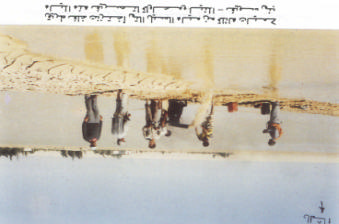
Figure 2. Flood water accumulated behind (east of) the Beni
of the Nubian aquifer throughout
Suef El Minya highway after the November 1994 flood.
the oases and lowlands of the
Sahara. Because of excessive
evaporation and poor drainage in these depressions, salinization of the soils and the groundwater is on
the rise, and rapid depletion of this resource could occur. The present hydrologic conditions of the
aquifer are still marked by natural flow to the oases. The assumed extraction plans are 2.8 billion cubic
7
meters per year in Egypt and 2.2 billion cubic meters per year in Libya (Soliman et al., 1998). By the year
2070, deep drawdown cones are expected to have been formed, and the extensive interconnected basins
that now exist within the aquifer will be dissected by interleaving dry areas (Soliman et al., 1998).
Evidence that the alluvial aquifer groundwater resource is a viable alternative water resource in arid
lands comes from field observations (Fig. 2), our geologic, hydrologic, geochemical, and isotopic
investigations in the Wadi El Tarfa and surrounding areas in the Eastern Desert of Egypt (Appendix I).
The main possibilities for the origin of groundwater in the alluvial aquifers flooring the main valleys in
the study areas are that (1) the waters are related to the Nile River aquifer, (2) the waters are paleowaters
discharged from the Nubian aquifer, or (3) the waters are flash flood waters from the Red Sea Hills east of
the Nile River.
The major stratigraphic units in the study area and the water table levels in relation to the Nile River
water level are shown in Figure 3, a cross-section trending west-east and extending from the Nile River
basin (west) to the Red Sea Hills (east). The Quaternary deposits comprise wadi (valley) and floodplain
deposits. The wadi
W a t e r t a b l e
P r e c i p i t a t i o n
deposits, of variable
W a t e r t a b l e
= + 7 8 m
R i v e r N i l e
= + 6 3 m
composition, were
W a t e r l e v e l
+ 8 0 m
= + 3 1
eroded from the
dissected plateau
+ 4 0
and the Red Sea
Hills and were
deposited within the
- 4 0
valleys. The
k m
thickness of these
0
1
2
deposits generally
A`
decreases toward
the Red Sea Hills
A
and increases
toward the Nile
River valley. The
floodplain deposits
of the Nile River
valley are made up
of relatively thin
(7-m) Holocene
k m
deposits of fine mud
G r o u n d w a t e r
f l o w d i r e c t i o n
and silt deposited
0
2 0
4 0
by repeated
F a u l t
K a r s t i f i e d L i m e s t o n e
W a d i D e p o s i t s
seasonal floods
( E o c e n e & C r e t a c e o u s )
( Q u a t e r n a r y )
during the past 8000
N u b i a n S a n d s t o n e
S i l t a n d C l a y
( P a l e o z o i c & M e s o z o i c )
( H o l o c e n e o r P a l e o c e n e )
years. The
P r e c a m b r i a n
F l o o d P l a i n D e p o s i t s
sediments are
( P l i o c e n e & P l e i s t o c e n e )
underlain by thicker
Figure 3. Schematic W E cross section (top) along the Wadi El-Tarfa and WE
(tens of meters in
cross section (bottom) from the Nile River to the Red Sea Hills (based on our field
the study area to
data and on published data [RIGW 1988]).
hundreds of meters)
deposits of middle
Pleistocene sand and gravel under the Nile River valley proper (Figure 3). The Quaternary deposits rest
on karstified carbonates of Eocene and Upper Cretaceous ages. The carbonates are underlain by the
Paleozoic-Mesozoic Nubian sandstones that host nonrenewable fossil waters under high pressure (Hess
8
et al., 1987). The cross section shows that the groundwater table levels are higher than the Nile River
water level, that the groundwater table levels increase with increasing distance from the Nile River, and
that the general groundwater flow in the alluvial aquifers of the study area is from east to west. All of
these observations suggest that the Nile River waters are unlikely to be the source of the investigated
groundwaters and that their origin is more likely to be the rains precipitating over the Red Sea Hills to
the east.
The groundwaters residing in the alluvial aquifers of Wadi El Tarfa (Figure 1) and surrounding areas are
renewable and of meteoric origin (Sultan et al., 1999b, 2000; Appendix I). The groundwaters in the
shallow alluvial aquifers under investigation have total dissolved solids of 300-5,000 mg/L. The solutes
are mostly sodium, calcium, sulfate, and chloride. Values of D and 18O range from -10 to +34 and -2
to +5.2, respectively, and define a line having a slope of 5.7 that intersects the meteoric water line at
about D = -15 on a diagram of D vs. 18O, indicating that the waters might have been derived by
evaporation of regional precipitation. Tritium activities of 0.04-12.9 TU indicate that all but one of the
waters was derived at least partly from precipitation that occurred within the past 45 years. Sultan et al.
(2000) concluded that the most likely source of these groundwaters is sporadic flash flood events yielding
locally voluminous recharge that accumulates in coarse sediments and fractured rock beneath alluvial
channels. We will conduct similar isotopic and geochemical investigations to examine the origin of
groundwaters in all of the major alluvial aquifers flooring the Eastern Desert's main valleys. None of the
previous studies that examined the isotopic geochemistry of Eastern Desert groundwaters, whether they
were of local (e.g., El Bakri et al., 1992) or of regional (nationwide) scope (e.g., Landis et al., 1995;
Swanberg et al., 1988), specifically addressed the origin of the shallow groundwaters in the alluvial
aquifers of the Eastern Desert. The proposed investigation will be the first of its kind to address this issue
for the entire Eastern Desert. Furthermore, previous regional studies in the Eastern Desert did not apply
the full set of geochemical and isotopic techniques we are proposing.
One of the most important parameters needed to investigate the recharge of alluvial aquifers is the
amount and frequency of precipitation over each of the identified catchments. Examination of archival
precipitation data (Nicholson's Africa Precipitation, 1993; Legates and Wilmott, 1997) shows that the rainy
season generally starts in November and lasts through February, that regional floods occur once every
two to four years, and that average annual precipitation ranges from 2 to 200 mm, depending on location.
Considerable recharge of the
alluvial aquifers under
6
investigation occurs during
storms of regional extent. Thus, it
5
is important to understand the
frequency of these large events.
4
Examination of all available
archival data (Nicholson's Africa
3
Precipitation, 1993) for stations in
the northern and central Eastern
2
Desert (El Tor, Giza, Qena,
Number of stations 1
Quseir, Minia, Asyout) indicates
that a regional storm event that
0
affects at least four of the six
0
100
200
300
400
500
600
examined stations happens once
Months (1927-1983)
every 38 months. These results
are portrayed in Figure 4. We
Figure 4. Frequency of occurrence of regional storms. Regional
will use this criterion to
events occured at two-thirds or more of the stations.
investigate the frequency of
widespread storm events across the entire Eastern Desert, and we will refine our estimates by examining
additional archival meteorological data to be purchased from the Egyptian Meteorological Authority.
9
First-order estimates of precipitation over a few of the catchment areas under consideration were
computed (Gheith and Sultan, 1999) for the northern part of the Eastern Desert by using mean annual
precipitation data (Egyptian Meteorological Authority, 1996) averaged between 1961 and 1991 from 17
rain gauges. Annual precipitation in the Sannur, Tarfa, Asyuti, and Qena catchment areas is estimated at
15.5 x 10⁶, 21 x 106, 7.5 x 10⁶, and 58 x 106 cubic meters, respectively. These are lower-limit estimates,
because none of the rain gauges is located on the mountains, which are expected to receive considerably
more precipitation than the valleys. For example, across the Red Sea in Saudi Arabia, annual precipitation
ranges from 100 mm at about 1000 m above sea level to 300 mm or more locally at higher elevations in the
mountains, about 2400 m above sea level (Sorman and Abdulrazzak, 1993). Similarly, precipitation
averages about 70 mm per year in Death Valley, whereas amounts of 300 mm or more occur over the
mountains (Osterkamp et al., 1994). If five to ten times as much rain falls over the mountains, we estimate
that the examined catchment areas could annually receive 37.5 x 10⁶, 176.5 x 10⁶, 77.7 x 10⁶, and 295.5 x 10⁶
cubic meters of total precipitation, respectively. To the south, precipitation rates are considerably higher
(Legates and Wilmott, 1997), and catchment areas are generally larger; valleys to the south (Hamamat,
Shait, Natesh, and Kherit valleys) are thus expected to receive even larger amounts of precipitation.
EXPECTED PROJECT OUTCOMES, WITH UNDERLYING ASSUMPTIONS AND CONTEXT
(ALTERNATIVE COURSE OF ACTION)
1. Develop, calibrate, and validate a surface runoff/recharge model for sporadic storms in mountainous
arid and semi-arid areas. The Eastern Desert of Egypt will be the test site. We will select the most
promising valley for investigation and calibration of groundwater recharge and flow models.
2. Develop, calibrate, and validate a groundwater flow model for the alluvial aquifers in the most
promising valley. We will identify the shallow alluvial aquifers that are recharged by renewable
meteoric waters and will model recharge rates of these aquifers.
3. Provide in-country and out-of-country scientific, technical, and research-oriented training and
outreach activities centering on the assessment of alternative water resources.
4. Provide a replicable model for similar projects elsewhere in Egypt. For example, the procedures we
develop in the Eastern Desert could be used to assess the extent of the renewable water resources in
northern and central Sinai areas, which have topographic features (valley networks collecting
meteoric waters from mountainous areas) similar to those of the Eastern Desert.
5. Provide a replicable model for other Nile basin countries. The project will serve as an example for
other Nile basin countries. Egypt has been and continues to be a leader in water management
practices among the Nile basin countries. Thus, if Egypt develops successful procedures to assess the
alluvial aquifers of the Eastern Desert, Nile basin countries could potentially use these procedures in
their respective countries. The remaining Nile basin countries receive far more rainfall than Egypt
does. By reducing the dependence of the Nile basin countries on Nile waters, the project will assist in
the preservation of the freshwater ecosystems in these countries.
6. Generate a replicable model that could be used in other arid Middle Eastern and Saharan countries,
as well as in arid and semi-arid countries worldwide.
ACTIVITIES AND FINANCIAL INPUTS NEEDED TO ENABLE CHANGES (INCREMENT)
Activity 1: Develop in-country and out-of-country scientific, technical, and research -oriented capabilities in the
area of assessment of alternative water resources ($500,000, of which $243,000 is requested from GEF).
In this activity, a hydrology laboratory (hardware, software) for hydrologic modeling will be initiated
at Cairo University (CU). Egyptian scientists will be trained in the use of isotopic data to investigate
the sources of groundwater and to understand the physical processes that affected these waters.
10
Egyptian scientists will be also trained in the use of newly acquired hardware and software for
analysis of satellite data and groundwater and surface water modeling. Appendix IV contains a list of
the hardware and software that will be acquired to develop the hydrology laboratory. Additional
field equipment will be purchased as needed. Workshops will be held at CU to train CU faculty,
scientists from the National Water Research Center, and officials and scientists from neighboring
countries in hydrologic modeling and the application of environmental isotopic and geochemical
techniques.
Activity 2: Collect and analyze geochemical and isotopic data for water and soil samples ($180,000, of which
$31,500 is requested from GEF).
Data will be gathered on several hundred groundwater samples from the study area. Samples will be
analyzed at certified laboratories in the United States. Four samples will be collected at each location:
(1) a filtered, acidified 60-mL sample for cation analyses; (2) an unfiltered, unacidified 125-mL sample
for anion and alkalinity analyses; (3) an unfiltered, unacidified 30-mL sample for stable isotope ratio
analyses for hydrogen and oxygen; and (4) an unfiltered, unacidified 500-mL sample for tritium
analysis.
Cations will be analyzed by inductively coupled plasma atomic emission spectrometry. Anions will
be analyzed by ion chromatography. Alkalinity will be determined by titration. Hydrogen and
oxygen isotope ratios will be determined by the methods of Coleman et al. (1982) and Socki et al.
(1992), respectively. Hydrogen and oxygen isotope ratios will be expressed in the conventional
(delta) notation, where
= [(Rsample/Rstandard) - 1] x 1000,
[1]
and R represents the ratio of D/H or 18O/16O, respectively, in the sample and the standard. The
resulting values of D and 18O will be reported in units of (per mil) or parts per thousand
deviation relative to the corresponding ratios in Standard Mean Ocean Water (V-SMOW; Coplen,
1993).
Tritium activity will be determined by counting the water after tritium enrichment by electrolysis. A
half-life of 12.43 years will be used to calculate the resulting TU (tritium unit) values, where 1 TU is
equal to a tritium/hydrogen ratio of 10-18.
We will also use the chloride mass-balance approach to estimate recharge rates. This approach is
based on the concept that the amount of water and chloride added at the surface should equal the
amount of water and chloride percolating down (e.g., Allison and Hughes, 1978; Sharma, 1988).
PClt = RCLsw
[2]
Here P is the average annual precipitation (mm/year), Clt is the average total chloride concentration
in precipitation and dust (mg/L), R is the average recharge rate (mm/year), and CLsw is the average
chloride concentration of the soil water.
To obtain the average chloride concentration of the soil water, we will drill a number of holes by
using core recovery equipment. Holes will penetrate the water table. For each hole we will analyze
the cored soil samples at intervals of approximately 0.5 m. Soil samples will be shaken with a known
volume of distilled water for two days. Aliquots of the supernatant liquid will be titrated
potentiometrically with standard silver nitrate to obtain chloride concentrations.
11
Activity 3: Address the origin of subsurface waters in all of the main valleys of the Eastern Desert by analysis of
geochemical and isotopic (stable and radioactive) data ($120,000, of which $40,000 is requested from GEF).
Stable isotope techniques will be used in conjunction with radioactive isotope data (especially
carbon-14 and tritium) and solute concentrations to "fingerprint" different water bodies, map their
geographic distributions, and decipher the nature of physical processes (e.g., evaporation, mixing)
that have affected them. First, we will consider the isotope ratios of hydrogen and oxygen and their
implications for the origin of the groundwaters. Second, we will consider the tritium data and their
implications for the underground residence times of the groundwaters. Third, we will consider the
solute chemistries of the waters and their bearing on the different sources of waters and their possible
chemical evolution by evaporation or dissolution/precipitation of minerals.
Activity 4: Identify the watersheds in the study area by using digital terrain elevation data (DTED) with 85-m
resolution ($100,000, of which $35,000 is requested from GEF).
Landsat Thematic Mapper (TM) data with 30-m resolution will be used to map the distribution of
ephemeral streams and recharge areas (e.g., alluvial fans). State-of-the-art Watershed Modeling
System (WMS) software will be used to generate maps outlining the distribution of the watersheds of
the Eastern Desert.
To assess the amounts of recharge for the alluvial aquifers, one must first know the areas covered by
the catchments. Previously, watersheds in the Eastern Desert were defined on a geomorphologic
basis alone (e.g., Naim, 1994). First-order estimates of the catchment areas for Wadi El Tarfa
(11,122 km2) and surrounding valleys (Sannur: 5480 km2; Asyuti: 6042 km2; Qena: 15,841 km2) in the
northern part of the Eastern Desert were computed by using 1-km digital elevation data and the
WMS software (Gheith and Sultan, 1999). The areas covered by the Eastern Desert catchments are
generally large, giving rise to considerable surface runoff in the main valleys and recharge to the
underlying alluvial aquifers. We will determine the precise areas covered by catchments in the entire
Eastern Desert by using digital elevation data of higher resolution (85 m instead of 1 km).
Activity 5: Collect and co-register all published meteorological, geologic, land use, geomorphologic, and
hydrologic data for the study area ($120,000, of which 32,500 is requested from GEF).
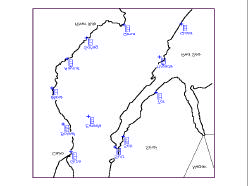
We will compile all relevant published
meteorological, geologic, geomorphologic, and
hydrologic data. Field trips will be arranged to
collect additional lithologic and hydrologic
parameters (e.g., rock and soil types, evaporation
and infiltration rates, moisture content). We will
purchase unpublished precipitation data from the
Egyptian Meteorological Authority for all rain
gauges in or around the study area that are
located either along the Nile (e.g., Beni Suef, Miya,
Asyut, Sohag, Qena) or along the Red Sea
coastline (Suez, Ras Sidr, El Tor, Sharm Ek Sheikh,
Hurghada) (Figure 5).
Figure 5. Distribution of rain gauges in
the Eastern Desert.
To develop, validate, and apply the model, data
sets originally in various forms (hard copy, digital)
and various projections (DTED and geologic maps: UTM; TM: Space Oblique Mercator; topographic
sheets: Transverse Mercator) will be digitized if needed, mosaicked, and co-registered by using the
geologic digital mosaic as a reference. Thus, all mosaics will be re-projected to the same projection
12
(UTM). We will generate various digital mosaics covering the entire Eastern Desert: (1) a mosaic from
DTED cells, each covering 1° latitude by 1° longitude; (2) a mosaic from seven geologic maps
(1:250,000), each covering an area of approximately 300 km x 300 km; (3) a mosaic from
approximately 20 Landsat TM scenes, each covering an area approximately 185 km x 185 km; and
(4) a partial mosaic from 1:100,000 topographic sheets.
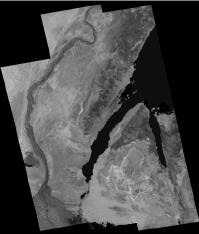
The TM image covers an area of 185 km x 185 km with
spatial resolution of 30 m. Landsat TM (six of seven
bands) detects reflected spectral radiation in the visible
and near-infrared wavelength region (TM 0.4-2.5 µm).
Figure 6 is a mosaic of 11 TM band-5 (wavelength
region 1.55-1.75 µm) images acquired in the summer of
1994. TM band-5 was chosen because it shows large
spectral variations between rocks (dark) and alluvial
filled valleys (bright). The selected scenes have minimal
(<5%) cloud coverage, a similar (summer 1994)
acquisition date, and high overall quality. Detailed
descriptions of the procedures to be used in mosaicking
and co-registration are given in Sultan et al. (1999a).
Similar techniques will be used to mosaic and co-
register geologic and topographic data. Co-registered
soil and land use digital mosaics that portray various
Figure 6. Mosaic of 11 TM images.
hydrogeologic parameters will be generated from
images
published geologic maps of Egypt (EGSMA, 1981;
Klitzsch et al., 1987a,b,c,d,e).
Activity 6: Generate spatial digital precipitation maps for the study area ($29,000, of which $13,000 is
requested from GEF).
Two precipitation-related parameters will be defined for modeling purposes: the distribution of
precipitation over the study area, hereafter referred to as precipitation maps, and the intensity of
precipitation as a function of time, hereafter referred to as hyetographs.
Three data sets will be used to
generate precipitation maps.
Giza
These data will include (1) daily
precipitation data from rain
0.3
gauges in and around the study
0.25
Giza
area, to be purchased from the
0.2
Egyptian Meteorological
0.15
Authority; (2) monthly
0.1
precipitation for rain gauges in
0.05
Dimensionless intensity
the study area (Qusir, Qena, El
0
Minya) and surroundings (Cairo,
3:30 3:40 3:50 4:00 4:10 4:20 4:30 4:40 4:50 5:00 5:10 5:20 5:30 5:40 5:50 6:00
El Tor, Ismalia) between 1901 and
Time (Nov. 2, 1994)
1975 (Nicholson's Africa
Precipitation, 1993); and (3) global
Figure 7. Hyetograph for the 1994 flooding
monthly mean precipitation
.event
values averaged between 1920 and 1980 and compiled from land-based gauge measurements
(Legates and Wilmott, 1997).
13
We will provide precise estimates of precipitation over the Eastern Desert catchment areas by using
daily and monthly precipitation data instead of the mean annual precipitation data used by Gheith
and Sultan (1999), and we will extend the analysis to incorporate the entire Eastern Desert. We will
adopt a Thiessen polygon interpolation scheme to develop spatial precipitation maps throughout the
study area by using the observed rain gauge data. The Thiessen polygon method is based on the
assumption that for any point in the watershed, rainfall is equal to the observed rainfall at the closest
gauge. The boundaries of the polygons are defined by the perpendicular bisectors of the lines joining
adjacent gauges. All areas incorporated within a polygon are assumed to receive the amount of
precipitation recorded by the rain gauge lying within that polygon.
Figure 7 shows a hyetograph from the Giza station for the 1994 flooding event. Intensity of rain was
divided by the total precipitation, making the area under the curve equal to unity. The intensity of
the precipitation is bimodally distributed: precipitation is intense for 40-60 minutes, rain then
subsides for 30 minutes, and finally rain inensifies for another 40-60 minutes before it stops. We will
define representative hyetograph(s) for the study area by examining and comparing the shapes of as
many of the hyetographs as possible for previous rain storms in the study area. Precipitation, soil,
and land use maps and the hyetographs will be used throughout the modeling process.
Activity 7: Generate and validate an integrated model combining temporal and spatial distribution of rainfall
($150,000, of which $72,000 is requested from GEF).
An integrated model will be generated and validated by (1) calculating upstream losses, (2) adopting
an appropriate basin unit hydrograph, (3) examining channel routing, and (4) determining infiltration
by modeling transmission losses.
Upstream losses
Upstream losses are largely related to initial infiltration, which depends on the basin surface soil
type, evapotranspiration, interception, and surface depression storage. We will adopt the Soil
Conservation Service method (SCS, 1985) to calculate upstream losses in the subbasins before water
reaches each of the subbasin outlet. This method is commonly used in the United States in areas that
lack good coverage by rain gauges, a situation similar to that encountered in our study area. No
runoff will occur unless rainfall exceeds the initial abstraction (Ia).
At the outlet of a basin, rainfall excess Q is related to the effective precipitation (P - Ia) through a
potential maximum retention value S, as shown by Equation 3:
(P - I 2
1000
a )
Q = (
, where S =
- 10
[3]
P - I + S )
CN
a
Here, the potential maximum retention S is related to the curve number (CN) coefficient as defined
by the SCS. The curve number is an empirical coefficient function of antecedent moisture condition,
land use, hydrologic condition, and hydrologic soil type.
Unit hydrograph calculations
We will adopt the synthetic unit hydrograph approach (defined as the direct runoff at a basin outlet
due to a rainfall excess of unit depth) provided by the SCS. This unit hydrograph has a single
parameter, the lag time, defined as the interval from the midpoint of a storm event to the time of peak
discharge response at the basin outlet. The Riverside County Flood Control and Water Conservation
14
District (1978) developed three lag equations, corresponding to mountains, foothill, and valley areas,
as follows:
.
0 38
LLca
T
= 24
lag
n
[4]
S
Here Tlag is the lag time in hours, L is the maximum flow length in miles, Lca is the length to the
centroid in miles, S is the weighted slope along the maximum flow path length in ft/mile, and n is the
estimated mean of the Manning coefficient. The Manning coefficient is averaged over all collection
streams and channels within the subbasin.
Channel routing
Routing parameters will be chosen to simulate the movement of a flood wave through the channel
reaches. Hydrographs will be combined at each outlet and then routed to the next downstream
outlet. Bed resistance, channel slope, and wetted perimeter affect the shape and timing of the flood
wave. An increase in flow volume in a reach will result in an increase in transmission loss. Thus, for
accurate prediction of groundwater recharge, correct timing and volume are required for
hydrographs reaching the main valleys. The Muskingum River Routing method developed by
McCarthy (1938) will be used for calculating channel routing. To estimate time span in a reach, the
average Manning's coefficient for gravel bed rivers will be calculated according to Jarrett (1984):
0 38
.
0
- 16
.
n = 0.32S
R
[5]
Inserting Equation 5 into Manning's equation yields
0 827
.
0 12
.
v = 3.125R
S
,
[6]
h
where Rh is the hydraulic radius and S is the slope.
Transmission losses
Groundwater recharge in the study area is mainly due to transmission losses along stream reaches.
Evaporation losses are negligible because of the short time duration of stream flow and cloudy
weather during precipitation. Transmission losses are affected by factors such as channel geometry,
upstream volume, duration of stream flow, bed material size, sediment load, and temperature.
Published methods for calculating transmission losses in similar arid areas will be reviewed, and the
most appropriate method will be selected. Among these methods is that of Savard (1997), who
estimated a constant volume loss rate in Fortymile Wash in Yucca Mountain, Nevada, of
7300 m3/km. Another estimate that takes into account the duration of flow was suggested by Ben-Zvi
(1996), who estimated infiltration losses at 7200 m3/km/hr. Neither estimate takes into account the
effect of upstream volume. Walters (1990) proposed a set of regression equations to estimate
transmission losses in arid environments by analyzing sets of data measured by gauges in southwest
Saudi Arabia. The expressions he developed relate channel characteristics and upstream volume to
infiltration loss.
Partial-area and lumped-parameter models
15
Efforts will be made to explore the use of partial-area models (e.g., Engman and Rogowski, 1974) and
lumped-parameter (e.g., Boughton, 1965) models. The former models are based on the division of the
watershed into areas that produce runoff and those that do not. The latter models are based on
defining parameters that are specific to the studied areas. For example, the Boughton model requires
knowledge of eight parameters (capacity of interception store, capacity of upper soil store, capacity of
drainage store, capacity of lower soil store, maximum evapotranspiration rate when the relevant soil
store is full, fraction of evapotranspiration from the upper soil store, daily infiltration rate when the
lower soil store is empty, empirical constant). The use of these two types of models is often hindered
by uncertainties associated with defining the required inputs (e.g., the eight parameters for the
Boughton model).
Validating and calibrating the surface runoff model
The runoff models will be calibrated against field records (Naim, 1994) for the 1994 flooding event.
These records were compiled and published by the Egyptian Geological Survey and Minning
Authority. Examples of data that could be used for calibration include precipitation data, duration of
flooding in certain valleys, and amounts of water collected upstream. This information is available for
a number of the main valleys including El Tarfa and Wadi Hammamat. We will select an appropriate
runoff model that accounts for documented field records from the 1994 flooding event and for which
fairly reliable input data are readily available. We will then select the most promising valley and will
construct, calibrate, and validate groundwater simulation models for that valley. The selection
criteria will include the amount of rainfall being channeled through the valley, the lithology and
thickness of soils, accessibility, and availability of data.
Activity 8: Collect archival and field hydrogeologic data for the selected valley ($275,000, of which $90,000 is
requested from GEF).
Archival and field hydrogeologic data will be collected, including aquifer testing results and water
level surveys. Examples of these data are given in published maps and the associated explanatory
notes (e.g., RIGW, 1988, 1989, 1990a,b, 1992, 1994). Field and archival data will serve as input for
steady-state flow simulation of the existing groundwater regime via a coarsely discretized regional
groundwater model.
Activity 9: Construct, calibrate, and validate a groundwater model for the selected valley ($220,000, of which
$157,000 is requested from GEF).
The groundwater model will be used to simulate current groundwater flow in the area by employing
MODFLOW numerical modeling computer program. The model will be tested and refined in the
selected valley by using data from geophysical surveys and drilling. The model will be calibrated
with a temporal subset of the water level data and validated with the remaining water level data.
Thus, field and well data (e.g., lithology and water table) will be required to calibrate and validate the
model. Steady-state and transient simulations of the effects of rainstorms and water pumping for
irrigation will follow. Output from both the steady-state and transient models will provide a
groundwater budget of the region, flow velocities, and flow paths. The model will be validated in one
valley.
Activity 10: Assessment of any adverse ecological effects that could result from the exploitation of the
investigated freshwater resources ($56,000, of which $56,000 is requested from GEF).
We will devote effort to identifying any potential adverse ecological effects accompanying use of the
investigated renewable water resource and will find remedies to these expected adverse effects. For
example, the expected periodic drop in the water table as groundwater is being extracted from
16
alluvial aquifers might deprive certain deep-rooted plant species of their water supply, and it could
reduce groundwater flow from artesian wells and cause deterioration of ecosystems supported by the
water supply. The use of the alluvial aquifer groundwater for land reclamation could also lead to the
replacement of desert ecosystems by other ecosystems that are more adapted to agricultural
environments. In our test area, invasive species will be most likely be pertinent to the Nile valley.
Having said this, we do not anticipate that the use of the water resources of the alluvial aquifers will
impose major negative impacts on the ecosystems of the surrounding deserts for a number of
reasons. First, the aridity and scarcity of water and food supplies in these areas limit animal and plant
populations in size and number. Second, the areas that could be reclaimed through the use of
renewable groundwater resources in the Eastern Desert and in similar areas worldwide will be
limited in areal extent. Most likely, these areas will be restricted to downstream parts of watersheds
where the thickness of the alluvial aquifer is relatively large and the water table is shallow. The
exploitation of the renewable groundwater resources downstream should not affect groundwater
levels and ecosystems upstream. In other words, only a limited area in the downstream portion of a
watershed could be used for agricultural development, leaving the vast majority of the watershed
landscape and ecosystems intact. In the case of the test site, >95% of Egypt's landscape is currently
covered by deserts; because the areas under consideration are limited in size (<1% of Egypt's deserts),
the impact of this project on Egypt's desert ecosystems will be negligible. Hence, we do not expect
that the project will pose major threats to Egypt's ecosystems or wildlife.
N.B.: An additional $60,000 is requested from GEF to cover annual audits and independent
evaluation toward the end of the project.
SUSTAINABILITY ANALYSIS AND RISK ASSESSMENT
The following steps were taken to ensure that the project will attain its long-term objective, which is the
development and use of methodologies to assess alternative renewable water resources in arid and semi-
arid countries, with Egypt as the test site:
· Develop appropriate facilities and expertise at CU to enable replication of the methodologies
elsewhere in Egypt and in neighboring countries. A state-of-the-art computational facility for
hydrologic modeling will be established. Faculty of CU will receive adequate training on the campus
and in the field.
· Adopt a policy of training the trainers. Scientists from CU will implement the project with their
colleagues from the National Water Research Center (NWRC) and from Argonne. After receiving
appropriate training, CU scientists will conduct workshops, short courses, etc. to transfer the
acquired expertise locally and to interested researchers in neighboring countries as well. Cairo
University is considered the leading university in Egypt and in the Middle East.
· Implement the project in collaboration with scientists from the Ministry of Irrigation and Public
Works. NWRC, the sole agency responsible for developing Egypt's water resources, will be capable
of conducting similar projects elsewhere in Egypt and in neighboring countries.
· Involve the relevant governmental agencies (CU and NWRC) in Egypt and conduct the project at a
critical time when Egypt and the neighboring countries are eager to develop their water resources. A
successful demonstration of the proposed work will prompt the governments of Egypt and
neighboring countries with similar topographic, climatic, and hydrologic conditions (e.g., Sudan,
Ethiopia, Saudi Arabia, Yemen) to investigate and eventually use the largely untapped water
resource in alluvial aquifers.
The project risks include the following:
17
· Finding that, unlike the groundwater of the Wadi El Tarfa and surrounding valleys, the shallow
aquifers of the Eastern Desert are not all of meteoric origin. Alternative sources could include fossil
waters or Nile River waters. Even if this occurs, we will determine the mixing proportions of the
various water sources in the investigated aquifers.
· Failure to obtain relevant hydrologic and meteorological data sets. In Egypt, valuable data sets are
often unpublished. We will obtain such data sets by establishing collaborations with relevant parties
or by purchase of data (e.g., meteorological data).
· Lack of cooperation between scientists from CU and the NWRC. Teamwork involving more than one
governmental agency is often hindered by bureaucracy and rivalries. So far, scientists from CU and
NWRC have collaborated to develop the project and write the proposal. As described later, we plan
to assemble a steering committee including a representative from each of the four participating
agencies (CU, NWRC, UNDP, and Argonne) to foster collaboration between the participating
agencies and will resolve potential problems.
· Unforeseen need for funds beyond those listed in the proposal for verification of the generated
model. For example, lack of data on the selected valley could necessitate the digging of additional
wells. If this unlikely event occurs, the steering committee will prepare proposals to seek funding for
the additional activities.
STAKEHOLDER INVOLVEMENT AND SOCIAL ASSESSMENT
STAKEHOLDER INVOLVEMENT
The stakeholders are (1) the NWRC, which is administered by the Egyptian Ministry of Irrigation and
Public Works; (2) CU; and (3) educational and governmental institutions in neighboring third-world
countries (particularly in North Africa and in the Middle East) that could benefit from the results by
replicating the Egyptian model in their countries. The scientists of CU and the NWRC will receive
training on applying the procedures described in this proposal and will conduct the tasks described in the
proposal jointly with their colleagues from Argonne. After the completion of the project, the CU and
NWRC scientists will be capable of providing scientific, technical, and practical guidance to their fellow
citizens, as well as officials and scientists from neighboring countries, to apply the Egyptian model
elsewhere. To broaden the adoption of the procedures developed in this proposal we will seek funding
from the Arab Gulf Program for United Nations Development Organizations (AGFUND) to support the
implementation of our methodologies.
SOCIAL ASSESSMENT
The realization that the availability of renewable water is finite, while population growth will
continuously increase water demand, is starting to cause serious concern in developing nations,
especially in the arid countries of North Africa and the Middle East. Studies have shown that the number
of these countries unable to meet their water needs for self-reliant food production is increasing from 12
in 1993 to 16 in the year 2000, with a projected total of 18 by the year 2025, when only Iraq, Lebanon, and
Mauritania will be immune to the water deficit common in this area. By 2025, average availability will
have dropped to 535 cubic meters per capita year, less than half of what is considered necessary (IN-
WARDAM, 1990). The development and demonstration of successful techniques for assessing alternative
renewable freshwater resources in the arid countries of the Middle East and North Africa could alleviate
water shortage problems that confront these nations.
Competition among the nations of the Middle East for scarce water resources has already contributed to
hostilities on a number of occasions. For example, in 1964 Israel launched a series of military strikes
against the diversion works of the headwaters in Jordan. In addition, a stumbling block in peace talks is
18
the management of the occupied West Bank groundwater aquifer that supplies Israel with 25% of its
water needs (Gleick, 1993). Such water-related disputes can lead to violent conflicts. Naturally, the
development of alternative renewable water resources in the Middle East can ease some of these tensions.
The use of the renewable water resource residing in the alluvial aquifers will appeal to the general public
because it is cost-effective and requires modest capital investment: the targeted soils are fertile, and the
investigated alluvial aquifers are generally shallow. Flash floods originating from mountainous areas
usually nourish downstream valleys with nutrients (clays) carried from the hills over which the rainfall
occurs.
INCREMENTAL COST ASSESSMENT
If no alternative course of action is taken, the governments of the region are expected to continue their
efforts to exploit traditional water sources (surface water and fossil groundwater), devoting little
attention and investment to the alternative alluvial aquifer resource that we advocate. Cairo University is
expected to continue its baseline activities in collaboration with Argonne to develop its capabilities in the
area of surface and groundwater modeling. As part of this ongoing capacity-building effort, CU and
Argonne are expected to use newly acquired equipment and expertise for collaborative research aimed at
examining the origin of groundwaters in a few of the alluvial aquifers of the Eastern Desert and
developing surface and groundwater models locally. These collaborative efforts are designed as training
exercises for CU personnel. Incremental funding from GEF is needed to take advantage of the ongoing
training and capacity-building efforts, specifically to translate the efforts into regional and comprehensive
exercises aimed at (1) understanding and predicting the distribution of renewable groundwater resources
in the entire Eastern Desert, (2) developing rigorous techniques to test the models, and (3) developing
mechanisms for sharing these results with, and for ready application in, neighboring Middle Eastern,
Saharan, and sub-Saharan countries and similar arid nations elsewhere.
To convince researchers, officials, and the public in Egypt and neighboring countries to consider the
renewable alluvial groundwater resource, we require funding to develop and demonstrate the viability of
the resource and to develop local scientific and technical expertise. Egyptian scientists will be equipped
and trained to explore and assess the groundwater resources now residing in the alluvial aquifers of the
Eastern Desert and to transfer this knowledge to their colleagues locally and in neighboring countries.
Funds are also requested to collect and analyze relevant data sets. The cost of the alternative is $1,835,000
(U.S.). The incremental costs (alternative-baseline) are $830,000 (U.S.). A total amount of $1,835,000 (U.S.)
is needed to conduct the tasks outlined in this proposal. About 55% of this amount will be contributed by
CU, the NWRC, the Ministry of International Cooperation, and Argonne (refer to section titled "Budget").
The remaining amount ($830,000 [U.S.]) is requested from GEF.
INCREMENTAL COST MATRIX
Increment
Baseline
Alternative
(Alternative -Baseline)
Global
Demand for freshwater
(a) Develop and demonstrate
The increment will allow
Environmental supplies in arid and semi-
procedures for identification and
the alternative to be
Impact
arid countries of the
quantification of renewable
implemented, with all its
Middle East and Saharan
groundwater resources in arid and
positive impacts on the
Africa is on the rise
semi -arid environments that are
global environment.
because of increasing
recharged by rainwater precipitating Otherwise, baseline
populations and limited
over large watersheds in
activities will proceed
water supplies. Increasing
mountainous areas and are
with their negative
19
demand on conventional
channeled across across a limited
impacts. The increment
freshwater supplies
number of main valleys as surface
will allow the translation
(surface water, fossil
runoff and as groundwater flow.
of the modest research
groundwater) in these
(b) Apply procedures to many
efforts currently
countries is contributing to
similar arid and semi -arid countries
underway into
extreme stresses on the
in the Middle East, Sahara, and Nile comprehensive regional
global freshwater
valley.
exercises aimed at
ecosystem. The
(c) Reduce stresses on the global
developing rigorous
preservation of these
freshwater ecosystem. This is
techniques to test,
freshwater ecosystems is
important, given the diversity of the
calibrate, and validate
important, given the
animal and plant species they
surface and groundwater
diversity of the animal and
support.
recharge models and at
plant species they support.
(d) Assist in maintaining the current developing mechanisms
water flow levels of the Nile River
by which these results can
and preserve its ecosystems, if our
be shared with, and
procedures were applied to Nile
readily applied to, other
valley countries.
Middle Eastern, Saharan,
and Nile valley countries.
Domestic
(a) Extensive exploitation (a) Alleviate some of the projected
GEF incremental funding
Impact
of surface water and fossil
water shortage problems confronting
will translate the ongoing
groundwater, which
Middle Eastern and North African
training and capacity-
reduces water flowing
nations by developing and
building efforts for CU
downstream, increases soil
demonstrating successful techniques
faculty into projects that
salinity, decreases
to assess alternative renewable
will result in the
sedimentation, increases
freshwater resources in the arid
development and
coastal erosion and
countries.
demonstration of the
seawater intrusion, and
(b) Reduce competition among the
viability of alternative
negatively impacts
nations of the Middle East for scarce
freshwater resources
biodiversity in general and
water resources, which has already
advocated in this
fisheries in particular.
contributed to hostilities on a number proposal. Obtained results
Exploitation of fossil
of occasions.
will encourage Middle
groundwater in natural
(c) Preserve existing freshwater
Eastern and Saharan
depressions leads to poor
ecosystems and develop new
countries to invest in the
drainage, excessive
freshwater resources. Preserve fossil
assessment and
evaporation, salinization of groundwater resources and reduce
development of this
soils and groundwater, and soil and water salinization that might
resource.
rapid depletion of aquifers. arise from the exploitation of the
(b) Less attention is
aquifers.
devoted to assessment of
the exploitation of the
alluvial aquifer
groundwater resource
advocated in this proposal.
Cairo University and
Argonne will continue
their modest efforts to
explore the origin of
groundwaters in a few of
the main valleys of the
Eastern Desert.
20
Costs US$
Baseline
Alternative
Incremental
Task
Costs
Costs
Costs
Develop scientific and technical capabilities
257,000
500,000
243,000
Collect and analyze water samples
148,500
180,000
31,500
Identify origin of groundwater
80,000
120,000
40,000
Identify watersheds
65,000
100,00
35,000
Collect surface data (meteorology, hydrology, etc.,)
87,500
120,000
32,500
Generate maps of precipitation, soil coverage, etc.
16,000
29,000
13,000
Construct a surface runoff model
78,000
150,000
72,000
Collect archival and field hydrogeologic data for the selected valley
185,000
275,000
90,000
Construct a groundwater model for selected valley
63,000
220,000
157,000
Assess any negative ecological effects and find remedies
0
56,000
56,000
Audit progress of work
0
60,000
60,000
Total
980,000
1,835,000
830,000
Total and PDF (25,000) = $1,835,000
21
BUDGET
PROJECT BUDGET
Project
Component
GEF
NWRC
CU
Argonne
MIC
Total
PDF:
25,0001
25,000
Personnel:
225,0002 25,0003
50,0003
90,0004
390,000
Subcontracts: (to Argonne)
275,0005
275,000
Training: (in USA and Egypt)
25,000
25,0004
120,0006
170,000
Equipment:
25,000
25,0001
120,0006
170,000
Travel:
20,0007
20,0004
45,000
Evaluation mission(s):
20,000
20,000
Miscellaneous:
180,0008 50,0009
440,00010
10,0004
680,000
Project evaluation and audits
60,00011
60,000
Project total (PDF+project
830,000
100,000
490,000
175,000
240,000
1,835,00
costs):
1 Argonne: LDRD grant to M. Sultan: $100,000. Duration: January 15, 1998, to September 30, 1999. To
conduct preliminary research for the study area leading to a full proposal to be submitted to relevant
funding agencies.
2 Funding for Egyptian scientists and technical staff from CU and NWRC. This includes part-time
appointments for six senior faculty and staff members and for 12 technical staff members.
3 Government counterpart personnel costs representing in-kind contribution, monetized by percent of
time allotted to the project.
4 Argonne is expected to extend its LDRD grant to M. Sultan for another year at the amount of $75,000 or
more if GEF finances the proposed study. If the funds become available (year 2000), they will be used to
support Argonne personnel activities in the preliminary stages.
5 Includes funds to support the efforts of four part-time Argonne employees (scientists and technical
staff), most of the training expenses for CU and NWRC scientists at Argonne and at CU (provided by
Argonne employees), travel expenses for Argonne employees to visit Egypt, minor field and training
equipment, etc.
6 The Ministry of International Cooperation will provide funds needed to build a state-of-the-art
hydrology laboratory at CU and to train CU faculty to use the facility.
7 Support field trips and travel to the United States for training at Argonne.
8 Funds for chemical and isotopic analyses, geophysical investigations, purchase of meteorological and
hydrological data, drilling, and arranging an international meeting.
9 In-kind use of headquarters, vehicles, field offices.
10 Cairo University has allocated $440,000 to renovate its premises to host the hydrology laboratory.
11 Funds for independent evaluation toward the end of the project and also for annual audits.
12Additional funds will be requested from AGFUND to implement the procedures developed here.
22
IMPLEMENTATION PLAN
As the leading executing agency, CU will execute the project in collaboration with Argonne and NWRC.
The CU, Argonne, and NWRC shares of cash and in-kind contributions are indicated in the budget
subsection. The overall project coordinator will be selected by CU administration and is most likely to be
one of the vice presidents of CU. A national project director (NPD) to be selected by the executing agency
and UNDP will be supported by three team leaders from the three institutions (CU, NWRC, and
Argonne). The NPD will have an assistant and both the NPD and his assistant should be full time
employees. A project steering committee to be chaired by the president of CU will consist of the national
project director and representatives of NWRC, Argonne, and UNDP. The steering committee will oversee
the overall strategies, the implementation of the project, and the collaboration between the involved
parties. The committee will meet at least three times a year. Each of the team leaders will identify the
members of his scientific team and will identify at least one member of their respective teams to be
affiliated and work closely with, the members of the other research team. This arrangement will facilitate
sharing and transferring technology between CU and the NWRC. Also, if for one reason or another team
work (CU/NWRC) did not function appropriately, the project could still achieve its goals through one of
the Egyptian participant institutions. The UNDP will identify one or more representatives from
neighboring Middle Eastern countries and from the members of the Nile initiative project to join the
steering committee and to be invited to all of its meetings. This arrangement will ensure that our results
will be readily available for replication in the neighboring Middle Eastern, Saharan, and Nile initiative
countries. Our scientific team will be available to present the results of our ongoing research to the official
institutions in neighboring countries and in the Nile initiative countries, if invited. Our team will also be
available to assist relevant institutions in these countries in implementing similar projects in their
respective countries if modest funds become available. Such assistance could involve the development of
similar facilities, training the local scientists, and conducting watershed analyses.
The greater the success of our activities in Egypt and wider the areas to which the project is applied, the
greater the possibilities for adapting the results in neighboring countries. Our project aims at replicating
the newly developed expertise and procedures across the entire Eastern Desert of Egypt and perhaps in
Sinai as well, where topographic and hydrologic features are very similar. As described earlier, the
proposed research is regional in nature, covering the entire Eastern Desert, which constitutes
approximately 30% of Egypt's territory. The duration of the project is three years. The table below is
keyed to the project activities described in detail in the section titled "Activities and Financial Inputs
Needed to Enable Changes."
PROJECT IMPLEMENTATION PLAN
DURATION OF PROJECT (IN MONTHS):
ACTIVITIES
PROJECT-MONTHS
Complete project activities:
0 6 12 18 24 30 36
(1) Develop scientific and technical capabilities
[--------------------------------------------]
(2) Collect and analyze water samples
[--------]
(3) Identify origin of groundwater
[-------]
(4) Identify watersheds
[-------------]
(5) Collect data (meteorology, hydrology, etc.,)
[-------------]
(6) Generate maps of precipitation, soil coverage, etc.
[-------]
(7) Construct a surface runoff model
[---------------]
(8) Collect archival and field hydrogeologic data for
[---------------]
the selected valley
(9) Construct a groundwater model for the selected
[--------------]
valley
(10) Assess adverse ecological effects and remedies
[--------------]
23
PUBLIC INVOLVEMENT PLAN
STAKEHOLDER IDENTIFICATION
The stakeholders are (1) the NWRC (Egyptian Ministry of Irrigation and Public Works), (2) CU, and
(3) educational and governmental institutions in neighboring third-world countries (particularly in North
Africa and in the Middle East) that could benefit from the results obtained by replicating the Egyptian
model in their respective countries. The Ministry of Irrigation and Public Works in Egypt is the sole
agency responsible for developing Egypt's water resources. Cairo University is considered the leading
university in Egypt.
INFORMATION DISSEMINATION AND CONSULTATION
We plan to disseminate the results of the project nationally and internationally through various channels.
National avenues include the national newspapers (Al Ahram and Al Akhbar) and national television
broadcasting. This will ensure that our results will be widely publicized. We will also generate an
Internet home page on which scientific and technical details can be accessed by the researchers and
interested parties. We will organize an international meeting in Cairo at the end of the project to present
our results to the scientific community and to relevant governmental officials in Egypt and neighboring
countries. Emphasis will be on inviting scientists and leading governmental officials from neighboring
Middle Eastern, Saharan, and Nile valley countries. Results will be also summarized in leading scientific
journals (e.g., Groundwater, Journal of Hydrology, Water Resources Research).
STAKEHOLDER PARTICIPATION
The participation of the stakeholders will be organized through the regular steering committee meetings
and workshops. The steering committee will meet at least three times a year. Two workshops will be
organized during the second and third years.
SOCIAL AND PARTICIPATION ISSUES
The social issues are the development of a mechanism by which officials from relevant educational and
governmental institutions in Egypt and neighboring countries can participate in the ongoing activities, as
well as the transfer of the technologies and expertise to these countries.
MONITORING AND EVALUATION PLAN
TPR: This project will be subject to annual project reviews, which take place once every 12 months. The
participants to these Tripartite Reviews (TPR) will include representatives of the government, the executing agency,
cooperating agencies, and UNDP.
APR: The executing agency is responsible for preparing and submitting to each TPR an annual performance report
(APR). Other evaluation reports may be requested, as needed, during the implementation of the project. Copies of
the report will be provided to each of the project partners (government, UNDP, implementing agency, and
GEF/UNDP).
24
GEF PIR: The project will be also subject to the GEF Project Implementation Review (PIR) process. This involves
filling out a computerized review form (to be submitted each year in July/August).
The project may also be subject to ad hoc monitoring missions undertaken by GEF/UNDP. Day-to-day monitoring
and dialogue with the national authorities will be the responsibility of the UNDP country office.
TECHNICAL REVIEW
Comments and answers of STAP review to be included.
PROJECT CHECKLIST [OPTIONAL]
Boxes describing the project activities should be checked off to assist in project tracking and data
management.
PROJECT CHECKLIST
PROJECT ACTIVITY CATEGORIES
Biodiversity
Climate Change
International Waters
Ozone Depletion
Prot. Area
Efficient prod. and
Water body: X
Monitoring:
zoning/mgmt.:
distrib.:
Buffer zone
Efficient consumption:
Integrated land and
Country program:
development:
water:
Inventory/monitoring:
Solar:
Contaminant:
ODS phaseout:
Ecotourism:
Biomass:
Other:
Production:
Agro-biodiversity:
Wind:
Other:
Trust fund(s):
Hydro:
Benefit-sharing:
Geothermal:
Other:
Fuel cells:
Other:
TECHNICAL CATEGORIES
Institution building: X
Investments:
Policy advice: X
Targeted research: X
Technical/management advice:
Technology transfer: X
Awareness/information/training: X
Other:
25
REFERENCES
Abdel Hady, Y., M. El Beheiry, M. El Difrawy, and M. El Anbeawy. 1995. Evaluation of the Ground Water
Resources and Soil Classification in the Wadi El Tarfa, Eastern Desert, Egypt. Report 1. Egyptian Ministry of
International Cooperation.
Allison, G.B., and M.W. Hughes. 1978. The use of environmental chloride and tritium to estimate total
recharge to an unconfined aquifer, Australian Journal Soil Research, v. 16, pp. 181-195.
Ben-Zvi, A. 1996. Runoff, infiltration, and subsurface flow of water in arid and semi-arid regions,
Quantitative prediction of runoff events, Water Science and Technology Library, v. 21, pp. 121-130, Kluwer
Academic Publishers, Norwel, Mass.
Boughton, W.C. 1965. A New Simulation Technique for Estimating Catchment Yield, Report 78, Water
Research Laboratory, University of New South Wales, Manly Vale, Australia.
Coleman, M.L., T.J. Shepherd, J.J. Durham, J.E. Rouse, and G.R. Moore. 1982. Reduction of water with
zinc for hydrogen isotope analysis, Analytical Chemistry, v. 54, pp. 993-995.
Coplen, T. 1993. Uses of environmental isotopes, In Regional Ground-Water Quality, ed. W.M. Alley,
pp. 227-254. Van Nostrand Reinhold, New York.
EGSMA. 1981. Geologic Map of Egypt. Scale: 1:2,000,000. Geological Survey of Egypt and Mining
Authority, Cairo, Egypt.
Egyptian Meteorological Authority. 1996. Climatic Atlas of Egypt. Ministry of Transport and
Communications, Egypt.
El Bakri, A., A. Tantawi, B. Blavoux, and M. Dray. 1992. Sources of water recharge identified by isotopes
in El Minya Governate (Nile valley, Middle Egypt). In Proceedings of an International Symposium on Isotope
Techniques in Water Resources Development 1991, pp. 643-645, International Atomic Energy Agency, Vienna.
Engman, E.T., and A.S. Rogowski. 1974. A partial area model for storm flow synthesis, Water Resource
Research, v. 10, no. 3, pp. 464-472.
Geith, H., and M. Sultan. 1999. Preliminary assessment of the renewable ground water resources of the
Eastern Desert, National Groundwater Annual Meeting Abstracts Book 1999, pp. 37-39, Nashville, Tenn.
Gleick, P.H. 1993. Water in Crisis, Oxford University Press, New York.
Hess, K.-H., A. Hissene, O. Kheir, E. Schnacker, M. Schneider, and U. Thorweihe. 1987. Hydrogeological
investigations in the Nubian aquifer system, Eastern Sahara. In Research in Egypt and Sudan, ed. E. Klitzsch
and E. Schrank, pp. 397-464, Verlag Von Dietrich Reimer, Berlin.
IN-WARDAM. 1990. Water Assessment for Arab League Countries, no. 10, Islamic Network on Water
Resources Development and Management, Amman, Jordan.
Jarrett, R.D. 1984. Hydraulics of high -gradient streams, J. Hydraulic Engineering, v. 110, pp. 1519-1539.
Klitzsch, E., F.K. List, and G. Pohlmann. 1987a. Geological Map of Egypt, Beni Suef Sheet. Scale 1:500,000.
The Egyptian General Petroleum Corporation/Conoco, Cairo, Egypt.
26
Klitzsch, E., F.K. List, and G. Pohlmann. 1987b. Geological Map of Egypt, Asyut Sheet. Scale 1:500,000. The
Egyptian General Petroleum Corporation/Conoco, Cairo, Egypt.
Klitzsch, E., F.K. List, and G. Pohlmann. 1987c. Geological Map of Egypt, Luxor Sheet. Scale 1:500,000. The
Egyptian General Petroleum Corporation/Conoco, Cairo, Egypt.
Klitzsch, E., F.K. List, and G. Pohlmann. 1987d. Geological Map of Egypt, Gebel Hamata Sheet. Scale
1:500,000. The Egyptian General Petroleum Corporation/Conoco, Cairo, Egypt.
Klitzsch, E., F.K. List, and G. Pohlmann. 1987e Geological Map of Egypt, Bernice Sheet. Scale 1:500,000. The
Egyptian General Petroleum Corporation/Conoco, Cairo, Egypt.
Landis, G.P., C.A. Swanberg, P. Morgan, F.K. Boulos, A.A. El Serif, A.A. El Sayed, N.Z. Basta, and
Y.S. Melek. 1995. Reconnaissance hydrogen isotope geochemistry of Egyptian ground waters, Annals of
the Geological Survey of Egypt, v. VXX, pp. 655-673.
Legates, D.R., and C.J. Wilmott. 1997. Legates Surface and Ship Observation of Precipitation.
ftp://daac.gsfc.nasa.gov/hydrology/precip/legates/README.legates_gauge_precip
McCarthy, G.T. 1938. The unit hydrograph and flood routing, Conf. North Atlantic Div., U.S. Army Corps
of Engineers, New London, Conn.
Moyle, P.B., and J.I. Cech. 1982. Fishes: An Introduction to Ichthyology, Prentice-Hall, Englewood Cliffs, N.J.
Nicholson's Africa Precipitation. 1993. National Center for Atmospheric Research.
http://www.scd.ucar.edu/dss/catalogs/precip.html; ftp://ncardata.edu/datasets/ds571.0/MASTER
Naim, G. 1994. Floods of Upper Egypt Governorates, Egyptian Geological Survey and Minning Authority,
Cairo, Egypt.
Osterkamp, W.R., L.J. Lane, and C.S. Savard. 1994. Recharge estimates using a geomorphic/distributed-
parameter simulation approach, Amargosa River basin, Water Resource Bulletin, v. 30, no. 3, pp. 493-507.
RIGW (Research Institute for Groundwater). 1988. Hydrogeological Map of Egypt. Scale 1:2000,000. Ministry
of Public Works and Water Resources, Cairo, Egypt.
RIGW (Research Institute for Groundwater). 1989. Hydrogeological Map of Egypt, Mallawi. Scale 1:100,000.
Ministry of Public Works and Water Resources, Cairo, Egypt.
RIGW (Research Institute for Groundwater). 1990a. Hydrogeological Map of Egypt, Beni Suef. Scale
1:100,000. Ministry of Public Works and Water Resources, Cairo, Egypt.
RIGW (Research Institute for Groundwater). 1990b. Hydrogeological Map of Egypt, Sohag. Scale 1:100,000.
Ministry of Public Works and Water Resources, Cairo, Egypt.
RIGW (Research Institute for Groundwater). 1992. Hydrogeological Map of Egypt, El Minya. Scale 1:100,000.
Ministry of Public Works and Water Resources, Cairo, Egypt.
RIGW (Research Institute for Groundwater). 1994. Hydrogeological Map of Egypt, Qena. Scale 1:100,000.
Ministry of Public Works and Water Resources, Cairo, Egypt.
27
Riverside County Flood Control and Water Conservation District, 1978. Riverside County Hydrology
Manual. Riverside County, California.
Said, R., 1993, The River Nile, geology, hydrology, and utilization, Pergamon Press, New York, USA.
Savard, C.S. 1997. Estimated Ground-Water Recharge from Streamflow in Fortymile Wash near Yucca Mountain,
Nevada, Water-Resources InvestigationsReport 97-4273, U.S. Geological Survey, pp. 1-30.
SCS. 1985. National Engineering Handbook, Section 4-Hydrology, U.S. Department of Agriculture, Soil
Conservation Service, Engineering Division, Washington, D.C.
Sharma, M.L. 1988. Recharge estimation from the depth-distribution of environmental chloride in the
unsaturated zone Western Australia examples. In Estimation of Natural Groundwater Recharge,
ed. I. Simmers, pp. 159-173. Reidel, Dordrecht.
Soliman, M., P. LaMoreaux, B. Memon, F. Assaad, and J. LaMoreaux. 1998. Environmental Hydrogeology,
Lewis Publishers, New York.
Sorman, A., and M. Abdulrazzak. 1993. Infiltration-recharge through wadi beds in arid regions, Journal of
Hydrological Sciences, v. 38, pp. 173-186.
Socki, R. A., H.R. Karlsson, and E.K. Gibson. 1992. Extraction technique for the determination of
oxygen -18 in water using pre-evacuated glass vials. Analytical Chemistry, v. 64, pp. 829-831.
Stansbery, D.H. 1973. Why preserve rivers? The Explorer, v. 15, no. 3, pp. 14-16.
Sultan, M., N. Sturchio, F.A. Hassan, M.A.R. Hamdan, A.M. Mahmood, Z. El Alfy, and T. Stein. 1997.
Precipitation source inferred from stable isotopic composition of Pleistocene groundwater and carbonate
deposits in the Western Desert of Egypt, Quaternary Geology, v. 4, pp. 29-37.
Sultan, M., M. Fiske, T. Stein, M. Gamal, Y. Abdel Hady, H. El Araby, T. El Araby, A. Madani,
S. Mehanee, and R. Becker. 1999a. Satellite-based monitoring of urbanization in the Nile Delta, Egypt,
Ambio, v. 28, pp. 628-631.
Sultan, M., N.C. Sturchio, Y. Abdel Hady, M. El Anbaawy, and O. El Bahar. 1999b. Preserving Nile water
resources and ecosystems through the use of alternative renewable ground water resources: A pilot case
the Eastern Desert of Egypt. In Proceedings, Second International Conference and Trade Fair on Environmental
Management and Technologies, pp. 703-712, Egyptian Environmental Affairs Agency, Cairo, Egypt.
Sultan, M., N.C. Sturchio, H. Gheith, Y. Abdel Hady, and M. El Anbaawy. 2000. Chemical and isotopic
constraints on the origin of Wadi El-Tarfa groundwater, Eastern Desert, Egypt. Ground Water, v. 38,
pp. 743-751.
Swanberg, C.A., P. Morgan, and F.K. Boulos. 1988. Geochemistry of the ground-waters of Egypt, Annals of
the Geological Survey of Egypt, VXIV, pp. 127-150.
Thorweihe, U. 1982. Hydrogeologie des Dakhla Bekens (Agypten). Berliner Geowiss. Abh., A38, pp. 1-53.
Walters, M.O. 1990. Transmission losses in arid regions, Journal of Hydraulic Engineering, v. 116, no. 1,
pp. 129-138.
Wootton, R.J. 1990. Ecology of Teleost Fishes, Chapman and Hall, New York.
28
TARGETED RESEARCH ANNEX
PART I: SCIENTIFIC AND TECHNICAL MERIT
1. Research Hypothesis
Because some of the watersheds in arid and semi-arid areas collect precipitation over large
areas and channel it through a few main valleys, substantial amounts of freshwater could
potentially recharge the alluvial aquifers flooring these main valleys during sporadic storms.
2. Issue(s) of scientific and technical merit the project will address
(1) Identify the source and distribution of groundwater in the alluvial aquifers flooring the main
valleys that collect surface runoff from extensive watersheds;
(2) Develop methods (i.e., calibrated and surface runoff and groundwater flow models) that
successfully predict the recharge of the aquifers in question;
(3) Identify possible adverse ecological effects that might arise from the utilization of this
resource and search for remedies to these effects.
PART II: SUPPORT TO GEF OPERATIONAL STRATEGY/PROGRAMME
3. Contribution the project results will make to increasing the effectiveness of the development
and implementation of GEF projects and operational programmes
If the project can demonstrate that alluvial aquifers in arid and semi-arid areas can be
successfully re-charged by inputs from sporadic storms, this result could be of
significant value to the implementation of other GEF projects working on freshwater
scarcity issues in similar climatic regimes, e.g. Lake Chad, Okavango, Nile Basin
Initiative, etc. Project activities will be designed to ensure that lessons and best practices
identified in this project are transferred to other GEF projects which could benefit from
these results.
PART III: RESEARCH METHODOLOGY AND INSTITUTIONAL INVOLVEMENT
4. Research Methodology
(11) Collect and conduct geochemical and isotopic analyses on water samples from existing
wells and water bodies to identify the origin of subsurface waters in all of the main valleys of
the Eastern Desert;
(12) Identify the watersheds in the study area and collect meteorological and hydrologic data for
the study area;
(13) Generate spatial precipitation distribution maps by using mean monthly precipitation data,
soil type coverage maps;
(14) Generate, test, refine, and validate an integrated model for mountainous arid regions that
29
combines temporal and spatial distribution of rainfall with appropriate basin unit
hydrograph and infiltration parameters for various soil types to estimate infiltration. Test
and refine the model at several locations by using data on flooding events. Select the most
promising valley;
(15) Collect archival and field hydrologic data for the most promising valley in order to define
the configuration of the aquifer and to collect relevant hydro-geologic parameters for use as
inputs to the groundwater model;
(16) Construct, calibrate, and validate a steady-state groundwater model to simulate current
groundwater configuration and a transient model to account for recharge in the area;
(17) Identify potential adverse ecologic effects that might result from the project and find
possible remedies.
5. Collaborating Institutions
Cairo University (Egypt) and the National Water Research Center (Egypt), which is administered
by the Ministry of Irrigation and Public Works, and Argonne National Laboratory (USA).
6. Project achievements and implications for strengthening research capacity of the
participating developing country research institution(s).
A hydrology laboratory (hardware, software) for hydrologic modeling will be
initiated at Cairo University. Egyptian scientists will be trained in the use of isotopic
data to investigate the sources of groundwater and to understand the physical
processes that affected these waters. Egyptian scientists will be also trained in the
use of newly acquired hardware and software for analysis of satellite data and
groundwater and surface water modeling. Additional field equipment will be
purchased as needed. Workshops will be held at Cairo University to train their
faculty, scientists from the National Water Research Center, and officials and
scientists from neighboring countries in hydrologic modeling and the application of
environmental isotopic and geo-chemical techniques.
30
APPENDIX I
CHEMICAL AND ISOTOPIC CONSTRAINTS ON THE ORIGIN OF WADI EL-TARFA
GROUND WATER, EASTERN DESERT, EGYPT
Sultan, M., Sturchio, N.C., Gheith, H., Abdel Hady, Y., and El Anbaawy, M.,
Published in: GROUND WATER,
volume 38, No. 5- pp. 743-751,
September/October Issue: Year 2000
APPENDIX II
Participating Institutions
Cairo University
Cairo University, the largest state university (run by the government) in Egypt, accommodates 188,000
students in 47 colleges. The faculty members include the most prominent Egyptian scientists and experts.
With its main campus in Giza, Greater Cairo, CU has other branches in Khartoum (Sudan), Fayoum, and
Beni Sweif. Cairo University has 115 special centers, 12 of which are under direct supervision of the CU
administration. The rest are managed through the administrations of the different colleges.
Cairo University has agreements of collaboration with 220 international institutions, among which is
Argonne National Laboratory.
Cairo University plays a leading role in environmental research. It also provides the Egyptian industry
(public and private sectors) with experts for solving outstanding problems in environmental
management, pollution prevention, and pollution abatement. Cairo University centers have hosted
several large projects related to environmental research and technology. Among these are the USDA-
funded project to establish the Center for Environmental Hazard Mitigation (a three-year project) and the
ten-year USAID-funded Energy Conservation and Environment Project. Very recently, CU received
funding for a large project to enhance the favorable impacts of the South Valley (Toshka) Project. In this
project, for the first time, experts from CU and Argonne will collaborate to conduct the study and
establish a modern Geographic Information Systems laboratory and build local capacity to continue
advanced research in the areas of water resources and resource management.
National Water Research Center
The National Water Research Center is administered by the Ministry of Irrigation and Public Works. The
latter is the sole agency responsible for developing Egypt's water resources.
Argonne National Laboratory
For the past 50 years, Argonne has been one of the premier U.S. national multiprogram research
laboratories. Argonne pursues a wide variety of research projects involving scientists and engineers from
many different fields. Their unique strength lies in their ability to assemble cross-disciplinary teams
capable of tackling long-term, high-risk research projects that few industrial laboratories or universities
have the resources to pursue.
Argonne, operated by the University of Chicago for the U.S. Department of Energy (DOE), has assembled
a team of some of the most talented scientists and engineers in the world, representing nearly every
scientific discipline. These creative researchers work at the leading edge of fields ranging from biology,
chemistry, and computing to environmental science, materials research, and physics. The diverse
scientific experience in Argonne enables crosscutting teams to develop novel and useful solutions to
societal problems arising from changing energy demands, the push for advanced technologies, and the
need for biomedical breakthroughs.
As a leader in environmental research, Argonne practices what it researches. The Illinois Environmental
Protection Agency (IEPA) in 1996 recognized Argonne and DOE as "Star Partners." The IEPA grants the
award for leadership in protecting the environment, in reaching out to inform the surrounding
community about environmental issues and activities, and in carrying out new research that helps protect
the environment. The award recognizes numerous Argonne and DOE environmental outreach activities,
including work with industry to develop new environmentally friendly technologies, such as recycling
metal and nonmetal parts of old cars and reducing the amount of copper in waste streams from circuit-
board manufacturing; research to develop improved methods for studying the environment and
remediating environmental problems; sponsorship of and participation in professional conferences that
help spread new environmental science and technology to private industry and government agencies;
educational contributions, such as workshops to help high school teachers improve their environmental
science curricula; special Earth Day events for public schools and for Argonne and DOE employees;
sponsorship of and participation in public meetings; and periodic open houses and public tours.
APPENDIX III
Endorsements for the proposed project from GEF and the Egyptian Government.
APPENDIX IV Hardware and Software List for the Hydrology Laboratory
All prices are for items in single quantity, U.S. dollars. (Figures in parentheses denote quantity, although
price remains per item.)
An asterisk (*) in the price field indicates an approximate price.
Most software items are available at lower cost when multiple copies are purchsed.
Shipping and customs costs are not included.
On-site portions of warranty limited to the United States; overseas hardware is typically subject to
exchange or off-site repair.
Consumables (toner, ink) are not included except for those supplied with original equipment purchase.
COMPUTERS
SERVER
(1)
ALR 7300 SBS
12,521.00
Service program: 3-year parts and labor limited warranty with 3 years on -site service,
limited hardware tech support as long as you own the system
Processor: (Dual) Intel® 500-MHz Pentium® III XeonTM with 512 K ECC cache added:
US$1399
Hard Drive: (3) 18-GB SCA Ultra2 LVD SCSI 7200-RPM drives with LVD RAID CAGE
added: US$1698
Video: Integrated 32-bit PCI Graphics with 2 MB DRAM
Memory: 512-MB (two 256-MB modules) PC 100 ECC SDRAM DIMM added: US$2286
Network card: Integrated Intel® PCI 10/100 twisted pair Ethernet
Floppy drive: 3.5-in. 1.44 MB diskette drive
Power protection: APC Smart-UPS 1400 added: US$639
CD-ROM: 17X min./40X max. IDE CD-ROM
Monitor: EV700 (15.9 in. viewable) added: US$280
Server: Management InforManager Server
Network operating system support: 30-day NOS support for Microsoft® Backoffice
Small Business Server with OS purchase from Gateway
Keyboard: 104+ keyboard
Power supply: 300-W power supply
Modem: Telepath 56 K PCI modem
Mouse: PS/2-compatible mouse; Gateway mouse pad
2nd additional hard drive: 9 GB Ultra2 LVD SCSI 7200-RPM drive added: US$399
3rd additional hard drive: 9 GB Ultra2 LVD SCSI 7200-RPM drive added: US$399
Operating system: Microsoft® Backoffice Small Business Server 4.5 with 5 user licenses
Controller card: Adaptec 2940U2W (LVD) controller card added: US$175
RAID card: 64MB ADAC A-466 Ultra2 1 channel RAID card added: US$719
RAID level: RAID Level 5 - striping with parity, requires minimum of 3 drives
CLIENT
(2)
E-5200 550
4,205.00
Processor: (2)Intel® Pentium® III Processor 550 MHz with 512 K cache added: US$549
Hard drive: 27.3 GB 7200RPM Ultra ATA hard drive added: US$60
Video: 3D Labs OxygenTM VX1 32 MB AGP graphics card
Service program: 3-year parts and labor limited warranty with 3 years on -site service
LANDesk software: Intel® LANDesk Client Manager Software v3.31
Memory: 256 MB (two 128-MB Modules) ECC SDRAM expandable to 1024 MB(1 GB)
Floppy drive: 3.5-in. 1.44-MB diskette drive
Multimedia package: Sound Blaster AudioPCI 128D and Boston Acoustics BA735 digital
speakers with subwoofer added: US$90
Network card: 3COM PCI 10/100 twisted pair with WOL
Software packages: CorelDRAWTM 9 added: US$199
Power protection: APC Back-UPS Pro 500 added: US$259
CD-ROM: 17X min./40X max. SCSI CD-ROM (SCSI contoller included with SCSI hard
drive) and Philips Recordable/ReWriteable 4x/4x/24x CD-ROM added: US$239
Anti-virus software: Norton anti-virus software
Monitor: VX1110 21" color monitor (20.0-in. viewable area) added: US$310
Case: 7-bay E Series mid-tower case
Keyboard: 104+ keyboard
Mouse: MS IntelliMouse mouse and Gateway mouse pad
Operating system: Windows NT 4.0
Controller card: Ultra ATA 66 controller card
PRINTERS
LASER - BLACK AND WHITE
(1)
LEXMARK OPTRA S 2455N
2,058.00
133MHz NEC 4300-133 with SRAM processor
True 1200 x 1200 dpi resolution
Standard PostScript Level 2 and PCL XL emulations
Six types of paper handling options, including 650-sheet output expanders and 3,750-
sheet maximum input
16 MB RAM, 10/100 TX internal print server
1 year on -site warranty
LASER COLOR
(1)
TEKTRONIX PHASER 840DX
4,095.00
A4 Color Printer Extended Configuration, 1200 dpi, auto duplex, 10BaseT built-in
networking, 128 MB memory, 136 Adobe fonts, plus features internal Ide hard disk,
one high-capacity paper tray assembly and one-year on -site warranty
LARGE FORMAT COLOR
(1)
HP DESIGNJET 2500 CP
10,350.00
0.95-m-wide large-format color printer
Adobe PS
10/100 Ethernet print server
4.3-GB disk, 68-MB image cache
Maximum print size 0.95 m x 3 m
One-year on -site warranty
OTHER
TAPE DRIVE
(1)
EXABYTE 14/28 GB 8 MM MAMMOTH
1,468.95
SCSI 5.25 HH form factor
Includes cables, mounting hardware
DIGITAL CAMERA
(1)
KODAK DC280
677.95
CCD resolution: 1901 x 1212 pixels
Image resolution: 1760 x 1168 pixels (high), 896 x 592 pixels (standard)
Image quality settings: Best, better, good
Image storage: 20-MB KODAK picture card included. Stores 32 to 245 pictures.
Viewfinder: 1.8-in. TFT color LCD for review and preview, plus real-image optical
viewfinder
Lens: Auto focus 2X true optical glass zoom
Digital enhancement: 3X digital zoom
Lens focal length: 30 mm to 60 mm equivalent
Focus range: Regular: 0.5 m to infinity
Macro: 0.25 m to 0.5 m
Exposure: Auto, or manual override (+/- 2 EV in 0.5-EV increments), automatic white
balance and exposure lock
Shutter speed: 1/2 to 1/755 second
Aperture range: Wide: f/3.0 to f/7.6; Tele: f/3.8 to f/9.6
ISO equivalent: 70
Self timer: 10 seconds
Tripod mount: Standard
Flash: Strobe flash (auto, fill, red-eye, off), range 1.6 ft (0.5 m) to 9.8 ft (3.0 m) wide and
1.6 ft (0.5 m) to 7.9 ft (2.4 m) tele
File formats: JPEG (EXIF)
User interface: Graphical, menu-driven, easy to navigate
Video out: NTSC, PAL (user selectable)
Picture overlay: Time/date stamp, borders
Special effects: B&W mode; sepia mode; borders included; document mode
Interface: USB, serial, PC card
Power: 4 AA batteries (included) or AC adapter (optional)
Dimensions: 5.2 in. (w) x 2 in. (d) x 3 in. (h); 133 mm (w) x 51 mm (d) x 76 mm (h)
Certifications: VCCI, CE, FCC Class B, C-Tick, ICES-003 Class B, CCIB
Weight: 0.75 lb. (342 g) without batteries
Warranty: One year
Added: rechargeable NiMH batteries and charger
Added: AC adapter
FLATBED SCANNER
(1)
AGFA SNAPSCAN 1236U
165.95
Maximum resolution: 600 (H) x 1200 (V) ppi, optical 9600 (H) x 9600 (V) ppi through
interpolation
Internal sample depth: 12 bits for gray, 36 bits for color
CCD: Color coated
Scanning speed (at 600 dpi): Line-art: <= 3.5 ms/line, gray: <= 3.5 ms/line, color: <= 7
ms/line
Scanning area: Maximum 216 x 297 mm (8.5" x 11.7")
Lamp: 4 W cold cathode
Interface: USB-interface, 5 ft cable (1.5 m)
Transmission speed: Maximum 1 MB/second
Dimensions (L x W xH): 530 mm x 375 mm x 140 mm (20.9 in. x 14.8 in. x 5.5 in.)
Software included: ScanWise (scanner driver), Corel Print House Magic Select (image
editing), Caere PageKeeper (document management), Caere OmniPage Limited
Edition (OCR Software)
SLIDE SCANNER
(1)
LS-2000 Super CoolScan Film Scanner for PC [Windows 95/98 and NT 4.0]
1,571.95
The Nikon Super CoolScan 2000 features unprecedented color accuracy, unmatched
detail, and automatic removal of surface imperfections from scans. This extremely
versatile unit scans 35-mm film in strip or slide formats and Advanced Photo System
film. Saves hours of retouching time.
Fast, with average scan times of 20 seconds at 2700 dpi optical resolution.
Dynamic range of 3.6 is highest available in a desktop film scanner.
Multi-sample scanning feature gives you the quality of a drum scanner on your desktop.
Nikon Color Management System provides vivid, extremely accurate color, ensures color
matching on monitors and printers, and allows users to work in sRGB, CMYK, Lch,
and RGB color spaces.
Hot swappable adapters allows switching between film types without resetting scanner
or software.
Unique auto slide feeder allows unattended batch scanning of up to 50 slides (optional).
LED technology provides consistent, reliable color without recalibration.
High-quality, high-resolution 36-bit color images at file sizes up to 56 MB.
Revolutionary Digital ICE technology automatically removes surface defects such as
dust, scratches, and fingerprints from scans.
NETWORK HUB AND CABLES
(1)
3COM SUPERSTACK II SWITCH 3300
3,000.00
24-port 10/100 autosensing
24 25-m CAT 5 patch cables
LARGE-FORMAT SCANNER
(1)
CONTEX FSC 6010 DSP E-SIZE COLOR SCANNER
17,579.00
Triple tri-linear color CCD, 15,000 pixels
30-bit color capture
50 to 600 dpi, in 1-dpi increments
6.0- to 40-in. media width
36-in. scan width (length limited by computer memory, not scanner)
Windows NT interface
One-year factory warranty
Floor stand
SOFTWARE
ARC/INFO
(1)
ESRI ARC/INFO 8.0 for Widnows NT, floating single license
9,000.00
ENVI
(1)
ENVI/IDL 3.2 for Windows NT, floating single license
2,500.00
WMS / GMS
(1)
Boss International WMS Watershed Modeling Software (full license with all packages)
1,500.00
OTHER SOFTWARE
(1)
DRAFTSMAN PLUS 32
2,295.00
Raster to Vector conversion software (Palisades Research)
(2)
MICROSOFT OFFICE 2000 PREMIUM
673.95
MS Word 2000
MS Excel 2000
MS Outlook 2000
MS Publisher 2000
MS Small Business Tools 2000
MS Access 2000
MS PowerPoint 2000
MS FrontPage 2000
MS PhotoDraw 2000
New Features Include: Universal Document Viewing, Save to the Web, Web Themes,
Web Discussions, Outlook Web Shortcuts, Data Access Pages, Self-Repairing
Applications, Collect and Paste, Floating Tables, Tri-Pane View, Language AutoDetect,
Office E-mail
---------------------------------------------
Office 2000 automatically detects and fixes errors without a user even knowing about
them. For example, Office 2000 automatically verifies and reinstalls all of its files and
registry entries, if necessary, to run successfully.
Detect and Repair: A new tool on the Help menu, Detect and Repair finds problems with
non-critical files, such as fonts and templates, and repairs them.
Install on Demand: Programs and components are installed, as they are needed, saving
space on the hard drive until the functionality is needed.
Save to the Web: Allows users to publish a copy of the current document in HTML
format directly to a Webserver.
Office Web Editing: HTML files created in Office 2000 are easily edited using Office
applications. Clicking on the Edit button in the browser will intelligently launch the
Office 2000 application which created the HTML file.
Web Subscriptions and Web Notifications: Users can subscribe to a document or HTML
page and indicate when they would like to be notified of changes to that document.
Self-repairing applications:
Language AutoDetect: By automatically detecting the language user types in, Word 2000
can intelligently use the correct spelling, grammar checking, AutoCorrect and other
proofing tools.
Year 2000 Compliance: Office 2000 provides a new set of tools, features, and safeguards
for the new millennium, including support for an administrable four-digit-year cutoff.
Euro Currency Support: Excel 2000 supports the new Euro currency-both the symbol and
the three-letter ISO code.
Small Business Customer Manager: Helps small businesses achieve more effective
customer tracking, analysis, and communication by making use of data they already
have.
Includes: Database wizard, filters, enhanced data fields, personalized settings, activity
tracker, and more.
Business Planner: A set of tools, information, and templates to help grow and run a
business. Combines content from the latest editions of 5 leading business reference
books with over 100 productivity templates/worksheets, almost 700 Web links, and
directory information.
Small Business Financial Manager: Works with Excel to help small business owners
make better use of their accounting data. Easily create dynamic/customizable financial
reports/charts, perform valuable "what-if" analyses, and "mine"accounting
information to make better business decisions.
Microsoft Publisher: Improved Web site and quick publication, catalog, and pack and go
wizards. Includes design sets, automatic bullets/numbering, office and commercial
printing support, flip horizontal/vertical, automatic 4-color process conversion, font
embedding, and more.
(0)
COREL DRAW 9: INCLUDED IN WORKSTATION (CLIENT) PRICE
0.00
(1)
NT Support software/utilities
1,000.00