





"Reversing Environmental Degradation Trends
in the South China Sea and Gulf of Thailand"
SEAGRASS IN THE SOUTH CHINA SEA
UNEP/GEF
Regional Working Group on Seagrass
.
First published in Bangkok, Thailand in 2004 by the United Nations Environment Programme.
Copyright © 2004, United Nations Environment Programme
This publication may be reproduced in whole or in part and in any form for educational or non-profit purposes
without special permission from the copyright holder provided acknowledgement of the source is made. UNEP
would appreciate receiving a copy of any publication that uses this publication as a source.
No use of this publication may be made for resale or for any other commercial purpose without prior permission in
writing from the United Nations Environment Programme.
UNEP/GEF Project Co-ordinating Unit, United Nations Environment Programme,
UN Building, 9th Floor Block A, Rajdamnern Avenue, Bangkok 10200, Thailand.
Tel. +66 2 288 1886
Fax. +66 2 288 1094
http://www.unepscs.org
DISCLAIMER:
The contents of this report do not necessarily reflect the views and policies of UNEP or the GEF. The
designations employed and the presentations do not imply the expression of any opinion whatsoever on the part
of UNEP, of the GEF, or of any cooperating organisation concerning the legal status of any country, territory, city
or area, of its authorities, or of the delineation of its territories or boundaries.
Cover Photo:
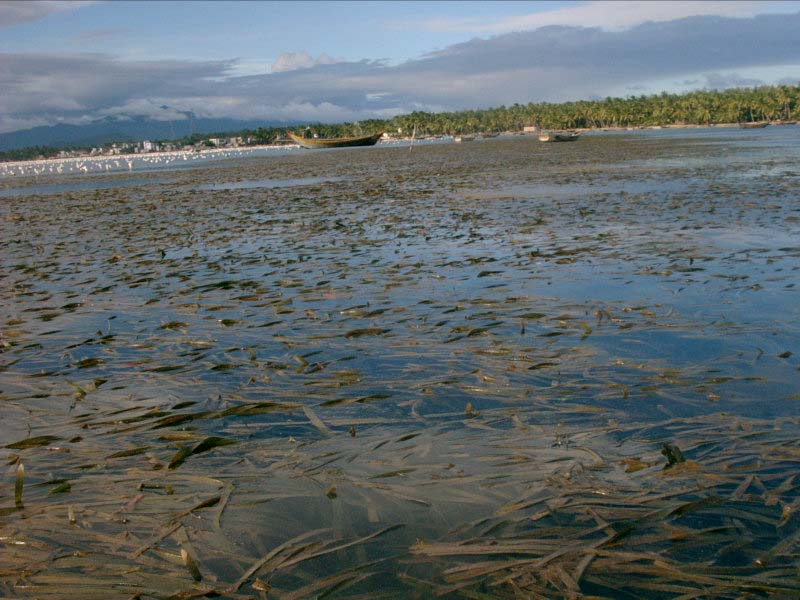
Seagrass in Li An Bay, Southern China - Professor Xiaoping Huang.
Photo credits:
Page 2
Halophila ovalis - Suvaluck Satumanatpan
Page 2
Thalassia hemperichii - Xiaoping Huang
Page 3
Enhalus acoroides - Xiaoping Huang
Page 3
Rabbitfish and seagrass - Kelvin Passfield
Page 5
Dugong photographed in Con Dao, 1998 - Vo Si Tuan/NIO)
Page 5
Dugong skulls on Phu Quoc Island - Nick Cox, WWF Vietnam
Page 6
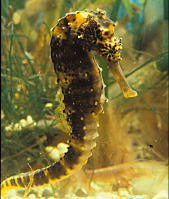
Seahorse Hippocampus comes - Project Seahorse/Amanda Vincent
Page 6
Seahorse Hippocampus histrix - Denise Tackett
Page 6
Using seagrass for fertilizer in rice fields, Khanh Hoa province, Vietnam - Dr Nguyen Van Tien
Page 7
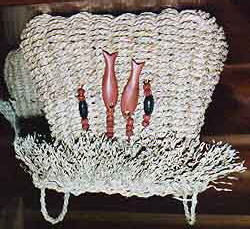
Photo Handicraft products from Seagrass, the Philippines
Page 7
Collecting gastropods from seagrass beds, Vietnam - Dr Ellen Hines
Page 7
Juvenile fish and invertebrates - Kelvin Passfield
Page 7
Seagrass cookies - Dr. Marco Nemesio E. Montaño
Page 8
Pushnetters damage seagrass beds - Kelvin Passfield
Page 9
Seagrass uprooted by trawlers - Dr Ellen Hines
Authors:
Dr. Chittima Aryuthaka, Dr. Miguel Fortes, Dr. Hutomo Malikusworo, Mr Kim Sour, Mr. Suy Serywath, Professor
Xiaoping Huang, Mr. Tri Edi Kuriandewa, Mr. Kamarruddin bin Ibrahim, Dr. Marco Nemesio E. Montaño,
Dr Suvaluck Satumanatpan, Dr. Nguyen Van Tien, and Mr. Kelvin Passfield.
This publication has been compiled as a collaborative document of the Regional Working Group on Seagrass of
the UNEP/GEF Project entitled "Reversing Environmental Degradation Trends in the South China Sea and Gulf of
Thailand."
For citation purposes this document may be cited as:
UNEP. 2004. Seagrass in the South China Sea. UNEP/GEF/SCS Technical Publication No. 3.

SEAGRASS IN THE SOUTH CHINA SEA
1
FOREWORD
The centres of seagrass diversity have a clear focus in the seas of East Asia, reaching up to southern Japan, and
a second focus of diversity in the Red Sea and East Africa. This pattern is similar to the global distribution of
corals and mangroves. The uses of seagrass systems are well known. Hence, they support a rich diversity of
species from adjacent systems and provide primary refugia for both economically and ecologically important
organisms. Most of the major commercial fisheries in the region occur immediately adjacent to seagrass beds. As
an ecotone between coral reefs and mangrove forests in tropical coasts, they mediate the structural and dynamic
components of the neighbouring ecosystems. Ironically, seagrass beds in this region are the least studied among
the coastal ecosystems. Only in the last 15 years have they been a focus of scientific inquiry and, only in the last
5 years, have they been subjected to any natural resource management. Globally, seagrass systems occupy an
area of about 600,000 km2, contributing 12% of the total carbon storage in the ocean. The contribution of
seagrass beds of the East Asian seas to these figures is not known.
In the South China Sea region there has been a rapidly increasing rate of seagrass loss and decline. In recent
years, Indonesia has lost about 30-40% of its seagrass beds, with as much as 60% being destroyed around Java.
In Singapore, the patchy seagrass habitats have suffered severe damage largely through burial under landfill
operations. In Thailand, losses of the beds amount to about 20-30% and in the Philippines, it is about 30-50%.
Very little information on seagrass loss is available from Cambodia, China, Malaysia, and Vietnam. Loss of the
beds in the region has been due largely to the loss of coral reefs (which act as buffer against waves) and
mangroves (which act as a "filter" for sediment from land), coastal development, and urban expansion. Other
impacts include, substrate disturbance, industrial and agricultural runoff, waste water and sewage discharges.
The economic return from seagrass beds in East Asia is very poorly known. In other parts of the world, it can be
up to US$ 212,000 per hectare. Based primarily on the fisheries they support, seagrass beds in Cairns, Australia,
return A $700,000 annually. In Monroe County, Florida, the commercial fishery for five seagrass-dependent
species was estimated at US$48.7 Million Yr--1. Worldwide, recreational fisheries, diving and snorkelling are
industries, which depend directly or indirectly upon healthy seagrass beds. In an assessment of the economic
value of the world's ecosystems, Costanza et al. (1) listed the value of the nutrient cycling function of seagrass
beds at US$3.8 Trillion, the second highest value among all the other ecosystem values listed.
The UNEP/GEF South China Sea Project attempts to reverse the degradation trends in marine habitats, including
seagrass beds, in the region. Hence, for the period 2002-2007, it is developing both national and regional
initiatives for habitat interventions to facilitate the reversal process. It aims to establish sites where the effects of
sound management on the environment, biodiversity, and lives of people can be demonstrated.
Dr. Miguel Fortes
Bangkok, Thailand
January 2004
Reversing Environmental Degradation Trends in the South China Sea and Gulf of Thailand.
Cambodia, China, Indonesia, Malaysia, Philippines, Thailand, Viet Nam
In 1996, the countries bordering the South China Sea requested assistance from UNEP and the GEF in
addressing the issues and problems facing them in the sustainable management of their shared marine
environment. From 1996 to 1998 initial country reports were prepared that formed the basis for the development
of a Transboundary Diagnostic Analysis, which identified the major water related environmental issues and
problems of the South China Sea. Of the wide range of issues identified the loss and degradation of coastal
habitats, including mangrove, coral reefs, seagrass and coastal wetlands were seen as the most immediate
problem. Over-exploitation of fisheries resources and land-based sources of pollution were also considered
significant issues requiring action.
In 1999 the governments, through the Co-ordinating Body for the Seas of East Asia endorsed a framework
Strategic Action Programme that established targets and timeframes for action. In December 2000, the GEF
Council approved this project with UNEP as the sole Implementing Agency operating through the Environmental
Ministries in the seven participating countries and with over forty Specialised Executing Agencies at national level
directly engaged in the project activities.
Reversing Environmental Degradation Trends in the South China Sea and Gulf of Thailand
2
GLOBAL DISTRIBUTION AND IMPORTANCE
INTRODUCTION
Global distribution. A generalised picture of global
seagrass distribution has long been known (Den
Hartog, 1970). Spalding et al., (2001), however, give
the most updated geographical distribution of the
seagrass flora of 115 countries. Their work indicates
that, a focus for distribution lies in the seas of East
Asia reaching north to southern Japan, with a
second focus in the Red Sea and East Africa. Some
species have clearly restricted ranges whilst others
are endemic to single countries. This review
demonstrates that seagrass distribution extends
Halophila ovalis
further north and into the temperate waters of
Japan, showing a global distribution much wider
The coastlines of the northern sub-region, in China
than previously known. The resulting pattern is
and northern Vietnam, have characteristics of
remarkably similar to the global distribution of coral
subtropical areas, and the species include Zostera
reefs and mangroves.
japonica together with Halophila beccarii, Halophila
ovalis, Halophila decipiens, Enhalus acoroides,
The recently published World Atlas of Seagrasses
Thalassia hemprichii, Halodule pinifolia, Halodule
(Green and Short, 2003) provides information on the
uninervis, Cymodocea rotundata and Ruppia
world's seagrass habitats globally, incorporating
maritima. All but the first are widespread throughout
their status in the face of environmental change.
the South China Sea region. Additional seagrass
This is part of an ongoing initiative of the United
species recorded in the tropical zone include
Nations Environment Programme-World
Halophila spinulosa, Halophila minor, Cymodocea
Conservation Monitoring Centre (UNEP-WCMC) to
serrulata, Halodule pinifolia,
Syringodium
develop a comprehensive global GIS dataset with
isoetifolium and Thalassodendron ciliatum.
data coming from multiple sources. However, there
are still substantial information gaps to be filled, and
for the South China Sea region this project will help
to fill those gaps.
Regional Distribution. For East Asia, two related
studies (Fortes, 1988; Mukai, 1993) augment our
knowledge of seagrass biogeography. There are still
wide areas however, where the existence of
seagrasses has not been documented. The World
Atlas of Seagrass (Green and Short, 2003) provides
only a very general and large-scale representation
of seagrass distribution in the South China Sea.
Thalassia hemperichii
The diversity of seagrass species shows a tendency
to increase from the sub-tropical north to the tropical
The sub-tropical species Zostera japonica often
south of the South China Sea region. The
forms mono-specific seagrass beds, and has been
composition of the seagrass flora of the South
recorded in Tieshan Bay and Yingluo Bay, Guangxi
China Sea therefore consists of a mixture of tropical
Province, and Hong Kong in China. Its distribution
and subtropical species.
also extends down to northern and central Vietnam.
Its occurrence in the seagrass beds in Danang and
Seagrass species. Of the approximately 60
Quang Nam Provinces represents the southernmost
seagrass species described worldwide, 18 species
limit of this species in the Indo-west Pacific. This
are found in, and adjacent to, the coastal waters of
reflects a wide distribution of the species that is
the South China Sea (Table 1). Fifteen species
originally from the temperate region. Another
have been already described, while taxonomic work
species of this genus, Zostera marina has been
on three undescribed species of Halophila, found in
reported in some papers (Japar et al., 2001; Tien,
Malaysia and the Philippines, is ongoing. Along the
2002) although this identification needs to be
coast of the South China Sea, the numbers of
confirmed by taxonomic study.
seagrass species known to occur in each country
are as follows: China, 8; Vietnam, 14; Cambodia, 8;
Of the tropical species, Thalassodendron ciliatum is
Thailand, 12; Malaysia, 11; Indonesia, 12 and
generally found in seagrass beds from the intertidal
Philippines, 10, respectively.
to the low sub-tidal zone (2 17 m) in the eastern
part of Indonesia, and the southern and western
The genus Halophila is the most diverse genus and
shores of the Philippines. This species also occurs
is commonly found in coastal waters throughout the
in the seagrass beds in Con Dao, southern Vietnam.
region. Further taxonomic work is essential to verify
In the Philippines , it has been reported in Cuyo
the description of species in this seagrass genus in
Island, the northernmost limit of its distribution in the
the region.
Indo-west Pacific.
Reversing Environmental Degradation Trends in the South China Sea and Gulf of Thailand
SEAGRASS IN THE SOUTH CHINA SEA 3
Table 1
Seagrass species recorded from the countries bordering the South China Sea.
Family and species
China Vietnam
Cambodia Thailand Malaysia
Indonesia
Philippines
Zosteraceae
Zostera japonica
x
x
Hydrocharitaceae
Halophila spinulosa
x
x
x
Halophila decipiens
x
x
x
x
x
Halophila minor
x
x
x
x
x
Halophila beccarii
x
x
x
x
x
x
Halophila ovalis
x
x
x
x
x
x
x
Enhalus acoroides
x
x
x
x
x
x
x
Thalassia hemprichii
x
x
x
x
x
x
x
Cymodoceaceae
Cymodocea serrulata
x
x
x
x
x
x
Cymodocea rotundata
x
x
x
x
x
x
x
Halodule pinifolia
x
x
x
x
x
x
Halodule uninervis
x
x
x
x
x
x
x
Syringodium isoetifolium
x
x
x
x
x
x
Thalassodendron ciliatum
x
x
x
x
Ruppiaceae
Ruppia maritima
x
x
x
x
x
Undescribed taxa
Halophila minor
x
Halophila sp.1*
x
Halophila sp.2**
x
Total per country
8
14
8
12
15
13
16
Seagrass biodiversity. Numbers of species
Worldwide and regional decline. Worldwide, there
recorded in association with seagrass beds
has been a rapidly increasing rate of seagrass loss.
worldwide include 450 algae, 171 polychaetes, 197
In the Asia-Pacific region decline in seagrass is
molluscs, 15 echinoderms and 215 fish (Spalding et
documented for 10 sites, comprising 25% of the
al., 2001).
total number of areas where declines have been
reported (Short and Wyllie-Echeverria, 1996). At
In the seas of East Asia few studies have been
least 45,000 hectares have been lost in Australia
undertaken to identify seagrass associated biota.
this century (Sheppard et al., 1989). Seagrass loss
However, the demonstration site proposals from the
in Cambodia, China, and Malaysia, is largely
seven countries participating in the Project, indicate
unknown. Seagrass decline in Indonesia,
that, along with 17 seagrass species, there are at
Philippines, Thailand, and parts of Australia are well
least 25 species of epiphytic algae, 21 macrobenthic
documented and are shown in Table 3, together
algae, 10 penaeid shrimps, 100 gastropods 5
with an estimate of worldwide decline. This table is
siganids, 7 sea urchins, and 7 seahorses. Most of
incomplete since studies have not been made in
the major commercial fisheries of the region occur
many parts of the world where seagrass is found.
immediately adjacent to seagrass beds (Fortes and
McManus, 1994).
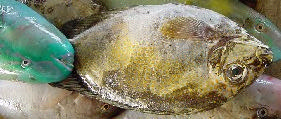
Rabbitfish and seagrass
Rabbitfish are a valuable seafood resource for
subsistence fishers in the South China Sea region.
They belong to the herbivorous Siganid family, and
rely on seagrass for their food, as well as habitat for
juveniles. There are at least 16 species of rabbitfish
found in the South China Sea region. Reduction in
seagrass coverage in the region will have a
negative impact on rabbitfish stocks, and hence on
food security of coastal subsistence communities in
many countries
Enhalus acoroides
The regional distribution of seagrass species in
participating countries is shown in Table 1. Table 2
provides information on biodiversity and other
environmental indicators for seagrass sites
characterised under the project.
Reversing Environmental Degradation Trends in the South China Sea and Gulf of Thailand
4
BIOLOGICAL DIVERSITY IN THE SOUTH CHINA SEA
Table 2
Biodiversity and other environmental indicators for selected seagrass sites in the South China Sea.
Area
% Depth Seagrass Penaeid Gastropod Siganid Urchin Threatened Associated Migratory
Site Name
(ha) cover range
spp.
spp.
spp
spp.
spp
spp.
ecosystems species
Cambodia
Kampot
25,240
45
2
6 N/A
N/A
N/A
N/A
2
2
2
China
Hepu
540
85
4
4
5
12
1
3
3
1
2
Liusha
900
90
3
2
5
11
1
1
2
2
2
LiAn
320
82 3.2
5
4
17
1
1
3
2
2
Xincun
200
87
2
4
4
6
1
1
2
2
1
Indonesia
Trikora Beach
280
95
2
9
3
16
3
4
6
2
3
Mapur
275
85
3
9
3
11
3
4
5
2
3
Malaysia
Tanjung Adang Laut Shoal
40
80 1.2
9
2
2
1
1
2
2
2
Tanjung Adang Darat Shoal
42
80 0.7
9
2
2
1
1
2
1
2
Merambong Shoal
30
80 0.7
10
2
2
2 N/A
2
1
2
Sungal Paka Shoal
43 N/A
4
2 N/A
2 N/A
2
1
1
1
Pulau Tinggi Mersing
3
70
3
6 N/A
N/A
2
2
2
1
2
Setiu Terengganu
3
70
6
3 N/A
3
2 N/A
1
1
1
Pulau Besar Mersing
3
70
4
5 N/A
1
2 N/A
2
1
2
Philippines
Cape Bolinao
2,500
75 1.7
9
7
23
6
4
3
2
1
Puerto Galera
114
95 4.5
9
3
11
2
3
3
2
1
Ulugan Bay
11
90 2.5
8
3
10
2
5
4
2
0
Puerto Princesa/Honda Bay
670
90
4
8
4
18
4
5
3
2
1
Thailand
Kung Krabane Bay
700
80
4
5
4
5
2 N/A
2
1
1
Surat Thani
500
65
3
6
2
73
3
1
2
1
2
Pattani Bay
273
80
3
4
8
35
5 N/A
2
1
2
Vietnam
Bai Bon, Phu Quoc Is
2,000
70
6
7
3
46
1
3
5
2
2
Rach Vem, Phu Quoc Is
900
65
6
6
3
30
1
3
3
2
2
Con Dao Island
200
25 9.6
10
8
45
1
3
4
2
4
Phu Qui Island
300
50 2.5
6
2
35
3
3
3
2
2
Thuy Trieu (Khan Hoa)
800
60
1
7
4
10
3
2
4
2
0
Source: Site characterizations and demonstration site proposals for the South China Sea Project.
Table 3
Estimates of area of seagrass lost globally and in selected countries.
Country/Region
Area lost
(%, km2)
Causes
Source
Indonesia
30-40 %
siltation, pollution
Fortes and McManus, 1994
Philippines
30-50 %
siltation, eutrophication, unsustainable fishing Short & Wyllie-Echeverria, 1996
Thailand
20-30%
siltation, pollution
Sheppard et al., 1989
Vietnam
40-50%
Pollution, coastal development
This report
Gulf of Carpentaria, Australia
20%
cyclone
Hemminga &Duarte, 2000
Hervey Bay, NE Australia
1,000 km2
2 floods + cyclone
Duarte & Cebrian, 1996
Botany Bay, Australia
unknown
dredging, urchin population explosion
Hemminga &Duarte, 2000
Cockburn Sound, Australia
7.2 km2 70%
eutrophication from industrial development
IUCN, 1997
`world-wide'
12,000 km2
unspecified
Japar et al., 2001
TRANSBOUNDARY SIGNIFICANCE OF SEAGRASS BEDS.
Although not fully documented, the large area
Carbon storage. Worldwide, seagrass occupies
covered by seagrass along the coastlines of the
about 600,000 km 2 of the continental shelf,
South China Sea indicates the habitat's significance
contributing 12% of the total carbon storage in the
to the marine environment of the region. Seagrass
ocean (Duarte & Cebrian, 1996). For the South
beds, as an ecotone between coral reefs and
China Sea, the amount of carbon that could be
mangrove forests, mediate the structural and
sequestered in seagrass beds is considerable.
dynamic components of the neighbouring
Seagrasses are an integral component of coastal
ecosystems through the control of material, water,
marine protected areas but are generally not
and energy flows between them.
afforded specific protection in most countries.
Reversing Environmental Degradation Trends in the South China Sea and Gulf of Thailand
SEAGRASS IN THE SOUTH CHINA SEA 5
Importance to biodiversity. Some species of
But it is the tusks that are especially valuable, with
seagrass listed as threatened in the IUCN Red List,
a large pair (usually from a mature male) selling for
including Halophila johnsonii and Phyllospadix
up to 10 million VND, or approximately US$650.
(IUCN, 1997) are not found in the region but,
Two dugongs were caught and butchered for their
dependent species such as seahorses, green
meat in Vietnam in June 2003 in Ha Tien town, Phu
turtles, and some snakes listed as threatened, are.
Quoc Island, according to state media. The biggest
Found in the South China Sea.
direct threat to dugongs however is the use of fixed
fishing nets in shallow seagrass beds. On
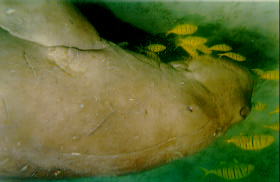
Dugongs and seagrass. Dugongs are listed as
Christmas day, 2003, a dead dugong was washed
vulnerable to extinction on the IUCN redlist, are
ashore on Phu Quoc Island, after becoming
threatened throughout their distributional range, and
entangled in a gillnet.
feed almost exclusively on seagrass. All species of
seagrass are eaten and populations are expected to
decline because of the gradual loss of seagrass
beds.
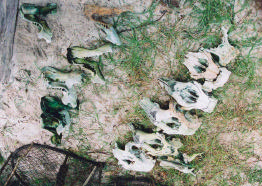
Dugong skulls on Phu Quoc Island
The dugong's dependence on seagrass, its low
Dugong photographed in Con Dao, 1998
reproductive rate and its gentle slow-moving habits
have led scientists to conclude that the dugong is
Dugongs can travel surprisingly long distances - up
highly prone to extinction. According to WWF
to 600 km in a few days. Evidence from Kien Giang
Vietnam, new legislation and enforcement, are the
Province in the South of Viet Nam, and Quang Ninh
immediate priorities, as well as enhanced local
Province in the North where dugong populations
awareness among coastal communities, and a
survive close to national boundaries, suggests
collaborative programme of scientific research.
transboundary migration. Thus the decline is of
regional, as well as national significance. It is also
Green Turtles. The migration route of the green
known that dugongs migrate from the eastern part
turtle (Chelonia mydas) is shared by several
of the Gulf of Thailand, west and across the
countries in the region. This prompted the
southern part of the South China Sea to Sabah or
governments of Malaysia and the Philippines to
northerly towards the coast of Vietnam and Hainan,
declare the migration route between Malaysia and
China. It is not known where these mammals go
the Philippines, including the islands along the way,
from there. Individuals along the South China Sea
an ASEAN Heritage Site.
coast of Palawan, in the Philippines, migrate from
the northern and eastern coasts of the Indonesian
Seagrass as breeding, nursery and feeding
Archipelago.
grounds. Seagrass beds serve as nurseries for
many commercially important species of fish,
In Vietnam, and neighbouring countries, illegal and
crustaceans, and invertebrates. For example,
destructive fishing techniques in seagrass habitats
juveniles of groupers (Epinephelus spp.) are
are serious threats to seagrass ecosystems and in
abundant in seagrass beds off the east coast of
turn to the long-term survival of the dugong. Of more
Thailand. Tiger prawns, a very important
immediate and serious concern in Viet Nam however
commercial species for the South China Sea, settle
are the impacts of fishers on local dugong
into seagrass from the larval stage and remain until
populations, known locally as Bo bien, and Ca cui.
they mature.
Recent news reports indicate that numbers of
dugongs, are declining in Vietnam, as fishers
Seagrass forms the food of many herbivorous fishes
continue to target them, and also catch them
that are fished both commercially and by
accidentally in their nets. It is estimated that there
subsistence fishers, such as rabbitfish and wrasse
are now only around 10 dugongs remaining in Con
Seagrass beds on islands in the South China Sea
Dao Island and between 100 and 300 others around
are the spawning grounds for fish and invertebrates
Phu Quoc, Vietnam's largest offshore island.
that end up in the markets of neighbouring countries
(Fortes, 1995). The protection of these seagrass
Fishers use special nets that are also used to catch
beds is therefore crucial to sustaining the
large stingrays and sharks. The dugong carcass
biodiversity and the economy of the region.
can be very valuable, with meat selling for
approximately 30,000/kg Vietnamese Dong (VND).
Reversing Environmental Degradation Trends in the South China Sea and Gulf of Thailand
6
USE OF SEAGRASS AND SEAGRASS RESOURCES
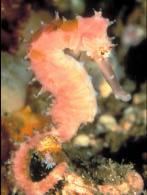
Seahorses and seagrass beds.
Seahorses belong to the genus Hippocampus , a name derived from the Greek words for horse (hippos) and sea
monster (campus ). They are fishes, and together with pipefish, pipefish, and sea-dragons, comprise the family
Sygnathidae a family typically associated with seagrass habitats, though some are also associated with coral reefs
and mangroves. The 2003 World Conservation Union (IUCN) Red list of Threatened Species lists 9 of the 33
seahorse species worldwide as vulnerable, and one as endangered. The other 23 are listed as data deficient,
demonstrating the lack of knowledge of seahorse biology, and the urgent need for more research. Project Seahorse,
an international and interdisciplinary marine conservation organization, has indicated that the following 10 seahorse
species Hippocampus barbouri, H. bargibanti, H. comes, H. denise, H. histrix, H. kelloggi, H. kuda, H. mohnikei, H.
spinosissimus, and H. trimaculatus, are found in countries bordering the South China Sea. Many of these are
associated with seagrass beds for some or, all of their life cycles.
Hippocampus hystrix Hippocampus comes
The combination of targeted and incidental catch by fishers, and habitat destruction, has placed seahorse populations
at risk. Seahorses are also harvested for use in traditional medicines, aquariums, and as souvenirs. Traditional
Chinese medicine is the largest market for seahorses in the region.
USE OF SEAGRASSES AND SEAGRASS RESOURCES.
Fertiliser and Animal feed. In some parts of
Indonesia, Philippines, and Vietnam, people cut
Seagrass beds are best known for ecological
seagrass for feeding to their cows, goats, and other
services, such as providing habitat for marine
farm animals. Seagrasses are also used as a
species, preventing erosion, and as a sediment trap.
fertilizer in the Philippines. Coastal inhabitants from
Direct use of seagrass itself in the South China Sea
Quang Ninh province (bordering China) to Thua
region is limited largely to its use as fertilizer and
Thien-Hue and some districts of Khanh Hoa
animal feed in some countries, and as a source of
province, in Vietnam, harvest seagrass (mainly
material for handicrafts. In some countries seagrass
Zostera, Ruppia, Enhalus, Thalassia species and
is also of minor importance as food and medicine.
other Hydrophytes) for fertiliser and animal feed.
Direct use for food and medicine. While there is
limited use of seagrass as a food source for
humans, it is of minor significance in terms of food
security. In Indonesia, fishermen sometimes use the
rhizome of Enhalus acoroides as an emergency
food source, while the seeds of this seagrass, are
eaten by, local children, as snacks between meals.
The seeds are also eaten by, fishermen and others
in Thailand, Malaysia, and the Philippines. Recently
in the Philippines there has been some
experimental use of flour made from these seeds in
the manufacture of cookies (see box). Another
seagrass, Halophila ovalis is sometimes eaten as a
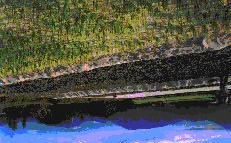
Using seagrass for fertilizer in rice fields in Khanh Hoa
vegetable in the Philippines.
province, Viet Nam
People in some areas in Thailand also use dry
Other direct uses. Seagrass leaves can provide a
seagrass leaves and rhizomes for the treatment of
raw material for production of a variety of
diarrhoea. At present, extracts from many species of
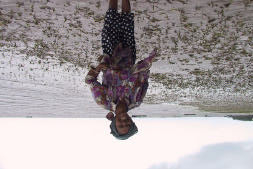
handicrafts. In the Philippines, leaves of Enhalus
seagrass are being screened for their
acoroides are used in various woven products as
pharmaceutical properties. Seahorses derived from
illustrated in the picture below. Also in the
seagrass habitats are, an important ingredient in
Philippines, Enhalus acoroides seeds are used in
Chinese traditional medicine.
laboratories in germination tests for environmental
toxicity.
Reversing Environmental Degradation Trends in the South China Sea and Gulf of Thailand





SEAGRASS IN THE SOUTH CHINA SEA 7
Handicraft products made from seagras s, the Philippines
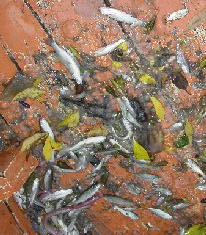
Juvenile fish and invertebrates from seagrass beds are a
Fishing grounds. Seagrass beds are the primary
common by-catch in trawl fisheries
habitat for a number of commercially important
marine resources, and hence are important fishing
In Indonesia seagrass associated organisms are
grounds in all participating countries.
harvested by, the local communities, during low tide.
Fishers go to the reef flat and associated seagrass
for juvenile milkfish, sea cucumber, octopus, cuttle
fish, shellfish, sea urchins, and seaweeds for food
and subsistence income. Some families of
gastropods such as Cepraeidae, Olividae, Conidae
and Tonnidae are also collected for handicraft
manufacture and sale to tourists.
In Malaysia and Thailand, seagrass sites are
gleaned for seafood, including fishes, gastropods,
bivalves, portunid crabs and sea cucumbers.
Coastal water quality. Seagrasses also contribute
significantly to maintaining the quality of the nearby
Collecting gastropods from seagrass beds, Viet Nam
coastal waters as they act as a sediment trap,
In Cambodia, seagrass beds are commonly fished
stabilise the bottom with their roots (rhizomes), and
using small scale fishing gear. Juvenile crabs,
also help reduce wave energy.
shrimps and fish are collected and fed in captivity
until they reach marketable size.
Most land-based pollution is discharged into the
coastal zone. Seagrasses improve water quality by
In the Philippines, Acetes spp. (small shrimp) and
reducing particle loads and absorbing dissolved
juvenile rabbit fish, important for food security of
nutrients (Hemminga, & Duarte, 2000) and hence
local communities, are harvested from seagrass
are particularly important where raw sewage is
beds as is the seahare, Dolabella auricularia, an
directly discharged to the sea.
economically important shell-less, mollusc. The egg
mass of this species contains 60% protein and is
consumed fresh.
Oatmeal cookies from Seagrass seed flour.
The seeds of Enhalus acoroides (L.f.) Royle are known to
the Philippine coastal people to be edible. Its approximate
nutritional composition is similar to that of rice. It is eaten
raw or boiled and tastes like sweet potato when cooked.
Some fishermen believe that it is an aphrodisiac. With the
aim of developing seagrass seed as human food in small
islands, researchers from the University of the Philippines
have developed a flour made from dried mature seeds of
E. acoroides. Using a standard recipe for oatmeal cookies,
seagrass seed cookies were made us ing seagrass flour
half substituted for half of the usual wheat flour. Responses
to a taste test were very positive and further development
is planned. Additional investigations will include the
nutritional evaluation of seagrass plant parts to support the
protection of the ecosystem.
Reversing Environmental Degradation Trends in the South China Sea and Gulf of Thailand
8
ECONOMIC VALUE OF SEAGRASS
Economic Value of Seagrass. In a recent
aquaculture, and capture fisheries, resulting in the
assessment of the economic value of the world's
destruction of seagrass beds . Shrimp and fish
ecosystems, seagrass beds, due to their nutrient
culture, shellfish collection, explosive fishing
cycling function, were valued at US$3.8 Trillion, the
methods, electric fishing, poisons, trawling,
second highest among all the ecosystem values
pollution, and dredging for ports and channels are
listed (Preen et al., 1996). Attempts have been
among the major threats to seagrass in China.
made to assign monetary values to goods and
services from seagrass beds in many different parts
of the world. The values determined to date have
been based primarily on the value of the fisheries
the beds support.
Some preliminary efforts have been made by some
participating countries to value their seagrass beds
located in the South China Sea. A value of 2 6.3
million baht per year in terms of fishery yield (net
benefit) was determined for one seagrass bed in
southern Thailand. The economic value of seagrass
in China has been estimated at between US$16,640
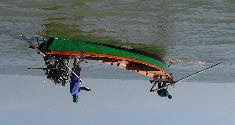
Push netters damage seagrass beds
and US$18,385 per hectare. In Vietnam one village
surveyed obtained revenue of US$23,000 in a six-
In Thailand, the destruction and loss of seagrass
month period from harvesting seagrass for sale to
beds and associated biota is caused by a number of
the agricultural sector.
factors, including:
·
Fluctuation in freshwater input, causing high
However, the value of seagrass meadows cannot
salinity variation, due to irrigation and land
simply be calculated in dollars. As is apparent from
clearing.
the information presented above, seagrass are an
·
High sediment load, through destruction of
essential part of the marine environment. Not only
mangroves, which serve as sediment traps, and
do the plants stabilise substrate, they also form the
coastal developments including construction of
basis of a complex ecosystem supporting
tourist resorts, ports and roads, channel
threatened species such as dugong and turtles,
dredging, and land reclamation.
economically important fishery species, and
·
Wastewater discharge from shrimp farms and
epiphytic plankton.
sewage from urban and industrial
developments, with associated increase of
THREATS TO SEAGRASS IN THE SOUTH CHINA SEA
nutrients, resulting in the accumulation of
organic sediments and hypoxia.
Seagrass beds in the region are subjected to a
·
Fishery activities, including scouring of benthos
number of threats from various sources, although
by push nets and trawls, and harvesting of
the root cause of these threats is the pressure
juveniles, and destructive disturbance to the
associated with coastal human populations.
seagrass while gleaning for clams, crabs, and
Increased pollution, coastal development, and
other benthic burrowers at low tide.
destructive fishing methods have all had a
significant and negative impact on seagrass beds.
In the Philippines, a significant portion of the
seagrass habitats is considered to be at high risk of
In Vietnam in recent years, the decline of seagrass
being lost in the next decade. Nationwide, this is
has been greater than that, which could be
due indirectly to rapid economic and human
expected from natural fluctuations. The seagrass
population growth, (with the coastal population
habitat loss is estimated to be 40-50 % over the
expected to double in the next 25-35 years), and
past 2 decades. The main causes of the losses are
weak institutional support. Seagrass loss and
anthropogenic activities such as aquaculture,
decline result from habitat destruction, siltation,
reclamation, and urbanization, which have resulted
sewage, industrial and oil pollution, and fisheries
in sedimentation and land-based pollution. Pressure
overexploitation. These are prevalent at the
on seagrass beds stems from the lack of public
proposed Philippine Seagrass demonstration sites.
awareness of their importance.
Siltation resulting from habitat modification poses
Past and recent research indicates that the
the single biggest threat to all sites. It is followed by
seagrass beds in southern China have been badly
unsustainable fishing practices, boat scour and
degraded. The geographic distribution and the area
unsound tourism development. In Ulugan Bay, the
covered by seagrass have been reduced. The main
lack of transparency of the navy, in relation to their
cause of this degradation is anthropogenic, though
present and proposed activities that impact the
typhoons are also considered a significant factor.
seagrass beds, poses a significant problem for
Most seagrass beds are adjacent to previously
management of coastal habitats. A Causal chain
under-developed fishing villages, which have
analysis of these threats demonstrates their
undergone rapid increases in population in the last
connectivity and points to basic needs, including
two decades. As people look for income generating
improved environmental awareness and proper
possibilities, more and more have turned to
education.
exploitation of the marine environment, through
Reversing Environmental Degradation Trends in the South China Sea and Gulf of Thailand
SEAGRASS IN THE SOUTH CHINA SEA 9
In Cambodia, Illegal fishing by trawlers in seagrass
areas for fish, shrimp, and other invertebrates, is a
Response to threats. To date very little has been
significant cause of damage to seagrass beds.
done in response to the specific threats to seagrass
Seaweed farming on the seagrass bed of Kampot
in the South China Sea Region. In addition to the
province may inhibit the growth of seagrass due to
ongoing UNEP/GEF South China Sea Project, two
increased competition for nutrients and sunlight.
EU-funded projects have recently been completed.
Along the developed coastal areas of Cambodia
One of these investigated the response of seagrass
solid and liquid wastes are discharged directly to the
(as well as coral reefs and mangroves) to
sea, having a detrimental effect on seagrass and
deforestation-derived siltation at two proposed
other marine habitats. Up-land forests have been
demonstration sites in the Philippines and at two
cleared for timber and agriculture, and large
sites in Thailand. The other attempted to predict the
amounts of sediment are carried by streams and
resilience and recovery of disturbed seagrass and
rivers to seagrass beds, causing high turbidity and
mangroves at the same sites in the Philippines and
blocking the penetration of sunlight.
two sites in Vietnam.
Indirectly a number of projects and programs that
deal with coastal protection in the region likewise
promote the protection and conservation of
seagrass habitats. Some work on rehabilitation and
transplantation of seagrass beds has been done at
Pari Island in Indonesia and Cape Bolinao and
Calancan Bay in Philippines. An Executive Order
issued by the Mayor of Puerto Galera in the
Philippines in January 2001, entitled "BantayIsay"
(seagrass watch), is the only legislation in the
region, which solely and directly provides for the
protection of seagrass beds.
P
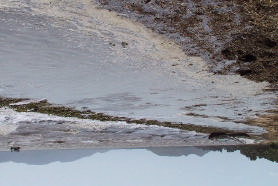
Seagrass uprooted by trawlers
URPOSE OF THE DEMONSTRATION SITES
Seagrass in Malaysia is subject to a high degree of
As stated in previous sections, the seagrass beds of
resource exploitation and pollution, primarily
the South China Sea have been suffering from
associated with unplanned and unmanaged urban
serious degradation and rapid rates of loss over the
and industrial development. Land reclamation and
recent past. Due to limited available financial
expansion programmes cause problems for a
resources, it is not possible to fund activities at all
number of Malaysian states. There are plans to
seagrass sites under threat. Sites therefore, should
completely reclaim the stretch of seagrass beds of
be selected with care according to agreed priorities
the Merambong - Tanjung Adang shoals, an
in order to maximize the environmental and socio-
important feeding ground for dugongs. Dredging for
economic benefits of the investment.
sand is being carried out in some seagrass beds,
leading inevitably to increased sedimentation and
The primary goal of the demonstration sites within
smothering of seagrass.
the context of the habitat component of this Project
is to "demonstrate" actions that, either of
themselves, "reverse" environmental degradation or,
Small-scale destructive fishing in Malaysia with pull
will demonstrate methods of reducing degradation
nets dislodges the seagrass and reduces seagrass
trends if adopted and applied at a wider scale.
cover. Harvesting of bivalves, and other gleaning
Demonstration sites could be sites where actions
and collection for food resources, causes damage,
are directed towards:
reducing seagrass cover, and retarding the spread
and colonisation of seagrass.
·
Maintaining existing biodiversity; or,
·
Restoring degraded biodiversity to former
In Indonesia, noticeable degradation of seagrass
levels; or,
beds in Banten Bay started in 1990 due to
·
Attempting to remove or reduce the cause,
reclamation for port and industrial estate. Almost
and hence reduce the existing rates of
116 ha or about 26 % of the total area of seagrass
beds were lost. Damage to seagrass is also caused
degradation; or,
by turbulent water induced by fishing boat
·
Attempting preventive actions that prevent
movement and uprooting of seagrass by beach
the adoption of unsustainable patterns of
seines used to catch shrimp and small fishes.
use, before they commence.
Decline of seagrass beds in Indonesia is also
In the context of this Project, the demonstration site
evident at Grenyeng Bay and Bojonegara. The main
proposals need not only to consider the goals and
damage is caused by land reclamation for harbours.
purposes of the sites themselves but also what is
Toxic effluents from pulp mills and power plants,
being demonstrated, to whom is it being
and nutrient rich agricultural runoffs pollute
demonstrated, and how is it being demonstrated.
seagrass ecosystems. Relatively little is known
about the impact of industrial effluent on tropical
seagrass meadows.
Reversing Environmental Degradation Trends in the South China Sea and Gulf of Thailand
10
POTENTIAL DEMONSTRATION SITES
An initial consideration of what is to be
Full details of this procedure are contained in the
demonstrated leads to three types of potential
reports of the Regional Working Group (RWG-SG)
demonstration site:
meetings (UNEP, 2002a; 2002b; 2003a; in press)
·
function related sites which might include
but it may be outlined as follows:
existing sites that demonstrate sustainable
·
Step 1. A cluster analysis was conducted
use for specific purpose;
to review the similarities and differences of
·
process related sites which might include
all proposed sites, using data and
existing sites that demonstrate innovative
information assembled at the national level
management interventions and/or regimes
that described the physical and biological
at the site level;
characteristics of the systems under
·
problem related sites, which might
consideration. This analysis was used to
demonstrate new modes of managing
group sites of high degrees of similarity
specific problems or causes of
within which priority could be determined.
environmental degradation.
·
Step 2. The Regional Working Group on
Table 4 The major purpose of the demonstration site
Seagrass developed a set of criteria and
proposals prepared to date.
indicators with an associated numerical
scoring system, encompassing
Site
Purpose
environmental and socio-economic
Cambodia
Community Based Management
China
characteristics;
Hepu
Community Based Management
·
Step 3. The proposed sites were scored
Lian
Integrated Coastal Zone Management
according to the agreed system and
Liusha
Community Based Management
ranked within each cluster. Rank order was
Malaysia
Rehabilitating degraded seagrass
ecosystem
considered to represent regional priority.
Indonesia
Community Based Management of a
seagrass sanctuary
The initial task involved the assembly of data and
Philippines
information at the national level in order to
Bolinao
Benefits of research Institute
characterise individual seagrass sites. The Regional
involvement in seagrass management
Working Group on Seagrass discussed and agreed
Puerto
Benefits of Govt/Private/academic
on the listing of parameters required to characterise
Galera
partnership in seagrass conservation
the sites and data were assembled for a total of 41
and management
sites around the South China Sea. These data were
Ulugan Bay
Linkage between seagrass, mangrove,
verified and the final selection of parameters was
and coral reef habitats -developing
based on a compromise between the ideal data set
partnerships among stakeholders
and what was actually available for the sites
Thailand
Pattani
Co-management
concerned. A total of twenty-six sites were ultimately
Government/community
considered to have sufficient of the required data,
Surat Thani
Creation of public awareness to improve
and these were then compared using the Clustan6
conservation of seagrass beds.
software to identify similarities and differences
Vietnam
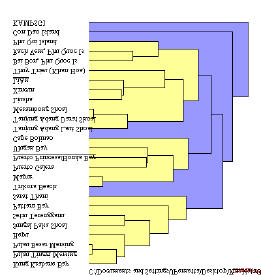
between all sites. The resulting dendrogram is
Bai Bon
Maintaining seagrass beds for
presented in Figure 1 and it can be seen that sites fall
biodiversity, particularly endangered
into three major clusters with two outlying sites.
species
Thuy Trieu
Community Based Management
Figure 1 Cluster analysis of twenty -six potential seagrass
demonstration sites bordering the South China Sea.
Whilst all the participating countries have identified
national priority seagrass beds for conservation
action and sustainable management the
determination of national priority has rarely included
a consideration of transboundary, regional or global
considerations. Since the present project takes a
regional approach to intervention it was necessary
to develop a process by which regional as opposed
to national priority could be determined in as
objective a manner as possible.
DEMONSTRATION SITE SELECTION
The Project has undertaken a transparent, scientific
and objective regional procedure to characterise,
rank and select demonstration sites based on
environmental and socio-economic criteria and
indicators discussed and agreed at the regional
level. To achieve maximum impact from a limited
number of interventions, the Project Steering
Committee adopted a three-step regional procedure
to prioritise and select demonstration sites.
Reversing Environmental Degradation Trends in the South China Sea and Gulf of Thailand
SEAGRASS IN THE SOUTH CHINA SEA 11
Ranking Potential Demonstration Sites. At the
These socio-economic indicators include threats,
same time the regional working group developed a
national significance, financial considerations and
set of criteria and indicators to be used in the ranking
level of local stakeholder involvement, reversibility
process. These criteria and indicators were grouped
of threats, national priority, level of stakeholder
into two sets, the first being an environmental, and
direct involvement in management, potential for co-
biological set, including indicators such as the area,
financing.
numbers of seagrass, penaeid, gastropod, sea
urchin, endangered and migratory species, and
Final rank scores for an individual site were
percentage cover. A scoring system was devised
determined using a combination of the
such that the full range of observed values was
environmental and socio-economic criteria and
divided into a number of categories assigned different
indicators in a 3:2 ratio. The combined scores and
scores with increasing scores representing higher
final ranking are presented in Table 5.
priorities or significance.
A similar table of social and economic criteria was
developed encompassing indicators covering aspects
of participation and management.
Table 5 Final scores and ranking for selection of demonstration sites.
Socio-
Site Name
Environment
Total
score
economic
score
score
First Cluster
Hepu
49
94
143
Pattani Bay
50
81
131
Sarat Thani
48
67
115
Pulau Tinggi Mersing
33
52
85
Pulau Besar Mersing
29
52
81
Setiu Terengganu
25
30
55
Sungal Paka Shoal
17
30
47
Second cluster
Cape Bolinao
66
82
148
Trikora Beach
60
76
136
Puerto Galera
50
73
123
Ulugan Bay
43
85
128
Third Cluster
Bai Bon, Phu Quoc Is
57
83
140
Thuy Trieu (Khan Hoa)
50
70
120
LiAn
46
78
124
Liusha
45
66
111
Merambong Shoal
43
60
103
Tanjung Adang Laut Shoal
42
60
102
Xincun
40
64
104
Tanjung Adang Darat Shoal
40
60
100
Outlier
KAMPSG1
39
43
82
Reversing Environmental Degradation Trends in the South China Sea and Gulf of Thailand
12
REFERENCES
REFERENCES
Costanza, R., R. d'Arge, R. de Groot, S. Farber, M. Grasso, B. Hannon, K. Limburg, S. Naeem, R.V. O'Neill, J.
Paruelo, R.G. Raskin, P. Sutton and M. van der Velt, 1997. The value of the world's ecosystem services
and natural capital. Nature 387, 253-60.
Den Hartog, C. 1970. The Seagrasses of the World. North Holland Publ., Amsterdam.
Duarte, C.M. and J. Cebrian, 1996. The fate of marine autotrophic production. Limnology and Oceanography
41: 1758-66.
Fortes, M.D. 1988. Indo-west Pacific affinities of Philippine seagrasses. Botanica Marina. 31:237-242.
Fortes, M.D. 1995. Seagrasses of East Asia: Environmental and Management Perspectives. RCU/EAS Technical
Report Series No. 6, 75 pp. United Nations Environment Programme, Bangkok, Thailand.
Fortes, M.D. and L. T. McManus. 1994. Issues and challenges in coastal zone development in Southeast Asia.
Paper presented at The Regional workshop on Planning and Management of Coastal Resources, Tuaran,
Sabah (Malaysia), 8-9 November 1994.
Green, E.P. and F.T. Short (eds). World Atlas of Seagrasses. UNEP World Conservation Monitoring Centre.
University of California Press, Berkeley, USA.
Hemminga, M.A. and C.M. Duarte, 2000. Seagrass Ecology, Cambridge University Press, 298 pp.
IUCN 1997. IUCN Red List Categories and Criteria: IUCN Species Survival Commission. IUCN, Gland,
Switzerland and Cambridge, UK.
Japar, Sidik, B., Z. Muta Harah, Z. Kanamoto and A. Mohd Pauzi, 2001. Seagrass communities of the Straits of
Malacca. In : Aquatic Resource and Environmental Studies of the Straits of Malacca : Current Research
and Reviews, Bujang, J. S., A. Arshad, S. G. Tan, S. K. Daud, H.A. Jambari and S. Sugiyama (eds).
Malacca Straits.
Mukai, H. 1993. Biogeography of tropical seagrasses in the Western pacific. Australian Journal of Marine and
Freshwater Research. 44:1-17.
Nguyen, Van Tien, Dang Ngoc Thanh and Nguyen Huu Dai. 2002. Seagrasses of Vietnam. Sci. & Tech. Publ.
House, Hanoi. 167 pp. (in Vietnamese)
Research and Development Centre (MASDEC), Universiti Putra Malaysia, Serdang, Malaysia.
Short, F.T. and S. Wyllie-Echeverria, 1996. Natural and human induced disturbance of seagrasses. Environ
Conserv 23: 17-27.
Shepherd, S.A., A.J. McComb, D.A. Bulthuis, V. Neverauskas, D.A. Steffensen, and R. West, 1989. Decline of
seagrasses. In: Biology of seagrasses, a treatise on the biology of seagrasses with special reference to the
Australian region. Aquatic Plant Studies vol. 2. Larkum, A.W.D., McComb, A.J. and Shepherd, S.A. (eds).
Elsevier, Amsterdam, The Netherlands, pp. 346-393.
Spalding, M.D., M. Taylor, S. Martins, E. Green, and M. Edwards, 2001. The global distribution and status of
seagrass ecosystems. World Conservation Monitoring Centre.
Preen, A.R., W.J. Lee Long, and R.G. Coles, 1995. Flood and cyclone related loss and partial recovery of more
than 1,000 km 2 of seagrass in Hervey Bay, Queensland, Australia. Aquatic Botany, 52, 3-17.
Reversing Environmental Degradation Trends in the South China Sea and Gulf of Thailand
MEMBERS OF THE REGIONAL WORKING GROUP ON SEAGRASS
Dr. Chittima Aryuthaka, Department of Marine Science, Faculty of Fisheries, Kasetsart University, Bangkhen,
Bangkok 10900, Thailand, Tel: (66 2) 579 7610; 561 3469, Fax: (66 2) 561 4287, E-mail: ffiscta@ku.ac.th
Mr. Kamarruddin bin Ibrahim, Department of Fisheries, Turtle and Marine Ecosystem Center (TUMEC)
23050 Rantau Abang, Dungun, Terengganu, Malaysia, Tel: (609) 845 8169; 845 3169 (direct),
Mobile: (60) 13 9812500, Fax: (609) 845 8017, E-mail: kdin55@yahoo.com
Dr. Miguel Fortes, IOC Regional Secretariat for Western Pacific (WESTPAC), 196 Phaholyothin Rd., Chatujak,
Bangkok 10900, Thailand, Tel: (66 2) 561 5118, Mobile: (66) 1 926 4721, Fax: (66 2) 561 5119,
E-mail: westpac@samart.co.th; mdfortes138@yahoo.com
Mr. Xiaoping Huang, South China Sea Institute of Oceanology, Chinese Academy of Sciences,
164 West Xingang Road, Guangzhou 510301, Guangdong Province, China, Tel: (86 20) 8902 3210,
Mobile: (86) 13 6004 84979, Fax: (86 20) 8445 1672,E-mail: xphuang@scsio.ac.cn
Mr. Tri Edi Kuriandewa, Puslit Oseanografi, LIPI, Pasir Putih 1, Ancol Timur, Jakarta, Indonesia,
Tel: (62 21) 6471 3850; 316 9288, Mobile: (62) 81 5808 6468, Fax: (62 21) 6471 1948,
E-mail: indo-seagrass@centrin.net.id
Dr. Hutomo Malikusworo, Indonesian Institute of Science, Pasir Putih 1, Ancol Timur, Jakarta 14330, Indonesia,
Tel: (62 21) 6471 3850, Mobile: (62) 815 952 0650, Fax: (62 21) 6471 1948,
E-mail: indo-seagrass@centrin.net.id
Dr. Marco Nemesio E. Montaño, Marine Science Institute, University of the Philippines, Diliman,
Quezon City 1101, Philippines, Tel: (632) 927 2693; 922 3942, Fax: (632) 924 7678,
Email: coke@upmsi.ph; montano.n@upmsi.ph
Dr. Suvaluck Satumanatpan, Faculty of Environment and Resource Studies, Mahidol University, Salaya
Campus, Nakorn Pathom 73170, Thailand, Tel: (66 2) 441 5000 ext. 182, Mobile: (66) 1 700 7512,
Fax: (66 2) 441 9509-10, E-mail: ensnt@mahidol.ac.th
Mr. Kim Sour, Department of Fisheries, Ministry of Agriculture, Forestry, and Fisheries, 186 Norodom Boulevard,
PO Box 582, Phnom Penh, Cambodia, Tel: (855 23) 210 565, Mobile: (855) 12 942 640, Fax: (855 23)
216 829, E-mail: sourkim@hotmail.com ; catfish@camnet.com.kh
Dr. Nguyen Van Tien, Haiphong Institute of Oceanology, 246 Da Nang Street, Hai Phong City, Vietnam,
Tel: (84 31) 760 599, 761 523, Fax: (84 31) 761 521, E-mail: nvtien@hio.ac.vn







UNEP/GEF South China Sea Project Co-ordinating Unit
United Nations Building
Rajadamnern Nok
Bangkok 10200
Thailand
Department of Fisheries
Ministry of Agriculture, Forestry and Fisheries
186 Norodom Boulevard
P.O. Box 582
Phnom Penh
Cambodia
South China Sea Institute of Oceanology
Chinese Academy of Sciences
164 West Xingang Road
Guangzhou 510301
Guangdong Province
People's Republic of China
Puslit OSEANOGRAFI, LIPI
Pasir Patih 1
Ancol Timur
Jakarta,
Indonesia
Turtle and Marine Ecosystem Center (TUMEC)
Department of Fisheries Malaysia
23050 Rantau Abang
Dungun
Terengganu
Malaysia
Marine Science Institute
University of the Philippines
Diliman
Quezon City 1101
Philippines
Faculty of Environment and Resource Studies
Mahidol University
Salaya Campus
Nakorn Pathom 73170
Thailand
Haiphong Institute of Oceanology
246 Da nang Street
Hai Phong City
Viet Nam