






"Reversing Environmental Degradation Trends
in the South China Sea and Gulf of Thailand"
CORAL REEFS IN THE SOUTH CHINA SEA
UNEP/GEF
Regional Working Group on Coral Reefs


First published in Bangkok, Thailand in 2004 by the United Nations Environment Programme.
Copyright © 2004, United Nations Environment Programme
This publication may be reproduced in whole or in part and in any form for educational or non-profit purposes without
special permiss ion from the copyright holder provided acknowledgement of the source is made. UNEP would appreciate
receiving a copy of any publication that uses this publication as a source.
No use of this publication may be made for resale or for any other commercial purpose without prior permission in writing
from the United Nations Environment Programme.
UNEP/GEF Project Co-ordinating Unit, United Nations Environment Programme,
UN Building, 9th Floor Block A, Rajdamnern Avenue, Bangkok 10200, Thailand.
Tel.
+66 2 288 1886
Fax.
+66 2 288 1094
http://www.unepscs.org
DISCLAIMER:
The contents of this report do not necessarily reflect the views and policies of UNEP or the GEF. The designations
employed and the presentations do not imply the expression of any opinion whatsoever on the part of UNEP, of the GEF,
or of any cooperating organisation concerning the legal status of any country, territory, city or area, of its authorities, or of
the delineation of its territories or boundaries.
Cover Photo:
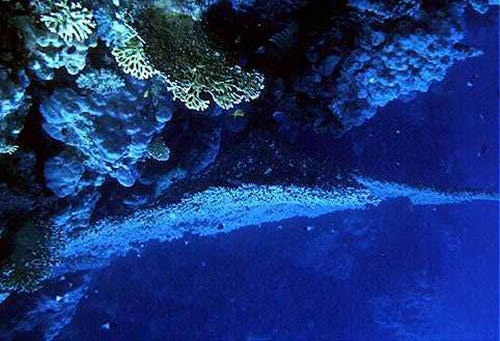
Coral Reefs in Ambon, Indonesia - Dr. John W. McManus.
Photo credits:
Page 5
Hill cutting and construction activities degraded the coral reefs near this site - Ridzwan Abdul Rahman
Page 6
Bomb fishing - George Woodman
Page 7
Inexperienced divers descending to a coral reef - Yihang Jiang
Authors:
Dr. Chou Loke Ming, Dr. Ridzwan Abdul Rahman, Mr. Kim Sour, Dr. Suharsono, Mr. Abdul Khalil bin Abdul Karim,
Dr. Porfirio M. Aliño, Dr. Thamasak Yeemin, Dr. Vo Si Tuan, and Mr. Yihang Jiang.
For citation purposes this document may be cited as:
UNEP. 2004. Coral Reefs in the South China Sea. UNEP/GEF/SCS Technical Publication No. 2.
CORAL REEFS IN THE SOUTH CHINA SE A
1
FOREWORD
The rich biodiversity makes the reefs here valuable in
Covering three million square kilometres of sea surface,
terms of ecotourism and in the potential for natural
the South China Sea forms a major large marine
bioactive compounds. The great variety of reef species
ecosystem bordered by nine coastal states. Located
provides a great source for research into natural
within the global centre of marine biodiversity, the
product chemistry. Novel bioactive compounds with
South China Sea supports immensely rich species
biomedical and agricultural applications can generate
diversity. Coastlines of the states bordering the sea are
huge economic benefits. The high degree of endemism
liberally endowed with coral reefs, a unique and
makes it imperative to maintain this resource.
certainly the most colourful of all marine ecosystems. In
the deeper part of the South China Sea, numerous
While the economic benefits of coral reefs are known,
island groups also support coral reefs. Fringing reefs
little is done to protect this ecosystem. Again, there are
and atolls occur throughout this marine basin forming
numerous reports pointing to reef degradation and
an effective network for larval connectivity and
destruction in the South China Sea. The ecosystem
migratory species.
deserves better protec tion so that its full economic
value can be realized. Coastal development and
The reef ecosystem is known to provide ecological
economic expansion together with population growth
goods and services. Numerous studies and reports
place extreme pressure on reef systems particularly
repeatedly emphasise the important benefits that
along coastlines. Much of the degradation can be
societies obtain from coral reefs. Reefs support i n-situ
minimized with effective integrated coastal
and ex-situ fisheries, are extremely productive, and
management. It is therefore important to implement
protect shores against strong wave action. Reefs of the
action-oriented programmes to halt such degradation
South China Sea contribute to the economic livelihood
and help reefs to recover so that society can continue
of many coastal communities. Reef-related fisheries
to reap the benefits of coral reefs in a more sustainable
form a significant part of fish landings, particularly in the
fashion.
South China Sea where more than 70% of the
population live in the coastal area, and where fish is the
major protein source.
Dr. Chou Loke Ming & Dr. Ridzwan Abdul Rahman
Bangkok, Thailand
January 2004
Reversing Environmental Degradation in the South China Sea and Gulf of Thailand.
Cambodia, China, Indonesia, Malaysia, Philippines, Thailand, Viet Nam
In 1996, the countries bordering the South China Sea requested assistance from UNEP and the GEF in
addressing the issues and problems facing them in the sustainable management of their shared marine
environment. From 1996 to 1998 initial country reports were prepared that formed the basis for the
development of a Transboundary Diagnostic Analysis, which identified the major water related
environmental issues and problems of the South China Sea. Of the wide range of issues identified the
loss and degradation of coastal habitats, including mangrove, coral reefs, seagrass and coastal
wetlands were seen as the most immediate problem. Over-exploitation of fisheries resources and land-
based sources of pollution were also considered significant issues requiring action.
In 1999 the governments, through the Co-ordinating Body for the Seas of East Asia endorsed a
framework Strategic Action Programme that established targets and timeframes for action. In
December 2000, the GEF Council approved this project with UNEP as the sole Implementing Agency
operating through the Environmental Ministries in the seven participating countries and with over forty
specialised Executing Agencies at national level directly engaged in the project activities.
Reversing Environmental Degradation Trends in the South China Sea and Gulf of Thailand
2
DISTRIBUTION AND DIVERSITY OF CORAL REEFS IN THE SOUTH CHINA SE A
INTRODUCTION
The southwestern half of the South China Sea lies
over the Sunda shelf at less than 200 m depth,
Global Distribution. Coral reefs thrive best in warm
while the northeastern sector drops to oceanic
tropical waters but extend beyond the tropics in
depths of more than 5,000 m. Coral reefs are
situations where warm currents push through the
liberally distributed along most of the coastlines
tropical belt into the higher latitudes. Southeast Asia
bordering this large marine ecosystem particularly
is recognized as the global centre of coral reefs,
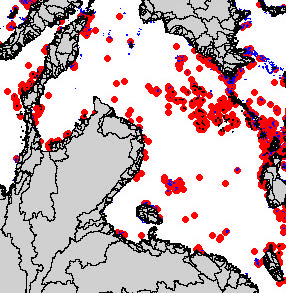
below the Tropic of Cancer (Figure 1.). Major island
both in terms of extent and species diversity. An
groups dot the South China Sea and support
estimated 34% of the earth's coral reefs are located
extensive oceanic reef systems. Approximately 20%
in the seas of Southeast Asia (Burke et al., 2002)
of Southeast Asia's reefs occur in the South China
which occupies only 2.5% of the total sea surface.
Sea. Fringing reefs dominate the near shore waters,
while atoll formations are common in the deeper
areas. Talaue-McManus (2000) highlighted the
ecological and economic importance of the coral
reefs of the South China Sea in the Transboundary
Diagnostic Analysis completed during the
preparatory phase of this project.
Biological Diversity. The Indo-West Pacific marine
biogeographic province has long been recognized
as the global center of marine tropical biodiversity.
Fifty of a global total of seventy coral genera occur
in this marine basin (Tomascik et al., 1997) and 7 of
the 9 giant clam species are found in the nearshore
areas of the South China Sea.
Compared to the Atlantic, the tropical Indo-West
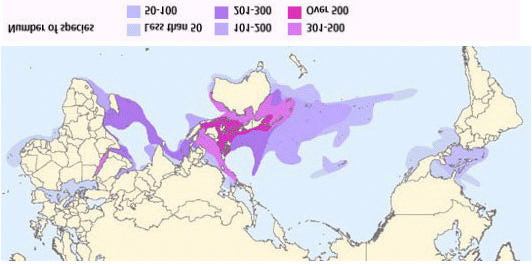
Pacific is very diverse (Figure 2). Only some 35
coral species are found in the Atlantic compared
with over 450 coral species recorded from the
Philippines, 200 from the Red Sea, 117 from South
East India and 57 from the Persian Gulf. The
Figure 1 Coral reef distribution in the South China Sea.
location of the South China Sea at the junction
(Sources: UNEP/GEF SCS & Reef at Risk in Southeast
between the Pacific and Indian Ocean basins, has
Asia)
resulted in it becoming a centre of aggregation of
The South China Sea is the largest sea in
species from both Oceans.
Southeast Asia. Bordered by Cambodia, the
People's Republic of China, Brunei, Indonesia,
Coral species. More than half of Southeast Asia's
Malaysia, Philippines, Singapore, Thailand, and
hard coral species diversity is found in the South
Vietnam, it forms a semi-enclosed large marine
China Sea. Current information available for sites
ecosystem. Circulation in the South China Sea is
around the South China Sea (Table 1) indicates a
influenced by the twice-annual monsoons. The
wide variation in coral species diversity at different
northeast monsoon towards the end of the year
sites, ranging from between 12 and 351, reflecting
forces surface currents north to south, while the
the influence of physical parameters and human
southwest monsoon that occurs mid year, drives
activity.
currents in the reverse direction. There is also a flow
of Pacific water into the basin interacting with water
from the Indian Ocean.
Figure 2
Distribution and diversity of coral reef species world-wide.
Source: J.E.N. Veron and Mary Stafford-Smith Corals of the World (Cape Ferguson: AIMS, 2000)
Reversing Environmental Degradation Trends in the South China Sea and Gulf of Thailand
CORAL REEFS IN THE SOUTH CHINA SE A
3
Hotspots of Biological Diversity. Hotspots of coral
species concerned. The high species richness of
species diversity occur at Nha Trang (Vietnam) with
corals and reef-associated fauna and flora in the
351 species and El Nido (Palawan, Philippines) with
South China Sea also makes this region a valuable
305 species. Records of more than 200 coral
source of genetic and biochemical material.
species occur for a number of sites in Vietnam,
Indonesia and the Philippines. In general, the data
Pharmaceutical products. Coral reefs are a
indicate higher species diversity at the deeper
treasure house of many important biochemical
offshore reefs.
compounds contained within the rich diversity of
reef organisms. Some of these compounds have
Diversity of other marine organisms. The marine
anti-cancer, anti-biotic, anti-viral and anti-oxidation
biological diversity of the South China Sea is
properties. These compounds have great potential
immensely rich. A preliminary assessment of the
in the development of new pharmaceutical,
sea's biological diversity, which is not confined to
cosmetic, and health products.
coral reefs, indicates more than 8,600 species of
plants and animals (Ng & Tan, 2000). Fish alone
One spec ies of cone shell for example that is found
contribute 3,365 species (Randall & Lim, 2000).
in coral reefs has been reported to produce a
This preliminary listing however, excludes many
potentially important drug that can replace
important groups, which are less well studied. Even
morphine. The market value of such a drug is
for those groups, which have been assessed, it was
several billions of dollars and the same species has
noted that many more species remain to be
over a hundred neuro-active compounds. With over
documented.
50 species of cone shells present in coral reefs, the
economic potential of this rich biodiversity is
It is important to note that the South China Sea
enormous. Considering the potential new drugs for
supports a significant number of endemic species.
other biomedical applications, the economic spin-
For example, only 5% of the 1,500 species of
offs are indeed staggering.
sponges in the South China Sea are distributed
throughout the Indo-West Pacific (Hooper et al.,
Coral reefs as nursery areas. Ecologically, coral
2000), and 12% of the 982 species of echinoderms
reefs of the South China Sea are sources of brood
in the South China Sea are endemic (Lane et al.,
stock for many commercially important reef fish and
2000).
invertebrate species. In addition, coral reefs are
important breeding and nursery grounds for many
Global significance of Coral Reefs in the South
pelagic and demersal fish species found in the open
China Sea. If coral reefs are the most diverse
sea. These reefs provide the source of larvae and
tropical marine ecosystems on earth, then the Indo-
juveniles of fish and invertebrates that support the
west Pacific in general and the South China Sea in
capture fisheries in the surrounding ocean. In fact,
particular are home to the most diverse coral reef
the future of the coral live-fish trade in the region is
systems. Marine endemism makes this system all
still dependent on wild brood stock from the reefs.
the more valuable as species loss in this region
translates into total extinction for many of the
Table 1
Numbers of coral genera and species at coral reef locations in the South China Sea.
Site Name
Genera Species
Site Name
Genera Species
Site Name
Genera Species
Cu Lao Cham
39
131 Mu Koh Ang
Thong
38
110 Natuna
63
182
Nha Trang bay
64
351 Mu Koh Samui
45
140 Senayang Lingga
64
217
Con Dao
55
250 Mu Koh Samet
20
41 Batu Malang, Pulau
41
96
Tioman
Phu Quoc
37
89 Sichang Group
38
90 Batu Tikus, Pulau Tinggi
41
79
Ninh Hai
49
197 Sattaheep Group
38
90 Pulau Lang Tengah
39
86
Ca Na bay
48
134 Lan and Phai
20
72 Pulau Lima, Pulau Redang
50
96
Group
Ha Long - Cat Ba
48
170 Chao Lao
41
80 Teluk Jawa, Palau Dayang
35
80
Hai Van - Son Tra
49
129 Prachuab
35
74 Silam,Pulau Baik, Sabah
67
n/a
Bach Long Vi
31
99 Koh Tao Group
41
79 Pulau Linggisan, Pulau
Banggi, Sabah
50
96
Batanes, Basco
16
n/a Song Khla
8
12 Koh Kong
n/a
67
Bolinao/Lingayen Gulf
57
199 Koh Kra
35
80 Koh Sdach group
n/a
67
Masinloc, Zambales
24
n/a Losin
40
90 Koh Rong group
n/a
34
Batangas bay/Maricaban
74
290 Anambas
62
206 Koh Takiev Group
n/a
23
Puerto Galera, Mindoro
62
267 Bangka
37
126 Koh Tang Group
33
70
El Nido, Palawan
74
305 Barelagn-Bintan
62
169 Kompot
n/a
67
Mu Koh Chumporn
31
120 Belitung
55
164 Koh Tunsay Group
n/a
67
Mu Koh Chang
42
130 Karimata
42
192
Reversing Environmental Degradation Trends in the South China Sea and Gulf of Thailand
4
CORAL REEF PRODUCTIVITY AND PRESENT STATE
Coral Reef Productivity. A coral reefs' very high
Table 2
List of Major Threats identified at sites
productivity is derived from its structural complexity;
bordering the South China Sea.
its efficient turnover of nutrients; and the high
primary production from unicellular symbiotic algal
Country
Major Threats
in the coral tissues. The evolutionary and ecological
development of this complex system results in a
Cambodia
Over fishing, blast fishing, poison fishing.
series of synergistic and symbiotic processes
Indonesia
Over fishing, blast fishing, sand mining.
manifested at different spatial and time scales in the
Over fishing, blast fishing, poison fishing,
ecosystem. These processes are the key to the reef
Malaysia
trawling.
Over fishing, blast fishing, poison fishing,
systems' transboundary significance, and its
Philippines siltation.
resilience in the face of natural and human induced
stress. The evolution of the reef community is
Thailand
Over fishing, coastal tourism, siltation
reflected in the trophic relationships among reef
Vietnam
Over fishing, poison fishing.
organisms and their complex inter-related life history
strategies. Social and economic benefits are
dependent upon these processes, which provide
Although the impacts of human use, both direct and
essential goods and services to the majority of the
indirect, are generally more severe than impacts
human population in the region.
resulting from natural events, this is not the case
with switches in the El Nino pattern of ocean
Importance of reefs to pelagic species. Food
circulation, which result in warming of the sea
derived from reef fisheries remains one of the most
surface within the Indo-west Pacific in general and
basic and essential commodities to the
the South China Sea in particular.
impoverished but growing coastal populations. In
addition, about a quarter of the diet of pelagic and
Global warming of the sea surface could cause
transboundary migratory fish like the yellowfin tuna
widespread coral mortality at alarming levels as
comes from reef-associated organisms (Grandperrin
illustrated by the consequences of the 1998 El Nino
et al.1978). In addition to trophic dependence on
event when mean sea surface temperature was the
reef-associated organisms, other pelagic species
highest ever recorded.
are dependent on the reef habitat to complete their
life cycle, visiting and using coral reefs as spawning,
Thermal tolerance of corals. Corals in a particular
breeding and nursery grounds.
area are known to tolerate quite narrow ranges of
temperature al though on a global scale different
Threats and Rates of loss of coral reefs. The
populations are able to withstand different
South China Sea has one of the largest areas of
temperature ranges. Those in the Red Sea for
coral reefs of any tropical sea. While natural
example, occur normally in waters that would cause
disturbances such as storms and El Nino related
bleaching of corals in colder water areas. A slight
bleaching events (exacerbated by global changes
shift in temperature of 1-2oC above or below the
brought about by human activities) have an impact
normal threshold level for a period of a few weeks
on reef systems, human activities are currently
may cause corals to bleach. When such
resulting in widespread loss of reef habitats (Arceo
temperature anomalies are prolonged, corals may
et al. 2001).
die. The sea surface temperature rise experienced
during the El Nino Southern Oscillation (ENSO)
Over the last century, many countries in the region
event between 1997 and 1998 caused mass coral
have undergone rapid economic development and
bleaching worldwide, including in the South China
population growth, particularly in coastal areas.
Sea.
Consequently, human pressures on coral reefs have
increased. Coastal Infrastructure development to
Coral Bleaching. Starting in late 1997 and
support economic growth and the accompanying
continuing through to late 1998, sea temperature
pollution of the marine environment associated with
increased sequentially around the world. Sea
growing human activities have caused degradation
surface temperat ure in most parts of the South
of reefs close to major population centres. Resource
China Sea was raised 2 30 Celsius above the
exploitation has led to extensive coastal degradation
normal seasonal maximum (Wilkinson, C.R. 1998).
and watershed deforestation and erosion have
By April 1998, anomalous hot water temperatures
resulted in increased sedimentation on coral reefs.
appeared in the South China Sea. Heating
All these stresses affect the overall health of the
intensified in May and July, and coral bleaching was
reef systems.
reported from Philippines, Vietnam, Thailand,
Malaysia, Singapore and Indonesia. This coral
The rates of loss of coral reefs are not precisely
bleaching was followed by mass mortality of
known due to a lack of detailed data and information
scleractinian coral and other zooxanthellae-bearing
on the status of coral reefs over the last few
reef organisms. Coral mortality reached 70 90 %
decades. Threats to coral reefs in Southeast Asia,
extending from the reef flat down to a depth of 15
have been estimated by Burke et al (2002) (Table
meters. Recovery rates varied throughout the
2), who consider that over 80% of Southeast Asia's
region, from full and fast recovery in some reefs of
coral reefs are under threat.
Vietnam located in upwelling areas, to slow, partial
recovery in other countries (Chou, 2000).
Reversing Environmental Degradation Trends in the South China Sea and Gulf of Thailand
CORAL REEFS IN THE SOUTH CHINA SE A
5
CORAL REEFS: A DEGRADING HABITAT
techniques such as blast fishing and poisons, to
capture fish on reefs further adds to the loss of coral
Coral reef degradation. Over the past 10 -15
habitat in many countries surroun ding the South
years, progressive degradation of coral reefs in
China Sea.
several locations of the South China Sea has been
noted. Many reefs, which used to be rich and
It has been suggested that despite the long history
pristine now have less live coral cover, and smaller-
of over fishing in the South China Sea, the lag time
sized fish in response particularly to anthropogenic
in ecosystem response, such as the phase shifts
activities. Rapid population growth, land-based
seen in the early 1990's in the Caribbean, may be
pollution, and over-fishing all contribute to this
due to the greater resilience of the reefs in this
decline. In general, coastal resources located near
region as a consequence of their high species
large human population centres have suffered the
diversity (Jackson et al. 2001). Based on recent
most serious degradation.
simulation models (Alino and Dantis 1999) it is
believed that the most immediate threats of
This decline in the health of coral reefs has grave
ecological disaster stem from human actions
detrimental consequences to the social and
including pollution and sedimentation.
economic well-being of the coastal communities that
are directly dependent on reef resources and to the
Most reefs in the South China Sea appear to have
countries concerned through loss of tourism and
reached maximum harvestable potentials around
other reef dependent sources of revenue.
the mid-1970's, (Alino et al., 1996) although in the
case of turtles this level may have been reached
Causes of reef degradation. Rapid population
even earlier. Recent observations in the Turtle
growth along the coast of most countries has
Islands fringing reefs, suggest that mass slaughter
resulted in increasing stress on coral reef resources,
of turtles during World War II caused a reduction of
particularly for food. Many coastal communities are
turtle nesting incidence near these areas that is still
poor and have no means to fish in the open sea or
observable today.
offshore areas, hence, fishing and collecting of
marine organisms from the coral reefs take place
DESTRUCTIVE FISHING.
close to their villages or homes.
As exploitation level increases and fish resources
become depleted, some fishermen choose
destructive techniques to catch fish. The use of
explosives and poisons for fishing is widespread in
many parts of the South China Sea. Burke et al.
(2002) indicated that 50-60% of Southeast Asia's
reefs are threatened by destructive fishing. The
prevalence of destructive fishing such as blast and
poison fishing will exacerbate Malthusian over
fishing (Pauly et al. 1989; Russ 1991) under the
present situation of increased human population
and reduced resource productivity.
Use of Poison. Poison fishing, commonly using
cyanide, to capture food fish live, targets high value
species, which are among the top predators. These
include the Napoleon wrasse, barramundi cod, coral
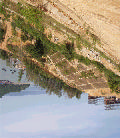
Hill cutting and construction activities degraded the coral
trout and large groupers. The poison is squirted
reefs near this site
from plastic bottles by divers commonly into reef
Coastal development. Coastal development is
crevices where the fish take refuge. The effects of
recognized as a growing threat throughout the
poison fishing are multiple. Corals are broken to
South China Sea. In most countries, decline in live
retrieve the stunned fish and a wide range of larvae
coral cover is closely associated with coastal
and small fish are killed by the low concentrations.
development that involve activities such as land
Corals are also bleached by the poison at
reclamation, land-clearing, dredging, and sand-
concentrations far below those used by the fishers.
mining, which very often, result in terrestrial soil and
nutrient run-off at the development sites and
Accurate figures for the live food fish trade are
sedimentation on adjacent coral reefs. Many of the
difficult to obtain as official records are for gross
coastal communities and high population density
weights, which include the water in which the fish
urban centres have inadequate sewage treatment
are transported. Poison fishing will continue in the
systems resulting in the release of high levels of
future since the incentives are high. Prices in Hong
nutrients onto reefs that subsequently trigger shifts
Kong for live Napoleon wrasse reach US$ 60-80 per
in reef community structure.
kg. The economic loss to the region from reef
damage is high, estimated at US$ 46 million with
Overfishing.
Overfishing and unmanaged
the industry collapsing within 4 years at current
exploitation of natural resources have resulted in
catch levels. Alternatively, a sustainable hook and
widespread damage to coral reefs in the South
line fisheries option could create net benefit of US$
China Sea. The use of destructive fishing
321.8 million (Llewellyn, G. 1999).
Reversing Environmental Degradation Trends in the South China Sea and Gulf of Thailand
6
IMPACTS USE AND VALUE
Bomb fishing. Away from major population centres,
consumption. This is particularly significant for
destructive fishing practices are the greatest threats.
island populations living in remote areas such as the
Explosives are easily made from artificial fertilizer.
Palawan islands (Philippines), islands of Sabah
Schooling reef fish such as, groupers, fusiliers,
(Malaysia), Koh Samui (Thailand). Coastal
surgeon fish, rabbit fish and snappers are targeted
communities also benefit from the collection of
and the explosives are thrown from only 5 meters
ornamental items such as mollusc shells to be sold
distance. Dead and stunned fish are collected by,
as souvenirs.
divers using "hookah" equipment.
The health of the coral reef ecosystem of the South
Damage to the reef is catastrophic as a single beer
China Sea is clearly related to fisheries production
bottle bomb can destroy a reef area of 5 m2, while a
since coral reefs provide habitats for about 80% of
larger gallon container destroys up to 20 m2. On
the fish caught by coastal subsistence and small-
regular bombed reefs, coral mortality may be 50-
scale fishers. The health of the reef system is
80%. The economic loss over the next 20 years is
therefore crucial to the welfare of these communities
conservatively estimated at US$ 3 billion in remote
and degradation and loss can have severe social
areas and US$ 60,800 per km2 in reefs within areas
and economic consequences.
of high tourism potential (Caesar, 1996).
Coral reefs also provide services such as beach and
coastal protection and their aesthetic appeal
provides the basis for the international tourism
market. In areas where storms abound, reefs
provide the first buffer protection to the coastal
habitats against the destructive effects of storm
surges, and against the normal erosion effects of
tidal and long-shore current movements during the
monsoon periods.
Aquarium Trade. The aquarium fish trade
continues to fuel demand for marine ornamentals
with significant exports from the Philippines,
Malaysia, Indonesia and Vietnam to North America
and Europe. Live corals are also exported mainly to
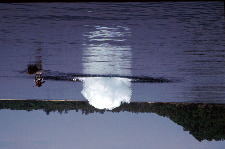
Bomb fishing
Oriental and European markets. Living "rocks" and
dead corals are also exported as part of the marine
USE AND VALUE
ornamental trade.
About 75% of the population in the nine countries
Aquaculture. Marine aquaculture of coral reef fish
bordering the South China Sea is resident in the
and shellfish is a growing ac tivity in the region as an
coastal zone. The sea and coastal habitats including
increasing number of farms are established to
coral reefs, provide the main source of livelihood for
culture spiny lobsters and groupers in particular.
most of these communities. Reefs support coastal
Juveniles are caught from the reefs and kept in such
fisheries and provide a variety of harvestable marine
farms, while reef benthic invertebrates such as sea
products. For example, coastal fisheries contributed
urchins and mollusks are collected to feed the
1,079,953 tonnes to the total fish production in
cultured species. Overharvesting of wild individuals
Malaysia in 1998, (Dept of Fisheries Malaysia,
to stock such "farms" not only results in changes to
1999). In the Philippines alone, around 10-30% of
the wild population and community of food species
total fisheries production is derived directly from reef
but also reduces the long-term economic viability of
fisheries. Fishery products from reef areas provide
the farms themselves.
the major source of dietary protein and a substantial
proportion is utilised directly through local
Table 3
Aquarium Trade in coral reef organisms.
(Wabnitz, et al., 2003)
No. of invertebrates
No. of invertebrates
Origin
% of total no.
% of total no.
imported
imported
(exporters/ data)
traded
Origin
(importers/ data)
traded
Indonesia
561,506
44
Unknown
2,441,742
80
Philippines
460,817
36
Mexico
246,458
8
Sri Lanka
100,309
8
Indonesia
104,282
3
Solomon Islands
75,305
6
Singapore
68,190
2
Fiji
53,823
4
Fiji
48,358
2
Palau
10,315
1
Sri Lanka
33,782
1
Philippines
29,440
1
Vanuatu
15,904
1
Total
1,262,075
99
Total
2,988,183
98
Reversing Environmental Degradation Trends in the South China Sea and Gulf of Thailand
CORAL REEFS IN THE SOUTH CHINA SE A
7
Coral mining Coral mining for lime production is a
anchor dropping at dive sites (as mooring facilities
traditional activity, still practiced in some coastal
are not normally installed), breakage of live corals
villages of Vietnam. Some cement factories use
by inexperienced divers, and from trampling on the
coral rock as a limestone source, and coral rock is
reef flat or gleaning of reefs.
also used for shrimp pond construction in Vietnam.
Coastal Tourism. Many of the South China Sea
countries have developed marine tourism based on
coral reefs. The reefs support the scuba diving
industry and attract divers world-wide. Marine
tourism supports other economic activities such as
the production of handicrafts, food, beverage and
other local cultural products that provide extra
income to local communities and contribute
significantly to the hard currency earnings of the
countries concerned.
The high species diversity of coral reefs, their easy
accessibility and low cost of living make the South
China Sea an attractive destination for marine
tourism. The coral reefs of the countries bordering
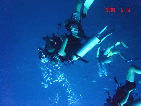
Inexperienced divers descending to a coral reef.
the South China Sea should be considered an
Reefs are also significant for recreational
important resource for economic development as
photography and many universities and research
they attract divers and fishing enthusiasts.
institutes in the region focus on reefs for education
and research, contributing to a growing awareness
Reef-based Tourism. The importance of reefs in
of their ecological and economic value.
affecting tourist arrivals is illustrated by the
experience of Peninsular Malaysia. The East coast
Coastal Protection. Coral reefs are important in
islands have more extensive and more diverse reefs
ter ms of coastal protection in many locations
than on the west coast (Wells, 1988). The reefs of
exposed to strong conditions such as in central
the east coast have 55 70% live coral cover
Vietnam, Sabah and Palawan. Reefs are used as
(Wilkinson, 1998) and this has contributed to the
natural harbours for small fishing boats.
high number of tourist arrivals on this side of the
peninsula. Destinations growing in popularity
Economic Value. Assessments of the economic
include El Nido (Philippines), Mu Koh Chang
value of coral reefs take into account both, the direct
(Thailand), Nha Trang (Vietnam), Pulau
and indirect values, and also non-use values.
(Philippines), Layang-Layang (Malaysia) and Sanya
Preliminary data from the Apo Islands (Philippines)
(China). Coastal tourism in the region has increased
indicate the total economic benefit at US$ 400,000
remarkably in the last 15 years but popular
in 2000, when the reefs are well protected.
destinations suffer from an over-burdening of the
Degradation of reefs results in loss of benefits.
ecological carrying capacity.
Cesar et al., (2001) estimated the economic impact
of coral bleaching to fisheries and tourism at El
Tourism Impacts. The tourism industry contributes
Nido, Palawan (Philippines), where a large
to degradation of coral reefs both during the
percentage of corals bleached during the second
development of resorts and from their subsequent
half of 1998. Significant economic losses to tourism
operation. The early construction phase may involve
due to the coral bleaching event at El Nido was
damaging practices of land clearance and even
estimated at US$ 30 million based on the
quarrying of the reef for materials used in resort
assumption that these losses were permanent at a
construction. When the resort is operational,
9% discount rate.
damage may result from improper sewage disposal,
Table 4 Total Number of Visitors to the Malaysian Marine Park Islands.
Year
East Coast
West Coast (Tioman,
(Pulau Payar)
Redang, Mersing)
Total
Local
Foreign
Local
Foreign
Local
Foreign
1999
16,557
66,689
157,289
136,935
173,846
203,624
2000
19,944
68,836
189,914
169,164
209,858
238,000
2001
38,027
89,514
221,256
135,436
259,283
224,950
2002
56,259
77,516
118,864
34,392
175,123
111,908
Total
130,787
302,555
687,323
475,927
818,110
778,482
Reversing Environmental Degradation Trends in the South China Sea and Gulf of Thailand
8
DEMONSTRATION SITES
PURPOSE OF THE DEMONSTRATION SITES
CHARACTERISING POTENTIAL DEMONSTRATION SITES
The primary purpose of the demonstration sites
At its first meeting the Regional Working Group on
selected under this project is to demonstrate
Coral Reefs (RWG-CR) discussed and agreed upon
actions, which either "reverse" environmental
an ideal list of data and informa tion, which should
degradation or will demonstrate methods of
be assembled for all potential demonstration sites
reducing degradation trends if adopted and applied
(UNEP, 2002a). National Committees or sub-
at a wider scale. In the case of coral reefs in the
committees working under the direction of the
South China Sea marine basin, the major cause of
national focal point then proceeded to identify
the degradation is destructive use of coral reef
potential sites, and to assemble the required data
resources. Therefore the demonstration activities
and information. It soon became apparent that an
will focus on proper management of coral reef
ideal listing of data that could be used as the basis
resources at specific sites, with the aim of
for criteria and indicators to prioritise sites could not
transfering successful practices and experiences to
be assembled for all potential demonstration sites
other, similar sites.
due to the unavailability of data sets from certain
locations or for certain parameters. The finally
The types of demonstration sites selected within the
agreed set of data and information which the
coral reef sub-component of the project will be
regional working group agreed to use in the
designed to illustrate sustainable use of coral reefs
subsequent selection procedures represent a
in the region, in particular in the priority areas
compromise between available data sets and the
identified during the preparatory phase (first 2
ideal set (UNEP, 2002b).
years) of the project. To date seventeen
demonstration site proposals have been prepared
A first step in comparing data and information on a
by the national coral reef committees (or working
regional basis involved the use of a cluster analysis
groups) encompassing a wide range of different
to determine the relationships, in terms of the
demonstration activities, including:
similarity and difference between all sites. Whilst all
countries have determined national priorities for
·
Enhancing capacity for monitoring and
conservation and sustainable use of their coral reef
research, at Phu Quoc islands, Nihn Hai,
systems these priorities have been, determined
and Koh Tunsay;
independently, within each country resulting in
·
Community-based management , at
priorities, which do not necessarily reflect regional
Belitung, Mu Koh Samui, Mu Koh
priorities, nor do they necessarily include
Angthong;
consideration of transboundary issues, nor regional
·
Establishing marine protected areas or
and global significance. By conducting a cluster
sanctuaries, at Batangas Bay, Calamianes
analysis using an identical set of data and
Island Group;
information from all countries (Table 5) regional
·
Sustainable tourism, at Mu Koh Angthong,
comparability in the subsequent prioritisation
Mu Koh Chang,
process is assured.
·
Sustainable financing/alternative livelihood,
at Masinloc, Zambales, Anda-Bolinao-
COMPARING SIMILARITY AND DIFFERENCE.
Bani-Alaminos,
·
Legal instrument and law enforcement, at
The Regional Scientific and Technical Committee
Belitung, Mu Koh Angthong,
considered the process of determining regional
·
Pilot activities on restoration of coral reefs,
priorities for action and recommended a three step
at Koh Tunsay, Mu Koh Samui
process (UNEP, 2002c) as follows:
·
Data and information for the site to be
The proposed demonstration activities involve
assembled by the national committees, (or
different organisations and different groups of
working groups) from the participating
people, including government agencies, local
countries, based on the regionally agreed
governments and organisations, non-governmental
format;
organisations, local communities, media, and civil
·
Conduct a cluster analysis to determine
society, in designing and executing the proposed
similarity and difference between all
activities.
potential sites;
·
Determine regional priority on the basis of
Building on the networks of individuals and
a rank score according to a prior agreed,
institutions developed during the preparatory phase
sets of criteria and indicators.
of the project (2002 - 2003) regional mechanisms
will be established to ensure sharing of experiences
In deciding upon the use of a cluster analysis to
and exchange of kn owledge regarding "good
group similar sites the RSTC recognised that the
practices" between sites and between countries.
available funds were unlikely to be sufficient to
The Regional Working Group on Coral Reefs will
support interventions at all sites identified by the
continue to provide advice and guidance regarding
National Committees and Sub-committees. By
the establishment and operation of the
grouping sites with similar characteristics and
demonstration sites once selected and to manage
selecting sites from the groups the interventions
the regional co-ordination and exchange between
could be chosen to maximise the range of biological
sites in different countries.
diversity represented around the margins of the
South China Sea.
Reversing Environmental Degradation Trends in the South China Sea and Gulf of Thailand
CORAL REEFS IN THE SOUTH CHINA SE A
9
Table 5
Uniform data set for coral reef potential demonstration sites used in determining similarity and
difference between sites.
No. of
Hard
live
No. of
No. of
No. of
No. of
endangered
Site Name
coral
coral
algae crustacean echinoderm coral
Other
and
species cover
reef fish ecosystem
(%)
spp.
species
species
species
threatened
species
Viet Nam
Cu Lao Cham
131
33.9
122
84
4
178
1
4
Nha Trang bay
351
26.4
55
69
27
222
2
3
Con Dao
250
23.3
84
110
44
202
2
4
Phu Quoc
89
42.2
98
9
32
135
2
3
Ninh Hai
197
36.9
190
24
13
147
1
4
Ca Na bay
134
40.5
163
46
26
211
1
3
Ha Long - Cat Ba
170
43
94
25
7
34
2
4
Hai Van - Son Tra
129
50.5
103
60
12
132
1
4
Bach Long Vi
99
21.7
46
16
8
46
M
2
Philippines
Batanes, Basco
M
55.00
41
M
M
86
1
3
Bolinao/Lingayen Gulf
199
40.00
224
M
M
328
2
4
Masinloc, Zambales
M
33.00
57
M
M
249
2
4
Batangas bay/Maricaban
290
48.00
141
M
M
155
2
4
Puerto Galera, Mindoro
267
33.00
75
M
M
333
2
5
El Nido, Palawan
305
40.00
129
M
M
480
2
5
Thailand
Mu Koh Chumporn
120
55
M
304
21
106
4
5
Mu Koh Chang
130
40
43
250
20
113
4
6
Mu Koh Ang Thong
110
55
7
136
21
106
4
1
Mu Koh Samui
140
40
7
136
21
106
4
5
Mu Koh Samet
41
35
38
134
11
74
4
5
Sichang Group
90
20
40
304
11
86
4
2
Sattaheep Group
90
33
40
304
15
75
4
2
Lan and Phai Group
72
18
40
304
15
75
2
2
Chao Lao
80
30
33
123
12
105
2
3
Prachuab
74
40
18
106
16
162
2
4
Koh Tao Group
79
45
7
136
21
106
2
4
Song Khla
12
20
2
M
M
30
2
2
Koh Kra
80
40
M
M
M
80
1
2
Losin
90
40
M
M
M
90
1
2
Indonesia
Anambas
206
M
26
24
25
128
3
2
Bangka
126
M
M
25
23
169
3
2
Belitung
164
38.46
M
10
35
170
3
2
Karimata
192
M
M
15
15
200
3
2
Malaysia
Batu Malang, Pulau
96
62.6
3.8
Tioman
M
M
123
1
4
Pulau Lang Tengah
86
41.3
3.1
M
M
117
2
4
Pulau Lima, Pulau Redang
96
46.3
10
M
M
113
1
4
Teluk Jawa, Palau Dayang
80
38.4
11.9
M
M
156
1
4
Tun Mustapha, Sabah
252
M
69
M
45
375
4
4
Cambodia
KKCR2
67
29.3
M
M
1
51
2
M
SHVCR1
34
23.1
M
M
14
6
3
M
SHVCR2
23
58.1
3
M
M
51
3
M
SHVCR3
70
M
M
M
14
42
3
M
KEPCR1
67
41
M
M
14
51
3
M
Reversing Environmental Degradation Trends in the South China Sea and Gulf of Thailand
10
GROUPING AND PRIORITISING DEMONSTRATION SITES
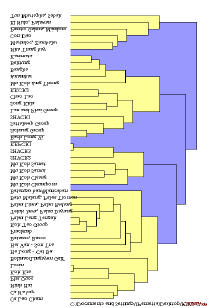
Clustering sites. Figure 3 presents the dendrogram
FINALISATION OF RANK SCORES AND INDICATORS
resulting from a cluster analysis of the data
presented in Table 5 using the Clustan6 software.
Biological Indicators. At the same time that the
Four clusters of sites are apparent, the lower cluster
group agreed on the data and information required
consisting of a grouping of outlying sites that for
to characterise the sites an initial discussion
various reasons are somewhat distinct from the
regarding the criteria and indicators that could be
remainder of the set. The proposed demonstrations
used as a mechanism for scaling transboundary,
sites were divided by the RWG-CR into 3 groups.
national, regional, and global significance was
undertaken. Criteria and indicators were initially
Figure 3
Graphic result of cluster analysis.
identified for the criteria covering indicators of
environmental and biological diversity and
agreement reached regarding the application of
rank scores that could be applied objectively to the
data from each site. The outcome of this process is
presented in Table 6 in which the original 43
potential demonstration sites have been aggregated
into groups and ranked in descending order of
priority based on the rank score for environmental
and biological diversity indicators.
Rank Scores. Social and economic criteria and
indicators were also reviewed and discussed, and
the rank scores agreed, covering such elements as
the reversibility of current threats, national priority,
level of direct stakeholder involvement in the current
management regime, soco-economic values, and
potential for co-financing support. The RGW-CR
recognised that many of these parameters could not
be measured objectively without the detailed
investigations and consultations required to prepare
a full proposal hence scoring based on this set of
parameters was only conducted for those sites for
which demonstration site proposals had been
prepared and discussed with local stakeholders. In
deciding upon the proportion of the final score that
Table 6 Rank scores of coral reef potential demonstration
should be assigned to an individual proposal the
sites based on agreed environmental and
RWG-CR agreed that since the environmental and
biological diversity criteria and indicators.
biological parameters were more objective and
easily verifiable, greater weight should be assigned
Site Name
Rank
Site Name
Rank
scores
scores
to this category of criteria and indicators than to the
social and economic criteria. It was agreed that the
First Group
Second Group
Ninh Hai
80 Mu Koh Ang
64
two groups of scores should be combined in the
Mu Koh Chang
76 Thong
ratio 70:30 respectively and the final rank score is
Mu Koh Chumporn
71 Belitung
55.5
presented in Table 7.
Mu Koh Samui
71 Anambas
52.5
Table 7 Rank scores for demonstration site proposals.
Ca Na bay
61 Karimata
51.5
Batangas
59 Chao Lao
50
Environ.
Socio-
Total
Cu Lao Cham
57.5 Sichang Group
48
Site Name
rank
econ.
score
Koh Tao Group
57 SHVCR1
46.5
Score
Score
Mu Koh Samet
56 Sattaheep Group
45
First Group
Phu Quoc
55.5 KKCR2
45
Ninh Hai
80
55
72.5
Prachuab
55 Bangka
43.5
Mu Koh Chang
76
69
73.9
Ha Long - Cat Ba
54 Lan and Phai
40
Mu Koh Chumporn
71
52
65.3
Bolinao/Lingayan
52 Group
Mu Koh Samui
71
50
64.7
Hai Van - Son Tra
51.5 Song Khla
28
Batangas
59
44
54.5
Batu Malang, Pulau
Phu Quoc
55.5
57 55.95
Tioman
51.5 Bach Long Vi
27
Bolinao/Lingayan
52
48
50.8
Pulau Lang Tengah
47
Batu Malang, Pulau Tioman
51.5
39 47.75
Teluk Jawa, Palau
Pulau Lang Tengah
47
50
47.9
Dayang
46.5
Third Group
KEPCR1
35.5
57 41.95
SHVCR2
46.5 El Nido, Palawan
80.5
Second Cluster
Pulau Lima, Pulau
Mu Koh Ang Thong
64
48
59.2
Redang
43.5 Tun Mustapha
Sabah
69.5
Belitung
55.5
47 52.95
Losin
41.5 Nha Trang bay
67.5
KKCR2
45
52
47.1
Batanes, Basco
40.5 Con Dao
66
Third Cluster
Koh Kra
39.5 Puerto Galera
61.5
Tun Mustapha, Sabah
69.5
70 69.65
KEPCR1
35.5 Macinloc
50
Macinloc
50
57
52.1
SHVCR3
28.5
Reversing Environmental Degradation Trends in the South China Sea and Gulf of Thailand
CORAL REEFS IN THE SOUTH CHINA SE A 11
BIBLIOGRAPHY
Aliño, P.M., C.L. Nanola, Jr., D.G. Ochavillo and M.C. Ranola. 1996. The fisheries potential of the Kalayaan
Island Group, South China Sea. Proc. 1st International Conf. Marine Biology of Hong Kong and the South
China Se a.
Aliño, P.M. and A. Dantis. 1999. Lessons from the biodiversity studies of reefs: Going beyond quantities and
qualities of marine life. Proceedings of the Symposium on Marine Biodiversity in the Visayas and
Mindanao. University of the Philippines in the Visayas, Miag-ao. Iloilo. Pp. 78-85.
Annual Fisheries Statistics 1999, Vol 1. Dept of Fisheries Malaysia, 1999. p. 21.
Arceo, H., M. Quibilan, P. Aliño, G. Lim and W. Licuanan. 2001. Coral bleaching in Philippine reefs: Coincident
evidences with mesoscale thermal anomalies. Bull. Mar. Sci. 69(2):579-593.
Burke, L., Selig, E. and M. Spalding. 2002. Reefs at Risk in Southeast Asia. World Resources Institute,
Washington, DC.
Caesar, H. 1996. Economic analysis of Indonesian coral reefs. World Bank, Washington, DC.
Cesar, H., Pet-Soede, L., Quibilan, M.C.C., Aliño, P.M., Arceo, H.O., Bacudo, I.V., and Francisco, H. 2001. First
Evaluation of the Impacts of the 1988 Coral Bleaching Event to Fisheries and Tourism in the Philippines.
Chou, L.M. 2000. Southeast Asian reefs - status update: Cambodia, Indonesia, Malaysia, Philippines, Singapore,
Thailand, Vietnam. In Wilkinson, C.R. (Ed.) Status of Coral Reefs of the World: 2000. p. 117-129.
Australian Institute of Marine Science, Townsville.
Colette Wabnitz, Michelle Taylor, Edmund Green and Tries Razak. 2003 From Ocean to Aquarium: The Global
Trade in marine Ornamental Species. UNEP-WCMC Biodiversity series No. 17.
Grandperrin, R. 1978. Importance of reefs to ocean production. In: Crossland, J. and Grandperrin, R. South
Pacific Commission (Noumea, New Caledonia) Fisheries Newsletter 15: 11-13.
Hooper, J.N.A., Kennedy, J.A. and R.W.N. van Soest. 2000. Annotated checklist of sponges (Porifera) of the
South China Sea region. Raffles Bulletin of Zoology. Supplement 8: 125-207.
Jackson, J.B.C., M.X. Kriby, W.H. Berger, K.A. Bjorndal, L.W. Botsford, B.J. Bourque, R.H. Bradbury, R. Cooke,
J. Erlandson, J.A. Estes, T.P. Hughes, S. Kidwell, C.B. Lange, H.S. Lenihan, J.M. Pandolfi, C.H. Peterson,
R.S. Steneck, M.J. Tegner and R.R. Warner. 2001. Historical overfishing and the recent collapse of coastal
ecosystems. Science 293: 629-638.
Lane, D.J.W., Marsh, L.M., Vanden Spiegel, D., and F.W.E. Rowe. 2000. Echinoderm fauna of the South China
Sea: An inventory and analysis of distribution patterns. Raffles Bulletin of Zoology. Supplement 8: 459-493.
Llewellyn, G. 1999. Review of existing laws and policies relating to migratory marine species conservation and
commercial and coastal fisheries. Unpubl. m.s.
Ng, P.K.L. and K.S. Tan. 2000. The state of marine biodiversity in the South China Sea. Raffles Bulletin of
Zoology. Supplement N. 8: 3-7.
Pauly, D., G. Silvestre and I.R. Smith. 1989. On development, fisheries and dynamite: A brief review of tropical
fisheries management. Nat. Resour. Modelling 3: 307-329.
Randall, J.E. and K.K.P. Lim (Eds.). 2000. A checklist of the fishes of the South China Sea. Raffles Bulletin of
Zoology. Supplement 8: 569-667.
Roberts, C.M., C.J. McClean, J.E.N. Veron, J.P. Hawkins, G.R. Allen, D.E. McAllister, C.G. Mittermeier, F.W.
Schueler, M. Spalding, F. Wells, C. Vynne and T.B. Werner. 2002. Marine biodiversity hotspots and
conservation priorities for tropical reefs. Science 295: 1280-1284.
Russ, G.R. 1991. Coral Reef Fisheries: Effects and Yields, p. 601-635. In P.F. Sale. (ed.) The ecology of fishes
on coral reefs. Acade mic Press, Inc., New York, 754p.
Talaue-McManus, L. 2000. Transboundary diagnostic analysis for the South China Sea. EAS/RCU Technical
Report Series No. 14. UNEP, Bangkok. Thailand.
Westmacott, S., Teleki, K. Wells, S, and West, J.M., (2000). Management of bleached and severely damaged
coral reefs. IUCN, Gland, Switzerland and Cambridge, U.K. vii + 36 pp.
Wilkinson, C.R. (Ed.) 1998. Status of Coral Reefs of the World: 1998. Australian Institute of Marine Science,
Townsville.
Reversing Environmental Degradation Trends in the South China Sea and Gulf of Thailand
MEMBERS OF THE REGIONAL WORKING GROUP ON CORAL REEFS
Mr. Abdul Khalil bin Abdul Karim, Marine Parks Branch, Department of Fisheries, Malaysia, Jalan Sultan
Salahuddin, 50628 Kuala Lumpur Malaysia, Tel: (60 3) 2698 2500; DL: 26982700, Mobile: (60) 19
330 4142, Fax: (60 3) 2691 3199, E-mail: abkhalil@hotmail.com; abkhalil@yahoo.com
Dr. Ridzwan Abdul Rahman, Borneo Marine Research Institute, Universiti Malaysia Sabah, Sepangar Bay,
Locked Bag 2073, 88999 Kota Kinabalu, Sabah, Malaysia, Tel: (60 88) 320 266; 320 121, Mobile: (60)
13 864 4011, Fax: (60 88) 320 261, E-mail: ridzwan@ums.edu.my
Dr. Porfirio M. Aliño, Marine Science Institute, University of the Philippines, Diliman, Quezon City 1101,
Philippines, Tel: (63 2) 922 3949; 922 3921, Mobile: (63) 917 838 7042, Fax: (63 2) 924 7678, E-mail:
pmalino@upmsi.ph
Dr. Chou Loke Ming, Department of Biological Sciences, Faculty of Science, National University of Singapore,
14 Science Drive 4, Singapore, Tel: (65) 6874 2696, Mobile: (65) 9 734 9863, Fax: (65) 6779 2486,
E-mail: dbsclm@nus.edu.sg
Mr. Yihang Jiang, Senior Expert, UNEP/GEF Project Co-ordinating Unit, United Nations Environment
Programme, 9th Floor, Block A, United Nations Building, Rajdamnern Avenue, Bangkok 10200, Thailand,
Tel: (66 2) 288 2084, Fax: (66 2) 288 1094; 281 2428, E-mail: jiang.unescap@un.org
Mr. Kim Sour, Department of Fisheries, Ministry of Agriculture, Forestry, and Fisheries, 186 Norodom Boulevard,
PO Box 582, Phnom Penh, Cambodia, Tel: (855 23) 210 565, Mobile: (855) 12 942 640, Fax: (855 23)
216 829, E-mail: sourkim@hotmail.com; catfish@camnet.com.kh
Dr. Suharsono, Research Center for Oceanography LIPI, Puslit OSEANOGRAFI - LIPI, Pasir Putih 1 Ancol
Timur, Jakarta UTARA, Indonesia, Tel: (62 21) 64713850 ext 202; 3143080: 102, Mobile: (62) 816 721
387, Fax: (62 21) 64711948; 327 958, E-mail: shar@indo.net.id; harsono@coremap. or.id
Dr. Vo Si Tuan, Institute of Oceanography, 01 Cau Da Street, Nha Trang City, Vietnam, Tel: (84 58) 590 205;
871134, Mobile: (84) 91 4017 058, Fax: (84 58) 590 034, E-mail: thuysinh@dng.vnn.vn
Dr. Thamasak Yeemin, Marine Biodiversity Research Group, Department of Biology, Faculty of Science,
Ramkhamhaeng University, Huamark, Bangkok 10240, Thailand, Tel: (66 2) 319 5219 ext. 240, 3108415,
Mobile: (66) 1 842 3056, Fax: (66 2) 310 8415, E-mail: thamsakyeemin@yahoo.com










UNEP/GEF South China Sea Project Co-ordinating Unit
United Nations Building
Rajadamnoern Nok
Bangkok 10200
Thailand
Department of Fisheries
Ministry of Agriculture, Forestry, and Fisheries
186 Norodom Boulevard
Phnom Penh
Cambodia
Research Center for Oceanography LIPI
Puslit OSEANOGRAFI - LIPI
Pasir Putih 1 Ancol Timur
Jakarta UTARA
Indonesia
Marine Parks Branch
Department of Fisheries, Malaysia
Jalan Sultan Salahuddin
50628 Kuala Lumpur
Malaysia
Marine Science Institute
University of the Philippines
Diliman, Quezon City 1101
Philippines
Marine Biodiversity Research Group
Department of Biology, Faculty of Science
Ramkhamhaeng University
Bangkok 10240
Thailand
Institute of Oceanography
01 Cau Da Street
Nha Trang City
Viet Nam