UNEP/GEF Project: Reversing Environmental Degradation Trends in the South China Sea and Gulf of Thailand
Kampot, Cambodia and Kien Giang Province, Viet Nam, Transboundary Demonstration Sites
Transboundary Water Management between
associated species richness is high with 113 species of
The most important endangered species found in the
Kampot Province (Cambodia) and Kien Giang
macro-algae; 71 species of molluscs; 26 species of
transboundary waters is the Dugong (Dugong dugon)
Province (Vietnam)
crustaceans; 19 species of annnelids; and 15 species
which is frequently encountered in the north and north-
of echinoderms.
east of Phu Quoc Island, and also in Kampot coastal
Importance of Coastal Ecosystems and Resources
areas. According to reports of the Kien Giang
in the Tranboundary Waters of Kampot and Kien
Based on surveys conducted in 2006 around 6,240
Department of Fisheries (2004 2005) 5 species of
Giang Provinces
tonnes marine products are harvested from the
dolphins were recorded in the waters of Kien Giang,
seagrass beds in Kampot Province per year, with an
The transboundary waters between the two provinces
including: Orcaella brevirostris, Tursiops aduncus,
approximate annual value of 7,500,000 US dollars.
of Kampot, Cambodia and Kien Giang, Viet Nam are
Sousa chinensis, Stenella longirostris, Stenella
Based on fishing household surveys the catch per unit
characterised by shallow water conditions favourable to
coeruleoalba. However, appearance and movement of
effort of fishermen has been declined annually since
the growth of seagrass and coral reefs, whilst the
dolphin herds in transboundary waters are not well
2000 due to an increase in the number of fishermen
adjacent coastlines support important mangrove
known. In addition, 3 sea turtle species have been
and the use of illegal fishing gear.
habitats. As a result, the area supports abundant living
recorded from the area, including: Green Turtle
marine resources that sustain adjacent villages.
(Chelonia mydas), Hawksbill (Eretmochelys impricata)
and leatherback (Dermochelys coriacea). Recent
Based on initial assessments, the seagrass area in
surveys in Phu Quoc suggest that sea turtle numbers
these transboundary waters is more than 37,000ha
are declining and that only five nesting beaches are stil
including 12,000ha in Kien Giang and more than
in use in the Phu Quoc archipelago.
25,000ha in Kampot Province, making them the most
extensive in the South China Sea. The seagrass
Transboundary Problems in Environment
meadows in Kampot are located in parallel to the
Management
coastline of Prek Ampil, and extend 150-300m from the
Increases in the number of fishing boats and better
shoreline, being widest in front of Bokor National Park.
fishing gear causes increasing pressure on the
The area has a gentle slope with seagrass occurring at
resources and habitats that could lead to decline in fish
depths from 1-4m. Seagrass beds in Kien Giang
stocks and yields. Trawl fishing, which is not allowed in
Province are mainly distributed in the shallow coastal
the near shore waters of either Cambodia or Viet Nam,
waters of the Phu Quoc archipelago.
occurs commonly on seagrass beds and in shallow
waters of both Kampot and Kien Giang provinces. This
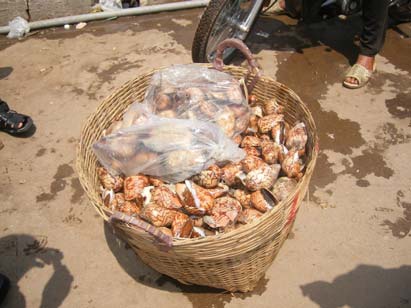
Molluscs from shallow waters and seagrass beds are an
is one of the greatest sources of damage to seagrass
important resource in the transboundary waters
habitats and biodiversity, particularly young seagrass
Phu Quoc is an important landing area and fishing
shoots, small juvenile fauna, and endangered species.
ground in Kien Giang Province. Total fisheries yield has
Transboundary fishing activities occur daily as fishing
increased from 30,969 tonnes in 1993 to 50,000 tonnes
boats from Viet Nam fish in seagrass beds adjacent to
in 2000 and to 60,246 tons in 2006. The main fishing
the Kampot coastline and vice versa. Fishing using
grounds are south of Phu Quoc in the vicinity of the An
toxins and electricity still take place in the waters of
Thoi islands where squid is an important component of
both provinces.
the catch and to the east of Phu Quoc island which is
There is a lack of coordination in fisheries management
an important swimming crab spawning ground.
and the marine resources are exploited by fishermen
Finfish are the main contributors to total fisheries
from both provinces without definition of fishing ground
production and around 67 species of teleost fish are
boundaries. Informal trade in marine products,
including endangered species, occurs daily between
caught in the area, of which representatives from the
families Carangidae, Scombridae, Hemirhamphidae,
the two provinces and an effective mechanism for joint
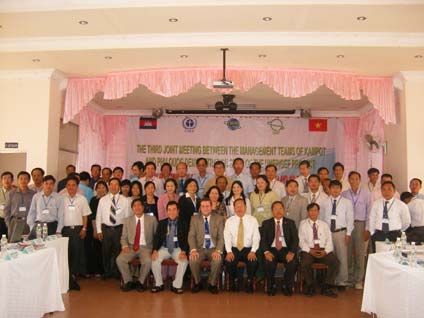
Joint meeting between the Management Boards of Phu Quoc
Serranidae, Lutjanidae, Lethrinidae and Synodontidae
management of fisheries has not yet been developed
and Kampot Demonstration Sites
are the dominant demersal species. Trevallies, jacks,
for this large marine area.
Based on recent taxonomic surveys 10 seagrass
mackerel, and anchovies dominate the pelagic catches.
Many recent development projects have occurred in the
species have been identified in the trasboundary
In 2001 landings of mackerels and anchovies were
coastal waters of both provinces in order to meet
waters, while data collected in Phu Quoc indicates that
around 3,500 and 12,500 tonnes respectively.
development plans with respect to increasing income


















UNEP/GEF Project: Reversing Environmental Degradation Trends in the South China Sea and Gulf of Thailand
Kampot, Cambodia and Kien Giang Province, Viet Nam, Transboundary Demonstration Sites
for local government and communities. Given that
joint programme of activities for funding by both
Coastal Ecosystems and Natural Resources between
poverty alleviation is the first priority of the
governments and bilateral aid and assistance agencies.
the Province of Kampot (Cambodia) and Kien Giang
Governments, environmental management for
(Vietnam) was signed by the Vice Chairperson of the
sustainable development has not been adequately
Issues that need to be further addressed under this
Kien Giang Provincial Peoples Committee and the
considered in planning and practices and there remains
joint agreement include: collaborative actions to reduce
Deputy Governor of Kampot.
a lack of coordination between economic development
illegal trade and illegal fishing; determining sustainable
and environment management.
stock sizes and use rates; enhancing the capacity of
Goals and Objectives of the Cooperative
technical staff; and strengthening of community
Framework and Priorities in Joint Management
Lack of Awareness of Local Communities on
involvement in resource management.
Sustainable Use and Law Enforcement
The goal of the agreement is to enhance and
Development of a Coordination Mechanism and
strengthen cooperation between the two provinces in
Public awareness of the importance of seagrass in the
Cooperative Framework
the fields of biodiversity conservation, reversing
local communities has improved. The knowledge of
environment degradation trends, and sustainable use
villagers regarding the sustainable use of resources is
The local governments of Kampot and Kien Giang
of resources, in order to improve the livelihood of local
however still limited and local people concentrate on
Provinces have cooperated in matters of mutual
communities
securing direct and short-term rather than long-term
interest under a friendship alliance since the early
benefits. Law enforcement is not effective enough due
1980. In the year 2003 cooperative mechanisms and
The objectives of the agreement are to: strengthen
to weak capacities of both provinces.
agreements regarding administrative management
institutional arrangements for management of natural
between the two provincial governments were
resources and marine environment in the
The management groups of Kampot (Cambodia) and
established, and yearly consultative meetings between
transboundary waters between the two provinces of
Kien Giang (Vietnam) have been working closely to
both provincial governments on improving bilateral
Kien Giang and Kampot; improve the management
address these problems, including how to reduce il egal
cooperation have been conducted.
capacity for natural resources and marine environment
fishing and trade of endangered species. Initial steps
in the transboundary marine zone; enhance awareness
have included the preparation of guidelines for
of managers and local communities regarding the
assessment and monitoring, and how to provide
importance of conservation within the two provinces of
training and share information between sites.
Kien Giang and Kampot; develop cooperative research
programmes and exchange information, including
sharing of data and databases; maintain financial
sustainability for long term management, conservation
of natural resources and marine environment in
transboundary waters between the two provinces of
Kien Giang and Kampot.
Contact Details
Kampot Fisheries Cantonment
Kampot Province, Cambodia
Tel: 855 12 666 406
Fax: 855 33 932 661
Signing of the Memoranda of Agreement between Kampot and
E-mail: aims1@online.com.kh
Kien Giang Provinces
Kiengiang Provincial People's
Field training of Cambodian community leaders and officials
In the year 2005, collaborative mechanisms to support
Committee
by Vietnamese scientists
natural resources and habitat management were
6 Nguyen Cong Tru, Rachgia City
Kiengiang Province, Viet Nam
Training on assessment, monitoring and transplantation
established under the SCS project. Three Joint
E-mail: nxniem@yahoo.com
of seagrass was provided by Vietnamese scientists to
Meetings between the Management Teams of the
local staff of the Kampot Provincial Government and
Kampot and Phu Quoc Demonstration Sites were
local community leaders, and agreement reached on
convened to discuss different areas of cooperation and
survey methods to be used by both provinces. Both
to prepare guidelines and an operational framework,
parties have agreed on the software and baselines for
encompassing the sharing of data and information. In
use in the joint GIS database and have developed a
March 2008 a Memorandum of Agreement on the
Framework for Cooperation in the Management of
Document Outline