



UNEP/GEF Project: Reversing Environmental Degradation Trends in the South China Sea and Gulf of Thailand
Batam, Pilot Activity on Land-based Pollution, Indonesia
Industry and Local Community Involvement in
sector in reducing heavy metal content of discharges;
with respect to environmental health and sanitation,
Land-based Pollution Management in Batam,
and capacity and public awareness building.
and the disposal of sanitary and domestic wastes
Indonesia
directly into coastal waters. Through the
Issues and Challenges
implementation of the pilot activity, a multi-sectorial
Project Summary
Coastal and marine habitats and the environment of
management board was established to oversee project
Batam Island covers an area of 1,570.35kmē and is
Batam city as a whole have degradation as a
activities aimed at addressing these challenges. It is
bordered by the Singapore Straits to the North, the
consequence of increased population and demands on
anticipated that this management board will be
Bintan Utara Sub-District in the East, the Senayang
marine resources of residents following achievement of
maintained beyond the life of the project. This body
Sub-District in the South, and Moro Sub-District in the
higher living standards. This has led to overexploitation
was not only responsible for the co-ordination of the
West. Batam is located at a crossroads of international
of resources, increase of domestic and industrial
pilot activity but also integrated the work of related
trade and is considered a major centre of economic
wastes, and physical destruction of coastal habitats.
entities in the planning and implementation of activities
development in Indonesia. Significant increases in
The major land-based pollution problem in coastal
for the sustainable development of the entire city.
investment across all sectors but particularly in
waters adjacent to the City is contamination from heavy
commerce, industry, tourism, and real estate has
metals, nutrients, and e-coli bacteria.
occurred as a consequence of its proximity to
Singapore and has resulted in negative impacts on the
In terms of pollution management, the Agency for
environment and resources.
Market and Sanitation of Batam City is responsible for
the management of domestic waste. Usually, domestic
solid waste from markets and the settlements in Batam
are dumped in temporary sites prior to composting,
burial or, burning. The Environment Impact
Management Agency (Bapedalda) is in overall charge
of environmental management with responsibilities for
monitoring, control and supervision of natural resource
use and environmental impact analysis.
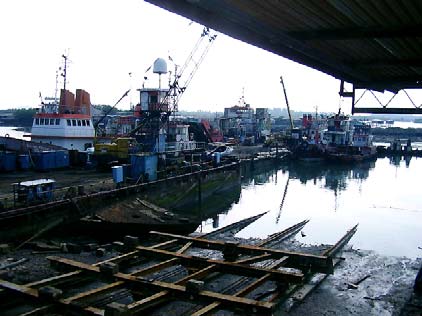
Coastal industries and shipping are the major source of heavy
metal contamination in Batam
Achieving Compliance of the Industrial Sector with
SUPER and PROPER Programmes in Batam City
Signboard for the Batam Pilot Activity
The pilot activity worked with Industry in Batam to
promote the adoption of the SUPER and PROPER
The objectives of the pilot activity on land-based
programmes of Indonesia that were introduced in 2002
pollution management at Batam were to: promote
to reduce heavy metals discharged from industry.
SUPER, PROPER and Cleaner Production (CP)
Through activities executed by the pilot project,
systems in Batam City; evaluate the social acceptability
awareness of industrial sector enterprises regarding
and cost effectiveness of smallscale community
waste management has improved significantly and
sewage treatment systems; and to promote co-
compliance in reducing the heavy metal content of
operation and increase awareness among the
waste water has been enhanced. At the end of 2007 a
Government, Civil society and Industries regarding the
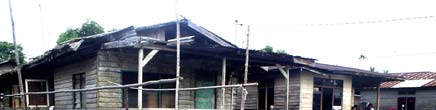
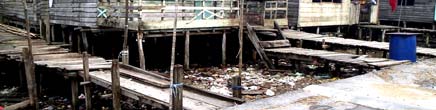
Domestic solid waste from coastal villages often results in
marine litter problems
total of 79 large industrial operations had signed
problem of land-based pollution at Batam. The activities
Compliance Letters obligating them to report the results
planned to achieve these outcomes included:
The key challenges Bapedalda has faced in addressing
of environmental monitoring and management to
compilation and collection of baseline data and
these issues relate to: (1) lack of compliance of
Bapedalda.
information for management purposes; establishment
industries with regulations pertaining to the monitoring
of facilities for the management of domestic liquid and
and management of activities in accordance with EIA
This was largely achieved through capacity building
solid wastes; securing compliance of the Industrial
systems; (2) lack of awareness within coastal villages
activities aimed at improving the management of










UNEP/GEF Project: Reversing Environmental Degradation Trends in the South China Sea and Gulf of Thailand
Batam, Pilot Activity on Land-based Pollution, Indonesia
industrial liquid and solid wastes. These included
The project worked closely with the community to
industry parks. This database is a useful tool for
seminars for industry, local government officers, and
address environment problems caused by domestic
managing the environment of Batam, particularly in
local community groups on the heavy metal
waste. Villagers were involved from the outset in the
terms of: verifying changes in environment state; and
contamination of coastal waters, sediments, and fish in
planning, design, construction, and maintenance of a
assessing the effectiveness of the SUPER and
the Batam area and the associated risks to human
communal septic tank system. Ten systems of
PROPER programmes in reducing the heavy metal
health. Agreed actions to ensure the long-term
communal septic tanks were installed each providing
content of waste water discharged from industrial
maintenance of the project outcomes include: regular
for the needs of 8-10 families. One third of the
enterprises. It has also been used as part of capacity
assessment of the environmental performance of
households are now connected to such systems and
building exercises, with stakeholders from industrial
industrial operations by Bapedalda (e.g. sea water
plans are in hand to replicate this system elsewhere.
enterprises and government trained in its use.
quality monitoring and regular review of compliance
documentation); regular seminars on the SUPER and
The activities in domestic waste management have not
Potential for Replication
PROPER programmes and training for stakeholders;
only improved sanitary conditions in the village but
The potential for replicating activities to promote the
monitoring discharge and sea water quality by industry;
have also proved helpful in enhancing awareness and
SUPER and PROPER programme within the industrial
and regular reporting of environment performance to
generating support from the local community for
sector is high. The simple methodology adopted by the
local and national government agencies.
environment management. The management board
has encouraged replication of the practices in domestic
project both in involving industry and local communities
Testing Small-Scale Community Sewage Treatment
waste management in Tanjung Riau village as part of
in addressing land-based pollution can be easily
Systems
the policy of environment management of the city. The
transferred to other areas of Indonesia. Involvement of
project worked with Batam City Government to include
industrial enterprises in environment management in
A village outside Batam City was selected for trialling a
funds for the continued management of domestic liquid
Batam serves as a good example for wider
communal septic system and management of the solid
and solid wastes in their recurrent budget. It is also
dissemination and adoption.
wastes. Solid wastes management involved organising
anticipated that maintenance of the system can in part
waste collection, storage and treatment at the village.
The scope of the pilot activity in improving domestic
be financed via income from the sale of compost.
Two hundred plastic rubbish bins were provided for
waste management of approximately one third of the
collection of solid wastes separated into organic wet
households in one village of the island, will likely not
materials and non-organic dry wastes. The organic
enable the impacts of the activity on the environmental
wastes were collected at a waste management site and
state of coastal waters and sediments of Batam Island
used to produce around 300 400kg of compost are
to be easily identified. This limitation was identified at
produced per month. The product is used as fertiliser in
the beginning of the project, although it is envisaged
the village and provides an additional source of income.
that the model adopted for solid and domestic waste
Non-organic waste is transported for disposal at the
management at the Tanjung Riau village will be up-
solid waste dump site of the city.
scaled to the whole of island level by the Batam City
Government. The experience at Tanjung Riau is that
solid wastes can be used to generate income for the
community if managed properly. This provides a
positive example for use in encouraging other villages
to establish similar systems.
Contact Details
Engku Puteri st. No. 1, Batam Government City
Production of compost from domestic organic waste provides
Batam Centre, Batam 29432, Indonesia
an additional source of income to coastal households
Ministry of Environment of the Republic of
Indonesia
Development of an Environmental Quality Database
E-mail: zulhasni@menlh.go.id
and GIS
The database on environment status and management
in Batam city has been developed to include all data
obtained from surveys and monitoring undertaken by
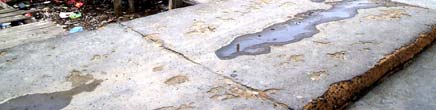
Construction of a communal septic tank in Tanjung Riau
Village
the environment sector during recent years, and also
data collected through the monitoring programme of the