UNEP/GEF Project: Reversing Environmental Degradation Trends in the South China Sea and Gulf of Thailand
Phu Quoc Coral Reef and Seagrass Demonstration Site, Kien Giang, Viet Nam
Fisheries Refugia as a Tool for Integrated Fisheries
broader coastal and marine planning at the
Fisheries Refugia as a Tool for Integrated Fisheries
and Habitat Management at Phu Quoc Archipelago,
archipelago. The mid-term evaluation of the project
and Habitat Management at Ham Ninh
Viet Nam
identified however, that a key threat to the longer-term
sustainability of project interventions at Phu Quoc was
In this connection the focal point of the UNEP/GEF
Project Summary
a low level of integration of fisheries issues into habitat
South China Sea Project in Viet Nam was consulted
and the fisheries refugia concept was introduced to the
The Phu Quoc Archipelago was selected as a coral
management and vice versa. This threat was
Phu Quoc Management Board as a means of
reef and seagrass demonstration site of the UNEP/GEF
considered particularly high at the Ham Ninh commune,
improving the management of fish stock and habitat
South China Sea Project. This archipelago is a priority
which is almost entirely dependent on fishing in the
links at Ham Ninh. The use of the fisheries refugia
site of the Viet Nam Biodiversity Action Plan and the
adjacent seagrass sub-site.
concept was well received by the Kien Giang
diverse marine ecosystems (seagrass, coral reefs, and
Issues and Challenges
Department of Science and Technology (DoST) and
mangroves) surrounding the 14 islands support a range
Department of Fisheries (DoF), as well as
of pelagic and demersal fisheries. The main objective
The Ham Ninh seagrass sub-site represents 8 percent
representatives of the Ham Ninh commune.
of this demonstration site was to develop and establish
of the total known area of seagrass in the South China
a co-ordinating mechanism among provincial sectors
Sea. It supports a variety of economically important
and between Viet Nam and Cambodia in management
species including swimming crab, cuttlefish, shrimp,
of coastal waters of Kien Giang and adjacent
rabbitfish, octopus, strombus snail, and seahorse. The
transboundary areas. Other activities involved
species are harvested using a wide range of fishing
enhancing public awareness regarding the significance
gear and practices, including gill nets, demersal seines,
of seagrass and coral reefs for fish stocks and
pelagic purse seines, demersal trawl, push netting,
improving the capacity of provincial policy makers,
traps, intertidal gleaning and raking, and hookah diving.
managers and local communities to guide the
sustainable use of natural resources and habitats at the
site.
Fishing intensity is high in the vicinity of Phu Quoc
Subsequent consultations were undertaken with
commune fishermen, fish traders, and women involved
in inshore gleaning and processing. It was noted that
by emphasising the "sustainable use" aspects of
refugia rather than the "no-take" approach adopted as
part of classic marine protected areas systems adverse
reactions at the community level were avoided. This
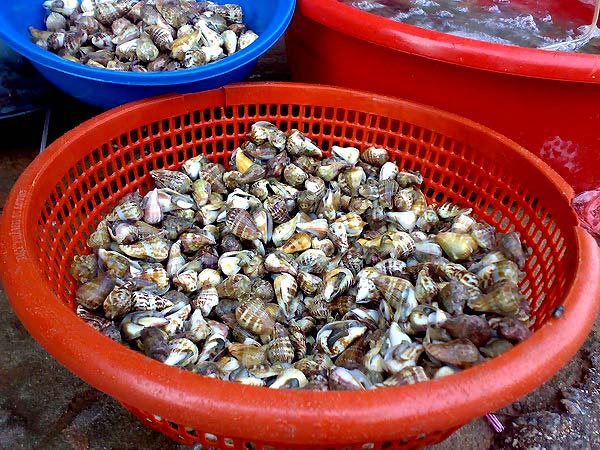
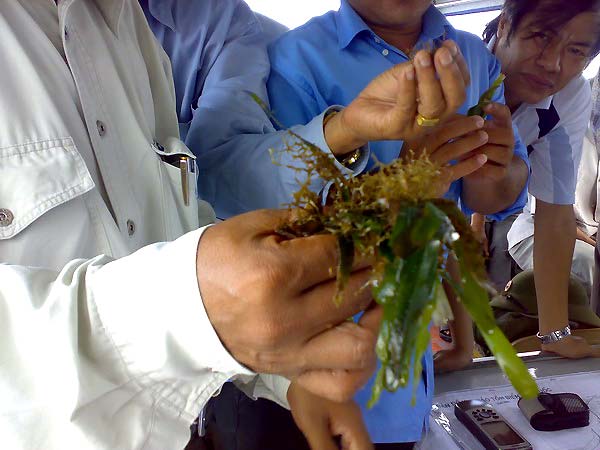
Strombus snails gleaned for food
was viewed as being a necessary pre-requisite for any
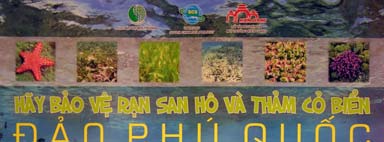
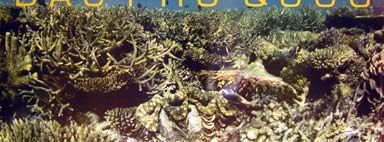
Public awareness poster regarding corals at Phu Quoc
Intensity of fishing operations in the near shore waters
dialogue regarding improved fishing practices within the
of the site are such that serious community concern
The key achievements of the site include: the
site. A joint project involving DoST, DoF, the
was expressed regarding the degradation and loss of
development of a rich database of information on coral
UNEP/GEF fisheries component and Phu Quoc
seagrass habitat as a result of fishing and consequent
reef and seagrass communities which has been used in
demonstration site, Phu Quoc MPA Authority, Border
effects on the longer-term availability of local fish
the zoning of two pilot areas for management, namely
Army, and fishermen and fish traders of the Ham Ninh
resources critical for local income and food. The
the An Thoi coral reef sub-site (400ha) and the Ham
Commune was launched in 2007 to establish and
widespread use of active fishing gears such as
Ninh seagrass sub-site (6,300 ha); effective operation
manage a pilot fisheries refugia site at the Ham Ninh
demersal trawls and push nets in seagrass areas of the
of a cross-sectorial Project Steering Committee;
seagrass area.
site was noted as a key source of conflict between
improved awareness and business practices within the
fishermen.
tourism sector; and use of data and outputs as part of


UNEP/GEF Project: Reversing Environmental Degradation Trends in the South China Sea and Gulf of Thailand
Phu Quoc Coral Reef and Seagrass Demonstration Site, Kien Giang, Viet Nam
The Approach
The level of acceptance by fishermen of the refugia
In the past many marine protected areas in Southeast
concept was such that they ultimately led activities to
Asia have been promoted in terms of their potential to
The overarching goal of the fisheries refugia pilot
identify specific spawning and nursery areas in
improve the state of fisheries and their habitats, but
activity is to improve the integration of fisheries and
consultation with local fisheries and environment
have rarely included mechanisms to ensure the
seagrass habitat management at Ham Ninh through the
department staff, and border army officials. This
effective integration of fisheries considerations into
establishment and management of critical fisheries
provided sufficiently high level of interaction between all
management. In contrast fisheries departments and
refugia (spawning and nursery areas), to improve the
sectors that management issues and solutions could
ministries largely focus on achieving sustainable yields
longer-term security of fisheries yields and to reduce
often be discussed and agreed at-sea aboard small-
from fish stocks. Experience of this pilot activity at the
the rate of seagrass degradation and loss. Specific
scale fishing vessels. Such dialogue was necessary to
Phu Quoc site suggests that cross-sectorial co-
activities conducted to date include: development of an
enable the level of sharing of ideas and perspectives
ordination can be achieved through the fisheries refugia
inventory of fisheries refugia sites for important fish
between stakeholders required to identify solutions to
concept that has provided a platform for building
species, including seasonality of spawning and
problems directly related to the primary source of food
partnerships and enhancing communication between
age/size of recruitment from nursery areas for key
and income for the local community. Involvement of
the environment and fisheries sectors, at the provincial
species; preparation of a fisheries profile for Ham Ninh
scientists from Viet Nam's Institute of Oceanography in
and local levels.
commune; identification of specific fisheries and habitat
the process assisted in the interpretation of local
management issues at the site; and recommendations
community and fishermen knowledge.
for future management. It is planned that operational
management of fisheries refugia at Ham Ninh will be
undertaken by Kien Giang's Department of Fisheries
under the guidance of the local MPA Authority.
Importance of Community Participation in
Identification of Refugia Sites
At the time of project development information
regarding the links between fish stocks and habitats at
Phu Quoc was scarce. Little or no data on the
distribution and abundance of fish eggs and larvae
were available for identification of spawning locations
or important nursery locations for fish stocks. This
problem was largely overcome by a high level of
involvement of fishermen from the local commune in all
consultations and exercises to identify refugia sites.
Surveying distributions and abundance of resources
Potential for Replication
It is anticipated that the experiences gained at this
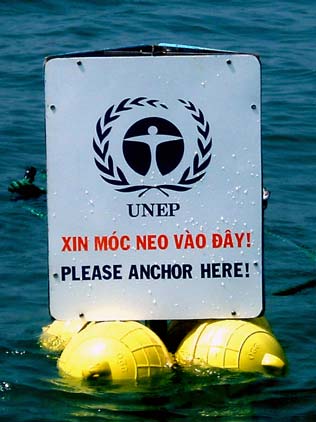
Mooring points for dive and fishing boats established in reef
demonstration site will be suitable for application in
areas to reduce anchor damage.
other areas of Viet Nam and the South China Sea
Contact Details
generally where over-fishing and the use of
inappropriate fishing gear are significant impediments
Kiengiang Provincial People's Committee
6 Nguyen Cong Tru, Rachgia City
to more sustainable use of fisheries resources and
Kiengiang Province, Viet Nam
habitats. The achievements at Phu Quoc were
E-mail: nxniem@yahoo.com
considered during the third Regional Scientific
Conference and have been used by the Regional
Working Group on Fisheries as a basis for the
development of national programmes of activities as
part of a planned project to establish a regional system
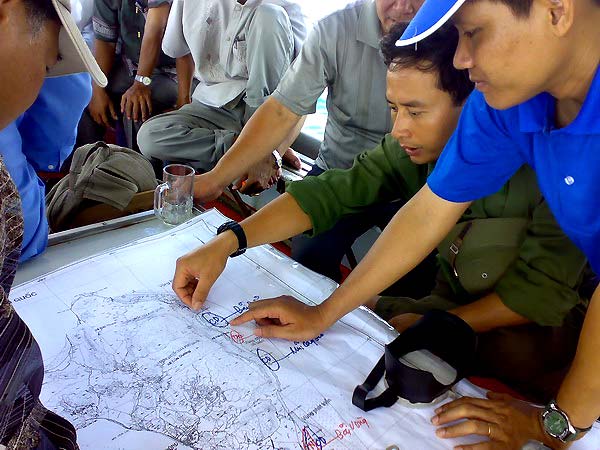
Local fishermen involved in identifying spawning and nursery
of fisheries refugia.
areas for different species and defining refugia locations
UNEP/GEF Project: Reversing Environmental Degradation Trends in the South China Sea and Gulf of Thailand
Phu Quoc Coral Reef and Seagrass Demonstration Site, Kien Giang, Viet Nam