




United Nations
UNEP/GEF South China Sea
Global Environment
Environment Programme
Project
Facility
Reversing Environmental Degradation Trends
in the
South China Sea and Gulf of Thailand
REPORT
Third Meeting of the Regional Working Group for
the Land-based Pollution Component
Phuket, Thailand, 7th 10th July 2003
__________________________________________________________________________________
UNEP/GEF
Bangkok, July 2003
UNEP/GEF/SCS/RWG-LbP.3/3
Table of Contents
1.
OPENING OF THE MEETING.............................................................................................. 1
1.1 WELCOME ADDRESS..................................................................................................... 1
1.2 INTRODUCTION OF MEMBERS.......................................................................................... 1
2.
ORGANISATION OF THE MEETING ................................................................................... 1
2.1 DESIGNATION OF OFFICERS ........................................................................................... 1
2.2 ORGANISATION OF WORK .............................................................................................. 2
3.
ADOPTION OF THE MEETING AGENDA ............................................................................ 2
4.
OPENING REMARKS FROM THE FOCAL POINTS FOR LAND-BASED POLLUTION
FROM EACH PARTICIPATING COUNTRY.......................................................................... 2
5.
REPORTS FROM THE PROJECT CO-ORDINATING UNIT (PCU) REGARDING
OVERALL PROGRESS TO DATE....................................................................................... 3
5.1 STATUS OF END-YEAR PROGRESS REPORTS, EXPENDITURE REPORTS AND BUDGETS ............ 3
5.2 STATUS OF PLANNED SUBSTANTIVE OUTPUTS FROM THE NATIONAL LEVEL ACTIVITIES ............... 4
6.
CHARACTERISATION OF HOT SPOTS .............................................................................. 4
7.
CRITERIA FOR PRIORITISATION OF HOT SPOTS ............................................................. 5
8.
CONSIDERATION OF PILOT ACTIVITIES ON LAND-BASED POLLUTION ......................... 6
8.1 IDENTIFICATION OF POTENTIAL PILOT ACTIVITIES ............................................................... 6
8.2 PREPARATION OF PROPOSALS FOR PILOT ACTIVITIES......................................................... 7
9.
REVIEW OF PROPOSED WORLD BANK ACTIVITIES RELATING TO LAND BASED
POLLUTION IN THE SOUTH CHINA SEA REGION ............................................................. 7
9.1 PROTECTING THE ENVIRONMENT FROM THE IMPACT OF THE GROWING INDUSTRIALIZATION
OF LIVESTOCK PRODUCTION IN EAST ASIA........................................................................ 7
9.2 CONCEPT ON PEARL RIVER DELTA URBAN ENVIRONMENT PROJECT..................................... 8
10. REVISION OF THE WORK PLAN AND ACTIVITIES FOR THE REGIONAL WORKING
GROUP ON LAND-BASED POLLUTION ............................................................................. 8
11. DATE AND PLACE OF THE NEXT MEETINGS OF THE REGIONAL WORKING GROUP
ON LAND-BASED POLLUTION .......................................................................................... 9
12. ANY OTHER BUSINESS..................................................................................................... 9
13. ADOPTION OF THE REPORT OF THE MEETING.............................................................. 10
14. CLOSURE OF THE MEETING ........................................................................................... 10
ii
UNEP/GEF/SCS/RWG-LbP.3/3
List of Annexes
ANNEX 1
List of Participants
ANNEX 2
List of Documents
ANNEX 3
Agenda
ANNEX 4
Agreed format for Characterisation and ranking of Pollution Hot Spots
ANNEX 5
Results of Characterisation and Ranking of Hot Spots and Contaminant Impacts
ANNEX 6
Agreed Calendar of Deadlines for Tasks of the Regional Working Group for the
Land-Based Pollution Component
iii
UNEP/GEF/SCS/RWG-LbP.3/3
Page 1
Report of the Meeting
1.
OPENING OF THE MEETING
1.1
Welcome Address
1.1.1 Mr. Yihang Jiang, Senior Expert, Project Co-ordinating Unit (PCU), welcomed the participants
on behalf of Dr. Klaus Topfer, the Executive Director of UNEP, Dr. Ahmed Djoghlaf, Director, Division
of GEF Co-ordination. He conveyed the good wishes and regrets of Dr. John Pernetta, Project
Director, who was unable to attend the meeting.
1.1.2 Mr. Jiang apologised for the twice postponements of this meeting, caused by the SARS
outbreak and by the late receipt of national reports by the PCU. He emphasised that this delay has
impacted adversely upon project implementation; The Third meeting of the Regional Scientific and
Technical Committee (RSTC) had only just been held recently, and it was unfortunate that this
meeting of the Regional Working Group for the Land-based Pollution (RWG-LbP) could not be held
before the 3rd RSTC meeting. Therefore, it will be necessary to decide on how to report the outcomes
of this meeting to the RSTC. These delays have caused a backlog of the RWG-LbP's work.
1.1.3 He informed the meeting that its main task was to agree on a shortlist of hot spots in order to
prepare the pilot activity proposals. He noted that the participating countries have identified their
national priorities, but the RWG-LbP has to consider that this is a regional project in identifying and
short-listing the pilot activities, which should address regional and/or global priorities. Given its limited
budget, the project will not be able to clean up whole hot spots. There is, therefore, a need to identify
appropriate activities that address the root causes of pollution problems, within the available budget.
1.1.4 Mr. Jiang expressed his hope that the meeting will be successful and that the participants will
enjoy Phuket at the same time.
1.2
Introduction of Members
1.2.1 Participants were invited to introduce themselves on their scientific background and roles in
project implementation.
1.2.2 As requested by the meeting, the Senior Expert informed the meeting of staffing
developments in the PCU and of the progress of the Intern Programme, involving junior staff from the
responsible ministries in the participating countries, which is intended to familiarise themselves with
the project. This programme would be executed in 3 phases Phase 1 (ongoing): with interns from
Indonesia and Thailand; Phase 2 (starting September 2003): Cambodia, China and Malaysia; and
Phase 3 (first half of 2004): Vietnam and the Philippines.
1.2.3 The List of Participants is attached as Annex 1 to this report.
2.
ORGANISATION OF THE MEETING
2.1
Designation of Officers
2.1.1 Mr. Jiang conveyed Mr. Sudariyono's, the Chairperson of the Regional Working Group,
apologies for not being able to participate in this meeting. He reminded the meeting that the Rules of
Procedure state that, the Regional Working Group shall elect, from amongst the members, a
Chairperson, Vice-Chairperson and Rapporteur to serve for one year. The rules state further that,
officers shall be eligible for re-election no more than once. Mr. Sudariyono, Dr. Pham Van Ninh, and
Dr. Pornsook Chongprasith, who have served as Chairperson, Vice-Chairperson and Rapporteur,
respectively, during 2002 are therefore all eligible for re-election.
2.1.2 The meeting fully recognised the good work that have been done by the ex-officers of the
Regional Working Group. However, the members of the Regional Working Group felt that during the
UNEP/GEF/SCS/RWG-LbP.3/3
Page 2
first two years of the project, it would be appropriate that the focal points from the participating
countries should have equal opportunity to serve the Regional Working Group as its officers. It was
agreed that a new Chairperson, Vice-Chairperson and Rapporteur should be elected.
2.1.3 Dr. Pham Van Ninh, Focal Point for Land-based Pollution from Viet Nam nominated Mr. Han
Baoxin, Focal Point for Land-based Pollution from China, as Chairperson of the Regional Working
Group. The nomination was accepted by the meeting, and Mr. Han was elected by acclamation.
2.1.4 Dr. Pornsook Chongprasith, Focal Point for Land-based Pollution from Thailand nominated
Mr. Vicente Diaz, Focal Point for Land-based Pollution from the Philippines, as Vice-Chairperson; with
Mr. Han seconding the nomination. Mr. Diaz was elected as Vice-Chairperson by acclamation.
2.1.5 Mr. Pak Sokharavuth, Focal Point for Land-based Pollution from Cambodia nominated
Mr. Mohamad bin Jaafar, Focal Point for Land-based Pollution from Malaysia, as Rapporteur. The
nomination was seconded by the meeting, and Mr. Jaafar was elected as Rapporteur by acclamation.
2.2
Organisation of Work
2.2.1 The Chairman invited Mr. Jiang to brief the participants on the Provisional List of Documents
(Document UNEP/GEF/SCS/RWG-LbP.3/Inf.2), the administrative arrangements for conducting the
meeting, and the proposed organisation of work (UNEP/GEF/SCS/RWG-LbP.3/Inf.3). Mr. Jiang
apologised for the delayed distribution of certain documents, and noted that the document
UNEP/GEF/SCS/RWG-LbP.3/5 did not include the site characterisation of China, Malaysia and the
Philippines, because their data were not provided in the format agreed by the Regional Working
Group. The final List of Documents is contained in Annex 2 of this report.
2.2.2 The Regional Working Group agreed that the meeting will be conducted in plenary as far as
possible, and that the meetings will commence each day at 8.00 a.m. Sessional working groups were
formed, as deemed necessary. The meeting was conducted in English.
3.
ADOPTION OF THE MEETING AGENDA
3.1
The Chairperson invited the participants to consider the Provisional Agenda prepared by the
Secretariat (Document UNEP/GEF/SCS/RWG-LbP.3/1), and invited them to propose any amendments
or additional items for consideration.
3.2
In responding to a question raised by Mr. Diaz, Mr. Jiang referred to the Agenda Item 9 and
informed the meeting that the two World Bank proposals were received by the PCU. The Regional
Working Group was invited to comment on these proposals, with a view to explore the possibilities of
co-ordination and cooperation with these projects.
3.3
Mr. Agus Rusly suggested that the meeting should discuss the potentiality of co-ordination
and co-operation with the Global Programme of Action for the Protection of the Marine Environment
from Land-based Activities (GPA/LBA). The Senior Expert informed the meeting that this discussion
had been carried out during the first meeting of the Regional Working Group, but further discussion
could be carried out under Agenda Item 12 of this meeting. Dr. Pornsook suggested that, under
Agenda Item 12, co-operation with other projects/agencies should also be discussed; in particular,
PEMSEA and the ASEAN Working Group on Coastal and Marine Environment.
3.4
The agenda was adopted with the modifications mentioned above, and is attached as Annex 3
to this report.
4.
OPENING REMARKS FROM THE FOCAL POINTS FOR LAND-BASED POLLUTION
FROM EACH PARTICIPATING COUNTRY
4.1
The Chairperson invited the focal points from the participating countries to provide short
overviews of their progress subsequent to the second RWG meeting, and to highlight any additional
documentation that they wished to table at the meeting.
UNEP/GEF/SCS/RWG-LbP.3/3
Page 3
4.2
Dr. Pornsook reported that Thailand had submitted its reports in May 2003 on past and ongoing
activities in Thailand. Thailand had also completed its review of national data and information, the meta-
database and the GIS database, and site characterisation of Land-Based Pollution, criteria for
prioritisation of hot spots, and causal chain analysis of pilot activities.
4.3
Mr. Diaz apologised for not being able to organise this meeting in the Philippines due to the
government's regulation on SARS. He hoped that a future meeting could be held in the Philippines.
He also apologised for the delay in submitting the national report, but promised to meet deadlines in
future. He informed the meeting the national report was submitted to the PCU.
4.4
Mr. Sokharavuth reported that Cambodia had submitted its reports on review of past and on-
going projects, finalised the review on legal framework, selected three hot spots, and finalised causal
chain analysis.
4.5
Dr. Ninh reported that Viet Nam has submitted its national reports, made progress in
identifying characteristics, criteria and existing regulations, and developed and collected data for its
hot spots. Vietnam is also continuing to develop its national database and meta-database. He
informed the meeting that causal chain analysis is being carried out in Viet Nam.
4.6
Mr. Rusly reported the establishment of a national committee for Land-Based Pollution;
proposing 3 areas as hot spots Batam, Coast of west Kalimantan and the Jakarta Bay. Some
meetings of the national committee have been convened and primary data have been collected for
site characterisation. The implementation of the project activities was generally within the timeframe
and deadlines.
4.7
Mr. Jaafar reported that, with the delay in signing the MOU, work only commenced early this
year. So far, a committee on the national level has been established. A preliminary report has been
submitted. A report will be submitted to PCU when it is available.
4.8
Mr. Han reported that China completed the national reports covered 3 major coastal areas:
the Ling Ding Yang catchments of Pearl River Estuary, the Da Ya Bay, and the Bei Hai city coastal
areas. China has just finished developing its meta database.
5.
REPORTS FROM THE PROJECT CO-ORDINATING UNIT (PCU) REGARDING OVERALL
PROGRESS TO DATE
5.1
Status of End-Year Progress Reports, Expenditure Reports and Budgets
5.1.1 The Chairperson invited Mr. Jiang to introduce Document UNEP/GEF/SCS/RWG-LbP.3/4,
which summarised the current status of budgets and reports from the Specialised Executing Agencies
in the participating countries. He reported that due to the delays in the appointment of PCU staff,
22% of PCU staff-time had been lost in 2002. The delay in signing of MOUs with Malaysia had also
resulted in slow disbursement. In general, the implementation of the project activities is quite healthy,
even though some problems still need to be resolved. He presented Table 1 of the document, which
explained the status of submission of the half yearly reports by the PCU. He pointed out that the
unfamiliarity of focal points with the format and process of submission of six monthly reports had
caused some initial problems for the first half of 2002, but that the second half yearly reports had
experienced much more delay. He called the attention of the focal points on this important matter.
5.1.2 The Mr. Jiang reminded the meeting that Specialised Executing Agencies (SEAs) should
prepare the auditing reports covering the entire year 2002. Without this report, it will not be possible
to disburse the budget for 2nd half of 2003, as this had been requested by the UN Auditor.
5.1.3 Mr. Jiang explained Table 2 of the document and the status of the revised budgets and
government co-financing contributions, which were based on the half yearly reports from the
participating countries and on the cost coefficient agreed by the Project Steering Committee.
UNEP/GEF/SCS/RWG-LbP.3/3
Page 4
5.1.4 With some clarifications, the meeting instructed the focal points from participating countries to
ensure the timely submission of the half yearly reports, as agreed by the Project Steering Committee.
5.2
Status of planned substantive outputs from the national level activities
5.2.1 In introducing the document UNEP/GEF/SCS/RWG-LbP.3/6, Mr. Jiang explained that the
background of the document was based on the agreements of the first and second RWG meetings.
He informed the meeting that, for some countries, the reports were not prepared and provided in the
agreed formats; and that this would cause problems in the comparability of the data and information
generated from this project.
5.2.2 He referred to the PSC decision to conduct independent peer reviews of the national reports
prepared under this project. He noted that it is important for this meeting to determine the closing
deadline for the national reports so that independent reviews can be initiated.
5.2.3 He pointed out that previously established deadlines by the Regional Working Group have not
been met and, therefore, it would be more pragmatic to establish realistic deadlines that can be
maintained. He suggested to the meeting that the deadlines for the final submission of the national
reports be considered together with the Regional Working Group's work plan in the Agenda Item 10.
5.2.4 The meeting agreed to consider this issue together with the revision of the work plan.
6.
CHARACTERISATION OF HOT SPOTS
6.1
The Chairperson invited the Focal Points from the participating countries to give presentations
on their updated information on the hot spot characterisations.
6.2
The meeting was informed that the site characterisation data and information provided in the
document folder did not include those from China, Philippines and Malaysia. These had not been
provided in the agreed format, and it was difficult to abstract data from the reports submitted. He
informed the meeting that as these reports will provide the basis for the prioritisation and ranking of
the potential pilot activities, it is necessary to re-format their data reports in the evening so that they
can be included substantively in the prioritisation and ranking procedure.
6.3
Dr. Pornsook reported that, in Thailand, two hot spots were selected in the Gulf of Thailand.
She explained the basis upon which these hot spots were selected. For the Upper Gulf of Thailand
and east coast, additional information were obtained pertaining to (i) the area population was
determined, reflecting the significance of the 4 rivers/river basins in this area; (ii) impact upon coastal
waters measured against 17 parameters, including sediment quality, heavy metal concentration,
mangrove decline, coral reef/seagrass condition, threatened species, mode of transportation; (iii)
contaminant load; (iv) food safety; and (v) socio-economic development. Additional information was
provided on the Songkhla Lake Basin, including contaminant load and socio-economic development.
The agreed issues of regional and global significance were taken into consideration for the both
proposed hot spots.
6.4
Mr. Jiang pointed out that, importantly, Thailand had considered: (i) the impact of the hot
spots upon marine habitats and human health; and (ii) the identification of the sources of pollution;
which would be very useful information for selecting appropriate activities to address the pollution
problem.
6.5
Mr. Sokharavuth reported that Cambodia had selected three hot spots Kampot, Koh Kong
and Sihanoukville; describing the results of characterisation analyses conducted, as presented in the
document UNEP/GEF/SCS/RWG-LbP.3/5 Cam.
6.6
Dr. Ninh reported that five hot spots have been proposed in Viet Nam, and the outcomes of
the characteristic analyses have been reviewed. He informed the meeting that some difficulties had
been encountered in obtaining the necessary data on the sources of pollutants; and regretted that
some outcome was not reported in the required agreed format.
UNEP/GEF/SCS/RWG-LbP.3/3
Page 5
6.7
Mr. Diaz reviewed the three selected hot spots in the Philippines facing the South China Sea -
Batangas Bay, Lingayen Gulf and Manila Bay - which have been identified in the report submitted to
the PCU.
6.8
Referring to the case of Batangas Bay, Mr. Jiang reminded the meeting of the importance of
the review of past and ongoing projects in order to be able to better evaluate the appropriateness of
selected hot spots. He pointed out that as the report of the review of past and on-going projects from
the Philippines had not been received, the project outcomes from a GEF-funded demonstration
project were not clearly identified. Therefore, it would be appropriate that justifications be provided
before the GEF project grant be used in that area again.
6.9
Mr. Rusly reviewed and discussed the three proposed Indonesian hot spots facing the South
China Sea - Batam Island, West Coast of Kalimantan and Jakarta Bay. The relevant data and
information on the site characterisation were also presented to the meeting.
6.10
Mr. Jaafar reported that so far Malaysia had only submitted a preliminary report and therefore
could not present their data in the agreed format. He discussed very briefly the ongoing work being
performed on five hot spots in Sabah but that he would follow-up to ensure timely delivery of their
contributions. Mr. Jiang pointed out that Malaysia is still behind the schedule of the implementation of
the project activities. Therefore, the RWG-LbP needed to decide on appropriate measures to
encourage Malaysia to comply with the agreed schedule and deliverables.
6.11
Apologising for China's presentation not being in the agreed format, Mr. Han discussed at
length the catchment area of the Pearl River, including the Ling Ding Yang Coastal area, the Da Ya
Bay and the coastal area of Bei Hai city. It was agreed that China should present the involved data in
the agreed format so as to facilitate easier and more compatible analysis in line with other hot spots.
7.
CRITERIA FOR PRIORITISATION OF HOT SPOTS
7.1
The Chairperson invited Mr. Jiang to present the document UNEP/GEF/SCS/RWG-LbP.3/7,
"Proposed Regional Criteria and Procedure to be Used in Ranking and Selecting Pilot Activities for
the Land-based Pollution Component ", which included a tabular format for identifying the major hot
spots and associated problems in the South China Sea marine basin.
7.2
Mr. Jiang briefly introduced the three-step procedure that was being used for the habitat
component of the South China Sea project. He noted that a different approach had to be developed
for land-based pollution, as the pilot activities have very different features from the demonstration
sites of the habitat component. Based on consultations with Dr. Wattayakorn, a format-table had
been prepared. He explained to the meeting that this format was prepared based on the agreements
of the first and second meetings of the Regional Working Group; in particular, the regional format for
site characterisation.
7.3
He explained to the meeting that the major considerations should be given to (i) where the hot
spots would be; (ii) what would be the major pollution problem in the hot spots identified and (iii) what
kind of realistic activities would be proposed to address the problem. He further noted that if the
meeting agreed with the proposed method for identifying and ranking the hot spots, the Regional
Working Group should carefully study the weighting system proposed, amend and agree on the
procedure.
7.4
Dr. Pornsook agreed that the Regional Working Group could use the proposed format and
procedure to carry out the initial analysis. It would be necessary to discuss and modify the format and
procedure while inputting the data and information into the proposed format.
7.5
Mr. Lohwongwatana asked how would this format deal with characteristics for which "no
information" is available. Mr. Jiang responded that it would be better to address this issue when we
have all the data from all countries, and when the problem appears. He further noted that there is no
"perfect" format in this exercise, but the Regional Working Group need to find a better one.
UNEP/GEF/SCS/RWG-LbP.3/3
Page 6
7.6
All members were provided with electronic and hardcopy versions of the proposed table-
format. The meeting agreed to use the format for the ranking exercise so that, during the evening,
they could complete the new table format to rank the proposed hot spots. It was also pointed out that
the focal points who did not prepare their data in agreed format would first have to do so in order to be
able to expediently participate in the ranking exercise on the second day.
7.7
All focal points completed their table-formats in the agreed format for the analysis to be
carried out under the Agenda Item 7. After inputting all data from the focal points, the Chairperson
invited Mr. Jiang to present the table-format and introduce the results in the analysis using the data
complied, and corrected some errors in the data table.
7.8
Dr. Pornsook made a number of suggestions on enhancing the validity and usefulness of the
components of the table-format, including the weighting scheme for the indicators and parameters.
7.9
Discussing the weighting scheme, Dr. Wattayakorn suggested that weighting by indicator
grouping would be sufficient and that weighting by specific component individual criteria components
may not have much added value or accuracy.
7.10
Dr. Pornsook reminded the meeting that this exercise should be considered in terms of how it
will enable the meeting to move forward to the next step of identifying activities. Therefore, it would
not be good enough to only give the weighting to the indicator groups.
7.11
After extensive discussion of the proposed weighting scheme and review of the outcomes of
the analysis, the meeting decided not to use the weight for the indicators and parameters as it would
complicate the process. The agreed format is attached as Annex 4 to this report.
7.12
In order to ensure the quality of the data and information reflected in the data table, Mr. Jiang
suggested that the meeting should review the completed table-format to verify and confirm the
incorporated data. The meeting accepted the suggestion, and invited Dr. Wattayakorn to highlight
data that seemed questionable. Responding to the comments by Dr. Wattayakorn on various
seeming data discrepancies, the meeting carefully discussed the data contained in the table-format
and made necessary corrections.
7.13
The final result of analysis was discussed amended and agreed by the meeting; and are
attached as Annex 5 to this report.
8.
CONSIDERATION OF PILOT ACTIVITIES ON LAND-BASED POLLUTION
8.1
Identification of Potential Pilot Activities
8.1.1 In introducing this agenda item, Mr. Jiang reminded the meeting again that consideration on
the prioritisation and ranking of the pilot activities for this project component need to jointly consider:
(i) identifying hot spot locations, (ii) the nature of the pollution problem, and (iii) the actions to address
the problems.
8.1.2 Mr. Jiang presented a summary of outcome provided as Annex 5, based on the results of the
ranking exercise, carried out in Agenda Item 7. This summary of outcome ranked the hot spots by
their resultant scores according to the criteria and indicators agreed by the Regional Working Group,
and its respective three highest ranked problems.
8.1.3 Mr. Jiang reported that some focal points had indicated that it would be more appropriate to
propose relevant activities to address the identified problem after the completion of their causal chain
analysis and cost benefit analysis, which will be included in the proposals for the pilot activities. He
further indicated that the actions identified at the meeting would be in the different level of
consideration in the proposal.
UNEP/GEF/SCS/RWG-LbP.3/3
Page 7
8.1.4 Dr. Lohwongwatana suggested that each focal point should present his proposed identified
activities to address the pollution problems in the proposed hot spots, so that the meeting may review
and discuss with the objective of identifying those that can be implemented by the project.
8.1.5 Each focal point then presented the possible activities in the proposed hot spots. While
reviewing the outcomes of the proposed activities to address the identified pollution problems,
Mr. Jiang reminded the meeting that some of the proposed activities would not fall within the project
scope. The Regional Working Group should be pursuing technical solutions at this moment, but not
the policy issues.
8.1.6 After the review of the possible activities proposed at the meeting, the meeting felt that some
focal points did not have enough information on what kind of activities should be planned to address
the pollution problems in the proposed hot spots. It was necessary to carry out the causal chain
analysis, to identify the root cause of the pollution problems, and then decide what kind of activities
should be carried out.
8.1.7 The meeting further agreed upon the results of the ranking exercise, and decided that there
was no need to remove any hot spot from the list as it already presented the priorities agreed by the
Regional Working Group. The focal points will select hot spots, together with associated pollution
problems, to prepare pilot activity proposals.
8.2
Preparation of Proposals for Pilot Activities
8.2.1 The Chairperson invited Mr. Jiang to introduce the agenda item, with the reference to the
document UNEP/GEF/SCS/RWG-LbP.3/8, "Guidelines for Preparation of Pilot Activities in the
Identified Hot Spot and the Format for Use in Their Presentation". Mr. Jiang introduced the document
indicating that it was self-explanatory. For the easy discussion and understanding, he went through
the document section by section, and noted that quite substantial work may be involved in preparing
the proposals.
8.2.2 Dr. Pornsook asked a question regarding the approval of the proposal by the provincial
government. Mr. Jiang stated that the agreement and support of the provincial and local governments
would ensure the successful implementation of the project activities. However, different country
would have different procedures to get the project proposal approved. The format of the support from
the provincial and local governments would depend on the situations in the participating countries.
8.2.3 Mr. Jiang drew attention of the meeting to Section 15 in the proposed format, "Estimated
Budget". He indicated that two parts of budget estimations needed to be considered, one coming
from the GEF grant, and the other from other budgetary sources.
8.2.4 With explanations and clarifications on the proposed format, the meeting agreed to use the
format as the regional format to prepare the pilot activity proposal.
9.
REVIEW OF PROPOSED WORLD BANK ACTIVITIES RELATING TO LAND BASED
POLLUTION IN THE SOUTH CHINA SEA REGION
9.1
Protecting the Environment from the Impact of the Growing Industrialization of
Livestock Production in East Asia
9.1.1 The Chairperson invited Mr. Jiang to introduce the document UNEP/GEF/SCS/RWG-
LbP.3/inf. 4, which presented a World Bank proposal for a GEF project on the management of
livestock waste in three countries (China, Thailand & Viet Nam) bordering the South China Sea. He
introduced the project and invited the Members to address and advise on the following matters:
· Is industrialised livestock production a major source of land-based pollution in the South
China Sea region?
· Are the proposed locations of the activities associated with any identifiable "hot spot" of
pollution in the South China Sea?
UNEP/GEF/SCS/RWG-LbP.3/3
Page 8
· Will this project, if implemented have a measurable impact on nutrient levels in the
identified hot spot of pollution?
· In what way should the RWG-LbP and the focal points in the three countries co-operate
and co-ordinate activities undertaken in the framework of the UNEP/GEF Project and this
project?
9.1.2 Dr. Pornsook stated that since the questions were referred to the South China Sea marine
basin, the discharge from livestock contributed Nitrogen and Phosphate to the marine environment.
The current data and information could only indicate the percentage of the contribution in the separate
areas, but it was difficult to provide general information covering entire South China Sea coastal
areas.
9.1.3 After listening to the views of the focal points from China, Thailand and Viet Nam, the countries
involved in the World Bank proposal, the meeting felt that:
(i)
industrialised livestock contributed to the nutrient discharge in the South China Sea
marine basin;
(ii)
the proposed location of the activities are associated with some identified hot spots of
land-based pollution in the South China Sea project;
(iii) the implementation of the project activities would have a measurable impact on nutrient
levels in the identified hot spots of pollution; and
(iv) the Regional Working Group expressed, in principle, its willingness to co-operate with the
proposed project if it is approved. The practical co-operation should wait for the final
approval of that project, and after the relevant work programme has been developed.
9.2
Concept on Pearl River Delta Urban Environment Project
9.2.1 The Chairman invited Mr. Jiang to brief the meeting on the status of another World Bank
proposal for a GEF project concept, presented in Document UNEP/GEF/SCS/RWG-LbP.3/INF.5,
relating to the Pearl River Delta Urban Environment. He invited the members of the Regional Working
Group to consider whether or not this proposal would meet the objectives of the UNEP/GEF project in
the Pearl River Delta hot spot.
9.2.2 Mr. Han commented on the developments occurring in the Pearl River Delta region. He
indicated that the World Bank proposal would deal with wastewater treatment facilities in the large
cities of the Pearl River delta, which would be useful activities to control the pollutants discharge. The
proposed activities in the Pearl River hot spot under the UNEP/GEF South China Sea project would
focus on other intervention to address pollution problems and the impact of pollutants to marine
environment and marine habitats.
9.2.3 The meeting felt that the planned activities on establishing and improving the wastewater
treatment plants in the large cities would be complementary with the activities undertaken by the
South China Sea project. The meeting asked the PCU to have close communication with World Bank
on the development of this project.
10.
REVISION OF THE WORK PLAN AND ACTIVITIES FOR THE REGIONAL WORKING
GROUP ON LAND-BASED POLLUTION
10.1
The Chairperson invited the Members to review and revise the work plan, taking into account
the discussions and agreements reached under prior agenda items of this meeting. It was pointed out
that, during the first and second meetings of the Regional Working Group, work plans and timetables
were developed and agreed, but that some countries were unable to meet the scheduled submission
deadlines of outputs. In this respect, the members were urged to be realistic in agreeing upon the
timelines and schedule for submission of outputs and subsequently to make every effort to ensure that
the deadlines will be met. It was emphasised that this was critical, as all proposals have to be in final
UNEP/GEF/SCS/RWG-LbP.3/3
Page 9
form in advance of the Regional Scientific Conference, if these are to be presented to donors in an
acceptable form.
10.2
Dr. Wattayakorn asked if Malaysia would have a problem to maintain this schedule.
Mr. Jaafar responded that they will try to meet the November 14th and 21st deadlines for submission of
the proposal for the pilot activities. For the national reports, including review of past and on-going
project, the reviews of national legal framework and the site characterisations, he expressed that he
will try his best to finish them earlier.
10.3
The meeting agreed to the revised work plan and deadlines proposed and discussed, which is
attached as Annex 6 to this report. With the agreed work plan, Mr. Jiang emphasised the critical
importance of the deadlines for the submission of the draft and final proposals. If countries miss
either of these deadlines, their proposals will not be considered by the Regional Working Group at the
next meeting and will not included in the project activities.
11.
DATE AND PLACE OF THE NEXT MEETINGS OF THE REGIONAL WORKING GROUP ON
LAND-BASED POLLUTION
11.1
The Chairperson invited the Members to consider and agree upon the proposed time for the
fourth meeting of the Regional Working Group for Land-Based Pollution. Mr. Jiang informed the
meeting that based on the scheduled dates of the 4th meeting of the Regional Scientific and Technical
Committee, the Regional Scientific Conference, and the 3rd Meeting of the Project Steering
Committee, the dates of January 12th - 15th, 2004 were proposed by the PCU for the next meeting of
RWG-LbP. He further indicated that the key task for the 4th meeting of RWG-LbP will be to review the
proposals on the pilot activities.
11.2
Some members of the REG-LbP proposed that the 4th RWG-LbP meeting be held in
Guangzhou, China. Mr. Han offered to make the necessary arrangements to host the meeting.
11.3
With appreciation to the Focal Point of China, the meeting agreed that the 4th meeting of the
Regional Working Group would be organised in Guangzhou, China during 12th - 15th January 2004.
12.
ANY OTHER BUSINESS
12.1
The Chairperson invited the members to consider and raise any other matters for discussion
under this agenda item. Mr. Jiang reminded the meeting that the discussion of co-operation and
co-ordination with the activities of GPA/LBA, ASEAN Working Group for Coastal and Marine
Environment and PEMSEA have been added to the agenda.
12.2
Mr. Jiang informed the meeting that co-operation with Regional Programme of Action on GPA
had already been considered in the first RWG-LbP meeting. It was agreed that the South China Sea
project would focus on the impacts of land-based pollution in marine environment and marine
habitats. The Regional Programme of Action will focus on the sources of land-based pollution. The
activities under both projects are ongoing.
12.3
Dr. Pornsookreported that the ASEAN Working Group has an objective to harmonise hot spot
definitions; and had asked Dr. Pornsook to convey their desire to have a meeting together with
PEMSEA and South China Sea Project to discuss this issue.
12.4
Mr. Jiang responded that there are no discrepancies in the hot spot definitions used by GPA
and South China Sea Project. Mr. Jiang commented that, for the purpose of holding such a meeting
during the occasion of the East Asian Seas Congress, it would be appropriate to more clearly define
the purpose of the meeting, instead of discussing only the definitions of hot spot. Dr. Pornsook
believed that such a meeting during the East Asian Seas Congress in Kuala Lumpur would be
expedient because all relevant parties will be present, and the meeting can be held on the periphery
of the Congress meetings. As most RWG members were not presently assured of attending the East
Asia Seas Congress, the meeting requested the PCU to explore the possibility of having such a
meeting.
UNEP/GEF/SCS/RWG-LbP.3/3
Page 10
13.
ADOPTION OF THE REPORT OF THE MEETING
13.1
The Rapporteur presented the draft report of the meeting. The meeting report was discussed,
amended and adopted, as contained in this document.
14.
CLOSURE OF THE MEETING
14.1
The Chairperson thanked all members of the Regional Working Group for their hard work
during the four days meeting. He also thanked the PCU staff for preparation of the meeting
documents and arrangements for the meeting.
14.2
On behalf of the PCU, Mr. Jiang thanked all members of the Regional Working Group for their
constructive contribution to ensure the success of the meeting.
14.3
On behalf of all members of the Regional Working Group, Dr. Pornsook thanked the
Chairperson and the PCU staff for their hard work. She wished all participants a safe journey back
home.
14.4
The Chairperson closed the meeting at 16:00 hours, on 10 July 2003.
UNEP/GEF/SCS/RWG-LbP.3/3
Annex 1
Page 1
ANNEX 1
List of Participants
Focal Points
Cambodia
People's Republic of China
Mr. Pak Sokharavuth, Deputy Director
Mr. Han Baoxin, Deputy Director
Department of Pollution Control
South China Institute of Environmental Sciences,
Ministry of Environment
SEPA
48 Samdech Preah Sihanouk
7 West Street, Yuancun
Sangkat Tonle Bassac, Khan Chamkarmon
Guangzhou, 510655
Phnom Penh, Cambodia
Guangdong Province, China
Tel: (855 23) 222 439; 855 12962103
Tel: (86 20) 8552 5658; 86 13902408273
Fax: (855 23) 987 880
Fax: (86 20) 8552 5658; 8553 8243
E-mail: 012962103@mobitel.com.kh
E-mail: hbx@scies.com.cn; bxhan@21cn.com
sokharavuth@online.com.kh
Indonesia
Malaysia
Mr. Agus Rusly
Mr. Mohamad bin Jaafar
Senior Staff of Assistant Deputy for Marine and
Principal Assistant Director
Coastal Ecosystem Affairs
Department of Environment
Ministry of Environment
Level 3-7, Block C4, Parcel C
IL D.I. Panjaitan, Kebon Nanas
Federal Government Administrative Centre
Jakarta 13410, Indonesia
62662 Putrajaya, Malaysia
Tel: (62 21) 8590 5638
Tel: (603) 8885 8200; 8885 8214
Fax: (62 21) 8590 4929
Fax: (603) 8889 1045; 8889 1975; 8888 9987
E-mail: pkepl@menlh.go.id
E-mail: mj@jas.sains.my
agusrusly@yahoo.com
Philippines
Thailand
Mr. Vicente R. Diaz
Dr. Pornsook Chongprasith, Director
Section Chief, Pollution Research Section
Marine Environment Division
Research And Development Division
Water Quality Management Bureau
Environmental Management Bureau, (EMB)
Pollution Control Department
Denr Compound Visayas Avenue
Ministry of Natural Resources and Environment
Dilman, Quezon City
92 Soi Pahonyothin 7, Samsen Nai, Phaya Thai
Philippines
Bangkok 10400, Thailand
Tel: (632) 426 4332; 426 4337
Tel:
(66 2) 298 2241-2
Fax: (632) 426 4340
Fax: (66 2) 298 2240
E-mail: vr_diaz@hotmail.com
E-mail: marinepollution_pcd@yahoo.com
vdzv@icqmail.com
Pornsook_chongprasith@yahoo.com
Viet Nam
Dr. Pham Van Ninh, Director
Center for Marine Environment Survey
Research and Consultation
Institute of Mechanics, NCST
264 Dai Can Street
Hanoi, Viet Nam
Tel:
(844) 832 6136; 832 6195
Fax: (844) 832 7903
E-mail: pvninh@im01.ac.vn
UNEP/GEF/SCS/RWG-LbP.3/3
Annex 1
Page 2
Expert Members
Dr. Gullaya Wattayakorn
Mr. Boonyong Lohwongwatana
Marine Science Department
Assistant Professor, Head of Department
Chulalongkorn University
Department of Environmental Engineering
Phayathai Road
Faculty of Engineering, Chulalongkorn University
Bangkok 10330, Thailand
Bangkok 10330, Thailand
Tel:
(66 2) 218 5407; 218 5409
Tel:
(66 2) 218 6665; 218 6667
Fax: (66 2) 255 0780
Fax: (66 2) 218 6666
E-mail: gullaya@chula.ac.th
E-mail: fenblw@kankrow.eng.chula.ac.th
Observers
Ms. Peng Haijun
Ms. Siriwan Laptuptimtong
South China Institute of Environmental Sciences,
Marine Environment Division
SEPA
Water Quality Management Bureau
7 West Street, Yuancun
Pollution Control Department
Guangzhou, 510655
Ministry of Natural Resources and Environment
Guangdong Province, China
92 Soi Pahonyothin 7, Samsen Nai, Phaya Thai
Bangkok 10400, Thailand
Tel: (86 20) 8553 8220; 86 13660634381
Fax: (86 20) 8552 4439; 8553 8217
Tel:
(66 2) 298 2241-2
E-mail: hjpeng@scies.com.cn,
Fax: (66 2) 298 2240
hjunpeng@163.net
E-mail: marinepollution_pcd@yahoo.com
Ms. Saisiri Chaichana
Ms. Pattinee Kapol
Marine Environment Division
Marine Environment Division
Water Quality Management Bureau
Water Quality Management Bureau
Pollution Control Department
Pollution Control Department
Ministry of Natural Resources and Environment
Ministry of Natural Resources and Environment
92 Soi Pahonyothin 7, Samsen Nai, Phaya Thai
92 Soi Pahonyothin 7, Samsen Nai, Phaya Thai
Bangkok 10400, Thailand
Bangkok 10400, Thailand
Tel:
(66 2) 298 2241-2
Tel:
(66 2) 298 2241-2
Fax: (66 2) 298 2240
Fax: (66 2) 298 2240
E-mail: marinepollution_pcd@yahoo.com
E-mail: marinepollution_pcd@yahoo.com
Project Co-ordinating Unit Member
Mr. Yihang Jiang, Senior Expert
UNEP/GEF Project Co-ordinating Unit
United Nations Environment Programme
9th Floor, Block A, United Nations Building
Rajdamnern Avenue
Bangkok 10200, Thailand
Tel: (66 2) 288 2084
Fax: (66 2) 281 2428; 288 1094
E-mail: jiang.unescap@un.org
UNEP/GEF/SCS/RWG-LbP.3/3
Annex 1
Page 3
Project Co-ordinating Unit
Mr. Boon Tiong Tay
Mr. Muhammad Yunus
Senior Advisor on Financial Sustainability
Intern
UNEP/GEF Project Co-ordinating Unit
United Nations Environment Programme
UNEP/GEF Project Co-ordinating Unit
United Nations Building, 9th Floor, Block A
United Nations Environment Programme
Rajdamnern Avenue
9th Floor, Block A, United Nations Building
Bangkok 10200, Thailand
Rajdamnern Avenue
Bangkok 10200, Thailand
Tel:
(662) 288 2609
Fax: (662) 281 2428; 288 1094
Tel: (66 2) 288 2607
E-mail: tayb@un.org
Fax: (66 2) 281 2428; 288 1094
E-mail: yunus@un.org
Ms. Sriskun Watanasab
Secretary
UNEP/GEF Project Co-ordinating Unit
United Nations Environment Programme
9th Floor, Block A, United Nations Building
Rajdamnern Avenue
Bangkok 10200, Thailand
Tel:
(66 2) 288 2608
Fax:
(66 2) 281 2428; 288 1094
E-mail: watanasab@un.org
UNEP/GEF/SCS/RWG-LbP.3/3
Annex 2
Page 1
ANNEX 2
List of Documents
Working Documents
UNEP/GEF/SCS/RWG-LbP.3 /1
Provisional agenda.
UNEP/GEF/SCS/RWG-LbP.3/2
Provisional annotated agenda.
UNEP/GEF/SCS/RWG-LbP.3/3
Report of the meeting.
UNEP/GEF/SCS/RWG-LbP.3/4
Status report of the Secretariat concerning the second six-
month reports from the participating countries.
UNEP/GEF/SCS/RWG-LbP.3/5 Cam
Report of the Characterisation of Hot Spots from Cambodia.
UNEP/GEF/SCS/RWG-LbP.3/5 Chi
Report of the Characterisation of Hot Spots from China.
UNEP/GEF/SCS/RWG-LbP.3/5 Ind
Report of the Characterisation of Hot Spots from Indonesia.
UNEP/GEF/SCS/RWG-LbP.3/5 Mal
Report of the Characterisation of Hot Spots from Malaysia.
UNEP/GEF/SCS/RWG-LbP.3/5 Phi
Report of the Characterisation of Hot Spots from Philippines.
UNEP/GEF/SCS/RWG-LbP.3/5 Tha
Report of the Characterisation of Hot Spots from Thailand.
UNEP/GEF/SCS/RWG-LbP.3/5 Viet
Report of the Characterisation of Hot Spots from Viet Nam.
UNEP/GEF/SCS/RWG-LbP.3/6
Summary of data and information received for the
characterisation of Hot Spots from the participating countries
during the 2nd Meeting of RWG-LbP.
UNEP/GEF/SCS/RWG-LbP.3/7
Proposed regional criteria and procedures to be used in
ranking and selecting pilot activities for the Land-based
Pollution Component.
UNEP/GEF/SCS/RWG-LbP.3/8
Guidelines for the preparation of potential pilot activities and
format for use in their presentation.
Information documents
UNEP/GEF/SCS/RWG-LbP.3/Inf.1
Provisional list of participants.
UNEP/GEF/SCS/RWG-LbP.3/Inf.2
Provisional list of documents.
UNEP/GEF/SCS/RWG-LbP.3/Inf.3
Draft programme.
UNEP/GEF/SCS/RWG-LbP.3/Inf.4
World Bank Project entitled: "Protecting the Environment
from the Impact of the Growing Industrialization of Livestock
Production in East Asia".
UNEP/GEF/SCS/RWG-LbP.3/Inf.5
World Bank concept entitled "Urban waste management in
the Pearl River Delta".
The following documents are supplied on CD-ROM and in hard copies.
UNEP/GEF/SCS/RWG-M.2/3
Second Meeting of the Regional Working Group on the
Mangroves Sub-component for the UNEP/GEF Project
"Reversing Environmental Degradation Trends in the South
China Sea and Gulf of Thailand". Report of the meeting. Ho
Chi Minh City, Viet Nam, 10 - 13 September 2002.
UNEP/GEF/SCS/RWG-M.2/3.
UNEP/GEF/SCS/RWG-LbP.3/3
Annex 2
Page 2
UNEP/GEF/SCS/RWG-W.2/3
Second Meeting of the Regional Working Group on the
Wetlands Sub-component for the UNEP/GEF Project
"Reversing Environmental Degradation Trends in the South
China Sea and Gulf of Thailand". Report of the meeting.
Shenzhen, China, 4 - 7 September 2002. UNEP/GEF/SCS/
RWG-W.2/3.
UNEP/GEF/SCS/RWG-LbP.2/3
Second Meeting of the Regional Working Group on the Land-
based Pollution Component for the UNEP/GEF Project
"Reversing Environmental Degradation Trends in the South
China Sea and Gulf of Thailand". Report of the meeting.
Batam, Indonesia, 18 - 21 September 2002. UNEP/GEF/
SCS/RWG-LbP.2/3.
UNEP/GEF/SCS/RWG-F.2/3
Second Meeting of the Regional Working Group on the
Fisheries Component for the UNEP/GEF Project "Reversing
Environmental Degradation Trends in the South China Sea
and Gulf of Thailand". Report of the meeting. Phuket,
Thailand, 7 - 11 October 2002. UNEP/GEF/SCS/RWG-F.2/3.
UNEP/GEF/SCS/RWG-CR.2/3
Second Meeting of the Regional Working Group on the Coral
Reef Sub-component for the UNEP/GEF Project "Reversing
Environmental Degradation Trends in the South China Sea
and Gulf of Thailand". Report of the meeting. Sihanoukville,
Cambodia, 23 - 26 October 2002. UNEP/GEF/SCS/
RWG-CR.2/3.
UNEP/GEF/SCS/RWG-SG.2/3
Second Meeting of the Regional Working Group on the
Seagrass Sub-component for the UNEP/GEF Project
"Reversing Environmental Degradation Trends in the South
China Sea and Gulf of Thailand". Report of the meeting. Hue,
Viet Nam, 28 - 31 October 2002. UNEP/GEF/SCS/
RWG-SG.2/3.
UNEP/GEF/SCS/RSTC.2/3
Second Meeting of the Regional Scientific & Technical
Committee for the UNEP/GEF Project "Reversing
Environmental Degradation Trends in the South China Sea
and Gulf of Thailand". Report of the meeting. Nha Trang, Viet
Nam, 11 - 13 December 2002. UNEP/GEF/SCS/RSTC.2/3.
UNEP/GEF/SCS/PSC.2/3
Second Meeting of the Project Steering Committee for the
UNEP/GEF Project "Reversing Environmental Degradation
Trends in the South China Sea and Gulf of Thailand". Report
of the meeting. Hanoi, Viet Nam, 16 - 18 December 2002.
UNEP/GEF/SCS/ PSC.2/3.
UNEP/GEF/SCS/RWG-LbP.3/3
Annex 3
Page 1
ANNEX 3
Agenda
1.
OPENING OF THE MEETING
1.1 Welcome address
1.2 Introduction of members
2.
ORGANISATION OF THE MEETING
2.1 Designation of officers
2.2 Organisation of work
3.
ADOPTION OF THE MEETING AGENDA
4.
OPENING REMARKS FROM THE FOCAL POINTS FOR LAND-BASED POLLUTION
FROM EACH PARTICIPATING COUNTRY
5.
REPORTS FROM THE PROJECT CO-ORDINATING UNIT (PCU) REGARDING OVERALL
PROGRESS TO DATE
5.1 Status of end-year progress reports, expenditure reports and budgets
5.2 Status of planned substantive outputs from the national level activities
6.
CHARACTERISATION OF HOT SPOTS
7.
CRITERIA FOR PRIORITISATION OF HOT SPOTS
8.
CONSIDERATION OF PILOT ACTIVITIES ON LAND-BASED POLLUTION
8.1 Identification of potential Pilot Activities
8.2 Preparation of proposals for pilot activities
9.
REVIEW OF PROPOSED WORLD BANK ACTIVITIES RELATING TO LAND BASED
POLLUTION IN THE SOUTH CHINA SEA REGION
9.1 Protecting the Environment from the Impact of the Growing Industrialization of
Livestock Production in East Asia
9.2 Concept on Pearl River Delta urban environment project
10.
REVISION OF THE WORK PLAN AND ACTIVITIES FOR THE REGIONAL WORKING
GROUP ON LAND-BASED POLLUTION
11.
DATE AND PLACE OF THE NEXT MEETING OF THE REGIONAL WORKING GROUP ON
LAND-BASED POLLUTION
12.
ANY OTHER BUSINESS
13.
ADOPTION OF THE REPORT OF THE MEETING
14.
CLOSURE OF THE MEETING
UNEP/GEF/SCS/RWG-LbP.3/3
Annex 4
Page 1
ANNEX 4
Agreed format for Characterisation and ranking of Pollution Hot Spots
1.
Agreed Criteria
The Regional Working Group on Land-based Pollution for the UNEP GEF Project entitled "Reversing
Environmental Degradation Trends in the South China Sea and Gulf of Thailand" discussed and
agreed on the criteria and procedures for characterising hot spots of pollution in the South China Sea
marine basin.
It was agreed at its first meeting to use the ASEAN marine water quality criteria:
"The ASEAN marine water quality criteria1 for two use types, human health and aquatic
life including 17 key parameters were discussed and it was agreed that these parameters
could be adopted for use as indicators of water quality within the framework of the hot
spot analysis". (document UNEP/GEF/SCS/RWG-LbP.1/3, paragraph 7.6)
At their second meeting the Regional Working Group further agreed on the standards of biological
samples and sediment samples to be used in characterising sites:
"After discussion on the relevant standards of sediment and biological samples, the
meeting agreed to use the relevant national standards of China as the standards for
comparison of the data and information for this project. It was also highlighted that these
standards used in the project do not imply any legal obligation". (document
UNEP/GEF/SCS/RWG-LbP.2/3, paragraph 6.2.6)
2.
Agreed Format For Characterisation And Ranking Of Pollution Hot Spots
The Regional Working Group also agreed initial guidance for the national committees on land-based
pollution, regarding criteria, indicators and information needs for the analysis of hot spots in the South
China Sea and Gulf of Thailand (Annex 7 of the meeting report UNEP/GEF/SCS/RWG-LbP.1/3), and
the regional format for site characterisation of hot spots (Annex 5 of the meeting report
UNEP/GEF/SCS/RWG-LbP.2/3).
Based on the data and information received from the Focal Points for Land-based Pollution in the
participating countries and discussion with the Regional Expert the proposed regional criteria and
procedure to be used in ranking and selecting pilot activities for the land-based pollution component
were prepared. The proposed format was presented, discussed, amended and agreed as it appears in
Table 1. Using the data and information provided by Th ailand during the second meeting of the regional
working group an example was completed and these data are used to derive the examples in Figures 1,
2 and 3 of this annex.
Table 1 has site names on the top row and 5 categories of impact representing different levels of
contamination defined according to the agreed Regional Format for Site Characterisation of Hot Spots
Identification within the Framework of the Land-based Pollution (Annex 5, UNEP/GEF/SCS/RWG-
LbP.2/3). Category 1 in the case of ambient water quality, sediment quality and biological samples
indicates that no problem exists, for example water quality criteria are better that the ASEAN/China
criteria. The left hand column lists the regional criteria, some of which are divided into indicators.
"Impact on the Marine Environment" is measured in terms of impacts on: water quality; sediment
quality; biological samples; changes in living marine organisms; and affected marine communities.
Ambient water quality is itself defined in terms of: nutrients; faecal coliform bacteria; heavy metals and
dissolved Oxygen.
1 Developed under the ASEAN-Canada co-operative programme on marine s cience phase II and subsequently adopted during
the ASEAN-UNEP Workshop on the Coastal and Marine Environments of Southeast Asia: Status and Opportunities for
Regional Co-operation.
UNEP/GEF/SCS/RWG-LbP.3/3
Annex 4
Page 2
Table 1.
Agreed format for characterisation and priority ranking of pollution hot spots and
contaminants
Name of Hot Spot
Name of Hot Spot
Name of Hot Spot
CRITERIA
1 2 3 4 5 1 2 3 4 5 1 2 3 4
5
Impact on the Marine Environment -
-
-
-
-
-
-
-
-
-
-
-
-
-
-
- Ambient water quality
- - - - - - - - - - - - - - -
- Nutrient (Nitrate, Nitrite,
Phosphate and Ammonia )
- Fecal Coli
- Heavy Metals
(Cr,Cu,Pb,Cd,Zn,As,Hg), phenol
- DO
- Sediment Quality
- - - - - - - - - - - - - - -
- Cr
- Cu
- Pb
- Cd
- Zn
- DDT
- As
- Hg
- Biological samples
- - - - - - - - - - - - - - -
- Cr
- Cu
- Pb
- Cd
- Zn
- DDT
- As
- Hg
- Changes in living marine organisms
- -
-
-
-
- -
-
-
- -
-
-
- Affected marine community
- - - - - - - - - - - - - - -
- Mangrove
- Coral reef
- Wetland
- Seagrass
Regional and/or global significance 5 - - - - 5 - - - - 5 - - - -
- Contaminant load
5
5
5
- Affected population
- Affected area (km2)
- Affected species
Transboundary Significance
- - -
- - -
- - -
- Presence of contaminant from non
local, non national sources (yes:1,
- Potential mode of transportation of
contaminant and extent of water
movement
- Groundwater
-
-
-
-
-
-
-
-
-
- Air/rain fall
-
-
-
-
-
-
-
-
-
- Water circulation
-
-
-
-
-
-
(Satisfied:0; stressful:1)
Human Health
- - - - - - - - - - - - - - -
- Food safety (including bacteria
contaminant) (satisfied:0; not
satisfied:1)
- Sickness/disease (cases/year)
Future Threats
- - - - - - - - - - - - - - -
development (yes:1 no:0)
years)
TOTAL
-
-
-
UNEP/GEF/SCS/RWG-LbP.3/3
Annex 4
Page 3
Figure 1
Example of data sheet for prioritisation using data & information provided by Thailand
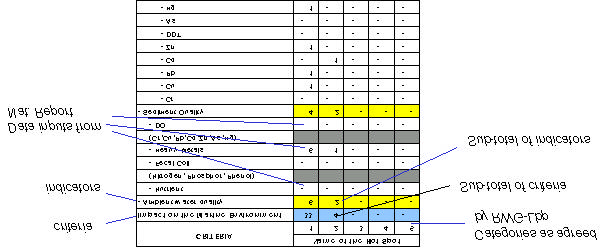
In this example we can see that the indicator of ambient water quality has six parameters meeting the
standards used to define category 1. In one case (Cadmium) the levels exceed by 1 to 2 times the
ASEAN/China water criteria. The categories are also used to weight the observed values. Hence
category 1 values are simply summed to give a total of 6, whilst category 2 values (one in this
example) are multiplied by two to give the value in the Ambient Water Quality row of the table. The
criterion "Impact on the marine environment" is scored as the sum of the values for all indicators
within the same criterion.
Identification of priority Hot Spots and their comparative importance
Bearing in mind that, the ranking of hot spots is required in order to prepare a short list of activities at
specific sites for which, proposals need to be prepared, there is a need to characterise more sites in
order to obtain a better regional overview. To determine the overall ranking of each hot-spot of
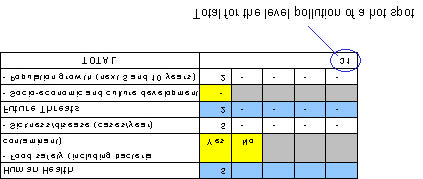
pollution the sum of all values in categories 2 to 5 is provided at the bottom of Table 1. Since category
1 represents an acceptable environmental state it is not included in the totals used to determine the
rank score for individual sites.
Figure 2 Extract from Table 1 illustrating the derivation of the rank score for pollution at a particular
site
Identification of Major Contaminant/Pollution Problems and their comparative importance
Total scores for each contaminant can be summed across hot spots to show the comparative
importance of the impact of the individual contaminant in the South China Sea marine basin. Again
values in category 1 are disregarded in calculating to total rank score since these represent
acceptable conditions of environmental state. The total of the values across all hot spots thus
provides an indication of the regional importance of each specific contaminant based on their relative

UNEP/GEF/SCS/RWG-LbP.3/3
Annex 4
Page 4
importance at each of the selected sites. Pilot activities should be directed to contaminants or impacts
of high regional importance.
Figure 3. Extract from Table 1 illustrating the derivation of the rank score for individual
contaminants/impacts across all hotspots
Conclusions
Having agreed the procedures the Regional Working Group proceeded to collate and analyse the
data and the results are presented in Annex 5.
UNEP/GEF/SCS/RWG-LbP.3/3
Annex 5
Page 1
ANNEX 5
Results of Characterisation and Ranking of Hot Spots and Contaminant Impacts
Background
Following agreement on the form of the analysis of priority problems and sites of land-based pollution
impact in the South China Sea marine basin (Annex 4), the Regional Working Group on Land-based
Pollution compiled and discussed the available data. Individual members of the group:
·
Completed data sheets for the site characterisation;
·
Checked the data used in the characterisation and ranking; and,
·
Reviewed the preliminary results.
Results
The outcome of the compilation of the data is presented in Table 1 which was prepared and agreed during
the meeting.
Table 2 presents a ranking of the hot spots based on the composite score for each site provided in Table
1. Score values for the individual hot spots range from 17 to 94 with a mean value of 47.
Based on the results in Table 1, the ranking of contaminant problems and their comparative importance in
the South China Sea marine basin was determined as described in Annex 4. Table 3 presents a ranking of
the contaminant problems and their comparative importance in the South China Sea marine basin. The
contaminant problems and their comparative importance in the South China Sea marine basin appear to
be as follows:
· From the identified 5 categories, the impact on water quality is apparently a major concern,
followed by biological samples and sediment quality; and,
· From the view of contaminants, the rank of the major problems is (i) nutrient discharge, (ii) heavy
metals in the sea water; heavy metals in biological samples, and heavy metals in sediment.
UNEP/GEF/SCS/RWG-LbP.3/3
Annex 5
Page 2
Table 1
Results of Characterisation and Ranking of Hot Spots
QUANG NINH - HAI PONG
VUNG TAU - GANH RAI
DA NANG - DUNG QUAT
CRITERIA
1 2 3 4 5 1 2 3 4 5 1 2 3 4 5
Impact on the Marine
Environment
14
20
12
8
-
7
10
9
4
-
11
6
12
-
-
- Ambient water quality
7
6
6
-
-
5
6
6
4
-
3
4
9
-
-
- Nutrient (Nitrate, Nitrite,
Phosphate and Ammonia )
2
1
1
-
1
1
1
1
-
1
1
-
-
- Fecal Coli
-
-
-
-
-
-
-
-
-
-
-
-
1
-
-
- Heavy Metals
(Cr,Cu,Pb,Cd,Zn,As,Hg), phenol
4
2
1
-
-
3
2
1
-
-
2
1
1
-
-
- DO
1
-
-
-
-
1
-
-
-
-
1
-
-
-
-
- Sediment Quality
3
6
3
-
-
2
4
3
-
-
4
2
3
-
-
- Cr
-
-
-
-
-
-
-
-
-
-
-
-
-
-
-
- Cu
1
-
-
-
-
1
-
-
-
1
-
-
-
-
- Pb
1
-
-
-
-
-
1
-
-
-
1
-
-
-
-
- Cd
-
-
1
-
-
-
-
-
-
-
1
-
-
-
- Zn
1
-
-
-
1
-
-
-
-
1
-
-
-
-
- DDT
1
-
-
-
-
-
-
-
-
-
-
-
-
-
-
- As
1
-
-
-
1
-
-
-
-
1
-
-
-
-
- Hg
1
-
-
-
-
-
1
-
-
-
1
-
-
- Biological samples
-
4
3
8
-
-
-
-
-
-
4
-
-
-
-
- Cr
-
-
-
-
-
-
-
-
-
-
-
-
-
-
-
- Cu
-
-
-
1
-
-
-
-
-
-
-
-
-
-
-
- Pb
-
-
-
-
-
-
-
-
-
-
1
-
-
-
-
- Cd
-
-
-
-
-
-
-
-
-
1
-
-
-
-
- Zn
-
-
1
-
-
-
-
-
-
-
-
-
-
-
- DDT
1
-
-
-
-
-
-
-
-
1
-
-
-
-
- As
-
1
-
-
-
-
-
-
-
-
-
-
-
-
- Hg
-
-
-
1
-
-
-
-
-
-
1
-
-
-
-
- Changes in living marine
organisms
2
4
-
-
-
-
-
-
-
-
-
-
-
2
2
- Affected marine community
2
-
-
-
-
-
-
-
-
-
-
-
-
-
-
- Mangrove
-
-
-
-
-
-
-
-
-
-
-
-
-
-
-
- Coral reef
1
-
-
-
-
-
-
-
-
-
-
-
-
-
-
- Wetland
-
-
-
-
-
-
-
-
-
-
-
-
-
-
- Seagrass
1
-
-
-
-
-
-
-
-
-
-
-
-
-
-
Regional and/or global
significance
5
-
-
4
5
5
-
3
4
-
5
-
3
-
5
- Contaminant load
5
5
5
- Affected population
-
-
-
1
-
-
1
-
-
-
-
1
- Affected area (km2)
-
-
1
-
-
1
-
-
-
1
-
-
- Affected species
-
-
-
-
-
-
-
-
-
-
-
-
-
-
-
Transboundary Significance
-
-
3
-
-
3
-
-
3
- Presence of contaminant from
non local, non national sources
(yes:1, no:0)
0
0
0
- Potential mode of transportation
of contaminant and extent of
water movement
-
-
3
-
-
3
-
-
3
- Groundwater
-
-
-
-
-
-
-
-
-
- Air/rain fall
-
-
-
-
-
-
-
-
-
- Water circulation
-
-
1
-
-
1
-
-
1
- Quality of migratory species
(Satisfied:0; stressful:1)
0
0
0
Human Health
-
-
-
-
5
-
-
-
-
-
-
-
-
-
5
- Food safety (including bacteria
contaminant) (satisfied:0; not
satisfied:1)
0
- Sickness/disease (cases/year)
-
-
-
1
-
-
-
-
-
-
-
-
1
Future Threats
1
-
3
-
-
1
2
-
-
-
1
-
3
-
-
- Socio-economic and culture
development (yes:1 no:0)
1
1
1
- Population growth (next 5 and
10 years)
1
-
-
1
-
-
-
1
-
-
20
20
18
12
10
13
12
15
8
-
17
6
21
-
10
TOTAL
60
35
37
UNEP/GEF/SCS/RWG-LbP.3/3
Annex 5
Page 3
THE UPPER GULF OF
CRITERIA
THAILAND
SONGKHLA LAKE BASIN
KAMPOT
1 2 3 4 5 1 2 3 4 5 1 2 3 4 5
Impact on the Marine
Environment
27
28
-
-
10
6
2
-
-
-
22
4
6
4
-
- Ambient water quality
9
4
-
-
10
1
2
-
-
-
7
4
6
4
-
- Nutrient (Nitrate, Nitrite,
Phosphate and Ammonia )
1
2
-
-
1
-
-
-
-
-
2
-
1
1
- Fecal Coli
-
-
-
-
1
-
-
-
-
-
1
-
-
-
-
- Heavy Metals
(Cr,Cu,Pb,Cd,Zn,As,Hg), phenol
7
-
-
-
-
1
1
-
-
-
4
1
1
-
-
- DO
1
-
-
-
-
-
-
-
-
-
-
1
-
-
-
- Sediment Quality
6
2
-
-
-
3
-
-
-
-
5
-
-
-
-
- Cr
1
-
-
-
-
1
-
-
-
-
1
-
-
-
-
- Cu
1
-
-
-
1
-
-
-
-
1
-
-
-
-
- Pb
1
-
-
-
-
-
-
-
-
1
-
-
-
-
- Cd
1
-
-
-
-
-
-
-
-
1
-
-
-
-
- Zn
1
-
-
-
1
-
-
-
-
1
-
-
-
-
- DDT
-
-
-
-
-
-
-
-
-
-
-
-
-
-
-
- As
1
-
-
-
-
-
-
-
-
-
-
-
-
-
-
- Hg
1
-
-
-
-
-
-
-
-
-
-
-
-
-
- Biological samples
9
8
-
-
-
1
-
-
-
-
10
-
-
-
-
- Cr
-
1
-
-
-
-
-
-
-
-
2
-
-
-
-
- Cu
2
1
-
-
-
-
-
-
-
-
2
-
-
-
-
- Pb
1
-
-
-
-
-
-
-
-
2
-
-
-
-
- Cd
1
2
-
-
-
-
-
-
-
-
2
-
-
-
-
- Zn
3
-
-
-
-
-
-
-
-
-
2
-
-
-
-
- DDT
1
-
-
-
-
1
-
-
-
-
-
-
-
-
-
- As
-
-
-
-
-
-
-
-
-
-
-
-
-
-
-
- Hg
1
-
-
-
-
-
-
-
-
-
-
-
-
-
-
- Changes in living marine
organisms
-
12
-
-
-
-
-
-
-
-
-
-
-
6
-
-
- Affected marine community
3
2
-
-
-
1
-
-
-
-
-
-
-
-
-
- Mangrove
1
-
-
1
-
-
-
-
-
-
-
-
-
- Coral reef
1
-
-
-
-
-
-
-
-
-
-
-
-
- Wetland
1
-
-
-
-
-
-
-
-
-
-
-
-
-
- Seagrass
1
-
-
-
-
-
-
-
-
-
-
-
-
-
Regional and/or global
significance
4
2
-
-
10
3
-
3
-
5
5
-
3
4
5
- Contaminant load
4
3
5
- Affected population
-
-
-
-
1
-
-
-
1
-
-
1
-
- Affected area (km2)
-
-
-
-
1
-
1
-
-
-
1
-
-
- Affected species
-
1
-
-
-
-
-
-
-
-
-
-
1
Transboundary Significance
2
2
3
2
2
3
-
-
-
- Presence of contaminant from
non local, non national sources
(yes:1, no:0)
1
1
0
- Potential mode of transportation
of contaminant and extent of
water movement
1
2
3
1
2
3
-
-
-
- Groundwater
1
-
-
1
-
-
-
-
-
- Air/rain fall
-
1
-
-
1
-
-
-
-
- Water circulation
-
-
1
-
-
1
-
-
-
- Quality of migratory species
(Satisfied:0; stressful:1)
0
0
0
Human Health
-
-
-
-
5
-
-
-
-
5
-
-
-
4
-
- Food safety (including bacteria
contaminant) (satisfied:0; not
satisfied:1)
0
0
0
- Sickness/disease (cases/year)
-
-
-
-
1
-
-
-
-
1
-
-
1
-
Future Threats
1
2
-
-
-
1
-
3
-
-
1
-
-
-
5
- Socio-economic and culture
development (yes:1 no:0)
1
1
1
- Population growth (next 5 and
10 years)
-
1
-
-
-
-
1
-
-
-
-
-
1
34
34
3
-
25
12
4
9
-
10
28
4
9
12
10
TOTAL
62
23
35
UNEP/GEF/SCS/RWG-LbP.3/3
Annex 5
Page 4
KOH KONG
SIHANOUKVILLE
BATAM
CRITERIA
1 2 3 4 5 1 2 3 4 5 1 2 3 4 5
Impact on the Mar ine
Environment
23
2
6
8
-
18
6
36
8
5
10
10
3
4
15
- Ambient water quality
7
2
6
8
-
5
6
3
8
5
5
2
3
4
10
- Nutrient (Nitrate, Nitrite,
Phosphate and Ammonia )
2
-
1
1
1
1
1
1
1
1
-
- Fecal Coli
1
-
-
-
-
1
-
-
-
-
-
-
-
1
- Heavy Metals
(Cr,Cu,Pb,Cd,Zn,As,Hg), phenol
4
-
1
1
-
3
1
1
1
-
4
-
-
1
1
- DO
-
1
-
-
-
-
1
-
-
-
1
-
-
-
-
- Sediment Quality
5
-
-
-
-
3
-
3
-
-
2
2
-
-
5
- Cr
1
-
-
-
-
1
-
-
-
-
-
-
-
-
-
- Cu
1
-
-
-
-
1
-
-
-
-
-
1
-
-
-
- Pb
1
-
-
-
-
1
-
-
-
-
1
-
-
-
-
- Cd
1
-
-
-
-
-
1
-
-
-
-
-
-
1
- Zn
1
-
-
-
-
-
-
-
-
-
1
-
-
-
-
- DDT
-
-
-
-
-
-
-
-
-
-
-
-
-
-
-
- As
-
-
-
-
-
-
-
-
-
-
-
-
-
-
-
- Hg
-
-
-
-
-
-
-
-
-
-
-
-
-
-
-
- Biological samples
10
-
-
-
-
10
-
30
-
-
3
6
-
-
-
- Cr
2
-
-
-
-
2
-
2
-
-
-
-
-
-
-
- Cu
2
-
-
-
-
4
-
-
-
-
-
-
-
-
-
- Pb
2
-
-
-
-
-
-
4
-
-
-
-
-
-
-
- Cd
2
-
-
-
-
3
-
1
-
-
-
2
-
-
-
- Zn
2
-
-
-
-
1
-
3
-
-
2
-
-
-
-
- DDT
-
-
-
-
-
-
-
-
-
-
-
-
-
-
-
- As
-
-
-
-
-
-
-
-
-
-
-
-
-
-
-
- Hg
-
-
-
-
-
-
-
-
-
-
1
1
-
-
-
- Changes in living marine
organisms
-
-
-
-
-
-
-
-
-
-
-
-
- Affected marine community
1
-
-
-
-
-
-
-
-
-
-
-
-
-
-
- Mangrove
1
-
-
-
-
-
-
-
-
-
-
-
-
-
-
- Coral reef
-
-
-
-
-
-
-
-
-
-
-
-
-
-
-
- Wetland
-
-
-
-
-
-
-
-
-
-
-
-
-
-
-
- Seagrass
-
-
-
-
-
-
-
-
-
-
-
-
-
-
-
Regional and/or global
significance
5
-
3
-
10
5
2
3
-
5
-
-
3
4
-
- Contaminant load
5
5
-
- Affected population
-
1
-
-
-
1
-
-
-
-
1
-
- Affected area (km2)
-
-
-
1
1
-
-
-
-
1
-
-
- Affected species
-
-
-
1
-
-
-
1
-
-
-
-
-
Transboundary Significance
-
-
-
-
-
-
1
-
3
- Presence of contaminant from
non local, non national sources
(yes:1, no:0)
0
0
1
- Potential mode of transportation
of contaminant and extent of
water movement
-
-
-
-
-
-
-
-
3
- Groundwater
-
-
-
-
-
-
-
-
-
- Air/rain fall
-
-
-
-
-
-
-
-
-
- Water circulation
-
-
-
-
-
-
-
-
1
- Quality of migratory species
(Satisfied:0; stressful:1)
0
0
0
Human Health
-
-
3
-
-
-
-
-
4
-
-
-
-
-
5
- Food safety (including bacteria
contaminant) (satisfied:0; not
satisfied:1)
0
0
0
- Sickness/disease (cases/year)
-
1
-
-
-
-
1
-
-
-
-
1
Future Threats
1
-
-
-
5
1
-
-
-
5
1
-
-
-
5
- Socio-economic and culture
development (yes:1 no:0)
1
1
1
- Population growth (next 5 and
10 years)
-
-
-
1
-
-
-
1
-
-
-
1
29
2
12
8
15
24
8
39
12
15
12
10
9
8
25
TOTAL
37
74
52
UNEP/GEF/SCS/RWG-LbP.3/3
Annex 5
Page 5
WEST KALIMANTAN
DKI JAKARTA
Pearl River
CRITERIA
1 2 3 4 5 1 2 3 4 5 1 2 3 4 5
Impact on the Marine
Environment
3
2
3
-
25
1
4
3
4
15
-
18
9
16
30
- Ambient water quality
3
2
3
-
25
1
4
3
4
15
-
4
3
4
20
- Nutrient (Nitrate, Nitrite,
Phosphate and Ammonia )
-
1
-
3
-
-
1
1
2
-
1
1
1
1
- Fecal Coli
-
-
-
-
-
-
-
-
-
-
-
-
-
-
1
- Heavy Metals
(Cr,Cu,Pb,Cd,Zn,As,Hg), phenol
2
1
-
-
2
-
2
-
-
1
-
1
-
-
1
- DO
1
-
-
-
-
1
-
-
-
-
-
-
-
-
1
- Sediment Quality
-
-
-
-
-
-
-
-
-
-
-
8
-
-
10
- Cr
-
-
-
-
-
-
-
-
-
-
-
1
-
-
-
- Cu
-
-
-
-
-
-
-
-
-
-
-
1
-
-
-
- Pb
-
-
-
-
-
-
-
-
-
-
-
-
-
-
1
- Cd
-
-
-
-
-
-
-
-
-
-
-
-
-
-
-
- Zn
-
-
-
-
-
-
-
-
-
-
-
1
-
-
-
- DDT
-
-
-
-
-
-
-
-
-
-
-
-
-
-
1
- As
-
-
-
-
-
-
-
-
-
-
-
-
-
-
-
- Hg
-
-
-
-
-
-
-
-
-
-
-
1
-
-
-
- Biological samples
-
-
-
-
-
-
-
-
-
-
-
6
-
4
-
- Cr
-
-
-
-
-
-
-
-
-
-
-
-
-
-
-
- Cu
-
-
-
-
-
-
-
-
-
-
-
-
-
-
-
- Pb
-
-
-
-
-
-
-
-
-
-
-
1
-
1
-
- Cd
-
-
-
-
-
-
-
-
-
-
-
1
-
-
-
- Zn
-
-
-
-
-
-
-
-
-
-
-
-
-
-
-
- DDT
-
-
-
-
-
-
-
-
-
-
-
-
-
-
-
- As
-
-
-
-
-
-
-
-
-
-
-
-
-
-
-
- Hg
-
-
-
-
-
-
-
-
-
-
-
1
-
-
-
- Changes in living marine
organisms
-
-
-
-
-
-
-
-
-
-
-
4
1
- Affected marine community
-
-
-
-
-
-
-
3
-
-
-
-
6
4
-
- Mangrove
-
-
-
-
-
-
1
-
-
-
-
1
-
-
- Coral reef
-
-
-
-
-
-
-
-
-
-
-
-
-
-
-
- Wetland
-
-
-
-
-
-
-
-
-
-
-
-
1
-
-
- Seagrass
-
-
-
-
-
-
-
-
-
-
-
-
-
1
-
Regional and/or global
significance
-
-
-
-
10
5
-
-
-
10
5
2
-
-
10
- Contaminant load
-
5
5
- Affected population
-
-
-
1
-
-
-
1
-
-
-
-
1
- Affected area (km2)
-
-
-
1
-
-
-
1
-
-
-
-
1
- Affected species
-
-
-
-
-
-
-
-
-
-
-
1
-
Transboundary Significance
1
-
-
-
-
-
1
-
3
- Presence of contaminant from
non local, non national sources
(yes:1, no:0)
1
0
0
- Potential mode of transportation
of contaminant and extent of
water movement
-
-
-
-
-
-
-
-
3
- Groundwater
-
-
-
-
-
-
-
-
-
- Air/rain fall
-
-
-
-
-
-
-
-
-
- Water circulation
-
-
-
-
-
-
-
-
1
- Quality of migratory species
(Satisfied:0; stressful:1)
0
0
1
Human Health
1
-
-
-
-
-
-
-
-
-
1
-
-
4
-
- Food safety (including bacteria
contaminant) (satisfied:0; not
satisfied:1)
1
0
1
- Sickness/disease (cases/year)
-
-
-
-
-
-
-
-
-
-
-
-
-
1
Future Threats
1
-
3
-
-
2
-
-
-
-
1
2
-
-
-
- Socio-economic and culture
development (yes:1 no:0)
1
1
1
- Population growth (next 5 and
10 years)
-
1
-
-
1
-
-
-
-
-
1
-
-
-
6
2
6
-
35
8
4
3
4
25
8
22
12
20
40
TOTAL
43
36
94
UNEP/GEF/SCS/RWG-LbP.3/3
Annex 5
Page 6
Daya Bay Catchment
Beihai Coast Catchment
Batangas Bay Region
CRITERIA
1 2 3 4 5 1 2 3 4 5 1 2 3 4 5
Impact on the Marine
Environment
-
16
9
12
5
-
4
6
-
10
-
-
3
-
-
- Ambient water quality
-
2
3
8
-
-
4
-
-
-
-
-
3
-
-
- Nutrient (Nitrate, Nitrite,
Phosphate and Ammonia )
-
-
-
2
-
-
1
-
-
-
-
-
-
-
-
- Fecal Coli
-
-
-
-
-
-
-
-
-
-
-
-
1
-
-
- Heavy Metals
(Cr,Cu,Pb,Cd,Zn,As,Hg), phenol
-
1
1
-
-
-
1
-
-
-
-
-
-
-
-
- DO
-
-
-
-
-
-
-
-
-
-
-
-
-
-
-
- Sediment Quality
-
-
-
-
-
-
-
6
-
10
-
-
-
-
-
- Cr
-
-
-
-
-
-
-
-
-
-
-
-
-
-
-
- Cu
-
-
-
-
-
-
-
1
-
-
-
-
-
-
- Pb
-
-
-
-
-
-
-
-
-
1
-
-
-
-
-
- Cd
-
-
-
-
-
-
-
-
-
1
-
-
-
-
-
- Zn
-
-
-
-
-
-
-
-
-
-
-
-
-
-
-
- DDT
-
-
-
-
-
-
-
-
-
-
-
-
-
-
-
- As
-
-
-
-
-
-
-
-
-
-
-
-
-
-
-
- Hg
-
-
-
-
-
-
-
1
-
-
-
-
-
-
- Biological samples
-
10
3
-
-
-
-
-
-
-
-
-
-
-
-
- Cr
-
1
-
-
-
-
-
-
-
-
-
-
-
-
-
- Cu
-
1
-
-
-
-
-
-
-
-
-
-
-
-
-
- Pb
-
-
1
-
-
-
-
-
-
-
-
-
-
-
-
- Cd
-
1
-
-
-
-
-
-
-
-
-
-
-
-
-
- Zn
-
1
-
-
-
-
-
-
-
-
-
-
-
-
-
- DDT
-
-
-
-
-
-
-
-
-
-
-
-
-
-
-
- As
-
1
-
-
-
-
-
-
-
-
-
-
-
-
-
- Hg
-
-
-
-
-
-
-
-
-
-
-
-
-
-
-
- Changes in living marine
organisms
-
2
-
-
-
-
-
-
-
-
-
-
1
- Affected marine community
-
2
3
4
5
-
-
-
-
-
-
-
-
-
-
- Mangrove
-
1
-
-
-
-
-
-
-
-
-
-
-
-
- Coral reef
-
-
-
1
-
-
-
-
-
-
-
-
-
-
-
- Wetland
-
1
-
-
-
-
-
-
-
-
-
-
-
-
-
- Seagrass
-
-
-
-
1
-
-
-
-
-
-
-
-
-
-
Regional and/or global
significance
5
-
9
-
-
5
-
3
-
10
4
2
-
4
-
- Contaminant load
5
5
4
- Affected population
-
-
1
-
-
-
-
-
-
1
-
-
1
-
- Affected area (km2)
-
-
1
-
-
-
-
1
-
-
1
-
-
-
- Affected species
-
-
1
-
-
-
-
1
-
-
-
-
-
Transboundary Significance
1
-
3
2
-
3
1
-
3
- Presence of contaminant from
non local, non national sources
(yes:1, no:0)
0
0
1
- Potential mode of transportation
of contaminant and extent of
water movement
1
-
3
1
-
3
-
-
3
- Groundwater
1
-
-
1
-
-
-
-
-
- Air/rain fall
-
-
-
-
-
-
-
-
-
- Water circulation
-
-
1
-
-
1
-
-
1
- Quality of migratory species
(Satisfied:0; stressful:1)
0
1
0
Human Health
1
-
-
4
-
-
-
-
4
-
-
-
-
-
-
- Food safety (including bacteria
contaminant) (satisfied:0; not
satisfied:1)
1
0
0
- Sickness/disease (cases/year)
-
-
-
1
-
-
-
-
1
-
-
-
-
-
-
Future Threats
1
-
-
-
5
1
-
3
-
-
1
-
-
-
5
- Socio-economic and culture
development (yes:1 no:0)
1
1
1
- Population growth (next 5 and
10 years)
-
-
-
-
1
-
-
1
-
-
-
-
-
1
8
16
21
16
10
8
4
15
4
20
6
2
6
4
5
TOTAL
63
43
17
UNEP/GEF/SCS/RWG-LbP.3/3
Annex 5
Page 7
Lingayen Gulf
Manila Bay
CRITERIA
Total
1 2 3 4 5 1 2 3 4 5
Impact on the Marine Environment
4
-
3
-
10
7
6
12
-
20
486
- Ambient water quality
4
-
3
-
10
5
-
3
-
10
261
- Nutrient (Nitrate, Nitrite, Phosphate and Ammonia ) 3
-
-
-
-
3
-
-
-
117
- Fecal Coli
-
-
-
-
-
-
-
-
-
-
21
- Heavy Metals (Cr,Cu,Pb,Cd,Zn,As,Hg), phenol
1
-
1
-
2
1
-
1
-
2
112
- DO
-
-
-
-
-
1
-
-
-
-
11
- Sediment Quality
-
-
-
-
-
2
2
6
-
5
80
- Cr
-
-
-
-
-
-
-
1
-
-
5
- Cu
-
-
-
-
-
-
1
-
-
11
- Pb
-
-
-
-
-
-
-
1
-
-
15
- Cd
-
-
-
-
-
-
-
-
-
1
25
- Zn
-
-
-
-
-
1
-
-
-
4
- DDT
-
-
-
-
-
-
-
-
-
-
5
- As
-
-
-
-
-
-
-
-
-
-
2
- Hg
-
-
-
-
-
1
-
-
-
13
- Biological samples
-
-
-
-
-
-
4
3
-
5
94
- Cr
-
-
-
-
-
-
-
-
-
-
10
- Cu
-
-
-
-
-
-
1
-
-
-
10
- Pb
-
-
-
-
-
-
-
1
-
-
24
- Cd
-
-
-
-
-
-
1
-
-
-
17
- Zn
-
-
-
-
-
-
-
-
-
1
19
- DDT
-
-
-
-
-
-
-
-
-
-
2
- As
-
-
-
-
-
-
-
-
-
-
4
- Hg
-
-
-
-
-
-
-
-
-
-
8
- Changes in living marine organisms
-
-
-
-
-
-
-
-
22
22
- Affected marine community
-
-
-
-
-
-
-
-
-
-
29
- Mangrove
-
-
-
-
-
-
-
-
-
-
9
- Coral reef
-
-
-
-
-
-
-
-
-
-
6
- Wetland
-
-
-
-
-
-
-
-
-
-
5
- Seagrass
-
-
-
-
-
-
-
-
-
-
9
Regional and/or global significance
-
-
-
8
-
-
-
3
-
5
162
- Contaminant load
-
-
0
- Affected population
-
-
1
-
-
-
-
1
74
- Affected area (km2)
-
-
1
-
-
1
-
-
61
- Affected species
-
-
-
-
-
-
-
-
-
-
27
Transboundary Significance
-
-
3
1
-
3
156
- Presence of contaminant from non local, non national
0
sources (yes:1, no:0)
0
1
0
116
- Potential mode of transportation of contaminant and
0
extent of water movement
-
-
3
-
-
3
0
- Groundwater
-
-
-
-
-
-
0
- Air/rain fall
-
-
-
-
-
-
4
- Water circulation
-
-
1
-
-
1
36
- Quality of migratory species (Satisfied:0; stressful:1)
0
0
0
Human Health
-
-
-
-
-
1
-
-
-
-
48
- Food safety (including bacteria contaminant)
(satisfied:0; not satisfied:1)
0
1
0
- Sickness/disease (cases/year)
-
-
-
-
-
-
-
-
-
-
48
Future Threats
-
-
-
-
5
1
-
3
-
-
59
- Socio-economic and culture development (yes:1 no:0) 0
1
0
- Population growth (next 5 and 10 years)
-
-
-
1
-
1
-
-
59
4
-
6
8
15
10
6
21
-
25
TOTAL
29
52
UNEP/GEF/SCS/RWG-LbP.3/3
Annex 5
Page 8
Table 2
Ranking of Pollution Hot Spots and Major Problems at Each Hot Spot
Name of Hotspots
Score
Major Problems
1
Pearl River
94
Nutrient
Heavy Metals in Sediment
Heavy Metals in Biological samples
2
Sihanoukville
74
Nutrient
Heavy Metals in sea water
Heavy Metals in Biological samples
3
Daya Bay
63
Heavy Metals in Biological samples
Contaminant Movement
Contaminant Load
4
The Upper Gulf of Thailand
62
Nutrient
and East Coast
Heavy Metals in Biological samples
Contaminant Movement
5
Quang Ninh
60
Heavy Metals
Heavy Metals in Sediment
Heavy Metals & DDT in Biological samples
6
Batam
52
Heavy Metals in sea water
Heavy Metals in Sediment
Heavy Metals in Biological samples
6
Manila Bay
52
Heavy Metals in sea water
Heavy Metals in Sediment
Heavy Metals in Biological samples
8
Bei Hai
43
Heavy Metals in Sediment
Contaminant Movement
Contaminant Load
8
West Kalimantan
43
Nutrient
Heavy Metals in sea water
10
Da Nang
37
Heavy Metals in sea water
Contaminant Load
Contaminant Movement
10
Koh Kong
37
Nutrient
Heavy Metals in sea water
Heavy Metals in Biological samples
12
DKI Jakarta
36
Nutrient
Heavy Metals in sea water
Contaminant Load
13
Vung Tau
35
Nutrient
Heavy Metals in sea water
Heavy Metals in Sediment
13
Kampot
35
Heavy Metals in sea water
Heavy Metals in Sediment
Heavy Metals in Biological samples
15
Lingayen
29
Heavy metals in sea water
Contaminant Movement
16
Songkhla
23
Contaminant Load
Contaminant Movement
17
Batangas
17
Contaminant Load
Contaminant Movement
UNEP/GEF/SCS/RWG-LbP.3/3
Annex 5
Page 9
Table 3 Priority and rank of major problem at hot spots in the South China Sea marine basin
Problems
Total
scores
Priority
1. Ambient water quality
261
1
- Nutrient (Nitrate, Nitrite, Phosphate and Ammonia )
117
(i)
- Fecal Coli
21
- Heavy Metals (Cr,Cu,Pb,Cd,Zn,As,Hg), phenol
112
(ii)
- DO
11
2. Sediment Quality
80
3
- Cr
5
- Cu
11
- Pb
15
- Cd
25
(iii)
- Zn
4
- DDT
5
- As
2
- Hg
13
3. Biological samples
94
2
- Cr
10
- Cu
10
- Pb
24
- Cd
17
- Zn
19
- DDT
2
- As
4
- Hg
8
4. Changes in living marine organisms
22
5
22
5. Affected marine community
29
4
- Mangrove
9
- Coral reef
6
- Wetland
5
- Seagrass
9
UNEP/GEF/SCS/RWG-LbP.3/3
Annex 6
Page 1
ANNEX 6
Agreed Calendar of Deadlines for Tasks of the Regional Working Group
for the Land-Based Pollution Component
Calendar
Agreed Deadlines for the activities
11 July 2003
Finalisation of the site characterisation
31 July 2003
Finalisation of the review of past and on-going projects
8 August 2003
Finalisation of review on national legislation
18-29 August 2003
Peer review of the national reports
12 September 2003
Final submission of meta-database
12 September 2003
Final submission of GIS database
12 September 2003
Finalisation of all national reports
5 November 2003
Submission of 1st draft of pilot activity proposals
14 November 2003
Submission of final version of the pilot activities proposals
12 15 January 2004
4th meeting of the Regional Working Group
11 13 February 2004
Regional Scientific Conference
14 16 February 2004
4th Meeting of the Regional Scientific and Technical Committee
25 27 February 2004
3rd meeting of the Project Steering Committee