
R
EBYC
Reduction of Environmental Impact from Tropical Shrimp Trawling, through the introduction of By-catch
Reduction Technologies and Change of Management
(EP/GL
O/201/GEF)
Costa Rica
Characterisation of the Costa Rican semi-industrial
coastal shrimp trawling fishery and the small scale artisanal
shrimp trawling fishery
by Marco Baloaños, M.Sc., Fisheries Biologist
August 2005
___________________________________________________________
FOOD AND AGRICULTURE ORGANIZATION OF THE UNITED NATIONS
CHARACTERIZATION OF THE COSTA RICAN SEMI-INDUSTRIAL COASTAL SHRIMP TRAWLING
FISHERY AND THE SMALL SCALE ARTISANAL SHRIMP TRAWLING FISHERY
!
"
FACA
1
Table of Contents
CHARACTERIZATION OF THE COSTA RICAN SEMI-INDUSTRIAL COASTAL SHRIMP
TRAWLING FISHERY AND THE SMALL SCALE ARTISANAL SHRIMP TRAWLING
FISHERY..................................................................................................................................1
TABLE OF CONTENTS............................................................................................................I
LIST OF FIGURES...................................................................................................................II
LIST OF TABLES ...................................................................................................................III
LIST OF PICTURES................................................................................................................III
CHARACTERIZATION OF THE COSTA RICAN SEMI-INDUSTRIAL COASTAL SHRIMP
TRAWLING FISHERY AND THE SMALL SCALE ARTISANAL SHRIMP TRAWLING
FISHERY..................................................................................................................................4
INTRODUCTION ......................................................................................................................4
METHODOLOGY .....................................................................................................................5
Semi-Industrial Fleet . . . . . . . . . . . . . . . . . . . . . . . . . . . . . . . . . . . . . . . . . . . . . . . . . . . . . . . . . . . . . . . . . . . . . . . . . . . . . . . 5
Small Scale Artisanal Fleet. . . . . . . . . . . . . . . . . . . . . . . . . . . . . . . . . . . . . . . . . . . . . . . . . . . . . . . . . . . . . . . . . . . . . . . . . . . 6
RESULTS.................................................................................................................................7
Semi-industrial Shrimp Trawling Fleet . . . . . . . . . . . . . . . . . . . . . . . . . . . . . . . . . . . . . . . . . . . . . . . . . . . . . . . . . . . . . . . . 7
General Characteristics ........................................................................................................................................................ 7
Vessels Machinery ............................................................................................................................................................. 12
Main engine................................................................................................................................................................... 12
Secondary Engine.......................................................................................................................................................... 12
Generators ..................................................................................................................................................................... 13
Onboard Machinery and Equipment .................................................................................................................................. 14
Winches......................................................................................................................................................................... 14
Transmission shaft......................................................................................................................................................... 15
Reduction....................................................................................................................................................................... 16
Propeller ........................................................................................................................................................................ 17
Refrigeration system .......................................................................................................................................................... 18
Electronic equipment..................................................................................................................................................... 18
Characteristics of the Trawling net . . . . . . . . . . . . . . . . . . . . . . . . . . . . . . . . . . . . . . . . . . . . . . . . . . . . . . . . . . . . . . . . . . . 20
Type of trawling net ........................................................................................................................................................... 20
Bridles or sweeps........................................................................................................................................................... 20
Trawling net design ....................................................................................................................................................... 21
FACA
i
Number of threads ......................................................................................................................................................... 22
The size of the net 2a from half knot to another half knot fully extended..................................................................... 22
Number of nets on the border of the section.................................................................................................................. 24
Number of cuts per section............................................................................................................................................ 24
BIBLIOGRAPHY ....................................................................................................................29
APPENDIXES ........................................................................................................................30
List of Figures
Figure 1. Frequency distribution of the Age of the semi-industrial shrimp trawling fishing vessels. X axis in reverse order. Sample size =
45 Source: Modified from INCOPESCA (2005).. . . . . . . . . . . . . . . . . . . . . . . . . . . . . . . . . . . . . . . . . . . . . . . . . . . . . . . . . . . . . . . . . . . . . 7
Figure 2. Construction material of the Costa Rican coastal shrimp trawling vessels. Sample size = 45 Source: Modified from INCOPESCA
(2005). . . . . . . . . . . . . . . . . . . . . . . . . . . . . . . . . . . . . . . . . . . . . . . . . . . . . . . . . . . . . . . . . . . . . . . . . . . . . . . . . . . . . . . . . . . . . . . . . . . . . . . 8
Figure 3. Length frequency of the length (in meters) of the Costa Rican coastal shrimp trawling vessels. Sample size = 45 Source:
Modified from INCOPESCA (2005).. . . . . . . . . . . . . . . . . . . . . . . . . . . . . . . . . . . . . . . . . . . . . . . . . . . . . . . . . . . . . . . . . . . . . . . . . . . . . . .8
Figure 4. Holding capacity of either shrimp or fish in kilograms of the shrimp trawling fleet. Source: Modified from INCOPESCA (2005)..10
Figure 5. Frequency of Autonomy (fishing days per trip) of the interviewed vessels. X axis in reverse order.. . . . . . . . . . . . . . . . . . . . . . . 10
Figure 6. Kinds of trawling nets used by the Costa Rican coastal shrimp fleet. . . . . . . . . . . . . . . . . . . . . . . . . . . . . . . . . . . . . . . . . . . . . . . . . 11
Figure 7. Kinds and percentage of TED used by the Costa Rican coastal shrimp fleet.. . . . . . . . . . . . . . . . . . . . . . . . . . . . . . . . . . . . . . . . . .11
Figure 8. Photographs of the kinds of TEDs used in Costa Rica . A) Tico TED of inches and B) super shut er. . . . . . . . . . . . . . . . . . . . . . .11
Figure 9. Main engine brands used by the Costa Rican coastal shrimp trawling fleet. Source: Modified from INCOPESCA (2005). . . . . . 12
Figure 10. Brands of the secondary engines of the Costa Rican shrimp trawling fleets. . . . . . . . . . . . . . . . . . . . . . . . . . . . . . . . . . . . . . . . . .12
Figure 11. A) Brands of winches and B) Action mechanism of winches utilized by the Costa Rican coastal shrimp trawling vessels.. . . . 14
Figure 12. A) Frequency distribution of the winches power in KHz and, B) the revolutions per minute (RPM) of the winches of the
interviewed Costa Rican shrimp trawling fleet.. . . . . . . . . . . . . . . . . . . . . . . . . . . . . . . . . . . . . . . . . . . . . . . . . . . . . . . . . . . . . . . . . . . . . 14
Figure 13. Number of drums of the winches per sampled vessels in the Costa Rican shrimp trawling shrimp.. . . . . . . . . . . . . . . . . . . . . . .15
Figure 14. Length distribution for the transmission bar of the sampled Costa Rican shrimp trawling fleet. . . . . . . . . . . . . . . . . . . . . . . . . . . 15
Figure 15. Frequency distribution for the diameter of the transmission shaft from the Costa Rican shrimp trawling fleet.. . . . . . . . . . . . . . 16
Figure 16. A) Brands and B) types of reductions of the Costa Rican shrimp trawling fleet. . . . . . . . . . . . . . . . . . . . . . . . . . . . . . . . . . . . . . . .16
Figure 17. Number of vessels by reduction type of the Costa Rican shrimp trawling fleet.. . . . . . . . . . . . . . . . . . . . . . . . . . . . . . . . . . . . . . . 17
Figure 18. A) Propel er types, number and percentages, B) Propel er Pitch and C) Propel er Diameter of the Costa Rican shrimp trawling
fleet. 4 Bd = 4 blades, AD = Aerodynamic, 5 Bd = 5 blades, F Star = fixed star. . . . . . . . . . . . . . . . . . . . . . . . . . . . . . . . . . . . . . . . . . .17
Figure 19. A) Brand and B) type of refrigeration system used by the Costa Rican shrimp trawling fleet. . . . . . . . . . . . . . . . . . . . . . . . . . . . .18
Figure 20. A) Minimum temperature in C, and B) Type of coolant used by the Costa Rican shrimp trawling fleet. . . . . . . . . . . . . . . . . . . .18
Figure 21. Diagram of a typical trawling net. Source, Spare & Venema, 1998. This image is shown as a reference point only, the trawling
nets used by the Costa Rica Shrimp trawling fleet.. . . . . . . . . . . . . . . . . . . . . . . . . . . . . . . . . . . . . . . . . . . . . . . . . . . . . . . . . . . . . . . . . .20
Figure 22. Length of the bridle or sweep of the Costa Rican Shrimp trawling fleet.. . . . . . . . . . . . . . . . . . . . . . . . . . . . . . . . . . . . . . . . . . . . . 21
Figure 23. A) Construction material and B) Diameter of the bridle in the Costa Rican shrimp trawling fleet. . . . . . . . . . . . . . . . . . . . . . . . . .21
FACA
i
List of Tables
Table 1. Mean, Standard error, range, minimum, maximum and simple size of the length, width and stern length of the semiindustrial
coastal shrimp trawling vessels. Source: Modified from INCOPESCA (2005). . . . . . . . . . . . . . . . . . . . . . . . . . . . . . . . . . . . . . . . . . . . . 8
Table 2. Mean, Standard error, range, minimum, maximum and simple size of gross and net tons, fuel, water oil and storage capacity of
the semiindustrial coastal shrimp trawling vessels. Source: Modified from INCOPESCA (2005) and interviews done in the present
study. . . . . . . . . . . . . . . . . . . . . . . . . . . . . . . . . . . . . . . . . . . . . . . . . . . . . . . . . . . . . . . . . . . . . . . . . . . . . . . . . . . . . . . . . . . . . . . . . . . . . . . . 8
Table 3. Frequency distribution of the oil holding capacity (in m3 and gal ons) and its respective percentage of the Costa Rican coastal
shrimp trawling fleet.. . . . . . . . . . . . . . . . . . . . . . . . . . . . . . . . . . . . . . . . . . . . . . . . . . . . . . . . . . . . . . . . . . . . . . . . . . . . . . . . . . . . . . . . . . 10
Table 4. Average, minimum and maximum Power (KHz) and Revolutions per Minute (RPM) of the main engines of the Costa Rican
shrimp trawling fleet. Source: Modified from INCOPESCA (2005).. . . . . . . . . . . . . . . . . . . . . . . . . . . . . . . . . . . . . . . . . . . . . . . . . . . . .12
Table 5. Average, minimum and maximum Power (KHz) and Revolutions per Minute (RPM) of the auxiliary engines of the Costa Rican
shrimp trawling fleet.. . . . . . . . . . . . . . . . . . . . . . . . . . . . . . . . . . . . . . . . . . . . . . . . . . . . . . . . . . . . . . . . . . . . . . . . . . . . . . . . . . . . . . . . . . 13
Table 6. Brands, Number of vessels and Percentage and Capacity (average, minimum and maximum) of Generators. . . . . . . . . . . . . . . .13
Table 7. Number of transmission universal joints per trawling vessels. . . . . . . . . . . . . . . . . . . . . . . . . . . . . . . . . . . . . . . . . . . . . . . . . . . . . . . .16
Table 8. Transmission shaft material of the Costa Rican shrimp trawling vessels.. . . . . . . . . . . . . . . . . . . . . . . . . . . . . . . . . . . . . . . . . . . . . .16
Table 9. Number of propel er blades used by the Costa Rican shrimp trawling fleet.. . . . . . . . . . . . . . . . . . . . . . . . . . . . . . . . . . . . . . . . . . . .17
Table 10. Number of electronic equipment used per vessel . . . . . . . . . . . . . . . . . . . . . . . . . . . . . . . . . . . . . . . . . . . . . . . . . . . . . . . . . . . . . . . .19
Table 11. Electronic equipment used by the interviewed Costa Rican shrimp trawling fleet.. . . . . . . . . . . . . . . . . . . . . . . . . . . . . . . . . . . . . .19
Table 12. Construction material of the dif erent sections of the Costa Rican shrimp trawling fleet. . . . . . . . . . . . . . . . . . . . . . . . . . . . . . . . .22
Table 13. Number of thread used to construct the shrimp trawling net in Costa Rica. . . . . . . . . . . . . . . . . . . . . . . . . . . . . . . . . . . . . . . . . . . .22
Table 14. Number of vessels interviewed, average, minimum and maximum length of the codend and extensión of the net of the Costa
Rican shrimp trawling fleet.. . . . . . . . . . . . . . . . . . . . . . . . . . . . . . . . . . . . . . . . . . . . . . . . . . . . . . . . . . . . . . . . . . . . . . . . . . . . . . . . . . . . .22
Table 15. 2a, size of the net: from one half knot to another half knot ful y extended in mil imeters.. . . . . . . . . . . . . . . . . . . . . . . . . . . . . . . .23
Table 16. Average number of nets of the horizontal superior border (Nmbs), average number of inferior border (Nmbi) and average
number of dropped nets of each vertical section (Nmh) of the Costa Rican. . . . . . . . . . . . . . . . . . . . . . . . . . . . . . . . . . . . . . . . . . . . . .24
Table 17. Number of cuts per section of the net of the Costa Rican shrimp trawling fleet. Read this table by the rows. . . . . . . . . . . . . . . . 24
List of Pictures
FACA
i i
CHARACTERIZATION OF THE COSTA RICAN SEMI-INDUSTRIAL COASTAL SHRIMP TRAWLING
FISHERY AND THE SMALL SCALE ARTISANAL SHRIMP TRAWLING FISHERY
Introduction
Al kinds of capture fisheries trap organisms that are not their primary fishing target, known as by-catch. The By-
catch may include juveniles of the target species and non commercial species, including fin fishes, crustaceans,
birds, sea turtles, mammals causing a significant ecological impact.
FAO recently estimated a that the total by-catch discarded in the world is around 20 mil ion metric tons
representing a quarter of the total global catch (Cook, 2001), causing bil ions of economic losses if we take into
account al the potential future catches that are lost due to discards.
The by-catch arises because al fishing gears are not selectively perfect; however economic and social pressures
make the problem worse, leading to an inef icient use of the resources that wil cause overexploitation and
changes in the composition of target and non target species and in some cases it could lead the dif erent resource
to become threatened with extinction (Cook, 2001). In addition, depending on the kind of gear used by the fishery,
special y trawling fishery, the ef ects on the physical environment can be drastic af ecting the overal ecosystem,
changing the whole structure of the seabed and water column composition (Kaiser, et al., 2001).
There are two kinds of by-catch; one is known as incidental catch and is the portion of by-catch that has
commercial value and therefore is retained to be sold in the markets. The other type of by-catch is known as
discards; which refers to parts of the catch that do not have economical value and in some cases do not meet the
legal requirements to be landed (Cook, 2001). Thus the total catch is equal to target catch + by-catch and
Total Catch = target catch + by - catch
By - catch = incidental catch + discards faca commercial +discards
or in other words
Total catch = target catch +incidental catch + discards
Since discards depends mainly on the commercial value of the non-target species captured, some changes in the
composition of the discards may arise if some of these species begin to have a market value. The incidental catch
is usual y occupies a good part of the economy of the fishermen and owners of the vessels.
Shrimp trawling in the shal ow waters of the tropics is very common; the problem with this kind of fishery causes
one of highest mortalities of non-target fish species. According to Alverson, et al., (1994, cited by Cook, 2001), on
average, the shrimp trawl fishery discards 12 kg of by-catch for every kilogram of shrimp landed, while of the top
20 fisheries by discard rate in the world, 14 are shrimp fisheries.
Reptiles, birds and mammals do not necessarily represent another group of bycatch, is the public perception that
makes them "more important" that fishes, crustaceans and others groups, special y in the Western Hemisphere
where conservation issues take precedence over resource exploitation, creating a cultural separation rather than a
scientific one; this is why they are taken into account separately. Scientifical y speaking, one thing that al these
groups have in common is low reproduction rates and large age at first maturity, which makes them more
vulnerable to the ef ects of fishing (Cook, 2001).
One of these special groups of animals is the sea turtles. Turtles populations have declined considerately to the
extend that they are considered threatened or endangered and al 8 species are included in Appendix 1 of CITES.
FACA
4
Shrimp trawling around the world has been identified as one of the mayor causes of turtle mortality. In order to
solve this specific problem some countries have already take some actions by implement the use of turtle
exclusion devises, known as TEDs. Countries like the USA, Australia,
In Costa Rica, it is mandatory to use them since 2000 (INCOPESCA, 2000, Cajiao, 2003), and according to the
new Fishery and Aquaculture Law, approved early 2005, the shrimp fishing vessels have to carry and extra pair of
TEDs as replacements in case that something happens during fishing operations.
The amount of turtles
Methodology
The characterization of the Costa Rican costal shrimp trawling fleet was done according to the forms presented by
FAO to the author, al of which are presented in the Appendix section.
To gather the information, dif erent sources were used. From the Costa Rican Institute of Fisheries and
Aquaculture (INCOPESCA by its Spanish name) Fishing vessels database we obtained the of icial records of the
Fleet Database (INCOPESCA, 2005). The data obtained from INCOPESCA was: The name of the vessel, license
number, owner, owner's contact information, base port, year of construction, construction material, length, width,
stern length, Total and net weight, brand model and power of the main engine. The rest of the information was
gathered from the interviews done to the owner's or captains of the vessels.
With INCOPESCA's of icial information, the vessels that have only active license for coastal shrimp trawling were
determined. There were 45 Semi-industrial coastal shrimp trawling vessels with an active license at the time that
this characterization was done, and these were the ones that were interviewed. Of the 45 actives vessels only 36
fil ed the forms 1 to 4 see appendixes
The two shrimp fishermen associations, The Cámara Puntarenense de Pescadores (Puntarenas Fishermen
Chamber) and Unión Independiente de Pescadores (UNIPESCA, Independent Union of Fishermen), present at
the city of Puntarenas provided the information of which vessels belonged to their respective association.
The information provided by INCOPESCA and that gathered through the interviews and the Cámaras, were input
to a database designed in MS Access 2000 for this purpose, and then analyzed. The economic data provided from
the owners of the vessels were given with dif erent time frames. The income data were provided by the duration of
the fishing trip while the expenses data were provided usual y on figures by month, some were provided by
trimester and others were given annual y. The information provided by trimester, semester or annual y were
converted to monthly data in order to input them into the database.
Since there is a big dif erence among the days that a fishing trip lasts (Figure 5), the income and expense
information was converted to daily data to be able to make a comparison of the information provided.
In order to corroborate some of the information provided by INCOPESCA, the website of the Registro Nacional
(National Registry) was checked. The US dol ar conversion rate was established as the average of the daily rates
of the month of July, 2005. The information of the US dol ar daily rate was obtained from the website of the Costa
Rican Central Bank (BCCR, 2005).
FACA
5
FACA
6
Results
In Costa Rica, the shrimp trawling is performed in the Pacific Coast of the country. The semi-industrial fleet has 72
registered fishing vessels with the Fisheries National Authority, INCOPESCA, of which 11 have permit to fish deep
water shrimp and 61 can fish costal shrimp1 (INCOPESCA, 2005).
The base port for al the shrimp trawling fleet is the city
Number of vessels
of Puntarenas, at the central coats of the country. Al
9
Accumulative %
98%
these vessels use Diesel as fuel and al are privately
8
100%
owned. Of the 72 vessel registered with INCOPESCA,
100%
7
52 are active (license has not expired) of which 7 catch
82%
80%
deep water shrimp and the other 45, have coastal water
6
64%
shrimp license (INCOPESCA, 2005).
73%
5
60%
o
r
c
e
n
t
a
g
e
The semi-industrial shrimp trawling fleet has an average
4
age of 23,6 years, with a range between 3 and 50 years
47%
old. 64% of the coastal shrimp trawling vessels that
3
40%
u
l
a
t
e
d
P
b
e
r
o
f
f
i
s
h
i
n
g
v
e
s
s
e
l
s
have an active license are older than the average age.
29%
u
m 2
c
c
u
m
Only one vessel is 50 years old, while there are four
N
20%
A
vessels that have and age between 36 and 40 years. On
1
11%
the other hand, there are 3 age frequency ranges that
2%
0
0%
have 8 vessels, 35, 30 and 25 years old (18% each).
>40 40 35 30 25 20 15 10 5
The age frequencies of 20 and 15 years old have 4
vessels respectively (9% each). 18% of the fleet has
Years
less than 10 years old. The newest vessel is 3 years old
(Figure 1).
Figure 1. Frequency distribution of the Age of the semi-
industrial shrimp trawling fishing vessels. X axis in reverse
The main construction material of the shrimp trawling order. Sample size = 45 Source: Modified from INCOPESCA
vessels is wood with a 52% (23 vessels) fol owed by (2005).
metal with a 44% (20 vessels). There are only 2 vessels
(4%) constructed of plastic fiber (Figure 2)
1 The vessels that have a costal shrimp fishing permit can also fish deep water shrimp.
FACA
7
Table 1. Mean, Standard error, range, minimum, maximum
30
# of vessels
100%
and simple size of the length, width and stern length of the
100%
Accumulative %
semiindustrial coastal shrimp trawling vessels. Source:
25
98%
Plastic
Modified from INCOP
91%
FE
i S
beC
r;A
2 (
; 2005).
80%
L
20
4 e
%ngth
Width
Stern length
69%
Mean
21,8
6,29
3,24
60%
15
Standard Error
0,26
0,08
0,06
b
e
r
o
f
v
e
s
s
e
l
s
Range
10
1,91
2,05
40%
u
l
a
t
i
v
e
p
e
r
c
e
n
t
a
g
e
u
m 10
N
Minimum
16%
Me tal;
17.6
5,40
2,55
c
c
u
m
A
Maxim2u0m
; 44%
27.6
7,31
20%
Wood;
4,60
5
Simple size
45
45 23; 52%
45
2%
0
0%
18
20
22
24
26
28
Length (m)
Figure 2. Construction material of the Costa Rican coastal
Figure 3. Length frequency of the length (in meters) of the
shrimp trawling vessels. Sample size = 45 Source:
Costa Rican coastal shrimp trawling vessels. Sample size
Modified from INCOPESCA (2005).
= 45 Source: Modified from INCOPESCA (2005).
The width and length stern of the coastal shrimp trawling vessels have an average length of 6.29m and 3.24m
respectively (Table 1). The range of the width is 1.91m, with a minimum of 5.4m and a maximum of 7.3m. The
range of the stern length is 2.05m, with a minimum of 2.55m and a maximum of 4.60m (Table 1).
For the length of the vessels, the average is 21.8m ± 0.26 m, with a range of 10m from 17.6m to 27.6m. 54% of
the vessels are within the range between 20.1m and 22m, and 69% (31 vessels) are less than or equal to the
average vessel length (Figure 3). 91% of the vessels are below or equal to 24m, while there are 4 vessels (9%)
larger than 24 meters (Figure 3)
The registered gross tons of the shrimp trawling vessels have a range between 49.1 MT and 142.9 MT with and
average of 93.8 MT. For the Net Ton the minimum weight is 6.4 MT while the maximum is 34.3 MT (Table 2).
The capacity to carry fuel with the shrimp trawling vessels varies from 9 m3 up to 50 m3, with an average of 23 m3.
The capacity to carry water ranges from 4 m3 to 76m3, with an average of 23m3 (Table 2).
Table 2. Mean, Standard error, range, minimum, maximum and simple size of gross and net tons, fuel, water oil and storage
capacity of the semiindustrial coastal shrimp trawling vessels. Source: Modified from INCOPESCA (2005) and interviews done
in the present study.
Gross Tons (MT)
Net tons (MT)
Fuel Capacity (m3)
Water capacity (m3)
Oil capacity(m3)
Product Storage
capacity (Kg)
Mean
93,82
34,3
23
23
0,23
12.362
Standard Error
3,73
2,74
2
4
0,04
1.113
Range
101
85,6
41
72
0,73
45.000
Minimum
41,9
6,4
9
4
0.,06
5.000
Maximum
142,9
92
50
76
0,79
50.000
Simple size
45
45
30
29
23
45
The Costa Rican coastal shrimp trawling vessels have an average capacity of carrying 0.45 m3 (60,7gal) with
holding capacity between 0.06 m3 (15 gal) and 0.79 m3 (209 gal; Table 2). 39% of the interviewed vessels (9) have
an oil capacity of 0.19 m3 (50 gal), while 17% (4 vessels) have an oil storage capacity of 0.08m3 (21.1 gal). Two
(9%) fishing boats have the capacity of holding 0.06 m3 (15.8 gal), while the remaining 32% is composed of
vessels with dif erent oil storage capacity as seen in Table 3.
FACA
8
FACA
9
Table 3. Frequency distribution of the oil holding capacity (in m3 and gal ons) and its respective percentage of the Costa Rican
coastal shrimp trawling fleet.
Oil capacity (m3)
Oil capacity (Gal)
Number of vessels
Percentage
0,19
50,2
9
39%
0,08
21,1
4
17%
0,06
15,8
2
9%
0,10
25,1
1
4%
0,20
52,8
1
4%
0,21
55,5
1
4%
0,25
66,0
1
4%
0,30
79,2
1
4%
0,62
163,8
1
4%
0,67
177,0
1
4%
0,79
208,7
1
4%
The capacity of storage either shrimp or fish ranges from the 5,000 Kg up to the 50,000 Kg with a mean of 23,362
Kg (Table 3). There are 11 vessels (24%) that have a holding capacity of 10% Kg, 7 (16%) with a storage capacity
of 15,000 Kg, 6 (13%) with 8,000 Kg, compromising 53% of the fleet (Figure 4).
The mean autonomy (fishing days per trip) of the interviewed vessels is 23 days, with a range between 15 and 30
days. As shown in Figure 5, 52% of the fishing vessels fish more than the average, and a 77% of the fleet have a
fishing trip between 20 and 30 days. Seven of the interviewed vessels have a 30 day fishing trip while 6 vessels
have a 20 and 25 fishing trips. For a 17 and 19 days fishing trip, there was one boat only respectively (Figure 5).
The shrimp trawling fleet reports 4 kinds of trawling nets for the capture of shrimp; semi-Bal on is used by 64% of
the interviewed owners of the vessels, fol owed by the flat type of net (21%), American with (11%) and by
Western Jeep with a 4% (Figure 6).
8
# Fishing vessels
12
30%
100%
7
Accumulated %
100%
87%
10
Number of
24%
25%
vessels
90%
6
80%
Percentage
77%81%
8
20%
5
16%
o
r
c
e
n
t
a
g
e
l
i
n
g
v
e
s
s
e
l
s
58%
60%
6
4
13%
15%
52%
e
r
c
e
n
t
a
g
e
P
3
40% ulated P
4
10%
b
e
r
o
f
t
r
a
w
7%
b
e
r
o
f
f
i
s
h
i
n
g
v
e
s
s
e
l
s
32%
u
m
2
4%
N
c
c
u
m
2%
u
m
23%
2
5%
N
20% A
1
2%
0
0%
0
0%
10,015,0 8,012,020,0 5,0 9,0 5,5 6,0 7,0 7,210,410,911,012,518,830,050,0
30 26 25 22 20 19 18 17 15
Kilograms (X 1000)
Autonomy (fishing days)
Figure 4. Holding capacity of either shrimp or fish in
Figure 5. Frequency of Autonomy (fishing days per trip) of
kilograms of the shrimp trawling fleet. Source: Modified
the interviewed vessels. X axis in reverse order.
from INCOPESCA (2005).
FACA
10
American
Super
a; 3; 11%
; shutter; 2
; Flat; 6
Western
7%
21%
; Jeep; 1
4%
; Tico DET
Semi
; Ballon; 18
93%; 26
64%
n =36; 28 answ ers
Sample size = 28
Figure 6. Kinds of trawling nets used by the Costa Rican Figure 7. Kinds and percentage of TED used by the Costa
coastal shrimp fleet.
Rican coastal shrimp fleet.
Al the coastal shrimp fishing vessels carry 2 pairs of trawling nets and some carry replacements in case there is a
problem with the ones they are using.
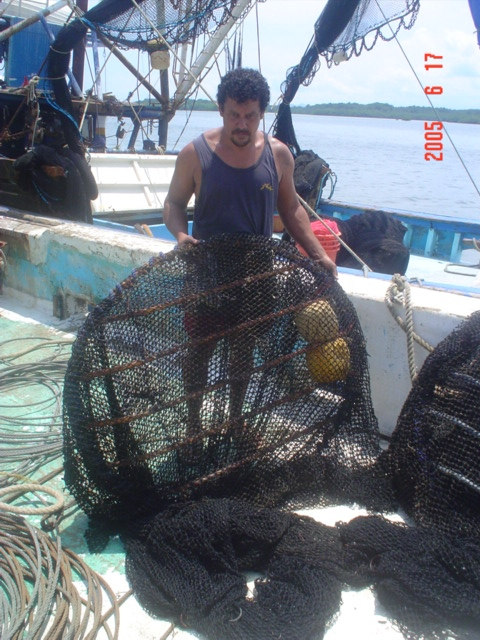
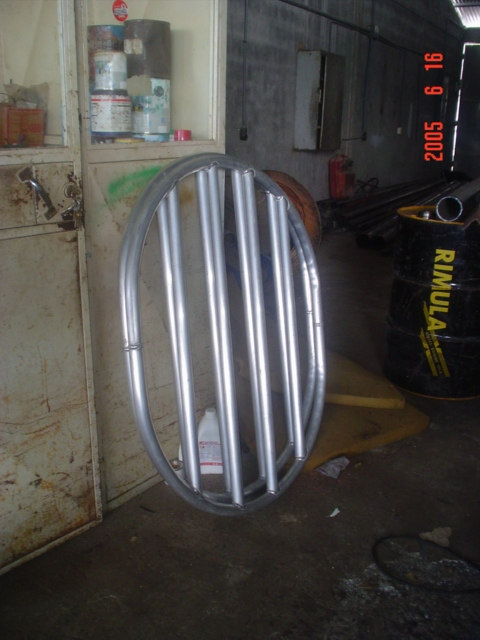
93% of coastal shrimp trawling fleet uses what is known as the "Tico" (Costa Rican) TED (Figure 7), a 6 inches
TED as shown in Figure 8a. The remaining 7% (Figure 7) of the fishing ships uses a Super shut er TED (Figure
8b).
A
B
Figure 8. Photographs of the kinds of TEDs used in Costa Rica . A) Tico TED of inches and B) super shutter.
FACA
11
32
35
Main engine
30
71%
The shrimp trawling fleet has uses 4 brands of main
25
engines; Caterpil ar is used by 32 (71%) of the active
vessels, while Cummins is used by 10 vessels (22%), 2
v
e
s
s
e
l
s
20
(4%) ships utilize engine from General Motor engines and
15
10
1 boat (2%) uses a Detroit engine (Figure 9).
10
2%
#
o
f
f
i
s
h
i
n
g
There are 14 dif erent models of Caterpil ar engines,
22%
2
5
1
while for Cummins there are 3 dif erent models only, two
4%
0
for General motors and 1 for Detroit (See Appendix 6 for
Caterpil ar Cummins
General
Detroit
a complete list of the dif erent models of the engines).
Motors
Engine brands
The main engine of the shrimp trawling fleet was
calculated by brand. The Caterpil ar engines have an Figure 9. Main engine brands used by the Costa Rican
average power of 262.5 KHz, with a range from 133.2 to coastal shrimp trawling fleet. Source: Modified from
314.5 KHz. The Cummins engines have an average INCOPESCA (2005).
power of 288.7 KHz with a range between 270.1 y 347.8.
For the General Motors engines the mean power is 260.9 KHz with a range between 251.6 and 270.1 (Table 4).
The average revolutions per minute (RPM) for the
Table 4. Average, minimum and maximum Power (KHz) and
Revolutions per Minute (RPM) of the main engines of the Costa Caterpil ar engines is 1,867 with a minimum of 1,800
Rican shrimp trawling fleet. Source: Modified from INCOPESCA revolutions and a maximum of 2.050 revolutions. For
(2005).
the Cummins main engines the average RPM is 2,467
Power (KHz)
revolutions with a range between 1,800 and 3,800
Brands
Average Maximum
Minimum
revolutions per minute. The General Motors engines
Caterpil ar
262.5
314.5
133.2
have a RPM of 2,200. There was no information
Cummins
288.7
347.8
270.1
reported for the Detroit engine (Table 4).
Detroit
323.4
323.4
323.4
General Motors
260.9
270.1
251.6
RPM
Brands
Average Maximum
Minimum
Caterpil ar
1,867
2,050
1,800
Cummins
2,467
3,800
1,800
Izusu; 1;
General Motors
2,200
2,200
2,200
6%
Diter; 1; 6% Hazt; 1; 6%
Yamaha; 1;
Secondary Engine
6%
Detroit; 1;
Yanmar; 1;
6%
6%
Of the 36 interviewed vessels only 18 had a secondary
Agrale; 1;
6%
engine. Of the dif erent brands, Lister is reported by 4
boats (22%), Nissan by 3 vessels (17%). Two vessels
Perkins; 2;
Lister; 4;
11%
22%
(11%) report having Cummins engines as auxiliary
engines and other 2 report Perkins engines also (Figure
Cummins;
2; 11%
Nissan; 3;
10).
17%
There are seven vessels (1% each) that report 7 dif erent
auxiliary engine brands like Agrale, Detroit, Diter, Hazt,
Izusu, Yamaha and Yanmar (Figure 10).
Figure 10. Brands of the secondary engines of the Costa
Rican shrimp trawling fleets
FACA
12
Only 4 vessels gave the model of auxiliary engines. A Table 5. Average, minimum and maximum Power (KHz) and
complete list of brands and models of auxiliary engines Revolutions per Minute (RPM) of the auxiliary engines of the
is provided in the Appendix 7.
Costa Rican shrimp trawling fleet.
The average, minimum and maximum power, in Khz, of
Sencondary Engine Power (KHz)
the auxiliary engines is shown in Table 5. The Perkins Brand
Average
Maximum
Minimum
engine has the maximum power 96.94 Khz, since both Perkins
96.94
96.94
96.94
Detroit
67.11
67.11
67.11
vessels that have the Perkins engine have the same Cummins
59.66
59.66
59.66
model, the maximum and minimum power of this brand Izusu
52.20
52.2
52.2
is the same as the average (Table 5). The Perkins Nissan
29.83
29.83
29.83
engine is fol owed by the Detroit 471 engine with a Lister
19.47
60
4.47
Agrale
5.22
5.22
5.22
power of 67.11 KHz, while the Cummins 40BT3.4 with a Diter
5.22
5.22
5.22
power of 59.66 KHz is ranked as third. The Izusu C240 Hazt
5.22
5.22
5.22
engine has 52.2 KHz of power. The Nissan SD22 is Yanmar
3.73
3.73
3.73
used by 3 vessels (Appendix 7 and Figure 10) and has a
RPM
Brands
Average
Maximum
Minimum
power of 29.83 KHz. The Lister engines have and Cummins
2,000
2,000
2,000
average power of 19.47KHz with a maximum of 60 Khz Izusu
1,800
1,800
1,800
and a minimum of 4.47 KHz. The Agrale, Diter and Hazt Perkin
1,800
1,800
1,800
engines al with 1 vessel have the same power 5.22 Yanmar
1,800
1,800
1,800
KHz. The Yanmar engine is the engine with the lowest Nissan
1,600
1,600
1,600
Lister
1,300
1,800
800
power, 3.73KHz (Table 5).
Detroit
1,200
1,200
1,200
The Cummins engines are the engines with the highest
Revolutions per minute (RPM) on average, 2,000, fol owed by the Izusu., Perkins and Yanmar al with 1,800
RPM. The Nissan engines have 1,600 RPM, while the Lister engines have a range between 800 and 1,800 RPM
with an average of 1,300 RPM. AS we can see on Appendix 7, the models of this brand of engines were not
provided by the owners of the vessels. The Detroit engine has a RPM of 1,200 RPM (Table 5).
Generators
Of the 45 owners of trawling vessels interviewed, 29 have a generator. 14 vessels (48%) have an alternator, while
there are 11 vessels (38%) with a Delco Remi generator. These two brands make 86% of al the generators.
Magna Plus and Onan generators have 2 vessels (7% each brand, Table 6).
Table 6. Brands, Number of vessels and Percentage and Capacity (average, minimum and maximum) of Generators.
Capacity (Kw)
Brand
# of Vessels
Percentage
Average
Minimum
Maximum
Alternator
14
48%
105
36
220
Delco Remi
11
38%
52
32
100
Magna Plus
2
7%
50
50
50
Onan
2
7%
50
50
50
Total
29
100%
The capacity to generate electricity by the generators is shown also in Table 6. The Alternators produce an
average of 105 Kw, with a range between 36 and 220 Kw. The Delco Rimi Generators generate between 32 and
100 Kw with and average generation of 52 Kw. The Magna Plus engines represent 7% of the generators with an
average generation of electricity of 50 Kw, while the Onan generator also generates 50 Kw and represents 7% of
the generators (Table 6).
FACA
13
!
Winches
There are 3 brands of winches used by the Costa Rican shrimp trawling vessels and one winche without a brand.
The Rise winches are used by 74% of the shrimp trawling vessels, while the McElroy winches are utilized by 17%
of the sampled fleet. There are two vessels (6%) that use a refurbished 400T model (Figure 11A).
A
B
Refurbi
No
, shed, 2 , Brand
McElroy
Hydraulic
6%
3%, 1
17%, 6,
8%, 3,
Mechanic
, Rise
, al, 33
, 27
92%
74%
Figure 11. A) Brands of winches and B) Action mechanism of winches utilized by the Costa Rican coastal shrimp trawling
vessels.
92% of the winches used by the sampled Costa Rican shrimp trawling fleet are mechanical y activated, while the
other 8% use a hydraulic mechanism to activate the winches (Figure 11B).
The winches of the Costa Rica shrimp trawling fleet have dif erent power ranging from 10 KHz to 90 KHz. The
frequency distribution of the vessels of the winches' power is shown in Figure 12A. 32% (6) of the vessels have 20
6
A
B
52 8
%
6
8
53%
32%
21%
21%
5
7
4
4
6
27%
4
11%
5
4
3
5%
4
2
5%
5%
#
v
e
s
s
e
l
s
b
e
r
o
f
v
e
s
s
e
l
s
3
7%
7%
7%
2
1
1
1
u
m
N 2
1
1
1
1
1
0
0
10
20
30
40
60
67
90
50
100
150
250
300
Power (KHz)
RPM
sample size = 36; # of answ ers = 19
Sample size = 36, 15 answ ers
Figure 12. A) Frequency distribution of the winches power in KHz and, B) the revolutions per minute (RPM) of the
winches of the interviewed Costa Rican shrimp trawling fleet.
FACA
14
KHz winches, while 21% (4) vessels have 60 KHz winches. Another 21% have 90 KHz winches. Two vessels have
a 30 KHz winches; 5% of the vessels (1) has a 40 KHz winche and another 5% of the vessels have a 67 KHz
winche. 8 (53%) of the vessels have a winche with 300 RPM, while 4 (27%) have a 50 RPM winches. There are 3
dif erent vessels that have a 100, 150 and 250 RPM winches respectively (Figure 12B).
86% of the vessels have winches that have 3 drums while the rest of the sampled vessels (14%) have 2 drums
(Figure 13).
s
86%
30
3
b
e
r
o
f
d
r
u
m
14%
5
u
m 2
N
0
5
10
15
20
25
30
Number of vessels
Figure 13. Number of drums of the winches per sampled vessels in the
Costa Rican shrimp trawling shrimp.
Transmission shaft
The length of the transmission shaft in meters of the Costa Rican trawling fleet has an average of 6.75m ± 0.35 m,
ranging from 2 to 11.28 meters. 36% of the interviewed owners indicated that the length of their transmission shaft
is 6 meters, while 25% showed that the length of the transmission shaft of their vessels was 7 meters, 14% of the
vessels have a transmission shaft 8 meters long and 11% have 9 meters transmission shaft. The rest of the
vessels that answered the questionnaires (32%) had 1
vessel each with transmission shaft with 2, 5 11 and 12
12
36%
40%
meters long respectively (Figure 14).
10
35%
67% (16) of the interviewed shrimp trawling vessels
10
have 2 transmission universal joints, while 17% of this
25%
30%
fleet has 4transmission universal joints. Two boats (8%)
8
7
25%
reports having 3 universal joints in their transmission
shaft, while another 2 vessels have only 1 universal
6
14%
20%
transmission joints (Table 7).
b
e
r
o
f
v
e
s
e
l
s
4
e
r
c
e
n
t
a
g
e
11%
15%
P
u
m
4
3
The transmission shaft of the Costa Rican shrimp
N
4% 4%
10%
trawling vessels are made of Monel (
4%4%
or Al oy 4000, is a
2
1 1
1 1
nickel al oy containing 65-70 percent nickel, 20-29 percent copper,
5%
and smal amounts of iron, manganese, silicon and carbon)
0
0%
stainless steel, iron and aquamet [is a precipitation-
2 5 6 7 8 9 11 12
hardening, martensitic, highly corrosion resistant stainless steel
al oy with high strength composed of Carbon, Manganese, Silicon,
Length (m)
Chromium, Nickel, Phosphorus, Sulfur, Copper, Columbium +
Tantalum, Nitrogen, Molybdenum, Vanadium, and Iron] (Table Figure 14. Length distribution for the transmission bar of the
8).
sampled Costa Rican shrimp trawling fleet.
FACA
15
Table 7. Number of transmission universal joints per trawling Table 8. Transmission shaft material of the Costa Rican
vessels.
shrimp trawling vessels.
# Universal Joints
# of vessels Percentage
Material
# of vessels Percentage
2
16
67%
Monel
20
65%
4
4
17%
Stainless steel
6
19%
3
2
8%
Iron
3
10%
1
2
8%
Aquamet
2
6%
Total
24
100%
Total general
31
Twenty (65%) interviewed vessels uses Monel for
their transmission shaft, another 6 vessels (19%)
utilizes stainless steel, while for 3 ships (10%), the
25
material used for the transmission shaft is Iron. There
21
are two vessels (6%) that their transmission shaft
20
68%
was constructed of aquamet (Table 8).
The frequency distributions for the diameter for the
15
3%
16%
10%
3%
transmission shafts from the Costa Rican shrimp
10
trawling vessels are shown in Figure 15. 21 (68%) of
b
e
r
o
f
v
e
s
s
e
l
s
1
5
3
1
the interviewed vessels have a diameter of between
u
m
N
5
9.1 and 11 cm; fol owed by 5 ships (16%) with a
diameter between 7.1 and 9 cm. There are 3 vessels
0
(10%) with a diameter of the transmission bar
<7
9
11
12
>12
between 11.1 and 12 cm while there is one (3%) boat
Diameter (cm)
with a transmission shaft diameter lower than 7 cm sample size = 36; 31 answers
and another ship with the diameter of the
transmission bar larger than 12 cm.
Figure 15. Frequency distribution for the diameter of the
transmission shaft from the Costa Rican shrimp trawling fleet.
Reduction
Twin Disk reduction is used by 97% of the interviewed boats of the Costa Rican Shrimp Trawling fleet, the other
brand used by this fleet is Caterpil ar with 1 vessel (3%; Figure 16). The reduction types reported by the shrimp
trawling fleet are MG 514
A
B
which is used by 18 (51%) of
MG
the interviewed vessels, while
Cater
, 520
3 (9%) boats uses The
, 7211
No
, pil ar
MG
3%, 1
3%, 1
brand
reduction type of MG 516.
3%, 1
, 516
, 12,
The other two reduction types
9%, 3
34%
are used by one ship (3%)
each and are the 7211 and
the MG 520. 12 (34%) boats
Tw in
owners did not provided the
, Disk
MG
information (Figure 16B).
, 34
, 514
97%
, 18
25 (71%) of the interviewed
51%
ships' owners use a 6:1
sample size = 36; answ ers 35
sample size = 36; answ ers 35
reduction type. In addition, 5
vessels (14%) utilizes the 5:1
Figure 16. A) Brands and B) types of reductions of the Costa Rican shrimp trawling fleet.
FACA
16
reduction type, while two boats (6%) uses the 4:1 ratio for the
reduction rate. The other 3 vessels (3% each) employ a
dif erent type of reduction rates, 4.5 to 1, 4.1 to 1 and 3.5 to 1
25
25
reduction rates respectively (Figure 17).
Propeller
20
There are 8 types of propel ers in the Costa Rican shrimp
i
n
g
v
e
s
s
e
l
s
15
trawling fleet. 40% of the fleet uses a 4 blade propel er,
3%
3%
3%
6%
14%
71%
fol owed by the Rise brand with 13% and of the vessels.
10
Aerodynamic and E types of propel ers are used by 10% of
1
1
1
2
5
b
e
r
o
f
f
i
s
s
h
the ships of the fleet respectively. The 5 blade, bronze, fixed
u
m
5
star and fixed types of propel ers are used by 2 vessels (7%)
N
respectively (Figure 18A).
0 3.5:1 4.1:1 4.5:1 4:1 5:1 6:1
The propel er pitch has an average size of 1.25 m with a
Reduction rate
range between 0.91 to 1.45 meters. Figure 18B shows the sample size = 36; answers 35
distribution of the size of the propel er pitch. 47% (14) of the Figure 17. Number of vessels by reduction type of the
ships have a pitch between 1.21m and 1.3m, fol owed by 8 Costa Rican shrimp trawling fleet.
vessels (27%) with a pitch between 1.31m and 1.4m. These
two groups area fol owed by 4 vessels (13%) that have a pitch length between 1.11n and 1.2m, while there are
two vessels (7%) with a pitch length grater than 1.4m but bel ow 1.5m. The other frequency groups, 1.0 and 1.1
only have one vessel correspondingly.
A
Number of vessels
%
B
16
C
14
9
8
14 12
50%
14
8
12
40%
40%
12
7
6
6
10
30%
10
6
5
8
13%
8
10%
6
f
v
e
s
s
e
l
s
5
4
7%
8
f
v
e
s
s
e
l
s
4
20%
3 3
4
b
e
r
o
f
v
e
s
s
e
l
s
4
2 2 2 2
e
r
c
e
n
t
a
g
e
e
r
o
6
3
P
b
e
r
o
10%
4
b
2
m
3
u
m
u
4
m
u
N
0
0%
N
2
2
N
1
1
2
1
0
0
4 BdRise AD E5 Bd
BronzeF StarFixed
1
1.1
1.2
1.3
1.4
1.5
1.2
1.4
1.5
1.6
1.7
1.8
Type of Propeller
Propeller pitch (m)
Propeller Diameter (m)
Figure 18. A) Propel er types, number and percentages, B) Propel er Pitch and C) Propel er Diameter of the Costa Rican shrimp
trawling fleet. 4 Bd = 4 blades, AD = Aerodynamic, 5 Bd = 5 blades, F Star = fixed star.
The propel er's diameter has an average of 1.51m with a range between 1.17m and 1.78m. Eight ships (25%)
have a diameter between 1.61m and 1.7m, while there are two ranges of propel er diameter that have 6 boats
(19%) each, one group has a diameter between 1.41m and 1.5 and the other between 1.51m and 1.6. Five ships
(16%) have a propel er with a diameter between 1.21m and 1.4m, fol owed by 4 vessels (13%) with a propel er
diameter larger than 1.7m but shorter than 1.8m. In addition, there are 3 vessels (9%) with a propel er diameter
less than 1.2m (Figure 18C).
Sixty four % (23) of the interviewed vessels uses 4 Table 9. Number of propel er blades used by the Costa Rican shrimp
blades propel er while 36% (13) of the fleet have 5 trawling fleet.
blades propel ers (Table 9).
Number of blades
Number of vessels
%
4 blades
23
64%
5 blades
13
36%
Total
36 100%
FACA
17
" #
The Costa Rican shrimp trawling fleet uses 5 dif erent brands of refrigeration systems. Bitzer is used by 59% (21)
of the fleet, while 23% (8) of the ships uses Thermatrol systems as refrigerators. On the other hand, 9% (3) of the
fleet used a compressor to refrigerate the cargo. Vitzon equipment is used by 9% of the vessels (2) while only one
boat uses a SiemmesSchckert refrigeration system (Figure 19A).
A
Siem
B
Falcon
Compr
, Vitzon -mens
R-12, 1, y, 1,
, esor
Compr
Therm
6%, 2 Schuc
Brayan
4%
4%
9%, 3
6, 3,
esor,
, atrol
, kert, 1
, 2, 8%
12%
1, 4%
23%, 8
3%
22, 1,
4%
F, 3,
12%
, Bitzer
7, 13,
, 21
52%
59%
Figure 19. A) Brand and B) type of refrigeration system used by the Costa Rican shrimp trawling fleet.
52% of the interviewed fleet used the type 7 refrigeration system, while 12% (3) uses the refrigeration type F and
another 12 (3) uses type 6 refrigeration systems. Bryan refrigeration types are used by 8% (2) of the fleet. R-12,
Falcon, Compressor and 22 types of refrigeration systems are used by 1 vessel (4%) respectively of the fleet
(Figure 19B).
53% of the Costa Rican shrimp trawling vessels have a minimum refrigeration temperature (MRT) of 0 ºC, while
17% have a MRT of 20 C. Another 10% of the ships have a MRT of 5 C, in addition, another 10% of the
ships have a MRT of 18 C. There is one ship (3%) that has a MRT of 4 C, another vessel with a MRT of 2 C
and another vessel with 30 C (Figure 20A).
A
B
4
1 3%
e
0
16
t
53%
Freon 22
10
29%
e
r
a
t
u
l
a
n
-2
1
p
3%
o
-5
3
f
c
o
t
e
m
°
C
10%
m
-18
3
e
o
u
10%
y
p
Freon 12
24 71%
i
m
-20
5 17%
T
i
n
M
-30
1
3%
Fishing vessels, number and percentage
F ishing vessels, number and %
sample size = 36: 30 answ ers
sample size = 36: 35 answers
Figure 20. A) Minimum temperature in C, and B) Type of coolant used by the Costa Rican shrimp trawling fleet.
The coolant most widely used by the Costa Rican shrimp trawling fleet is Freon 12, with 71% of the interviewed
vessels, while 29% utilizes Freon 22 (Figure 20B).
Electronic equipment
FACA
18
The range of electronic equipment used by the Costa Rican shrimp trawling fleet is between 3 and 6. There is only
one ship that has 6 electronic equipments, however this vessel has two GPS. There are 12 vessels with 5 dif erent
types of electronic equipment, while there is one vessel with 2 cel ular telephones and 3 other types of electronic
equipment (see Appendix 9 for a complete list of devices per vessel). 11 ships uses 4 dif erent types of electronic
equipment and 8 boats uses 3 dif erent kinds of electronic equipment (Table 10).
Table 10. Number of electronic equipment used per vessel
No. Electronic Equipment
# of vessels
Percentage
Total equipment
6
1
4%
6
5
13
39%
65
4
11
33%
44
3
8
24%
24
Total
33
139
The Costa Rican shrimp trawling fleet uses dif erent types of equipment for navigation and communication. For
navigation equipment, the electronic device most used by the Costa Rica vessels is the GPS. While there are 33
GPS in the fleet, the results of the interviews indicate that there are two vessels with 2 GPS, while the rest of the
29 vessels have only 1 GPS . Fol owing the GPS, the video sounder device is the most used navigation
equipment, 26 vessels have it. The Eco sound is reported by 9 ships and the radar is registered by 2 ships (Table
11).
With the communication equipment, the Radio VHF is reported by 31 of the vessels, while the Radio SSB is used
by 20 ships. Also there is one boat that carries two mobile (cel ular) telephones, while the rest of the 16 vessels
only have one (Table 11).
Table 11. Electronic equipment used by the interviewed Costa Rican shrimp trawling fleet.
Electronic Equipment
No. units
GPS Radio VHF
Video
sounder
Radio SSB
Celular
Echo
sounder
Radar
2 units
2
1
1 unit
29
31
27
20
16
8
2
Total Electronic eq.
33
31
27
20
18
8
2
Vessels without a
specific Electronic eq.
2
2
6
13
16
25
31
GPS
Appendix 8 shows the complete list of electronic devices, brands and models used by the Costa Rican shrimp
trawling fleet. For the navigation systems, the most widely GPS brand used by the fleet are the Sitex GPS with 27
vessels using them. No information regarding the Power, frequency and reach was able to be gather. Sitex 8000 is
the most used model (10 ships). The other GPS brands include Furuno with 5 ships and 1 without a brand.
Video Sounder
Of the 27 video sounder machines used by the shrimp trawling fleet, 22 are from Furuno; there are 16 Furuno
video sounders that have no model. The other 6 video sounder, each has dif erent models. For the ones without a
model, only one report a power of 12 KW, and the average frequency is 150 KHz, ranging from 50 to 200 KHz.
The average reach, in meters, is 727 ranging from 365.76 to 1,463m. The Furuno's 621 and 651 have no
FACA
19
information regarding the Power, frequency and reach. The FCU-667(or FCV) has a frequency of 200KHz and 732
m range. The FCV-501 Furuno's video sounder has a frequency of 28 KHz and a reach of 2000 m, and the FCV-
551 video sounder from FCV, has a power of 1 KW, a frequency of 28 KHz and a reach of 2000 m. For the other
four brands of video sounders, the Si-Tex brands do not have any specific specification regarding model, power,
frequency reach. the three CU video sounders our from the same model, CU 261, and there is no information
regarding frequency and reach (Appendix 8).
Echo sounders
There are 8 Echo sounders in the Costa Rican shrimp trawling fleet. Seven are from Furuno, six without a model
and one is the Furuno 400. The reach of this model is 732m. The other Brand of echo sounder is Si-Tex but there
is no information about the model (Appendix 8).
Radars
There are only two vessel with a radar, they owners did not provided information of the model, power, frequency or
reach of their radars (Appendix 8).
VHF Radios
The VHF Radio is used by 31 vessels of the fleet. There are 9 dif erent brands and other 3 equipments did not
have the brand available. The brands includes Horizon with 1 unit, I com with 9, Precto Marine with 1, Ralton with
3, Seivan with 1, Sitex with 4, Standard with 6, Uniden with 1 and Yaseu with 2. There is no information regarding
the models for Horizon, Precto Marine, Ralton, Seivan, Sitex, Standard, and Yaseu VHF Radios. For the I Com
Radios, there are 8 ships that gave no model and only one boat has the IC-M55 model with a frequency range 156
~ 163 MHz IC-M55 (I Com, 2005). The Uniden MC535, is used by 1 vessel and has a power of 1 Wat or 25 Wat
(switch selectable) and has a frequency range between 156 to 158 MHs (Uniden, 1998).
The Single Sided Band (SSB) Radios
The SSB radios are used by 20 interviewed vessels (Table 11). There are 4 vessels that did not provided the
brand of the SSB radios. The other brands are Arizona, Furuno, I Com, Sitex and Yaesu. The Arizona (1 radio),
Furuno (1) and Si-Tex (4) brands have no description of the models that have onboard. There are 4 I Com SSB
Radios without a model and 2 I COM M-700. The I COM M-700 has a power of 150 Wat s and has a Wide band
receive coverage .5 - 29.9999 MHz (ht p:/ www.icomamerica.com/products/marine/m700pro/; Appendix 8).
Mobile phones
There are 18 cel ular or mobile phones in the shrimp trawling fleet. No brands and model were provided by the
interviewed owners of the vessels
(Appendix 8).
#
#
Bridles or sweeps
Figure 21 shows a diagram of a typical
bot om net. The superior bridle or
sweep has an average length of 22.8m
± 0.65m with a range between from 12 Figure 21. Diagram of a typical trawling net. Source, Spare & Venema, 1998. This
to 29.9 m. The inferior sweep has an image is shown as a reference point only of the trawling nets used by the Costa
Rica Shrimp trawling fleet.
FACA
20
average length of 24.6±0.66m, with a range
Superior bridle
between 18.3m and 31.7m. A frequency distribution
33
)
1 1
Inferior bridle
of the bridle's length is shown in Figure 22. There
31
8
29
10
are 14 vessels with a superior bridle's within 23m,
3
27 0
fol owed by 10 boats with a range between of 29m.
1
2
25
Also there are 6 ships with a superior sweep length
5
o
f
t
h
e
b
r
i
d
l
e
(
m
23
14
within 21m. There are no ships with bridles with 27m
12
6
e
n
g
t
h
21
or 33m of length. The inferior bridle's length
3
L 19
3
presents two peaks, one with 12 vessels ant 23m
2
and another with 8 ships at 31m.
Number of vessels
The superior and inferior sweeps are constructed of
Figure 22. Length of the bridle or sweep of the Costa Rican Shrimp the same material. 86% are made of Nylon while 8%
trawling fleet.
are constructed with a polyethylene mesh. Steel and
Nylon and wire both represent 3% each of the
construction material of the bridle (Figure 23A).
With the bridle's diameter, both the superior and inferior sweep have the same diameter in al the vessels inquired.
Eighty three % of the vessels have a sweep with a diameter of 1.27cm (½ inches), while 11% have a diameter of
1.91cm (¾"). Another 6% have a diameter of 4.45cm (1 ¾") (Figure 23B).
A
B
4,45 (1
1,91
Polyeth
, Steel
3/4')
(3/4')
ylene
3%, 1
& Nylon
6%
11%
, mesh
, wire, 1
8%, 3
3%
1,27
(1/2')
, Nylon
83%
86%, 31
Figure 23. A) Construction material and B) Diameter of the bridle in the Costa Rican shrimp trawling fleet.
Al vessels carry two trawling nets, and have on average 2 replacement nets while they are fishing.
Trawling net design
The dif erent sections of the trawling nets of the Costa Rican shrimp trawling fleet are made basical y of nylon,
fol owed by thread and nylon with cot on. 83% of the Head rope is done of nylon, while thread and nylon with
cot on, each has a 8%. For the ground rope with bobbins, 81% are made of nylon, 8% of thread and nylon with
cot on each and 3% is made with a chain. For al the other sections of the net, except for the codend and the
extension, the principal construction material is nylon with 83%. The other construction materials are thread (8%)
and nylon with cot on also with an 8% (Table 12).
The codend is made principal y from nylon (80%), and thread (9%). There are 4 boat that were not able to provide
the construction material of the codend at the time of the interview. For the extension section, 82% are made from
nylon and the rest 18%, there is no information of the type of construction material also (Table 12).
Al the trawling nets used in Costa Rica have no treatment done by the fishermen, al come pre-treated from
factory.
FACA
21
Table 12. Construction material of the different sections of the Costa Rican shrimp trawling fleet.
Nylon
Section of the net
NI
Chain
Thread Nylon with
Number of
cotton
vessels
Head rope
3
30
3
36
Ground Rope with bobbins
1
3
29
3
36
Superior Wings
3
30
3
36
Inferior Wings
3
30
3
36
Superior shaft
3
30
3
36
Inferior shaft
3
29
3
35
Codend
4
3
28
35
Extension
4
18
22
Number of threads
Al the sections of the trawling net, except for the codend and the extension, are constructed with thread size or
number of 18 (89%) or 21 (11%; Table 13). In the case of the codend, 85% are made with thread number 42,
while 9% are built with thread number 18. Two vessels have a codend built with 48 (3%) and 30 (3%) thread
number (Table 13). The extension are made of thread number 18 (89%), 21 (6%) and 42 (6%, Table 13).
Table 13. Number of thread used to construct the shrimp trawling net in Costa Rica.
Number of thread
# vessels
Secction of the net
18
21
42
48
30
# vessels
% # vessels
% # vessels
% # vessels % # vessels %
Head rope
32 89%
4 11%
36
Ground rope with bobbins
32 89%
4 11%
36
Superior wing
32 89%
4 11%
36
Inferior wing
32 89%
4 11%
36
Superior shaft
32 89%
4 11%
36
Inferior shaf
31 89%
4 11%
35
Codend
3
9%
29 85%
1 3%
1 3%
34
Extension
16 89%
1
6%
1
6%
18
The average length of the codend is 133m with a range between 49 and 160 meters, the extension of the net has
an average length of 116m with a range between 46 and 160 (Table 14).
Table 14. Number of vessels interviewed, average, minimum and maximum length of the codend and extensión of the net of the
Costa Rican shrimp trawling fleet.
Count Size (m) Maximum Minimum
Codend
16
133
160
49
Extension
9
116
160
46
The size of the net 2a from half knot to another half knot fully extended
The distance, in mil imeters, from half knot to another half knot ful y extended for al the dif erent sections of the
trawling net is detailed in Table 15. As we can see, the distance between knots is 44.45 mm in more than 84% of
the dif erent sections of the net. The range is from 84% in the codend to 97% of the headrope. In most of the
sections, the distance of 44.45mm is present in 94% of the interviewed vessels.
FACA
22
Table 15. 2a, size of the net: from one half knot to another half knot ful y extended in mil imeters.
Size of the net
Sección
Material
19.05
32.5
38.1
44.45 # of vessels
Headrope
Thread
3
3
Nylon
1
29
30
Nylon with cotton
3
3
Total Headrope
1
35
36
Ground rope
Chain
1
1
Thread
3
3
Nylon
1
1
26
28
Nylon with cotton
3
3
Total Ground rope
1
1
33
35
Superior Wing
Thread
3
3
Nylon
1
1
27
29
Nylon with cotton
3
3
Total Superior Wing
1
1
33
35
Inferior wing
Thread
3
3
Nylon
1
1
27
29
Nylon with cotton
3
3
Total Inferior wing
1
1
33
35
Superior shaft
Thread
3
3
Nylon
1
1
27
29
Nylon with cotton
1
1
Total Superior shaft
1
1
31
33
Inferior shaft
Thread
3
3
Nylon
1
1
26
28
Nylon with cotton
3
3
Total Inferior shaft
1
1
32
34
Extension
Nylon
1
14
15
Total Extension
1
14
15
Codend
3
3
Thread
3
3
Nylon
1
1
23
25
Total Codend
1
4
26
31
FACA
23
Number of nets on the border of the section
The average number of nets of the
horizontal superior border (Nmbs), of Table 16. Average number of nets of the horizontal superior border (Nmbs),
the horizontal inferior border (Nmbi) average number of inferior border (Nmbi) and average number of dropped nets
and the number of dropped nets of of each vertical section (Nmh) of the Costa Rican
each vertical section (Nmh) are shown Section of the trawling
Average Nmbs
Average Nmbi
Average Nmh
Head rope
362
296
153
in Table 16.
Ground rope with bobbins
366
290
158
Superior wing
253
232
137
On average, the Nmbs of the head Inferior wing
256
232
134
rope, ground rope, superior and Superior shaft
80
91
61
inferior wing are greater than the Nmbi, Inferior shaf
80
94
64
Codend
88
122
114
while for the superior and inferior shaft, Extension
151
151
143
and codend have greater Nmbi than
Nmbs. With the extension, the Nmbs has the same number of nets than the Nmbi. The head rope has less Nmbs
than the groundrope while the Nmbi is on the contrary. For the superior and inferior wings, the Nmbs of the
superior wing are smal er than the inferior wing, while the Nmbi for both wings are the same. For the superior and
inferior shafts, the average number of Nmbs are the same, while the inferior wing has more Nmbi the the superior
(Table 16).
Number of cuts per section
The cut of the net 6X1 is the most common cut for the headrope, groundrope, superior wing and inferior wing. It is
fol owed by the 4X1 cut. The superior and inferior shaft use the 2X1 cut in more than 75%, while for the extension
and codend, the flat cut and the 2X1 are the main cuts (Table 17).
Table 17. Number of cuts per section of the net of the Costa Rican shrimp trawling fleet. The information of this table is given
by rows.
Section of the Net
1X1
2X1
3X1
3x2
4X1
6X1
8X1
Flat
# vessels
Headrope
3%
3%
40% 51%
3%
35
Groundrope
7%
4%
30% 44%
4% 11%
27
Superior wing
9%
4%
4%
26% 43%
13%
23
Inferior wing
9%
4%
4%
4% 26% 39%
13%
23
Superior shaft
81%
5%
10%
5%
21
Inferior shaft
75%
6%
13%
6%
16
Extension
33% 17%
50%
6
Codend
29% 14%
57%
7
$
Trawling line
The average length of the trawling line of the shrimp is 823 meters with a mean diameter of 1.27cm (half inch;
Table 18). The relative long trawling line is due that since most of the vessels can fish deep shrimp also. Also,
according to the target shrimp species, the trawling line has to have a particular length. For example, the
Heterocarpus spp (camarón Camel ón) is fished at an average depth of 1829 m, the fidel shrimp (Solerocera
agassizi) is captured at an average depth of 686m; the Pinky shrimp (Penaeus brevirostris) is fished at 274m deep
and the white shrimps (Litopenaeus vannamei, L. stylirostris and L. calieforniensis) are fished at an average of 137
m (Gerardo Marín, Per. Comm.). The patas de gal ina have an average length of 81m with a diameter of 1.27cm.
FACA
24
Of the 34 interviewed vessels, 33 (97%) of the ships have
a trawling line made of steel and the other boat is made Table 18. Average length of the trawling line and patas de gal ina
of steel. For the patas de gal ina al the interviewed of the shrimp trawling fleet from Costa Rica.
vessels are made of steel (Table 18. Average length of
Mean Length (m) Mean Diameter (cm)
the trawling line and patas de gal ina of the shrimp Trawling line
823
1.27
trawling fleet from Costa Rica.
Patas de gallina
81
1.27
Mean Length (m) Mean Diameter (cTm
a )
ble 19. Construction material of the trawling line and patas de
Trawling line
823
1.
g 2
a 7
l ina
Patas de gallina
81
1.27
Steel Iron # of vessels
Table 19).
Trawling line
33
1
34
The construction material of the chain and the Patas de gallina
32
32
weight are shown in Table 20. 77% of chains are Table 20. Construction material of the chain and weigth and
made of galvanized steel, 19% are made of steel number of vessels interviewed form the Costa Rican shrimp
and 4% are made of metal. For the weight 69% of trawling fleet.
the weights are made of galvanized steel, while
19% are made of steel and 12% are constructed Element Steel Metal Galvanized Steel # vessels
Chain
5
1
20
26
from metal.
Weight
3
2
11
16
The average weight of the chain is 47Kg and for Table 21. Number of vessel per diameter of the chain and weight .
the weight is 59Kg. 23 of the interviewed have a
chain diameter of 0.95 cm, while the other 3 have a
Díametro(cm)
chain diameter of 0.79. For the weight, al the Element
0.79
0.95 # of vessels
interviewed ships have a diameter of 0.95 cm Chain
3
23
26
(Table 21).
Weight
16
16
The frequency distribution of the length of the Figure 24. Distribution length of the weight and chain of the Costa
weight line shows that 9 vessels have 45m long, Rican shrimp trawling fleet.
fol owed by 6 ships with 35m. The average weight
line length is 34.4m±2.2m, indicating the more than
Chain
Weight
50% of the weight line length is above the mean
length (Figure 24).
9
9
9
The length of 30m of the groundline weight length
8
is the most common used by the Costa Rican
7
shrimp trawling fleet, it is used by 9 vessels. The
6
6
average weight line length is 32m±1.7m, indicating
5
that more 76% of the ships have a groundline
weight length below the average (Figure 24).
4
b
e
r
o
f
v
e
s
s
e
l
s
3 3
Floats
u
m
2
2
N 2
The Costa Rican shrimp trawling fleet uses floats
1
1
1
1
1
mainly of corch (24 vessels) and plastic (8), foam
0
(5) and Styrofoam (1) (Figure 25A). They normal y
20 25 30 35 40 45 50 55
use between 3 and 6 floats (more than 71%). The
fleet also uses other number of floats such as 6
Length (m)
and 8 (4 vessels each). The mode is 4 floats with
10 ships using this amount (Figure 25B).
FACA
25
The most common diameter of the floats used by the Costa Rican fleet is 30cm with 10 ships, fol owed by 25.4cm
with 6 vessels(Figure 25C) .
Figure 25. A) Different kinds of Flotation Materials and their distributions, B) Number of floats per vessels and C) Diameter of
the floats of the Costa Rican shrimp trawling fleet.
A
C
20
B
10
20
10
10
10
16
8
8
7
7
6
12
6
6
5
f
v
e
s
s
e
l
s
4
4
8
e
r
o
4
8
4
4
b
e
r
o
f
v
e
s
s
e
l
s
4
b
e
r
o
f
v
e
s
s
e
l
s
3
b
m
u
m
5
u
m
u
N
N
N
2
4
2
1
1
1
1
1
0
0
0
Corch
Foam Styrofoam Plastic
1
3
4
5
6
7
8
15 15.24 20 20.32 25 25.4 30 38.1
Kind of Flotation material
Number of flotators
Diameter (cm)
Otterboards
The length and with of the Figure 26. Number of vessels per length and width of the otterboard of the Costa Rican shrimp
ot erboards in the Costa trawling fleet .
Rican shrimp trawling fleet
is present in Figure 26.
10
There are three dif erent
9
sizes of length: 2.44m (8
7
8
feet), 2.74m (9') y 3.05m
6
4
6
(10'). In addition, there are
five dif erent widths of the
4
b
e
o
f
v
e
s
s
e
l
s
ot erboards: 1.02m (40
2
2
u
m
inches), 1.07m (42"),
3
N
0
1.12m (44"), 1.14 (45")
1
and 1.17 (46"). There are
Length in
only two boats (6%) with
meters
Width in meters
an ot erboard of 2.44m
(feet)
(inches)
2
.
4
4
(
8
'
)
and 1.02, while there 23
2
.
7
4
(
9
'
)
vessels (72% of the
3
.
0
5
(
1
0
'
)
1
.
0
2
(
4
0
"
)
1
.
0
7
(
4
2
"
)
1
.
1
2
(
4
4
"
)
1
.
1
4
(
4
5
"
)
1
.
1
7
(
4
6
"
)
interviewed)
with
an
ot erboard length of 2.74m
(9'). However, of these 23 ships, there are 3 with a width of 1.07m (42"), 9 with a 1.12m (44") width, 7 with a 1.14m
(45") width and 4 vessels with an ot erboard of 1.17 (46"). The remaining 22% are 7 boats with an ot erboard
length of 3.05m (10'). Of these seven vessels, 1 has a width of 1.07m (42") and 6 have a with of 1.17m (46";
Figure 26).
The area of the ot erboards ranges Table 22. Area of the otterboard in square meters of the Costa Rican shrimp
from 2.49m2 to 3.57m2. The area is a trawling fleet. ordered by the length and width.
function of the length and width of the
Length (meter;
Width (meters; inches)
ot erboard, implying that those board
feet)
1.02 (40") 1.07 (42") 1.12 (44") 1.14 (45") 1.17 (46")
2.44 (8')
2.49
2.74 (9')
2.94
3.07
3.13
3.21
3.05 (10')
3.26
3.57
FACA
26
with the largest length and with wil have the biggest area (Table 22).
Income
A total of 16 vessels answered the economic information. The average, minimum and maximum income for the
Costa Rican costal shrimp trawling fleet is presented in Table 23. it can be observed that the average daily income
of a vessel is US$311.21. The shrimp provides US$ 280.27 or 90% of the total daily income, while the other 10%
is provided by the incidental catch. The capture of the is done by three vessels that have a fishing permit to fish
near the coast or shal ow waters shrimp, however must of their ef ort is centered to deep water shrimp suchs as
Heterocarpus spp (Camel ón) or Solerocera agassizi (Camarón Fidel) and their captures make an skew to the
information analyzed here.
Table 23. Type and kind of product, number of vessels, average quantity in kilograms and average daily income of the Costa
Rican shrimp trawling fleet.
Type
Product
# of vessels Quantity (Kg)
daily income
Principal
Common name
Scientific name
average
minimum maximum
White
Litopenaeus spp. 1
9
19.01
245.59
117.94
524.19
Camellón
Heterocarpus spp
3
384.62
1,451.59
1,451.59
1,451.59
Fidel
Solerocera agassizi
12
78.54
225.01
25.16
489.24
Pinky
Penaeus brevirostris
9
32.96
171.08
48.23
262.09
Titi
Xiphophenaes rivereti
6
8.89
20.92
4.61
39.42
Principal Total
67.11
280.27
By catch
First2
9
24.67
35.20
12.58
64.52
Second3
10
23.12
16.96
8.39
40.26
Fishes (First&Second)
2
64.91
81.66
79.46
83.87
By catch Total
27.84
30.94
Total (Principal + By catch)
95
311.21
Notes: 1). White shrimps includes 3 species (Litopenaeus vannamei, L. stylirostris and L. calieforniensis), 2) First (or primera in Spanish) includes
dif erent species such as robalos (Centroppomus spp) corvinas (drums; scianidae) 3) second or chatarra (in Spanish) includes many dif erent species
such as corvinas (drums; scianidae), snappers or pargos (Lutjanidae spp), flounders (lenguados in Spanish: Paralichthyidae spp., Bothidae spp., and
Soleidae spp).
Expenses
FACA
27
Type of Cost
Type of expenses
# of vessels
daily expemses (US$)
Operation Costs
average
minimum maximum
Lubricants
16
11.61
2.84
36.29
Main Engine
16
329.63
119.14
546.31
Others
2
6.29
6.29
6.29
Food prevision
15
19.08
12.16
32.26
INS insurance
16
4.92
0.87
12.58
CCSS insurance
16
19.01
6.60
32.26
Wages & Salaries
16
90.50
31.45
153.62
Operation Costs Total
68.72
25.62
117.09
Indirect Costs
Fishing gear
14
4.52
1.68
11.18
Vessel
10
31.98
5.24
34.95
Electronic equipment
9
2.15
1.05
4.19
Tools
16
5.87
0.58
17.47
Machines
9
52.63
3.84
139.78
Spare parts
9
2.41
0.70
3.49
Manteinance
7
12.61
1.05
23.59
Vastecas
3
4.19
4.19
4.19
Indirect Costs Total
14.54
2.29
29.86
Production Costs
Administrative
12
34.52
12.23
62.90
Accountants
13
11.32
1.05
31.45
Depreciations
3
36.69
36.69
36.69
Taxes
6
6.53
3.15
7.55
Licence of INCOPESCA
16
0.62
0.62
0.62
Port
9
5.71
2.45
15.38
Production Costs Total
15.90
9.36
25.77
Subtotal (Operational +Inderect + Production)
99.16
37.28
172.71
Investments
Vessels
4
576.60
244.62
1,188.15
Equipment
4
279.09
33.06
559.13
Refrigeration
1
244.62
244.62
244.62
Investments Total
366.77
174.10
663.97
Financial Obligations
Interests
2
37.31
34.95
39.67
Others
1
419.35
419.35
419.35
Principal downpayment
2
1,057.31
17.88
2,096.74
Financial Obligations Total
504.66
157.39
851.92
FACA
28
Bibliography
Banco Central de Costa Rica. 2005. Tipos de cambio diario del Dólar estadounidense, www.bccr.fi.cr.
Cajiao-Jiménez, M. 2003. Régimen Legal de los recursos marinos y costeros en Costa Rica. San José, Costa Rica,
Fundación Ambio 192p.
Campos, J. 1983a. Tal a de los peces descartados de la fauna de acompañamiento del camarón como un indicador de su
posible utilización. Rev. Biol. Trop. 31(2): 209-212.
Campos, J. 1983b. Estudio sobre la fauna de acompañamiento del camarón en Costa Rica. Rev. Biol. Trop. 31(2): 291-296.
Campos, J. 1986. Fauna de acompañamiento del camarón en el Pacífico de Costa Rica. Rev. Biol. Trop. 34(2): 185-197.
Campos, J., B. Burgos & C. Gamboa. 1984. Ef ect of shrimp trawling on the commercial ichthyofauna of the Gulf of Nicoya,
Costa Rica. Rev. Biol. Trop. 32(2): 203-207.
Cook. R. 2001. The magnitude and impact of by-catch mortality by fishing gear. In Reykjavik Conference On Responsible
Fisheries In The Marine Ecosystem. FAO. Reykjavik. ftp:/ ftp.fao.org/fi/DOCUMENT/reykjavik/Default.htm
FAO. 2000. Fishstat plus: Universal software for fishery statistical time series Version 2.3 FAO, Rome. ht p:/ www.fao.org/fi
FAO. 2004. Papers presented at the expert consultation on the interactions between sea turtles and fisheries with in
ecosystem context. FAO Fisheries Report No. 738, Supplement, Rome, FAO 238p.
FAO. GEF, UNEP. 2005. Reduction of Environmental Impact from Tropical Shrimp Trawling, through the Introduction of By-
catch Reduction Technologies and Change of Management. Project Identifies EP/GLO/201/GEF. Web site:
ht p:/ www.fao.org/figis/servlet/static?dom=org&xml=gef_shrimp.xml&xp_lang=en.
I Com Inc. IC-M55 Owners manual. Electronic version http://www.icom.co.jp/manual/external/transceivers/IC-M55.pdf
Instituto Costarricense de Pesca y Acuicultura (INCOPESCA). 2000. Acuerdo AJDIP/382 Uso del DET. Puntarenas
Instituto Costarricense de Pesca y Acuicultura (INCOPESCA). 2005. Base de datos del Registro de Embarcaciones.
Kaiser, M., J.S. Col ie, S. J. Hal , S. Jennings and I.R. Poiner, 2001. Impacts of fishing gear on marine benthic habitats. In
Reykjavik Conference On Responsible Fisheries In The Marine Ecosystem. FAO. (1-4 October 2001). Reykjavik.
ftp:/ ftp.fao.org/fi/DOCUMENT/reykjavik/Default.htm.
Spare, P. and S.C. Venema, 1998. Introduction to Tropical Fish Stock Assessment - Part 1: Manual. FAO Fisheries
Technical Paper 306/1 Rev. 2. FAO 407p. ht p:/ www.fao.org/documents/show_cdr.asp?url_file=/docrep/w5449e/w5449e00.htm
Uniden, 1998. UNIDEN MC535 VHF Marine Radio Operating guide, electronic version,
ht p:/ www.uniden.com.au/RESOURCES_MAIN/pdfs/MC535NZ_OM.pdf
Vil aseñor Talavera, R. 1997. Dispositivos excluidores de tortugas marinas. FAO Documento Técnico de Pesca. No. 372.
Roma, FAO. 116p. ht p:/ www.fao.org/DOCREP/003/W7212S/W7212S00.HTM
%
Gerardo Marín. President of Unión Nacional de Pescadores de Camarón.
FACA
29
Appendixes
Appendix 1. Main characteristics of the shrimp trawling vessels.
Nombre
Puerto
Año de
Máquina Principal
Tobera
Refrigeración
Sector
Manga
Puntal
Embarcación
Base
construcción
Material
Eslora
Tipo de red
Tamaño
(mts)
(mts)
(mts)
Marca Modelo
Potencia
Si No
1
2
1
2
(Lrs)
Nombre Embarcación.- El nombre con el cual esta registrada la embarcación.
Tamaño (Lrs).- Longitud de la relinga superior de la red en metros.
Tipo de red.- Diseño de red con que cuenta la embarcación (mixto, fantasma, volador, etc).
Sector.- Marca 1 para el sector social; 2 para el sector privado.
Refrigeración.- 1 en caso de refrigeración mecánica; 2 refrigeración con hielo.
Tobera: Marcar si o no la embarcación cuenta con tobera. Máquina Principal. Registrar la marca, modelo y potencia nominal en Cabal os Fuerza (Hp) de la máquina principal.
Puntal.- Puntal máximo de la embarcación en metros.
Manga.- Manga máxima de la embarcación en metros.
Eslora.- Eslora máxima de la embarcación en metros.
Material.- Material de construcción del casco de la embarcación (madera, acero, fibra de vidrio)
Año de Construcción.- El año en que fue construida la embarcación.
Puerto Base.- Es el puerto donde esta matriculada o registrada la embarcación.
FACA
30
Appendix 2. Questionnaire of the income, costs and expenditure structure for the economic impact
assessment on the shrimp trawling fishery
PROYECTO FAO-UNEP-GEF
CUESTIONARIO DE ESTRUCTURA DE INGRESOS, COSTOS Y GASTOS PARA EL ANALISIS
DE EVALUACION DEL IMPACTO ECONOMICO EN LA PESQUERIA DE CAMARON
TEMPORADA
CONCEPTO
CANTIDAD
PRECIO UNITARIO
MONTO TOTAL
INGRESOS
Producto principal
Subproductos
Otros (específique)
COSTOS DE OPERACIÓN
Máquina principal
Máquina auxiliar
LUBRICANTES
Máquina principal
Máquina auxiliar
PREVISION DE BOCA
INSUMOS (específique)
SUELDOS Y SALARIOS
OTROS (específique)
COSTOS INDIRECTOS
HERRAMIENTAS
REFACCIONES
Embarcación
Artes de pesca
ENSERES MENORES
REPARACION Y MANTENIMIENTO
Embarcación
Máquinas
Cubierta
Equipo electrónico
Artes de pesca
OTROS (específique)
GASTOS DE PRODUCCION
CONTABLES
ADMINISTRATIVOS
PORTUARIOS
IMPUESTOS
DEPRECIACIONES
OTROS (específique)
OBLIGACIONES FINANCIERAS
PAGO A PRINCIPAL
INTERESES
CAPITAL DE TRABAJO
INTERESES
OTROS ADEUDOS
INVERSIONES
EMBARCACION
EQUIPO
ARTES DE PESCA
OTRAS (específique)
FACA
31
Appendix 3. Technical characteristics of the trawling nets
REGISTRO No. 2. CARACTERISTICAS TECNICAS DE REDES DE ARRASTRE CAMARONERAS
Nombre Embarcación:
Tipo de red:
Material
Diámetro
Longitud relinga superior (Lrs):
Longitud relinga inferior (Lri):
No de redes:
Sección
Material
Tratamiento
No. Hilo
Diámetro
2a
Nmbs Nmbi
Nmh
Corte
Encabalgadura o Tipo DET
(mm)
angola
Tapa superior o boyado
Tapa inferior o arrastre
Tapa lateral o Superior (a)
brazo
Inferior (b)
Superior (a)
Cuchil as
Inferior (b)
Traslape
Bolso
Otra:
APAREJAMIENTO Y CABLES
ELEMENTO
Longitud
Diámetro
Material
Cable de arrastre
Galgas
ELEMENTO
Material
Diametro
Longitud
Peso total
Lastre
Cadena espantadora
No. de
ELEMENTO
Material
Diámetro
Flotación
flotadores
total
Flotación
ELEMENTO
Largo
Ancho
Peso
Area
Puertas de arrastre
2a.- Tamaño de la mal a, medida de medio nudo a medio nudo totalmente estirada.
Nmbs: Número de mal as en el borde superior de la sección (horizontales).
Nmbi: Número de mal as en el borde inferior de la sección (horizontales).
Esquema del Dispositivo Excluidor de Tortugas utilizado
Nmh.- Número de mal as de caída de la sección (verticales).
(dimensiones en cm)
FACA
32
Appendix 4. Shrimp trawling fleet questionnaire.
REGISTRO 3. EMBARCACIONES PESQUERAS CAMARONERAS
PROYECTO FAO-UNEP-GEF
I. CARACTERISTICAS PRINCIPALES
Nombre de la embarcación:
Año de construcción:
Autonomía (días):
Valor Inicial:
Valor actual:
Ton. Registro Bruto:
Ton. Registro Neto:
Material del Casco:
Desplazamiento: _______________ ton
Eslora:______________ m
Manga:____________ m
Puntal:______________ m
Capacidad: Combustible: (m3)
Agua: (m3)
Lubricante: (m3)
Bodega: (m3)
II. MAQUINARIA
Máquina Principal
Maquinaria Auxiliar
Generador
Marca:
Marca: _______________
Modelo:
Potencia:
Capacidad:____________
R.P.M.:
III. MAQUINARIA DE CUBIERTA
IV. EJE DE TRANSMISION
V. REDUCION
Malacate o winche
Marca:
Longitud:
Marca:
Accionamiento:
No. Descansos:
Tipo:
Potencia:
Diámetro:
Razón:
R.P.M. :
Material:
No. Tambores :
VI. HELICE
VII. SISTEMA DE REFRIGERACION
Tipo:
Marca:
Paso:
Tipo:
Diámetro:
Temperatura mínima:
No. de palas:
Refrigerante:
VIII. EQUIPO ELECTRONICO
Marca
Potencia (KW)
Frecuencia (KHz)
Alcance (m)
Videosonda:
Ecosonda:
Radar:
Radio SSB:
Radio VHF:
GPS
otro
otro
Otro
FACA
33
Appendix 5. Saml scale artisanal fleet questionnaire
Anexo 5
Flota camaronera trasmallera (artesanal a pequeña escala)
Numero de permisionarios por puerto base:
Número de pescadores por embarcación:
Características de las embarcaciones
Tamaño: % con Eslora menor a 8 metros______% con Eslora de 8 a 10
metros______ % con Eslora mayor a 10 metros______
% con Manga menor a____metros % con Manga mayor
a____metros
% con Puntal menor a ____metros % con Puntal mayor a
____metros
Materiales de construcción_______________
Año de Construcción:
____% de 1 año o menos
____% de más de 1 año y hasta 3 años
____% de más de 3 años y hasta 5 años
_____% de más de 5 años
Motores
Tipo___________ potencia: % de 5 hp o menos______________________
% de más de 5 hp y hasta 25 hp____________
% de más de 25 hp y hasta 40 hp___________
% mayores de 40 hp_____________________
Modelo
____% de 1 año o menos
____% de más de 1 año y hasta 3 años
____% de más de 3 años y hasta 5 años
_____% de más de 5 años
Días de trabajo promedio por mes_____________________
Número de horas promedio trabajadas por día___________
En la mañana_________
En la tarde___________
En la noche__________
Mixto (día noche)_____
Describa características generales sobre manejo que hacen los pescadores del
producto:
Artes de pesca
Trasmal o:
Luz de mal a________Altura________largo_______
FACA
34
Appendix 6. Models of the engines of the Costa Rican shrimp trawling fleet.
Brand
# of vesseles Model
RPM Power (KHz)
Caterpillar
8 D-343-TA
1,850
270
6 3406
1,850
287
5 3408
2,050
275
2 D-3406
1,800
270
2 D-342
134
155
1 3406-365
1,800
270
1 3406B
1,800
270
1 3406-B-D
1,800
270
1 342
185
1 4TB07118
1,800
270
1 D-353-TA
315
1 NR
272
1 P-342PC
2,000
167
1 3406DI
270
Caterpillar Total
32
1,758
263
Cummins
5 KT-1150-M
2,467
299
4 KT-19-M
281
1 KT-14 M
270
Cummins Total
10
2,467
289
Detroit
1 76
323
Detroit Total
1
323
General Motors
1 12VA2855
2,200
270
1 V-12-71N
252
General Motors Total
2
2,200
261
Grand Total
45
FACA
35
Appendix 7. Brands and models of the auxiliary engines of the Costa Rican shrimp trawling fleet.
Brand
# of vesseles Model
RPM Power (KHz)
Agrale
1 No model
5
Cummins
2 40BT3,4
2,000
60
Detroit
1 471
1,200
67
Diter
1 No model
5
Hazt
1 No model
5
Izusu
1 C240
1,800
52
Lister
4 No model
1,300
19
Nissan
3 SD22
1,600
30
Perkin
2 236
1,800
97
Yamaha
1 No model
Yanmar
1 No model
1,800
4
Total
18
FACA
36
Appendix 8. Electronic equipment used by the interviewed Costa Rican shrimp trawling fleet
System
Brand
Model
N Power (KW) Frequency (KHz) Reach (m)
Video sounder
CU
CU 261
3
Furuno
No Model
16
12
150
727
FCU 667
1
200
732
FCU-561
1
FCV-501
1
28
2,000
FCV-551
1
1
28
2,000
Furuno 400
1
732
Furuno 621
1
Sitex
No Model
2
Video sond Total
27
Echo sounder
Furuno
No Model
6
50
869
Furuno 400
1
732
Sitex
No Model
1
Ecosound Total
8
Radar
Furuno
No Model
2
Radar Total
2
Radio SSB
No Brand No Model
4
16
Arizona
No Model
1
8,300
Furuno
No Model
1
I Com
No Model
4
I COM M700
2
Sitex
No Model
4
Yaesu
No Model
3
8
FT840
1
Radio SSB Total
20
Radio VHF
FACA
37
System
Brand
Model
N Power (KW) Frequency (KHz) Reach (m)
No Brand No Model
3
Horizon
No Model
1
I Com
No Model
8
IC-M55
1
Precto Marine
No Model
1
Ralton
No Model
3
Seivan
No Model
1
8,900
Sitex
No Model
4
Standard
No Model
6
8
Uniden
MC535
1
Yaesu
No Model
2
Radio VHF Total
31
GPS
No Brand No Model
1
Furuno
No Model
4
1650
1
Sitex
No Model
8
NAV-ADD-8000
1
R1000
3
Sitex 40
1
Sitex 7000
1
Sitex 8000
10
Sitex 90
2
Sitex K
1
GPS Total
33
Celular
No Brand No Model
18
Total
139
FACA
38
Appendix 9. Number and type of electronic equipment per vessels in the Costa Rican shrimp trawling
fleet.
Electronic Equipment
GPS Radio VHF Videosound Radio SSB Celular Ecosound Radar Total
2
1
1
1
1
6
1
1
1
1
1
5
1
1
1
1
1
5
1
1
1
1
1
5
1
1
1
1
1
5
1
1
1
1
1
5
1
1
1
1
1
5
1
1
1
2
5
2
1
1
1
5
1
1
1
1
1
5
1
1
1
1
1
5
1
1
1
1
1
5
1
1
1
1
1
5
1
1
1
1
1
5
1
1
1
1
4
1
1
1
1
4
1
1
1
1
4
1
1
1
1
4
1
1
1
1
4
1
1
1
1
4
1
1
1
1
4
1
1
1
1
4
1
1
1
1
4
1
1
1
1
4
1
1
1
1
4
1
1
1
3
1
1
1
3
1
1
1
3
1
1
1
3
1
1
1
3
1
1
1
3
1
1
1
3
1
1
1
3
33
31
26
20
18
9
2 139
FACA
39