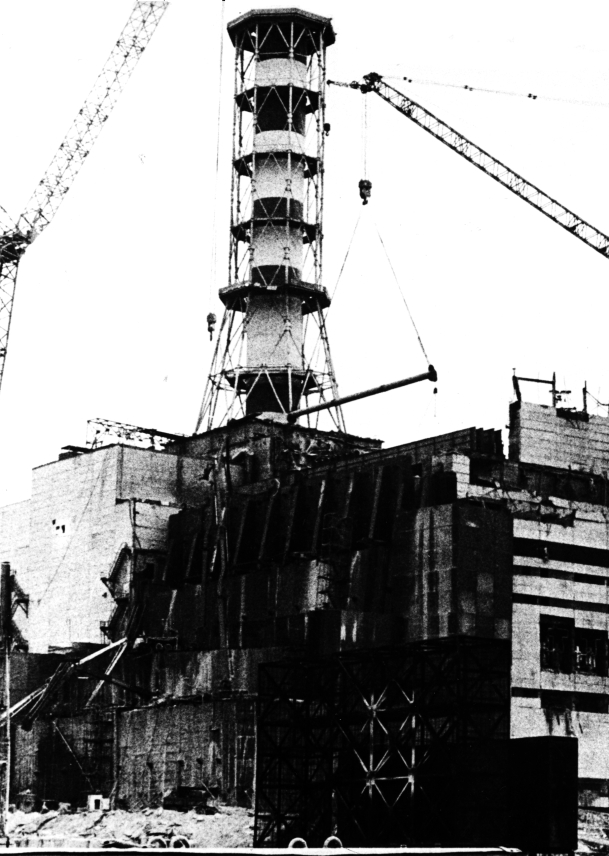
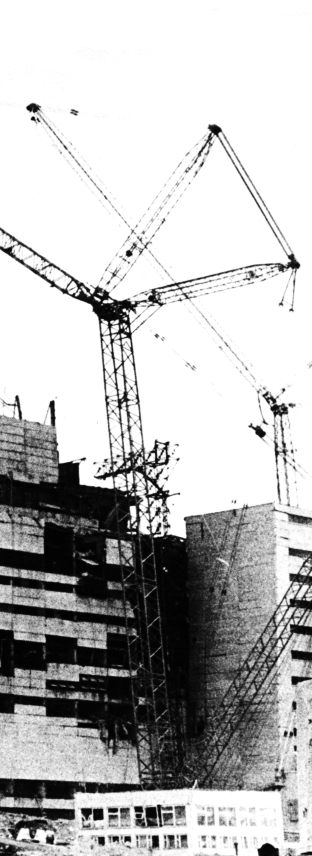
Chernobyl after the accident.
POLFOTO
VEIGลRD
ERIK
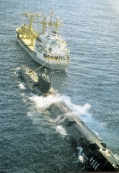
Burning nuclear submarine
Radioactivity
At one o'clock in the morning on April 26,
1986, everything seemed normal in the control
room of the Chernobyl Nuclear Power Plant.
Half an hour later, the worst nuclear power
plant accident in history began. A steam explo-
sion in Reactor 4 started the chain of events,
and further explosions caused the collapse of
the core. During ten days of fire, 9000 kilo-
grams of radioactive material and 700 000
kilograms of radioactive graphite escaped
from the building. The heavy material fell to
the ground close to the power plant, but the
lighter material followed the winds.
The accident was devastating to people
nearby, but it also changed the lives of people
over a thousand kilometers away. The winds
were southeasterly, those spring days in April,
bringing rain to parts of Sweden, Norway, and
Finland. It seemed like any other spring rain,
but more than a decade after the accident
some Saami villages still give their reindeer
special fodder to get rid of radioactive cesium
that the animals accumulate from eating cont-
aminated lichen.
Many people think of Chernobyl as the
worst-ever large-scale release of radionuclides.
It was not. Atmospheric tests of nuclear
bombs, which went on until 1980, spread
much more radioactive material and over a
wider area than Chernobyl. But Chernobyl
added to the radionuclides in the northern
polar area, especially in Fennoscandia, and the
question remains: What are the long-term con-
sequences of this for people living off the land?
It was also a reminder that accidents can
spread radioactive material over large areas.
What future accidents, military and civilian,
could affect the Arctic? This region may be
particularly vulnerable because of the high
density of nuclear sources and because of its
special natural conditions and food chains.
This chapter describes sources of radionuclides
and levels in the environment in an attempt to
assess how past and present activities might
affect the health of Arctic people. Emphasis is
placed on the ecology and food consumption
patterns that effectively carry radionuclides
from their source to people. It also discusses
risks of future releases from nuclear operations
and activities, including nuclear reactors,
nuclear waste storage and processing, spent
nuclear fuel, and other nuclear production and
reprocessing operations. What would happen
if there were an accident in or near the Arctic?
Such events cannot be ruled out, especially
considering the current lack of effective safety
provisions in some nuclear installations.
112
Radioactivity and health
Radiation can also affect germ cells, the egg
and an early developmental stage of sperm,
Radioactivity
Radioactivity is accompanied by the emission
which transmit genetic information from gen-
of ionizing radiation, which can damage living
eration to generation. This increased risk of gen-
cells. Whereas estimates of radioactivity are
etic damage might inhibit development in the
useful for making inventories of sources and
womb or make a child more susceptible to dis-
for tracing radionuclides in the environment,
ease after birth. As is the case with cancer, the
health effects are connected to the dose
probability of such effects increases with dose.
received by organisms, including people. The
At higher doses, radiation above a certain
table below describes some units used to mea-
threshold dose kills cells, causing radiation
sure radioactivity and dose.
sickness. Most people exposed to such high
doses have been in the near vicinity of severe
Units and abbreviations
ญญญญญญญญญญญญญญญญญญญญญญญญญญญญญญญญญญญญญญญญญญญญญญญญญญญญญญญญญญญญญญญญญญญญญญญญญญ
accidents with radioactive material, such as the
Unit
Describes
Older unit
fire fighters at the Chernobyl nuclear power
ญญญญญญญญญญญญญญญญญญญญญญญญญญญญญญญญญญญญญญญญญญญญญญญญญญญญญญญญญญญญญญญญญญญญญญญญญญ
plant in 1986, or near nuclear bomb explo-
Becquerel
Bq
Radioactivity (the spontaneous decay
Curie =
sions, such as the residents of Hiroshima and
of atomic nuclei). Number of dis-
3.7
1010 Bq
integrations per second
Nagasaki in 1945. The first symptoms of radi-
ation sickness are nausea, vomiting, and red-
Gray
Gy
Dose. One gray equals an energy
Rad =
dening of the skin. Radiation sickness can lead
uptake of one joule per kilogram
0.01 gray
to death if the doses are high enough or if the
Sievert
Sv
Effective dose. One sievert has the same
Rem =
person does not get medical treatment. The se-
biological effect in humans as one gray
10 millisievert
of gamma radiation. In this chapter
verity of this radiation damage increases with
effective dose is usually expressed
dose, and the effects are often called determin-
in millisievert (mSv). 1 mSv = 10ญ 3 Sv
istic (certain to occur). Below the threshold,
man-Sievert
man-Sv
Collective dose (the sum of doses to
there will be no deterministic effects.
a group of people). Collective dose-
commitment (the sum of doses to a
group of people over a specified time period)
ญญญญญญญญญญญญญญญญญญญญญญญญญญญญญญญญญญญญญญญญญญญญญญญญญญญญญญญญญญญญญญญญญญญญญญญญญญ
Sources
The relationship between levels of radioactiv-
Radioactivity has both natural and anthro-
ity and the dose that can affect people's health
pogenic sources. The natural radiation stems
is complex. It depends first on whether expo-
from the decay of nuclei in the Earth's crust
sure is external or internal, the latter from in-
and from cosmic radiation. The levels vary
haling or ingesting radionuclides. Other fac-
geographically, depending on local rock for-
tors include the mobility of different radionu-
mations. Concerns in the Arctic are similar to
clides in the environment and whether they
those in other areas. For example, many coun-
accumulate in important foodstuffs. The dose
tries have guidelines limiting the concentration
therefore depends on how we live and what
of radon gas in buildings.
we eat.
In addition to this natural radiation, human
At low doses, the main concern is an in-
activities have added radionuclides to the Arc-
creased risk of cancer, which can develop if an
tic environment. Fallout from atmospheric
irradiated cell is modified rather than killed.
testing of nuclear weapons is the major source,
The probability of cancer increases with the
followed by routine releases from European
dose. There is no evidence of a threshold dose,
nuclear fuel reprocessing plants and the Cher-
a lower limit below which there is no risk.
nobyl accident. Several accidents within the
The table below gives some examples of the
Arctic have added local contamination. There
increases in cancer incidence associated with
may also be some local contamination from
certain doses.
dumping of nuclear waste, storage of radioac-
tive waste, and spent nuclear fuel.
Radiation doses ญ a comparison.
ญญญญญญญญญญญญญญญญญญญญญญญญญญญญญญญญญญญญญญญญญญญญญญญญญญญญญญญญญญญญญญญญญญญญญญญญญญ
0.1 millisievert: Dental x-ray or a return flight across the Atlantic
Nuclear weapons
1 millisievert: The average yearly dose from natural radiation (from the ground, cos-
are the major source of radionuclides
mic radiation, and naturally radioactive substances within the body), excluding
radon. In regulating nuclear activities, 1 millisievert is used as the yearly dose limit
Past atmospheric tests of nuclear weapons re-
for all man-made radioactivity to which the general public can be exposed. It corre-
main by far the largest global source of radio-
sponds to an increased risk of fatal cancer for 1 person out of 20 000.
active contamination. Most of the atmospheric
tests were done before 1962, and atmospheric
20 millisieverts: In many countries, the highest allowable yearly dose for people
testing ceased entirely in 1980. Novaya Zem-
working with radioactivity.
lya, Russia was the only site for atmospheric
A few hundred millisieverts per year: the lower limit for deterministic effects from
nuclear weapons tests in the Arctic. No tests
chronic exposure.
have been conducted there since 1962. Some
One thousand to a few thousand millisieverts: thresholds for different deterministic
underground nuclear tests also took place in
effects at acute exposures.
the Arctic, at Novaya Zemlya, Russia (see the
map in the left column of opposite page) and
10 000 millisieverts: will kill most people and higher animals after acute exposure.
ญญญญญญญญญญญญญญญญญญญญญญญญญญญญญญญญญญญญญญญญญญญญญญญญญญญญญญญญญญญญญญญญญญญญญญญญญญ
at Amchitka Island, Alaska.
About 12 percent of the fallout from the
113
tests has normally been deposited close to the
test site, and about 10 percent has ended up in
a band around the same latitude as the test
site. The remaining 78 percent is global fall-
out, most of which has ended up in the same
hemisphere as the tests. The map at top right
shows the distribution of radiocesium as calcu-
lated by AMAP.
Test site C
Test site B
50
100
250
500
1 000
2 500
5 000
10 000 25 000 Bq/m2
the sea and carried north by ocean currents.
Estimated ground depo-
The releases, which started in 1952, are well
sition of cesium-137
from nuclear-weapon
C
Test site A
h
documented. The graph below indicates the
ern
fallout, decay converted
aya
rates of liquid discharges from 1952 to 1992.
B
for 1995.
ay
Cesium-137 dominates. The peak of the re-
lease for most radionuclides was in the mid-to-
Areas of testing nuclear
late 1970s.
weapons on Novaya
The people most exposed to radioactivity
Zemlya, Russia.
Based on the transfer of radionuclides in the
from Sellafield are those eating fish and sea-
food chain, AMAP has tried to estimate the
weed from the coastal region near the plant
average dose to the members of Arctic popula-
TBq/y
tion as well as the collective dose to the Arctic
6 000
population as a whole. The calculations show
that bomb fallout will contribute, in total, to
5 000
about 750 additional cases of fatal cancer. The
internal dose is very dependent on food habits.
People living wholly on local products such as
4 000
reindeer/caribou have received much higher
doses than those mostly eating food imported
3 000
from temperate regions. People living off ma-
rine fish and marine mammals have received
2 000
the lowest doses.
1 000
Reprocessing plants
have added radionuclides to the sea
0
Spent nuclear fuel is often processed to recover
1950
1955
1960
1965
1970
1975
1980
1985
1990
1995
plutonium. Water used in reprocessing contains
106
241
90
137
a soup of different radionuclides, and some of
Ru
Pu
Sr
Cs
this contaminated water has been released rou-
and those working along the shoreline close to
Discharges of beta-emit-
tinely into the sea. In Europe, three reprocess-
the plant. Even for them, doses are well below
ters from Sellafield
ing plants are relevant to the Arctic because of
the recommended maximum. Individual doses
nuclear reprocessing
plant, 1012 bequerels per
transport of radionuclides by ocean currents:
to people in the Arctic will be much lower.
year.
Sellafield (formerly Windscale) in Cumbria on
The reprocessing facility at Cap de la Hague
the northwest coast of England, La Hague near
has operated since 1965. The total discharges
Cherbourg, France, and Dounreay in northeast
are much less than for Sellafield, as is also the
Scotland. Sellafield has been the most impor-
case for Dounreay. The major peak for Doun-
tant source of radionuclides to the Arctic ma-
reay was in the 1960s and early 1970s, with
rine environment, because of the scale of its
small peaks in 1968 and 1973 from plant
discharge. The effluent has been released into
cleaning and decontamination procedures.
AMAP has estimated the collective dose com-
The radioactive cloud from Chernobyl also
114
mitment for the Arctic to be 50 mansieverts
reached the Arctic. The winds carried the ma-
Radioactivity
from European reprocessing plants. This indi-
terial first to the Baltic states, then to Sweden,
cates that there would be approximately one
Norway, and southern Finland, and in Russia
to two additional cancer deaths in total within
to the Arkhangelsk region, the southern part
the Arctic area.
of the Kola Peninsula, and Salekhard in the
estuary of the Ob River. In contrast to the Euro-
pean and western Russian Arctic, the radioac-
The Chernobyl accident spread
tive deposition in the north of eastern Siberia
radiocesium across the European Arctic
was relatively insignificant.
On April 26, 1986, two explosions in quick
The map on this page shows the most sig-
succession blew the roof off one of the four
nificantly contaminated area, which extends in
reactors in the Chernobyl nuclear power plant
from east to west across the Leningrad region
in the Ukraine. Concrete, graphite, and debris
of Russia, southern Finland, and Scandinavia.
were ejected into the air, leaving a gaping hole
No large regions north of the Arctic circle were
that exposed the reactor core. During a ten-
severely contaminated. The levels in northern
day fire, smoke and gases rose more than one
Scandinavia are about 2000 becquerels per
kilometer into the atmosphere, followed by
square meter, which is close to the level of
fragments of uranium fuel. The heat from the
global fallout. Most of the European part of
fire released radioiodine, a substantial fraction
the Russian Arctic also has levels of less than
of volatile metallic elements including radioce-
10 000 becquerels per square meter.
sium, and somewhat lesser amounts of other
The most important ecological pathway for
radionuclides normally found in a reactor.
radiocesium in the Arctic is the lichen-reindeer-
human food chain. The cesium-137 in lichen
Estimated total releases from Chernobyl
ญญญญญญญญญญญญญญญญญญญญญญญญญญญญญญญญญญญญญญญญญญญญญญญญญญ
peaked in 1986-1987 at levels that are compa-
iodine-131
1500
1015 becquerels*
rable to the peak in fallout from nuclear wea-
cesium-137
85
1015 becquerels*
pons tests. After that, the concentrations have
cesium-134
46
1015 becquerels*
decreased with an environmental half-life of
strontium-90
8
1015 becquerels*
three to four years. Measurements in reindeer
alpha-emitting
plutonium nuclides
0.1
1015 becquerels*
also show a peak similar to that associated
ญญญญญญญญญญญญญญญญญญญญญญญญญญญญญญญญญญญญญญญญญญญญญญญญญญ
with global fallout.
*most of these radionuclides were deposited
In several countries, the human body bur-
in the vicinity of Chernobyl.
den of radiocesium has also been monitored.
The radioactive material spread over more
After the Chernobyl accident, there was a sig-
than 140 000 square kilometers of the territory
nificant increase of radioactivity in Arctic
of Ukraine, Belarus, and Russia. At first, the
indigenous people who consume foods that
most important route of exposure was via
concentrate radiocesium, such as reindeer
milk, not via air as many expected. In the fol-
meat, freshwater fish, mushrooms, and berries.
lowing years, other local foodstuffs became
A typical value for Finnish Saami in the Inari
important sources, such as mushrooms and
region in the early 1980s was 4000 becquerels.
berries, in which contaminant levels have de-
In 1986-1989, it rose to 9000 becquerels. It
clined much more slowly.
has now decreased to its earlier level. In
Norwegian Saami, the pre-accident level was
3000 becquerels, peaking at 40 000 becquerels
in 1989 in the Chernobyl-affected areas, and
gradually decreasing since then. Reindeer-
breeding Saami in northern Sweden accumu-
lated an average of 40 000 becquerels of
cesium-137 in 1987-1988 compared with
5000 in previous years. In the Murmansk
region of the Kola Peninsula, body burdens in
the indigenous population before the accident
were 20 000 to 30 000 becquerels. By July
1991 these had increased to 33 000 becquerels.
The range of peak values in whole body con-
tent reflects the level of soil contamination,
meteorological conditions, the duration of the
snow cover in 1986, and individual food
Chernobyl
137Cs
habits. The high pre-accident body burden in
kBq / m2
Russia may reflect a relatively higher intake of
185
40
reindeer there than in the other countries.
10
Based on whole body measurements, it has
Cesium-137 contamina-
2
been possible to estimate the radiation dose
tion after the Chernobyl
accident, 103 bequerels
before and after the accident. The individual
per square meter.
committed effective internal dose ranges from
0.5 to 10 millisieverts. Based on the collective
dose for the population of the European
Arctic, the Chernobyl accident will probably
cause about 25 additional cases of fatal cancer.
Kasli
Weapons production has contaminated
Russian rivers
Russia has three fuel reprocessing plants, at
Ozyorsk
Mayak, Krasnoyarsk, and Tomsk, which are
all situated south of the Arctic. Radioactive
R-3
R-2
releases from the Mayak and Tomsk installa-
R-4
R-9
R-10
Mayak
Left bank canal
tions enter the drainage area of the Ob River
R-17
site
and those from Krasnoyarsk go directly into
R-11
Amasov
the Yenisey River. They can eventually be
swamps
Right bank canal
Muslyumovo
transported to the Kara Sea.
The Mayak plant was built in 1948 to pro-
duce plutonium-239 for nuclear weapons.
From 1949 to 1956, the plant discharged
Techa
large quantities of radioactive waste into the
nearby Techa River, and, since 1951, also into
tive contamination through the bottom into
The system of dams and
a lake with no outlet, Lake Karachay; see the
groundwater.
drainage channels at
map right.
Lake Karachay has no outlet but caused
Mayak, Russia. Lake
Karachay (R9) is located
Spring flooding has contaminated large
contamination of the surroundings during a
within the Mayak site.
parts of the Asanow Swamp along the bank of
dry period in 1967, when lake sediments were
upper Techa River. Some of the radionuclides,
exposed and spread by winds. The lake bot-
especially mobile isotopes such as strontium-
tom is now covered with blocks of concrete to
90, have also been carried downstream via the
prevent further resuspension. However, radio-
river system and into the Kara Sea. Current
nuclides can leach from the sediments into the
releases from the Mayak plant are consider-
groundwater, from where they might spread
ably reduced, since the last of the reactors pro-
farther into the Techa River.
ducing weapons-grade plutonium was shut
The Siberian Chemical Combine at Seversk
down in 1990. In addition to intentional dis-
near Tomsk is one of the largest nuclear wea-
charges, the area around Mayak (about 20 000
pons production facilities in the world.
square kilometers) has been contaminated by
It came to international attention in April
the Kyshtim accident in 1957, when a storage
1993, when a chemical reaction caused an
tank of highly radioactive material exploded.
explosion in a tank containing fission products
Between 1951 and 1966, a system of dams
and uranium nitrate solution, contaminating
along the upper parts of the Techa was con-
an area of about 90 square kilometers. A
structed in an attempt to retain the radioac-
recent report from the Russian Federation
tive material, creating several artificial lakes
Security Council has stated that large amounts
along the river course. The concern for the
of radioactive wastes were stored within the
Arctic is that the storage ponds might fail to
industrial zone, some of which are retained in
contain the waste. One scenario is a total dam
reservoirs.
failure, which could empty the radionuclides
Since 1956, the plant has released conta-
into the Asanow Swamp below the dam and
minated cooling water into the river Tom,
into the Techa River and eventually into the
which ultimately drains into the Ob. Storage
Ob. Another large-scale release could occur if
ponds at the site are also severely contami-
the Asanow swamp were to dry out, after
nated. The major concern is contamination of
which floods could wash radionuclides into
the groundwater. In addition to surface dis-
the Ob. One of the dams also leaks radioac-
charges, Tomsk-7 is one of two sites in Russia
Activities of waste discharge by Russian reprocessing plants.
ญญญญญญญญญญญญญญญญญญญญญญญญญญญญญญญญญญญญญญญญญญญญญญญญญญญญญญญญญญญญญญญญญญญญญญญญญญญญญญญญญญญญญญญญญญญญญญญญญญญญญญญ
Russian reprocessing plants
Environmental discharge
Storage in the environment
ญญญญญญญญญญญญญญญญญญญญญญญญญญญญญญญญญญญญญญญญญญญญญญญญญญญญญญญญญญญญญญญญญญญญญญญญญญญญญญญญญญญญญญญญญญญญญญญญญญญญญญญ
Mayak
1017 Bq to Techa River.
About 4 1018 Bq in Lake Karachay
7 1016 in the Kyshtym accident,
8 1016 Bq accumulation in reservoirs
1957
and surrounding areas
Siberian Chemical Combine
4 1013 Bq in1993 explosion.
1.5 1019 Bq underground
Tomsk-7
Discharge of cooling water
5 1018 Bq surface storage
to River Tom (1995 inventory in river
was 1.4 1015 Bq)
Krasnoyarsk Mining and
Cooling water discharge to
8 1018 Bq in cooling water
Chemical Combine
River Yenisey;
stored in stainless steel tanks
leaking pipeline.
4 1018 Bq injected into the ground
2 105 Bq liquid waste in reservoirs
ญญญญญญญญญญญญญญญญญญญญญญญญญญญญญญญญญญญญญญญญญญญญญญญญญญญญญญญญญญญญญญญญญญญญญญญญญญญญญญญญญญญญญญญญญญญญญญญญญญญญญญญ
that has used underground injection as a way
116
Underwater weapon tests
of disposing of large volumes of liquid waste.
Radioactivity
have contaminated Chernaya Bay
The Krasnoyarsk Mining and Chemical
Combine, recently renamed Zheleznogorsk,
Chernaya Bay (see the map in left column of
reprocesses spent nuclear fuel for the produc-
page 113) is a fjord inlet, connected to the Ba-
tion of plutonium and is also a storage site.
rents Sea, on the southwestern coast of No-
It routinely discharges cooling water into the
vaya Zemlya. The former Soviet Union used
Yenisey River and stores waste in ponds, some
the bay to conduct underwater tests of nuclear
of which might contaminate groundwater
bombs in 1955 and 1957, and in the vicinity
migrating into the Yenisey.
of the bay in 1961. As a result of these detona-
Most of the radioactive waste on the site
tions, the bottom sediments of the bay are con-
stems from reprocessing and much of it has
taminated with elevated levels of radioactive
been injected into the ground. The liquid waste
plutonium and cesium, as well as other radio-
was transported to the injection site via a re-
active isotopes. However, the mobility of
portedly leaky pipeline, which has spilled un-
radionuclides in sediment is low and may at
known amounts of radioactive waste along its
present only cause insignificant exposure for
route. The plant has also stored liquid waste in
people. Exposure of biota is unknown.
reservoirs.
Today, the inventory of plutonium in Cher-
How contaminated are the Russian river
naya Bay is similar to other sites of major plu-
basins, and how much radioactivity have they
tonium contamination, such as the most conta-
supplied to the Arctic? It is difficult to estimate
minated areas of Bylot Sound (where a B-52
the total flux of radionuclides, especially before
bomber crashed), and the Irish Sea in the vicin-
1961. Recent investigations indicate that most
ity of the Sellafield reprocessing plant.
of the contamination in Ob estuary sediments
Three underground nuclear detonations
comes from global fallout of cesium-137.
were carried out by the United States on Am-
However, little information on strontium-90
chitka Island in the Aleutian Islands in 1965,
and other mobile radionuclides is available.
1969, and 1971. These detonations caused
From 1961 to 1990, annual mean concen-
radioactive contamination of deep groundwa-
trations in the water show that the rivers have
ter and rock around the shot cavities. Long-
transported about 1.4 1015 Bq of strontium-
term monitoring activity is planned for this site
90 to the Kara Sea. Several recent investiga-
to 2025. In 1996, above-ground radioactive
tions of the tributary rivers and the reservoirs
contamination was detected at the site.
confirm that most of the radioactivity is depo-
sited in the upper Techa River, in the reser-
Civilian use of nuclear explosives
voirs, in the Asanow swamp, and in areas
has led to local contamination
contaminated by the storage-tank explosion.
Therefore, the Russian reprocessing plants are
The former Soviet Union used nuclear explo-
mainly a local source of radioactivity. The con-
sives to carry out mining and construction
work. From 1967 to 1988, several such civil-
ian nuclear explosions were carried out under-
ground in the Arctic or close to the Arctic. At
three of the sites, accidents led to significant
local contamination; see map left.
The nuclear explosion `Taiga' in March
1971 was the first of 250 planned under-
ground charges to create a canal in an attempt
to redirect some northern Russian rivers. The
explosion contaminated a 700-meter-long
trench 100 kilometers from Krasnovieshersk.
Fifteen years after the explosion, the radiation
levels were still 0.01 mSv per hour in the most
Krasnovieshersk
contaminated areas.
Aykal
On October 2, 1974, an explosive was deto-
nated to construct a dam about 90 kilometers
from Aykhal. The `Crystal' detonation did not
go according to plan, and an array of radionu-
clides was released into the nearby environ-
ment. The contamination was not measured
Civilian nuclear explosions
until 1990-1993 and there is not enough infor-
Locations of civilian
cern for the Arctic is that the storage ponds
mation to estimate the amount of radioactivity
nuclear explosions in the
might fail to contain the waste. A broken dam
that was released. The report mentions a dead
Russian Arctic.
or an accident at the site could create a sudden
forest but not whether this was the result of
large release, while seepage into groundwater
radioactive fallout.
would make the ponds a long-term continuous
`Kraton-3' took place on August 24, 1978,
source.
about 120 kilometers from Aykhal at a depth
of 577 meters. Its purpose was seismic sound-
ter-sized particles over an area of 124 000
117
ing of the Earth's crust. A few seconds after the
square kilometers. The remaining three-quar-
Radioactivity
explosion, instruments recorded a radioactive
ters probably volatized or dispersed as fine
release, probably from an incompletely sealed
particles in the upper atmosphere. The stron-
well. The cloud came over a camp and
tium and cesium on the particles deposited to
exposed about 80 people. In 1981, there was a
the surface over a period of several years.
large-scale attempt to decontaminate the area.
The most exposed people were the recovery
The table below presents some measurements
personnel, some of whom had individual doses
from 1990-92. The reports mention a dead for-
of up to 5 mSv. A member of the public spend-
est at this site, too.
ing several hours near an unrecovered core
Local contamination from nuclear explosions.
fragment could have received an effective ex-
ญญญญญญญญญญญญญญญญญญญญญญญญญญญญญญญญญญญญญญญญญญญญญญญญญ
ternal dose of about 5 mSv. Handling a milli-
Chernaya Bay under- 3 1012 Bq integrated inventory
meter-size particle for several hours would
water bomb tests
in sediment measured in 1995
have given a skin dose of 1 mSv. Eating a core
Aykhal Crystal
2 104 Bq Cs-137 and 3.5 104
particle one month after the accident could
detonation in 1974
plutonium per kilogram soil as
give an effective dose of up to 12 mSv to the
measured in 1990-1993
stomach and intestines. This is more than half
Kraton-3, 1978
Soil samples in 1990-92:
the allowable yearly dose for people working
strontium-90 less than 103 Bq
per kg soil, plutonium-239 and
with radiation.
240 less than 2 103 Bq/kg soil,
cesium-137 less than 104 Bq/kg
soil up to 4.4 104 Bq per
Nuclear power plants
kilogram reindeer moss
have minor routine releases
ญญญญญญญญญญญญญญญญญญญญญญญญญญญญญญญญญญญญญญญญญญญญญญญญญ
There are two nuclear power plants within the
American aircraft crash
Arctic: the Kola plant near Polyarny Zori on
spread plutonium at Thule
the Kola Peninsula and the Bilibino plant in
the Chukchi region of eastern Russia. In addi-
In January 1968, an American B-52 aircraft
tion, there are nuclear power plants within
carrying four nuclear weapons crashed on the
1000 kilometers of the Arctic in Sweden, Fin-
ice in Bylot Sound near Thule, Greenland. The
land, and Russia.
impact triggered conventional explosives, which
Measurements and reports from the Swe-
led to fragmentation of the nuclear weapons
dish and Finnish plants show that routine dis-
on board. The plutonium spread over the ice.
charges from nuclear power plants are usually
Clean-up crews removed the debris from the
small and that they have not contributed mea-
crash and the upper layer of contaminated
surable amounts to the current levels of conta-
snow. However, it was agreed that not all the
mination in the Arctic region. Releases from
plutonium was recovered and some unknown
the Russian plants are higher than from Swe-
amount fell to the bottom of Bylot Sound.
dish and Finnish plants but within limits that
Subsequent environmental studies carried out
have been set on the basis of international
Contamination of sedi-
by Denmark have concluded that approxi-
ment after the Thule
safety standards.
accident, mean value
mately half a kilogram of plutonium sank to
The main concern with nuclear power is the
1979-91, 103 bequerels
the underlying sediments. (The Danish study
risk of accidents, which is further discussed
per square meter.
results have not been officially endorsed by the
under Potential Releases.
U.S. government.)
Immediately after the accident, the seawater
in Bylot Sound had slightly higher levels of
Thule
plutonium than other places along the Green-
land coast. By 1970, the levels were down to
background, the most likely explanation being
that the plutonium adhered tightly to sediment
particles. The map right shows the activity in
the sediment.
Cosmos-954 satellite spread
radioactive material over Canada
Saunders Island
On January 24, 1978, the nuclear-powered sa-
Thule Airbase
tellite Cosmos 954 burned up in the atmosphere
over the Northwest Territories of Canada. Early
search-and-recovery operations showed that
radioactive debris spread over a thousand-kilo-
239 /240
meter path northeast from Great Slave Lake.
Pu
2
Aerial surveys indicate that about one quar-
0.1
0.4
1.6
6.4
25
100 kBq/m
0
10 km
ter of the radionuclide inventory the satellite
reactor was deposited in the form of millime-
118
Ship reactors are poorly documented
weapons spread contamination mostly in the
upper stratosphere. Slowly, the material moves
Radioactivity
Russia has eight nuclear-powered civilian ves-
to the lower layer, the troposphere, especially
sels operated by the Murmansk Shipping
in the spring. The mean residence time for ra-
Company. Their base, Atomflot, is situated
dionuclides in the Arctic stratosphere is approx-
two kilometers north of Murmansk. Seven of
imately one year. Radionuclides from smaller
the ships are icebreakers, used mainly for ship-
nuclear bombs and from accidents are usually
ping along the northern coast of Siberia, but
injected into the troposphere, where they stay
also for scientific expeditions and for tourism.
for only a few weeks.
The other vessel is a container ship.
Measurements of cesium-137 from Troms๘
Several countries, including the United States,
and Skibotn in northern Norway show that
the United Kingdom, France, and China also
concentrations in Arctic air were lower than
have nuclear-powered military vessels that can
at nearby non-Arctic locations in Finland; see
transit the Arctic. Ships in the Northern Fleet
the graph below. The levels of cesium-137 have
of Russia, stationed at bases on the Kola Pen-
dropped rapidly since 1980, when the last at-
insula, contain approximately 150 nuclear
mospheric test was carried out. The Chernobyl
reactors, most of them in submarines.
accident in 1986, however, again increased the
The routine, operational releases of radio-
air concentration by several orders of magni-
active material from nuclear-powered vessels
tude for a few months. In recent years, the de-
are probably small, but documentation is not
cline in air concentration of cesium-137 has
available.
slowed down. The explanation could be resus-
pension, that winds pick up the radionuclides
from the ground.
Levels of radionuclides
Deposition peaked in 1963
The nuclear weapons tests in the 1950s led to
increased interest in measuring levels of radio-
Long-lived radionuclides in the air will eventu-
nuclides in the environment. Along with stud-
ally fall to the ground, or be washed out by
ies of the fate of radionuclides from the repro-
rain and snow. Deposition levels therefore fol-
cessing of spent nuclear fuel, these measure-
low the same trends as the air measurements.
ments allow the study of time-trends and geo-
Data from Arctic Finland, Greenland, and
graphical variations in radioactivity. The levels
Arctic Russia all show that deposition peaked
reflect the input and the rate of radioactive de-
in 1963. Until 1980, atmospheric bomb tests
cay, but also the physical and ecological path-
kept adding new material, which slowed down
ways that move radionuclides in the environ-
the decline in deposition rates. After 1980, re-
ment.
suspension of radionuclides from the ground
has also made the decline less rapid than one
Air concentrations have dropped
would expect from a purely stratospheric
since the bomb tests ceased
source. AMAP has made an estimate of the
deposition from nuclear weapons fallout, and
The Arctic atmosphere has traces of radionu-
the relationship between precipitation and de-
clides from bomb tests and from nuclear
position. The deposition for 1995 is shown in
power plants. The atmospheric tests of nuclear
the map on the top right column of page 113.
137Cs
ตBq/m3
1 000 000
100 000
10 000
1 000
100
10
1
Monthly mean concen-
0.1
trations of cesium-137
in air.
0.01
1960
1965
1970
1975
1980
1985
1990
1995
Finland,
Norway, Troms๘/
Naryan Mar
Norilsk
Helsinki area
Skibotn area
Fallout has contaminated
terrestrial plants and animals
Radionuclides captured by rain or snow conta-
minate vegetation and the ground, as does dry
deposition. Lichens and mosses, with large
surface areas that gather moisture directly
from the air, are particularly effective in gath-
ering radionuclides from atmospheric fallout.
Lichens are also fodder for reindeer and cari-
bou and thus one of the major routes through
which radionuclides reach people.
The levels of strontium-90 and cesium-137
in lichen in Greenland and in Arctic Finland
and Russia peaked in 1965-1969; see the
graphs at bottom of this page. The Chernobyl
accident clearly shows up in Fennoscandian
lichen, but is less evident in northeast Russia
and hardly detectable in Greenland, Iceland,
Canada, and Alaska.
Other plants also take up radionuclides
from the soil through their roots. Mushrooms
have a propensity for concentrating some
radionuclides. People eating mushrooms and
137Cs (Bq/kg)
berries from contaminated land will ingest
1 500-2 500 600-1 500
200-600
some of the material that the plants have gath-
0-200
ered from the soil. In some areas, mushrooms
are an important component of the local diet.
northwest Russia. The levels have now stabi-
Average activity concen-
lized again and the future decrease will proba-
trations of cesium-137
in reindeer/caribou meat
Grazing animals
bly be slow. The geographic variation mirrors
1990-1995.
concentrate radionuclides
precipitation rates, wind direction, and dis-
tance from the source, with much higher levels
Concentrations of radionuclides in grazing
in Norway, Sweden, and the Kola Peninsula
animals reflect their food habits. This is espe-
than in the rest of the Arctic; see the map
cially evident in the high levels of cesium-137
above.
in caribou/reindeer that feed on contaminated
Reindeer/caribou meat is an important food
lichen. In the summer, they prefer herbs, which
source for many indigenous people, and some
are less contaminated than their winter fodder
groups might consume as much as a kilogram
of lichen.
per day. The high levels in reindeer/caribou
The concentrations of cesium-137 in cari-
have made their meat the major source of
bou/reindeer meat peaked in the mid-1960s.
cesium-137 for Arctic people. Sheep and cows
After that, the levels decreased until the Cher-
feeding on contaminated grass and mush-
nobyl accident in 1986, when there was a sig-
rooms can also pass radionuclides to people
nificant increase in Sweden, Norway, and
via meat, milk, and cheese.
Five-year average of
strontium-90 (left) and
cesium-137 (right) in
137
lichen.
Cs
Bq/kg
2 000
1 500
90 Sr
Bq/kg
300
1 000
250
200
150
500
100
50
0
0
1960-1964 1965-1969 1970-1974 1975-1979 1980-1984 1985-1989 1990-1994
1960-1964 1965-1969 1970-1974 1975-1979 1980-1984 1985-1989 1990-1994
Finland
Greenland
Russia
Ecological pathways in the Arctic environment
nutrient-poor lakes. The levels also depend on
The highest levels of cesium-137 and strontium-90 in the Arctic environment appear
the feeding habits of the fish. After Chernobyl,
in terrestrial animals that graze on long-lived plants. The prime example is
the peak came first in plankton-eating fish, low
reindeer/caribou feeding on lichen. This biological pathway can be contrasted to an
in the food chain, and later in predatory fish
agricultural system, where the plants usually grow for less than a year before they are
such as pike. Levels in fish can be similar to
harvested and thus have a much shorter time to accumulate radionuclides. Plowing
those in sheep and wild animals, but normally
and fertilizer use also lead to reduced uptake in agricultural systems. Moreover, agri-
cultural plants rely more on their roots to take up moisture and nutrients than on the
lower than reindeer meat and some mushroom
parts that are exposed to the air, and root uptake of radionuclides is usually less effi-
species.
cient than air uptake. However, in forests, bogs, and mountain pastures, root uptake
may be very important for radioactive contamination of berries and indirectly of ani-
mals through fodder. Mushrooms often have relatively high uptake of radiocesium
Glaciers are reservoirs of old fallout
through their root systems.
Efficient transport of radionuclides from fallout to lichen to reindeer/caribou, along
Measurements of strontium-90 in drinking
with uptake in other natural food products such as mushrooms, freshwater fish, and
water in Greenland show that storage in ice
berries, leads to Arctic people receiving higher doses of cesium-137 from fallout than
can slow down cleansing from the environ-
people almost anywhere else in the world. The doses from naturally-occurring
ment. In northern Greenland, most drinking
radionuclides are also higher for people who rely heavily on caribou or reindeer in
water comes from ice and snow. Here, the lev-
their diet.
The transport of radionuclides in the marine food web is very inefficient. One
els of strontium have gone down much more
explanation is that they are diluted in huge water masses, another that the high con-
slowly than in southern Greenland, which
tent of salt and stable isotopes of cesium and strontium compete for the same sites of
relies more on surface water. However, even
uptake as the radionuclides. Marine animals and people living off marine food sources
the highest levels today are lower than in the
have the lowest levels of cesium and strontium in the Arctic.
1960s.
Lakes and rivers provide route
Currents transport radionuclides
to fish and people
around the Arctic Ocean
Freshwater systems such as lakes and rivers
A major direct input of radionuclides into the
accumulate contaminants from the air and
marine environment has been from European
from the soil. Strontium-90, in particular, ends
nuclear reprocessing plants, particularly Sel-
up in the water, since it does not adhere
lafield on the shore of the Irish Sea. Currents
strongly to soil particles or to sediment. Some
transport the material along the Norwegian
Russian rivers are also contaminated directly
coast and into the Arctic Ocean. After six to
by discharges from nuclear facilities. There is a
eight years, some of the contamination leaves
lack of data from Russian rivers before 1960.
the Arctic by way of the East Greenland Cur-
It is possible that the highest levels in the Ob
rent, but much of it stays in the Arctic Basin
Releases of cesium-137
River occurred prior to 1960 because of the
much longer.
from Sellafield nuclear
releases from Mayak between 1949 and 1956.
Environmental radiocesium levels have been
reprocessing plant (1012
The levels in most other rivers peaked in the
measured since the early 1970s. As can be seen
bequerels per cubic
mid-1960s. The graph below shows levels in
in the graph below, the releases of cesium-137
meter) compared to
freshwater at some sites in Russia and Finland.
from Sellafield are virtually mirrored in the
activity in the Barents
Sea and East Greenland
The radionuclide levels in fish depend on
levels found in the Barents Sea after a trans-
Current (bequerels per
many factors. For example, nutrient levels, size
port time of four to five years. The peak in con-
cubic meter).
of the catchment area of the lake or river, and
centration in the early 1980s is probably the
water volume play a major role in the uptake
highest level that has ever occurred in that area
Yearly average concen-
of cesium-137. In lakes with high biological
of the ocean. The Chernobyl accident in 1986
trations of strontium-90
in Russian and Finnish
productivity, the radionuclides are diluted, and
added cesium to the Arctic Ocean and contin-
rivers.
the concentration in each fish is lower than in
ues to do so via outflow from the Baltic Sea.
90 Sr
Releases from Sellafield (TBq)
Levels in seawater (Bq/m )
3
Bq/m3
60
6 000
50
Russia
Finland
East Greenland Current
East Russia
Torniojoki
Barents Sea
50
5 000
Mid Russia
Kemijoki
40
Sellafield
West Russia
40
4 000
30
30
3 000
20
20
2 000
10
10
1 000
0
0
0
1960
1965
1970
1975
1980
1985
1990
1995
1950
1955
1960
1965
1970
1975
1980
1985
1990
1995
The map to the right shows the recent levels of
121
cesium-137 in seawater around the Arctic.
Strontium-90 has been measured in surface
seawater collected around Greenland and the
Barents Sea; see the graph below. Over the past
35 years, levels in the waters around Green-
land have decreased, with approximately half
removed or decayed every 13.5 years. This
value is probably representative for the Arctic
Ocean as a whole.
The levels in fish, seals, and whales collected
in Greenland waters and in the Barents Sea
since the early 1960s are very low, especially
compared with levels in caribou and reindeer.
The reasons are that salts in the seawater pre-
vent plants and animals from taking up the
radionuclides and that the oceans are so vast
that the material is diluted. Consequently,
Arctic people living off the sea have low body
burdens of cesium-137.
90Sr
3
Bq/m
40
Greenland water
137 Cs
Barents Sea
Bq/m3
Kara Sea
0 to 4
4 to 8
8 to 16
30
minants and by drinking water that has been
Activity concentration
contaminated by fallout.
of cesium-137 in seawa-
How much of the radionuclide contamina-
ter in 1994.
20
tion in the environment ends up in people?
The answer depends to a large extent on what
Time trends of activity
we eat. Reindeer meat, mushrooms, and fish
concentrations of stron-
tium-90 in seawater.
10
from nutrient-poor lakes are some of the food-
stuffs that contribute most to human body
burdens.
The highest levels of cesium-137 in people
Time trends of body
0
burden of cesium-137 in
were recorded in the mid-1960s; see the figure
1960
1965
1970
1975
1980
1985
1990
1995
two groups of Norwe-
bottom left. For the following 20 years, the
gian reindeer herders.
human body burden decreased by a factor of
three to seven. However, in 1986, the Cherno-
Measuring body burden
The body burden in people has decreased
byl fallout changed the trend in areas directly
of radionuclides by
keeping a detector on
People are exposed to atmospheric fallout
affected by the accident, and in small areas
the knees and bending
directly by breathing the air, but also by eating
mainly in Norway and Sweden, higher levels
over with the body.
plants and animals that have gathered conta-
than in the 1960s have been observed.
Kautokeio, Norway.
137Cs
Bq/kg
50 000
40 000
30 000
20 000
10 000
WESTERLUND
0
1965
1970
1975
1980
1985
1990
1995
2000
ANDERS
Kautokeino
Snๅsa
ERIK
137Cs
Anthropogenic sources add to the load. For
137
Bq/kg
Cs Bodyburden
the 60-70ฐ N latitude belt, where the majority
Bq/m2
Bq
of the Arctic population lives, the additional
5 000
50 000
lifetime dose is about 0.6 mSv. This includes
Reindeer herders (Bq)
fallout from nuclear weapon tests and Cher-
nobyl. The levels decrease from south to north
4 000
40 000
because of decreasing amounts of precipita-
tion. People in areas with high levels of fallout
from Chernobyl will have higher doses. The
3 000
30 000
estimated external dose commitments over a
lifetime for the Norwegian, Swedish, and Fin-
2 000
20 000
nish average populations are 1.0, 0.6, and 1.7
Lichen (Bq/kg)
millisieverts respectively, but Arctic popula-
tions were generally less exposed to the Cher-
1 000
10 000
Reindeer (Bq/kg)
nobyl fallout because of the fallout pattern.
The range in total lifetime external dose for
Deposition (Bq/m2)
Arctic populations will be 0.6 to 1 millisieverts
0
0
from all man-made radioactivity.
1960
1965
1970
1975
1980
1985
1990
1995
Do radionuclides behave differently in the Arctic?
The internal dose varies with diet
Information about radioactive contamination in air, water, plants, animals, and peo-
ple can be used to calculate how effectively radionuclides are transferred within the
The internal dose comes from radionuclides
food chain in the Arctic environment. Such calculations have previously been made
we breathe in or take up from food and water.
mostly for non-Arctic areas, and there have been questions about how well they
Natural radioactivity gives an internal dose via
apply to northern vegetation patterns and eating habits. For example, what happens
if people or animals rely heavily on mushrooms one year and hardly eat any the next,
potassium-40 in the body and from radon gas
because the crop is poor? This could easily change the body burden of radionuclides
and its decay products. For Arctic regions, the
without any changes in deposition rates. It is also possible that reindeer one year
average is 1.5 mSv per year but may be higher
might be fed with hay because of a shortage of lichen, which would reduce their
in areas with a high release of radon from the
intake of cesium-137.
AMAP has compared a non-Arctic-based assessment of radiocesium transfer to
ground into dwellings. The annual dose from
people with an assessment where specific Arctic conditions are taken into account.
radon is 0.5 to 4 millisieverts. However, expo-
The comparison shows that for the general population the transfer in the Arctic is
sure to radon is generally lower in the Arctic
five times higher than in temperate areas. However, for special groups of the popula-
than in temperate areas. Caribou/reindeer
tion consuming a large proportion natural food products, the transfer could be more
than 100 times higher than in temperate areas. The Arctic is thus more vulnerable to
meat that has gathered naturally-occurring
radioactive contamination than temperate areas.
radioactive polonium can also add to the load,
The graph summarizes the relationships between cesium-137 in deposition, lichen,
giving a dose as high as 10 mSv per year for
reindeer meat, and the human body for northern Finland, as an example of real
some groups.
rather than calculated transfer. The AMAP assessment has provided similar data for
Arctic Norway and Arctic Russia and, partially, for Greenland. The main conclusion
The most important man-made radionu-
is that there is a geographic variation in the land-based food chain depositionญlichenญ
clides for internal exposure are strontium-90
reindeerญhuman. The efficiency of radionuclide transfer depends on the density of
and cesium-137. The dose depends primarily
lichen growth and on the food habits of reindeer and people.
on what we eat. AMAP has therefore divided
the risk assessment among different groups of
people according to food habits. In the AMAP
assessment, caribou hunters in Canada have
Individual exposure
the highest intake of radionuclides from both
and food habits
natural and anthropogenic sources. The high
intake stems from the fact that people in the
Information about levels of radioactivity in the
selected community used in the calculation are
Arctic environment can be used to assess doses
projected to eat as much as one kilogram of
of radiation and the consequent risks to
caribou meat per day. This may also be accu-
human health. If the deposition levels are rep-
rate for other indigenous communities in the
resentative, if all pathways are taken into
Arctic countries.
account, and if the assumptions about food
The exposure from man-made radionuclides
habits and lifestyle are correct, this dose
is calculated as a dose commitment from 1950
should reflect the body burden for people.
to infinity. The dose commitment for cesium-
137 is about 150 mSv for the Canadian com-
munity that relies most heavily on caribou meat
Natural radiation
in its diet. This is four to five times higher than
dominates the external exposure
the average dose commitment for all Arctic in-
External exposure refers to radiation that is
digenous people during the same time period.
emitted outside the body. The external expo-
The Arctic indigenous people who rely heavily
sure from natural radiation varies little over
on terrestrial food products (especially reindeer
time and is about 0.85 mSv per year for cos-
meat) have about 50 times higher exposure than
mic rays and terrestrial gamma rays combined.
average members of the general population.
In areas with high natural radiation, the dose
Most of the dose commitment stems from
can be higher.
fallout passed on to people via lichen and rein-
deer between 1960 and 1994. The future dose
Selected groups used for dose estimates.
123
will only make a minor contribution to the
ญญญญญญญญญญญญญญญญญญญญญญญญญญญญญญญญญญญญญญญญญญญญญญญญญญ
Radioactivity
total dose.
Finland
Adult Saami reindeer breeders
The lowest anthropogenic doses are those in
Greenland
A hypothetical group assumed to
Greenland and Iceland, mainly because marine
consume only reindeer meat rather
than imported meat and lamb; only
foods are more important components of the
freshwater fish rather than marine
diet.
fish; only local berries rather than
imported fruit
Northern Canada
Diet characteristic of Old Crow.
Cultural differences
selected group
This community relies heavily on
reflect importance of various foods
caribou meat
Which foods are important with respect to ra-
Russia group 1
Reindeer breeders (east and west
Russia, selected populations)
diation dose? The answer varies depending on
what we prefer to eat and on how local ecol-
Russia group 2
Rural populations and urban
populations not involved in reindeer
ogy governs the transfer of radionuclides in the
breeding (average population)
food web. Knowing the major sources in dif-
Northern Norway People associated with reindeer
ferent cultures is an important base for making
breeding
risk assessments and giving dietary advice.
Arctic Sweden
Reindeer herding population with
In Canada, caribou meat is the predominant
relatively high consumption of
source of cesium-137. In contrast, the Swedish
reindeer meat and freshwater fish
intake of cesium also comes from freshwater
fish, mushrooms, and other products. Mush-
rooms are also an important source in Finland
Future accidents
and Russia. A unique source in Norway is goat
and potential releases
cheese.
In temperate areas, radioiodine in milk is a
Large amounts of radioactive material are con-
significant source of radioactivity immediately
tained in nuclear power plants, in deposits for
after an accident. This source is not as impor-
spent fuel, in weapons, and in nuclear-pow-
tant in the Arctic because of relatively low
ered vessels. Reactors and containers dumped
Left. Intake of cesium-
milk production.
on the seabed are another potential source of
137 in various food-
The left panel of the graph below gives a
radionuclides. What are the risks that acci-
stuffs by the average
picture of the relative importance of different
dents will spread some of this material in the
populations in the
foodstuffs for the average population and the
Arctic environment?
Arctic countries,
bequerels per year.
right panel for selected high-risk groups in dif-
Right. Intake of cesium-
ferent regions. The table on top of this page
Power plant accidents
137 in various food
gives a brief description of the selected groups.
can have severe consequences
stuffs by selected groups
Caribou/reindeer is the dominant source for
in the Arctic countries,
all the selected groups.
Preventing accidents in nuclear reactors has
bequerels per year.
been the main objective of nuclear safety since
Note that the intakes
are approximately ten-
the beginning of the nuclear era. However, the
fold greater than for the
Chernobyl accident in 1986 showed that safe-
average population.
137
137
Cs
Cs
Bq/y
Bq/y
6 000
60 000
5 000
50 000
4 000
40 000
3 000
30 000
2 000
20 000
1 000
10 000
0
0
Canada
Greenland
Norway
Sweden
Finland
Russia
Canada
Greenland
Norway
Sweden
Finland
East
West
Russia
Russia
Reindeer / game
Lamb and goat milk
Other
Mushrooms / berries
Freshwater fish
ty standards were not stringent enough in all
not been possible to do an assessment that
124
countries to prevent large-scale releases of
includes internal dose to the Arctic population
Radioactivity
radioactive material, and that nuclear power
but this would clearly be of great importance
can indeed threaten the health of thousands or
in future studies.
millions of people. Since the accident, safety
The second scenario is an accident in the
has been tightened in most countries, but the
Kola Nuclear Power Plant. Calculations show
regulations, as well as their implementation,
a high likelihood that the doses would be less
differ from country to country.
than 1000 millisieverts at distances greater
The primary risk in reactor accidents is
than 5 kilometers from the plant during the
associated with releases of the large amounts
first 24 hours, and less than 100 millisieverts
of fission products that the plants generate.
at distances greater than 30 kilometers. The
Safety precautions aim at creating barriers
external and inhalation doses contributing to
between the fuel and the environment, even if
long-term health risks would be similar to
something goes wrong in the reactor. More-
those at other sites. However, the contamina-
over, the nuclear process should be self-con-
tion of the terrestrial environment would have
trolling, so that it shuts down automatically.
much more severe consequences than at lower
For example, technical guidelines in some
latitudes because some plants and animals are
countries stipulate that even if there is an acci-
highly effective at gathering radioactive conta-
dent, no one in the surrounding population
minants and concentrating them in the food
should receive a dose of radioactivity greater
web. Again, the present assessments have not
than 5 mSv from external sources.
included the long-term internal dose, which
The Nordic Nuclear Safety Research
may be significant. This is a priority in future
Programme has compared how well western
studies.
European plants and reactors in the former
There is no information about the probabil-
Soviet Union fulfill the demands of modern
ity of an accident of this severity occurring. If
safety requirements. One of the conclusions is
it does, however, there will be a need for pro-
that many eastern reactors built before the
tective measures against acute health effects
1980s lack the necessary containment capabil-
for people living close to the reactor. There
ity. This is further emphasized by information
will also be a need to protect people in an area
AMAP has received about the Kola Nuclear
of several thousand square kilometers around
Power Plant, where the present technical and
the plant against delayed health effects, such as
protection devices are not adequate to retain
increased risks of cancer. Acute health effects
the radioactive products inside the plant in
are probably not expected at distances of more
case of a severe accident. The consequences of
than 5 to 10 kilometers from the plant, even
an accident that damages the core could thus
without protective measures.
be worse than those stipulated in the safety
standards.
Nuclear vessel accidents
The probability of severe accidents is diffi-
pose a risk for the personnel
cult to estimate. AMAP has only attempted to
look at some of the consequences of potential
There are many nuclear-powered vessels in the
accidents, not the probability of an accident
Arctic and these pose a significant risk for acci-
occurring. The first scenario is a serious acci-
dents. Several accidents with releases of radio-
dent in one of the reactors in the Leningrad
activity have already occurred. The experience
Nuclear Power Plant, about 1000 kilometers
from these shows that the acute threat is
south of the Arctic Circle. The plant is of the
specifically to the personnel involved, who can
same type as Chernobyl, but with some im-
receive radiation doses high enough to cause
provements. The release of radioactive mater-
radiation sickness. Environmental contamina-
ial is therefore assumed to be somewhat
tion has been limited to the local area, and the
smaller.
radioactivity in water, sediment, and bottom-
The conclusion is that there is probably no
dwelling organisms is now down to back-
risk in the Arctic area of acute, deterministic
ground levels.
health effects (radiation sickness) from nuclear
A major problem for the future is the dis-
power plants situated farther than 1000 kilo-
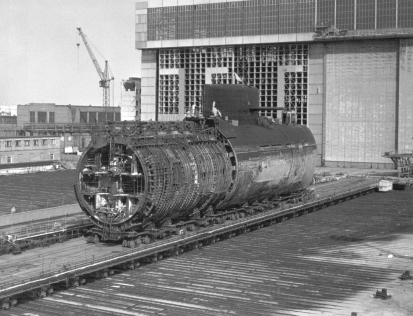
posal of old nuclear submarines. As of 1996,
meters from the Arctic Circle. The dose from
about 90 nuclear submarines had been taken
deposited gamma emitters in the first year
out of service from the Northern Fleet of Rus-
would be on the order of 0.01 to 1 millisie-
sia, of which only one fourth have been defueled.
verts. Nevertheless, it is possible that contami-
The rest are stationed at military bases at differ-
nation of the food pathways (lichen, reindeer,
ent places on the Kola Peninsula, waiting to be
mushroom, freshwater fish, etc.) would call for
defueled and dismantled. An additional num-
protective actions to reduce the health conse-
ber of submarines will be decommissioned by
quences of the accident. The food pathway
2010. At the same time, it is known that the
depends on the season in which the accident
storage sites for spent nuclear fuel are over-
occurs and on local habits, but doses from
filled and in some cases in poor condition.
local foods in the first year would be higher
Almost all the radioactive material aboard a
than from deposited gamma emitters. It has
submarine is in its reactor, and the safety
125
Radioactivity
Decommissioning of
KUPRI
nuclear submarines
creates serious technical
and ecological chal-
KONSTANTIN
lenges.
assessment focuses on the defueling process.
nium warheads. Small amounts of radionu-
An analysis made for AMAP by the Russian
clides have already leaked out of the reactor
Federation shows that accidents anticipated in
compartment, but the likelihood of a large-
the design of the defueling process do not lead
scale release from the Komsomolets is small.
to any contamination beyond the zones that
Even if the containment material corrodes with
are designated for defueling operations. The
time, most of the activation products will have
risks to the public relate to accidents that have
decayed before they are released. Studies in the
not been taken into account in designing con-
surrounding area show only minor contamina-
tainment and safety procedures. The largest
tion from the submarine.
design accident involves two or more control
The uranium and plutonium from the war-
rods being ejected from the core of the subma-
heads will also be released with time as the
rine reactor, which could lead to a nuclear
casing is breached. However, the contribution
reaction that would melt the core of the reac-
of uranium to the surrounding water will be
tor. People within the defueling zone could suf-
insignificant in the context of the natural ura-
fer severely, and some might die from the high
nium content of seawater. Plutonium has high
immediate exposure. There will be a need for
affinity for particles and will most likely be
protective measures, especially against the
retained in the sediments close to the wreck.
effects of radioactive iodine releases.
Russian, NATO, and Norwegian authorities
In spite of the severity of this design acci-
each have made independent assessments of
dent, the conclusion given along with the
the threat posed by the Komsomolets accident.
Russian estimates is that the public beyond the
The conclusion from these studies is that the
containment zone would probably not be at
maximum levels of contamination in the water
great risk. The dose would not exceed 5 mSv,
will not exceed 2.7 Bq per liter. The zone of
though under certain wind conditions it might
contamination will be largest if the radioactive
be necessary to evacuate nearby towns because
material is released rapidly, and will be more
of higher doses. There is a need for further
than 600 square kilometers. If the material is
work on such assessments.
released slowly, the zone will not exceed 200
square kilometers. If the release is rapid, the
contamination will persist no longer than half-
Sunken nuclear submarine
a-year, whereas a slow release will contaminate
is no immediate threat
the area for four to five years. The concentration
On April 7, 1989, the Russian nuclear subma-
of radionuclides in the bottom sediment will
rine Komsomolets caught fire and sank south-
increase as the activity in the water decreases.
west of Bear Island in the Norwegian Sea. The
One of the concerns is that animals feeding
wreck rests at a depth of about 1650 meters.
on the bottom sediments will transport
This submarine contains a nuclear reactor
radionuclides to the surface and thus into the
and two torpedoes with mixed uranium-pluto-
food web. Calculations show that the edible
parts of fish might accumulate a plutonium
the water are lower than in many other marine
126
content of 0.1 to 6 becquerels per kilogram.
areas, such as the Irish, Baltic, and North Seas.
Radioactivity
Making some assumptions about how long
However, higher levels of radioactivity in the
the fish stay in the area and how much fish
immediate vicinity of the waste show that
people eat, the most critical population group
there is local contamination at the dump sites.
should receive no more than 0.03 mSv per
The major risks are for the long term, after
year. The threat posed by radionuclides from
the containment corrodes. To evaluate the
the wreckage of the Komsomolets submarine is
amounts of radioactivity that could be released
therefore minor. The studies also show that
and the risks to people, the International
releases of radionuclides into the marine envi-
Atomic Energy Agency has established a spe-
ronment give rise to much smaller human
cial project, the International Arctic Seas
exposures than similar releases into the terres-
Assessment Program. Its conclusion is that, on
trial environment.
radiological grounds, remediation is not war-
ranted. Controls on the occupation of beaches
and the use of coastal marine resources and
Dumped nuclear waste
amenities in the fjords of Novaya Zemlya
The Soviet Union dumped high, intermediate,
must, however, be maintained.
and low level radioactive waste in the Arctic
Seas during the years 1959-91, including six
Accidents with nuclear weapons
nuclear submarine reactors and a shielding
pose the greatest threat
assembly from an icebreaker reactor contain-
ing spent fuel.
Platforms that carry nuclear weapons may
The solid waste and the nuclear reactors
have accidents. Although many weapons are
were dumped in the Kara Sea and in the fjords
designed not to explode even if there is an air-
of Novaya Zemlya at depths of 12-135 meters,
plane crash or a fire in a submarine, not all
and in the Novaya Zemlya trough at a depth
weapons construction adheres to `safe design'
of 300 meters; see map below. The liquid, low-
practices, and a recent report reveals that only
level waste was dumped into the open Barents
good fortune has prevented serious accidents
and Kara Seas. At the time of dumping, experts
in the past.
estimated that the spent nuclear fuels repre-
If a nuclear weapon explodes accidentally, it
sented a total activity of 8.5 1016 becquerels.
will probably not lead to a full-scale detona-
From 1992 to 1994, a joint Norwegian-
tion. The releases will be predominantly local-
Russian expert group has used sonar and a
ized. The world-wide release may vary from
remotely operated vehicle in an attempt to find
almost zero to a maximum of 1015 becquerels
and examine the waste. The exploratory
of cesium-137 and strontium-90.
cruises also took samples of water, sediments,
A more dangerous situation occurs if nu-
Sites in the Arctic used
and biota in the area. The results show that
clear proliferation is not prevented. New nuclear
by the former Soviet
there is no significant contamination of the
nations may not be able to make `safe' designs.
Union for dumping
radioactive waste.
Kara Sea. In fact, the levels of radionuclides in
The worldwide exposure from an accident
could amount to 1016 becquerels of long-lived
isotopes.
Summary
The risks connected with radionuclides in the
Arctic are best described by dividing the as-
sessment into two parts: past and present con-
tamination, and potential releases from stores
and accidents.
Past and present contamination
The Arctic terrestrial system is more vulnera-
ble to radioactive contamination than temper-
ate areas. The exposure of people in the Arctic
and subarctic is, for the general population,
about five times higher that what would be
expected in a temperate area. However, for
part of the population the exposure could be
more than 100 times higher than expected for
similar fallout in temperate areas. The major
Liquid waste
sources of anthropogenic radionuclides in the
Arctic are global fallout from nuclear bomb
Solid waste
tests, releases from European nuclear fuel
127
Radioactivity
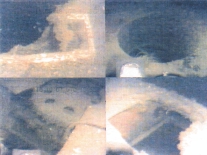
E. G.
Some of the radioactive-
ORWEGIAN-RUSSIAN
waste containers
N
dumped in Stepovogo
JOINT
Bay.
reprocessing plants, and fallout from the Cher-
from an array of terrestrial food sources is the
nobyl accident.
most important anthropogenic radionuclide.
In addition, discharges from Russian repro-
The highest average exposures to individu-
cessing plants, underground and underwater
als in indigenous Arctic populations are in Ca-
nuclear detonations, stores of spent fuel, and
nada and the lowest in Greenland. Consumers
dumped waste have contaminated local areas.
of large amounts of caribou/reindeer can have
These latter sources are currently only of
radiation exposures 50 times higher than the
minor importance in relation to health risks
average members of their national population.
associated with radioactivity in the Arctic.
The levels of radionuclides in the Arctic
Potential releases
attained their peak values in the 1960s, pri-
marily as a consequence of atmospheric
A large number of radioactive sources are pre-
nuclear weapons tests.
sent in the Arctic: storage of spent nuclear fuel,
Arctic people receive their major radiation
decommissioned nuclear submarines, nuclear
dose from previous weapons explosions, the
reactors on land and on board ships, and con-
fallout from which is ingested through terres-
tained sources in the environment. This con-
trial and freshwater pathways. However, in
centration of potential sources and the risks
some areas of Fennoscandia and western Rus-
for releases cause concern, especially together
sia, Chernobyl fallout contributes a compara-
with the fact that the uptake and transfer of
ble dose to that of weapons fallout.
radionuclides, and thereby the potential expo-
People with a diet high in terrestrial and
sure of people and biota, is much higher in the
freshwater foodstuffs receive the highest radia-
Arctic terrestrial environment than other areas.
tion exposures, from both natural and anthro-
Therefore, international guidelines on radia-
pogenic radionuclides. These foodstuffs in-
tion protection, nuclear safety, and nuclear
clude caribou/reindeer, freshwater fish, goat
waste management must be rigorously ob-
cheese, berries, mushrooms, and lamb. People
served by all Arctic states. Moreover, there is a
who eat mostly marine foodstuffs have the
need for high-standard risk assessments, in-
lowest doses.
cluding long-term dose estimates for potential
Polonium from caribou/reindeer dominates
releases of radionuclides from all potential
the natural radiation dose, whereas cesium-137
sources within the Arctic.