HUNTINGTON
HENRY
POLFOTO (manipulated)
Komi
Exxon Valdez
Petroleum Hydrocarbons
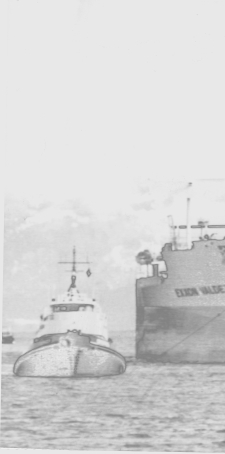
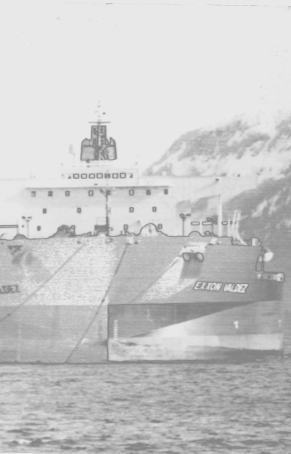
In 1989, television carried scenes of oil-soaked birds and polluted beaches after the tanker Exxon Valdez ran
aground off the south central coast of Alaska. This subarctic disaster gave an indication of what hydrocarbon
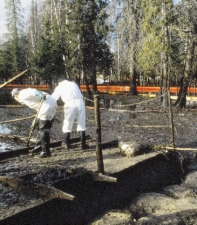
pollution can do farther north in the Arctic. In 1994, more television pictures, this time from Usinsk in the
Komi Republic of Russia, further turned the world's attention to the environmental impacts of oil development
in the Arctic. In one of the largest oil spills ever
on land, many thousands of cubic meters of
crude oil poured from a ruptured pipeline. Oil
from several leaks spread over the surrounding
wetlands contributing to large-scale damage to
the vegetation and wildlife of the area.
In spite of the concerns raised by the Komi
spill, it remains difficult to determine how
much damage it actually caused. The land sur-
rounding the pipeline was severely contami-
nated long before the accident and before tele-
vision crews started to document environmen-
tal damage from the spill. Russian pipelines are
old, lack safety valves, and are plagued by con-
stant leaks. Often, the oil is left flowing while
repairs are made on a section of the pipe,
because the lost oil costs less than putting in a
bypass and because stopping the flow might
cause the oil sitting in the pipeline to solidify.
Accounts of the environment around Russian
oil fields also speak of large contaminated
areas where oily water and chemicals are
stored in wetlands that periodically overflow
to nearby river basins.
The Russian experience is not an inevitable
result of oil exploitation in the Arctic. Other
ventures show that it is possible to limit the
environmental impact of most routine opera-
tions. But as the exploitation of the huge
resources of oil and gas increases, so does the
risk of serious accidents. Although more strin-
gent regulation will reduce the frequency of
accidents, incidents due to human error and
technical deficiencies over recent decades have
shown that regulation alone cannot completely
prevent spills. Moreover, many features of the
Arctic environment make it likely that spills
here will have more severe consequences than
spills elsewhere.
This chapter discusses risk scenarios for oil spills in marine as well as terrestrial environments, along with the
environmental impact of routine releases of contaminants from oil and gas exploration. Special sections of the
chapter are devoted to polycyclic aromatic hydrocarbons (PAHs). Of all the contaminants associated with
petroleum production, these persistent organic pollutants present the greatest risk to environment and health.
PAHs also have several other sources that contribute to their load in the environment.
146
Sources and levels
some of the major oil and gas fields that are
currently used for production and those where
Petroleum
hydrocarbons
The main environmental concern about hydro-
exploration activities are underway. The key
carbon pollution stems from the exploitation
areas with current production are Norman
and transport of oil and gas resources, but op-
Wells on Canada's Mackenzie River, the Prud-
erational discharges of oil from ships can also
hoe Bay oilfield on Alaska's Beaufort Sea coast,
create local damage. Runoff from land, dis-
the Nenets Autonomous Okrug and the Yama-
charges in waste water, and atmospheric depo-
lo-Nenets Autonomous Okrug in Russia, and
sition contribute to the load on a regional scale.
two fields on the Norwegian shelf. In addition,
Natural oil seeps are another significant source.
off-shore exploration activities are heading
Operational discharges from offshore exploita-
toward production in the Barents Sea, off the
tion also contain dissolved oil components.
northwest coast of Russia, on the Norwegian
shelf of the Barents Sea, off the west coast of
Greenland, and on the North Slope of Alaska.
Oil exploration in the Arctic is expanding
See the table on this page.
The Arctic may contain some of the world's
Both exploration and production activities
largest petroleum reserves. These resources are
can be major sources of petroleum hydrocar-
located both on land and on the continental
bons to the Arctic environment. The environ-
shelves. The map on the opposite page shows
mental impact of routine operations depends
to a large extent on practices for handling and
ннннннннннннннннннннннннннннннннннннннннннннннннннннннннннннннннннннннннннн
transport of oil and gas and for discharging
Canada
drill cuttings and produced water. Hydrocar-
---------------------------------------------------------------------------------------------------------------
Mackenzie Delta
Reserves
Estimated size:
bons are not the only concern. Operational
and nearshore
238-318 106 m3 oil
discharges contain considerable amounts of
Beaufort Sea
0.29-0.36 1018 m3 gas
other organic contaminants and heavy metals.
---------------------------------------------------------------------------------------------------------------
The table on page 6 summarizes potential im-
Tar sands at northwest Reserves
pacts from different phases of oil exploitation.
Melville Island,
gas on Sabine
Peninsula and in
Discharge of drill cuttings
offshore Hecla Fields
---------------------------------------------------------------------------------------------------------------
causes environmental damage
Norman Wells,
Production and pipeline
Annual production:
Drilling muds are used to lubricate the drillbit,
Mackenzie River
to Zama, Alberta
1.3 106 m3 oil
to control pressure in the well, to support and
ннннннннннннннннннннннннннннннннннннннннннннннннннннннннннннннннннннннннннн
United States
seal the walls of the bore hole, and to carry
---------------------------------------------------------------------------------------------------------------
drill cuttings to the surface. At the surface, drill
Prudhoe Bay,
Trans-Alaska Pipeline
Original size:
muds are normally separated from the drill cut-
Beaufort Sea coast
connects field to Port Valdez 3.1 109 m3 oil;
tings, which have usually been dumped on
in south-central Alaska
still commercially
recoverable:
land or directly in the water near oil rigs. The
1.2
109 m3 oil
cuttings usually settle quickly, and in areas
ннннннннннннннннннннннннннннннннннннннннннннннннннннннннннннннннннннннннннн
with weak circulation, they can create large
Russia
accumulations around an oil rig.
ннннннннннннннннннннннннннннннннннннннннннннннннннннннннннннннннннннннннннн
The muds are made of various mixtures of a
Nenets Autonomous
Production and network
Estimated annual production
dozen substances, including special clays, oils,
Okrug, Komi Republic, of pipelines linking
volume from the 18
Yamal-Nenets
production sites with
largest companies:
metals, and other compounds that may be tox-
Autonomous Okrug
national system
93 106 tonnes oil
ic to biota. Water-based muds are most com-
742 1012 m3 natural gas
mon. In the offshore environment, water-based
3.4 1012 m3 casing-head gas
muds will spread more widely than oil-based
2 106 tonnes gasoline
muds. Certain situations require use of envi-
(total Arctic production
may be several times greater)
ronmentally threatening oils as the base of
---------------------------------------------------------------------------------------------------------------
the muds. Until the early 1980s, diesel oil was
Shelf areas of Barents,
Exploration for oil and gas
used in such cases, but it has since been re-
Kara, and Pechora Seas
placed by low-aromatic mineral oils in an at-
ннннннннннннннннннннннннннннннннннннннннннннннннннннннннннннннннннннннннннн
tempt to reduce environmental impacts. Recent-
Norway
ly, synthetic oil fluids have partially replaced
ннннннннннннннннннннннннннннннннннннннннннннннннннннннннннннннннннннннннннн
Norwegian Sea
Production in the Draugen
Estimated reserves:
oil-based fluids, especially in off-shore drilling.
and Heidrun fields
330-3330 106 m3oil equi-
Studies of bottom fauna around oil fields on
valents of which two-thirds
the Norwegian shelf north of 62░N have
valents of which two-thirds
shown that changes are local and that harmful
---------------------------------------------------------------------------------------------------------------
Barents Sea
Exploration for oil and gas
Estimated reserves:
biological effects only occur in the vicinity of
295-1955 106 m3oil equi-
the discharges. The discharge of water-based
valents of which two-thirds
muds has been observed to have slight effects
is gas
on biological communities in an area of about
ннннннннннннннннннннннннннннннннннннннннннннннннннннннннннннннннннннннннннн
15 square kilometers around the drilling site.
Greenland
Synthetic oil muds modified the bottom fauna
Nuussuaq, Davis Strait Exploration
ннннннннннннннннннннннннннннннннннннннннннннннннннннннннннннннннннннннннннн
in an area of a couple of square kilometers.
147
Petroleum
hydrocarbons
North
Alaska
Sverdrup
Basin
Western
Siberia
Barents
Sea
Major areas of oil and
Oil production
gas activities in the
Gas production
AMAP region.
Oil and gas production
Area of exploration drilling
Navigation routes
Major pipelines arteries
Oil fields
Similar studies in the Beaufort Sea showed that
hundred meters of the sump. In some cases in
discharges of water-based drilling fluids could
Russia, the waste is dumped directly into land-
alter the abundance of several types of bottom
scape depressions rather than into specially
animals, but again only in a relatively limited
constructed dumps, resulting in environmental
area.
damage to larger areas.
Land-based wells use similar drilling muds
Adherence to strict regulations and the use
as off-shore drilling activities, but different
of improved waste management technology
methods of waste disposal. On land, used
are essential to limit the environmental conse-
muds are often dumped into sumps. The effi-
quences of drill muds and cuttings. New prac-
ciency of containment varies widely, and it is
tices, including narrower bore holes and com-
not uncommon that groundwater, vegetation,
bining exploratory and production wells, also
soil, and biota are contaminated. The damage
help reduce the amount of waste.
is usually restricted to an area within a few
O I L - R E L AT E D E N V I R O N M E N TA L I M PA C T.
нннннннннннннннннннннннннннннннннннннннннннннннннннннннннннннннннннннннннннннннннннннннннннннннннннннннннннннннннннннннннннннннн
Activity
Kind of pollution
Main chemicals
Sites affected
Potential effect targets
нннннннннннннннннннннннннннннннннннннннннннннннннннннннннннннннннннннннннннннннннннннннннннннннннннннннннннннннннннннннннннннннн
Exploration phase
нннннннннннннннннннннннннннннннннннннннннннннннннннннннннннннннннннннннннннннннннннннннннннннннннннннннннннннннннннннннннннннннн
Rigging
Physical disturbance,
None
Locally on site and
Soils, permafrost stability, bottom sedi-
noise, physical presence
along transport routes
ments, vegetation, fauna, behavioral
patterns
-------------------------------------------------------------------------------------------------------------------------------------------------------------------------------------------------
Seismics
Physical disturbance, noise
None
Locally on site
Aquatic organisms (e.g. fish larvae)
-------------------------------------------------------------------------------------------------------------------------------------------------------------------------------------------------
Exploratory
Discharges of drill
Water-based drilling
Locally to
Soil and sediment contamination levels,
drilling
cuttings and chemicals
fluids, anti-corrosion
regionally
vegetation, bottom and near-bottom
agents, scale inhibitors,
fauna, amenities, and other environ-
cementing agents,
mental usage
completion chemicals,
and others
-------------------------------------------------------------------------------------------------------------------------------------------------------------------------------------------------
Accidental spills
Oil discharge
Hydrocarbons
Local (on land)
Contamination levels (soils, snow, surface
(blowouts)
dispersants
to long-range
waters, ice, sediments), vegetation and
(rivers, lakes, and sea)
fauna, amenity values, and tourism
нннннннннннннннннннннннннннннннннннннннннннннннннннннннннннннннннннннннннннннннннннннннннннннннннннннннннннннннннннннннннннннннн
Construction phase
нннннннннннннннннннннннннннннннннннннннннннннннннннннннннннннннннннннннннннннннннннннннннннннннннннннннннннннннннннннннннннннннн
Removal of
Physical disturbance,
None
Locally on site
Habitat diversity, quality, and
vegetation
noise
availability, erosion, permafrost
stability (peat removal), animal
behavior
-------------------------------------------------------------------------------------------------------------------------------------------------------------------------------------------------
Technical
Physical disturbance,
None
Locally on site
Habitat quality and access,
installations
physical presence
permafrost stability
-------------------------------------------------------------------------------------------------------------------------------------------------------------------------------------------------
Excavation and
Physical disturbance
None
On-site soils and
Water courses and drainage patterns,
infill of soils and
downstream surface-
ground and surface water, soil and
sediments
and groundwater
sediment organisms
-------------------------------------------------------------------------------------------------------------------------------------------------------------------------------------------------
Road/trail
Physical disturbance,
None
Locally
Access, migration routes, erosion,
construction
noise, physical presence
vegetation, animal behavior
-------------------------------------------------------------------------------------------------------------------------------------------------------------------------------------------------
Use of helicopters
Noise, exhaust discharge
Combustion products
Along routes
Contamination levels of water,
and supply
soils and organisms, biotope quality,
vessels
behavioral patterns
-------------------------------------------------------------------------------------------------------------------------------------------------------------------------------------------------
Dredging and
Physical disturbance,
None
Pipeline trajectory
Soils, bottom sediments, vegetation,
construction
noise, physical presence
and adjacent areas
fauna, behavioral patterns (migration)
pipelines
нннннннннннннннннннннннннннннннннннннннннннннннннннннннннннннннннннннннннннннннннннннннннннннннннннннннннннннннннннннннннннннннн
Production phase
нннннннннннннннннннннннннннннннннннннннннннннннннннннннннннннннннннннннннннннннннннннннннннннннннннннннннннннннннннннннннннннннн
Well drilling
Discharges of
Drilling fluids, anti-
Locally to regionally
Soil and sediment contamination
drill cuttings
corrosion agents, scale
levels, land access, vegetation,
and chemicals
inhibitors, cementing
bottom and near-bottom fauna
agents, completion
chemicals, and others
-------------------------------------------------------------------------------------------------------------------------------------------------------------------------------------------------
Well production
Discharge of production
Production water, scale
Local soils, local/re-
Contamination level of soil and waters,
water and chemicals
inhibitors, flocculant
gional surface- and
vegetation, land fauna and marine
agents, biocides, anti-
groundwater, surface-
pelagic organisms
corrosion agents, gas
and shallow sea water,
treatment chemicals
possibly sea floor
-------------------------------------------------------------------------------------------------------------------------------------------------------------------------------------------------
Other operational
Wash and drainage water,
Hydrocarbons,
Soils, local watersheds,
Contaminant levels, water vegetation
aqueous waste
ballast water, sanitary
chemicals, sewage
shallow sea water
and fauna, waterfowl and seabirds
effluents
outlets, operation spills
and leakages
-------------------------------------------------------------------------------------------------------------------------------------------------------------------------------------------------
Flaring, venting and
Air emissions
CO2 and CO,
Wide range
Greenhous gas and ozone levels,
purging, energy pro-
methane, VOC, NOx,
due to
soil, water, sediment and organism
duction (combustion)
SO2 and H2S halons,
atmospheric
contaminant levels, human health,
fire protection tests,
ozone-depleters
transport
vegetation and fauna
exhaust and dust,
loss of fugitive gases
-------------------------------------------------------------------------------------------------------------------------------------------------------------------------------------------------
Use of helicopters
Noise, exhaust
Combustion products
Along routes
Contamination levels of water,
and supply vessels
discharge
soils and organisms, biotope
quality, behavioral patterns
-------------------------------------------------------------------------------------------------------------------------------------------------------------------------------------------------
Accidental spills
Oil discharge
Hydrocarbons,
Local (on land)
Contamination level (soils, snow,
(well sites, pipelines,
dispersants
to long-range (rivers,
surface waters, ice, sediments),
transport vehicles
lakes and sea)
vegetation and fauna, amenity
and vessels)
distribution
values, and tourism
нннннннннннннннннннннннннннннннннннннннннннннннннннннннннннннннннннннннннннннннннннннннннннннннннннннннннннннннннннннннннннннннн
Decommissioning phase
нннннннннннннннннннннннннннннннннннннннннннннннннннннннннннннннннннннннннннннннннннннннннннннннннннннннннннннннннннннннннннннннн
Technical
Physical disturbance,
None
Locally on site
Soils, permafrost stability, bottom sedi-
demobilization
noise
ments, vegetation, fauna, behavioral patterns
нннннннннннннннннннннннннннннннннннннннннннннннннннннннннннннннннннннннннннннннннннннннннннннннннннннннннннннннннннннннннннннннн
Produced water often has high oil content
oil (approximately 160 cubic meters). The prob-
149
ability of one or more spills is between 58 and
Petroleum
Water brought up from wells along with the
99 percent. The number of spills exceeding
hydrocarbons
oil and gas is a major source of the hydrocar-
10 000 barrels (1600 cubic meters) will be be-
bons released by oil exploitation. On the Nor-
tween 0.3 and 2.5. The probability of one or
wegian shelf this `produced' water accounted
more of these large spills is between 24 and 92
for 76 percent of the total operational and
percent. The most likely source of these spills
accidental input of hydrocarbons to the sea
is pipelines, followed by tankers and platforms.
between 1990 and 1995.
These theoretical risk calculations do not
For offshore wells, produced water, includ-
take special Arctic conditions into account. In
ing any added chemicals, is usually discharged
reality, pressure ridges in the ice or icebergs
into the sea. For several United States and
scouring the bottom could increase the risk for
North Sea fields, however, this water is rein-
damage to any installation on the sea floor.
jected into the reservoir to facilitate the further
Arctic conditions may also affect the size of
recovery of petroleum. Before discharge, the
the spill because of difficulties in recovering oil
produced water has to be treated to comply
and in drilling relief wells.
with regulatory limits that restrict the amount
of hydrocarbons in the water. For the United
Tanker spills
States, regulations stipulate that petroleum
are the largest threat from shipping
hydrocarbons in the water should not exceed
72 milligrams per liter for any one-day period
The main oil-related threat from shipping is
or 40 milligrams per liter as an average over
connected to transporting oil in tankers. Most
30 days. Similar limits are in effect on the Nor-
incidents occur at the terminals where tankers
wegian Shelf. However, the methods used to
load or unload. Even if the discharge is consid-
determine the oil concentration do not mea-
erable, the damage is usually localized to the
sure dissolved oil components, which are thus
immediate area around the port.
discharged `unnoticed'.
Tanker accidents contribute a small percent-
age of the overall input of oil to the oceans but
Accidental spills are rare
get public attention because of their potentially
but can be devastating
large environmental impact, particularly if the
tanker is large or the spill occurs close to
Blow-outs, spills, and leakage during produc-
shore. The groundings of the Exxon Valdez off
tion and transport of petroleum pose the larg-
the coast of Alaska in 1989 and the Braer near
est oil pollution threat to the Arctic environ-
the Shetland Islands in 1993 are two examples.
ment. In addition, fishing and other ship action
Increased exploration and development of
may contribute to numerous smaller spills and
oil resources in the Arctic will lead to increased
leaks. Pipeline ruptures and leaks, such as
tanker traffic. A main focus will be on the
those in Usinsk, Russia in 1994, and tanker
Northern Sea Route, a system of sea lanes
accidents such as the Exxon Valdez in Alaska
north of Asia between the straits joining the
in 1989, are examples of massive oil contami-
Barents and Kara Seas in the west and the
nation over large areas. The Exxon Valdez
Bering Strait in the east; see the map below.
spilled 35 000 tonnes of oil, while estimates for
the Usinsk spill range from 37 000 to 44 000
North Pole
tonnes of crude oil flooding rivers and lakes.
The Usinsk spill was in addition to chronic leak-
Provideniya
age from the pipeline. The total discharge from
Mys Shmidta
the pipeline into the environment has been
Murmansk
estimated at 103 000 to 126 000 tonnes of
crude oil. Oil blow-outs at production sites,
fortunately, have not yet occurred in the Arctic.
Most oil spills are small to insignificant.
For instance, the 365 accidents reported in
Dikson
Tiksi
1994 at Norwegian offshore installations to-
gether released only 55 tonnes of oil, and only
seven of the incidents discharged more than
This route has been important for transporting
The Northern Sea
one cubic meter. Nevertheless, it is the rare,
goods to remote Russian settlements, and
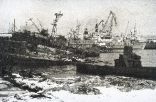
Route.
difficult-to-predict large spills that become
opened for international shipping in 1987.
environmental calamities.
Accurate estimates of the amount of ship traf-
Based on statistics from oil spills in areas
fic in these waters are difficult to make, but
outside the Arctic, one can make a rough esti-
this route is by far the most active in Arctic
mate of the probability of spills over the pro-
waters. With significant prospects for offshore
duction period of specified Arctic petroleum
oil and gas in the Kara and Barents Seas, traf-
reserves. In the Beaufort and Chukchi Seas,
fic along the Northern Sea Route is likely to
such estimates predict between one and eight
increase, as will the risk of accidents. An inter-
spills equal to or larger than 1000 barrels of
national program coordinated by Russia,
Norway, and Japan is currently assessing the
150
of oil every year. As described in the introduc-
route's overall feasibility.
tion, many of the pipelines are in poor shape
Petroleum
hydrocarbons
Other shipping, such as sealifts to isolated
and leaks are frequent. There were 103 large-
communities and industrial facilities, traffic to
scale failures at oil and gas pipelines in the
and from drilling operations, icebreaker sup-
Russian Federation in 1991-93, many of them
port, and research cruises are also potential
in Arctic and subarctic areas.
sources of oil pollution. In some of the mar-
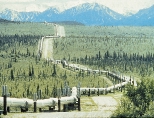
In the United States, the Trans-Alaska Pipe-
ginal seas, there are large fishing fleets as well.
line carries oil from the fields in Prudhoe Bay
Oil pollution from regular shipping is still a
to Port Valdez on a fjord in southern Alaska.
problem in some areas, with both legal and
Automated shutdown of pump stations and
illegal discharges of oily ballast and bilge wa-
valves in this pipeline are designed to limit
ter. There is an increasing number of tourist
spills. At the most, about 0.2 percent of the oil
cruises in the Arctic, with large ships carrying
in the line, or 2226 cubic meters, could spill
substantial amounts of bunker oil. In addition
onto the land before the line could be effective-
to sea ice, poor nautical charts of the Arctic
ly shut down. A Canadian pipeline, connecting
increase the risk of accidents.
oilfields and refineries at Norman Wells on the
Mackenzie River with northern Alberta, has
Many legal instruments
similar safety features.
are already in place
Natural oil seeps
There are a number of legal instruments to
add to hydrocarbon load
prevent oil pollution of marine waters. Some
are aimed at shipping while others specifically
Natural sources of hydrocarbons add to the
address oil and gas exploitation. The Protec-
load in the environment. For example, some
tion of the Arctic Marine Environment (PAME)
oil seeps in the Arctic have been recognized
component of the Arctic Environmental Pro-
since prehistoric times and lumps and pebbles
tection Strategy reviewed these instruments in
of oil shale and seepage tar have been used as
its 1996 report. PAME has also produced
fuel by North American Inuit. In many instan-
guidelines for offshore oil and gas exploration
ces, the seeps have led to the discovery of com-
and production in the Arctic and subarctic. At
mercially recoverable petroleum reserves. Many
present, getting compliance with existing legal
of the natural oil seeps originate in north-flow-
instruments appears more important than de-
ing rivers, such as the Mackenzie and the Ob,
veloping new ones.
which eventually discharge into the Arctic
Ocean.
Poorly maintained pipelines
Globally, oil seepage contributes between
pollute Russian tundra
0.02 and 2 million tonnes of oil per year to the
environment. Of the total entering the marine
In addition to marine shipping, large quanti-
environment from different sources, at least 15
ties of oil are transported over land via pipe-
percent comes from natural oil seeps. There
lines. During the 1970s and 1980s, Russia
are no estimates for the Arctic region, but the
built an extensive pipeline network, including
proportion from natural sources is probably
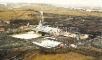
Drilling, Norman Wells
six trunk oil pipelines, stretching over 10 000
area, Canada.
greater than the global average. For example,
kilometers across Western Siberia. The net-
the Mackenzie River in Canada's Arctic con-
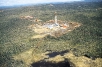
Trans-Alaska Pipeline.
work is capable of carrying 400 million tonnes
tributes the largest quantities of hydrocarbons
SOURCE
UNKNOWN
SOURCE
SHAW
GLENN
UNKNOWN
to the Beaufort Sea region. Oil seeps have also
marine environment and about 40 000 tonnes
151
been detected in eight areas of the United States
to the terrestrial environment.
Petroleum
Arctic, seven of which are located along the
hydrocarbons
Beaufort Sea coast. The Barents Sea and loca-
tions near Spitsbergen are other regions that
Levels
have natural oil seeps.
in the marine environment
Different analytical methods to determine total
PAHs have many different sources
petroleum contamination have been used by
Polycyclic aromatic hydrocarbons are a group
different Arctic countries, which makes it diffi-
of contaminants related to oil exploration and
cult to compare levels in the environment
extraction that also have other sources. In
around the circumpolar area. So far, assess-
areas of high concentration, such as oil spills,
ments using comparable methods can only be
they can be acutely toxic. The main environ-
made at a subregional level.
mental concern is that some of the compounds
Hydrocarbons can be detected in seawater
can cause mutations and cancer at low concen-
throughout the Arctic. Except for local pollu-
trations.
tion in harbors, the highest levels occur just off
Spilled petroleum products are the largest
river mouths. Concentrations in the marine
single source of PAHs. Crude oils contain up
waters of the Russian Arctic are generally
to 10 percent PAHs, while the PAH content of
much higher than those found in North Ame-
shale oils and coal-derived synthetics can be as
rican waters. One explanation might be differ-
high as 15 percent. Incomplete combustion of
ences in analytical technique, but oil pollution
wood and fossil fuels are important sources, as
carried by the large Russian rivers probably
are incineration of garbage, steel and coke pro-
contributes. Except for areas affected by spills,
duction, coal liquification, and coal gasifica-
anthropogenic input so far is relatively low
tion. Although most emissions stem from hu-
and does not have any ecological significance.
man activities, there are some natural sources
such as microorganisms that are known to
Seaports are the most polluted
produce small amounts of PAHs.
marine environments
Produced water from both oil and gas plat-
forms contains PAHs. Taking into account the
The most severe cases of pollution occur in
large volumes of produced water discharged
areas with intense industrial and military activ-
from oil production, the yearly input of PAHs
ity. For example, most of the sewage produced
into the environment, even from a single off-
at the Murmansk Seaport and Naval Base is dis-
shore oil field, may be significant.
charged untreated into the Kola Fjord. About
40 ships based in this port have no oily-water
separators or other procedures to process oil-
Natural gas contributes to climate change
containing waters. In winter, the Kola Fjord is
Oil and gas exploration mostly have local or
relatively stagnant, and concentrations of hy-
subregional environmental impacts, but one of
the pollutants, methane, is of global concern.
Methane acts as a greenhouse gas and thus
contributes to global warming as discussed in
the chapter Climate change, ozone depletion,
and ultraviolet radiation. It is the main compo-
nent of natural gas and is released to the atmos-
phere by gas drilling, from leaky pipelines, and
by venting and flaring activities on oil and gas
rigs. Globally, these activities are the fourth
largest source of methane to the atmosphere.
Burning of fossil fuels is also the main an-
thropogenic source of the greenhouse gas car-
bon dioxide.
Air, oceans, and rivers
carry hydrocarbons from industrial areas
KNUT BRY
In addition to contamination from sources
drocarbons sometimes exceed the maximum
Murmansk Seaport.
within the Arctic, petroleum hydrocarbons are
permissible concentration (50 micrograms per
transported from heavily industrialized areas
liter) by a factor of 150 in surface waters close
by air currents, ocean currents, and rivers. The
to Murmansk. In summer, water circulation
main pathway is probably via the atmosphere.
increases and hydrocarbon concentrations are
Based on models, it has been estimated that
rarely higher than twice the permissible level.
atmospheric transport annually adds about
Along the Norwegian Arctic coast, measure-
40 000 tonnes of hydrocarbons to the Arctic
ments from 1994 show that levels of hydrocar-
bons in sediment vary considerably. In general,
multi-year pack ice can move about 150 kilo-
152
they are higher than in other Norwegian har-
meters per month in winter. Lack of equipment
Petroleum
hydrocarbons
bors. The highest level, 7000 milligrams per
and methods to contain oil and to clean ice-
kilogram, was found in Hammerfest.
infested areas increases the potential threat
from oil spills in the Arctic.
Shelf seas that produce and export large
Some estuarine sediments
volumes of ice would be particularly efficient
are clearly contaminated
at transporting spilled oil into the interior of
Reflecting input from north-flowing rivers, silt
the Arctic Ocean, where it would follow the
sediments along some coasts are contaminated
large-scale drift patterns of the pack ice. For
with hydrocarbons. The highest concentrations
example, oil spilled in the Beaufort Sea may
occur in the estuaries of the Pechora, Ob, and
circulate within the Beaufort Gyre for five or
Yenisey Rivers. The maximum concentration in
more years, whereas oil spilled in the Kara and
the Pechora estuary is 250 micrograms per gram.
Laptev Seas could exit the Arctic via the Ba-
In the Laptev Sea, outside the Lena River, the
rents Sea and Fram Strait within one or two
hydrocarbon concentration in the silt sediment
years. The figure at the top of page 32 de-
is even higher, over 300 micrograms per gram.
scribes this large-scale circulation.
Oil encapsulated in the ice will not break
down but will instead appear essentially un-
Fish levels indicate
weathered at the surface when the ice starts to
marginal contamination of Arctic waters
melt. It is released when the ice sheet begins to
Measurements of hydrocarbons in fish tissue
break up. Because the dark oil absorbs heat,
show that fish from the southern Beaufort Sea
the break-up of oiled ice occurs about two
are more contaminated than fish from the
weeks earlier than normal. Once there is open
northeast Pacific Ocean, which is considered a
water, the oil slick will behave as it would in
clean environment. The concentrations of
an open ocean with ice floes.
hydrocarbons are similar to those in fish from
The release of oil in spring can be very dam-
Atlantic waters. Other biota from Alaska also
aging to wildlife. Biological activity is high and
show indications of some contamination with
the amount of open water available for birds
petroleum hydrocarbons.
and marine mammals is relatively limited. The
risk of animals congregating in oily areas is
therefore relatively high. This is a compelling
argument for cleaning up winter oil spills
Oil spills in coastal and
before spring comes.
marine environments
Sunlight and microbes break down oil
The impact of oil spills in the marine environ-
ment depends to a large extent on whether the
Whether released at sea or on land, petroleum
oil reaches sensitive animals. Large spills in the
products and oily wastes will change with
open ocean may not have as large an impact as
time. This `weathering', which is especially
a small spill close to the coast or in the vicinity
well studied in the marine environment, is
of large bird colonies. Transport and dispersal
caused by a combination of physical, chemical,
of oil therefore become important factors in
and biological factors.
trying to understand the risks involved in Arc-
Under temperate conditions, most of the
tic oil and gas exploitation. The major differ-
light hydrocarbons evaporate within one or
ence between the Arctic and other areas is the
two days of a spill. Computer simulations
presence of ice. Lessons learned from oil spills
show that 23 percent of the mass of a hypo-
in other areas can therefore not be directly
thetical spill covering 150 000 square meters in
applied for the Arctic.
the northern Bering Sea would evaporate.
After the Exxon Valdez oil spill, it was calcu-
lated that 20 percent of the oil evaporated.
Ice will trap and transport oil
Once the hydrocarbons are in the air, light and
Normally, the lighter fraction of oil spilled at
oxygen will break them down in photochemi-
sea evaporates while the rest is dispersed in the
cal reactions. Low-molecular weight com-
water with the help of wind and waves. Ice can
pounds therefore last only a few days. Higher
effectively limit this natural cleaning potential.
molecular weight compounds appear to have a
Instead, it provides surfaces both above and
half-life of about a week. In the High Arctic,
below the water on which oil can be trapped.
however, and especially in ice-infested waters,
The undersurface of sea ice can be very rough,
evaporation will generally be slower.
with large pockets in which the oil can remain
In ice-covered waters, evaporative loss also
for as long as the ice stays solid. Some of the
depends on the timing of the spill. If it occurs
oil might even be encapsulated and move with
during the initials stages of ice growth, dis-
the ice. Oil spilled in winter under landfast ice
solved hydrocarbons may sink toward the bot-
might thus move only tens of meters from the
tom with the brine that forms during ice for-
spill area. On the outer shelf, the edge of the
mation. Here they would persist for several
months without evaporating. When oil-pol-
153
luted ice breaks up, waves can very rapidly dis-
Petroleum
solve the hydrocarbons in the water, increasing
hydrocarbons
concentrations by factors of 300 to 700 in less
than one day. The concentrations would grad-
ually decrease over the next six days as the
compounds evaporate.
Bacteria and fungi can use hydrocarbons as
an energy source and thus help in the final
clean-up of an oil spill. However, in the Arctic,
the degradation will be slow due to the short
season in which temperatures are high enough
for bacteria and fungi to be active. In Beaufort
Sea sediment, oil degradation was apparent
only after eight months, even though the bac-
terial community could grow at temperatures
below freezing. The slow rate of biodegrada-
tion, which has also been demonstrated in the
Barents Sea, may have been due to a lack of
nutrients. Another reason may have been that
the physical and chemical characteristics of oil
VINK
in cold water make it less available for the
NICO
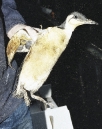
Cleaning oiled seabird.
microbes. In contrast to temperate spills, nat-
Arctic breeding colony may contain a large
ural cleaning after a spill in the Arctic may
proportion of the individuals of a certain
therefore take decades rather than years. This
species, and one spill in the vicinity of such a
underscores the need for special care to protect
community could severely harm the world-
sensitive areas against spills.
wide population. The long-term effect of oil
spills on bird populations is controversial, and
Effects on animals vary
it is uncertain whether observed oil mortalities
are substantial in relation to natural mortality.
Oil spills will affect most exposed animals, but
The damage a spill does to bird populations
the impact will vary greatly depending on
is related less to its size than to its proximity in
species and circumstance. Although zooplank-
time and space to large bird gatherings. When
ton take up components of the oil, the toxic
the Amoco Cadiz released 250 000 tonnes of
effects appear to be short-lived. For example,
oil off the coast of Brittany, France, only about
the Potomac spill off West Greenland revealed
4500 birds were killed, whereas 35 000 tonnes
oil in the gut of copepods and amphipods but
of oil from the Exxon Valdez probably killed
found no apparent effects.
500 000 birds. Also, a nearly inconspicuous
Fish eggs and larvae are vulnerable. They
spill in 1979 on the east coast of Finnmark,
often develop near the surface, where they are
northern Norway, killed between 10 000 and
more likely to be exposed to dissolved oil com-
20 000 birds, primarily guillemots.
ponents. They are also more sensitive to oil
Behavioral patterns make some seabirds
toxicity than adult fish.
more sensitive than others to oil spills. Alcids
Adult fish in the Arctic are probably no
are among the most sensitive, in particular
more sensitive to oil spills than fish in other
Atlantic puffins, common murres, thick-billed
areas, and the experience so far has been that
murres, razor-billed auks, and northern gan-
even large oil spills have had no apparent
nets. Common eiders are also considered vul-
impact. However, natural variations in fish
nerable.
stocks would make it difficult to prove that
any effects were caused by the oil. Fish, in gen-
Some sea mammals are vulnerable
eral, are able to detect oil even at extremely
to oil-soiling of their fur
low concentrations, and may avoid oil spills by
swimming away.
Fur seals, sea otters, and polar bears rely on
their fur for insulation and also to help them
Soiled feathers kill seabirds
keep afloat. Oil contamination may therefore
be particularly damaging to these animals.
Soiled seabirds have become symbols of the
In the Exxon Valdez spill, approximately 2000
environmental threat posed by oil spills. Oil
to 3000 sea otters in the area were killed di-
fouls their plumage, taking away their insula-
rectly after the accident and a number prob-
tion, so they quickly lose heat. The birds also
ably died later.
ingest oil when trying to clean their feathers.
Seals and walrus do not rely on their fur for
The oil toxins may impair their ability to
insulation, but may still suffer if oil hinders
reproduce, and soiling of eggs kills embryos.
them when they swim. In these conditions,
Seabirds are particularly at risk because
pups may die from exhaustion. Oil is also
huge populations gather in one place. A single
known to cause eye lesions.
Whales seem unharmed by contact with oil.
may cause the animals to get stuck in the oil
154
One reason might be that oil does not stick to
and, in general, crustaceans and amphipods
Petroleum
hydrocarbons
their skin. They may also avoid oil slicks, but
are sensitive to oil spills. After the Amoco
several observations suggest that they do not
Cadiz spill, it took eight years for the amphi-
take any notice of them.
pod populations along some of Britanny's
shores to return to normal. Scavenging amphi-
pods play a key role in Arctic marine food
Rocky shores recover fairly fast
webs and oil damage may therefore have more
Shoreline and shallow subtidal communities
severe consequences in the Arctic than in
are the prime focus of concern during most
warmer regions.
coastal spills. The impact can vary greatly,
Macroalgae growing just below the shore-
however, depending to a large extent on
line on rocky shores may be protected by their
whether the physical characteristics of the
mucoid surface. However, after a spill of 1000
coast allow waves to wash the oil away, or if
tonnes of bunker oil off the Arctic coast of
sediments retain the contamination for a long
Norway in 1981, all macroalgae died in the
time. Several attempts have been made to clas-
heavily oiled areas. In lightly oiled areas, the
sify sensitivity. The most sensitive areas are
parts of the macroalgae that had been coated
estuarine salt marshes where oil can remain
with oil showed retarded growth the next
for a decade. Straight, rocky headlands, on the
spring, but new sprouts appeared healthy.
other hand, might be clean after less than one
year. Some sensitivity indexes also take biolo-
Sand and mud
gical and human use of the seashore into
retain oil and increase biological damage
account.
A thorough investigation of the immediate
On sheltered sandy and muddy shores, the
impact of the Exxon Valdez spill showed that
effects of oil spills can be pronounced and
members of the four main groups of organisms
remain for many years. Two years after an
н sea weed, barnacles, mussels, and periwin-
upper-shore spill of diesel oil at Spitsbergen,
kles н survived the spill. A year late, densities
substantial amounts of oil were still present
were somewhat less than on other shores, but
one half meter down in the shore sediment. In
after two years most oiled shorelines appeared
this case, the only species that was present
healthy and in a state typical of pre-spill com-
before the spill disappeared. Experiences from
munities.
experimental and non-Arctic spills vary from
Many organisms, such as barnacles and
no apparent long-term effects to severe im-
mussels, close up to avoid drying during low
pacts with instability in the structure of the
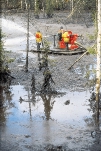
Containing the oil.
tide, and this behavior may also protect them
biological community up to a decade after the
Komi spill.
from light oil contamination. Mobile organ-
accident. Generally, recovery is probably slow-
isms such as crustaceans may escape by seek-
er in the Arctic because of slow turn-over rates
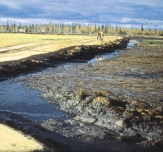
Cleaning up the Komi
spill.
ing deeper water. However, this escape response
and long life spans of the organisms.
HENRY P. HUNTINGTON
HENRY P. HUNTINGTON
ple, are very efficient in absorbing oil. Waterlog-
The underside of sea ice
155
ged soils also hinder oil penetration. Cracks in
may be a vulnerable environment
Petroleum
the soil above permafrost, on the other hand,
hydrocarbons
A unique feature of the Arctic marine environ-
may lead oil down to the permafrost where it
ment is the community of plants and animals
can spread horizontally into deeper soil layers.
that live on the underside of the sea ice. Any
Snow also affects spreading patterns. Hot
oil spilled under multi-year ice will remain un-
oil, such as from a ruptured pipeline, tends to
changed until the ice thaws, and plants and
form channels in the snow, transporting the oil
animals here will thus be exposed to toxic sub-
along the underlying ground and contaminat-
stances for a long time. Some experimental
ing relatively large areas.
studies indicate that algae density, biomass,
One terrestrial spill has been well docu-
and productivity did not change when a mod-
mented. In August 1989, about 50 cubic me-
erate amount of oil was applied under ice.
ters of oil and produced water leaked from a
Also, the effects on an ice amphipod were only
valve in a production pipeline near Prudhoe
moderate. However, amphipods are known to
Bay. The oil spread over half a hectare of Arc-
be sensitive to oil and to get caught easily in oil
tic coastal tundra, inundating small lakes and
film, so spills under ice are likely to trap and
ponds. Most of the oil stayed close to the sur-
smother a substantial number of these animals.
face of the water-saturated tundra. Within a
year, the concentration of oil in the soil had
decreased almost 80 percent, but, after this ini-
tial drop, natural clean-up by light and bacte-
Oil in terrestrial and
ria slowed down considerably. By 1991, thaw
freshwater environments
settlement of the permafrost had stabilized and
plant cover was well on its way to meeting the
Data on hydrocarbons in soil are only avail-
regulatory criterion for recovery, equal to 30
able for Russia, where levels away from
percent of the mean percentage plant cover in
known spills range from 10 to 40 micrograms
an adjacent unaffected area.
per gram. Spills and leaks from pipelines make
local levels much higher. For example, after
Oil will destroy plant cover
spills from the Vosey Pipeline, as much as 15
percent of the dry weight of soil in a spot close
The amount of damage oil spills cause on land
to a pipeline leak was hydrocarbons.
varies, but all actively growing plant tissues in
Long-term monitoring of petroleum hydro-
wetlands can be completely destroyed. Sedges
carbons in Russian river water indicates high
are known to recover, while mosses can be
pollution levels in the areas of oil and gas
completely eliminated. If the damage is limited
exploration and production. This is especially
to above-ground parts of the plants, the vege-
true in the lower part of the Ob River, where
tation can usually recover. Damage to the
hydrocarbon concentrations often reach sev-
roots, however, will have effects even in the
eral milligrams per liter. Even if local contami-
following growing season. Plants with shallow
nation is severe, however, these rivers have a
roots are probably the most sensitive.
self-purification ability that keeps hydrocar-
Plant damage can have more severe conse-
bons from being transported downstream by
quences in the Arctic than in other areas. Arc-
the flow of the river. For example, during the
tic plant cover is usually extremely vulnerable
Komi oil spill, only a minor portion of the
to surface damage because it is so thin. It also
spilled oil reached the mouth of the Pechora
takes longer to grow back because of low tem-
River, though some tar balls were trapped
peratures and the lack of nutrients. After a spill,
there and `fingerprint' analysis proved that
the toxic components of oil are expected to re-
they originated from the spill area.
main in the soil for up to 30 years, further de-
The highest values reported for North Ame-
creasing the chance that vegetation will recover.
rican river sediments are lower than those in
Studies after an oil spill along the Trans-
the Russian rivers. Values of about 35 micro-
Alaska pipeline have shown that it is possible
grams per gram were found close to the Beau-
to assist vegetation recovery by applying fertil-
fort Sea coast, and the highest values н up to
izer and by tilling the soil.
148 micrograms per gram н are from Norman
The effects of oil on terrestrial animals are
Wells, an active oil exploitation area along the
poorly understood, but animals that rely on
Mackenzie River.
their fur for insulation might suffer. For exam-
ple, a major spill along the St. Lawrence River
killed a number of muskrats.
Soils, plants, and snow
determine how oil spreads on land
Russian wetlands
Oil spills on land will, in general, be more con-
are polluted from production activities
fined than spills in water. The rate and extent
of spreading will depend on plant cover, whether
In Russia, oil and gas extraction poses a seri-
the ground slopes, and how much oil the soil
ous threat to wetlands in the production areas
and vegetation will absorb. Mosses, for exam-
when oil and other contaminants are discharged
directly into landscape depressions. In north-
Mackenzie River, which flows through regions
156
western Siberia, petroleum concentrations in
with known fossil fuel deposits, natural hydro-
Petroleum
hydrocarbons
this discharge can range from 0.5 to 5.2 grams
carbon seepage, and burned-over areas. In five
per liter. The depressions are also used for
local areas within the Arctic, sediment concen-
dumping untreated waste water. When wet-
trations exceed environmental guideline limits.
lands overflow, they serve as secondary sources
These are in the Barents Sea, Spitsbergen, har-
of hydrocarbons and other chemicals to near-
bors in northern Norway, the Beaufort Sea,
by rivers and lakes, and almost all samples
and Tuktoyaktuk Harbour in the Northwest
taken from rivers in northwest Siberia exceed
Territories, Canada.
the maximum permissible concentrations.
The relationship between different PAH
compounds can be used to identify their main
sources. Alaskan sediments point to petroleum
Spills in streams and lakes
hydrocarbons, while PAHs in the Barents Sea
can taint the fish
show a greater contribution from combustion
If oil gets into streams, ponds, or lakes, it can
sources. The Canadian Beaufort Sea has a mix-
kill zooplankton, and the remaining oil can
ture of the two sources, which is also the case
prevent recovery for several years. In streams
for Russia's marine environment, though the
with prolonged seepage, total abundance and
Russian levels are generally lower. Sediments
species diversity is known to decrease.
near Spitsbergen are enriched in PAHs com-
Plants in freshwater ecosystems recover fair-
pared with the Russian sediments, which prob-
ly quickly, especially in streams where most of
ably reflects contamination from coal particles
the oil gets washed away.
and petroleum products.
Experiences from areas outside the Arctic
Fish can bioaccumulate PAHs directly from
show that oil can kill fish, but so far there are
sediment. In general, PAH levels in Arctic ma-
no documented cases of this in the Arctic.
rine animals are similar to those reported for
Tainting of fish, on the other hand, has been
background locations outside the Arctic. How-
an issue. For example, after a spill of diesel oil
ever, starry flounder from Tuktoyaktuk Har-
into a river, people living downstream com-
bour had consistently high concentrations,
plained that the fish tasted oily, and laboratory
which probably reflects a chronic exposure
studies showed that the spilled fuel could have
from polluted water and sediment in the
been the cause.
harbor.
Birds that gather by lakes and ponds in the
Fish are able to break down PAHs, and
Arctic will be sensitive to oil spills. For exam-
these compounds do not seem to bioconcen-
ple, a large number of ducks, geese, and he-
trate or magnify in the food web.
rons were killed after a spill on the St. Law-
rence River. After the Exxon Valdez spill,
Freshwater and terrestrial PAH levels
numerous bald eagles nesting in the area died
are also high
after eating dead, oil-contaminated birds and
sea otters.
The levels of PAHs in freshwater sediments
vary greatly, and probably reflect a combina-
tion of long-range transport and local indus-
Levels and effects of PAHs
trial and natural sources in the watershed. As
with the marine environment, several areas
Polycyclic aromatic hydrocarbons do not dis-
have higher concentrations than the global
solve well in water and instead tend to associ-
ate with particles. Sediments are thus the most
Levels of benzo[a]pyrene in the air of Russian cities on
the Kola Peninsula; mean (annual average) and maxi-
important reservoir in the environment. In
mum (highest concentration during the year over a 20
cities, PAHs are major components of air pol-
minute period) levels in 1991 and 1993, in nanograms
lution. This is especially true in cities on the
per cubic meter. The maximum permissible concentra-
Kola Peninsula, where PAH levels regularly
tion is 1 nanogram per cubic meter.
exceed maximum allowable concentrations.
ннннннннннннннннннннннннннннннннннннннннннннннннн
City/Town
Value
1991
1993
PAHs are degraded by light, either in the
ннннннннннннннннннннннннннннннннннннннннннннннннн
atmosphere or in the upper reaches of a water
Apatity
Mean
0.5
н
column. In the Arctic, degradation is generally
Maximum
1.4
2.7
slower than at lower latitudes because of low
Kandalaksha
Mean
2.2
н
temperatures and low light.
Maximum
5.8
9.5
Kovdor
Mean
0.8
н
Seawater and sediments
Maximum
2.5
1.8
are clearly contaminated with PAHs
Monchegorsk
Mean
2.2
н
Maximum
8.6
8.1
Several areas of the Arctic have elevated levels
Murmansk
Mean
1.1
н
of PAHs in seawater and marine sediments
Maximum
4.0
3.4
relative to global background concentrations.
Nikel
Mean
0.5
The Beaufort Sea is an area with particularly
Maximum
2.9
2.2
high levels. The main source is probably the
ннннннннннннннннннннннннннннннннннннннннннннннннн
background. Norwegian peak values reach
breaks down more slowly under cold, dark
157
almost 7000 nanograms per gram of sediment.
conditions and because Arctic plants and ani-
Petroleum
Concentrations measured in burbot from
mals need a longer time to recover from dam-
hydrocarbons
Canada, Russia, and Finland are probably
age. In addition, remedial measures are diffi-
below those that would cause observable
cult due to the extreme conditions of cold, ice
effects. The highest values are reported for fish
cover, and winter darkness.
caught at Norman Wells in the Northwest
The environmental threats to the Arctic
Territories, Canada.
associated with oil and gas development, pro-
In Arctic Russia, only a few analyses of
duction, and transport are primarily local
whitefish from major rivers are available. They
and/or regional and not circumpolar in scale.
show that there must be a chronic source of hy-
An important exception is if a large oil spill
drocarbons at most of the sampled locations.
were to occur coincidentally with large congre-
Reindeer and Arctic birds in Russia have
gations of certain migratory bird and mammal
relatively low PAH concentrations, while
species in Arctic areas. In such cases, a large
PAHs levels in bird carcasses from Alaska are
proportion of a population may suffer.
higher.
Petroleum hydrocarbons are also present in
areas not directly affected by spills or pro-
longed chronic releases. However, in back-
Summary
ground circumpolar environments, concentra-
tions are relatively low and not of ecological
The major anthropogenic source of hydrocar-
significance. The most highly contaminated
bon contamination in the Arctic is oil and gas
areas in the Arctic are certain rivers and estu-
development, but several other sources con-
aries in Russia close to human settlements and
tribute to the load in the environment. These
industrial or military areas, and in terrestrial/
are releases from marine shipping, burning of
freshwater environments where accidental and
fossil fuels, long-range transport, and natural
operational spills have occurred, such as the
oil seeps.
area affected by the Usinsk pipeline rupture.
Accidental oil spills and chronic releases
Polycyclic aromatic hydrocarbons (PAHs)
from poorly maintained pipelines and from
are widespread in the Arctic environment.
ships pose the greatest threat from petroleum
They come from a variety of sources, including
hydrocarbons. Some severe local and regional
oil, combustion, and biological activity. Mea-
problems associated with oil and gas explo-
sured levels in the environment are generally
ration, development, and transportation have
below the levels thought to cause observable
already occurred.
effects in biota, although certain PAHs do
The Arctic environment is more vulnerable
reach levels of concern in marine sediments in
to spills than warmer environments because oil
limited areas.