
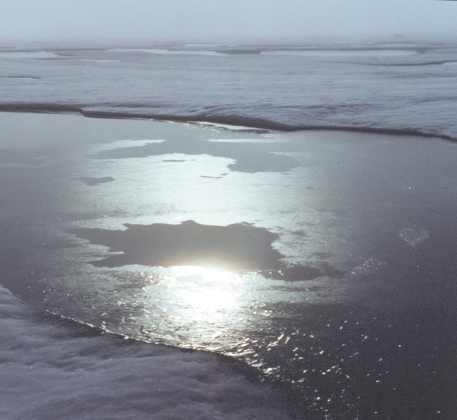
Spring sun, 78°N
SHEBA PROJECT OFFICE
Heavy Metals
The rise of the sun after the polar winter is a
pollution. Overall, lead levels in the atmosphere
time of celebration in the Arctic. The length-
have gone down considerably, mainly thanks
ening days herald warmer weather and the
to restrictions on leaded gasoline. In some
return of migratory animals. But the recent
local areas within the Arctic, however, the use
discovery that the Arctic may be an important
of lead shot for hunting has left particles of
global sink for atmospheric mercury casts a
this metal on the ground or at the bottom of
shadow over polar sunrise.
ponds, a source of exposure for many birds.
Each spring, a substantial amount of air-
Cadmium remains an enigma. Its sources,
borne mercury is deposited on Arctic snow
levels, and biological effects are still not suffi-
and ice as a result of reactions spurred by
ciently well documented to assess the environ-
sunlight. Once in the snow, some of the mer-
mental impact cadmium has in the Arctic.
cury is present in reactive, biologically avail-
In parts of Russia, around the large smelter
able forms. As the snow melts, some of the
complexes in Norilsk and on the Kola Penin-
mercury can enter the food web just as the
sula, emissions that include metals and sulfur
burst of spring productivity begins, a time
dioxide have destroyed all nearby vegetation.
when life in the region is vulnerable.
This chapter also provides updated informa-
This chapter examines heavy metals in the
tion from these areas.
Arctic, focusing on mercury, lead, and cadmium.
In addition to sources, pathways, and levels
Mercury pollution is an increasing concern
of heavy metals, this chapter discusses effects
because levels in the Arctic are already high,
of metals on vegetation and wildlife. Effects
and are not declining despite significant emis-
on people are covered in the chapter Human
sions reductions in Europe and North America.
Health, which shows that mercury, in particu-
Lead, on the other hand, clearly demon-
lar, is a serious health concern for some Arctic
strates the effectiveness of actions to reduce
people.
Coal-burning power plant, 40°N
POLFOTO / T.C. MALHOTRA
38
Introduction
Technological advances have reduced
emissions in some industrial areas, but these
Heavy Metals
Metals are naturally occurring elements. They
reductions have been offset by increases in
are found in elemental form and in a variety
other regions. Many sources are still poorly
of other chemical compounds. Each form or
documented.
compound has different properties, which
affect how the metal is transported, what
Human activities release mercury
happens to it in the food web, and how toxic
it is. Some metals are vital nutrients in low
Mercury is a relatively common metal, found in
concentrations.
rocks, sediments, and organic matter through-
The previous AMAP report assessed a wide
out the world. Typically, naturally occurring
range of metals and concluded that the ones
mercury is strongly bound in these media and
raising most concern about effects in the Arc-
not readily available to the food web.
tic are mercury and cadmium. They have no
known biological function but bioaccumulate
Mercury ore belt
ore be
re
e be
e be
beltt
Parts of the mercury
belt, the geological areas
(see table), can be toxic in small quantities,
Major mercury deposit
er
erc
cu
rcury deposit
rcury
er
y
y
cury
ry
cury
itt
naturally rich in mer-
and are present at high levels for a region re-
cury, lie within the
mote from most anthropogenic sources. For
Arctic.
both metals, a primary emphasis was on
increased understanding of the possible bio-
logical effects of the levels that have been doc-
Uptake efficiency
Half-life
(how much of avail-
(time it takes for
able metal is taken up
the tissue concentration
Metal
Organism
in the indicated tissue) to be reduced by half)
Human activities can mobilize mercury,
Lead
Mammals
5-10% via intestines
40 days in soft tissues
either through mining and subsequent use of
30-50% via the lungs
20 years in bone
--------------------------------------------------------------------------------------------
mercury in a range of products, or by burning
Cadmium Fish
1% via intestines
24-63 days
fossil fuels. In 1995, the most recent year for
0.1% via gills
which global emission figures are available,
Mammals
1-7% via intestines
10-50% of life span in liver
some 2240 tonnes of mercury were released
7-50% via lungs
10-30 years in kidney
into the air as a result of the burning of fossil
--------------------------------------------------------------------------------------------
fuels, the production of metals and cement,
Mercury
Fish
depends on
323 days for organic
the disposal of waste in landfills and incinera-
chemical form,
mercury from diet
tion plants, and other industrial activities.
water temperature,
45-61 days for inorganic
Fossil fuel combustion, particularly burning
and water hardness
mercury from water or diet
coal to generate electricity and heat, was
Mammals
>95% for organic
500-1000 days in seals and
mercury via intestines
dolphins for methylmercury,
>15% for inorganic
52-93 days for methylmer-
Worldwide mercury emissions,
mercury cury
and
40 days for inor-
tonnes/year
ganic mercury in whole
2500
body of humans.
umented in Arctic animals. A third metal of
concern was lead. Lead is also toxic, but envi-
2000
ronmental levels of lead appeared to be de-
creasing as a result of the change to unleaded
gasoline in most countries. Other metals, such
as nickel and copper, were of local concern,
1500
especially near large smelting operations.
Mercury:
1000
sources and pathways
Global emissions of mer-
Coal burning, waste incineration, and indus-
cury to the air in 1995
trial processes around the world emit mercury
from major anthropo-
to the atmosphere, where natural processes
500
genic sources. Estimated
transport the metal. The Arctic is vulnerable
emissions from natural
sources are roughly the
because unique pathways appear to concen-
same as total anthropo-
trate mercury in forms that are available to
genic emissions.
the food web. Environmental changes may
0
have made these pathways more efficient in
Other
recent years.
StationaryNon-ferrous
Waste disposal
metal production Cement production
Natural emissions
fossil fuel combustion
Iron and steel production
39
Current international actions on metals
Heavy Metals
In addition to national regulations concerning emissions and use of heavy metals, some signifi-
cant steps have recently been taken internationally to address the heavy metals.
The United Nations Economic Commission for Europe (UN ECE) Convention on Long-Range
Transboundary Air Pollution adopted a Protocol on Heavy Metals in 1998. The protocol targets
mercury, lead, and cadmium. Countries that are party to the protocol will have to reduce total
annual emissions to below the levels they emitted in 1990.
As of June 15th, 2002, there were 36 signatories to the protocol, including all the Arctic coun-
tries except Russia. Of these, 10 had ratified it, including Canada, Denmark, Finland, Norway,
Sweden, and the United States. For the protocol to enter into force, sixteen countries must ratify it.
At its meeting in 2000, the Arctic Council called on the United Nations Environment Pro-
gramme (UNEP) to initiate a global assessment of mercury that could form the basis for appro-
priate international action. This request was based on the findings of AMAP's first assessment.
In 2001, the UNEP Governing Council agreed to undertake such a study. At the same time,
UNEP agreed to tackle the issue of lead in gasoline.
The study on mercury will summarize available information on the health and environmental
impacts of mercury, and compile information about prevention and control technologies and
practices and their associated costs and effectiveness. In addition, the UNEP Governing Council
requested, for consideration at its next session in February 2003, an outline of options to address
any significant global adverse impacts of mercury. These options may include reducing and or
eliminating the use, emissions, discharges, and losses of mercury and its compounds; improving
international cooperation; and enhancing risk communication.
responsible for about two-thirds of these
especially as human activity has increased the
emissions.
total amount of mercury available in the envi-
Recent conversions to cleaner-burning
ronment. Natural sources, such as volcanoes,
power plants and the use of fuels other than
add to the total mercury in the Arctic environ-
coal reduced emissions significantly in West-
ment. It is very difficult to quantify and distin-
ern Europe and North America during the
guish the contributions of re-emitted mercury
1980s. Industrial coal combustion now pro-
and natural sources. For example, a natural
duces only half the mercury that it did at the
event such as a forest fire can release mercury
beginning of the 1980s. There is evidence,
that had been deposited after initial emission
however, that global emissions may now actu-
from a coal-burning power plant.
ally be increasing. The recent reductions have
However, the contribution of natural sources
been offset by rising emissions in some parts
is believed to be comparable, on a global
of the world, particularly Asia, which now
scale, to emissions from human activities.
produces half the world's mercury emissions.
Locally, the contributions of re-emissions vary
The main source of Asian emissions is coal
greatly. About three-quarters of the mercury
combustion to produce electricity and heat,
emitted to the atmosphere is gaseous elemen-
particularly in China. Chinese emissions from
tal mercury, or mercury vapor. About one-fifth
sources such as small industrial and commer-
of the mercury is reactive mercury, and the
cial furnaces, residential coal burning, and
remainder is mercury bound to aerosol parti-
power plants are responsible for about half
cles such as soot.
the Asian total, or one-quarter of global
emissions.
Volatility ensures global distribution
Re-emissions of mercury that has already
been deposited can be a significant source,
Atmospheric transport is the most important
pathway of mercury to the Arctic. Globally,
Anthropogenic mercury emissions,
tonnes/year
an estimated 5000 tonnes of mercury are pre-
1500
sent in the air at any given time. At present,
combustion, particularly of coal in Asia and
Europe, is the most significant source of anthro-
pogenic mercury in Arctic air.
1000
Mercury can appear as a vapor, which means
that it can be re-emitted after it has been de-
posited on land or in water. Long residence
time in the atmosphere, 1-2 years, helps it
500
spread around the northern hemisphere.
The presence of mercury does not by itself
Global anthropogenic
explain how it enters the food web. Elemental
emissions of mercury to
mercury in the air must be transformed into
the air in 1995 from dif-
0
bioavailable mercury. One mechanism by
ferent continents.
Asia
which this can occur has been recently discov-
Africa
Europe
ered, and appears to be unique to the Arctic.
North America
South America
Australia and Oceania
40
5 March
10 March
Heavy Metals
BrO,
1013 molecules /cm2
>
10.0
9.0
Barrow
Barrow
8.0
7.0
6.0
5.0
4.0
<
Polar sunrise
Mercury depletion in
Ozone, ppb
leads to mercury depletion in air
spring 1999 at Barrow,
Hg0, ng / m3
Alaska, one of the sites
4.5
At the monitoring station in Alert, in the
where these events
30
4.0
Canadian High Arctic, the concentration of
Ozone
have been measured.
gaseous elemental mercury levels drops
25
3.5
Lower panel: onset of
3.0
sharply each spring. Researchers first noticed
the main mercury
20
2.5
this phenomenon in 1995, and initially thought
depletion in March.
15
2.0
that their instruments were malfunctioning.
Center panel:
1.5
The phenomenon occurred again the next
Similarity between
10
gaseous elemental mer-
1.0
5
spring, however, and similar observations
Mercury
cury and ozone deple-
0.5
were made at other air monitoring stations
0
tion patterns.
0
around the Arctic.
Upper panel: the
26 27 28 1 2 3 4 5 6 7 8 9 10 11 12 13 14 15 16
February March 1999
The drop in mercury is not a one-time event,
strong mercury deple-
tion on 10 March
but a series that begins shortly after the first
Hg0, ng / m3
coincides with high
sunrise of spring, and continues until snow-
4.0
bromine levels near
melt (see graph to the left). Depletions are
Barrow, which were
3.5
highest at midday, when sunlight is strongest,
not present a few days
3.0
and are closely correlated with a depletion
earlier.
2.5
of ozone in surface air. Although further re-
2.0
search is needed to determine exactly what is
1.5
occurring each spring, a likely explanation is
1.0
a series of chemical reactions in the air.
0.5
The catalyst for these reactions appears to be
bromine, which is emitted from the ocean to
0
J
F
M
A
M
J
J
A
S
O
N
D
the surface layer of the atmosphere. Spurred
1999
by sunlight, the bromine reacts with ozone to
create compounds that in turn may react with
Mercury can take many forms
elemental mercury (see diagram on top of op-
Mercury exists in many forms in the environment, each of which
posite page).
has different properties affecting distribution, uptake, and toxicity.
The net result is that elemental mercury
These forms include:
is oxidized to some form of reactive gaseous
Elemental mercury mercury atoms that have not lost electrons.
mercury, while ozone is destroyed. Thus,
At room temperature, elemental mercury is a liquid, but it produces
gaseous elemental mercury and ozone show
mercury vapor (also called gaseous elemental mercury, Hg0), which
a sharp decline together. The mercury and
can be transported by air. Elemental mercury is not particularly
ozone required for these reactions are re-
toxic, but is readily taken up by air-breathing organisms.
plenished from air above the surface layer.
Reactive mercury mercury that reacts readily with other mole-
The gaseous bromine, on the other hand,
cules, and deposits very quickly from the air.
is returned to its original form by the se-
Methylmercury and related compounds mercury joined to
quence of reactions, ready to act as a cata-
methyl groups to form new molecules. Some microorganisms can
lyst again.
turn inorganic mercury into methylmercury, a highly toxic form
Part of the evidence for the role of bromine
that is bioaccumulated and biomagnified.
in mercury depletion events is that mercury
Particulate mercury mercury atoms bound to soil, sediment,
in snow and lichen is higher nearer the coast
or aerosol particles. Particulate mercury is generally not very
than inland. This pattern is the same for sea-
bioavailable.
salt aerosols, which are one source of the bro-
mine necessary for the reactions. Another key
piece of evidence is the finding that mer-
cury in snowfall on the Arctic Ocean in-
creases dramatically after polar sunrise.
Energy from sunlight (h )
Recent mercury transport models have
incorporated the mechanisms thought to
Atmospheric
Atmospheric
transport
transport
be responsible for mercury depletion
into the Arctic
Br
out of the Arctic
2 + h
2Br
events. These models and other calcula-
Br + O
3
BrO + O2
Hg0
Hg0
BrO + Hg0 reactive Hg + Br (?)
tions indicate that the amount of mer-
cury deposited in the Arctic may be con-
siderably higher than previously realized.
Hg0
Br2
Hg0
Br2
Estimates of annual deposition in the
R e a c t i v e H g
Arctic range from 150 to 300 tonnes,
or more than twice the estimates made
without including the springtime deple-
tion events.
Mercury enters the food web
Because the mercury depletion events have
Reactions involving sun-
only recently been discovered, it is not clear
light and bromine remove
Reactive gaseous mercury, unlike elemental
whether they have always taken place. Changes
gaseous elemental mercu-
ry from the atmosphere
mercury, deposits quickly on whatever surface
in Arctic climatic regimes or the levels of
(mercury depletion) and
it touches. During the Arctic spring, this is
anthropogenic pollutants may influence the
transfer it to the surface
most likely to be snow. Once in the snow,
scale of mercury depletion. The chapter
as reactive mercury. Part
much of the mercury is returned to the ele-
Changing Pathways explores the potential
of the reactive mercury
mental form and is re-emitted to the atmos-
role of climate change on mercury transport
may reach the food web;
part is re-emitted as Hg0.
phere. However, a significant amount of the
and deposition.
mercury remains in reactive form in the snow
(see figure to the right), where other processes
Peak daily UV-B, W/m2
convert some of it to a bioavailable form.
Total mercury in snowpack, ng / liter
Reactive gaseous mercury, ng /m3
The bioavailable mercury is likely trans-
0.10
100
1.0
formed to highly toxic methylmercury by
Reactive gaseous mercury
0.09
90
0.9
microbial action. Bioavailable mercury is
Peak daily UV-B
Total mercury in snowpack
negligible in the snow prior to polar sunrise,
0.08
80
0.8
but levels increase after the mercury depletion
0.07
70
0.7
events start, reaching a maximum just before
0.06
60
0.6
snowmelt.
Snowmelt is the time when Arctic plants
0.05
50
0.5
and animals become active and productive.
0.04
40
0.4
Snowmelt is also the main source of freshwa-
0.03
30
0.3
ter to most Arctic landscapes. Though further
Arctic
End of
sunrise
snowmelt
study is needed to determine the fate of the
0.02
20
0.2
reactive mercury, the release of bioavailable
0.01
10
0.1
mercury into terrestrial and aquatic ecosys-
0
0
0
tems may be the chief mechanism for transfer-
1 February
1 March
1 April
1 May
1 June 2000
ring atmospheric mercury to Arctic foodwebs.
Production of reactive
Rivers and biological pathways
gaseous mercury at Bar-
row starts as UV-radia-
can be locally important
tion increases following
Even if most mercury reaches the Arctic
polar sunrise, and ends
at snowmelt. Total mer-
through the air, there are some additional
cury in the surface snow-
pathways. Russian rivers carry mercury
pack also increases over
released by industrial activities upstream.
this period.
Although their mercury concentrations are
much lower than mean global values, the
great volume of water in the Ob, Yenisey,
and Lena rivers make them significant reg-
ional pathways. Together, the Eurasian rivers
transport 10 tonnes of mercury each year to
coastal estuaries and the Arctic Ocean, most
of it in particulate form.
Biological pathways can also be important
locally. For example, salmon migrating from
the ocean to spawn deliver mercury to lakes
and rivers when they die. One study in Alaska
Ob Estuary. Eurasian
estimated that, over the past twenty years, a
rivers transport mercury
BRYAN & CHERRY ALEXANDER
total of some 15 kilograms of methylmercury
to coastal estuaries.
understood, especially for the Arctic. Some
42
mercury enters the food web and some is
Heavy Metals
buried in sediments, but the linkages between
mercury depletion events and mercury concen-
trations in marine biota have not been deter-
mined. It seems likely that the mercury ex-
change between atmosphere and ocean in the
Arctic differs significantly from other oceans
simply because of ice cover. Sea ice forms a
barrier to the gaseous emission of mercury
accumulated in the upper ocean layer, but the
potential of this barrier to enhance mercury
concentrations in the marine environment has
not been evaluated.
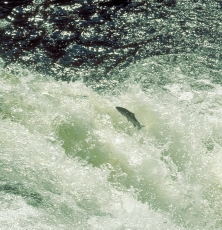
Migrating salmon can
serve as a biological
Mercury time trends
pathway for mercury.
BIOFOTO / ADI
Mercury has always been present in the Arc-
has been transported by Pacific salmon to
tic, but levels in many areas of the Arctic are
the lakes and streams of the eastern Bering
considerably higher now than they were
Sea coast.
before the beginning of the industrial era.
While riverine inputs and biological trans-
Recent trends vary geographically and levels
port can be locally significant, analysis of
do not seem to be dropping as would be ex-
mercury and other compounds in sediments
pected from regional emission reductions in
confirms that, across the Arctic, deposition
Europe and North America. In some areas
from the atmosphere is the main source of
they are clearly increasing.
mercury from human activities.
Diagenesis may affect metals profiles
Ocean pathways are not well understood
in sediments and peat bogs
Mercury in sediments and peat bogs may
Atmospheric deposition, including mercury
move after it is deposited, a process known
depletion events, and river inputs supply mer-
as diagenesis. This movement can alter the
cury to the ocean. Mercury is removed from
profile of mercury in the sediment or peat
the upper layers of the ocean by settling of
layers, confounding trend analyses. Although
particles or by emission of gaseous mercury to
there are still questions relating to diagene-
The ratio of post-indus-
the air. The cycling of mercury and its eventu-
sis in lake sediments and peat bogs, a num-
trial to pre-industrial flux
al fate in the ocean, however, are poorly
ber of studies appear to provide good evi-
of mercury to lake sedi-
dence that mercury deposition in the Arctic
ments. Ratios above 1.0
has increased considerably since the indus-
indicate increased mer-
trial era began.
cury deposition in
the post-indus-
trial period.
Mercury levels
are higher than in pre-industrial times
Lake sediments in Greenland show that mer-
cury increases started by the late 19th century,
and perhaps as early as the 17th century.
Recent concentrations are on average three
times higher than in pre-industrial times.
Similar results have been found across Eur-
asia, with increases highest in the west and at
lower latitudes, closer to the industrial areas
of central Europe. Lakes in the Taymir Penin-
sula in northern Russia, for example, showed
a much smaller increase than lakes in north-
ern Scandinavia (see map).
In North America, similar geographic pat-
terns emerged, with higher increases in south-
eastern lakes near mercury sources in eastern
Total mercury flux ratio
North America. By contrast, no increase has
> 0.0 -1.5
been seen in the sediment in some lakes re-
1.5 -2.5
2.5 -3.5
mote from source regions. This includes YaYa
> 3.5
Lake in the Yukon Territory, Lake Hazen
on Ellesmere Island in the Canadian High
Arctic, and lakes on the Arctic coastal plain
`80
`90
`00
of Alaska.
`80
`90
`00
Peat bogs in Arctic Canada, Greenland,
`90
`00
and the Faroe Islands provide evidence sup-
porting the trends found in lake sediments.
`90
`00
Mercury concentrations in cores from these
bogs were seven to seventeen times higher
`90
`00
`90
`00
after the industrial revolution than before.
More information about the behavior of
mercury in peat bogs is needed to interpret
`80
`90
`00
`80
`90
`00
the differences between the peat and lake
sediments.
Long-term time trend data for biota are
relatively scarce, but the existing records
`90
`00
show an increase in most parts of the Arctic.
`90
`00
In Greenland, mercury in human and seal
`70
`80
`90
`00
hair shows a three-fold increase since the 15th
century. These data are discussed further in
the chapter Human Health. In Norway, mer-
`70
`80
`90
`00
`80
`90
`00
cury in human teeth (without modern mer-
cury amalgam fillings) was thirteen times
higher in the 1970s than in the 12th century,
`90
`00
`80
`90
`00
`80
`90
`00
`90
`00
although levels appear to have declined sub-
stantially since the 1970s.
Concentrations in beluga whale teeth from
`90
`00
`80
`90
`00
`90
`00
the Beaufort Sea showed an increase of four
`80
`90
`00
to seventeen times between the 16th century
`90
`00
`90
`00
and the 1990s. The data suggest that indus-
`90
`00
`80
`90
`00
trial mercury accounts for more than 80% of
`90
`00
total mercury in this species.
`80
`90
`00
`90
`00
`90
`00
`90
`00
Mercury concentration, ng/g
`70
`80
`90
`00
`80
`90
`00
`80
`90
`00
500
200
1993
100
of too short duration to provide evidence of
Thick-billed murre
50
(eggs)
definitive recent trends.
Northern fulmar
20
In the eggs of thick-billed murres collected
(eggs)
10
1450-1650
from Prince Leopold Island, Canada, the mer-
Polar bear (liver)
5
cury concentration almost doubled between
Ringed seal (liver)
1975 and 1998. In northern fulmars, the
Beluga (liver)
2
Cod (muscle)
1
increase was 50% over the same period.
Dab (muscle)
0
5
10
15
20
25
30
The trend does not appear to be the result of
Burbot (muscle)
Age of animal, years
changes in feeding patterns or the food web.
Pike (muscle)
Arctic char (muscle)
Mercury in teeth of Beaufort Sea beluga collected in 1993,
compared with 300-500 year old teeth.
Mercury levels in kittiwakes showed no signi-
Caribou (muscle)
ficant change, even though these birds migrate
Mollusk shells in Hudson Bay indicate a
to more polluted areas at lower latitudes.
Moose (muscle)
doubling of mercury concentrations in seawater
Mercury in the liver and kidneys of ringed
Blue mussel
since the pre-industrial age. By contrast, mol-
seal, beluga, and narwhal across Canada ap-
(soft body)
Key to coloring of biota symbols
lusk shells and walrus teeth from the Canadian
pears to have increased by a factor of two or
Significant
High Arctic show no change in mercury from
three over the past twenty years, though an-
increasing trend
Increasing tendency
the 16th century to the present, perhaps reflect-
nual variations are high. In the late 1990s,
Significant non-linear/
ing their greater distance from industrial sources.
there was an increase in mercury in beluga
fluctuating trend
No trend
from the Beaufort Sea in the western Cana-
Decreasing tendency
dian Arctic, but no consistent pattern in the
Recent trends vary
Significant
eastern Canadian Arctic. Mercury in ringed
decreasing trend
Where available, trends data from the past
seal liver from West Greenland is higher now
Trends in mercury levels
have been measured over
few decades indicate that mercury levels are
than in the mid-1980s, but in ringed seal from
the past 10-30 years in
increasing in some Arctic biota, specifically in
East Greenland, no change has been seen over
various Arctic species.
marine birds and mammals from some areas
the same period. In polar bear muscle from
Selected time series are
in the Canadian Arctic, and some species in
East Greenland, mercury is higher now than
shown, with animal sym-
West Greenland. By contrast, in lower-order
in the mid-1980s, but no change was found in
bols colored to indicate
the trend. Increasing trends
marine biota samples from the European Arc-
polar bear liver, kidney, or hair.
are apparent in some mar-
tic, mercury levels are stable or declining.
Marine fish and invertebrates show differ-
ine animals, especially in
However, most time trend studies have been
ing trends. In Greenland, mercury in short-
the Canadian Arctic.
horn sculpin increased from the mid-1980s
44
A need for further studies
to the mid-1990s. In Arctic cod over the same
Heavy Metals
period, mercury decreased. Recent collections
The increases in mercury since the start of
of sculpins from Greenland show no clear
the industrial age are clear evidence of the
trend. Cod sampled around the coasts of
role of human activities. Drawing firm con-
northern Norway showed no change in the
clusions about changes in the role of anthro-
1990s. In northwest Iceland, levels in both
pogenic emissions in a shorter time period is
cod and dab declined. In blue mussels, levels
not as easy.
remained stable at most sites in Norway,
The decline in some areas probably reflects
Iceland, and Greenland. Two sites were sam-
decreases in emissions. In Canada, mercury
pled in Prince William Sound, Alaska, one of
levels in sediments have decreased in southern
which showed no change and the other a sig-
lakes, following emissions reductions at near-
nificant increase. In Qeqertarsuaq, Greenland,
by sources. However, there is no clear expla-
mercury declined in larger mussels from 1994
nation for the increases in marine birds and
to 1999.
mammals from some areas in the Canadian
In the terrestrial environment, changes
Arctic and West Greenland or why the time
appear to be occurring in some cases. Moose
trends should be different for Canada/Green-
in parts of the Yukon Territory may have
land and the European Arctic. The Canadian
declining levels of mercury, as measured
belugas that showed the greatest increase in
from 1993 to 1998. Mercury in reindeer
uptake in the 1990s were collected in areas
livers in Isortoq, Greenland declined from
with large freshwater drainage, suggesting
1994 to 1999. Mercury levels in American
that the change could be more related to fresh-
peregrine falcon in Alaska may have in-
water input than direct deposition from the air.
creased from the period 1988-90 to 1991-95.
There is a need to better understand path-
Longer-term monitoring is required to con-
ways and processes influencing mercury distri-
firm these findings.
bution. Such studies should include the pos-
sible influence of climate change, which is
discussed further in the chapter Changing
Pathways.
Mercury levels and effects
Mercury levels in the environment reflect a
combination of different factors, including
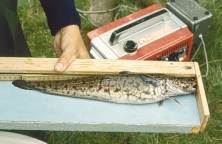
Measuring a burbot
pathways and proximity to natural sources.
mercury levels in fish are
related to the size and
Moreover, mercury-rich rocks in some areas
age of the individual.
BIOFOTO / SØREN BREITING
In freshwater environments, the picture is
similarly varied. The only recorded increase is
in male burbot from the Mackenzie River,
Canada. At Fort Good Hope, Northwest
Territories, mercury levels in burbot muscle
increased by 36% between 1985 and 2000.
In other areas where monitoring has occurred,
mercury appears to have declined or remained
stable. Lake trout from Lake Laberge in the
Yukon Territory showed a 30% decline in
mercury in muscle from 1993 to 1996, but no
change from 1996 to 1998. Also in the Yukon,
lake trout in Quiet Lake showed no change
from 1992 to 1999. Arctic char in Resolute
Lake in the Canadian Arctic show no changes
from 1992 to 2000. In northern Sweden,
Arctic char and pike showed no trends over
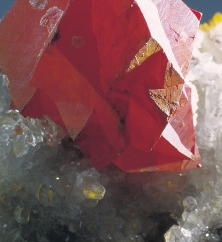
Mercury ore (cinnabar).
GEOLOGICAL MUSEUM, COPENHAGEN
the past twenty and thirty years, respectively,
although levels fluctuated considerably within
lead to locally higher background levels. Once
that period. In Greenland, no trend was found
mercury enters the food web, differences in
in Arctic char over the period 1994-1999.
food web structure can greatly affect levels of
Levels in freshwater environments may not
mercury, even in the same species in different
respond immediately to declines in emissions
locations. In the Arctic, the potential for bio-
because previous deposition in the catchment
magnification is generally greatest in aquatic
area can make the surrounding soils a con-
food webs, where levels are high enough in
tinuing source.
some species to raise concern about toxic effects.
Mercury can have a variety of toxic effects
45
Heavy Metals
The toxicity of mercury to individual plants
and animals is well known through laboratory
studies and through examining accidents where
mercury was released into the environment or
introduced into food items.
Lavrentiya
In mammals, mercury causes nerve and
brain damage, especially in fetuses and the
very young. It can also interfere with the pro-
Barrow
duction of sperm. In birds, high levels of mer-
cury can cause erratic behavior, appetite sup-
pression, and weight loss. At lower levels,
egg production and viability are reduced, and
embryo and chick survival are lower. Outside
Resolute Bay
the Arctic, some seabirds show signs of cellu-
Arviat
lar-level kidney damage from accumulated
Arctic
mercury. Fish exposed to high mercury levels
Grise
Bay
Fjord
Pond
suffer from damage to their gills and sense of
Inlet
Avanersuag
smell, from blindness, and from a reduced
Salluit
Pangnirtung
ability to absorb nutrients through the intes-
Quataq
Kangirsuk
Svalbard
tine. Plants with high concentrations of mer-
Hudson Strait
Qeqertarsuaq
Ungava Bay
Mercury concentration,
cury show reduced growth.
Nain
ug / g wet weight
Makkovik
Ittoqqortoormiit
15
Mercury is significant
10
in the marine environment
5
The major focus for mercury research has been
on the marine environment. Blue mussels and
0
shorthorn sculpins, two species that have been
Spatial trends in mercury
studied around the Arctic, show no clear spa-
concentrations in ringed
tial trends.
seal liver.
Seabirds, on the other hand, had in general
lower levels in the Barents Sea than in Green-
growth processes are other factors that could
land, Canada, and northeastern Siberia. Ful-
play a role in regional differences.
mars and black guillemots show comparable
There is some evidence that, as one moves
levels between the Faroe Islands and Arctic
westward across the Canadian Arctic, mer-
Canada, though Faroese levels may be closer
cury levels in beluga whales and ringed seals
to the high end of the range for Canadian
increase. In the North Atlantic, mercury levels
samples. The Canadian Arctic seabird data
in minke whales were found to be higher
show an increase in mercury as latitude
around Jan Mayen and the North Sea than
increases.
around Svalbard or West Greenland. In gray
For migratory species, the winter range
seals from the Faroe Islands, mercury levels
may be a critical factor in mercury levels.
are similar to those found in the same species
Birds in northeast Siberia, which winter in
at Sable Island, eastern Canada, but higher
eastern Asia, show higher levels of mercury
than gray seals from Jarfjord, Norway. In po-
than birds in other regions. Moreover, feeding
lar bears, mercury levels are higher in the
habits and food web structure likely play a
northwestern Canadian Arctic than in south-
role in spatial differences. Birds of the same
ern, northeastern, and eastern Greenland.
species may eat invertebrates in one region
and fish in another, with correspondingly dif-
Seabirds and some whales
ferent exposures to contaminants. Regional
may be vulnerable
geology and the effects of temperature on
Documenting mercury levels is an important
step, but these levels do not by themselves tell
us what effects mercury may have on the in-
dividual animals or on wildlife populations.
The natural environment is a complex system,
and different species and even different indi-
viduals can respond in very different ways to
mercury and other contaminants. In most
marine animals, mercury concentrations are
highest in liver, followed by kidney and then
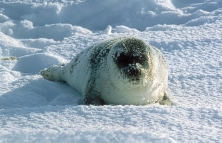
Ringed seal a key
muscle. Polar bears and terrestrial animals
species in circumpolar
BIOFOTO / CLAUS BIRKBØLL
have the highest levels in the kidney.
Arctic monitoring.
Mercury concentration, ug /g wet weight
46
1000
Heavy Metals
100
Liver damage in marine mammals
60
Lethal or harmful in free ranging wildlife and birds 30
Clinical sublethal poisoning of freshwater fish
20
less sensitive fish species
10
Clinical sublethal poisoning of freshwater fish 6
sensitive fish species
Detrimental effects on hatching in terrestrial birds 2
1
Uncertain ranges
0.1
Summary of ranges of
mercury concentrations
in Arctic species, com-
0.01
pared with different
thresholds for biological
effects. The comparison
should be used with cau-
tion because of problems
with extrapolating data
across species.
0.001
, liver
, muscle
, kidney
Polar bear
rrestrial birds, liver
(ducks, geese), eggs Polar bear
e
rrestrial birds, eggsArctic char
Fish (other), muscle
oothed whales, liver
Seals, walrus, liver
T
rrestrial birds, kidney
e
T
Baleen whales, liver
Seals, walrus, kidney
Reindeer/caribou, liver
e
T
oothed whales, kidney
T
T
Baleen whales, kidney
Reindeer/caribou, kidney
Fish (predatory), muscle
Fish (whitefish), muscle
Mammals (carnivores), liver
Mammals (herbivores), liver
waterfowl
Mammals (carnivores), kidney
Mammals (herbivores), kidney
Birds,
Seabirds, gulls, shorebirds, eggs
T E R R E S T R I A L
F R E S H W A T E R
M A R I N E
Bowhead whales, beluga, and seals harvest-
Less is known about freshwater
ed in northern Alaska have concentrations of
and terrestrial environments
mercury and other metals that are high com-
pared with normal ranges found in livestock.
Although there are some spatial differences
Nonetheless, they appear to be in good body
in mercury in the freshwater and terrestrial
condition, with no lesions that would indicate
environments, most levels are low. The differ-
effects of heavy metals. In fact, the levels
ences may reflect local sources, including geo-
found in bowhead whales are comparable to
logy of the local bedrock. In the terrestrial
the levels found in most other baleen whales
environment, there is evidence that mercury
around the world.
accumulates as it progresses up the food web,
Some birds and marine mammals have mer-
and that eating lichen is the primary means
cury levels that are a cause for concern. Stud-
by which caribou and reindeer are exposed to
ies of some seabirds show that higher mercury
mercury.
levels were associated with lower body weight
There are large variations in mercury con-
and lower amounts of abdominal fat. Selenium,
centrations in Arctic char in the AMAP area.
however, may help protect these animals from
Overall, the levels are below the Canadian
the effects of mercury exposure. Seabirds are
subsistence food guideline of 0.2 micrograms
also able to tolerate higher mercury exposure
per kilogram. However, there are areas such
than non-marine birds.
as southwestern Greenland, lakes near Qaus-
0.708 0.291 0.314
uittuq in Arctic Canada, and the Faroe Islands,
where levels exceed the Canadian subsistence
food guideline. The variability can be seen
Mercury concentration,
ug / g wet weight
even in limited geographical regions. For ex-
0.10
ample, in Sweden, levels in the lake Tjulträsket
were four times higher than in the lake Abis-
kojaure (Ábeskojávri), without any obvious
Lavrentiya
explanation.
Arctic char can inhabit different trophic
0.05
levels, even within the same lake. The position
of an individual fish in the food web can also
change over time. Because freshwater fish at
Lake
20
higher trophic levels have higher mercury con-
centrations in their tissues, the position of a
0
given char at a given time is a critical factor in
Lake
23
determining its mercury load. Thus, compar-
Boomerang Lake
Char, North and
isons are difficult to make. Furthermore, char
Resolute Lakes
that spend time in the ocean appear to have
Sapphire
Lake 26
Lake
generally lower mercury levels than land-
Lake 2
locked char.
Lake 1
Fish that eat other fish have higher mercury
Lake 29
levels, and are thus the main concern in rela-
tion to human exposure. These predatory
Zackenberg
species include walleye pike, lake trout, and
Ittoqqortoormiit
northern pike. In the western Northwest Ter-
Kilpisjärvi
Isortoq
Pahtajärvi
ritories, Canada, mercury levels in these spe-
Abiskojaure
Tjulträsket
cies are typically above Canadian consump-
Thingvallavatn
tion guidelines, regardless of size or age.
Faroe Islands
affect mercury availability and uptake. Acidifi-
Spatial trends in mercury
cation, for example, can greatly enhance the
concentrations in land-
process of methylation, producing a higher
locked Arctic char muscle.
proportion of bioavailable methylmercury.
Evidence of effects
in peregrine falcons and grayling
In some birds of prey and in some fish, there
is evidence of biological effects from mercury
exposure. In American and Arctic peregrine
falcons, mercury levels in eggs in one study in
Alaska exceeded the critical threshold for
reproductive effects in up to 30% of eggs,
depending on year and sub-species. American
peregrines, which are also exposed to high
POP levels, have suffered from reduced pro-
ductivity.
Experimental research with freshwater fish
has shown that grayling embryos exposed to
mercury may suffer reduced growth if the
levels are high enough. Later in life, grayling
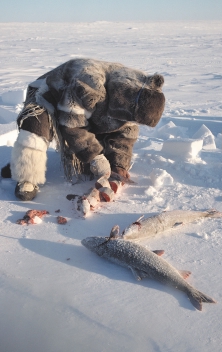
Ice fishing for Arctic
BRYAN & CHERRY ALEXANDER
char, Igloolik, Nunavut.
exposed even to moderate concentrations of
Other factors affect mercury in freshwater
methylmercury are likely to be poorer at
biota. As discussed above, the presence of
catching prey. This result suggests that mer-
selenium may alter the effects of mercury
cury levels documented in the environment
within an organism, or lower the uptake of
may lower the ecological fitness of grayling,
mercury. This effect could explain a lack of
with the potential to affect the population of
correlation between mercury levels in fish and
grayling in Arctic waters. Similar results have
in sediments in some lakes. Water chemistry,
been found for juvenile walleye pike exposed
especially acidity, and food web structure also
to low levels of methylmercury in the diet.
48
Is it time for global action?
The transport of lead follows seasonal pat-
terns. Lead levels in airborne particles are
Heavy Metals
Temporal trends show a clear rise in mercury
lowest in early fall, and at this time of the
contamination since the beginning of the indu-
year lead reaching the Canadian Arctic comes
strial age. Moreover, in some areas, particu-
mostly from natural sources in the Canadian
larly in North America and West Greenland
Arctic Archipelago and West Greenland.
for marine birds and mammals, mercury levels
In late fall and winter, airborne lead comes
are still increasing. As discussed in the chapter
primarily from industrial sources in Europe.
Human Health, mercury exposure is a signifi-
By late spring and into summer, lead from
cant health risk for some Arctic people.
Asian industrial sources can be detected.
Documenting the circulation of mercury in
the environment and its uptake into the food
Anthropogenic lead emissions,
tonnes/year
web will take more research, and it is vital to
60 000
understand how these processes work. Although
it may not be possible to counteract the toxi-
city of mercury directly, knowing which spe-
cies or areas are most at risk will allow us to
40 000
take other measures to protect them from
additional stresses. It will also help identify
species of concern for human consumption.
20 000
Global anthropogenic
Despite the uncertainties, some things are
emissions of lead to the
clear. Humans contribute a significant portion
air in 1995 from differ-
of the mercury found in the Arctic. The levels
ent continents.
now found in many Arctic animals are cause
0
for concern, even if ecological complexity
Asia
Africa
makes mercury's effects difficult to isolate.
Europe
Oceania
The problem of mercury will not diminish
Australia and
without global action. A first step in this direc-
North America
South America
tion is the UNEP study currently underway, as
Eurasian rivers are also a significant source
described earlier.
of lead delivered to coastal estuaries and the
Arctic Ocean, comparable to the amount of
lead delivered via atmospheric transport.
Lead
Together, these rivers carry some 2450 tonnes
success for political action
of lead each year, most of it in the form of
suspended particles.
Lead is a dense, soft metal with many uses.
Ocean currents may be more important in
Lead is also toxic. Altered behavior resulting
transporting lead to and within the Arctic
from lead affecting brain and nerve tissue is
than previously recognized. While atmos-
the most widely recognized effect of lead poi-
pheric deposition is the initial pathway from
soning. Lead also interferes with many enzymes,
anthropogenic sources to the environment,
most notably those associated with the pro-
most of the lead found in the Arctic Ocean is
duction of hemoglobin and cytochromes.
likely transported by currents from the North
Other effects include kidney damage and
Atlantic and the Laptev Sea. The circulation
dysfunction, anemia, intestinal dysfunction,
and reproductive problems including abnor-
Africa
North America
mal growth and development.
Eastern Asia
Found throughout the world, most lead in
Western and
the environment does not enter the food web,
central Asia
but is adsorbed onto soil and sediment parti-
Asian
cles. Some lead, however, is taken up by
Europe
Russia
plants and animals. It remains a concern in
some areas of the Arctic, but bans on the use
of lead, especially in gasoline, have greatly
reduced emissions and thus global environ-
mental levels.
Eurasia is the major source region
Europe and the Asian part of Russia con-
Different air transport
tribute all but a few percent of the airborne
models give different
lead reaching the Arctic. Models show that
estimates for total lead
the main atmospheric pathways are across the
deposition in the Arctic
North Atlantic, from Europe, and from Siberia.
in 1990, but agree well
on the source regions for
Even in the Canadian High Arctic, analysis
Inner pie: MSC-E model Total deposition: 3.5 ktonnes/year
the lead.
confirms that Eurasia is the main source.
Outer pie: DEHM model Total deposition: 6.1 ktonnes/year
patterns of water and sea ice within the Arctic
Ocean have resulted in most anthropogenic
lead being deposited in sediments in the Eur-
asian Basin. Recent changes in Arctic Ocean
circulation patterns suggest that this pattern
of deposition may also have changed.
Leaded gasoline
has been the most important source
Historically, leaded gasoline has been by far
the most important source of lead to the
Arctic. However, most countries in source
regions to the Arctic have now stopped using
leaded gasoline. This has greatly reduced
emissions to the atmosphere. However,
leaded gasoline is still used in a number of
countries, including Russia, though its use
is declining.
A summary of worldwide anthropogenic
POLFOTO / JENS DRESLING
sources of heavy metals to the atmosphere
showed that in 1995, vehicle traffic emitted
Yukon Territory, and in northern Alaska,
Unleaded gasoline is now
nearly 90 000 tonnes of lead to the atmosphere,
recent lead levels in lake sediments are similar
available in much of the
almost three-fourths of the total. Stationary
to those from pre-industrial times. West Green-
Arctic here at Nuuk,
Greenland.
burning of fossil fuels, to generate heat and
land and Hudson Bay region lake sediments,
on the other hand, show increasing lead con-
Worldwide lead emissions,
tonnes/year
centrations beginning in the 18th and 19th
90 000
centuries.
Ice core data from Greenland indicate that,
along with most other heavy metals, lead lev-
els increased significantly following the Indus-
trial Revolution. By 1970, lead levels were
twelve times what they had been less than two
60 000
centuries earlier. Proto-industrial activities had
been releasing lead before the industrial era,
and the highest modern levels may be as many
as 200 times higher than background levels.
Between the early 1970s, when unleaded gas-
30 000
Global emissions of lead
oline was introduced in North America, and
to the air in 1995 from
the early 1990s, lead deposition on the Green-
major anthropogenic
land Ice Sheet dropped by a factor of 6.5.
sources. Anthropogenic
emissions are about ten
Year
times those from natural
0
2000
sources.
Vehicular traffic
Waste disposal
1950
Cement production
Natural emissions
Iron and steel production
Non-ferrous metal production
electricity, and non-ferrous metal production
Stationary fossil fuel combustion
1900
accounted for another 25 000 tonnes. Data
on sources are likely to underestimate emis-
sions from waste incineration, and so must
be regarded as conservative. The total atmos-
1850
pheric emissions in 1995, however, were almost
two thirds lower than emissions in 1983.
Lead concentrations in a
Greenland ice core show
increases during the
1800
Lead is declining
industrial period, but
in the abiotic environment
decreases since the early
1970s when unleaded
Lead deposition patterns across the Arctic are
gasoline was introduced
in some ways similar to the patterns seen in
in North America.
1750 0
50
100
150
mercury. In the Canadian High Arctic, in the
Lead concentration, pg /g
Air samples taken at Alert on Ellesmere
and Nanisivik Mines in the Canadian Arctic,
50
Island confirm decreases in lead over the past
and the now-closed Black Angel Mine in West
Heavy Metals
three decades. Mosses in northern Sweden
Greenland. The high levels of lead in the
show either stable or declining levels of lead.
rocks at these sites means that levels in nearby
Forest mosses in Finland showed declines in
streams and lakes were already high before
lead levels from the late 1980s to the mid-
the mining began. But mining activities in
1990s, corresponding to declines in bulk
many cases greatly increased releases to the
deposition. These declines are almost certainly
surrounding waters.
a result of the reduced use of leaded gasoline.
Caribou near the Red Dog Mine in north-
Lake sediments in Sweden show declines in
western Alaska have elevated levels of lead in
lead over the past two decades, but also reveal
liver and feces, as might be expected in a min-
that low levels of lead from remote sources
Even after closure, mines
have long been deposited from the atmosphere.
such as Nanisivik, shown
here, can be a source for
contaminants. Here tail-
... but levels in many biota are stable
ings are experimentally
capped with a thick layer
In some areas, lead levels in biota have been
of gravel so that they are
stable in recent years. Lead levels in moose in
fixed in the permafrost
the Yukon Territory showed no change from
layer.
1993 to 1998. In Swedish reindeer, lead declined
significantly in liver, but remained unchanged in
muscle from 1983 to 2000. Other trends in ter-
restrial animals are unclear, largely because mon-
itoring studies have been of too short duration.
Levels in northern pike in Lake Storvindeln
and Arctic char in Abiskojaure in northern
Sweden show no significant trend in lead from
1968 to 1999 and 1981 to 1999, respectively.
One possible explanation for the lack of de-
cline is that this area has received relatively
little lead pollution, and thus has not been
affected by decreases in lead emissions.
BO ELBERLING
eral-rich area. The observed levels, however,
are not high enough to cause concern for
toxic effects.
Industrial facilities such as the smelter com-
plexes at Norilsk and on the Kola Peninsula
also release considerable amounts of metals,
including lead to their surrounding areas. The
effects of this pollution are discussed later in
the chapter.
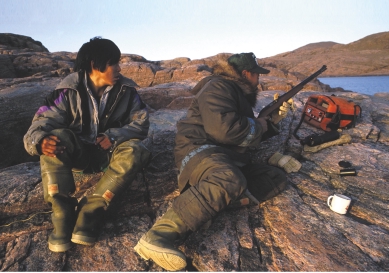
Lead shot creates problems for birds
While lead from industry and vehicles has de-
clined, local contamination from lead shot has
started to receive attention. Although now
banned in most Arctic countries, the use of
BIOFOTO / SVEN HALLING
lead shot for hunting waterfowl introduced
Reindeer are used to
Walrus at Igloolik in Foxe Basin showed
large quantities of lead pellets into the envi-
monitor temporal trends
no evidence of increased lead in the industrial
ronment. These pellets were, and are, eaten
in metals in Sweden.
era, consistent with findings from lake sedi-
by birds, and the lead is taken up through the
ments and mollusks elsewhere in the Canadian
digestive system.
High Arctic. Levels in blue mussels sampled in
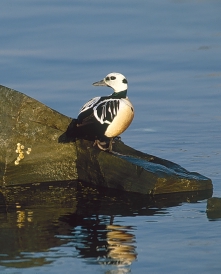
Steller's eiders in Alaska have levels of lead
Alaska and Norway have remained stable for
in their blood that are above avian toxicity
the period 1986 to 1999 and 1992 to 1999,
thresholds for lead poisoning. These birds
respectively.
have suffered from reduced breeding success.
Analyses of livers and kidneys from the eiders
Local lead levels
show that some levels are high enough to
connected to ores and mining
cause concern about toxic effects. The levels
appear to increase over the summer, indicating
Some of the richest deposits of lead ore are
local sources, such as the ingestion of lead
found in the Arctic, for example at the Red
shot found in tundra ponds. These findings,
Dog Mine in northwestern Alaska, the Polaris
although preliminary, suggest that lead shot
may be a significant problem for breeding
Steller's eiders in Alaska.
In an ongoing study in Greenland, there are
no indications of a similar threat from lead
shot to the common eider. White-tailed eagles,
on the other hand, may be poisoned by lead
because they feed on seabirds hunted with
lead shot. In Greenland, lead shot in birds
also appears to be the most important source
for human dietary exposure.
Notes of caution
and possible new threats
Globally, lead emissions have declined sharply
following the introduction of unleaded gaso-
line. But not all sources of lead are well docu-
mented, and levels in some parts of the Arctic
do not appear to follow the declining trend.
Furthermore, local natural and man-made
sources such as mines, mineral outcrops, and
POLFOTO / EUGENE FISCHER
Hunters, Nunavut
Cadmium
lead shot in the environ-
still largely unknown
ment is a threat to
wildlife and humans.
Like other metals, cadmium occurs naturally
and is also released by human activity. It can
Steller's eider. In Alaska
be taken up directly from air and water, and
this species has high lead
levels, probably from
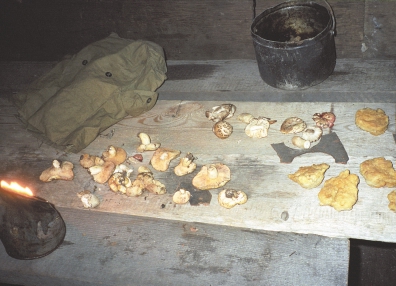
accumulates in living organisms. Mushrooms
ingesting lead shot.
can be particularly high in cadmium. It can
reduce the growth and reproduction of inver-
tebrates, and interfere with calcium metabo-
lism in fishes. Mammals can tolerate low lev-
Assorted mushrooms
els of cadmium exposure by binding the metal
being dried for storage at
a hunting camp. Preserv-
to a special protein that renders it harmless.
ing mushrooms by dry-
In this form, the cadmium accumulates in the
ing, pickling or canning
kidney and liver. Higher levels of exposure,
is an important seasonal
however, lead to kidney damage, disturbed
subsistence activity in
many areas. In Chukotka,
calcium and vitamin D metabolism, and bone
throughout the year, no
loss. The body takes decades to remove cad-
holiday table is complete
mium from its tissues and organs.
without mushrooms.
STAFFAN WIDSTRAND
lead shot may have a significant impact on
local plants and animals. In cases such as the
Steller's eider, which is endangered in the
United States, effects on an already limited
breeding area may have a major impact on
the population.
An additional note of caution is sounded
by recent analyses of platinum, palladium,
and rhodium in Greenland snow and ice.
These metals are used in the catalytic convert-
ers placed in automobiles to reduce hydrocar-
bon emissions. Their levels in recent snow are
low but still vastly higher than in ice from
thousands of years ago, showing that human
activity is responsible for almost all of the
current deposition in the Arctic. Little is
known about the toxicity and bioaccumula-
tion potential of these elements. Further study
is thus needed to determine the significance of
these results, and to assess whether the bene-
fits of decreased lead are to some extent offset
by the introduction of these other metals.
SVETA YAMIN
52
Cadmium is widespread
Heavy Metals
with localized hot spots
Cadmium is found throughout the Arctic,
but levels vary widely. Arctic char in northern
Canada have ten times the cadmium of char
in northern Sweden. Moose and caribou in
the Yukon Territory have high levels, most
likely due to local geology. Around Disko
Island in West Greenland, locally high levels
of cadmium have been found in blue mussels,
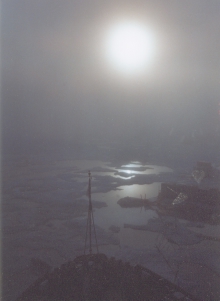
Sundisk through fog over
shorthorn sculpin, and the livers of ringed
meltponds, 78°N.
seals. In spring, deposition of cadmium from
Airborne cadmium
the atmosphere can occur on particles which
adheres to fog droplets
adhere to fog droplets and sea-salt aerosols.
and deposits downwind
from open waters.
It is thus concentrated downwind from open
leads and polynyas.
Broad geographic trends have been found
for cadmium. In Scandinavia, moose in Swe-
den and a variety of mammals and birds in
Norway show a declining cadmium trend
south to north. The distribution patterns fol-
low those of deposition and of accumulation
in forest soils, indicating that long-range
SHEBA PROJECT OFFICE
transport is the source of this contamination.
whales show an increase from west to east
In far northern areas, the observed levels are
across Alaska and Canada. Narwhals appear
very close to background levels.
to have lower levels in West Greenland than
Levels of cadmium in ringed seals are
in the eastern Canadian Arctic, and females
Spatial trends in
highest in northeastern Canada and north-
have higher levels than males. Levels in polar
cadmium concentra-
western Greenland, lower at Barrow, Alaska,
bear are highest in eastern Canada and north-
tions in caribou/rein-
and lowest in Labrador. In Quebec and Lab-
western Greenland.
deer liver italics
rador, there is some indication that cadmium
Other regional patterns have been found,
indicate herds (left)
in ringed seals increases to the north. Beluga
too. Walrus in Alaska have high levels of cad-
and ringed seal liver
(right).
Cadmium concentration,
Cadmium concentration,
ug /g wet weight
ug /g wet weight
1.0
15
10
0.5
5
Lavrentiya
Lavrentiya
Kanchalan
0
Pt. Hope
0
Tay
Red Dog
Mine
Wrangel Island
Finlayson
Bonnet Plume
Barrow
Barrow
Porcupine Teshekpuk Lake
Bluenose
Bathurst
Beverly
Resolute Bay
Cambridge Bay
Khatanga
Qaminuriaq
Taloyoak
Arviaq
Taymir
Dudinka
Arctic
Grise
Bay
Fjord
Pond
Pond Inlet
Inlet
Avaner-
suaq
Cape Dorset
Salluit
Quataq
Pangnirtung
Svalbard
Lake Harbour
Kangirsuk
Hudson Strait
Pechora Basin
Ungava Bay
Qeqertarsuaq
Kangerlussuaq
Itinnera
Nain
Akia
Makkovik
Kola Peninsula
Ittoqqortoormiit
Isortoq
Karelia
Northern Lapland
Central Lapland
Rondane
Hardangervidda
mium, indicating local sources or particular
Worldwide cadmium emissions,
53
food web pathways. In Faroe Islands gray
tonnes/year
Heavy Metals
seals, females have higher liver concentrations
2500
of cadmium than males and other seal species.
The reason for this difference is not known.
Seabirds provide a circumpolar compari-
son. The highest levels are found in northeast-
2000
ern Canada and northwestern Greenland.
Birds in northeastern Siberia have relatively
high levels of cadmium, but may be exposed
in wintering grounds in eastern Asia as well
1500
as in the Arctic. In the Barents Sea, cadmium
concentrations in seabirds are in general lower
than in Greenland, Canada, and northeastern
Siberia. For fulmar and black guillemot, cad-
mium levels in the Faroe Islands are similar
1000
to those observed in Canada, Greenland, and
the Barents Sea. Eiders in Alaska have levels
comparable to Greenland, but higher than in
Global emissions of cad-
Norway.
500
mium to the air in 1995
Mussels give a different picture. Cadmium
from major anthropo-
in mussels is highest in Greenland, due prob-
genic sources. Anthropo-
ably to local geological sources. Alaska has
genic emissions are about
two to three times those
the next highest levels which may explain
from natural sources.
the high levels in Alaskan walrus followed
0
by Labrador and Norway. Mussels from Ice-
land and the Faroes have the lowest levels in
Stationary
the Arctic.
Waste disposal
Cement production
Natural emissions
Human activities are a major source
fossil fuel combustion
Iron and steel production
The processing of zinc ore is the major source
Non-ferrous metal production
of cadmium emissions to the atmosphere.
In the ocean, natural cycling of cadmium is
Non-ferrous metal production accounts for
the most important process for moving the
nearly three-quarters of global anthropogenic
metal. Cadmium is removed from surface
cadmium emissions to the atmosphere. Burn-
waters during primary production of plank-
ing of coal accounts for most of the remain-
ton, and is subsequently returned to deeper
der, with some contributions from other ac-
waters where biotic material decays. This pat-
tivities, such as iron production, cement
tern correlates strongly with the ocean's phos-
production, and waste disposal.
phorus cycle. The Pacific Ocean, which sup-
Estimates of a total anthropogenic release
plies nutrient-rich water to the Arctic through
of about 3000 tonnes in 1995 must be treated
the Bering Strait, therefore also supplies a sub-
with caution. Emissions from waste incinera-
stantial amount of cadmium to the upper lay-
tion and the disposal of municipal waste such
ers of the Arctic Ocean. Although industrial
as sewage are largely underreported. Total
activities may be locally important sources of
releases may be substantially higher. Accord-
Anthropogenic cadmium emissions,
ing to one estimate, natural sources of cadmi-
tonnes/year
um account for only one-quarter to one-third
1500
of total atmospheric releases.
The global significance of human releases
can be seen in the ice core records from the
Greenland Ice Sheet. Cadmium deposition in
the 1960s and 1970s was eight times higher
1000
than in pre-industrial times. Since the 1970s,
however, deposition has declined steadily.
Emissions from non-ferrous metal processing,
in particular, declined by a factor of two or
500
three between the 1980s and 1990s. This
is chiefly the result of pollution-control im-
Global anthropogenic
emissions of cadmium to
provements in major smelters in Europe and
the air in 1995 from dif-
North America.
ferent continents.
0
River transport of cadmium to the Arctic
is comparable to the amount transported by
Asia
Africa
Europe
the atmosphere. As with lead, most of the
Oceania
cadmium is in the form of suspended particles.
North America
Australia and
South America
cadmium levels from 1996 to 2000. The same
is true for moose in the Yukon Territory from
1993 to 1998. Other studies of terrestrial ani-
mals have not gone on long enough to pro-
`80
`90
`00
duce evidence of changes.
`80
`90
`00
In northern pike from Lake Storvindeln
`90
`00
and Arctic char from Abiskojaure in northern
`90
`00
Sweden, cadmium levels remained the same
from 1968 to 1999 and from 1981 to 1999,
respectively.
`90
`00
Over the past two decades, no trends have
`90
`00
been found in cadmium levels in the kidney
and liver of beluga and narwhal in the Cana-
dian Arctic. The same is true for mussels in
Alaska, Greenland, Iceland, and Norway.
Cadmium in livers of shorthorn sculpins in
Uummannaq, Greenland may be declining,
as measured from 1980-1993, but the trend
was not significant. No change was found in
cod and dab in Iceland. Similar consistency
`80
`90
`00
has been found in the muscle of long-finned
pilot whales in the Faroe Islands, though there
is some recent evidence of possible increases.
In ringed seals in Greenland, cadmium lev-
`80
`90
`00
`90
`00
els increased from the mid-1970s to the mid-
`80
`90
`00
`90
`00
1980s, then decreased by the mid-1990s, after
which they have been stable. Changes in feed-
`90
`00
`80
`90
`00
ing have been suggested as the likely explana-
`90
`00
`90
`00
tion. Cadmium may have increased in minke
whales in the North Atlantic in recent years,
`90
`00
`90
`00
but further monitoring is needed to confirm
`80
`90
`00
`90
`00
the trend.
`90
`00
`90
`00
`90
`00
`90
`00
`70
`80
`90
`00
Cadmium accumulates
`90
`00
`90
`00
`80
`90
`00
in birds and mammals
In animals, cadmium concentrates in the inter-
Polar bear (liver)
nal organs rather than in muscle or fat. It is
Ringed seal (liver)
cadmium to the ocean, natural processes such
typically higher in kidney than in liver, and
Cod (muscle)
as mixing of water masses, coastal upwelling,
higher in liver than in muscle. Cadmium levels
Dab (muscle)
and primary production are far more impor-
usually increase with age. Kidney levels of
Pike (muscle)
Arctic char (muscle)
tant in determining the marine distribution of
cadmium in caribou in northwestern Alaska,
cadmium.
for example, showed a marked increase with
Caribou (muscle)
age. This is potentially a concern for those
Moose (muscle)
Recent cadmium time trends vary
who eat Arctic animals, particularly if they
favor older adult animals.
Blue mussel
As with mercury and lead, industrial age in-
Bowhead whales in Alaska have non-essen-
(soft body)
creases in cadmium are not found everywhere
tial element levels comparable to those of
Key to coloring of biota symbols
Significant
in the Arctic. Sediments from lakes in the Arc-
most other baleen whales around the world.
increasing trend
Significant non-linear/
tic coastal plain of Alaska and from YaYa Lake
Cadmium concentrations in liver, however,
fluctuating trend
No trend
in the Yukon Territory show no differences
appear higher, perhaps due to the large pro-
Decreasing tendency
between the pre-industrial age and today.
portion of invertebrates in the bowhead diet.
Significant
Walrus from Igloolik in Foxe Basin and belu-
Among birds, there are differences among
decreasing trend
ga from the Beaufort Sea, similarly, show no
species, likely reflecting diet and physiology.
Trends in cadmium levels
change in cadmium levels over the past few
In the Barents Sea region, the highest concen-
have been measured over
centuries, consistent with results from sedi-
trations of cadmium were found in fulmar,
the past 10-30 years in
ment and mollusks in the Canadian Arctic.
kittiwake, Arctic tern, and common eider.
various Arctic species.
In recent years, trends across the Arctic
Common guillemot had the lowest levels.
Selected time series are
vary. Mosses in northern Sweden show stable
shown, with animal sym-
In freshwater fish, in contrast to most spe-
bols colored to indicate
or declining levels of cadmium. By contrast,
cies, cadmium may actually decrease with age,
the trend.
cadmium in liver of reindeer from northern
reflecting changes in predation as the fish
Sweden increased significantly between 1983
grows. Young fish tend to eat invertebrates,
and 2000, though it remained the same in
which have high cadmium levels, whereas
muscle. Moose kidneys in the same region,
older fish often eat other fish, which have
however, showed no significant change in
lower levels of cadmium.
Cadmium concentration, ug /g wet weight
1000
Potential kidney disfunction
400
in marine mammals
Potential liver disfunction
200
in marine mammals
Potential kidney disfunction
100
in terrestrial mammals and birds
Potential liver disfunction
40
in terrestrial mammals and birds
10
1
0.1
Summary of ranges of
cadmium concentrations
in Arctic species, com-
0.01
pared with different
thresholds for biological
effects. The comparison
should be used with cau-
tion because of problems
with extrapolating data
0.001
across species.
, liver
, liver
, kidney
Polar bear
Fish (other), liver
rrestrial birds, liver
Polar bear
e
oothed whales, liver
Seals, walrus, liver
T
rrestrial birds, kidney
Fish, predatory Fish (whitefish), liver
T
Baleen whales, liver
Seals, walrus, kidney
Seabirds, gulls, liver
Reindeer/caribou, liver
e
oothed whales, kidney
T
T
Baleen whales, kidney
Seabirds, gulls, kidney
Reindeer/caribou, kidney
Mammals (carnivores), liver
Mammals (herbivores), liver
Arctic char (predatory), liver
Mammals (carnivores), kidney
Mammals (herbivores), kidney
Birds, waterfowl (ducks, geese), liver
Birds, waterfowl (ducks, geese), kidney
T E R R E S T R I A L
F R E S H W A T E R
M A R I N E
dence of effects in a study of selected ringed
Some levels indicate possible effects
seal specimens with very high cadmium levels
Seabirds in general are known to accumulate
in their kidneys.
high levels of cadmium. One difficulty in mon-
In the Yukon Territory, which has high lev-
itoring cadmium in birds, however, is that the
els of naturally occurring cadmium, levels in
metal does not accumulate in feathers or eggs.
some caribou, moose, and ptarmigan are high
Cadmium levels thus cannot be determined
enough to cause concern for kidney damage,
accurately without killing the bird.
though effects have not been documented.
Based on effect thresholds in domesticated
One indication of cadmium exposure in
birds, observed levels in seabirds are in some
an animal is the presence of metallothionein,
cases high enough to cause concern for kidney
a protein that has a physiological role in pro-
damage. However, this does not necessarily
tecting an animal from the toxic effects of
indicate a problem as seabirds may have
metals. This protein is also produced in re-
adapted to the higher levels of cadmium
sponse to some other metals, such as copper
found in seawater and thus have higher
and zinc. In Norway, metallothionein levels
thresholds for effects. Seabirds and marine
were correlated with cadmium levels in ptar-
mammals in Greenland have high levels of
migan, following exposure to naturally high
cadmium, but researchers have found no evi-
levels of the metal. There is no evidence, how-
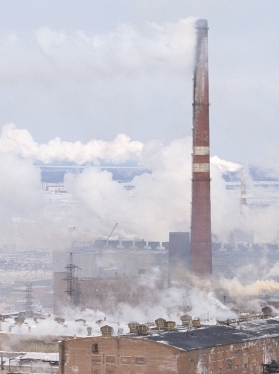
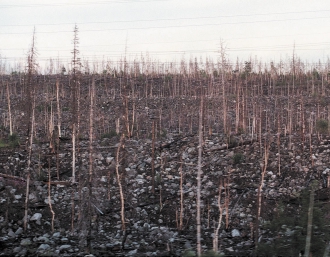
ever, that the cadmium concentrations were
56
above levels that the birds could tolerate.
Heavy Metals
One laboratory study found that cadmium-
contaminated sediments from the Mackenzie
River Delta in Canada caused some effects on
algae and phytoplankton. However, the levels
at which the effects occur and their impacts
on primary production and the ecosystem as
a whole are not known.
In studies of lake trout exposed to different
levels of cadmium, researchers found that cad-
mium affected foraging behavior, resulting in
lower success at catching prey. Decreased thy-
roid function as a result of cadmium exposure
has also been documented. Both responses in-
dicate a low response threshold for cadmium-
caused behavioral changes.
Other studies with rainbow trout indicated
an ability of that species to acclimate to rela-
tively high levels of cadmium. Arctic char are
able to produce metallothionein, which se-
questers cadmium.
Uncertainty remains
Although cadmium levels have been docu-
Smelters, here at Norilsk,
mented in a number of species, there is still a
are major sources of
great deal that remains unknown about this
metal pollution within
the Arctic.
metal. Anthropogenic emissions are a major
source of atmospheric cadmium. The role of
BRYAN & CHERRY ALEXANDER
underlying geology, however, is not clear, par-
ticularly for freshwater and marine pathways.
Severe local pollution
Geographic trends reflect patterns of air circu-
around smelters
lation and local deposits, but the relationship
between these pathways and observed trends
The highest concentrations of heavy metals
is not well understood.
in the Arctic occur near the copper-nickel
There is also much to learn about what
smelters at Nikel and Monchegorsk on the
happens to cadmium once it enters the body
Kola Peninsula and at Norilsk in Siberia. Air
and how sensitivity to cadmium may vary
pollution around the Kola Peninsula facilities
among species. Effects on individuals and
is comparable with the most polluted regions
populations have not been well studied.
of Europe and North America. Together, these
The overall importance of cadmium as a
sources contribute 10% of the world's copper
Damaged forest around
contaminant in the Arctic cannot yet be
emissions to the atmosphere, and 3% of the
Monchegorsk.
assessed with confidence.
world's nickel emissions.
The effects of heavy metals around the
smelters appear to be devastating, but are
often difficult to separate from the effects of
sulfur dioxide, which is also emitted in huge
quantities and has devastating and docu-
mented impacts on vegetation. Nickel and
copper are the main pollutants from the smelt-
ers, but cobalt and vanadium are among other
metals emitted in large quantities.
Most heavy metals emitted from the smelt-
ers appear to stay within about 200 kilome-
ters of the source. Five to ten percent, howev-
er, are estimated to be deposited across the
High Arctic. To the north of Norilsk, elevated
levels of heavy metals do not appear to extend
more than 100 km from the smelter sites.
However, the area affected by metals may be
expanding. The accumulations of heavy met-
als are a significant problem, and their pres-
ence is likely to remain a barrier to recovery
POLFOTO / PETER JANSSON
even if inputs from smelter emissions cease.
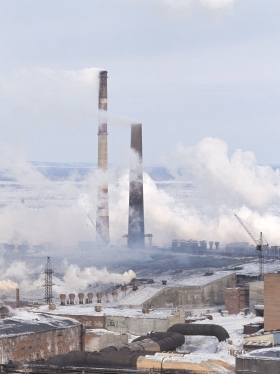
Ecological impacts are extensive
57
Heavy Metals
One response of trees and shrubs to high
concentrations of heavy metals in soils is to
extend roots to deeper, less-contaminated
levels of soil. The lower soil layers may offer
fewer nutrients, however. Plants in areas of
high heavy metal loads showed depleted levels
of essential nutrients such as phosphorus,
100 km
N O R W A Y
Nikel
Monchegorsk
F I N L A N D
Extent of vegetation dam-
The accumulations are also a large potential
age on the Kola Peninsula
R U S S I A
due to the combined
source of metals to nearby surface water and
effects of metal and acidi-
groundwater.
fying substances.
Minor damage:
Damage surrounds the smelters
microscopic changes in structure of pine needles and lichens
Moderate damage:
The damaged areas surrounding the smelters
also changes in species composition of lichens
Intermediate damage:
can be divided into three zones. Weather pat-
also damage on needles and leaves, shrub composition changes
terns and local topography determine the
Severe damage:
shape of each zone. First, the forest-death zone
also marked loss of needles in conifers, no epiphytic lichens
Total damage:
extends for up to 15-20 kilometers around
vegetation dead
Nikel and Monchegorsk, and up to 80 kilo-
Not included in survey
meters downwind at Norilsk. In this zone,
vegetation is dead, vertebrates and inverte-
brates are almost entirely absent, soil micro-
bial activity is minimal, and the organic layer
of soil is often absent due to fire or erosion.
100 km
Beyond the forest-death zone lies the vis-
ible-damage zone, which extends up to about
50 kilometers at Nikel and Monchegorsk
and up to about 200 kilometers at Norilsk.
In this zone, trees suffer defoliation, reduced
Dudinka
growth, death of needle tips, and other prob-
lems. Lichens growing on the trees are absent.
Norilsk
Vegetation damage
Species composition and the chemical and
r
Minor
e
v
microbiological properties of the soil have
i
Moderate
R y
been altered. The cumulative effect of these
e
Intermediate
s i
impacts, on the trees and on the ecosystem,
n
Severe
eY
is not fully understood.
Total
At Nikel and Monchegorsk, a non-visible
damage zone extends up to about 150 kilome-
Extent of vegetation dam-
Taymyr
age around Norilsk due to
ters. In this zone, the effects of emissions are
the combined effects of
primarily changes in the physiological function-
metal and acidifying sub-
ing and microscopic structure of plant tissues.
stances.
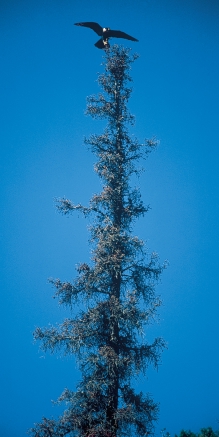
increased levels in the Arctic environment
58
compared with pre-industrial times.
Heavy Metals
In some areas, mercury levels in the envir-
onment continue to increase. It may already
be affecting the reproduction of peregrine fal-
cons, and impacts are suspected in fish, birds,
and marine mammals. The chapter Human
Health demonstrates that some Arctic people
may ingest enough mercury in their diet to
harm children's development.
Current mercury emissions have decreased
in Europe and North America, but these de-
clines have been offset by increases in East
Asia. Further reductions in global emissions
will require global action.
Lead provides an example of the effective-
ness of reducing emissions. The introduction
of unleaded gasoline has greatly reduced emis-
sions in Europe and North America, and
environmental levels are decreasing as well.
In Arctic plants and animals, the trend is not
as pronounced, reflecting continued uptake of
previously deposited lead.
Local problems with lead still exist, parti-
cularly in areas where lead shot was or still
is widely used for hunting. Lead pellets will
continue to be eaten by birds as long as they
remain in the environment. Effects of lead
poisoning are apparent in some birds, such
as the endangered Steller's eider in Alaska.
The implications of cadmium levels in the
Arctic environment remain unclear. There are
Conifer and peregrine
indications of levels high enough to threaten
falcon two sensitive
fish, birds, and mammals, but actual effects
species.
STAFFAN WIDSTRAND
have not been documented. Increasing levels
magnesium, manganese, and zinc. Depletions
in some areas show the need for continued
of this kind are often an indicator of poor
monitoring as well as further investigation
ecosystem health.
of effects.
Conifers are the most sensitive trees to sul-
Platinum, palladium, and rhodium have
fur dioxide and heavy metal exposure. Decid-
recently been found in ice and snow samples
uous trees, including the larch, can withstand
from Greenland. They are used in catalytic
higher levels, with birch and willows usually
converters in automobiles, which have become
the last to disappear. Reproduction is affected
increasingly common. The levels of these met-
by heavy metals, as is regenerative capacity.
als are still low, but many times higher than
Older trees, with higher concentrations, may
they were a few decades ago. The environmen-
be unable to reproduce.
tal and human health effects of these metals
For birds and mammals, avoiding the dam-
are unknown.
age zone is one clear response, made more
Recent time trends for most metals, parti-
likely by the lack of food in the forest-death
cularly in biota, are often uncertain and more
zone. In the visible-damage zone, the animals
work is needed to substantiate current find-
may survive but their heavy metal levels will
ings and their underlying causes.
increase over time, possibly leading to toxic
Around the large smelters in Russia, the
effects.
damage from pollution is clear with forest
death and effects on soil nutrient cycling.
Elsewhere, the impacts of heavy metals are
Summary
less obvious.
Much has been learned about heavy metals
The Arctic may act as a global sink for atmos-
in the Arctic, though many gaps remain to be
pheric mercury. This recent discovery, related
filled. Of particular concern are the rising
to mercury depletion events observed each
emissions of mercury in Asia and the discov-
spring, emphasizes the global nature of mer-
ery of mercury depletion events in the Arctic.
cury pollution. Although mercury is a natu-
Recent increases in mercury levels in some
rally occurring element, and as such will al-
Arctic animals indicate that the risk posed by
ways be present in the environment, human
mercury to Arctic ecosystems and people may
activities worldwide have led to several-fold
be increasing.