



C A R P
C T M F M
STRATEGIC ACTION PROGRAMME
UNDP - GEF Project (RLA/99/G31):
Environmental Protection of the Río de la Plata and its Maritime
Front: Pollution Prevention and Control and Habitat Restoration
(FREPLATA)
Héctor Leone
June, 2007
INDEX
I. SAP Principles ................................................................................................................... 3
II. Political and institutional commitments............................................................................. 4
III. The Challenge.................................................................................................................. 5
IV. A Common Vision........................................................................................................... 7
VI. Evaluation and Monitoring Indicators ............................................................................ 11
VII. National Action Plans................................................................................................... 13
VIII. Institutional Framework .............................................................................................. 13
IX. SAP Financing............................................................................................................... 18
X. Future Cooperation Arrangements................................................................................... 20
ANNEX I. Institutional Support to the SAP
ANNEX II. The Transboundary Diagnostic Analysis (TDA)
ANNEX III. Methodology
ANNEX IV. Stakeholders Involved in SAP Preparation
ANNEX V. Management Tools
ANNEX VI. Ecosystem Quality Objectives and Indicators
ANNEX VII. SAP Implementation: National Institutional Jurisdiction
ANNEX VIII. National Action Plans: Project Portfolio and Financing Needs
ANNEX IX. Remediation Projects and Programmes impacting on the Río de la Plata and its
Maritime Front
ANNEX X. Acronyms and Abbreviations
2
With the purpose of recovering and protecting the Río de la Plata and its Maritime Front, the
Administrative Commission for the Río de la Plata (CARP) and the Bi-national Technical
Commission for the Maritime Front (CTMFM), which are bi-national organizations from the
Argentine Republic (RA) and the Oriental Republic of Uruguay (ROU), transnational in nature, with
jurisdiction over the Río de la Plata and its Maritime Front, representing both governments in their
respective jurisdictions, hereby do:
Reaffirm their commitment to the restoration and protection of the Río de la Plata and its Maritime
Front ecosystem and to the sustainable development of its resources;
Express their intention to continue the tasks which are being performed by the Administrative
Commission for the Río de la Plata (CARP) and the Bi-national Technical Commission for the
Maritime Front (CTMFM) in order to achieve a sustainable development and environmental protection
of this ecosystem;
Value the commitment to the Strategic Action Programme, which has been evidenced by the active
participation, at its preparation stage, of governmental, academic, scientific, technical, private-sector
and civil-society stakeholders;
Express their conviction of the need to advance in additional actions at both national and regional
level, aimed at strengthening bi-national cooperation and sustainable management of the Río de la
Plata and its Maritime Front ecosystem;
Reaffirm their commitment to support this objective through the principles, policies and actions
detailed in this Strategic Action Programme.
I. SAP Principles
1. The Strategic Action Programme is based upon the following principles:
· Concept of sustainable development, defined upon 3 fundamental pillars:
o Man as central axis of development,
o Environmental protection as an integral part of the development process, and
o Right to development based on equity.
· Ecosystem approach and integrated management of water resources to achieve global and
transboundary environmental benefits;
· Precautionary principle, by adopting preventive measures when there is grounded evidence
of potential risk to the environment or to the population health;
· Anticipatory principle as an axis for the development and implementation of contingency
plans and response to emergencies, environmental impact and strategic environmental
assessments;
· Free access to information and promotion of public participation, thereby ensuring
management transparency;
· Promotion of the use of clean technologies and application of economic and financial
instruments stimulating both production and services sectors to implement Cleaner
production systems (C+P);
3
II. Political and institutional commitments
2. Both countries have been committed to the Environmental Protection of the Río de la Plata and its
Maritime Front for more than 30 years. The Treaty of the Río de la Plata and its Maritime Front,
drawn in 1973 between the Argentine Republic and the Oriental Republic of Uruguay, has
provided a solution to any conflict which may arise from any legal loophole related to the exercise
of their equal rights on the Río de la Plata and from the lack of boundary determination limiting
their respective water jurisdictions. The Treaty contemplates the special characteristics of the
fluvial and maritime territories involved, and sets a basic legal framework for the environmental
protection and sustainable development of the uses and resources of this water body. Likewise, the
Treaty provided for the creation of two Bi-national Commissions: the Administrative Commission
for the Río de la Plata (CARP) and the Bi-national Technical Commission for the Maritime Front
(CTMFM). These Commissions have been operating for more than 30 years. They are
international bi-national entities, vested with legal personality empowering them to fulfil their
purposes, and they constitute a bi-national system for the assessment and administration of
resources.
3. The Treaty of the Río de la Plata and its Maritime Front defines: 1) coastal strips of exclusive
jurisdiction of each riparian country of the Río de la Plata (2 nautical miles wide from the inner
limit of the river to the imaginary line connecting Colonia del Sacramento ROU and Punta Lara
RA, 7 nautical miles wide from said line to the outer limit of the River, and the territorial sea
12 nautical miles). However, their outer limits shall have any necessary inflections so as not to
exceed the edges of the navigation channels in the Common Use Waters shared by the Parties and
so as to include port access channels. 2) Río de la Plata Common Use Waters, and 3) Common
Fishing Zone. Both commissions (CARP and CTMFM) have jurisdiction upon the areas of the
RPMF other than the exclusive jurisdiction strips and the territorial sea (Figures 1 and 2)1.
4. In 1994, CARP and CTMFM signed a Joint Declaration on Cooperation, in which, taking into
account the water dynamics of the Río de la Plata and its Maritime Front, they agreed to
coordinate the actions to be undertaken regarding environment and life quality studies. Later on,
they decided to create the CARP-CTMFM Consortium, which would be in charge of the execution
of the FREPLATA2 Project. This Project strengthened and favoured joint work between both
commissions and, at the same time, offered the participation framework needed to identify, agree
and implement joint solutions to main transboundary environmental issues affecting the Río de la
Plata and its Maritime Front.
5. In view of the diversity of jurisdictions involved and the complexity of the RPMF environmental
issues, the success of the SAP is essentially based on the political and institutional commitment of
the Argentine and Uruguayan authorities integrating the CARP and the CTMFM, and of the
authorities and governmental agencies pertaining to the different jurisdictions involved (national,
provincial, municipal, departmental) having competence on the creation and enforcement of
environmental policies.
6. The RPMF is governed by domestic and international laws, rules or instruments. These are some
of the main ones:
International Instruments:
1 In the SAP, the term Maritime Front shall mean the ocean area comprising the Common Fishing Zone as
defined by the Treaty of the Río de la Plata and its Maritime Front (1973).
2 UNDP-GEF Project (RLA/99/G31) "Environmental Protection of the Río de la Plata and its Maritime Front:
Pollution Prevention and Control and Habitat Restoration (FREPLATA). This Project was executed by the
CARP and the CTMFM; it was funded with resources from the Global Environmental Facility (GEF), with
contributions from other cooperation agencies, and with funds contributed by both countries; and it was
implemented by the United Nations Development Programme (UNDP).
4
· Global international law instruments, such as the Law of the Sea, Agenda 21, and the
Johannesburg Declaration.
· Regional instruments, such as the La Plata Basin Treaty (1969) and the Asunción Treaty
(1991), by virtue of which the Southern Common Market (MERCOSUR) was created.
· Bilateral instruments, the most important of which is the Treaty of the Río de la Plata and
its Maritime Front.
Domestic Instruments:
· National (or federal) laws and policies, many of which deal with RPMF issues.
· Provincial or departmental laws and policies. There is an asymmetry between Argentina
and Uruguay because the former is a federal state and the latter is a unitary state, therefore
there are material differences regarding the decentralization degree of law- and policy-
making powers.
7. In several occasions (Annex I), both authorities and stakeholders participating in the preparation of
the SAP and jointly responsible for its implementation, explicitly expressed the importance of:
· Having a bi-national strategic perspective in order to face transboundary environmental
issues and to strengthen cooperation and coordination mechanisms between both countries.
· There being consistency between objectives and proposed actions of the SAP, on one hand,
and national policies of both countries, on the other hand. This was the reason why SAP
projects were declared "of environmental interest" and pertinent budgetary items were
allotted in order to carry out the proposed actions.
· Having an inter-ministry commission and institutional structure proposals for the
coordination and monitoring of the SAP and of the pertinent National Action Plans,
reflecting both national and bi-national prioritization.
8. The SAP implementation will represent a significant contribution to the sustainable development
of the region from a common perspective agreed between both riparian countries, the execution of
concrete actions for the environmental protection of the Río de la Plata and its Maritime Front, and
the institutional strengthening of bi-national commissions and participating organizations.
III. The Challenge
9. The Río de la Plata and its Maritime Front (RPMF) constitute a "transboundary water system"
whose resources are shared between the Argentine Republic and the Oriental Republic of
Uruguay. It shows characteristics that are unique at a global level, since it is one of the main
fluvial and fluviomarine systems in the world and it connects the Río de la Plata Basin (the second
largest basin in South America and fourth largest worldwide) to the Atlantic Ocean. It is an
integral part of the Large Marine Ecosystem (LME) of the south-western continental shelf of
South America, and contains a globally significant biodiversity. The Río de la Plata is among the
richest, most singular and endangered natural areas in the planet. According to World Wildlife
Fund (WWF-2007), it is the most seriously threatened basin in South America, and it is also
among the 10 most vulnerable basins in the world.
10. This water body is intensely used for sea and river transportation, and for the development of an
important fishing activity. Sixteen million people live along the Río de la Plata coastline and two
of the most significant and densely populated metropolitan areas of Argentina and Uruguay are
settled: Buenos Aires and Montevideo with a 13.2 and a 2.4 million inhabitants, respectively.
These two urban centres also concentrate the main industrial and service-rendering activities, most
of the port activity and main economic activities of both countries. Such anthropogenic pressure
produces environmental impacts on the quality and quantity of the uses and resources of the Río
5
de la Plata and its Maritime Front. These impacts have been identified in the studies carried out in
preparing the Transboundary Diagnostic Analysis (TDA) to be threatening the area environment,
biodiversity and wellbeing of coastal population. Moreover, these impacts have significant local
and transboundary environmental consequences caused by hydrodynamic and biological processes
of transportation and active-passive pollutant distribution.
11. The RPMF is one of the major nodes in the regional communication and people & goods
transportation systems, and it houses the most important two harbour complexes of the region: the
port of Buenos Aires and the port of Montevideo. It is one of the access routes to the
MERCOSUR3, since it is the way into and out of the Río de la Plata Basin from and to the sea, and
since the major port complexes, which are highly important for Argentina, Uruguay, Bolivia,
Paraguay and Brazil, operate in its coasts.
12. Fishing is one of the most important economic activities in the RPMF. Total fishing production
within the Common Fishing Zone reached 300,000 tons in 1996, but dropped by fifty percent in
2003. Several commercially relevant species have reached or exceeded sustainable limits;
therefore, both countries are taking urgent steps towards preserving fishing resources. These
resources are affected by pollutants coming from land sources and from the Río de la Plata Basin
as a whole. In addition, there is a strong fishing pressure in this area, as well as issues regarding
fish discarding, incidental fishing and by-catch practices.
13. The main pollution issues are seen in coastal areas, as a result of land discharges (industrial,
sewage effluents, etc.) These areas receive discharges from emissaries of big cities in both
countries. According to the existing pollution level and key pressures involved, critically polluted
areas ("hot spots") or special management areas were identified on the coastal strip and in
Common Use Waters.
14. Through the TDA, the following transboundary environmental priority issues were identified: i)
Chemical and petrochemical pollution; ii) Pollution by direct and indirect industrial effluents and
sewage emissaries, either with an inadequate treatment or with no treatment at all; iii) Input from
non-point sources (agricultural waste, etc); iv) Eutrophication; v) Dredging activities and sediment
disposition; vi) Destruction of natural habitats; vii) Loss of biodiversity; and, viii) Appearance of
invasive species (Annex II).
15. There is consensus about the idea that development and implementation of the best options and
alternatives to solve the identified priority issues require a wide approach, including sectorial,
economic and administrative policies related to the management of the RPMF water resources.
16. Both governments are committed to intensify social participation of civil society (NGOs), private
sector, base communities, etc., in its governance. Their participation in the TDA-SAP elaboration
process has provided important information about the system and the relationship between
transboundary issues and root causes, and has allowed the identification of the hindrances for
implementing actions, as well as the opportunities present in the existing structures and systems.
However, information on transboundary environmental issues, particularly "offshore" ones,
should be more widely known.
17. Although there are economic tools in force for managing environmental issues, legal mechanisms
have been designed without taking into account their technical and economic feasibility aspects,
therefore rendering them almost impossible to apply. In addition, instruments and jurisdictions
(local, national and provincial) overlap, and control by pertinent governmental bodies is
insufficient.
3 The Argentine Republic, the Federal Republic of Brazil, the Republic of Paraguay and the Oriental Republic of
Uruguay subscribed the Asunción Treaty in 1991, thereby creating the Southern Common Market,
MERCOSUR.
6
IV. A Common Vision
18. The Strategic Action Programme for the Río de la Plata and its Maritime Front (SAP) is a
document which is an integral part of the process, aimed at defining and agreeing the
implementation of responses to the main transboundary environmental issues identified in the
pollution and biodiversity plans.
19. For the SAP to be successful, the agreement and commitment of a wide and diverse group of key
stakeholders from both the government and the civil society is needed4. The SAP is a political
document which has been negotiated and endorsed by governments of both countries, and which
identifies:
1. - Investments and actions required to solve environmental issues identified in the
Transboundary Diagnostic Analysis, and
2. - Institutional and legal reforms required to implement proposed actions and
investments.
20. The Long-term Vision (decades) proposes a future scenario in which our present issues shall have
been reversed or modified, thereby having achieved an acceptable environmental quality. This
Long-term Vision is the framework used to define the Ecosystem Quality Objectives and,
subsequently, the direction of the SAP. The application of the SAP is the link between the
Transboundary Diagnostic Analysis (TDA) and the Vision.
21. Vision: "Improvement in the standard of living of the population of the Río de la Plata and its
Maritime Front by restoring and preserving its water quality, biodiversity and sustainability of its
uses and resources".
Long-term Ecosystem Quality Objectives (EQOs)
22. The Ecosystem Quality Objectives (EQOs) are statements of the Vision that reflect how
stakeholders would like the state of the RPMF to be in the long term, starting by solving the
priority issues identified in the Transboundary Diagnostic Analysis.
23. The two Long-term Ecosystem Quality Objectives identified within the FREPLATA Project are:
· Long-term Ecosystem Quality Objective I: Safe water for population health, recreational
use and aquatic biota development.
· Long-term Ecosystem Quality Objective II: Protection of priority habitats and ecological
sustainability of living aquatic resources.
4 Refer to Annexes III and IV for methodology and stakeholders involved in SAP preparation.
7
V. Short-term Operational Objectives and Priority Actions Required to Meet the Ecosystem
Quality Objectives5
Long-term Ecosystem Quality Objective I
Safe water for population health, recreational use and aquatic biota development
24. Pollution problems in the region are related to industrial development and increase of economic
and social development. Growth in population, tourism, and water transportation will continue to
put increasing pressure on the RPMF system; therefore, it is essential to adopt adequate measures
to prevent, remedy and control present and future pollution issues.
25. In order to attain this Ecosystem Quality Objective, the following Operational Objectives are
needed:
I.1. To prevent and reduce input of polluting agents from specific land sources (industrial and
sewage effluents) and non-point sources.
I.2. To prevent and reduce pollution caused by aquatic activities.
I.3. To remediate highly polluted sites.
26. In order to implement these Operational Objectives, the following priority actions are needed6:
Operational Objective I.1
27. Effluent Treatment Alternatives
1) To design and implement alternative treatment systems which reduce the impact of urban
effluents (sewage and industrial waste) on the RPMF. Priority: Very High. Implementation term: 1-
5 years.
28. Cleaner Production
2) To involve critical industries in Cleaner Production Plans (C+P). Priority: High. Implementation
Term: 1-5/5-10 years.
29. Other
3) To identify and assess loads from main generators of polluting liquid emissions (industrial and
sewage waste) and to detect critically polluted areas ("hot spots"). Priority: Very High.
Implementation term: 1-3 years.
4) To strengthen coordination of strategies and policies aimed at improving treatment of urban
effluents discharging into the RPMF. Priority: Very High. Implementation term: 1-5 years.
5 Short-term Operational Objectives (5-10 years) define the lines of action needed to comply with the Ecosystem
Quality Objectives. In fact, they are stages which have to be regularly monitored in order to determine the
progress of the implemented actions and to verify if the ecosystem quality objective is being attained. The
development of this flexible system allows progressive changes in the uncertainties linked to the natural
environment complexity, social system, and technological development. Therefore, throughout the
implementation of the Strategic Action Programme, operational objectives shall be adjusted or adapted (if
necessary) to update, improve and optimize mechanisms or procedures involved in the lines of action proposed.
Short-term priority actions (1-5 years), are those specific actions needed to achieve operational objectives.
6 Actions for each Operational Objective are sorted by subject groups (e.g. Alternatives for effluent treatment,
Cleaner Production, etc.). Both Annex I and the chapter dealing with SAP Financing contain the estimated costs
of such actions.
8
5) To implement actions to reduce input of urban solid waste (USW) into the RPMF. Priority: Very
High. Implementation term: 5 years.
6) To strengthen industrial effluents control and monitoring systems and to promote coordinated
management in order to avoid jurisdictional conflicts and to apply discharge standards efficiently.
Priority: High. Implementation Term: 5 years.
7) To favour the application of economic mechanisms aimed at stimulating the incorporation of
new technologies for reduction of polluting discharges. Priority: High. Implementation Term: 1-
5/5-10 years.
Operational Objective I.2
30. Ports and waterways
8) To improve operating practices on ballast water discharges to control and reduce the appearance
of invasive species. Priority: High. Implementation Term: 1-5 years.
9) To strengthen bi-national practices of environmental management in dredging operations and
final disposition of material. Priority: High. Implementation Term: 1-5 years.
10) To strengthen and improve the existing bi-national coordination and response capacity
regarding transboundary contingencies due to navigation accidents (e.g.: hydrocarbon spills,
hazardous loads), including the execution of joint bi-national drills. Priority: High. Implementation
Term: 1-3 years.
11) To improve the capacity of main RPMF commercial and sporting ports for the reception of
liquid effluents and solid waste generated by vessels and port operation. Priority: Moderate.
Implementation Term: 1-5 years.
12) To strengthen and coordinate maritime traffic control systems. Priority: Moderate.
Implementation Term: 1-3 years.
Operational Objectives I.2 y I.3
13) To define and implement actions for restoration of highly polluted areas. Priority: Moderate.
Implementation term: 1-5/5-10 years.
Operational Objectives I.1, I.2 y I.37
31. Integrated Information System
14) To implement an Integrated Information System aimed at facilitating access and exchange of
environmental data needed to achieve operational objectives. Priority: Very High. Implementation
Term: 1-5 years.
32. Monitoring of water, sediment and biota quality
15) To implement a bi-national network of "early response" for control of pollution caused by
harmful algal blooms (HABs). Priority: High. Implementation Term: 1-3 years.
16) ) To design and implement bi-national water, sediment and biota quality monitoring plans to set
baseline values of these parameters in the RPMF, to optimize polluting discharge controls and to
define water quality goals. Priority: Very High. Implementation Term: 1-5/5-10 years.
33. Strengthening of Environmental Management
7 Transversal actions: respond to all three operational objectives.
9
17) To incorporate environmental training and educational programmes based on the concept of
sustainable development in the RPMF. Priority: High. Implementation Term: 1-5/ 5-10 years.
18) To implement mechanisms aimed at facilitating and stimulating public participation in the
decision-making process related to the environmental management of the RPMF. Priority: High.
Implementation Term: 1-5/5-10 years.
19) To update and adjust legislative, regulatory and institutional frameworks at all levels in both
countries, in order to ensure environmental protection and sustainable use of natural resources.
Priority: High. Implementation Term: 1-5 years.
20) To adopt Strategic Environmental Evaluation (SEE) and bi-national Environmental Impact
Assessment (EIA) proposals for Common Use Waters and Common Fishing Zone of the RPMF as
a basis for the evaluation of future projects involving transboundary impact. Priority: High.
Implementation Term: 1-5 years.
Long-term Ecosystem Quality Objective II
Conservation of Habitats and Biodiversity
34. This objective shall be pursued by preventing and reducing/mitigating impact on the system
biological integrity, focusing on two main goals:
a) Protection of priority habitats and threatened species:
Application of generic measures to habitats of high ecological relevance, either due to their great
biodiversity or to their functional relevance (e.g. feeding, breeding and spawning areas) in the
ecosystem, in order to protect their biodiversity; for example, protected aquatic areas. It should be
noted that during TDA stage, significant progress was made towards the identification of priority
aquatic areas for conservation.
b) Ecological sustainability of exploited ecosystems:
Strengthened application of responsible fishing practices, thereby achieving an integrated
management of fishing resources in the long term, allowing for the reduction and mitigation of
incidental impact on environment, particularly on globally threatened species.
35. In order to achieve this Ecosystem Quality Objective, the following Operational Objectives are
needed:
II.1. To contribute to the protection of the major threatened species.
II.2. To contribute to the protection of significant endangered habitats and restore
degraded areas.
II.3. To contribute to encourage responsible fishing practices.
36. In order to achieve these Operational Objectives the following priority actions are needed8:
Operational Objectives II.1 and II.29
37. Biodiversity
1) To strengthen, on a national basis, the management of existing protected marine and coastal
areas. Priority: Very High. Implementation term: 1-5 years.
2) To implement Biodiversity Strategies proposed for RPMF Common Use Waters and coastal
areas. Priority: High. Implementation term: 1-2 years.
8 Actions are sorted by subject (e.g., biodiversity and fishery). Annex V describes management tools, which were
prepared simultaneously to the SAP and which would act as a framework for its implementation.
9 Actions needed to achieve both Operational Objectives.
10
3) To contribute to the development and implementation of action plans for conservation and
sustainable management of the key regional threatened species. Priority: High. Implementation
term: 1-5 years.
4) To develop ecological sensitivity maps as tools for strategic environmental planning and
management of coastal and aquatic habitats. Priority: High. Implementation term: 1-5 years.
5) To develop remediation plans for globally-relevant degraded coastal ecosystems. Priority: High.
Implementation term: 1-5/5-10 years.
6) To develop and implement a bi-national monitoring programme for biodiversity management.
Priority: Moderate. Implementation term: 1-5/5-10 years.
7) To implement a bi-national system of protected aquatic areas. Priority: Moderate.
Implementation term: 1-5/5-10 years.
38. Fishing activities
8) To evaluate and monitor incidental fishing impact on RPMF aquatic ecosystems. Priority: High.
Implementation term: 1-5/5-10 years.
9) To adopt and implement responsible fishing arts and protocols in the RPMF main fisheries.
Priority: Moderate. Implementation term: 1-5/5-10 years.
10) To develop pilot schemes of multi-specific fishing management, aimed at optimizing
availability of resources. Priority: Moderate. Implementation term: 1-5 years.
Operational objectives II.1, II.2 and II.310
39. Integrated Information System
11) To implement an Integrated Information System aimed at facilitating access and exchange of
the environmental data needed to achieve operational objectives. Priority: Very High.
Implementation term: 1-5 years.
40. Strengthening of Environmental Management
12) To incorporate environmental training and educational programmes, based on the concept of
sustainable development in the RPMF. Priority: High. Implementation Term: 1-5/ 5-10 years.
13) To implement mechanisms aimed at facilitating and stimulating public participation in the
decision-making process related to the environmental management of the RPMF Priority: High.
Implementation Term: 1-5/5-10 years.
14) To update and adjust legislative, regulatory and institutional frameworks at all levels in both
countries, in order to ensure environmental protection and sustainable use of natural resources.
Priority: High. Implementation Term: 1-5 years.
15) To adopt Strategic Environmental Evaluation (SEE) and bi-national Environmental Impact
Assessment (EIA) proposals for the Common Use Waters and Common Fishing Zone of the RPMF
as a basis for the evaluation of future projects involving transboundary impact. Priority: High.
Implementation Term: 1-5 years.
VI. Evaluation and Monitoring Indicators
41. Aimed at monitoring and evaluating the success of the SAP implementation, a series of indicators
for each Ecosystem Quality Objective (Charts 1 and 2) have been defined. Annex VI details the
10 Transversal actions: respond to all three operational objectives.
11
indicators and estimated costs for each proposed action. Annex III (Methodology) explains the
meaning of each class of indicators defined.
Chart 1. Evaluation and Monitoring Indicators Defined for Long-term Ecosystem Quality
Objective I: Safe water for population health, recreational use and aquatic biota development.
Ø Reduction of pollutant discharges from point sources.
Ø Level of polluting agents in water and sediments lower than agreed quality objectives.
Ø Updated and harmonized legal and regulatory framework, co-ordinately enforced by all
governmental levels in both countries.
Ø Established water quality goals.
Ø Reduction of solid urban waste input.
Ø Enhancement of monitoring and control systems for industrial emissions.
Ø Reduction in the number of invasive species introduced by maritime-fluvial traffic.
Ø Reduction of environmental impact caused by navigation accidents.
Ø Increased volume of waste and effluents discharges at ports.
Ø Reduction of accident risks arising from maritime traffic.
Ø Recovered polluted areas (km2).
Ø Access by institutional key stakeholders to reliable sources of information on the environmental
status of the RPMF.
Ø Reduction of damage caused by Harmful Algal Blooms (HABs).
Ø Implemented bi-national monitoring plans.
Ø Strengthened coastal municipalities network.
Ø Strengthened national and provincial organizations.
Ø Implemented environmental training and educational programmes.
Ø Implemented new public participation mechanisms.
Ø Bi-national Commissions strengthened through bilateral agreements for SAP implementation.
Coordinated application of legal frameworks at different government levels.
Ø Implementation of bi-national EIA protocols: reduction of transboundary environmental impact.
12
Chart 2. Evaluation and Monitoring Indicators Defined for Long-term Ecosystem Quality
Objective II. Conservation of Habitats and Biodiversity.
Ø Reduction in the number of threatened species.
Ø Recovered significant coastal habitats.
Ø Implemented Bi-national Monitoring Programme for Biodiversity Management.
Ø Protected aquatic areas (km2).
Ø Positive biological integrity indicators (including breeding and spawning areas).
Ø Reduction of incidental captures of sharks, rays, sea turtles, albatross, petrels and franciscana
dolphins (Pontoporia blainvillei) in the RPMF.
Ø Number of environmental status indicators, monitored by the Integrated Information System.
Ø Access by institutional key stakeholders to reliable sources of information on the
environmental status of the RPMF.
Ø Implemented environmental educational programmes.
Ø Implemented new public participation mechanisms.
Ø Bi-national Commissions strengthened through bilateral agreements for SAP
implementation. Coordinated application of legal frameworks at different government levels.
Ø Implementation of bi-national EIA protocols: reduction of transboundary environmental
impact.
VII. National Action Plans
42. Simultaneously with the SAP, both countries developed a National Action Plan presenting the
project portfolio needed for this SAP implementation, thus reflecting the real commitment of both
countries to the goals herein described.
VIII. Institutional Framework
43. This chapter puts forward: a) a legal system which favours an effective observance of the SAP
recommendations, b) an institutional framework which coordinates and integrates the
environmental competences of the Argentine and Uruguayan governments, and the powers
delegated thereby to the bi-national Commissions, c) alternative possibilities for financing the
Commissions' activity with resources which are not exclusively dependent on contributions from
both governments.
Legal Framework
44. The core goal of the FREPLATA Project, "pollution prevention, reduction and control, and
biodiversity protection and conservation" in the Río de la Plata and its Maritime Front, is common
to Argentina and Uruguay, and both countries are determined to achieve this goal jointly. This is
why pollution cannot be regarded as a merely domestic issue, and it is necessary to have binding
regulations in order to succeed.
System under consideration
13
45. The system under consideration has been shaped at the many symposiums, workshops and
working group meetings organized by the Project, and it is composed of two complemental lines
of action:
A) To harmonize the Argentine and Uruguayan legal systems.
46. As a background therefore, there is a Digest containing the environmental regulations of the
domestic legal systems of Argentina and Uruguay and of the International Public Law. Said Digest
was generated during the TDA preparation and both countries have adhered thereto.
47. Although this initiative is undoubtedly useful, it is not sufficient enough to provide both countries
with an efficient legal system for ensuring an effective enforcement of the SAP recommendations
and other decisions to be adopted in order to attain the core goal of the FREPLATA project.
In fact:
48. Although the countries show that they can be prepared to satisfy sectorial demands to a lesser or
greater degree, the limitations typical of their competences and resources make it difficult for them
to efficiently attend to the more general aspects related to sustainable development, or to make and
enforce global policies encompassing all resources and needs.
49. Joint, coordinated and efficient actions are hard to achieve because of many reasons, including the
diversity of rules -sometimes even mutually contradictory, and vested with different ranks and
hierarchies- intended to regulate similar situations, and the plurality of entities with overlapping
competences within one same country and even within one same province, municipality or
department.
B) To centralize in both bi-national Commissions the competence to create the regulatory rules
applicable to the comprehensive environmental management and the sustainable development of
the uses and resources in the Río de la Plata and its Maritime Front, and their effectively
exercising this competence.
50. Jurisdictional bodies of both countries would have, as in any modern legal system, a body of two
different classes of regulatory rules governing environmental issues:
a) Institutionally ranked primary or basic rules, which constitute a legal framework with very
little flexibility, composed of:
· The Treaty of the Río de la Plata and its Maritime Front (TRPMF), the provisions of the
International Treaties which the States Party have adhered to in connection with
environmental protection, particularly aquatic environment, and the rules adopted by
virtue of the SAP recommendations.
· National laws of both countries related to the environmental issue, in all their mutually
consistent aspects.
b) Regulatory or secondary rules, created by the bi-national Commissions, destined to specify,
whenever needed, the scope of the basic rules or to make their enforcement possible, without
modifying their nature or altering their purpose.
System to be favoured
51. Without disregarding the future need for organizing and strengthening the comprehensive system
of the Río de la Plata Basin, the environmental management of the RPMF should be centralized, in
the short term, by the bi-national Commissions created by the Treaty of the Río de la Plata and its
Maritime Front. These Commissions are permanent in nature and they have driven the
FREPLATA Project so far. Besides, they have a deep knowledge of the conditions of the physical
14
environment to be protected, of the causes hindering its preservation, of the goals to be
accomplished, of the difficulties to be overcome in order to obtain them, and the instruments
needed to do so. And, above all, they have the advantage of being formed by representatives of the
governments of the two countries which are associated in this Project.
52. These Commissions would have the following powers:
a) Within their own jurisdictions:
53. These Commissions would have the specific power to issue regulatory rules, binding in nature and
directly applicable within their respective jurisdictions (CARP: Common Use Waters; CTMFM:
Common Fishing Zone).
54. These rules would in turn regulate other rules: The institutionally-ranked basic rules making up
the legal framework, common to both countries, and composed as above described of the
following: the TRPMF, the provisions of the International Treaties they have adhered to in
connection with environmental protection, particularly aquatic environment, and the internal rules
of each of them in their mutually consistent parts, and the rules adopted by virtue of the SAP
recommendations.
55. The CTMFM already has the specific function of "setting rules and measures related to the
rational exploitation of the species existing in the common interest zone and to the prevention and
elimination of pollution" (TRPMF: section 82, subsection d).
56. This case is similar to the Administrative Commission of the Uruguay River (CARU), which
regarding environmental regulation- has the specific duty to "Issue regulatory rules on: ... 4)
Pollution Prevention..." (River Uruguay Charter: section 56)
57. On the contrary, the CARP does not have any such power. Its powers in relation to this issue are
restricted to just "issue the rules needed for regulating fishing activity in the river, aiming at
preserving living resources" (TRPMF section 6, subsection b).
58. It would be advisable that the CARP be granted in the way both Governments may agree the
specific power vested in the CTMFM and in the CARU to issue regulatory rules, binding in nature
("hard" law) and directly applicable within its jurisdiction (Common Use Waters) TRPMF section
48; only conditioned to the requirement to be observed by the Commissions in the Treaty of the
Río de la Plata and in its Charters: the information and permanent consultation with their
governments, provided for in the Project Document itself (item B5, 5). The Treaty expressly
considers such possibility (section 66, subsection j).
b) Outside their own jurisdictions:
59. The Commissions shall make recommendations to the domestic governmental bodies.
Institutional Structure
60. As it has already been mentioned, for implementing the SAP, it shall be necessary to combine
national jurisdictions (domestic governmental bodies) with a bi-national jurisdiction (internal
structures of the CARP and the CTMFM).
61. The institutional structure must favour this integration. For this purpose, the following
organization is suggested:
15
National Institutional Jurisdiction
62. In Argentina as well as in Uruguay, there are two distinct kinds of governmental bodies or public
agencies: Agencies with specific jurisdiction on environmental issues, and agencies which are
related to the environmental protection, but without a specific jurisdiction thereon. (Chart in
Annex VII.)
Bi-national Jurisdiction
63. Formed by the following:
a) Consortium Steering Committee (CDC)
64. Formed by the Presidents of the delegations of the Commissions, holding the following functions:
· To hold general managing powers for implementing the SAP.
· To suggest to the Commissions the regulatory rules to be issued, in relation to the
comprehensive environmental management and the sustainable development of the uses and
resources in the Río de la Plata and its Maritime Front.
· To suggest recommendations, according to paragraph 5.1.2b.
· To coordinate the CARP-CTMFM Consortium action as regards said implementation.
· To promote participation of competent national and local bodies of both countries.
· To establish the framework agreements, as well as any applicable complementary agreements.
b) Coordination Committee for SAP implementation
65. Formed by one representative of each Commission, one representative of each National
Coordination Committee (Argentine and Uruguayan) and one representative of the SAP Technical
Coordination Unit.
Its functions shall be:
· To promote the implementation of the SAP in coordination with the National Action Plans
(NAPs).
· To coordinate the actions that have been agreed upon with the pertinent jurisdictions in
support of the NAPs, including the institutional strengthening, research, exploration and
search of alternative financing sources through international entities and specialized agencies.
c) National Coordination Units
66. Each National Coordination Unit shall be composed of the national bodies with jurisdiction on
SAP application, and its specific function shall be to follow up the execution of NAPs.
d) SAP Coordination Bi-national Technical Units
67. The Bi-national Technical Unit shall have a stable sector, formed by two coordinators and one
secretary, and a variable sector, formed by temporary technical staff, whose appointment and term
of employment shall depend on the SAP implementation needs.
Its functions shall be:
· To monitor SAP Implementation: To supervise observance of SAP Evaluation and Monitoring
Indicators.
16
· To produce two annual reports about the attainment of the objectives set for the SAP.
· To manage the Integrated Information System.
· To organize Inter-ministry Conferences between both countries for approval and
communication stages required by the SAP implementation.
· To direct and support the task carried out by the Bi-national Intersectorial Working groups.
Bi-national Intersectorial Working Groups (standing and ad hoc groups).
· Private Sectors, NGOs and Civil Society: To conduct and support their participation.
CDC
CONSORTIUM STEERING COMMITTEE
CARP
CTMFM
SAP IMPLEMENTATION COORDINATION COMMITTEE
Representative of
CARP
Bi-national
CTMFM
Representative of Uruguay
Uruguay Coordination Unit
Delegate
Technical Unit
Delegate
Coordination Unit
Delegate
NAP URUGUAY
NAP ARGENTINA
National Coordination Unit
National Coordination Unit
Dinama
Dinara
Dinasa
OPP
Nation
Province
Government of the
IMM
OSE
Autonomous City of Buenos Aires
COORDINATION BI-NATIONAL
TECHNICAL UNIT
Secretariat
Management
Information Centralization
Etc.
Private Sectors
NGOs
Standing and AD HOC
Civil Society
Bi-national Working Groups
Figure 13. Organization Chart for the implementation of the SAP.
Funding Sources for Commissions
68. The purpose of strengthening the Commissions on an institutional basis is closely linked to the
need for providing them with the resources they need for efficiently accomplishing their goals as
per their current charter and as per directed by the Governments.
69. Specifically, the Commissions shall reinforce their resources, both technical and human, so as to
be able to perform the "scientific studies and research work for the assessment, conservation and
preservation of living resources and their rational exploitation, and prevention and elimination of
pollution..." (TRPMF: sections 66 and 82) and, consequently, to be able to issue any necessary
regulatory rules.
17
70. For such purpose, funding sources -in addition to those provided by the governments- shall be
sought in order to ensure the continuity of the pertinent activities.
IX. SAP Financing
71. With the purpose of achieving significant results for the overall environmental improvement of the
Río de la Plata and its Maritime Front, a SAP implementation plan has been created. This plan
requires the execution of National Action Plans in each country, as well as bi-national actions
within the jurisdictions of the CARP and CTMFM Commissions. Not only will this
implementation plan represent a greater coordination effort among environmentally competent
national bodies in both national and local jurisdictions, but also a greater cooperation effort among
said bodies and the bi-national Commissions.
72. Each National Action Plan (NAP) for the implementation of the SAP is included in the strategic
vision and in the goals of pollution reduction and prevention and biodiversity preservation in the
area of the Río de la Plata and its Maritime Front, agreed by both countries at the highest political
and institutional level. These NAPs include a Project Portfolio which will reinforce government
environmental policies of both countries with new actions that will contribute to the overall
environmental improvement of the RPMF (Annex VIII).
73. The Project Portfolio points out the total investment amount required for implementing the SAP,
and differentiate the actions which have already been scheduled in each country and which already
have a financing source (Base line), from the additional effort (Additional cost) associated with
the achievement of objectives within the overall environmental improvement of the Río de la Plata
and its Maritime Front.
NAPs Implementation
74. Projects have been grouped by subject areas for their best evaluation, comparative analysis and
identification of their contribution to the environmental effects of the projects as a whole.
Regarding the Project Portfolio, financing sources available for Baseline component have been
evaluated, and financing needs for additional costs have been identified.
Project Portfolio for the Argentine National Action Plan
75. The Project Portfolio for the Argentine National Action Plan includes 84 projects with
transboundary impact and included in the SAP lines of action. These projects entail a financial
commitment undertaken by the Argentine government and society of U$S1,329 million and
additional financing needs amounting to U$S 38,5 million (Additional cost)11.
Projects Portfolio for the Uruguayan National Action Plan
76. The Project Portfolio for the Uruguayan National Action Plan includes 41 projects with
transboundary impact and included in the SAP lines of action. These projects entail a financial
commitment by the Uruguayan government and society of US$125.3 million (Base Line) and
additional financing needs amounting to US$ 17 million (Additional cost)12.
Base Commitments
11 Argentine National Action Plan, FREPLATA, April, 2007
12 Uruguayan National Action Plan, FREPLATA, April, 2007
18
Argentine Republic
77. At a governmental level, the environmental policy is now a governmental policy in Argentina, and
actions are being implemented towards institutional strengthening, by allocating human and
financial resources aiming at recovering and promoting a sustainable use of the environmental
resources. Departments with jurisdiction on environmental policy, both of the Nation and of the
Province of Buenos Aires, have been institutionally strengthened, since they have become
Departments of State, vested with ministerial rank. Likewise, in the City of Buenos Aires, the
Ministry of Environment has been created by virtue of the new Ministries' Law; such Ministry
was formerly an Under-department.
78. This strengthening of environmental management and policies has been evidenced by the redesign
and start-up of the Matanza-Riachuelo Basin Environmental Recovery Plan, which started in
September, 2006. This plan demands a total investment of US$ 1,800 million from 2007 through
2011. Its first stage shall be implemented during 2007-2008 for an amount of US$ 370 million.
79. As a complement of the above, one of the goals of Argentine Water and Sanitation Services
(AySA), a state-owned company which provides drinking water and sanitation services, is to
develop a Sanitation Master Plan (SMP) in the metropolitan area of Buenos Aires, with a total
investment of U$S 1,231 million for sanitary infrastructure works, to be executed between 2007
and 2016. Some of these actions are included in the Matanza-Riachuelo Plan.
80. Both plans are specific commitments undertaken by the Argentine government in order to
strengthen the environmental management and to promote a sustainable use of hydric resources
which will have a significant local impact in the improvement of the environmental quality of the
Río de la Plata and its Maritime Front. Moreover, these plans shall be the driving force for
obtaining international financing agreements, such as investments, loans, donations and technical
assistance aimed at financing additional transboundary impact actions.
Oriental Republic of Uruguay
81. As from 2005 the Uruguayan government has implemented numerous actions aimed at
strengthening its environmental policy and management. In 2004 the Uruguayan society voted a
Plebiscite which introduced a significant amendment to the Constitution, directly related to the
improvement of Hydric Resources Management (Art. 47).
82. At present, the Uruguayan government is preparing a programme of institutional strengthening
with DINAMA, aimed at improving the efficiency in the design and application of environmental
policies at a national level, with a total investment of US$ 7 million. Its execution shall start in the
second semester of 2007. More specifically and in relation to the RPMF, a programme for the
institutional strengthening of the coastal and marine area management (ECOPLATA) is being
implemented and a National System of Protected Areas Project (SNAP) -which includes the
aquatic environment- is also being implemented.
83. The government of the Montevideo Department has approved the fourth phase of its Urban
Sanitation Plan, the PSU-IV, aimed at extending urban sanitation services to poor neighbourhoods
in Montevideo, as well as remediating the Montevideo Bay, which has been classified as a "Dead
Zone" in the United Nations GEA Report dated October 2006. This plan will enable, for the 2007-
2010 term, achievement of the goal of eliminating urban effluents discharging into the
Montevideo Bay. The PSU-IV includes monitoring plan and studies to contribute to the design of
an optimal system for effluent treatment, which will ensure an adequate environmental
management of urban effluents to be discharged into the Río de la Plata through an emissary to be
19
built in Punta Yegua. The PSU-IV shall be financed with a loan granted by the IADB for US$ 70
million and with Uruguayan government own resources for US$50 million.
Financing Requirements of the Project Portfolio Additional costs
84. For Argentina, the projects composing the SAP Project Portfolio were presented at the Argentine
National Workshop held in September 2006 by 23 key bodies and institutions: 11 from Argentina,
6 from the Province of Buenos Aires, 1 from the Autonomous City of Buenos Aires and 5 from
Non-governmental Organizations (NGOs).
85. For Uruguay, these projects were presented by 15 institutions and bodies from the central and
departmental governments, at the Uruguayan National Workshop held in October 2006 and
coordinated by DINAMA, DINARA and the Montevideo Municipal Government in collaboration
with FREPLATA, and both CARP and CTMFM Commissions.
86. These bodies are involved in the design and implementation of the environmental policy related to
urban and industrial pollution and biodiversity preservation in the influence area of the Río de la
Plata and its Maritime Front, as authorities, operators and civil society organizations.
87. Projects added to the Project Portfolio differentiate Baseline projections from alternatives
including the actions designed to achieve the SAP operational objectives, which will have a
transboundary global environmental impact.
88. The SAP Project Portfolio additional cost represents the first estimate of financing requirements
aimed at implementing the identified priority environmental actions. Additional costs for projects
proposed for the implementation of the Río de la Plata and its Maritime Front SAP amount to
US$38,4 million in Argentina and to US$17,4 million in Uruguay.
X. Future Cooperation Arrangements
89. The implementation of the SAP for a five-year term shall generate a revised programme which
will lead to long-term measures aimed at maintaining and protecting the Río de la Plata and its
Maritime Front. Member countries are committed to continue the Río de la Plata and its Maritime
Front Programme beyond the GEF intervention, and shall pursue the adoption of the legal reforms
and economic mechanisms required for its continuous strengthening.
20
FIGURES
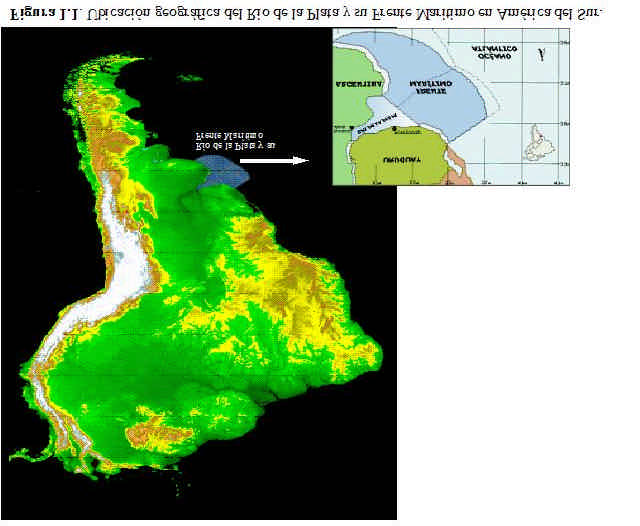
Figure 1. Geographic location of the Río de la Plata and its Maritime Front.
21
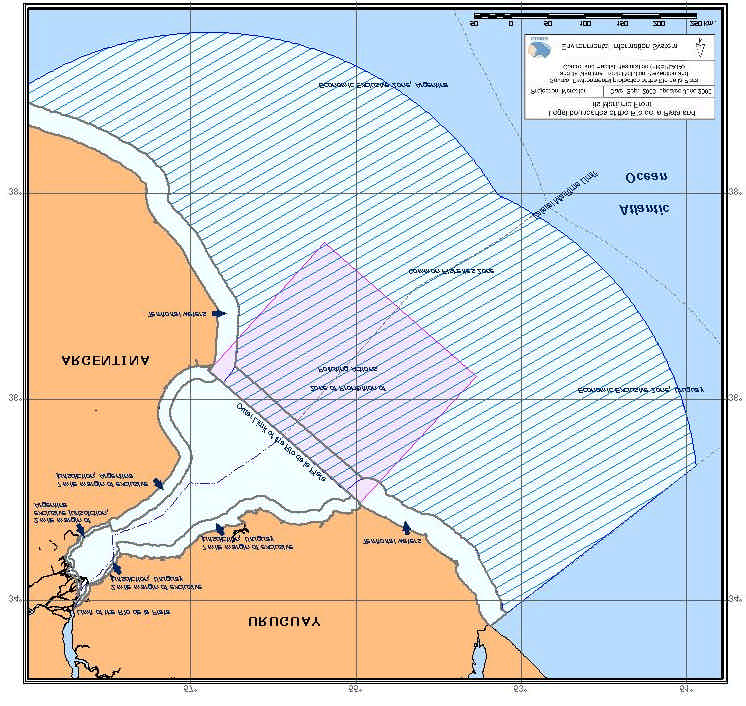
Figure 2. Jurisdiction areas in the Río de la Plata and its Maritime Front.
22
ANNEXES
23