

3
Ballast Water News
Global Ballast Water
Ballast Water News Management Programme
I S S U E 3
O C T O B E R - D E C E M B E R 2 0 0 0
From the Editor
From the Programme
Happy New Year! GloBallast has been in action for ten
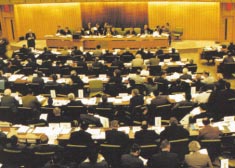
Two major meetings occurred during the October
short months and we enter 2001 forging ahead with a
December 2000 quarter, the 45th meeting of MEPC
whole range of activities; bringing us closer to increased
and the second meeting of our Global Project Task
protection of the world's oceans from the threat of
Force (GPTF), the highest advisory group to the
invasive species.
GloBallast programme.
In this issue of Ballast Water News we report on many of
MEPC 45 gave added impetus to GloBallast in pursuing
these developments through `Programme Highlights'
one of our main development objectives, assisting
(pages 2 and 3) and our summary `Progress Report' (page
developing countries to prepare for the implementation
8). In addition, with the convening of the 45th meeting
of the new ballast water convention.
of IMO's Marine Environment Protection Committee
At the 2nd GPTF meeting, substantive approval was
(MEPC) last October, this issue takes a look at the
given for the draft National Workplans prepared by
development of the new international convention on
each of our six pilot countries. This represents a major
ballast water.
milestone, and will allow activities to commence in
In line with this theme, we are most pleased to
each country in early 2001. The initial focus will be on
welcome Mr Mike Julian, the Chairman of MEPC, as our
communication and awareness raising, ballast water
guest speaker in this issue. It is now anticipated that the
risk assessments and biological baseline surveys at each
text of the new ballast water convention will be agreed
site. These will provide the foundation for ballast
by IMO member countries in 2002. This would enable a
water management measures, including training,
Diplomatic Conference to be held soon after. The
policy and legislative tools.
signing of this convention will mark the biggest step yet
taken to address one of the four greatest threats to our
A pleasant surprise during this early phase of the
oceans. We will keep you updated.
programme has been the very high level of regional
interest. The programme's Country Focal Point (CFP)
An issue with potentially significant ramifications for the
for India, Mr Chakrabarty, briefed member countries of
international legal instrument is the unilateral enactment
the South Asia Cooperative Environment Programme
of ballast water management regimes by individual juris-
and reported significant interest. The CFP for South
dictions. We update this issue on pages 6 and 7.
Africa, Dr Jackson, briefed West African countries at a
In addition to publishing Ballast Water News, we have
meeting in Angola, and similarly reported a high level
continued to put significant efforts into further develop-
of interest. The Government of the Islamic Republic of
ing the other legs of our global communication and
Iran made contact with neighbouring countries and
information clearinghouse functions. This has included
the development of a regional ballast water strategy
the launching of our new web-site, http://globallast.imo.org;
for the Gulf is now firmly on the agenda. Brasil has
the continued expansion of the IMO library ballast water
initiated scientific contacts with Argentina to combat
collection (which has grown by 270% since the pro-
the invading mussel Limnoperna fortunei and Ukraine
gramme commenced) and the creation and continuous
has written to all Black Sea states seeking cooperation.
updating of a ballast water treatment research and
Further links have been established by the PCU with
development directory.
other global organisations, including the World Health
Feedback from all stakeholders continues to be positive.
Organization, the World Maritime University and the
We need more articles for future issues. If you would like
UN Train-Sea-Coast programme. Relations with the
to submit an article for consideration, please do so.
international shipping and port industries and
Ballast Water News has a global distribution of more
environmental NGOs have moved from strength to
than 15,000, and is also posted on our web-site. It
strength. I would like to take this opportunity to thank
therefore provides a useful medium to get your message
all concerned for your sterling efforts in 2000. It is with
across. Happy reading!!
a heightened sense of optimism that we enter 2001.
Steve Raaymakers
Dandu Pughiuc
Contributing Editor
Chief Technical Adviser
Ballast Water News is the quarterly newsletter of the Global Ballast Water Management Programme (GloBallast). GloBallast is a cooperative initiative of GEF, UNDP and IMO to
assist developing countries to reduce the transfer of harmful organisms in ships' ballast water, through the implementation of IMO ballast water management guidelines.
For further information please contact:
Programme Coordination Unit, Global Ballast Water Management Programme
International Maritime Organization, 4 Albert Embankment, London SE1 7SR, UK
Tel +44 (0)20 7587 3247 or 3251. Fax +44 (0)20 7587 3261
Email dpughiuc@imo.org or sraaymak@imo.org Web http://globallast.imo.org
The views expressed in Ballast Water News are not necessarily those of GEF, UNDP or IMO.
G L O B A L B A L L A S T W AT E R M A N A G E M E N T P R O G R A M M E
P R O G R A M M E H I G H L I G H T S
2
Programme Highlights
GPTF Meets The second meeting of the Global
Project Task Force, comprising all six pilot countries,
UNDP, IMO, the global shipping industry and inter-
National Workplans Developed Perhaps
national environmental NGOs, was held at IMO in
the biggest practical achievement of the programme
London on 7 and 8 December. In addition to giving
during the last three months has been the completion
substantial approval to the six national workplans, the
of draft national workplans by all six pilot countries.
GPTF also heard end-of-year progress reports from
Brasil, China, India and South Africa chose to develop
each country and the PCU.
their workplans through a workshop exercise,
The meeting was attended for the first time by the
attended by the full range of stakeholders in the
Chairmen of both MEPC (Mr Mike Julian) and the MEPC
ballast water issue. The PCU Technical Adviser
Ballast Water Working Group (Mr Mike Hunter). Both
attended these workshops and assisted with workplan
Chairmen expressed positive surprise at the significant
development.
and practical progress that has been achieved by the
Ukraine developed its workplan through a Country
programme to date, and commended the six countries
Task Force meeting and a call for proposals from the
and the PCU for their efforts. This was echoed by
various sectors. The PCU Technical Adviser then visited
representatives from the global shipping industry, UNDP
Odessa and assisted with compiling the final draft
and Friends of the Earth.
plan. In the case of the Islamic Republic of Iran, a
The PCU also briefed the GPTF on the activities that
consultant, Mr Alan Taylor, was engaged by the PCU to
are planned to commence in early 2001, including
visit the country and work with Iranian officials to
ballast water risk assessments and port baseline surveys
develop their plan.
for each demonstration site, the development of
global training packages in various aspects of ballast
water management and the review of legislation and
regulations in each country.
Finally, the GPTF received a presentation from Guest
Speaker Dr Ron Thresher of the Australian Centre for
Research on Introduced Marine Pests (CRIMP). This
provided an excellent opportunity for the six
developing countries to learn from Australia's ballast
water experiences.
UN Links Strengthened A very positive
development during the October December quarter
was the strengthening of links with other UN bodies.
The PCU Chief Technical Adviser attended a UN Train-X
course developer's workshop in New York. The founda-
tions were laid for a cooperative arrangement between
GloBallast and the UN Train-Sea-Coast programme, for
the development of modular training packages in
various aspects of ballast water management. This
would include involvement of the Train-Sea-Coast
centres located in two of the programme's pilot
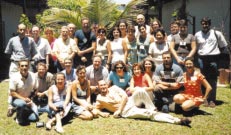
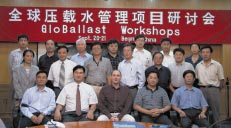
Examples of the GloBallast National workplan development
countries, Brasil and South Africa.
workshops, China and Brasil.
An alliance was also formed between GloBallast and
the World Maritime University (WMU) in Malmö,
The draft National workplans were presented to the
Sweden. WMU will advise and assist the review of
second GPTF meeting in December 2000 and received
ballast water legislation and regulations, both globally
substantive approval. They clearly outline the activities,
and in each pilot country, and develop model ballast
timelines and budgets for the execution of the
water management legislation.
GloBallast programme in each pilot country. Some
Finally, contact was made with the World Health
technical issues remain to be addressed for each
Organization (WHO), with a view to developing
workplan, in consultation with the PCU.
cooperative arrangements for the prevention of
Programme funds are now flowing to each country
transfer of cholera and other diseases in ballast water.
and practical implementation of activities has
WHO attended the second GPTF meeting and the PCU
commenced.
will follow-up this link in the New Year.
BWN 3: 10-12/2000

G L O B A L B A L L A S T W AT E R M A N A G E M E N T P R O G R A M M E
P R O G R A M M E H I G H L I G H T S
3
Awareness Raising Commences One of
IW Meeting Attended The GloBallast
the biggest barriers to effectively dealing with the
programme is funded under the International Waters
ballast water problem has been identified as a lack of
(IW) portfolio of the Global Environment Facility (GEF).
awareness amongst all but the most specialised of
To date this portfolio has allocated over US$400 million
audiences. In response, GloBallast is investing strongly
to the sustainable management of international waters
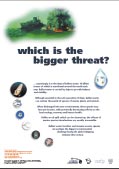
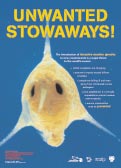
in awareness raising efforts. The first products, a set of
and there are currently 18 active IW projects covering
three posters, came off the production line last quarter.
the full spectrum of coastal and oceans management
issues.
These have been distributed widely around the world
and versions are now being produced in the languages
In order to share experiences between this large range
of projects and to begin development of best practices
of the six pilot countries. Additional awareness raising
for international waters management, the GEF held its
activities will be developed as the programme
first International Waters Conference in Budapest,
progresses.
Hungary, from 14 to 18 October 2000.
GloBallast was represented by the PCU Chief
Technical Adviser and the CFPs from India and
Ukraine. The conference provided an excellent
opportunity for the relatively young GloBallast
programme to learn from the experiences of the more
advanced IW projects. It also helped to raise
awareness amongst the global community about
ballast water issues.
For further information: www.iwlearn.org/iwc2000.
ICHCA Initiative Supported The inter-
national cargo handling industry has become proactive
in helping to address the problem of invasive marine
species in ballast water. On 20 November the
International Cargo Handling Coordination Association
Examples of the GloBallast awareness raising posters
(ICHCA), a global umbrella group representing the
To obtain full-size (70cm x 50cm) originals of the
interests of a huge range of cargo handlers, organized
posters (free of charge) please contact Matthew Baker
and hosted a one day international conference in
at the PCU. Email mbaker@imo.org.
London entitled `Ballast Water: Global Awareness'.
ICHCA's objectives were to bring the issue out of the
realm of specialists and into the broader audience of
industry, focussing the minds of the private sector on
Web-Site Goes Online The programme's new
this major environmental challenge. GloBallast
web-site, http://globallast.imo.org, went online at the
participated actively.
beginning of December. It contains the following:
For further information: www.ichcabulk.org.
q
an overview of the `ballast water problem',
q
a description of the international response,
q
a copy of the IMO ballast water guidelines,
R&D Directory Released In October 2000
q
an overview of the GloBallast programme,
the PCU released the first edition of a global ballast
water treatment R&D directory. The directory is a
q
a section on ballast water treatment, including the
response by the programme to a long-standing call for
global Ballast Water Treatment R&D Directory,
such an initiative. There are a large number of R&D
q
a section on ballast water legislation,
projects underway around the world looking at new
methods for treating ballast water to remove or kill
q
the IMO library ballast water collection,
organisms. Until now, it has been extremely difficult to
q
links to other ballast water directories and
obtain a quick appreciation of who is doing what
databases, such as the Smithsonian's AIRD,
where in this field. The directory has proved popular
q
issues to date of Ballast Water News (PDF files),
and has already been updated four times. It is
available as a document from the PCU or can be
q
links to other relevant sites, and
accessed as a database on the GloBallast web-site (see
q
PCU contact details.
http://globallast.imo.org Ballast Water Treatment).
Other organizations are invited to link with the site,
SR
which will remain `alive' and be updated regularly.
BWN 3: 10-12/2000

G L O B A L B A L L A S T W AT E R M A N A G E M E N T P R O G R A M M E
G U E S T S P E A K E R
4
Guest Speaker
options. So far however, the elusive `silver bullet' has
yet to be found. The problem is a `catch 22' i.e. until a
Mr Michael Julian, Chairman
standard for measuring treatment effectiveness is
IMO Marine Environment Protection
agreed, the ability to determine acceptable treatment
Committee
options remains uncertain.
It was very pleasing to note in the last edition of Ballast
Water News a range of new ballast water treatment
Mr Julian, of the Australian
R&D projects. Also of significance is the fact that the
first shipboard ballast water treatment equipment, the
Maritime Safety Authority,
OptiMar system, has been installed on the cruise ship
has chaired MEPC since 1998,
Regal Princess. Subject to test results and if proven
guiding the development of
effective, this type of equipment might be used by
the new ballast water legal
other ships with similar ballast volumes.
instrument through some
The holding by the GloBallast programme of the
International Ballast Water Treatment R&D Symposium
critical stages.
& Workshop at IMO from 26-30 March 2001, will
provide an ideal opportunity to bring together key
IMO's Marine Environment Protection Committee (MEPC)
experts to assist the MEPC working group in developing
has been developing an international treaty on the
the required standards and treatment options (contact
management of harmful aquatic organisms in ships'
sraaymak@imo.org).
ballast water since the early 1990's. While it may be
The last meeting of the MEPC's ballast water working
viewed with concern by some that the draft convention
group held in October 2000 confirmed that it would
is not yet finalised, it is critical to its successful adoption
continue developing the draft convention on a two tier
by a diplomatic conference as well as those at sea, who
approach. Tier One is the base level requirement that
will have to conform to its requirements, that the
would apply to all ships, including the mandatory
measures to manage ballast water are clearly
carriage of a Ballast Water & Sediment Management
understood, practical, safe, environmentally acceptable
Plan, Ballast Water Record Book and a requirement to
and cost effective. Taking additional time to reach
carry out a ballast water management procedure after
agreement on outstanding issues should therefore be
a phase in period. Recognition was given that
seen in a positive light.
procedures may differ for new ships.
There are several reasons that have slowed the process.
Tier Two would apply only in prescribed ballast water
The MEPC Ballast Water Working Group has so far been
management areas. However, further work is required
unable to resolve two key factors. Firstly, determining
to determine the extent of the proposed second tier
acceptable standards for the effectiveness of ballast
requirements, including how UNCLOS might apply.
water treatment and secondly, determining treatment
options which meet the `agreed' criteria of ship safety,
The Committee agreed that it would be appropriate to
environmental acceptability and cost effectiveness.
develop a joint MEPC/MSC (Maritime Safety
Committee) circular, explaining the need for ballast
Because of the enormous engineering and scientific
water and sediment management options to be taken
difficulties of the task, determining acceptable
into account when designing and building new ships.
outcomes to the above two factors has proven far more
A draft has been developed for agreement in 2001.
complex than finding solutions to most of the other
ship-sourced pollution threats which MEPC has faced in
It had been anticipated that the draft ballast water
the past. Reaching agreement in 1992 on the
convention would have been sufficiently advanced by
requirement for new oil tankers to be built with
now to enable a diplomatic conference to be held early
double hulls and the phasing out of single hull tankers,
in 2002. It now appears that this will have to be put
was relatively simple compared to the Committee's
back a further year.
work in finding solutions to the `ballast water
The most important issue is therefore to ensure that
problem.'
the outcome of the considerable time and effort by
So far the only `accepted' ballast water management
many hundreds of people in finding a solution to this
technique has been ballast exchange at sea. However,
problem, provides a convention with regulations that
because of ship safety and effectiveness limitations, this
are practical, safe, environmentally acceptable and cost
method has always been recognised by MEPC as only
effective. It is up to the working group and the MEPC
an interim option. The safety of the ship and those on
to achieve this goal within the next two years.
board are paramount. Clearly, ballast exchange at sea
MJ
should only be carried out in accordance with the ship's
~ ~ ~ N E W S F L A S H ~ ~ ~
Ballast Water Management Plan that must be approved
by the relevant classification society and endorsed by
IMO Library Ballast Water Collection
the flag administration.
has grown by 270%
Several millions of dollars have been spent in a number
Check out: http://globallast.imo.org
of countries to find acceptable ballast water treatment
BWN 3: 10-12/2000
G L O B A L B A L L A S T W AT E R M A N A G E M E N T P R O G R A M M E
M E P C U P D AT E
5
MEPC Update
Gollasch of the German delegation was asked to chair
an informal inter-sessional correspondence group of
relevant experts, to develop this matter further for the
IMO's Marine Environment Protection Committee (MEPC)
next meeting.
is the international forum through which IMO member
The working group agreed to consider the
countries negotiate, develop, agree, review, amend and
responsibilities of Port, Flag and Coastal States at its
administer international conventions and other
next session.
instruments for the prevention of pollution from ships.
The working group agreed on minimum mandatory
The 45th meeting of MEPC was held in London from 2
requirements for shipboard Ballast Water Management
to 6 October 2000. As reported by the Chairman Mr
Plans and Record Books.
Mike Julian in his `Guest Speaker' article, MEPC's Ballast
Water Working Group continued to make good
The working group agreed that due to various
progress on developing the new international ballast
concerns, that there would be no mandatory
water convention.
requirement for ports to provide, or ships to use,
ballast water reception facilities.
At MEPC 45 chairmanship of the Ballast Water Working
Group changed from Mr Dennis Paterson of Australia
The working group concluded that the fundamental
to Mr Mike Hunter of the UK. Mr Paterson had chaired
basis of a draft legal instrument for ballast water
the working group since its inception. He is widely
management is now established. The US offered to
acknowledged as being one of the main driving forces
consolidate what had been achieved to date and to
in guiding the development of the ballast water
submit a complete text to MEPC 46. This offer was
convention through the complex negotiations and
accepted.
myriad of challenges of the IMO process. He continues
The working group agreed to work towards resolving
to be involved in global efforts to solve the ballast
all outstanding issues in time to submit a draft final
water problem.
text to MEPC 48 (2002) with a view to convening a
Mr Hunter had previously been a delegate on the
Diplomatic Conference in 2003.
working group. He assumes its chairmanship with the
For further information on the status of the
benefits of an in-depth appreciation of the previous
new ballast water convention refer to
proceedings, the IMO system and maritime operations.
http://globallast.imo.org The International Response.
The Ballast Water Working Group was set a number of
SR
tasks during MEPC 45, including:
q
further develop draft text for the convention,
q
consider standards for the evaluation of new
ballast water treatment methods,
q
consider the standardization of ballast water
sampling techniques,
q
consider the responsibilities of Port, Flag and
Coastal States under the convention,
q
consider the contents of the Ballast Water
Management Plan and Ballast Water Record Book
to be required under the convention,
q
consider regulations regarding reception facilities
for ballast water.
Substantial progress was made by the working group
on the draft text for the convention, based on the two-
tier approach described by Mr Julian in his `Guest
~ ~ ~ A N N O U N C E M E N T ~ ~ ~
Speaker' article. It was agreed that delegations need
more time to consider the implications of designated
International
ballast water management areas under Tier Two, to be
considered in more depth at MEPC 46.
Ballast Water Treatment
In relation to standards for the evaluation of new
R&D Symposium & Workshop
ballast water treatment methods, the working group
heard that the GloBallast programme is convening an
international workshop on this issue in March 2001.
The outcomes will be submitted to MEPC 46 for
IMO London
consideration.
26-30 March 2001
Germany submitted the results of a review it had done
Contact: sraaymak@imo.org
on ballast water sampling techniques and Dr Stephan
BWN 3: 10-12/2000
G L O B A L B A L L A S T W AT E R M A N A G E M E N T P R O G R A M M E
U N I L AT E R A L A C T I O N S S U R G E A H E A D
6
Unilateral Actions
q no discharge of ballast water within Australian
waters without written permission from a
Surge Ahead
Quarantine officer.
Vessels intending to discharge ballast water in
Australian waters will be able to manage their ballast
Of great concern to both IMO and the global shipping
water en-route by using the Australian Ballast Water
industry is that in the absence of a single, uniform,
Decision Support System (DSS).
international legal instrument for the regulation of
ballast water management, individual jurisdictions at
The DSS performs a tank-by-tank risk assessment based
the national, provincial and local level are proceeding
on information supplied by the ship's master, and
with implementing their own regulatory regimes.
allows international vessels to determine before they
arrive in Australian waters if their ballast water poses a
The danger of this fragmented, patchwork approach is
risk of introducing exotic marine pests. Tanks identified
that differences may arise between each regulatory
as carrying high-risk ballast water will require
system. Because shipping is an international industry,
treatment and/or management by a method acceptable
with ships passing across jurisdictional lines in order to
to AQIS, including:
conduct trade, differences between regulatory systems
can create extreme compliance difficulties and
q exchange of ballast water at sea through sequential
significant cost implications for shipping.
exchange, flow-through or dilution;
Despite these problems, many jurisdictions which are
q non-discharge of high risk ballast tanks;
most concerned about protecting their coastal and
q tank-to-tank transfer, preventing discharge of
marine resources from the dangers of invasive marine
ballast water from `high risk' tanks; and
species, are implementing their own ballast water
q comparable treatment options as developed.
management legislation and regulations.
To ensure accurate reporting by ships' masters, AQIS
The web site of the International Association of
will be verifying information and advising masters
Independent Tanker Owners (INTERTANKO) provides
about the records that must be maintained.
profiles of national ballast water legislation
(www.intertanko.com/tankerfacts/environmental/ballast
Further information:
/ballastreq.htm.)
Stephen Rowland, AQIS Seaports Program
Email stephen.rowland@aqis.gov.au.
Below we take a look at the regulatory responses of
Australia and the US States of California and
Washington. The US State requirements are in addition
California
to those imposed Federally under the US National
Invasive Species Act 1996. We also briefly reference
On 1 January 2001 the Californian Ballast
regulatory arrangements for ballast water imposed at
Water Management for Control of
the local level by individual ports.
Nonindigenous Species Act became effective. It is
administered by the California State Lands Commission
(CSLC).
Australia
The Act requires vessels calling at Californian ports to
From July 2001, new arrangements under
adopt good housekeeping practices to minimize the
the Australian Quarantine Act 1908 for managing the
uptake and discharge of nonindigenous species;
risks posed by exotic marine pests will apply to all
develop and maintain vessel-specific ballast water
international vessels visiting Australian waters.
management plans and to provide crew training.
The new regulations have received widespread support
All vessels carrying ballast water and/or associated
from stakeholders in government and the shipping
sediments into Californian State waters after operating
industry. The mandatory aspects of the new
outside the US Exclusive Economic Zone must conduct
arrangements include:
one of five ballast management practices:
q reporting to the Australian Quarantine and
q carry-out a mid-ocean ballast water exchange
Inspection Service (AQIS) regarding ballast water
before entering State waters;
arrangements. Vessels that do not carry ballast
q retain ballast water on-board;
water will still be required to report;
q use an alternative method approved by the CSLC;
q if required, undertaking ballast exchange and/or
other treatment and management options as
q discharge all ballast water to an approved shore-
directed by AQIS before discharging ballast;
side facility; or
q re-submission and/or updating of ballast water
q carry-out a ballast water exchange in an area
information if voyage details have altered;
agreed by the CSLC.
q access to safe ballast water sampling points;
All vessels must report their ballast practices per voyage
q disposal on land of sediment resulting from ballast
and retain this information on-board for two years. To
tank and/or hold cleaning; and
avoid duplication of Federal record keeping provisions,
BWN 3: 10-12/2000
G L O B A L B A L L A S T W AT E R M A N A G E M E N T P R O G R A M M E
U N I L AT E R A L A C T I O N S S U R G E A H E A D
7
the CSLC has adopted the US Coast Guard's Ballast
Port Authorities
Water Report Form.
PO RTS
To compound the complexity of the
The Californian legislation also provides for a ballast
rapidly developing ballast water
water management fee of US$400 per voyage, field
regulatory picture, individual port jurisdictions are also
inspection of ballast water and sediments from vessels
playing a significant role. The Port of Vancouver has
and enforcement with civil penalties.
had mandatory requirements for certain ships to
undertake ballast exchange at sea, backed-up by
There is also a state-wide programme of biological field
compliance sampling and testing, in place since 1996.
surveys to assess the extent of non-indigenous aquatic
The ports of Oakland, Stockton and Humboldt Bay in
species and a research programme for the evaluation of
California have also implemented port-specific ballast
alternative ballast water treatment techniques.
water management requirements.
Further information:
At the Port of Scapa Flow in the Orkney Islands,
Karen Hart, West Coast Ballast Outreach Project
Scotland, ships wishing to discharge ballast at the
kdhart@ucdavis.edu.
Flotta Terminal can do so only to a shore-based
reception facility.
Washington
In Buenos Aires, Argentina, quarantine health
On 24 March 2000 Washington became
authorities require ships arriving from WHO listed
the second US State to pass legislation
cholera areas to treat their ballast water with chlorine,
regulating the way that ships manage ballast water,
before discharge.
through Substitute House Bill (SHB) 2466.
At this time, several other countries and individual
The Bill became law in July 2000, is administered by the
ports around the world have in place or are considering
Washington Department of Fish and Wildlife and
their own ballast water management regimes, as are
requires the following:
several additional states in the US.
q all ships (including coastal shipping) entering a
Washington port and planning to discharge ballast
These unilateral regulatory responses raise a number of
water must undertake ballast exchange not less
significant concerns, including discrepancies and
than 50 miles from shore prior to entering the port.
duplication between different regimes that apply to
Exemptions may be given for safety reasons (e.g.
the same international industry; the apparent arbitrary
inclement weather) until 1 July 2002, whereafter all
basis for some of the requirements; real, practical
ships will have to exchange or treat their ballast
impediments to achieving some of the requirements
water regardless of weather conditions or other
and the granting of maritime regulatory powers to
safety factors;
agencies with possibly limited experience in dealing
q shipboard ballast water operations must be
with shipping issues.
recorded and reported;
The prerogative of coastal states to protect their coastal
q
and marine resources from shipping impacts must be
ballast water must be tested prior to discharge.
maintained. However, a piece-meal, disjointed approach
Non-compliance may result in civil penalties.
is counter-productive when dealing with a trans-
To stimulate the development of new technologies as
boundary, global industry such as shipping. The vital
alternatives to ballast water exchange, SHB 2466 also
need for a uniform and effective international law on
mandates the initiation of a ballast water treatment
ballast water could not be greater than it is right now.
R&D pilot project.
SR
Further information:
Scott Smith, Washington Dept of Fish & Wildlife
smithss@dfw.wa.gov.
Are you on our mailing list?
Have your say!
To receive
Please feel free to submit articles
Ballast Water News
or letters to the editor for
Please fax or e-mail your name and postal address to the
consideration for publication
Programme Coordination Unit
in Ballast Water News
Fax +44 20 7587 3261 s E-mail mbaker@imo.org
sraaymak@imo.org
Ballast Water News is also posted on
http://globallast.imo.org
BWN 3: 10-12/2000


G L O B A L B A L L A S T W AT E R M A N A G E M E N T P R O G R A M M E
8
Progress Report
Activities Undertaken October December 2000:
Activities Planned January March 2001:
MEPC 45 attended (London 2-6 Oct).
q Continue implementation of in-country activities.
PCU missions to Brasil and Ukraine undertaken.
q Employ additional Administrative Assistant at PCU.
Consultant's mission to Iran undertaken.
q Process port survey coordinator consultancy.
Web site online.
q Advertise/process risk assessment consultancy.
1st awareness materials (posters) distributed.
q Attend ROPME meeting, Kuwait.
1st case studies (Brasil, S. Africa, Ukraine)
q PCU mission to WMU, Malmö.
undertaken.
q Publish 1st case studies.
Detailed planning for risk assessments underway.
q Commence second case studies (China, India, Iran).
Detailed planning for port surveys underway.
q Produce second round of awareness materials.
Detailed planning for R&D symposium underway.
q Review/consolidate information clearing house
GEF International Waters meeting attended
function.
(Budapest).
q Further develop regional cooperation at each site.
ICHCA ballast water conference attended (London).
q Hold ballast water treatment symposium and
Links formed with UN Train-Sea-Coast programme.
workshop (London 26-30 March).
Links formed with WMU for legislation review.
q Prepare for MEPC 46 (23-27 April).
2nd GPTF meeting held (London 7-8 Dec).
q Produce 4th issue of Ballast Water News.
National Workplans developed and approved.
3rd issue of Ballast Water News produced.
, January 2001.
ecycled paper
.dwa.uk.com · Printed on r
More Information?
Photo credit : Gustaf Hallegraeff
Check out these web-sites:
(these are additional sites not listed in BWN Issues 1 and 2):
el (+44) 020 7928 5888 www
q www.ballast-outreach-ucsgep.ucdavis.edu/ US West Coast Ballast Outreach Project
q www.projects.dnv.com/embla/ DNV EMBLA system (voyage-based ballast water risk assessment)
q www.conferences.uni.edu/ 2nd Marine Bioinvasions Conference
q www.aquatic-invasive-species-conference.org 11th International Conference on Aquatic Invasive Species
q www.ncr.dfo.ca Canadian Department of Fisheries and Oceans
q www.anstaskforce.gov - US National Aquatic Nuisance Species Task Force
est & Associates, London. T
q www.ices.dk/pubs/itmo.pdf - ICES Code of Practice on the Introductions and Transfers of Marine Organisms 1994.
Daniel W
More web-sites next issue. To contact the PCU see details on front page.
BWN 3: 10-12/2000