




Ballast Water News
3
Ballast Water News
I S S U E 1 4
J U LY S E P T E M B E R 2 0 0 3
From the Editor
From the Programme
As we look back on the 3rd quarter of 2003, there are many
The 49th session of MEPC, held from 14 to 18 July 2003, marked
major achievements for IMO and the GloBallast Programme to
an important moment of reference for the programme and the
reflect on. The IMO Marine Environment Protection Committee
decisions taken by IMO member States during the meeting
(MEPC), at its 49th meeting in July, agreed to proceed with a
established clear directions for the continuation of GloBallast.
Diplomatic Conference in February 2004, to adopt the
After extensive discussions the various delegations involved in the
International Convention for the Control and Management of
drafting of the new Convention, harmonized their views on most
Ships' Ballast Water and Sediments. With achievement of this
of the provisions and decided in favour of a Diplomatic
major breakthrough, we are most pleased to welcome as our
Guest Speaker Mr Koji Sekimizu, Director of the IMO Marine
Conference for the adoption of the Convention, to be held from
Environment Division, who as Secretary to MEPC successfully
9 to 13 February 2004. Although a number of aspects related to
steered and supported the extremely complex negotiations
inspections, concerted areas, grandfathering conditions for
in recent years. Immediately following MEPC, the 2nd
existing ships and standards for ballast water management are still
International Ballast Water Treatment R&D Symposium was
being debated, the decision to move towards adoption of the
successfully convened. The main outcomes of the symposium,
Convention, is an incentive for GloBallast to start planning the
including prospects for more effective ballast water treatment
transition from the pilot stage to a more complex phase, which
technologies, are summarized on page 3.
will focus on assisting countries to implement the Convention.
A major technical activity was completed last quarter, this being
The member States received with interest a paper submitted by
the ballast water risk assessments for each demonstration site.
the IMO Secretariat in this respect. The Committee acknowledged
This has resulted in the development of an innovative, modular
the substantial contribution of GloBallast in assisting developing
risk assessment methodology that can be adopted and applied by
countries to prepare for the implementation of the Convention
any port in the world; the generation of comprehensive ballast
and requested the IMO Secretariat to approach GEF and other
water risk profiles for the six demonstration sites; and the
establishment of fully operational risk assessment systems and
donors, to explore the possibility of continuing the activities
trained teams in each Pilot Country. The results for Khark Island
initiated during the pilot phase and replicating best practices in
are presented on pages 4 and 5. In the first week of September,
additional countries in various regions.
an international workshop was held in Melbourne, with generous
In response, the PCU in consultation with the six Pilot Countries
sponsorship from New Zealand and Australia, to review the
and other partners such as IUCN and the Global Invasive Species
GloBallast risk assessments, compare with other approaches, and
generate recommendations for risk assessment guidelines under
Programme (GISP), has prepared a concept paper for a new phase
the new Convention.
named "GloBallast Partnerships". The overall objective is to
promote the development and implementation of long-term,
One issue that has received some discussion recently, is the total
national-level, regionally coordinated measures to minimize the
volume of ballast water estimated to be transported by ships.
adverse impacts of invasive aquatic species transferred through
On pages 6 and 7 we present an analysis by staff at Det Norske
ships' ballast water. GloBallast Partnerships will provide a
Veritas (DNV), which estimates that based simply on world cargo
programmatic framework for the sustainable replication of pilot
figures, global volumes of ballast water transported are probably
phase successes and best -practices, ensuring that maximum
in the order of 3 to 4 billion tonnes per year, compared to 10 to
benefits accrue from the six centres-of-excellence established in
12 billion tonnes put forward by previous estimates. Never-the-
less, when considering the risk of ballast-mediated bio-invasions,
the pilot phase.
case histories indicate that port environmental matching and risk
Another milestone last quarter was the 1st International Workshop
species profiles appear to have a more significant influence on the
on Ballast Water Risk Assessment held in Melbourne, Australia
risk of introductions, irrespective of volumes of ballast.
from 22 to 26 September. The Workshop offered a unique
In this issue we also take a look at the hull-fouling vector, with an
opportunity for the Pilot Countries to share experiences and
article from New Zealand on a remote method of hull-fouling
lessons learnt during the development of their national risk
assessment. The World Conservation Union (IUCN), as a partner in
assessment systems and to review approaches used by other
the production of Ballast Water News, makes it contribution with
countries. The Workshop was organized by our risk assessment
an article summarising the main outcomes from the 5th World
consultants and generously sponsored by a consortium of
Parks Congress, and an update on aquatic invasive species in the
Australian and New Zealand institutions. A sincere and
Mediterranean.
wholehearted thanks goes from the Programme to the sponsors!
Finally, we wrap up this issue with a report on ongoing regional
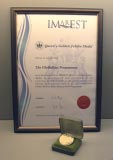
Last but not least GloBallast is proud to announce being awarded
initiatives, in this case for the countries along the west coast of
the Queen's Golden Jubilee Medal for significant contribution to
South America, through the Permanent Commission for the South
Pacific (CPPS), and a brief announcement of some recent
the advancement of protection of the marine environment. The
publications. As we enter the final stages of the GloBallast pilot
prestigious distinction offered by the Institute of Marine
phase, we look forward to bringing you, in the next issues of
Engineering, Science and Technology is a confirmation of the
Ballast Water News, further results and outcomes of many of the
success of GloBallast and a much-deserved recognition of the
activities that are now being completed by the Pilot Countries.
efforts made by the six participating countries.
Steve Raaymakers
Dandu Pughiuc
Contributing Editor
Chief Technical Adviser
Ballast Water News is the quarterly newsletter of the Global Ballast Water Management Programme (GloBallast), and is produced with the support of the World Conservation Union
(IUCN). GloBallast is a cooperative initiative of GEF, UNDP, IMO and other partners to assist developing countries to reduce the transfer of harmful organisms in ships' ballast water,
through the implementation of IMO guidelines.
For further information please contact:
The Editor, Ballast Water News, Global Ballast Water Management Programme
Fax +44 (0)20 7587 3261 Email sraaymak@imo.org Web http://globallast.imo.org
Marine Programme Officer, IUCN Centre for Mediterranean Cooperation
Fax +34 95 202 8145 Email imene.meliane@iucn.org
The views expressed in Ballast Water News are not necessarily those of IUCN, GEF, UNDP or IMO.



G L O B A L B A L L A S T W AT E R M A N A G E M E N T P R O G R A M M E
G U E S T S P E A K E R
2
Guest Speaker
seriousness of IMO in dealing with this issue, along with the
shipping industry, and also in response to the request made
Mr Koji Sekimizu
of IMO at the World Summit on Sustainable Development
Director, Marine Environment Division
in 2002.
International Maritime Organization
In addition to the Convention, the development of
associated technical cooperation efforts, including the
GEF/UNDP/IMO Global Ballast Water Management
Programme (GloBallast), further indicates the determination
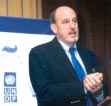
Mr. Koji Sekimizu was appointed
of IMO to address this issue beyond the adoption of the
Director of the Marine Environment
Division (MED) of IMO in August
Convention next year. These efforts aim to expedite the
2000, having served in various
Convention's entry into force and establish frameworks for
capacities at IMO since 1989,
regional cooperation and catalyse national actions for the
including Head of the Technology
effective implementation of the Convention, particularly in
Section and Senior Deputy Director
developing countries. In this regard, IMO is currently
of MED. He graduated from Osaka
preparing new project proposals, based on the highly
University (Master of Engineering)
successful GloBallast Programme, with GEF, UNDP and
in 1977 and joined the Ministry of
other partners.
Transport of Japan as a Ship
These achievements are the result of the intensive efforts of
Inspector. He worked with the Ministry of Transport for
the dedicated individuals involved in the work of the MEPC
twelve years in various capacities, including working with
Ballast Water Working Group, including Messes Denis
the Ministry of Foreign Affairs, dealing with the Maritime
Transport Committee of the Organization for Economic
Paterson, Mike Julian and Alan Taylor from Australia, Mike
Cooperation and Development (OECD). During his last two
Hunter (UK), Fred Kenney (USA) and Manfred Nauke and
years with the Ministry of Transport he held the position of
Rene Coenen of IMO, and other numerous people I cannot
Deputy Director of the Safety Standards Division. As
name here. Additionally, the efforts of Dandu Pughiuc,
Director of MED at IMO, Mr. Sekimizu is the Secretary of
Steve Raaymakers and their staff and Country Counterparts
the IMO Marine Environment Protection Committee (MEPC)
of the GloBallast Programme, have played a major role in
and the Administrative Secretary of the UN Joint Group of
supporting development of the Convention and greatly
Experts on the Scientific Aspects of Marine Environmental
increasing the active participation of developing countries.
Protection (GESAMP).
The outstanding
achievements of GloBallast
In July this year, the 49th meeting of MEPC finalised the
received recognition this
draft text of the International Convention on the Control
year, in part through the
and Management of Ships' Ballast Water and Sediments and
Queen's Golden Jubilee
agreed to hold a Diplomatic Conference to consider
Medal, awarded by the
adoption of the Convention in February 2004.
Institute of Marine
This is one of the major achievements of MEPC since the
Engineering, Science and
beginning of the 1990's, based on ten years of highly
Technology.
complex and challenging discussions, which has produced
I praise the tremendous
two sets of ballast water management guidelines and finally
contribution and dedication
developed a new legal instrument as a stand-alone
of all involved in IMO's
international Convention.
response to the ballast
The draft Convention sets out a legal framework of
water issue, which has
regulatory measures and further international work to be
resulted in a final draft of
carried out over the next two decades to address the global
the Convention at last, and I
problem of the transfer of harmful aquatic organisms and
look forward to these efforts being rewarded
pathogens through ships' ballast water. Significantly, the
through its adoption in February 2004.
draft Convention sets a performance standard for ballast
Koji Sekimizu
water treatment, taking into account:
· the need for further developments aiming at better
treatment technologies;
· the limited effectiveness and associated operational
problems of ballast water exchange at sea;
· the operation of international shipping in coastal
waters;
ANNOUNCEMENT!
· standards to be applied to new ships to be
constructed in the future.
2nd International Conference &
The right of coastal States to establish more stringent
Exhibition on Ballast Water
standards will be further debated at the Diplomatic
Management
Conference, taking into account the principles established
under the United Nations Convention on the Law of the
Singapore, 19-21 May 2004
Sea (UNCLOS).
Scheduled 2 months after the proposed adoption of
the new IMO ballast water Convention in February 2004, this
Although it will take some years for the Convention to
conference and exhibition present an
come into effect, the establishment of this new legal
unrivalled opportunity to gain a timely update
framework is a significant development in the history of
on global developments.
IMO and must be interpreted as being the result of the
www.iese.ntu.edu.sg/ballast2004
BWN 14: 07-09/2003
G L O B A L B A L L A S T W AT E R M A N A G E M E N T P R O G R A M M E
2 N D R & D S Y M P O S I U M
3
2nd R&D Symposium
A total of 35 technical papers were presented over the
three days (and 20 more papers were unable to be
accepted due to time constraints). Papers covered
From 21 to 23 July this year, GloBallast, with
mechanical and gas-based treatment systems, heat and
organizational support from the Institute of Marine
electro-based systems, chemical-based approaches, multiple
Engineering, Science and Technology and sponsorship
technologies and combined systems, with a special session
from the US National Science Foundation, UK Maritime
and Coast Guard Agency and University of Newcastle
on test protocols and verification procedures.
Upon Tyne, convened the 2nd International Ballast
Several papers provided updates on work that had been
Water Treatment R&D Symposium, at IMO Headquarters
presented in 2001, while others reported on new
in London.
initiatives. Overall, there has been a significant increase in
The 1st Symposium was held
R&D (the 1st Symposium received 26 papers). However,
in March 2001, and was
although good progress has been made in moving closer
hailed as a success in
to viable, practical, effective solutions, all groups remain
bringing stakeholders up-to-
at the basic research stage. The lack of finalised
date with latest
treatment standards in the IMO Convention was identified
developments in ballast
as still being the major obstacle to the R&D community.
water treatment tech-
Two other major points that emerged from the
nologies and catalysing a
symposium were as follows:
more coordinated global
· It is unlikely that a single treatment technology will suit
R&D effort. Since 2001
all vessel types and voyage characteristics. The R&D
significant progress has been
community should seek to develop different treatment
Keynote Speaker Dr Tom Waite
made in the field of ballast
options for different scenarios, as long as they meet the
water treatment R&D and with the new IMO ballast water
international performance standard. For example, heat
Convention. The 2nd Symposium therefore provided a
appears to hold significant promise for cruise ships and
timely opportunity for another major update and refocus
some tankers that generate significant waste heat, but is
of the global R&D effort.
unlikely to be an option for bulk carriers with large
In opening the 2nd Symposium, the Director of the IMO
volumes of ballast but little waste heat.
Marine Environment Division, Mr Koji Sekimizu, speaking
· It appears that treatment systems will need to involve
on behalf of the Secretary-General, Mr William O'Neil,
combined technologies, and that primary filtration or
stated that during the development of the ballast water
physical separation will almost certainly be necessary,
Convention, it has been widely recognized that the
followed by secondary biocidal treatment(s). If primary
practice of ballast exchange at sea has many limitations,
filtration alone was implemented now, a significant
including serious safety concerns and highly variable
reduction in bio-invasions would be achieved.
biological effectiveness. As an example, approximately 15
While the quality of papers was better than in 2001, some
new species have invaded the North American Great Lakes
were still (regrettably) oriented towards `sales pitches',
since 1993, despite mid-ocean exchange becoming
rather than presenting scientifically defensible data, and
mandatory that year for ships entering the Lakes region.
many papers provided limited information on their
This is the same number of invasions that occurred during
experimental designs and test protocols. The lack of
the 1970s and 80s, indicating that current management
internationally agreed testing methods was also identified
efforts are not completely effective. Overall, the current
as a major problem, making it difficult to compare
rate of invasions is >60% higher than 100 years ago.
different projects.
Mr Sekimizu stated that it is therefore extremely
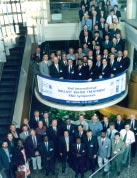
Some of the symposium
important that alternative, more effective ballast water
delegates, over 230
treatment methods are developed as soon as possible, and
attended
the new Convention will provide a powerful, regulatory
driven incentive for this effort. Significant R&D is already
underway, as presented at the IMO symposiums and in the
The development of
global R&D Directory (http://globallast.imo.org/research).
internationally
standardised test
In delivering the keynote address at the Symposium,
protocols and
Dr Tom Waite, Programme Director of Environmental
verification
Engineering at the US National Science Foundation,
procedures was
Associate Dean of Research at the University of Miami
identified as the most
and veteran of the war against biological invasions,
urgent remaining
quoted a 2002 report by the US General Accounting Office
priority that must be
which states `Overall, scientists, academicians and industry
addressed by IMO,
leaders are recognizing invasive species as one of the most
and the final session
serious environmental threats of the 21st century . . .'.
of the symposium
Dr Waite also stated, inter alia, that the search for
provided some useful
solutions requires far more input from naval architects
papers on this matter.
and marine engineers, that the initial focus should be on
adapting existing water treatment techniques, that the
The Symposium Abstracts are available at
R&D effort should look for synergies between treatment
http://globallast.imo.org/treatment and the full
processes, and that non-chemical, reversible treatments
proceedings will be available at
such as heat, de-oxygenation and pH extremes should be
http://globallast.imo.org/publications in December 2003.
seriously pursued, along with new techniques such as
light-sensitive biocides.
sraaymak@imo.org
BWN 14: 07-09/2003
G L O B A L B A L L A S T W AT E R M A N A G E M E N T P R O G R A M M E
R I S K A S S E S S M E N T R E L E A S E D F O R I R A N
4
Risk Assessment
In determining the nature and extent of their ballast
water management measures, port States may wish to
Released for I.R. Iran assess the relative risk posed by particular trading
routes/and or vessels. A risk-based `selective ` approach
The first report of the Ballast Water Risk
could be attractive to developing countries that may not
have sufficient resources to target every single vessel
Assessments to be conducted by the GloBallast
calling at its ports, and which therefore need to prioritise
Programme has been released, for the Port of
their regulatory efforts.
Khark Island, Islamic Republic of Iran.
The first step for the GloBallast risk assessments was to
In Ballast Water News No. 8 (Jan March 2002) we
collate data from IMO Ballast Water Reporting Forms,
announced commencement of the Ballast Water Risk
which had been requested from arriving ships at each
Assessments at each of the six GloBallast Demonstration
Demonstration Site since early in the programme. The
Sites (Sepetiba - Brazil, Dalian - China, Mumbai - India,
activity included the establishment of a customised Access
Khark Island - Iran, Saldanha - South Africa and Odessa -
database at each Demonstration Site, for the ongoing
Ukraine). The risk assessments for all six sites have now
entry and management of the reporting form data. For
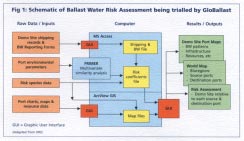
been completed, and operational risk assessment systems
periods or vessel arrivals where reporting forms were not
(data collection procedures plus computer hardware and
collected or were incomplete, gap-filling data were
software - Figure One), along with trained risk assessment
extracted from the shipping records held by port
teams, have been established in each Pilot Country.
authorities, customs, shipping agents and other sources.
The Access databases, when linked to the ArcView
Geographic Information System (GIS) also established for
each site, allow ballast water characteristics to be
displayed for each berth in the port. The utility of this
database of-course depends on the port State continuing
to collect reporting forms from arriving ships, and
maintaining the system over the longer term.
A multivariate procedure was then used to identify the
environmental similarity between the Demonstration Site
and each of its ballast water source and destination ports,
based on 34 different environmental parameters,
collected from existing sources for a set of 357 ports
around the world. Environmental similarity was assessed
using PRIMER software, which was also established
permanently at each site as part of the overall risk
Final reports are now being prepared for each site and
assessment system (Figure One).
the first report, for the major Iranian oil port of Khark
Island, located in the ROPME Sea Area, has now been
Port-to-port environmental matching provides a relative
published (http://globallast.imo.org/publications) (ROPME
measure of the risk of organism survival, establishment
= Regional Organization for the Protection of the Marine
and potential spread. Other factors relating to the risk of
Environment, comprising the Kingdom of Bahrain,
introduction, include the frequency of ship visits/ballast
Kingdom of Saudi Arabia, Islamic Republic of Iran, State
water discharges, the volume of ballast water discharged,
of Kuwait, State of Qatar, Sultanate of Oman and the
voyage times and ballast tank size, any management
United Arab Emirates. Iraq is also a member, although
measures applied, the presence/absence of known `pest'
currently inactive).
species at the source ports and the characteristics of these
species. While environmental matching alone does not
The risk assessment for Khark Island was undertaken by
provide a complete measure of risk, invasion case histories
Australian consultants Meridian Pty Ltd, working with and
may indicate that if any one factor is to be used alone,
training a team of Iranian counterparts led by Mr Hassan
environmental similarity is probably the best single
Taymourtash, Dr Vahid Yavari, Mr Nasser Kayvanrad and
Mr Ahmed Parhizi of the Iranian Ports and Shipping
indicator of risk.
Organization, and supported by the Programme
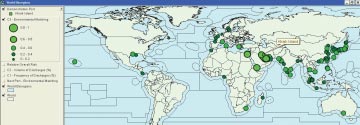
Figure Two shows the GIS output of the environmental
Coordination Unit at IMO.
matching co-efficient for Khark Island source ports.
Risk assessment is a basic first-step for any country
Understandably, the ports that pose the `highest risk' to
contemplating a formal system to manage the transfer
Khark in terms of environmental similarity, were assessed
and introduction of harmful organisms in ships' ballast
to be those within the enclosed gulf of the ROPME Sea
water. In order to assess the risk of ballast mediated
Area. While native species within this region are likely to
invasions and begin to design a management regime for
be shared by most regional ports through natural
any given port, it is necessary to first understand the
circulation, the potential for translocation of a foreign
nature of the problem, and define basic parameters such
species from one `point-of-entry' to other ports in the
as the volumes of ballast water received and exported,
region is highlighted by this result. This in turn serves to
the frequency of ballast discharge and uptake events, and
highlight the vital need for a cooperative, multi-lateral,
the locations where ballast water is received from (source
regional approach. No one port or even one country can
ports) and exported to (destination ports).
address this problem alone.
BWN 14: 07-09/2003
G L O B A L B A L L A S T W AT E R M A N A G E M E N T P R O G R A M M E
R I S K A S S E S S M E N T R E L E A S E D F O R I R A N
5
The `highest risk' source ports to Khark Island beyond the
As a result of the GloBallast risk assessment exercise, each
ROPME Sea Area, in terms of environmental matching,
Pilot Country now has:
were assessed to be Hodeidah in Yemen, Suez and Ain
Sukhana in Egypt, Okinawa in the Pacific, Sabine in Texas
· a fully operational database for the management and
and Piraeus in the Mediterranean. Unsurprisingly, the most
analysis of IMO Ballast Water Reporting Forms and other
dissimilar ports were in places like Sweden and Canada.
relevant data in all of their ports,
Another objective of the activity was to identify `high-risk'
· an extremely comprehensive understanding of the
species that may be transferred to and/or from the
nature and patterns of ballast water operations at their
Demonstration Site, and the customised Access database
Demonstration Site,
includes information on risk species.
· a Geographic Information System for the storage,
Altogether, the GloBallast risk assessment calculates 4 risk
management, analysis and presentation of information,
co-efficients for each source and destination port, relating
including port resource maps and other layers,
to frequency of ballast water discharges (C1), volume of
· a sound indication of relative risks posed by the
discharges (C2), environmental similarity (C3) and risk
discharge of ballast water from each port their
species (C4). These are combined in an overall equation,
Demonstration Site trades with, providing an informed
to give a measure of `Relative Overall Risk' (ROR). The
basis for management (including `port twinning'),
results for each co-efficient are graphically presented on
GIS Figure Two shows an example for C3. Details of the
· a fully operational risk assessment programme
basis of each co-efficient and the risk equations, are
combining the various elements of the system,
contained in the published reports.
· a trained risk assessment team capable of continuing to
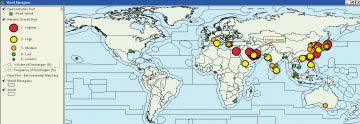
Figure Three shows the GIS output of the ROR for each
run the system and replicate assessments at additional
Khark Island source port. The `highest risk' source ports
ports, both within the country and the region.
(outside the ROPME Sea Area), considering all factors
included in the ROR calculation, were assessed to be
The exercise has proven extremely useful in giving
Kaohsiun (Taiwan), Ain Sukhana (Egypt), Okinawa, Chiba
relevant personnel from each country an in-depth
and Sendai Kagoshima (Japan) and Ulsan (Republic of
involvement in the issue, creating increased awareness
Korea). In considering these results, the assumptions and
and building technical capacity and institutional structures
limitations underlying the risk assessment must be taken
to begin to address the ballast water problem in an
into account, as outlined in the full report.
organized, structured way.
Having identified the source ports/voyage routes that
The wealth of data collected for this exercise, including
present the highest risk, Iranian authorities are now in a
environmental and risk species data for a huge set of
more enlightened position from which to develop
ports around the world, helps to fill a very large data gap
management measures. One option might include,
in the existing global knowledge base. All of this
seeking to enter into `twin-port' arrangements with
information is available in the final reports, which will be
authorities at the 'high priority source ports, so as to
published for the other five sites as they are completed.
develop cooperative management measures and mutually
reduce the bio-invasion threat.
sraaymak@imo.org
Figure Two: Graphic
representation of Environmental
Matching (C3) coefficients for
Khark Island ballast water source
ports, as displayed on the
GloBallast risk assessment GIS for
I.R. Iran. Similar outputs are
available relating to frequency
and volumes of ballast discharge
(C1 & C2)
Figure Three: Graphic
representation of Relative
Overall Risk (ROR) coefficients
for Khark Island ballast water
source ports, as displayed on
the GloBallast risk assessment
GIS for I.R. Iran
BWN 14: 07-09/2003
G L O B A L B A L L A S T W AT E R M A N A G E M E N T P R O G R A M M E
H O W M U C H B A L L A S T ?
6
How much ballast?
transport is then about 60% of the international transport
measured in weight.
For commercial reasons, vessels will strive to operate with
Despite worldwide concerns about the transfer
maximum cargo and minimum ballast at any time. The
of harmful aquatic organisms and pathogens in
optimal ballast condition is however also affected by
ships' ballast water, no studies to date have
requirements associated to safety as well as performance.
presented detailed models for calculating the
Ballast water may be carried in either dedicated ballast
total volumes of ballast water carried by ships
tanks or in cargo-tanks if appropriate. Ballast water
globally. Previously reported figures range from
capacity varies as a function of cargo carrying capacity
10 to 12 billion* tonnes per year, yet these
and ship type, with typical values ranging from 25 - 40%
figures do not appear to have been supported
of the dead weight tonnage (DWT) (Carlton et al 1995,
by transparent calculations, and global
EPA 1995, Greenman et al 1997). However, the ballast
capacity is commonly only partially utilised. Carlton et al.
seaborne trade statistics indicate that total
(1995) reported 86% exploitation of the ballast capacity
annual tonnage of cargo carried is substantially
based on two separate US-studies covering more than
lower than these figures, raising doubts about
1,100 vessels calling at US ports (only bulk carriers, tankers
their accuracy.
and container ships).
Clearly, to support the development of sound
In this study statistical analysis has been undertaken for
ballast water management measures, a more
100 cargo vessels selected from the DNV classed vessels
accurate calculation of ballast water volumes
(Det Norske Veritas 2002) with dedicated ballast tanks,
carried is required. This article presents some
built after 1990. The ballast water capacity was found to
such calculations, and arrives at an overall figure
be 36% of the DWT. For bulk carriers, tankers and
of between 3 and 4 billion tonnes of ballast
container vessels, these results correspond with the
water transported globally each year.
statistical relationships reported by Carlton et al. (1995)
and Smith et al. (1996). The correlation coefficient varied
The world fleet of ocean going merchant ships above or
from 0.9 to 0.97 for the different ship types as
equal to 100 gross tons (GT) in the year 2000 was 87,546
documented in Behrens et al (2003).
vessels (Lloyd's 2000). The fleet can be broadly
categorized into 46,205 cargo carrying vessels (general
The ballast water amounts for each ship type and size
cargo, tankers, bulk carriers, container ships etc.) and
categories for the world fleet may then be estimated by
41,341 non-cargo vessels (research and fishing vessels etc).
using the fleet statistics, the relationships between ship
Ocean going cargo ships altogether represent 792.4
size and ballast water capacity, the exploitation degree of
million DWT (dead weight tonnes). The total number of
the ballast capacity, and the number of ballast voyages.
crude oil tanker vessels was 1,789 with a total of 241.3
This modelling approach was recently applied to estimate
million DWT. Bulk dry vessels count some 4,886 vessels,
ballast amounts for the ships in foreign trade, registered
representing a total of 255 million DWT. Thus, these
in Norwegian registries (Behrens et al 2003).
large cargo vessels account for about 63% of the
Alternatively, the annual ballast water amounts could be
world tonnage.
estimated as a function of the total cargo amounts
The world's international seaborne trade in year 2000 was
transported annually. The cargo amounts transported are
5.4 billion tonnes (Fearnleys 2002). By commodity, crude
less than capacity, which may be measured by DWT. For
oil represents the biggest share (30%), followed by coal
large tankers, a rule of thumb is that at least 2.5 % of the
(9.6%), iron ore (8.4%), oil products (7.7%) and grains
total carrying capacity is reserved for stores, provisions
(4.2%). These principal cargoes combined accounted for
and bunkers. The maximum cargo load factor is therefore
60% of the total measured by weight, and are mainly
0.975, but can also be lower (0.65) due to part loading
transported in large oil tankers and bulk carriers within a
and multi-porting (Wijnolst & Wergeland, 1997). The
fairly well defined system of international sea routes.
conversion factor from DWT to tonnes of cargo carried is
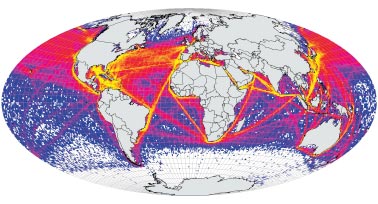
Figure 1 shows the system of sea routes as appearing from
typically 0.87 for tankers and 0.91 for dry bulk (Fearnleys
vessel observation by AMVER (Automated Mutual-
September 2002), and 0.89 is assumed representative in
Assistance Vessel Rescue system) (AMVER 2001). AMVER
our calculations.
holds information on more than 7,100 cargo and
From the above analysis, we may roughly assume a ballast
passenger ships, mainly greater than 2,000 DWT, that
capacity of about 40% of cargo transported (36% ballast
report to AMVER daily during their voyage (AMVER 2002).
capacity per DWT divided by 0.89 tonnage cargo per
This represents about 27% by number of the world cargo
DWT) with an exploitation factor of 86%. If the total
and passenger fleet greater than 2,000 DWT
annual tonnage of cargo carried is 8.7 billion tonnes
(Lloyd's 2000).
(comprising 5.4 billion tonnes of international trade and
The domestic transport of cargo by ships amounted to
3.3 billion tons of domestic trade), as obtained from
about 3.3 billion tons world wide in year 2000 (Fearnleys
Fearnleys (2002), the total annual global ballast water
February 2002). A large fraction of this cargo is comprised
loaded in port can be estimated to be approximately 3.1
by basic materials, such as petroleum products, non-
billion tonnes. This is shared between international trade
metallic minerals, metals, cement and coal. The domestic
(1.9 billion tonnes) and domestic trade (1.2 billion tonnes).
BWN 14: 07-09/2003
G L O B A L B A L L A S T W AT E R M A N A G E M E N T P R O G R A M M E
H O W M U C H B A L L A S T ?
7
The uncertainties in these estimates relate to input data
We hope that this analysis provides a more concrete basis
(e.g the completeness of world trade statistics),
for global efforts to address the ballast water issue.
assumptions made (need for ballast etc), and relationships
Øyvind Endresen, Eirik Sørgård, Hanna Lee
between ballast amounts and cargo transported. We have
Behrens & Aage Bjørn Andersen
not made error analyses, but we judge an order of ±20%
Det Norske Veritas, Veritasveien 1, N-1322 Høvik,
uncertainty for the loaded ballast inventory.
Norway
Even with addition of an error factor of +20%, giving an
(*note in this article 1 billion = 1 thousand million or 109).
estimated total of 3.72 billion tonnes of ballast water
transported globally each year, this is significantly less
Comments and observations on this
than the 10 to 12 billion tonnes quoted in various sources
or any article are welcome, write to:
previously (Gollash & Leppäkoski 1999, MARTOB 2003). It
The Editor
should be noted that the original source of these earlier
Ballast Water News
figures has not been possible to identify despite extensive
sraaymak@imo.org
research and hence should be considered as
undocumented.
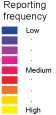
Main sea routes based on traffic density as indicated by AMVER (2001) (NB: Only about 27% of the world fleet >2,000 DWT use AMVER, making
this figure an incomplete, under-representation)
References
Fearnleys, September 2002. Typical converting factors between
AMVER, 2001. Daily Vessel Observations for 2000/01, provided by
tonnes of cargo and DWT, provided by Hammer J.
Carroll, E., USCG.
Gollash, S & Leppäkoski, E. 1999. Initial Risk Assessments of Alien
AMVER, 2002. The AMVER Fleet, provided by Carroll, E. and
Species in Nordic Coastal Waters. Nord 1999:8. Prepared for the
www.amver.com USCG.
Nordic Council of Ministers.
Behrens, H.L. Endresen, Ø, Mjelde, A & Garmann, C. 2003.
Greenman D., Mullen K., Parmar S., 1997. In Cooperation With,
Environmental Accounting System for Norwegian Shipping
ENS Friese C. United States Coast Guard Office of Response,
EASNoS Phase 1, DNV Rep. No. 2002-1645.
Ballast water treatment systems: A feasibility study.
Carlton J. T., Reid D. M., and Leeuwen H. 1995. The Role of
www.anstaskforce.gov/ballaststudy.htm#.
Shipping in the Introduction of Nonindigenous Aquatic Organisms
to the Coastal Waters of the United States (other than the Great
Lloyd's Maritime Information Service, 2000. World Fleet Statistics.
Lakes) and an Analysis of Control Options, Shipping Study I, USCG
MARTOB, 2003. Harmful aquatic organisms in ballast water.
Report No. CG-D-11-95, p. 75, Springfield, VA.
Treatment and Management of Ballast Water to Control
Det Norske Veritas, 2002. Internal databases on DNV classed
Introduction of Non-Indigenous Species: (On-board Treatment of
vessels.
Ballast Water). Status report of May 2003.
Environmental Protection Agency (EPA), 1995. VOC emission
Smith D., Wonharn M. J., McCann L.D., Reid D. M., Carlton J. T.,
factors, AP-42, Volume I, Fifth Edition, Transportation and
Marketing of Petroleum Liquids, chapter 5.
1996. Shipping Study II, Biological invasions by Nonindigenous
http://www.epa.gov/ttn/chief/ap42/ch05/final/c05s02.pdf
Species in United States Water: Quantifying the Role of Ballast
water and Sediments Part I and II, Report number OG-D-02-97.
Fearnleys, 2002. Review 2001.
Fearnleys, February 2002. Total Seaborn cargo transport figures,
Wijnolst, N., T. Wergeland, 1997.Shipping, Delft University Press,
provided by Hammer J.
ISBN 90-407-1380-4.
BWN 14: 07-09/2003

8
G L O B A L B A L L A S T W AT E R M A N A G E M E N T P R O G R A M M E
B I O S E C U R I T Y ` H U L L C A M '
Biosecurity `HullCam' So far NIWA has used the HullCam to sample nearly 100
yachts. Cross-comparisons have been made between
SCUBA divers and HullCam, and both methods recorded
similar estimates of fouling cover and composition.
While ballast water carried by large ships is a
However, the HullCam is more efficient; only two or even
major vector for the transfer of invasive aquatic
one person is required to operate it, while at least three
species, and one that has received significant
staff are required for diving. HullCam only takes half the
attention by the international community,
time of divers to sample a single yacht, and divers can
concerns are also beginning to focus on the
make only a limited number of dives in a day.
transfer of species by fouling on vessel hulls and
other surfaces.
Over the past 50 years there have been major advances in
the development of antifouling paints and other systems
to prevent the growth of marine species on hulls, driven
primarily by the need to improve the operational
efficiency of vessels. Until recently, many anti-fouling
paints were based on highly toxic (and highly effective)
tri-butyl-tin (TBT). With the adoption of the International
Convention on the Control of Harmful Anti-Fouling
Systems on Ships (AFS) by IMO member States in 2001, the
use of TBT is now being phased-out globally. Ironically,
while the AFS Convention helps to address one serious
marine environmental issue (chemical pollution), the
banning of TBT may compound another major problem,
causing a significant increase in the rate of harmful
marine bio-invasions through hull fouling.
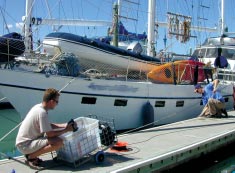
`HullCamaniacs' at work in an Auckland marina
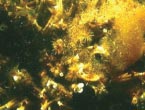
A look at a hull through
The HullCam is easy
the HullCam's `eye' no
to operate in the
shortage of
field, and has been
fouling species!
used to sample
yachts ranging from
10 to 25m in length
One group of vessels that has not received much
attention is ocean-going yachts. These yachts can pose a
Statistically robust and predictive models require many
biosecurity risk if they carry problem species on their hulls,
samples for calibration. With HullCam, information can be
especially because they travel more slowly than merchant
easily and quickly obtained on the degree of fouling on
vessels, and spend more time in more ports. In New
vessel hulls. NIWA intends to sample another 100
Zealand, the National Institute of Water and Atmospheric
international yachts during the coming boating season in
Research's (NIWA) is researching the development of
New Zealand (November 2003 February 2004), and
better predictive tools to identify and manage the marine
develop a model from the data that identifies the risk
biosecurity risks posed by ocean-going yachts. Between
factors associated with hull fouling.
400 and 500 international yachts visit New Zealand each
year and even more during major racing events such as
the America's Cup held in Auckland this year.NIWA and
the New Zealand Ministry of Agriculture and Forestry
(MAF) Quarantine Service have been working together to
assess the recent travel and maintenance history of yachts
entering New Zealand from overseas, and the amount and
diversity of fouling organisms they carry. Fouling can be
Oliver Floerl, Graeme Inglis and Barbara Hayden
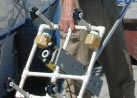
estimated by using `HullCam', a purpose-built sampling
National Centre for Aquatic Biodiversity and Biosecurity
device with a remote underwater video lens mounted on a
National Institute of Water and Atmospheric Research
wheeled frame, that rolls along or across a yacht hull while
New Zealand
being steered from the surface by a telescopic arm. The
Further information:
remote lens, aided by twin underwater lights, transmits to
Oliver Floerl, NIWA
a digital video camera at the surface. Still images can then
o.floerl@niwa.co.nz
be captured to determine the composition and abundance
www.niwa.co.nz/ncabb/
of fouling assemblages.
BWN 14: 07-09/2003
G L O B A L B A L L A S T W AT E R M A N A G E M E N T P R O G R A M M E
T H E M A R E N O S T R U M : A M E LT I N G P O T
9
The Mare Nostrum:
a Melting Pot
The Mediterranean Sea covers less than 1% of the world's
oceans but hosts 7.5% of the world's known marine
animal taxa and 18% of the world's known marine flora.
It is one of the richest seas for biodiversity in the world.
Its fauna and flora have evolved over millions of years in a
unique mixture of temperate and subtropical elements;
and as a result a very high number of the marine species
(around 20%), including some emblematic species of
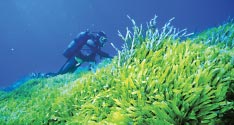
Caulerpa taxifolia. (Image: J A Moya)
global conservation concern, are endemic and only found
in this sea.
In November 2002 the International Commission for the
Scientific Exploration of the Mediterranean Sea (CIESM),
Although the Mediterranean has experienced major
convened an expert workshop on shipping as a vector in
changes in its biodiversity composition throughout its
the Mediterranean (see BW News No. 11). Other recent
history, an increase in alien species in recent decades is
shipping-vector initiatives in the region include the
beginning to give cause for alarm. Alien and invasive
commencement of a study by Slovenia (see BW News No.
species have been highlighted by most Mediterranean
12), and the inclusion of a Strategic Environmental
countries as a major threat to marine biodiversity and the
Assessment on ballast water introductions in the work
UNEP Mediterranean Action Plan (MAP) has acknowledged
programme of the Adriatic Ionian Initiative, involving
that this is a major issue. Extrapolating from initial surveys
Italy, Slovenia, Croatia, Bosnia & Herzegovina, Serbia &
of some taxonomic groups, an overall estimation of alien
Montenegro, Albania and Greece. The GloBallast
species present in Mediterranean waters would be around
Programme is supporting all of these initiatives.
1000, entering by various vectors.
Aquaculture is another important introduction vector into
Although at the global level shipping is one of the most
the Mediterranean. Oyster and clam cultures are sustained
important vectors, this may not be the case for the
by two intentionally introduced species (Crassostrea gigas
Mediterranean Sea. Examination of recent publications
and Ruditapes philippinarum), and many fish species have
shows that more than 70% of the non-indigenous
been introduced to enhance inland aquaculture - several
decapods (crustaceans such as shrimps and crabs) and
carp species, European catfish (Silurus glanis), pike (Esox
about 63% of the exotic fishes documented in the
lucius) and pike-perch (Stizostedion lucioperca). Some of
Mediterranean so far (mainly in its Eastern basin) are of
these have proved to be invasive and have caused
Indo-Pacific origin, and are likely to have entered via the
considerable damage to native ecosystems. Other species
Suez Canal (`Lessepsian' species). This indicates that the
(including their parasites) have "piggy-backed" with the
canal may be the principal pathway by which alien
aquaculture species.
decapods and fishes have entered the Mediterranean to
It is in this complex situation, coupled with strong political
date. Other artificial waterways have also been used by
and socio-economic pressures, that the Mediterranean
species to invade the Mediterranean . For example, the
countries have to deal with the issue. Conscious of the
Chinese mitten crab Eriocheir sinensis has spread from
threat and aware of the importance of economic
the Atlantic via the Canal du Midi
activities, the countries decided to join forces to develop a
Shipping, either through ballast water or hull fouling, is
regional "Action plan concerning species introductions
still an important vector for species introductions into the
and invasive species in the Mediterranean Sea", under the
Mediterranean. About 30% of international maritime
auspices of MAP and the Barcelona Convention (see BW
traffic transits Mediterranean waters and the prospect
News No. 11). The regional Action Plan aims to promote
of a Euro-Mediterranean free trade area by 2012 brings
the development of coordinated measures and efforts in
with it the promise of additional transport links, the
order to prevent, control and monitor the effects of
development of ports in natural coastal areas and
aquatic species introductions and invasions, considering all
vectors and pathways. In relation to shipping and ballast
increased maritime traffic, associated pollution and
water, the Action Plan provides for close cooperation with
perturbation of marine biodiversity. This will provide
GloBallast and the uniform implementation of IMO
more opportunities for species to be spread accidentally.
measures in the region.
Many species are thought to have entered the
Mediterranean via shipping, but species can also be
IUCN has always stressed the need for cooperation at all
exported. The fan worm Sabella spallazanii is an example
levels to secure the conditions necessary to prevent and
of a Mediterranean species that has invaded other parts
minimise the risks posed by alien invasive species. As a
of the world via shipping.
participant in activities under the Barcelona Convention
and a regional partner particularly involved in this issue,
While shipping is very important in the Mediterranean,
we are pleased to see the Mediterranean countries
very few ballast water or hull fouling studies have been
moving in this direction. The shipping industry also has a
undertaken. To date, Mediterranean studies have
key role to play in the Mediterranean and IUCN looks
focussed mainly on Lessepsian species or on particular
forward to contributing to this process through IMO and
species that have caused major damage to ecosystems,
the Barcelona Convention processes.
such as the marine alga Caulerpa taxifolia, which
competes with native seagrass meadows. More intensive
Jamie Skinner, Director
port surveys will undoubtedly detect more shipping-
IUCN Centre for Mediterranean Cooperation
related examples.
jamie.skinner@iucn.org
BWN 14: 07-09/2003

10
G L O B A L B A L L A S T W AT E R M A N A G E M E N T P R O G R A M M E
D U R B A N A C C O R D
Durban Accord
GloBallast, in conjunction with
the Global Invasive Species
Directs Action
Programme (GISP) and with
support from the United
Nations Environment
In the last issue of Ballast Water News we announced
Programme (UNEP), also
the 5th IUCN World Congress on Protected Areas (or
distributed a poster and flyer
World Parks Congress WPC), and outlined some of the
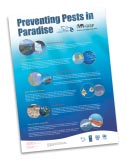
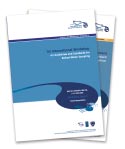
entitled `Preventing Pests in
challenges that invasive alien species pose to protected
Paradise', developed
areas, including marine protected areas.
specifically for WPC. These
The 5th WPC closed on the 17th of September in
awareness materials explore
Durban, South Africa with participants agreeing on
the relationship between
new commitments and policy guidance for protected
aquatic invasive species and
areas worldwide.
Order from cgregory@imo.org
marine protected areas,
highlighting the fact that not
Durban offered participants a unique opportunity to
only do marine protected areas generate benefits beyond
exchange experiences, learn from each other, and
their boundaries, but are also vulnerable to impacts from
establish a common agenda. Discussions in more than 200
beyond boundaries and require a cross-boundary
sessions covered several questions related to protected
management approach.
areas. Invasive species were repeatedly recognised as one
of the main threats to
Recommendations from the WPC invasive species
biodiversity and one of
session included:
the major challenges to
· The wider audience of protected area managers,
protected area managers.
stakeholders and governments need to be urgently
In the Opening Ceremony
made aware of the serious implications for biodiversity,
alone, the threats posed
protected areas and livelihoods that result from lack of
by invasive species were
recognition of the invasive species problem and failure
highlighted several times.
to address it.
In addressing the 2,500
· Promoting awareness of solutions to the invasive species
congress delegates, Mr
problem and ensuring capacity to implement effective,
Nelson Mandela, co-
ecosystem-based methods must be integrated into
sponsor of the event
protected area management programs.
stressed the need for
· Recognising the `borderless' character of the natural
approaches that combine
world, particularly the marine environment, and the
environmental protection with economic relief for the
need to take a cross-boundary approach to managing
poor. In this regard, Mr Mandela praised the efforts of the
protected areas, especially for invasive alien species.
Working for Water Programme, which has employed
thousands of poor South Africans in recent years in its
The Closing Plenary of the Congress delivered the Durban
efforts to eradicate invasive species.
Accord a succinct statement for the future of protected
areas, an Action Plan; a set of 32 specific
The host of the Congress, South African President Mr
Recommendations; and a message to next year's meeting
Thabo Mbeki, told delegates that natural resources and
of the Convention on Biological Diversity. All of these
biological diversity are a priceless heritage the world can
outputs state alien invasive species as one of the most
ill afford to lose. He also stressed the enormous
significant threats to protected areas and biodiversity and
constraints that conservation efforts faced. "These include
recommendd various management actions.
threats to biological diversity from land degradation,
climate change, human settlement and invasive alien
Addressing alien invasive species in protected areas is
species" he said.
challenging, and it is even more challenging to address
them outside these areas, particularly in the borderless
Invasive alien species were specifically discussed
marine environment. Efforts should be made to equip
during a workshop in Stream V of the Congress -
managers with a better understanding of the impacts of
Maintaining Protected Areas Now and in the Future.
alien species on complex and highly diverse ecosystems.
This session, organized by the IUCN Invasive Species
Specialist Group, included a presentation by the GloBallast
The outputs of the Congress empower protected area
Programme on the impacts of aquatic invasive species
managers and policy makers around the world. With the
Durban Accord and the Recommendations in hand, they
on marine protected areas and discussion of marine
can start a process with their governments, institutions
management options.
and organisations to make the vision set in Durban of
The participants in the invasives session at WPC put
protected areas as a common tool for biodiversity
invasive species forward as an emerging issue, which
protection and poverty alleviation a reality.
was added to the overall Congress outputs. They
Maj de Poorter
unequivocally agreed that management of invasive alien
IUCN Invasive Species Specialist Group
species is a priority and must be mainstreamed into all
http://www.issg.org
aspects of protected area management.
BWN 14: 07-09/2003



G L O B A L B A L L A S T W AT E R M A N A G E M E N T P R O G R A M M E
E X P E R T S C O N V E N E I N PA N A M A
11
Experts Convene in Panama
Regarding ships' ballast water, the meeting encouraged
the member states of CPPS to adopt the IMO resolution
A.868(20) and carry out biological research in their ports,
identify critical zones to avoid uptake of ballast water;
participate in the GloBallast Programme; initiate studies
and control measures on hull fouling, form a regional
While the transfer fo exoctic species through ships' ballast
marine taxonomists network; and to increase the
water is a matter of concern worldwide, the members of
exchange of information and expertise about the issue
the Permanent Commission for the South Pacific (CPPS)
with the aim to strengthen institutions in charge of its
control and management.
comprising Colombia, Chile, Ecuador, Panama and Peru,
have recently manifested their specific concerns and taken
Ulises Munaylla Alarcón
action to commence a regional response to aquatic
Technical Regional Coordinator of the
invasive species, through the Plan of Action for the
Plan of Action for the South East Pacific
Protection of the Marine Environment and Coastal Areas
cpps_pse@cpps-int.org
of the South East Pacific.
Concerns in this region are highlighted by the fact that,
during the past decade, the region was affected by a
New Monographs
major outbreak of cholera possibly linked to ballast water
The two latest
introductions, commencing in Peru in 1991, and causing
GloBallast Monographs
thousands of deaths and major social and economic
are No. 8 the report
impacts. There are also concerns that the `white spot'
on the Ballast Water
virus epidemic that has devastated shrimp aquaculture
Risk Assessment for the
industries in Ecuador, Peru, Colombia and Central
Port of Khark Island,
America, may have been introduced through ships'
Iran and
ballast water from Asian countries.
No. 9 - the report on the
From 9 to 11 July 2003 CPPS, which is the Executive
1st International
Secretariat for the regional Plan of Action, with the
Workshop on Ballast
cooperation of the Secretariat for the Convention on
Water Sampling held
Biological Diversity (CBD) and the GloBallast Programme,
in Rio de Janeiro, Brazil
among others, convened a "Meeting of Experts on the
in April 2003.
Impact of the Introduction of Alien Species in the South
http://globallast.imo.org/publications
East Pacific, Ballast Water Problem", in Panama City. The
main objectives of this meeting were:
· To obtain current knowledge of the effects produced by
Kiwis
the introduction of alien species in marine ecosystems;
Release
· Support regional implementation of international
agreements and initiatives; and
Strategy
· Commence development of a regional programme for
control and management of the aquatic invasive species.
The Government of
New Zealand has
recently released one of
the first comprehensive
biosecurity strategies
ever to be developed at
the national level by
any country, taking an
integrated, holistic and
The meeting in Panama (Photo: Néstor Ardila).
strategic approach to
More than twenty specialists from the region attended
addressing all pathways
the meeting, which also included the participation of Mr
and vectors for both aquatic and terrestrial invasive species
Alexandre de Carvalho Leal Neto, representative of the
and pests, under a single regime.
GloBallast Programme for South America, based in Brazil.
Despite its comprehensiveness, and the intention that
The main recommendations issued from the meeting
ballast-mediated bio-invasions are included in this
included the creation of a regional group of experts to
integrated approach, the Strategy does not appear to
investigate the effects of alien species in coastal/marine
include explicit provision for New Zealand to implement
habitats; prepare a proposal for an inventory of the
the forthcoming IMO ballast water Convention, and there
coastal-marine biota of the region; establish a monitoring
is a distinct lack of mention of this major marine vector
program on the effects of exotic species; regulation and
and the responses necessary to effectively address it.
contingency plans to minimize accidental loses from
aquaculture and ornamental species.
www.maf.govt.nz/biosecurity-strategy
BWN 14: 07-09/2003


G L O B A L B A L L A S T W AT E R M A N A G E M E N T P R O G R A M M E
2
12
Progress Report
Activities Undertaken July - September 2003
Activities Planned Oct - December 2003
" PCU staff annual leave.
# Publish proceedings of 2nd International Ballast
"
Water Treatment R&D Symposium.
Attended Guinea Current LME Project Meeting,
# Update / republish Global Ballast Water Treatment
Lagos, 11-20 June (S. Africa Rep).
R&D Directory.
" Attended / supported CPPS regional ballast water
# Complete publication of final reports on Risk
meeting Panama 9-11 July (Brazil Rep).
Assessments for each Demonstration Site and
progress same for Port Biological Baseline Surveys
" Attended / supported MEPC 49 14-18 July.
and other activities.
"
# Attend and present at Adriatic-Ionian Initiative
Convened 2nd International Ballast Water Treatment
Round Table, Slovenia 27-28 Oct.
R&D Symposium, IMO London 21-23 July.
# Convene 2nd Regional Meetings for ROPME Sea
"
Area (Tehran, I.R. Iran) and East Asia (Dalian, P.R.
Produced new awareness poster `Preventing Pests'.
China) to adopt Regional Strategic Action Plans.
" Attended and presented at 5th World Parks
# Hold planning meeting for 1st regional replication
Congress, Durban 8 to 17 September.
of port surveys in Mombasa, Kenya (South
Africa lead).
" Held 1st International Ballast Water Risk Assessment # Progress regional replication and cooperation
Workshop, Melbourne 22- 26 September.
activities for South Asia (India lead) and South
"
America (Brazil lead).
Commenced publication of final reports on Risk
#
Assessments for each Demonstration Site.
Attend / support ballast water treatment system
type-testing workshop, IMO London 10-12 Nov.
" Published report on 1st International Workshop on
# Attend and present at Global Conference on Oceans,
Ballast Water Sampling.
Coasts & Islands, Paris 12-14 Nov.
, Nov 2003.
"
# Validate modular ballast water management
Progressed drafting of international guidelines and
capacity building course in I. R. Iran.
standards for ballast water sampling.
# Progress drafting of international guidelines and
standards for both ballast water sampling and IAS
ecycled paper
" Progressed validation of modular ballast water
management training course.
surveys and monitoring in port areas.
#
"
Plan and organize 5th Global Task Force meeting for
Developed joint ballast water project proposal
Feb 2004, including review of proposed amendments
with UNEP.
to Pilot Country workplans and 6 month extension
· Printed on r
"
of project to Sept 2004.
Submitted Concept Paper to UNDP and GEF for
# Attend and present at East Asian Seas Congress,
follow-up activities to the GloBallast pilot phase.
Malaysia 8-12 Dec (P.R. China Rep).
.dwa.uk.com
" Progressed BWEEMS (Ukraine), ballast water
# PCU staff annual leave.
treatment R&D (Ukraine & P.R China), Golden Mussel
# Produce 15th issue of Ballast Water News.
study (Brazil) and National BW policy (S Africa).
" Produced 14th issue of Ballast Water News.
el (+44) 020 7928 5888 www
More Information?
Programme Coordination Unit
Global Ballast Water Management Programme
International Maritime Organization
4 Albert Embankment
London SE1 7SR United Kingdom
est & Associates, London. T
Photo credit: William & Coleman
Telephone : +44 (0)20 7587 3247 or 3251
Image credit: J Halas
Daniel W
Fax
: +44 (0)20 7587 3261
Email
: dpughiuc@imo.org or sraaymak@imo.org
Web
: http://globallast.imo.org
BWN 14: 07-09/2003