


Global International
Waters Assessment
N E W S L E T T E R N O . 7
S P E C I A L E D I T I O N F O R T H E G I W A G E N E R A L A S S E M B L Y
Dear GIWA friends
This special edition of the Newsletter is ded-
icated to the GIWA General Assembly. The
GIWA General Assembly is a major milestone
in the GIWA project. It is the manifestation
of our global network and a proof that GIWA
is operational. The GIWA assessment work is
ongoing on the global scale and results are
starting to come in. Being the Project
Manager I am proud of all your work, the
Dag Daler
global network and our global operation. Our
progress has been made possible by the hard
work done by all our sub-regional task forces, focal points and
experts. I thank you all for your dedication and the effort you have
put into the GIWA project.
I am also convinced that the General Assembly will be a great
inspiration to you all. I look forward to participate in discussions
and exchange of experience with you all. The GA will be a signifi-
cant boost to our operations. The GIWA project is by far complet-
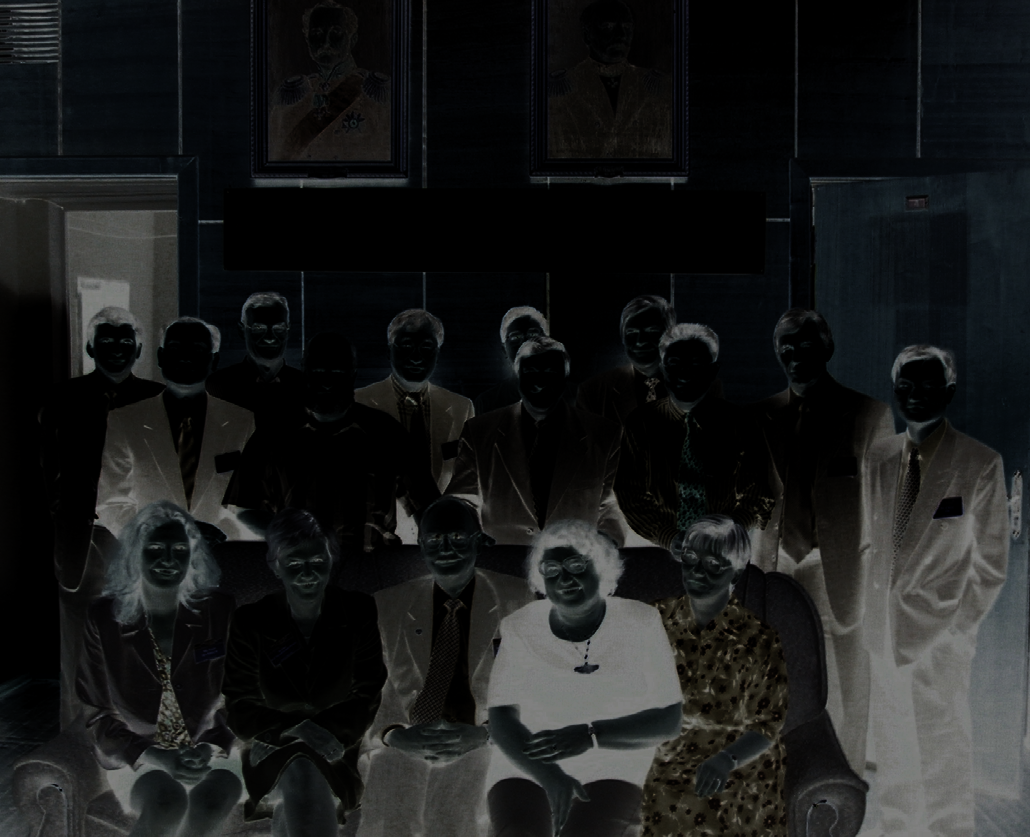
Scaling and Scoping workshop in Vladivostok
ed and much work remains to be done, but judging from the result
so far, I am certain that the GIWA is on the route to success.
12-14 September, 2001
It will be my pleasure to see you all in Kalmar, I wish you all wel-
(Far East Branch, Russian Academy of Sciences)
come to inspiring days and it is my personal ambition that you will
depart Kalmar inspired and eager to continue the important work
In the workshop scaling and scoping results were carried out for
that has been started.
three sub regions in the North Pacific. Participants were from
Russia, China, Democratic People Republic of Korea, Republic of
Dag Daler, Project Manager
Korea, and People Republic of China. The expertise of the partici-
pants covered economics, fisheries, human health, global change,
biology, oceanography, geography, and water resources protection.
GIWA signs Memorandum of Co-operation with the Russian Academy of Science
A scientific co-ordinating commit-
tee will supervise the GIWA work in
Russia. The Academian Prof. Dr. Martin
Khublaryan is the chairman of the co-
ordinating committee.
Under this agreement important
work has already started and working
relations have been established with a
number of Russian institutions. Some
of these institutions are:
- Pacific Geographical Institute, RAS
- Pacific Institute of Fisheries and
Oceanography
- Far Eastern Research Institute of
Complex use of Water
GIWA has entered into agreement with The Russian Academy of
- Ecological Safety Scientific Research Prof. Dr. Martin Khublaryan
Science to collaborate with the Academy and their institutions for
Center, RAS
the performance of the GIWA work in Russia and Russian Seas. This
- Murmansk Marine Biological Institute, RAS
co-operation also cover participation from The Russian Ministry of
- The North Water Problems Institute of the Karelian, RAS
Natural Resources, Russian Hydro Meteorological Committee,
- The Arctic Center of the Economical Problems Institute, RAS
Russian Fishery Management Committee and other Departments of
- Institute of Water Problems, RAS
the Russian Federation.
GIWA Seminar during
We are pleased to welcome Dr. Juan Carlos
Stockholm Water
Belausteguigoitia at the GIWA Core Team in
Symposium 2002
Kalmar
On August 11 2002, at the beginning of
Dr. Belausteguigoitia, who origins from Mexico, will be responsible
the Stockholm Water Symposium 2002,
coordinator for the GIWA assessment in the Southern Hemisphere
GIWA will host a Seminar. At that time it
from January 2002. At the moment Dr. Belausteguigoitia has a
can be expected that most of the ongoing Sub-regional assess-
position as a visiting professor at the University of California,
ments will be completed. The GIWA Seminar in connection with the
Berkley. Previously to Berkley Dr. Belausteguigoitia worked as an
Stockholm Water Symposium is therefore an excellent opportunity
undersecretary of planning at the Ministry of Environment Natural
for presentation of the outcome of the GIWA assessments and for
Resources and Fisheries in Mexico. We hope that Dr.
discussion of the results of the GIWA project. The discussions will
Belausteguigoitia and his family will enjoy the stay in Kalmar.
benefit from the presence of probably several hundred participants
at the Water Symposium.
Progress in the Northern Hemisphere
In the Northern Hemisphere the scoping results are ready in all eli-
gible areas and the common finding is that pollution, especially
eutrophication, is considered the main concern. However, in some
regions experts foresee significant improvements. The overexploita-
tion of fisheries and other living resources as well as habitat and
community destructions are considered high priority concerns in
many of the regions. The future does not seem to bring any
improvements; on the contrary the situation is likely to get worse.
Status of Assessments in the Southern
Hemisphere
Nearly all assessments in Southern Hemisphere are now underway.
With the exception of a few Sub-regions in the Middle East and
South Asia, all sub-regions in the Southern Hemisphere have start-
ed their Scoping and Scaling. Several Sub-regions have also com-
pleted this first phase of the GIWA program. Examples of such
regions are Agulhas Current, Benguela Current, Somali Current,
Gulf of Guinea, Yellow Sea, East China Sea, Coral Sea and Great
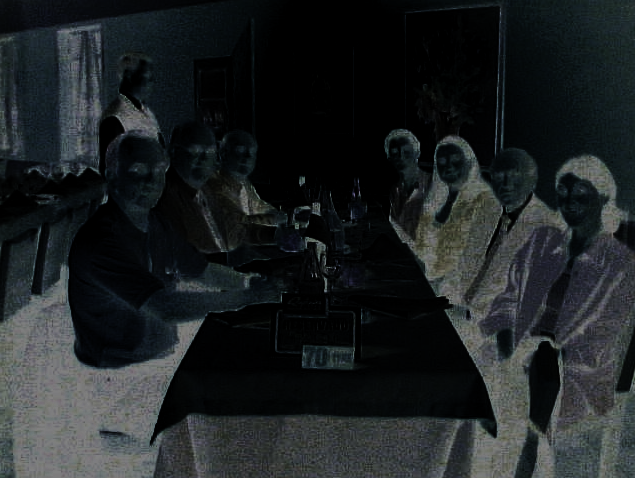
GIWA Focal Points in Latin America during the
Barrier Reef.
Fourth Inter-American Dialogue on Water
Management 2-6 September, Brazil
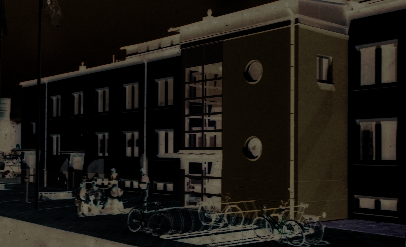
The University of Kalmar
With the presence of GIWA Project Leader Mr Dag Daler, GIWA
focal points in Latin America and the Caribbean Region-LAC met
The University of
during the Fourth Inter-American Dialogue on Water Management
Kalmar is situated in
held in Foz do Iguaçu, Paraná, Brazil, 2-6 September, 2001. During
the heart of the
this meeting, GIWA LAC focal points had meetings when important
town, Kalmar.
issues related to the implementation of GIWA project in the region
Kalmar has an
were discussed and the participation of LAC focal points in GIWA
excellent location
General Assembly was planned. At the same time, the group attend-
on the shore of the
ed different sessions during the IV Dialogue where successful and
Baltic sea in south-
innovative approaches to integrated land and water resources man-
east Sweden. The
agement in the Americas were discussed. The event had an audi-
sea, the forests of
ence of about 1,000 participants from 34 countries. The results
the province of Småland, the meadows of the island, Öland, and the
from the DIALOGUE IV will contribute to discussions at the
beautiful city of Kalmar is a combination that makes the University
International Conference on Water and Environment ("Dublin+10"),
of Kalmar attractive for both students and people working at the
United Nations Conference on Environment and Development ("Rio
University.
+10"), and the Third World Water Forum.
Research has developed strongly in the natural sciences.
Scientists in Kalmar are known for their research in biotechnology,
biomedicine, marine ecology, the ecology of coastal waters, envi-
ronmental chemistry and the management of natural resources.
For more information www.hik.se
GIWA Co-ordination Office
Phone: +46- 480 44 73 53.
Global International Waters Assessment
Fax: +46- 480 44 73 55.
SE-391 82 Kalmar, Sweden
E-mail: info@giwa.net
www.giwa.net